

FOR ME, THE FEELING of imbalance started shortly after an early January virus, likely *COVID-19. At the time I didn’t make the connection between the two. But eventually medical professionals did. That led to multiple diagnoses of vestibular neuritis, Meniere’s Disease and peripheral sensory neuropathy. Yes, it’s been a lot to handle. But I’m in a much better place health-wise than nine months ago thanks to professional intervention and a whole lot of hard work.
The thing about having a vestibular disorder is that it’s unseen. You can’t see inside my brain to view the damage. And, for the most part, you can’t see the effects of a malfunctioning vestibular system, unless you’re my husband or eldest daughter who can. Randy and Amber can look at my face, see my eyes squinting, my look of fatigue, tell-tale signs I’m not doing well. And if I’m closing my eyes or holding my hands on the sides of my face, I’m blocking my peripheral vision, thus reducing visual input.
All of that aside, I’ve at least reclaimed my balance. Most days. Brief bouts of vertigo set me back mid-summer. Via vestibular rehab therapy to retrain my brain, I’ve learned to manage and live with my many ongoing symptoms and mostly get on with my life. Maybe not as I did previously, but with a renewed appreciation for something as simple as walking with confidence, as watching TV, as shopping for groceries.
FOCUS ON BALANCE
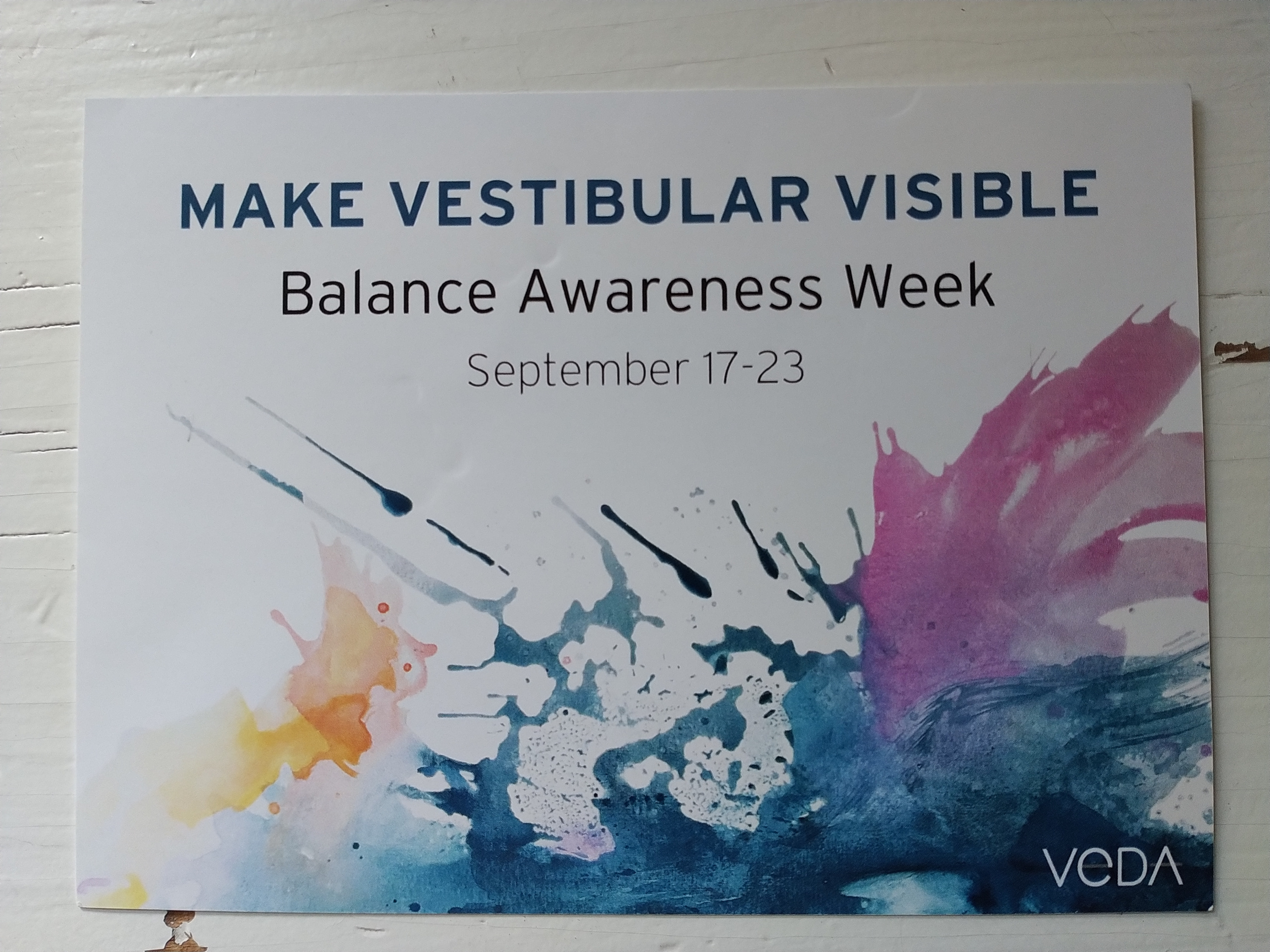
Today, though, I want to focus on balance, for two reasons. Imbalance was the first issue I overcame. And secondly, September 17-23 marks Balance Awareness Week, started in 1997 by the Vestibular Disorders Association. That national nonprofit is “a lifeline of support to anyone affected by vestibular (inner-ear and brain balance) disorders.” VeDA has proven an invaluable resource for me in learning about my vestibular-based diagnoses.
Knowledge is power. Just ask my physical therapist at Courage Kenny. Ryan answered many questions during my vestibular rehab therapy sessions, especially early on when I was just learning about my health issues. He always replied thoughtfully, helping me to understand what was happening in my brain and how we would work together through targeted exercises to manage my symptoms.
I’ve come a long way from the days of standing in place turning my head back and forth to the beat of a metronome. Today I’m power walking 15 minutes in the morning, 15 minutes in the evening with Randy. Even I’m amazed that I can do this. Not all that long ago, I couldn’t walk a block, often needing to hold onto Randy.
EVEN THOUGH MY DISORDER IS INVISIBLE, I STILL NEED TO BE SEEN, ENCOURAGED…
There is hope for anyone dealing with a vestibular disorder. Many seniors (and, yes, I’m a “senior”) struggle with balance. So do those who’ve suffered traumatic brain injuries like concussions. That includes my sister-in-law Rosie, my go-to support. Because she understands. And encourages. She realizes the importance of physical therapy in recovery.
In sharing a bit of my story with you, I am aiming to increase awareness. Make Vestibular Visible themes Balance Awareness Week. A promo from VeDA reads: Balance Awareness Week is our time to shout from the rooftops: “I have a vestibular disorder and this is my story.”
This is my story. One of challenges, of professional intervention, of hard work, of acceptance, of perseverance, of relying on others, of patience, of strength, of gratitude, of tears, of resilience, of focusing on what I can do (and not what I can’t). It is also a story of recognizing that no matter what we face in life—whether visible or invisible—we all need to be seen, to be uplifted, to feel cared for and loved.
#
© Copyright 2023 Audrey Kletscher Helbling
*I self-tested negative twice for COVID, but those tests (if done incorrectly and for other reasons) can be wrong, my primary doctor told me. He guesses I had COVID in January, and I agree based on my symptoms.


 Minnesota Prairie Roots
Recent Comments