Minnesota Prairie Roots

Writing and photography by Audrey Kletscher Helbling

Inside the Old Stone Church, rural Kenyon, Minnesota June 27, 2010

Filed under: Uncategorized — Audrey Kletscher Helbling @ 7:35 PM
Tags: , , ,

“DIRECTIONS: At the west end of the Boulevard of Roses, take Goodhue County 12 south for 1.3 miles and go west on Monkey Valley road for one mile.”

“Let’s go,” I tell my husband Saturday evening after reading an open invitation in the local newspaper to attend worship services at the Old Stone Church. Pair the adjectives “old” and “stone” with church and I already have one foot in the door. Add “Monkey Valley Road,” and you’ve really piqued my interest.

So Sunday morning Randy and I are on our way to Kenyon, where we turn right at the west end of the narrow boulevard lined with roses. We follow the published directions, turning right onto Monkey Valley Road, a gravel road that soon leads us to the Old Stone Church.

Once a year a worship service is held at the Old Stone Church, built by Norwegian immigrants near Kenyon.

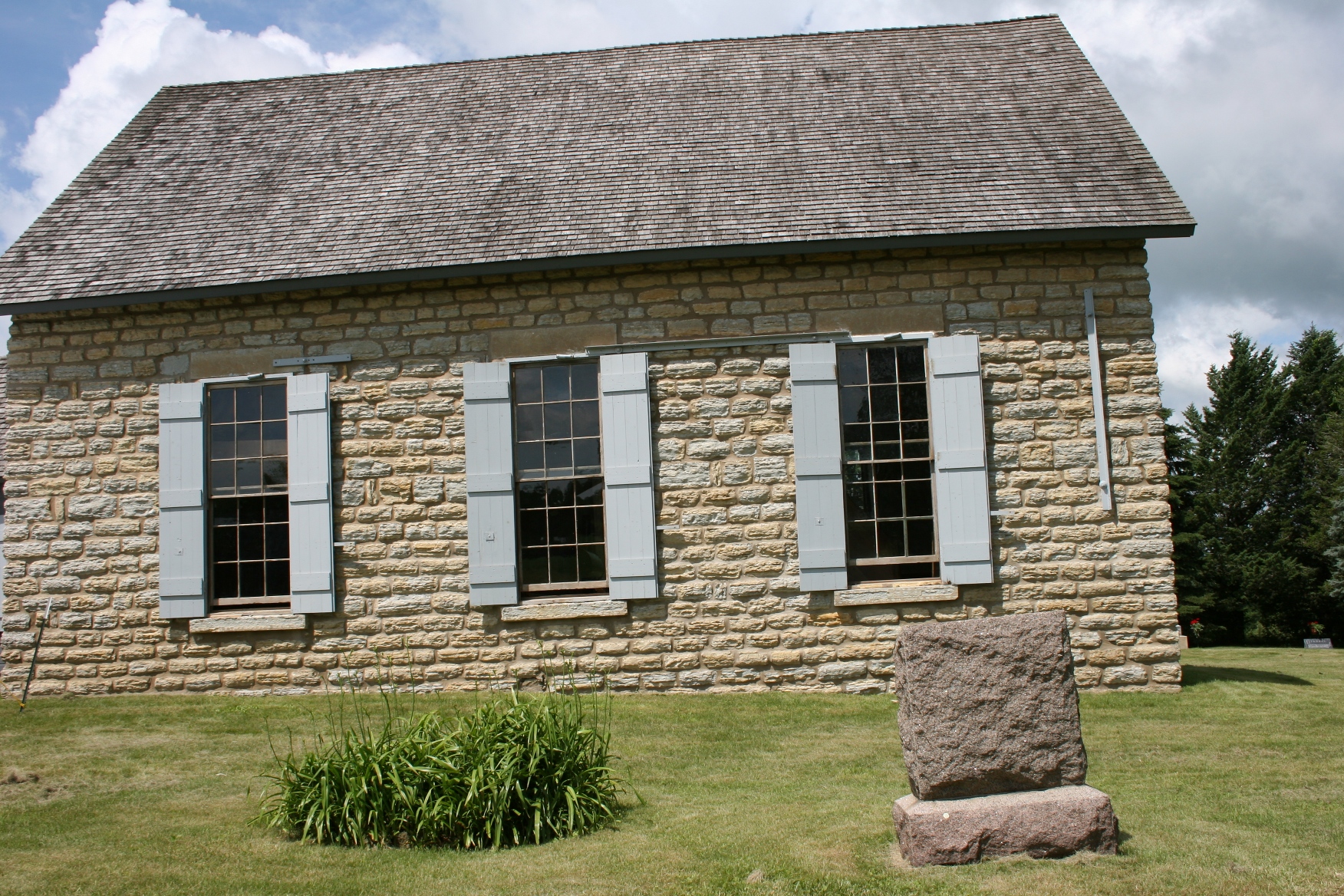
I am expecting a church defined, as most country churches are, by a steeple. But, instead, I see before me a simple limestone building that could pass for a schoolhouse. Yet, the plain exterior, minus a steeple, seems perfect for this spot embraced by trees and rolling valleys on two sides and by flat open farm fields on the opposite sides.

Welcome to Monkey Valley.

“How did this place get its name?” I ask a group of men clustered outside the Old Stone Church.

They offer two theories. The first story goes that monkeys escaped from a traveling circus and fled into the wooded valley. The second story goes that a threshing crew arrived here and pronounced: “We’re just going to the valley and monkey around.”

Randy and I buy the monkey story, which seems probable given traveling circuses once roamed the countryside.

“I have to go,” I say, abruptly ending this monkey business. I hear the strains of my favorite hymn, Beautiful Savior, drifting through the open doors and windows. I don’t want to miss this and I am anxious to get inside the small country church.

I’ll later learn that Norwegian immigrants built this structure, beginning in 1872, with limestone cut from a nearby quarry. A historical marker dates the building, which is on the National Register of Historic Places, as 1875. And that steeple I wondered about—apparently the church founders discussed a steeple, but never had the money to erect one.

Eventually, those early members moved out of Monkey Valley and, in 1902, Hauge Lutheran congregation built a new church in Kenyon. For years the Old Stone Church stood abandoned. In 1947 restoration began, a process that continues today.

All of this written and memorized history interests me, but only to a point. I prefer, instead, to wander, to notice the details, to take in my surroundings, to appreciate for myself the beauty that this church holds.

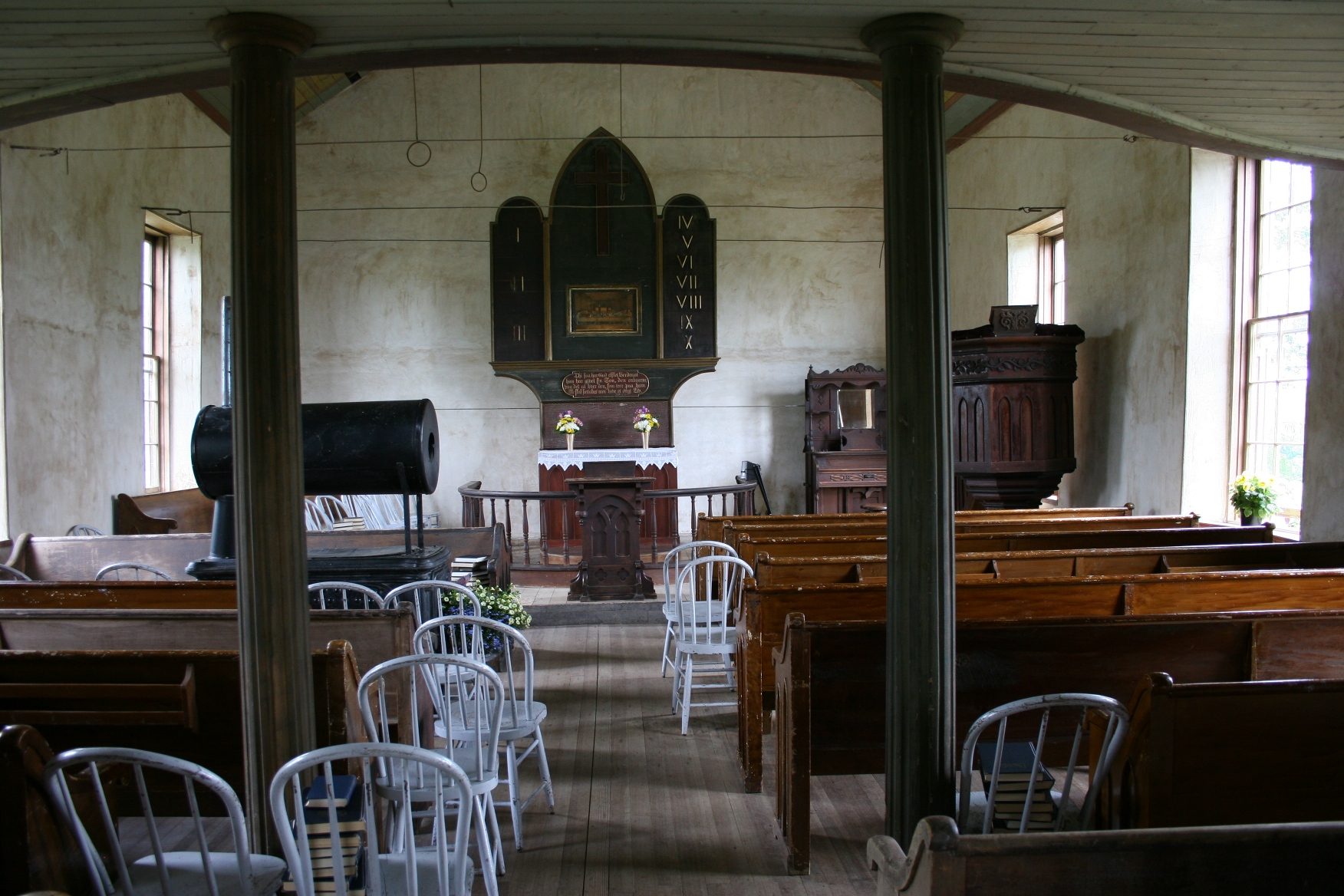
During a service filled with music, the choir and congregation sing in Norwegian, "Ja, vi elsker." The wire rods you see anchored to the walls (running horizontally across the top of the photo) provide structural stability.

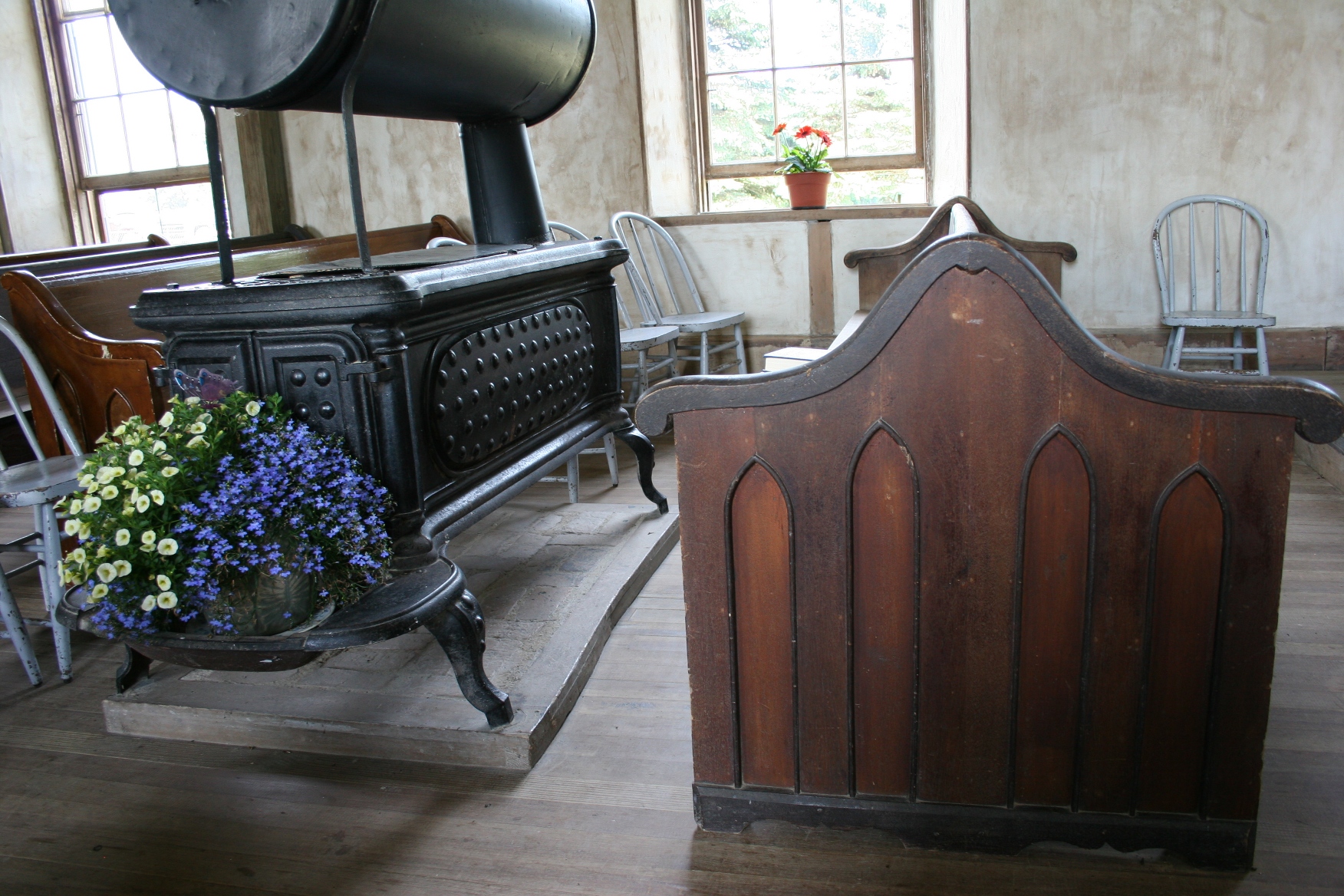
Rugged pews and rustic wood floors remind worshipers of bygone years. Copies of The Concordia Hymnal, piled on a pew, date to 1967. The hymn books are stashed in covered plastic containers after the service.

I lean forward and photograph the hands of an elderly woman in quiet meditation. This image, more than any photo I take, captures the essence of the Old Stone Church. For in these folded hands and in the back of the roughly-hewn pew, history and faithfulness meld, encompassing the importance of preserving historic churches.

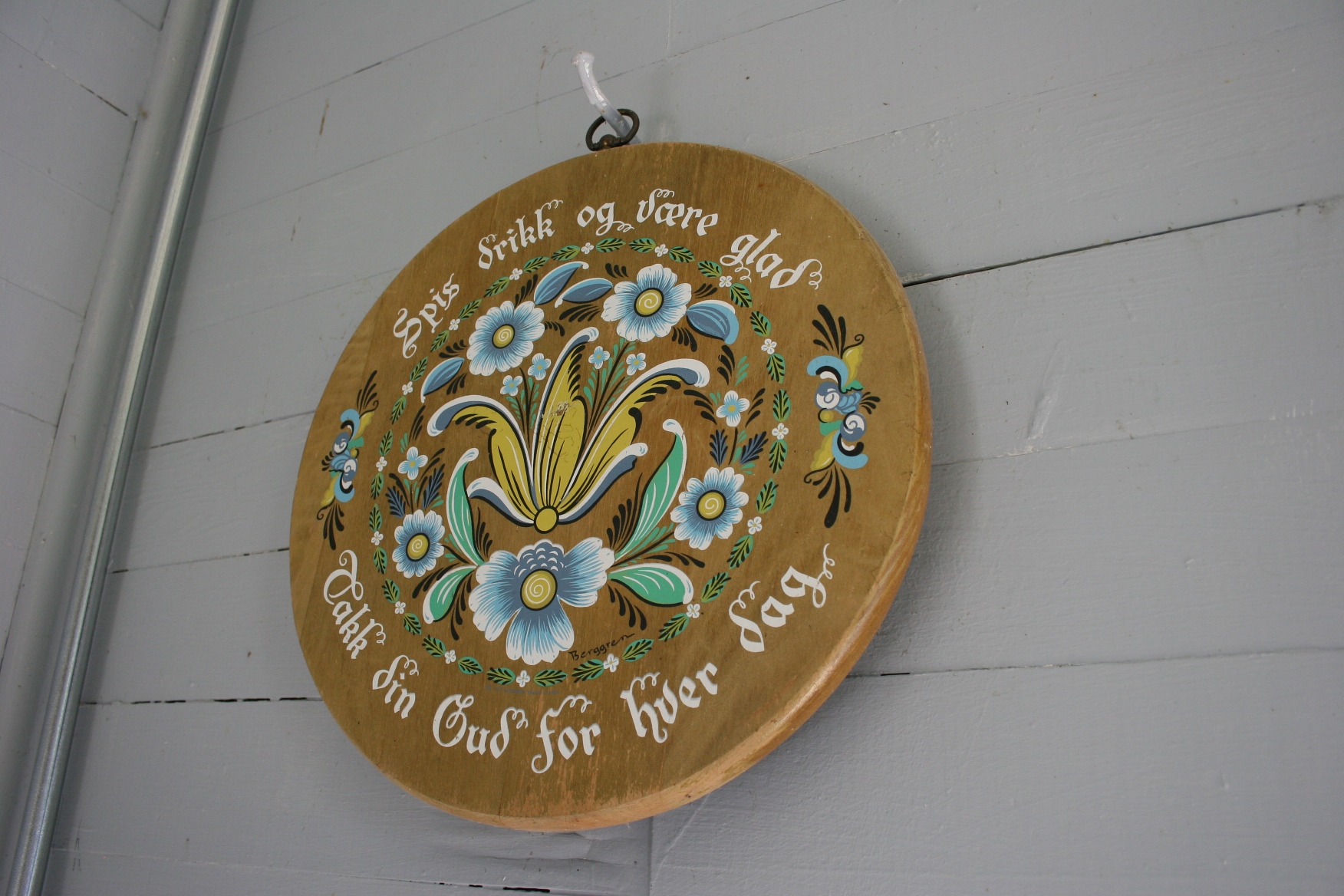
Sitting near the back of the church, I study these words, thinking in German until I remember I am inside a Norwegian church. After the service, I talk with historian and preservationist Bob Dyrdahl. The scriptural quote comes from John 3:16, he tells me. "For God so loved the world that He gave His only begotten Son..." Sure enough, upon closer examination I determine that Bob knows his Norwegian.

I run my fingers across the flowers on the pulpit and imagine the rough hands of a Norwegian immigrant shaping this wood into a beautiful work of art. In the background is the top of the altar, defined by tablets, signifying the 10 Commandments and centered by a cross and a painting of The Last Supper.

In the balcony, historian Bob Dyrdahl shows me this treasure, the dated (October 30, 1894) signature of A. P. Lindgren who painted stars upon the ceiling and edged it with this stenciled border. His work also graces other sections of the sanctuary, along the stairway, for example.

A rear view of the Old Stone Church, a simple structure with three shuttered windows on each side of the building.

A stone's throw from the Old Stone Church, a view of Monkey Valley.

#

THIS IS JUST A SAMPLING of the photos I shot at the Old Stone Church. Please check back for additional images to be posted this week on Minnesota Prairie Roots.

Copyright 2010 Audrey Kletscher Helbling


A creative contest to celebrate a church anniversary June 21, 2010

Filed under: Uncategorized — Audrey Kletscher Helbling @ 10:10 AM
Tags: , , ,

EVERY YEAR FOR AS LONG as I can remember, the Faribault Daily News has sponsored a “Lord of the Things” contest during our community’s annual Heritage Days celebration. A photographer photographs snippets of items—maybe a sign, a decorative cornice on an old building—to be published in the newspaper. Entrants then identify the objects and their public locations.

Recently I adapted that idea for a 140th anniversary celebration at my church, Trinity Lutheran in Faribault. Wanting a scriptural theme, I pegged the contest “SEEK & FIND,” based on Matthew 7:7: “Ask and it will be given to you; seek and you will find; knock and the door will be opened to you.”

I photographed half of Jesus' face in a stained glass window as a focal point for a posterboard displaying 4 x 6-inch contest photos.

I aimed to provide a fun family activity, to increase worshipers’ awareness of their church surroundings, to focus on church history and to get people to our 140th anniversary reception. All of those goals were achieved in a process that began months ago.

Back in April, before anyone knew I was planning this activity, I roamed the church campus photographing perhaps two dozen items, which I narrowed down to 14. I discovered, then, that I’ve not even noticed some of what surrounds me.

How long has that painting of Christ, gazing at a baby, hung above the drinking fountain?

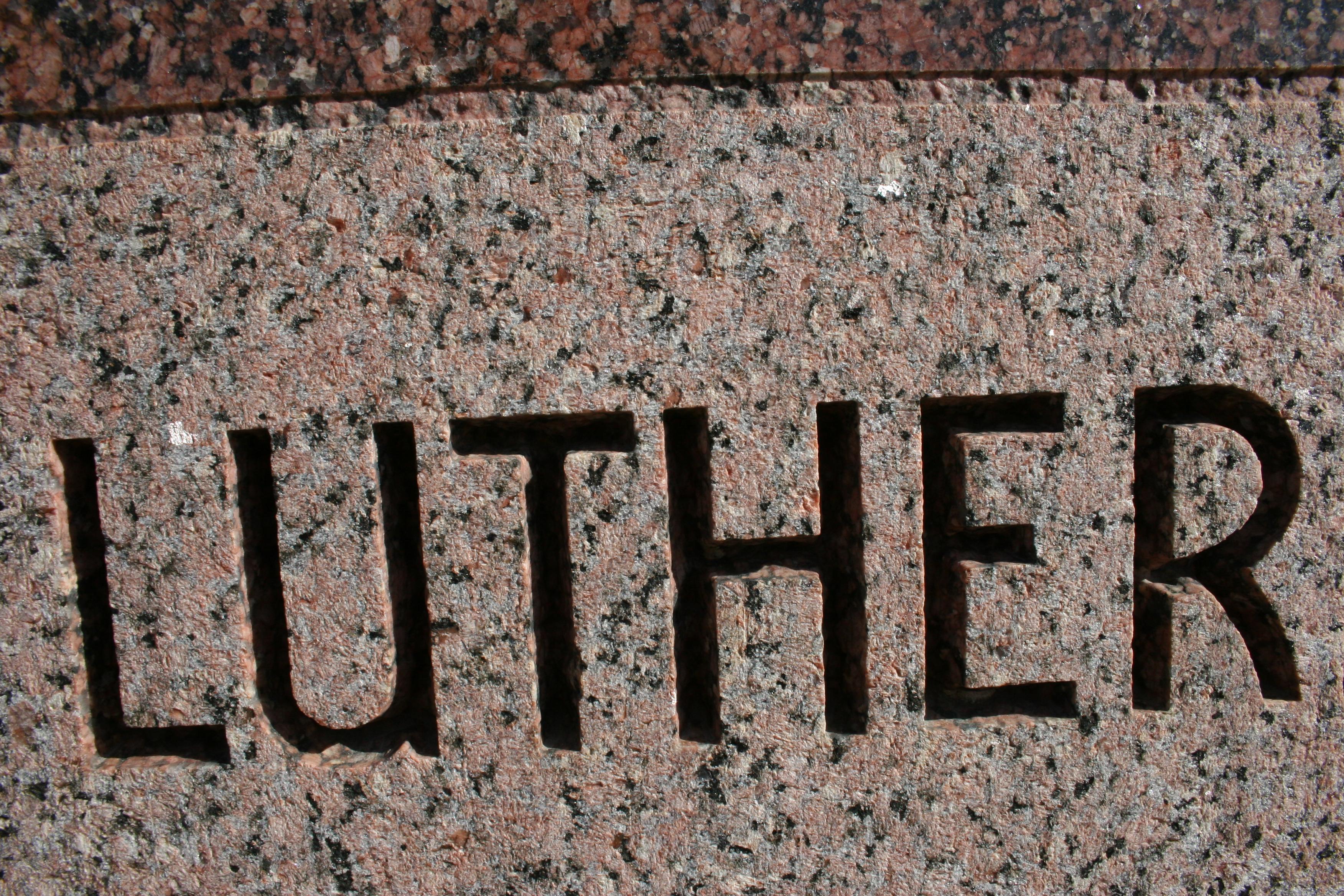
How long has “Trinity Lutheran School” been chiseled in granite?

Why have I not seen that angel in the stained glass window until today?

This contest, I determined, could present a challenge to those who entered. I was right.

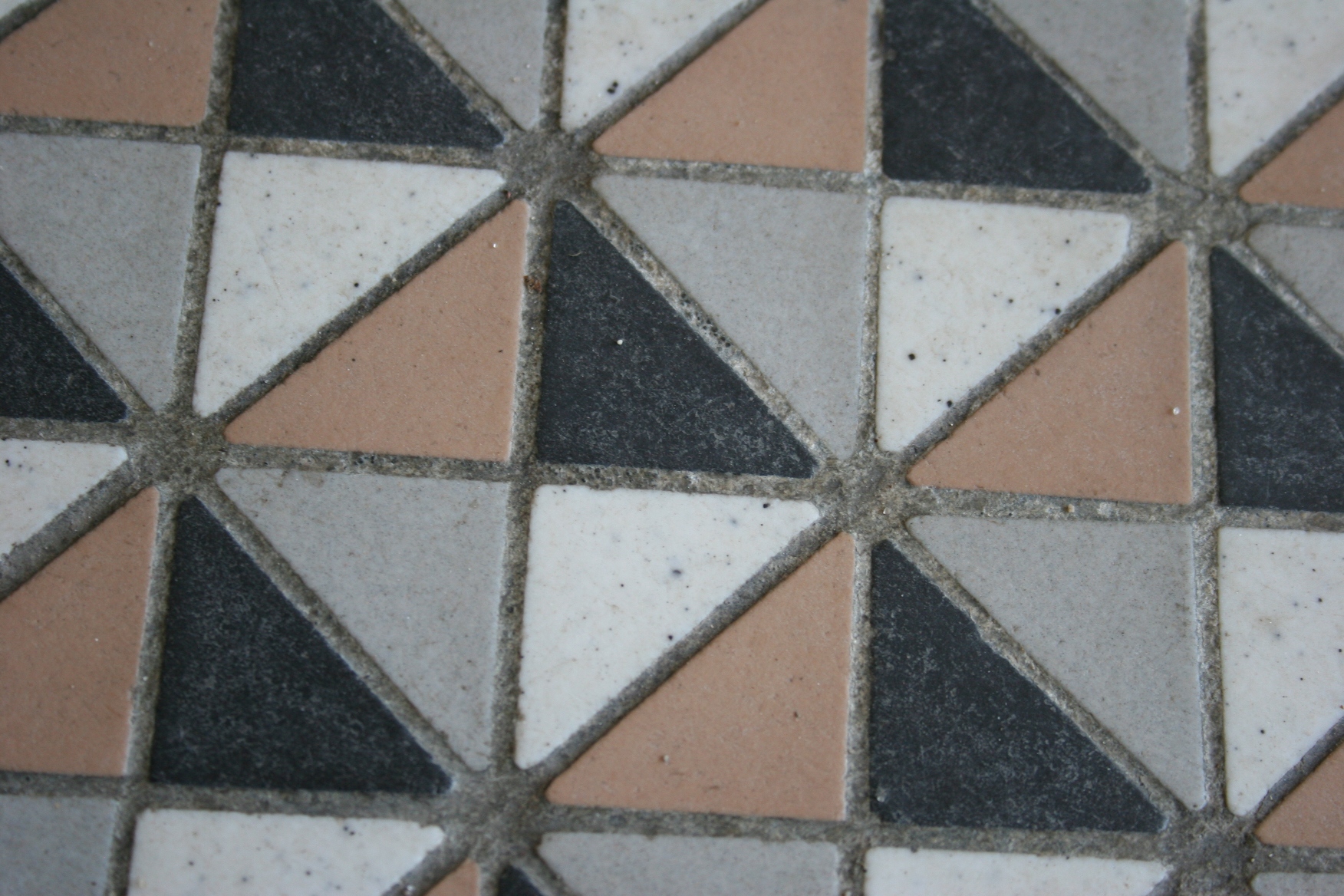
Dennis, one of the contest winners, shares with me on Sunday—the day SEEK & FIND winners’ names were posted at the anniversary reception—that he puzzled over a single photo. “I thought it was a window,” Dennis tells me, explaining how he searched for 45 minutes. But his story takes a humorous twist. After informing his wife, Pat, that he can’t identify the geometric pattern, she instructs him to look down. Dennis is standing on the elusive tile floor in the photograph.

That entertaining story makes all of the time and energy I invested in this contest worth the effort. But so does the story from Marilyn, who brought her three grandchildren to church—twice—to ferret out the photographed objects. The first time, a carpet cleaning crew kept the group from entering the sanctuary. The second time, they tread quietly within the church as a musician tuned a piano.

Then you have Lee and Laurel, who began hunting for the photographed items after the late church service one Sunday. With the clock ticking toward noon and morning worship volunteers wanting to go home, the couple finally had to give up and leave, or be locked inside the church.

Such stories amuse, and please, me.

I would have been even more pleased had more people entered the contest. Only 31 entries in the two divisions—adult and youth—were submitted. I expected three times that many, especially after publicizing the competition in church newsletters and bulletins, via word-of-mouth, by e-mail, via announcements and by handing entry sheets directly to church members.

But…, I tried. And I am confident that the 17 entrants who won are quite pleased with prizes that included homemade pies from the Trinity Pie-makers, gorgeous lily bouquets from Virgil and Jane’s garden, Ryan and Sara’s homemade maple syrup, Roy’s handcrafted fretwork cross, gift certificates to local businesses, and more.

I’m not discouraged by the lack of response, only disappointed.

But I’m also encouraged. Already, one contestant has asked: “Are you going to do this again next year?”

Uh, no, but maybe in 10 years, when Trinity celebrates its 150th anniversary.

© Copyright 2010 Audrey Kletscher Helbling


A place of peace, inside Friedens Kirche April 8, 2010

Filed under: Uncategorized — Audrey Kletscher Helbling @ 7:41 AM
Tags: , ,

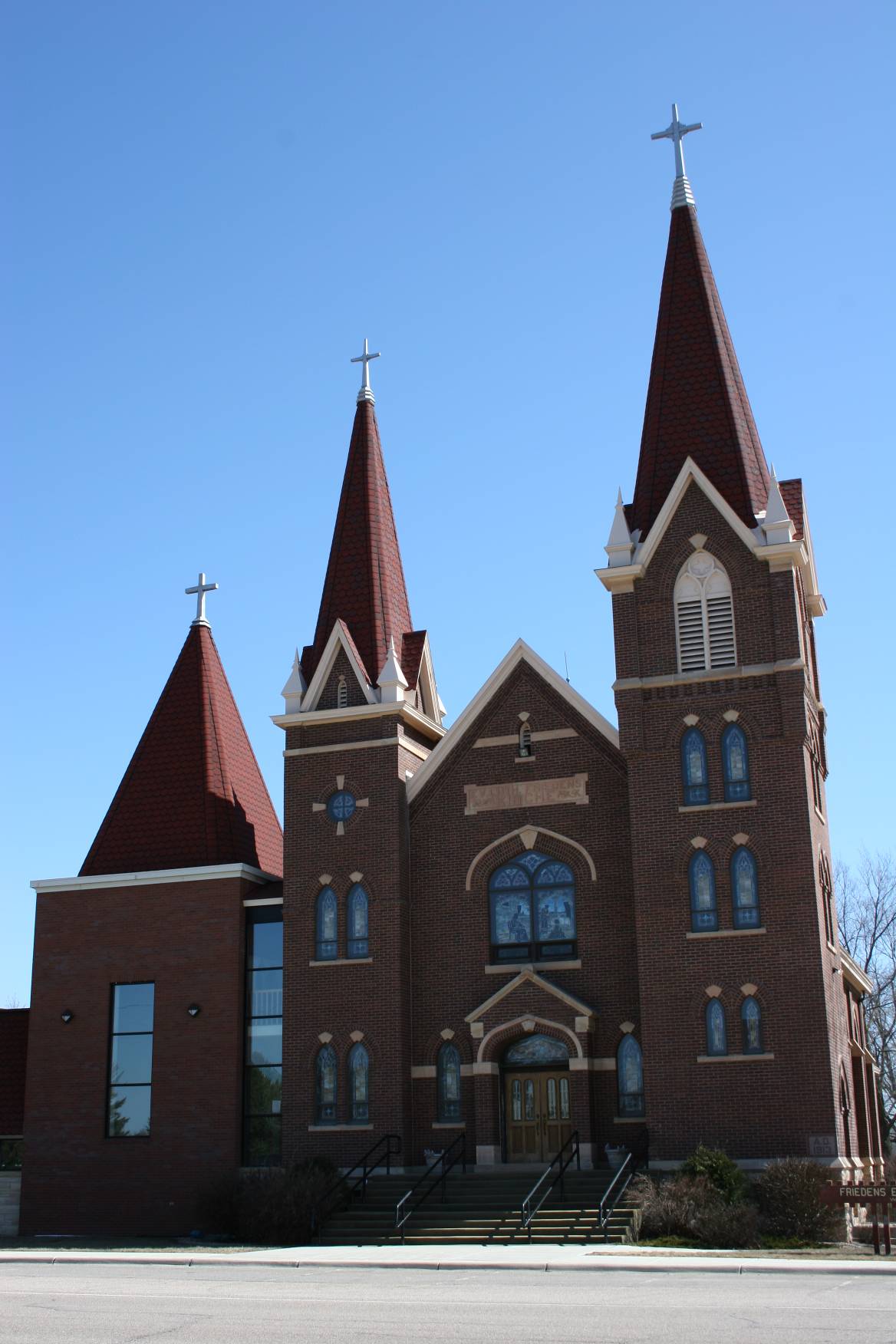
Friedens Evangelical Lutheran Church near New Prague

ONLY 34 YEARS AGO, the last German services were held in Friedens Evangelical Lutheran Church, rural New Prague.

This surprises me—that German services continued up until 1976.

But I find that fact, printed right there in a church brochure I pick up recently while en route to Jordan, Minnesota. These days, lured by their historical and reverent beauty, I can’t pass by an old country church without stopping and tugging at front doors, hoping to get inside.

Typically, I am disappointed because most often church doors are locked.

On this March afternoon, though, I feel blessed because a side door to Friedens is open. A worker, who is laying new flooring, is sitting in a van next to the church eating his lunch.

“You can go inside, but I can’t give you permission to go inside,” he insists several times. I am persistent, though, and he finally concedes that my husband and I look like “decent folks.”

We are, and I intend to enter the church with or without his approval.

My only desire is to see the interior of this old, stately double-spire brick house of worship that stands proudly along Le Sueur County Road 30.

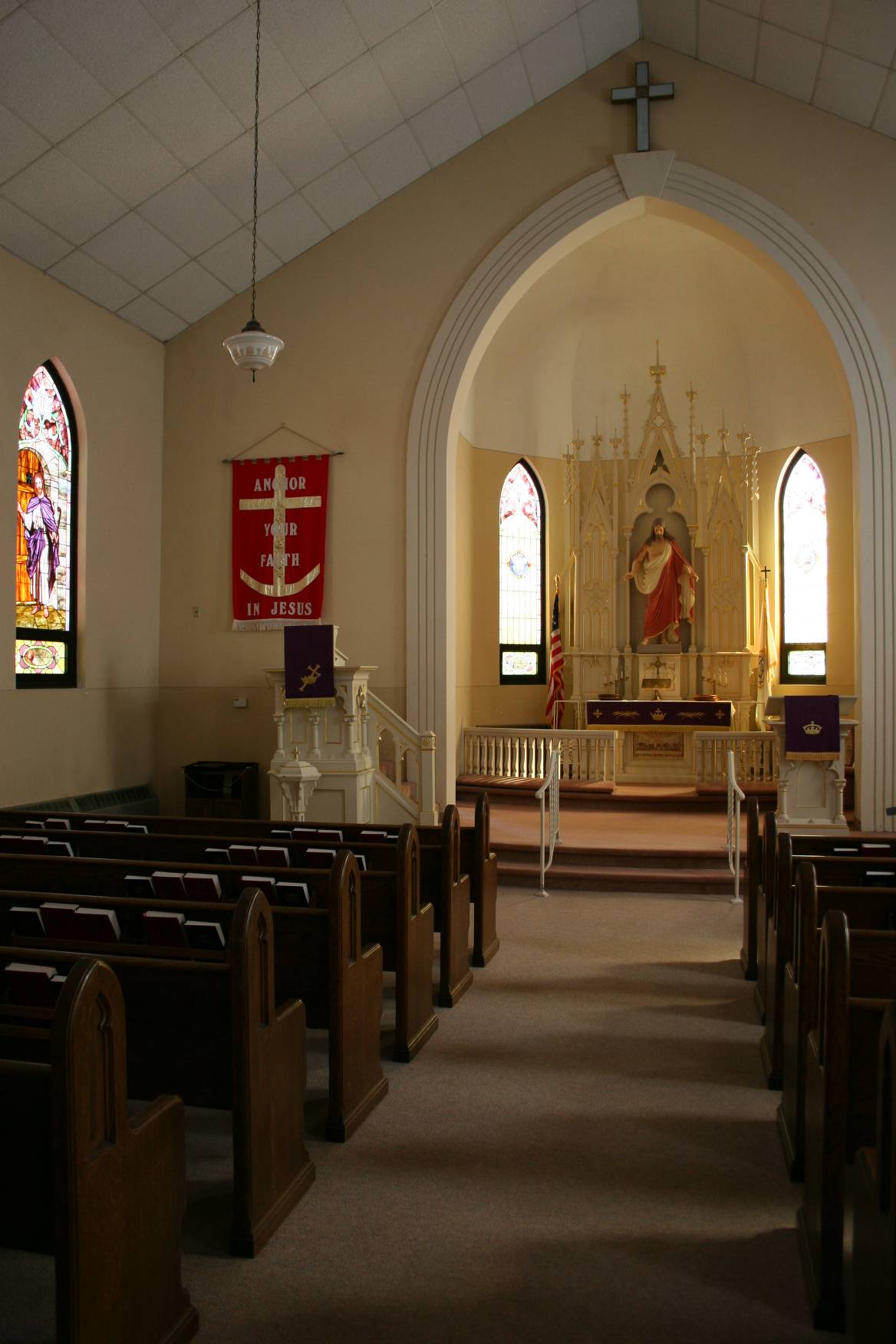
Once inside, I am not disappointed. In fact, I am pleased to discover that the sanctuary resembles the Wisconsin Synod church of my youth, St. John’s Lutheran Church in Vesta.

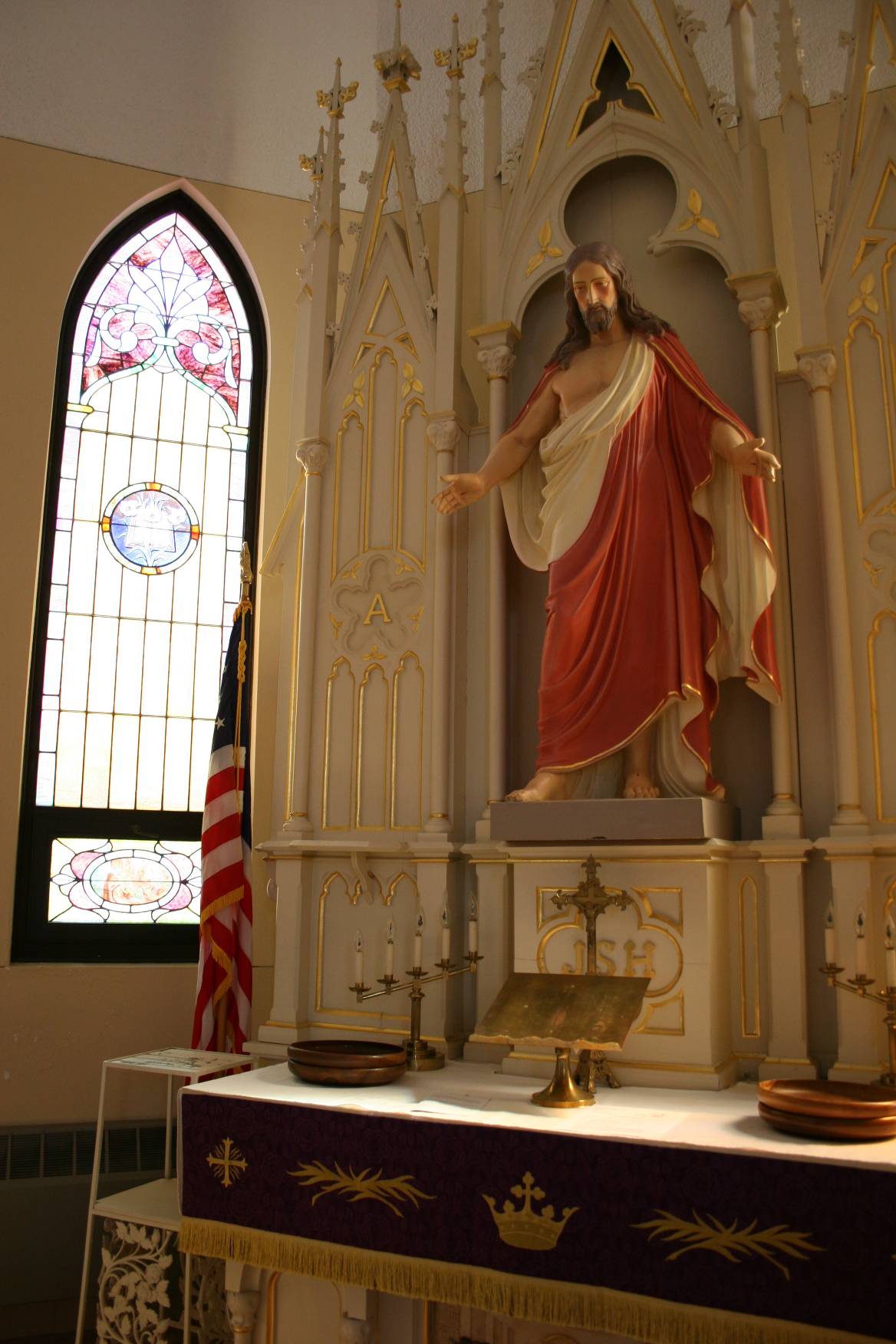
The ornate gold-trimmed white altar, specifically, takes me back decades to the place where I worshipped every Sunday. Friedens’ altar appears a carbon copy of the altar in the old St. John’s church building. I figure this altar is typical of that era—Friedens was founded in 1864 and this building constructed in 1913.

Inside Friedens Lutheran

The ornate altar and the statue of Christ are similar to the ones that once graced my childhood church in Vesta, Minnesota.

Inside this old Wisconsin Synod church, I admire the gentle curves of the balcony, sunlight streaming through beautiful stained glass windows, lamps dangling from chains above the pews, even the twists of the bell rope.

Looking toward the curving balcony of Friedens.

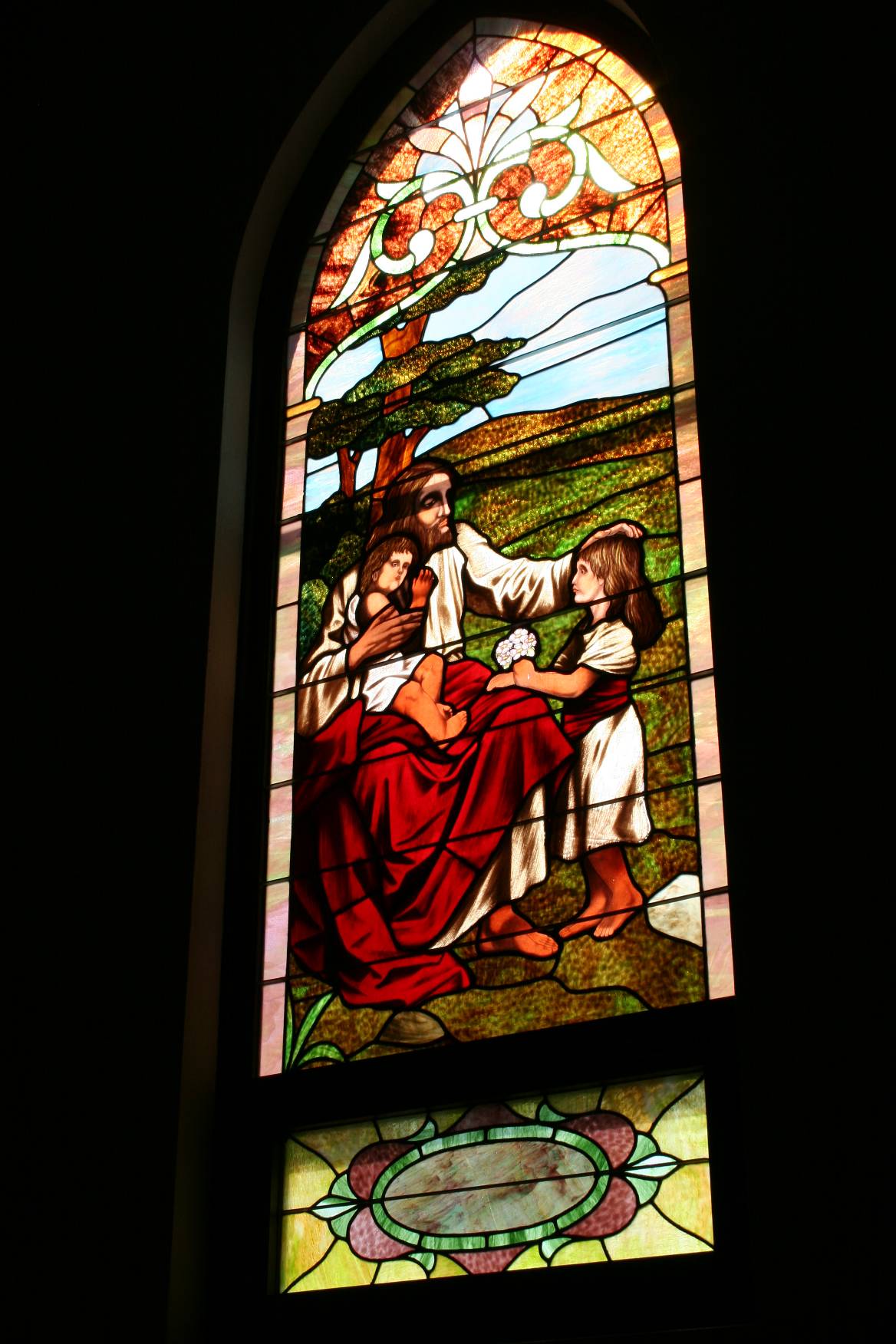
Jesus invites the children to come to Him in one of many stained glass windows inside Friedens.

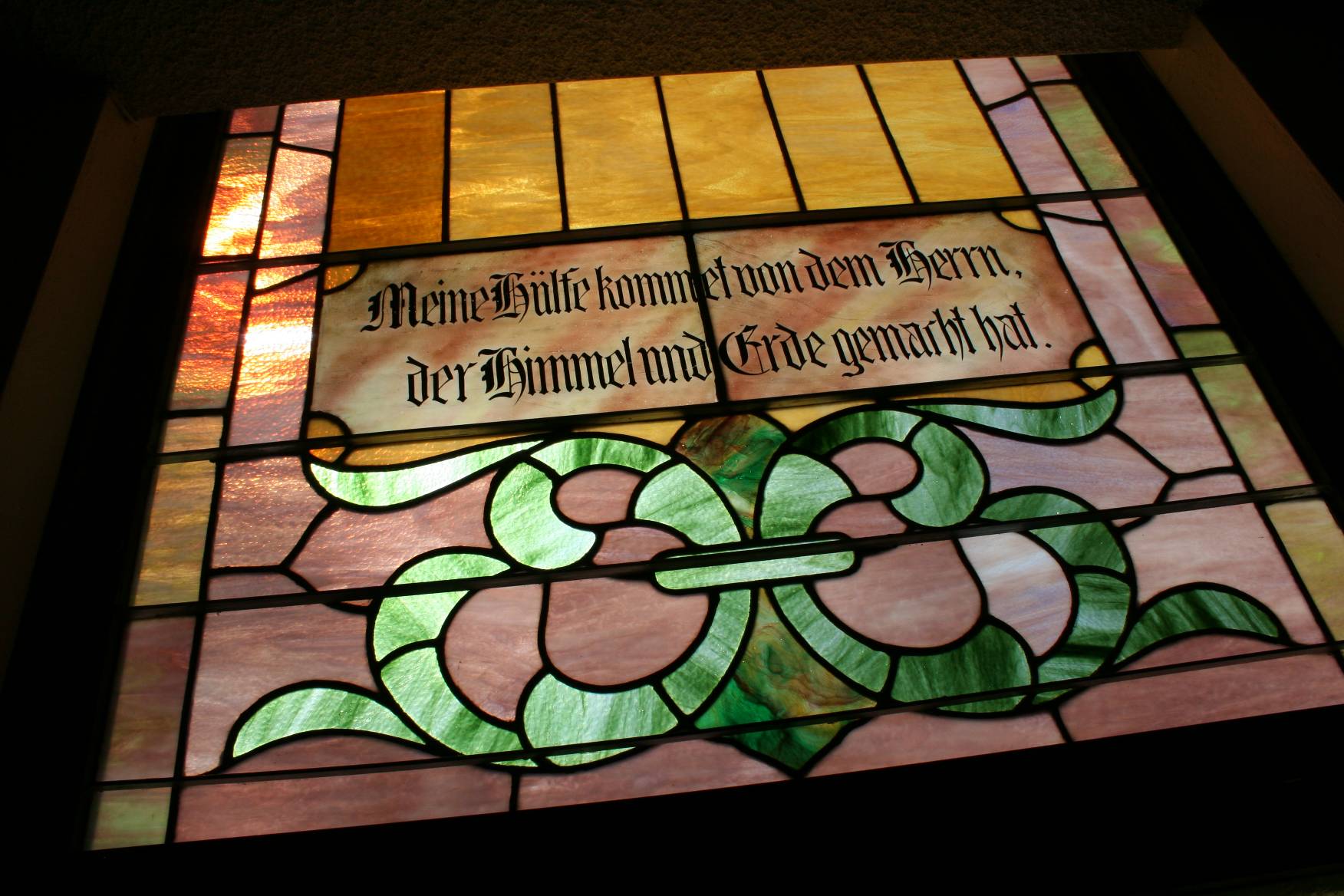
Friedens' German heritage is reflected in this stained glass window, which translates, "My help comes from the Lord who made heaven and earth."

This house of worship inspires me, brings back so many memories, even though I’ve never been here until today.

But then my husband brings me out of my reverie. “Should I ring the bell?” he asks.

I admit that it is tempting to grab the rope and pull as I round the stairs into the balcony. This, I know, will surely prompt the floor-layer to evict us and label us anything other than “decent folks.”

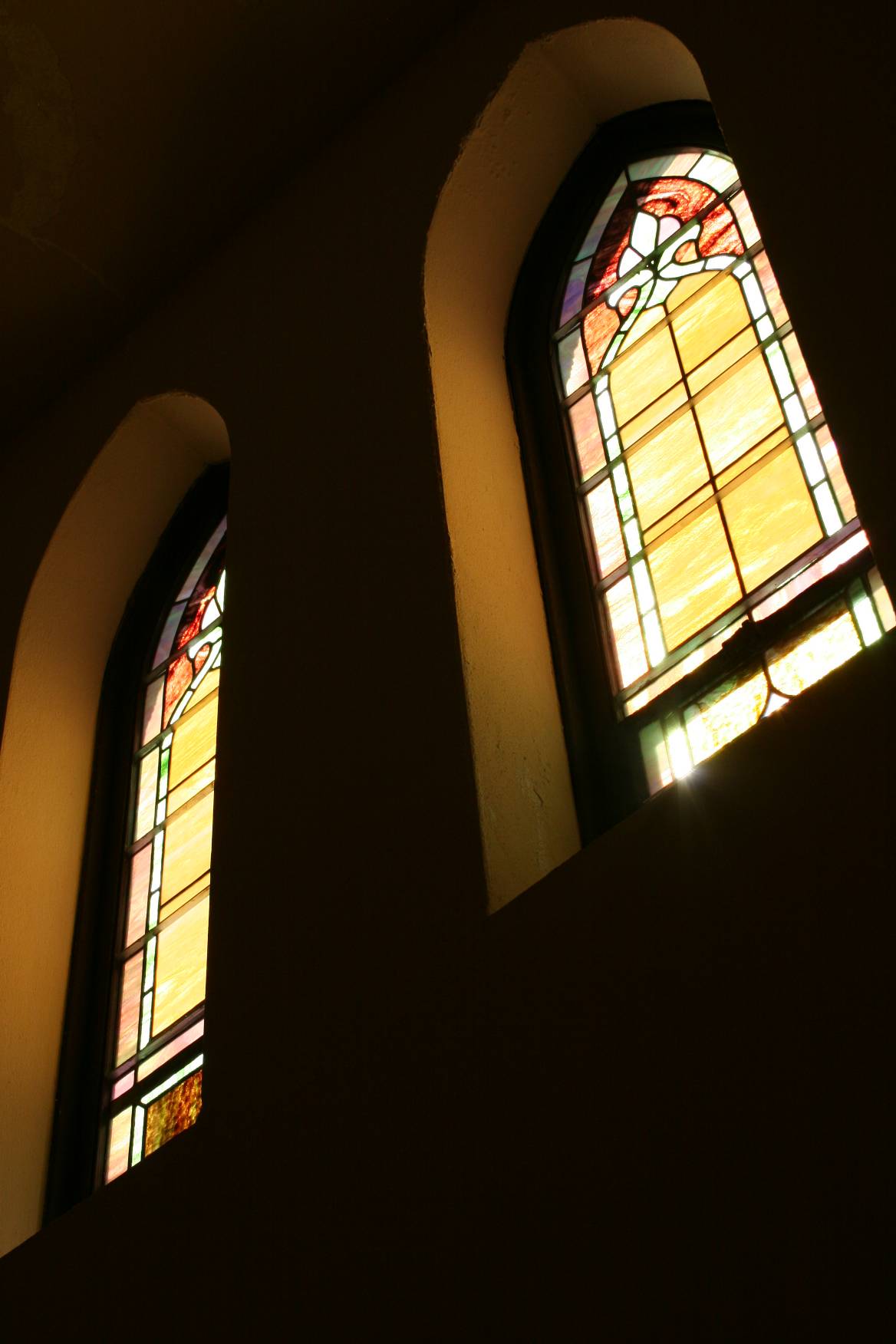
I walk past these two windows on the stairway leading to the balcony.

Mary and Martha depicted welcoming Jesus in this balcony window.

Soon I have finished photographing the interior of this lovely old church. I am standing outside now, braced against a brisk March wind taking pictures of the exterior.

Back inside the car, we begin to pull away when a man in jogging clothes emerges from the house across the roadway. He’s half-walking, half-leaping, struggling to pull on a pair of shoes. He is, I figure, the pastor, and I am right.

We stop and the Rev. Henry Koch introduces himself. I explain that I am a writer and that I love old churches and that I was raised Wisconsin Synod Lutheran. We laugh together when I say I’m not a traitor because today I am a member of a Missouri Synod Lutheran congregation. My conservative Lutheran guilt prompts the synod transfer confession.

We talk a bit about the weather, which has been an adjustment for this clergyman. He moved here from Florida several years ago, likes it here and says this is a good place to raise his son.

As I look around this rural setting, I understand. Here, in the shadows of a church that bears four crosses high atop four towers—two on the original church and two on the fellowship addition—seems an ideal place to raise a family.

And under the care of this congregation—Friedens, the German word for “peace”—I can only imagine the peace that also comes in living here upon the land settled by Hannoverian German Lutheran families in the mid-1800s.

© Copyright 2010 Audrey Kletscher Helbling


Easter hope April 4, 2010

Filed under: Uncategorized — Audrey Kletscher Helbling @ 10:37 AM

Tags: ,

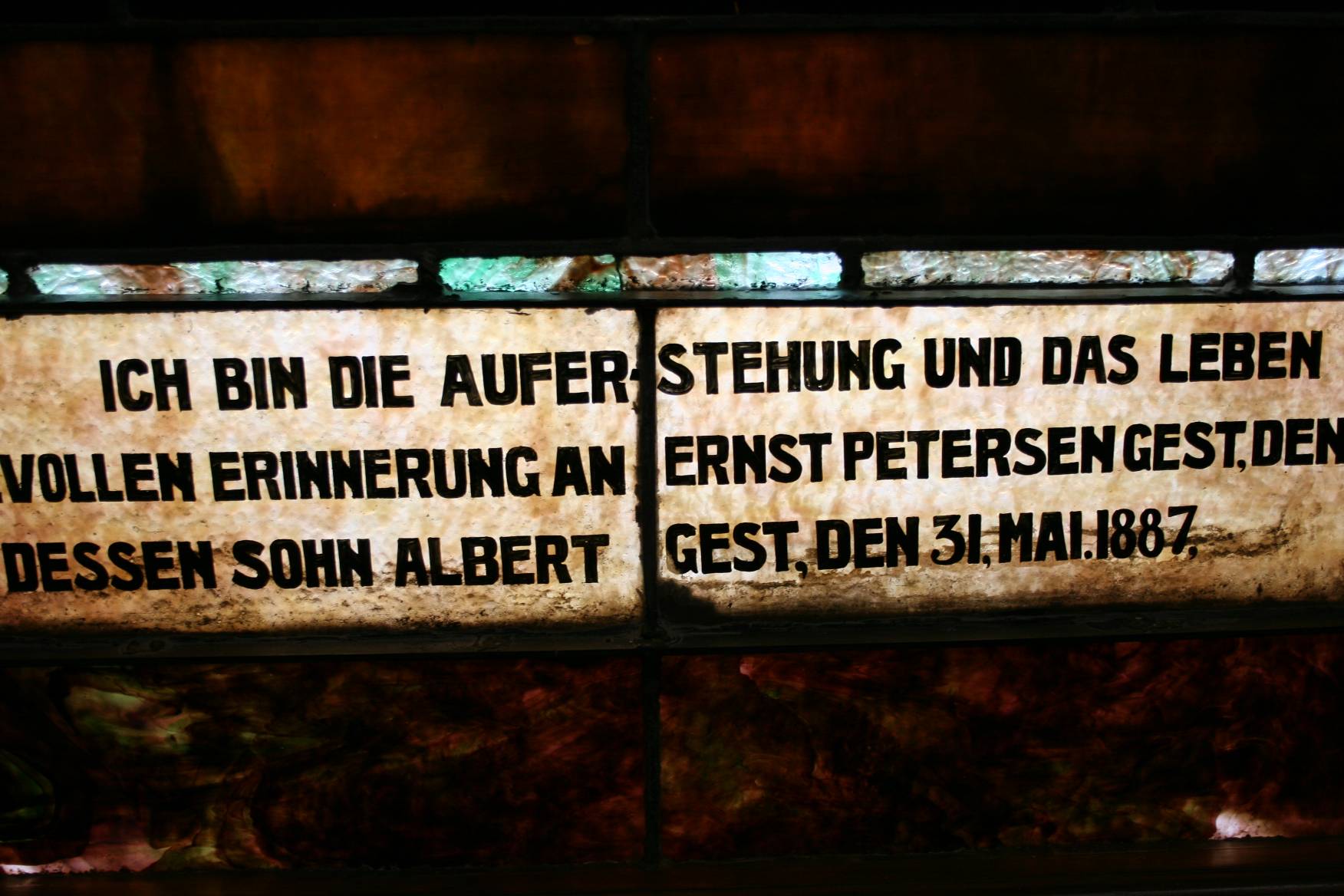
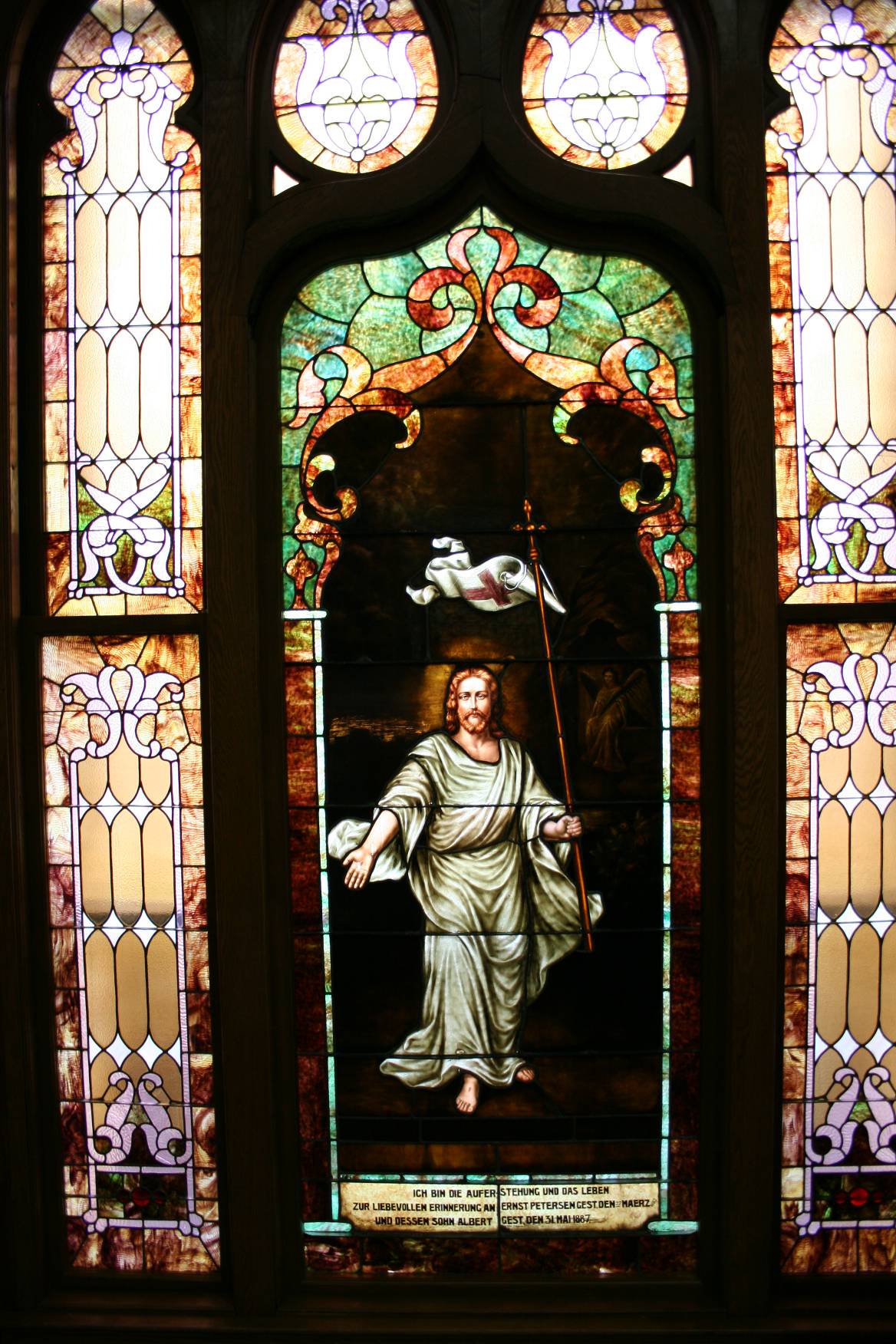
German words on a resurrection window at Trinity Lutheran Church, Faribault Minnesota.

IN THE LANGUAGE of our forefathers, the German words are as powerful, meaningful and promising today as they were yesterday.

“Ich bin die Auferstehung und das Leben.”

I am the resurrection and the life.

Yes, Jesus is the resurrection and the life.

As you celebrate Easter, may those words assure you of everlasting life through our risen Lord.

He is risen. He is risen, indeed.

Alleluia!

"I am the resurrection and the life." A stained glass window in the Trinity Lutheran Church sanctuary, Faribault, Minnesota.

© Copyright 2010 Audrey Kletscher Helbling