Minnesota Prairie Roots

Writing and photography by Audrey Kletscher Helbling

So my vision is a little distorted right now May 16, 2024

Filed under: Uncategorized — Audrey Kletscher Helbling @ 5:00 AM
Tags: , , , , , , ,
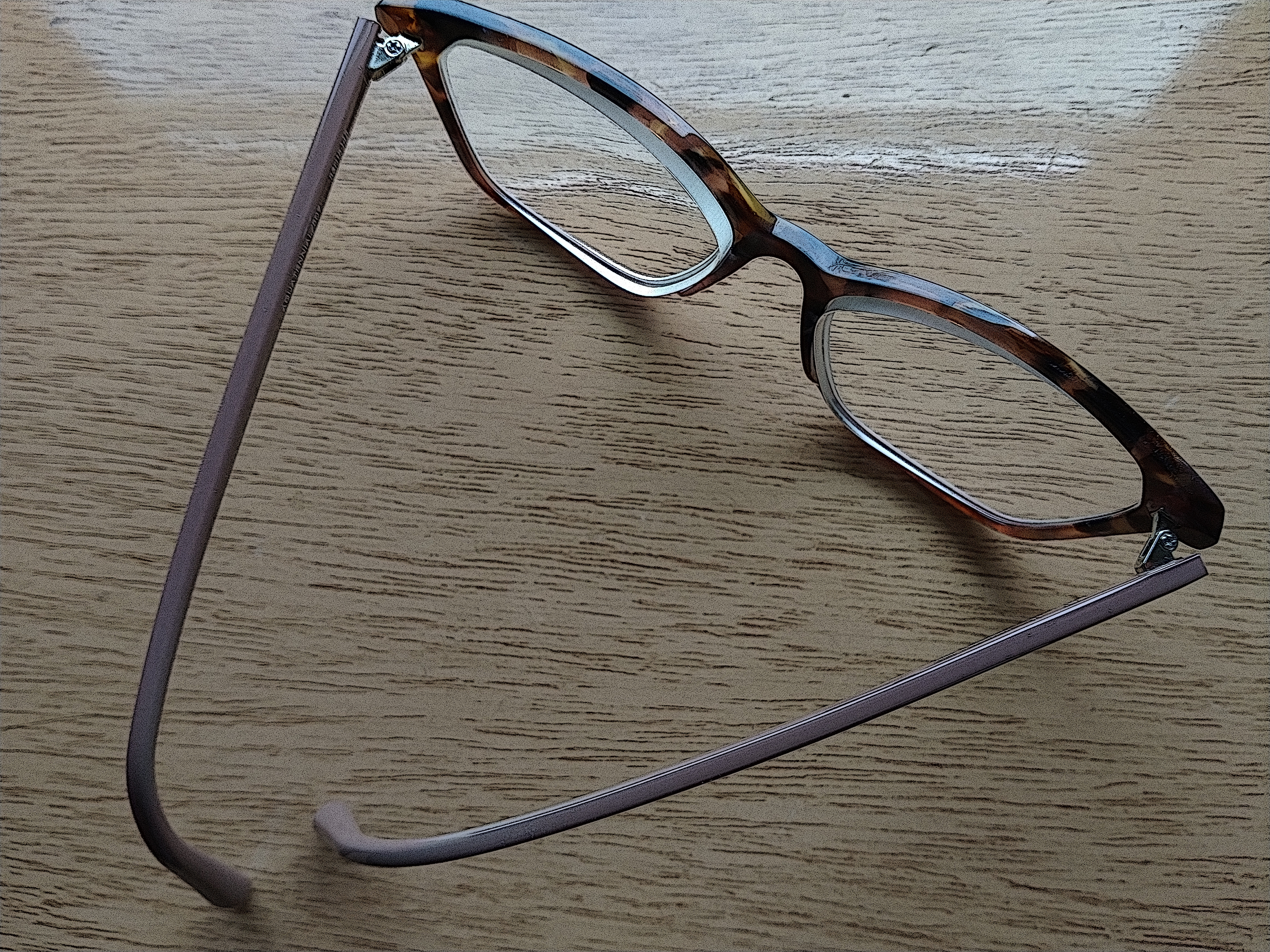
My new glasses with added prisms have rather thick lenses (especially the left one) near the nosepiece. (Minnesota Prairie Roots copyrighted and edited photo May 2024)

“DO NOT WEAR your glasses when you leave here,” she warned. I listened. I didn’t want Heidi picking me up off the pavement outside the eye clinic.

“Be careful going up and down steps tomorrow,” Randy warned Tuesday evening. I listened.

A MAJOR CHANGE

Just hours into my first day of wearing new prism-heavy prescription eyeglasses on Wednesday, I understand why my optician and my husband issued those warnings. These new glasses, which are supposed to help me deal with double vision via prisms, are a big change. Make that a major change.

Time will tell whether I can handle the “5 base in” horizontal prisms ground into each lens. That’s ten total, which Heidi says is a lot. I don’t pretend to understand all of these numbers. But the neuro ophthalmologist who did recent surgery to realign my eyes said I really needed fourteen. He didn’t think I could tolerate that amount.

TRYING TO AVOID ANOTHER SURGERY

Hopefully I can manage the prisms added to my glasses. If not, I will need to consider more surgery, something I’m hoping to avoid. I’ve already had bilateral strabismus surgery twice—at age four and most recently in late January. Immediately post-surgery, my eyes were in near perfect alignment. But then they reverted to being misaligned in a “significant regression of surgical effect.” This happens sometimes.

So here I am today, trying a new prescription with more prisms in hopes it will help me achieve “comfortable binocular vision” and avoid a third surgery on my eyes.

AN OVAL DINNER PLATE

As I type, I am looking at a computer screen that appears slanted, curved. My world is distorted. I’d been warned, but didn’t think the distortion would be quite this bad. A dinner plate, when tilted, appears oval rather than round. And when I pulled a key lime pie from the oven, I nearly dropped it. I saw a pie that was sliding; it wasn’t. I feel almost like I’m up high looking down on the world. It’s weird and odd and disconcerting.

But I’m trying. I intellectually understand that my eyes and brain are adjusting. I must give it time. Two weeks minimum, my surgeon said.

My optician, Heidi, who has supported me from pre-surgery through today, advised me to keep wearing my new glasses, as tempted as I am to pull out my old ones with fewer prisms. I stashed them in a drawer. Out of sight, out of mind. Well, maybe not out of mind.

HOLDING HOPE

I’ll check in with Heidi today. She asked me to do that, going above and beyond because she gets it. She also deals with double vision and prism eyeglasses. Her positive attitude and encouragement have helped me tremendously. The word “hope” runs strong in our conversations.

And that is my focus, along with being really really careful on steps and elsewhere as my eyes and brain adjust to these new lenses through which I view a currently distorted world.

© Copyright 2024 Audrey Kletscher Helbling


Update: My eyes are aligned February 5, 2024

My old glasses with prisms atop information about bilateral strabismus eye surgery. (Minnesota Prairie Roots copyrighted file photo November 2023)

TWO WEEKS OUT from bilateral strabismus eye surgery at M Health Fairview Clinics and Surgery Center in Minneapolis, my vision is looking good, pun intended.

Neuro ophthalmologist Dr. Collin McClelland was pleased with the results of his 1.5-hour surgery on my eyes. I saw him and his team last Wednesday for my post op visit. My previously misaligned eyes are now in full alignment. In three to four months, I should know the final outcome. Eyes can shift yet as muscles heal and my brain adapts to the new alignment.

Updated glasses (minus prisms) and updated eyes, nine days after surgery. (Copyrighted photo by Randy Helbling)

This is a process, this recovery and healing. I can tell my brain is working hard to adapt to my new way of seeing the world. My eyes remain red, irritated and itchy. But I am looking less ghoulish each day with my eyes no longer leaking fluid and blood. Time, healing, ointment and eye drops have all helped.

Mostly gone is the double vision which led me first to my local ophthalmologist late last summer and then to the specialist at the University of Minnesota in Minneapolis in October. Today I see double only upon awakening and for a while thereafter and when I’m overly-tired. That compares to more often than I could count pre-surgery. That is reason to feel thankful.

As you may expect, I arrived at my post-op visit with a list of questions, tasking Randy to take notes as I focused on eye checks done by two doctors and another medical staff member. Yes, the exams were repetitive and exhausting. But I appreciate the thoroughness of the post-op evaluations.

I won’t get into the medical details of my surgery, not that I understand them anyway. But I learned that Dr. McClelland worked on two muscles in my right eye and one in my left to realign my eyes. He had to work through extensive scar tissue from this same surgery done in 1960 by Dr. Theodore Fritsche in New Ulm.

This is what I looked like shortly after surgery in the recovery room. If you look closely at my left eye, right above the steri strips, you’ll see a black thread taped to my skin. That’s the end of the adjustable suture. (Copyrighted photo by Randy Helbling. I asked him to take the photo, not realizing how awful I looked.)

Perhaps the most intriguing part of my recent surgery is the adjustable sutures stitched into my left eye. That’s exactly what it means. Adjustable. During recovery, when I was alert enough to focus on a big letter E across the room, Dr. McClelland tweaked the alignment based on what I saw. Twice he had to pull on the sutures to move my left eye into alignment. I’m thankful for the topical anesthetic eye drops that semi dulled the pain and for my inability to clearly see what he was doing. I could only see the blurry movement of his hands and what I think was a tweezers. I will admit the tug on my eye felt unsettling.

Several days post-surgery, I was already looking better. It’s difficult to see my red eyes in this image. But trust me, they were still very red. The flowers are from my dear children, sons-in-law and grandkids. (Photo credit: Randy Helbling)

But here I am today, two weeks out from all of that. Each day brings some improvement in the physical appearance of my eyes and in the way my eyes feel. I still feel, though, like a pebble is stuck in my right eye. That, my surgeon explained, is likely the end of a suture irritating my eye. I asked him to clip it off. Of course, I was joking because I realized he couldn’t possibly do that. But I had to bring some humor into the post-op exam room where medical residents listened, observed and learned.

Healing takes time and patience. Not only do my eye muscles need to heal, but my brain needs time to adjust. I’ve learned a lot about the brain in the past year since developing neurological issues from COVID and undergoing six months of vestibular rehab therapy, finishing that less than five months ago. My brain, an amazing and complex organ, is still trying to manage all that goes into it.

Beth, a blogger friend from Michigan, sent this handcrafted get well card, which made me laugh aloud. I love it and all the other cards and wishes I’ve received. (Minnesota Prairie Roots copyrighted photo 2024)

Now with this recent eye surgery, I must limit screen and reading time. I learned this past Saturday that shopping is like physical therapy for my eye muscles and brain. My eyes hurt and I felt exhausted after grocery shopping and stops at Books on Central, Eclectic Alliance and a Big Box retailer. Eyes move a lot when you’re looking at items on store shelves. I overdid it.

My vision is not crystal clear and is sometimes blurry and distorted. I haven’t attempted photography yet, except with my cellphone. Putting anti-inflammatory drops into my eyes four times a day to reduce inflammation has proven challenging. I can’t seem to master that skill. I am thankful for Randy’s help.

Meanwhile, I am wearing prescription glasses without prisms. Before surgery, no number of prisms would correct my double vision. To see such improvements so soon after surgery leaves me feeling grateful to my surgeon and this team—for their knowledge, their skill and their compassion.

#

NOTE: I am grateful also to you, my blog readers, for your support and encouragement offered in the comments section and in get well cards I’ve received. You’ve lifted my spirits. Thank you.

© Copyright 2024 Audrey Kletscher Helbling
 

A post eye surgery update January 24, 2024

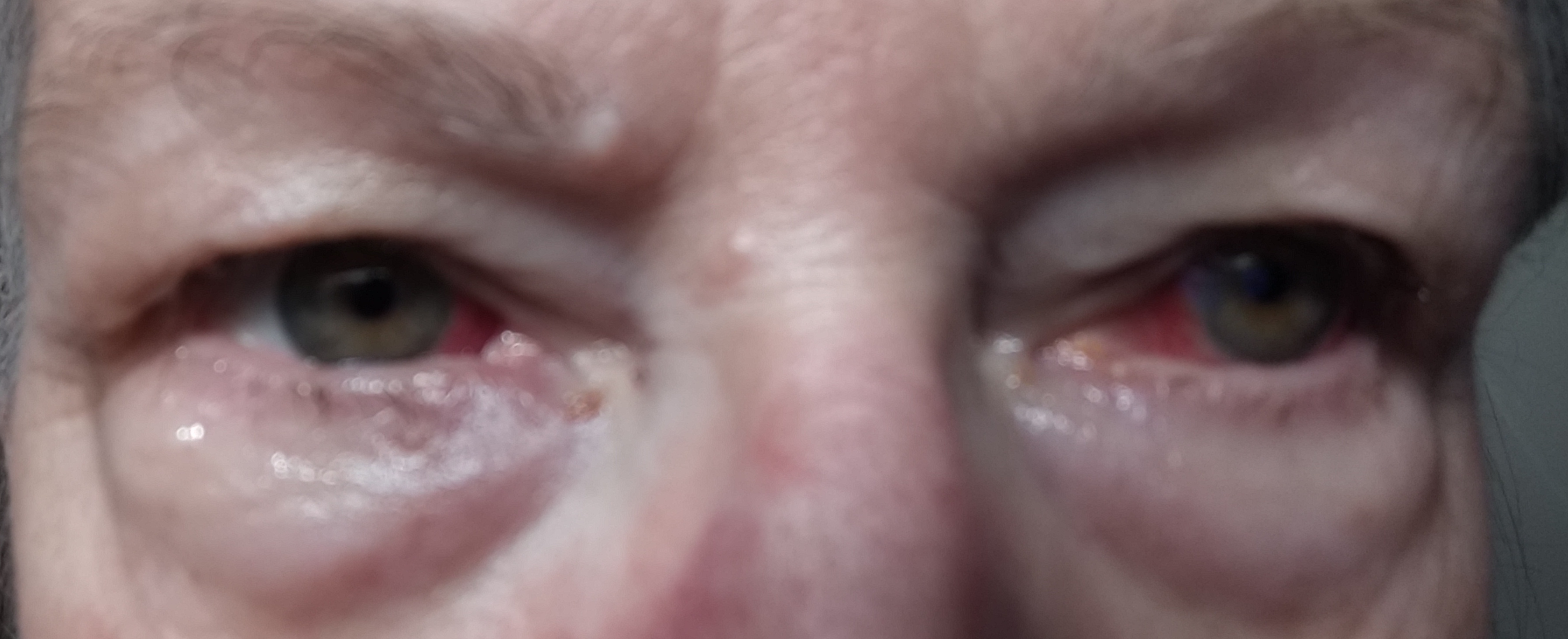
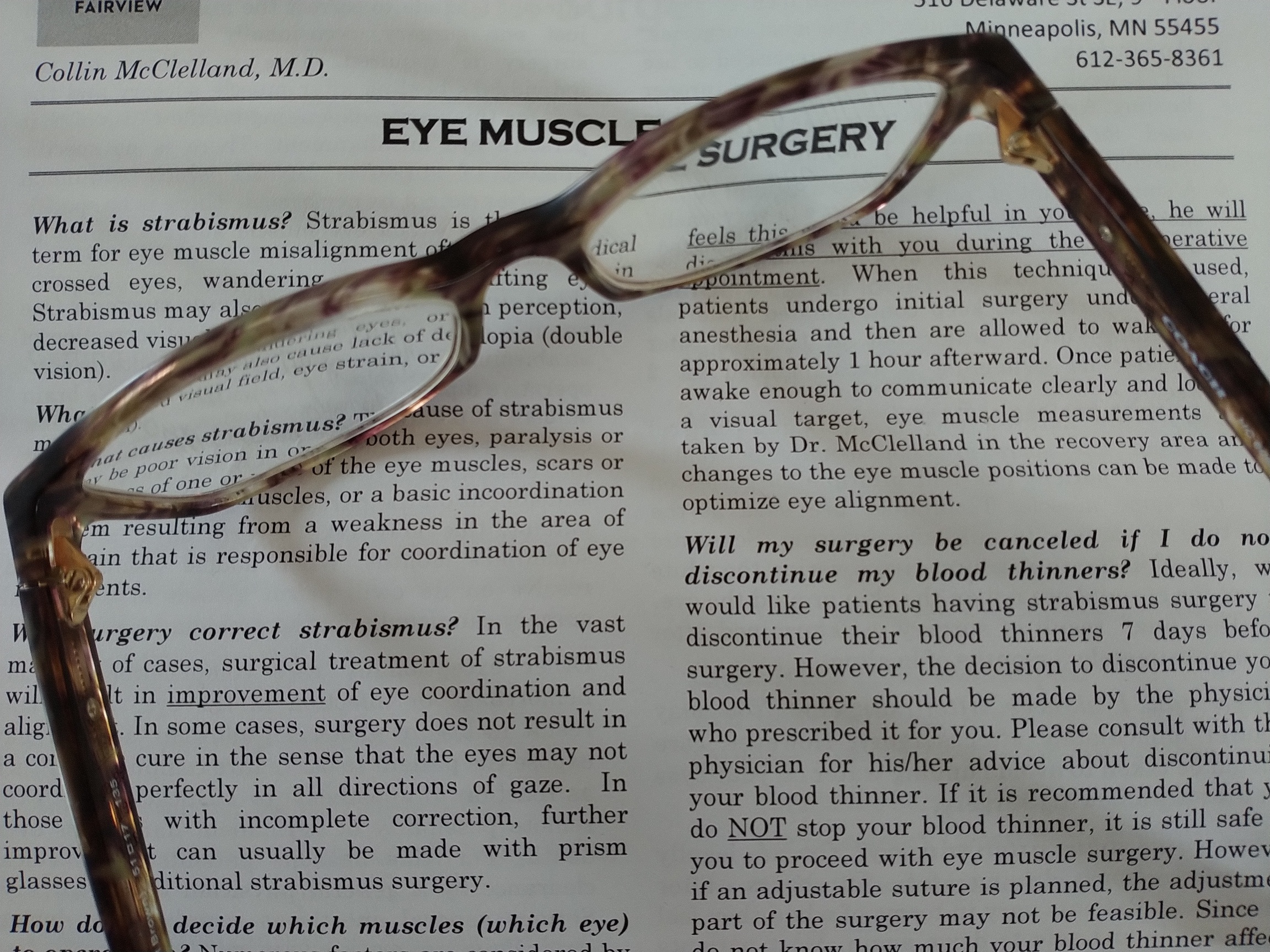
Not a good photo at all…but this gives you an idea of what my eyes look like. Randy took this pic Tuesday afternoon. (Minnesota Prairie Roots copyrighted photo January 2024)

TWO DAYS OUT from bilateral strabismus eye surgery at M Health Fairview Surgery Center at the University of Minnesota in Minneapolis, I am looking less Frankenstein’s monster than I did. Not that I look exactly like the fictional monster created by Dr. Victor Frankenstein in Mary Shelley’s novel. But I feel like I appear as ghoulish with my red, fluid-leaking eyes.

All humor aside, surgery to correct my eye misalignment went well. Neuro ophthalmologist Dr. Collin McClelland and his team performed the 1 ½-hour surgery on both eyes Monday morning with adjustable sutures stitched in my left eye. Post surgery, Dr. McClelland pulled the left eye stitches to tweak the alignment before tying them off. Yes, I was awake. Yes, it was painful.

On surgery day, the surgeon was pleased with results. Healing, time and my brain adjusting to my new vision will determine the final outcome. But I am optimistic that my double vision will be mostly, or totally, eliminated.

In the meantime, I’ve dealt with pain managed by over-the-counter meds and have tried to rest my eyes. For someone who likes to read and write, it’s a challenge to limit both. But when my eyes hurt, I’m relieved to shut them.

Finally, last night, I slept well. Each day brings improvement. Less pain. Less blood and fluid seeping from my eyes. Healing takes time and patience.

Randy has been a great support along with serving as resident nurse and pharmacist. He squeezes ointment into my eyes thrice daily to prevent infection. I struggle with putting anything in my eyes and would likely misjudge and stab my eyes with the ointment tube. I can’t have that happening.

Occasional blurry vision and double vision, especially upon awakening in the morning, continue. My eyes feel gritty. This is not unexpected. My eyes have been through a lot of trauma with this surgery. The surgeon found extensive scarring in both eyes from this same surgery done in 1960 by Dr. Theodore Fritsche in New Ulm. Dr. Fritsche’s corrective repair of my misaligned four-year-old eyes lasted 60-plus years. If my new surgeon’s work lasts that long, I will be good to go.

Onward.

#

FYI: I will continue to limit my screen time as I recover. But feel free to leave comments because I will read them at some point. I likely will not reply, though. I appreciate all of the support, encouragement and prayers from you, my dear dear readers. Thank you.

Once I’m feeling better and am able to write more, I will share more about my surgery day experience. I assuredly have stories to tell (once a journalist, always a journalist) from my time at M Health Fairview, where I received excellent and compassionate care.

© Copyright 2024 Audrey Kletscher Helbling


Seeing one, then two, then one, then two January 17, 2024

My current eyeglasses atop info about bilateral strabismus eye surgery. (Minnesota Prairie Roots copyrighted file photo November 2023)

THE EYES HAVE IT. Until they don’t.

Next week I undergo bilateral strabismus eye surgery at M Health Fairview Clinics and Surgery Center in Minneapolis. Basically, I’m having surgery to align my misaligned eyes. The neuro ophthalmologist will cut into the white of my eyes and then the muscles, tightening them into alignment using adjustable sutures. That’s the plan. Randy has advised me not to watch any online videos. I have no intention of doing so. Reading about this surgery is more than enough for me.

If you look closely at this image, you can see the patch covering my left eye. This 1960 photo of my mom, sister Lanae and brother Doug was taken on a rare family vacation to the North Shore near Duluth, Minnesota. (Photo sourced from my personal photo album)

The thing is, I’ve had this surgery before. Sixty-three years ago. I was just four, cross-eyed and needing medical intervention to correct my vision. Patching my lazy eye didn’t work. So my parents took me to a specialist in New Ulm 60 miles away from our southwestern Minnesota farm. Eventually, ophthalmologist Dr. Theodore Fritsche would do corrective eye surgery at Union Hospital. I will always be grateful to this surgeon and to my parents for recognizing I needed help or I likely would have gone blind in one eye.

I remember little about that long ago surgery except drinking tomato juice at the hospital and looking at books. The books I understand. But tomato juice? I like it now, but didn’t as a preschooler. I also remember getting orange circus peanut candy as a treat from the dime-store following my numerous appointments. I’ve blocked any other memories.

Fast forward to today and how I got here, on the brink of another corrective eye surgery.

As my neuro ophthalmologist explains, my eye muscles loosened through the decades, shifting my eyes into misalignment. My brain was compensating for the most part until I experienced neurological issues following a January 2023 viral infection suspected to be COVID. (I self-tested negative twice.) The niggles of double vision which had bothered me for a few years, mostly in the evening when I was tired, worsened. COVID messed up my brain function and communication between the brain and my eyes was misfiring. In the past year, it’s become increasingly difficult to only see one, even with prisms in my prescription lenses. Trying to see only one taxes, exhausts, me. Sometimes I can’t read. Sometimes I close one eye simply to eliminate the double vision. It is getting to be too much.

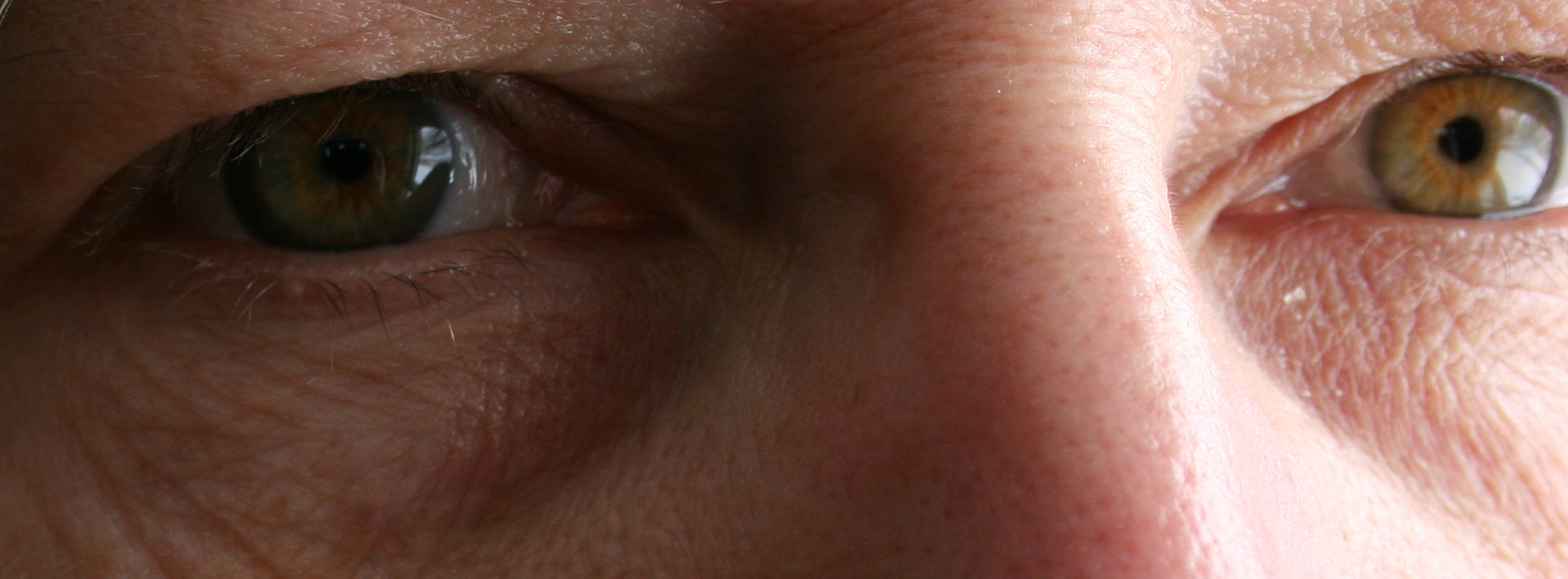
My green eyes up close pre double vision. (Minnesota Prairie Roots copyrighted file photo)

Once I completed 5 ½ months of vestibular rehab therapy to retrain my brain and help me deal with the devastating affects of long haul COVID, I was ready to see a professional about my double vision. I started locally. I went into an August ophthalmology appointment optimistically thinking I could simply get a new pair of prescription eyeglasses with more prisms added. Not so. As the ophthalmologist held up prism after prism to my eyes, it became clear nothing in his trays of prisms would effectively improve my vision. I was, he said, beyond his realm of expertise and would need to see a specialist.

After a several-month wait, I saw the neuro ophthalmologist at M Health Fairview in late October. Following 2 ½ hours of exhaustive testing, of looking through prisms and layers of prisms, I understood that I was well beyond the corrective lenses with prisms option. I would need surgery.

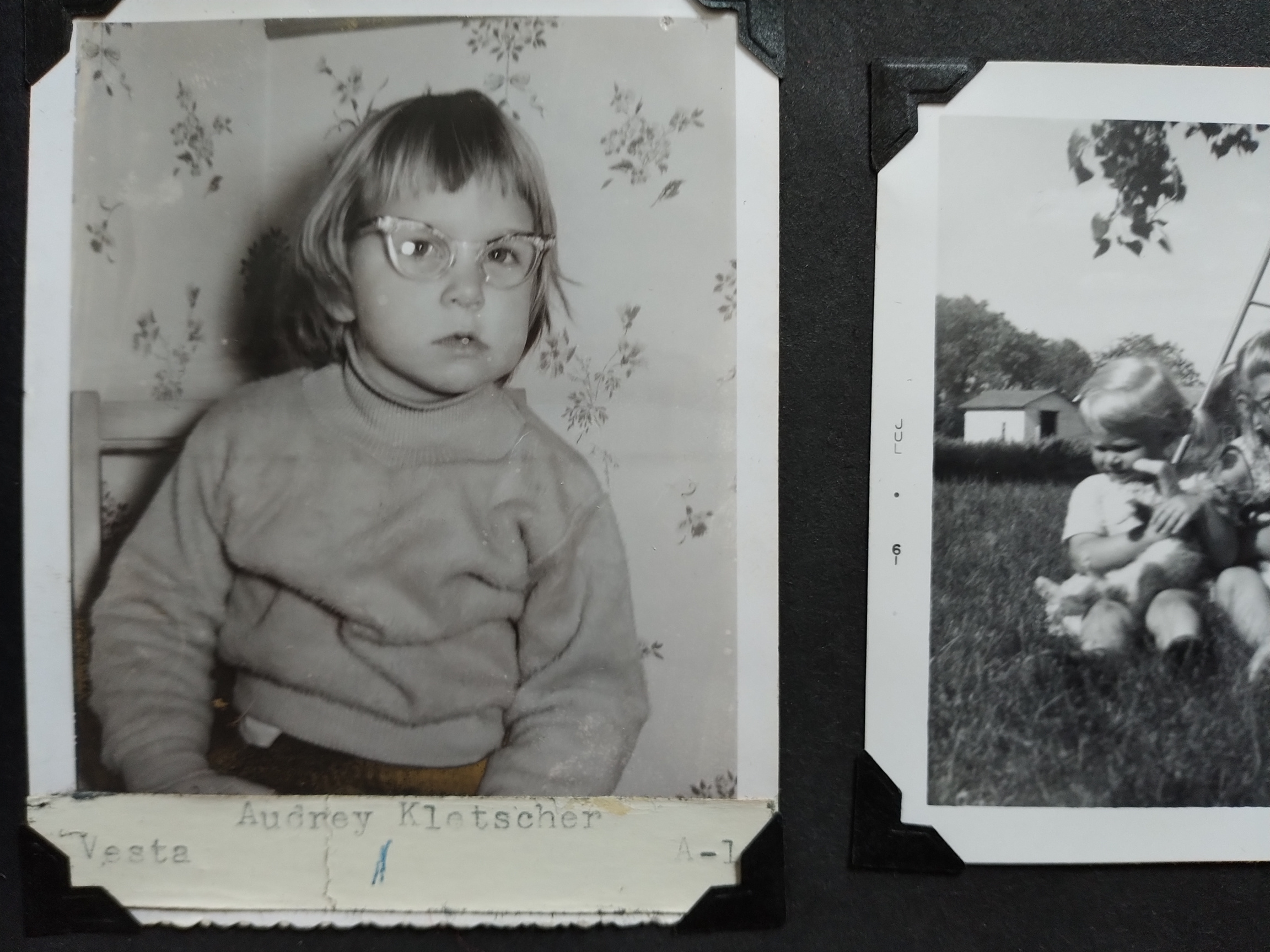
A childhood photo of me taken at an optometrist’s office in Redwood Falls. (Photo sourced from my personal photo album)

So here I am after another long wait—three months this time—on the cusp of bilateral strabismus eye surgery. I just want to be done. I am hopeful this outpatient surgery will fix my eyes and eliminate my double vision. Am I scared? Yes. The idea of undergoing general anesthesia and having a surgeon cut into my eyes and eye muscles is frightening. If only I could zoom back in time to my 4-year-old self who remembers nothing but books, tomato juice and circus peanut candy.

#

FYI: If I’m absent from blogging for a while, it’s because I’m resting my eyes, recovering from surgery. I’ll be back, hopefully no longer seeing double.

© Copyright 2024 Audrey Kletscher Helbling
 

Roadblock inside my brain May 8, 2023

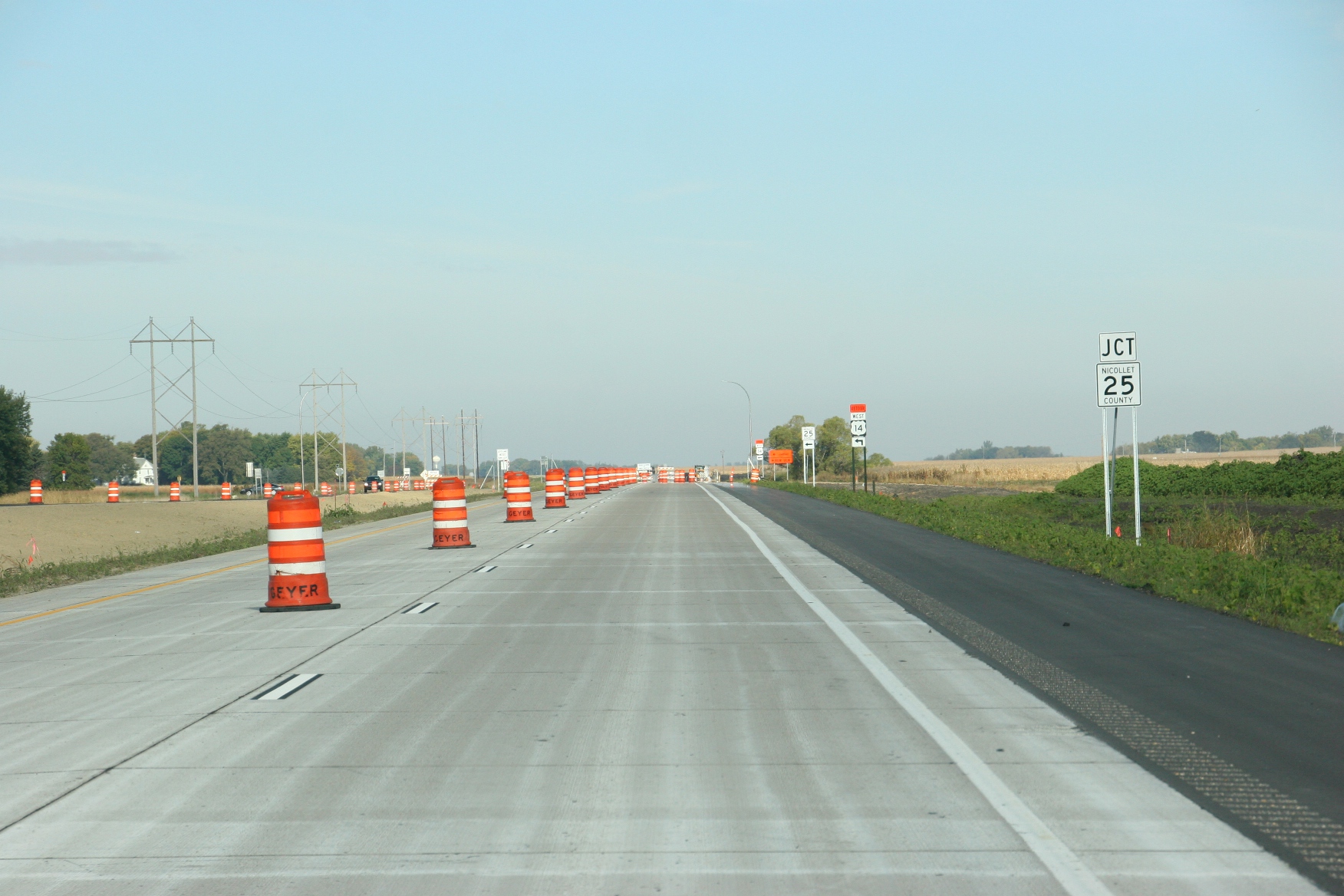
Just like along US Highway 14 in southern Minnesota, I’m dealing with a closed road in my brain. (Minnesota Prairie Roots copyrighted file photo)

IMAGINE YOU’RE ON THE ROAD, when, unexpectedly, you encounter a Road Closed Ahead sign. Now you must take an alternate route to reach your destination. You follow the detour signs, which lead you along twists and turns of back country roads. You are in a hurry and frustrated. But eventually you are back on your mapped route, arriving much later than planned.

That scenario is familiar. We’ve all experienced such travel detours. But not many have experienced vestibular neuronitis, a health issue I am currently facing. The road closed/detour analogy is the best way I can explain what’s happening inside my brain.

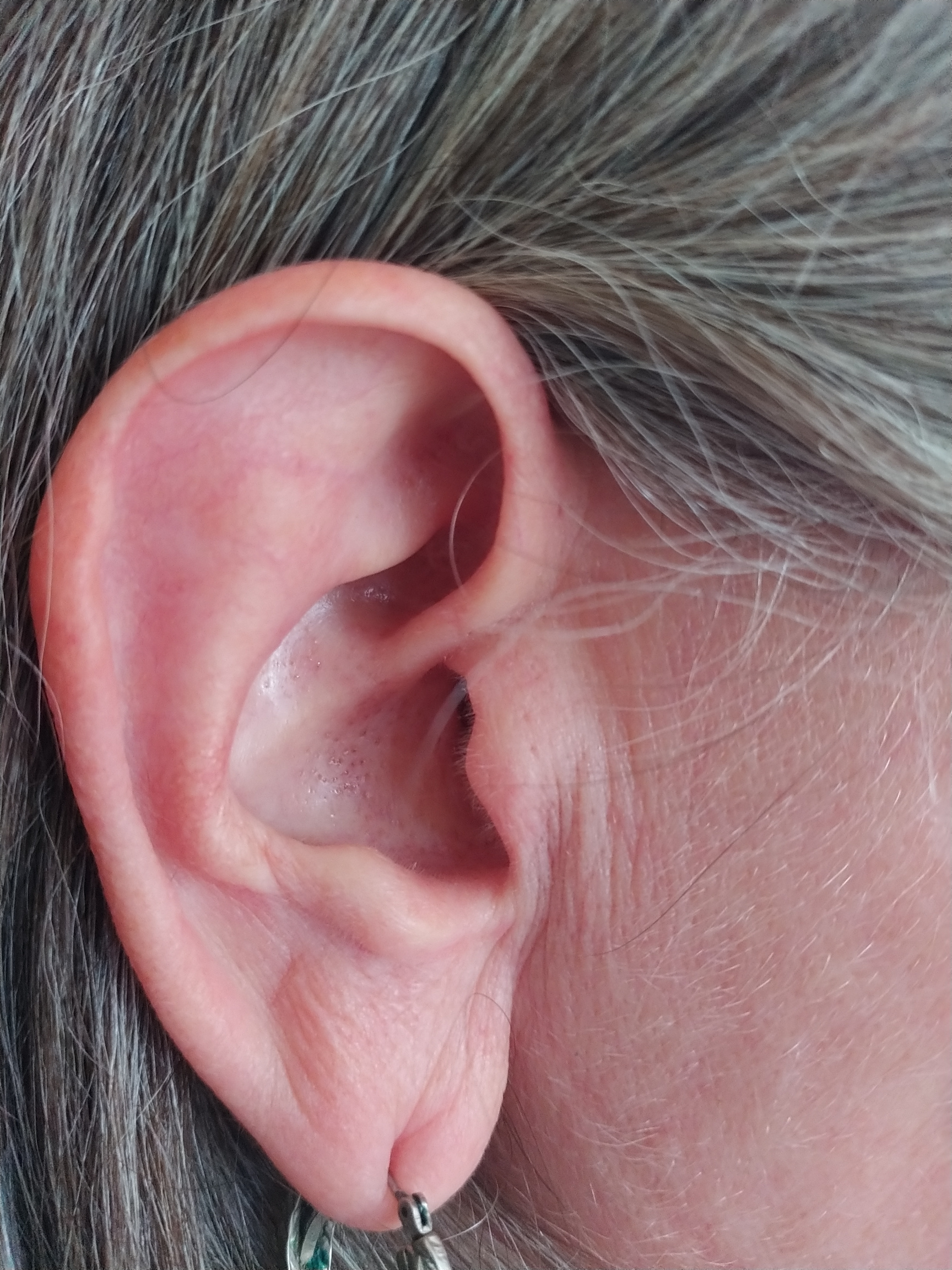
My problematic right ear… (Photo credit: Randy Helbling)

MULTI-LAYERED & COMPLEX

Mine is a complex diagnosis, a neurological condition resulting from an inflammation of the nerve(s) in the inner ear, in my case the right ear. The apparent cause, a viral infection. In 2011, a virus caused me to lose nearly all of the hearing in my right ear during an episode of sudden sensory hearing loss. This most recent virus affected the balance in my right ear. My initial symptom of feeling off-balance followed a really bad cold in early January. (Not COVID; I self-tested negative for that, twice.) I didn’t think too much of the off-kilter feeling, hoping it would pass. It didn’t.

My symptoms progressed: fullness, ringing, clicking and minor pain in my right ear; hyper-sensitivity to sound; double vision; awakening with headaches; feeling like someone slapped me on the right side of the head; unexplained anxiety; rosacea; fatigue; vertigo (only while sitting up from a supine position or rolling onto my right side in bed) and more I’m probably forgetting. I felt like my brain was working really hard to manage auditory and visual input, processing conversations, and balance. I still feel that way.

Kind of how my brain feels right now. Artwork by Bill Nagel, exhibited at the Paradise Center for the Arts earlier this year. (Minnesota Prairie Roots copyrighted file photo March 2023)

BRAIN FATIGUED

Back to that road closed analogy. The nerves/pathways in our brains are all interconnected, one leading to the other. Kind of like the system of roadways we follow to get from Point A to Point B. Now there’s a blocked road inside my head and my brain is struggling. It’s taxing to determine how to make this all work. Vision. Hearing. Maintaining my balance. I’m feeling brain fatigue.

One day I may feel fairly normal, the next, not so much. Or even through the course of the day, how I feel is affected by input into my brain. If I’m out and about, which I mostly am not, I quickly feel overwhelmed. Even by something as simple as a one-on-one conversation.

A tablet of Prednisone, a med which I took for two weeks. (Minnesota Prairie Roots copyrighted file photo)

SYMPTOMS LESSENING

Yet, today I see a lessening of my symptoms. The anti-inflammatory steroid Prednisone, as much as I disliked the insomnia, heart palpitations and anxiety side effects, reduced the nerve inflammation. My symptoms are less severe, but still linger under or at the surface and sometimes flare.

I am in vestibular rehab therapy, working with a skilled, knowledgeable and compassionate physical therapist who is determined to help me retrain my brain, to get me back on the right route. Ryan tells me I’m improving, even if I don’t always see that. I appreciate his encouragement and specialized training in the exact therapy I need. I listen. I ask questions. I do my exercise homework. Already I’ve seen improvements in my balance.

My vision has improved, too, although I still must work hard to focus and not see double. I can now tolerate my computer screen for more than 10 minutes. Headaches are mostly gone as is the feeling of being slapped on the side of my head. And I no longer need to close my eyes during a conversation because I can’t handle simultaneous visual and auditory input. That said, I will occasionally close my eyes when I feel overwhelmed and need to concentrate solely on hearing.

No big road trips for me as I navigate through vestibular neuronitis. (Minnesota Prairie Roots copyrighted file photo)

LIMITATIONS, FRUSTRATION, DISAPPOINTMENT

I have my moments when I feel depressed and frustrated and wish I was “all better.” I don’t know if I will ever be “all better” or whether this is something I will have to learn to live with and manage. There are moments when I feel overwhelmed. This whole vestibular neuronitis is difficult to explain and you can’t see it, so people don’t necessarily get it.

I’m sad because a long-planned trip to Indiana this coming week to attend my son’s graduation from Purdue University with his master’s in computer science will not happen for me. I am disappointed that I can’t be there in person to celebrate, to hug him, to congratulate him on his accomplishment. But I recognize my limits. I can’t handle a long road trip and attending commencement with the masses. It would be too much for my brain. I’m not even attending church yet because I can’t tolerate the organ. I’m not even grocery shopping because of the sensory overload. Mostly, my interaction with others is limited because my brain can’t handle much.

But onward I go, navigating away from the closed road in my brain to alternative routes that will allow me to reclaim my life. Soon. I hope.

#

NOTE: By writing this post, I hope to encourage others who are on a similar journey or who are supporting loved ones. I also aim to provide info on this unfamiliar-to most condition.

© Copyright 2023 Audrey Kletscher Helbling