
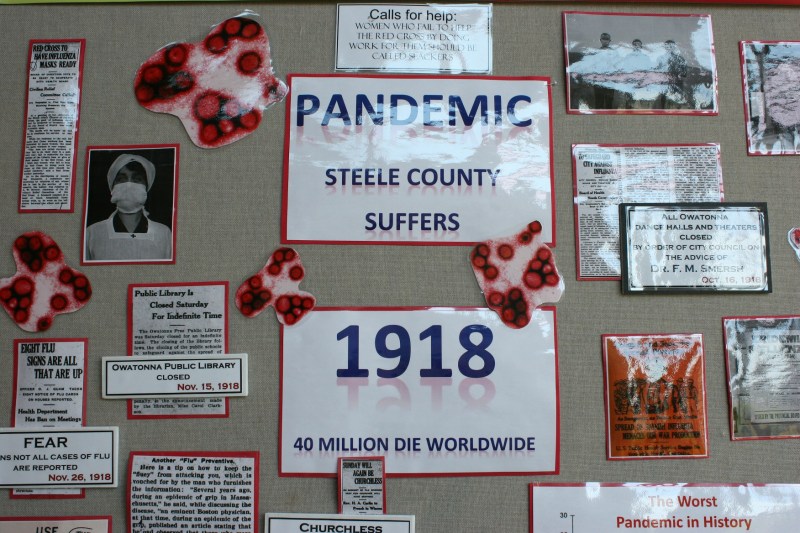
OF ALL THE DISASTERS HIGHLIGHTED in a current local disasters exhibit at the Steele County History Center in Owatonna, it is the flu pandemic of 1918 that feels most personal. To read the names of victims like Cora, Helen and Forest and to see photos of gravestones grieved me. Every winter, even today, we hear of those who’ve died from the flu. Young. Old. In between. Thankfully, we have vaccines that prevent the illness from infecting most of us.
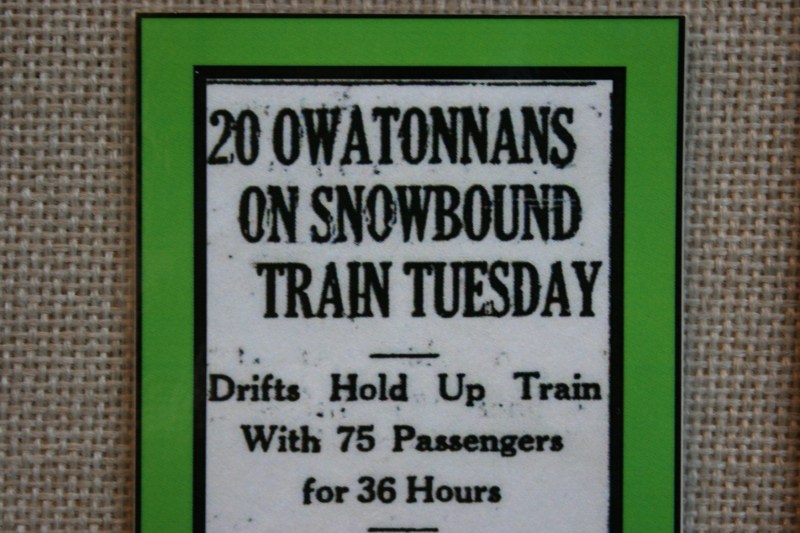
Snowdrifts blocked a train as noted in this news clip.
This detailed exhibit, an off-shoot of the Minnesota Historical Society Traveling Exhibit Disasters of Minnesota: Stories of Strength and Survival, connected a worldwide tragedy to Minnesota. To the county just to the south of mine.
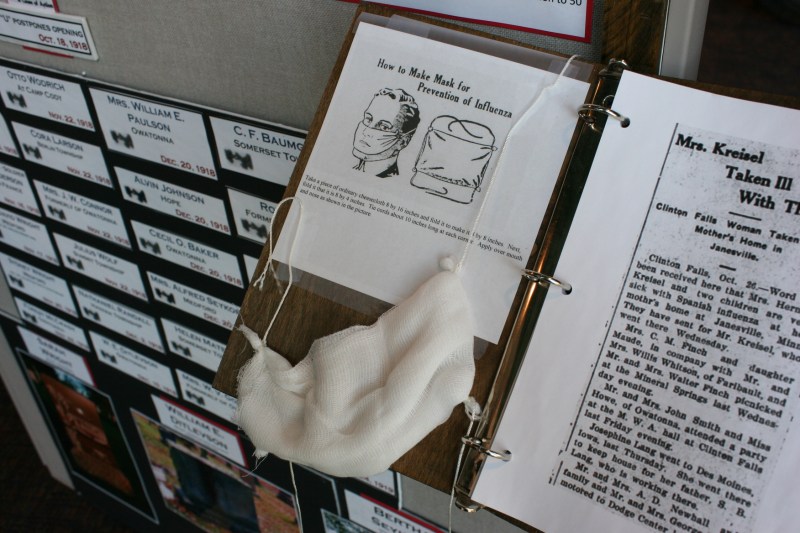
Masks, precautions and isolation helped protect against the flu epidemic. To the left in this photo are names of Steele County residents who died from the flu in 1918, plus photos of some of their gravestones.
In Minnesota alone, according to one report, as many as 12,000 died of the flu in 1918. Worldwide, sources put deaths at 40 or 50 million.
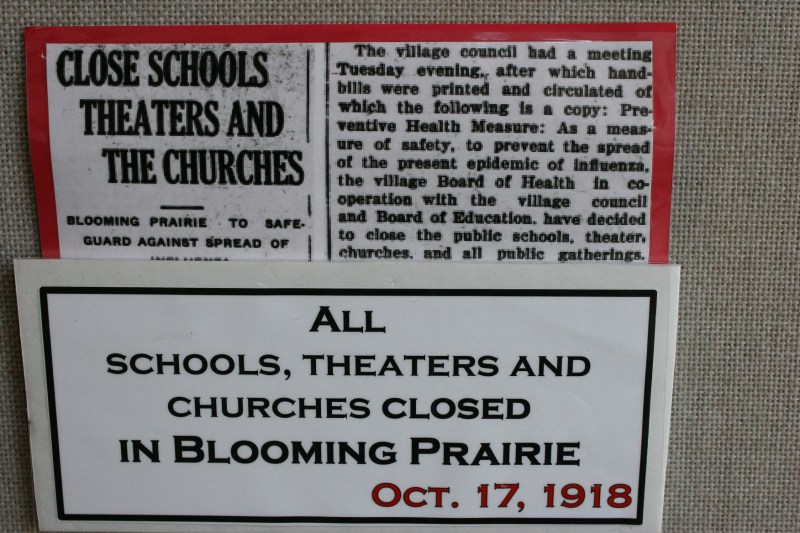
Activities that brought people together were suspended during the flu outbreak.
I’d never considered the vast scope of this tragedy, how fearful folks must have been, how deep the grief at losing loved ones and friends. I also hadn’t thought about the impact on everyday life. As I browsed the exhibit, I noted news stories about libraries, dance halls, theaters and churches closed because of the pandemic.
I am old enough to remember also the fringe ending of the polio epidemic, highlighted, too, in this exhibit.

These newspaper articles feature snowstorms in the county.
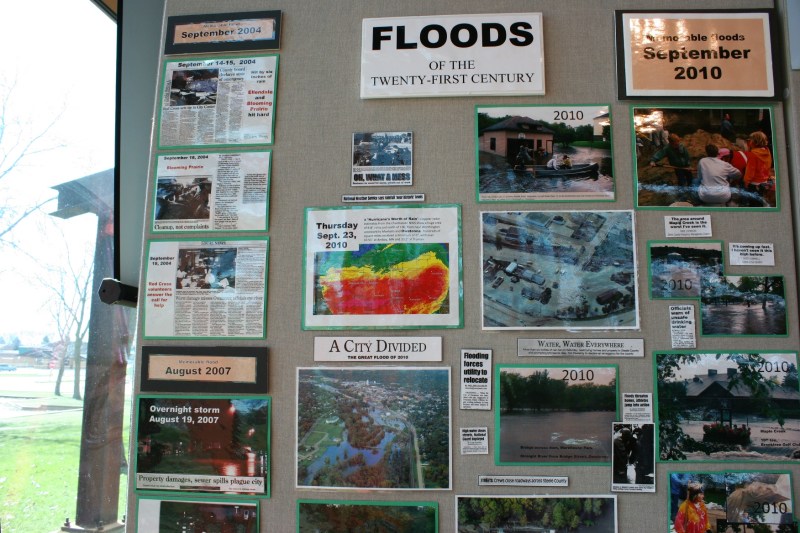
Steele County has experienced numerous floods.
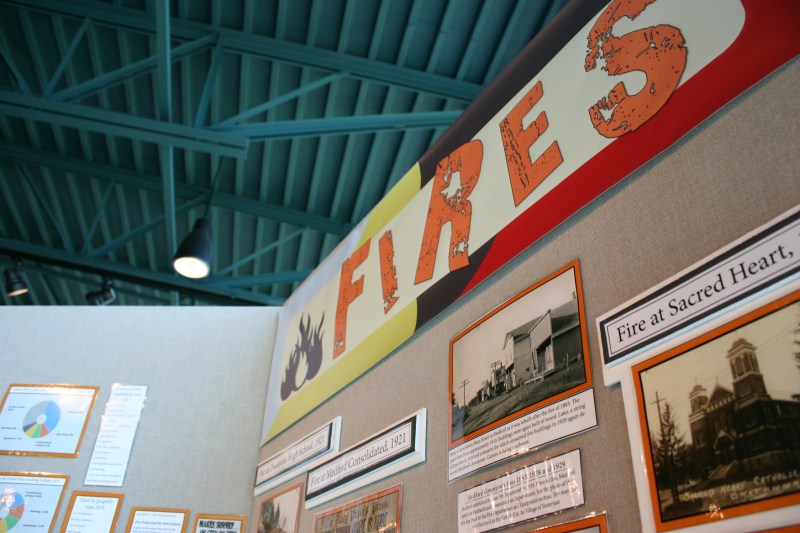
Fires, too, have devastated the county.
Steele County has experienced plenty of disasters involving snow, heat, wind, water and fire. These are outlined in panel displays.
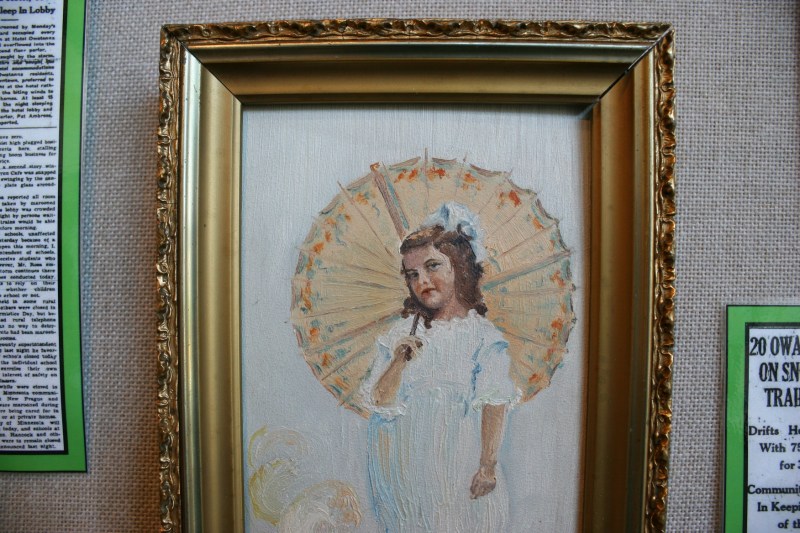
Portrait of Virginia Hart
It would be easy to become discouraged, to feel only despair that so many southern Minnesota residents have suffered so much through the years. I was especially appreciative of stories that uplifted me, like that of Ruth Weinmann. The young teacher, ill with the flu in 1918, was taken in by a doctor’s family after her landlady refused to house her and the hospital was full. In gratitude to Dr. Alfred and Alice Hart, Ruth painted a portrait of their daughter, Virginia. It is a lovely expression of thankfulness.
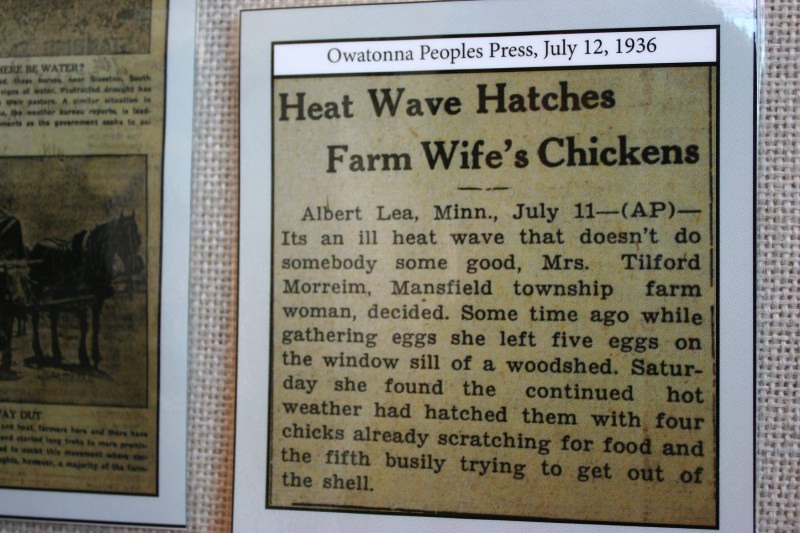
And then there’s the story of chicks hatching in the middle of Steele County’s longest, hottest heat wave—13 straight days of temperatures above 100 degrees beginning on July 5, 1936. Mrs. Tilford Morreim left five eggs on the window sill of her woodshed. In the heat, the eggs hatched. I needed to read that humorous story in the midst of all the suffering and loss.
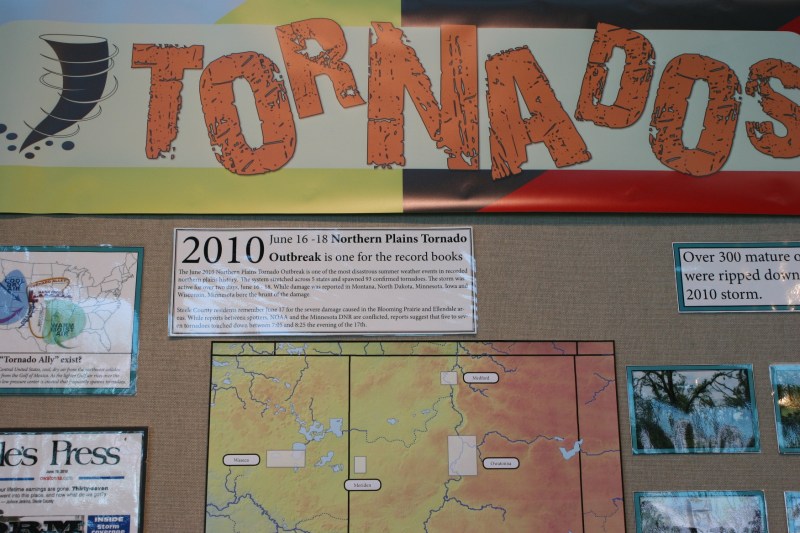
Information on tornadoes in Steele County.
In every disaster, we must find a reason to be hopeful, to survive, to share our stories…for in sharing exists hope and resilience.
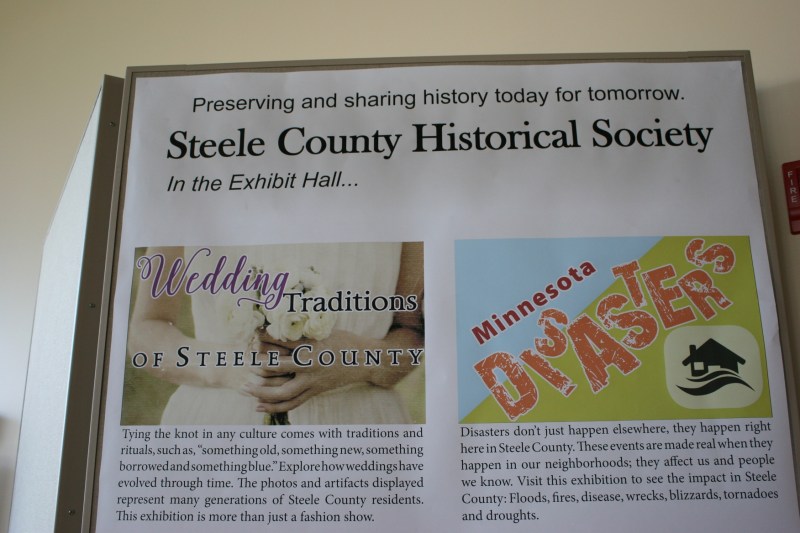
These two exhibits are on display through March 2017.
FYI: For more information about this exhibit, click here. To read my first post about this exhibit in Owatonna, click here. Check back for a post on a wedding dress exhibit also now showing at the Steele County History Center.
© Copyright 2016 Audrey Kletscher Helbling


 Minnesota Prairie Roots
Recent Comments