Minnesota Prairie Roots

Writing and photography by Audrey Kletscher Helbling

Observations about Minnesota from a life-long resident January 31, 2024

Filed under: Uncategorized — Audrey Kletscher Helbling @ 5:00 AM
Tags: , , , , , , , ,
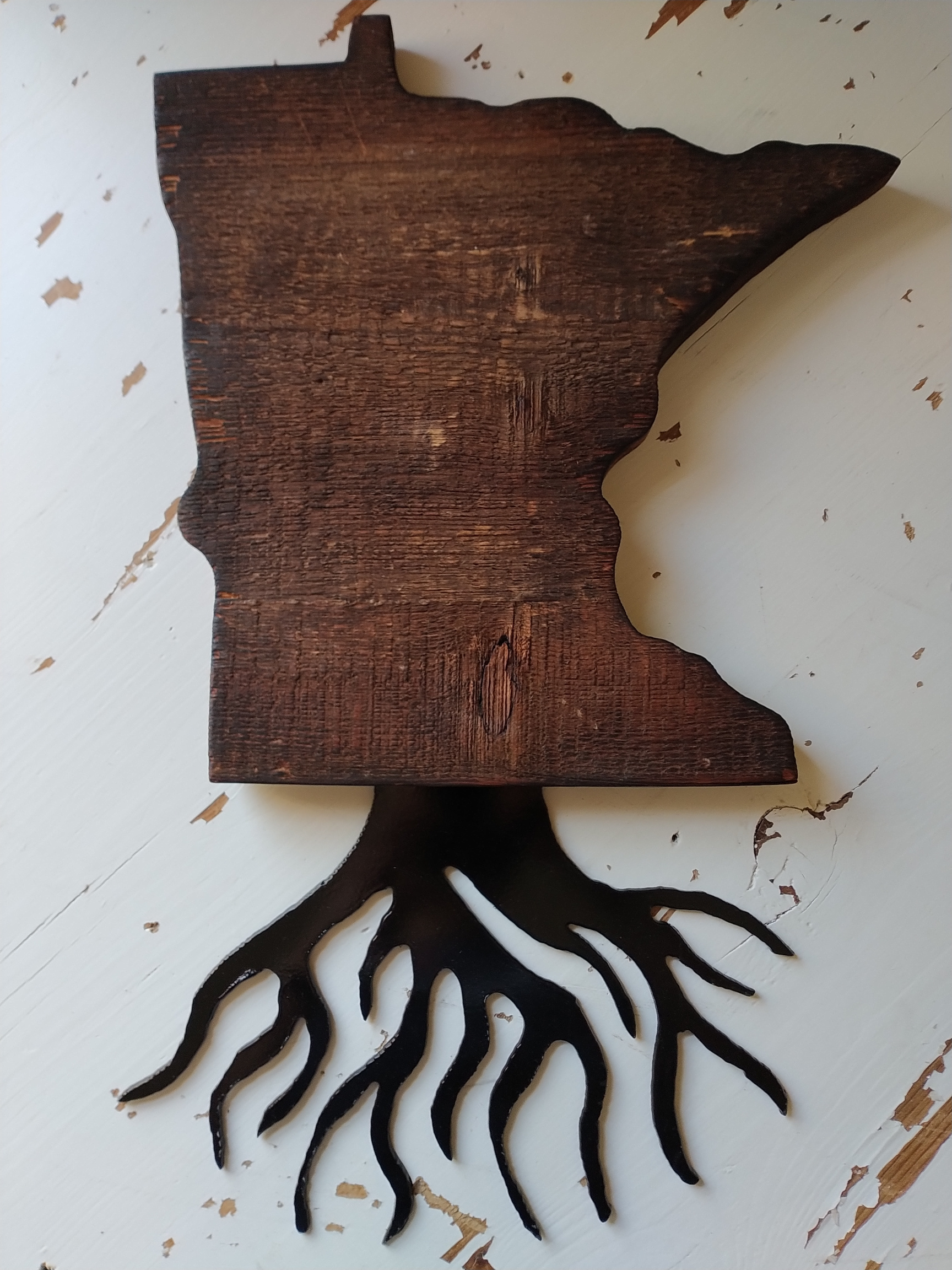
Minnesota wood art with Minnesota shape by Spanky’s Woodshed of Faribault, metal roots by my friend Steve and assembled by my husband, Randy. (Minnesota Prairie Roots copyrighted photo 2024)

AS A LIFE-LONG MINNESOTAN, I speak Minnesotan. It’s hotdish, not casserole. Pop, not soda. Bars may be a sweet treat baked in a cake pan and cut into squares or a place to imbibe. And when someone is going Up North, it’s not to Canada, but typically to the cabin in the Brainerd lakes area or thereabouts.

A serene country scene just north of Lamberton in southern Redwood County, my home county. (Minnesota Prairie Roots copyrighted file photo)

I’m proud to be rooted in this state many consider fly-over land. On a road trip to the East Coast a few years back, folks, upon learning I was from Minnesota, reacted, “Oh, it’s cold and snowy there.” I’m just fine with non-residents thinking that. It is cold for much of the year. And it is snowy, too, most winters. But we have four distinct seasons to be appreciated in a state that is geographically diverse. Prairie. Woods. Bluffs. Rolling land. Farm fields. Cliffs that rise above the Mississippi River and Lake Superior. Wilderness. Lakes numbering 10,000-plus. All inside our spacious borders.
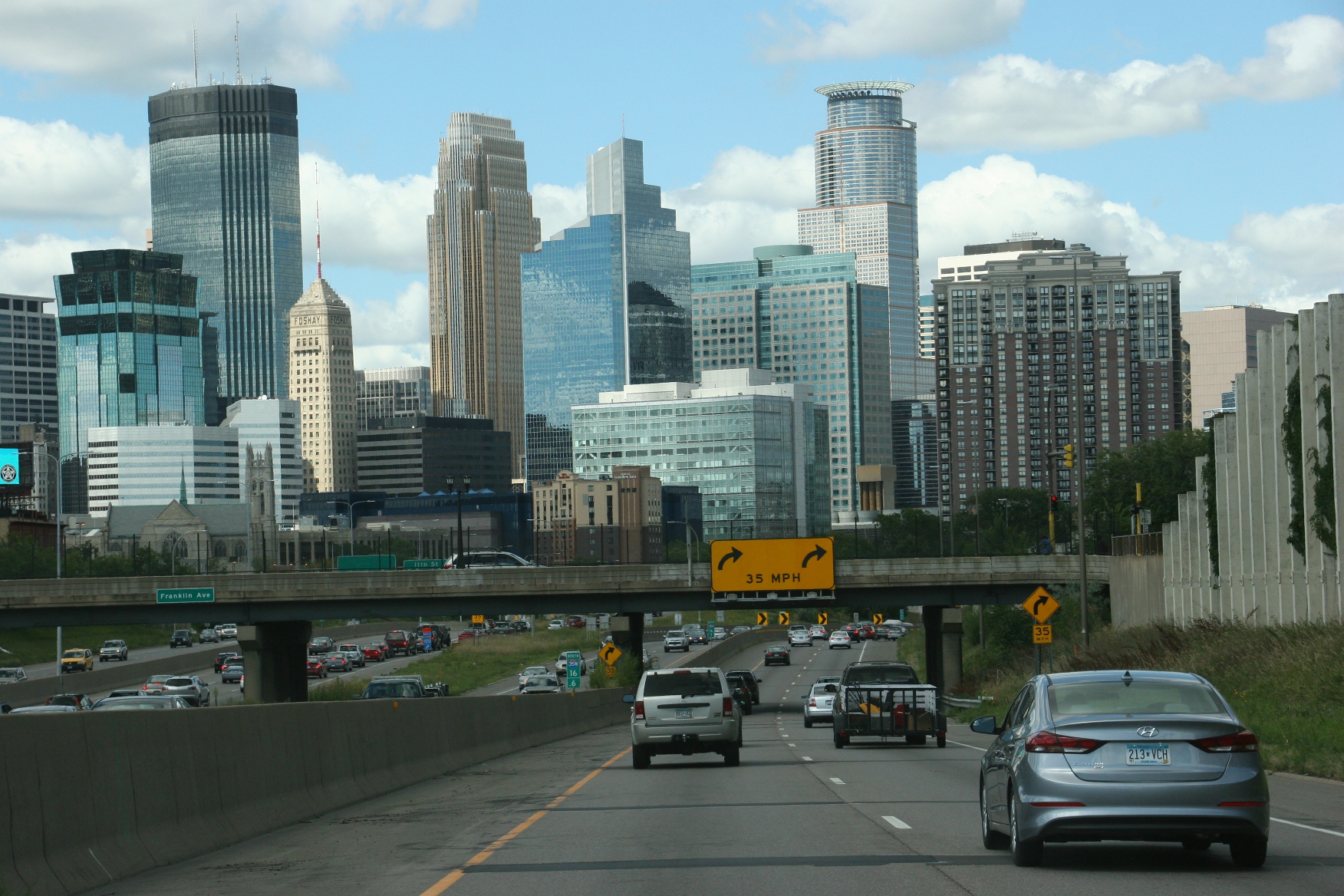
Downtown Minneapolis skyline. (Minnesota Prairie Roots copyrighted file photo)

And outside “The Cities,” as we term the twin cities of Minneapolis and St. Paul, away from metro lights, the night sky is dark, expansive and filled with more stars than you can imagine. Sky and land defined my childhood home on the vast prairie of southwestern Minnesota. But even here in southeastern Minnesota, the sky is big as noted by a Boston visitor. She saw the Minnesota night sky for the first time as we drove her to Faribault from the Minneapolis-St. Paul International Airport. The infinite number of stars impressed her. Northern lights (the aurora borealis), which I have yet to see, are also an attraction.
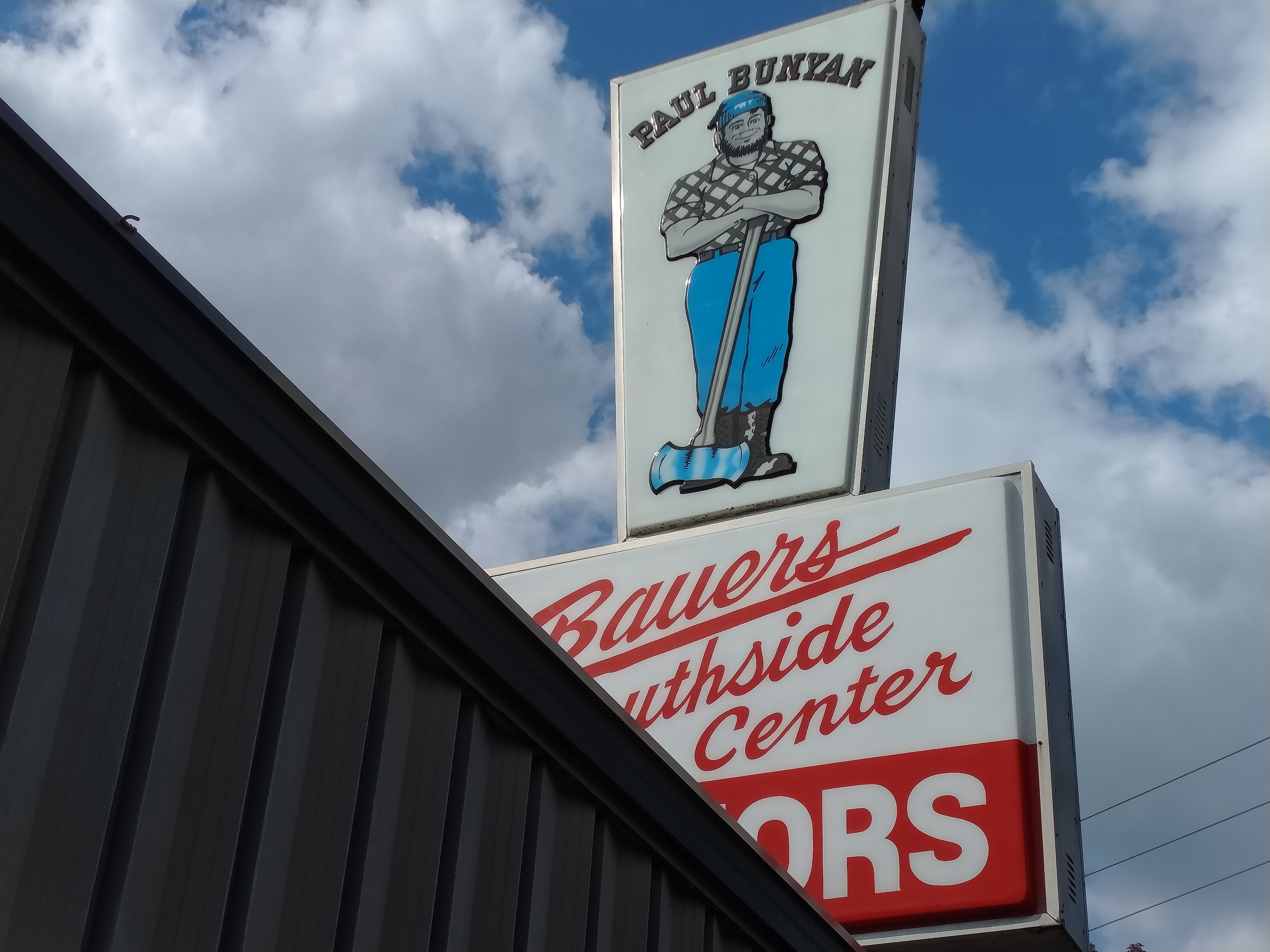
Paul Bunyan is primarily a central and northern Minnesota legend. But he can also be found in southern Minnesota, like on this sign in Faribault. (Minnesota Prairie Roots copyrighted photo 2023)

If I sound like I work for the Minnesota Department of Tourism, I don’t. That job falls to legendary lumberjack Paul Bunyan, unofficial tourism CEO. Clad in his signature buffalo plaid flannel, he is easily recognizable, much-loved and a trendsetter in fashion in the North Star State. I would venture to guess that nearly every Minnesotan owns a collection of flannel shirts. They are my go-to winter attire.

An updated version of “How to Talk Minnesota” is a good guidebook to Minnesota speak.

Did I mention that we don’t speak Fargo, even if that North Dakota city sits across the Red River from Moorhead, Minnesota? I’ve been told we drag out the “o” sound in a distinctly Minnesoooootan sound. Could be. I don’t necessarily hear it. I don’t deny, though, that we are obsessed about the weather. Conversations within our borders usually include one weather reference whether it be wind chill or humidity or “hot enough for you?”.
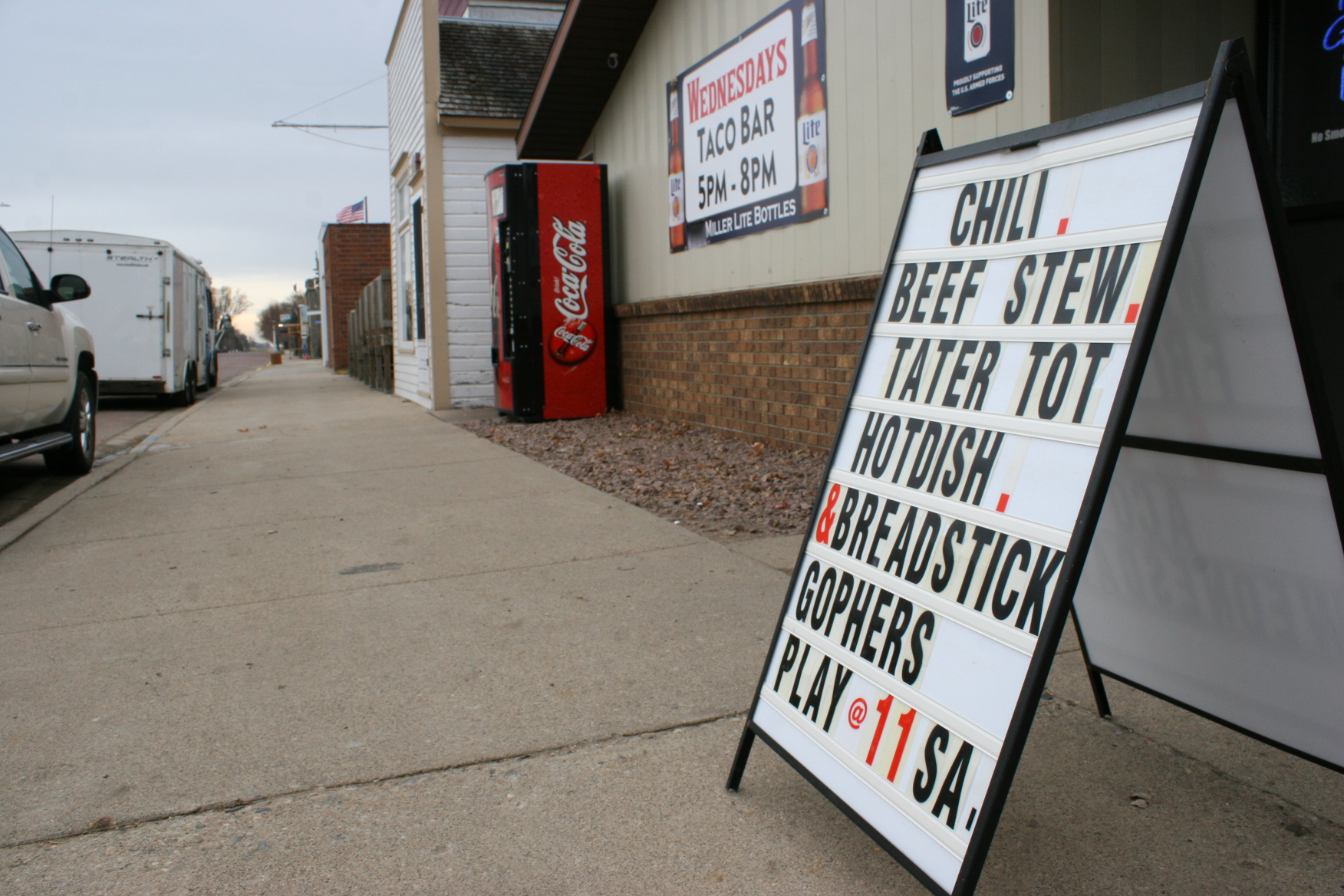
This sandwich board in small town Belview promotes one of Minnesota’s signature dishes, Tater Tot Hotdish, as a noon special. (Minnesota Prairie Roots copyrighted photo 2019)

Minnesotans are known for a thing called “Minnesota Nice,” which I like to believe is true most of the time. We are a bit reserved, use phrases like “that’s different” or “that’s interesting” when we really don’t like something or disagree, but want to be nice by holding back our honest thoughts.

The Minnesota sweet treat known as bars, often served with “a little lunch.” (Minnesota Prairie Roots copyrighted file photo)

Our goodbyes are prolonged. Often, as visiting family is leaving my home, I find myself either standing in the driveway or window waving, waving, waving. That follows the hugs I’ve given only minutes earlier. You can’t get in too many goodbye waves.

The Woodtick Inn in Cuyuna hosts Woodtick Races each summer. (Minnesota Prairie Roots copyrighted file photo August 2021)

Meat raffles, potlucks, ice fishing, lutefisk dinners (or suppers, depending on time of day), fish fries, snowmobile races, hockey, naming our snowplows, all are part of Minnesota culture. Even wood tick races (at the Woodtick Inn in Cuyuna).
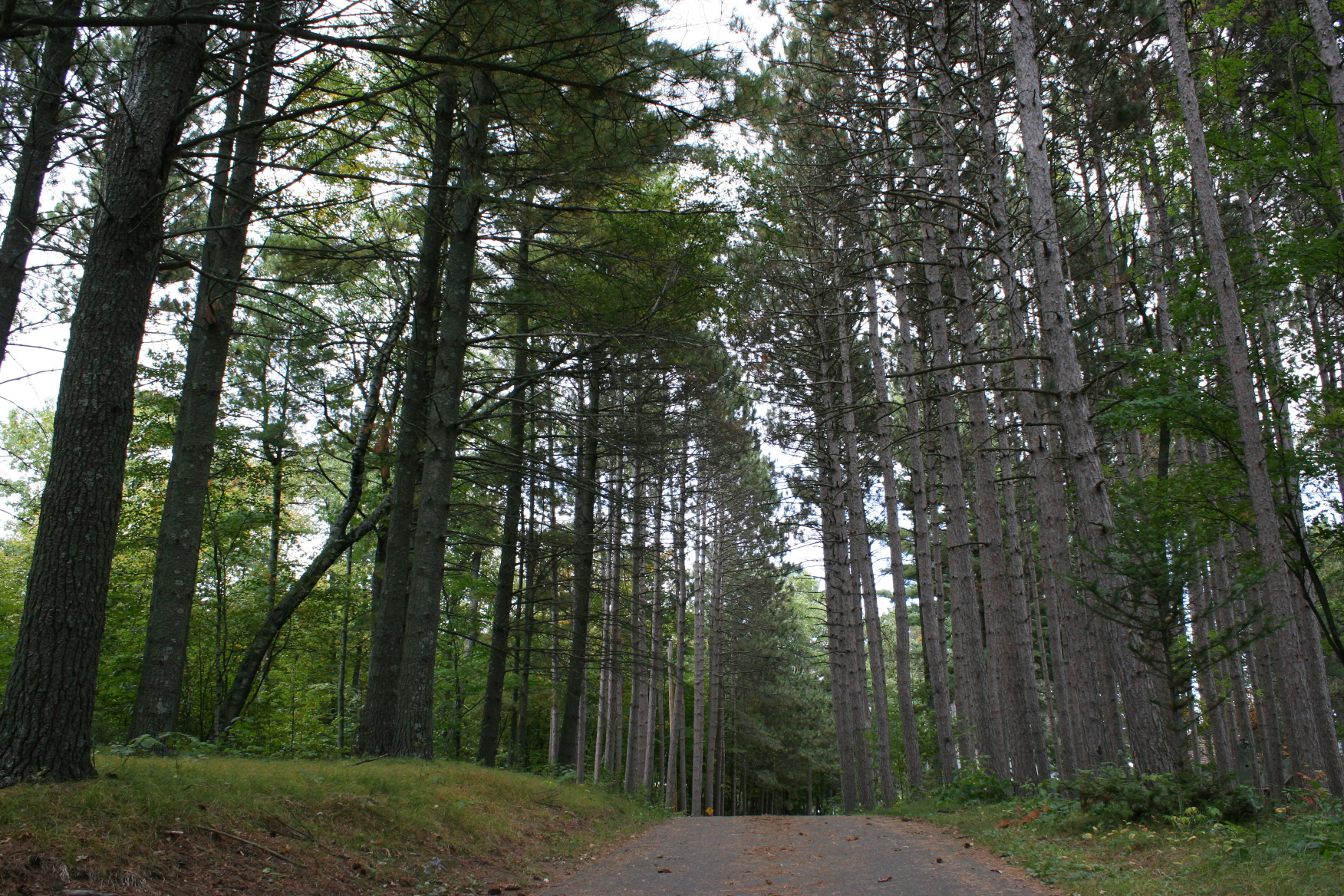
Pines border the driveway leading to a central Minnesota lake cabin. (Minnesota Prairie Roots copyrighted file photo)

I love this state where I’ve lived my entire life, even when I complain about the long winters and abundance of mosquitoes. This is home. Always has been. Always will be.

#

IF YOU HAVE any questions about Minnesota, any observations, anything you want to share, please do. Just follow the rules of “Minnesota Nice.”

© Copyright 2024 Audrey Kletscher Helbling


A native Minnesotan reports from flooded Minot June 23, 2011

MY BROTHER-IN-LAW, Neil, lives in Minot.

But he ranks as one of the lucky residents of this North Dakota city. His house lies outside—albeit less than a mile away—and several hundred feet above the flood zone.

Yet, this Air Force man and Minnesota native isn’t sitting idly by because his home has not been threatened. He’s pitching in to help those who face the reality of losing their houses in the worst flooding since 1969.

In an e-mail I received from Neil early this morning, he shares information, insights and, yes, even advice about the current situation—which he terms “exhausting and discouraging”—in his adopted hometown. The overwhelmed Souris River in Minot is expected to crest on Sunday, some five feet higher than any previous flood stage in recorded history for the area, Neil says. The old record was set in 1881, before Minot was founded.

So that’s the situation facing this city, where some 12,000 residents, more than a quarter of the population, have been evacuated and where, says Neil, dikes in several neighborhoods were breached on Wednesday.

Neil has assisted two families in exiting the city.

He writes: “I helped a lady from our church on Monday night as she moved everything either to the second floor or attic. What didn’t go upstairs went into a horse trailer that her brother brought in from out of town late that night. She seemed to take things in stride. Her house was also flooded in ’69 (before it was her house), but came through it okay. It’s extremely well built, nearly 100 years old. This lady trusts that God will provide for her needs, even if her house washes down the river.”

Neil next joined efforts to help his boss’s family. His boss is deployed to Afghanistan.

“I lost track of how many people were there to help them,” Neil writes. “We also helped them three weeks ago, when we moved everything out of their sopping wet basement to the upper floor and garage. Because of the shortage of time allowed to evacuate, we left almost everything there that time. Because of the expected height of the floodwaters and the advance preparation time, we decided to clear everything out of their house this time.”

Yet, Neil continues, “There were easily several pickup loads of stuff that we left behind simply because there wasn’t enough time/energy/resources to move it all.”

At this point my brother-in-law pauses and suggests that we all re-evaluate our possessions, deciding what we really need and what we don’t. “Go through your house and garage and get rid of anything that you haven’t laid eyes on or used in the past three years.” He intends to do exactly that at his Minot home, which is currently on the market; he’s been reassigned to an Air Force base in Missouri.

When Neil and his wife, who is already in Missouri, purchased their house several years ago, they purposely stayed away from the flood zone. “A contractor that we spoke to before buying a house told us the down sides of several locations in this town. One specific neighborhood that he told us to steer clear of is the exact one that we helped my boss’s family move out of; he told us that he wouldn’t even consider building a house down there because the whole area was under water in the flood of ’69,” Neil says.

And then my brother-in-law adds this final statement: “Dikes give people a false sense of security.  No one presently living in this town will ever doubt that again!”

© Copyright 2011 Audrey Kletscher Helbling