Minnesota Prairie Roots

Writing and photography by Audrey Kletscher Helbling

Retraining my brain post-COVID November 29, 2023

This art by Faribault middle schooler Mohamed depicts how my brain felt post-COVID. (Minnesota Prairie Roots copyrighted file photo)

IT’S BEEN A JOURNEY. That best summarizes the path I’ve been on since January to reclaim my health. It’s been difficult, stressful, taxing, challenging, emotional and often overwhelming. But I was determined to do what I could to reach a better place health-wise in the aftermath of unconfirmed, but suspected, COVID.

This was a virus which messed with my brain, my neurological system, leaving me with a long list of debilitating symptoms. Prior to COVID, I was healthy, medication-free, living a normal life. And then…everything changed. (Click here to read my initial post about how COVID affected me.)

My route to managing long haul COVID began with my medical team, including my compassionate primary care doctor who listened, who admitted when he couldn’t help me, who referred me to specialists, who handed me tissues when I cried in the exam room. He never gave up on me. Nor did my vestibular rehab therapist.
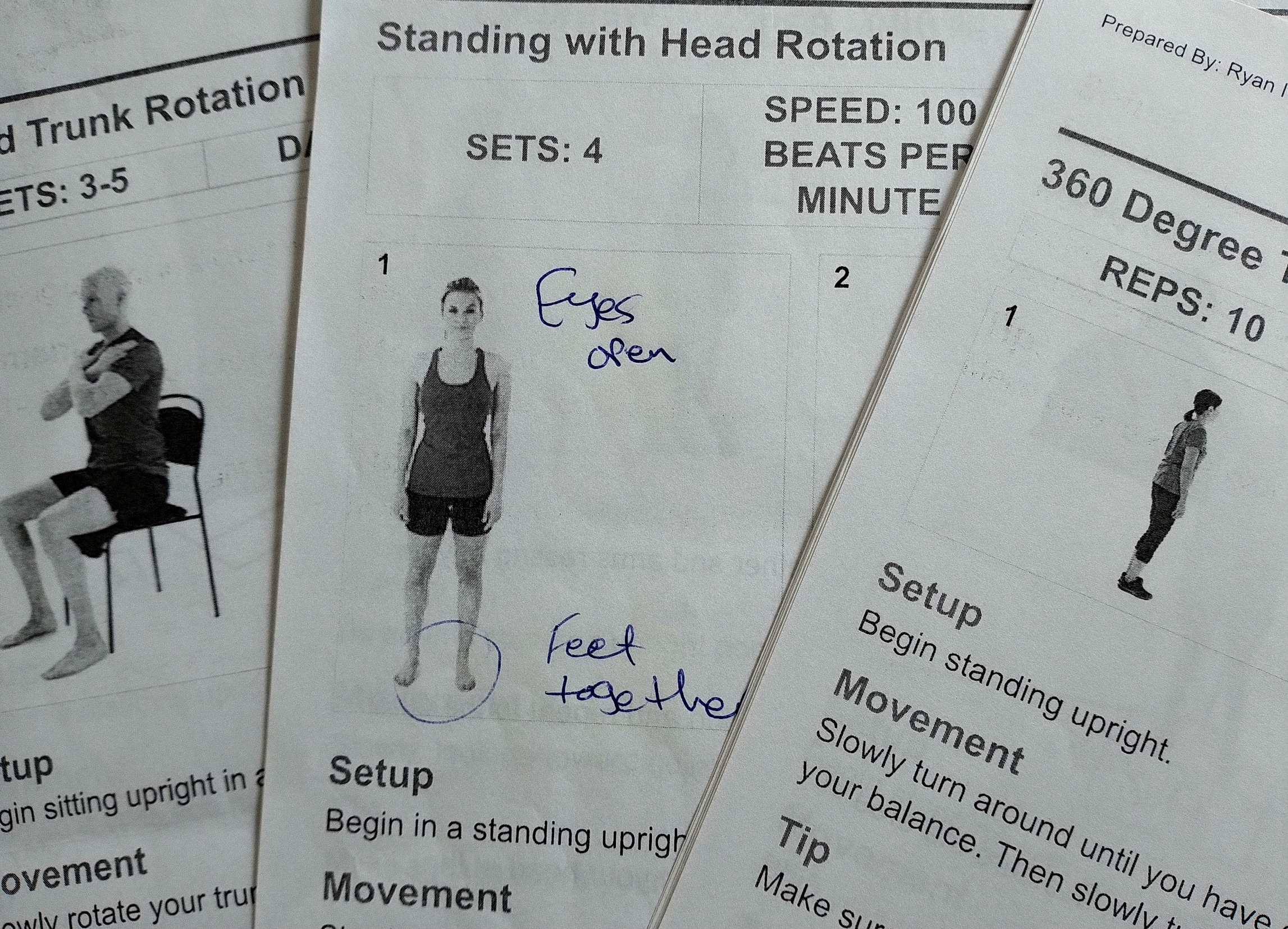
Some of the exercises I did in vestibular rehab therapy. (Minnesota Prairie Roots copyrighted photo November 2023)

VESTIBULAR REHAB THERAPY, MY ROAD TO RECOVERY

I credit my physical therapist, Ryan at Courage Kenny Rehabilitation Institute in Faribault, for leading the way in my recovery. He has extra training in vestibular issues. From the get-go, Ryan encouraged me, worked with me, supported me, showed deep care and compassion. Those went a long way in empowering me to work hard. And that I did.

During those initial once-a-week visits with Ryan, I barely managed conversation with him. I would mostly close my eyes and listen as he told me how we would work first on overcoming my balance problems. And then I would do as he instructed. Simple things like turning my head while seated. Then trunk rotations. Then turning my head while walking. Soon rotating while walking. Moving my hands back and forth aside my head while listening to white noise. I was building my tolerance for sensory input one exercise at a time. Retraining my brain. It took many months to progress through these seemingly basic exercises. But they were helping.

Each session Ryan gave me homework, which I faithfully did. I understood that no amount of therapy would work if I wasn’t willing to work hard at home. Soon he was encouraging me to get out, to try socializing. He even convinced me I could manage a mid-summer stay at a lake cabin, giving me coping tools to handle the long drive (close my eyes and wear ear plugs and sunglasses), to handle sensory overload (take breaks) and more. I managed that vacation get-away, but not easily. I remember the evening I snuggled next to my eldest daughter, put my head on her shoulder and sobbed, “I can’t do this any more.”
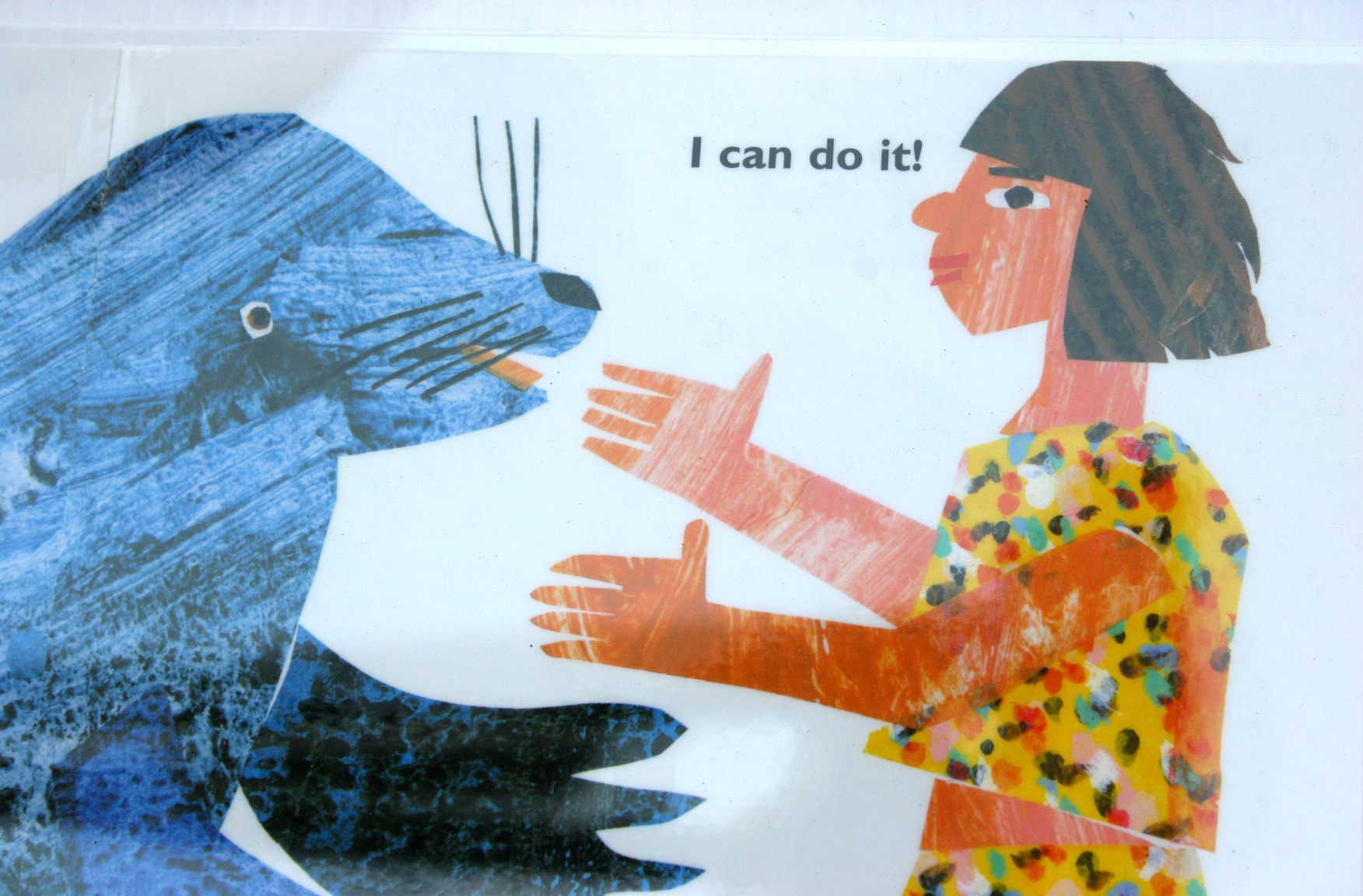
A page from Eric Carle’s book, “From Head to Toe” inspires me. (Minnesota Prairie Roots copyrighted file photo)

ENCOURAGEMENT IN THE MIDST OF DESPAIR

Many times I felt despair, as if I wasn’t making progress. Ryan assured me I was improving, even if I couldn’t always see it. I often felt, too, like no one understood what I was going through (although I’m sure that’s not true). But what I had was unseen, literally in my head. And when people can’t see, or make no effort to understand neurological issues, support lacks. That said, I had a core support group of friends and several sisters-in-law who gave me ongoing encouragement.

And so the months passed. Randy and our eldest daughter, especially, offered unconditional love and support that carried me through some of my darkest days. I wanted desperately to feel better, to have my old life back, pre-virus. By mid-September when I’d advanced to virtual reality roller coaster rides, my physical therapist deemed me ready to graduate. I was ready, yet I wasn’t. I would miss Ryan’s weekly encouragement.

Here I am today, two months out from therapy’s end. I am in a much better place than when I began vestibular rehab therapy in mid-April. I am out and about. Grocery shopping, attending church, speed walking a half hour daily, going to concerts, socializing… I still struggle if I overdo it, if I have too much sensory input. I rely on ear plugs to handle loud music. I close my eyes. Sometimes I have to leave a place or event. I am not the same as I was pre-COVID.
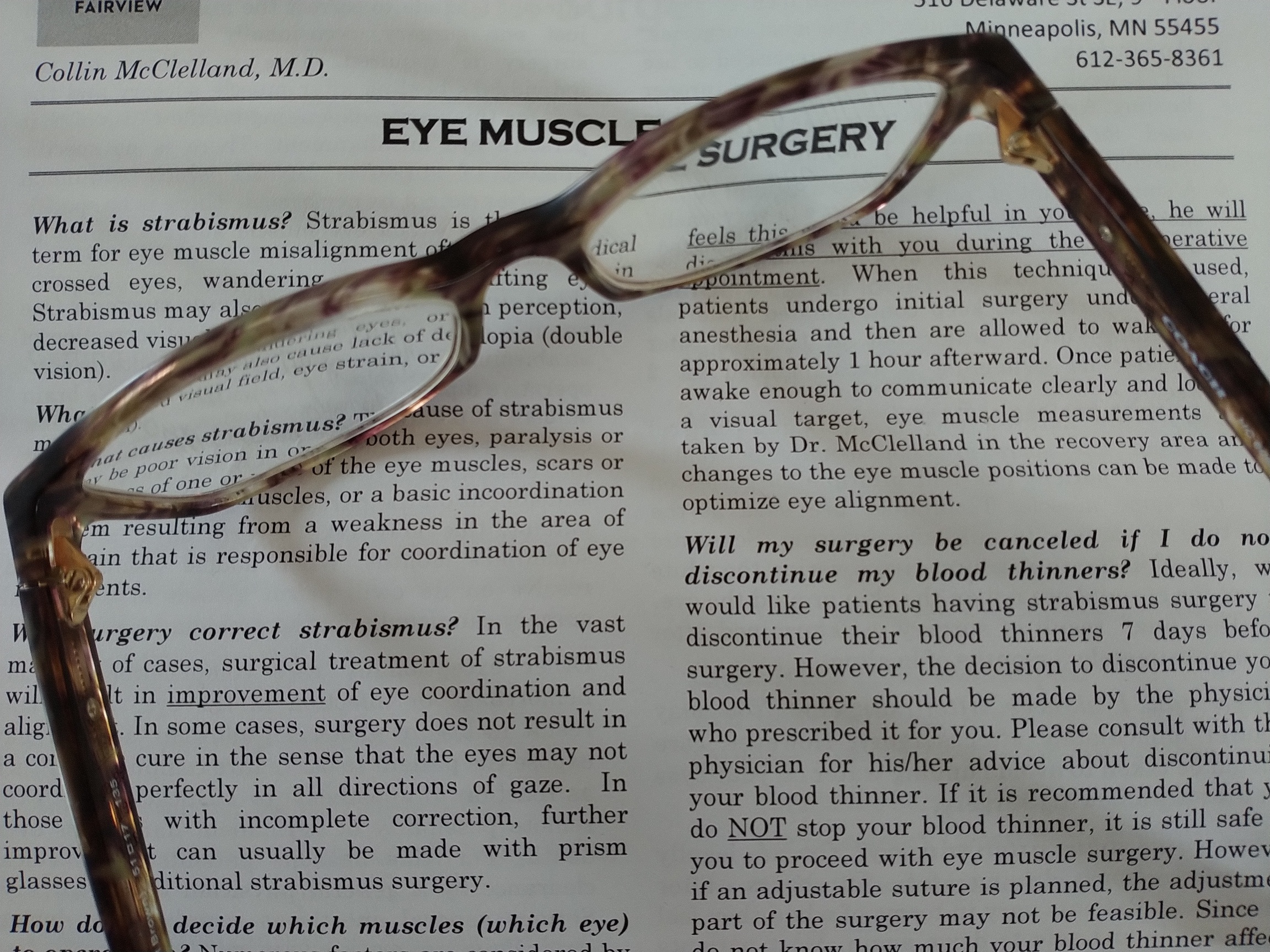
Up next, eye muscle surgery. (Minnesota Prairie Roots copyrighted photo November 2023)

UP NEXT, EYE SURGERY

In January, I will undergo bilateral strabismus surgery at the University of Minnesota to realign my eyes. It is a re-do of a 1960 surgery. As my neuro ophthalmologist explained, the eye muscles that were surgically tightened decades ago have loosened through the decades. Up until my neurological system was affected by COVID, my brain compensated. No more. I am seeing double, and not just when I read. Trying to focus my vision to see only one exhausts me.

But in the all of everything I’ve endured since January, I’ve made significant progress. I’m doing much better. Mostly managing. And that is reason to feel thankful.

© Copyright 2023 Audrey Kletscher Helbling


How COVID changed my life November 28, 2023

Filed under: Uncategorized — Audrey Kletscher Helbling @ 5:00 AM
Tags: , , , , , ,
Image of first coronavirus. Source: CDC.

IT’S BEEN A YEAR. No other words exist to define 2023, a year in which I’ve been overwhelmed by fall-out from a virus in early January. Although I self-tested negative twice for COVID, my primary care doctor suspects I did, indeed, have COVID given the neurological and other issues I’ve experienced since then. I fully agree.

This is my story, one that needs to be shared so that others understand just how viruses affect some of us. This story needs to be shared also to offer hope to others. This story needs to be shared, too, so that anyone who is ill thinks twice about going to work, the grocery store, church, concerts, family gatherings or elsewhere, thus exposing others to infectious diseases.

To tell my story, it’s necessary to give some background. In 2005, at the age of 48, I caught whooping cough. I was sick, really sick, for three months. Gasping for air sick. Coughing until my stomach hurt sick. Exhausted, unable to sleep. In 2011, I lost the hearing in my right ear due to a virus. My body, for whatever reason, does not handle bacterial and viral infections well.

And then came January 2023, and the virus that would change my life.

This artwork by Bill Nagel fits how my neurological system felt, still feels sometimes when I experience sensory overload. (Minnesota Prairie Roots copyrighted photo November 2023)

IN THE BEGINNING

Symptoms started with feeling off-balance, off-kilter, as if I was fighting the world just to be upright. I waited to see my doctor, thinking (like most of us do) that I would get better. I didn’t. I, in fact, got worse. I experienced a bout of vertigo, a rapid heart rate, high blood pressure, all new and troubling symptoms. I felt like I’d been slapped on the right side of my head, a feeling that persisted for many months. And when I tried to sleep, my legs practically ran a marathon in bed.

My primary care physician acknowledged early on that his ability to help me was limited. But he listened, tried…and sent me to an ear/nose/throat doctor for an evaluation. To even get through these medical appointments was a struggle. I had to close my eyes to converse. I felt overly-anxious and agitated, also new symptoms. I was, by then, feeling ear pain, fullness, pressure and tinnitus. I couldn’t sleep. My head hurt. My fingertips hurt. I couldn’t handle screen time. Eventually I would see a neurologist, undergo a CT scan, then an MRI of my brain to rule out a tumor or anything else. It was as if my body was being assaulted.

I felt overwhelmed. I struggled sometimes to find the right words. “Why can’t I talk?” I asked Randy. My brain seemed to be malfunctioning, misfiring, miscommunicating. My neurological system was under siege. My memory, which has always been stellar, was (and remains) affected.

This cool mint toothpaste set my mouth afire. For a while I brushed my teeth with baking soda, then switched to kids’ bubblegum flavored toothpaste. I only recently returned to using mint toothpaste. (Minnesota Prairie Roots copyrighted photo November 2023)

MAJOR SENSORY OVERLOAD

But the symptom which proved particularly debilitating was sensory overload. I couldn’t tolerate light or noise. I sat in the recliner, living room curtains drawn, body folded into the fetal position. No sound except the ringing in my own ears. I rocked 100 miles an hour, occasionally arose to pace the floor, stretched putty left from previous occupational therapy. Nothing calmed my body or mind. All I wanted was darkness, quiet, nothing stimulating entering my brain.

I struggled to get through Easter dinner at our house, missed my grandchildren’s birthday parties and a niece’s baby shower. Most heartbreaking of all was missing my son’s graduation with his master’s degree. I couldn’t handle the long road trip to Indiana, sit through the ceremony at Purdue. I couldn’t even manage grocery shopping; too much white noise from coolers and too much visual stimulation. Phone calls proved taxing, any conversation difficult. I was primarily housebound except for trips to the clinic and one to the ER following an allergic reaction to an unknown something. By then I’d been diagnosed with Meniere’s Disease and vestibular neuritis.

And then came the morning I brushed my teeth, the mint taste so overwhelming that I spit out the toothpaste. Rather than losing my sense of taste, mine intensified. For a week, until I saw my doctor (who added peripheral sensory neuropathy to my diagnoses) and got a prescription to settle my nervous system, I could eat only the blandest of foods. Oatmeal. Soda crackers. Graham crackers. I lost nine pounds in five days. Overall, I’ve lost 25 pounds this year. I’m OK with losing that weight, but don’t recommend this weight loss method. I went through a lengthy period of eating only a few bites of food at a meal.

All of this I experienced following COVID. Plus a rash and hair loss, either from the virus or from anti-anxiety meds. Nearly a year out from the virus, I am in a much better place. It took five months of vestibular rehab therapy, time and a lot of hard work to get here. Next up, I will write about retraining my brain, learning to manage my symptoms and how I found my way back to semi “normal.”

#

NOTE: I’ve been asked by several people whether the COVID vaccine caused my neurological and other issues since I am fully-boosted and vaccinated. No. My health problems began when I had that January virus, thought to be COVID. Had I not been vaccinated and boosted, I firmly believe I would have ended up in the hospital, perhaps even died. Negative comments about the vaccine and boosters will not be posted on this, my personal blog.

© Copyright 2023 Audrey Kletscher Helbling


No more VR roller coasters for this graduate September 26, 2023

(Minnesota Prairie Roots copyrighted file photo May 2016)

CUE “POMP AND CIRCUMSTANCE.” Wednesday, September 20, marked graduation day for me. After six months of vestibular rehab therapy at Courage Kenny Rehabilitation Institute in Faribault, I graduated.

It was a milestone day for me in managing the neurological issues I’ve faced following a *viral infection in early January. Twenty-one therapy sessions later and I’m much-improved. Not cured. Not fixed. Not all better. I’ll never be the same as I was pre-virus. But, through targeted therapy exercises, a lot of hard work and simply easing back into life, I’ve built my tolerance for everyday experiences. I can better handle sensory input. I can walk without feeling unbalanced. I can manage beyond sitting in a room with the curtains drawn to shut out light, windows closed to keep out noise.

I still have challenging days. I still struggle. But I am in a much better place than even a month ago.

And so I graduated. Not because I wanted to leave Courage Kenny and my incredibly knowledgeable, supportive and caring therapist. But Ryan and I mutually agreed that I was ready. And so he asked, on that final day together, whether he should cue “Pomp and Circumstance” on his laptop, the same laptop he used to introduce me to virtual reality roller coasters as part of my therapy. I told him we could pass on the music. And I am happy to pass on roller coaster rides.

But I did bring celebratory homemade carrot cake cupcakes with homemade cream cheese frosting. Ryan laughed when I walked through the door carrying that box of cupcakes to share with the Courage Kenny team. When I’d asked the week prior if we would have graduation cake, he said only if I brought it. So I did, along with a thank you card and homemade chocolate chip cookies for this professional who worked tirelessly to improve my health. I always felt like we were a team.

And now, like any new graduate, I hold the knowledge and tools that will help me handle daily living. I participated in class (kinda hard not to when you’re the only student). I did the assigned homework each week. I followed through by getting back into the real world, sometimes failing in my efforts, sometimes succeeding. I’ve done my best, through tears and discouragement and struggles, to rise above the challenges. And now I’ve graduated. Onward.

© Copyright 2023 Audrey Kletscher Helbling

* Even though I self-tested negative twice for COVID in January, my primary care doctor believes I had COVID, the cause of my multiple, ongoing neurological issues.


It’s been a roller coaster ride September 14, 2023

“The Legend,” one of a few remaining wooden roller coasters, located at Arnolds Park Amusement Park in the lakes region of northwestern Iowa. Built in 1930, it is the 13th oldest wooden roller coaster in the world. (Photo courtesy of Arnolds Park Amusement Park Marketing)

SOME 2 ½ MONTHS AGO, I boarded a roller coaster for the first time since I was a teenager screaming my lungs out while riding “The Legend,” a wooden roller coaster at Arnolds Park Amusement Park in Arnolds Park, Iowa. It’s not that I decided this would be a fun activity to try again in my late sixties. Rather, the choice was made for me, as part of my vestibular rehab therapy.

I warned my physical therapist that I don’t like amusement rides. But my comment didn’t deter Ryan. He determined that riding a virtual reality roller coaster on a June morning might be exactly what my brain needed to retrain itself. Since January, I’ve struggled with neurological-based issues resulting from a viral infection, suspected to be COVID, even though I twice self-tested negative for the virus. In early April, I started physical therapy and have been working hard ever since to manage my many debilitating symptoms.

Fast forward to today. I am in a much better place, even while on a VR roller coaster, a tool I’m using to build my visual, auditory and spatial tolerance. Early on I had doubts about my therapist’s plan. Initially, I couldn’t tolerate the VR roller coaster for long (less than a minute) before symptoms flared. After minimal exposure, my head hurt, my eyes hurt and I felt utterly exhausted. When I experienced a health setback mid-summer with vertigo returning, Ryan abandoned the amusement ride therapy for therapies less taxing on my brain.

ROCKS, RABBITS & A ROLLER COASTER

Slowly, surely, I started feeling better and Ryan decided it was time to pull out the VR headset again for another go on the roller coaster. I did not enthusiastically hop on board, only reluctantly agreeing to give it a try. I lasted 25 seconds on a roller coaster ride where boulders tumbled off rocky mountains toward me. Rabbits loping under the track proved the only redeeming feature. I hold a fondness for rabbits, my high school mascot being a White Rabbit.

That was two weeks ago. The following week I did better, albeit on a less visually-stimulating ride, this one under the sea in a darker environment. Still, I could manage only bursts of riding before needing to pause.

NOT ONE, NOT TWO, BUT THREE ROLLER COASTERS

Five days later I was back at therapy, knowing full well that I would again be riding a roller coaster. Make that plural. Three roller coasters. I started therapy Wednesday morning with the least stimulating under-the-sea ride. And just to make that more challenging, Ryan asked me to stand, rather than sit. He allowed me to place my hands on the back of a chair to ground myself. I successfully finished the ride, then took a break before re-boarding, this time without touching the chair. Success again. Time to up the challenge.

Ryan pulled out the rabbit-loping, boulders-falling themed ride. This time I completed the ride, which was visually much more exciting with dynamite and fire and a whole lot more coming at me. Once again, I tolerated the roller coaster twice while standing and without needing to stop.

I felt my confidence grow as each roller coaster ride became more sensory challenging. I could do this. But when the next ride began with a garish parrot getting in my face, I questioned whether I could manage a tropical-themed roller coaster with worn vivid red and yellow rails. (Was it even safe to ride?) It was a lot—the bold hues, the squawking flapping seagulls, the palm trees, the steep climbs, the height, the sharp turns. But I made it. Twice on that roller coaster curving toward the ocean.

DOING GREAT, BUT I HAVE MY LIMITS

My brain was adjusting, learning, retraining itself to take in more visual, auditory and spatial input. Ryan praised my success, both of us somewhat surprised by how well I’d tolerated those roller coasters Wednesday morning.

But before I left therapy, I wanted Ryan to know one thing. If he planned a field trip to nearby Valley Fair Amusement Park next Wednesday for a ride on a real roller coaster, I wouldn’t be showing up for therapy.

© Copyright 2023 Audrey Kletscher Helbling