
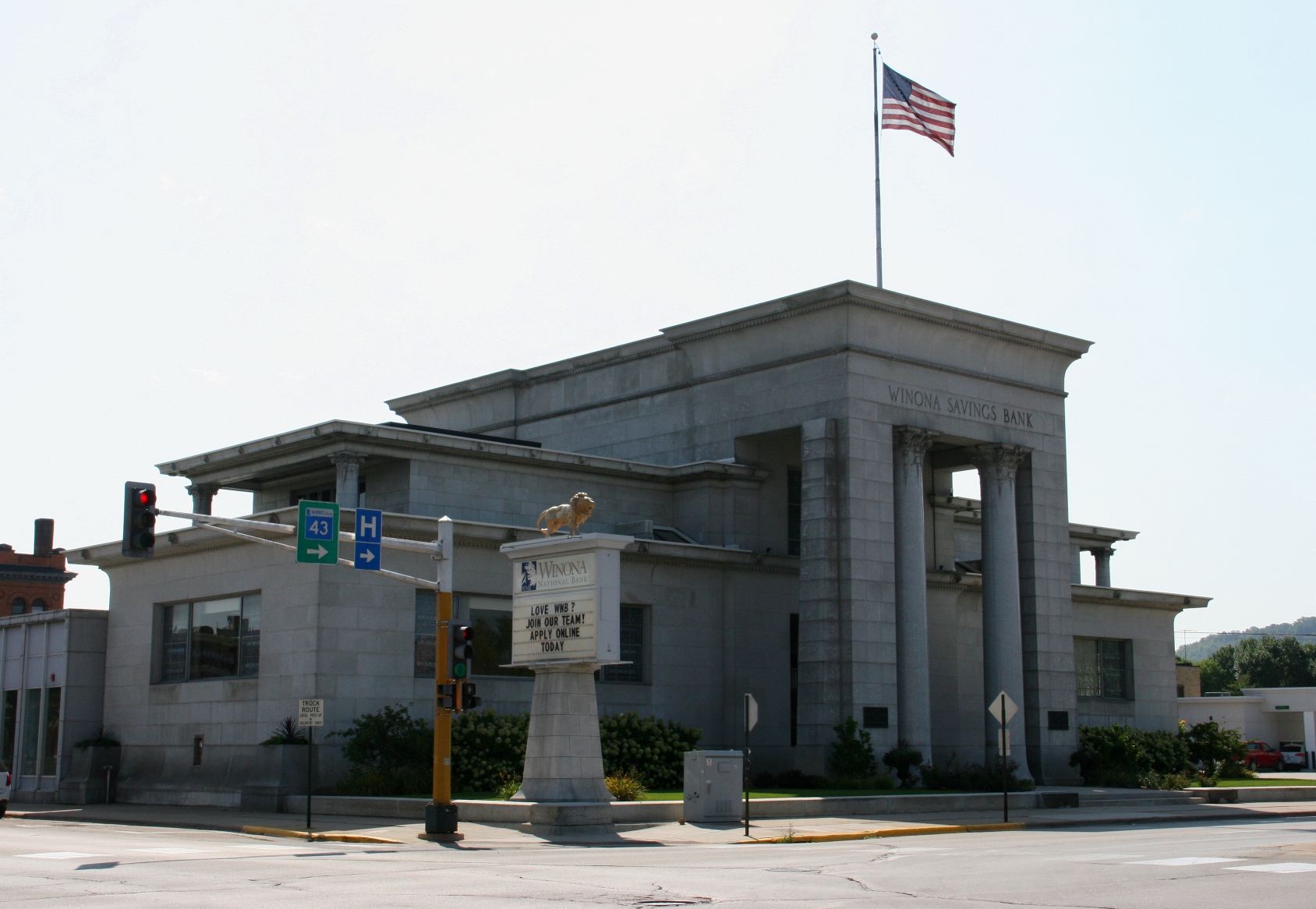
The exterior front of Winona National Bank, originally Winona Savings Bank, presents a visual of strength and stability in design and materials.
EVERYTHING ABOUT THE CONSTRUCTION of Winona National Bank invokes trust, strength and power.
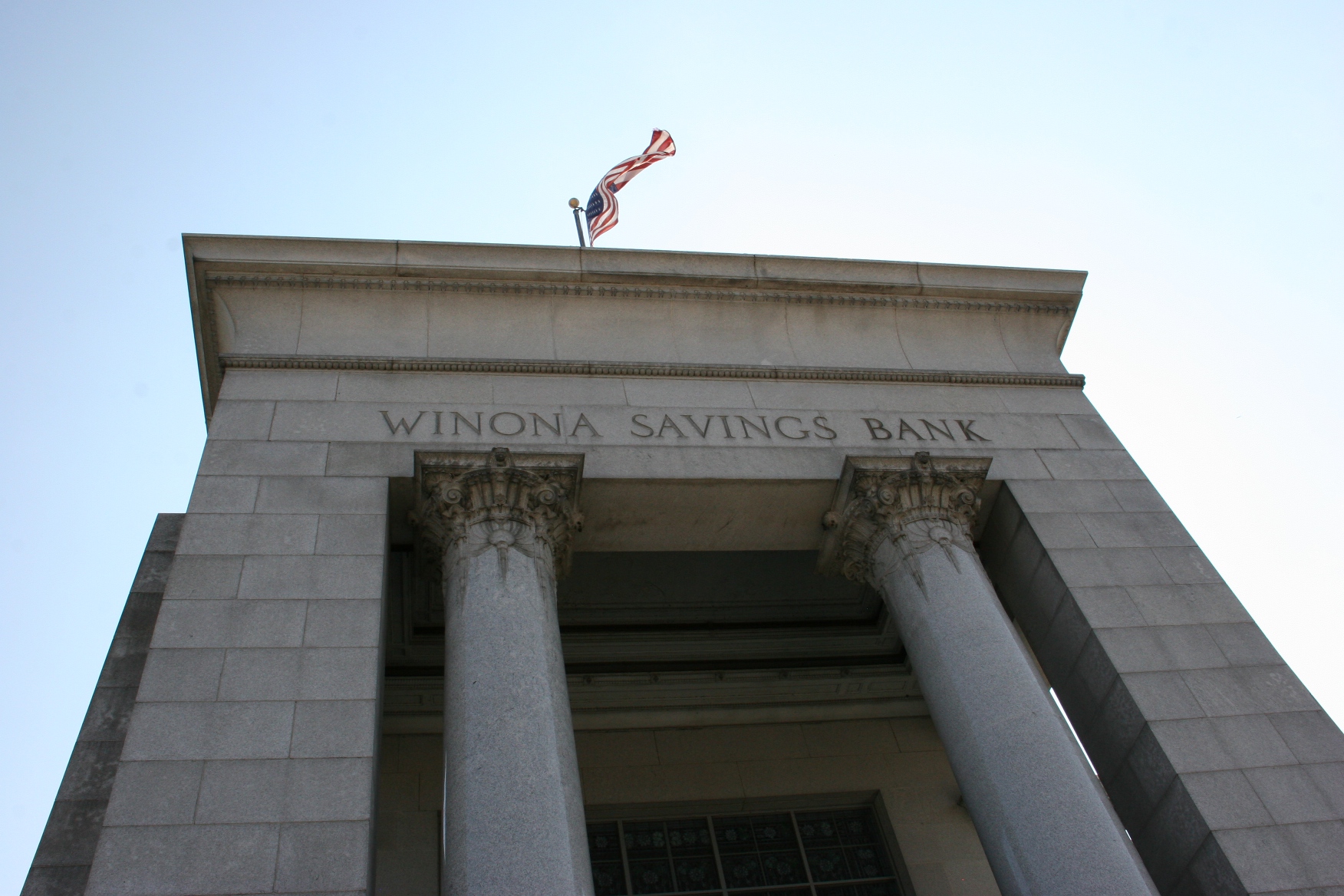
Each column measures 37 feet high, weighs 32 tons and is constructed from a single piece of North Carolina granite.
Granite entry columns.
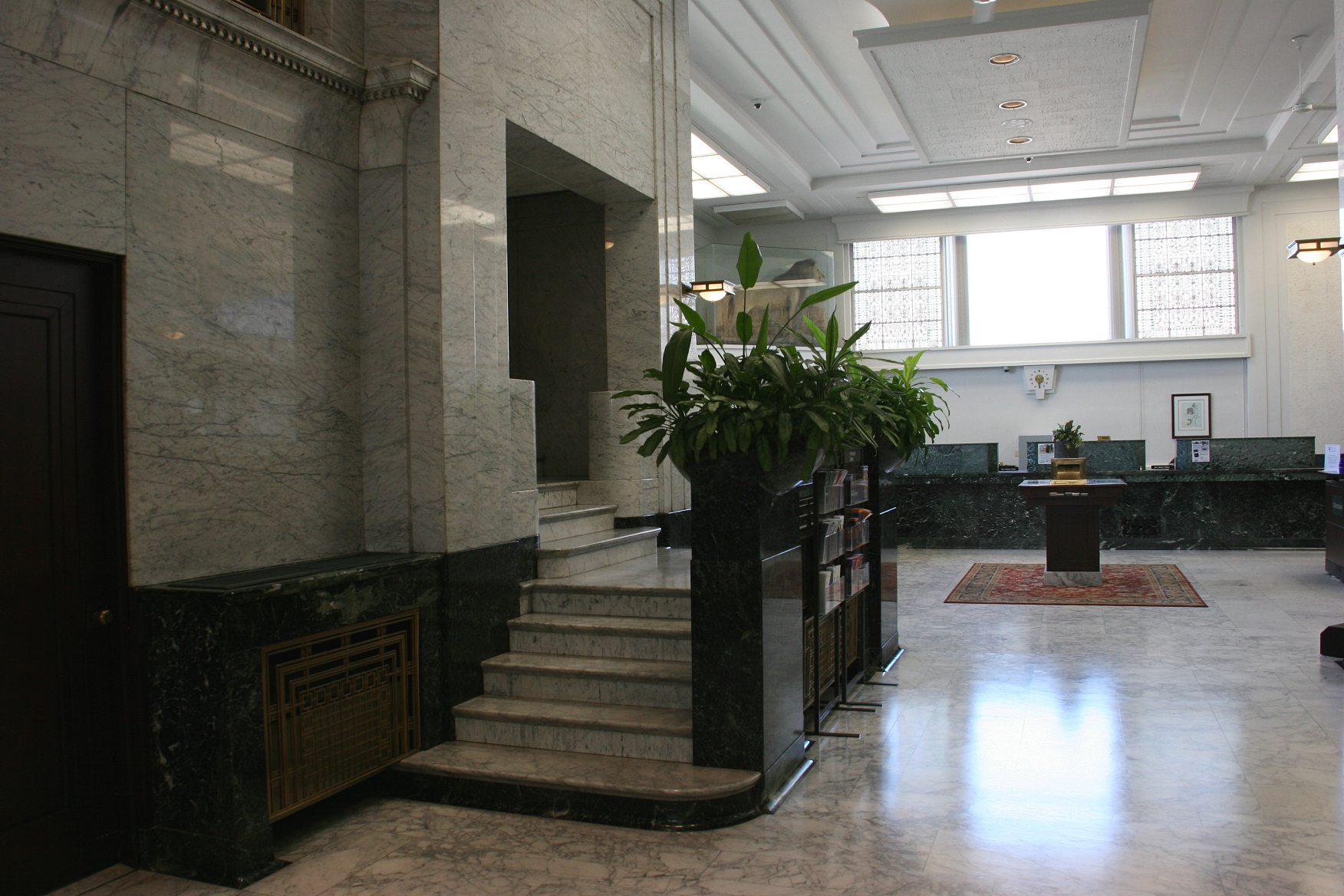
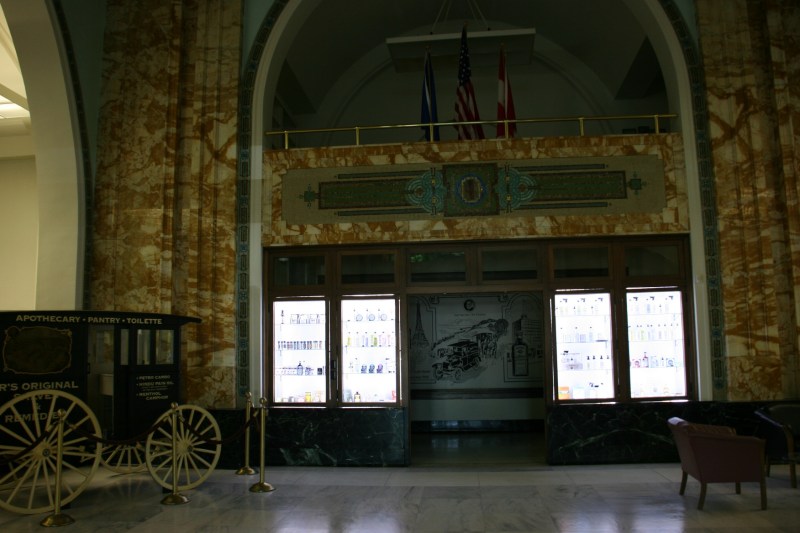
Green marble from Greece and white marble from Italy are featured inside the bank, here in the lobby and teller area.
Marble everywhere.
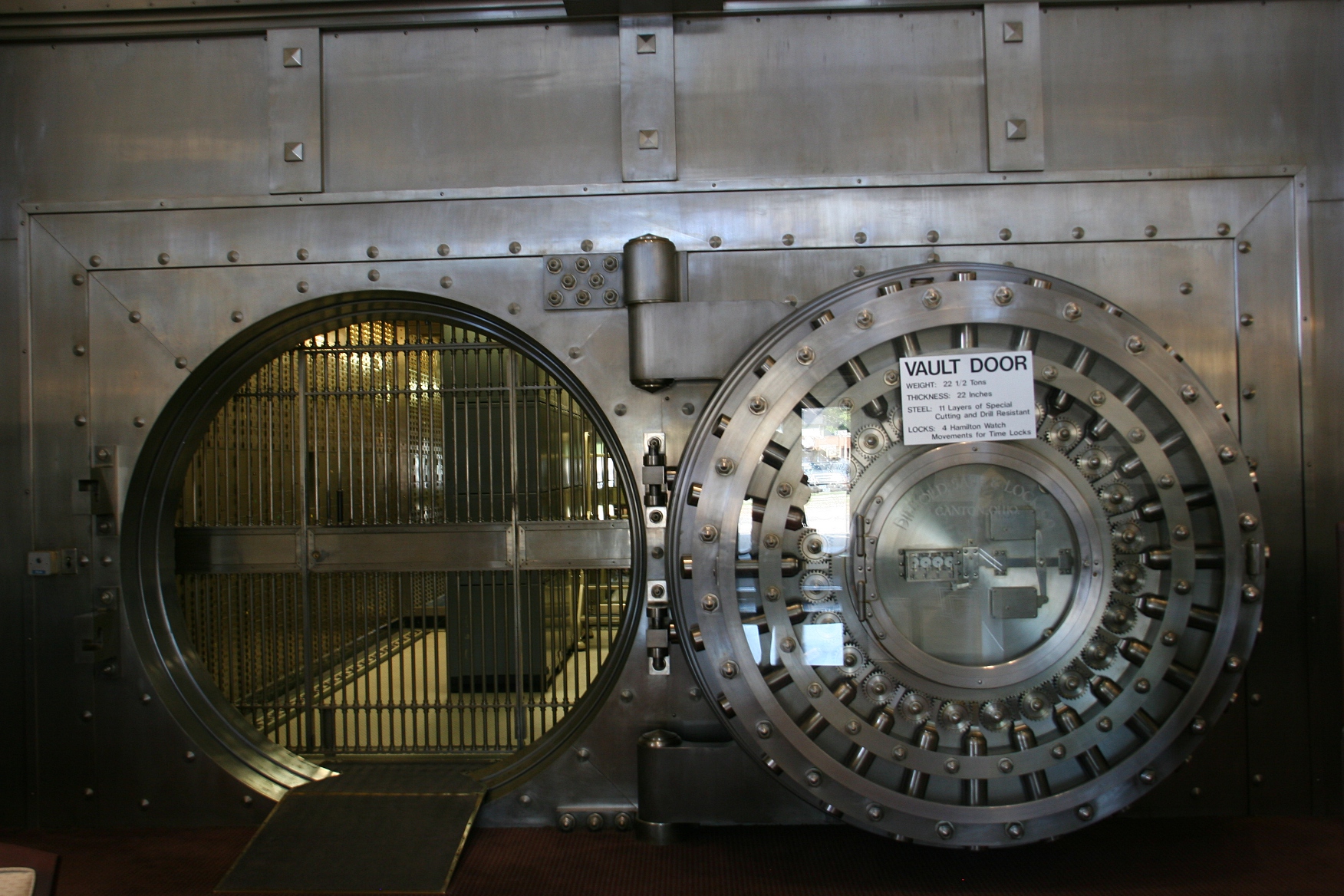
The mammoth steel vault door gives an impression of safety and security. It was built by Diebold Safe and Lock Company of Canton, Ohio.
A 22 ½ ton vault door 22 inches thick.
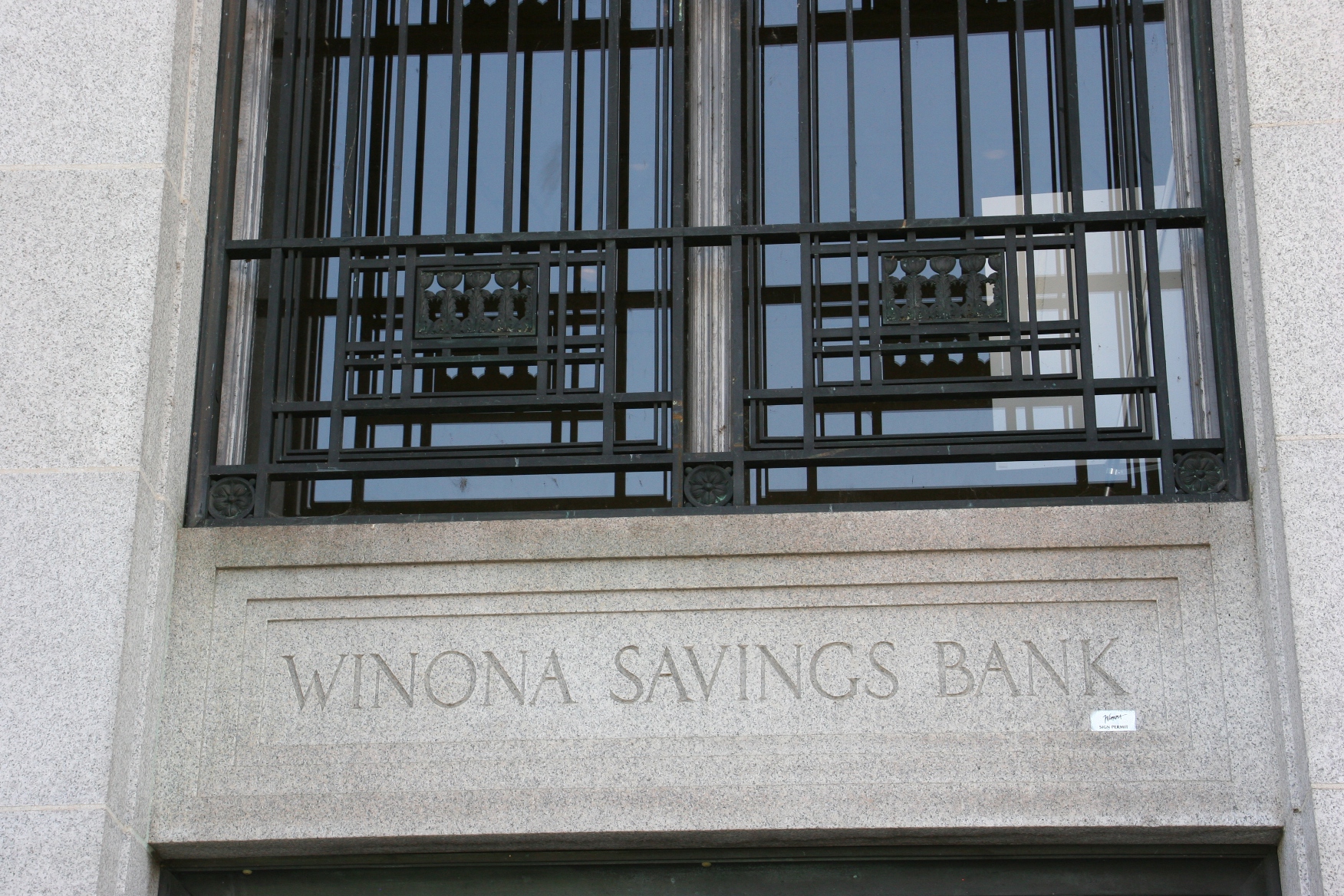
Architect George Maher designed the metal work like these iron window gates which give a visual impression of security.
Iron window gates.
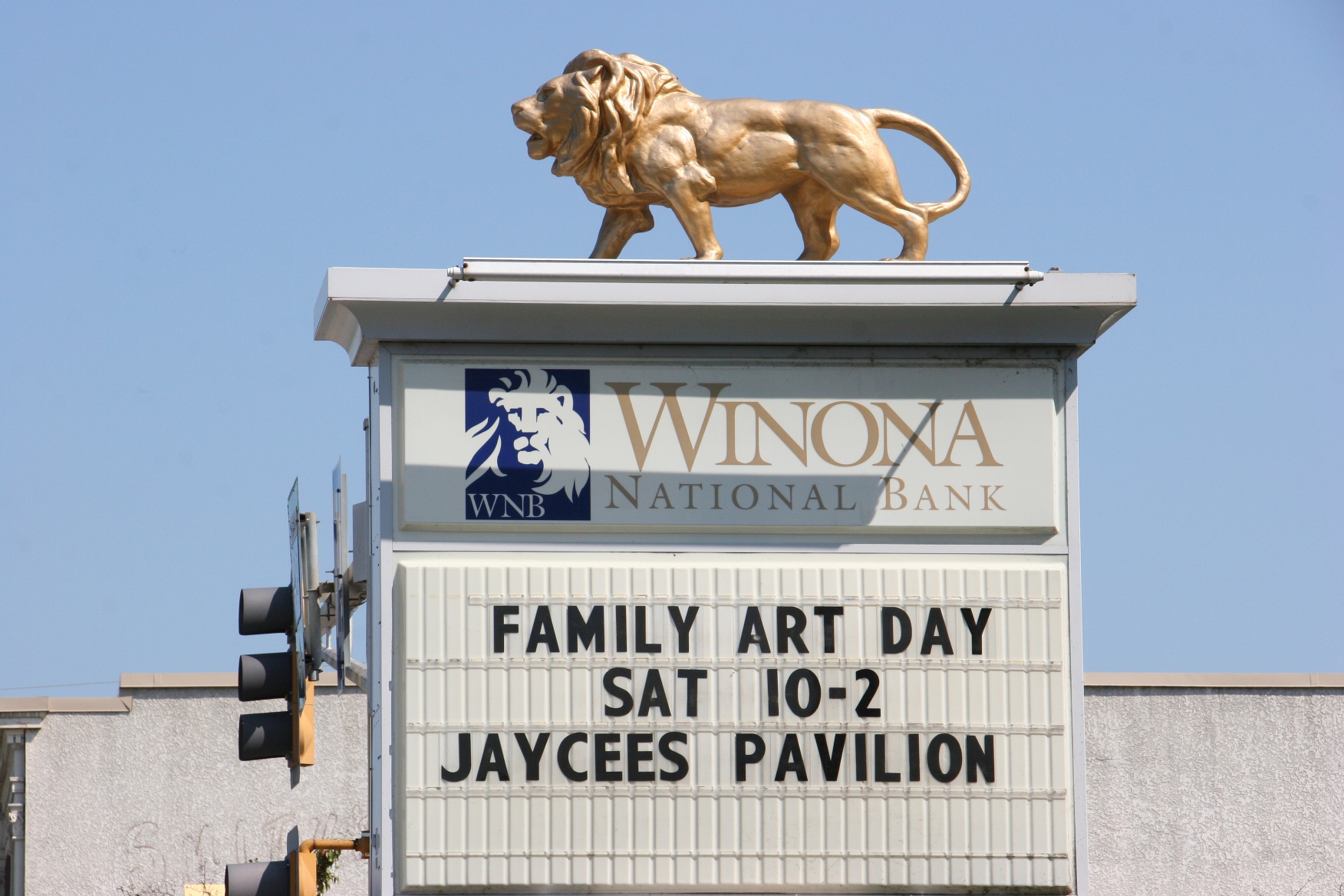
The lion, another symbol of strength and power.
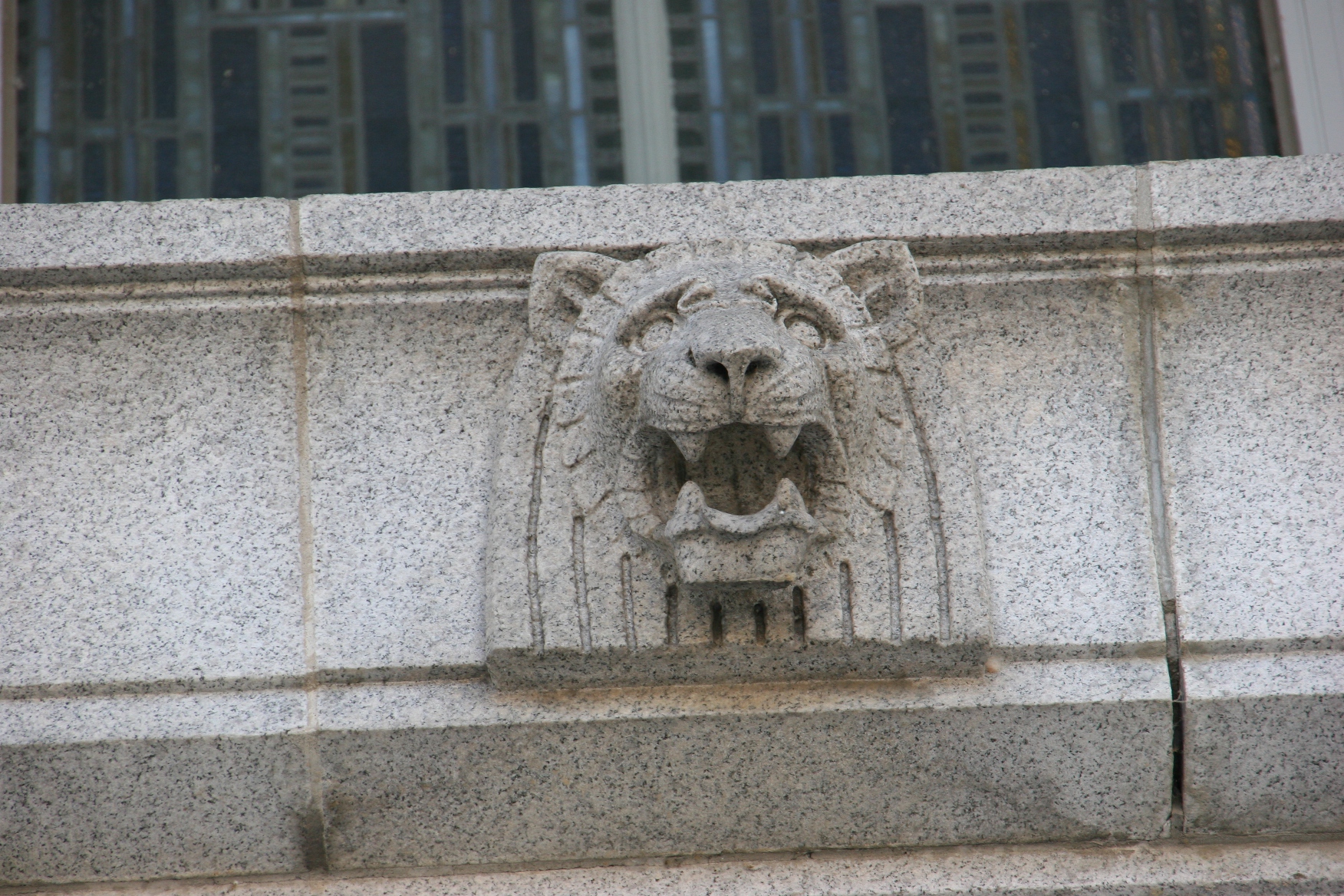
Lion heads are also carved in stone.
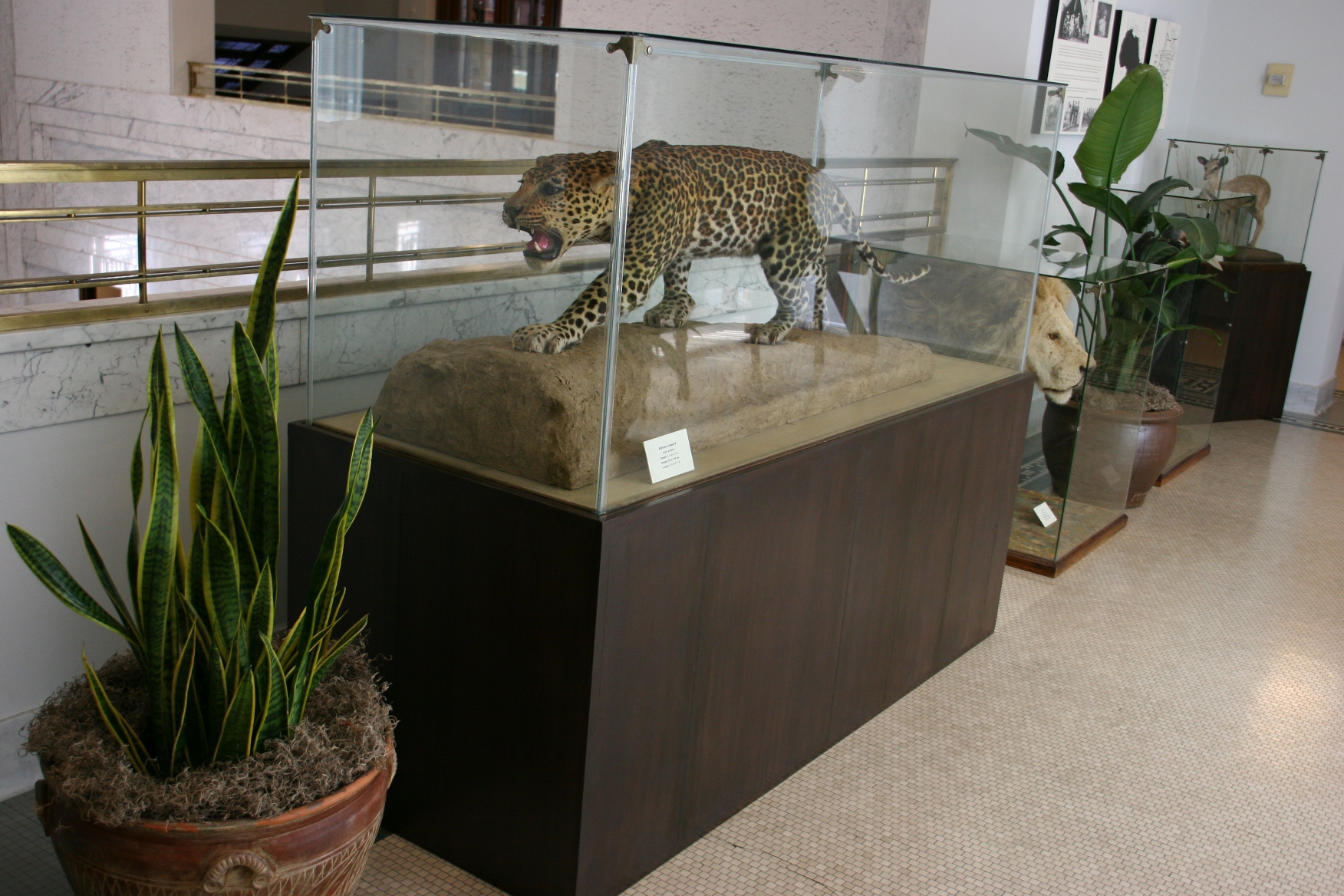
The taxidermy display includes a lion, center.
And then, the king of the jungle—the lion—standing atop signage, sculpted and encased in glass. A symbol of strength for a bank that stands as a powerful visual presence in the heart of this Mississippi River town.
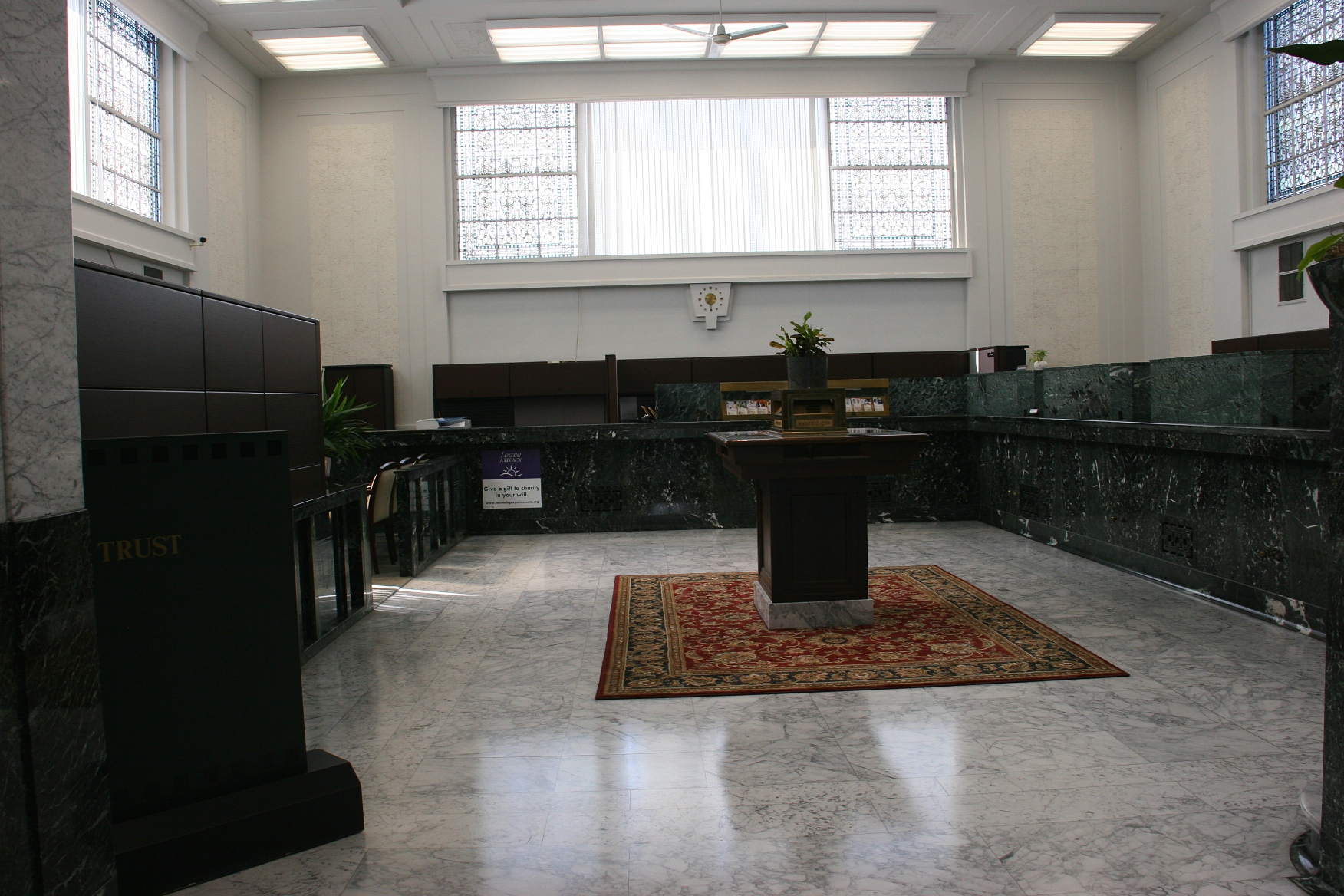
The bank was quiet on the morning I visited. Beautiful marble. Note the word “TRUST” on the wall to the left.
On the Friday in September when I toured this 1916 Egyptian Revival style building with Prairie School influences, the bank seemed more museum than business. The atmosphere was quiet, almost shrine-like with few customers. (The bank also has two branch offices.) I felt a sense of reverent awe in the midst of such opulence, such an overwhelming display of wealth.
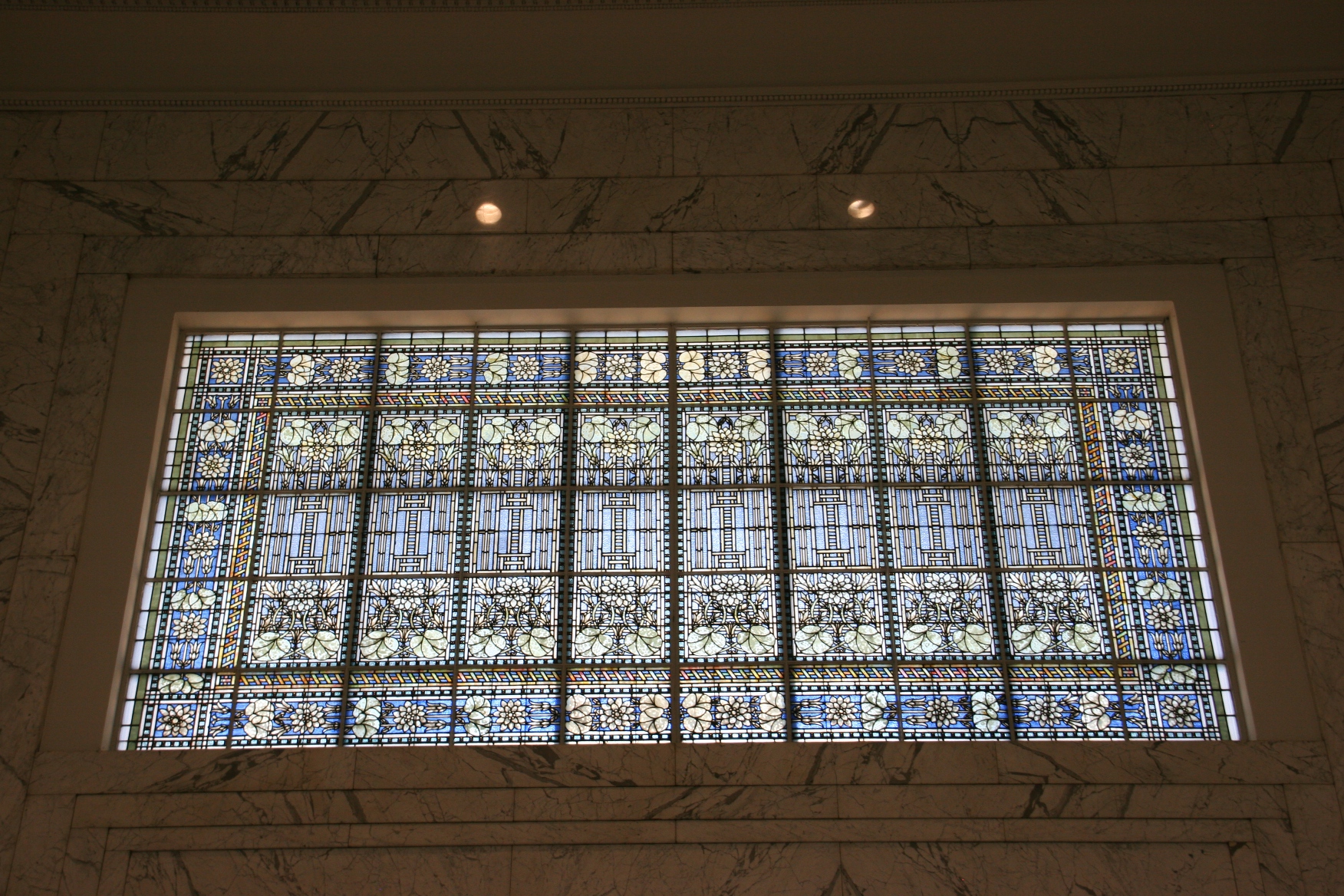
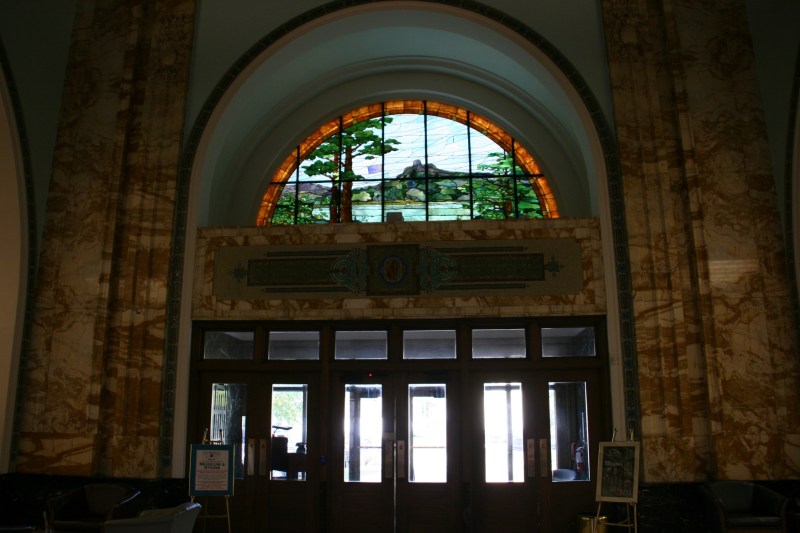
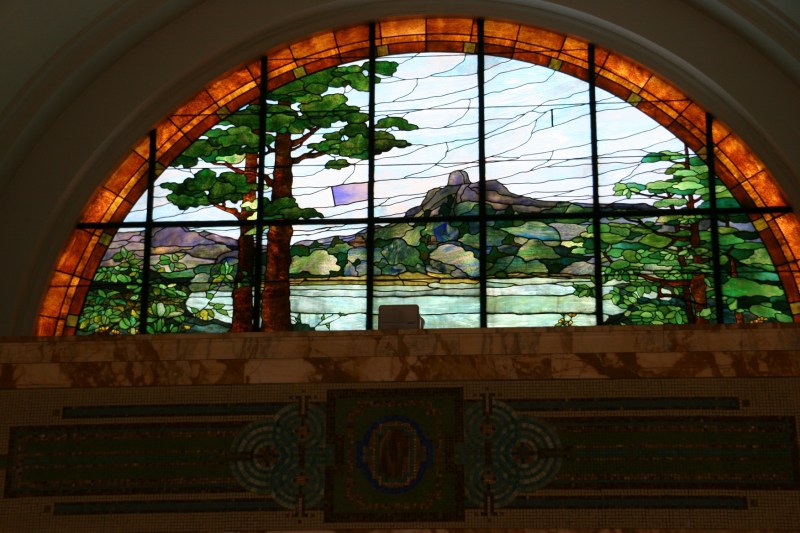
The largest of the Tiffany stained glass windows in the bank looms above the entry. Architect George Maher’s Prairie School influences are seen in a design that includes a lotus pattern.
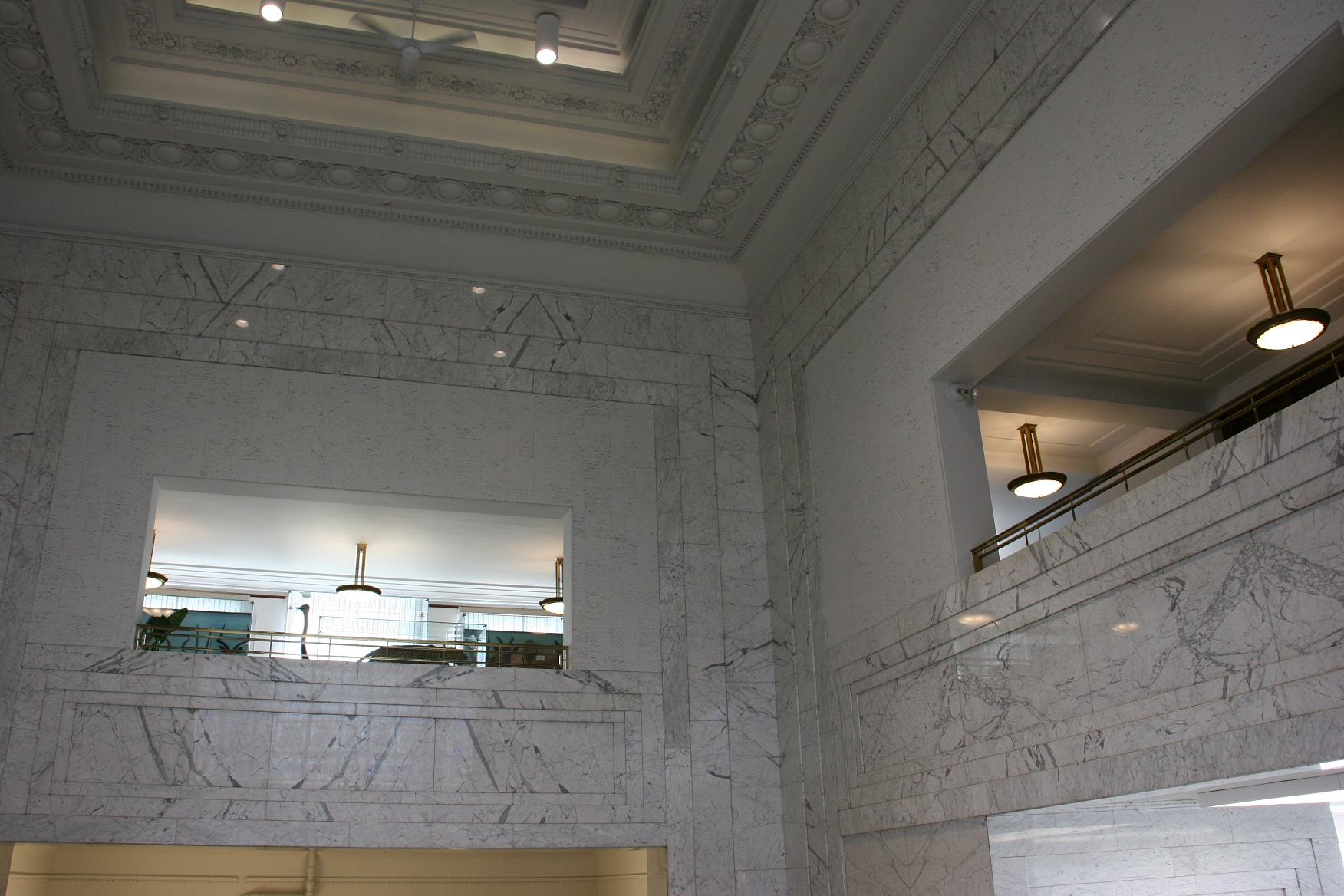
Looking up toward the second floor and the area open to the lower level, the white marble from Italy conveys strength. Note the art deco style lights.
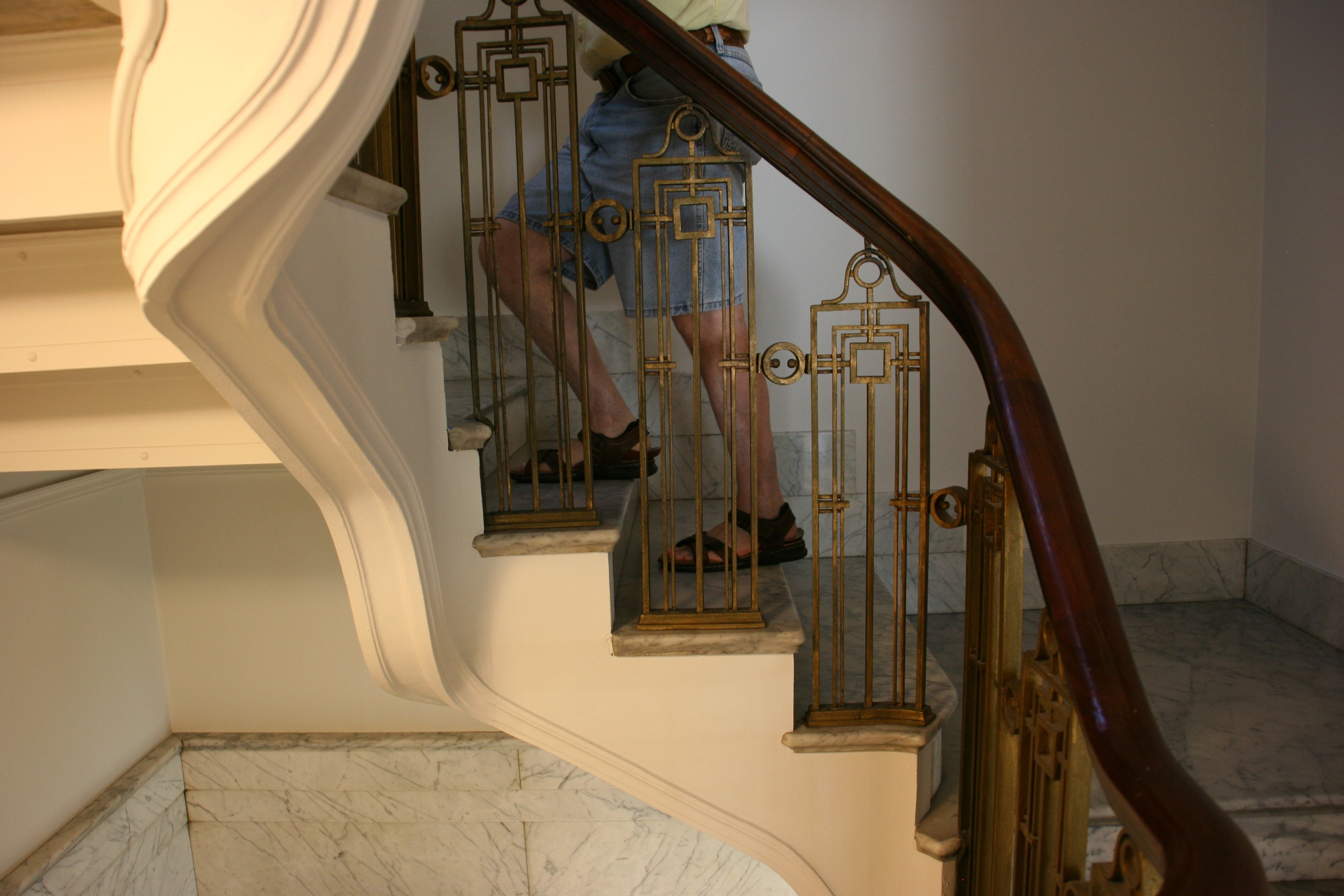
Mahogany railings wrap the white marble staircase.
It is difficult for me to comprehend anyone having this much money—to erect this massive building with Tiffany stained glass windows, white marble imported from Italy and mahogany railings. Chicago architect George Maher, a contemporary of Frank Lloyd Wright, designed the building.
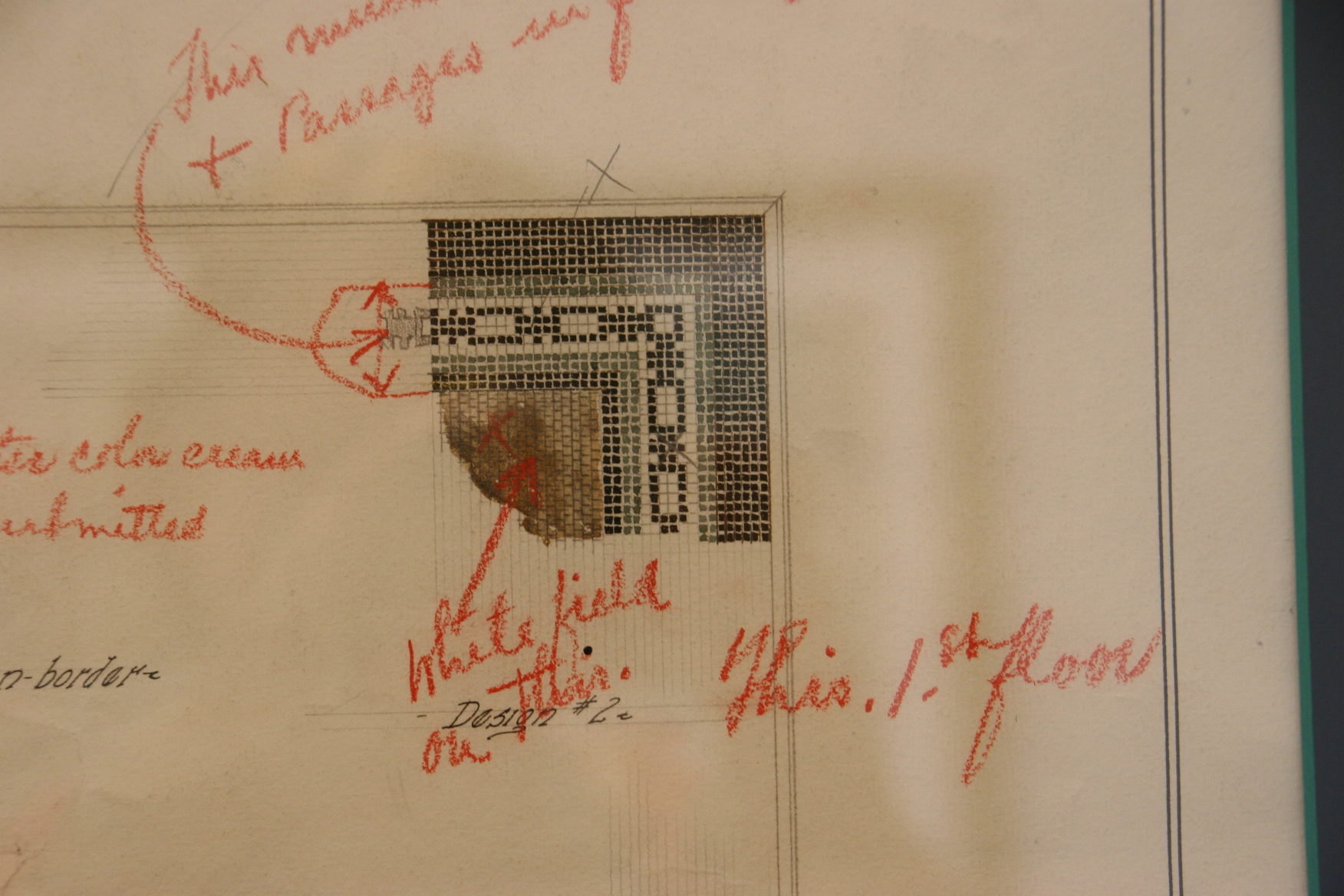
Plans for the tile are on display.
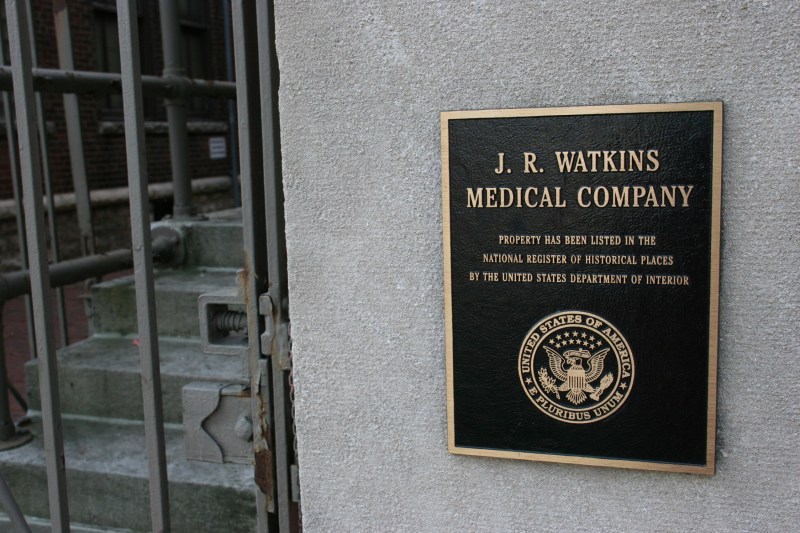
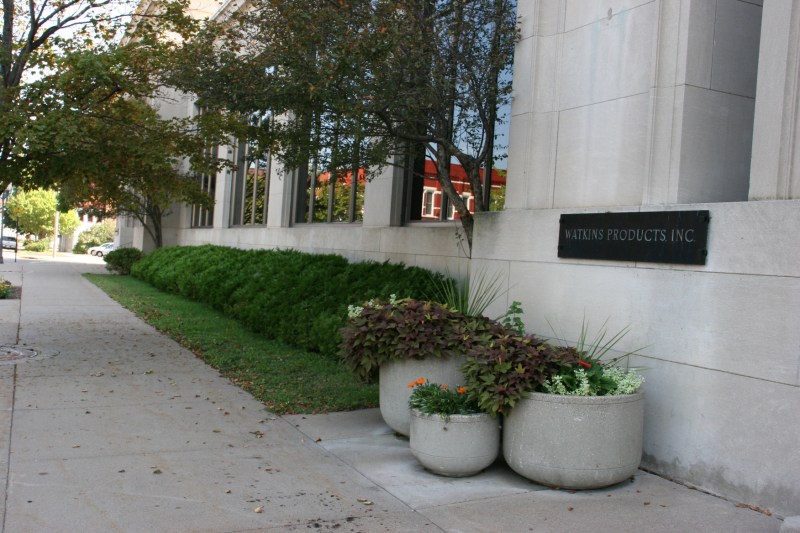
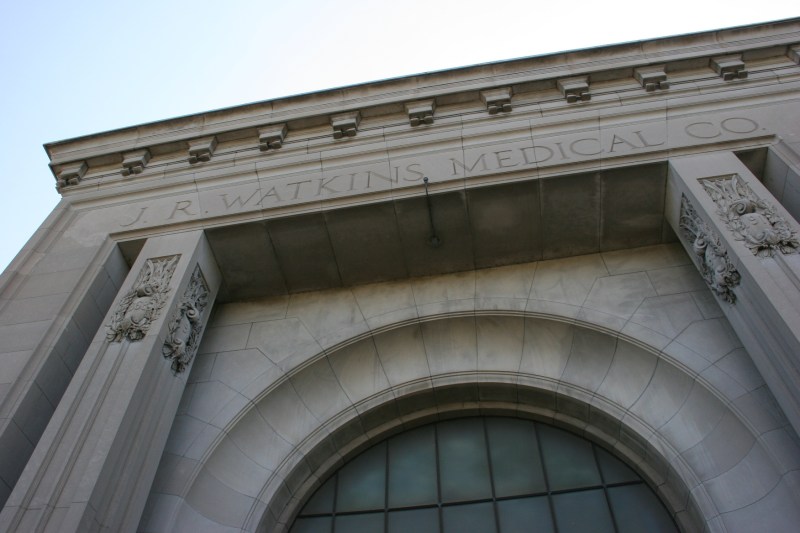
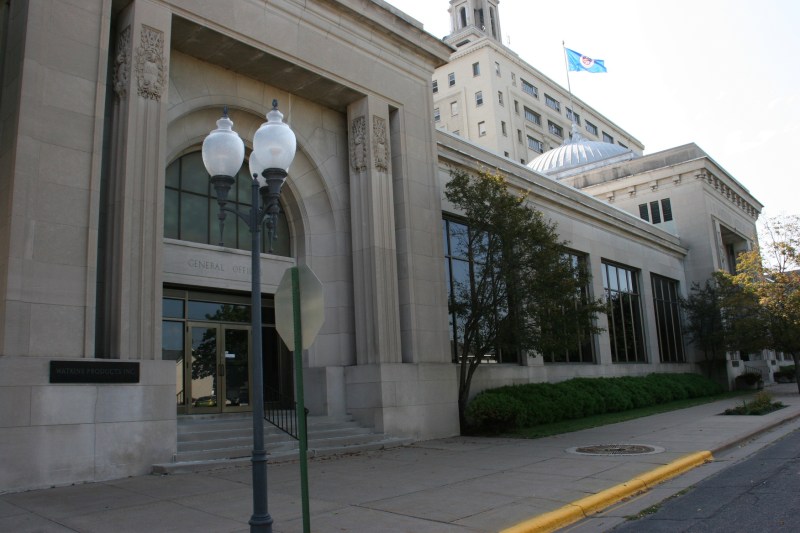
The bank formed in 1874 as Winona Savings Bank, later merging with Winona National Bank. J.R. Watkins, founder of The J.R. Watkins Medical Company, still a stalwart business today simply known as J.R. Watkins, is also linked to the bank. In the early 1900s, J.R. acquired Winona Savings Bank as a banking concern connected to Watkins products.
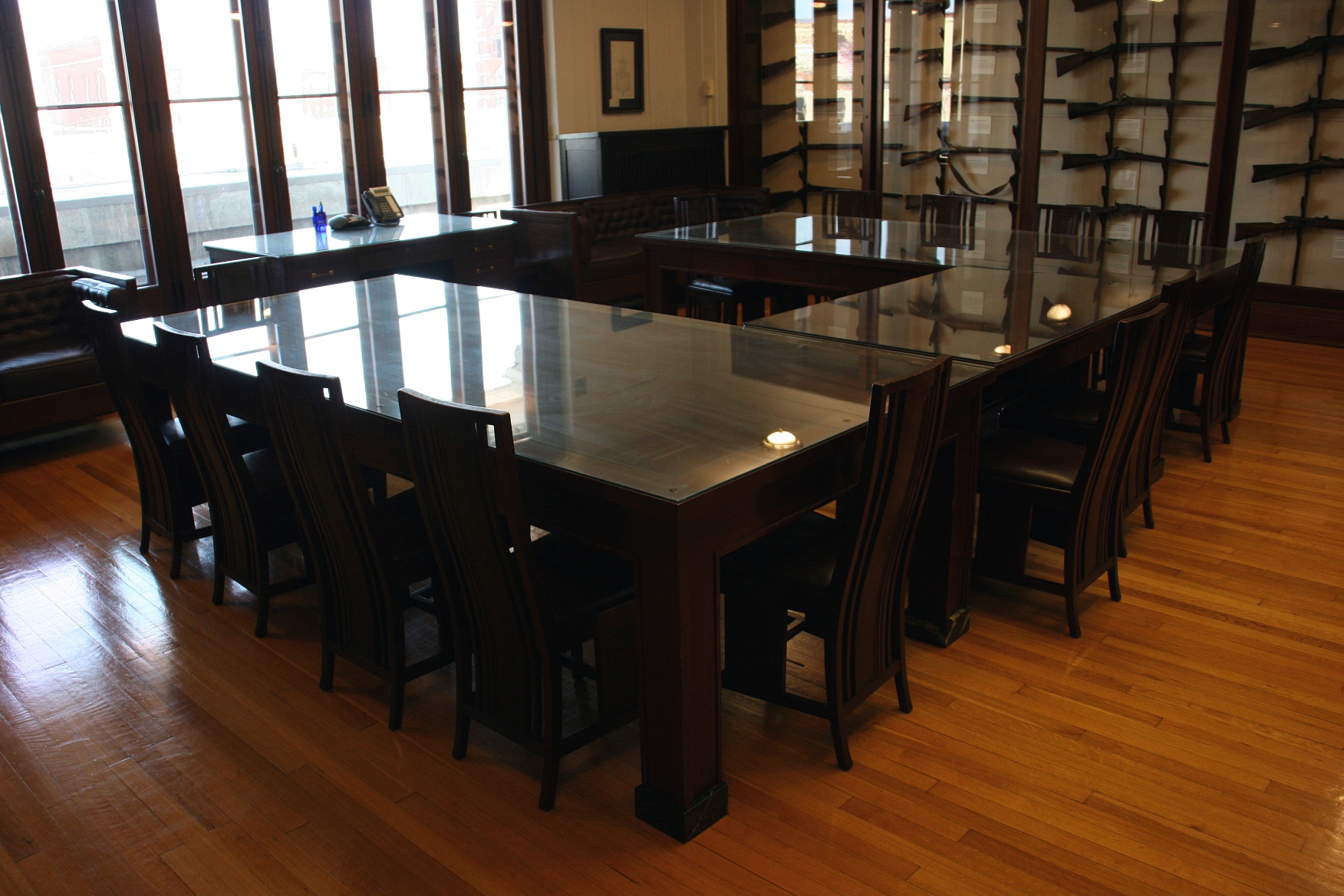
The impressive boardroom.
When J.R. died in 1911, his son-in-law, Ernest L. King, Sr., then the vice president of Watkins, assumed the bank presidency. Eventually his son, Ernest L. King, Jr., would serve on the board of directors.

A Prairie School inspired chair in the boardroom, next to the gun collection.
So there’s a lot of local business history in this formidable bank building listed on the National Register of Historic Places. The Watkins connection is highlighted in upper level displays. Inside the boardroom, designed in Prairie School style, sleek chairs pull up to hefty, gleaming tables next to a gun collection. Just down the hallway, trophy animals shot by Grace Watkins King (J.R.’s only child) and her husband, Ernest L. King, Sr., are showcased.
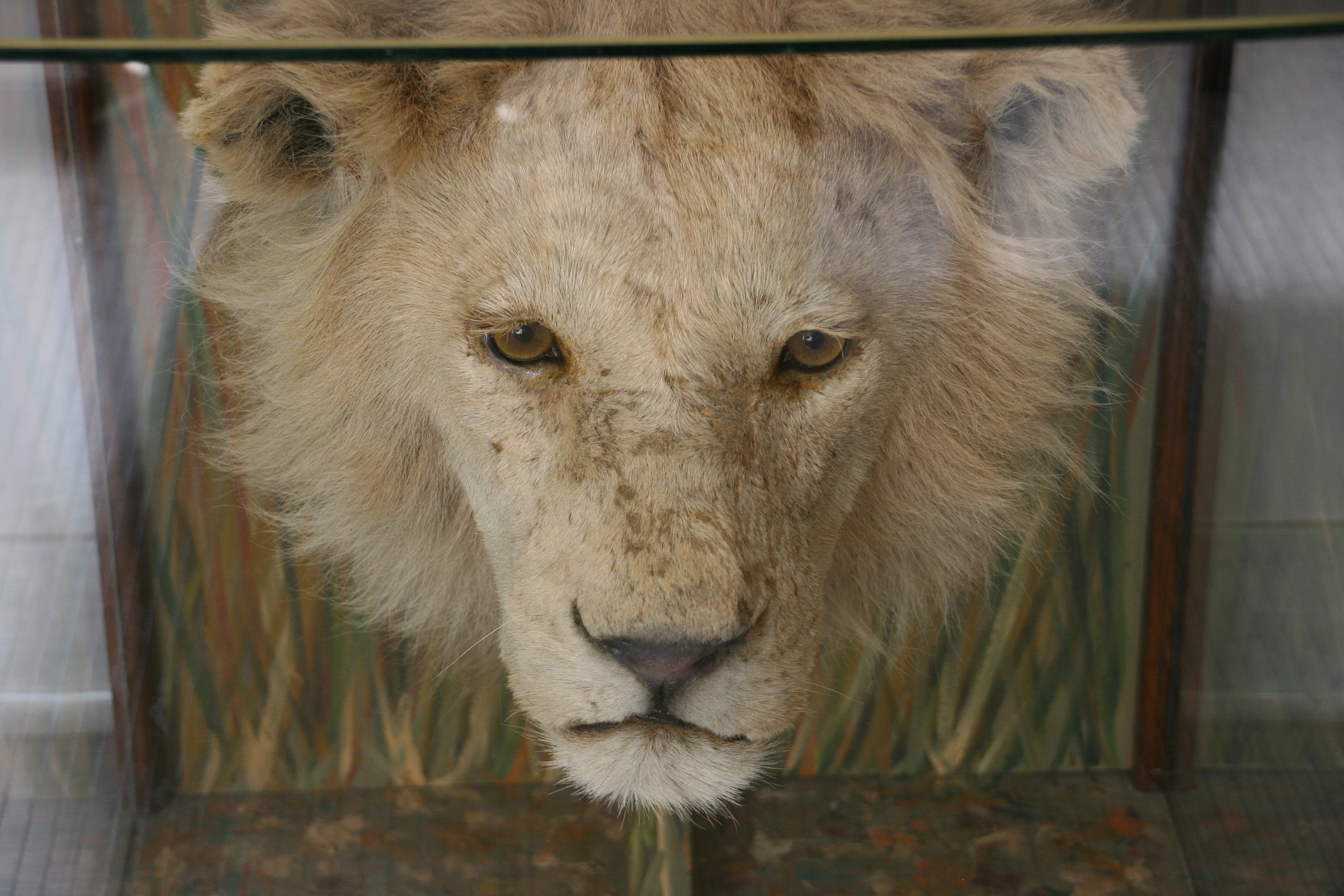
A lion trophy from Africa.
I couldn’t help but think of Cecil the lion (killed in Zimbabwe) as I photographed the lion mount inside the bank. I understand, though, that it was a different mindset when this lion and other wildlife were shot in Africa. Yet, in a building of such grand splendor, this taxidermy collection left me feeling uncomfortable and sad.
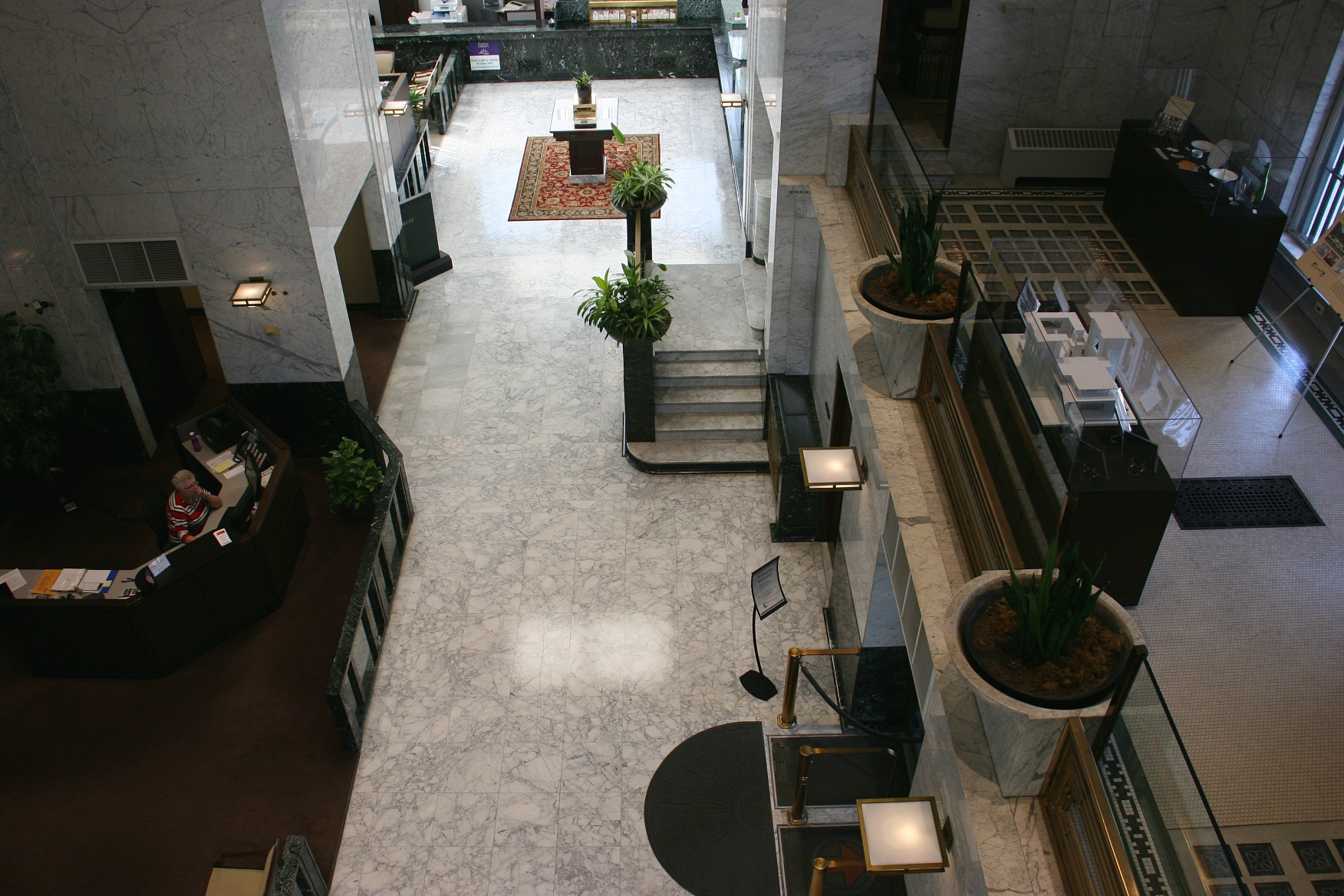
From an upper floor looking down to the lobby.
That aside, I delighted in the opportunity to tour this remarkable Minnesota treasure.
BONUS PHOTOS:
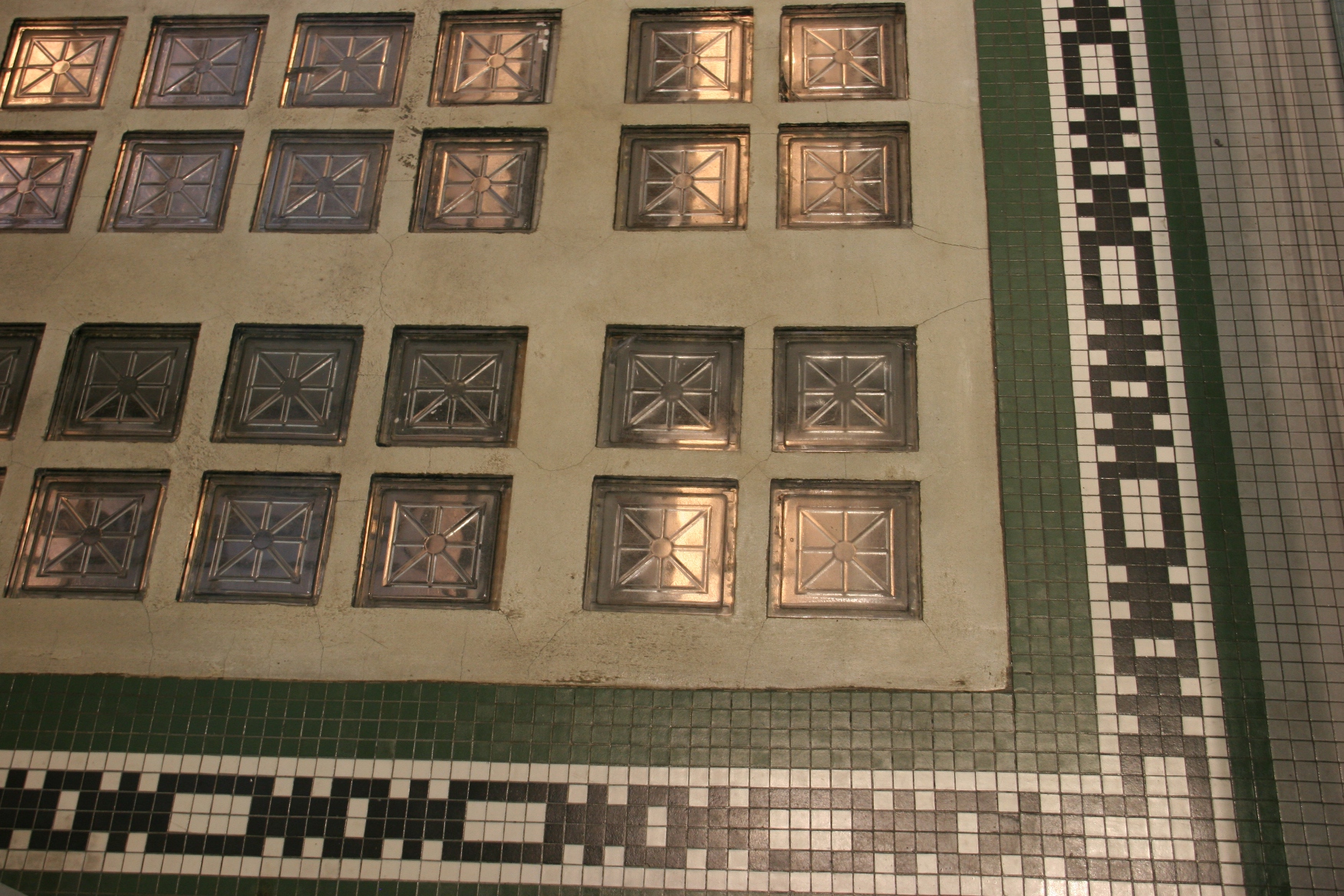
Even underfoot impresses.
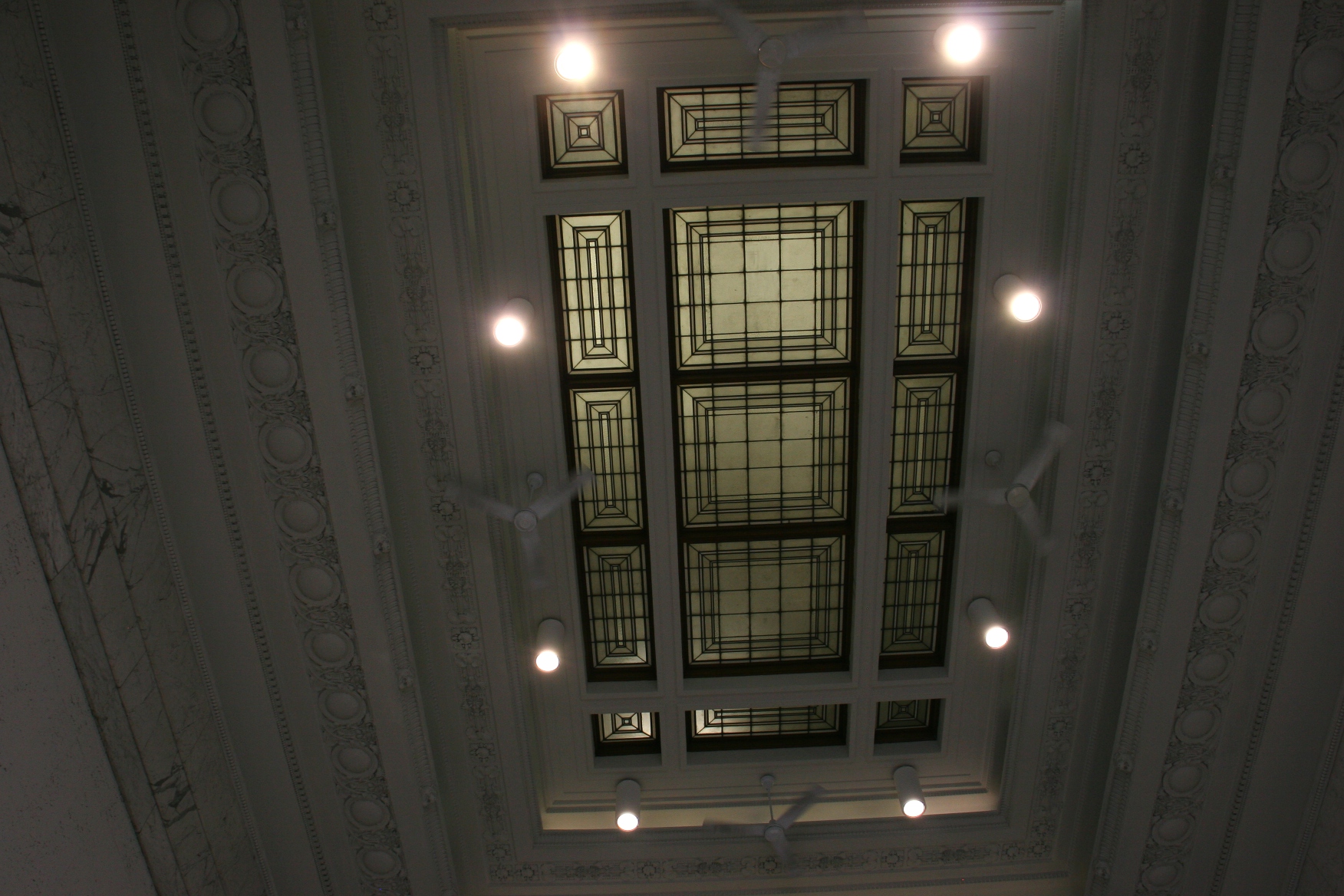
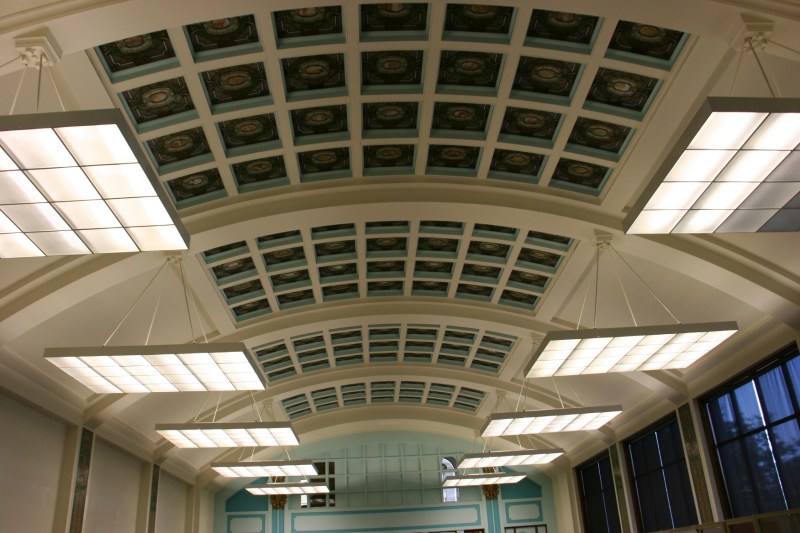
Likewise above…definitely Prairie School influence.

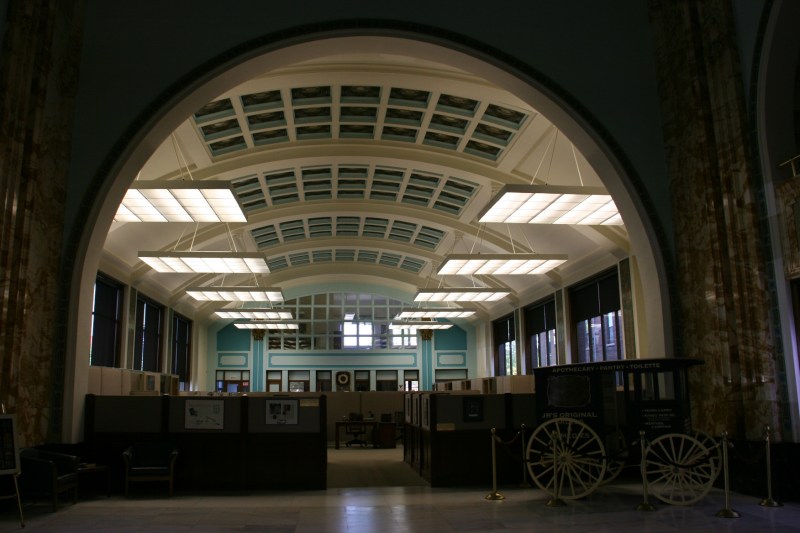
Another view of the lobby from above.
FYI: Free self-guided tours of the bank are available during regular business hours from 8:30 a.m. – 5 p.m. Monday through Friday. The bank is located at 204 Main Street in downtown Winona. Check back next week as I continue with my series from Winona.
© Copyright 2015 Audrey Kletscher Helbling



 Minnesota Prairie Roots
Recent Comments