Minnesota Prairie Roots

Writing and photography by Audrey Kletscher Helbling

Minnesota remembers Abraham Lincoln 150 years after his assassination April 14, 2015

THE PISTOL WEIGHS HEAVY in my hand. Cold metal and wood against warm flesh nestled in my palm. I am surprised, really, by the weight and smallness of this curved 1840 Philadelphia Derringer, which is exactly like the deadly weapon John Wilkes Booth fired at President Abraham Lincoln on April 14, 1865.

An 1840 Philadelphia Derringer, like the pistol used to assassinate President Abraham Lincoln.

My husband holds an 1840 Philadelphia Derringer. Minnesota Prairie Roots file photo 2009.

I wrote that paragraph in 2009 after attending a meeting of the Cannon Valley Civil War Roundtable. There an area collector showcased Lincoln memorabilia. I’ve never forgotten that petite pistol he allowed me to cradle.

Today, especially, I feel the weight of that Derringer. April 14 marks 150 years since Booth shot our 16th President as he watched the play, Our American Cousin, in Ford’s Theatre in our nation’s Capitol.

The assassination of Lincoln—the President who, via the Emancipation Proclamation set slaves free in “rebellious states”—stands as a memorable and pivotal moment in U.S. history.
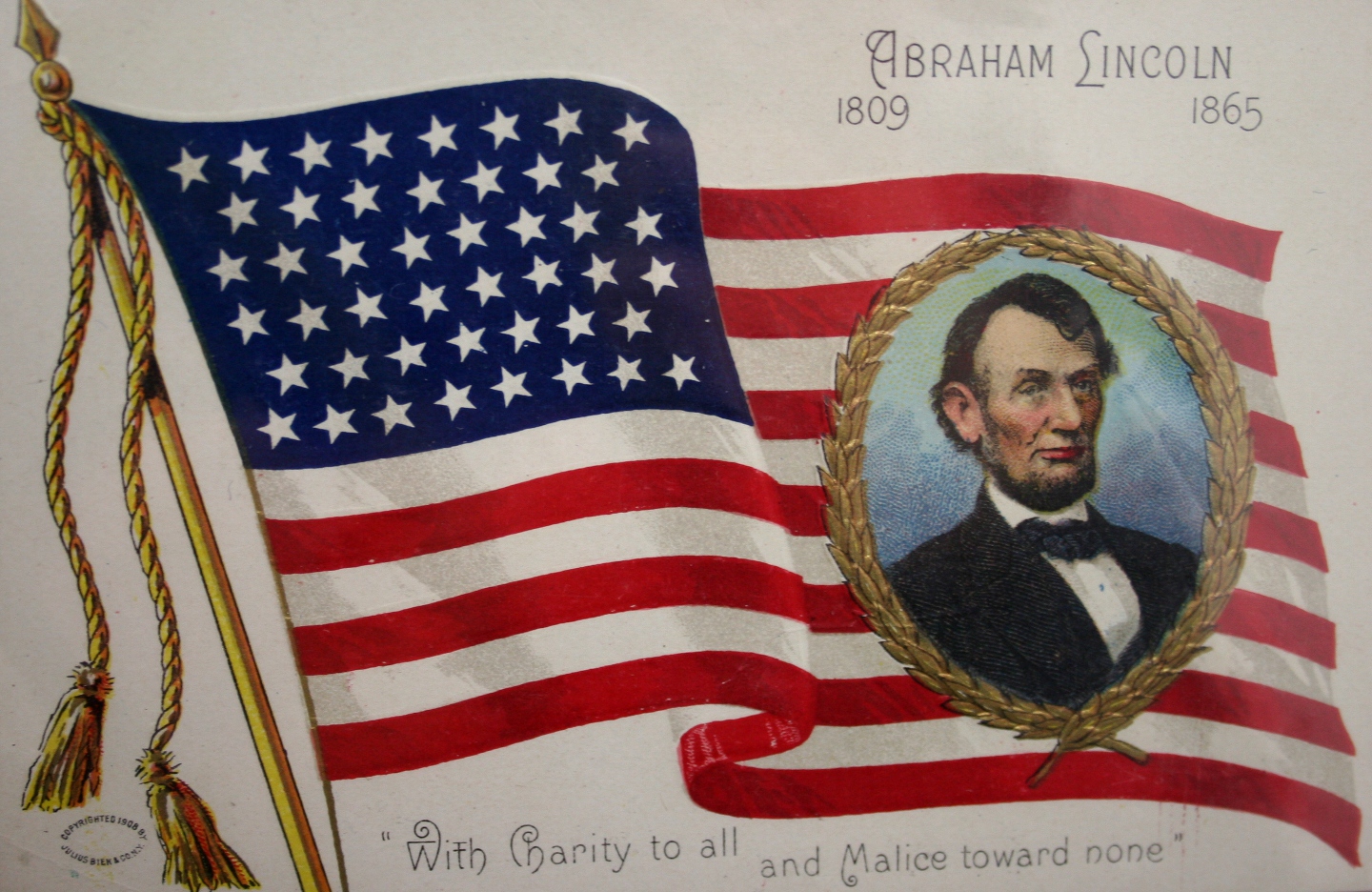
A Lincoln postcard which a collector brought to a Cannon Valley Civil War Roundtable meeting several years ago.

A Lincoln postcard which a collector brought to a Cannon Valley Civil War Roundtable meeting in 2009.

Today we honor this remarkable leader of humble roots, author of the Gettysburg Address wherein he vowed “that we here highly resolve that these dead shall not have died in vain—that this nation, under God, shall have a new birth of freedom—and that government of the people, by the people, for the people, shall not perish from the earth.”
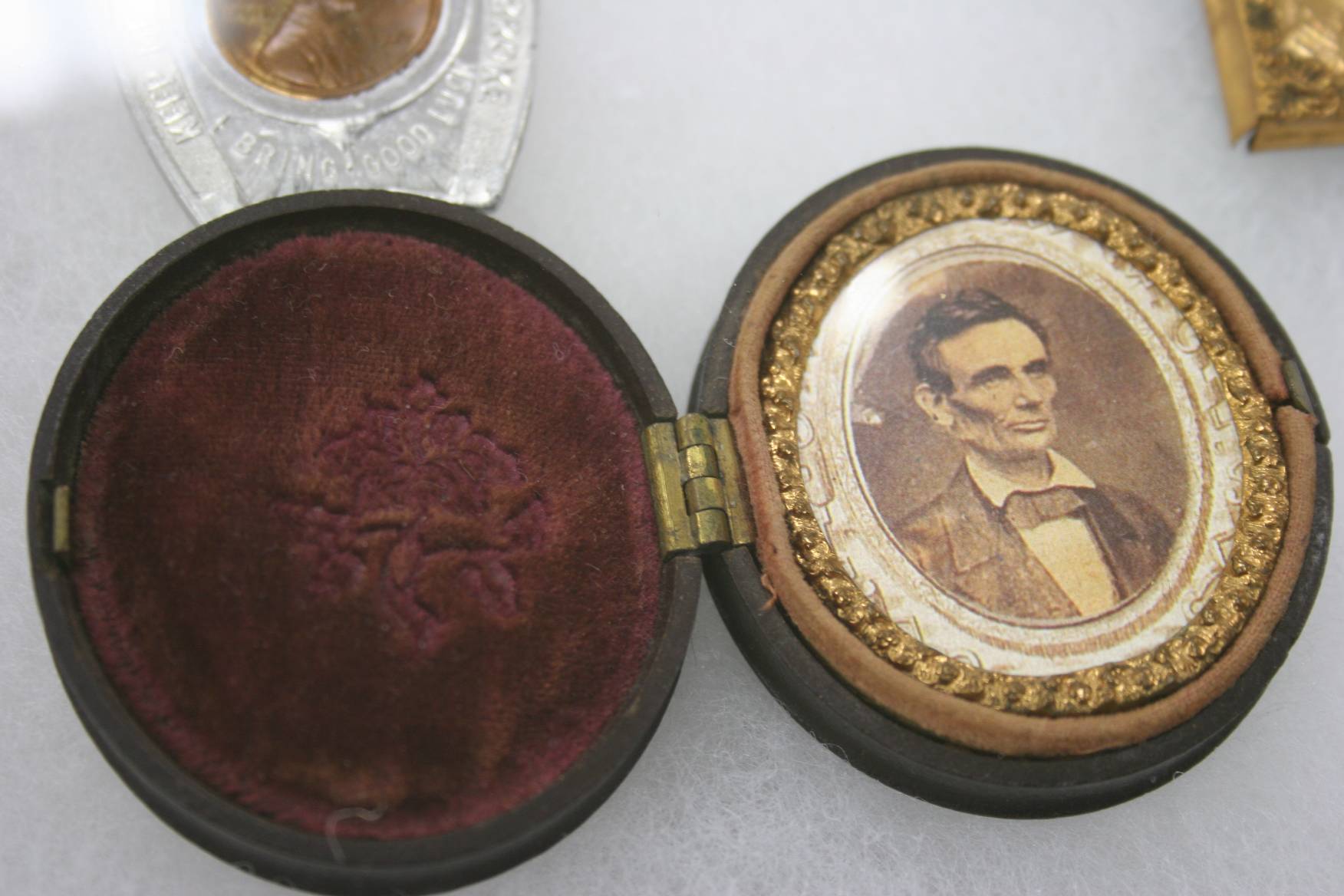
An original photo of Abraham Lincoln in Roger's collection.

An original photo of Abraham Lincoln from a southern Minnesota collector’s collection.

I’m also particularly fond of a lesser-known Lincoln quote: “All that I am, or ever hope to be, I owe to my angel mother.”
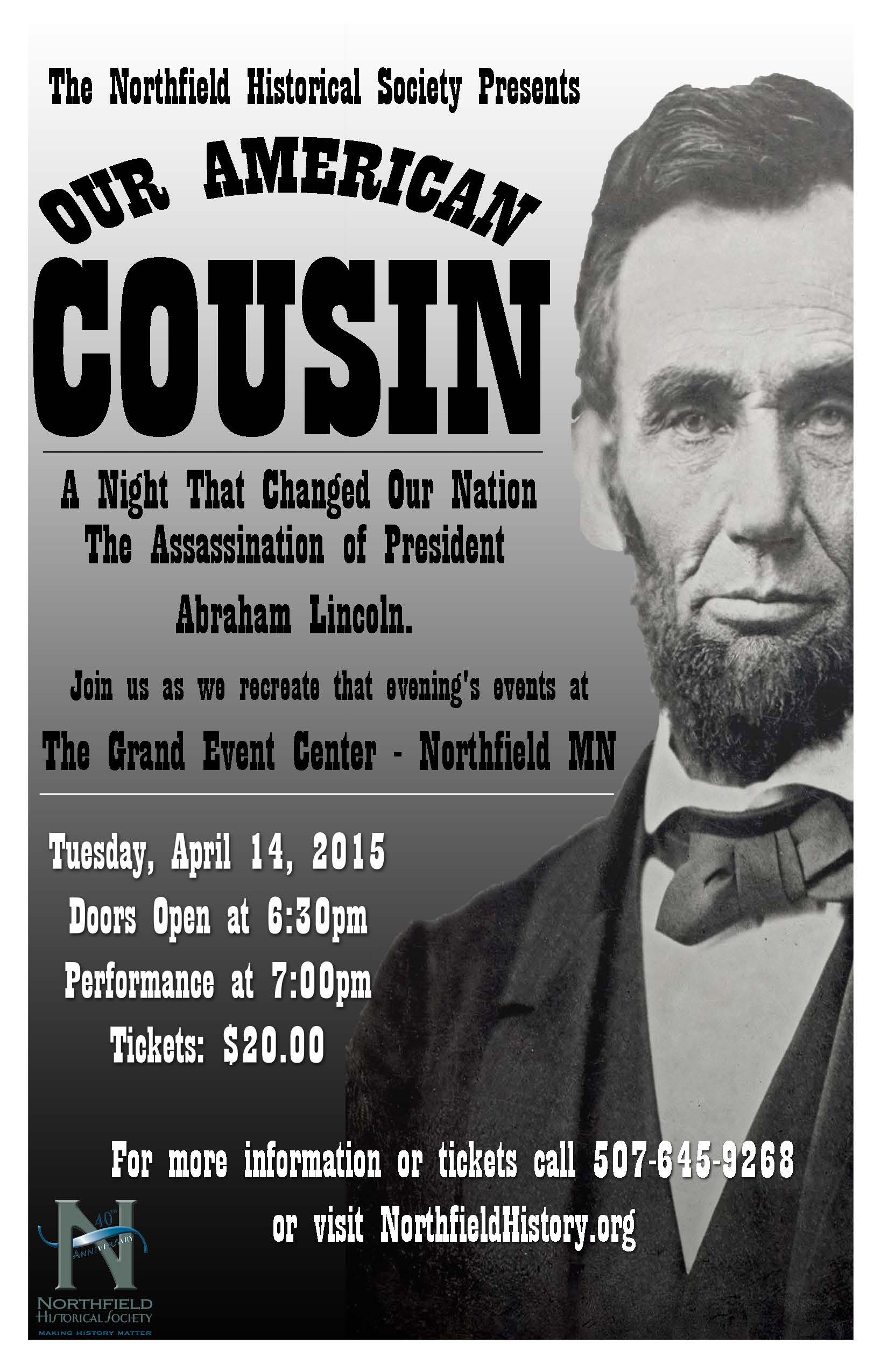
Promotional poster for the Lincoln event in Northfield, Minnesota.

Promotional poster for the Lincoln event in Northfield, Minnesota.

Throughout our nation and even here locally in Rice County, folks are publicly remembering Lincoln on the 150th anniversary of his death. At The Grand Event Center, The Northfield Historical Society this evening presents Our American Cousin, A Night That Changed Our Nation, The Assassination of President Abraham Lincoln. Held in an 1899 historic opera house/theatre with balcony booths much like those in Ford’s Theatre, the event includes summary presentations on the assassination and the nation’s reaction; a snippet from Our American Cousin; and a re-enactment of Lincoln’s assassination. Tickets are available in advance and at the door, although there is no guaranteed seating the day of the show.
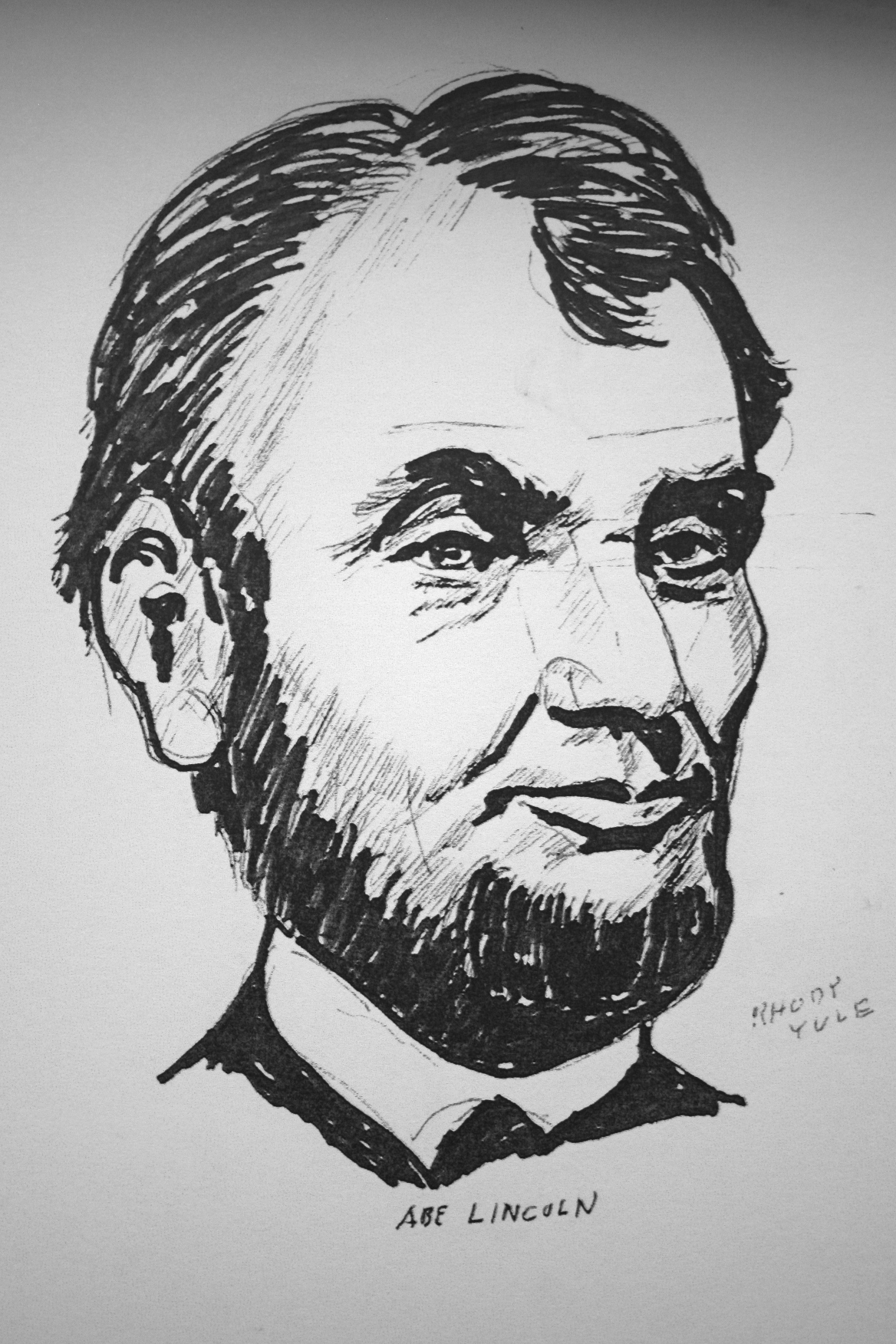
An ink drawing of Abraham Lincoln by my artist friend, Rhody Yule, now deceased.

An ink drawing of Abraham Lincoln by my artist friend, Rhody Yule, now deceased.

At 7 p.m. on Thursday, April 16, the President of the Wood Lake Battlefield Preservation Association will arrive on horseback at the Faribault Senior Center, 19 West Division Street, Faribault. There, at the monthly meeting of the Cannon Valley Civil War Roundtable, Tom Hosier of Rochester, dressed in period costume, will talk about Lincoln’s assassination. The presentation is free and open to the public.

A poster promoting the upcoming Lincoln's Traveling Troupe performance.

A poster promotes the upcoming Lincoln’s Traveling Troupe performance.

In Mankato, Lincoln’s Traveling Troupe will present the “true and dramatic story of Lincoln’s assassination” and its immediate aftermath in The Heavens Are Hung in Black, a play written by Lincoln historian and re-enactor Bryce O. Stenzel. Show times are 7 p.m. Friday, April 24, and Saturday, April 25, and 2 p.m. Sunday, April 26, at the Bethlehem Lutheran Church Dining Room.

How will you remember Lincoln today or this month?

© Copyright 2015 Audrey Kletscher Helbling


In Faribault: Scholar to address Lincoln’s response to the U.S.-Dakota War of 1862 September 5, 2012

A Lincoln postcard which a collector brought to a Cannon Valley Civil War Roundtable meeting several years ago.

THE FIRST TIME I ATTENDED a Cannon Valley Civil War Roundtable meeting nearly three years ago, I arrived expecting to view slave documents. The presenter, however, left the papers at home and brought, instead, memorabilia specifically related to Abraham Lincoln.

He did not disappoint. I viewed vintage postcards and original photos of Lincoln, Civil War buttons and replicas of Mary Todd Lincoln’s White House china, among many other items.

An 1840 Philadelphia Derringer, like the pistol used to assassinate President Abraham Lincoln.

What impressed me the most, however, was the collector’s 1840 Philadelphia Derringer, exactly like the pistol with which John Wilkes Booth assassinated Lincoln. The weapon was nearly small enough to hide in the palm of my hand.

Visuals like that teach me more about history than any textbook ever will. So do guest speakers. They address the monthly meetings of the Roundtable whose 25 members are interested in preserving and interpreting the Civil War.

Now the Faribault-based Cannon Valley Civil War Roundtable is bringing in a scholar of Abraham Lincoln to kick off its eighth year as an organization. You needn’t be a Roundtable member to attend; I’m not.

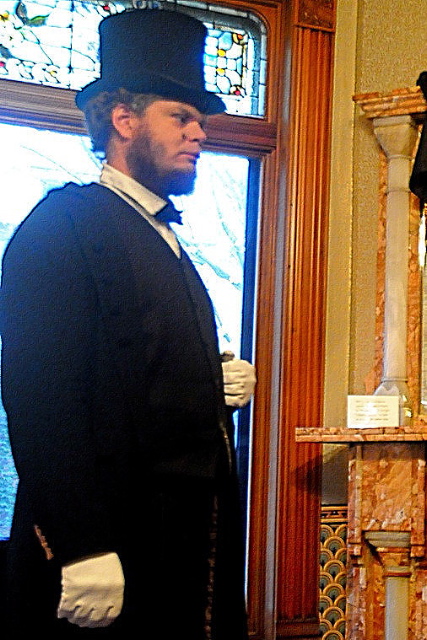
Bryce Stenzel of Mankato portraying President Abraham Lincoln. Stenzel, among other things, directs Lincoln’s Traveling Troupe, a group of students and community actors who bring Lincoln’s life and legacy to life via a dramatic, living history portrayal and authentic re-enactment.

Bryce Stenzel of Mankato, who developed a first-person portrayal of Abraham Lincoln in 1989 and since has traveled around the country presenting, will present “1862: Lincoln Trials by Fire” at 7:30 p.m. Thursday, September 20, at the Faribault American Legion, 112 Fifth St. N.E.

He will address, Stenzel says, “the ‘State of the Union’ as it existed in 1862 and Lincoln’s response to the U.S.- Dakota War, against the backdrop of the American Civil War and the issuance of the Preliminary Emancipation Proclamation on September 22, 1862.”

It’s a timely topic given this year marks the 150th anniversary of the U.S. – Dakota War.

Specifically, Stenzel details, his upcoming program “is a means for Faribault to acknowledge its unique connection to the U.S. – Dakota War by paying homage to its native son, Bishop Henry Whipple. Even though no fighting took place in Faribault, your community played an active role in influencing the final outcome.”

This historian, who has authored eight books on local historical and Lincoln-related topics, possesses an advanced history degree and has taught social studies/history at all levels, including college, has long taken a personal interest in the U.S. – Dakota War. His great-great grandmother and her two-year-old daughter escaped a band of Dakota warriors by hiding in tall prairie grasses. And his great-great grandfather served with the Fifth Minnesota Regiment and fought in the decisive Battle of Nashville in 1864.

Stenzel grew up in Mankato, where 38 Dakota were hung in the largest mass execution in U.S. history. President Lincoln commuted the death sentences of 265 Dakota.

Says Stenzel:

The central question of my presentation is why did Lincoln feel compelled to intervene at all, when he didn’t have to? In fact, from a political standpoint, Lincoln committed political suicide—most Minnesotans at the time believed it was both right and necessary to hang the Indians as a means of preventing such a tragedy from ever happening again. It is useful for the modern audience to consider that what was “politically correct” in the 19th century, is no longer. Historical interpretation changes with time.

Dan Peterson, a member of the Cannon Valley Civil War Roundtable who has heard Stenzel speak, fully endorses him: “(Stenzel)) reminds me of my love for Abraham Lincoln just to be in his audience or close to him. Lincoln is on our money, our named streets, one state capitol, highways, buildings, businesses, cars and more. You just cannot get away from him.”

FYI: Tickets to the dinner and program are on sale now at the Rice County Historical Society in Faribault or from Chuck Peterson (507-301-2470), Jan Stevens (507-244-0500) or Dan Peterson (507-459-3140). Cost is $22 for non-members and $20 for paid-up members of the Cannon Valley Civil War Roundtable.

Tickets for the meal of pork ribs with trimmings must be purchased by Saturday, September 8. The event begins at 5 p.m. on September 20 with a social and then dinner at 6 p.m.

If you want to attend just the Lincoln presentation by Stenzel, the cost is $10 for adults, $5 for students 16 and older, and free for those under 16. The program begins at 7:30 p.m.

The Cannon Valley Civil War Roundtable meets the third Thursday of each month at 7 p.m. at the Faribault Senior Center with a speaker at each meeting. In October, the topic will be the New Ulm raid as part of the U.S. – Dakota War; in November, the Antietam Battlefield; and in December, the annual Civil War food potluck (probably with possum soup, hardtack and more, Peterson promises).

© Copyright 2012 Audrey Kletscher Helbling
Bryce Stenzel photo courtesy of Bryce Stenzel