Minnesota Prairie Roots

Writing and photography by Audrey Kletscher Helbling

How COVID changed my life November 28, 2023

Filed under: Uncategorized — Audrey Kletscher Helbling @ 5:00 AM
Tags: , , , , , ,
Image of first coronavirus. Source: CDC.

IT’S BEEN A YEAR. No other words exist to define 2023, a year in which I’ve been overwhelmed by fall-out from a virus in early January. Although I self-tested negative twice for COVID, my primary care doctor suspects I did, indeed, have COVID given the neurological and other issues I’ve experienced since then. I fully agree.

This is my story, one that needs to be shared so that others understand just how viruses affect some of us. This story needs to be shared also to offer hope to others. This story needs to be shared, too, so that anyone who is ill thinks twice about going to work, the grocery store, church, concerts, family gatherings or elsewhere, thus exposing others to infectious diseases.

To tell my story, it’s necessary to give some background. In 2005, at the age of 48, I caught whooping cough. I was sick, really sick, for three months. Gasping for air sick. Coughing until my stomach hurt sick. Exhausted, unable to sleep. In 2011, I lost the hearing in my right ear due to a virus. My body, for whatever reason, does not handle bacterial and viral infections well.

And then came January 2023, and the virus that would change my life.

This artwork by Bill Nagel fits how my neurological system felt, still feels sometimes when I experience sensory overload. (Minnesota Prairie Roots copyrighted photo November 2023)

IN THE BEGINNING

Symptoms started with feeling off-balance, off-kilter, as if I was fighting the world just to be upright. I waited to see my doctor, thinking (like most of us do) that I would get better. I didn’t. I, in fact, got worse. I experienced a bout of vertigo, a rapid heart rate, high blood pressure, all new and troubling symptoms. I felt like I’d been slapped on the right side of my head, a feeling that persisted for many months. And when I tried to sleep, my legs practically ran a marathon in bed.

My primary care physician acknowledged early on that his ability to help me was limited. But he listened, tried…and sent me to an ear/nose/throat doctor for an evaluation. To even get through these medical appointments was a struggle. I had to close my eyes to converse. I felt overly-anxious and agitated, also new symptoms. I was, by then, feeling ear pain, fullness, pressure and tinnitus. I couldn’t sleep. My head hurt. My fingertips hurt. I couldn’t handle screen time. Eventually I would see a neurologist, undergo a CT scan, then an MRI of my brain to rule out a tumor or anything else. It was as if my body was being assaulted.

I felt overwhelmed. I struggled sometimes to find the right words. “Why can’t I talk?” I asked Randy. My brain seemed to be malfunctioning, misfiring, miscommunicating. My neurological system was under siege. My memory, which has always been stellar, was (and remains) affected.

This cool mint toothpaste set my mouth afire. For a while I brushed my teeth with baking soda, then switched to kids’ bubblegum flavored toothpaste. I only recently returned to using mint toothpaste. (Minnesota Prairie Roots copyrighted photo November 2023)

MAJOR SENSORY OVERLOAD

But the symptom which proved particularly debilitating was sensory overload. I couldn’t tolerate light or noise. I sat in the recliner, living room curtains drawn, body folded into the fetal position. No sound except the ringing in my own ears. I rocked 100 miles an hour, occasionally arose to pace the floor, stretched putty left from previous occupational therapy. Nothing calmed my body or mind. All I wanted was darkness, quiet, nothing stimulating entering my brain.

I struggled to get through Easter dinner at our house, missed my grandchildren’s birthday parties and a niece’s baby shower. Most heartbreaking of all was missing my son’s graduation with his master’s degree. I couldn’t handle the long road trip to Indiana, sit through the ceremony at Purdue. I couldn’t even manage grocery shopping; too much white noise from coolers and too much visual stimulation. Phone calls proved taxing, any conversation difficult. I was primarily housebound except for trips to the clinic and one to the ER following an allergic reaction to an unknown something. By then I’d been diagnosed with Meniere’s Disease and vestibular neuritis.

And then came the morning I brushed my teeth, the mint taste so overwhelming that I spit out the toothpaste. Rather than losing my sense of taste, mine intensified. For a week, until I saw my doctor (who added peripheral sensory neuropathy to my diagnoses) and got a prescription to settle my nervous system, I could eat only the blandest of foods. Oatmeal. Soda crackers. Graham crackers. I lost nine pounds in five days. Overall, I’ve lost 25 pounds this year. I’m OK with losing that weight, but don’t recommend this weight loss method. I went through a lengthy period of eating only a few bites of food at a meal.

All of this I experienced following COVID. Plus a rash and hair loss, either from the virus or from anti-anxiety meds. Nearly a year out from the virus, I am in a much better place. It took five months of vestibular rehab therapy, time and a lot of hard work to get here. Next up, I will write about retraining my brain, learning to manage my symptoms and how I found my way back to semi “normal.”

#

NOTE: I’ve been asked by several people whether the COVID vaccine caused my neurological and other issues since I am fully-boosted and vaccinated. No. My health problems began when I had that January virus, thought to be COVID. Had I not been vaccinated and boosted, I firmly believe I would have ended up in the hospital, perhaps even died. Negative comments about the vaccine and boosters will not be posted on this, my personal blog.

© Copyright 2023 Audrey Kletscher Helbling


It’s been a roller coaster ride September 14, 2023

“The Legend,” one of a few remaining wooden roller coasters, located at Arnolds Park Amusement Park in the lakes region of northwestern Iowa. Built in 1930, it is the 13th oldest wooden roller coaster in the world. (Photo courtesy of Arnolds Park Amusement Park Marketing)

SOME 2 ½ MONTHS AGO, I boarded a roller coaster for the first time since I was a teenager screaming my lungs out while riding “The Legend,” a wooden roller coaster at Arnolds Park Amusement Park in Arnolds Park, Iowa. It’s not that I decided this would be a fun activity to try again in my late sixties. Rather, the choice was made for me, as part of my vestibular rehab therapy.

I warned my physical therapist that I don’t like amusement rides. But my comment didn’t deter Ryan. He determined that riding a virtual reality roller coaster on a June morning might be exactly what my brain needed to retrain itself. Since January, I’ve struggled with neurological-based issues resulting from a viral infection, suspected to be COVID, even though I twice self-tested negative for the virus. In early April, I started physical therapy and have been working hard ever since to manage my many debilitating symptoms.

Fast forward to today. I am in a much better place, even while on a VR roller coaster, a tool I’m using to build my visual, auditory and spatial tolerance. Early on I had doubts about my therapist’s plan. Initially, I couldn’t tolerate the VR roller coaster for long (less than a minute) before symptoms flared. After minimal exposure, my head hurt, my eyes hurt and I felt utterly exhausted. When I experienced a health setback mid-summer with vertigo returning, Ryan abandoned the amusement ride therapy for therapies less taxing on my brain.

ROCKS, RABBITS & A ROLLER COASTER

Slowly, surely, I started feeling better and Ryan decided it was time to pull out the VR headset again for another go on the roller coaster. I did not enthusiastically hop on board, only reluctantly agreeing to give it a try. I lasted 25 seconds on a roller coaster ride where boulders tumbled off rocky mountains toward me. Rabbits loping under the track proved the only redeeming feature. I hold a fondness for rabbits, my high school mascot being a White Rabbit.

That was two weeks ago. The following week I did better, albeit on a less visually-stimulating ride, this one under the sea in a darker environment. Still, I could manage only bursts of riding before needing to pause.

NOT ONE, NOT TWO, BUT THREE ROLLER COASTERS

Five days later I was back at therapy, knowing full well that I would again be riding a roller coaster. Make that plural. Three roller coasters. I started therapy Wednesday morning with the least stimulating under-the-sea ride. And just to make that more challenging, Ryan asked me to stand, rather than sit. He allowed me to place my hands on the back of a chair to ground myself. I successfully finished the ride, then took a break before re-boarding, this time without touching the chair. Success again. Time to up the challenge.

Ryan pulled out the rabbit-loping, boulders-falling themed ride. This time I completed the ride, which was visually much more exciting with dynamite and fire and a whole lot more coming at me. Once again, I tolerated the roller coaster twice while standing and without needing to stop.

I felt my confidence grow as each roller coaster ride became more sensory challenging. I could do this. But when the next ride began with a garish parrot getting in my face, I questioned whether I could manage a tropical-themed roller coaster with worn vivid red and yellow rails. (Was it even safe to ride?) It was a lot—the bold hues, the squawking flapping seagulls, the palm trees, the steep climbs, the height, the sharp turns. But I made it. Twice on that roller coaster curving toward the ocean.

DOING GREAT, BUT I HAVE MY LIMITS

My brain was adjusting, learning, retraining itself to take in more visual, auditory and spatial input. Ryan praised my success, both of us somewhat surprised by how well I’d tolerated those roller coasters Wednesday morning.

But before I left therapy, I wanted Ryan to know one thing. If he planned a field trip to nearby Valley Fair Amusement Park next Wednesday for a ride on a real roller coaster, I wouldn’t be showing up for therapy.

© Copyright 2023 Audrey Kletscher Helbling


A health update: I like savory food, but not this tasty June 17, 2023

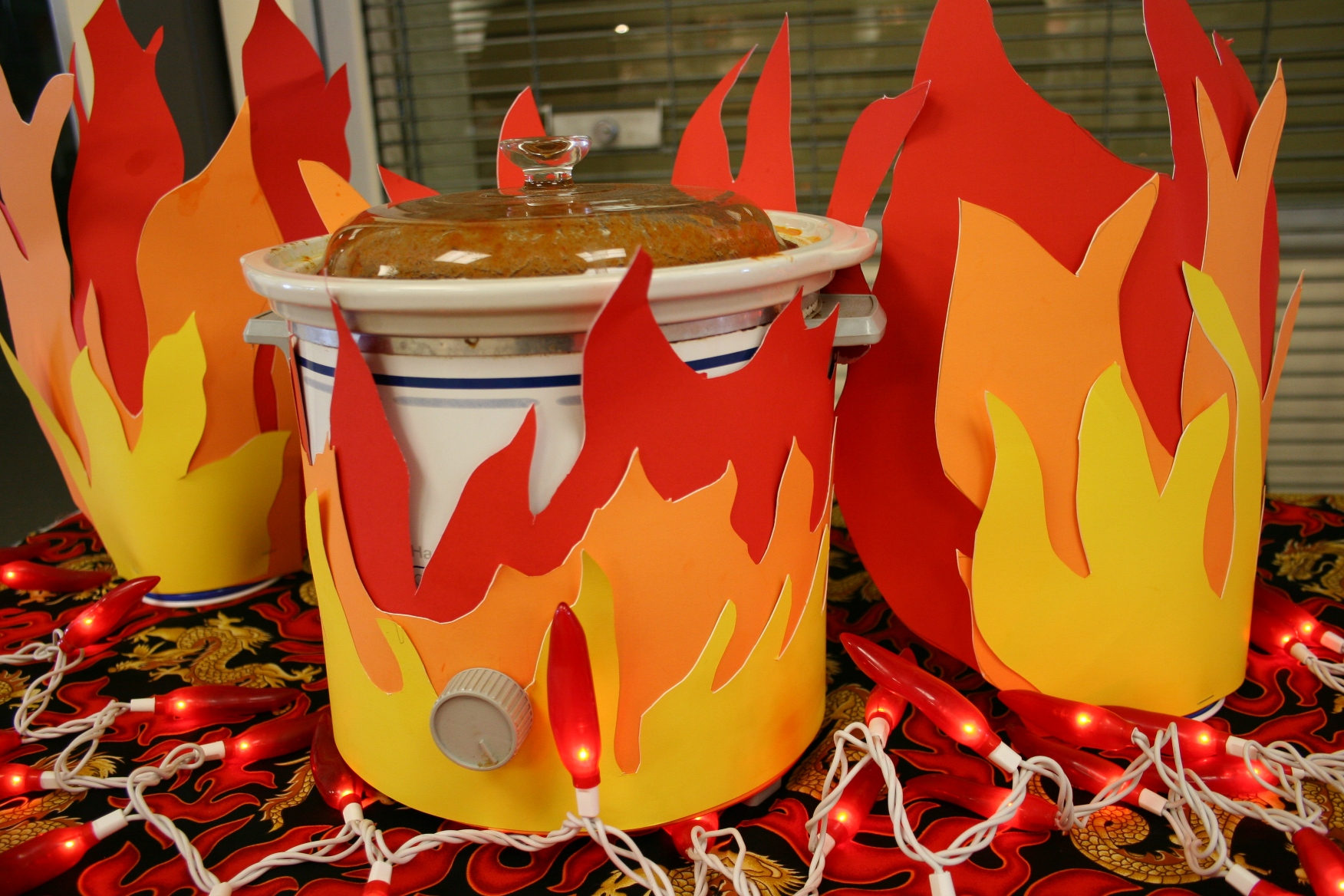
Nothing spicy for me last week. Nope. (Minnesota Prairie Roots copyrighted file photo)

AT 7:11 PM TUESDAY I TEXTED this to my oldest daughter: Do not forget you have super sensitive taste buds & lick an envelope flap. Really bad idea.

I was the one who forgot, not her. I was the one with the hypersensitive taste buds. I was the one who grabbed my bottled water and ran to the bathroom to repeatedly rinse the strong taste from my mouth. I was the one with overly-active taste buds, just another of the many sensory overload symptoms I’ve experienced following a virus in early January.

Of all the past and present symptoms—from imbalance; short-lived vertigo (only when prone): ear ringing, popping and pain and feeling of moisture in my ear; sensitivity to light, sound, smell and touch; feelings of ice water coursing through my body; feeling like I’ve been slapped on the face; headaches; and more I’m likely forgetting right now—this taste issue proved particularly challenging. It landed me in the ER one Thursday afternoon recently with swelling of my tongue and lips and a feeling of my throat closing. That’s scary, darned scary.

Oatmeal with brown sugar, not bananas or any other fruit, was one of the few foods I could eat last week. (Minnesota Prairie Roots copyrighted file photo)

WEARY OF OATMEAL

Thereafter, for the next week, I could eat only bland foods and only small amounts. Oatmeal. Graham crackers. A blueberry proved too intense. So did a grape. It tasted awful. In five days, I lost nine pounds. Not a weigh loss program I recommend. Anything I ate caused an allergic reaction, but thankfully not enough for a return ER visit.

I couldn’t brush my teeth because my taste buds couldn’t tolerate even a non-flavored toothpaste. Toothpaste set my mouth afire. Eventually, after contacting my dentist’s office, I tried baking soda. That tasted like someone dumped a load of salt in my mouth.

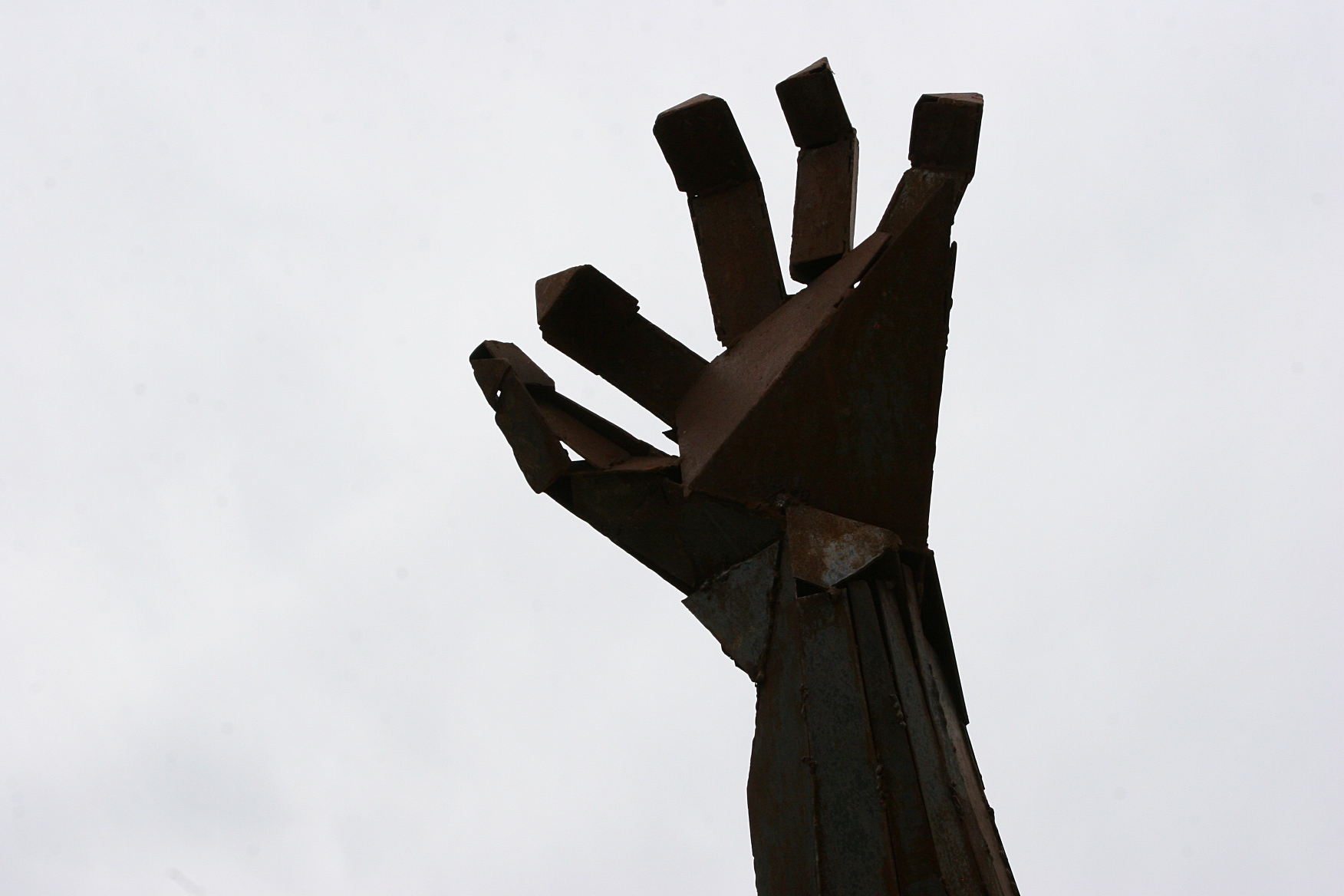
I feel like I’m reaching reaching for help as seen in this public art sculpture, “Waist Deep,” photographed in Northfield in 2019. (Minnesota Prairie Roots copyrighted file photo)

JUST WANTING TO BE WELL

To say it was a hellish week would be an understatement. I was scared. Frustrated. Anxious. Wanting answers and hope. More than once, Randy heard me state, “I just want to feel better.” He was patient, encouraging, supportive, as he has been through the past six months of multiple building symptoms.

Back at the end of May already, I noticed toothpaste seemed especially minty. I told two of the doctors I was seeing of this occasional taste oddity. That went nowhere and perhaps I did not push the point enough. And then came that Thursday afternoon ER trip and my taste buds run amok.

This art by Faribault eighth grader Mohamed represents how I feel regarding my overstimulated senses. This art was shown at a student art show earlier this year. (Minnesota Prairie Roots copyrighted file photo 2023)

TIME TO CALM THOSE NERVES IN MY BRAIN

It was at my ER follow-up visit with my primary care doctor that I found hope in a physician with deep compassion and care. I could see both in his eyes, hear both in his words. He pledged to try what he could to help me. He prescribed a medication to help calm the overactive nerves in my brain which control the senses. After one dose, I was already feeling relief. My taste buds are back to normal. I can eat without feeling like the food I just put in my mouth is starting a fire. No more throat, tongue or lip swelling. If it continues to work, and I have no reason to think otherwise, then I am grateful.

A THEORY, GUESS OR WHATEVER YOU WANT TO CALL IT

This is all a bit of a guessing game, a try and see what works process. Even my family doctor’s diagnosis of peripheral sensory neuropathy seems a best guess. The sensory part fits for sure. His theory is that the virus I had in January was COVID, even though I self-tested negative twice for the virus. Those home tests, he said, can be inaccurate if the tester doesn’t quite do things right. I am beginning to believe more and more that he’s right, that I am experiencing post-COVID symptoms.

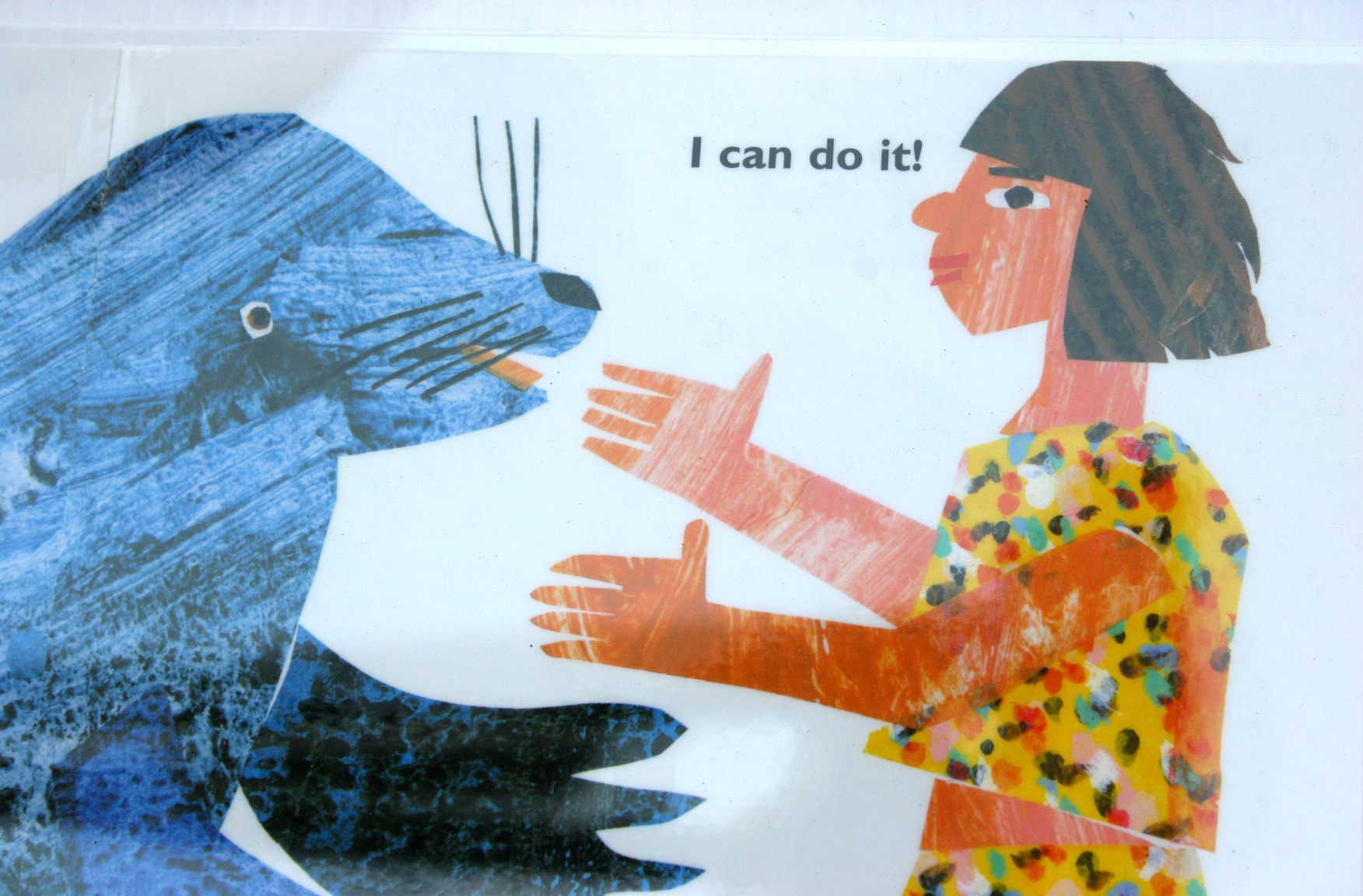
A page from Eric Carle’s book, From Head to Toe. I ought to frame this page and hang it in my office. (Minnesota Prairie Roots copyrighted file photo)

PHYSICAL THERAPY CONTINUES

I continue with vestibular rehab therapy to retrain my brain to compensate for the irreversibly-damaged 8th vestibular nerve in my right ear. That nerve controls balance. My initial diagnoses of vestibular neuritis and Meniere’s Disease (due to hearing loss caused by a virus in 2011) remain.

All of this is a lot. These are diseases that I must learn to live with and manage. I have good days and bad. But I am determined, working hard at therapy, getting out and about to build up my sensory tolerance. A recent attempt to dine out at a restaurant proved overwhelming. But I managed a dental cleaning with a sensory accommodating hygienist. A trip to a big box store nearly proved too much given the music, the people, all the visual stuff. I managed an outdoor concert with an ear plug in my good ear. I struggled to get through a meeting with a financial planner when I had to listen closely and engage in conversation. I am beginning to understand my limits, yet try to push myself just over, to challenge myself without experiencing full-blown symptoms.

These roses are for you, dear blog readers, for your kindness, compassion and support. (Minnesota Prairie Roots copyrighted file photo)

WITH GRATITUDE

Onward I go. I want to pause and thank you, my dear readers, for your ongoing encouragement and support. I’ve needed both, welcomed both, felt so very loved. I am grateful. I told Randy, “I have the best blog readers!” You are. The best.

© Copyright 2023 Audrey Kletscher Helbling
 

While doing my therapy assignment, an uninvited dinner guest shows up June 9, 2023

Kinda how my brain feels, broken and trying to piece itself back together. (Minnesota Prairie Roots copyrighted file photo)

LIVING WITH CHALLENGING duo health diagnoses like mine of vestibular neuronitis and Meniere’s Disease means my life has altered considerably. Some days are good. Some days are bad. And others are a mix. I can never predict how I may feel on any given day.

But I’m determined to do the best I can to manage what has now become a part of living. My physical therapist, with whom I’ve met eight times already, has been a great support in providing brain re-training exercises and encouragement. My balance is better. My double vision is easing. My tolerance to noise is improving. Certainly not like I was pre all of this, but I’ll take any improvement.

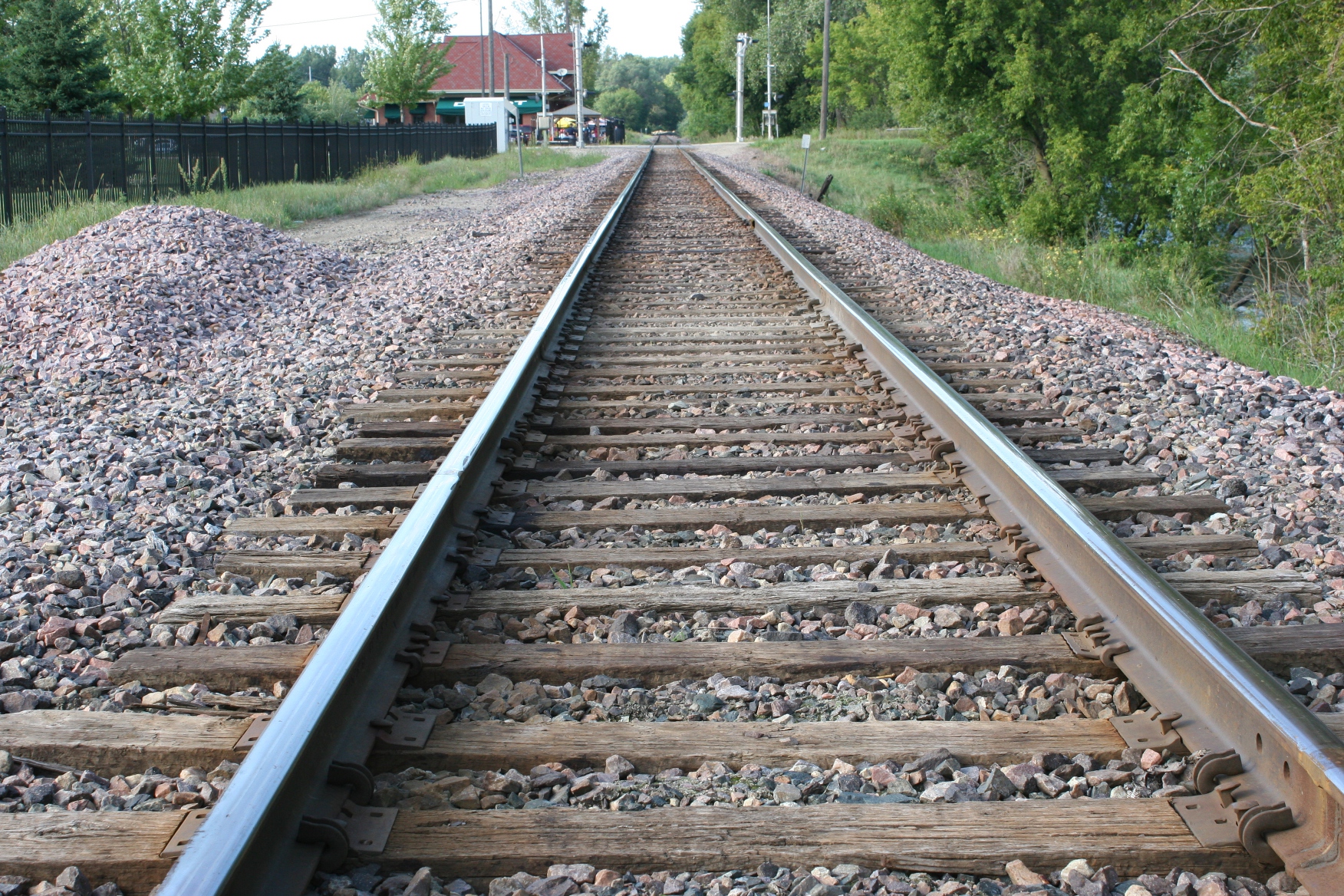
These railroad tracks lead to The Depot Bar & Grill in the distance. (Minnesota Prairie Roots copyrighted file photo)

JUST DOING MY HOMEWORK

My last assignment from Ryan, my vestibular rehab therapist, was to get out into the real world, even dine at a restaurant. I took my homework and ran with it, maybe too far. Saturday morning Randy and I stopped at a garage sale and then went grocery shopping at two stores. By the time we reached the second grocer, which is considerably larger, noisier and busier than the first, I felt my symptoms flaring from the sensory overload. Oh, boy, how would I manage lunch with his sister?

With a bit of time before lunch, I closed my eyes, rested and tried to settle my hardworking brain.

Soon my sister-in-law Cheryl arrived and we were off to The Depot Bar & Grill, housed in an historic depot along the train tracks next to the river. It’s a lovely place with typically good food. I asked to be seated in a quiet area, explaining that I have sensory issues, especially with sound. I thought I could handle it. After all, I’d been training myself at home by listening to white noise city traffic, roaring waterfalls, crashing thunderstorms while moving my hands near my face. Enough practice and I was managing that noise symptom-free.

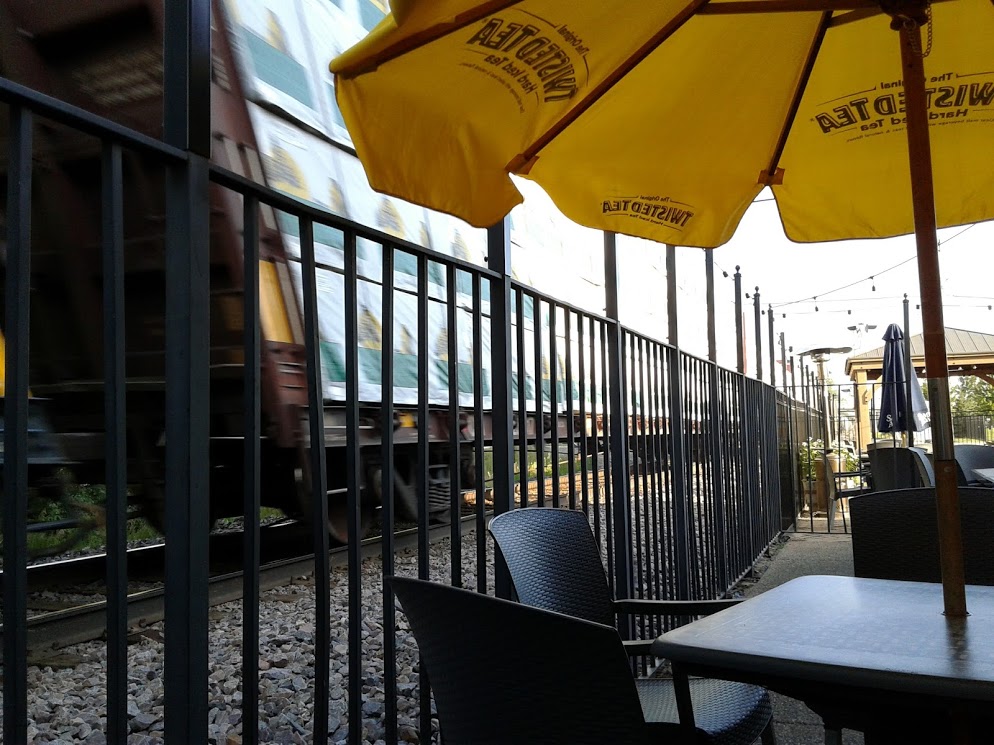
Dining tables are right next to the train track at The Depot. A train passed during a previous patio meal there. (Minnesota Prairie Roots copyrighted file photo)

A WHOLE LOT OF TOO MUCH FOR MY BRAIN

But practice is not reality. As we settled at our lower level table with only two other dining tables in that section occupied, I thought, “This won’t be too hard.” But then, as more people filled the restaurant and the volume of conversations increased, I felt my head hurting, my eyes hurting, the constant roar of people’s voices making me feel worse and worse. Finally, I conceded that we’d have to move to the patio. It was too much for me. Our waitress was generously accommodating.

She warned us ahead of time that the cottonwood trees along the Straight River were dropping their fluffy white seeds. That they were. As the white fluff swirled and danced and fell upon our table, I felt like we were in a snowstorm. After our food arrived, Cheryl covered her plate with a napkin. I didn’t, nor did Randy. Fluff landed in my water. I still wasn’t feeling well.

I tried to hang in there, taking only small bites of my French dip sandwich, offering the chips (I’m avoiding salt) to my table-mates. I tried to shut out the conversation of the two women dining near us. But their voices, even though not really loud, sounded loud to me. I tried to engage in conversation with Randy and his sister, whom we haven’t seen in a long time. It was a lot for my brain to handle—juggling listening, talking, surrounding noise, visual of swirling white fluff, staff up and down the nearby steps, traffic sounds (thankfully no train).

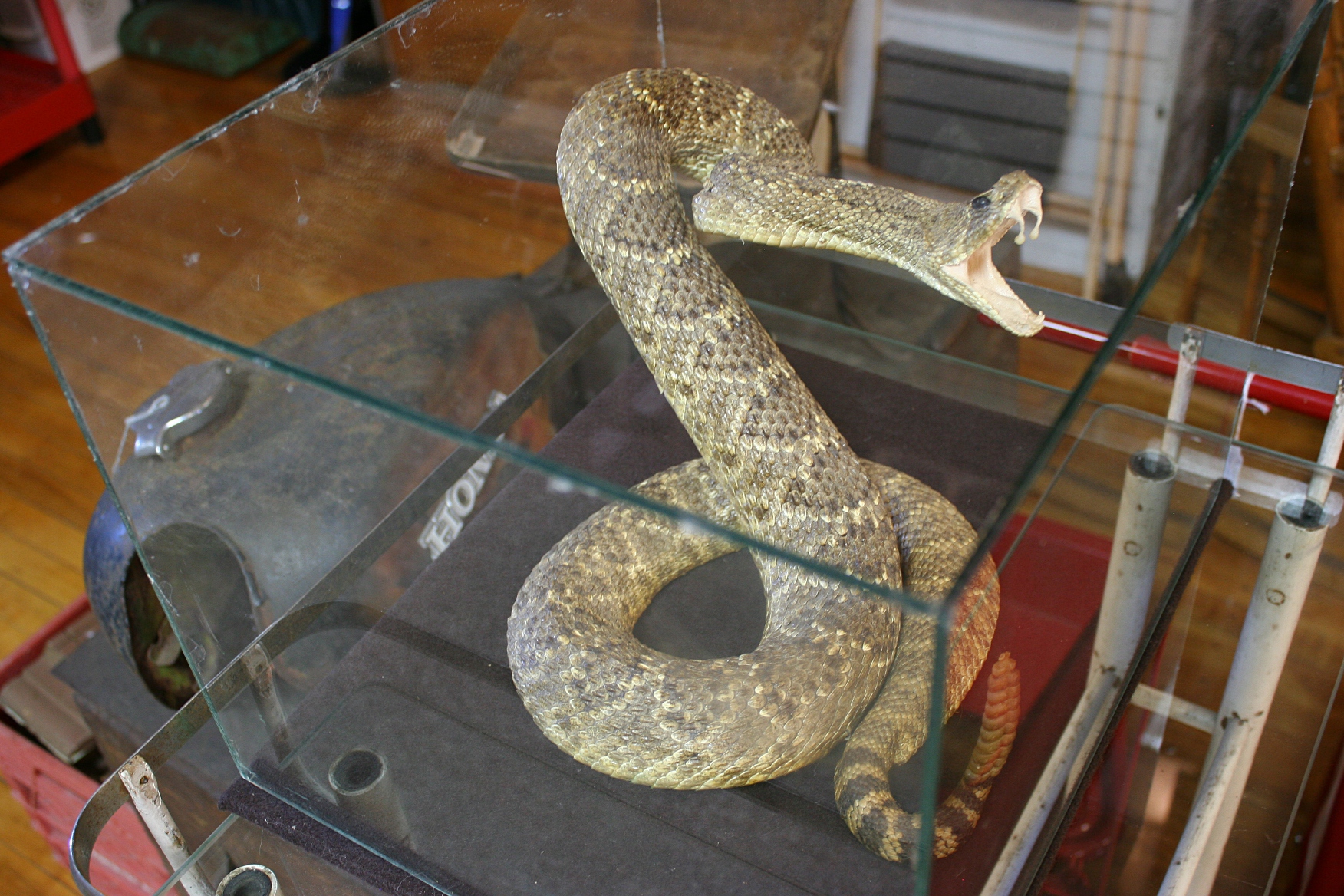
A dead rattlesnake inside a case at Grizzly Canyon, an antique shop in Sleepy Eye. (Minnesota Prairie Roots copyrighted file photo 2019)

AN UNEXPECTED DISTRACTION

Then in the midst of this feeling awful and trying to get through this meal, I saw a long snake slither from across the railroad tracks, under the wrought iron fence and onto the patio. It slid toward the nearby empty table, under the chairs, briefly lifting its head as if to inspect. I wasn’t scared, just thankful it was not by us. The snake drew significant attention. Had I been feeling better, I would have pulled out my cellphone to take pictures. Others did, before the snake reversed and headed back toward the tracks, back toward the grassy river bank. A guy identified the snake as a gopher snake. I knew this was not a garter snake, as the women next to us said. I would have guessed rattlesnake, which shows how little I know about snakes. I know only that I don’t like snakes.

After that excitement, we continued with our meals, me mostly leaning my head into my hand in an effort to at least stay until the others finished eating. Finally, I said, “We have to leave.” My symptoms had flared out of control. I tried. And, if anything, I came home with an interesting story to tell about the uninvited dinner (technically lunch) guest down by the (former) train station.

FYI: The non-profit Vestibular Disorder Association, is a great resource to learn about vestibular disorders. Click here.

© Copyright 2023 Audrey Kletscher Helbling


Roadblock inside my brain May 8, 2023

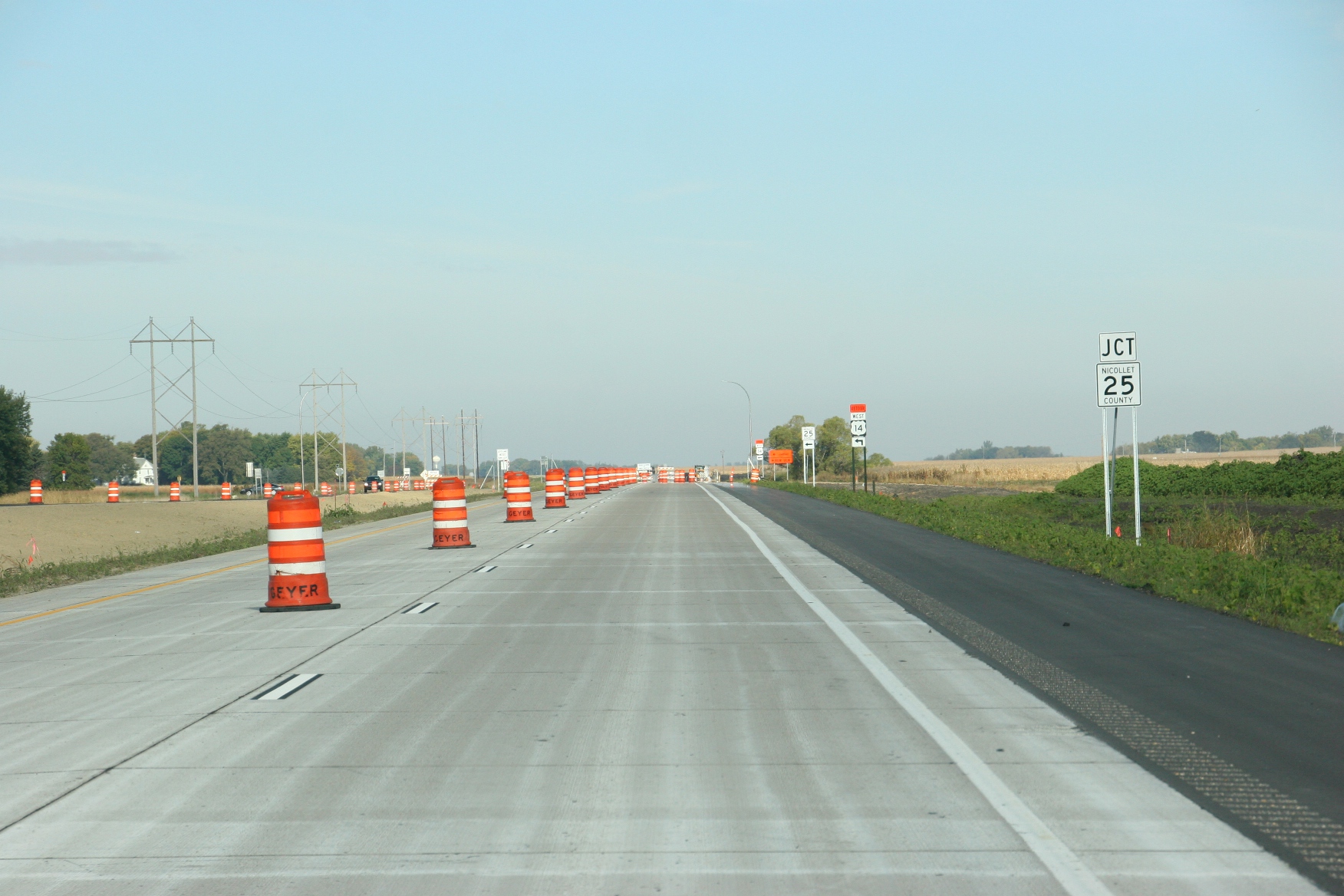
Just like along US Highway 14 in southern Minnesota, I’m dealing with a closed road in my brain. (Minnesota Prairie Roots copyrighted file photo)

IMAGINE YOU’RE ON THE ROAD, when, unexpectedly, you encounter a Road Closed Ahead sign. Now you must take an alternate route to reach your destination. You follow the detour signs, which lead you along twists and turns of back country roads. You are in a hurry and frustrated. But eventually you are back on your mapped route, arriving much later than planned.

That scenario is familiar. We’ve all experienced such travel detours. But not many have experienced vestibular neuronitis, a health issue I am currently facing. The road closed/detour analogy is the best way I can explain what’s happening inside my brain.

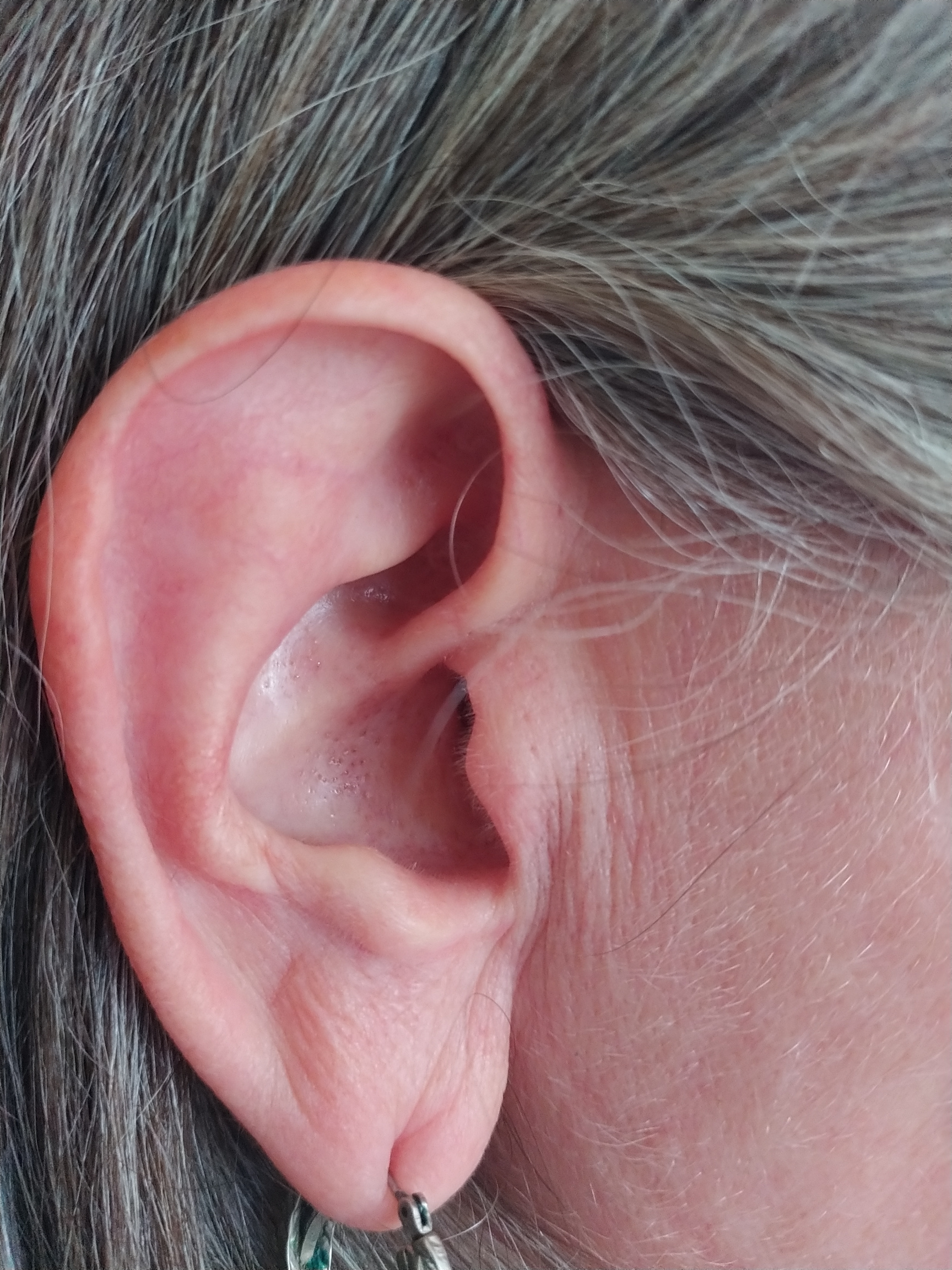
My problematic right ear… (Photo credit: Randy Helbling)

MULTI-LAYERED & COMPLEX

Mine is a complex diagnosis, a neurological condition resulting from an inflammation of the nerve(s) in the inner ear, in my case the right ear. The apparent cause, a viral infection. In 2011, a virus caused me to lose nearly all of the hearing in my right ear during an episode of sudden sensory hearing loss. This most recent virus affected the balance in my right ear. My initial symptom of feeling off-balance followed a really bad cold in early January. (Not COVID; I self-tested negative for that, twice.) I didn’t think too much of the off-kilter feeling, hoping it would pass. It didn’t.

My symptoms progressed: fullness, ringing, clicking and minor pain in my right ear; hyper-sensitivity to sound; double vision; awakening with headaches; feeling like someone slapped me on the right side of the head; unexplained anxiety; rosacea; fatigue; vertigo (only while sitting up from a supine position or rolling onto my right side in bed) and more I’m probably forgetting. I felt like my brain was working really hard to manage auditory and visual input, processing conversations, and balance. I still feel that way.

Kind of how my brain feels right now. Artwork by Bill Nagel, exhibited at the Paradise Center for the Arts earlier this year. (Minnesota Prairie Roots copyrighted file photo March 2023)

BRAIN FATIGUED

Back to that road closed analogy. The nerves/pathways in our brains are all interconnected, one leading to the other. Kind of like the system of roadways we follow to get from Point A to Point B. Now there’s a blocked road inside my head and my brain is struggling. It’s taxing to determine how to make this all work. Vision. Hearing. Maintaining my balance. I’m feeling brain fatigue.

One day I may feel fairly normal, the next, not so much. Or even through the course of the day, how I feel is affected by input into my brain. If I’m out and about, which I mostly am not, I quickly feel overwhelmed. Even by something as simple as a one-on-one conversation.

A tablet of Prednisone, a med which I took for two weeks. (Minnesota Prairie Roots copyrighted file photo)

SYMPTOMS LESSENING

Yet, today I see a lessening of my symptoms. The anti-inflammatory steroid Prednisone, as much as I disliked the insomnia, heart palpitations and anxiety side effects, reduced the nerve inflammation. My symptoms are less severe, but still linger under or at the surface and sometimes flare.

I am in vestibular rehab therapy, working with a skilled, knowledgeable and compassionate physical therapist who is determined to help me retrain my brain, to get me back on the right route. Ryan tells me I’m improving, even if I don’t always see that. I appreciate his encouragement and specialized training in the exact therapy I need. I listen. I ask questions. I do my exercise homework. Already I’ve seen improvements in my balance.

My vision has improved, too, although I still must work hard to focus and not see double. I can now tolerate my computer screen for more than 10 minutes. Headaches are mostly gone as is the feeling of being slapped on the side of my head. And I no longer need to close my eyes during a conversation because I can’t handle simultaneous visual and auditory input. That said, I will occasionally close my eyes when I feel overwhelmed and need to concentrate solely on hearing.

No big road trips for me as I navigate through vestibular neuronitis. (Minnesota Prairie Roots copyrighted file photo)

LIMITATIONS, FRUSTRATION, DISAPPOINTMENT

I have my moments when I feel depressed and frustrated and wish I was “all better.” I don’t know if I will ever be “all better” or whether this is something I will have to learn to live with and manage. There are moments when I feel overwhelmed. This whole vestibular neuronitis is difficult to explain and you can’t see it, so people don’t necessarily get it.

I’m sad because a long-planned trip to Indiana this coming week to attend my son’s graduation from Purdue University with his master’s in computer science will not happen for me. I am disappointed that I can’t be there in person to celebrate, to hug him, to congratulate him on his accomplishment. But I recognize my limits. I can’t handle a long road trip and attending commencement with the masses. It would be too much for my brain. I’m not even attending church yet because I can’t tolerate the organ. I’m not even grocery shopping because of the sensory overload. Mostly, my interaction with others is limited because my brain can’t handle much.

But onward I go, navigating away from the closed road in my brain to alternative routes that will allow me to reclaim my life. Soon. I hope.

#

NOTE: By writing this post, I hope to encourage others who are on a similar journey or who are supporting loved ones. I also aim to provide info on this unfamiliar-to most condition.

© Copyright 2023 Audrey Kletscher Helbling