Minnesota Prairie Roots

Writing and photography by Audrey Kletscher Helbling

All about circles & numbers at physical therapy July 6, 2023

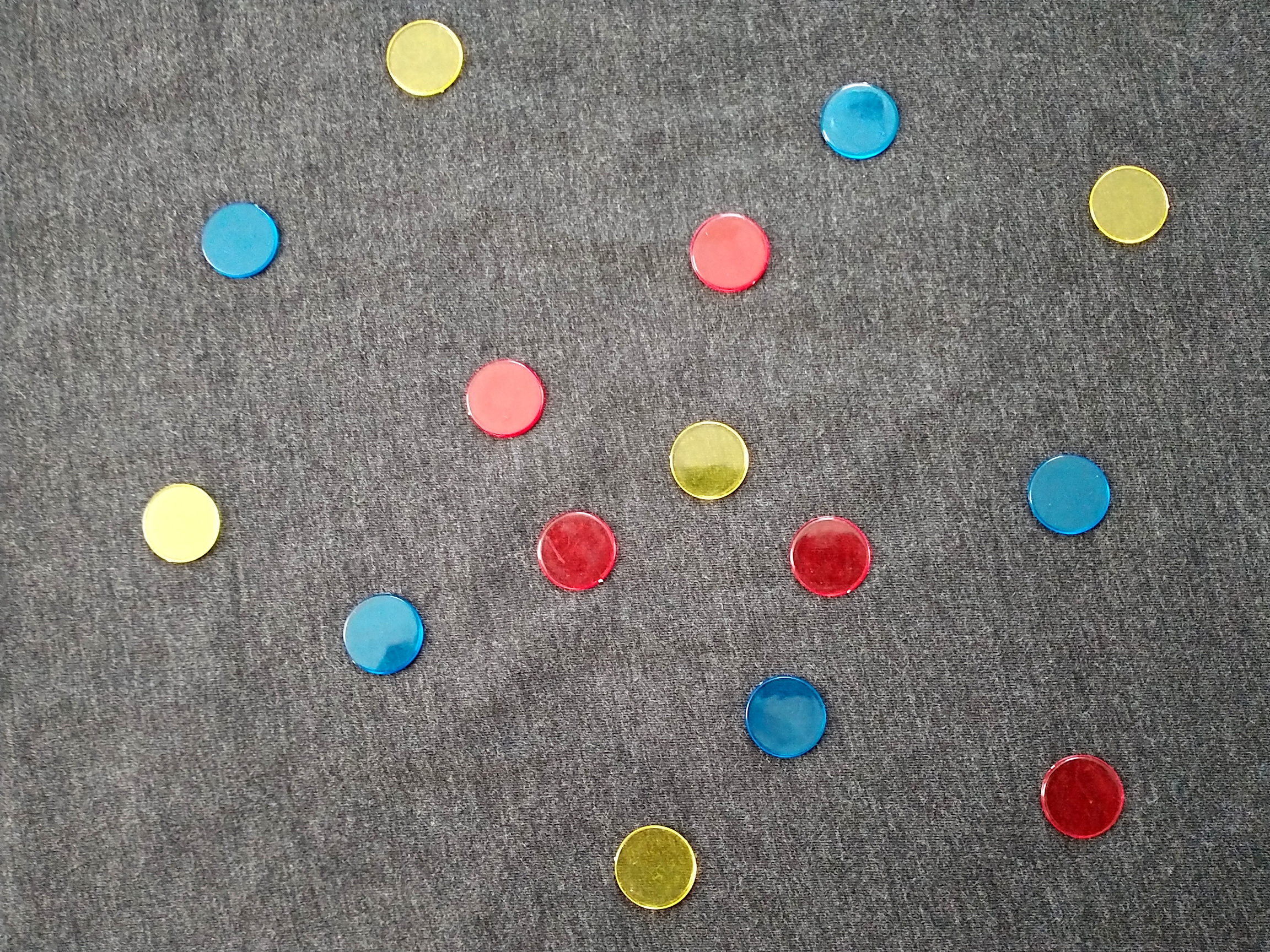
Pretend this is a screen with moving circles. Tap all the red circles, then the blue, then the yellow. (Minnesota Prairie Roots copyrighted photo used for illustration only, June 2023)

THIS IS FUN!” I effused as I touched a series of red circles, then white, then blue on a big screen. Since I quickly mastered that Fourth of July-themed task after several tries, my vestibular rehab therapist upped the challenge.

Next Ryan had me tapping first a square with a pulsing letter inside and then white circles that popped up randomly on the screen. Whenever the letter changed, I had to tap the blinking letter and then those elusive white floating circles.

I felt like I was getting not only a visual workout (the goal), but also my morning exercise as I stretched to reach the circles. At the ends of rounds, Ryan would adjust the time, increasing the difficulty. When he saw me struggling, he decreased the screen size. Magical, I thought in my exercising brain. My therapist’s aim was neuromuscular re-education via use of the Bioness Integrated Therapy Systems, software designed to present me with dual tasking and visuospatial processing challenges.

At this point the word “fun,” rather than “brain work-out,” still held my thoughts. But just as I was feeling good about my successes, my therapist determined I needed a bigger challenge. Circled numbers popped onto the screen. I should have stopped Ryan right then and there and told him that I am not a numbers person. Words are my thing. He knows I’m a writer. But I was willing to try as long as I didn’t have to solve math equations.

Turns out I only needed to know how to count. No problem. Easy peasy. Or so I thought. I was instructed to tap the numbers 1-10 in sequence inside a large rotating circle. That requires some visual dancing. The numbers disappeared as I tapped them. Then, of course, Ryan added more numbers. Fifteen. Then 20. He also adjusted the speed. And then he told me the numbers would not disappear. Oh, boy.

By then, the word “fun” had vanished, poof, just like that from my thoughts. I felt a tad dizzy and my head hurt. Ryan noticed. Play ended. I sat, closed my eyes, didn’t always look Ryan in the eye when he talked to me. Those are all cues that my brain is experiencing sensory overload.

We chatted about July Fourth plans and vacations and how I can manage my symptoms when they flare. I’ve come to understand what helps me deal with agitation and sensory overload—deep breathing, coloring, therapy putty, rocking, closing my eyes, ear plugs, retreating to a quiet place. But it’s always good to review those coping skills.

It was nearing the end of my 45-minute weekly therapy session. I still felt like my head had been slapped. At that point, Ryan gave me a break. He had planned to use the virtual reality roller coaster again to strengthen my visual and auditory tolerance. But he recognized my brain had had enough sensory exposure. Or perhaps to much exposure to numbers.

© Copyright 2023 Audrey Kletscher Helbling


Quite the ride June 28, 2023

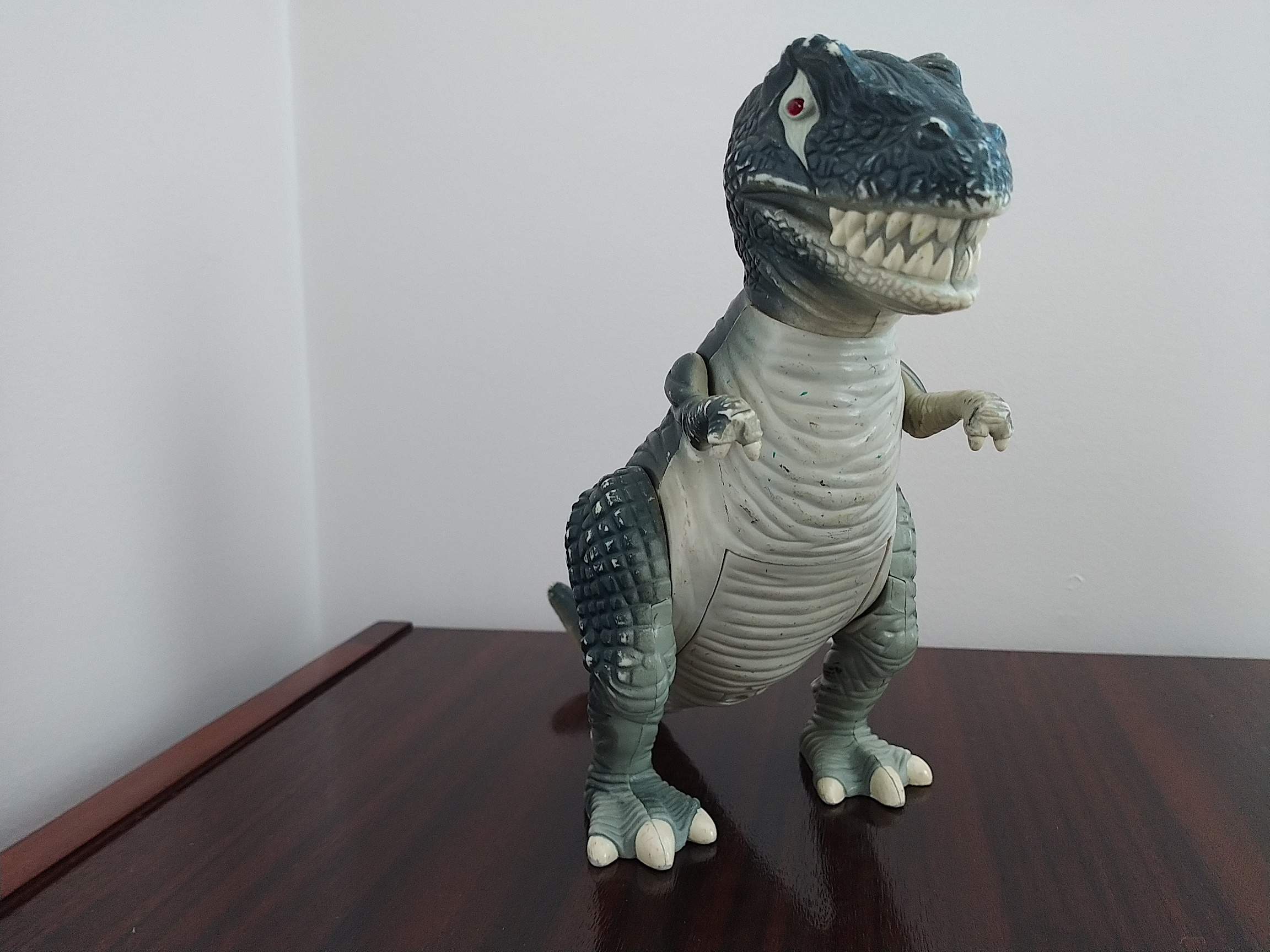
This battery-powered T-Rex was my son’s toy. It roared, turned its head, moved its arms and flashed its red eyes. My grandkids were terrified of it at one time. (Minnesota Prairie Roots copyrighted photo June 2023)

IF YOU HAD JUST DISEMBARKED a roller coaster only to see a T-Rex chomping up the tracks and roaring towards you, would you trust that you would survive?

So what does this have to do with anything relevant to today and, well, to me? Lots.

Last week my vestibular rehab therapist changed things up a bit. He led me from our usual private meeting room down the hall to a more spacious room with a large screen TV, a table, chairs, toys, a dollhouse and some type of exercise equipment I couldn’t identify.

“Yeah, I get to play,” I exclaimed to Ryan.

WE’RE GOING TO DO WHAT?

He had other things in mind. “You’re going to ride a roller coaster,” he said. I looked at him in disbelief and then with fear as he pulled out a virtual reality headset.

“I don’t like roller coasters,” I stated. That is true. The last one I rode was nearly 50 years ago. The Woody at Arnold’s Park in Spencer, Iowa. They called it The Woody back then for a reason. Built in 1930, this is the 13th oldest wooden roller coaster in the world. And this amusement ride was, for me, absolutely terrifying as the cars clacked up and down and around the tracks.

I also have minimal exposure to VR, having tried my son’s headset once and experiencing great difficultly in navigating anything. Simply being in a virtual world proved uncomfortable and disorienting.

So when Ryan mentioned roller coaster and VR in the same sentence, I felt my angst rise. But I recognized that he was serious and that this was just one more effort to retrain my brain by exposing me to motion and to noise in an attempt to manage symptoms resulting from vestibular neuritis, Meniere’s Disease and peripheral sensory neuropathy.

REMIND ME, WHICH BUTTONS DO I PUSH?

Alright then. Ryan set up the computer program, tightened the headset on my head, then handed me the controls, instructing me on which buttons to push. He told me to point the laser at the triangle to start the ride. I couldn’t even manage that as my hands shook. I failed at multiple attempts to use the hand controls, so eventually my patient PT took over. Young people can manage tech stuff far better than aging Baby Boomers like me.

Soon I was on the dreaded roller coaster, riding up and down and all around while noise roared. It was a lot of visual and auditory stimuli as intended. Curves and the roar of a waterfall proved the most challenging. Almost immediately I asked to sit. But when I grew more comfortable, Ryan had me standing with my hand touching the back of a chair to help me feel grounded. I took multiple breaks.

OH, NO, THERE’S MORE!

When I thought a roller coaster ride was surprise enough, yet more awaited me. I soon noticed dinosaurs lurking in the background. Then a Tyrannosaurus separated from the herd and began chomping the track, moving at a ferocious pace directly towards me.

“My granddaughter would love this,” I said in the midst of all that chaos, then corrected myself. “Well, maybe not.” Isabelle, 7, loves dinosaurs but even this teeth-baring meat eater might scare her.

In the end, I survived. Both the T-Rex and the roller coaster. Ryan was pleased with my ability to mostly handle the stimuli. Now I wonder what he has planned for physical therapy tomorrow?

© Copyright 2023 Audrey Kletscher Helbling
 

While doing my therapy assignment, an uninvited dinner guest shows up June 9, 2023

Kinda how my brain feels, broken and trying to piece itself back together. (Minnesota Prairie Roots copyrighted file photo)

LIVING WITH CHALLENGING duo health diagnoses like mine of vestibular neuronitis and Meniere’s Disease means my life has altered considerably. Some days are good. Some days are bad. And others are a mix. I can never predict how I may feel on any given day.

But I’m determined to do the best I can to manage what has now become a part of living. My physical therapist, with whom I’ve met eight times already, has been a great support in providing brain re-training exercises and encouragement. My balance is better. My double vision is easing. My tolerance to noise is improving. Certainly not like I was pre all of this, but I’ll take any improvement.

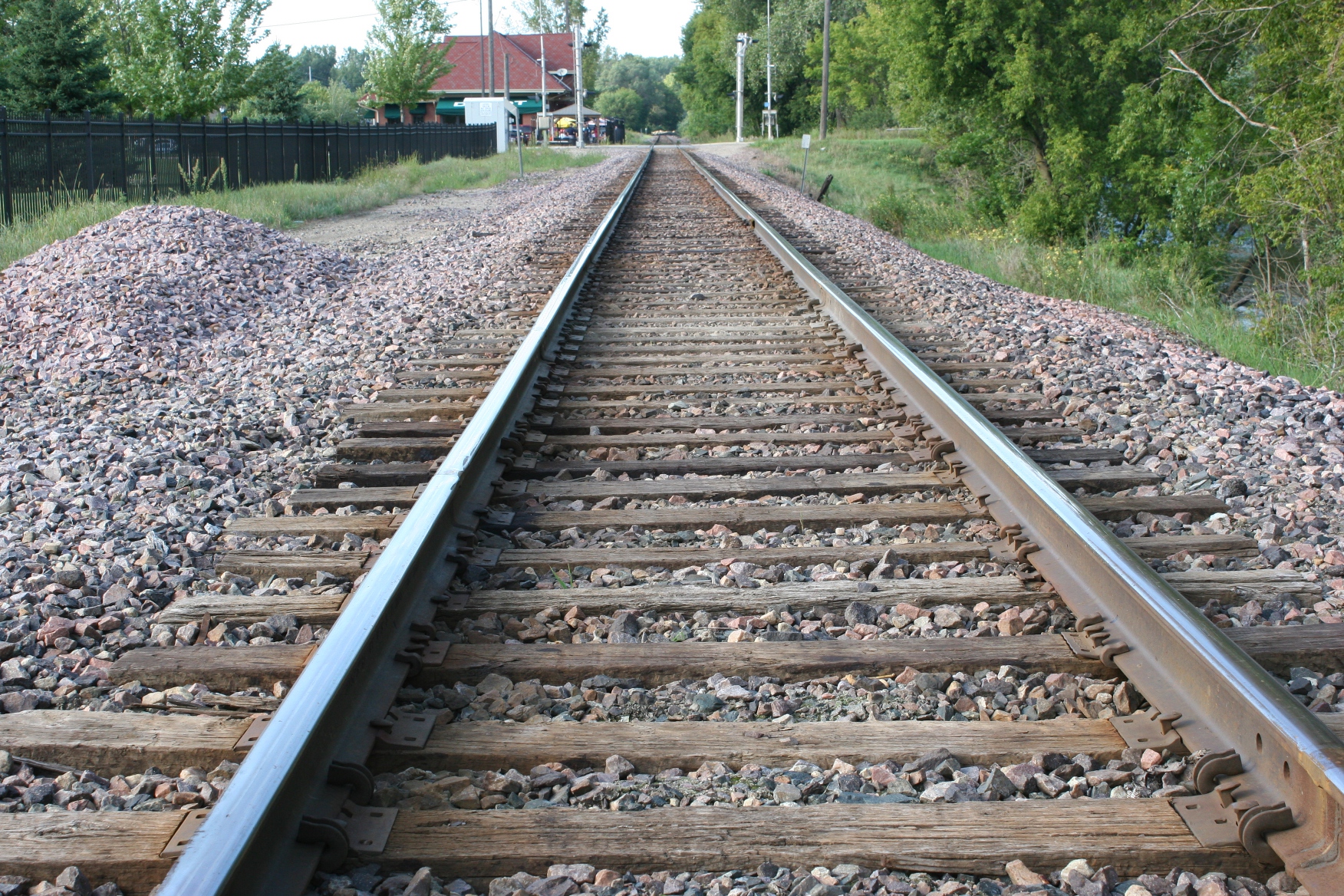
These railroad tracks lead to The Depot Bar & Grill in the distance. (Minnesota Prairie Roots copyrighted file photo)

JUST DOING MY HOMEWORK

My last assignment from Ryan, my vestibular rehab therapist, was to get out into the real world, even dine at a restaurant. I took my homework and ran with it, maybe too far. Saturday morning Randy and I stopped at a garage sale and then went grocery shopping at two stores. By the time we reached the second grocer, which is considerably larger, noisier and busier than the first, I felt my symptoms flaring from the sensory overload. Oh, boy, how would I manage lunch with his sister?

With a bit of time before lunch, I closed my eyes, rested and tried to settle my hardworking brain.

Soon my sister-in-law Cheryl arrived and we were off to The Depot Bar & Grill, housed in an historic depot along the train tracks next to the river. It’s a lovely place with typically good food. I asked to be seated in a quiet area, explaining that I have sensory issues, especially with sound. I thought I could handle it. After all, I’d been training myself at home by listening to white noise city traffic, roaring waterfalls, crashing thunderstorms while moving my hands near my face. Enough practice and I was managing that noise symptom-free.

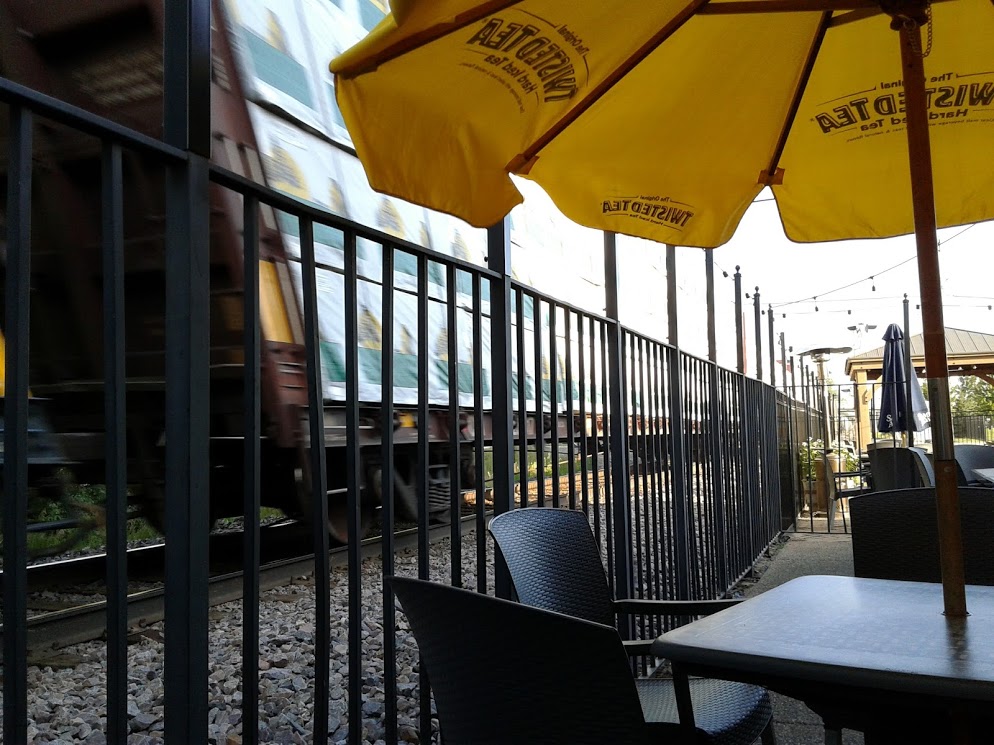
Dining tables are right next to the train track at The Depot. A train passed during a previous patio meal there. (Minnesota Prairie Roots copyrighted file photo)

A WHOLE LOT OF TOO MUCH FOR MY BRAIN

But practice is not reality. As we settled at our lower level table with only two other dining tables in that section occupied, I thought, “This won’t be too hard.” But then, as more people filled the restaurant and the volume of conversations increased, I felt my head hurting, my eyes hurting, the constant roar of people’s voices making me feel worse and worse. Finally, I conceded that we’d have to move to the patio. It was too much for me. Our waitress was generously accommodating.

She warned us ahead of time that the cottonwood trees along the Straight River were dropping their fluffy white seeds. That they were. As the white fluff swirled and danced and fell upon our table, I felt like we were in a snowstorm. After our food arrived, Cheryl covered her plate with a napkin. I didn’t, nor did Randy. Fluff landed in my water. I still wasn’t feeling well.

I tried to hang in there, taking only small bites of my French dip sandwich, offering the chips (I’m avoiding salt) to my table-mates. I tried to shut out the conversation of the two women dining near us. But their voices, even though not really loud, sounded loud to me. I tried to engage in conversation with Randy and his sister, whom we haven’t seen in a long time. It was a lot for my brain to handle—juggling listening, talking, surrounding noise, visual of swirling white fluff, staff up and down the nearby steps, traffic sounds (thankfully no train).

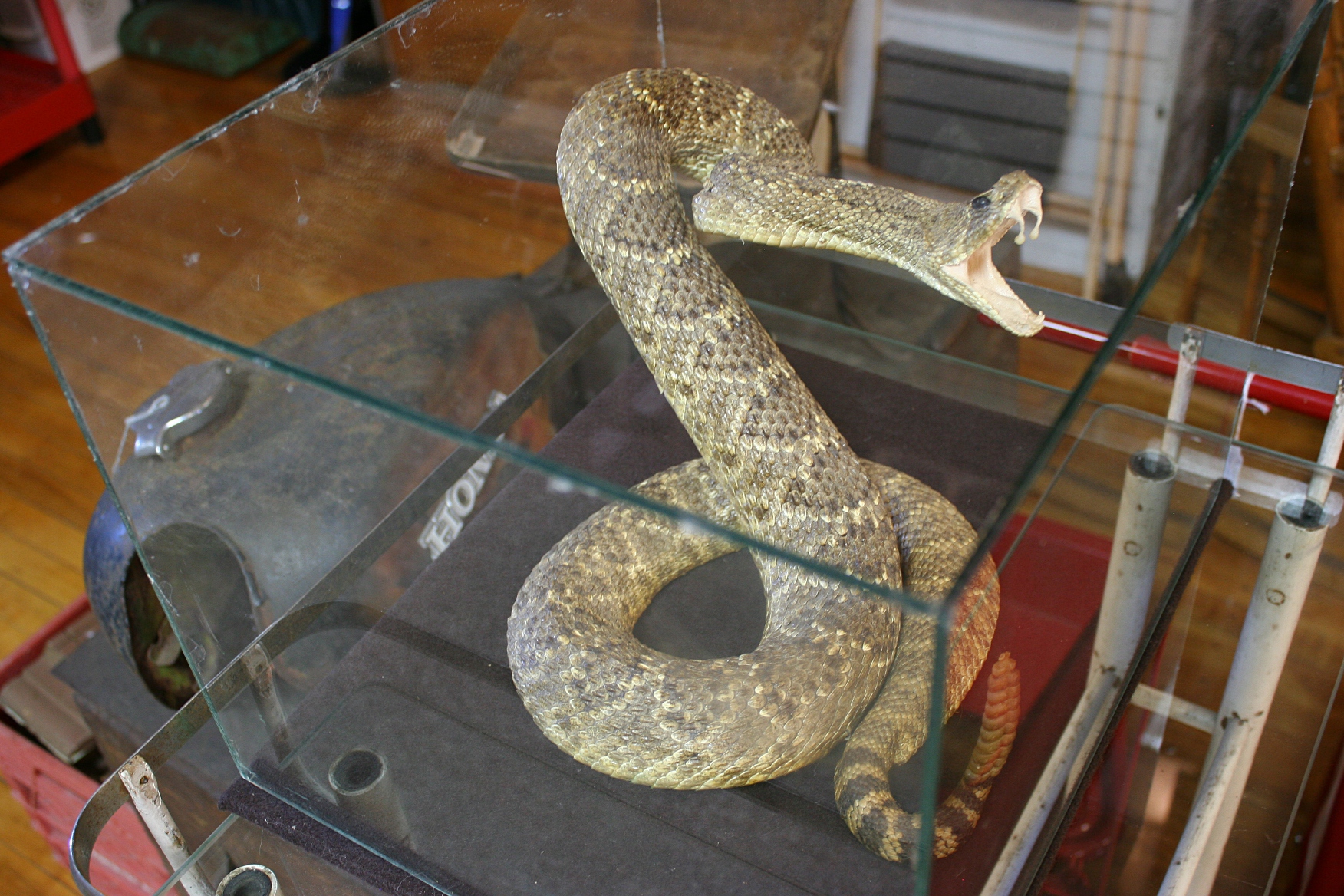
A dead rattlesnake inside a case at Grizzly Canyon, an antique shop in Sleepy Eye. (Minnesota Prairie Roots copyrighted file photo 2019)

AN UNEXPECTED DISTRACTION

Then in the midst of this feeling awful and trying to get through this meal, I saw a long snake slither from across the railroad tracks, under the wrought iron fence and onto the patio. It slid toward the nearby empty table, under the chairs, briefly lifting its head as if to inspect. I wasn’t scared, just thankful it was not by us. The snake drew significant attention. Had I been feeling better, I would have pulled out my cellphone to take pictures. Others did, before the snake reversed and headed back toward the tracks, back toward the grassy river bank. A guy identified the snake as a gopher snake. I knew this was not a garter snake, as the women next to us said. I would have guessed rattlesnake, which shows how little I know about snakes. I know only that I don’t like snakes.

After that excitement, we continued with our meals, me mostly leaning my head into my hand in an effort to at least stay until the others finished eating. Finally, I said, “We have to leave.” My symptoms had flared out of control. I tried. And, if anything, I came home with an interesting story to tell about the uninvited dinner (technically lunch) guest down by the (former) train station.

FYI: The non-profit Vestibular Disorder Association, is a great resource to learn about vestibular disorders. Click here.

© Copyright 2023 Audrey Kletscher Helbling


Vestibular neuronitis: Challenges, info & a trip to China June 2, 2023

A turtle, rather than a tortoise, used for illustration only. (Minnesota Prairie Roots copyrighted file photo June 2020)

I TOOK A FIELD TRIP TODAY. Not the fun sort like my granddaughter, Isabelle, took Thursday to see a performance of “The Adventures of Tortoise and Hare” at the Ordway in St. Paul. Rather mine was into the outdoors, outside a physical therapy office in Faribault.

Friday marked my seventh vestibular rehab therapy session with Ryan at Courage Kenny. I started weekly therapy in mid April after being diagnosed with vestibular neuronitis and Meniere’s Disease. These are complex diagnoses which affect the vestibular system in my right ear. (Click here to read an earlier blog post that details my many symptoms.) Basically, therapy is retraining my brain to handle the deficiencies I’m now experiencing due to damage to my eighth vestibular nerve. And to think this all started with a viral infection in January.

Back to today. Typically I meet with my physical therapist in a small room where we review my symptoms and progress and I learn, and practice, new exercises. Last week we ventured into a long hallway so I could walk back and forth, moving my head from side to side and then up and down. I didn’t do so well, veering to the left and into the wall. But I practiced at home all week, as I do all exercise homework Ryan assigns, and I felt I was doing better. I am determined to do everything I can to reclaim my life, or at least some version of what life was before these health issues.

A scene at Falls Creek County Park, rural Faribault, used for illustration only. (Minnesota Prairie Roots copyrighted file photo May 2022)

OK, WE’RE TAKING THIS OUTSIDE

Then Ryan announced we were going outside to try this walking and head turning activity on the sidewalk. I started out not so well, again steering left. Being outdoors added sensory input I wasn’t used to experiencing inside a small room. This exposed me to a real world environment. One with chirping birds and traffic and people crossing the parking lot and trees and clouds. Just a whole lot for my brain to try and manage. Once I’d semi-managed the sidewalk, we moved onto the lawn. Another new landscape to take in while I moved my head and attempted to walk a straight line.

That was my field trip. A change-up from a controlled environment. My ability to handle my symptoms has assuredly improved with therapy as Ryan nudges me to push myself more. And I am. I’m out and about some now, trying to do things I once didn’t think twice about doing. Trips to the grocery store, big box stores, a walk in the park, doing photography, simply being among people. It’s not always easy, especially when symptoms flare. Sometimes I fail. I recognize my limits. That includes time on the computer. Too much online time and my head begins to hurt, my vision blurs, I see double. Because of that, I’ve been publishing fewer blog posts.

This is how I feel sometimes. Artwork close-up by Bill Nagel. (Minnesota Prairie Roots copyrighted file photo)

YES, IT REALLY IS IN MY HEAD

Yesterday my dear friend Beth Ann, whom I met when she lived in Iowa but who now lives in North Carolina, blogged about vestibular neuritis/neuronitis. I had no idea she was going to write this and then designate the Vestibular Disorders Association as the beneficiary of her monthly “Comments for a Cause” project. (Please click here to read Beth Ann’s well-written, informative blog post.)

Each month Beth Ann chooses a different group or nonprofit to feature and support with a financial gift. I was humbled by her desire to increase awareness of vestibular issues. And, bonus, she enlightened me about the Vestibular Disorders Association which, at quick glance, will be a valuable resource as I navigate my diagnoses. I feel validated just scrolling through the website, like I want to shout, “This is real! This isn’t just in my head. It really, truly is in my head!”

Merchandise vended by an international singing group that performed in Faribault and used for illustration only. (Minnesota Prairie Roots copyrighted photo July 2014)

GOING TO CHINA WITHOUT GOING TO CHINA

Earlier this week I endured an MRI per my neurologist’s orders to assure nothing else is going on inside my brain besides the already-known. I get results on Wednesday. He’s confident nothing additional will be found and I hope he’s right. While in that machine for an hour trying to manage the blasts of overpowering noise (I’m hypersensitive to sensory input), I remembered Ryan’s advice to “dig deep” to get through the procedure. I think I dug a hole all the way to China.

 Next week I will need to dig deep again to get through another hearing test, followed by an appointment with the ENT given persistent, intermittent ear pain and more. I’m documenting my symptoms (once a reporter, always a reporter). And I’m hoping for answers as I press onward, preferring not to travel internationally again.

© Copyright 2023 Audrey Kletscher Helbling
 

Roadblock inside my brain May 8, 2023

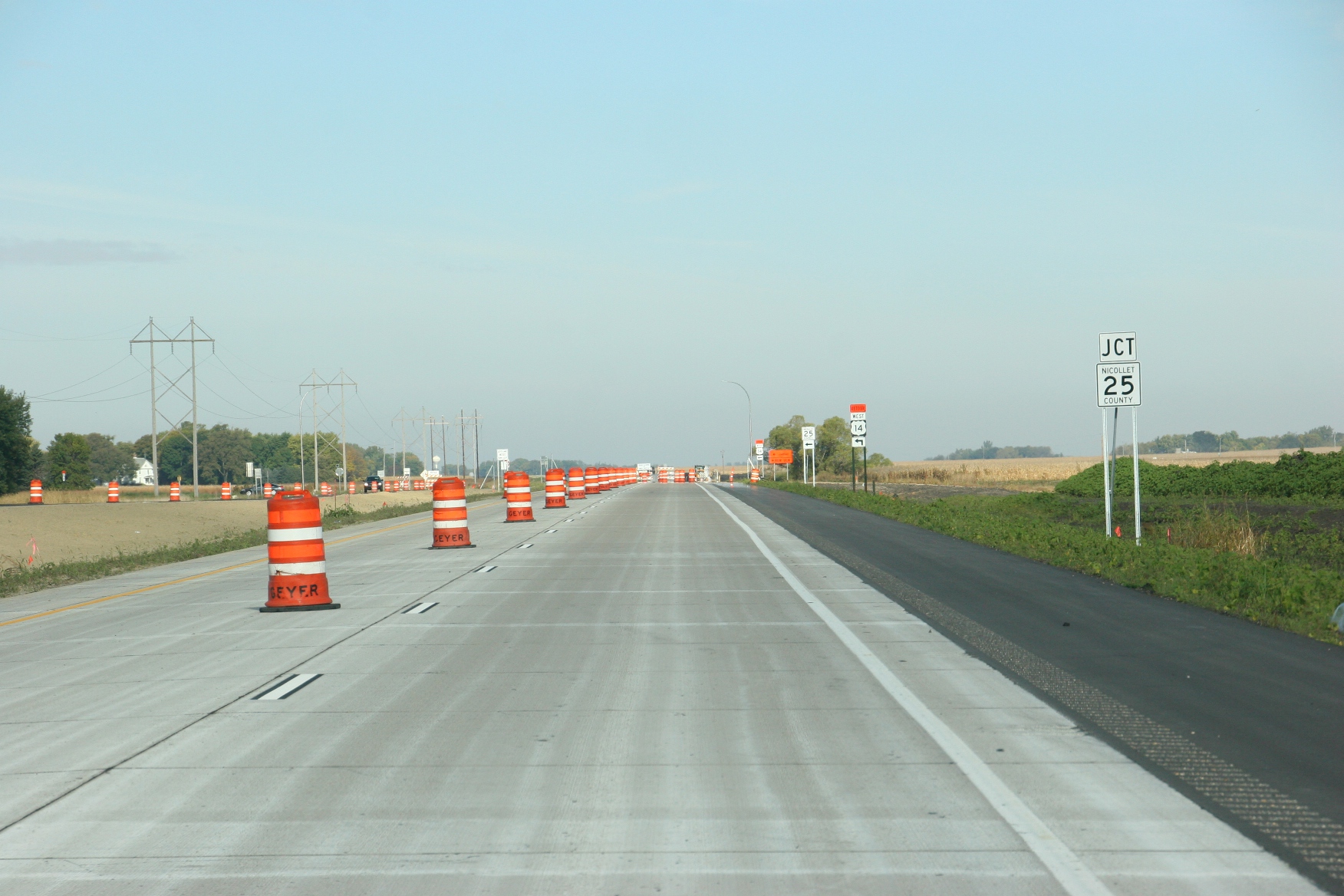
Just like along US Highway 14 in southern Minnesota, I’m dealing with a closed road in my brain. (Minnesota Prairie Roots copyrighted file photo)

IMAGINE YOU’RE ON THE ROAD, when, unexpectedly, you encounter a Road Closed Ahead sign. Now you must take an alternate route to reach your destination. You follow the detour signs, which lead you along twists and turns of back country roads. You are in a hurry and frustrated. But eventually you are back on your mapped route, arriving much later than planned.

That scenario is familiar. We’ve all experienced such travel detours. But not many have experienced vestibular neuronitis, a health issue I am currently facing. The road closed/detour analogy is the best way I can explain what’s happening inside my brain.

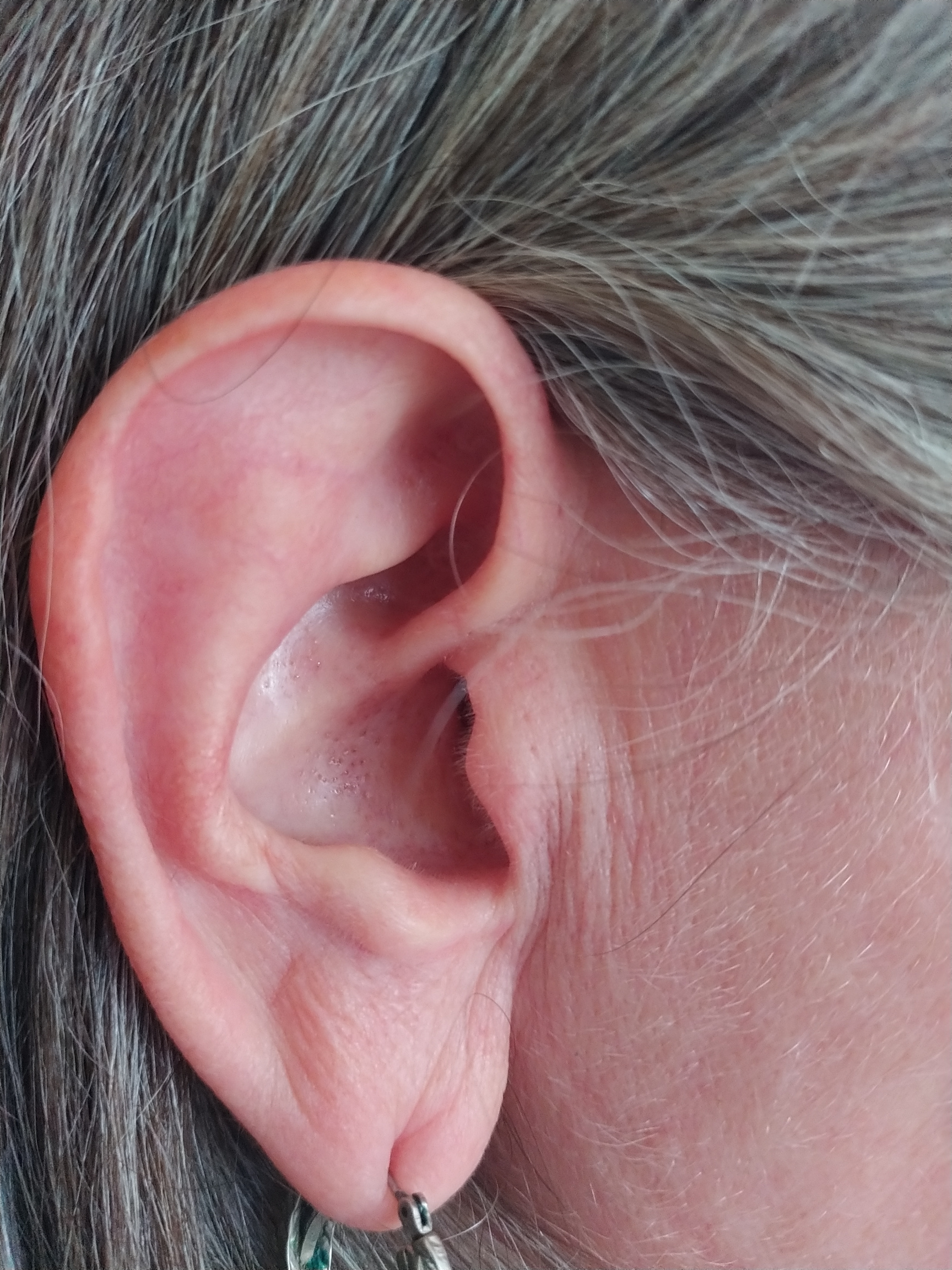
My problematic right ear… (Photo credit: Randy Helbling)

MULTI-LAYERED & COMPLEX

Mine is a complex diagnosis, a neurological condition resulting from an inflammation of the nerve(s) in the inner ear, in my case the right ear. The apparent cause, a viral infection. In 2011, a virus caused me to lose nearly all of the hearing in my right ear during an episode of sudden sensory hearing loss. This most recent virus affected the balance in my right ear. My initial symptom of feeling off-balance followed a really bad cold in early January. (Not COVID; I self-tested negative for that, twice.) I didn’t think too much of the off-kilter feeling, hoping it would pass. It didn’t.

My symptoms progressed: fullness, ringing, clicking and minor pain in my right ear; hyper-sensitivity to sound; double vision; awakening with headaches; feeling like someone slapped me on the right side of the head; unexplained anxiety; rosacea; fatigue; vertigo (only while sitting up from a supine position or rolling onto my right side in bed) and more I’m probably forgetting. I felt like my brain was working really hard to manage auditory and visual input, processing conversations, and balance. I still feel that way.

Kind of how my brain feels right now. Artwork by Bill Nagel, exhibited at the Paradise Center for the Arts earlier this year. (Minnesota Prairie Roots copyrighted file photo March 2023)

BRAIN FATIGUED

Back to that road closed analogy. The nerves/pathways in our brains are all interconnected, one leading to the other. Kind of like the system of roadways we follow to get from Point A to Point B. Now there’s a blocked road inside my head and my brain is struggling. It’s taxing to determine how to make this all work. Vision. Hearing. Maintaining my balance. I’m feeling brain fatigue.

One day I may feel fairly normal, the next, not so much. Or even through the course of the day, how I feel is affected by input into my brain. If I’m out and about, which I mostly am not, I quickly feel overwhelmed. Even by something as simple as a one-on-one conversation.

A tablet of Prednisone, a med which I took for two weeks. (Minnesota Prairie Roots copyrighted file photo)

SYMPTOMS LESSENING

Yet, today I see a lessening of my symptoms. The anti-inflammatory steroid Prednisone, as much as I disliked the insomnia, heart palpitations and anxiety side effects, reduced the nerve inflammation. My symptoms are less severe, but still linger under or at the surface and sometimes flare.

I am in vestibular rehab therapy, working with a skilled, knowledgeable and compassionate physical therapist who is determined to help me retrain my brain, to get me back on the right route. Ryan tells me I’m improving, even if I don’t always see that. I appreciate his encouragement and specialized training in the exact therapy I need. I listen. I ask questions. I do my exercise homework. Already I’ve seen improvements in my balance.

My vision has improved, too, although I still must work hard to focus and not see double. I can now tolerate my computer screen for more than 10 minutes. Headaches are mostly gone as is the feeling of being slapped on the side of my head. And I no longer need to close my eyes during a conversation because I can’t handle simultaneous visual and auditory input. That said, I will occasionally close my eyes when I feel overwhelmed and need to concentrate solely on hearing.

No big road trips for me as I navigate through vestibular neuronitis. (Minnesota Prairie Roots copyrighted file photo)

LIMITATIONS, FRUSTRATION, DISAPPOINTMENT

I have my moments when I feel depressed and frustrated and wish I was “all better.” I don’t know if I will ever be “all better” or whether this is something I will have to learn to live with and manage. There are moments when I feel overwhelmed. This whole vestibular neuronitis is difficult to explain and you can’t see it, so people don’t necessarily get it.

I’m sad because a long-planned trip to Indiana this coming week to attend my son’s graduation from Purdue University with his master’s in computer science will not happen for me. I am disappointed that I can’t be there in person to celebrate, to hug him, to congratulate him on his accomplishment. But I recognize my limits. I can’t handle a long road trip and attending commencement with the masses. It would be too much for my brain. I’m not even attending church yet because I can’t tolerate the organ. I’m not even grocery shopping because of the sensory overload. Mostly, my interaction with others is limited because my brain can’t handle much.

But onward I go, navigating away from the closed road in my brain to alternative routes that will allow me to reclaim my life. Soon. I hope.

#

NOTE: By writing this post, I hope to encourage others who are on a similar journey or who are supporting loved ones. I also aim to provide info on this unfamiliar-to most condition.

© Copyright 2023 Audrey Kletscher Helbling