

An 1840 Philadelphia Derringer, like the pistol used to assassinate President Abraham Lincoln.
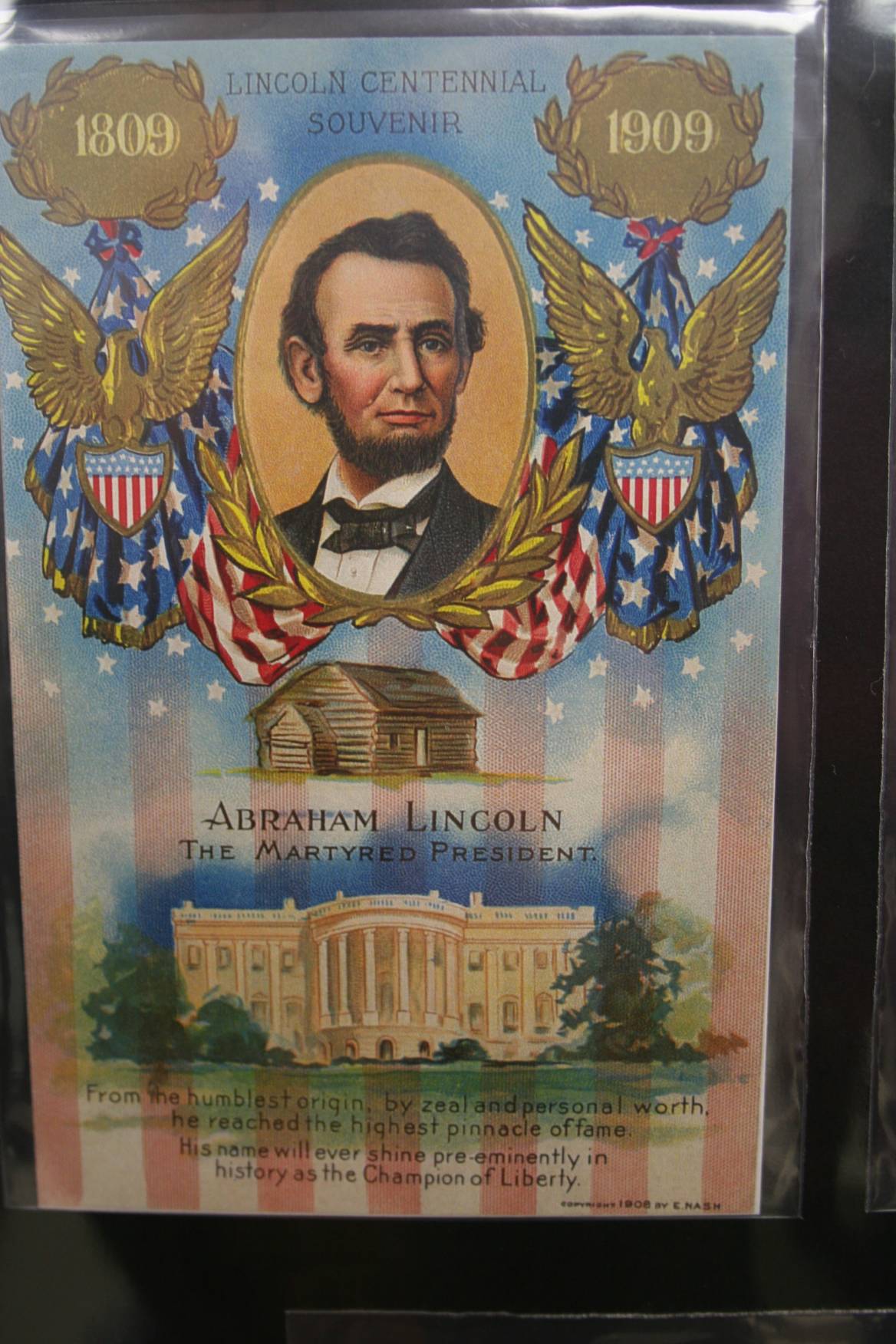
A 1909 postcard celebrates Abraham Lincoln's February 12, 1809, birth.
THE PISTOL WEIGHS HEAVY in my hand. Cold metal and wood against warm flesh nestled in my palm. I am surprised, really, by the weight and smallness of this curved 1840 Philadelphia Derringer, which is exactly like the deadly weapon John Wilkes Booth fired at President Abraham Lincoln on April 14, 1865.
I have not come here this Thursday night expecting to handle a Derringer. Instead, I expect to view original slave documents from the South during the November meeting of the Cannon Valley Civil War Roundtable in Faribault. I am a member of the interested public, not of the Roundtable.
The evening’s presenter, however, left the slave documents at home. I am disappointed. But only momentarily. He brings instead a whole tote full of interesting Lincoln-related memorabilia.
Roger—not his real name because he looks directly at me and requests anonymity—is a collector. Big-time. He collects guns, coins, autographs (like an original George Washington signature valued today at $35,000 – $40,000), stamps, photos, Civil War era postcards, Civil War uniform buttons and more.
He’s been collecting for 25 years, not with the thought of getting rich from his collection, Roger says, but because he “likes it.” That passion is clear to me as Roger, who emphasizes he’s not a historian, rattles off historical information that I’ve long forgotten, or perhaps never learned.
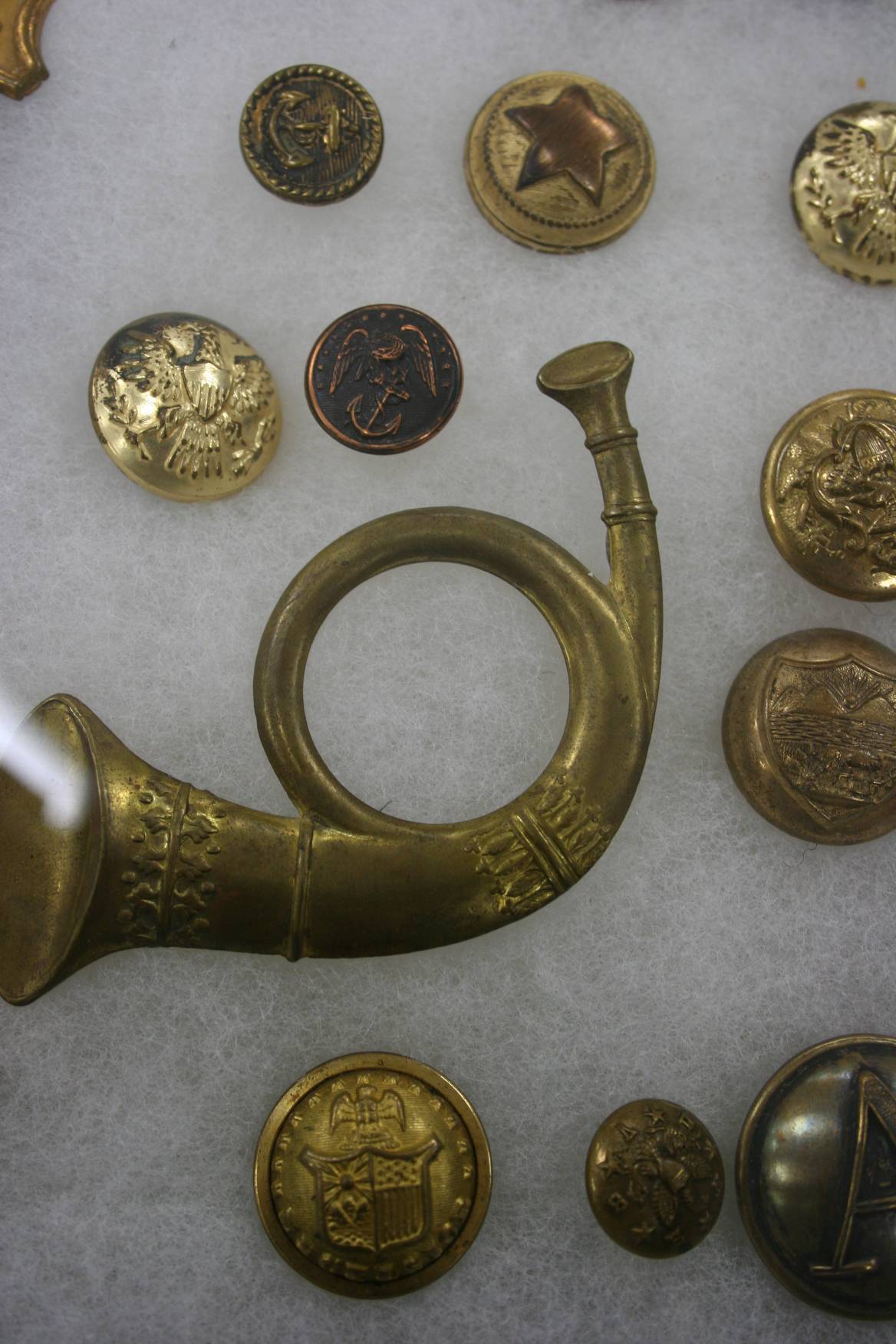
Civil War uniform buttons.
Lincoln, he claims, had a bone disease that would have killed him before his term ended. A month before his assassination, the President had recurring visions that someone would be killed. Roger shows off the 1840 Derringer, tells us that shot at a distance, this pistol only would sting like a BB gun. But at close range, the weapon proves deadly.
Later, when I pick up the Derringer, I feel for the first time the weight of John Wilkes Booth’s terrible act, something I’ve never experienced by reading a history book.
That sense of touching history pervades this evening. I imagine the soldiers who fought in the bloody battles of the Civil War as I admire uniform buttons secured in a case. I wonder about the people who sent the colorful vintage postcards now tucked inside protective plastic sleeves. I ponder Lincoln’s Presidency as I study the original photos of Lincoln in Roger’s collection. I consider the demons that tormented Mary Todd Lincoln as I photograph replica china that she insisted on for the White House.
I am surprised at what I have learned in just two short hours.
And I am surprised at the intensity, knowledge and devotion the dozen or so gathered here clearly possess regarding the Civil War. Among them is 11-year-old Brandon, a self-proclaimed “history freak.” The sixth grader has come here from Owatonna with his mom, who says she’s simply the chauffeur for a son obsessed with the Civil War. But she says that in a good way.
Brandon’s interest in the Civil War traces back to his great, great, great grandfather, who served in the Union Army. Today Brandon role-plays in First Regiment Minnesota Volunteer Infantry re-enactments. He’s the fifer, still learning, he says, to play the small flute-like instrument. He’s been to Gettysburg and Harpers Ferry and helps teach sixth graders about the Civil War. Learning about “what the soldiers went through” draws him into Civil War history. He hopes to someday become a history teacher and a farmer.
The future educator will practice his teaching skills when he talks about visiting Civil War battlefields at the February 18, 2010, Cannon Valley Civil War Roundtable meeting. I hope to be there, for I have much to learn.
For more information about the CVCWR, contact Dan Peterson at (507) 332-8250.
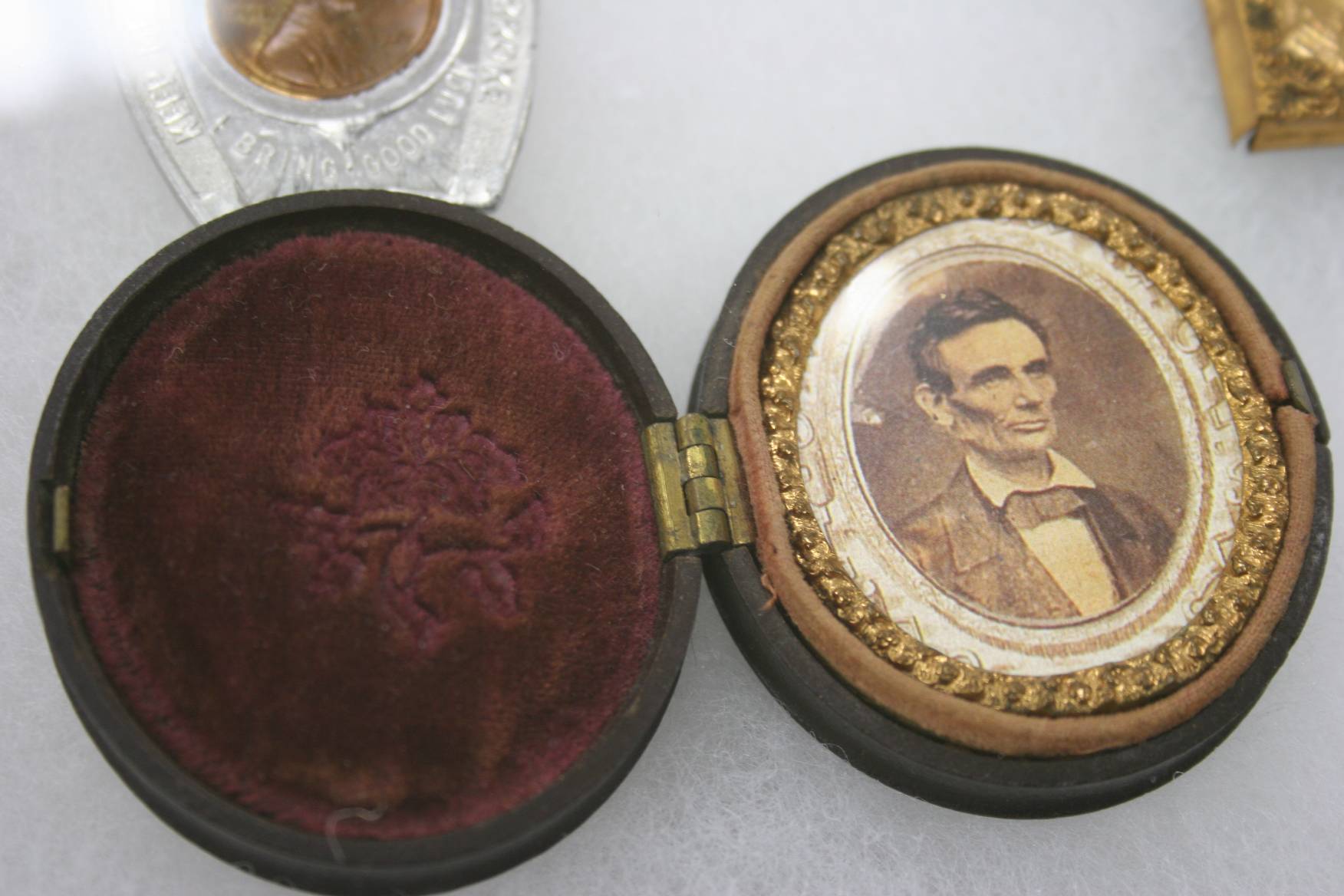
An original photo of Abraham Lincoln in Roger's collection. He also has prints of originals.
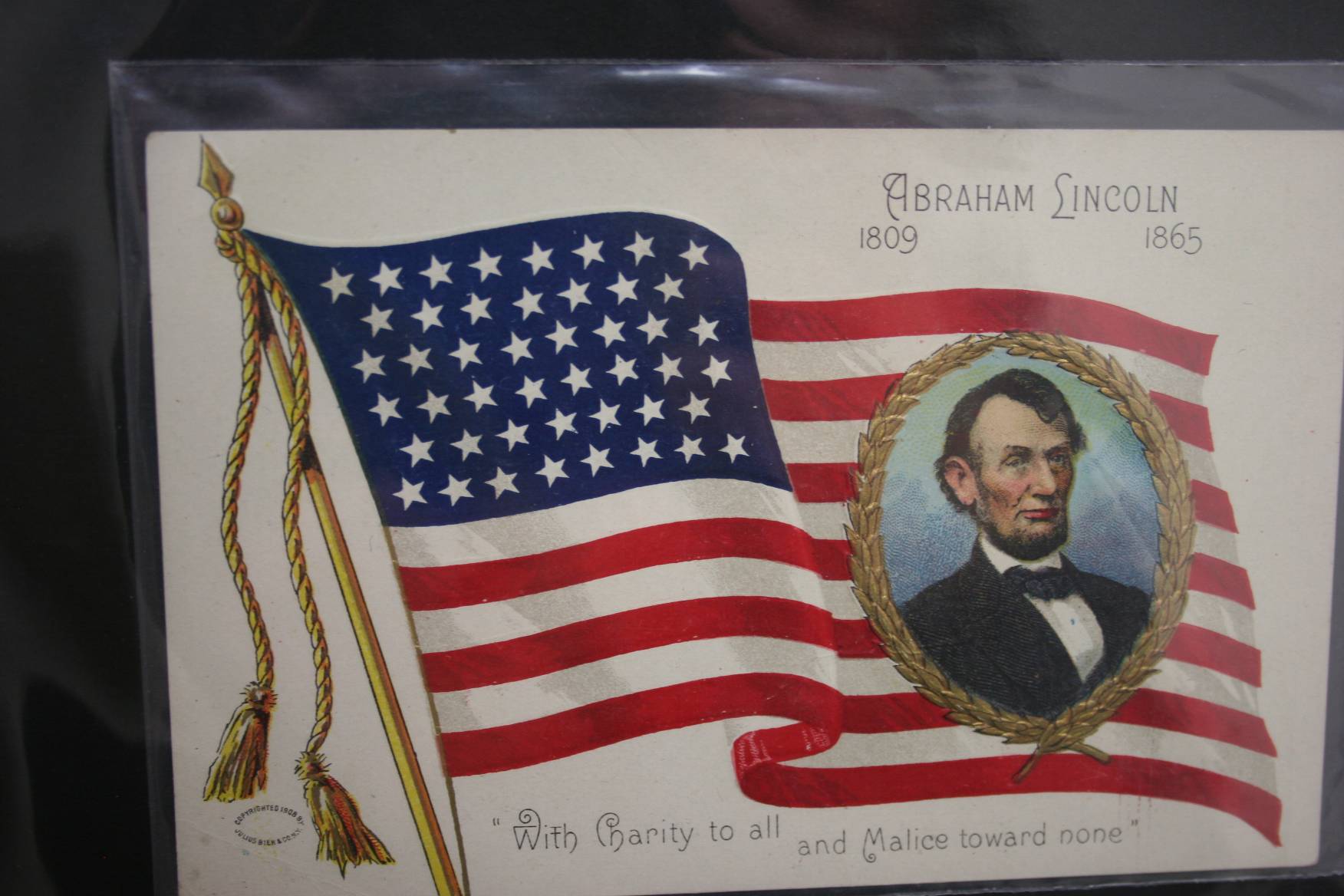
Another of Roger's postcards honoring Lincoln.
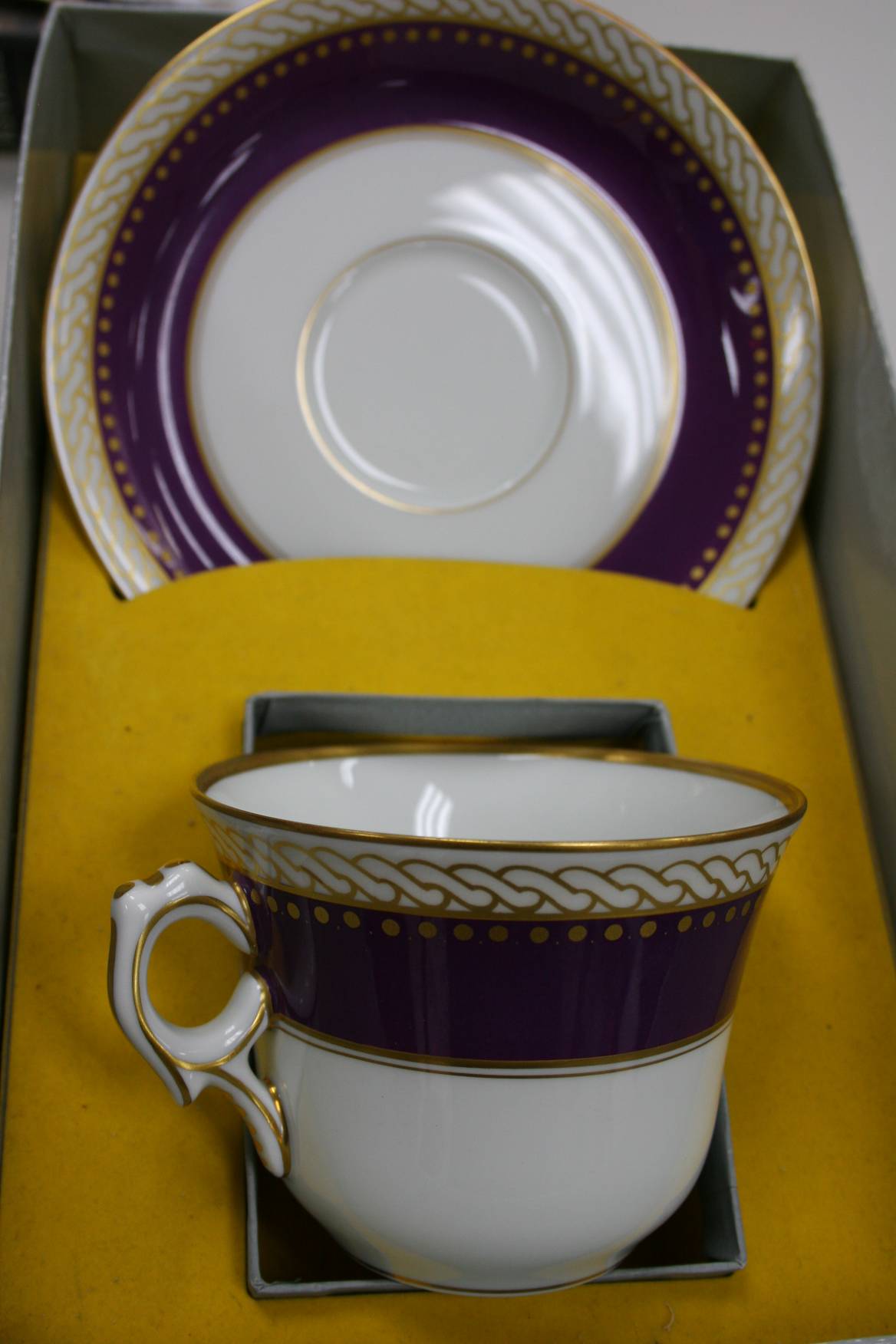
A replica of Mary Todd Lincoln's White House china.
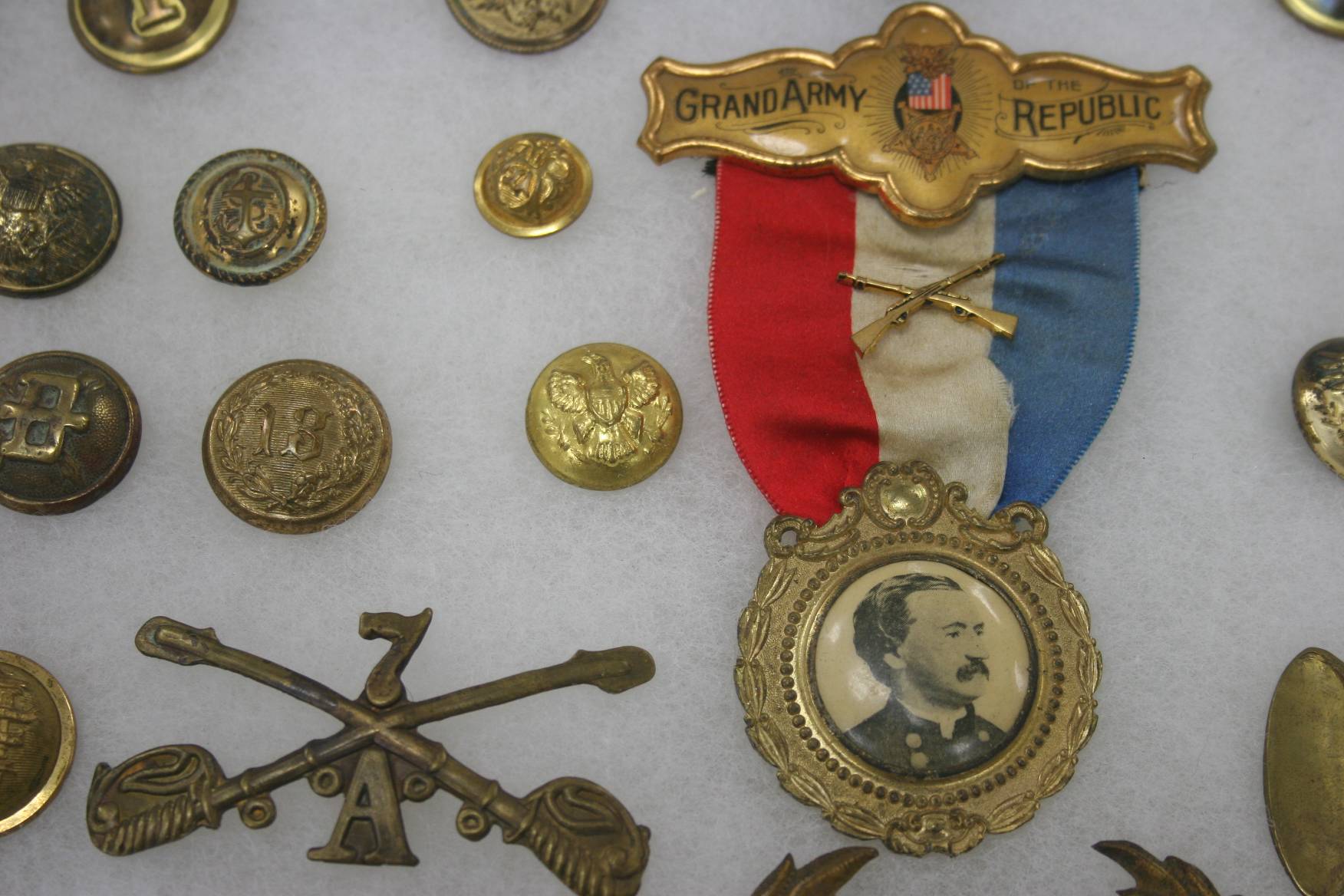
More Civil War uniform buttons and insignias.
© Copyright 2009 Audrey Kletscher Helbling


 Minnesota Prairie Roots
1840 Philadelphia Derringer can be found as a kit, Since it is a black powder firearm, it is not considered by BATFE as a “firearm” – at least not today. While this post is quite old by internet standards, it is very relevant in 2024 as it was when posted, Many good men on both sides fought and died for what they believed. Victors write the history they want to see passed down. Problem with that, too many Confederates survived the war and their story is just as interesting – and does not align with the “official” story, and having been labeled “traitors”, the monuments that were built and placed for the future have been removed and dishonored. Even headstones at cemeteries have been defaced and or removed. However, the South’s true legacy lives on if one knows where to find it. Private yo Lieutenant General Nathan Bedford Forest, after reading several books on him, is now one of my heroes. This man did not drink, was chivalrous to a fault, a fierce and brave leader and a tactician of the highest order who never attended West Point or studied the art of war. Over 200 blacks followed him as soldiers and other capacities. He freed any who would fight for the South. The tactics Forest used are studied today. He was aggressive in the attack and blended with the landscape on the regroup and rarely retreated. We have so many lessons to learn from the Civil War that this can only be a not pointing the student the way.
Gunny, I continue to be impressed by your vast knowledge.