Minnesota Prairie Roots

Writing and photography by Audrey Kletscher Helbling

Finally, I go to language camp August 29, 2009

Filed under: Uncategorized — Audrey Kletscher Helbling @ 3:28 PM
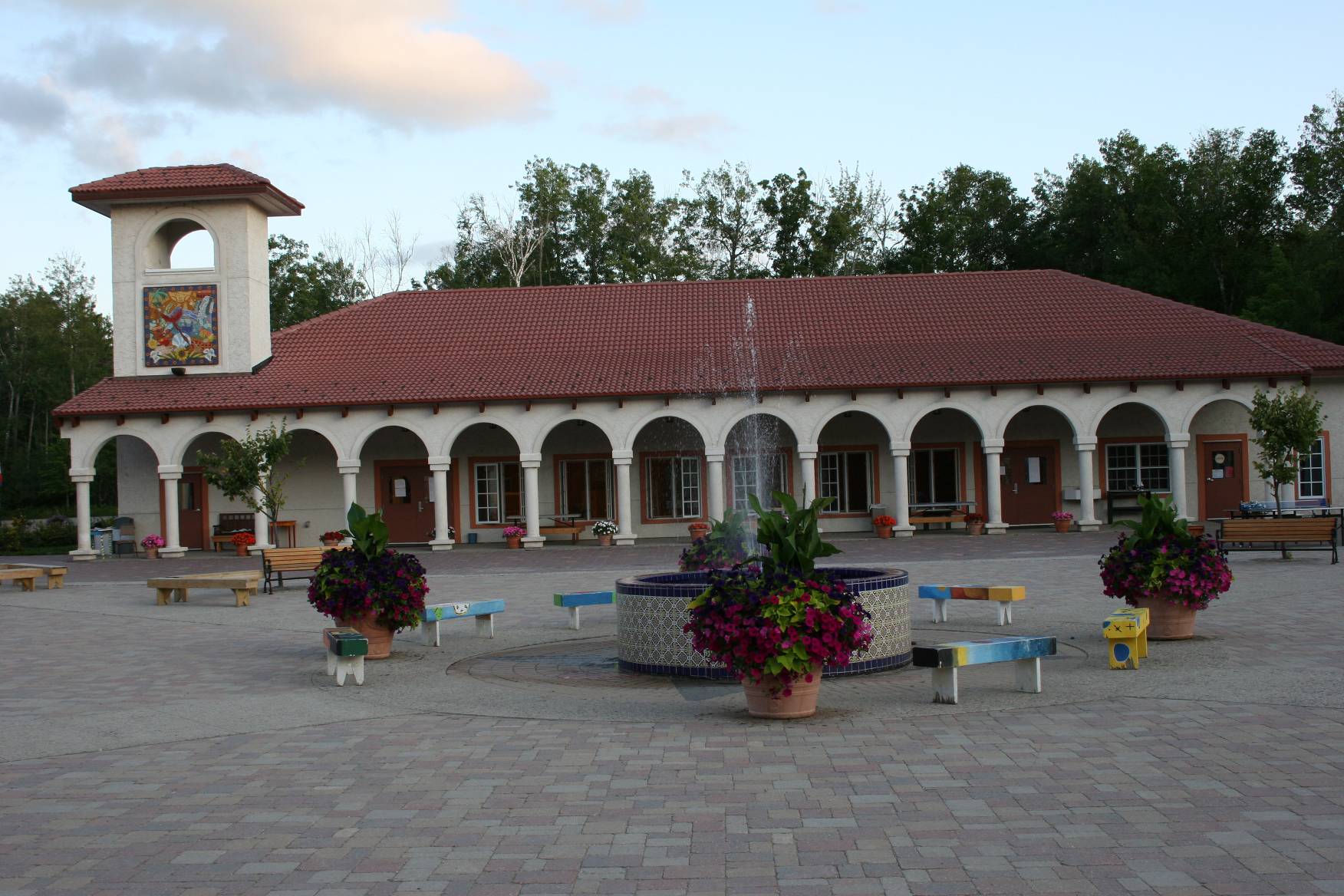
Authentic architecture is integral in the Concordia Spanish Language Village.

Authentic architecture is integral in the Concordia Spanish Language Village.
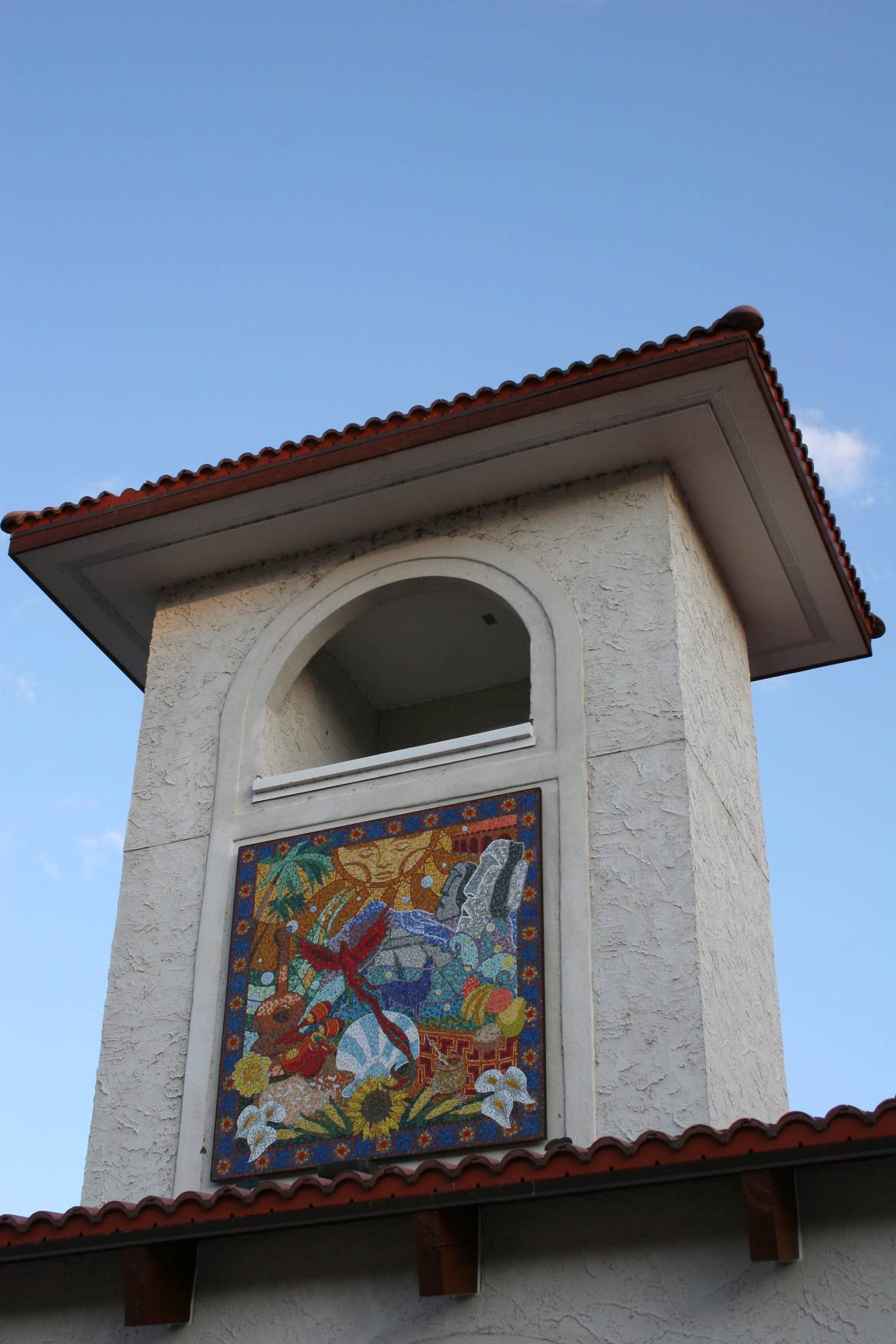
A colorful mosaic graces a building.

A colorful mosaic graces a building.

Nearly 40 years ago, I longed to spend part of my summer at a German language camp in northern Minnesota.

It was, I figured, as close as I would get to Germany without leaving the state, unless you counted visiting New Ulm. I’d been to that predominantly German community several times.

But I needed more. With a natural ability to quickly learn a foreign language and with a passion for German, I hoped to immerse myself in the culture. And that could happen at the Concordia German Language Village near Bemidji.

However, as much as I wished to become a German camper and as much as my high school German teacher desired the same for me, it wasn’t going to happen. Sending me to summer camp didn’t fit family finances.
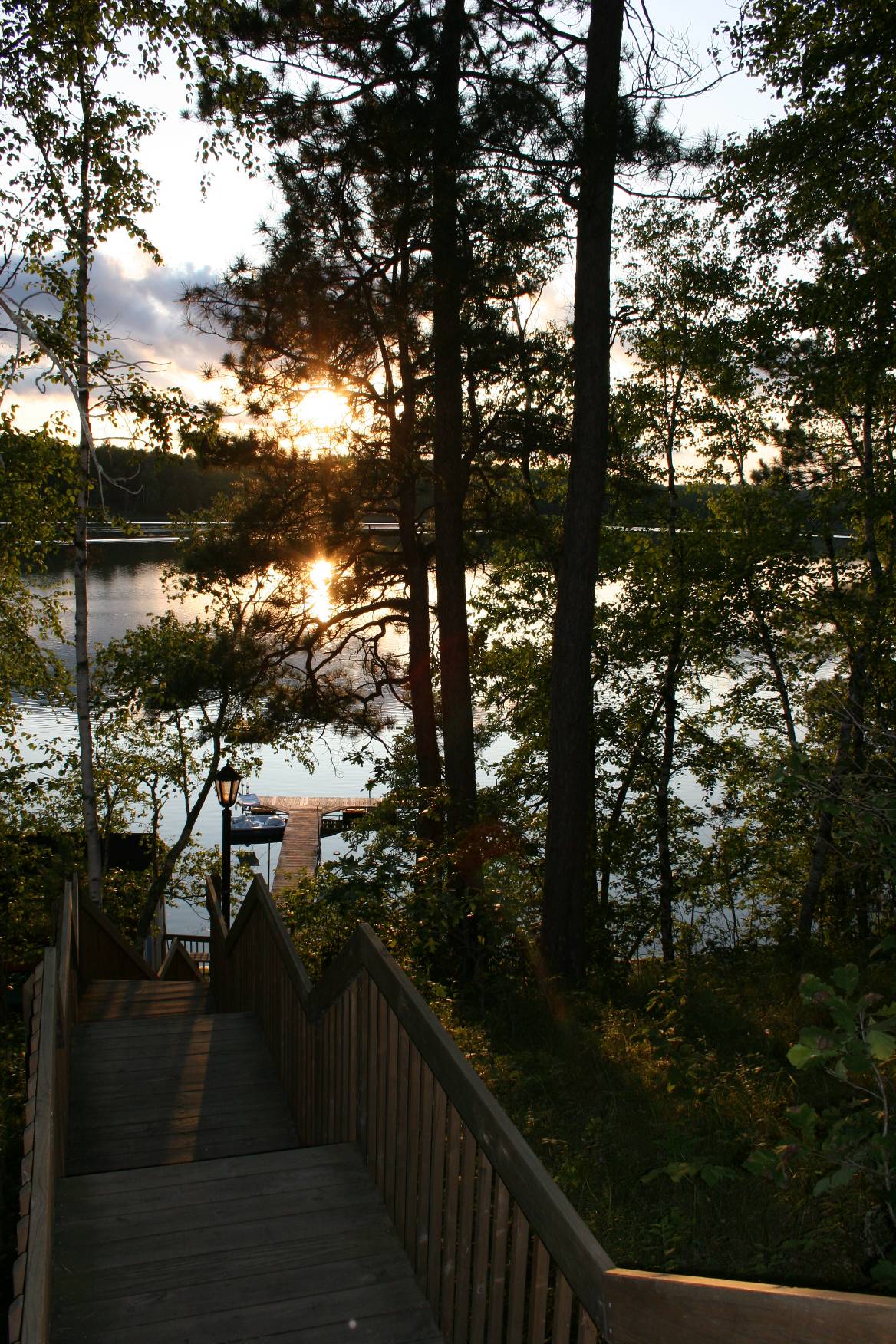
Sunset on Turtle River Lake.

Sunset on Turtle River Lake.

So I never went to camp. That was until this summer.

And it wasn’t exactly German camp. It was El Lago del Bosque, Concordia’s Spanish Language Village, also on Turtle River Lake north of Bemidji.

No, I don’t speak Spanish. But my daughter, Miranda, is majoring in Spanish and worked the past two summers in the El Lago del Bosque kitchen. Several weeks ago my husband, son and I traveled north to see her.

As we drove down the 2 ½-mile tree-lined winding road toward the Spanish village, I couldn’t help but ponder my adolescent wish of so many decades ago.

But that was in the past and I had other concerns now. How exactly would I communicate in a totally Spanish-speaking environment? Not to worry. We got by for the brief time we were at the Sunday evening asado argentina (outdoor Argentine barbeque) with Miranda as our interpreter.

Besides I was way too busy admiring the brick courtyard, complete with fountain and gorgeous flowers, and the Spanish architecture and paintings to even think about language barriers. This camp was unlike any I’d ever seen. I would have sworn, at least from exterior appearances, that I was at some swanky resort.

From what my daughter has told me, the food classifies more as cuisine than camp food with everything, even the bread, made from scratch. I could like this kind of camp.

Miranda returns home this weekend from her three-month stint at El Lago del Bosque. We’ll be picking her up at her sister’s place in Minneapolis and eating a meal together. I asked where and what she wanted to eat.

Anything, she said, except rice or beans.
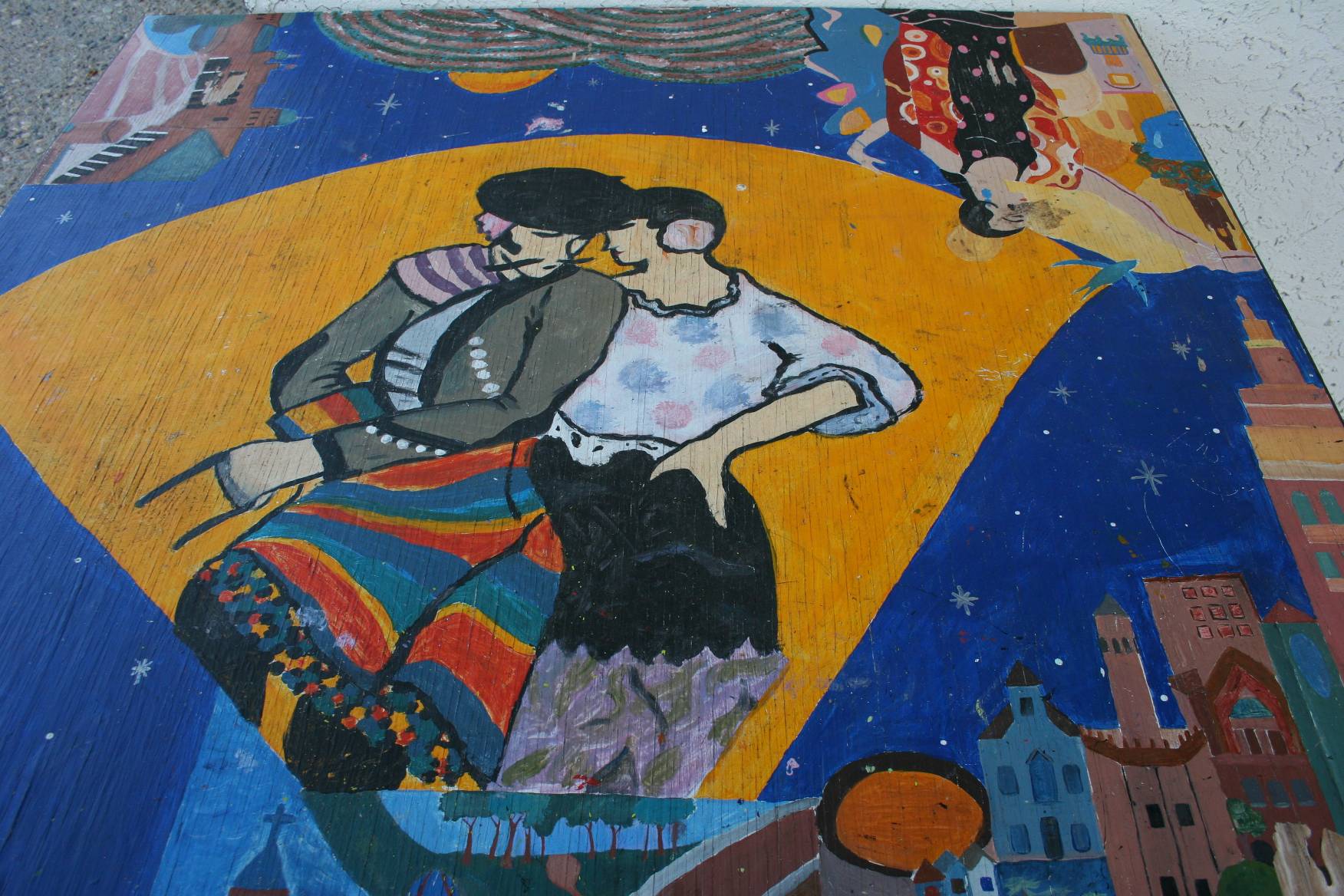
Tabletop artwork at Concordia.
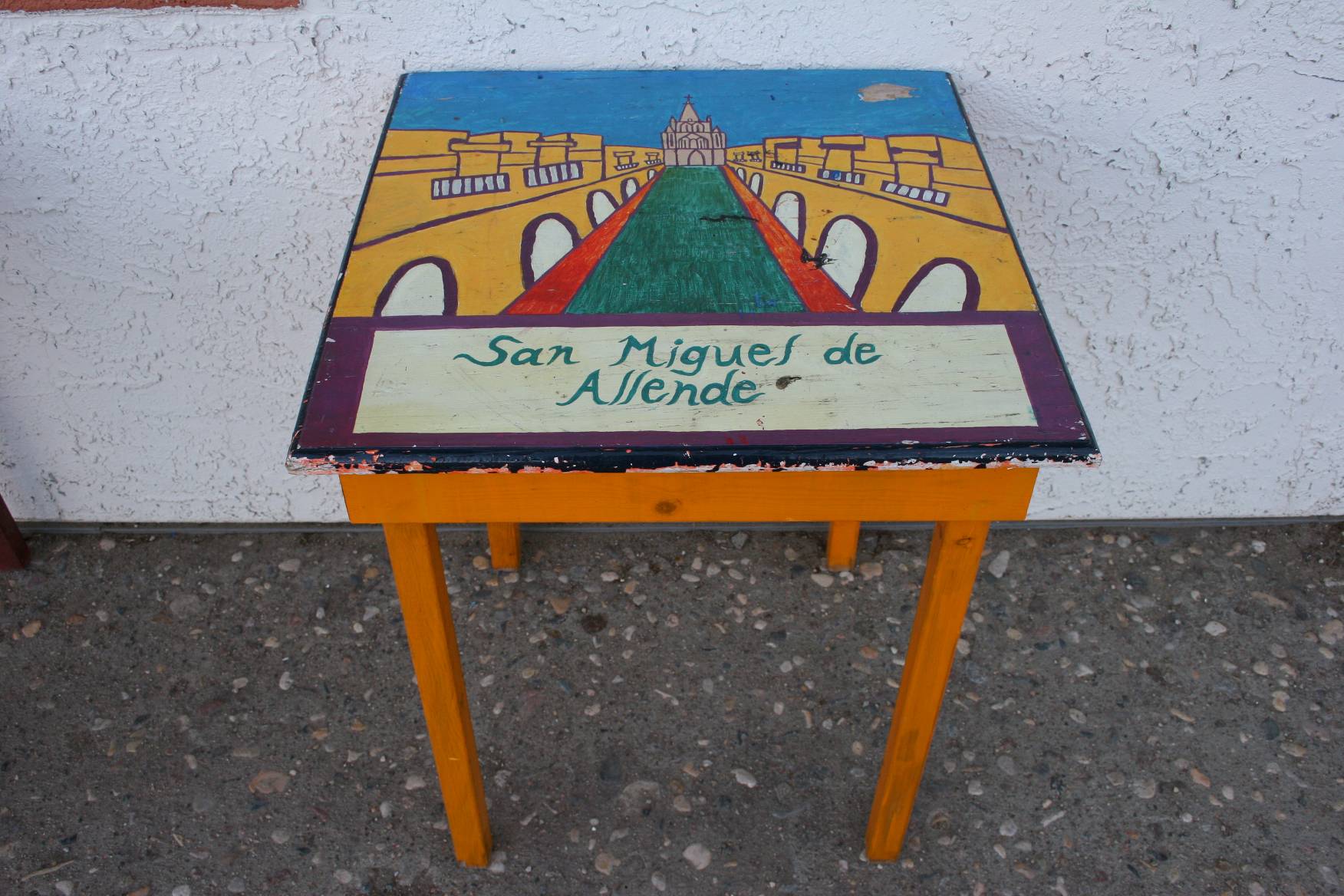
Tabletop artwork at Concordia.

Art representing San Miguel de Allende.
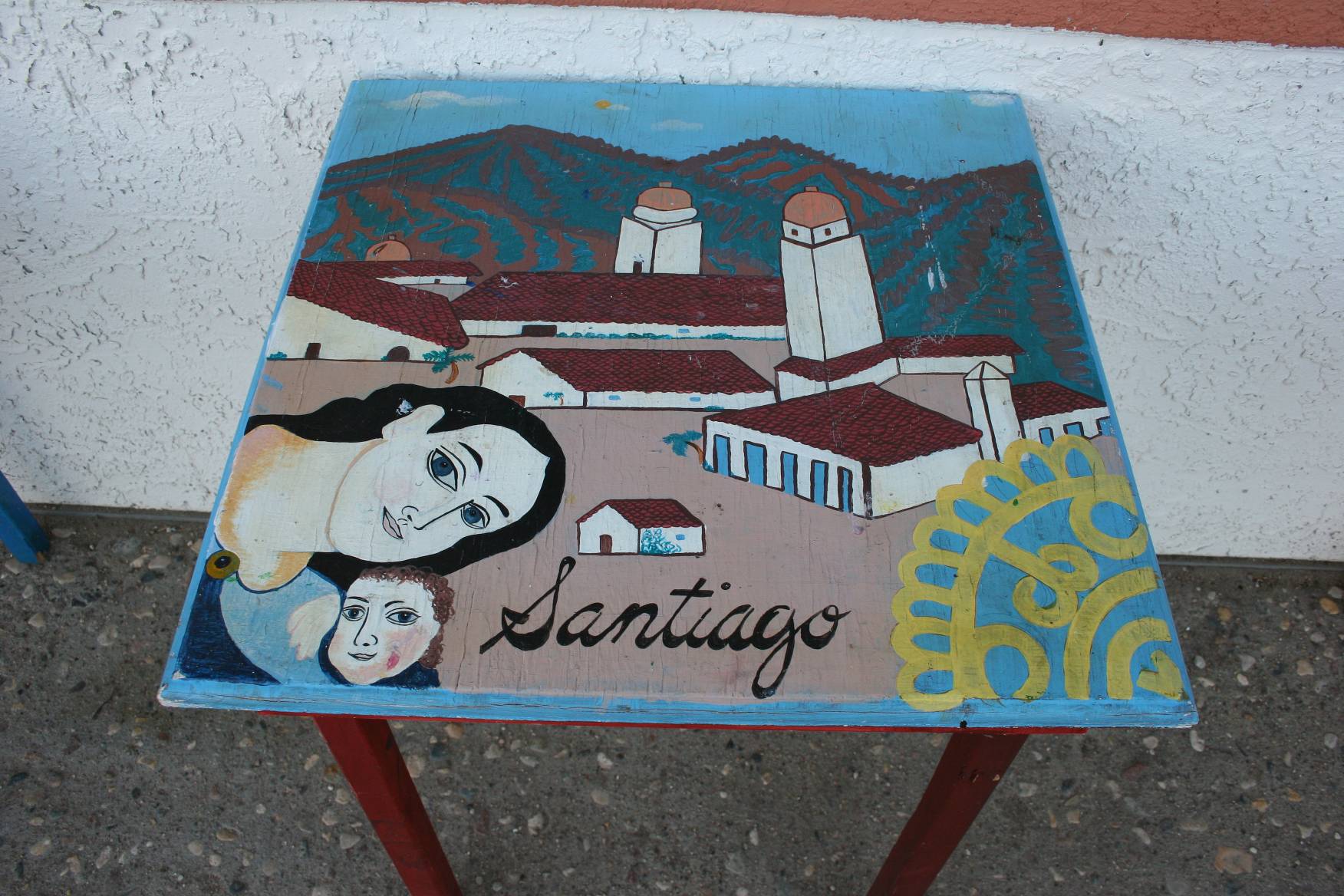
Art representing San Miguel de Allende.

Table art representing Santiago.

Table art representing Santiago.

© Copyright 2009 Audrey Kletscher Helbling


Safety first?

Filed under: Uncategorized — Audrey Kletscher Helbling @ 12:58 PM
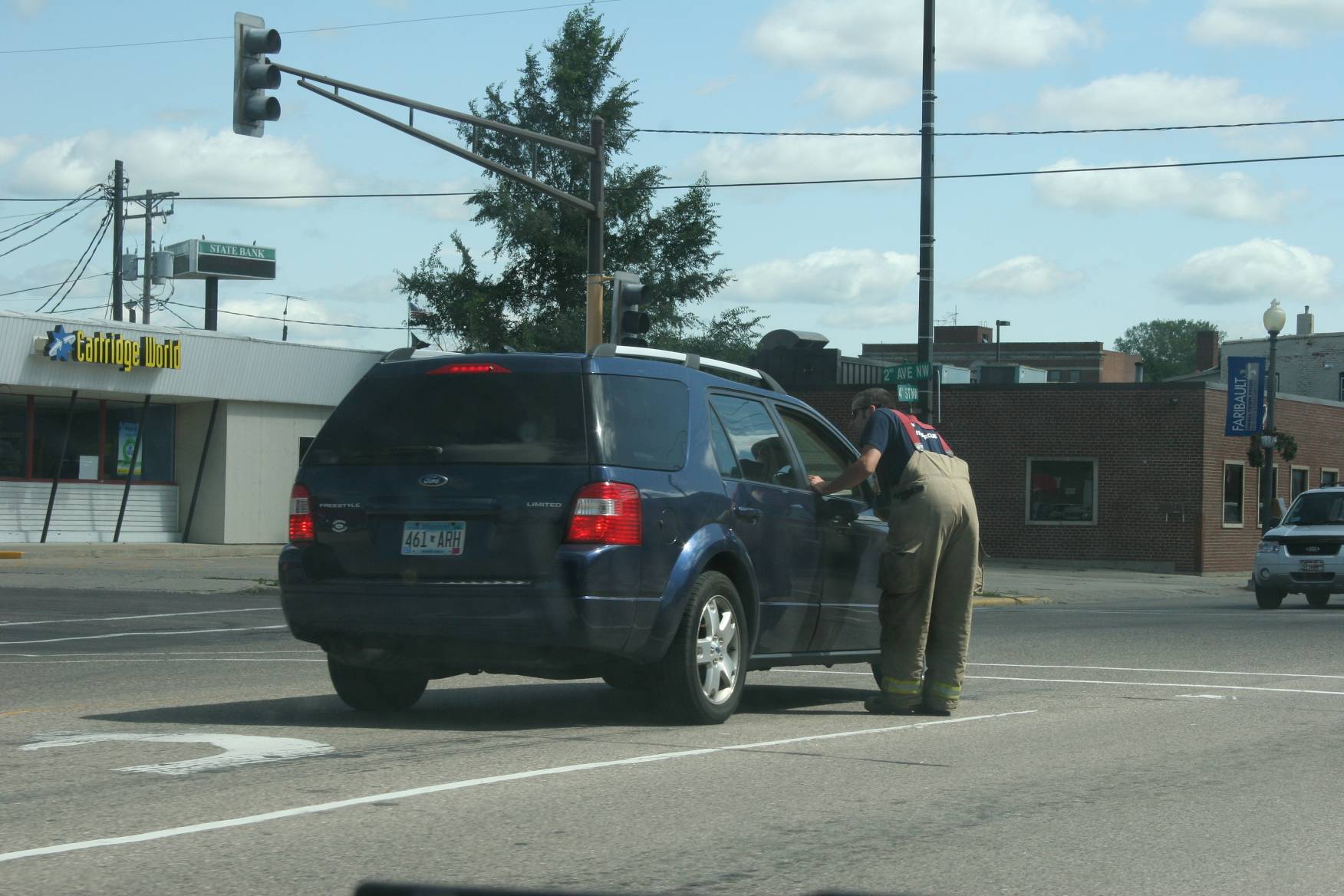
A Faribault firefighter seeks donations while standing in the traffic lane of busy N.W. Fourth Street.

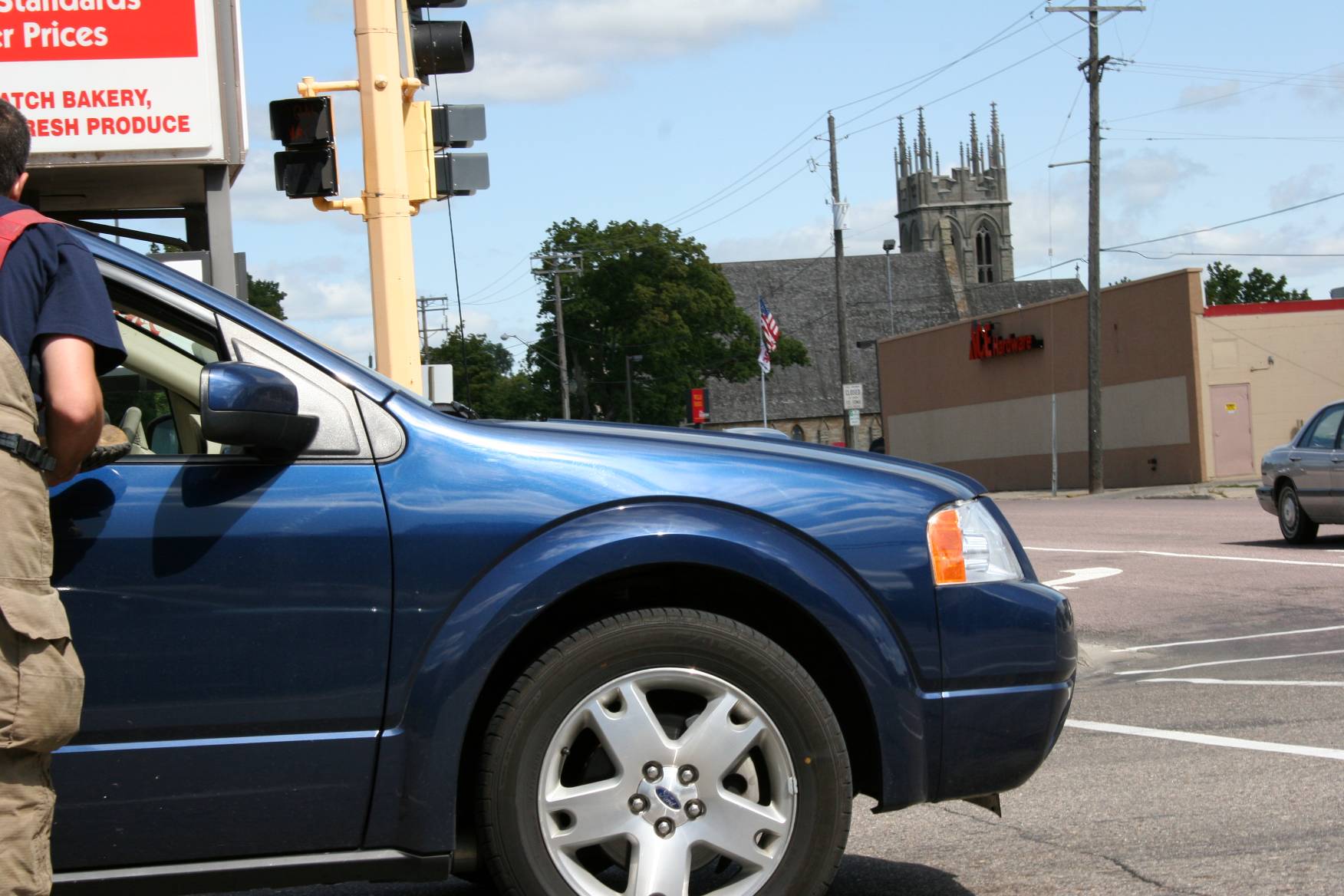
A Faribault firefighter seeks donations while standing in the turning lane of N.W. Fourth Street. This photo was taken from the passenger side front window of our car as we neared the intersection with Second Ave N.W.

I don’t mean to be disrespectful to our local firefighters, but I saw something this morning that truly astounded me.

There, standing in the turning lanes at one of Faribault’s busiest intersections, were several firefighters seeking donations for The Muscular Dystrophy Association’s national “Fill the Boot” campaign. The drive benefits research and local services for the Twin Cities chapter of the MDA.

It’s a worthy cause and I applaud the charitable efforts.

But walking where they were, putting themselves in danger and creating a distraction for motorists seemed more than a bit unwise on the part of the firemen extending their boots for a donation.

What about safety first?

My husband rolled down the driver's side window as we passed this car and firefighter in the turning lane of N.W. Fourth Street.

My husband rolled down the driver's side window as we passed this vehicle and firefighter, who was seeking donations in the turning lane of N.W. Fourth Street.

© Copyright 2009 Audrey Kletscher Helbling
 

Stop and smell the roses, in Kenyon August 28, 2009

Filed under: Uncategorized — Audrey Kletscher Helbling @ 8:14 AM
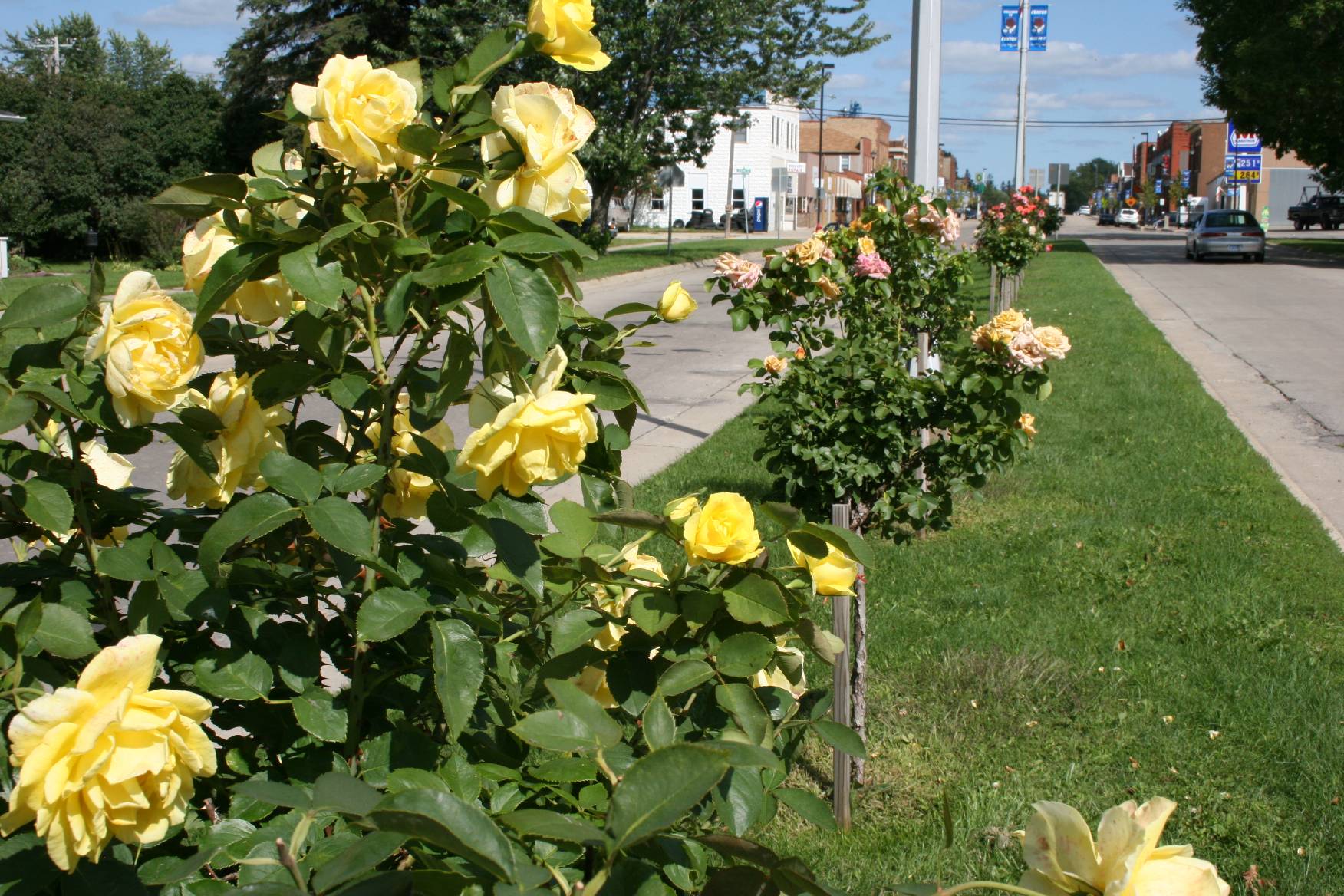
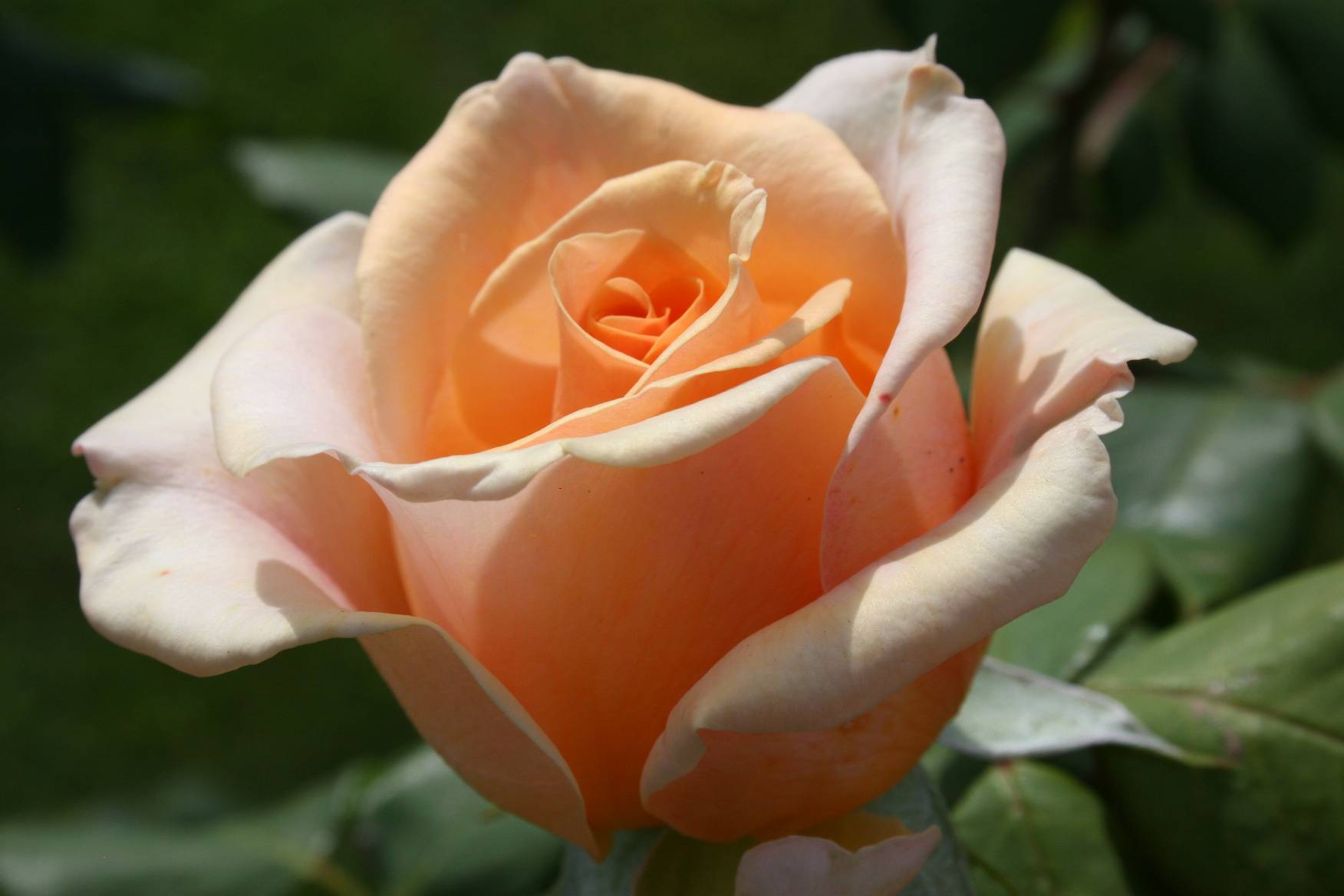
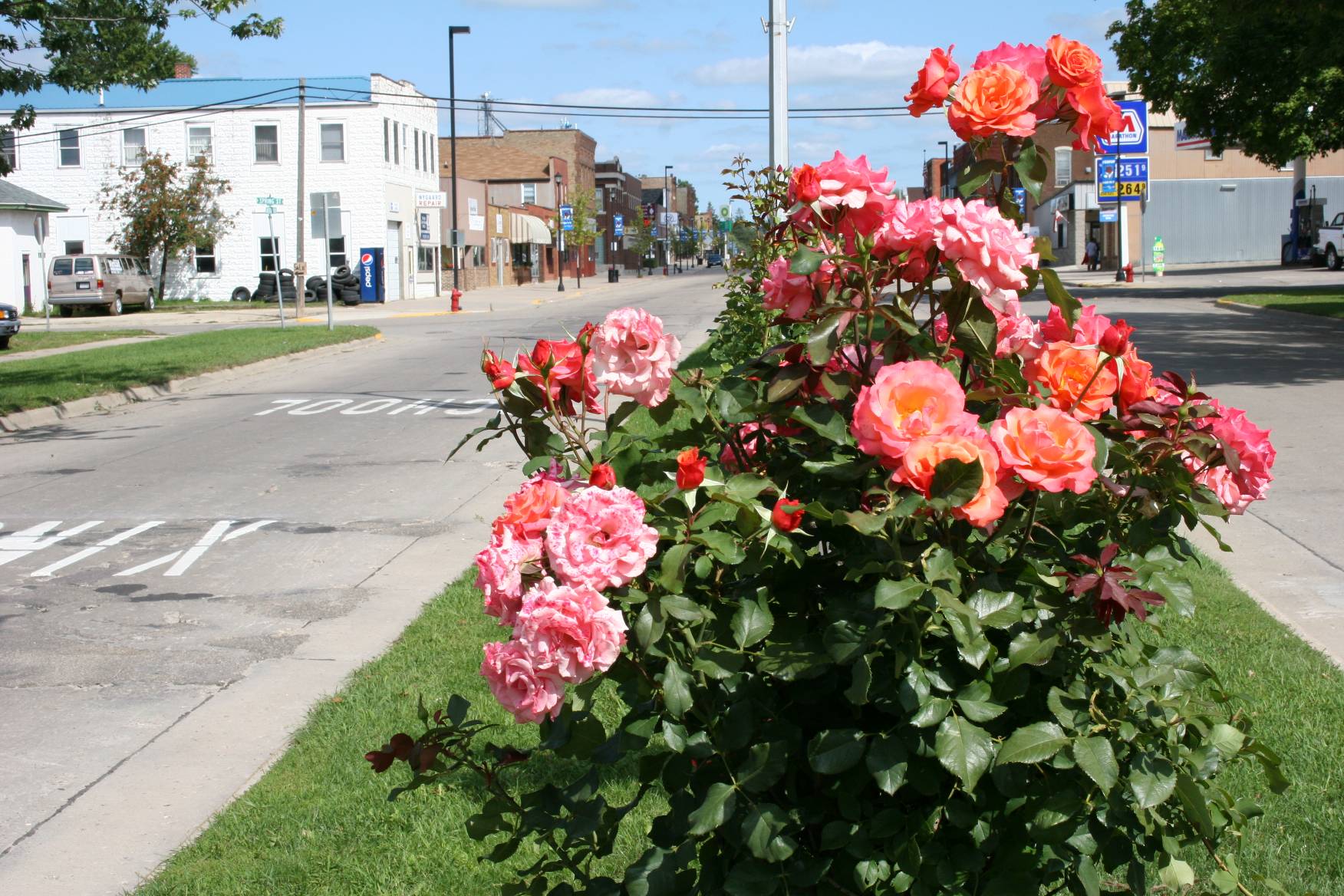
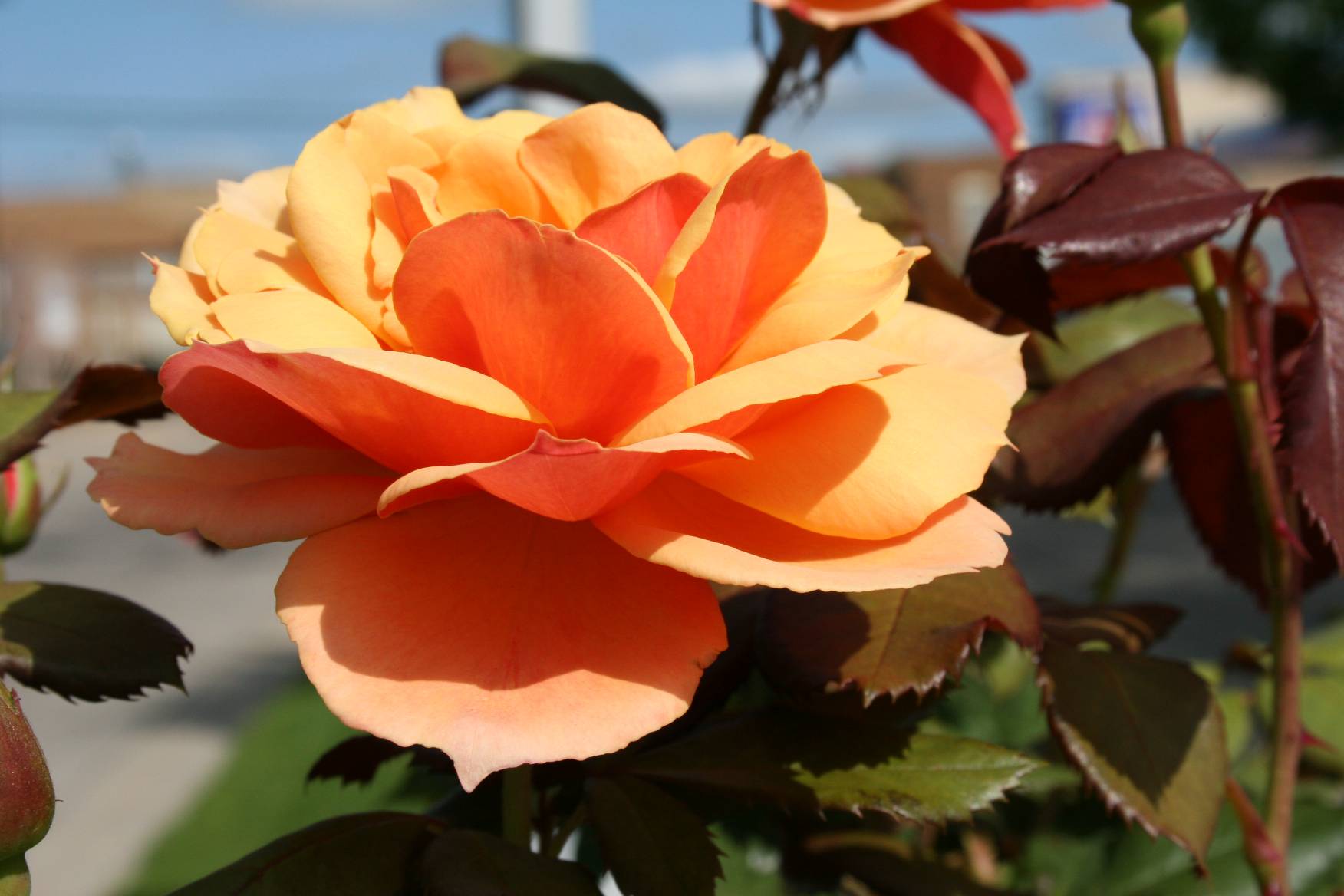
All the sweetness of summer beckons in this peaches-and-cream hued rose along the Boulevard of Roses in Kenyon, Minnesota.

All the sweetness of summer beckons in this peaches-and-cream hued rose along the Boulevard of Roses.

Stop and smell the roses.

Bend close and breathe in the sweet perfume of a rose.

Bend close and breathe in the sweet perfume of a rose.

How many times have you heard that phrase?

Kenyon's Boulevard of Roses cuts through Minnesota Highway 60.

Kenyon's Boulevard of Roses cuts through Minnesota Highway 60.

Well, if you’re traveling through Kenyon in southwestern Goodhue County, then you really ought to heed those words, literally.

Most roses have already reached their peak bloom.

Most roses have passed their peak bloom.

BUT DON’T TARRY. Time truly is passing as rose petals there fade and fall upon the Boulevard of Roses that slices through the heart of this small town. Some 80 rosebushes, by my estimate, grow in the narrow strip of grass between traffic lanes along Minnesota Highway 60, also known as Gunderson Boulevard.

Many times while driving through Kenyon, I’ve admired the four-block-long stretch of roses. But not once, not even once, did I stop to smell the roses. That is, until Sunday afternoon, during Kenyon’s annual Rose Fest.

Festival events had mostly concluded by the time my husband, Randy, and I arrived in town. We stopped at Kenyon Veterans Memorial Park (see my previous post), took in the horse pull at Depot Park, shared an order of scrumptious turtle donuts (mini donuts dripping with caramel and chocolate and sprinkled with nuts) before I suggested that we view the roses.

“Is it safe to walk in the boulevard?” I asked as we exited our car on a side street and vehicles zoomed by on Highway 60.

“There’s not that much traffic,” Randy insisted.

OK, then.

So we crossed the eastbound traffic lane and stepped into the flower zone. Rosebush by rosebush I worked my way down the grassy pathway, pausing to photograph the choicest of the blooms. Most had already passed their peak.

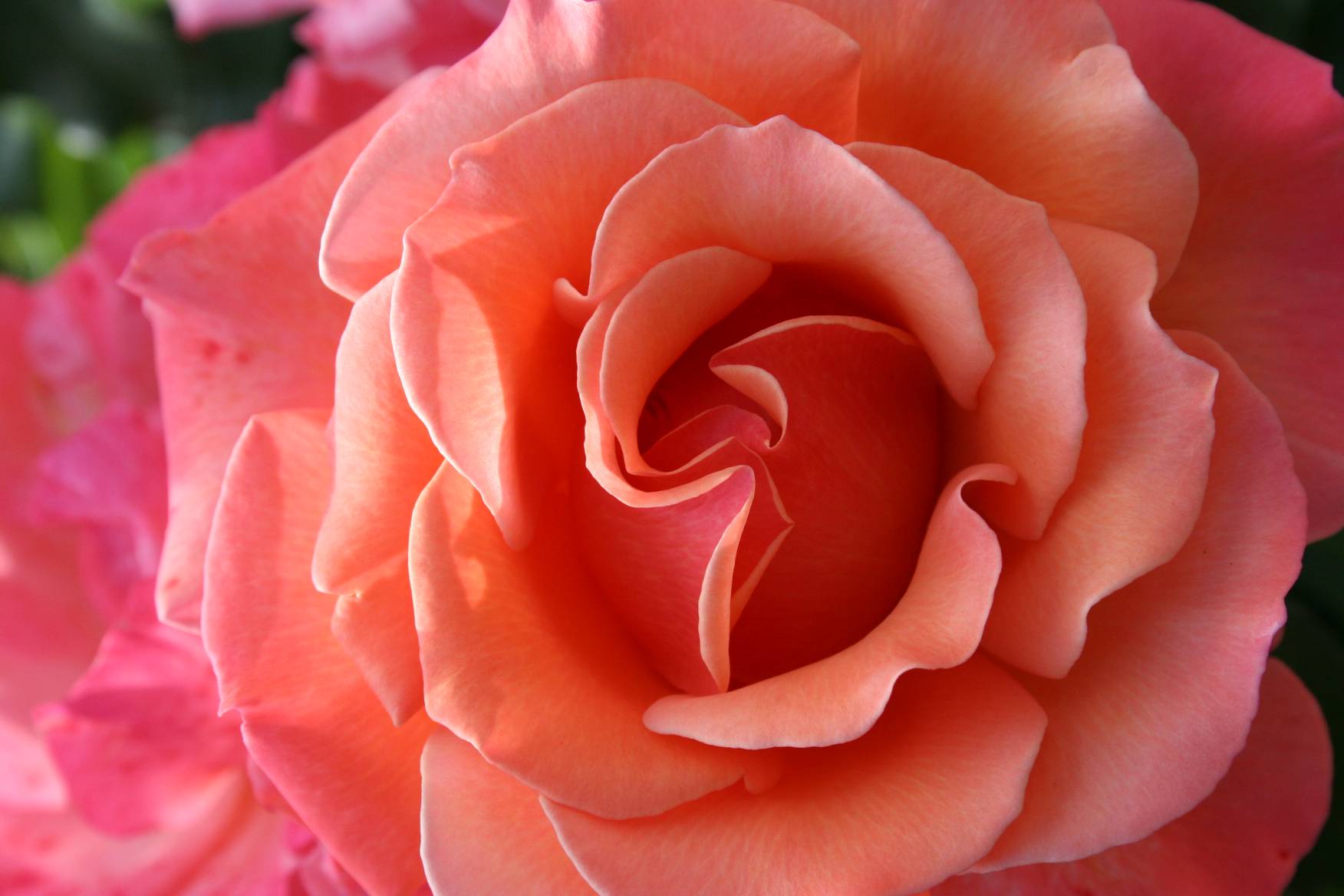
Yet, much beauty awaited us in the arching curves of the petals, in the dreamy colors of peaches-and-cream and buttercup yellow, of bushes weighed heavy by dozens of roses.

And then the scent, the heavenly perfume of roses, breathed in, slowly, deeply. Almost intoxicating, this sweetness consuming my being as I dipped my nostrils close, touching the petals. I couldn’t get enough of this heady stuff, each rose with a distinguishing scent, as unique as their colors.

But just like that, I was snapped out of my reverie by a passing semi truck that sucked at the roses and left me questioning the wisdom of standing so near the traffic lanes.

However, the distraction proved temporary as I resumed smelling the roses, inhaling their sweetness, with each deep breath.

A semi truck passes dangerously close to the rosebushes.

A semi truck passes dangerously close to the rosebushes.

Rosebushes stretch for four blocks along Gunderson Boulevard.

Rosebushes stretch for four blocks along Gunderson Boulevard.

© Copyright 2009 by Audrey Kletscher Helbling


Summer breeze in Minnesota August 27, 2009

Filed under: Uncategorized — Audrey Kletscher Helbling @ 7:52 AM
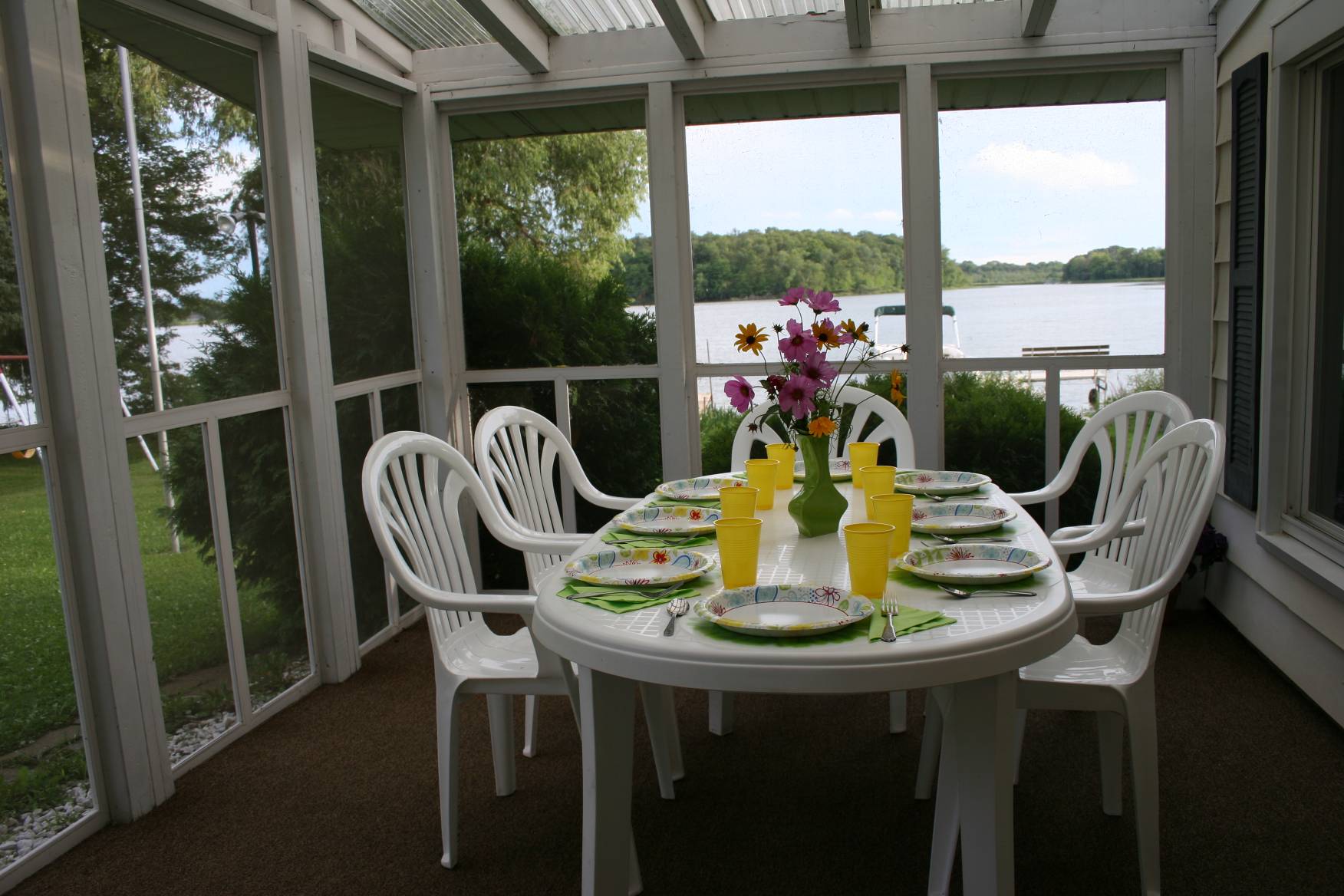
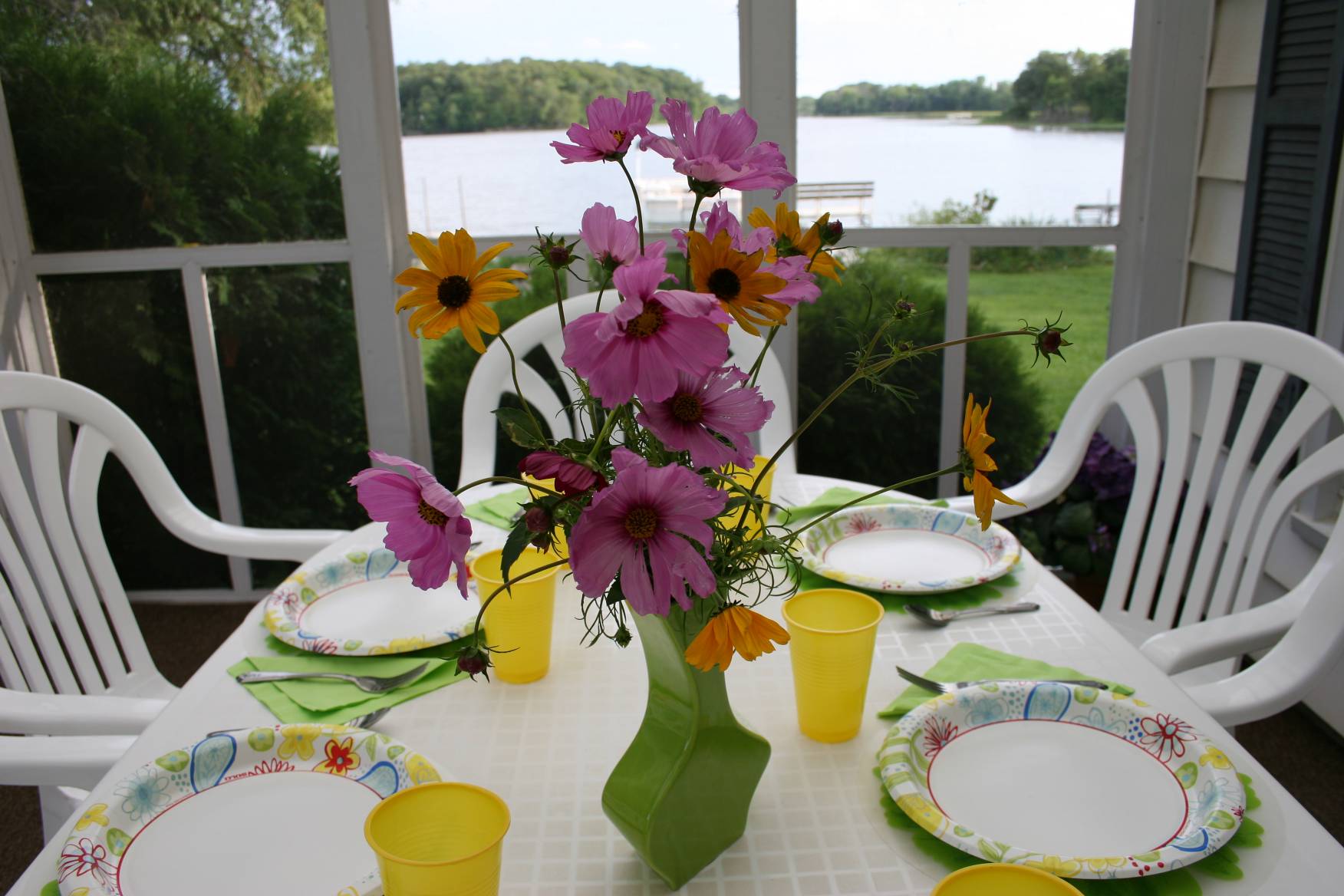
A table setting that speaks to summer breezes at a southeastern Minnesota lake cabin.

A table setting that speaks to summer breezes at a southeastern Minnesota lake cabin.

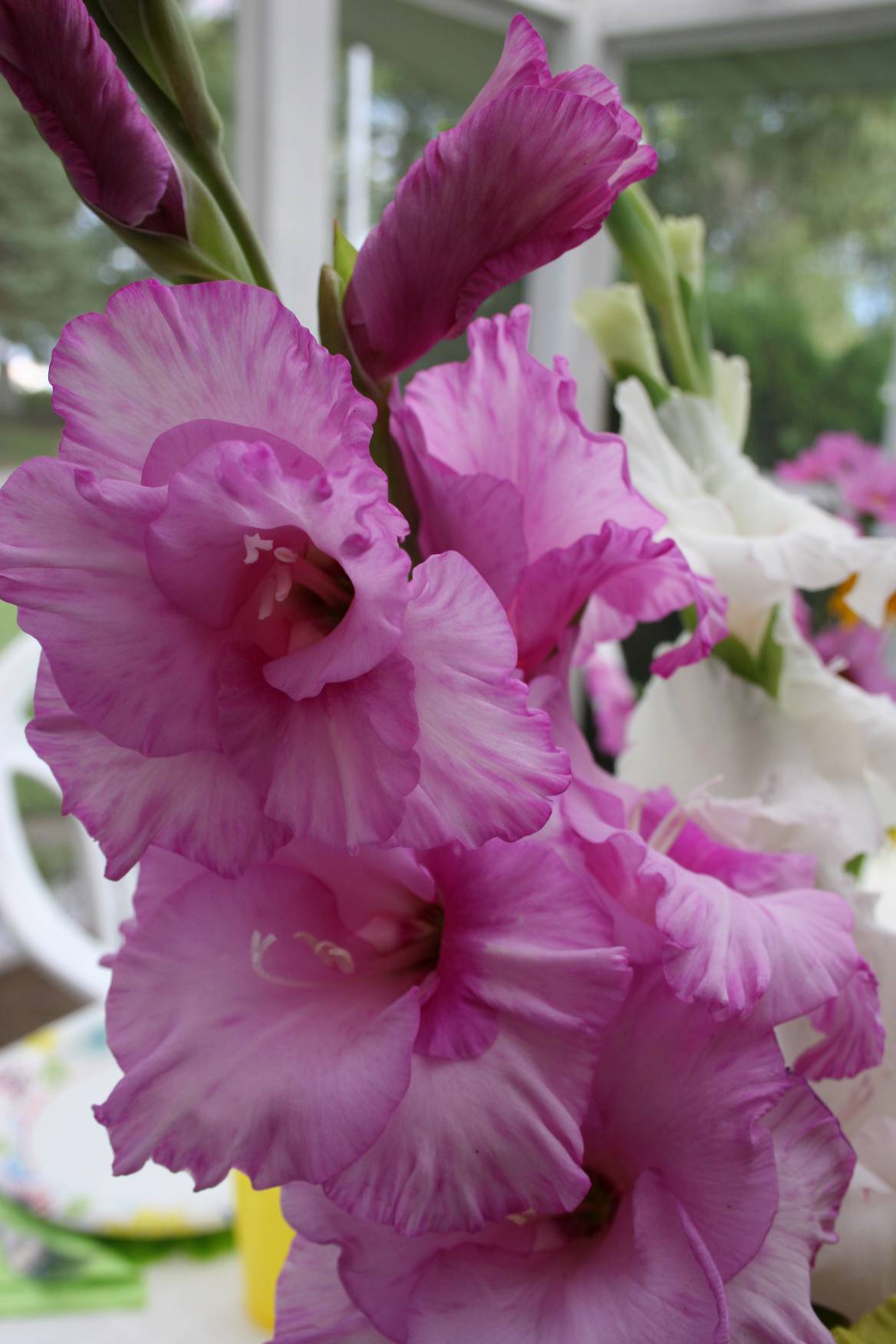
A bouquet of gladiolus.

A bouquet of home-grown gladiolus Debbie created for the serving area.

At the risk of sounding, oh, so Minnesotan, I’m going to write about the weather, a perennial topic here in the north land.

Except for the lack of rain early on, hasn’t this just been the most perfect summer? Few, if any, mosquitoes, primarily humidity-free, cool days and good sleeping weather make this a summer to remember.

It’s been ideal for picnics and potlucks and campfires, for gatherings with family and friends.

Just last week my bible study group met at a Cedar Lake cabin near Faribault for a potluck and farewell honoring our friends Mark and Sonia.

Debbie and John, who co-own the cabin with family, invited us. And the instant I saw the summery table Debbie had set for us on the porch, I thought of Seals and Crofts’ hit song from the early 1970s, Summer Breeze:

“See the smile a-waitin’ in the kitchen, food cookin’ and the plates for two.
See the arms that reach out to hold me, in the evening when the day is through.
Summer breeze, makes me feel fine, blowing through the jasmine in my mind.
Summer breeze, makes me feel fine, blowing through the jasmine in my mind.”

Now I’m uncertain as to the entire meaning of the lyrics, but Summer Breeze always has been one of my favorite oldies.

I didn’t share my thoughts with Debbie as she finished final meal preparations, but I gushed over her decorating style. Debbie, who has worked as a floral designer and interior decorator, possesses a flair for pulling everything together. I mean, she made paper plates and plastic cups look like fine china in the summery table she set for eight, nine with her husband, John, the grill master.

Debbie created a beautiful table setting using her favorite color, green, mixing and matching with pinks and yellows.

Debbie created a beautiful table setting using her favorite color, green, mixing and matching with pinks and yellows in paper products and flowers.

© Copyright 2009 Audrey Kletscher Helbling
 

Preserving the past at Immanuel, Courtland, MN. August 26, 2009

Filed under: Uncategorized — Audrey Kletscher Helbling @ 8:44 AM
A view of Immanuel from the church balcony.

A view of Immanuel from the church balcony.

If I had to choose between worshipping in a modern church building or in a sanctuary that has been around for years, I would typically opt for the vintage. I appreciate the architecture, the artisanship, the craftsmanship and the sense of reverence that abide in the church buildings of yesteryear.

But sometimes, just sometimes, when a congregation constructs a new house of worship, they get it right, as did Immanuel Lutheran Church of rural Courtland.

When the new church was built several years ago, stained glass windows, pews, the altar, even the 100-plus-year-old pipe organ and more from the old church were incorporated into the new structure.

The result is a stunning reflection of the congregation’s past.

My forefathers, the Bode family, who helped found Immanuel 150 years ago, would be pleased with the forethought that went into planning this more functional, yet historically beautiful, church.

© Copyright 2009 Audrey Kletscher Helbling
The Good Shepherd stained glass window at the front of the church.

The Good Shepherd stained glass window at the front of the church.

A side stained glass window features grain, reflecting the congregation's agricultural heritage.

A side stained glass window features grain, reflecting the congregation's agricultural heritage.

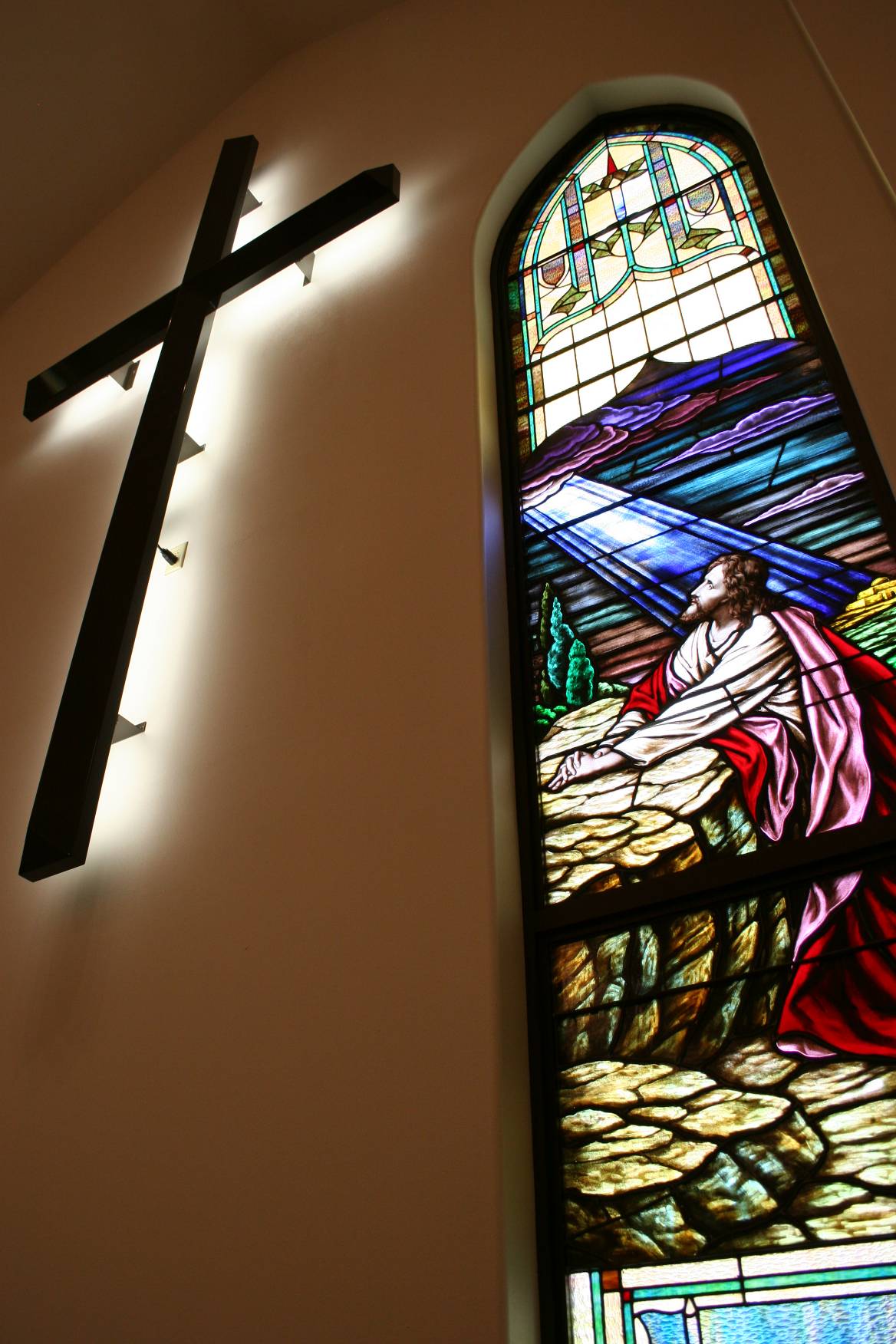
Another window shows Jesus praying in the Garden of Gethsemane.

Another window shows Jesus praying in the Garden of Gethsemane.

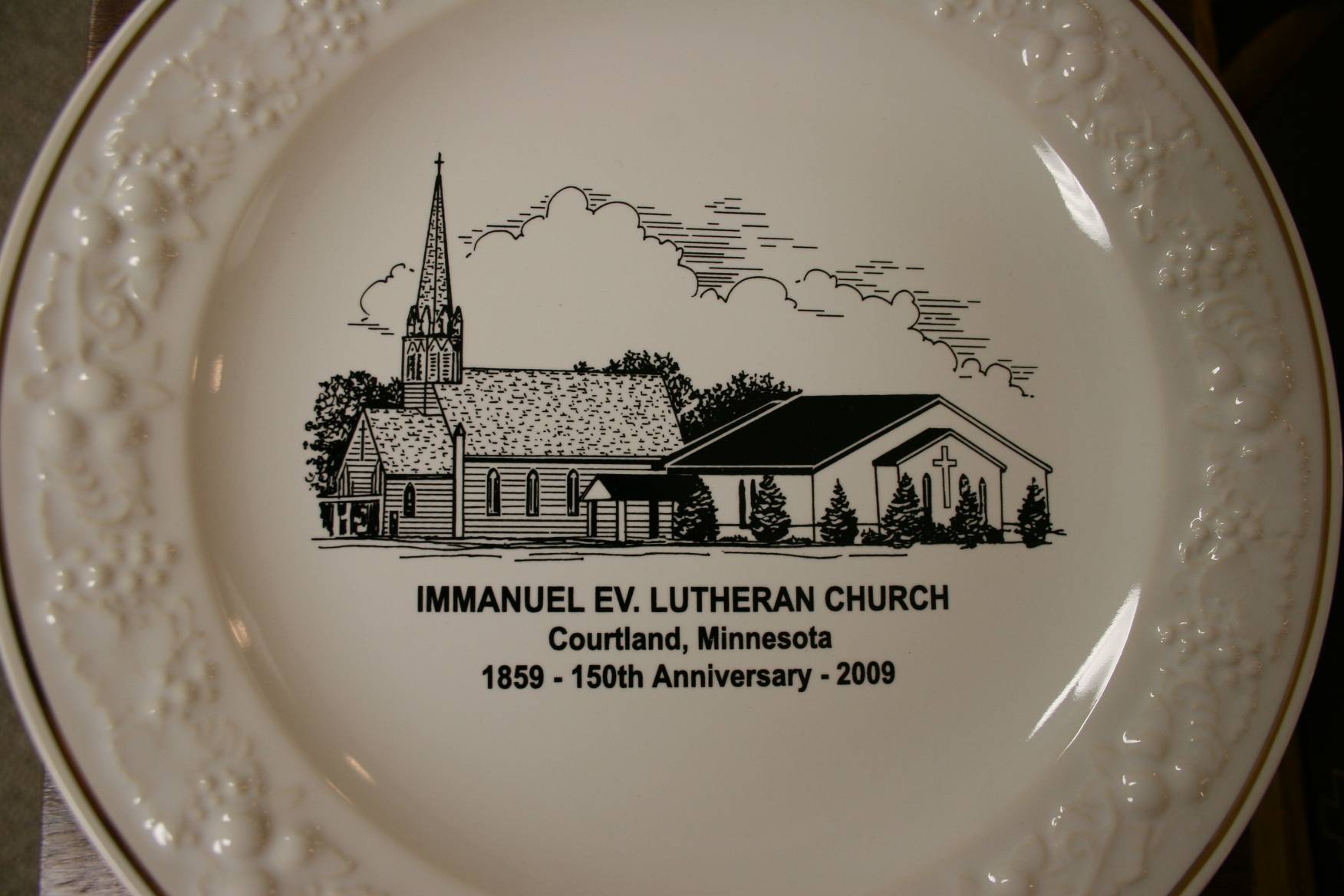
A commemorative plate shows the old and new Immanuel churches and celebrates the congregation's 150th anniversary.

A commemorative plate shows the old and new Immanuel churches and celebrates the congregation's 150th anniversary.

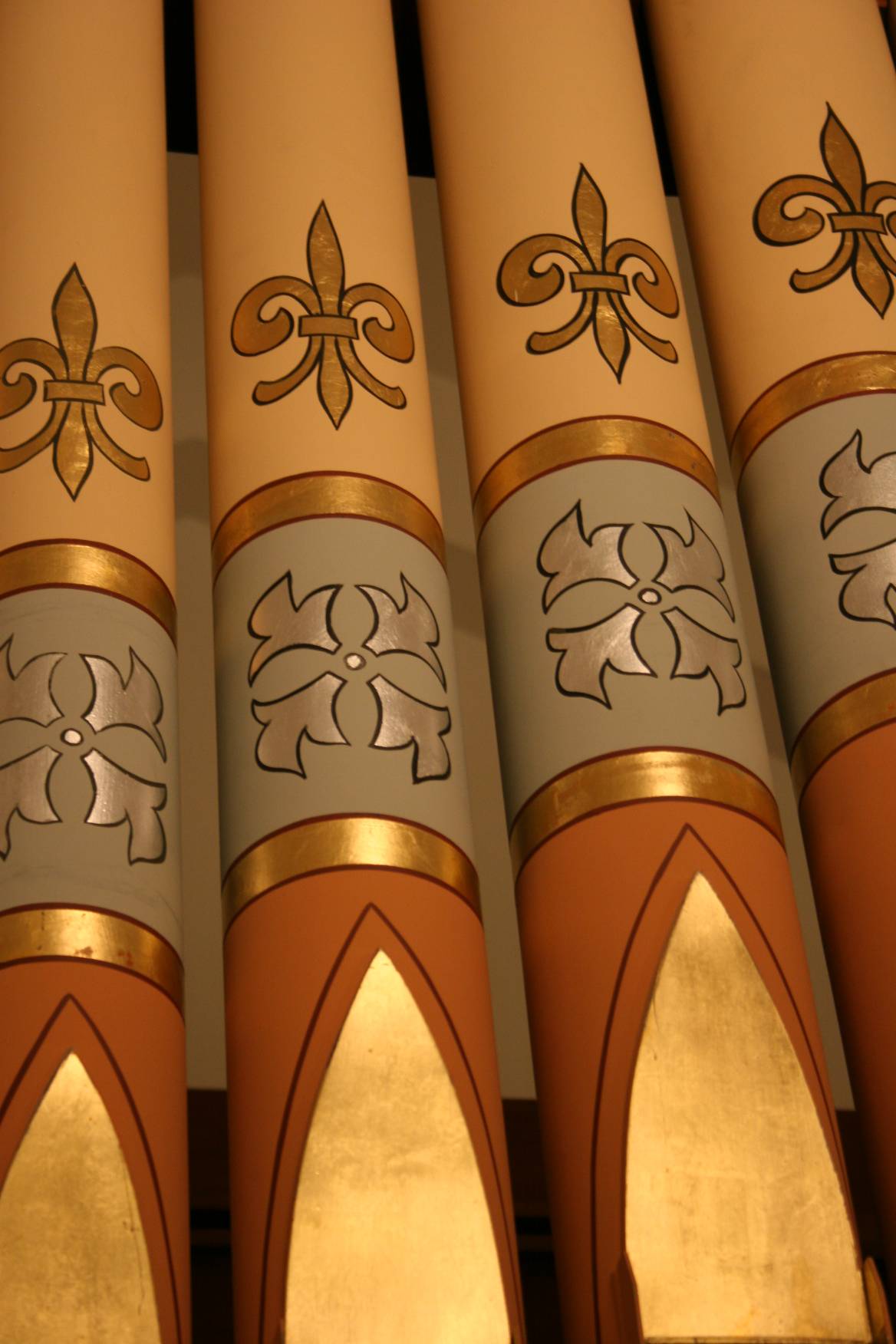
A close-up of pipes in the 114-year-old pipe organ, played today by a member of the Bode family at Immanuel.

A close-up of pipes in the 114-year-old pipe organ, played today by a member of the Bode family at Immanuel.

A majestic vintage pipe organ graces Immanuel's balcony.

A majestic vintage pipe organ graces Immanuel's balcony.

A rear photo shot of Immanuel, looking up to the balcony and toward the spacious fellowship hall.

A rear photo shot of Immanuel, looking up to the balcony and toward the spacious fellowship hall.


Proud to be an American in Kenyon, Minnesota August 25, 2009

Filed under: Uncategorized — Audrey Kletscher Helbling @ 8:31 AM
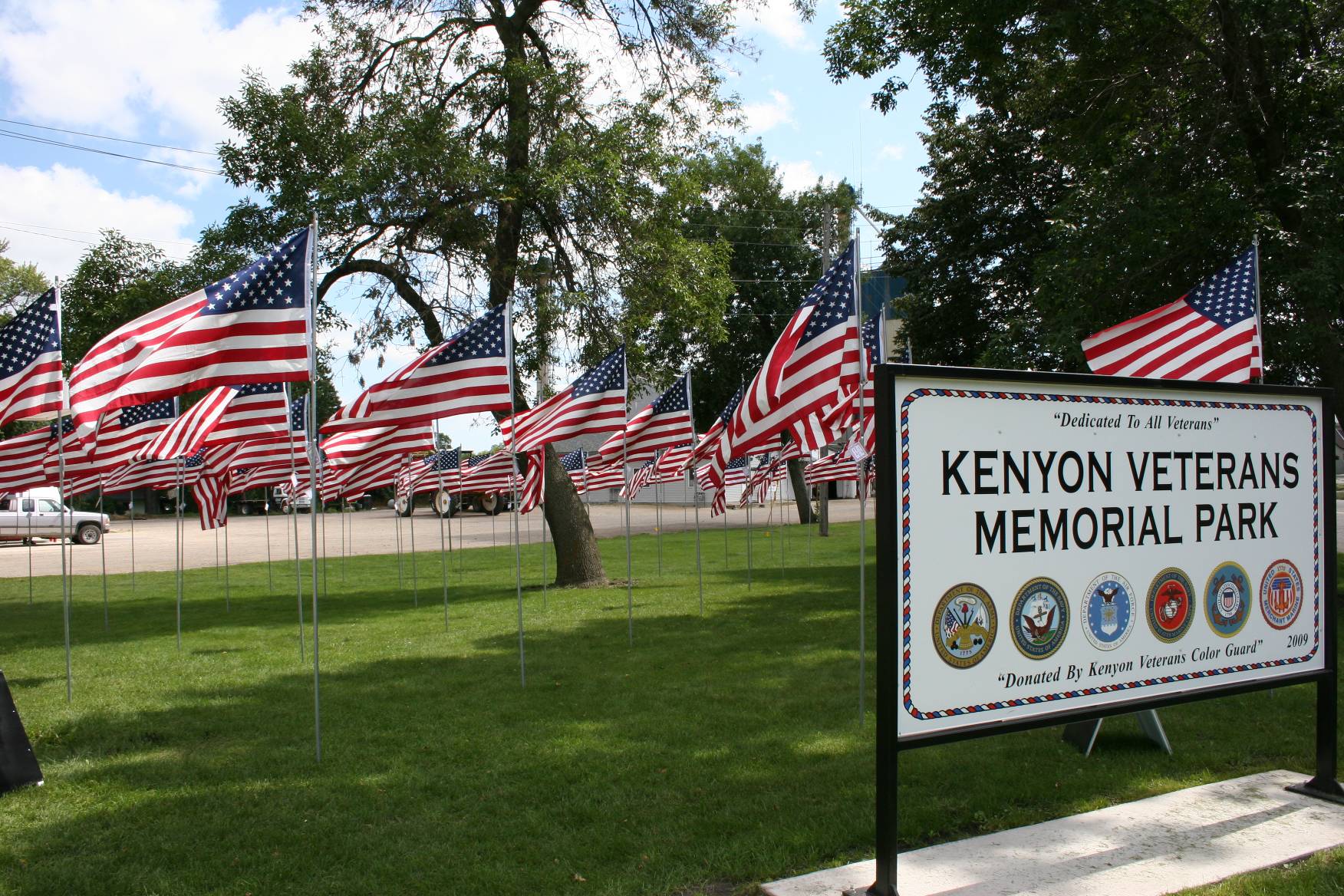
Flags fly in the Field of Honor at Kenyon Veterans Memorial Park during Rose Fest.

Flags fly in the Field of Honor at Kenyon Veterans Memorial Park during Rose Fest.

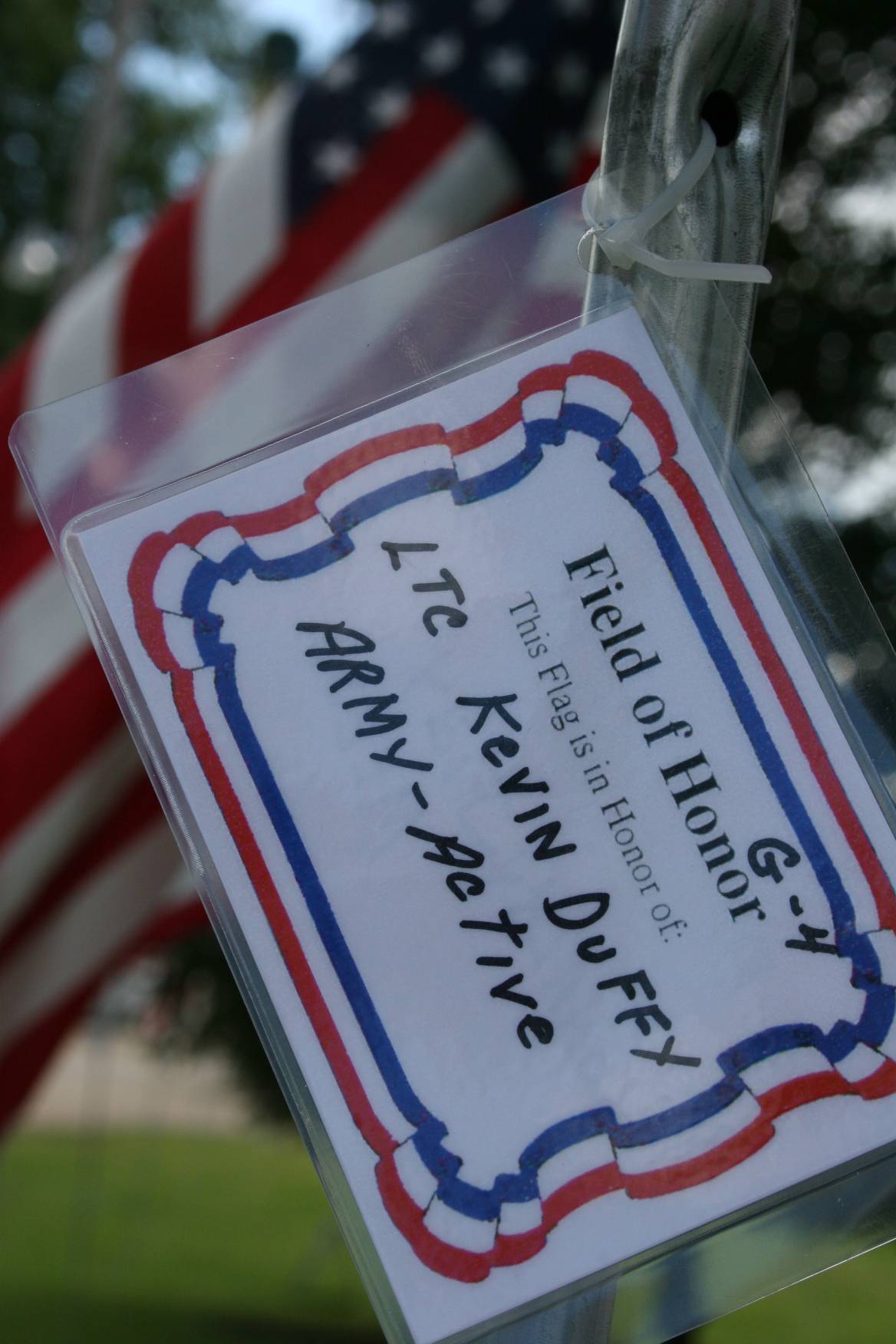
A tag marks the flag flown in honor of LTC Kevin Duffy.

A tag marks the flag flown in honor of LTC Kevin Duffy.

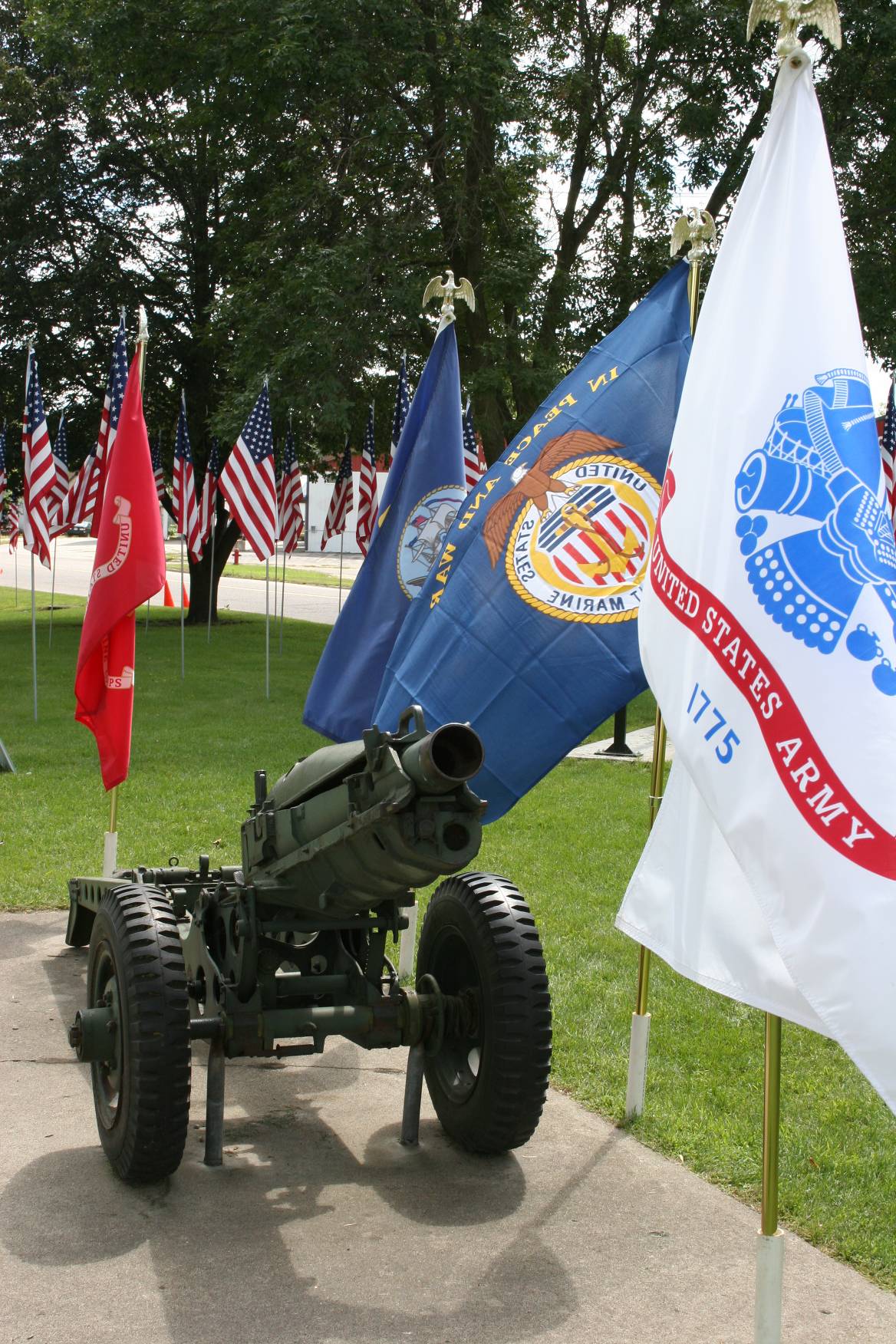
Military artillery at Kenyon Veterans Memorial Park.

Military artillery at Kenyon Veterans Memorial Park.

I’ll admit that, as the daughter of a decorated Korean War veteran, I possess a soft place in my heart for Americans like Mike McDonald, Marty Budde, Mark Hegseth and Donald Meese.

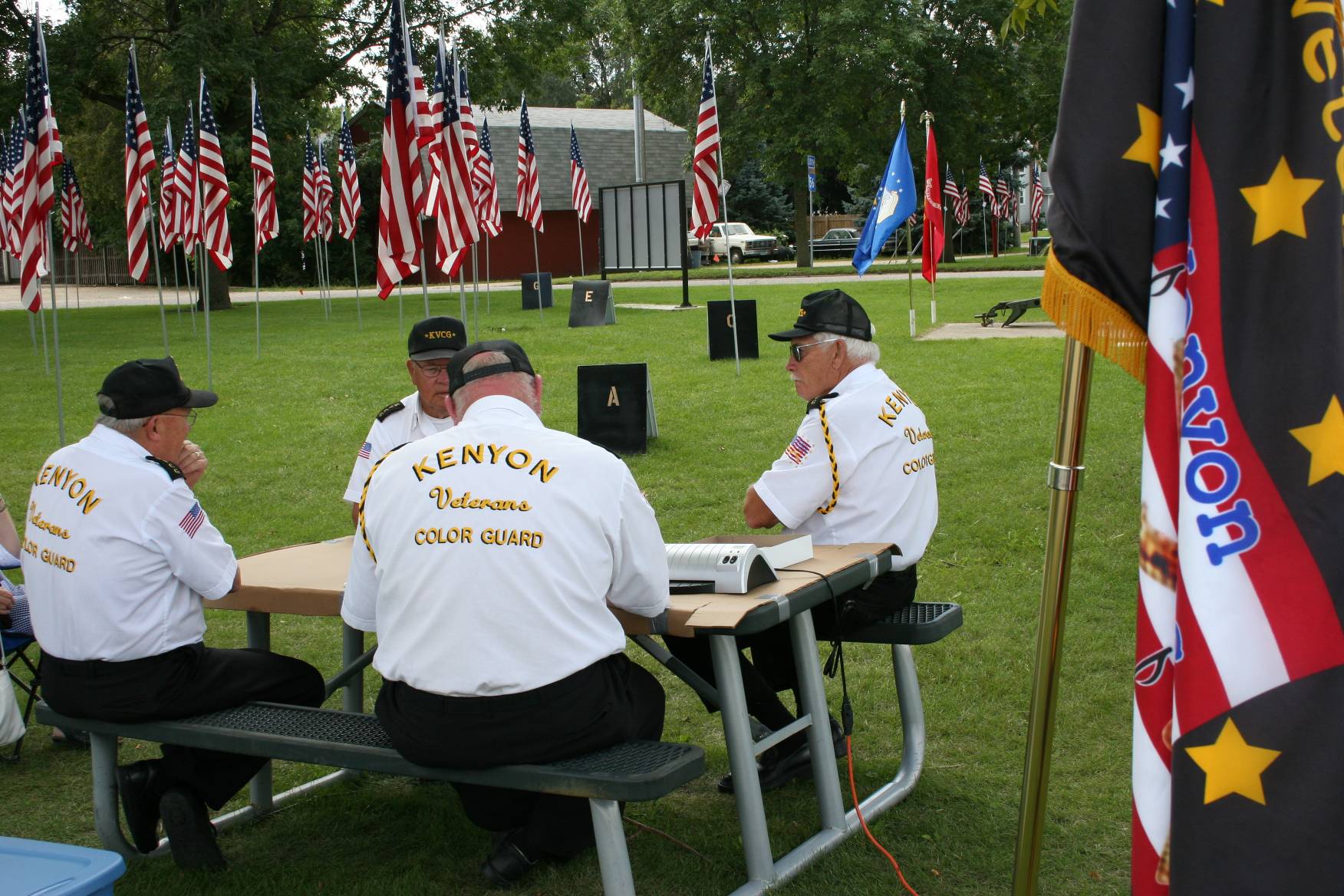
I met all of them Sunday afternoon at Kenyon Veterans Memorial Park. Three of the four were gathered at a picnic table in this Minnesota Highway 56 roadside park prior to the closing ceremony for a weekend Field of Honor flag display during the town’s Rose Fest.

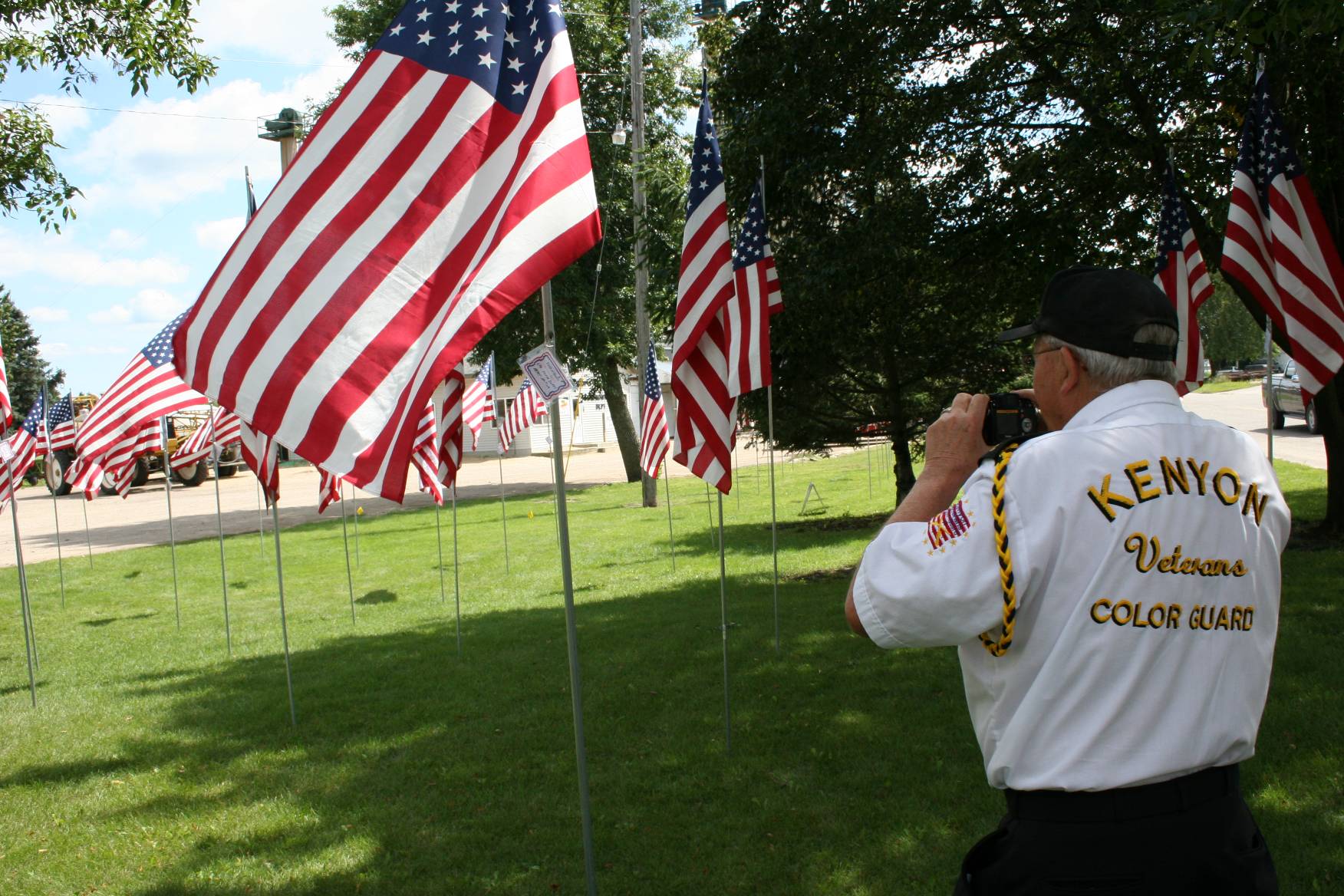
Meese came a bit later with his wife, Judy, to photograph the flag honoring their son-in-law, Lt. Colonel Kevin Duffy, a full-time Army man who recently served in Afghanistan.

The temporary flags could be placed in tribute of anyone, not just military people, said McDonald, president of the Kenyon Veterans Color Guard, the organization sponsoring the flag event.

“It’s to show everyone that this is the United States of America,” the Vietnam veteran said, looking toward the rows of 201 flags posted on either side of the highway near the town’s grain elevators. “The best way to do that is with a flag.”

The Field of Honor also raises money for the color guard, which marches in parades, attends veterans’ funerals, presents school programs and is working to build Kenyon’s vets’ park. Dollars from last year’s first-ever Field of Honor, which featured 80 flags, paid for a sign and new flagpole. A donation of $20 per flag is suggested.

The vets’ group hopes to add another military symbol to the artillery already in the park.

You simply have to admire guys like McDonald, who are striving to publicly honor those who have served or who are serving. As a Vietnam vet, the Kenyon man understands the importance of honor. He came home to a mostly ungrateful nation in turmoil over the Vietnam War.

Today he said it feels “awesome” to be appreciated for his service in Vietnam. He served as a crew chief door gunner aboard a Huey helicopter.

His friend and fellow color guard member Mark Hegseth of Kenyon flew an Air Force A-1E airplane in ground support and rescue missions in Vietnam.

Marty Budde, a retired military man and color guard vice president from rural Faribault, was stationed in Germany during the Vietnam era. Donald Meese of Nerstrand served with the Army Reserve for 23 years.

Although I didn’t have time to hear their personal in-depth stories of military service, I heard enough to know that these men deserve to be recognized—for giving of themselves to their country and for now actively working to honor all veterans.

They are striving, said McDonald, to change attitudes so that no other soldier feels unwelcome upon returning home from war, like he and so many others were decades ago.

Donald Meese snaps a photo of the flag flown in honor of his son-in-law, Lt. Col. Kevin Duffy of the U.S. Army.

Donald Meese snaps a photo of the flag flown in honor of his son-in-law, Lt. Col. Kevin Duffy of the U.S. Army.

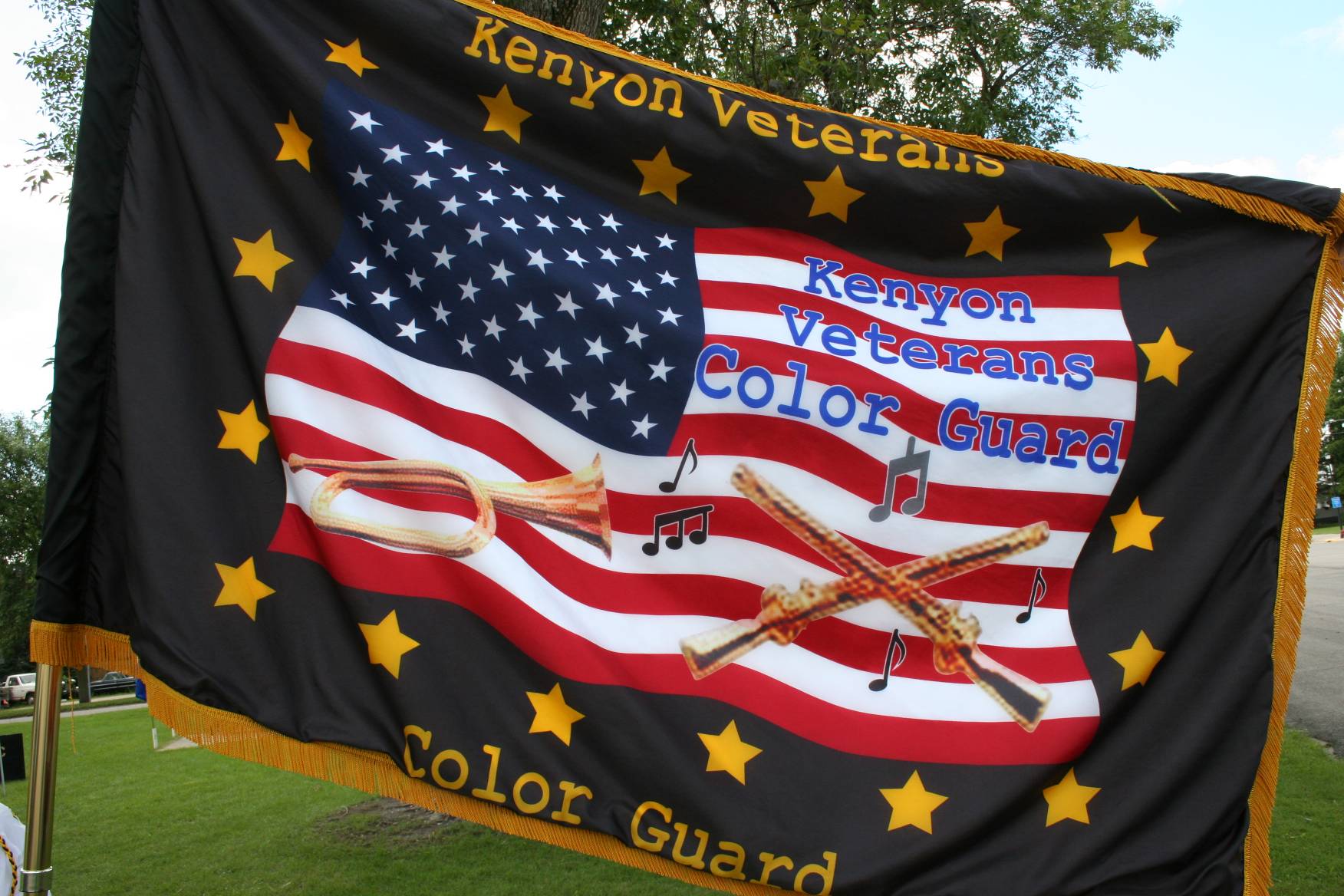
The official Kenyon Veterans Color Guard flag.

The official Kenyon Veterans Color Guard flag.

Kenyon Veterans Color Guard members Donald Meese, from left to right, Marty Budde, Mike McDonald and Mark Hegseth.

Kenyon Veterans Color Guard members Donald Meese, from left to right, Marty Budde, Mike McDonald and Mark Hegseth.

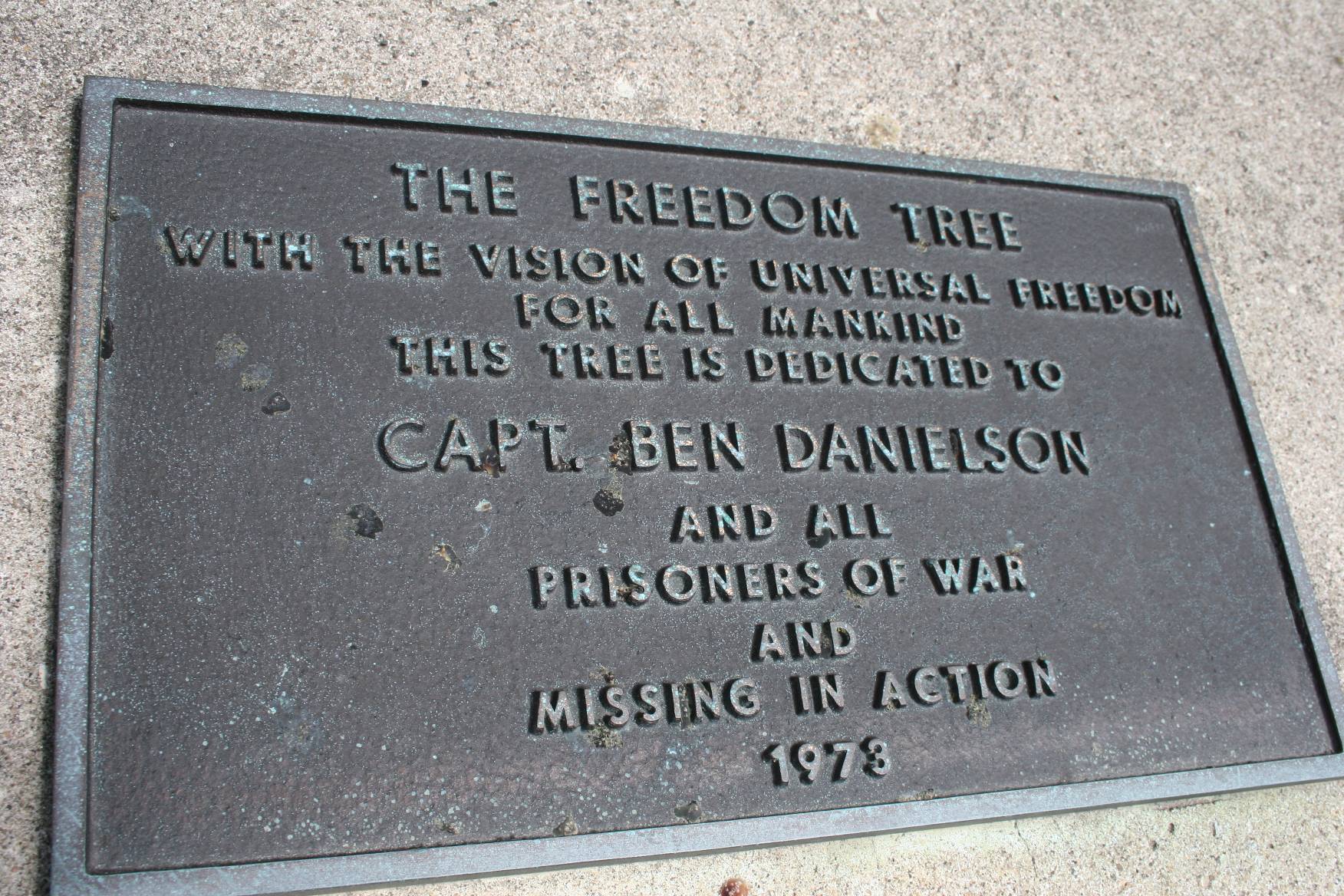
A plaque in Kenyon Veterans Memorial Park honors Major Benjamin Danielson, whose fighter jet was shot down in Laos in December 1969. He was missing in action for years before a bit of his remains were positively identified. He was laid to rest back home in Kenyon in 2007.

A plaque in Kenyon Veterans Memorial Park honors Major Benjamin Danielson, whose fighter jet was shot down in Laos in December 1969. He was missing in action for years before a bit of his remains were positively identified. He was laid to rest back home in Kenyon in 2007.

To read an interesting collection of military stories from around the country, get a copy of God Answers Prayers—Military Edition, True Stories from People Who Serve and Those Who Love Them, edited by Allison Bottke and published in 2005 by Harvest House Publishers. The book includes “Faith and Hope in a Land of Heartbreak,” a story I wrote about my dad, Korean War veteran Elvern Kletscher of Vesta, Minnesota.

© Copyright 2009 by Audrey Kletscher Helbling


WW II vet supports troops August 24, 2009

Filed under: Uncategorized — Audrey Kletscher Helbling @ 9:40 AM
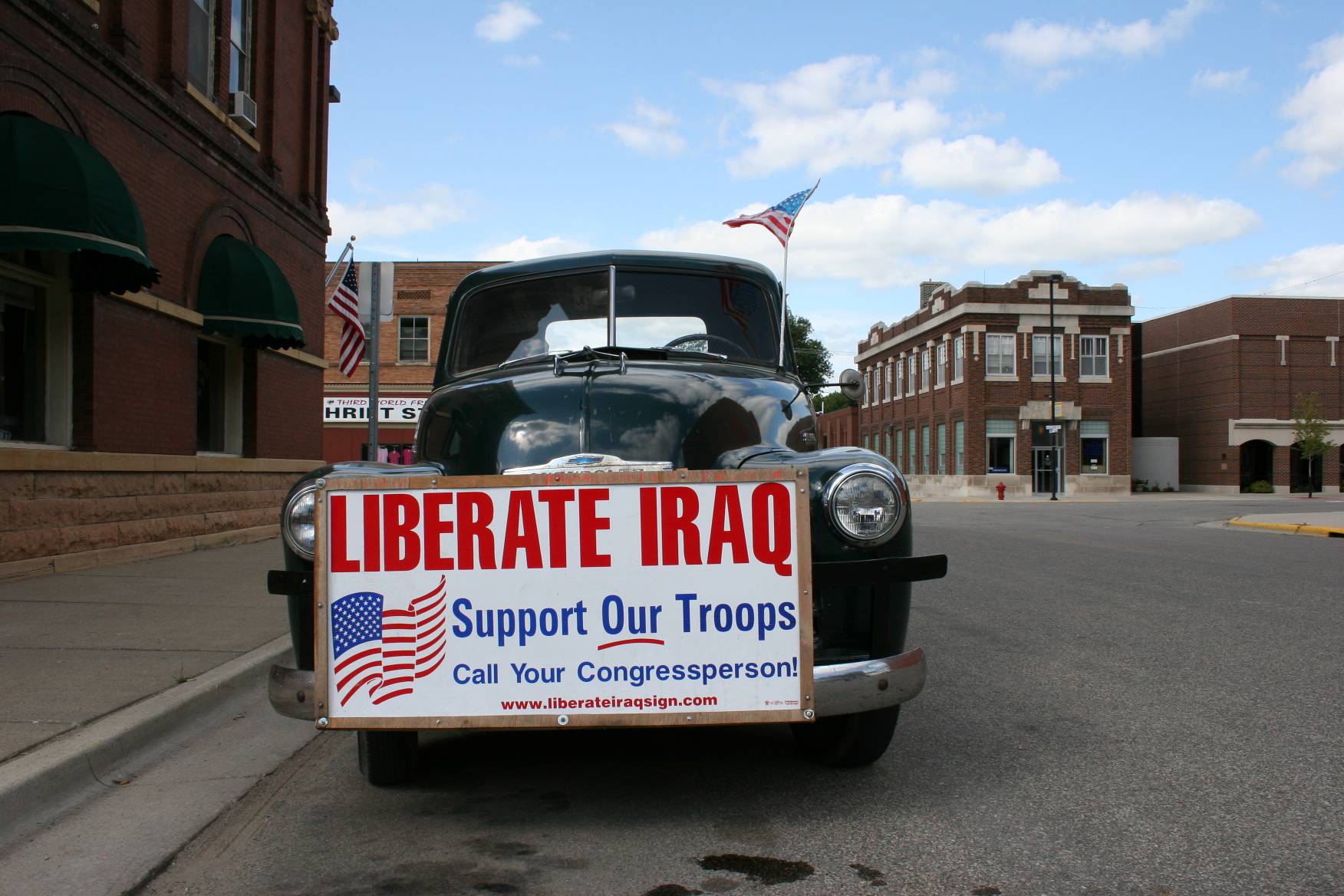
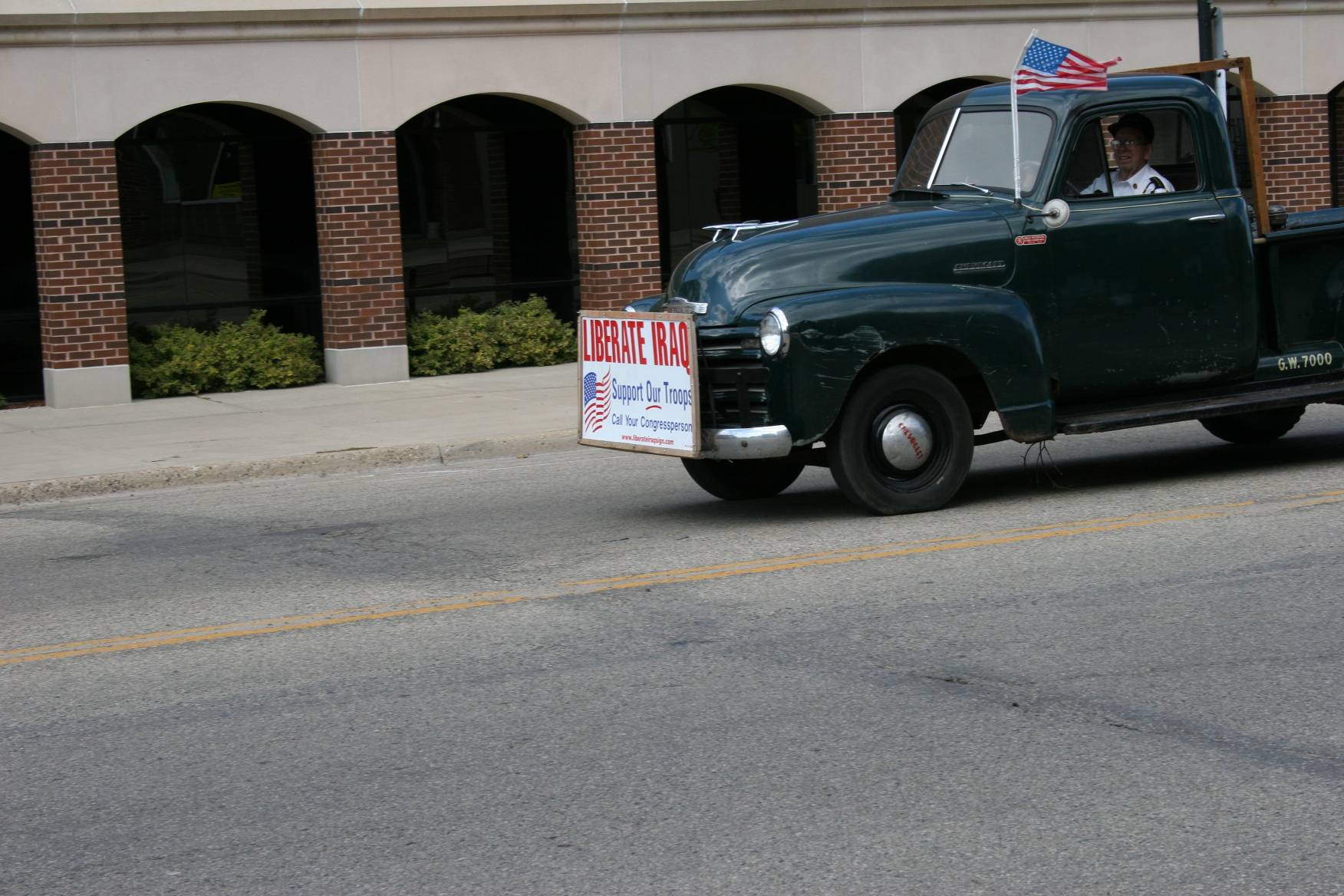
Howard Homeier's patriotic pickup truck parked in downtown Kenyon, Minnesota.

Howard Homeier's patriotic pickup truck parked in downtown Kenyon, Minnesota.

You gotta appreciate a guy like Howard Homeier.

Sunday afternoon I saw him toolin’ west on Minnesota Highway 60 through downtown Kenyon in his dark green 1951 or 1952 Chevy pickup (he’s not sure which year), flag a wavin’ from the truck.

Mounted to the front bumper, secured inside a special frame he built, a sign proclaimed “Liberate Iraq. Support Our Troops. Call Your Congressperson!”

Now this was a guy I just had to meet.

So when Howard steered the vehicle left and pulled in across from the VFW, I was there waiting, expecting some young redneck to spring out of the pickup.

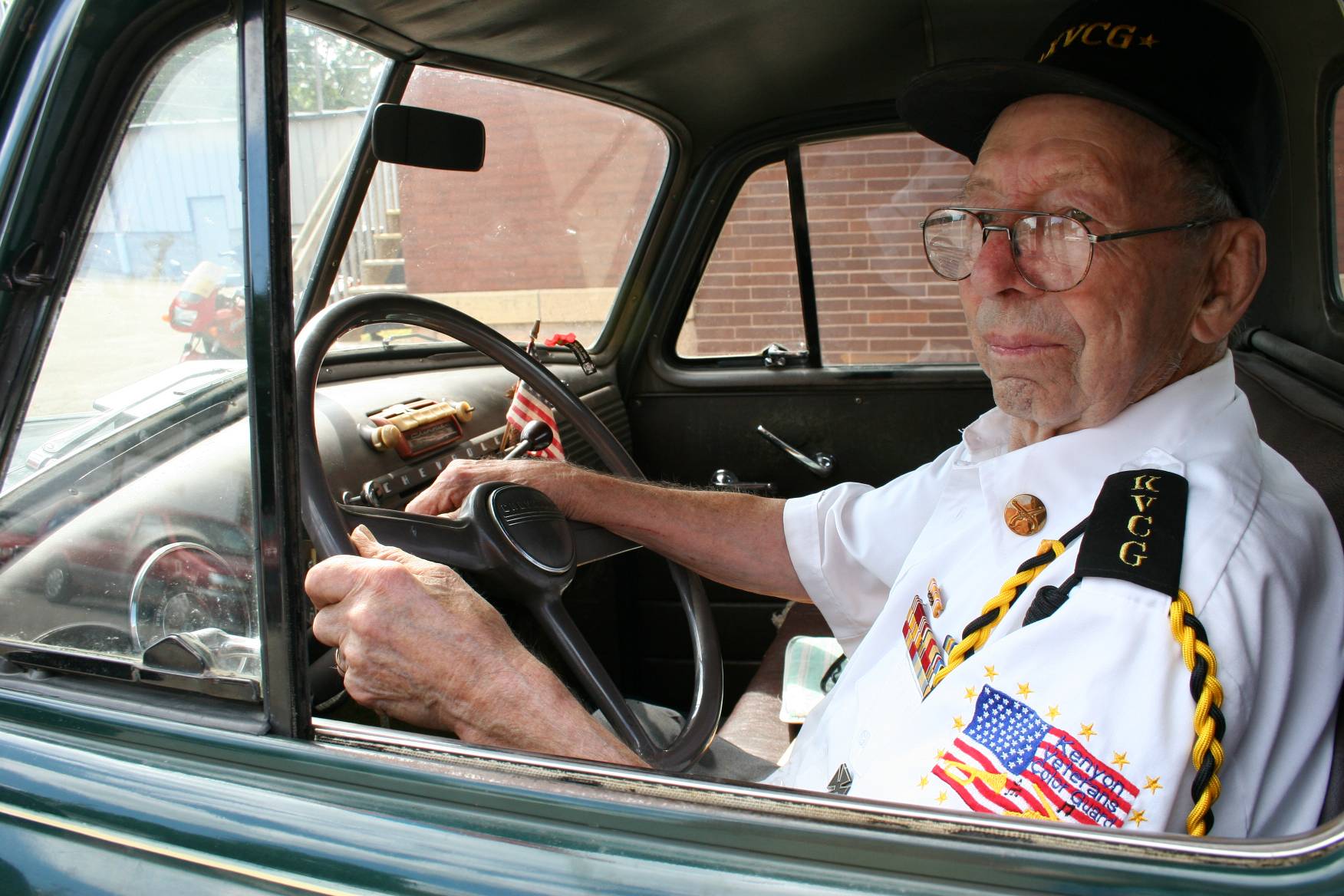
Instead, I got Howard, a World War II veteran and member of the Kenyon Veterans’ Color Guard. Maybe Howard’s a redneck, maybe not. Doesn’t matter.

What matters is that Howard served in the U.S. Army during World War II, in the China Burma India Theater. I think I’ve got that right. When we were chatting, I was without my notebook and pen. Howard found a dried up pen and scrounged a 2002 Kenyon Lumber Mart receipt from the glove box so I could etch his name onto the scrap of paper. Hey, whatever works. I wanted to get this Kenyon veteran’s name spelled correctly.

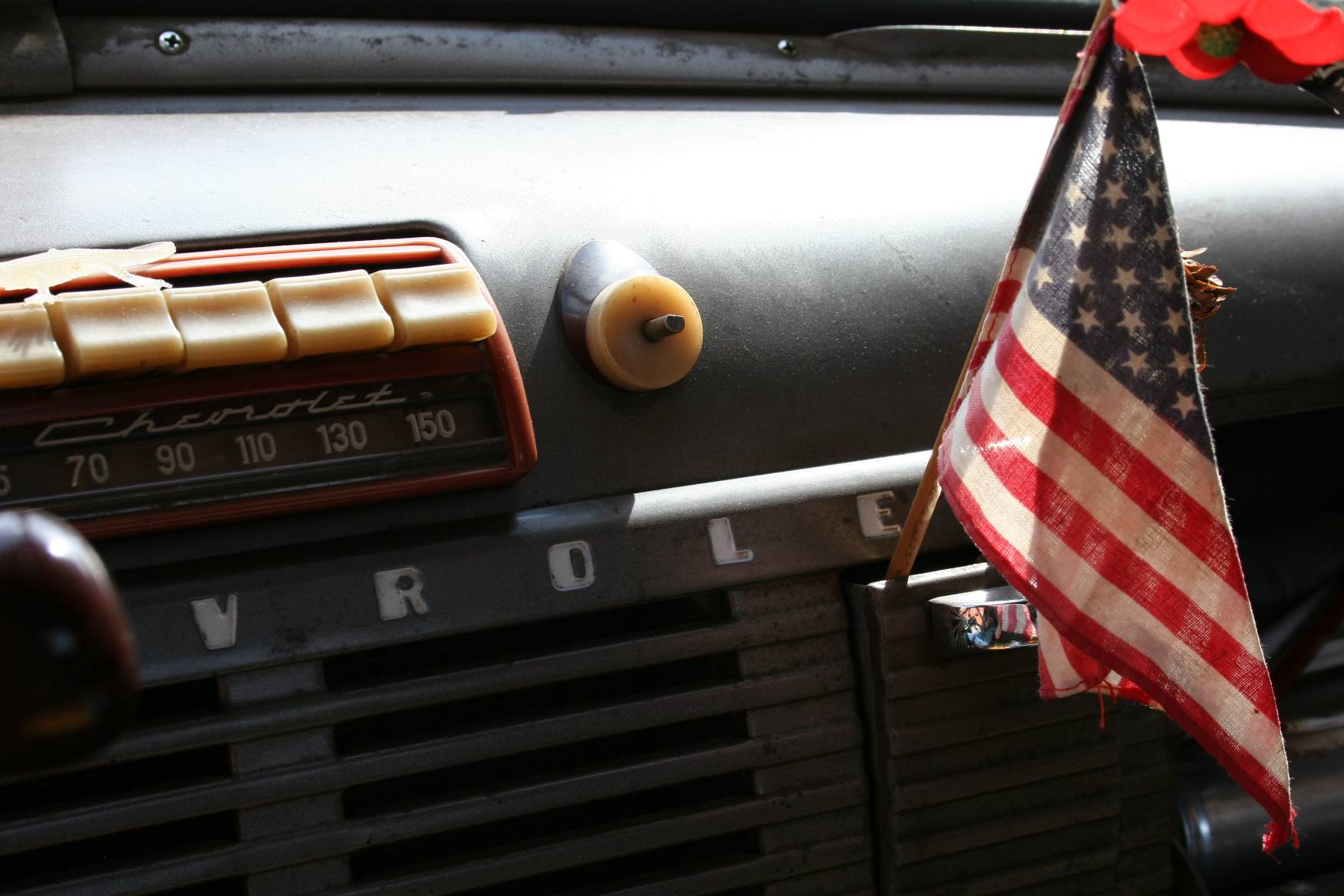
Howard obliged my request for photos, even letting me crawl inside his pickup so I could photograph the small poppy-topped American flag that protrudes from the Chevy’s ashtray.

He apologized for his messy truck. I didn’t care, didn’t even see much of a mess, only a cracked, well-worn seat, a big old steering wheel and that flag displayed by one patriotic veteran.

The flag has been inside his truck for quite some time, Howard said, and the “Support Our Troops” sign in place for three-plus years now. He’s pretty darn proud of it, but was quick to share that not everyone appreciates his viewpoint. He drove his pickup to a nearby country church, he said, and was asked by the pastor to remove the sign. Can’t have that in the church parking lot, the reverend said.

“What did you do?” I asked.

“What could I do?” he replied. “Took it off.”

Right then and there I wanted to find that clergyman and tell him a thing or two about respecting men like Howard who’ve faithfully served our country. But I kept quiet, because I didn’t want to stir up trouble. And, given we live in a free country, the pastor is entitled to his opinion too. But I could tell the whole incident bothered Howard, a lot.

Then this WW II veteran showed me two laminated cards, both paying tribute to soldiers like him. “Field of Honor. This Flag is in Honor of Howard Homeier,” one card read. Howard had just come from a ceremony at the Kenyon Veterans Memorial Park, where 201 American flags were flown over the weekend during the town’s annual Rose Fest.

He was beaming, this patriotic WW II veteran, this American who supports our troops.

Proud World War II veteran Howard Homeier in his early 1950s vintage Chevrolet pickup truck.

Proud World War II veteran Howard Homeier in his early 1950s vintage Chevrolet pickup truck.

Inside Howard Homeier's Chevy pickup.

Inside Howard Homeier's Chevy pickup.

Howard Homeier drives his Chevy down Minnesota Highway 60, the main drag through Kenyon.

Howard Homeier drives his Chevy down Minnesota Highway 60, the main drag through Kenyon.

© Copyright 2009 Audrey Kletscher Helbling
(Watch for upcoming blogs about the “Field of Honor” at Kenyon Veterans Memorial Park and about this Goodhue County community’s celebration of Rose Fest.)


Tornado terror in Minneapolis August 22, 2009

Filed under: Uncategorized — Audrey Kletscher Helbling @ 3:42 PM

When tornadoes hit the metro area on Wednesday afternoon, I was concerned. My oldest daughter and other extended family members live in south Minneapolis.

I was pretty certain Amber was OK as she works in St. Paul. But I wasn’t sure about everyone else, including my mom, who was in Minneapolis visiting her brother.

Turns out everyone, and everything, was fine. Almost.

My niece Tara and her husband, Andy, who live in Plymouth, were driving to the Mall of America, inching along in stop-and-go traffic on Interstate 35 Wednesday afternoon, exactly when the tornadoes touched down.

As Tara tells the story, she first noticed a small branch or shrub blowing in the air while they were parked at a dead stop in the construction zone. By then the rain had mostly subsided.

Andy saw the foliage too, she says, but thought only that strong winds had blown something off a tree.

I’LL LET TARA PICK UP THE TALE: “He (Andy) continued to watch the cars around us as we crawled forward, and I continued to watch the debris. It wasn’t until I saw the tree branch/shrub swirling around again, this time accompanied by a head or foot board of a bed, that I started to freak out and realize it was a tornado.

“I opened my window to listen for sirens, but there was nothing. The sky wasn’t a funny color, there was no rumbling, and WCCO radio wasn’t saying a peep about bad weather.

“Areas of 35 were also starting to flood. There was an area on the other side where the water was up to the top of the vehicle tires. The water was rushing like a river as the person was getting out of their vehicle and the water was spilling through the cracks of the barrier into our lane so we had to maneuver the car quickly into the other lane. I’m not sure if our side completely flooded like the other side because we were trying to get out of there as quickly as possible.

“The one thing I fear the most was within 50 feet of me yesterday! It was quite a scary experience and I don’t care to EVER be that close to a tornado again.”

I understand my niece’s fear and respect for tornadoes. During my childhood, a deadly tornado hit the farming community of Tracy some 25 miles to the south and west of my home farm. Nine people died. The images of that devastation are forever imprinted upon my memory.

Then, some 30 years ago, a tornado hit the farm where I grew up, demolishing the silo, tossing farm wagons around the fields and causing other damage.

I am thankful that my niece and her husband escaped the August 19 Minneapolis tornado unscathed, on the day of their third wedding anniversary.

© Copyright 2009 Audrey Kletscher Helbling
 

Nighttime roadblock outside Faribault August 21, 2009

Filed under: Uncategorized — Audrey Kletscher Helbling @ 9:10 AM

It’s 11:10 at night and my phone rings. My sister Lanae, who has just left my house, is on her way home from Faribault to Waseca after attending a family picnic in Minneapolis.

“There’s something big going on out here,” she says. “I’m stopped outside of town and there are cop cars all over.”

We speculate that she may have arrived on the scene of an accident. But she sees nothing, except all those squad cars.

“I’ve gotta go,” she blurts abruptly and then she is gone, just like that.

Soon her car pulls into my driveway.

Now she is inside my kitchen telling me about the roadblock. A cop walked up to her car “with a big, honkin’ gun,” she says, and ordered her to back up and leave. She did. No questions asked.

She is still shaken and keeps repeating “big, honkin’ gun.”

I can only imagine how Lanae felt, to have a police officer approach her vehicle with a mammoth weapon in the pitch black of the night.

We pull out the map and figure a new route for her to get home. And she leaves, even though I suggest she stay overnight.

That night I dream, about an escaped prisoner holding my family hostage. I know this nightmare comes from my sister’s experience, from my subconscious fear.

Later I learn there was no accident, no hostage situation, but rather people shooting at bats with a shotgun. A story in the local newspaper reports the bat shooters used 28 shells. Law enforcement arrived because of shots fired and apparently the situation was still unfolding when Lanae drove into the area.

I am relieved, but angry that my sister had to go through this frightening experience because of such stupidity.

How crazy are these people, to fire shotguns in the dark of night, at bats?

© Copyright 2009 Audrey Kletscher Helbling
 

Celebrating the Bode family heritage August 20, 2009

Filed under: Uncategorized — Audrey Kletscher Helbling @ 12:21 PM
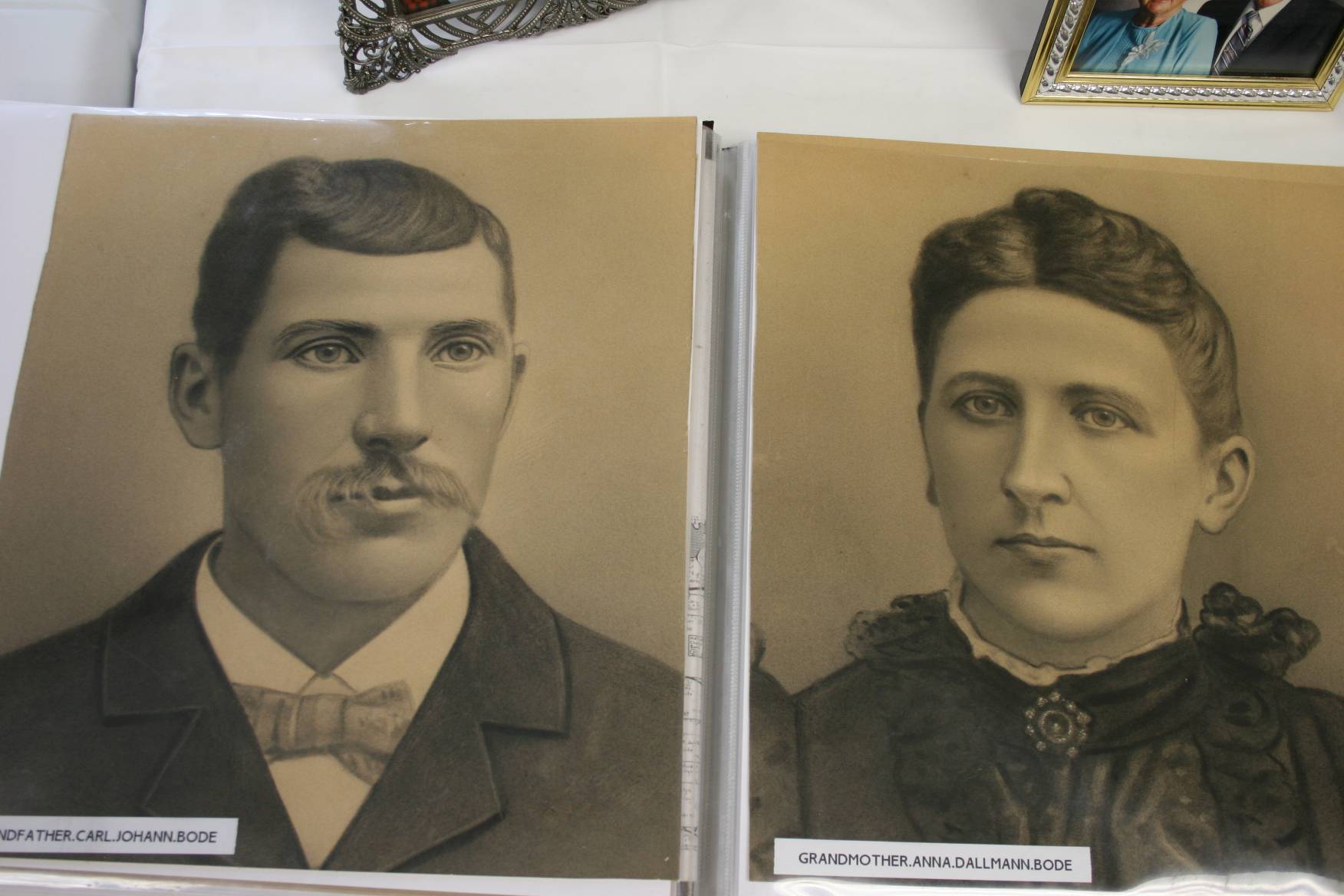
Photo copies of my great grandparents, Karl and Anna Bode, were displayed at the Bode family reunion on August 16 in Courtland, Minnesota.

Photo copy portraits of my great grandparents, Karl and Anna Bode, were displayed at the Bode family reunion on August 16 in Courtland, Minnesota.

This stained glass window is among many from the old church building incorporated into Immanuel Lutheran's new house of worship.

This stained glass window is among many from the old church building incorporated into Immanuel Lutheran's new house of worship.

Voices raised in unison, we sang, “God’s Word is our great heritage and shall be ours forever… Lord, grant while worlds endure, we keep its teachings pure through-out all generations.”

While we sang this hymn, accompanied by the same pipe organ that has graced Immanuel Lutheran Church in rural Courtland for 114 years, I sensed the presence of those who had gone before us. In the music, in the stained glass windows, in the polished pews, I felt the closeness of family.

“You have a great heritage of faith,” said the Rev. Wayne Bernau, as he welcomed those of us gathered for worship this past Sunday morning. Afterwards, we would meet for a Bode family reunion in a day of food and talk and sharing of our history, here, upon this soil where our forefathers settled, farmed the land, built this country church, and now lay buried in the adjacent cemetery.

The pastor read, his tongue tripping over the German words inscribed upon the tombstones of my maternal great-great and great grandparents. I strained to hear and understand the German I had once learned, had spoken, had now mostly forgotten, this, the native tongue of my ancestors.

Later, in the cemetery, several of us would try to decipher the German: “Das blut Jesu Christi des Sohnes Gottes macht uns rein von aller sünde.” The blood of Jesus Christ, the son of God, makes us clean from all our sins.

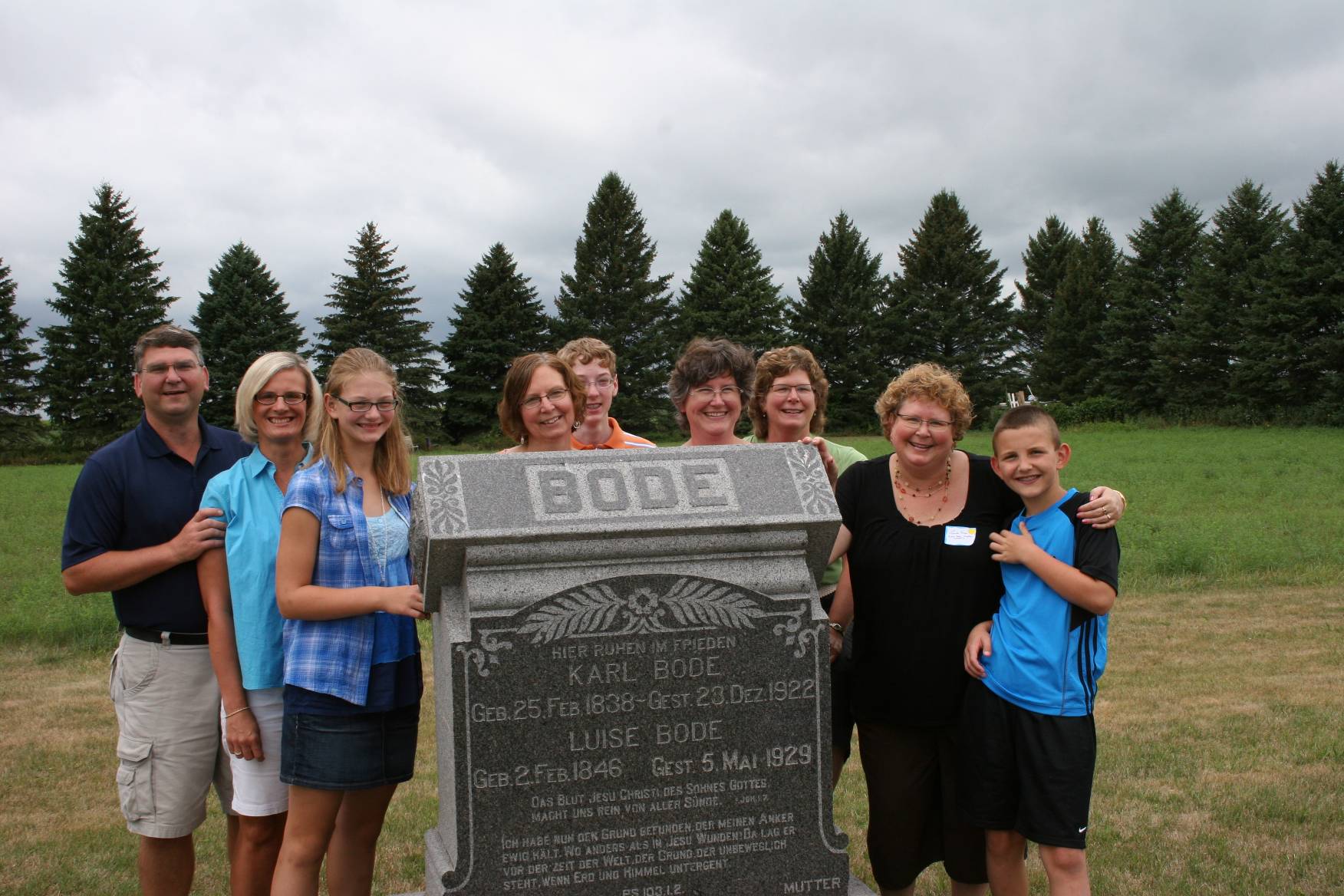
We gave up trying to translate a bible verse from the book of Psalms and instead laughed, then apologized to our great-great grandparents, Karl and Luise Bode, for our language lapse. We posed for a photo behind their tombstone, laughing some more, hoping they appreciated our joyfulness, even in a graveyard.

Again, that closeness of family prevailed, as we recited the books of the bible in an effort to determine the source of another gravestone verse. Recitation. Good Lutherans remembering their memory work, just like the good Lutherans before us.

And then, across the grass we walked, past numerous tombstones chiseled with the Bode name. Bodes everywhere. Some from our branch of the family; some from others.

We paused before the graves of Karl and Anna Bode, our great grandparents. More photos.

And then, a snake skin discovered, picked up. The mood turned playful as a slithering baby garter snake was snatched from the grass, passed around to some, shunned by others. Again, we felt, not disrespectful, but embracing of grandparents who likely would have valued our humor.

Later, we sat elbow-to-elbow beside our Bode relatives, dining on grilled pork chops, potatoes and an assortment of other food. Then, for dessert, the absolutely perfect choice—ice cream with “skunk cookies.”

Fudge-striped cookies to most. But to those of us who are the grandchildren and great grandchildren of Lawrence and Josephine Bode, “skunk cookies,” a name derived from the chocolate stripes that slice through the store-bought cookies grandpa always kept in his kitchen after grandma’s death.

Memories. Family. Blessings.

Heritage through-out all generations, shared on a Sunday afternoon in August at Immanuel Lutheran Church, rural Courtland, during a reunion of about 150 Bode family members.

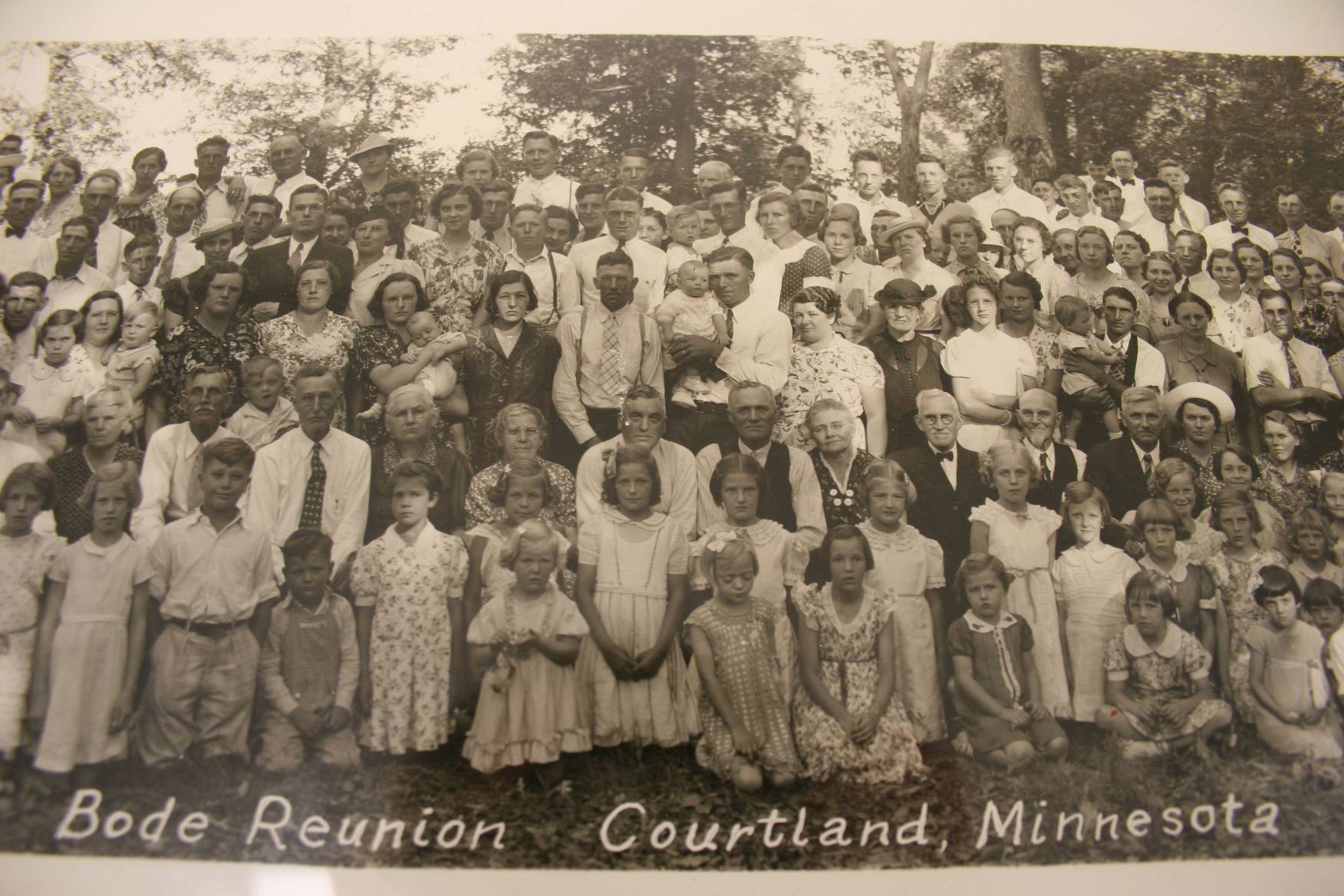
A snippet of a photo from the July 1938 family reunion in Courtland attended by 511 Bodes. My grandparents, Lawrence and Josephine Bode, are in the center of the picture, between the adults holding the babies.

A snippet of a photo from the July 1938 family reunion in Courtland attended by 511 Bodes. My grandparents, Lawrence and Josephine Bode, are near the center of the picture, between the adults holding the babies.

Bode family members, including me, behind the letter "B," gather around the grave of my great-great grandparents, Karl and Luise Bode.

Bode family members, including me behind the letter "B," gather around the grave of my great-great grandparents, Karl and Luise Bode.

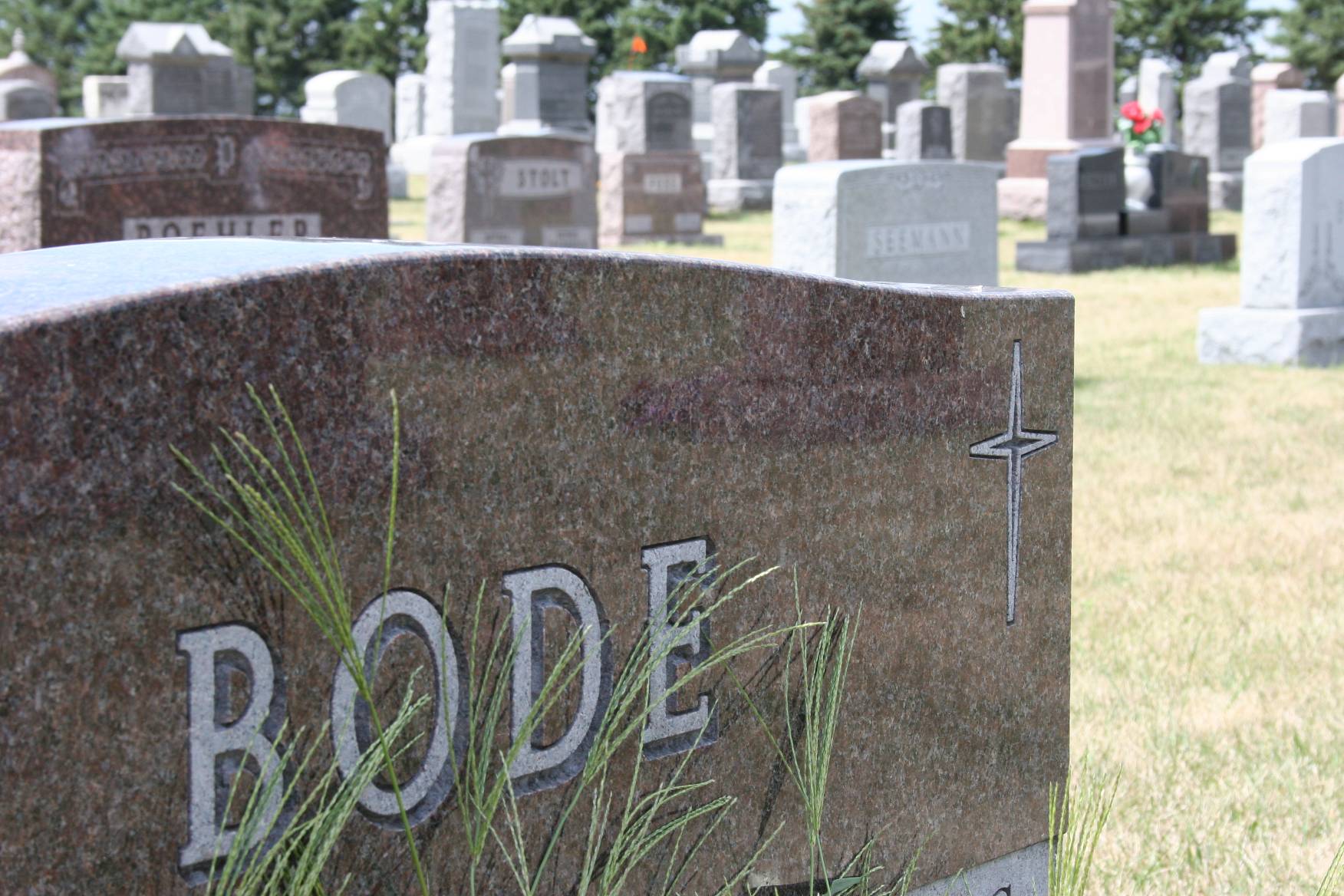
Immanuel Lutheran Cemetery, rural Courtland, is filled with the gravestones of many Bodes. This particular Bode tombstone does not belong to one of my direct relatives.

Immanuel Lutheran Cemetery, rural Courtland, is filled with the gravestones of many Bodes.

© Copyright 2009 Audrey Kletscher Helbling

(Return to my blog for more photos of Immanuel Lutheran Church, rural Courtland, the home congregation of my forefathers.)