
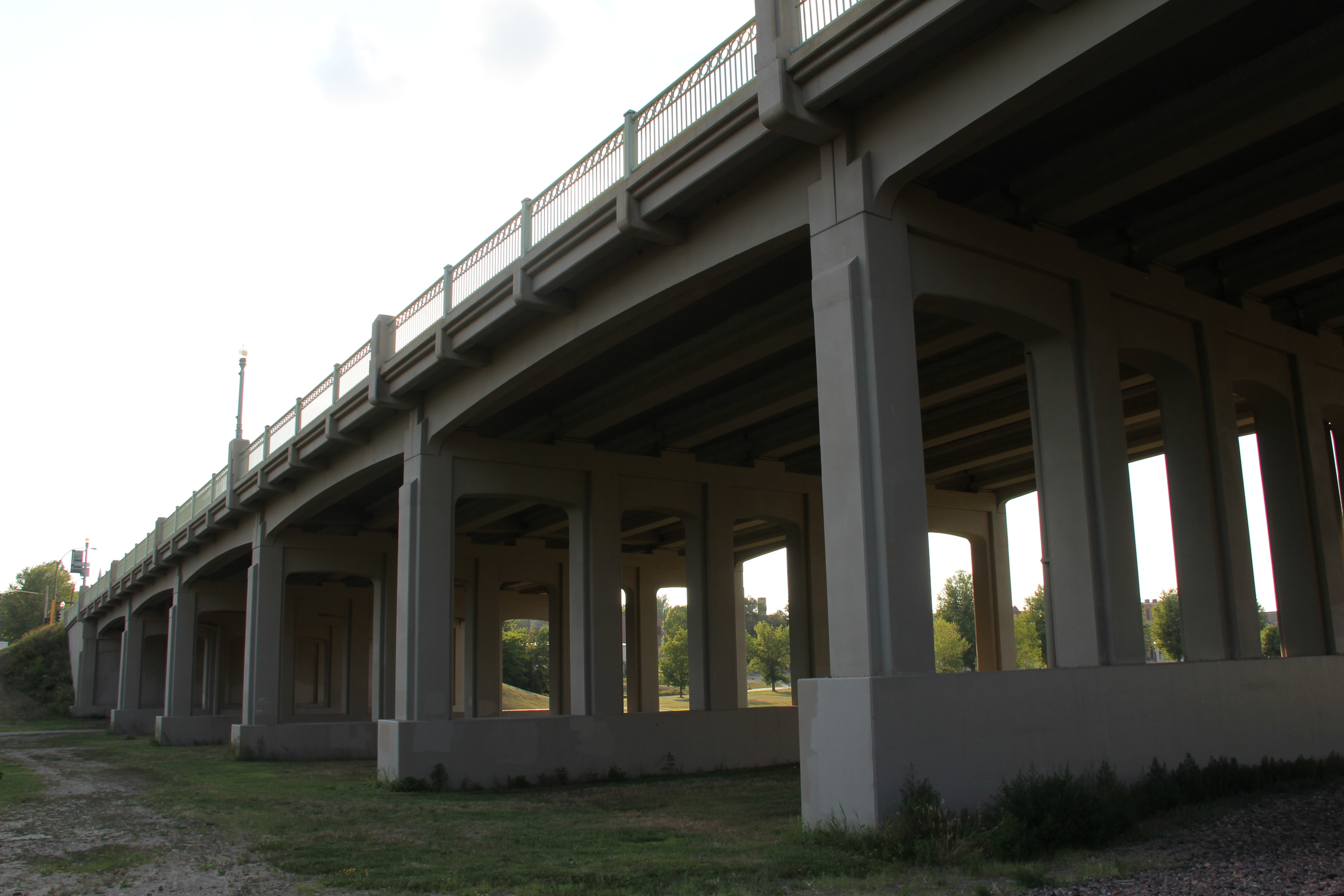
ARCHITECTURE, ART AND HISTORY meld on an expansive structure connecting Faribault’s east and west sides.
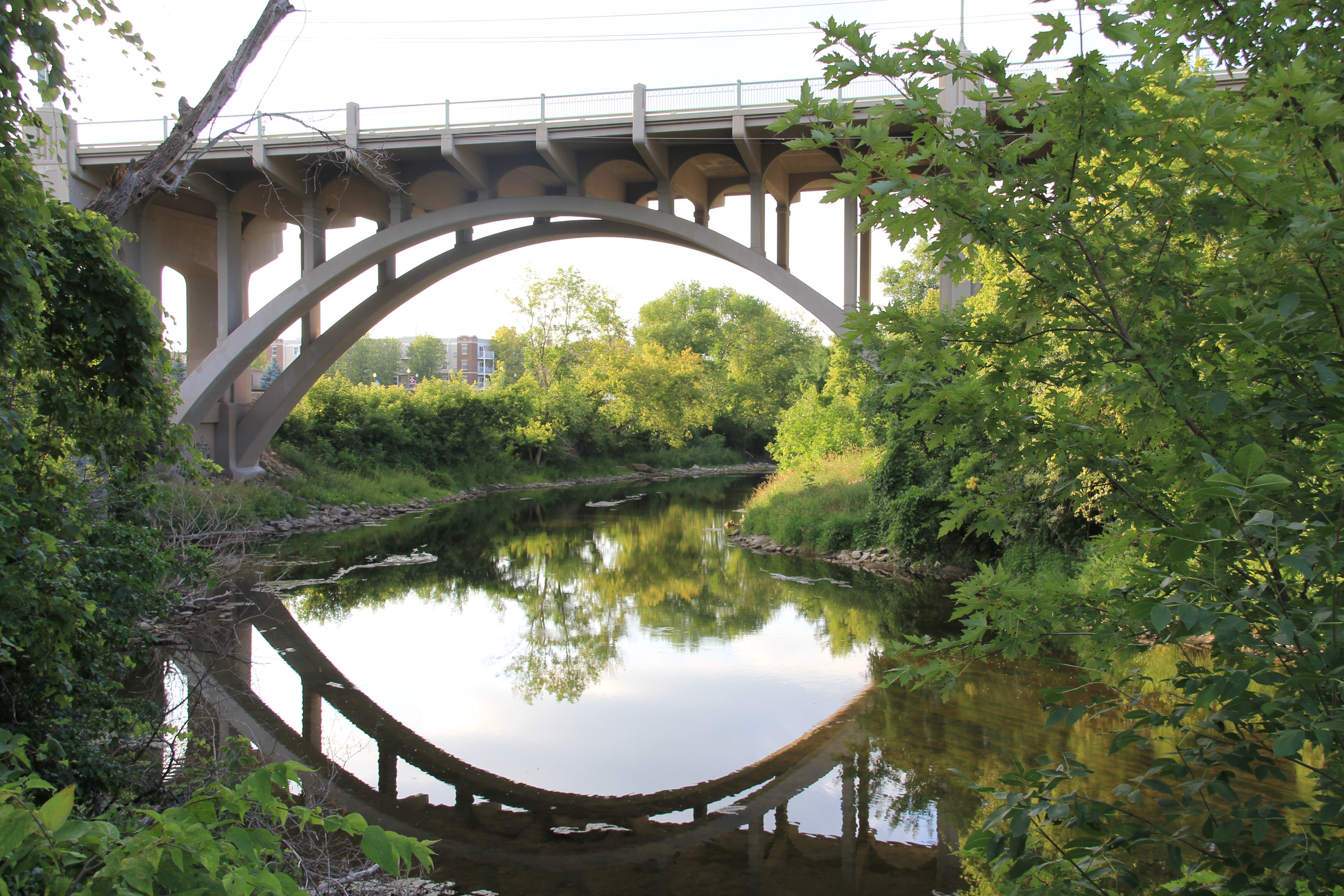
Locally referred to as “The Viaduct,” the continuous concrete rib arch bridge routes pedestrians and traffic along Minnesota State Highway 60 over railroad tracks and the Straight River far below. Three massive reinforced arches distinguish this as a viaduct rather than a bridge.
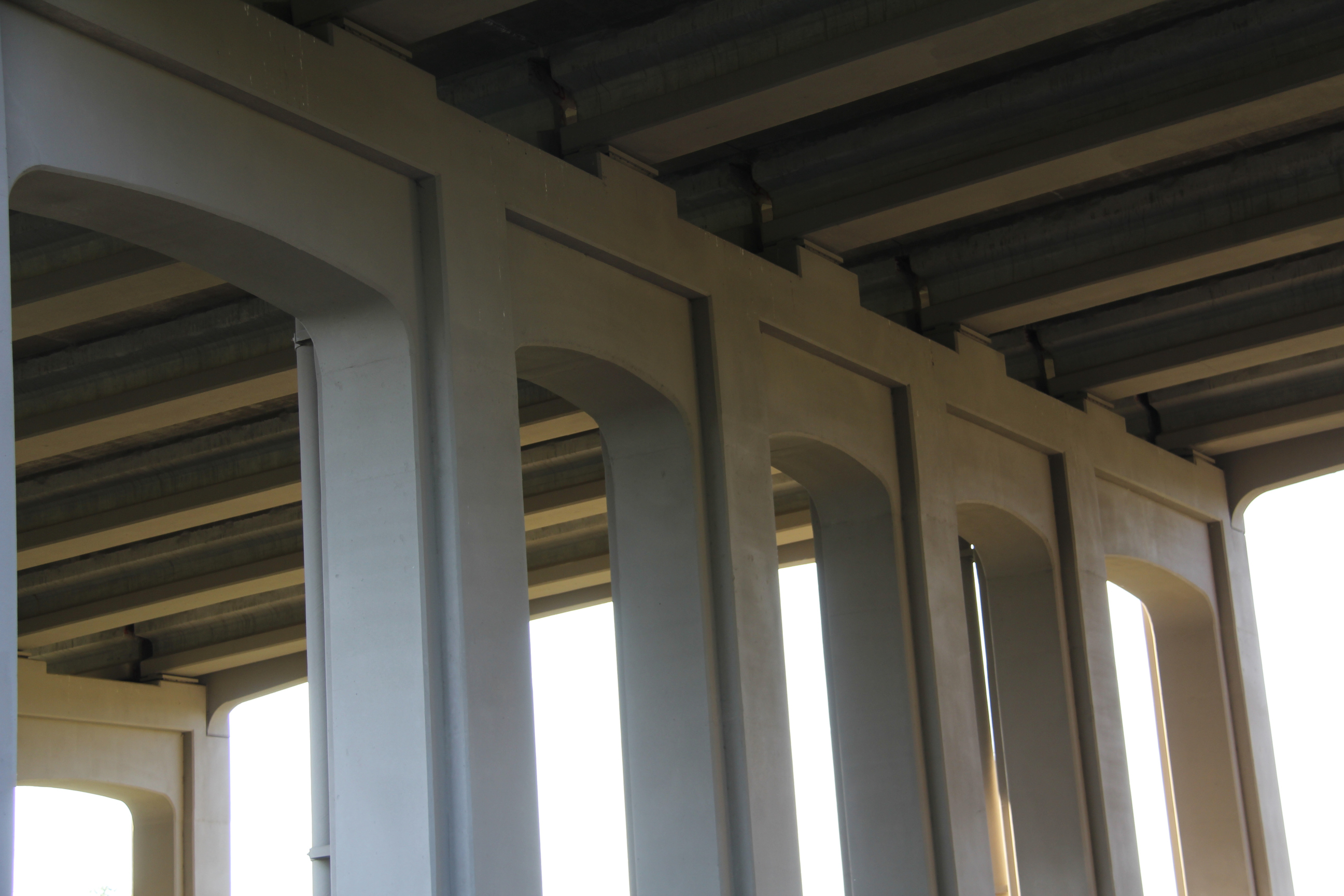
Thousands of times I’ve crossed the viaduct via vehicle in my 41 years living here. But not until recently did I pause to really study the underbelly of this 1937 Works Progress Administration project which is on the National Register of Historic Places. Only via a close-up look from ground level did I fully appreciate this engineering feat.
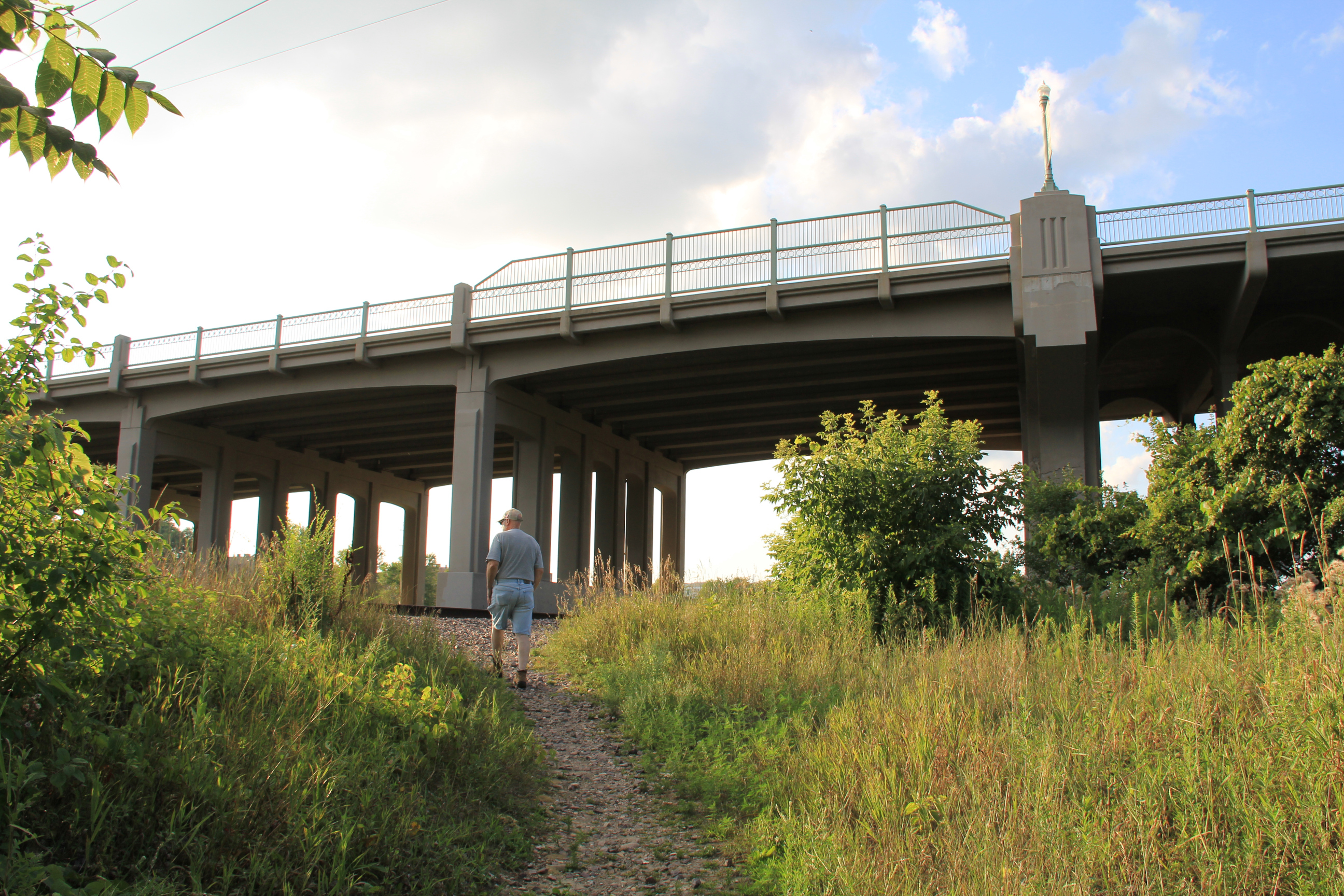
I followed a narrow dirt trail through trees and underbrush in Teepee Tonka Park to reach a good viewing spot of the viaduct underside. From that perspective next to the train tracks, I observed the way patterns and lines repeat to build a strong structure that has withstood the test of traffic and of time. The bridge was rehabilitated, the roadway widened in 2008-2009.
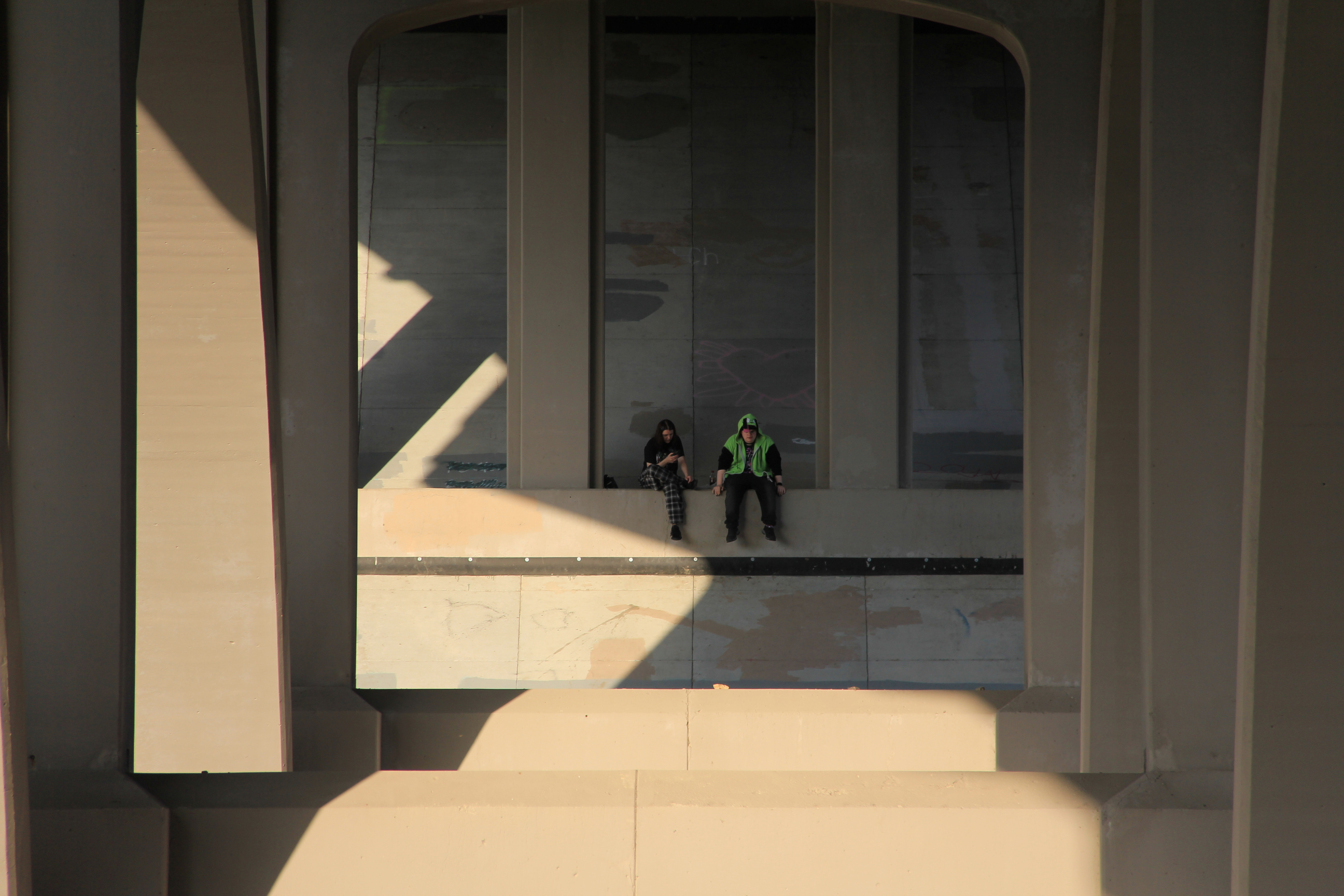
The viaduct impresses in design and size. I felt dwarfed by its massiveness, even more noticeable when I spotted a couple sitting on the far end. They appeared small in comparison to the concrete piers rising above and around them. I felt overpowered, too. I wondered how WPA workers managed to build this wonder in the late 1930s without the modern equipment of today.
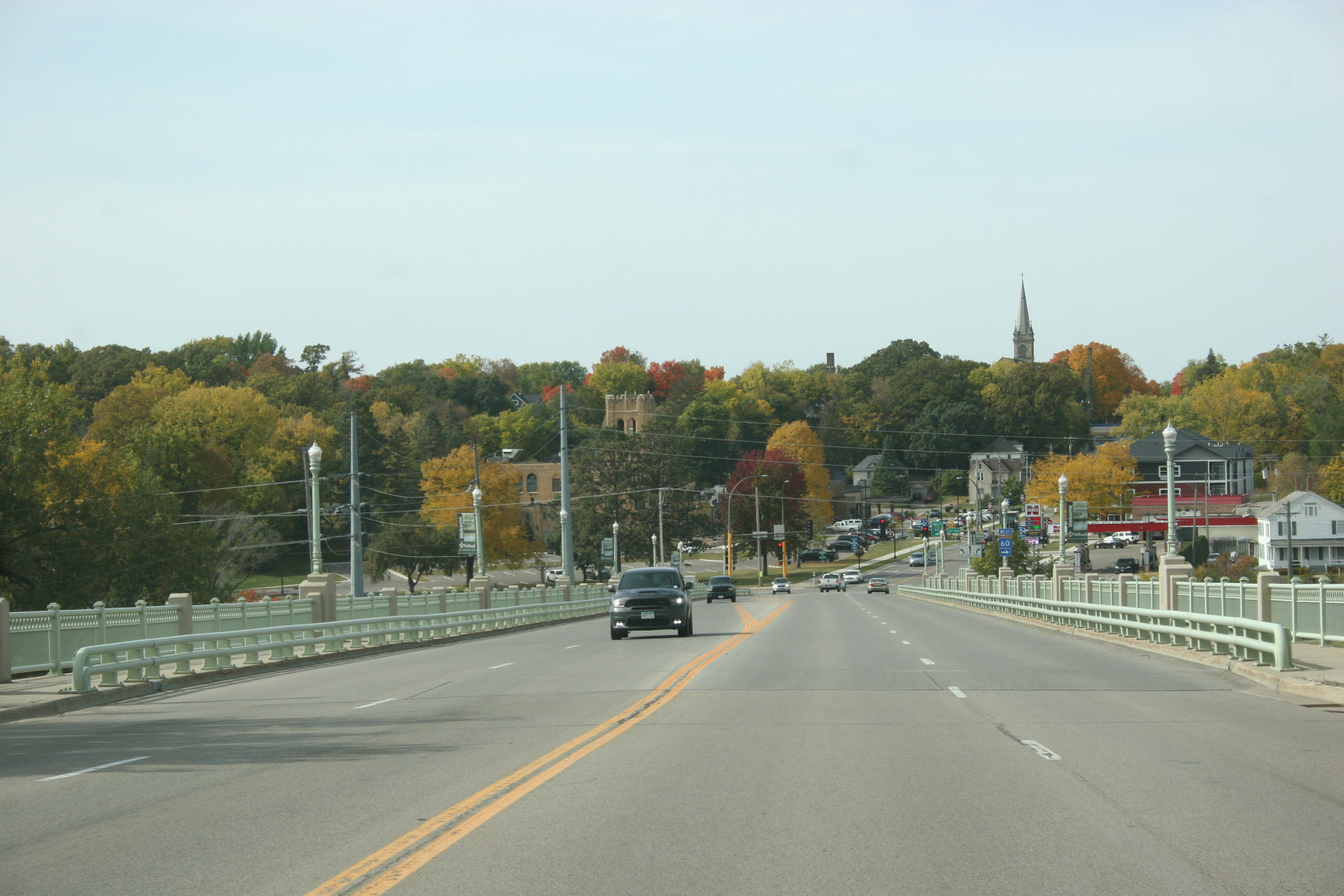
But it is more than utilitarian construction that marks this viaduct as noteworthy. The viaduct is a work of public art—an interactive sculpture which provides a sweeping view of historic downtown Faribault and the surrounding area when heading westbound. To view the bridge from below is to truly see its artsy side, its Art Deco/Classical Revival style. That style carries through in the concrete piers and, on road level, in the decorative railings and lights, replicas of the originals.
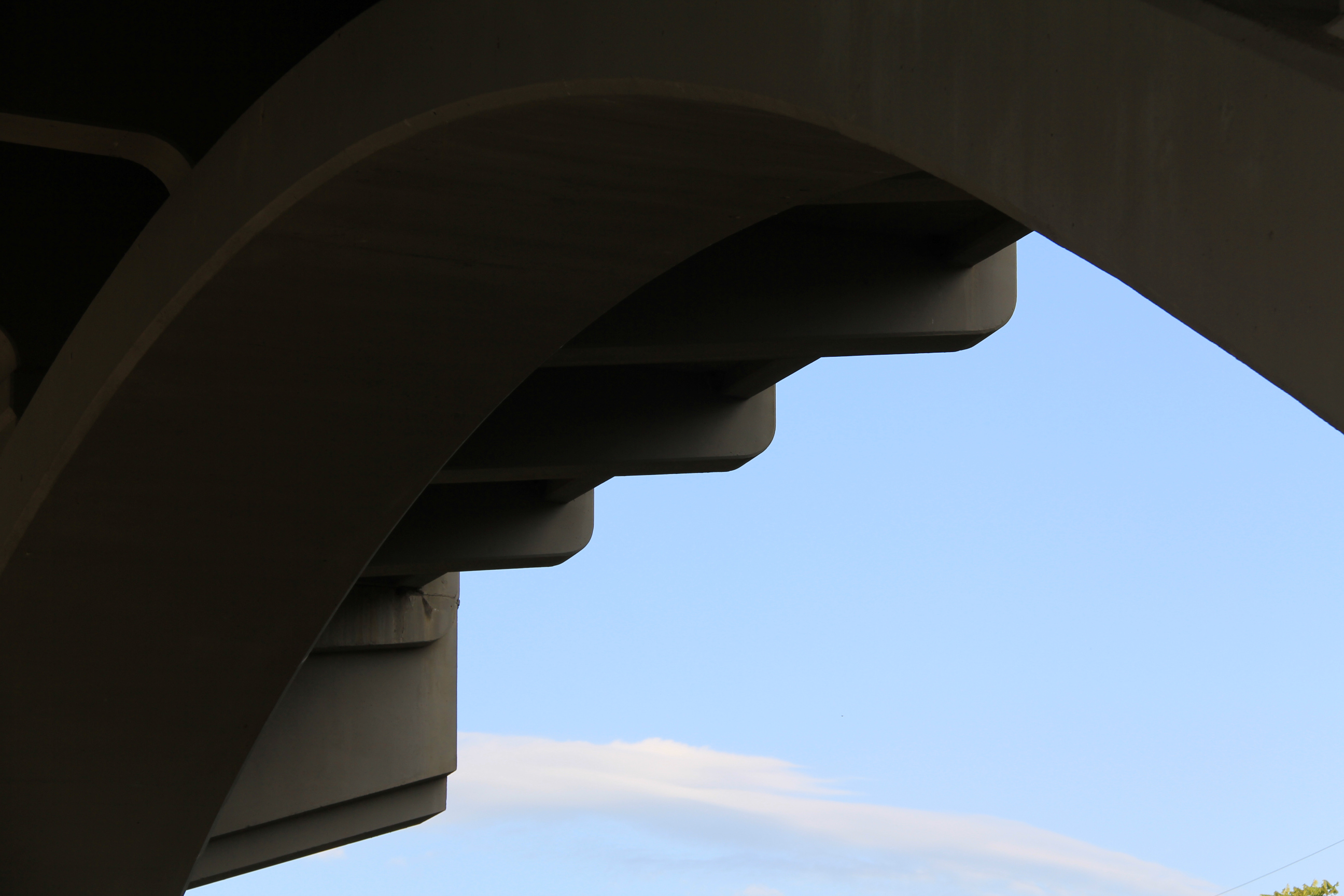
As I stood under the viaduct studying its design, artsy arches, curves and lines, I considered the many people who have traversed this bridge. If only this concrete could speak, oh, the stories it would tell. Stories of construction workers who labored for 1½ years to complete this project. Stories of Ford Model As, among the first to drive across this linkage between east and west. Stories of students arriving at the Minnesota State Academies for the Deaf and Blind. Stories of athletes heading to hockey camp at Shattuck-St. Mary’s School. Stories of prisoners transported to the Minnesota State Correctional Facility, Faribault. Stories of ambulances racing across the viaduct toward the hospital. Stories of expectant parents headed there, too. Stories of families and students on their way to River Bend Nature Center. Stories of travelers simply passing through Faribault.
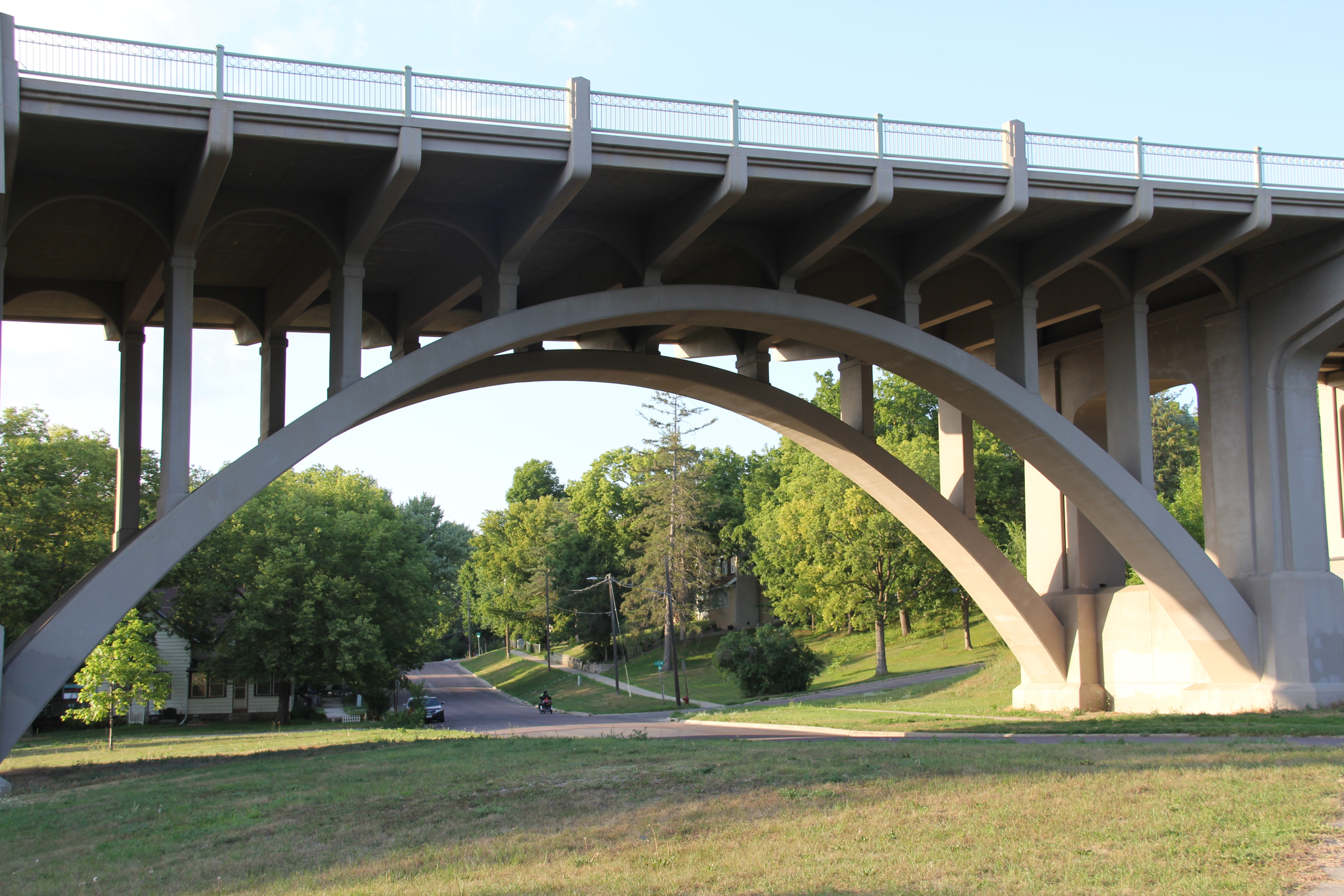
For 86 years, The Viaduct has gathered stories atop graceful arches, upon a roadway that is more than a route. This is a local landmark, an architectural and artistic marvel which visually and historically defines Faribault.
© Copyright 2023 Audrey Kletscher Helbling


 Minnesota Prairie Roots
love your ode to the very important viaduct, something so many of us just take for granted, forgetting its huge role. I love your early evening reflective shot
Thank you, Beth. I love that reflective shot, too. Mostly, I was thankful for a time when I felt well enough to do photography. I miss photography and writing, but my brain can only handle so much input before symptoms flare.
I enjoyed the photos and essay on the Viaduct, Faribault’s own Golden Gate Bridge.
Thank you, Bernadette. I’ve never thought of The Viaduct in California terms. But I certainly consider Faribault’s bridge to be beautiful and unique, as well as functional.
This is an interesting history of the viaduct. I didn’t know the difference between a viaduct and a bridge. Thank you.
I’m sure there’s much more history to uncover. I only did a peripheral search.
Nice to see you getting out and about. 😃
I did that photo shoot a few weeks ago and have not had my camera out since. I have to feel well enough to use it. I miss photography. I miss writing. I miss reading and commenting on blogs like yours. But I have to pace myself as my brain retrains itself. Screen time is challenging for me.
Loved the reflection in your first picture. I know I drove over it before and really didn’t think much about it. So that is great engineering when people use it without noticing how much easier travel is with it…
That’s my favorite pic from this shoot also. Thanks for appreciating it and our viaduct. You were only a few blocks from my house.
What a nice artistic piece on the grand ol’ dames of bridges in this part of the country. An intellectual on the Faribault FB page contributed an aspect never occurred to me: “A viaduct has multiple identical short spans that could be built with bricks. The downward force was absorbed by the arch. This type of architecture was common in Roman times to carry water. Now we have steel so long distances can be spanned.” Sue Garwood did a good piece on the river being moved. I’m just thankful underneath has finally been cleaned up! Wasn’t crazy about going to the park! Praying for your health!!
Here’s the video about moving the Straight River: https://youtu.be/lplfxI4X7QI
Sandra, thanks for the additional info about viaducts. That makes sense. I still find it so odd to move a river. I appreciate your prayers and hope to write an update soon. I struggle to handle screen time.