
FORGIVE EVERYONE EVERYTHING.
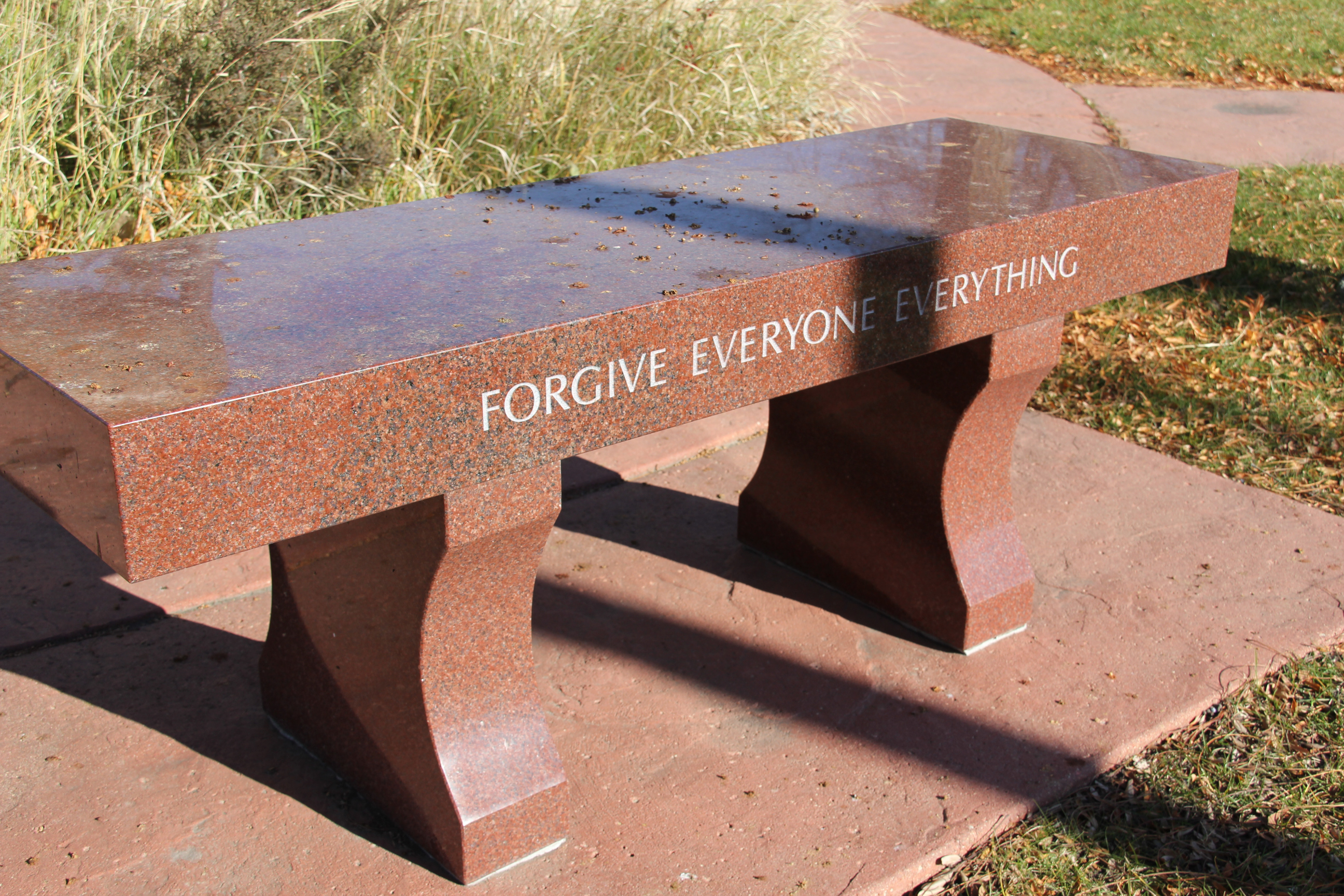
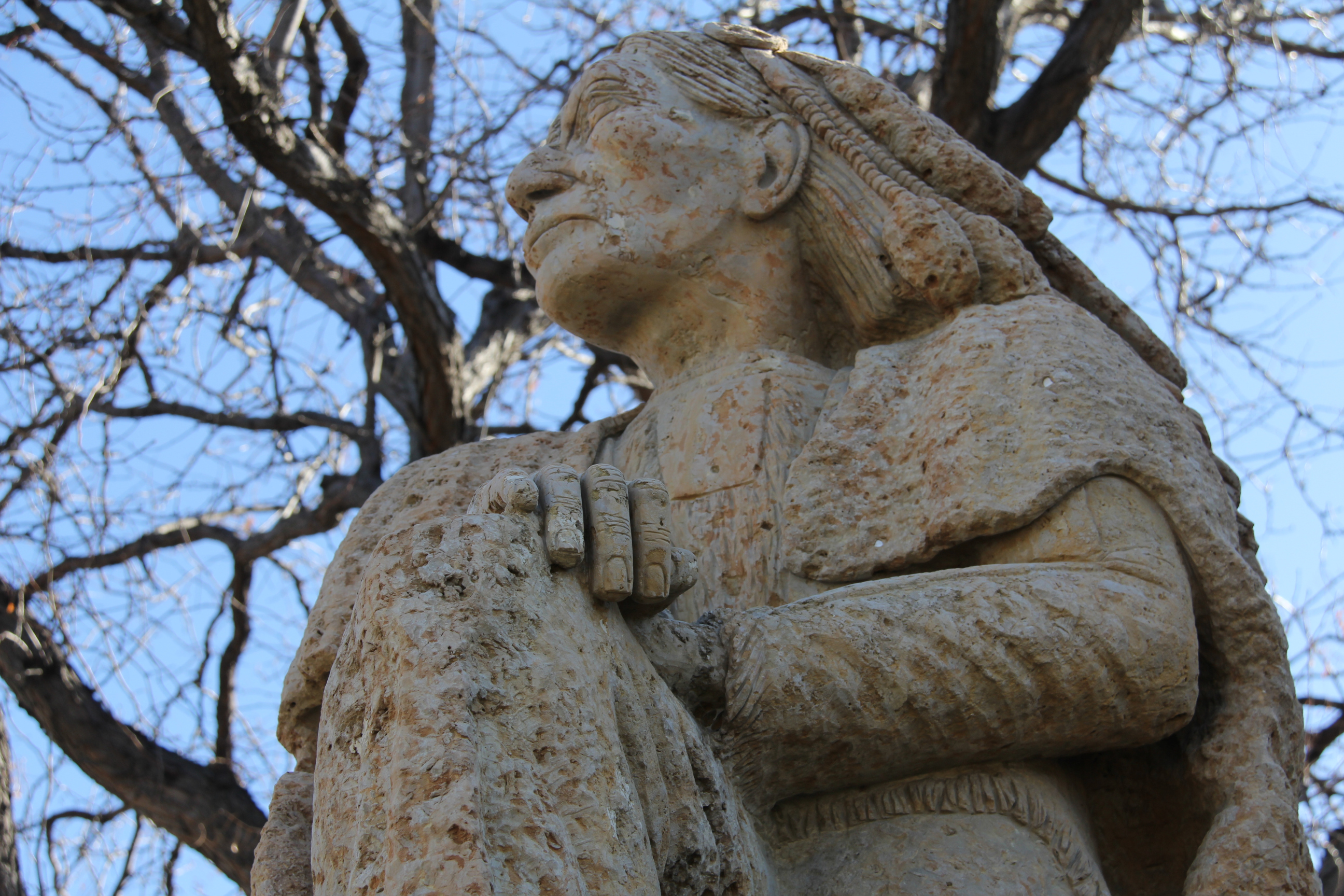
Those uppercase engraved block words, white against red on a stone bench at the Dakota 38 Memorial in the heart of downtown Mankato at Reconciliation Park, hold the strength of a people who really have no reason to forgive. But they choose to do so. And in forgiveness comes healing.
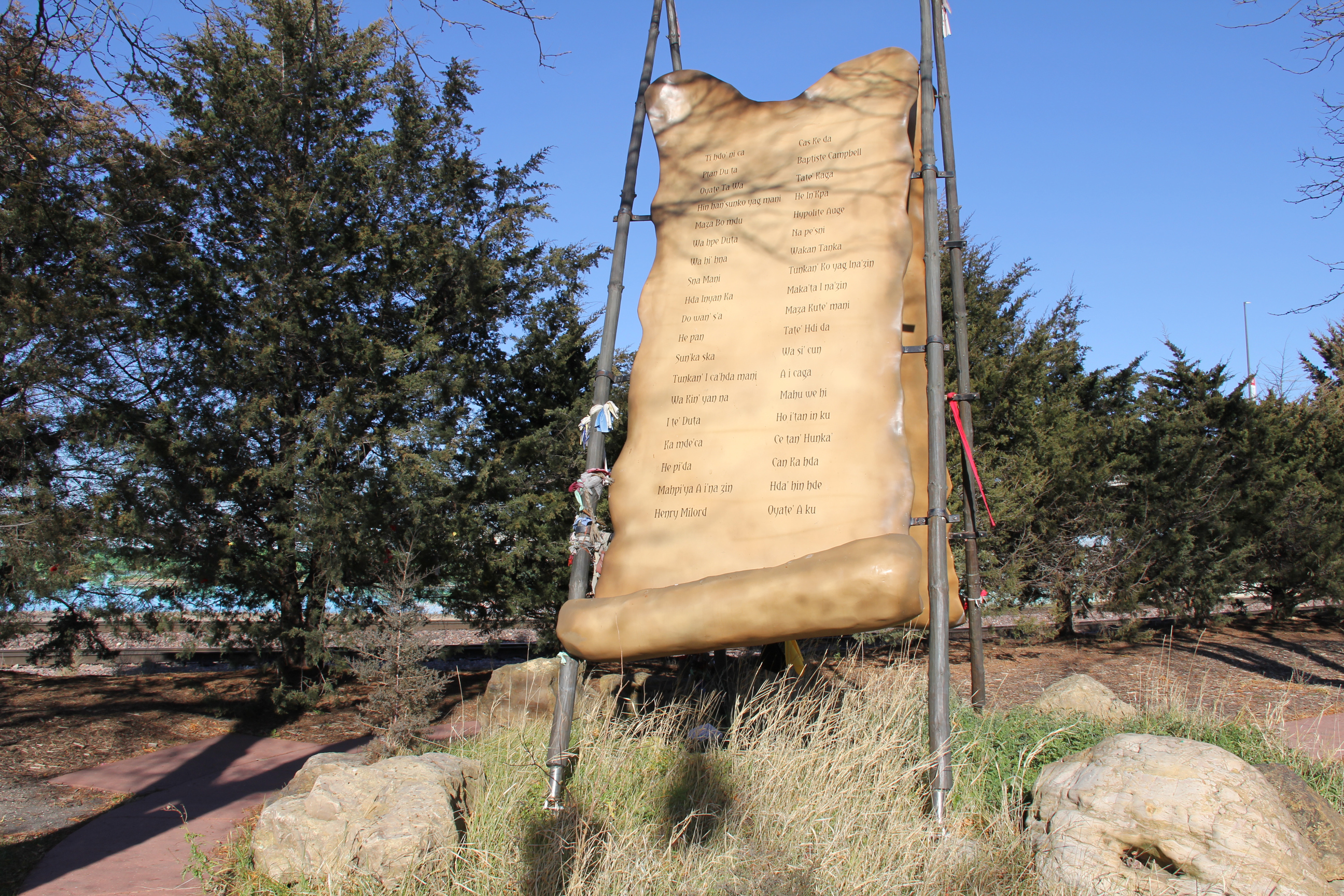
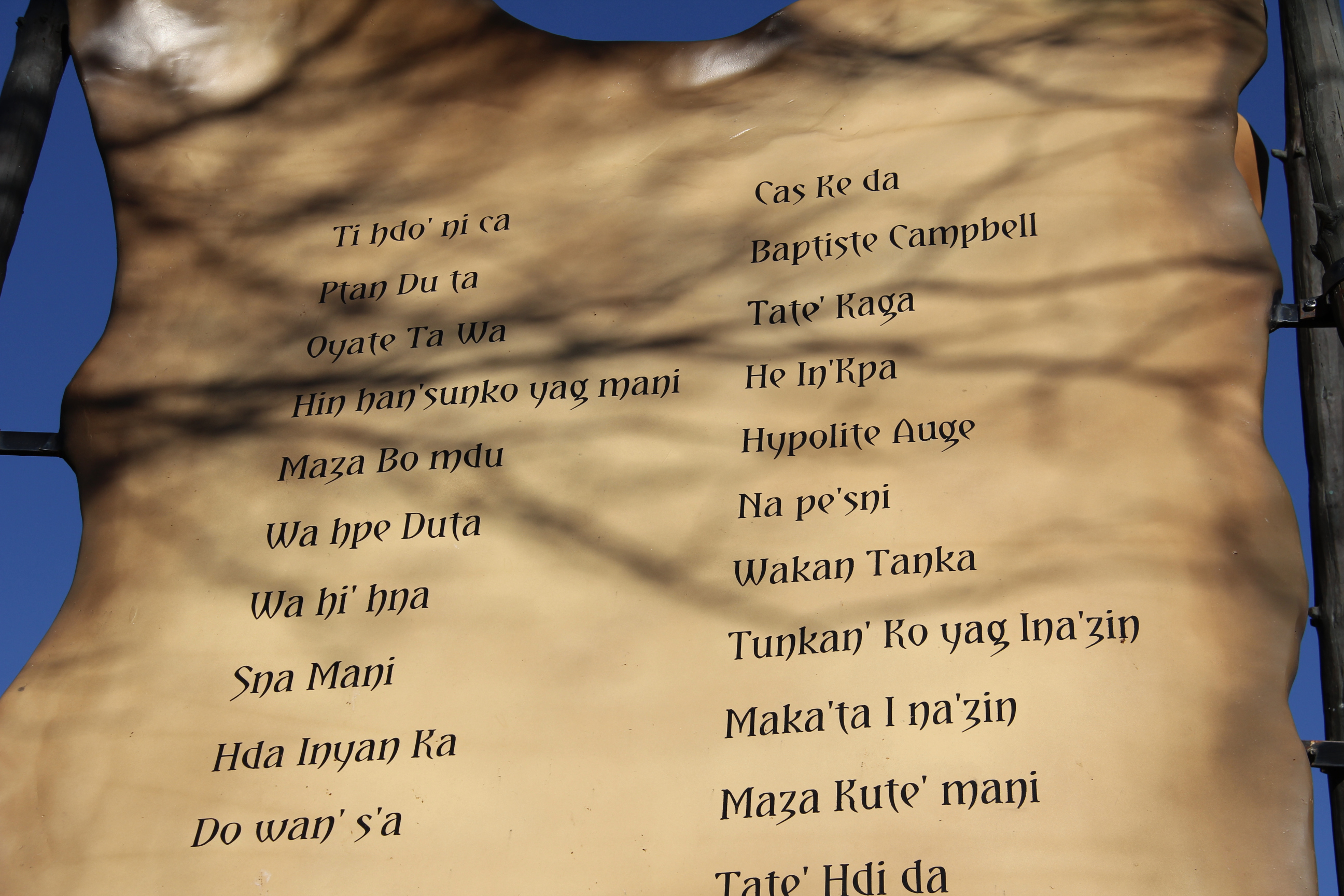
December 26 marks the date in 1862 when 38 Dakota men were hung near this site along the Minnesota River in America’s largest mass execution. Originally, 303 Dakota were sentenced to death following “trials” (the quotes are intentional) after the U.S.-Dakota War of 1862. President Abraham Lincoln reviewed the list of those sentenced to death, approving the hanging of thirty-eight. Thousands gathered to watch the execution on the day after Christmas 162 years ago.
This history I learned early on, but only from a White perspective and only because of my roots in southwestern Minnesota, at the epicenter of the war. I expect many Americans, including many Minnesotans, to this day know nothing of this conflict that killed hundreds of Whites and Dakota. Internment and exile of the Dakota followed. Native Peoples suffered because of the atrocities before and after the war.
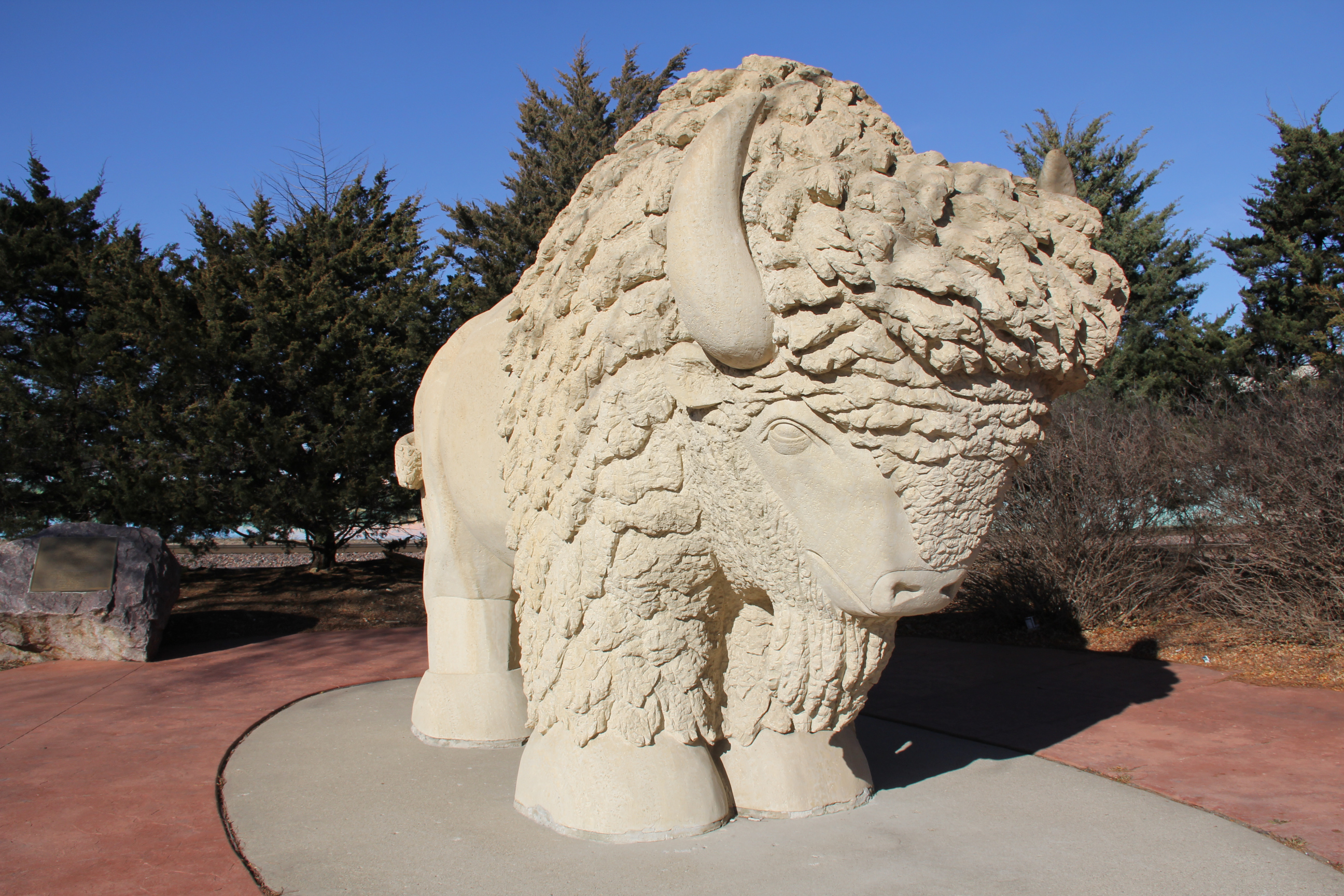
This is history I’d encourage everyone to study. And not just from a one-sided perspective. I won’t pretend that I am fully-informed. I’m not. I do, though, have a much better understanding than I did growing up. I’ve read, listened, learned. I know of stolen land, broken treaties and promises. Starvation. Injustices. Demeaning words like those attributed to a trader who told starving Dakota to “eat grass.” Andrew Myrick was later reportedly found dead, his mouth stuffed with grass.
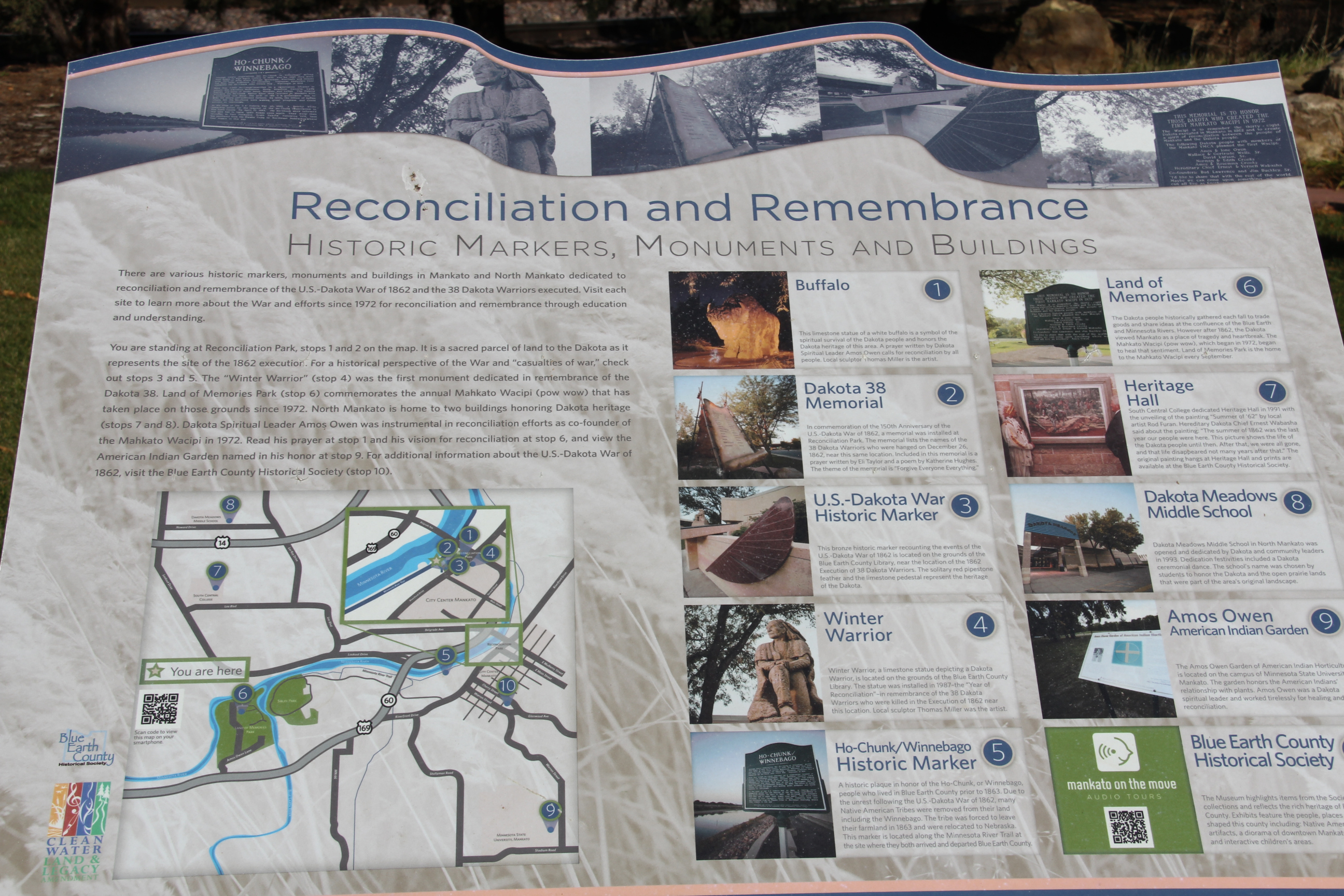
But back to those three words on that stone bench in Mankato: FORGIVE EVERYONE EVERYTHING. The Dakota truly have no reason to forgive. But they choose to do so. I’ve learned that forgiveness is part of Dakota culture and beliefs.
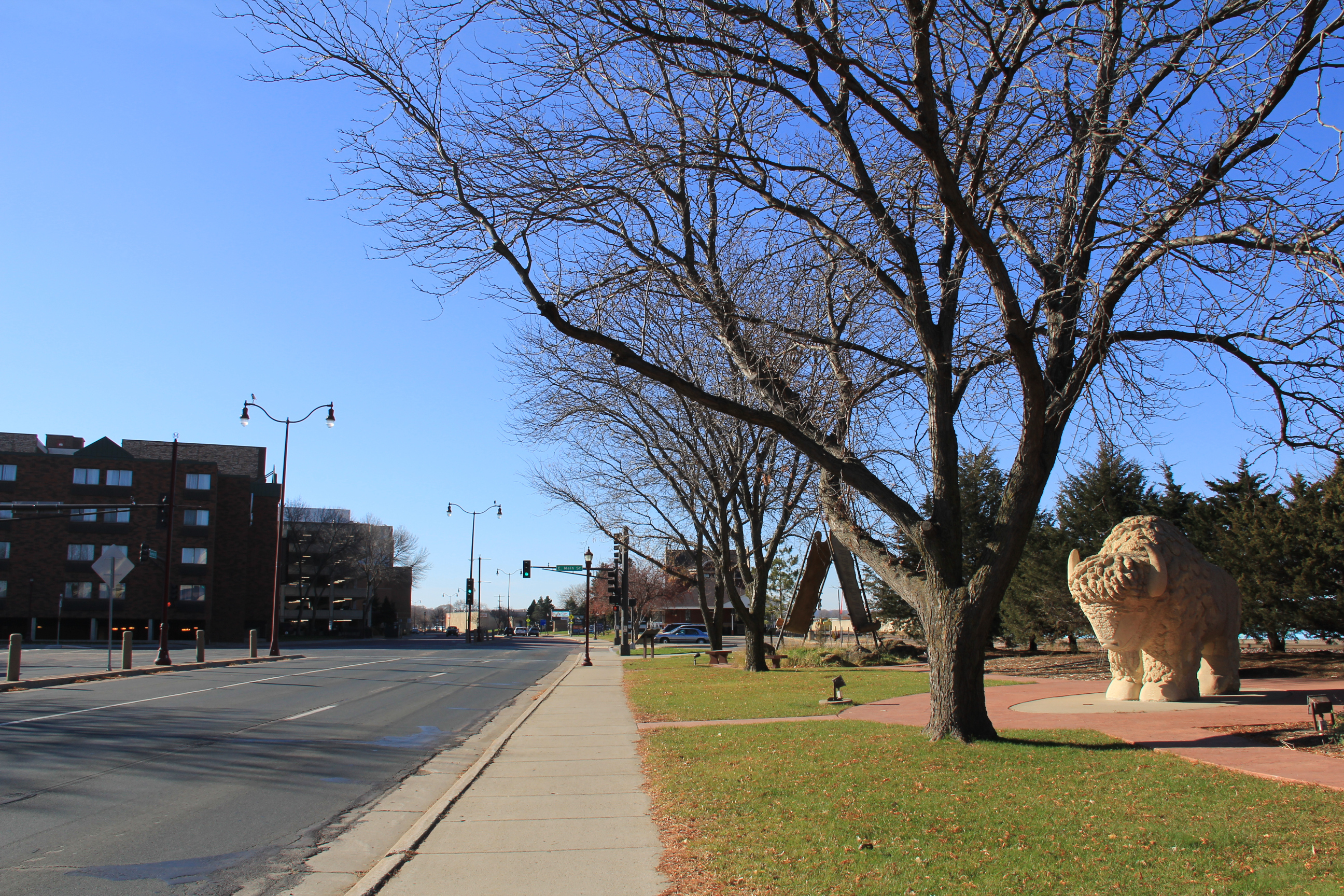
In the month of December, the attitude of forgiveness extends beyond words in stone to an annual horseback ride honoring the 38+2 (two more Dakota were sentenced to death two years later). This year, two rides—The Makatoh Reconciliation & Healing Horse Ride and The Dakota Exile Ride, the first originating in South Dakota, the other in Nebraska—will end on December 26 with gatherings at Reconciliation Park and the Blue Earth County Library, located across from each other.
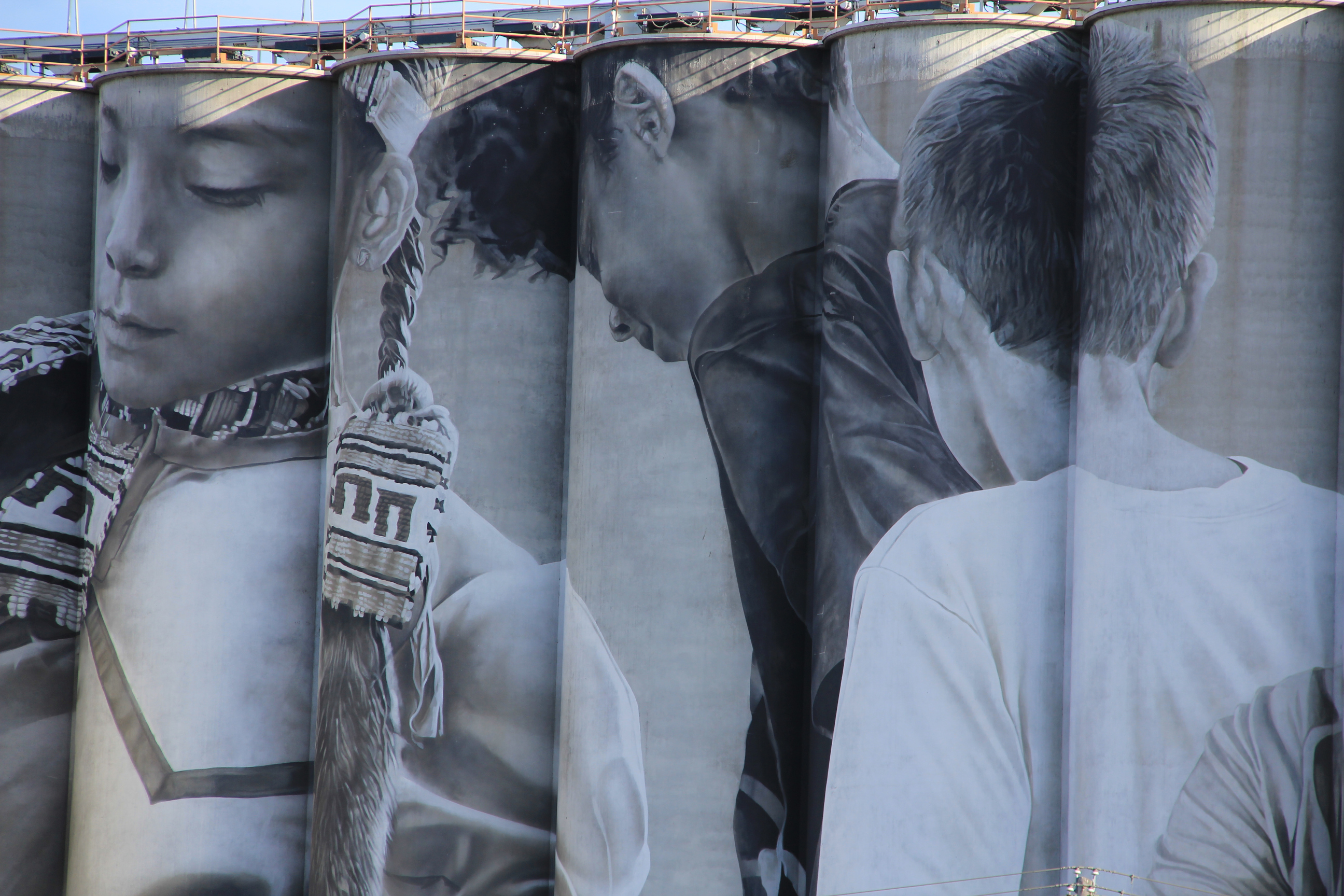
These rides focus on educating, remembering, honoring, healing and forgiving. Five powerful verbs when connected with the U.S.-Dakota War of 1862.
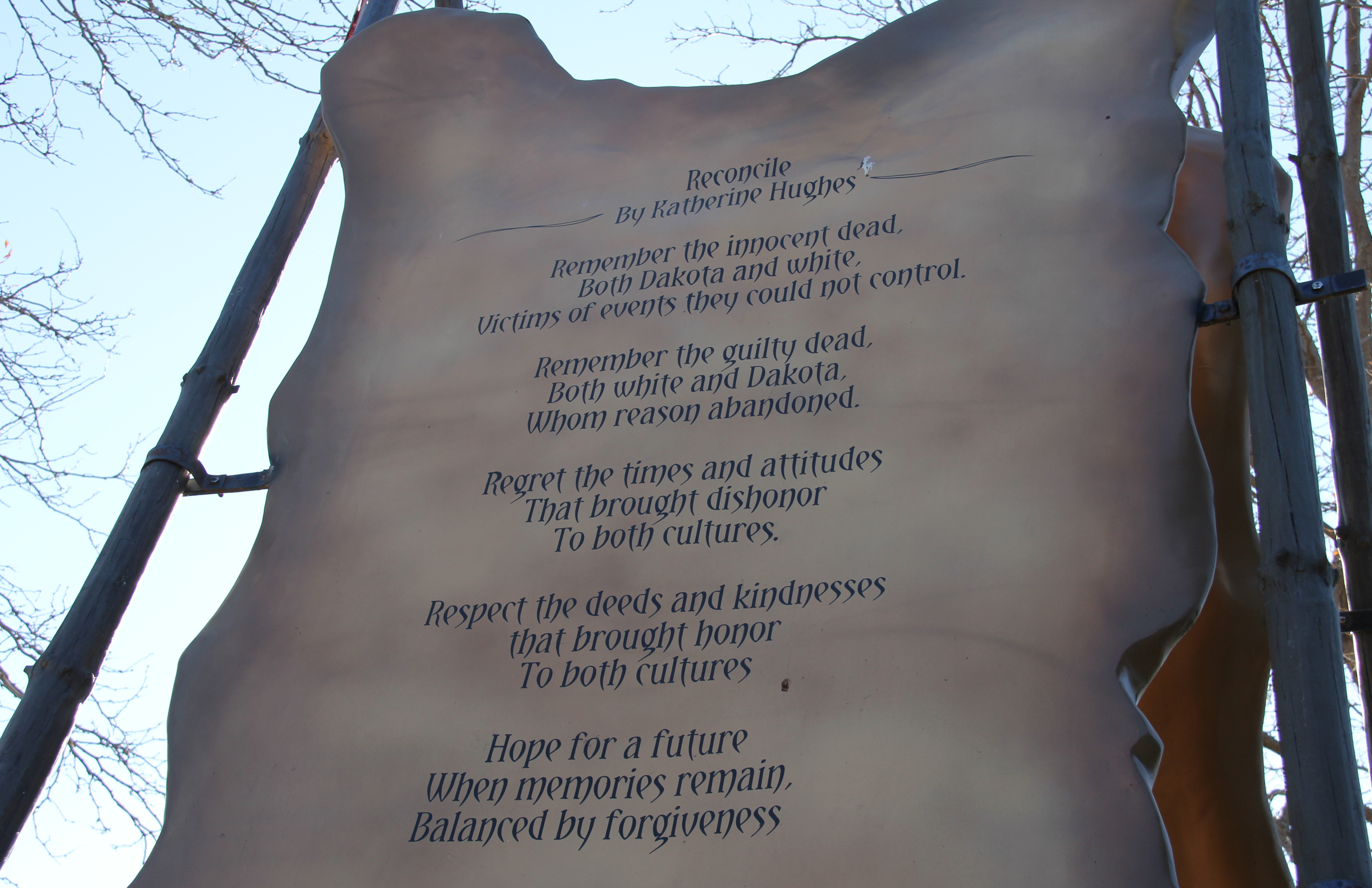
The poem “Reconcile,” written by Katherine Hughes and posted in Reconciliation Park, closes with this powerful verse: Hope for a future/When memories remain/Balanced by forgiveness.
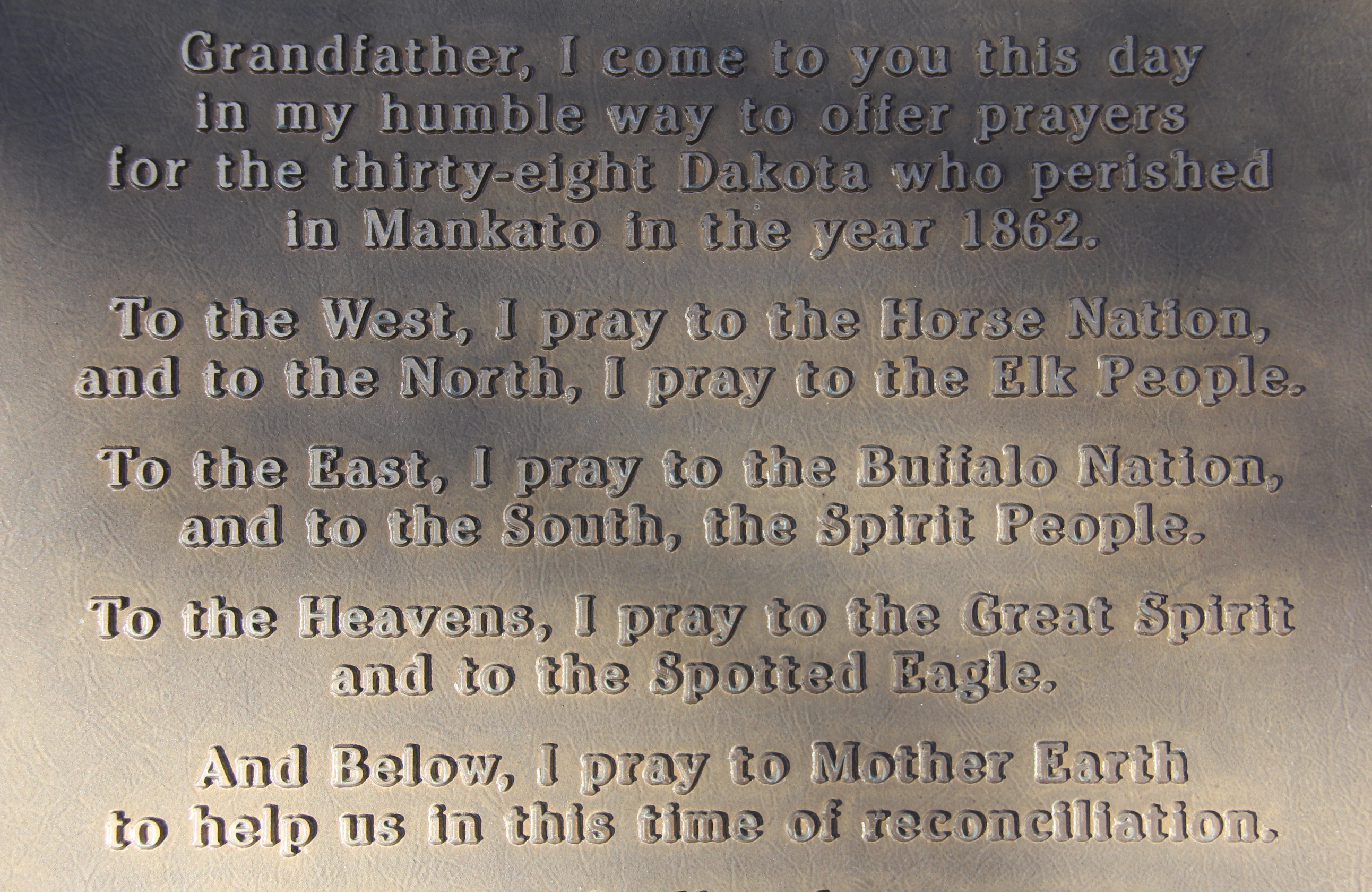
FORGIVE EVERYONE EVERYTHING.
#
FYI: Here’s the schedule for the December 26 events. A community gathering is set for 9 am-10 am at Reconciliation Park and the library. Horseback riders arrive at 10 a.m. A ceremony in the park takes place from 10 am-11:30 am. From 11:30 am-1 pm, a healing circle will happen at the library with discussion surrounding the events of December 26, 1862, covering the past, present and future. A community meal for the horseback riders, who rode hundreds of miles to Mankato, follows.
© Copyright 2024 Audrey Kletscher Helbling


 Minnesota Prairie Roots
what a stunning idea and stunning place. the story here is so incredibly sad, and the message of forgiveness is incredibly powerful. ❤
Everything you write is spot on.
Great post. History happened and we can’t change events but we can change our understanding of them. One of my 3rd Great uncles was a settler casualty so we had heard about the uprising.
You ae so right in that we can’t change history, but can change how we understand (and react to) it. I’m sorry about your family member. There was so much loss on both sides. I have ancestors who farmed near New Ulm and made a claim to the government for crop damages during the war. Minor compared to lives lost.
Thank you, thank you, thank you!
You are welcome. It was important to share.
I am a few years older than you are. I remember reading about this in the Redwood Gazette—probably a centennial commemoration of this war. I would have been about 12 years old and had a hard time believing something this awful occurred where I was living. I don’t remember learning about it in school—not even in 6th grade Minnesota history.
I don’t recall exactly when I learned about the US-Dakota War, but, like you, not in sixth grade Minnesota State history. It should have been taught, especially since this occurred in our backyard. Your 12-year-old reaction, and that you remember that feeling, reveals to me how much you care.
Hau hankshi Audrey K- H, Thanks, Pidamiya Megwiitch (Dakota and Chippewa -Anishinabeg) for this heart felt post to practice forgiveness. We have connected with folks over the years at Reconciliation Park and intend to return tomorrow morning with our friends Gary and Velma R of North Mankato likely beginning around 9 AM driving down from Brooklyn Center by Haha Wakpa (Mississippi River) We have participated in healing ceremonies, learning D/Lakota and some Anishinabeg to make connections with our relatives of the four colors, for directions of humans, he 2 leggeds. You might enjoy listening to Lekshi (Uncle) Albert White Hat Sr, our Lakota language teacher and Sundance Chief who taught at Sinte Gleska U in Mission SD as a Sicangu Lakota about his forgiveness journey he shares on Lekshi U Tube…https://www.youtube.com/watch?v=8L3MLFtjm5g
He was our teacher from 1990 until his passing in June 2013 and he welcomed many of us as “family” in the spirit of Mitakuye Oyasin. https://en.wikipedia.org/wiki/Albert_White_Hat
Tom, I always appreciate your comments relating to the Dakota, because I always learn from you. Thank you for being part of today’s events. And, no, I did not attend. And, yes, I saved your cell number should it work for us to connect in the future. I’d love to hear about your experiences today if you’d like to share something here in a brief comment.
We arrived around 9 AM at Reconciliation Park and met up with friends Gary, Velma, Dave, Scott and met a local woman with a shirt “Tanya’n yahi'” and “Mahkato Mni’ Sota” printed on it she said she got at the local Lakota Made Outlet in Mankato that we drove by on our way to the 1:30 Wopida Feast at Kato Ballroom (I see they have a website https://lakotamade.com/) The words basically mean “welcome happy to see you” and then the name Mahkato…is it is pronounced in D/Lakota) seems a good will gesture to understand more over the years. We have been connecting with relatives there for some 25 years, Pidamiya Thanks for your interest! Doksha akay “later again” no goodbye in D/Lakota. Tom W native to A’dekti, Faribault to the Dakhota. 🙂
Tom, it sounds like you had a wonderful day in Mahkato connecting, honoring and learning. I appreciate the info about the Lakota Made Outlet. I will need to stop there next time I’m in Mankato. As always, I appreciate your sharing.
2 sides to every story. Self-defense is understandable, especially when your family is starving or sick! Forgiveness & healing is most essential. Educate yourself.
You’re right, Linda, that we all need to educate ourselves about BOTH sides of the story. And, yes, forgiveness and healing are essential.