
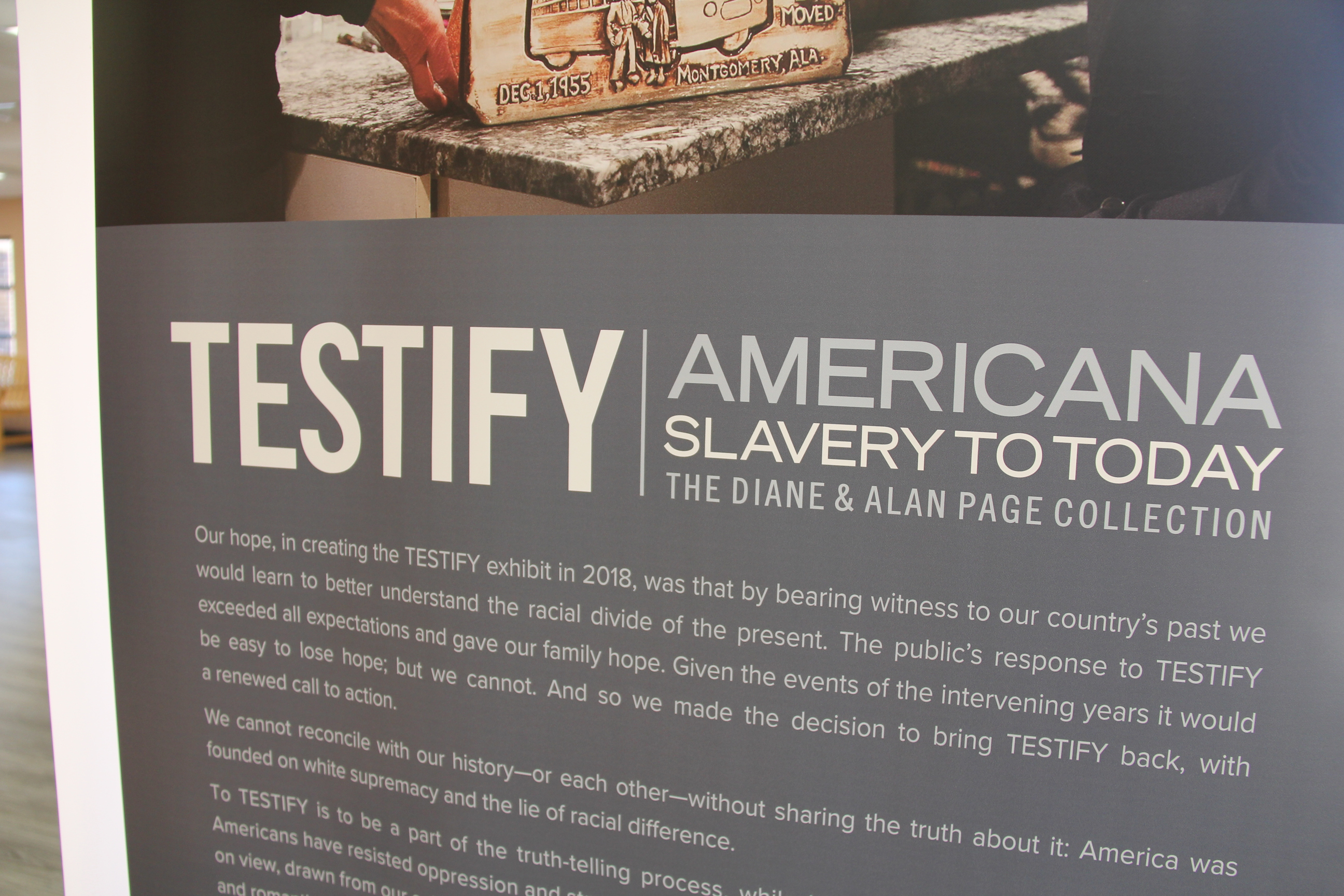
THE IMAGES AND WORDS left me feeling simultaneously unsettled, uncomfortable, disturbed, enlightened, impressed, angry and incredibly sad. My emotional reaction is not surprising after viewing the traveling exhibit, “Testify—Americana Slavery to Today,” at my local public library.
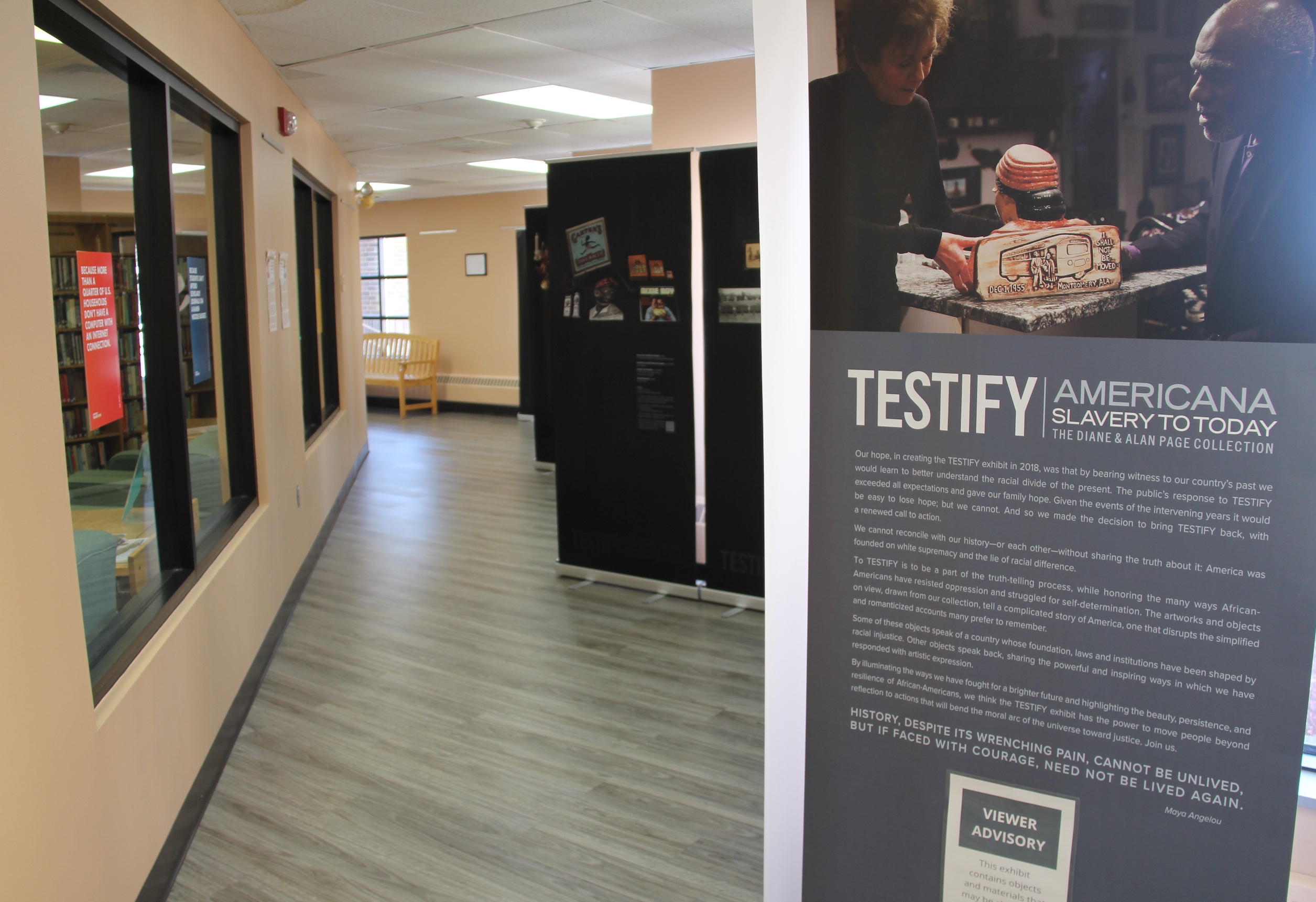
The exhibit features photos of select African American art and artifacts from The Diane and Alan Page Collection. Alan Page, who is Black, was a Minnesota Supreme Court justice and, in the 1970s, a defensive lineman for the Minnesota Vikings. He’s in the NFL Hall of Fame. Diane, who was White, worked in marketing and was a businesswoman and notable philanthropist. She led the way in securing the art and artifacts in the couple’s collection.
I’m grateful Buckham Memorial Library (through SELCO, the regional library system) brought this exhibit to Faribault for the public to see. We can all learn from history, deepening our understanding. We begin to recognize perspectives and biases and can then move toward change and healing.
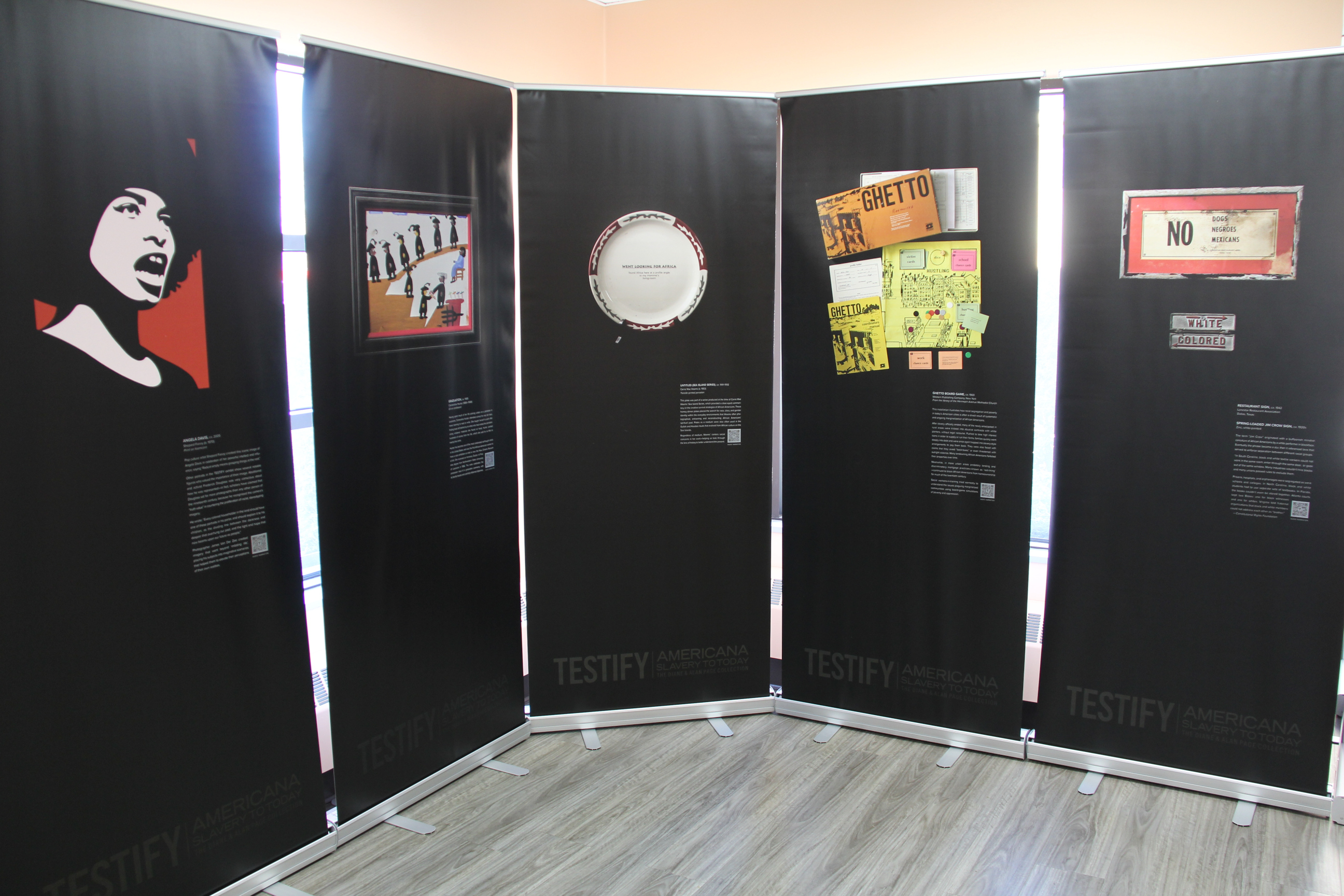
As I walked my way along the 16 towering photo panels paired with text, I began to more fully appreciate the suffering, the abuse, but also the fortitude, of African Americans. Despite everything, they retained strength and resilience.
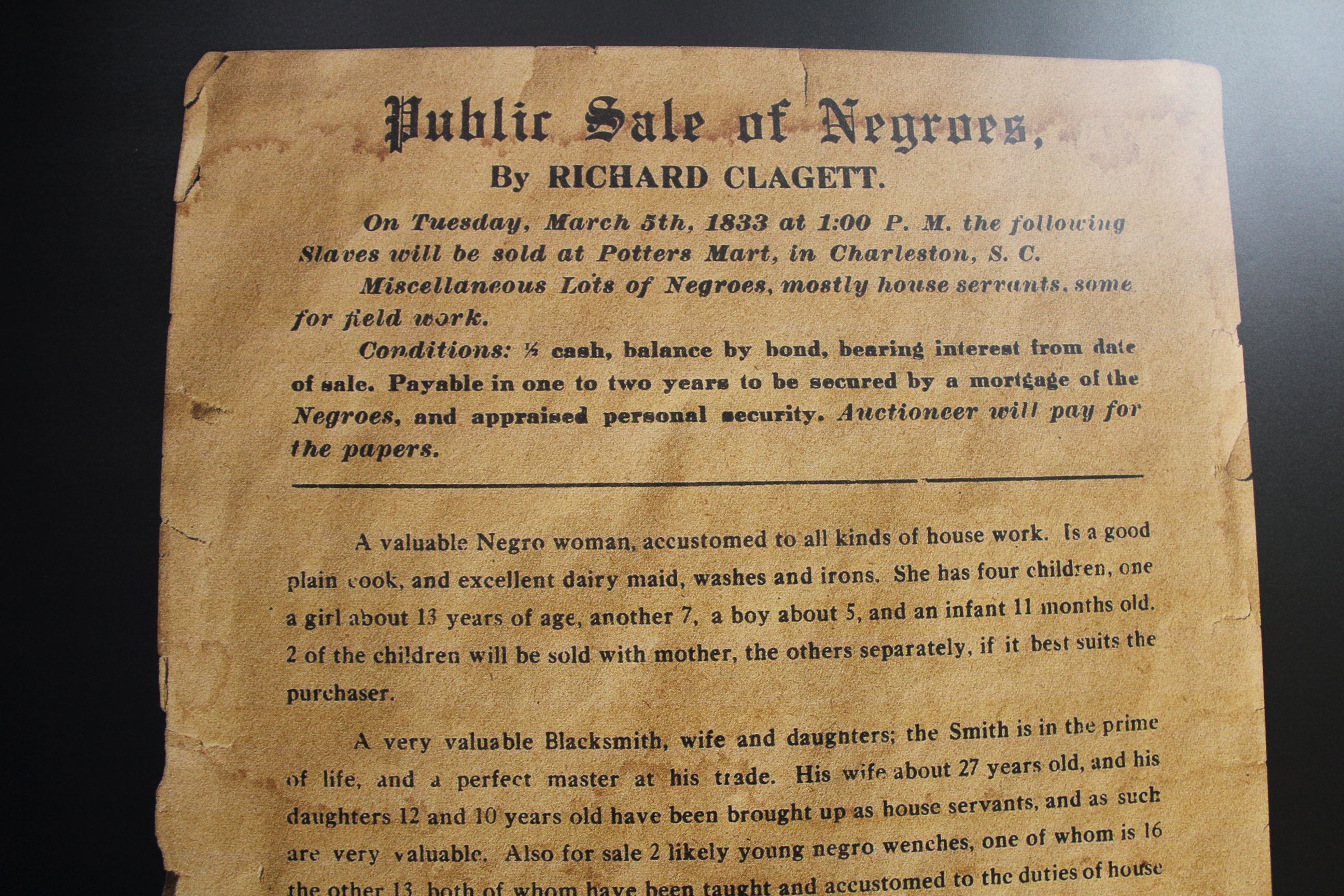
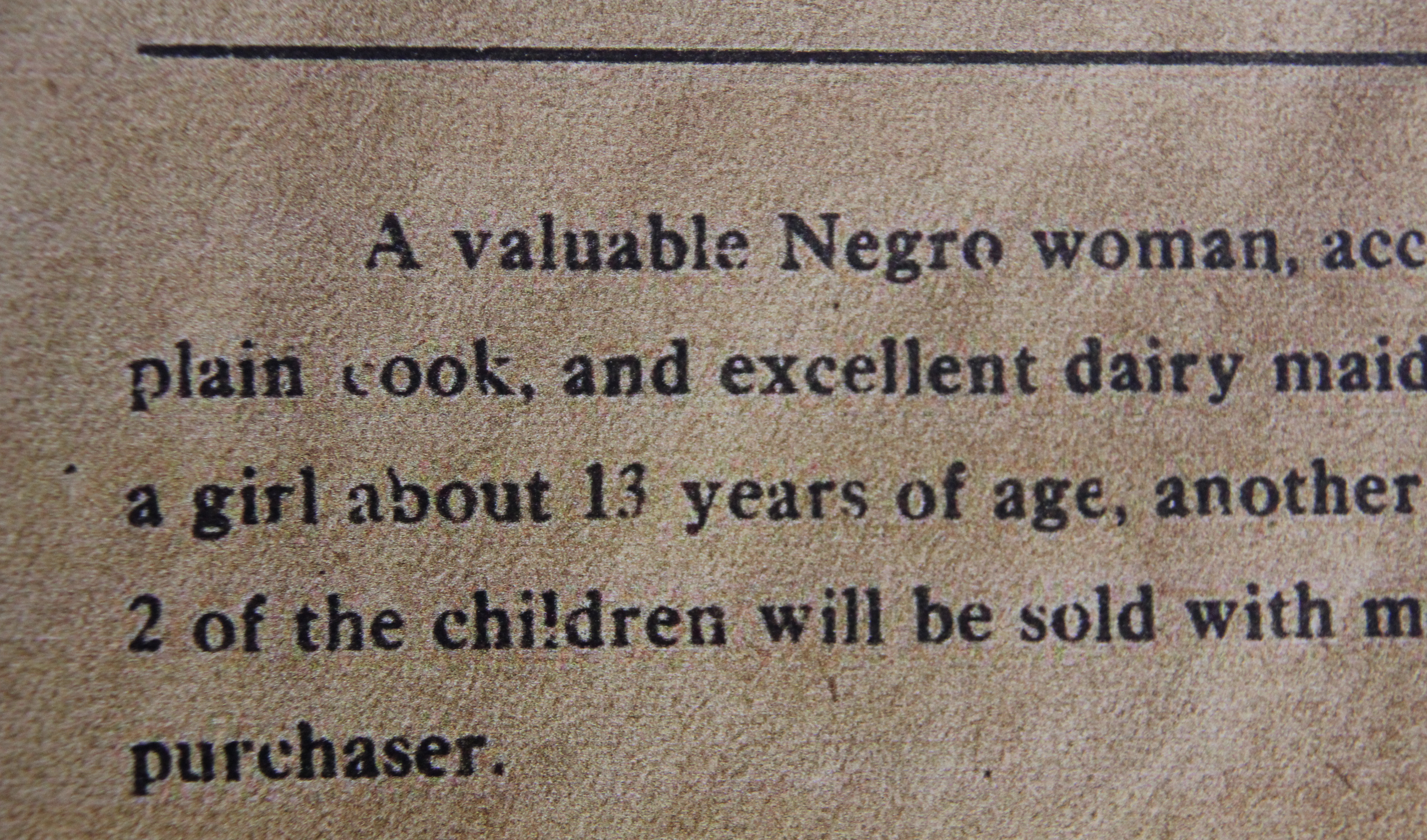
Yet, how hard it must have been at times to hold hope, especially from slavery to the time of Jim Crow laws. When I read a Public Sale of Negroes notice from 1833, I read words of degradation. I cannot imagine being that “valuable Negro woman,” that “very valuable blacksmith,” the slaves in “miscellaneous lots of Negroes” who were auctioned off like so much property. What humanity does to one another seems unimaginable, unfathomable. Yet, it still happens today, just in different ways.
As disturbing as that slave bill of sale was, a group photo of nine unclothed Black toddlers in a professional studio portrait titled “Alligator Bait” proved profoundly disturbing to me. So much so that I can’t bear to show this 1897 image to you. The accompanying text states that historians researched whether hunters actually used African American children as alligator bait. Results were inconclusive, which is telling.
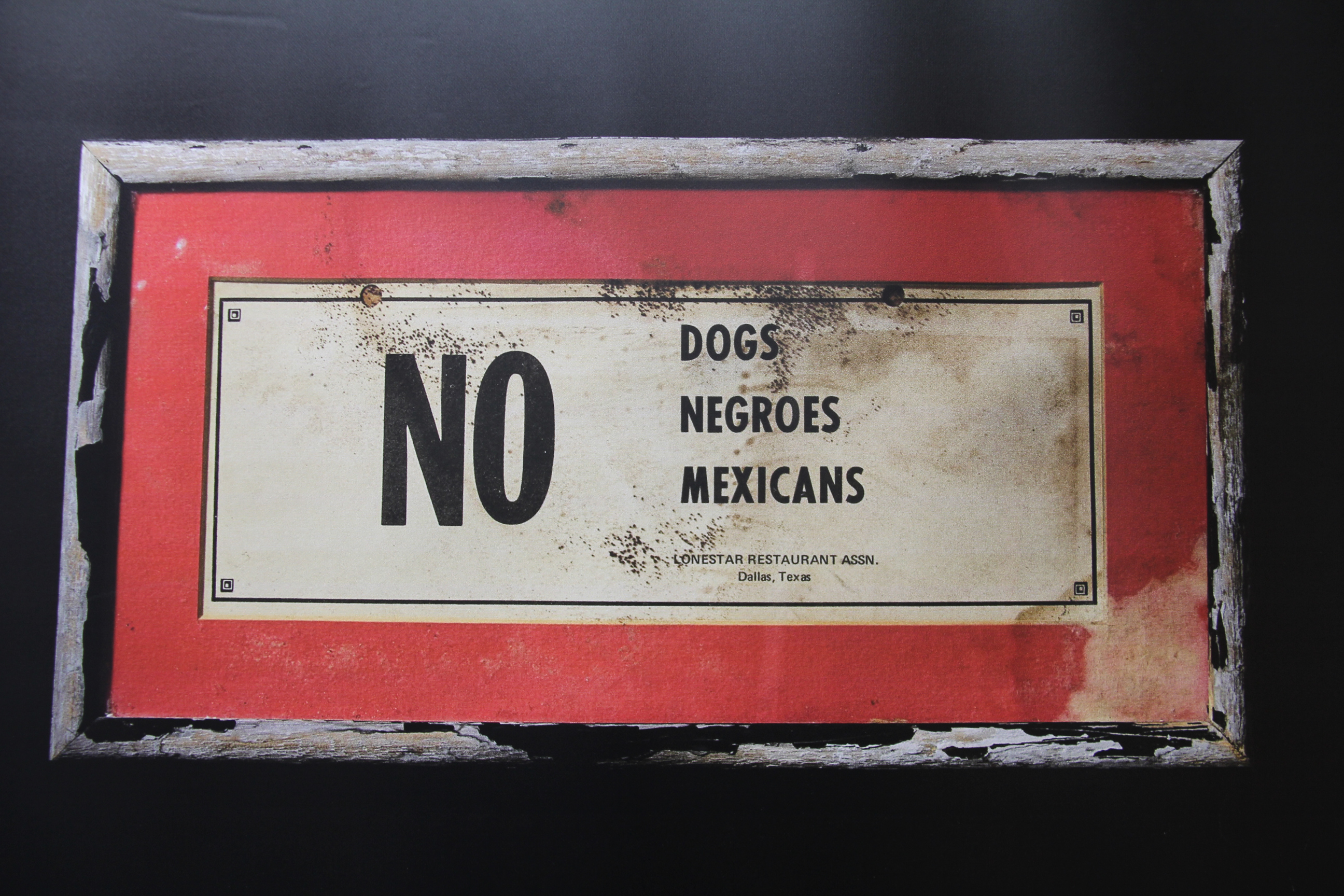

A sign banning “dogs, Negroes and Mexicans” and another pointing Whites one way and “Colored” people the other prompted thoughts of, well, things have not changed all that much. Of course, they have, but not really if you dig deep or, conversely, read today’s headlines.
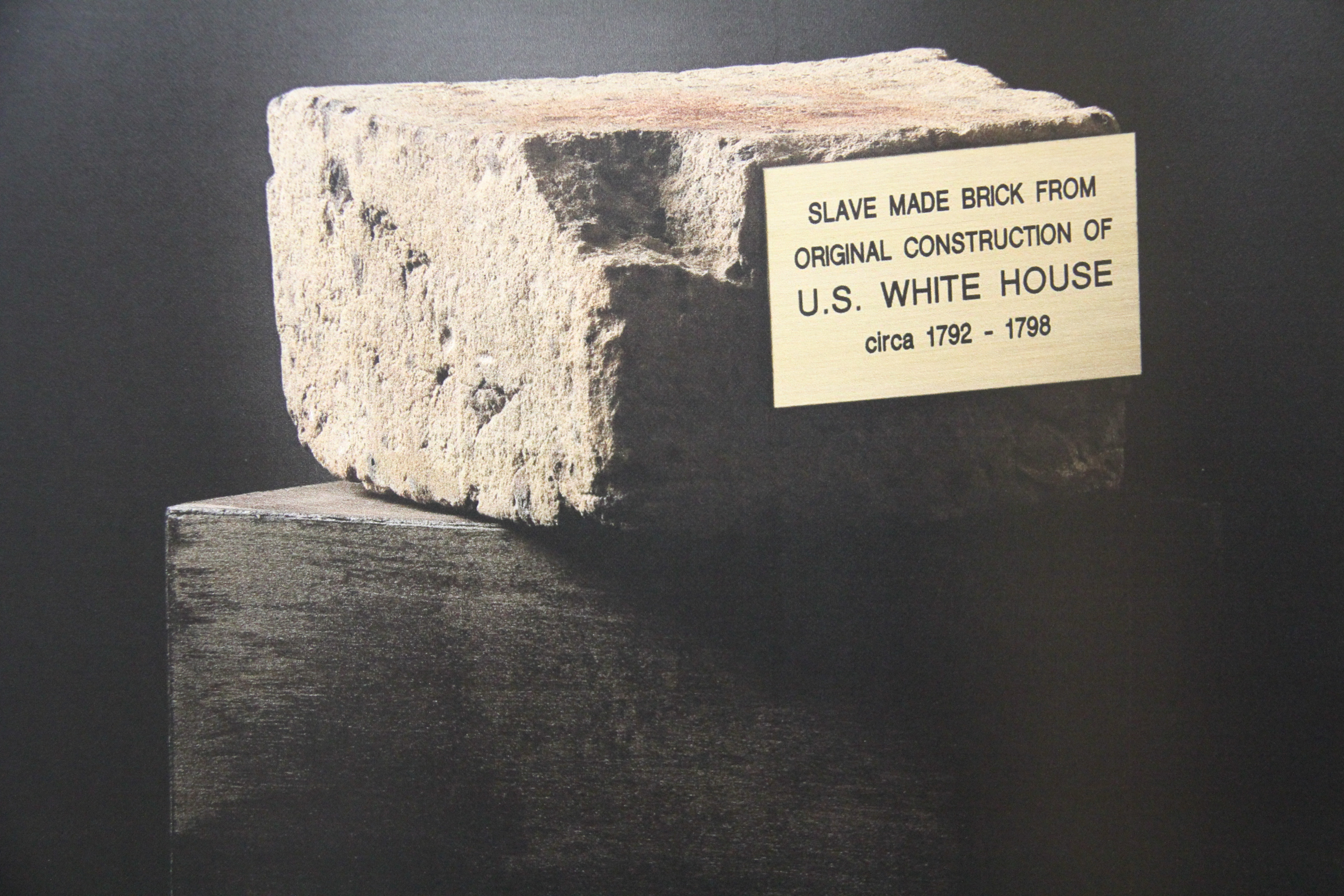
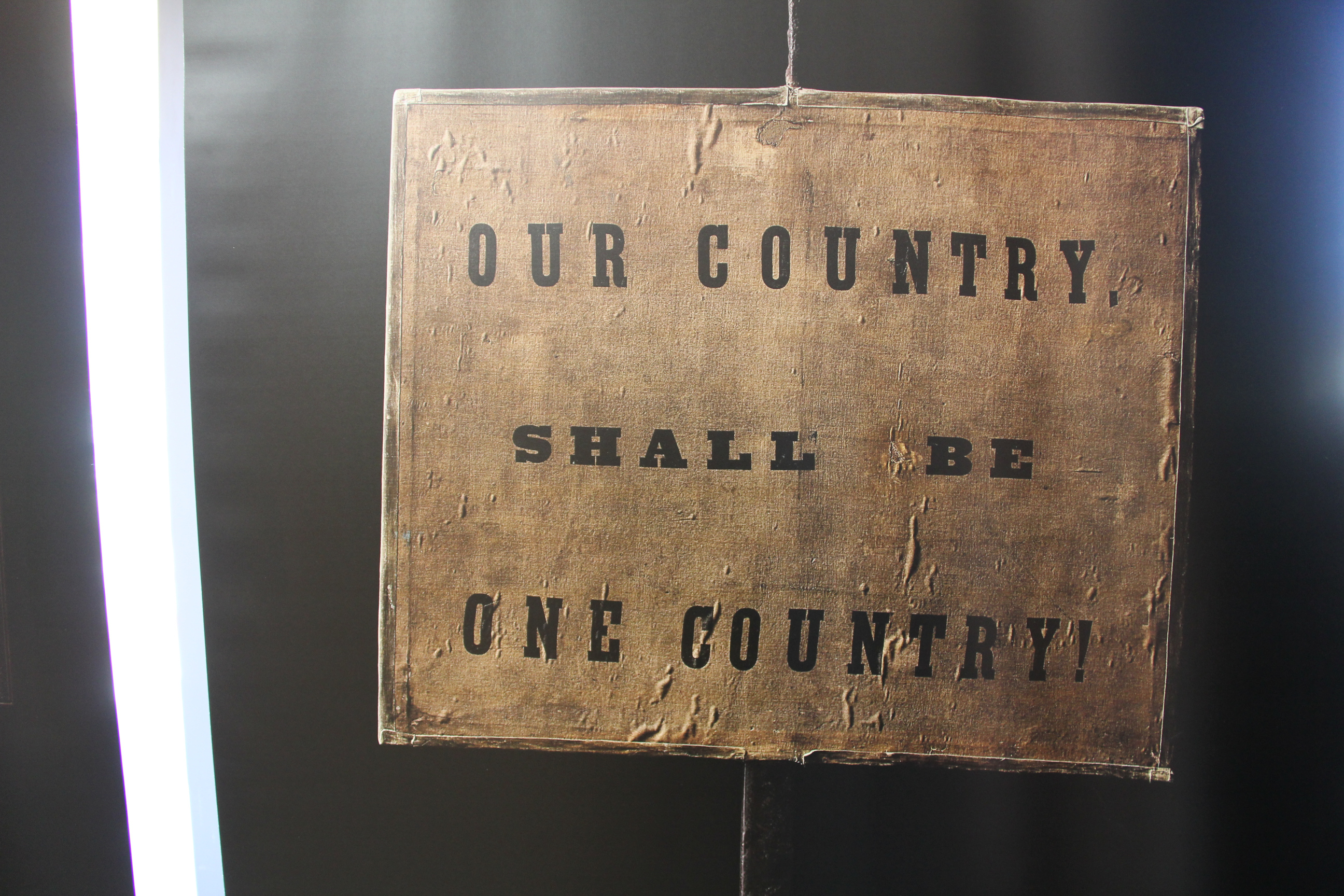
I want to backtrack for a minute to the first photo I saw in the exhibit. It was of a single brick, circa 1792-1798. This singular object drove home the point that this country was built on the backs of slaves, like those who molded and laid the bricks for government buildings in Washington DC. That includes the White House and many U.S. Capitol buildings, according to the exhibit text. Unpaid slave labor. Think about that for a minute or ten.
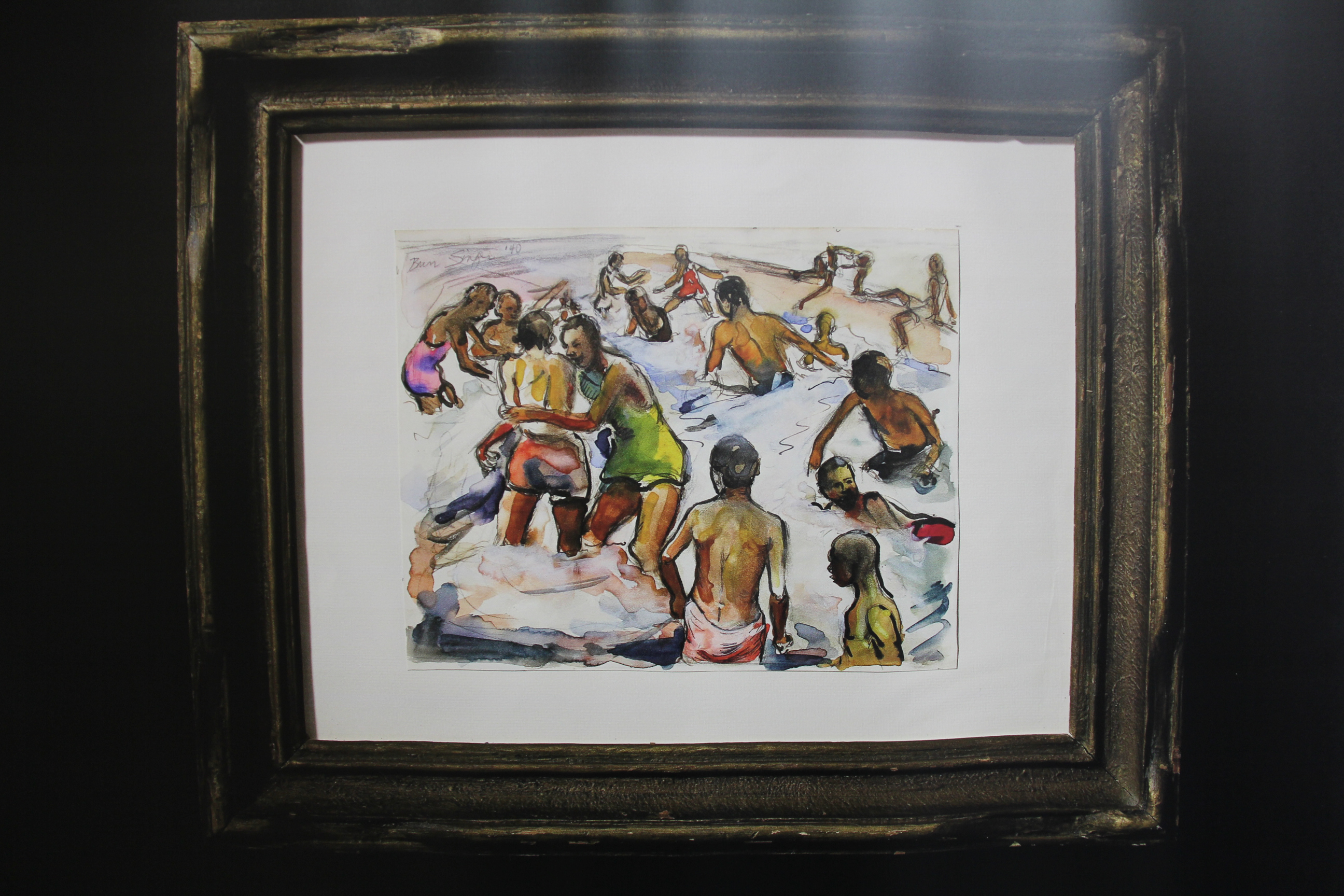
There’s lots to contemplate in the “Testify” exhibit. That includes the watercolor art of Burr Singer titled “Only on Thursdays.” If you just looked at the art without the title and context, you might think it was simply a depiction of African Americans swimming. But it’s not. Thursday was the only day Blacks could use the Pasadena public pool. This painting makes a statement.
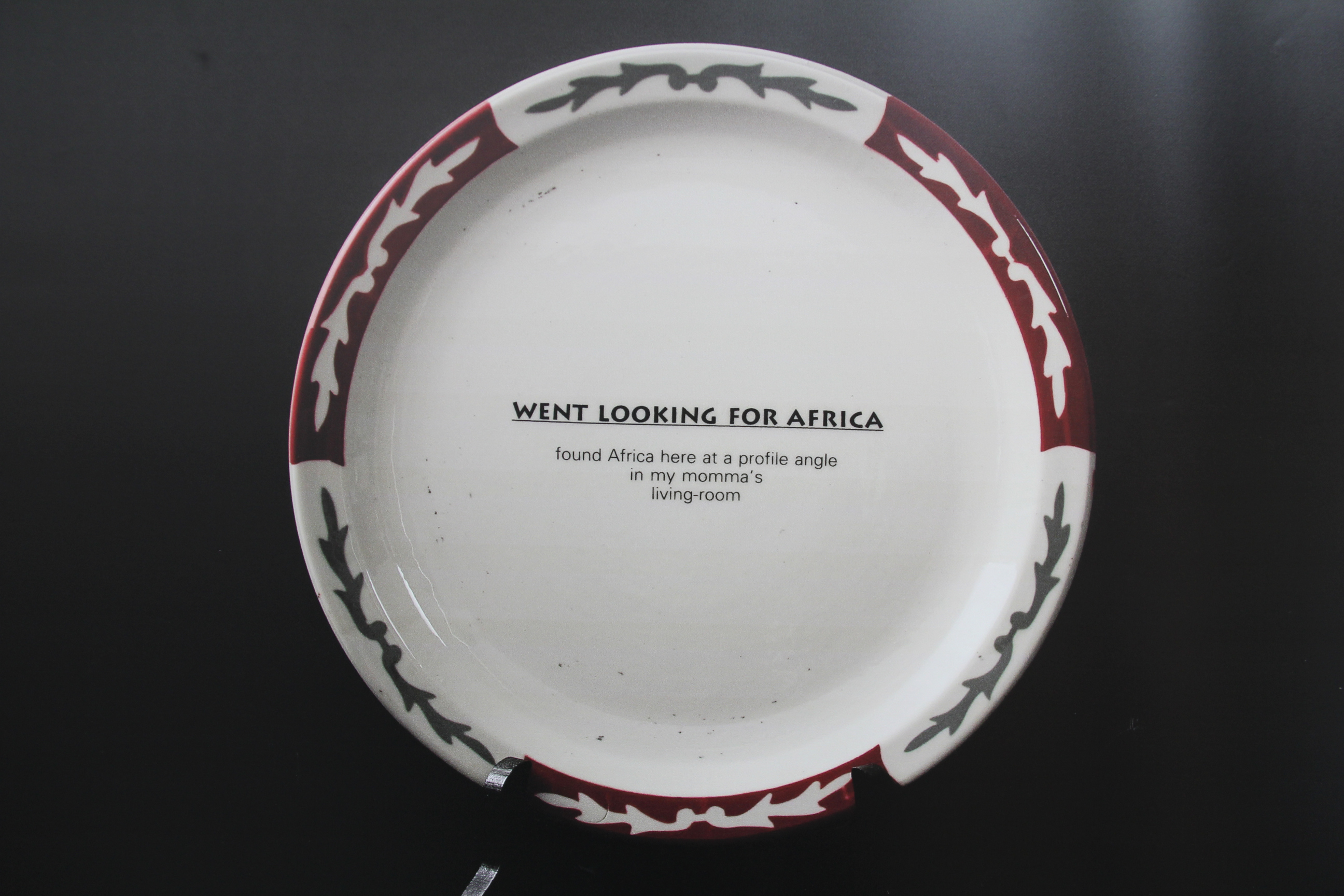
This exhibit makes a statement. Through images and words, it shines a light on the past, on Black history, on the atrocities of slavery and segregation and racism (both subtle and overt). Through “Testify,” truth-telling emerges for all to view and contemplate.
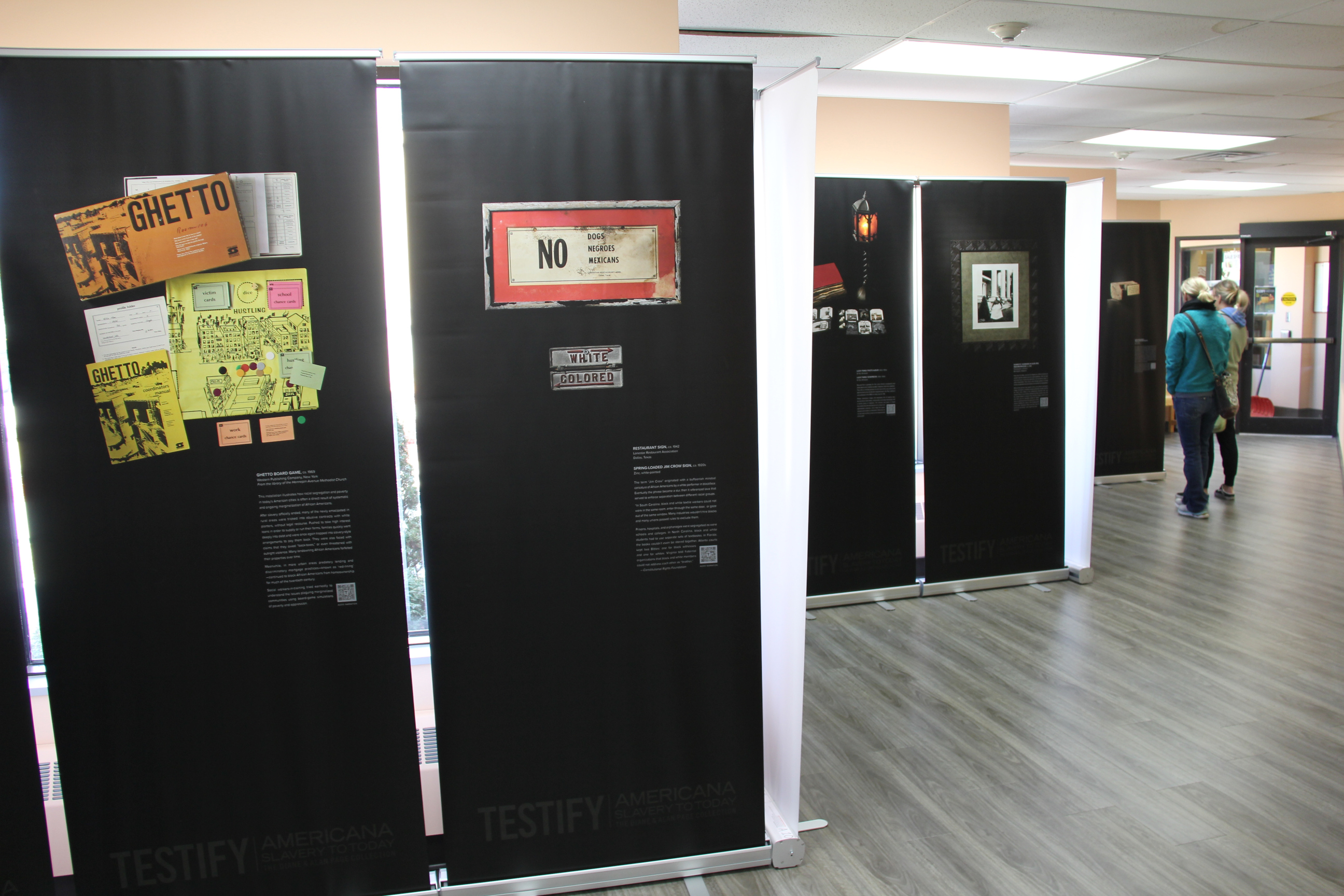
FYI: “Testify—Americana Slavery to Today” is on display until April 23 in the corridor linking Buckham Memorial Library to the Faribault Community Center. The photos and information included in this story are only a sampling of what you will see in the exhibit. The Mabel Public Library hosts the exhibit from April 25-May 7.
© Copyright 2025 Audrey Kletscher Helbling


 Minnesota Prairie Roots
Recent Comments