
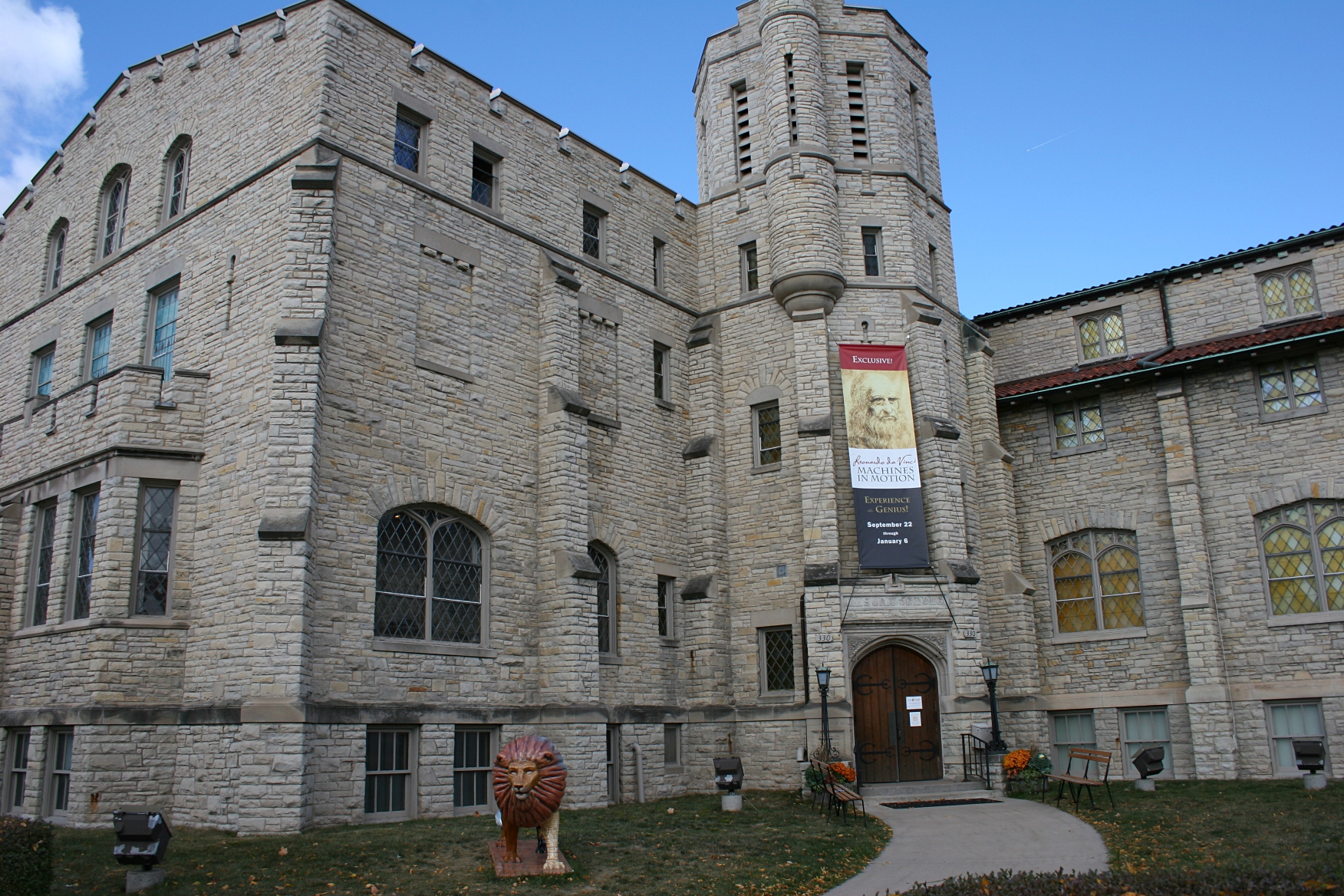
The History Museum at the Castle, 330 E. College Ave., Appleton, Wisconsin.
CONSTRUCTED OF STONE and anchored by a center tower, the impressive multi-story structure commanding the corner of College Avenue and Drew Street in downtown Appleton, Wisconsin, presents an almost formidable exterior presence.
Aptly named The History Museum at the Castle, this sprawling castle-like fortress embodies the essence of history from the outside in. History seems meant to be showcased here. And it is, in this, the home of The Outagamie Historical Society.
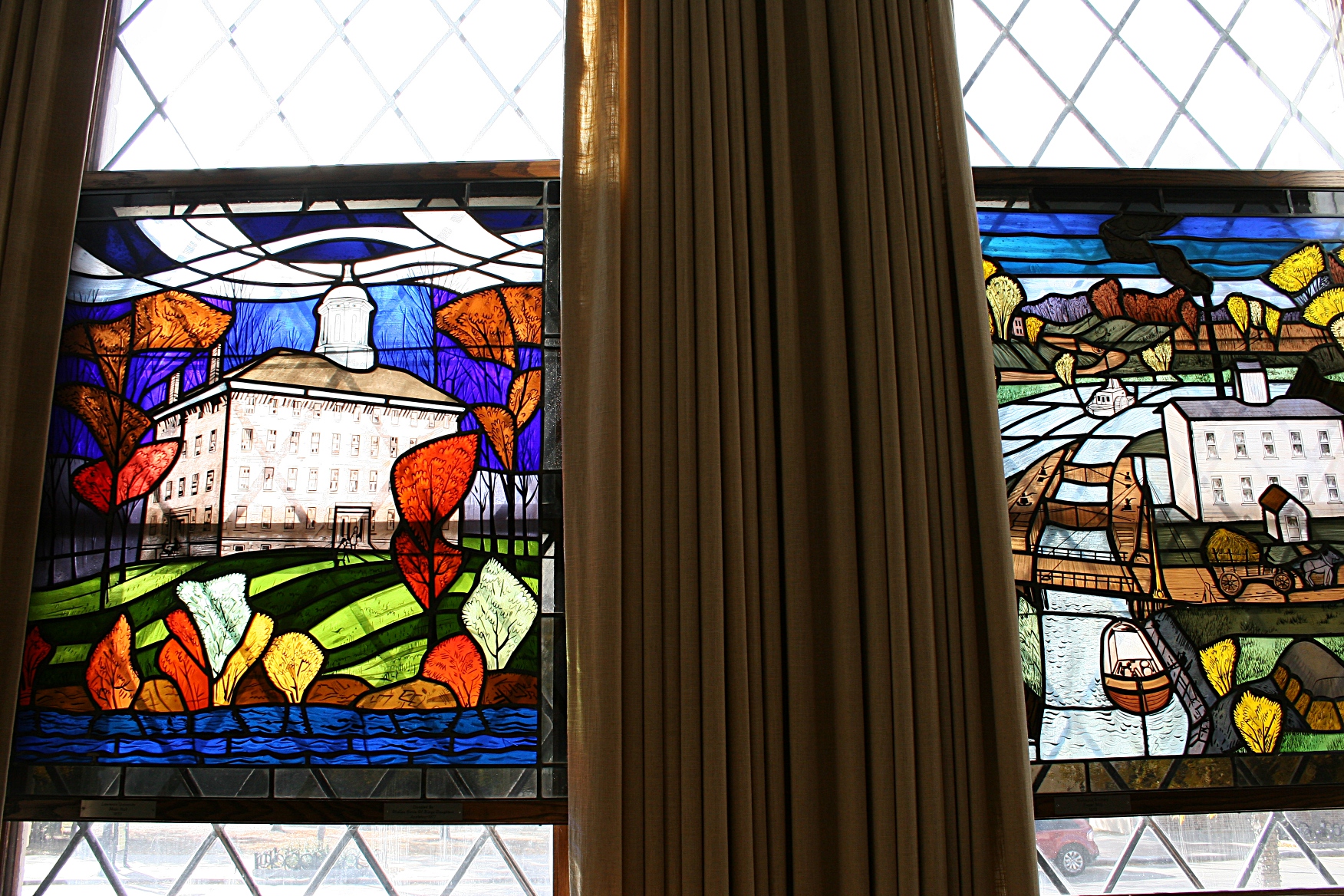
Windows in the Siekman Room depict the history of the Fox Cities from the days of the early explorers until modern times.
Perhaps it is a matter of personal taste. But I prefer to learn about history within the walls of a place aged by time rather than in a sterile, modern facility. From the heavy wooden double front entry doors strapped with metal to the woodwork woven throughout the interior to the detailed wall scones, fireplace, paintings and stained glass windows, this museum exudes yesteryear.
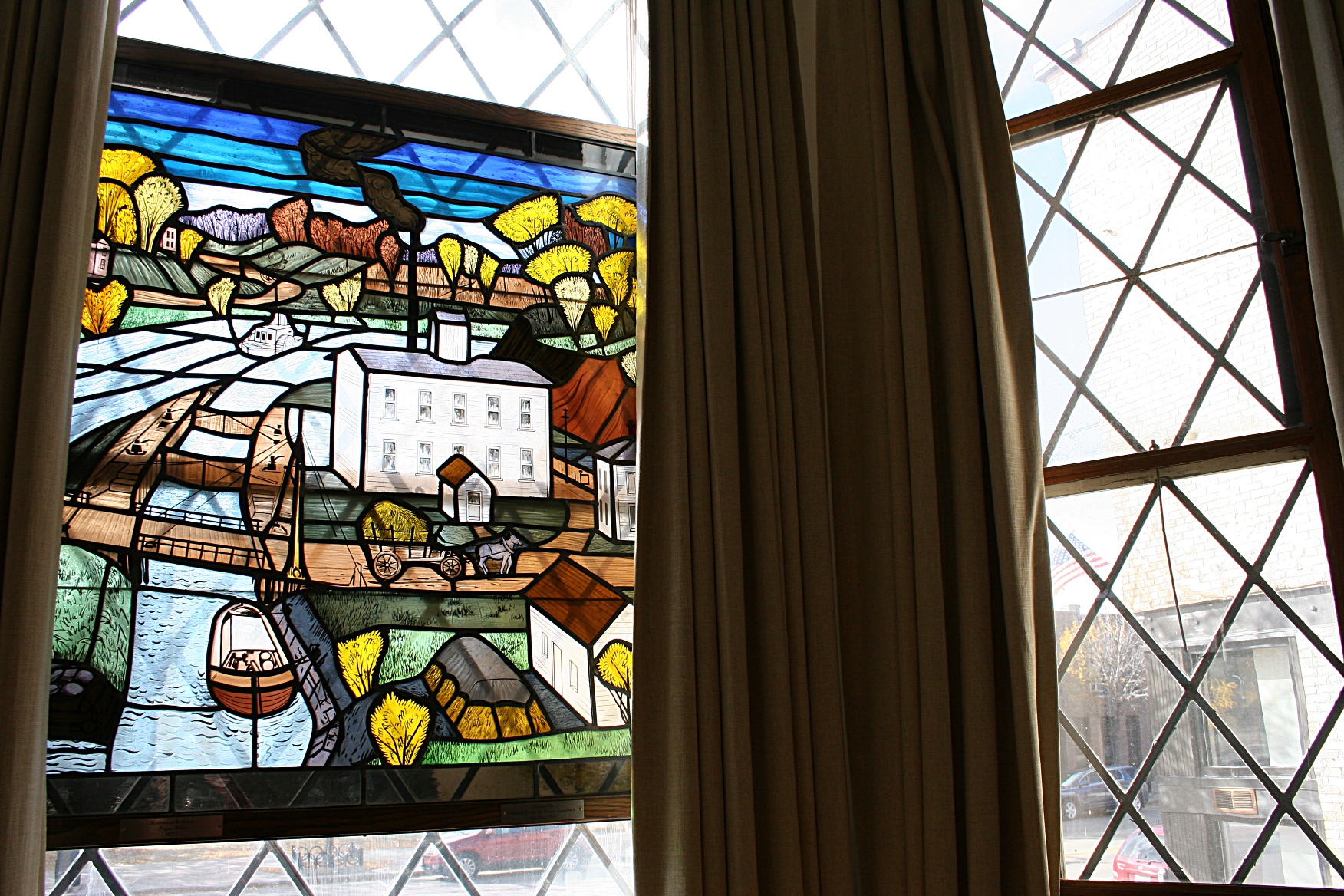
More Fox Valley history in stained glass art.
Its history dates back to 1923-1924 when Waverly Lodge No. 51 constructed the complex for use as a Masonic Temple, according to Kathy Voigt, community engagement manager for the museum. Says Voigt:
Now on the National Register of Historic Places, the building is constructed in the Norman Revival style, characterized by the use of rough-hewn stone and other features reminiscent of medieval castles and churches, such as vaulted ceilings, heavy beams and leaded windows.
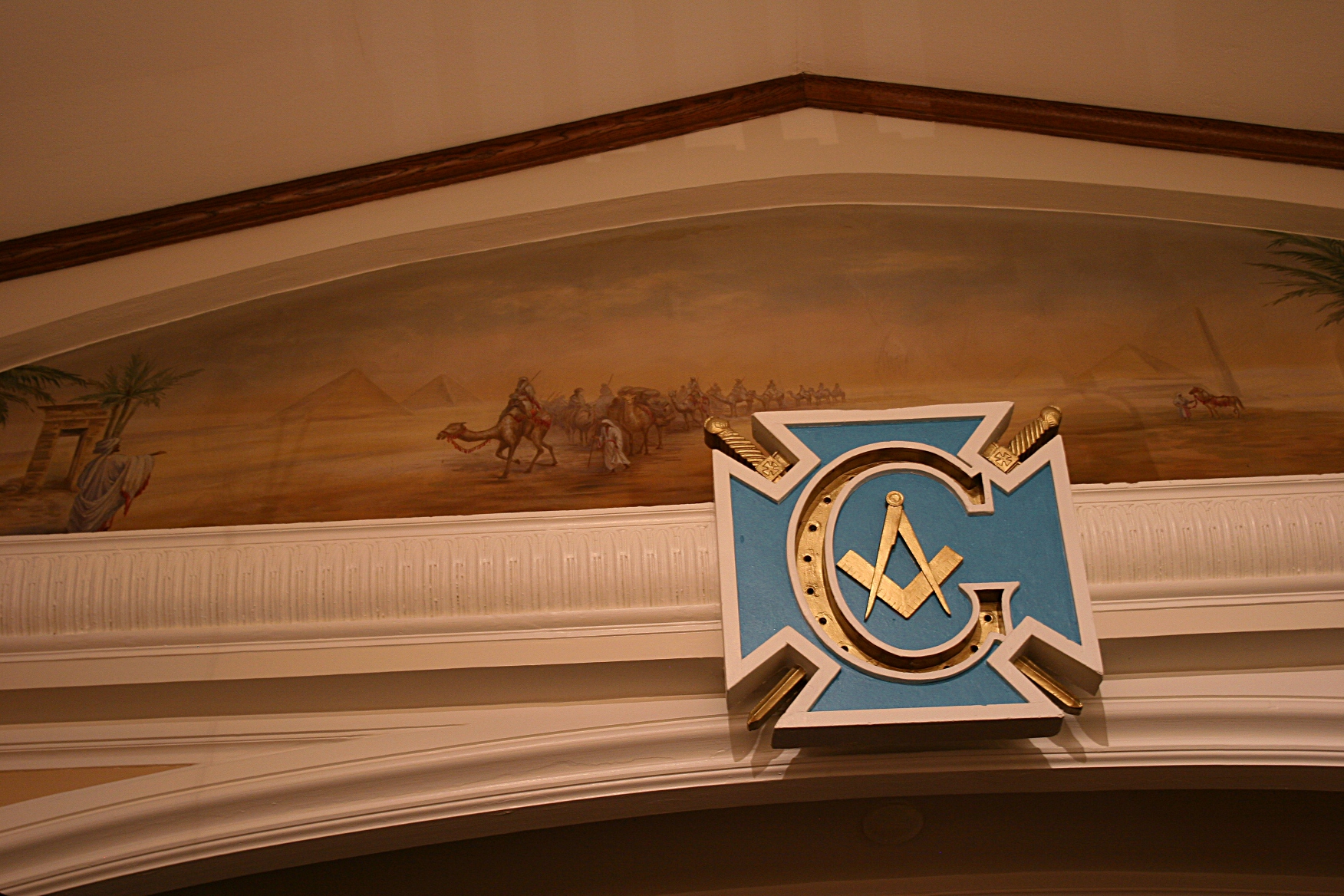
Artwork above an auditorium stage hints at the building’s past as a Masonic Temple.
In the mid-1980s, after the Masons could no longer afford to maintain the temple, the building was sold to the local historical society.
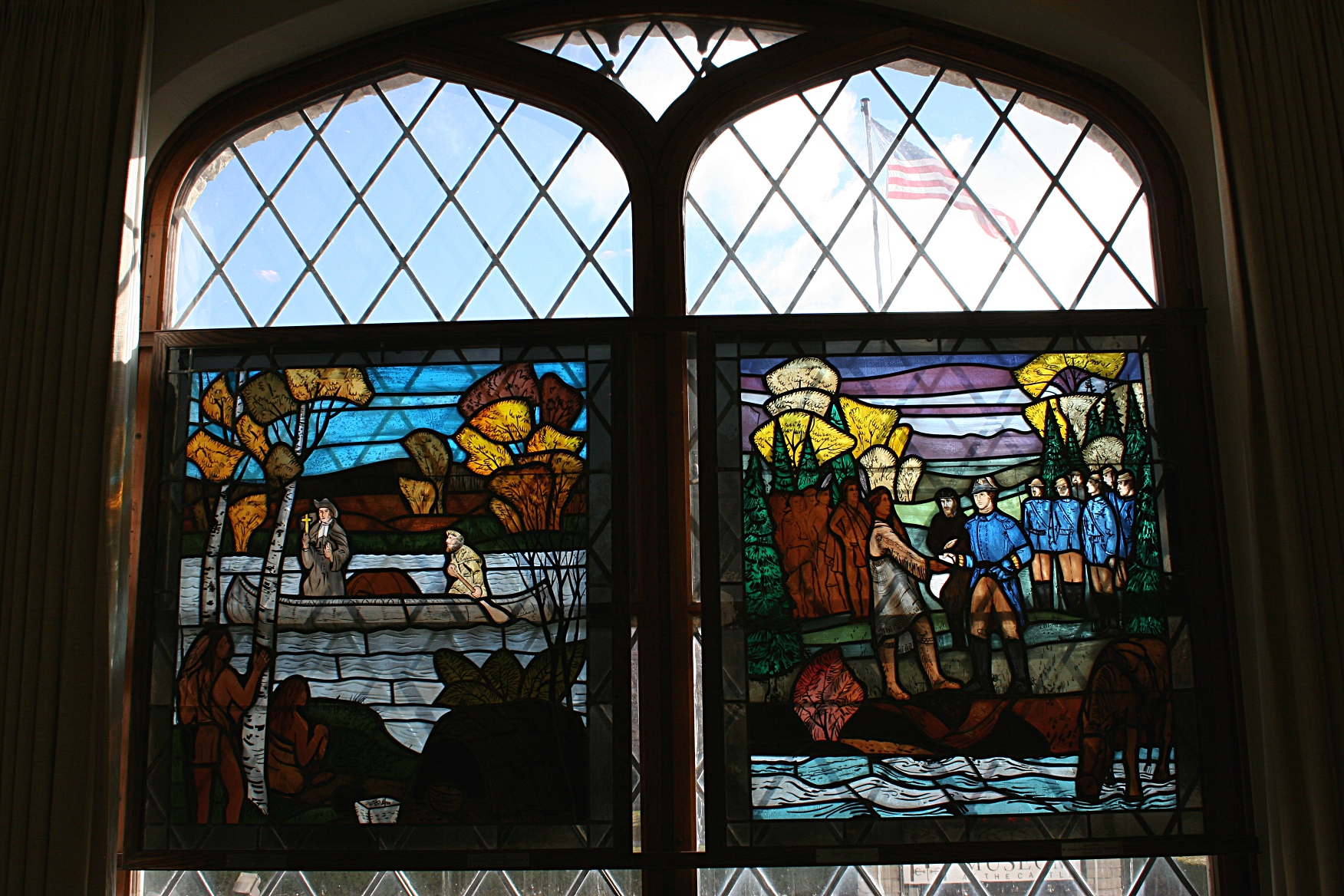
Windows depicting the region’s early fur trading history.
Today this building houses, among other exhibits, rotating and permanent, the history of the Fox River Valley, a region stretching from Green Bay on the north to Neenah on the south. The area was once home to the Fox River Valley Indians, AKA the Meskwaki/Mesquakie, who relocated to Wisconsin from the East around 1650. “Tools of Change” highlights the Fox Valley’s tools, people, work and everyday life between 1840-1950.
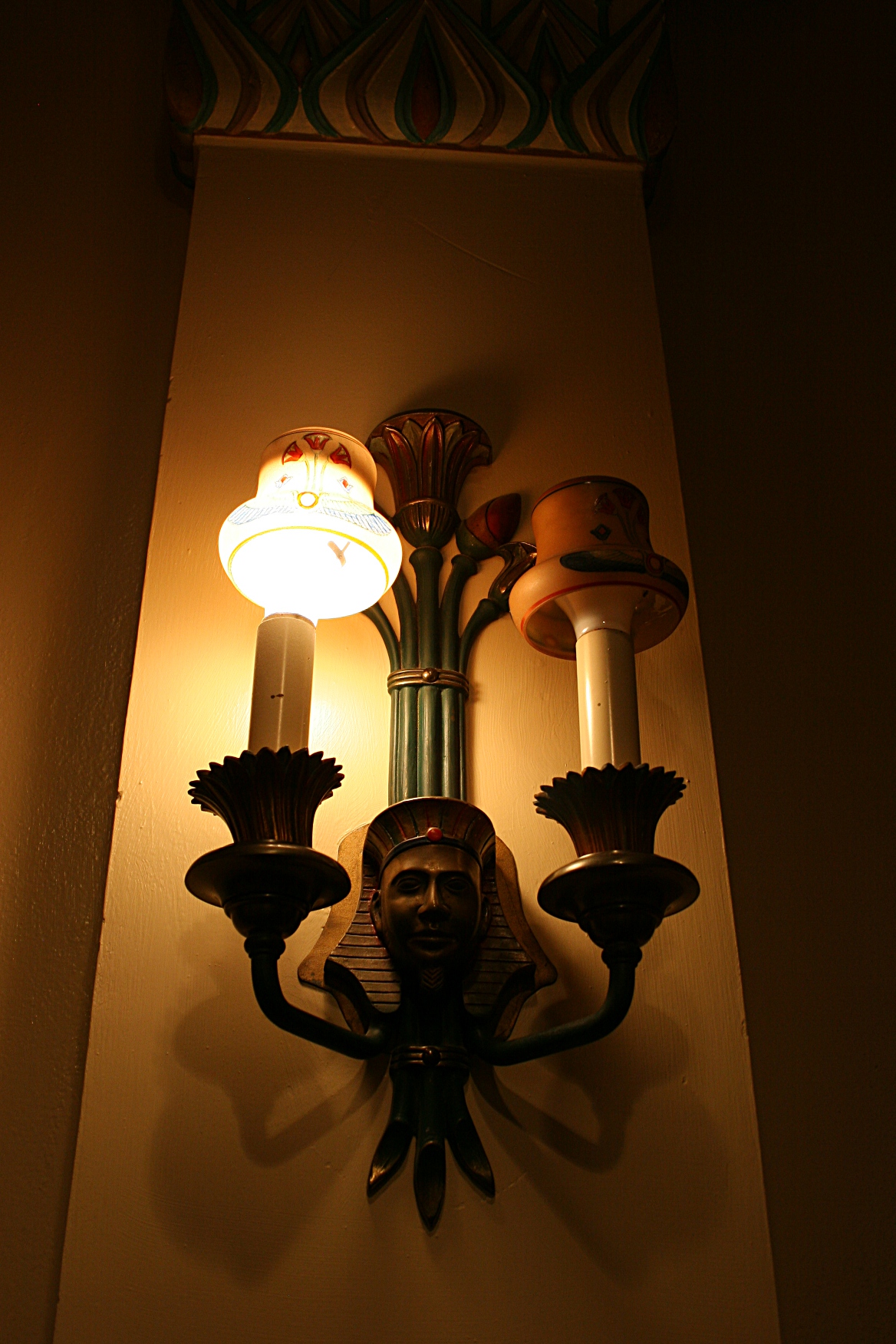
I noticed these incredible wall sconces in a Houdini exhibit room.
Other exhibits feature Senator Joseph McCarthy, born and raised in Appleton; Nobel Prize winning writer Edna Ferber; the work of local noted photographer Andrew J. Mueller; and, upstairs, a more extensive exhibit on illusionist and escape artist Harry Houdini, who lived in Appleton as a child. I’ll post about the “AKA Houdini” exhibit tomorrow.
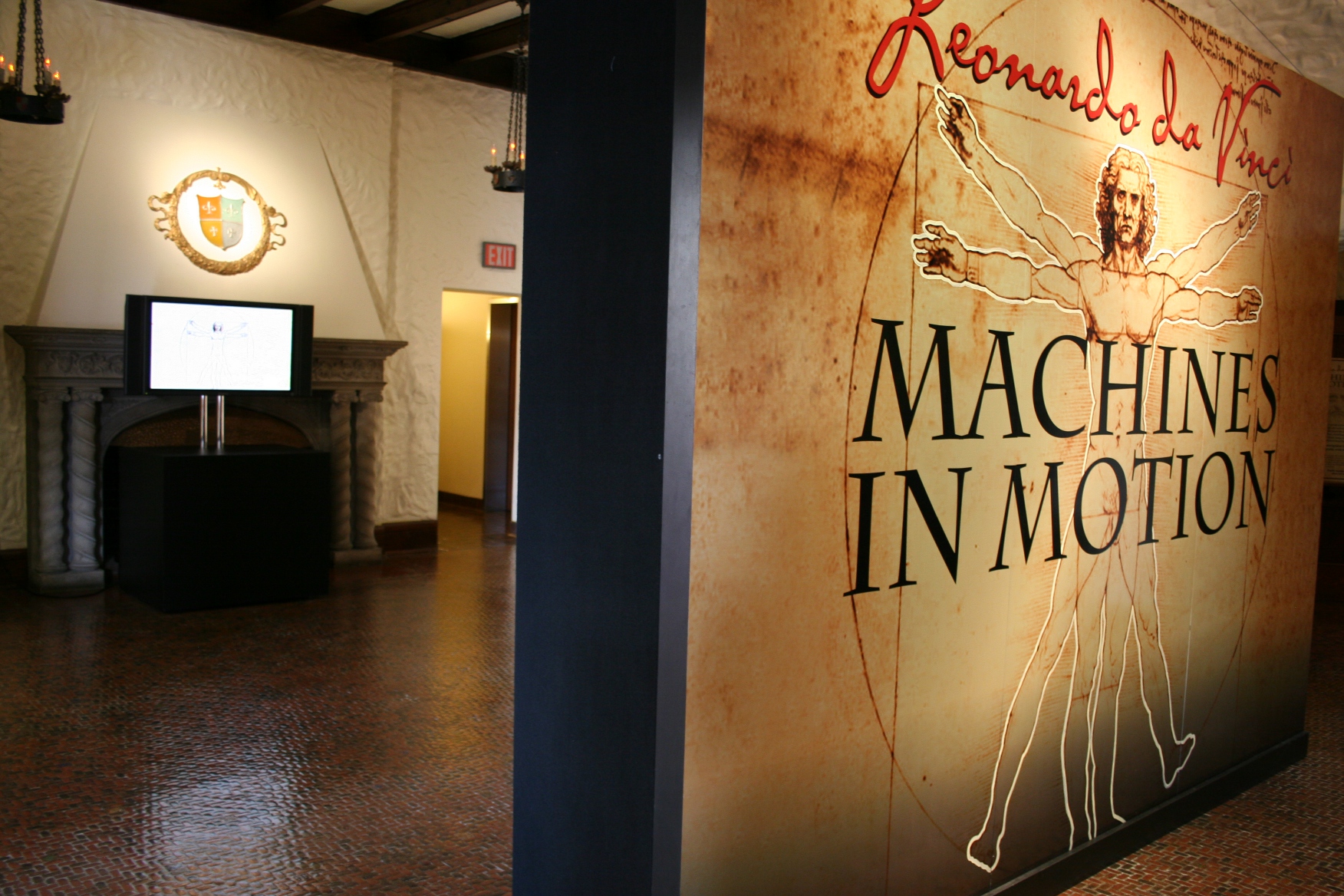
While the Leonardo da Vinci signage likely catches your eye first, look to the left and notice the fireplace, the lights, the floor.
But currently drawing the most interest is the museum’s temporary “Leonardo da Vinci: Machines in Motion” exhibit which opened late last year and has now been extended through February 3. You can read about “Machines in Motion” in a previous post by clicking here. This show was my primary reason for touring the museum in early October when my husband and I were in Appleton visiting our second daughter.

Another view of the museum, from early October.
The historic Masonic Temple housing the museum rates as a bonus to the history inside. I wonder how many visitors, when they tug at those heavy front entry doors and then enter the castle, pause to appreciate the building they are standing within.
BONUS IMAGES:
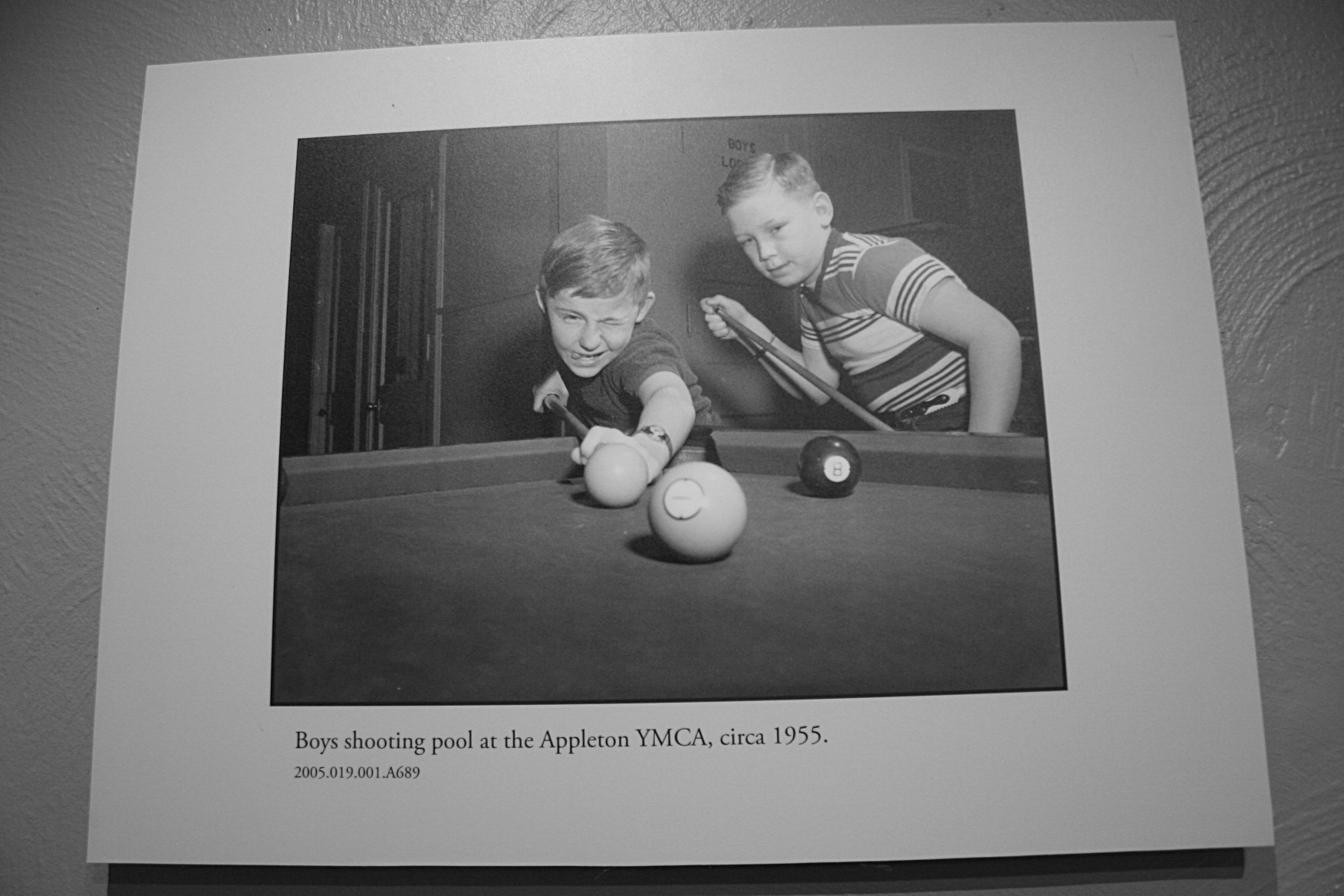
Given my love of photography, the “From My View: The Photographs of Andrew J. Mueller” exhibit especially interested me. Mueller worked for the local newspaper, beginning as an artist there and becoming the paper’s full-time photographer in 1950. He approached photography from both artistic and journalistic perspectives.
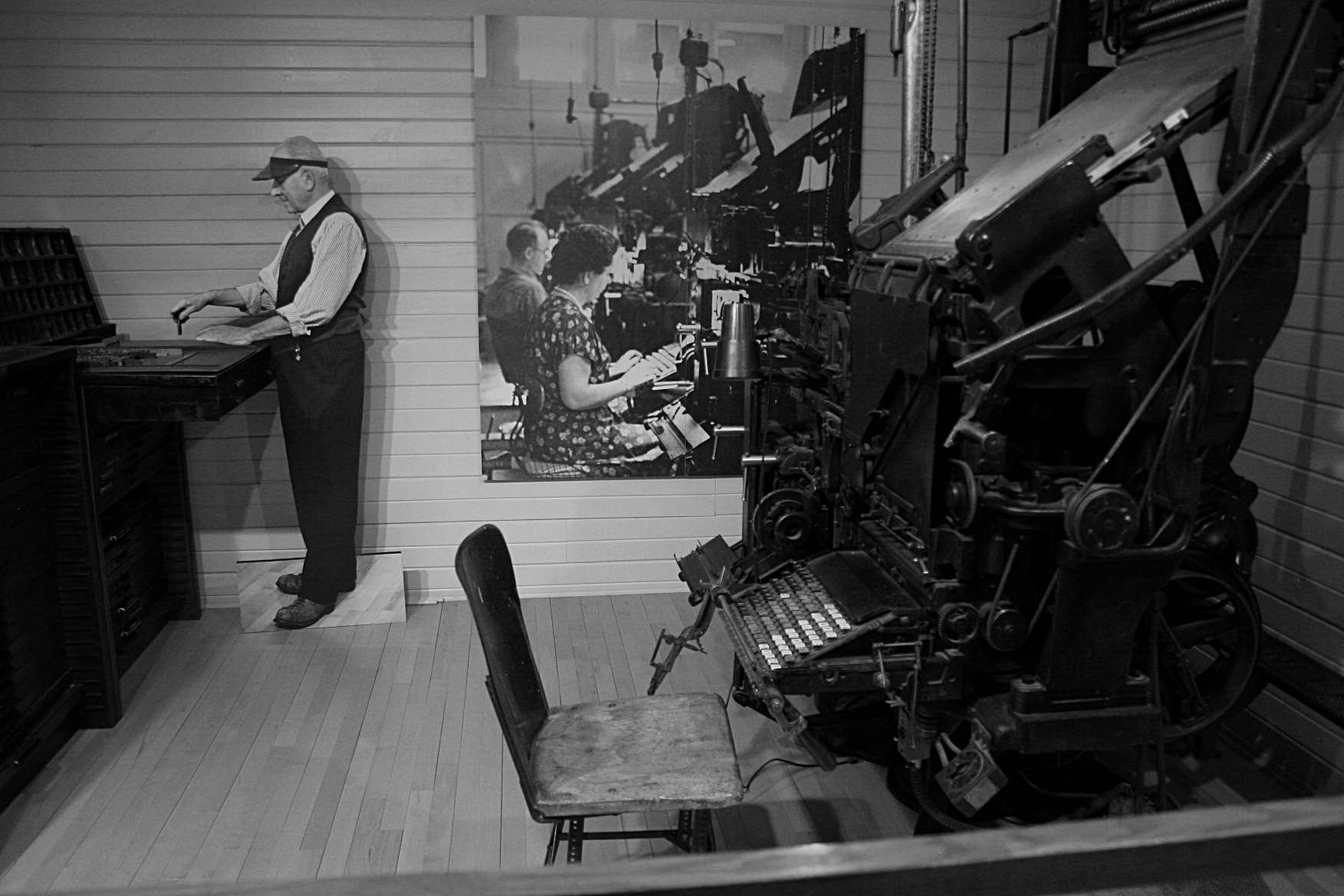
Because of my journalism background, an old printing press also caught my eye.
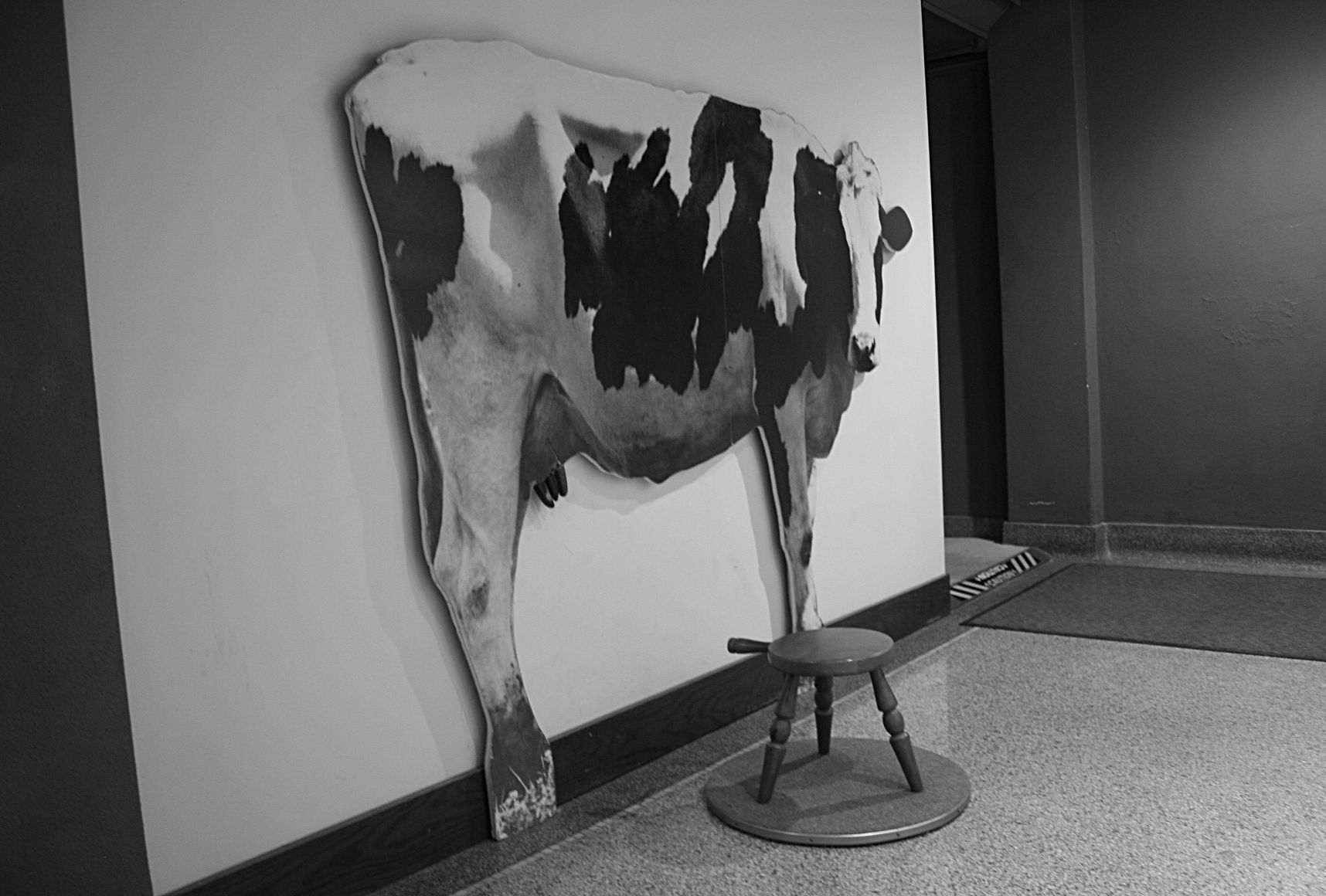
Would any Wisconsin museum exhibit be complete without a cow? Here you can perch on the stool and pretend to milk this Holstein.
FYI: For more information about The History Museum at the Castle, click here.
© Copyright 2013 Audrey Kletscher Helbling


 Minnesota Prairie Roots
Recent Comments