Minnesota Prairie Roots

Writing and photography by Audrey Kletscher Helbling

“Testify,” an enlightening & unsettling exhibit focused on Black history April 18, 2025

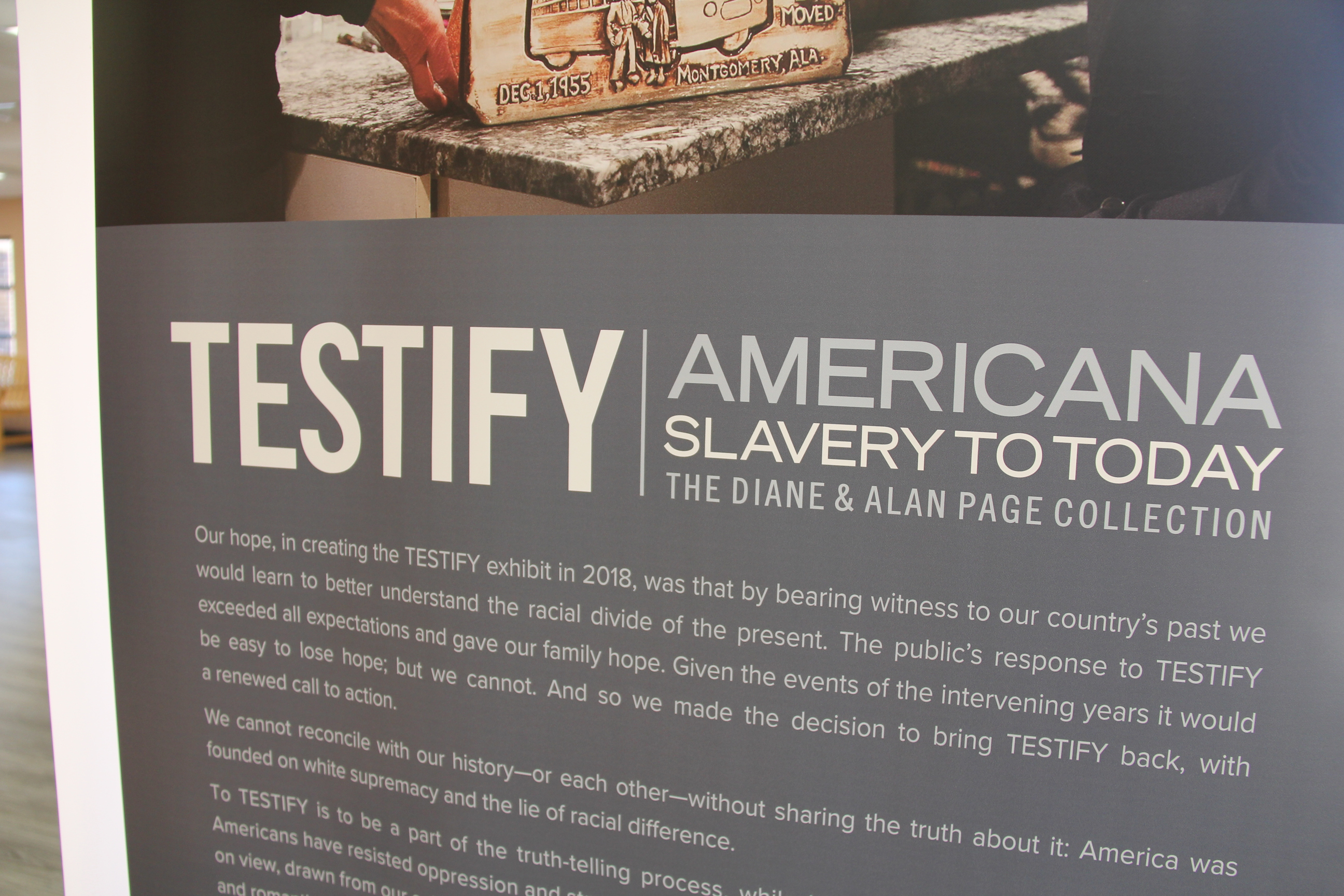
The first panel explains the “Testify” exhibit. (Minnesota Prairie Roots copyrighted photo April 2025)

THE IMAGES AND WORDS left me feeling simultaneously unsettled, uncomfortable, disturbed, enlightened, impressed, angry and incredibly sad. My emotional reaction is not surprising after viewing the traveling exhibit, “Testify—Americana Slavery to Today,” at my local public library.
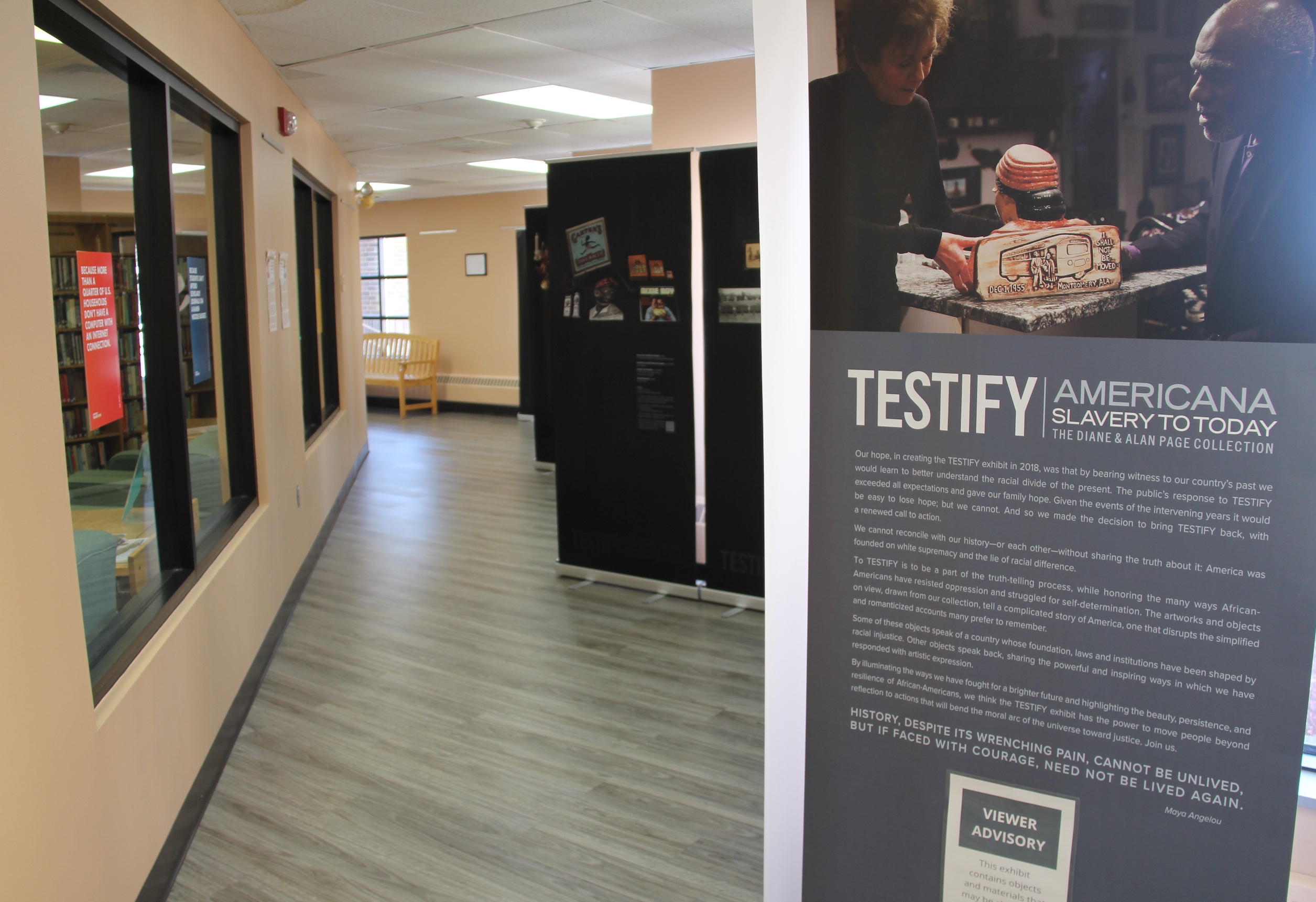
The 16 “Testify” panels stretch along the hallway connecting the library and community center in Faribault. (Minnesota Prairie Roots copyrighted photo April 2025)

The exhibit features photos of select African American art and artifacts from The Diane and Alan Page Collection. Alan Page, who is Black, was a Minnesota Supreme Court justice and, in the 1970s, a defensive lineman for the Minnesota Vikings. He’s in the NFL Hall of Fame. Diane, who was White, worked in marketing and was a businesswoman and notable philanthropist. She led the way in securing the art and artifacts in the couple’s collection.
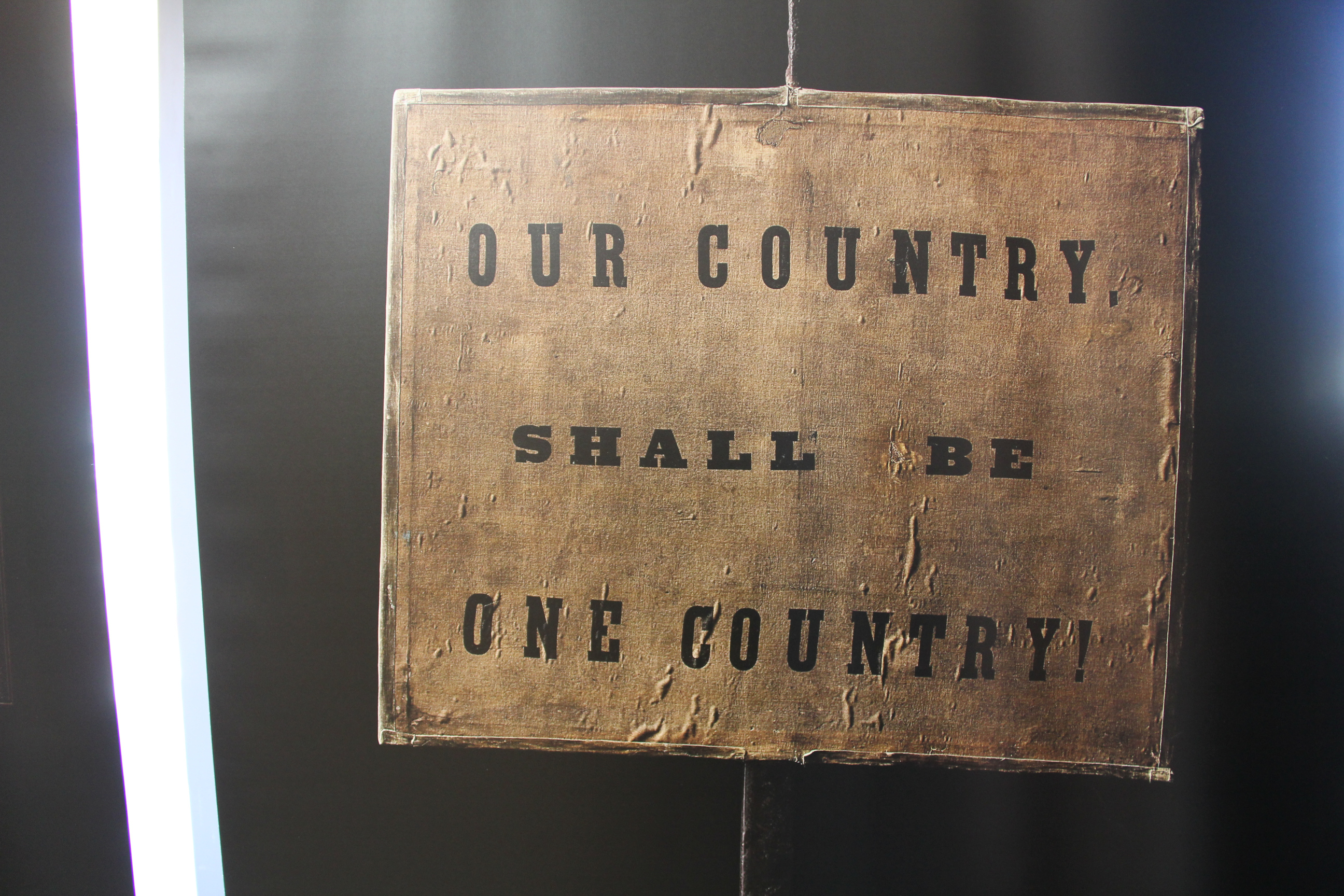
This 1864 banner may have been carried by freedmen at a rally or march. During the 1864 election of Abraham Lincoln, both political parties came together to reject slavery. (Minnesota Prairie Roots copyrighted photo April 2025)

I’m grateful Buckham Memorial Library (through SELCO, the regional library system) brought this exhibit to Faribault for the public to see. We can all learn from history, deepening our understanding. We begin to recognize perspectives and biases and can then move toward change and healing.
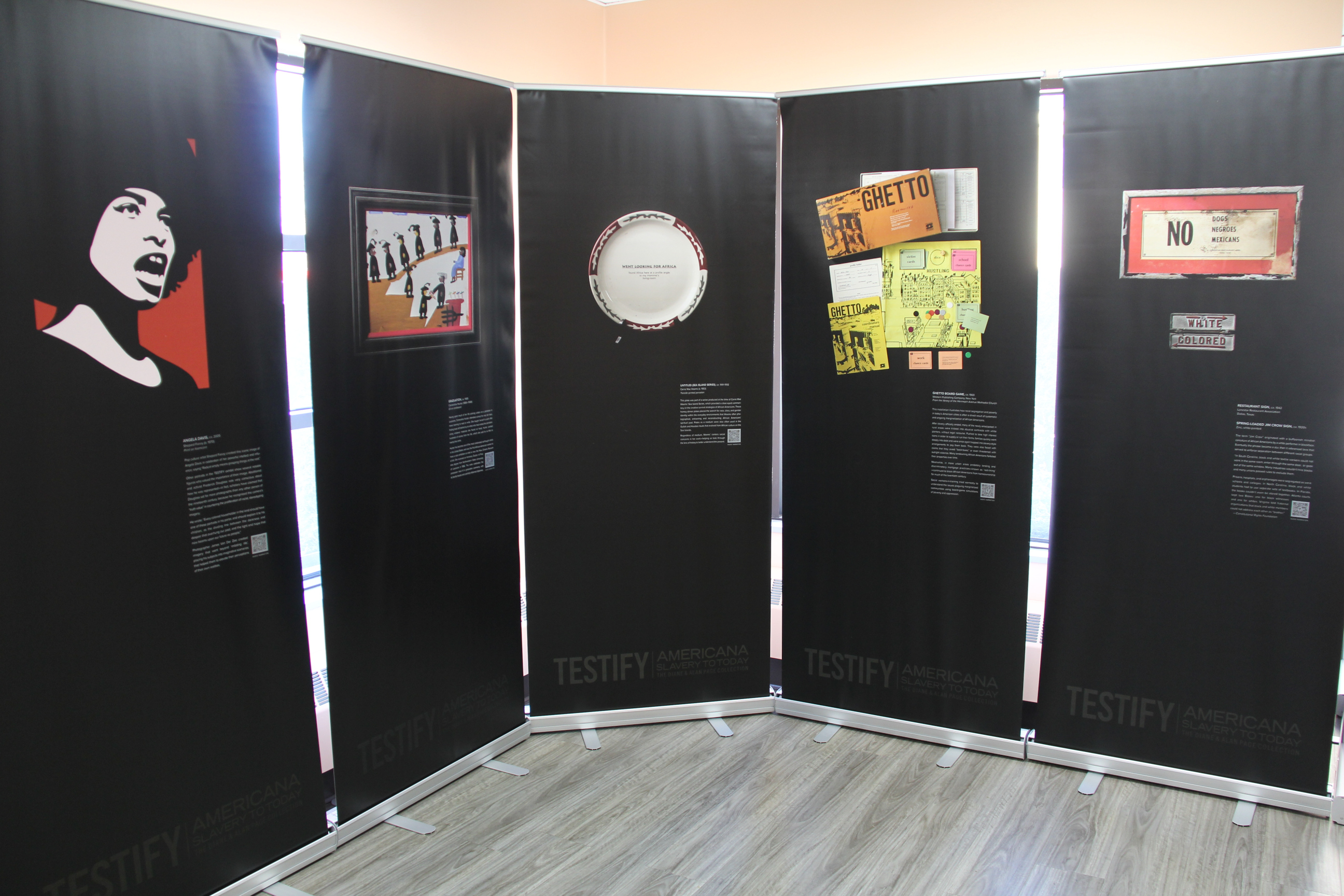
The last five panels cover a span of topics. (Minnesota Prairie Roots copyrighted photo April 2025)

As I walked my way along the 16 towering photo panels paired with text, I began to more fully appreciate the suffering, the abuse, but also the fortitude, of African Americans. Despite everything, they retained strength and resilience.
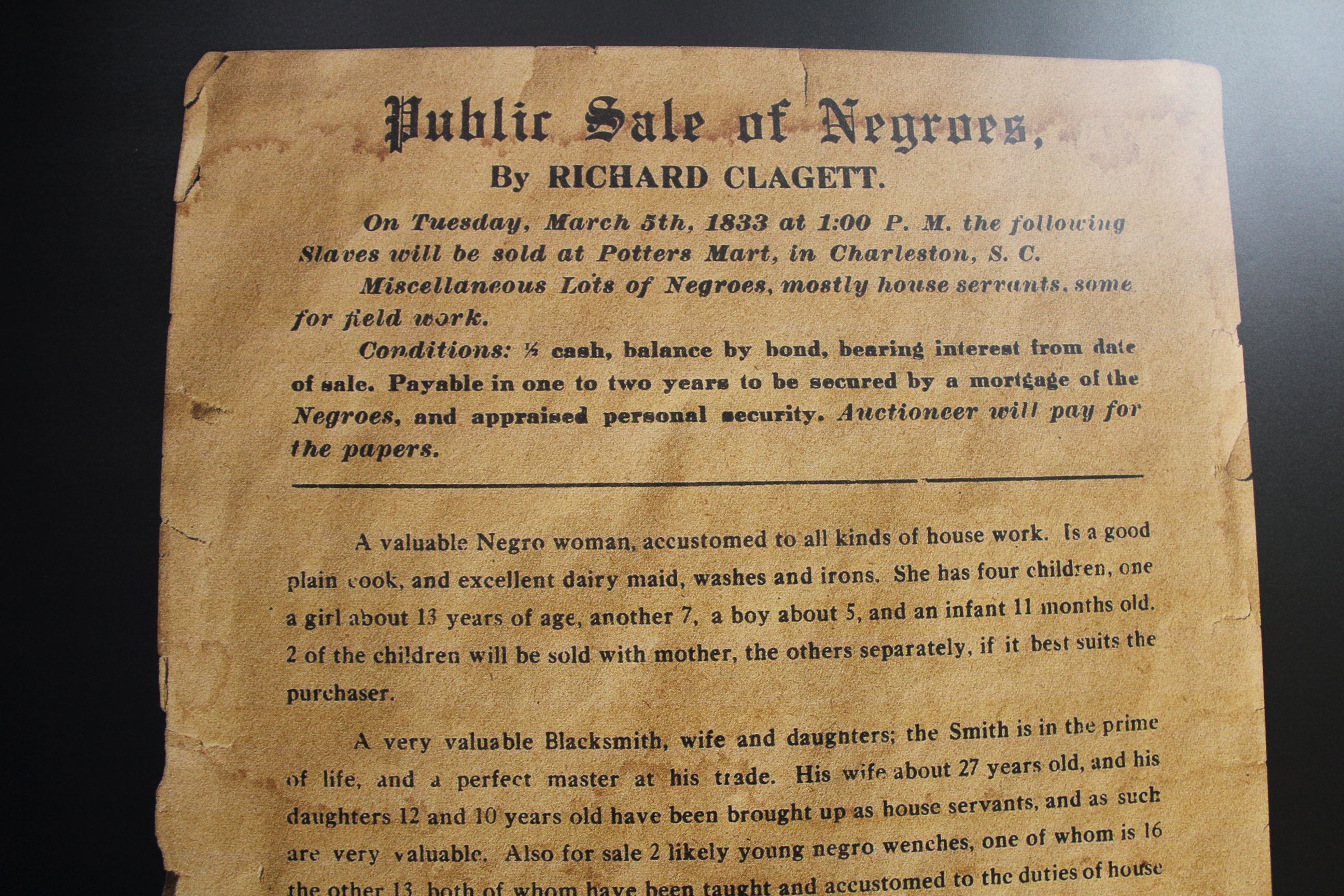
Notice of an 1833 slave auction in Charleston, South Carolina. (Minnesota Prairie Roots copyrighted photo April 2025)

Yet, how hard it must have been at times to hold hope, especially from slavery to the time of Jim Crow laws. When I read a Public Sale of Negroes notice from 1833, I read words of degradation. I cannot imagine being that “valuable Negro woman,” that “very valuable blacksmith,” the slaves in “miscellaneous lots of Negroes” who were auctioned off like so much property. What humanity does to one another seems unimaginable, unfathomable. Yet, it still happens today, just in different ways.
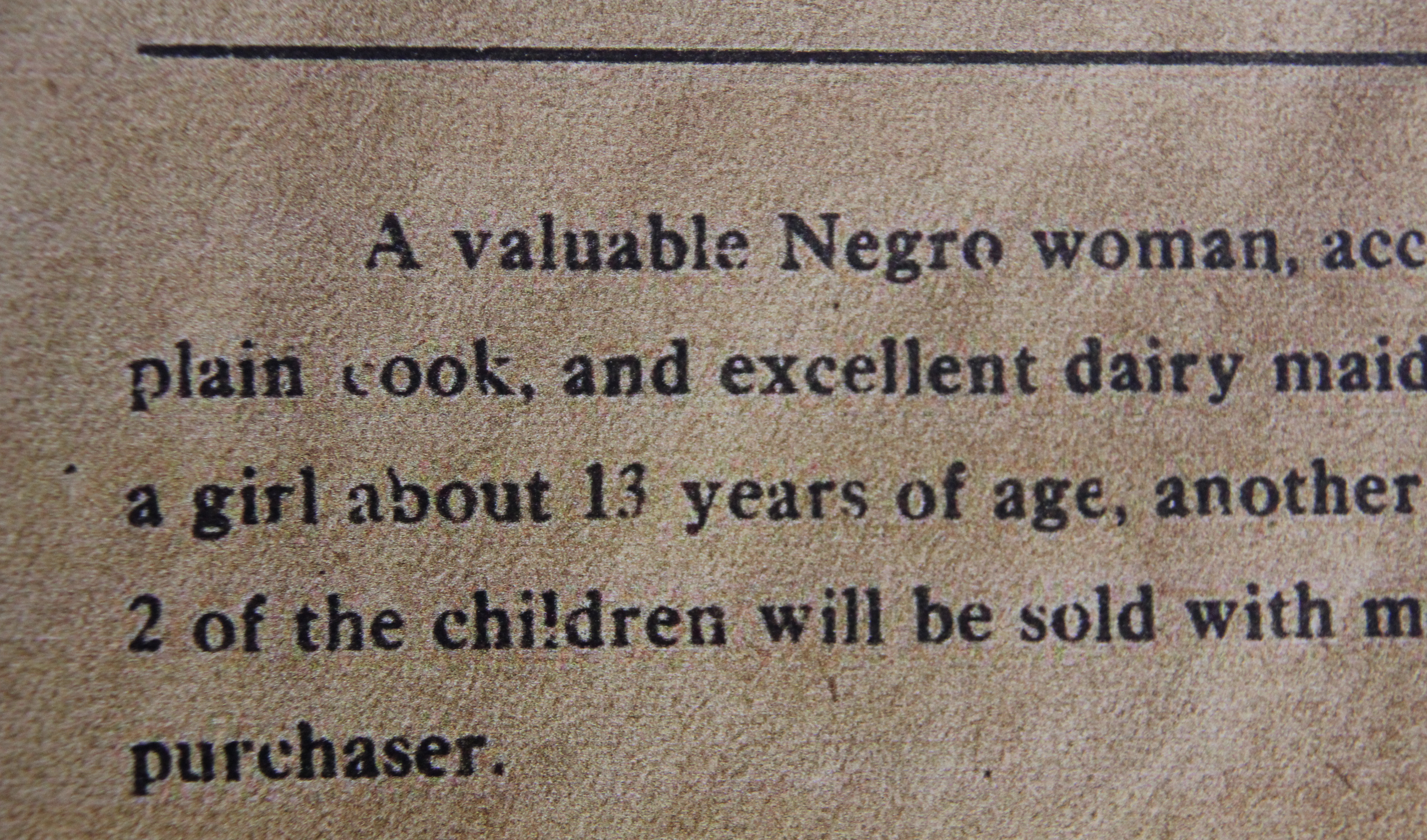
A description of a slave to be sold at the 1833 auction. (Minnesota Prairie Roots copyrighted photo April 2025)

As disturbing as that slave bill of sale was, a group photo of nine unclothed Black toddlers in a professional studio portrait titled “Alligator Bait” proved profoundly disturbing to me. So much so that I can’t bear to show this 1897 image to you. The accompanying text states that historians researched whether hunters actually used African American children as alligator bait. Results were inconclusive, which is telling.
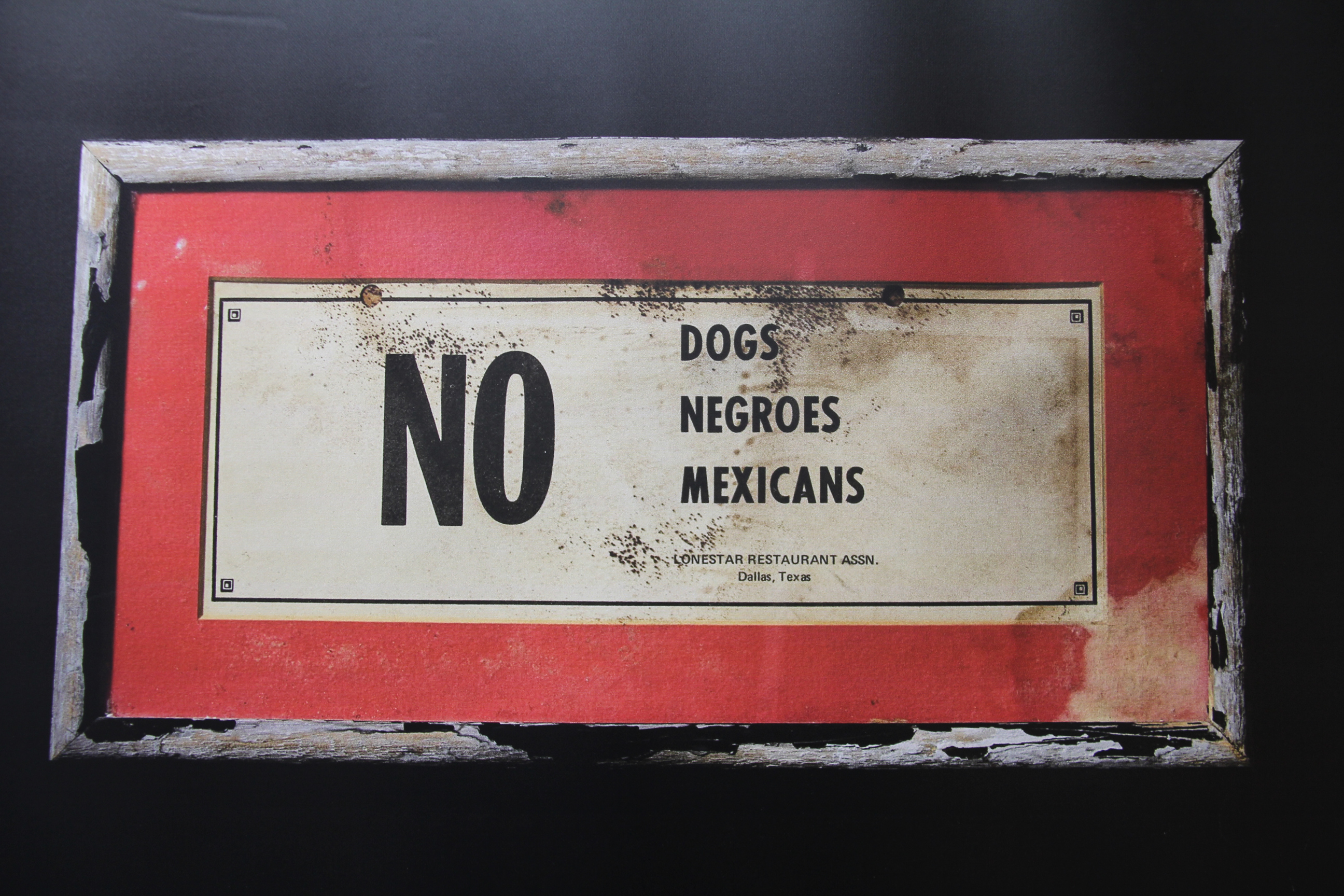
An unwelcoming 1942 sign from the Lonestar Restaurant Association in Dallas, Texas. (Minnesota Prairie Roots copyrighted photo April 2025)
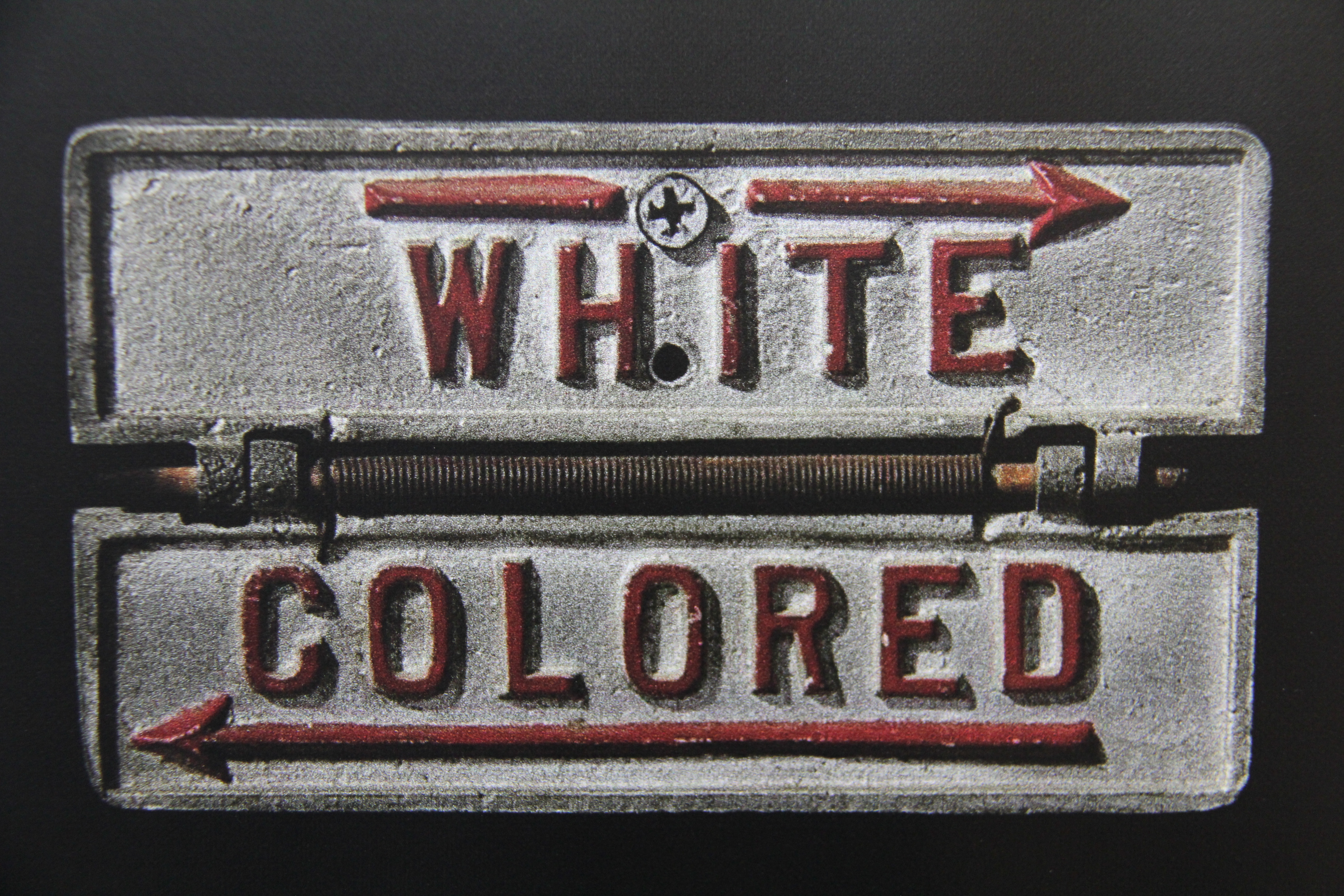
A 1920s spring-loaded Jim Crow sign. (Minnesota Prairie Roots copyrighted photo April 2025)
Protest art from the Civil Rights Movement. (Minnesota Prairie Roots copyrighted photo April 2025)

A sign banning “dogs, Negroes and Mexicans” and another pointing Whites one way and “Colored” people the other prompted thoughts of, well, things have not changed all that much. Of course, they have, but not really if you dig deep or, conversely, read today’s headlines.
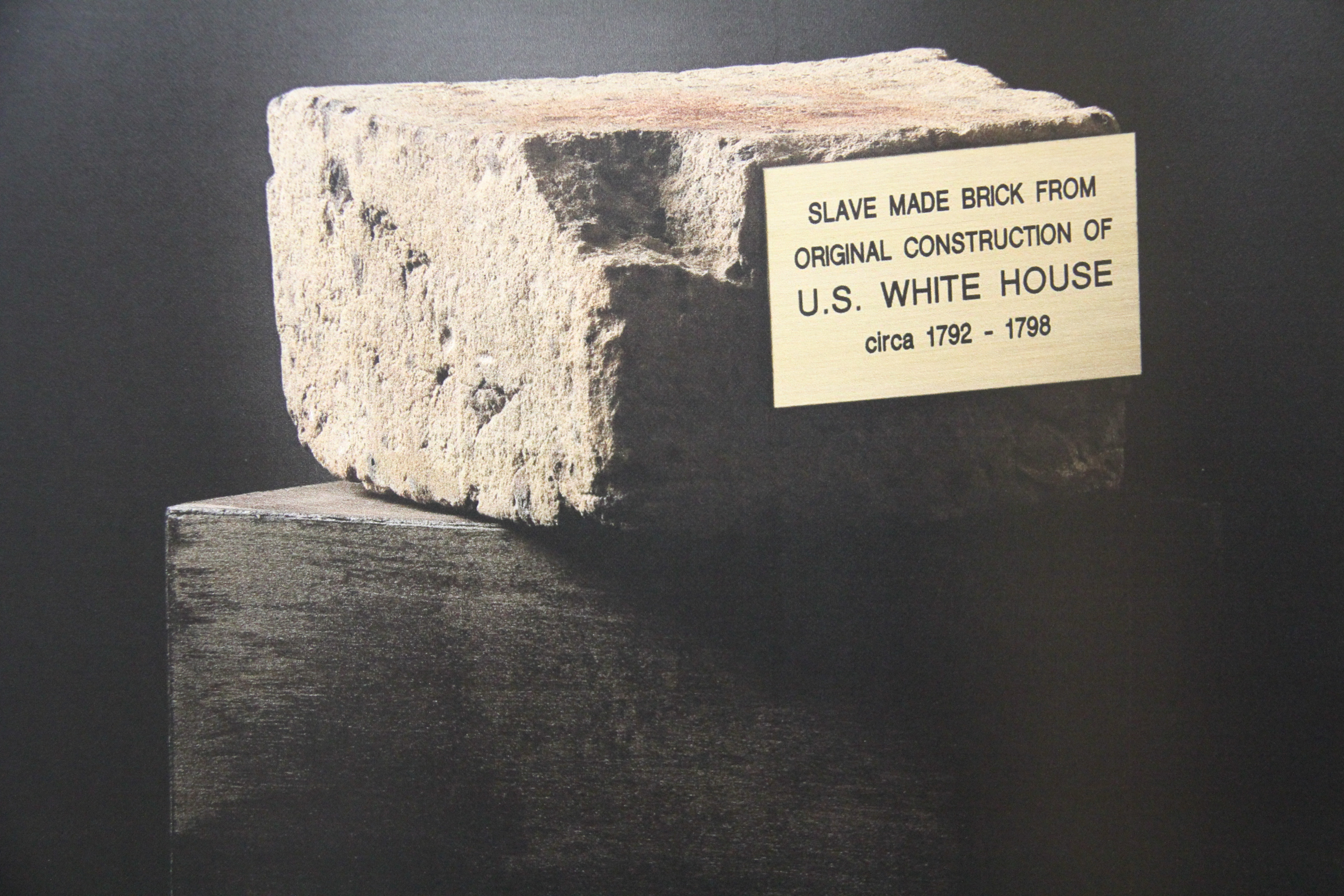
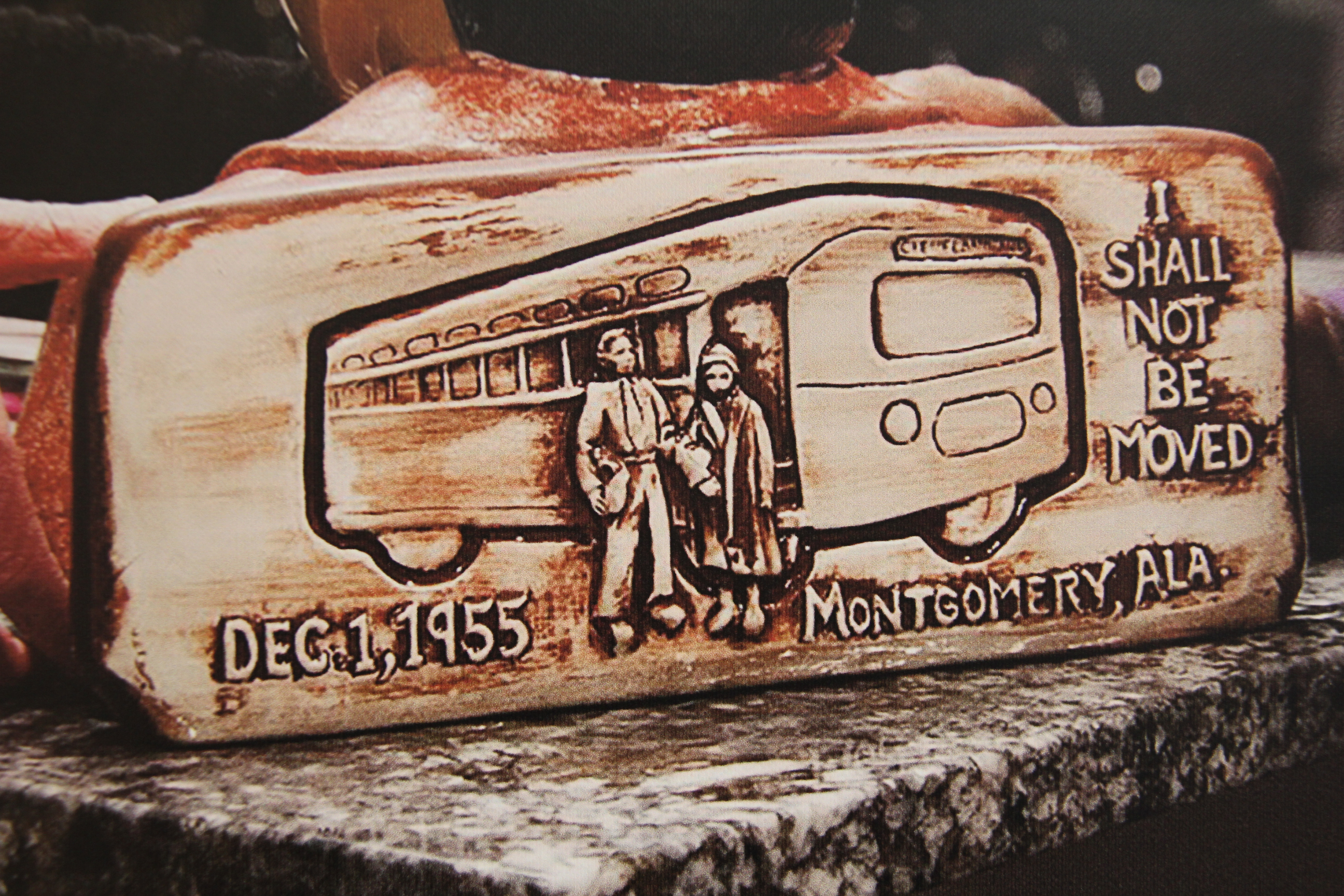
A brick crafted by slaves for the White House. (Minnesota Prairie Roots copyrighted photo April 2025)

I want to backtrack for a minute to the first photo I saw in the exhibit. It was of a single brick, circa 1792-1798. This singular object drove home the point that this country was built on the backs of slaves, like those who molded and laid the bricks for government buildings in Washington DC. That includes the White House and many U.S. Capitol buildings, according to the exhibit text. Unpaid slave labor. Think about that for a minute or ten.
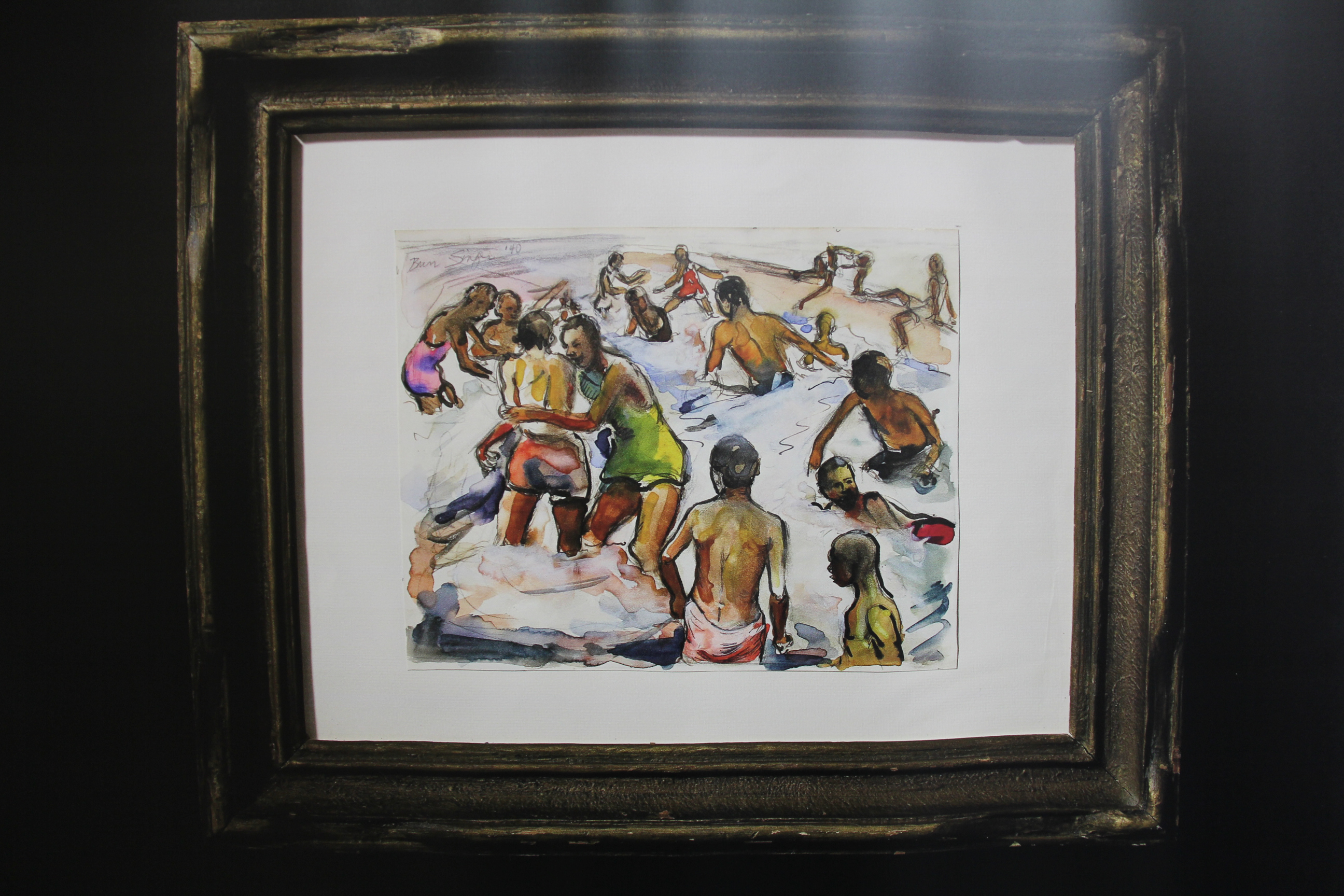
“Only on Thursdays,” a 1940 painting by Burr Singer. (Minnesota Prairie Roots copyrighted photo April 2025)

There’s lots to contemplate in the “Testify” exhibit. That includes the watercolor art of Burr Singer titled “Only on Thursdays.” If you just looked at the art without the title and context, you might think it was simply a depiction of African Americans swimming. But it’s not. Thursday was the only day Blacks could use the Pasadena public pool. This painting makes a statement.
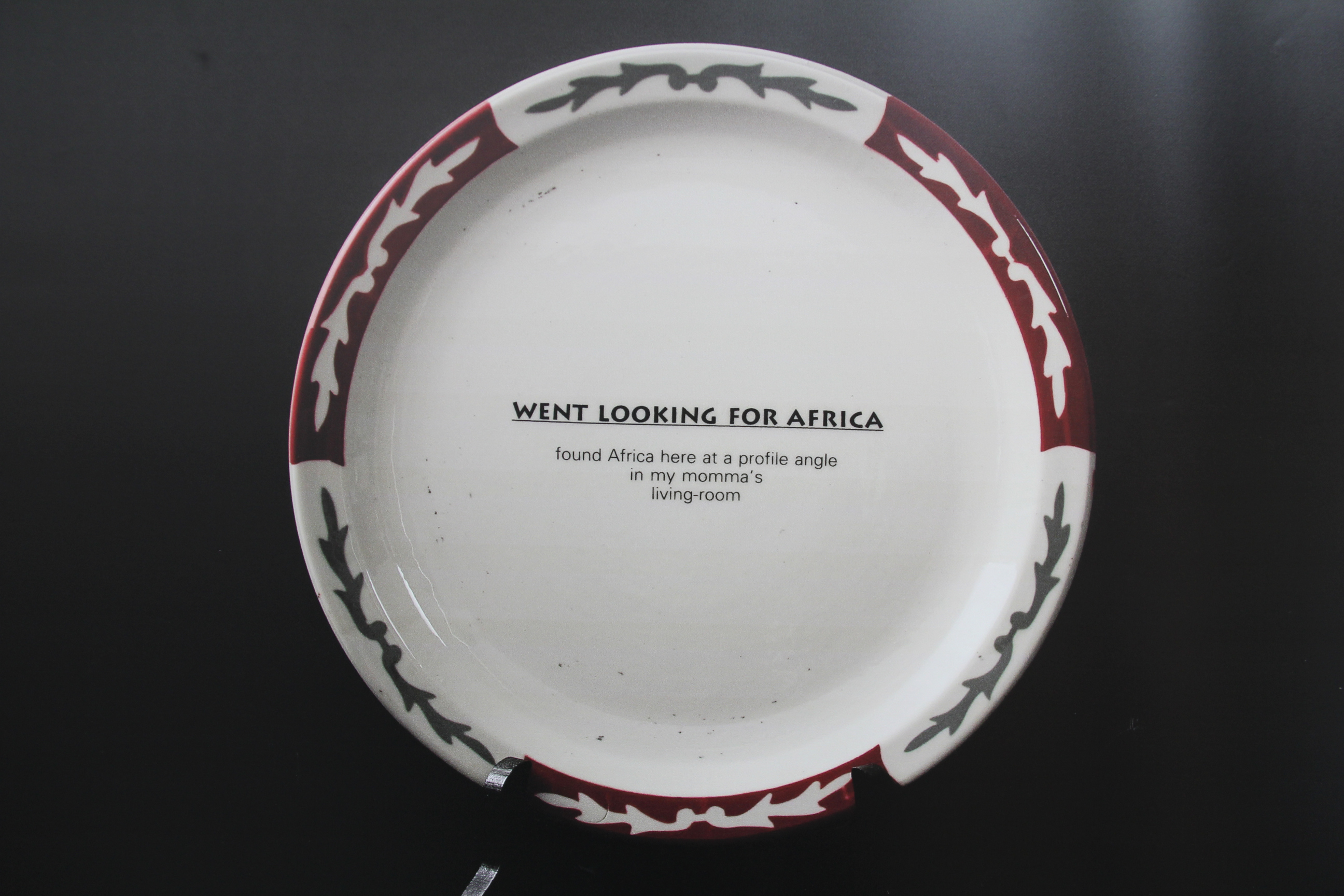
This 1991-1992 plate in Carrie Mae Weems’ Sea Island Series honors the creative survival strategies of African Americans. (Minnesota Prairie Roots copyrighted photo April 2025)

This exhibit makes a statement. Through images and words, it shines a light on the past, on Black history, on the atrocities of slavery and segregation and racism (both subtle and overt). Through “Testify,” truth-telling emerges for all to view and contemplate.
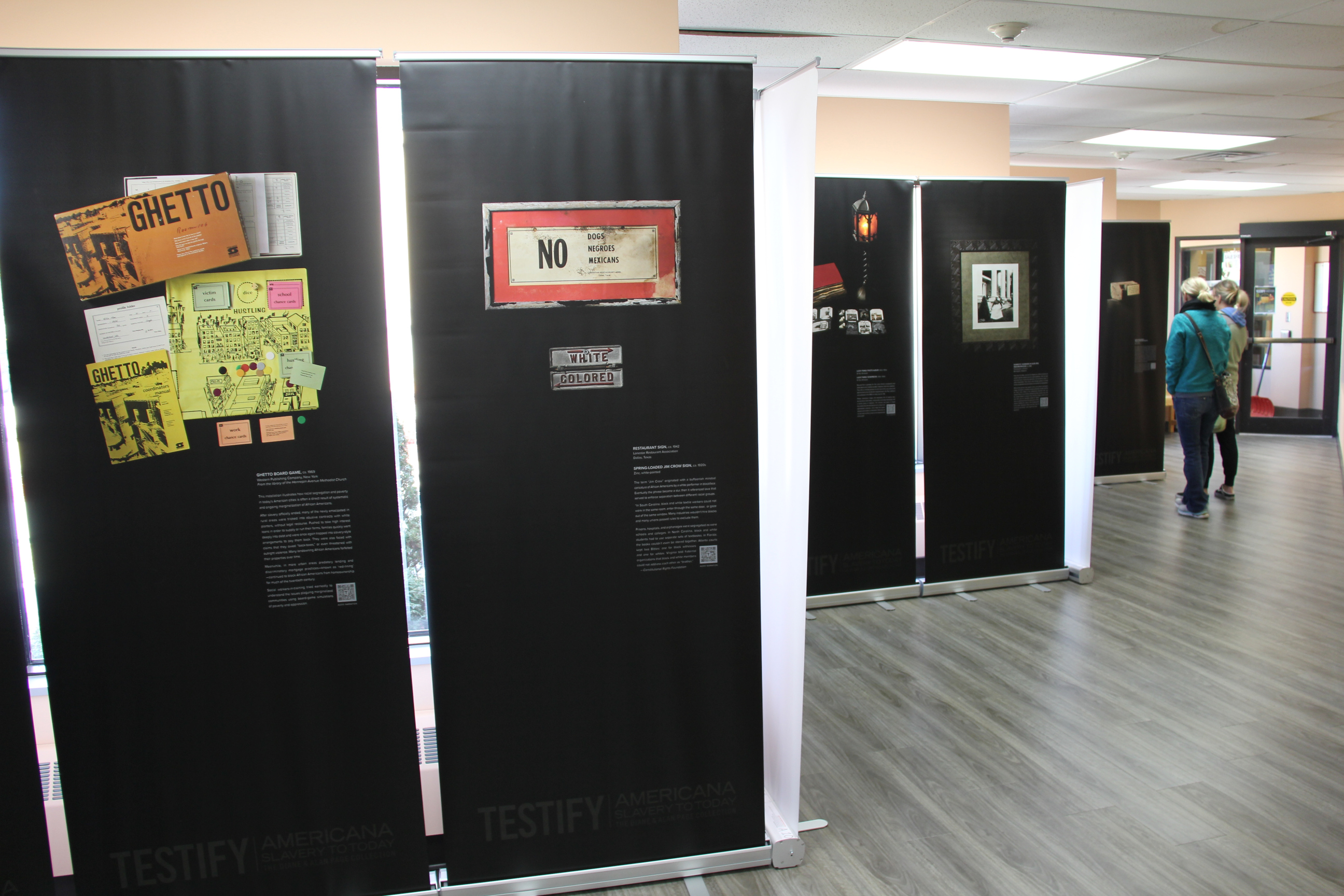
The panel to the far left shows a photo of the board game GHETTO. Social workers in training used the game to understand issues facing marginalized communities. (Minnesota Prairie Roots copyrighted photo April 2025)

FYI: “Testify—Americana Slavery to Today” is on display until April 23 in the corridor linking Buckham Memorial Library to the Faribault Community Center. The photos and information included in this story are only a sampling of what you will see in the exhibit. The Mabel Public Library hosts the exhibit from April 25-May 7.

© Copyright 2025 Audrey Kletscher Helbling


Remembering the start of the Civil War April 8, 2011

THE FIRST AND LAST TIME I attended a Cannon Valley Civil War Roundtable meeting, I was impressed by the collective knowledge this Faribault-based organization possesses of the Civil War. The session opened with each member sharing a historical snippet about the conflict.

Even guests like me were expected to offer something, anything. I was getting nervous as my turn neared and I couldn’t think of anything intellectually impressive to share. I had come solely because I wanted to see the slave documents that a guest speaker was bringing to the gathering. I didn’t expect this.

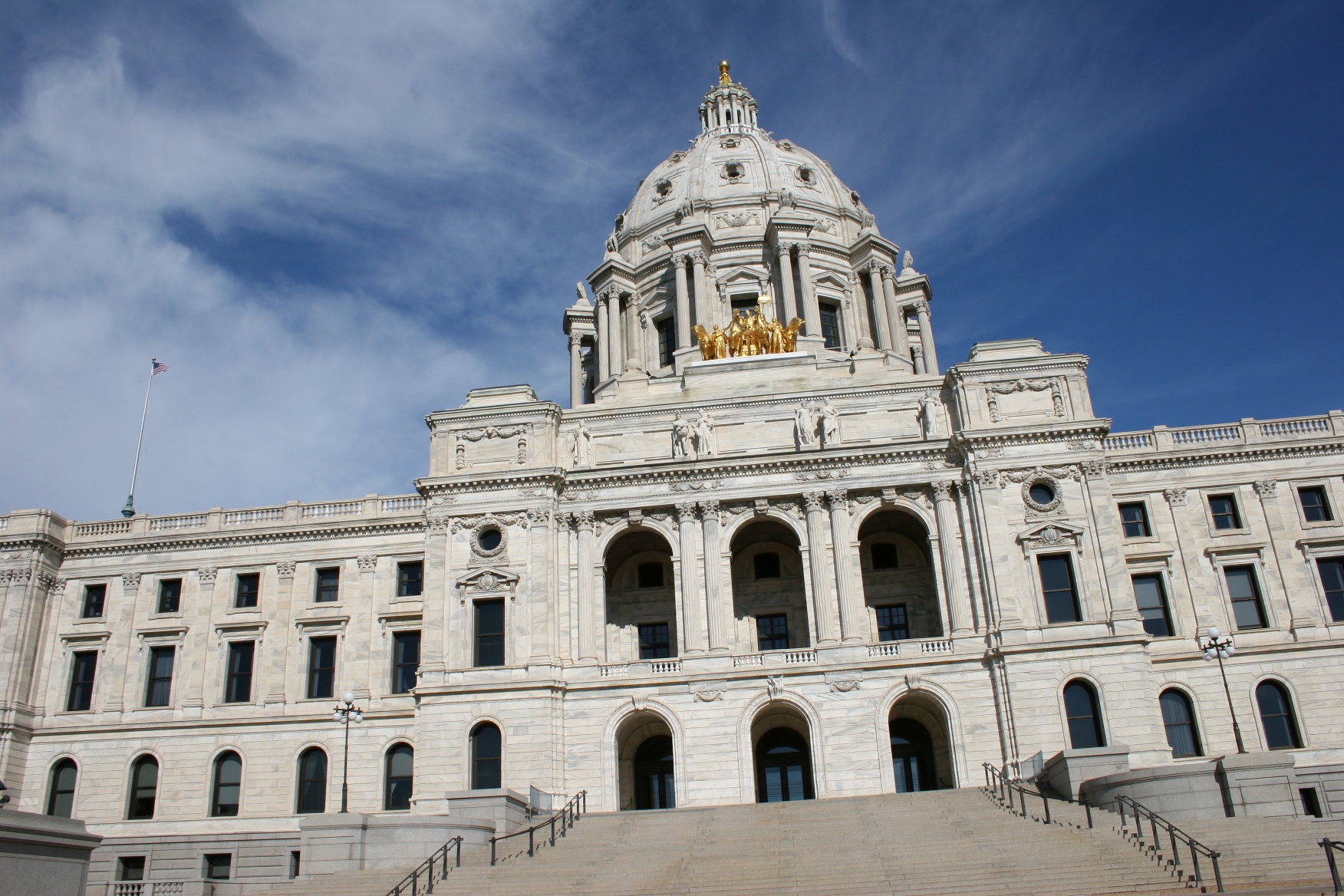
But then I remembered my tour of the Minnesota State Capitol months earlier. I could tell them, although I’m sure they knew, that a Howard Pyle painting, The Battle of Nashville, hangs in the Governor’s Reception Room. The artwork, according to the Capitol tour guide, is among the most noted of the Civil War and depicts the bloody conflict at Shy’s Hill, often defined as the war’s decisive battle.

And just to make sure the Roundtable members understood that I wasn’t completely Civil War illiterate, I also told them that the inclusion of white Georgia marble in Capitol construction drew the ire of Civil War veterans. The marble comprises much of the building’s exterior.


Georgia marble graces the exterior of the Minnesota State Capitol.

I doubt my tidbit facts impressed them, but I tried.

If you’re like me, not well-versed on the details of the Civil War, this year—the 150th anniversary of that conflict—offers the perfect opportunity to learn more. The Minnesota Historical Society has a lengthy list of educational activities planned to commemorate the anniversary.

This Saturday, April 9, for example, is “Civil War Flag Day at the Capitol” featuring three recently-conserved Minnesota Civil War flags and one from the Spanish-American War. The 11 a.m. – 4 p.m. event, with a 1 p.m. program, also includes Civil War artifacts, reenactors, children’s activities and more.

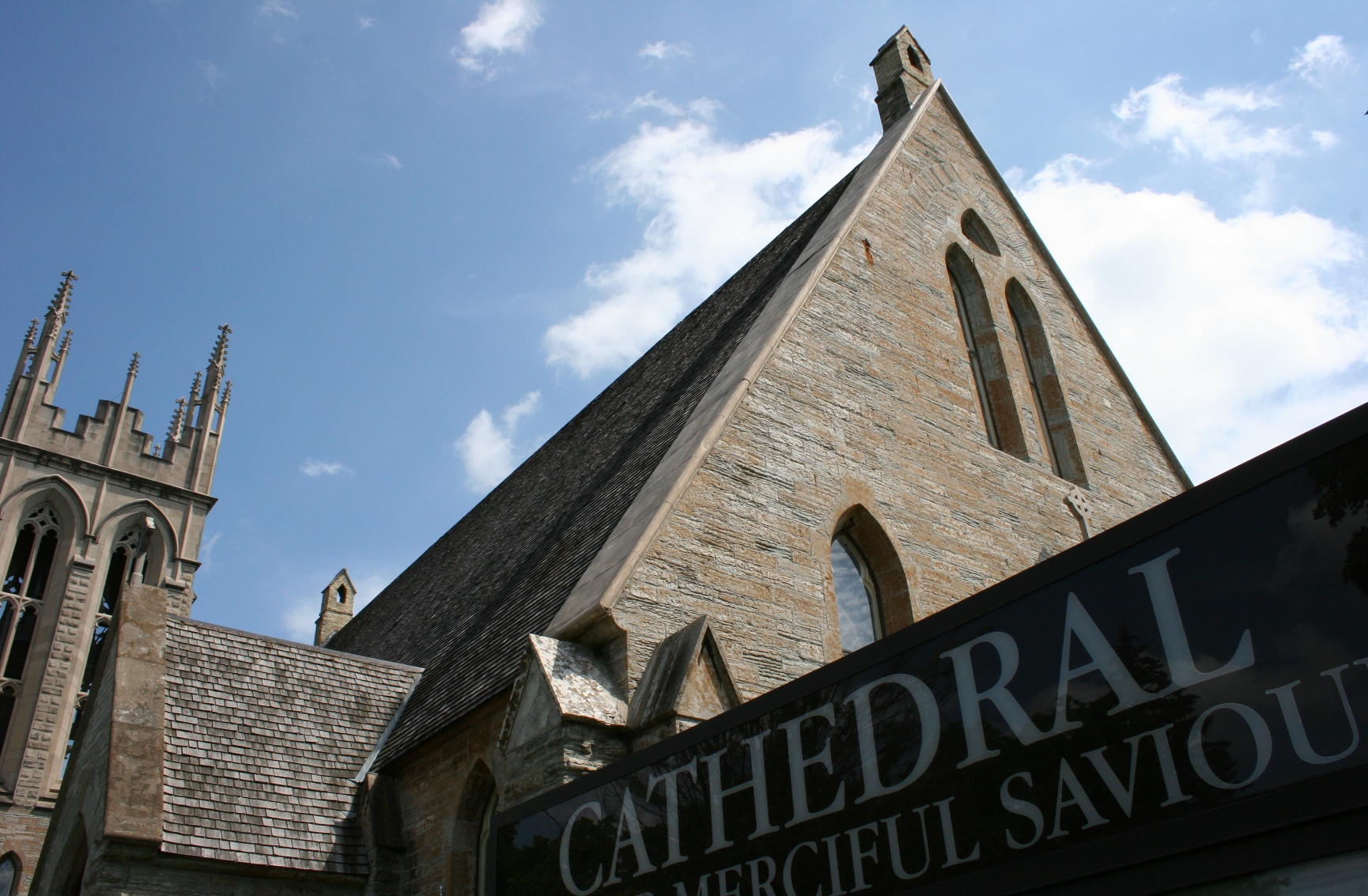
I won’t be at the State Capitol on Saturday because I’ll be attending “Recognition of the Fall of Fort Sumter—The Beginning of the Civil War” hosted by the Cannon Valley Civil War Roundtable and the Rice County Historical Society from 1 p.m. – 4 p.m. in Faribault. On April 12, 1861, the Confederates fired on Fort Sumter, starting the Civil War. Saturday’s event will be held at the Guild House of the 1862 historic Cathedral of Our Merciful Saviour, 101 NW Sixth Street.


The Guild House is attached to the historic Cathedral of Our Merciful Saviour across from Central Park in Faribault.

I expect that some of the items on display at the Guild House will be artifacts—Abraham Lincoln photos and postcards, Civil War uniform buttons—I saw at the 2009 Roundtable meeting. Back then the presenter failed to bring his slave documents. Slave bills will be displayed on Saturday. There’ll also be weapons and money, buckles and bonds, and more.


Civil War uniform buttons and insignias displayed at a 2009 Cannon Valley Civil War Roundtable meeting.

This Civil War postcard was among the items a collector brought to a Cannon Valley Civil War Roundtable meeting.

An 1840 Philadelphia Derringer, like the pistol used to assassinate President Abraham Lincoln. A collector brought the pistol to the Roundtable meeting I attended in 2009.

Jan Stevens, an area Civil War enthusiast who creates replica historical clothing will dress in period clothing and greet visitors. Another reenactor will recruit visitors to join the cause.

Civil War music will fill the Guild House. Author Richard G. Krom, great grandson of a Civil War soldier from nearby Morristown, will sign and sell copies of his book, The 1st MN Second to None.

Finally, I’m looking forward to once again examining the recently-restored Rice County Civil War battle flag of Company C, Sixth Minnesota Volunteer Infantry. I’ve seen the flag only once before, viewing it at the county historical society under the watchful eye of Director Susan Garwood.

I was disappointed then that Garwood wouldn’t allow me to photograph the flag, even when I promised to turn off the flash on my camera. She wouldn’t be swayed.

But I’ll have my camera with me on Saturday and I’ll try again.

I expect the Civil War artifact collector whom I first met at the 2009 Roundtable meeting will be there too. He, thankfully, allowed me to photograph his historical pieces. But he wouldn’t allow me to publish his name in a blog post I wrote then. He looked me directly in the eye and demanded anonymity to protect his substantial investment. He wasn’t joking when he told me he knew where he could find me.

FYI: This weekend’s activities at the Capitol and in Faribault are free and open to the public. However, donations to the Rice County Historical Society will be accepted at the Faribault event where homemade pie and coffee will be served.

© Copyright 2011 Audrey Kletscher Helbling