Minnesota Prairie Roots

Writing and photography by Audrey Kletscher Helbling

White Cane Day & more focus Faribault Lions as they serve October 15, 2024

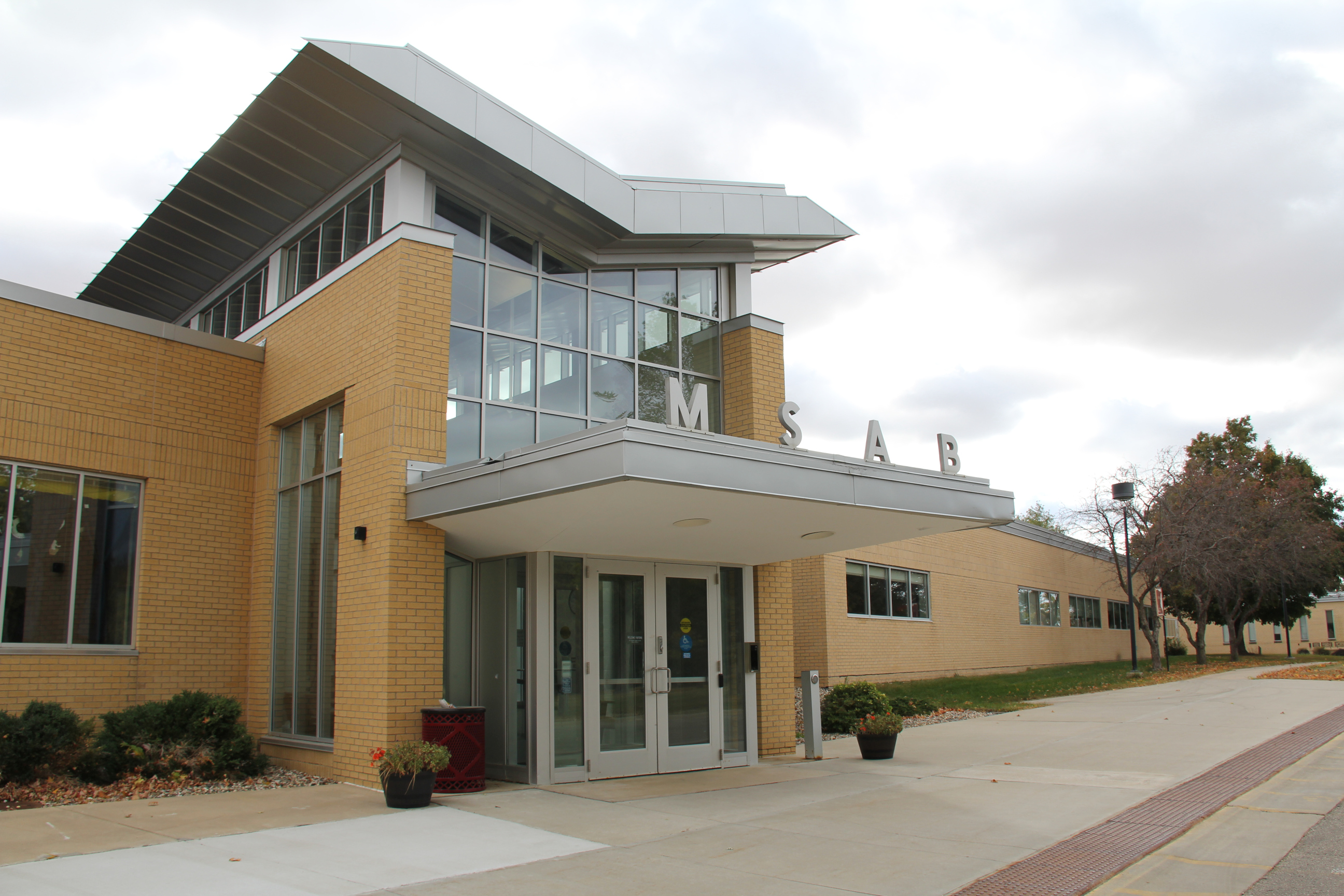
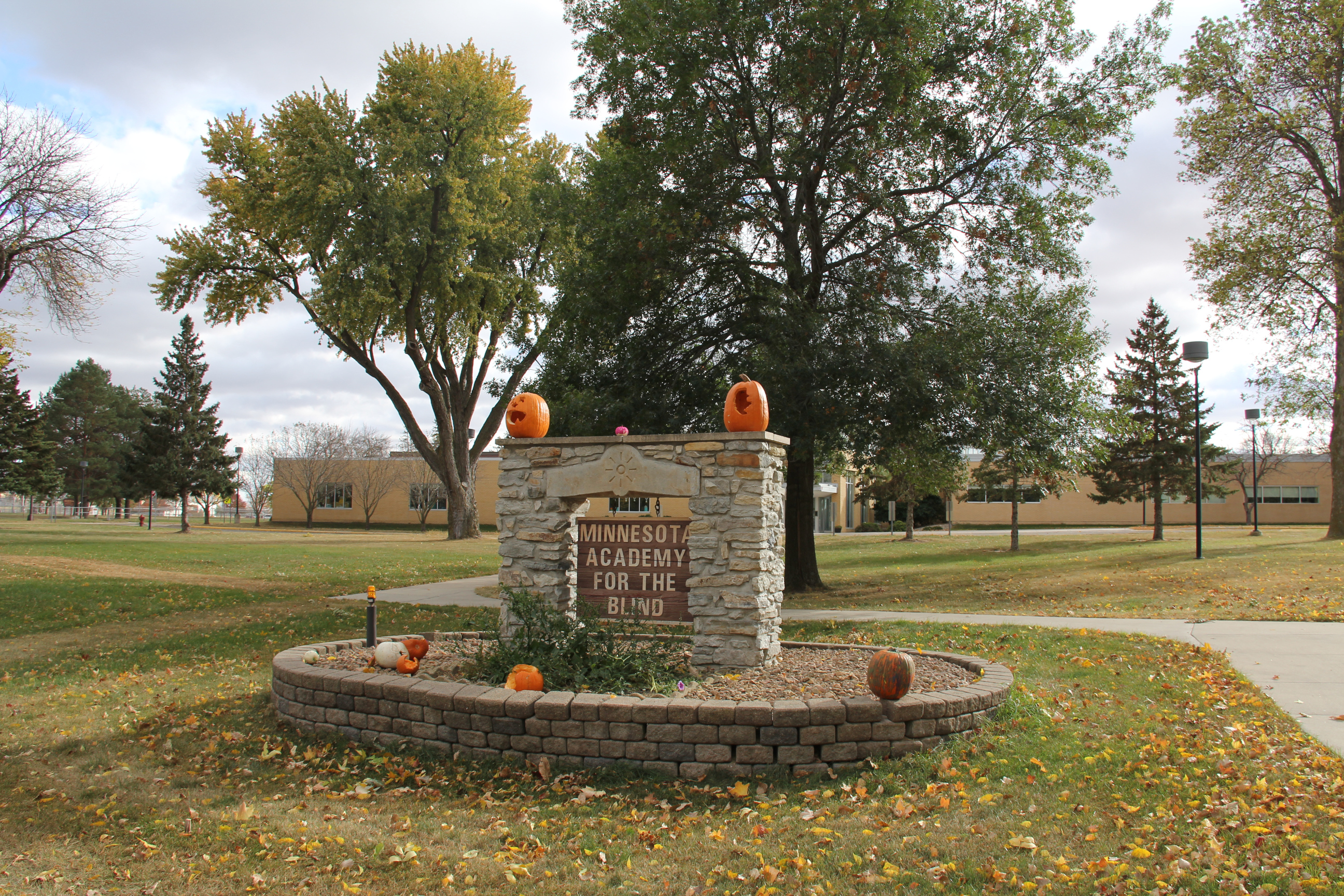
The entrance to the Minnesota State Academy for the Blind, located on Faribault’s east side. (Minnesota Prairie Roots copyrighted photo October 2024)

AS SOMEONE WHO DEALS with vision and hearing impairments, I feel fortunate to live in a community with a heightened awareness of those issues. Faribault is home to the Minnesota State Academies for the Deaf and Blind. Medical professionals offer local care in vision and hearing. And the Faribault Lions Club, focused on both, is especially active.
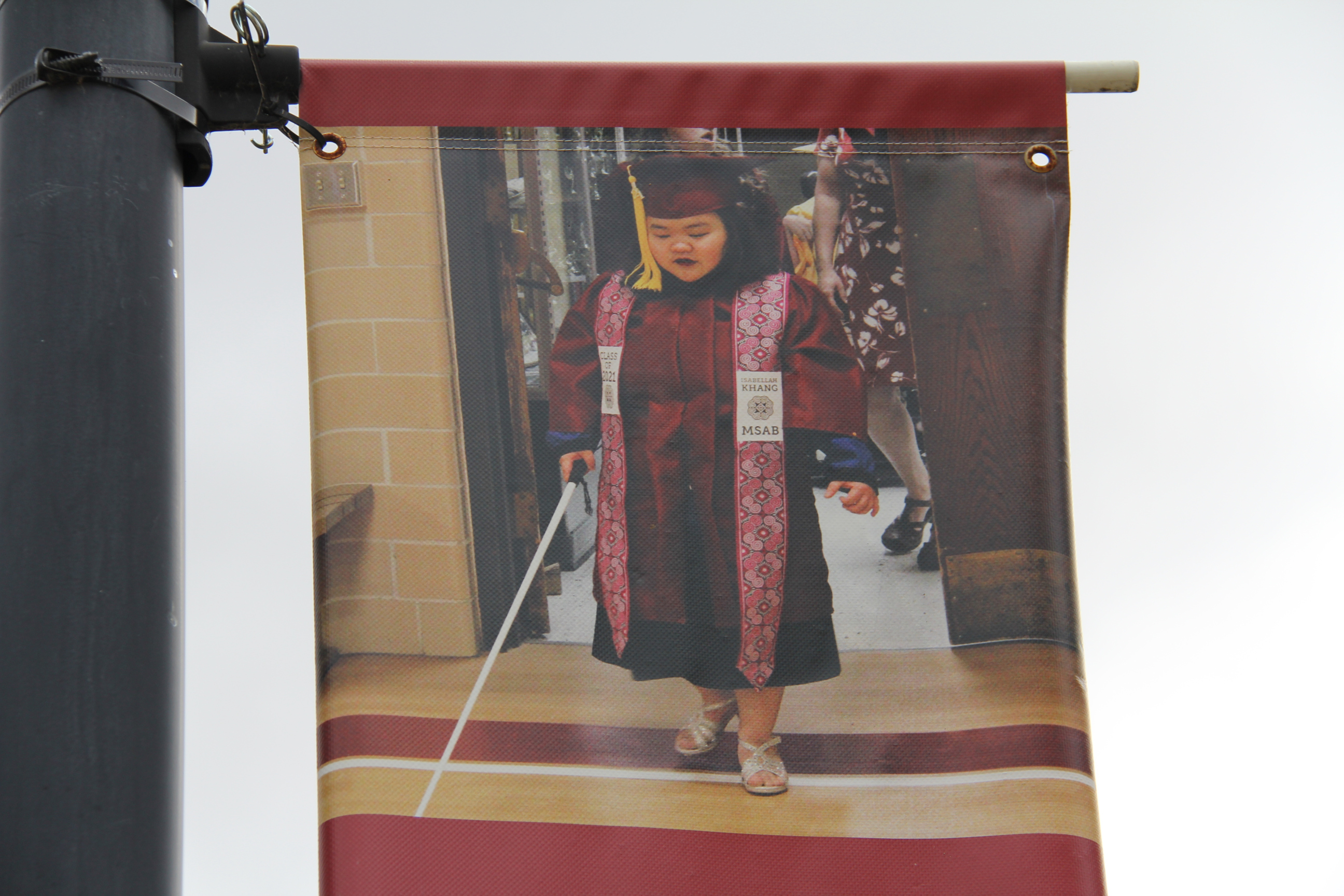
Pictures of MSAB students are featured on banners scattered around the campus. This one highlights a graduate. (Minnesota Prairie Roots copyrighted photo October 2024)

And that is why I met local Lion John Battles and learned about White Cane Awareness Day, celebrated annually on October 15. Battles was standing inside the exit area of Fareway Foods handing out information about white canes and collecting donations. Those monies will help blind and visually impaired individuals deal with mobility issues. For example, past gifts have been used to purchase canes and/or replacement tips for students at MSAB.
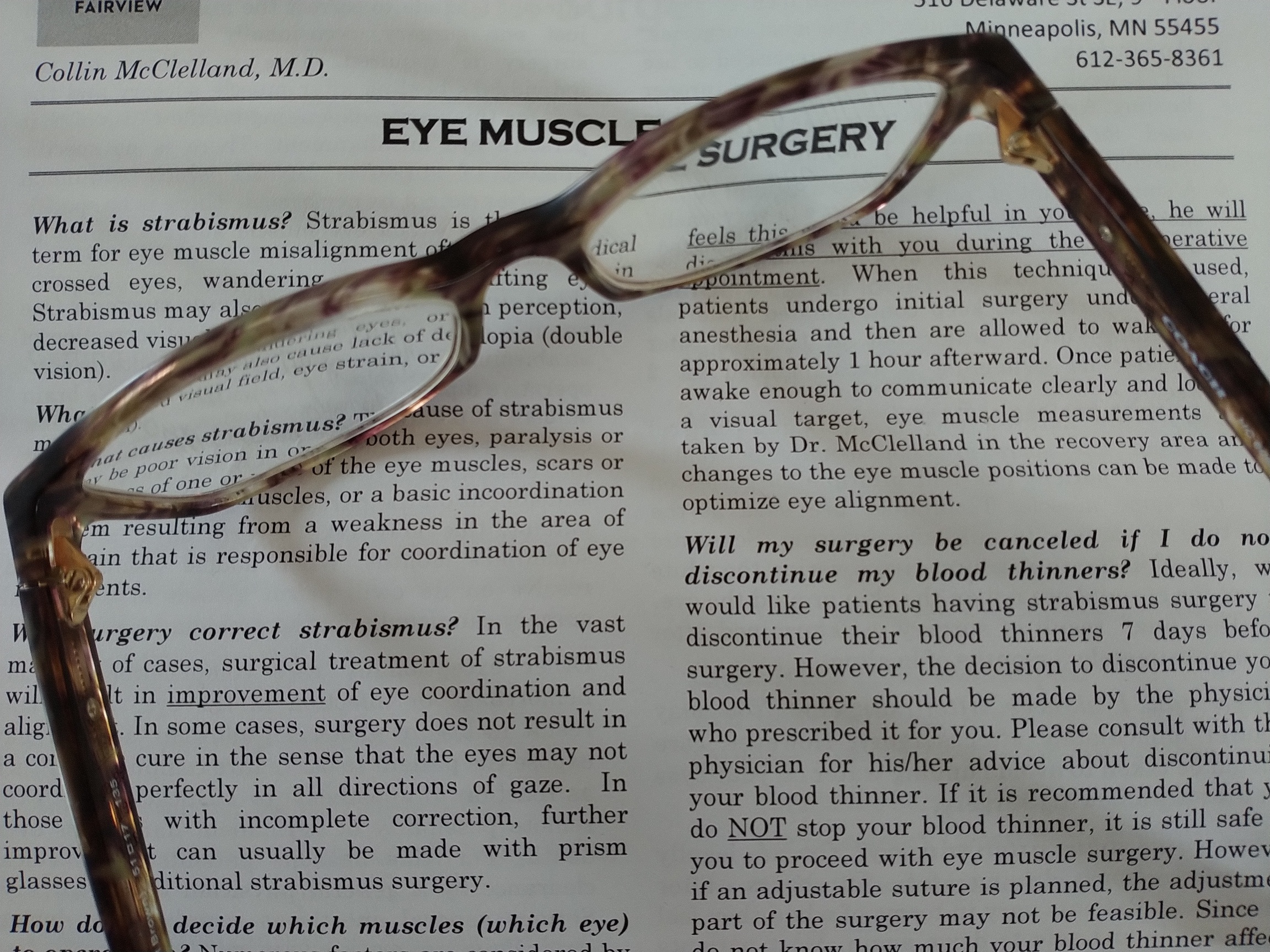
I underwent eye muscle surgery as a child and then again 64 years later, this time using an adjustable suture in my left eye. (Minnesota Prairie Roots copyrighted file photo 2023)

I paused to drop money into John’s bucket and also to chat a bit about the Lions’ work and my own struggles with vision. I’ve been diagnosed with bilateral strabismus and in January underwent surgery to realign my eyes with the goal of eliminating my double vision. Unfortunately, the corrective surgery did not work long-term. That’s true in 10-20 percent of surgical outcomes. Rather than attempt another surgery, I opted to try prisms in my prescription eyeglasses. Adjusting to the high number of prisms took time and they are not perfect. I struggle with depth perception and sometimes still see double. But, as I told John, at least I can see.

This photo of me (far left in group picture) with family on a vacation to northern Minnesota in 1960 shows me wearing a patch over my left eye. This was an attempt to correct my vision without surgery. (Minnesota Prairie Roots copyrighted file photo by Elvern Kletscher)

My vision issues are not something which suddenly developed. Rather, I was born with misaligned eyes, requiring strabismus surgery at age four. I am forever grateful to my parents for understanding the importance of corrective surgery. Although I never asked, I expect it was a huge financial burden for them. Had I not undergone this operation at the hospital in New Ulm, I likely would have gone blind in my less dominant eye.
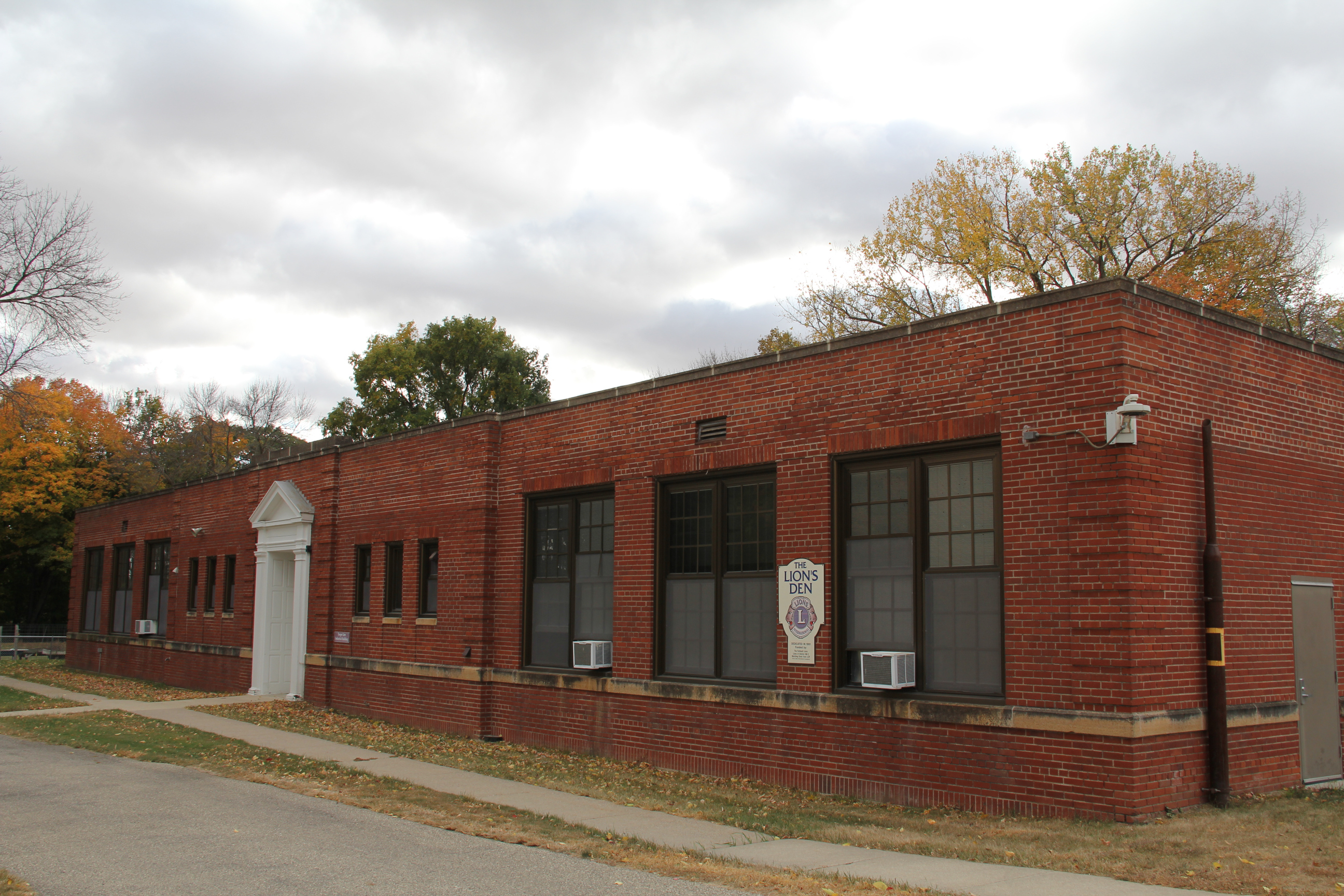
This building on the MSAB campus houses the Lion’s Den, an apartment setting to help students learning to navigate independent living. (Minnesota Prairie Roots copyrighted photo October 2024)
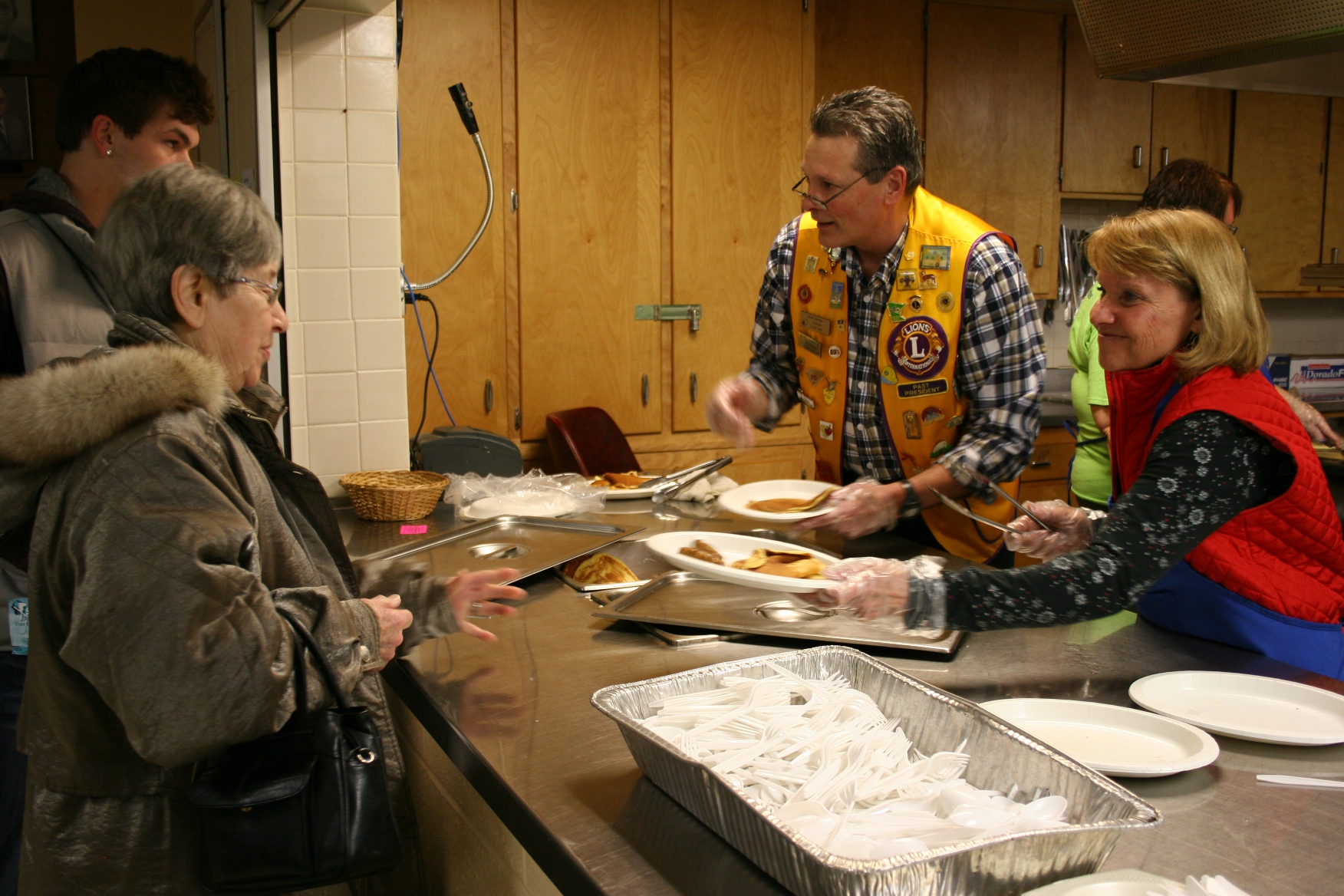
Serving up pancakes and sausage at the annual Lions Club pancake breakfast, a major fundraiser for the Faribault service organization. (Minnesota Prairie Roots copyrighted file photo 2015)
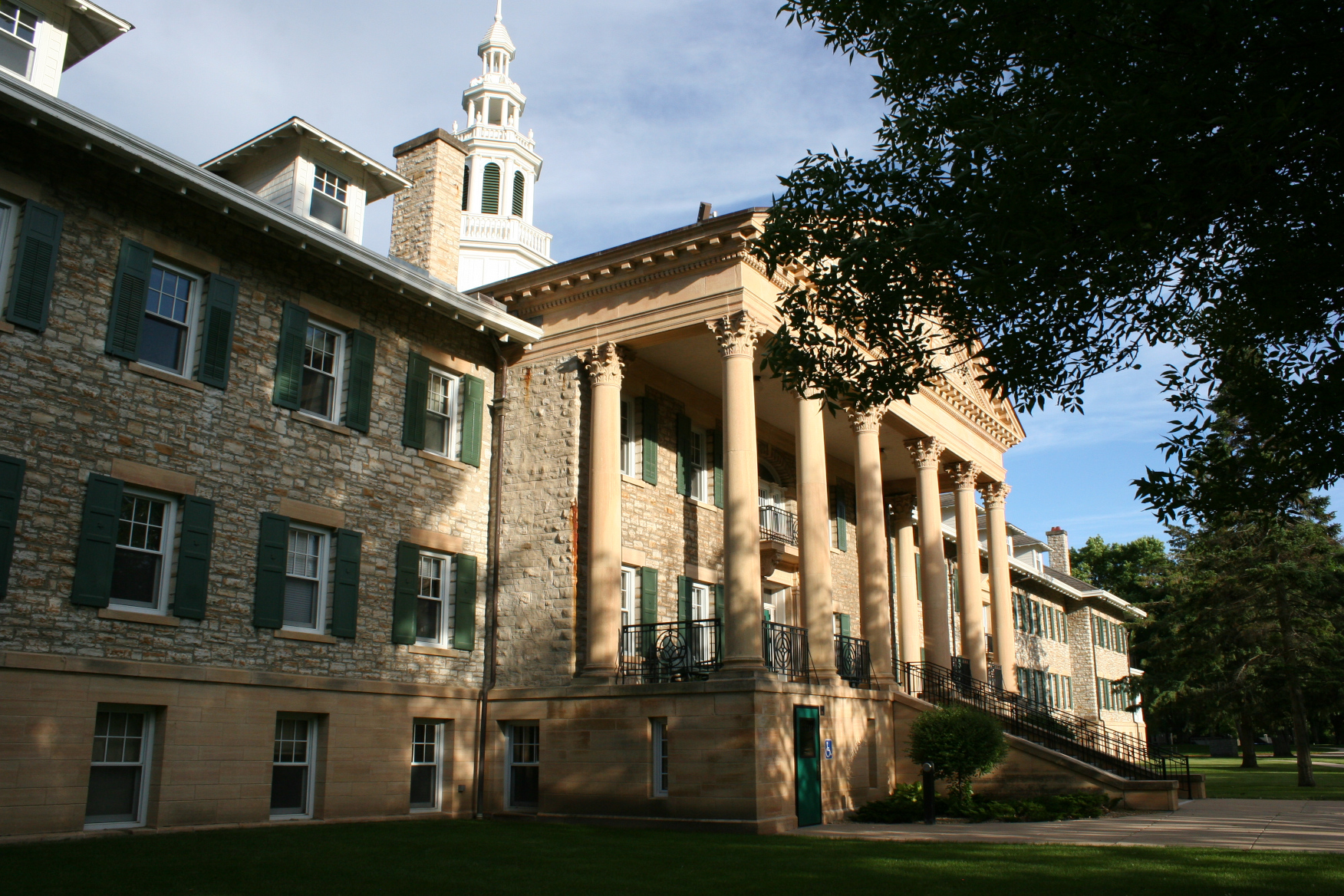
The main entry to the Minnesota State Academy for the Blind. The local Lions Club supports students and programs at MSAB. (Minnesota Prairie Roots copyrighted photo October 2024)

As I shared parts of my story with John, I felt his empathy and his strong desire to help others. The Faribault Lions clearly practice their motto of “We serve.” They collect used eyeglasses and hearing aids, offer vision screenings for kids, support Can Do Canines (which trains service dogs), funded the Lion’s Den apartment at the school for the blind (helping students adjust/learn in an apartment setting) and much more. Their service projects are not solely focused on vision and hearing.
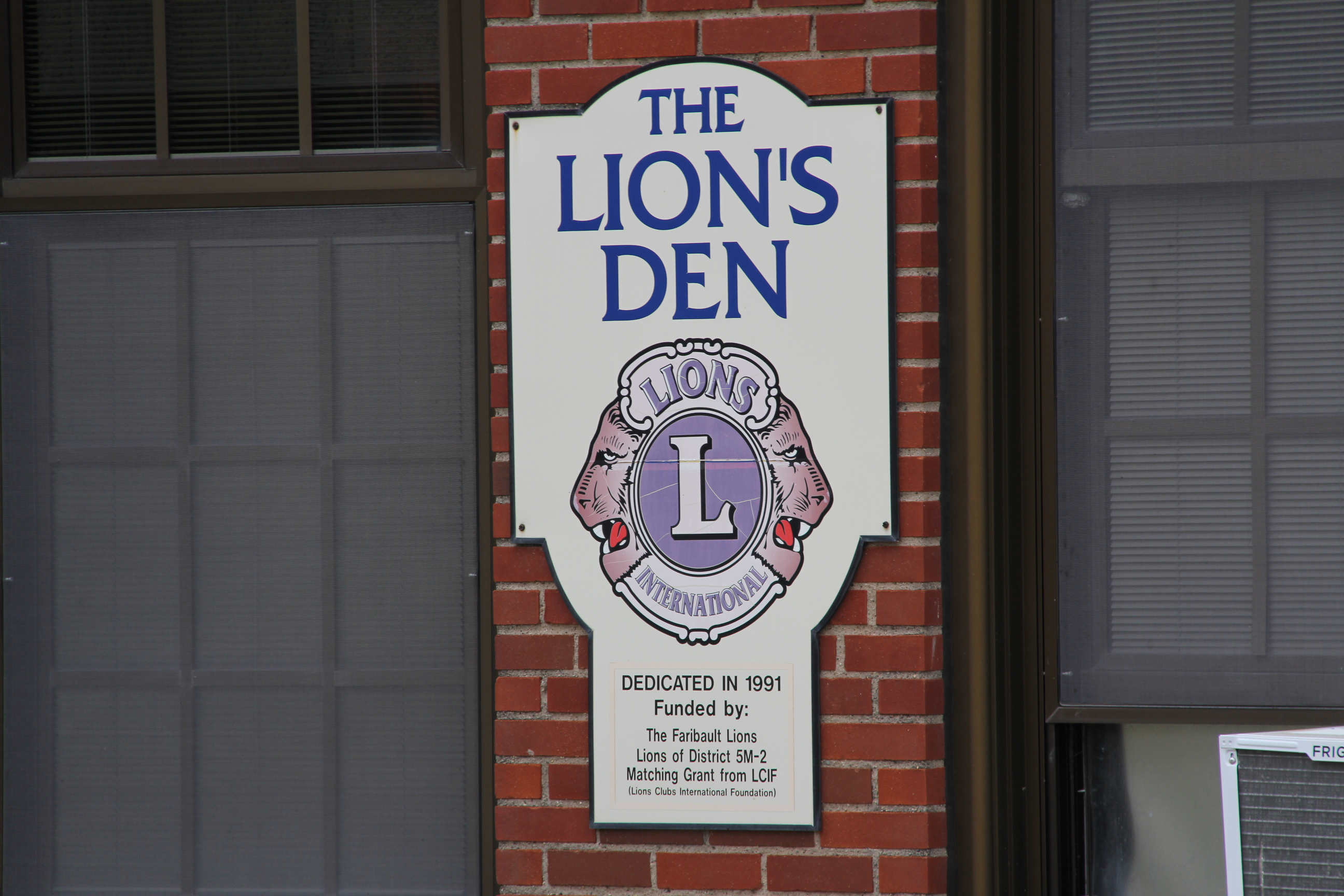
This sign on the Lion’s Den acknowledges this as a project of the Faribault Lions Club with a grant from the Lions Club International Foundation. (Minnesota Prairie Roots copyrighted photo October 2024)

But on this day, I want to highlight the efforts of John and his fellow Lions to educate the public about white canes. In the printed information John distributed at the grocery store, I learned that the idea of white canes originated in 1930 with the Lions Club of Peoria, Illinois. The club president suggested white canes with red tips as a tool to help those with visual impairments. The idea caught on as a way to grow their independence and also as a way to create awareness among the public.
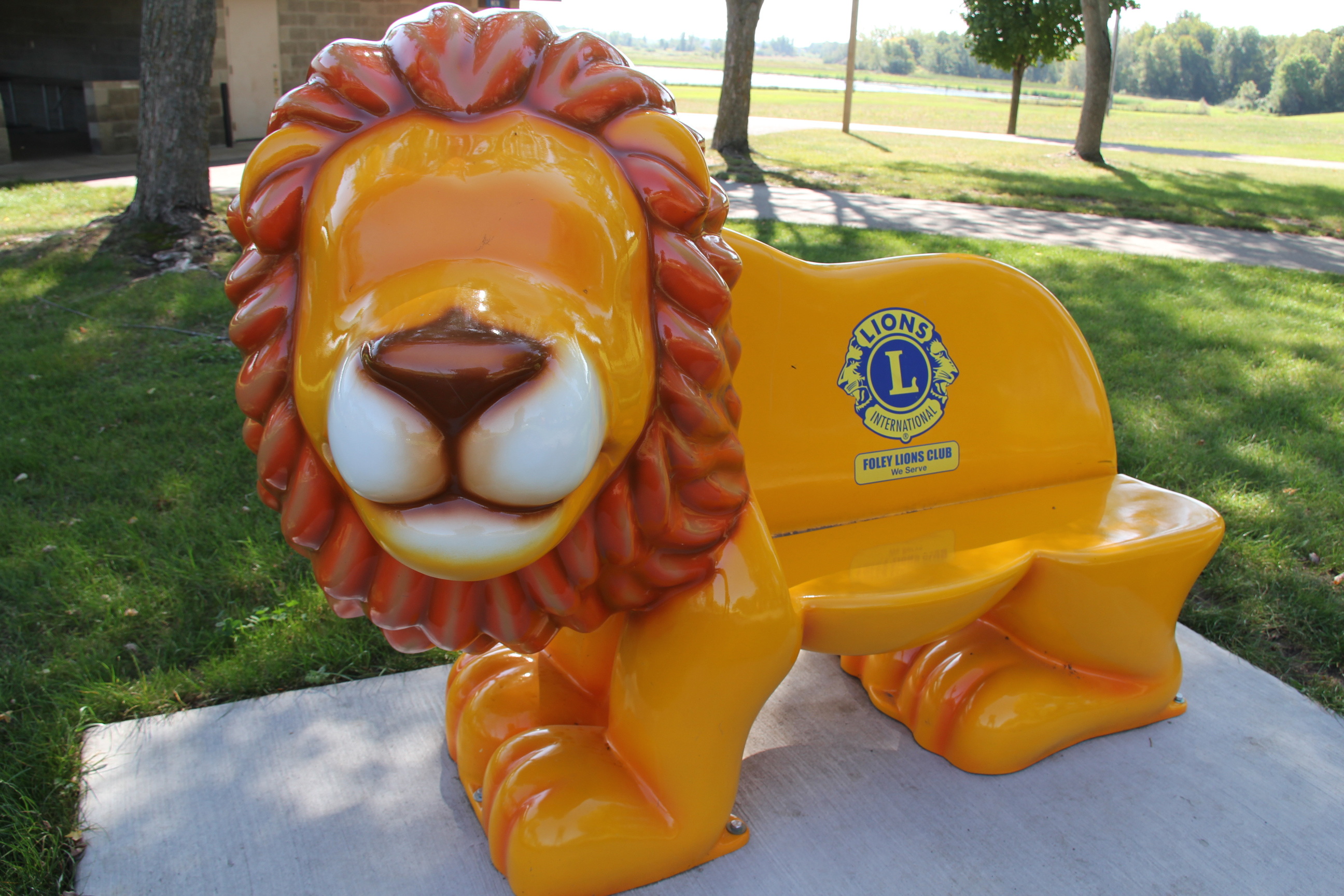
The Foley Lions Club in central Minnesota is raising awareness about vision via this bench in Lion’s Park. There’s also a lion’s head drinking fountain in the park. (Minnesota Prairie Roots copyrighted photo September 2024)

Awareness is assuredly a goal of the Lions. The informational sheet from John quotes two subdivisions of Minnesota state law #169.202 regarding white cane usage and how those operating motor vehicles must stop and yield to those carrying white or metallic canes. That seems common sense. But sometimes common sense is elusive.
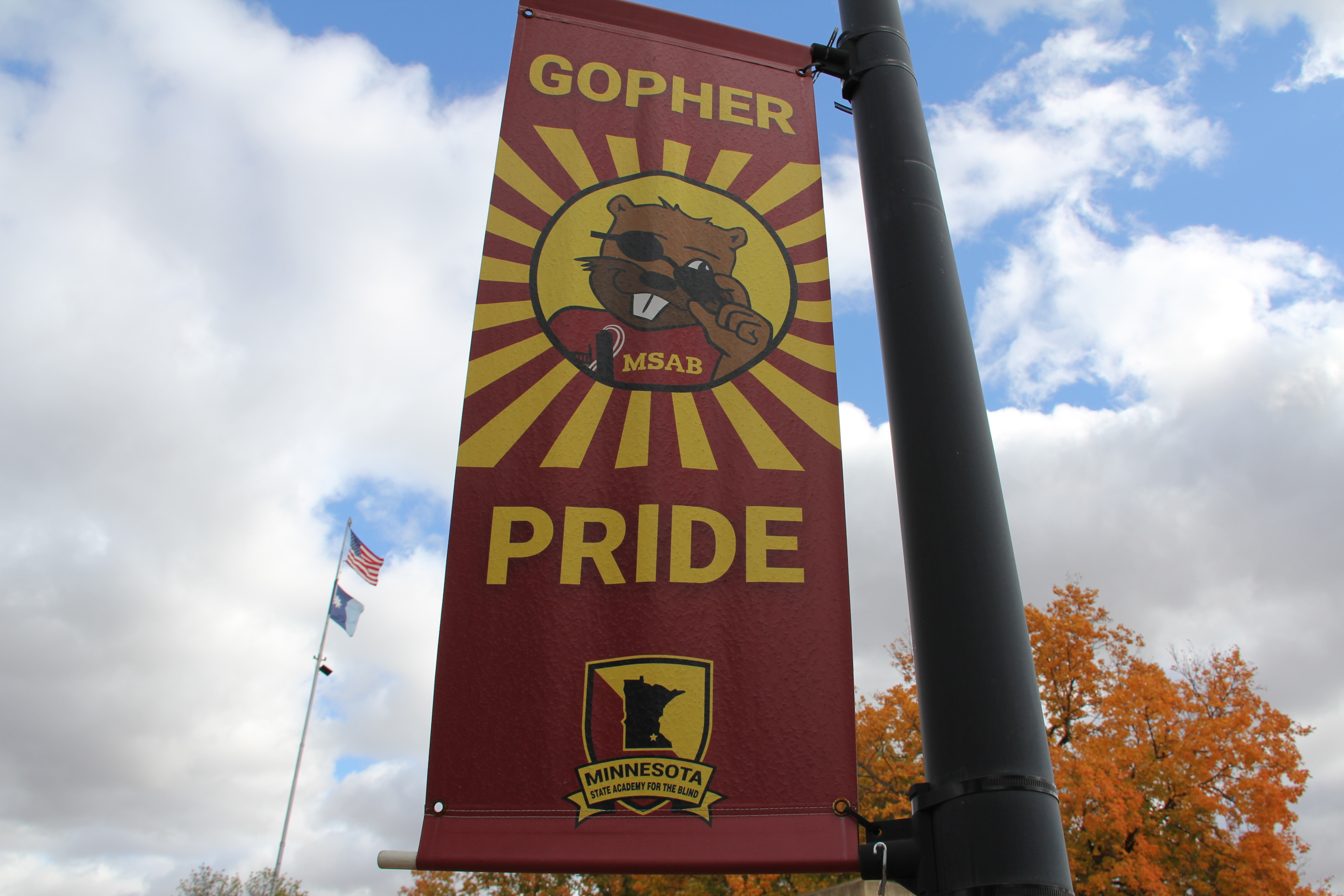
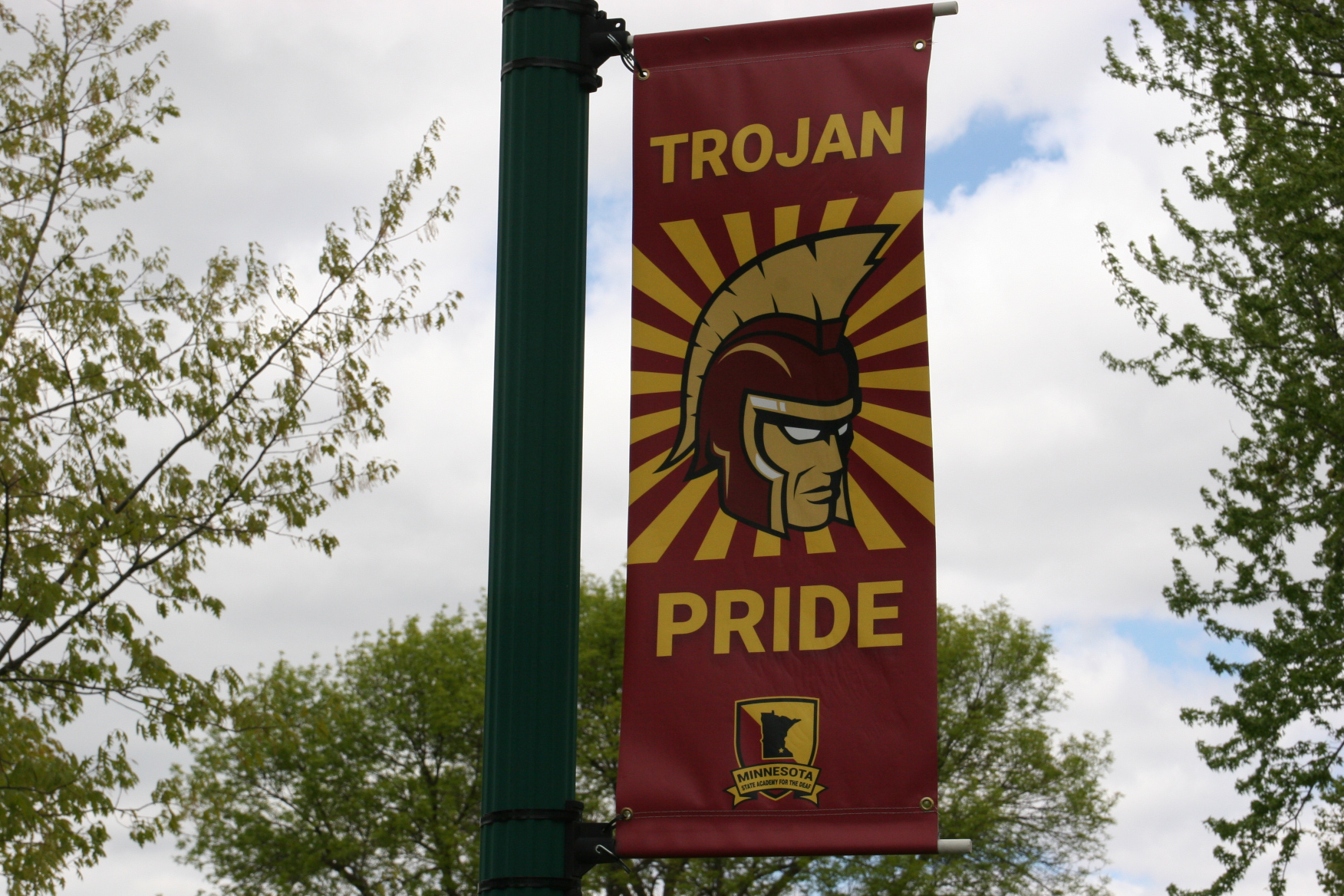
A banner on the MSAB campus shows pride in the school mascot. (Minnesota Prairie Roots copyrighted photo October 2024)

I appreciate the efforts of the Faribault Lions, especially when it comes to vision and hearing. They are determined to raise awareness, offer financial and other support, and make a difference for those of us who have vision and hearing impairments. Mine are manageable. I can see. And I can hear, even though I have profound hearing loss in my right ear (due to sudden sensory hearing loss from a virus).

Outside the M Health Fairview Eye Clinic. Inside the clinic, donors names are listed on a wall, including some I recognized as from Faribault. (Minnesota Prairie Roots copyrighted file photo 2023)

It’s humbling to sit in the packed waiting room of a specialty clinic like M Health Fairview Eye Clinic on the campus of the University of Minnesota and see young children with white canes. That puts my vision issues in perspective. In every situation, opportunities exist to learn and to grow empathy. I did and I have. And now, thanks to Faribault Lion John Battles, I have grown my understanding of White Cane Awareness Day and how much my community cares.

© Copyright 2024 Audrey Kletscher Helbling


Considering deafness (& blindness) while walking at MSAD in Faribault November 10, 2022

A sign posted on a pillar at MSAD and viewed when exiting the campus. (Minnesota Prairie Roots copyrighted photo May 2022)

HAVE YOU EVER CONSIDERED what it would feel like to be deaf or blind, or both? I remember pondering that from a young age after learning about Helen Keller, who was unable to see and hear. I asked myself which would be harder. I concluded that I’d rather lose my hearing than live in darkness.

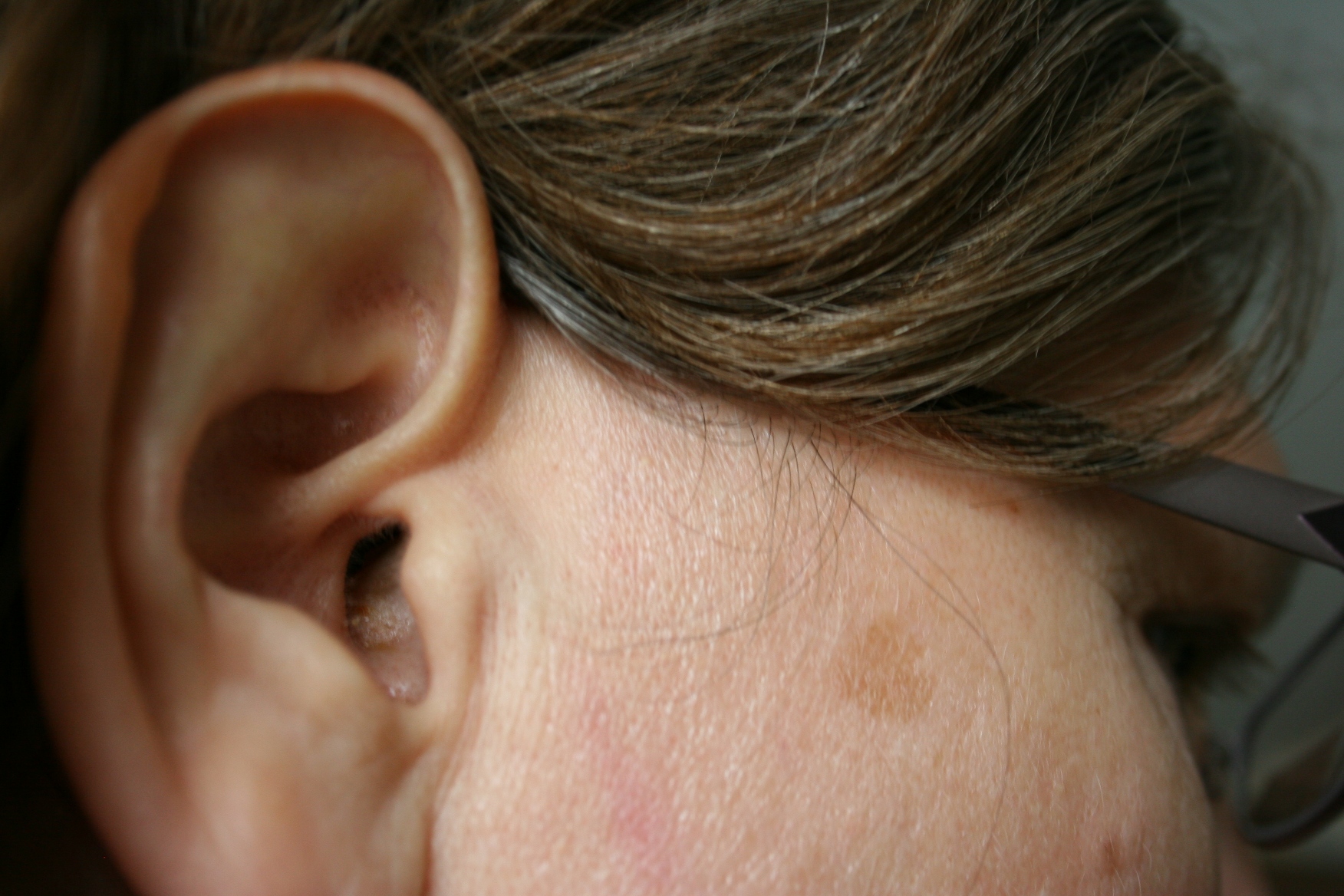
I lost most of my hearing in my right ear in 2011. (Minnesota Prairie Roots copyrighted file photo)

Realistically, both present challenges. And, because I am neither blind nor deaf, I really can’t fully understand what it means to live with those disabilities. I do, however, have a partial understanding of deafness.

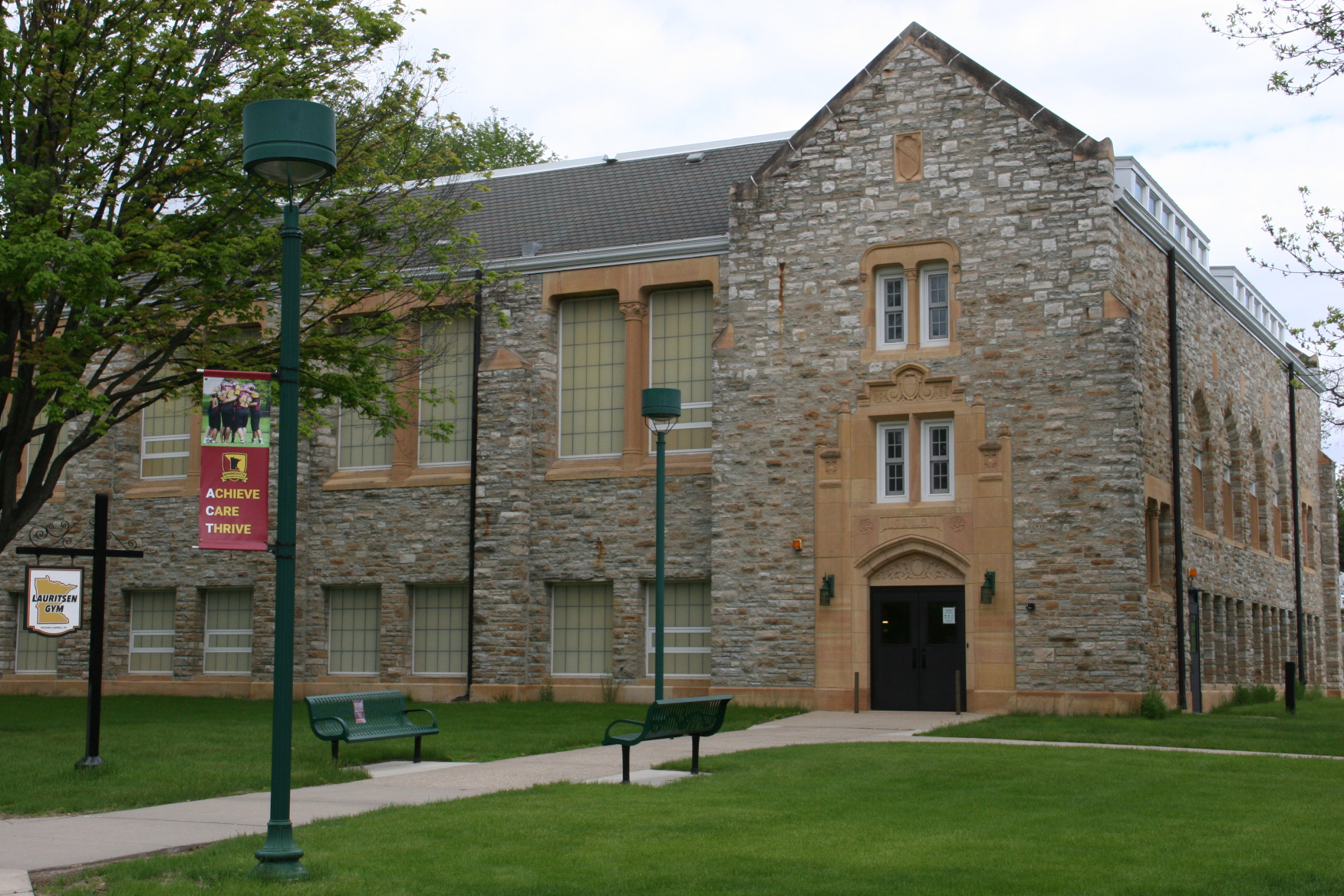
Achieve. Care. Thrive. ACT banners a sign outside Lauritsen Gym at MSAD. (Minnesota Prairie Roots copyrighted photo May 2022)

Nearly 12 years ago, I lost most of my hearing in my right ear, diagnosed as sudden sensory hearing loss. I know the exact moment it happened. Visits and tests with a local ENT doctor and an ear specialist at the University of Minnesota led to the conclusion that my hearing loss was caused by a viral infection. My hopeful reaction was this—I could get a hearing aid. That is not an option for my type of hearing loss. Thus I’ve learned to live with near deafness in my right ear. Yes, it’s annoying and bothersome that I can’t hear whispers in my right ear, that I can’t tell the location of sound, that white noise and too many conversations at one time make hearing really difficult, that I need people on my left side when they are talking to me. But I manage with one ear.

Bannering the Minnesota State Academy for the Deaf in Faribault, the school’s mascot. (Minnesota Prairie Roots copyrighted photo May 2022)

I’ve been advised by my medical team that, if I ever experience hearing issues with my good left ear, I should consider it a medical emergency and seek immediate care. I will.

Stunning Noyes Hall Auditorium on the MSAD campus. (Minnesota Prairie Roots copyrighted photo May 2022)

I live in a community especially attuned to sight and hearing. Faribault is home to the Minnesota State Academies for the Deaf and the Blind. Here, at two separate campuses on the east side of town, students from all over Minnesota attend residential academies for preschool through high school.

An early childhood scarecrow displayed next to the ball field and green space which center the MSAD campus. (Minnesota Prairie Roots copyrighted photo October 2022)

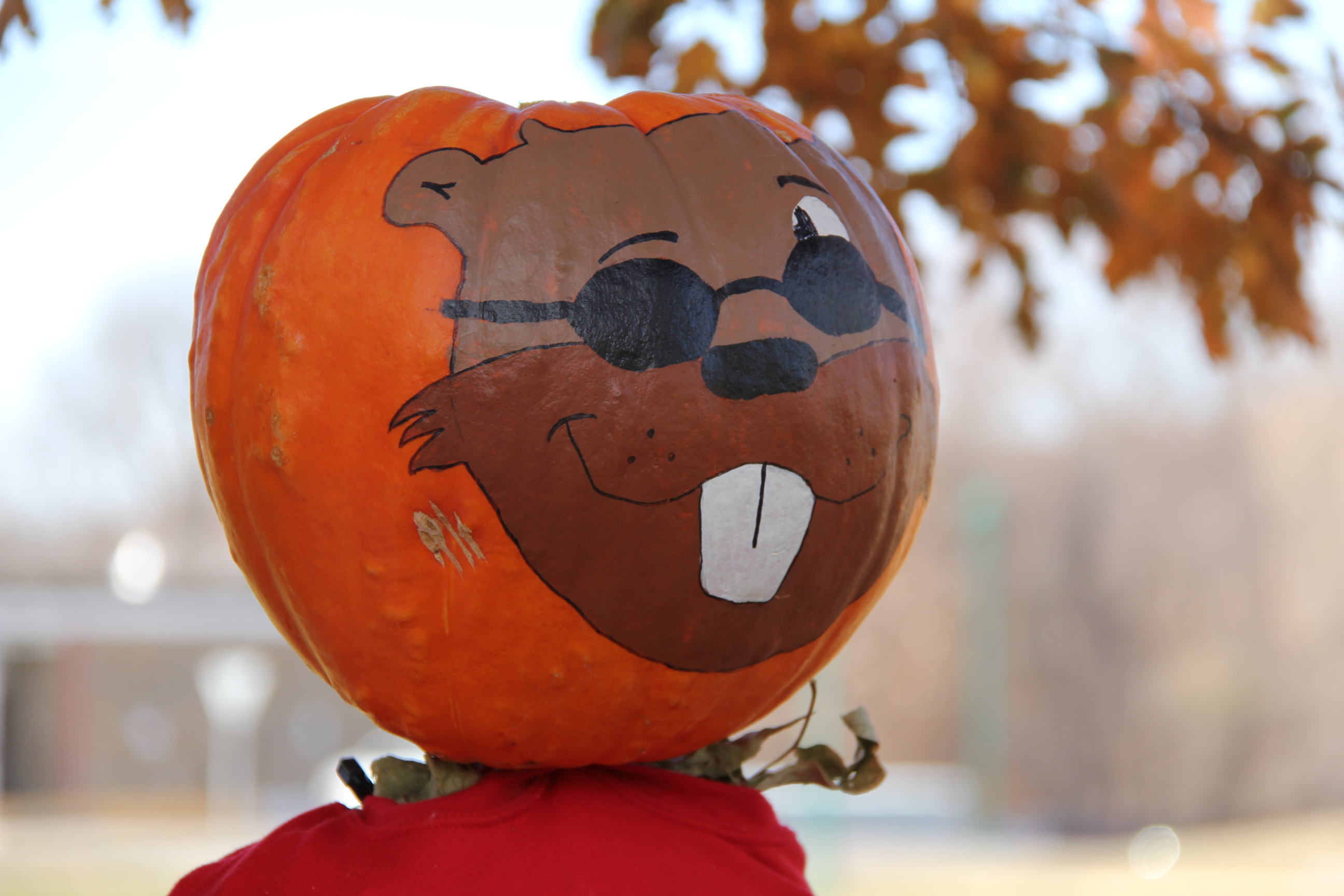
A Gopher pumpkin head represents the Minnesota State Academy for the Blind mascot. (Minnesota Prairie Roots copyrighted photo October 2022)

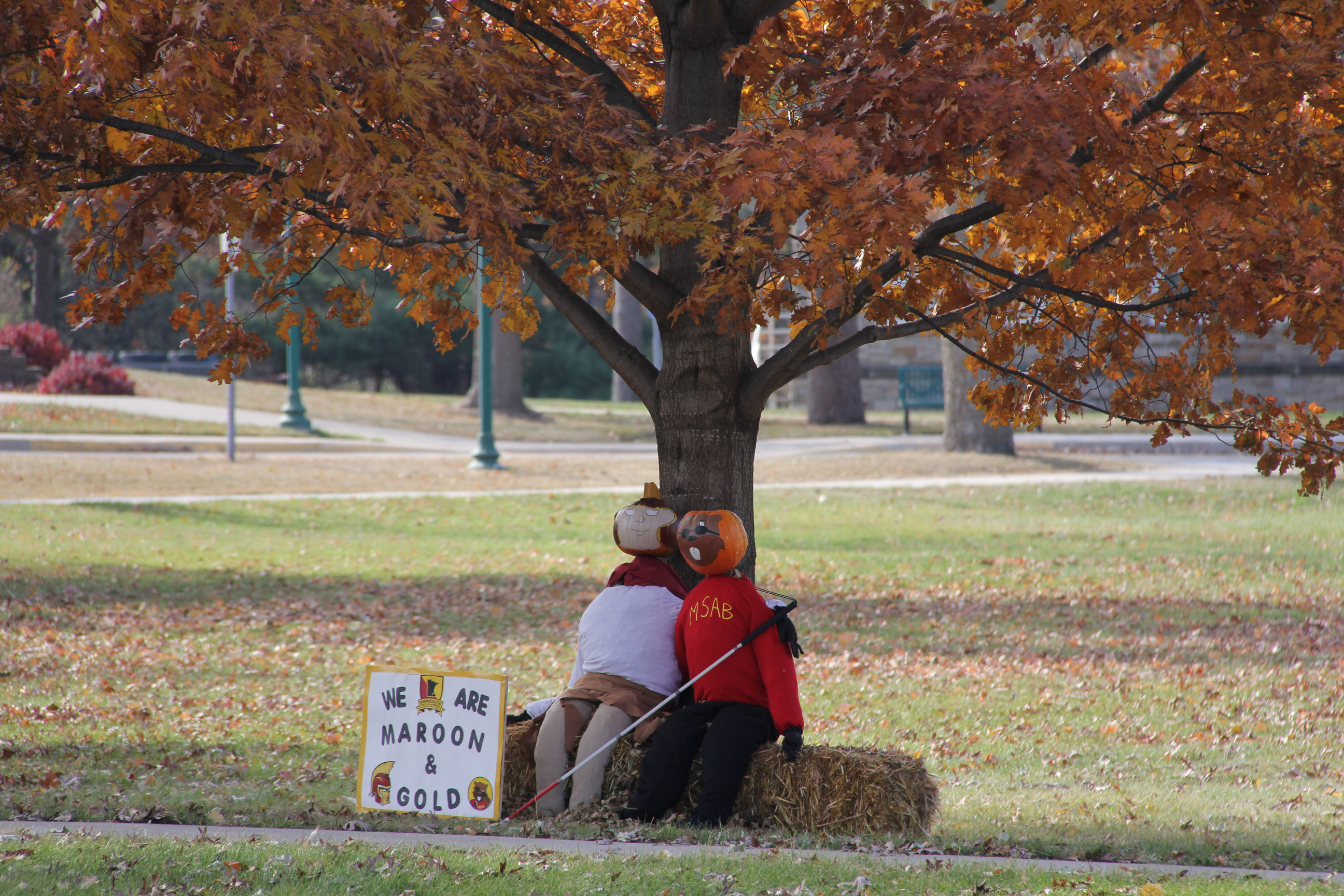
Side-by-side scarecrows from each academy. Trojans, left at MSAD and Gophers, right at MSAB. (Minnesota Prairie Roots copyrighted photo October 2022)

Occasionally on weekends I walk the campus for the deaf. It’s a beautiful setting of mostly historic buildings (many on the National Register of Historic Places) ringing a green space. I last walked there right before Halloween to view the annual scarecrow display. It’s been a school tradition for many years, a bit scaled back now.

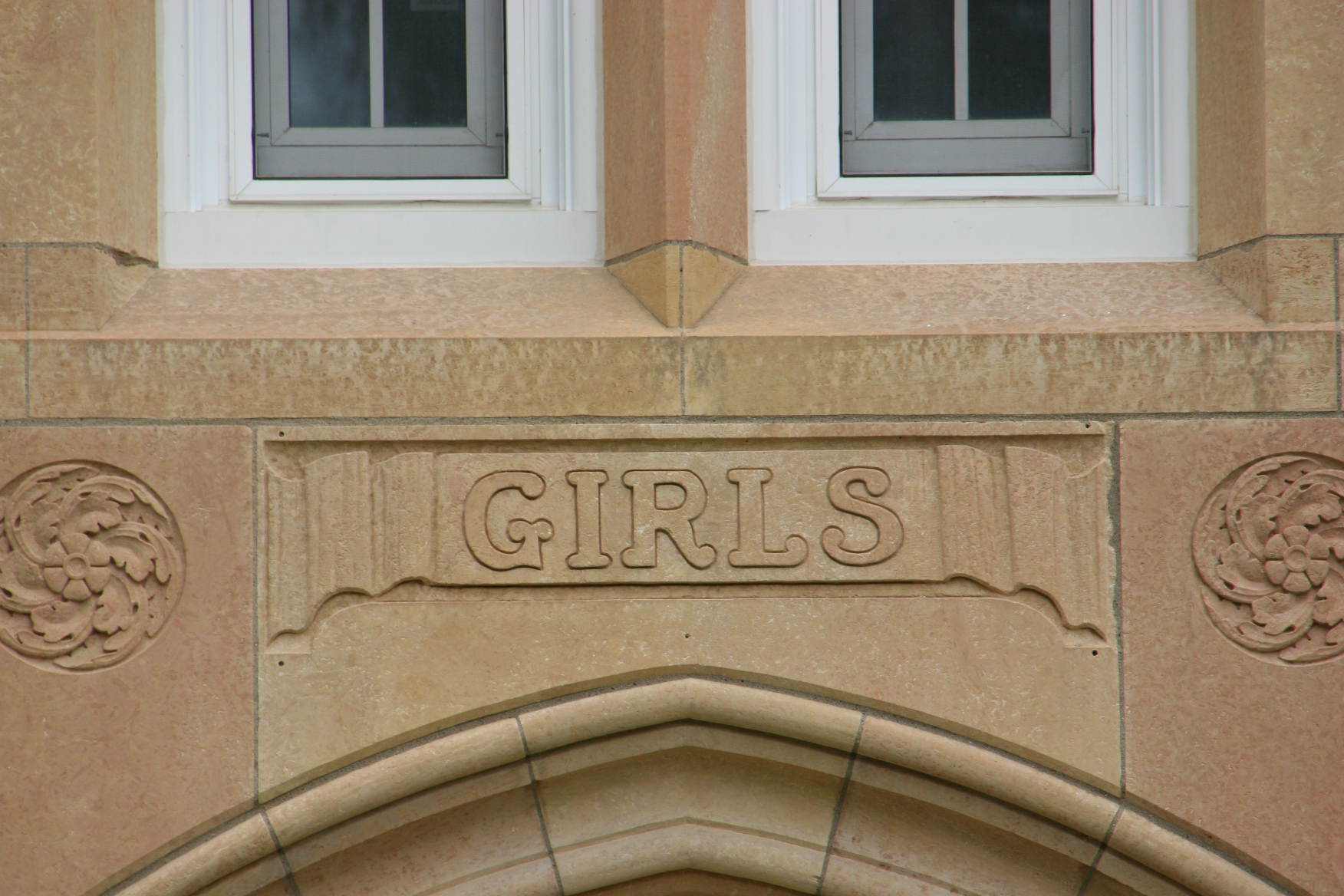
Detailed building identifiers of old. (Minnesota Prairie Roots copyrighted photo May 2022)
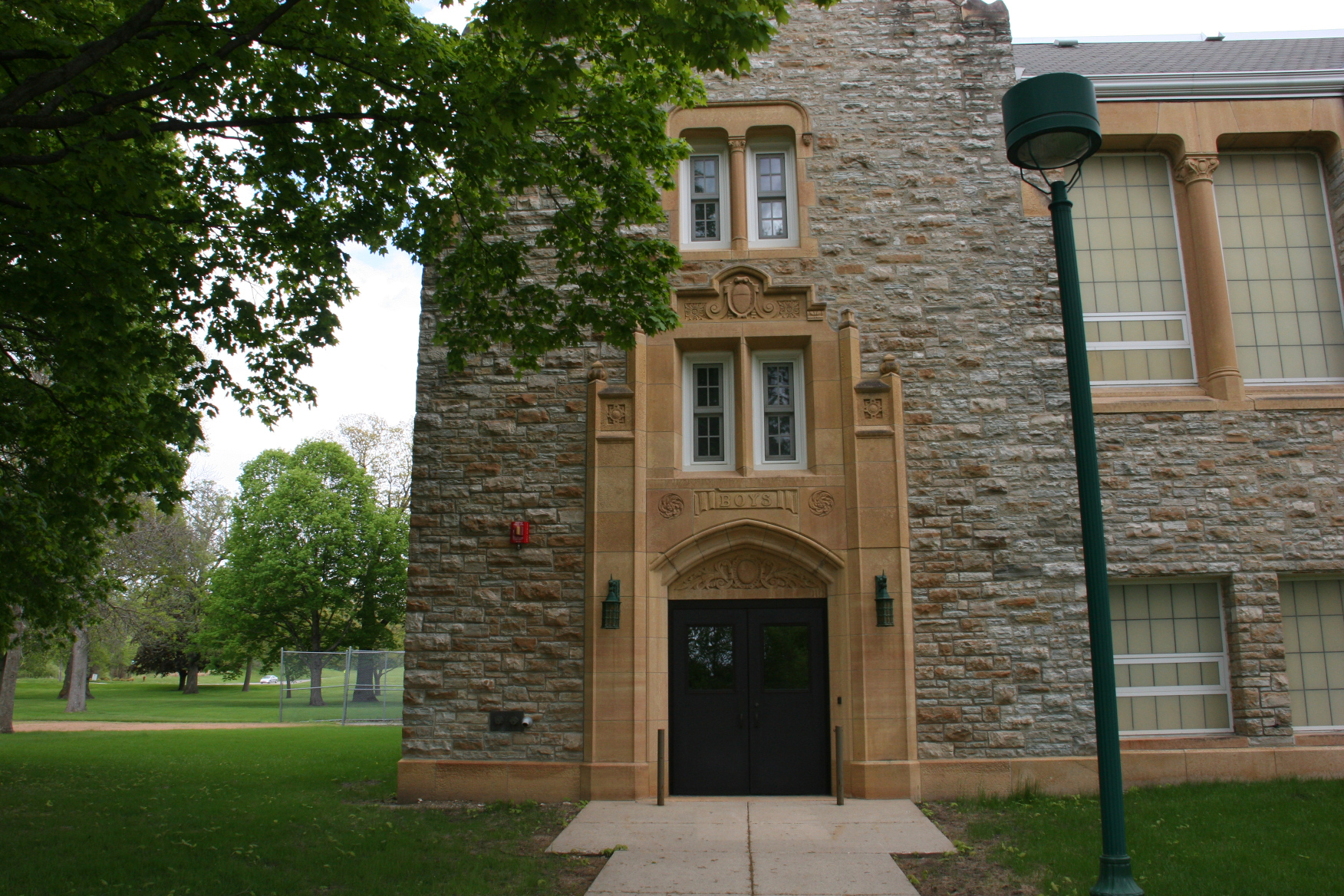
Identified as a residential hall for boys. (Minnesota Prairie Roots copyrighted photo May 2022)
Art on Pollard Hall. (Minnesota Prairie Roots copyrighted photo May 2022)

When on the MSAD campus following sidewalks that take me past buildings where deaf students learn, live, gather, I consider how difficult it must be for families to separate on weekdays. (Some families live locally, thus are not separated.) Yet, I understand the necessity of residential schools that focus on educating and preparing these young people for life. They learn to navigate in a hearing world. And, I expect they learn, too, that their disabilities do not define them, that they can pursue their hopes and dreams.

Sprawling Tate Hall is majestic, historically and architecturally stunning. (Minnesota Prairie Roots copyrighted photo May 2022)

When on the MSAD campus, I consider also how we sometimes take our senses for granted, until they become diminished or we lose them. Aging, or something like my sudden sensory hearing loss, open the door to understanding, to a deepened sense of awareness, to empathy and compassion.

I feel grateful for the reminders, the lessons learned when I walk the Minnesota State Academy for the Deaf campus. To ponder deafness and blindness connects me to a segment of our population which faces challenges beyond my full understanding. To walk these grounds for a short time stretches my mind, opens my heart, broadens my perspective.

FYI: Limit your time on either academy campus to weekends, when students are not there. Be aware that building construction is also underway so follow posted rules.

© Copyright 2022 Audrey Kletscher Helbling