Minnesota Prairie Roots

Writing and photography by Audrey Kletscher Helbling

Praise, polkas and more at St. John’s Germanfest September 26, 2011

The Ray Sands Band played from 1 - 3 p.m. under the tent at Germanfest.

“APPLES, PEACHES, PUMPKIN PIE, who’s afraid to holler I…”

Above the plaintive baaing of a goat in the petting zoo, the old-time band pumped out the polka which isn’t about pie at all, but about love.

And so, under the tent, the bands played—Tim Chlan and Friends, The Ray Sands Band and The Stuttgart Three—at St. John’s United Church of Christ’s annual Germanfest in Wheeling Township near Nerstrand Big Woods State Park.

My husband and I arrived mid-afternoon Sunday to take in this annual celebration of the congregation’s German heritage during a polka praise service and more. As we sang the near-and-dear words of age-old hymns, the tangy scent of vinegar drifted into the sanctuary. “Just as I am, without one plea…Rock of Ages, cleft for me, let me hide myself in thee…”
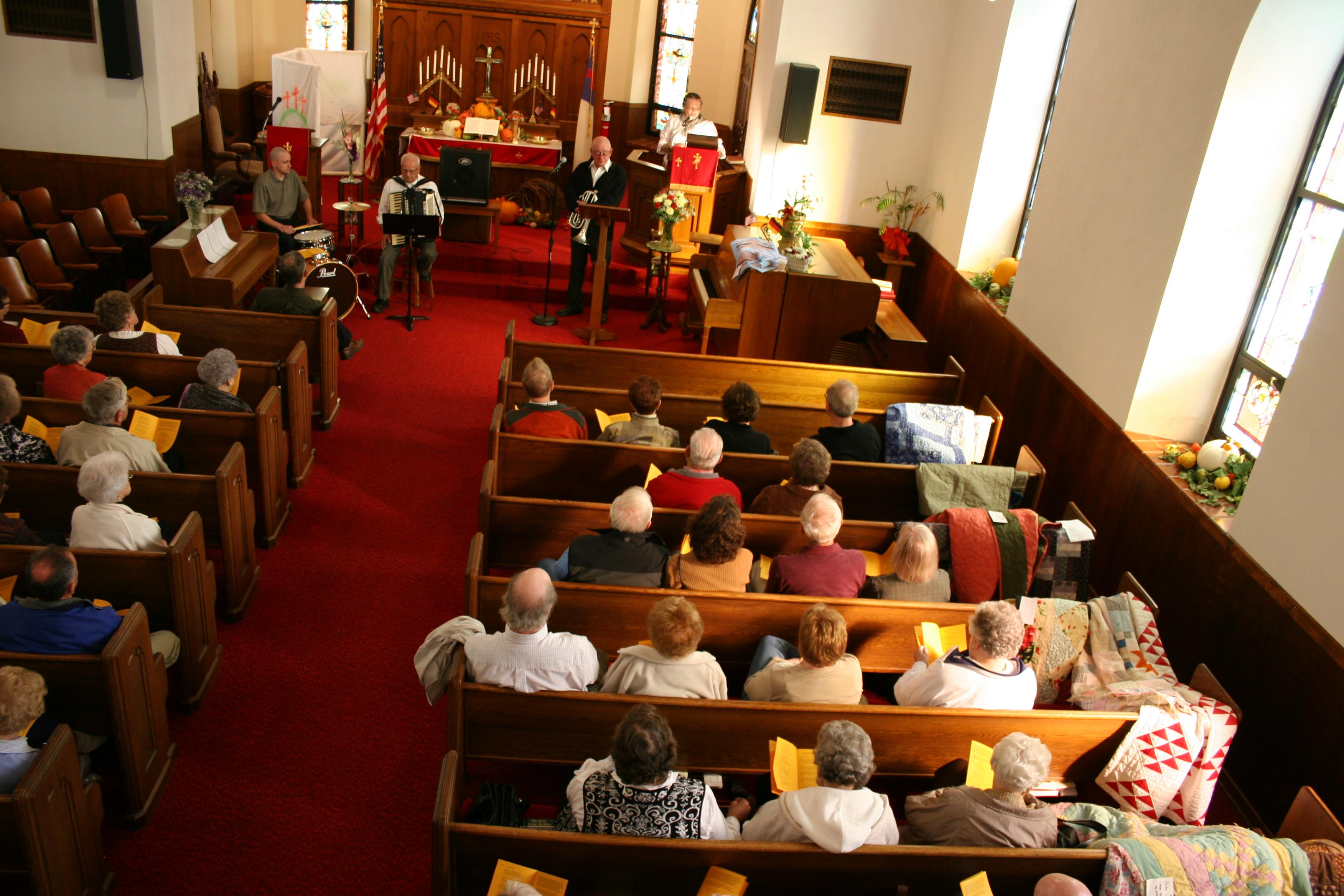
The Stuttgart Three from Rochester led the polka praise service inside St. John's sanctuary.
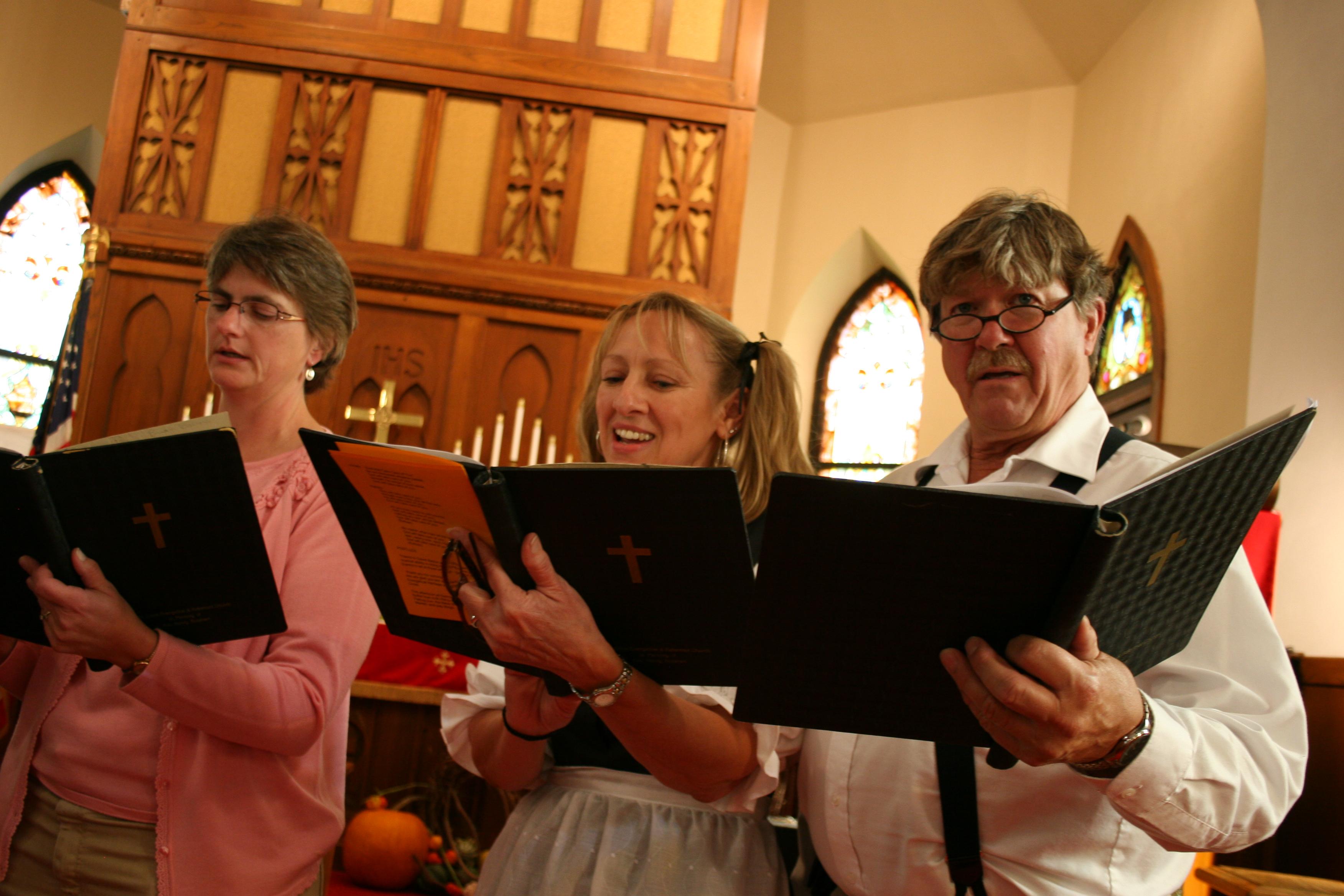
A musical quartet presented "Cleanse Me" and "Reach Out to Jesus" during the praise service.

Afterward we broke bread in the fellowship hall over a German buffet. Sauerkraut and sauerbraten. Brats. Rinderwurst and beets and green beans with bacon. Vinegar-laced German potato salad and mashed potatoes and more foods than I can remember. Homemade. Three hundred pounds of potatoes peeled. Nearly 60 dozen brats boiled and grilled. Bread pudding made from grandma’s recipe. Good, hearty food that tasted of the Mother Land.

It didn’t matter whether you were Deutsch or Dutch, Lutheran or Catholic or a long-time church member, whether a first-time attendee from Centerville or Faribault or a faithful former member from Blooming Prairie, you enjoyed, simply enjoyed, the hospitality of this congregation.
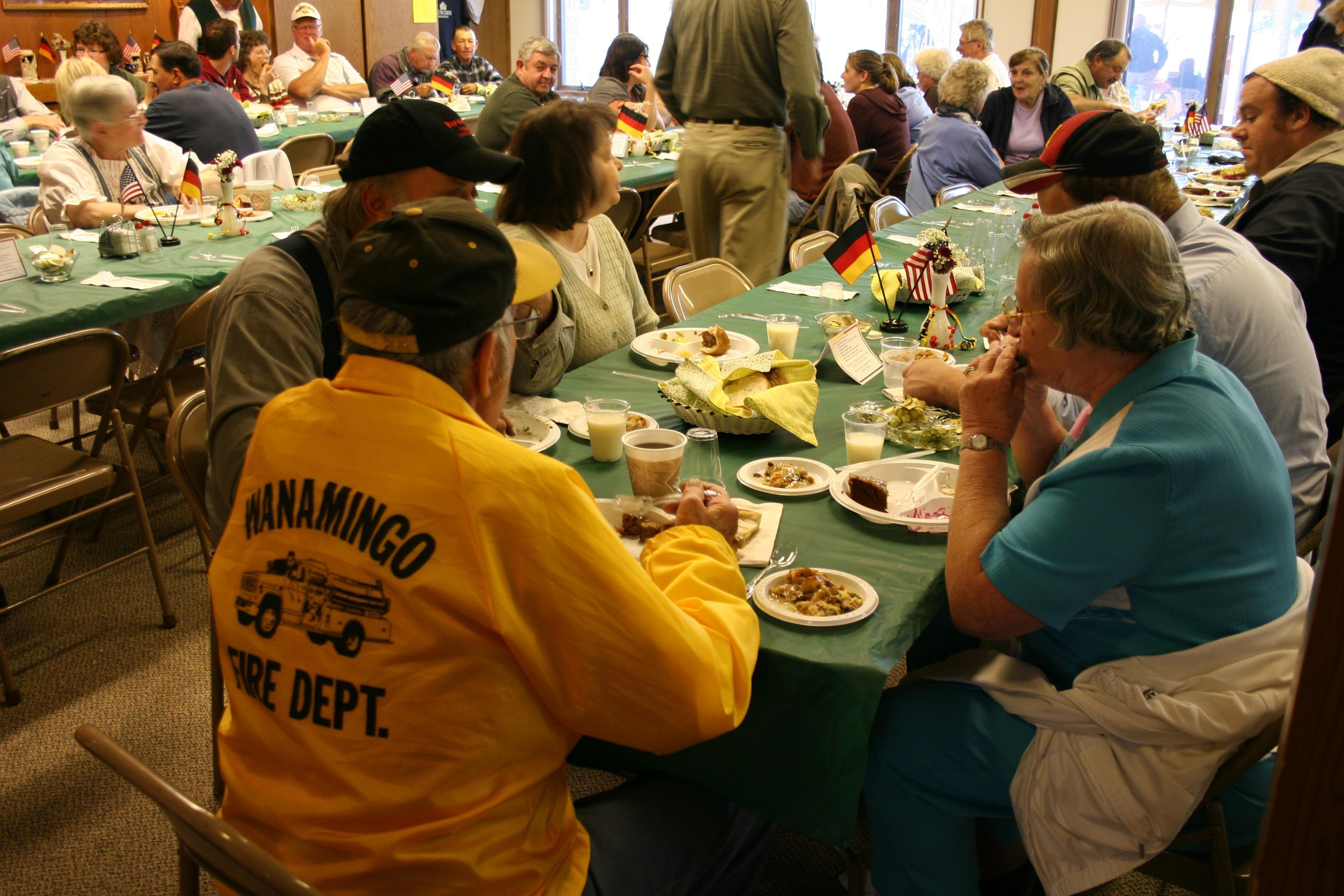
Diners enjoyed a German buffet in the fellowship hall before and after the praise service.
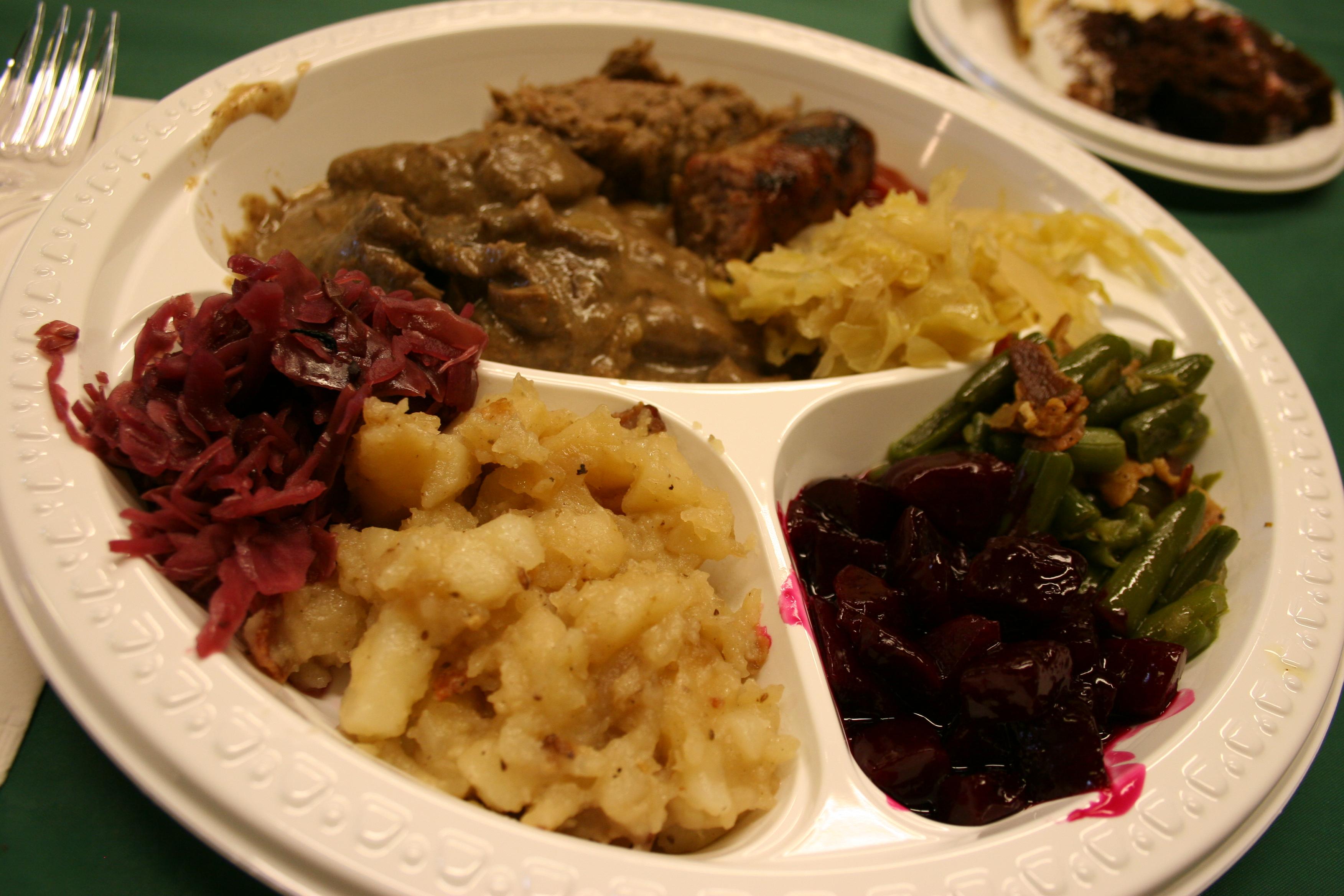
Deutsche food: German potato salad, red cabbage, sauerbraten, rinderwurst, a brat, sauerkraut, beets and green beans on my plate.
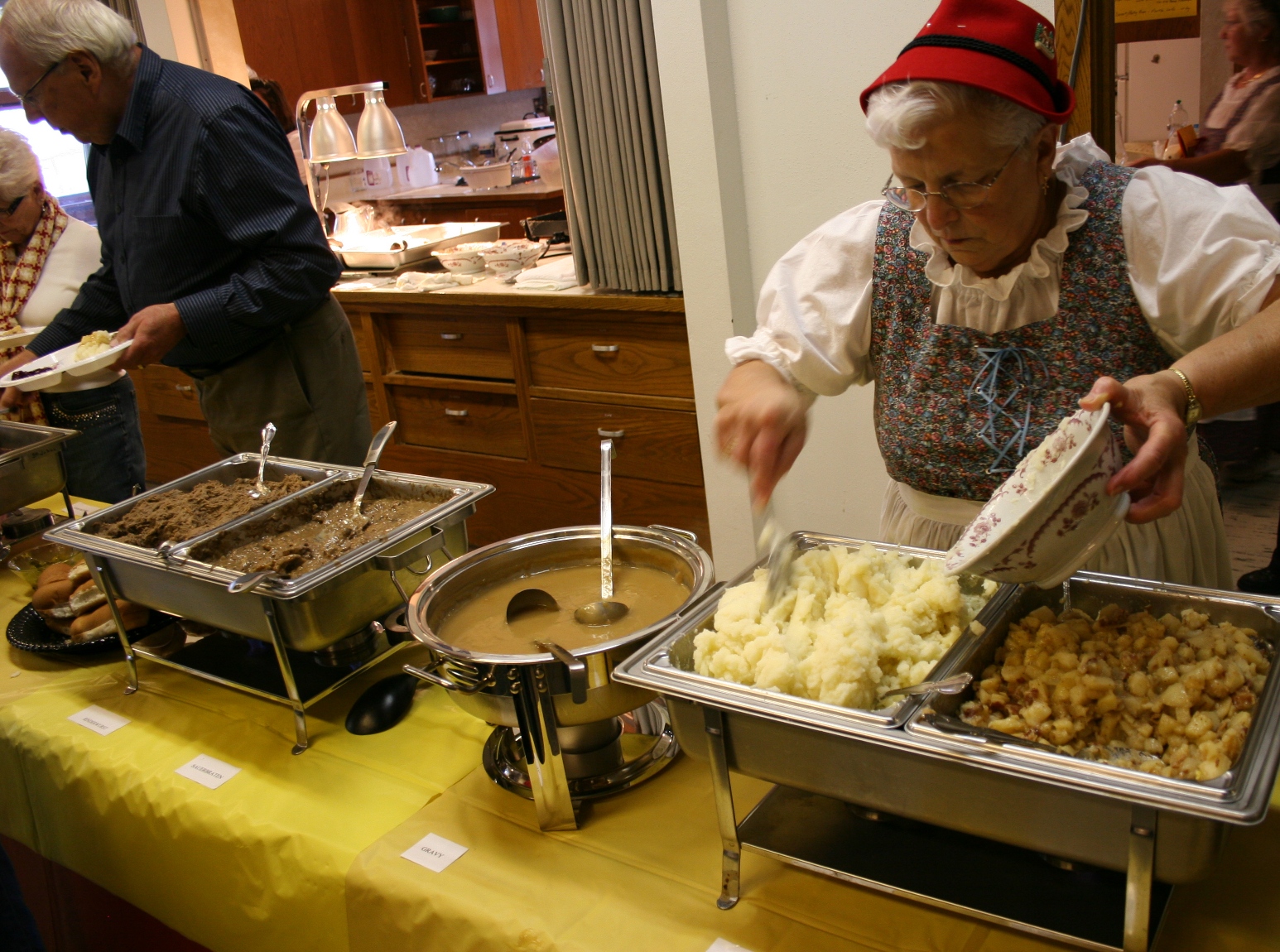
Volunteers kept the buffet trays filled with delicious homemade German foods.

Bingo and a quilt show. Geese and ponies and goats and birds in a petting zoo. Woodcarvings at the silent auction. Homebaked goods in the country store. Jars of apple jelly, glistening like gems in the sun. All of it, together, creating a memorable afternoon at this country church set among the flat corn and soybean fields of eastern Rice County.

This is the season of church festivals and dinners—of lutefisk and Swedish meatballs and ham and of vegetables dug from the earth.

It is a time to gather close, to remember the homeland from whence we came, to celebrate our heritage, to rejoice in the harvest.
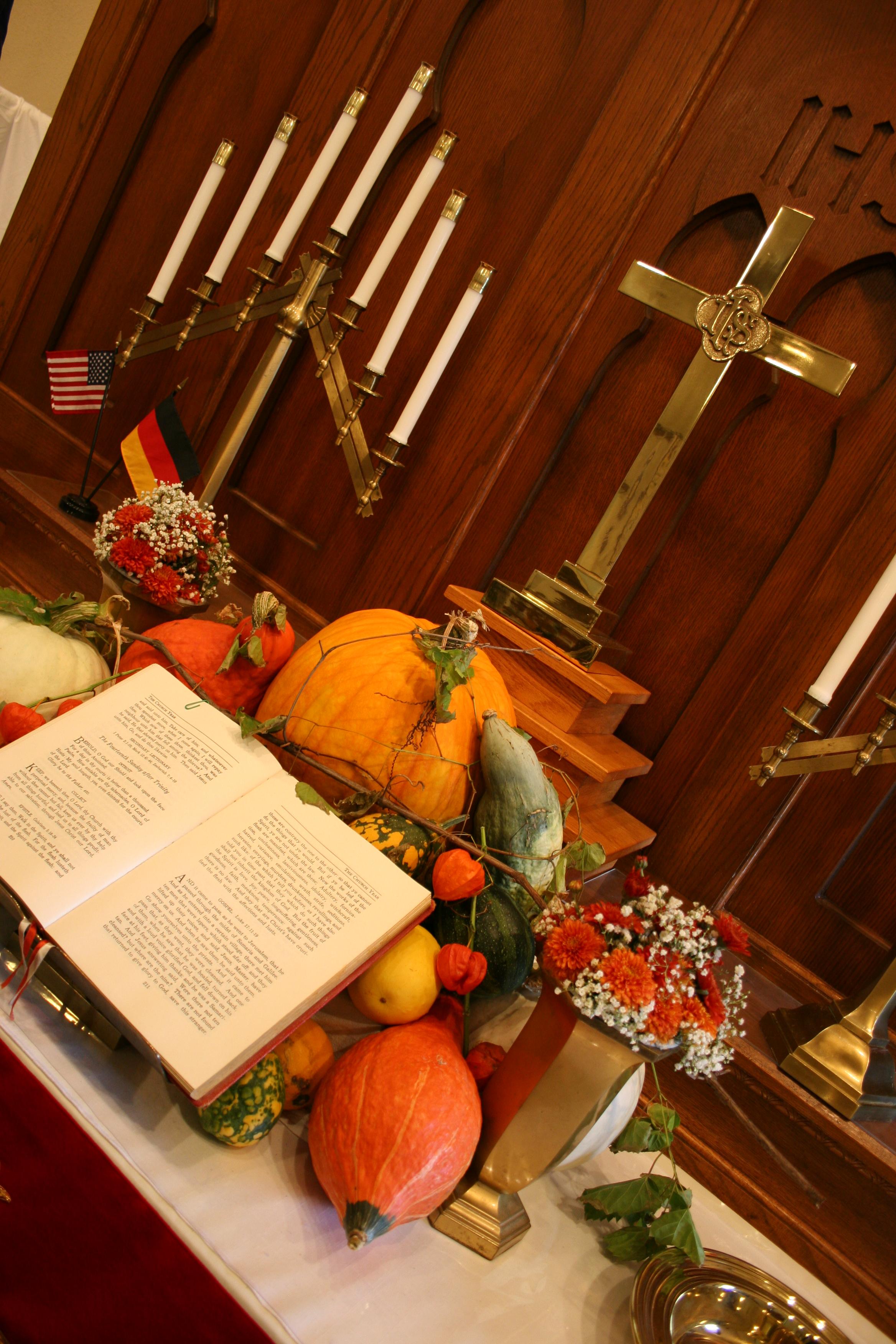
The sanctuary was decorated throughout with harvest vignettes, including this one on the altar.
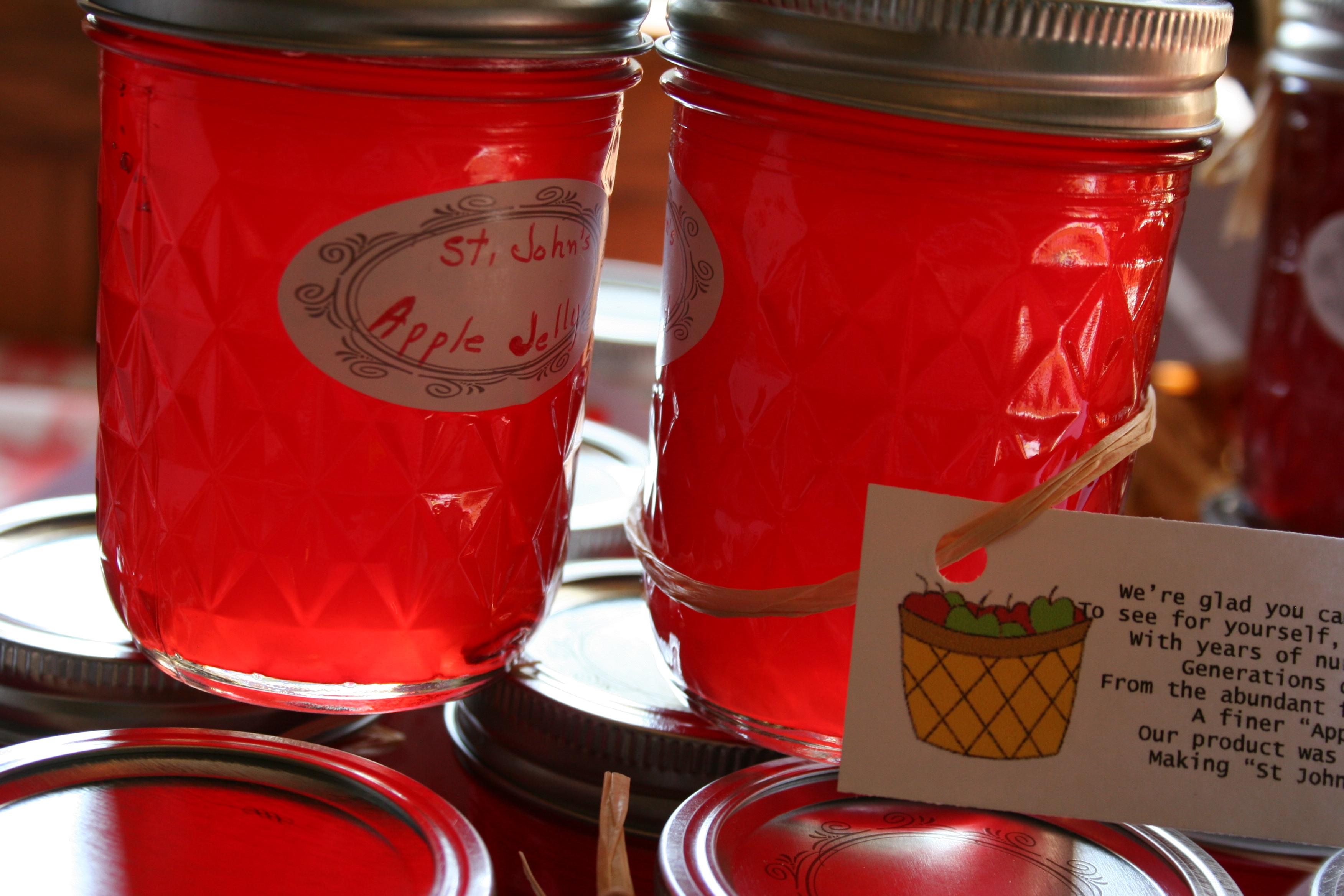
St. John's members make apple jelly and apple butter from fruit growing on an apple tree in the churchyard. The jelly and butter are sold at the festival.
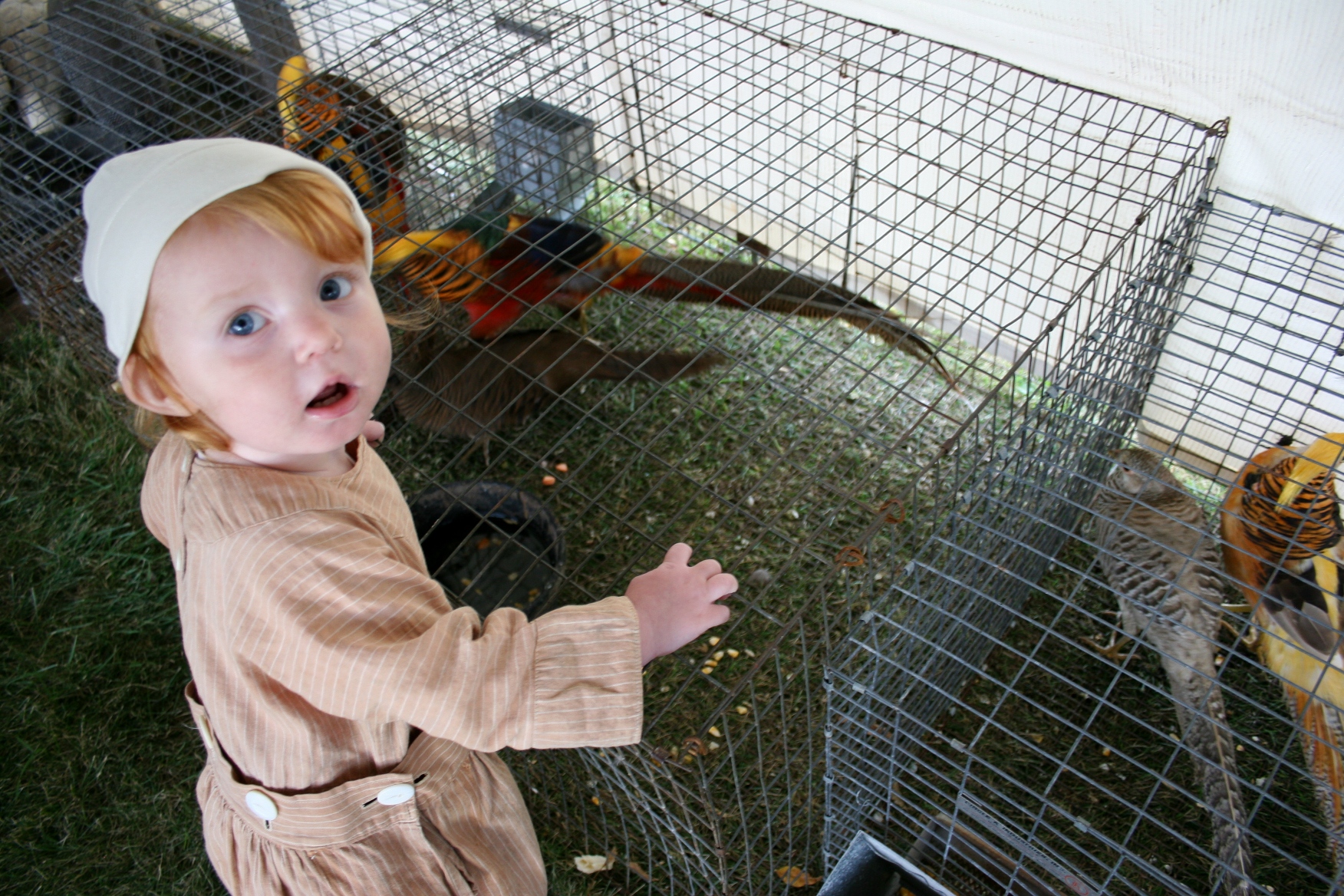
Juniper, 15 months, enjoyed the birds and animals at the petting zoo.
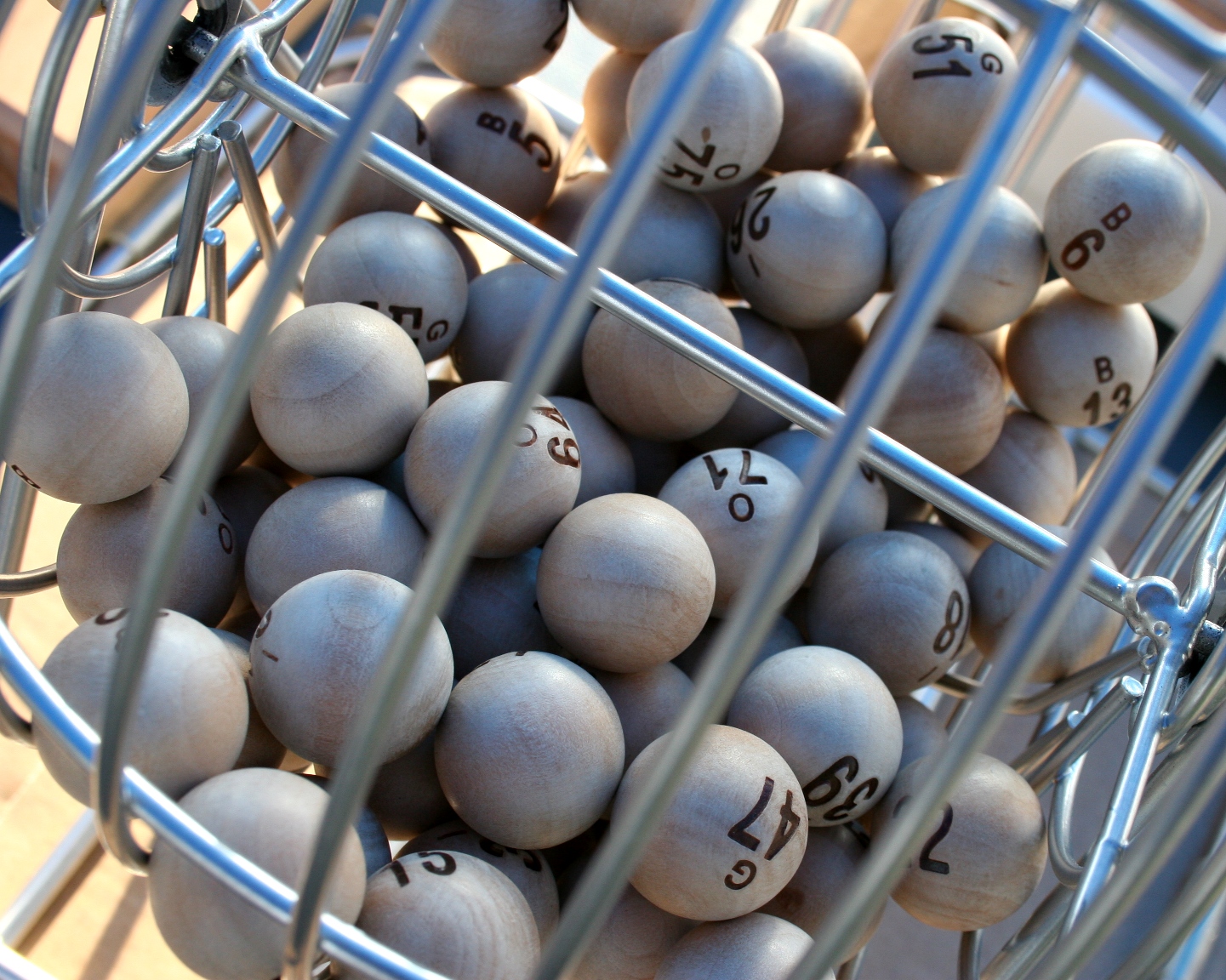
As is typical of most church festivals, attendees could play bingo outside under a tent.
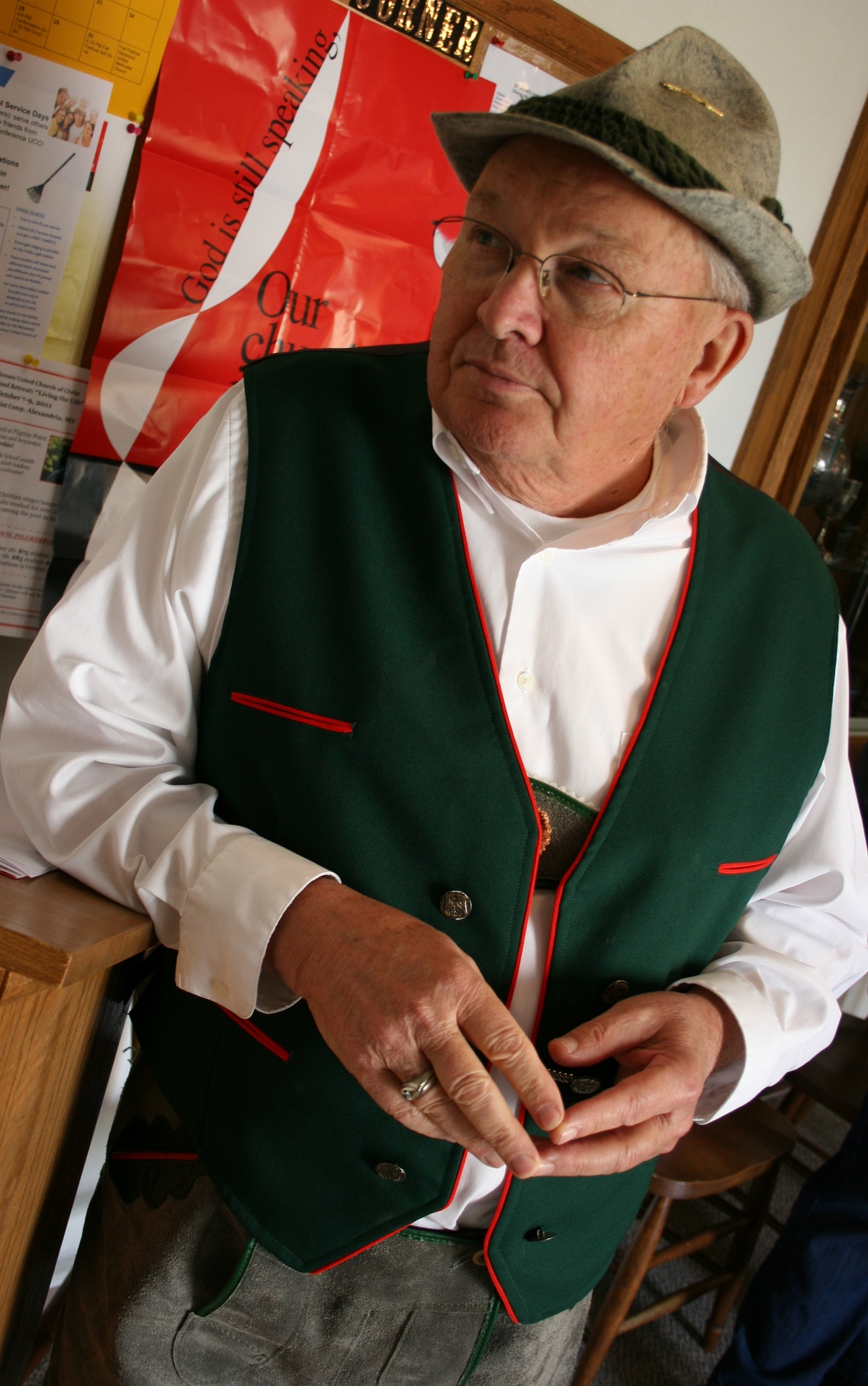
Many of the volunteer workers dressed in German costumes.
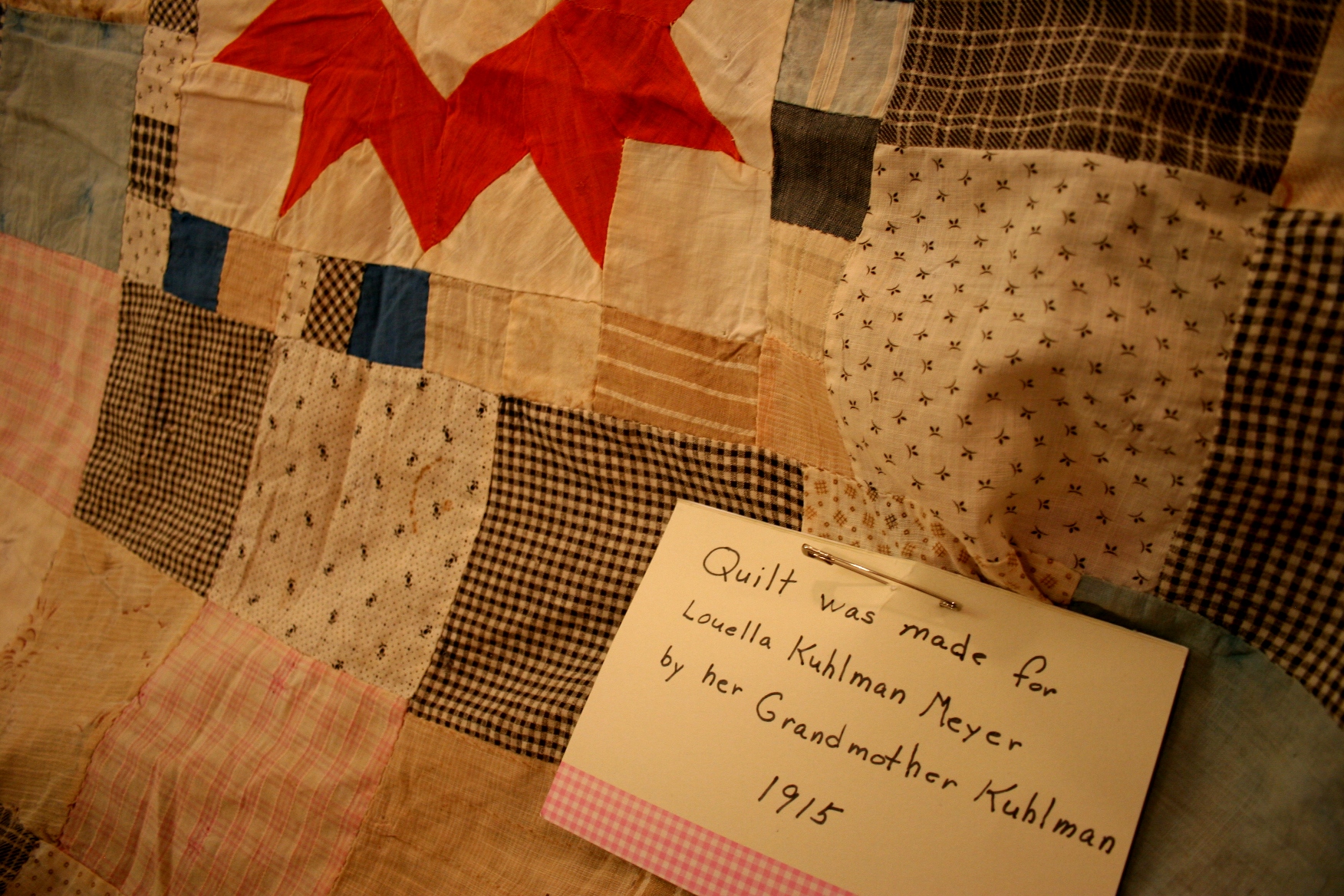
Each member of St. John's was asked to bring a quilt for the quilt show in the sanctuary. Quilts were draped over pews with brief information attached to each.
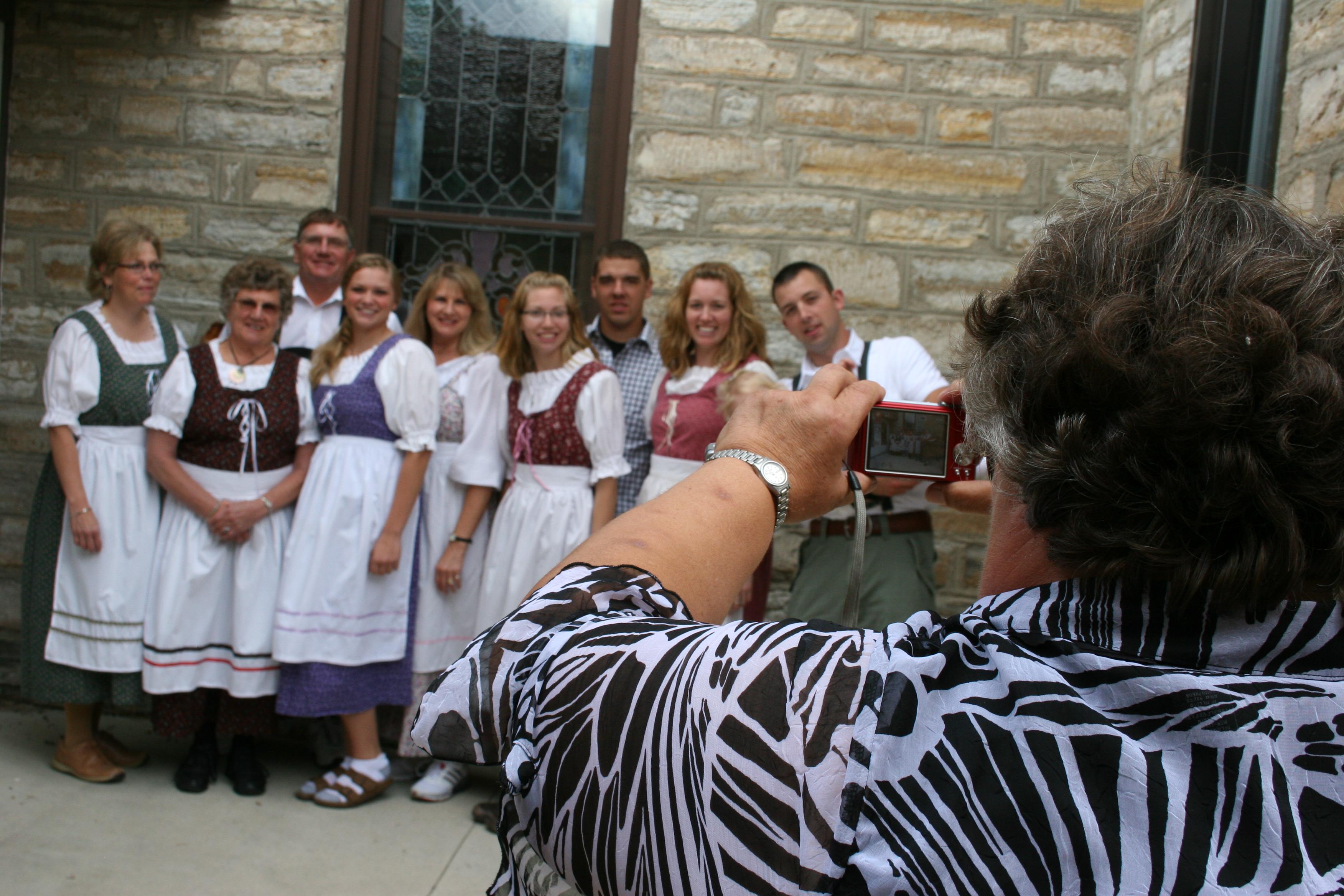
The Bultman family poses for a photo outside the stone church.
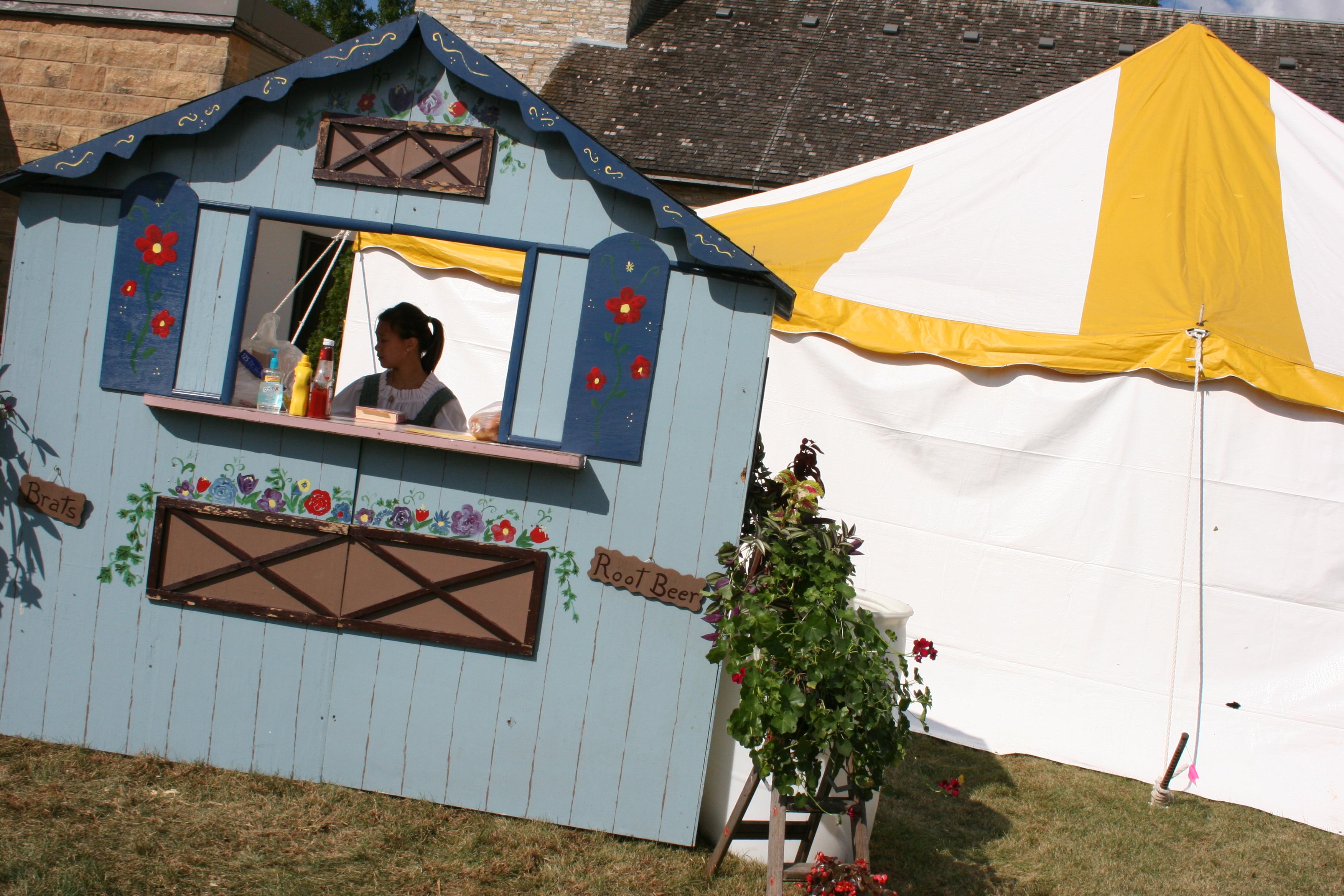
The brat and root beer stand next to the music tent.
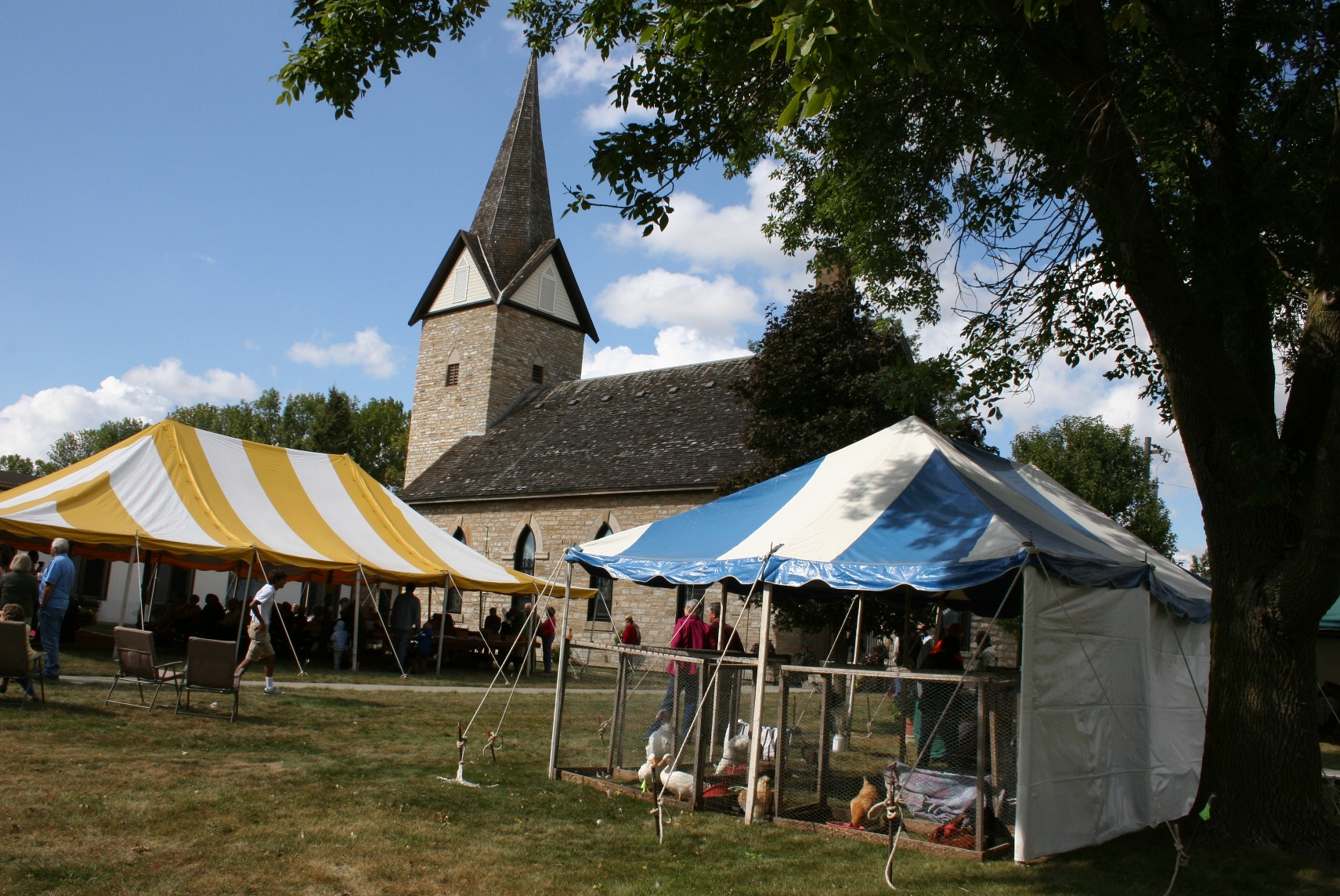
The festival grounds at St. John's U.C.C., Wheeling Township.
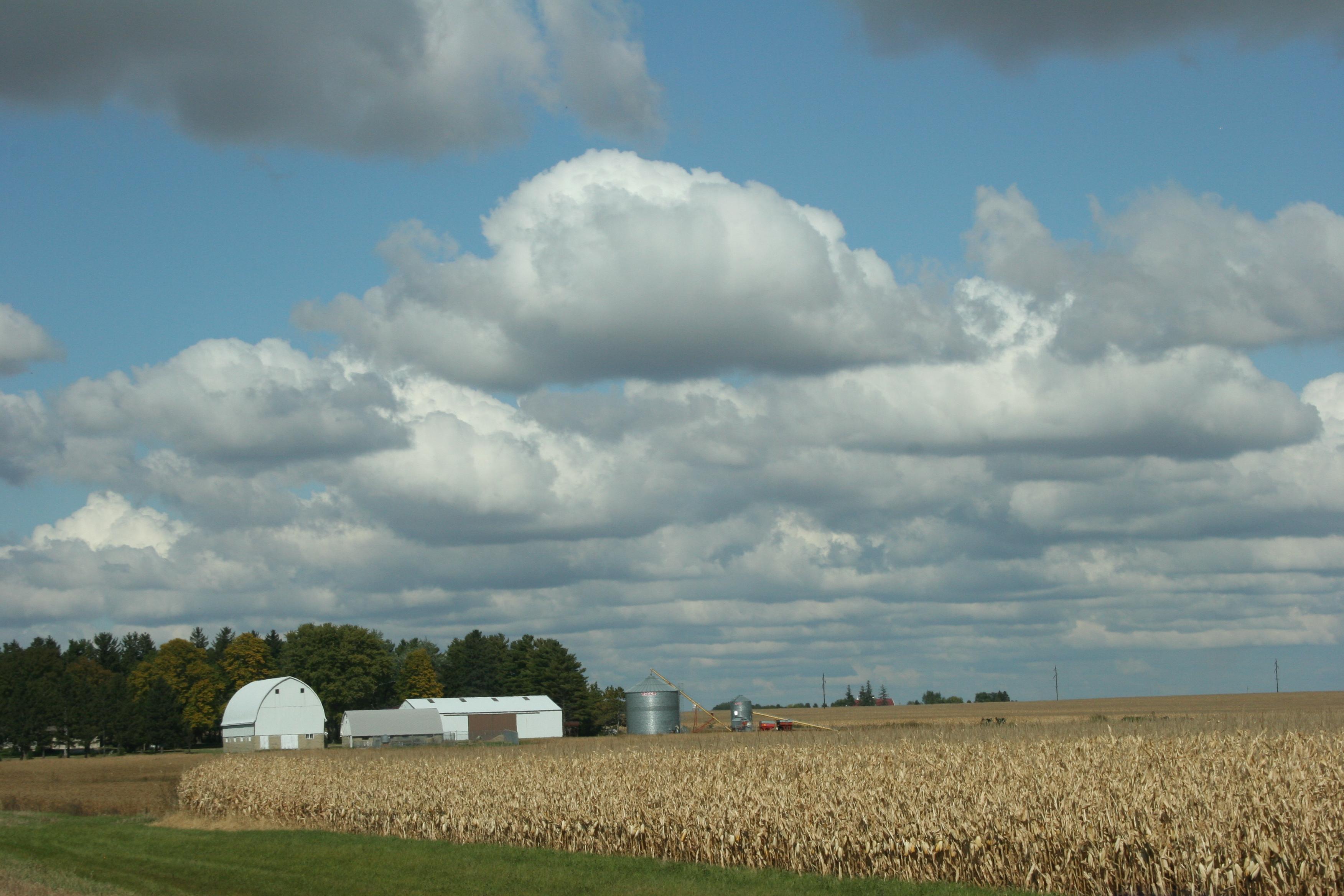
St. John's sits among the farm fields along Rice County Road 24

DO YOU ATTEND CHURCH dinners or festivals? If you have or know of an upcoming must-attend dinner, submit a comment. I’d like to hear about it.

ALSO, CHECK BACK for more photos from Germanfest.

© Copyright 2011 Audrey Kletscher Helbling


Sauerbraten and sauerkraut in Morristown November 15, 2010

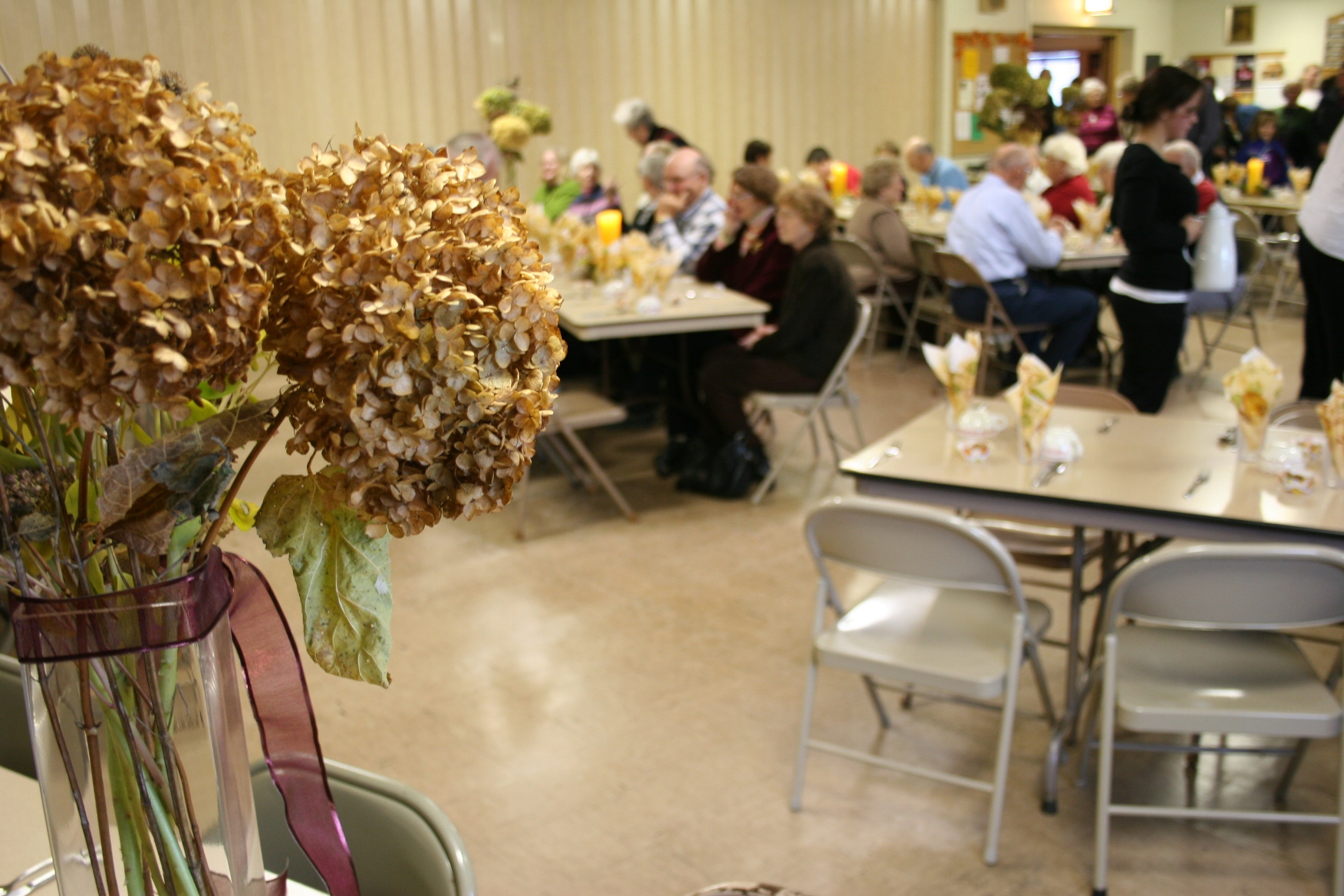
Diners gathered in the fellowship hall at Bethlehem Lutheran Church in Morristown for a German meal served by the Cannon Valley Lutheran High School German Club following a German Fest of Thanks & Praise.

THE LAST TIME I ATE an authentic German meal, I was in high school. The German Club, of which I was a member, was on a Christmas trip to New Ulm, that most Deutsch of all Minnesota cities.

After visiting Domeier’s German Store, a quaint import shop, and Christmas shopping downtown, we gathered at Eibner’s, a German restaurant. Of our ethnic meal there, I remember only the main dish, sauerbraten.

Fast forward nearly four decades to yesterday and a German meal served by the Cannon Valley Lutheran High School German Club at a fundraising dinner in Morristown. The group is traveling to Germany in February. The main dish sauerbraten, beef served atop spaetzle, tasted tangy and vinegary, exactly as I remembered. But then so did several of the other foods like the German potato salad and the purple cabbage, which my friend Mike claimed was transformed from green to purple in a sort of scientific experiment.

The plated portion of the meal included German potato salad, cabbage, brats with sauerkraut, sauerbraten served atop spaetzle (a German dumpling) and bread (rye may have been a more authentic choice).

Magic or not, the meal turned out by the kitchen crew (primarily German students’ parents and CVLHS board members) was worthy of any good German restaurant. I give it five stars.

That said, I honestly could not eat this food on a regular basis. Too much starch. Too heavy. Too all-one-boring blah white, except for that colorful dash of purple cabbage. I fear a steady diet of this would clog my arteries and cause me to gain weight more rapidly than I already am at my slowing metabolism mid-50s age.

In all fairness to the Germans, I’m certain they don’t eat this much or these types of foods daily just like I don’t eat pizza and potatoes every day. In fact, CVLHS language teacher Sabine Bill, who recently moved to Morristown from Germany, told me the German meal served on Sunday is representative of the food eaten in the Bavarian region of southern Germany, not the entire country.

Now I’m unsure where my German ancestors lived, but I know they liked their sauerkraut. My dad was the king of sauerkraut makers, a tradition carried on by my sister Lanae. We got sauerkraut on Sunday served with slices of brats.

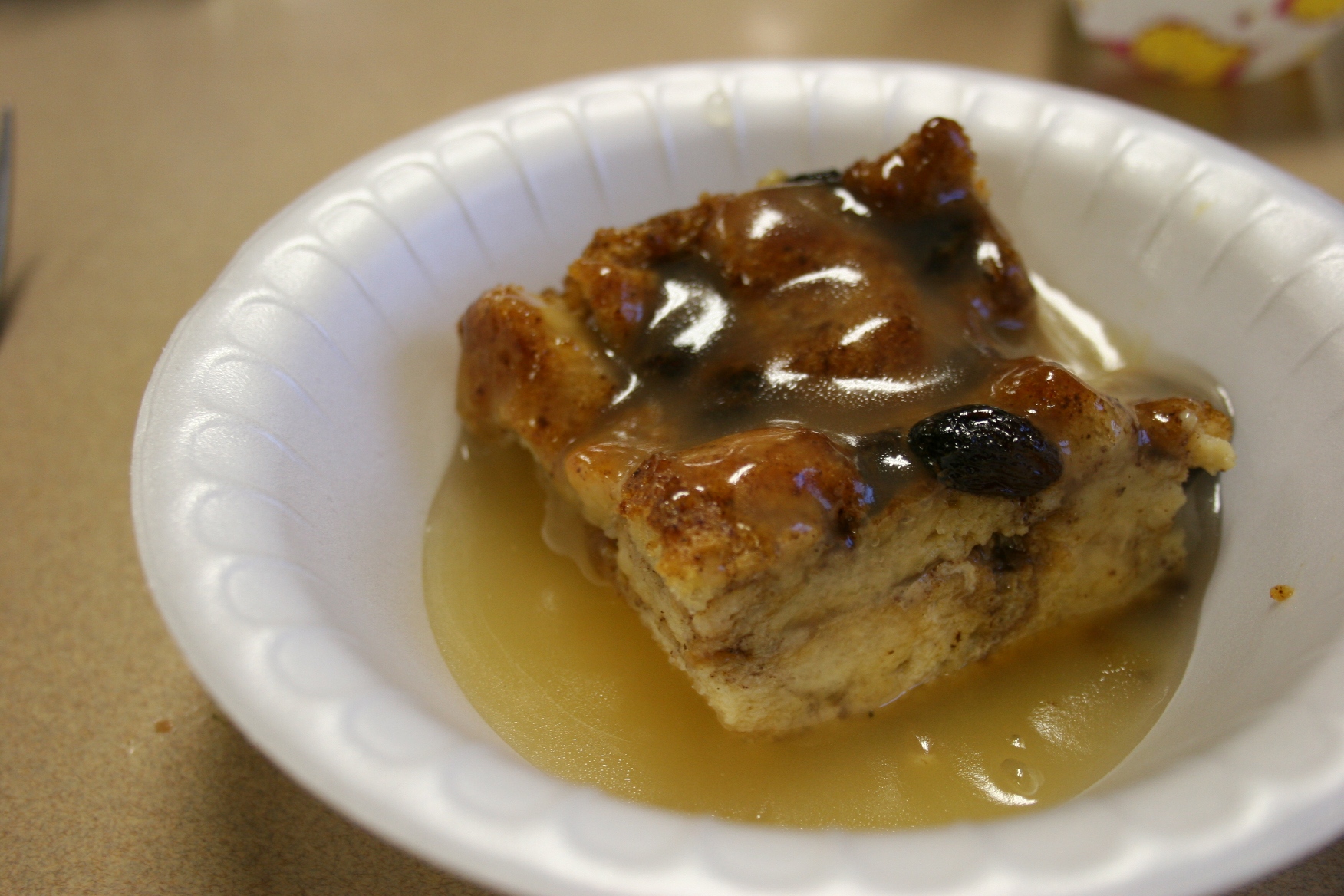
Just when I thought I couldn’t possibly eat another bite of anything, I was handed a bowl of bread pudding laced with raisins and immersed in a decadent, over-sweet buttery sauce. My husband complained that his piece was smaller than mine and I offered to share. But I didn’t, not one single bite. I could have. I should have…

The decadent bread pudding...

Typically I don't drink coffee. But it was decaff, went well with the bread pudding and pfeffernusse and was served in the prettiest, sturdiest cups.

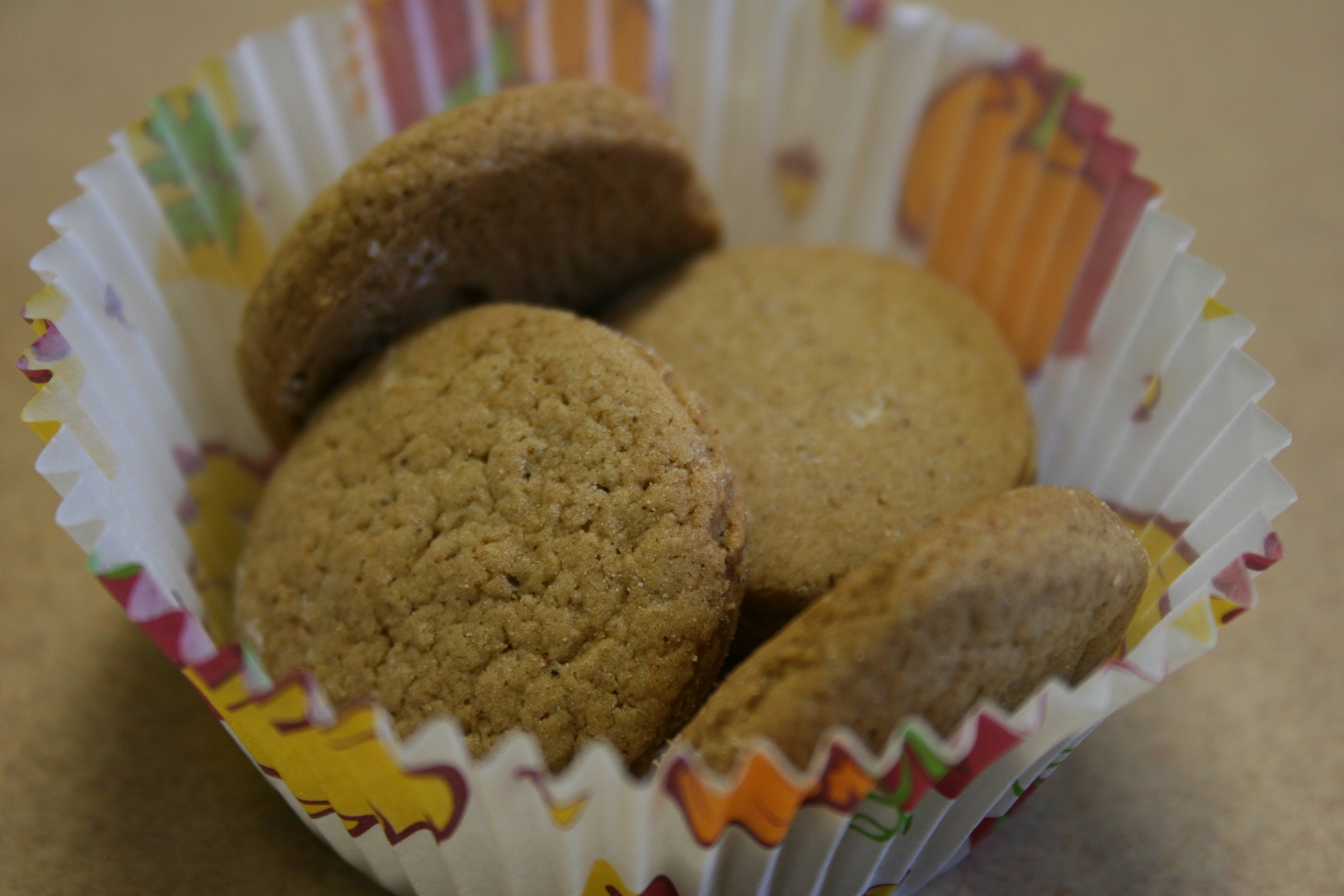
Diane, a CVLHS board member, made more than 1,000 pfeffernusse, tiny hard cookies which include black pepper, black coffee and several spices. Each diner got five cookies, served in festive cupcake liners.

On the way out of the Bethlehem Lutheran Church fellowship hall, where the German meal was served, I told my friend Mike that his group had started something. They would have to host this German Fest of Thanks & Praise and the German meal annually.

I could eat this ethnic food once a year. To my several-generations-removed-from-Deutschland taste buds, this homemade meal rated as authentically delicious.

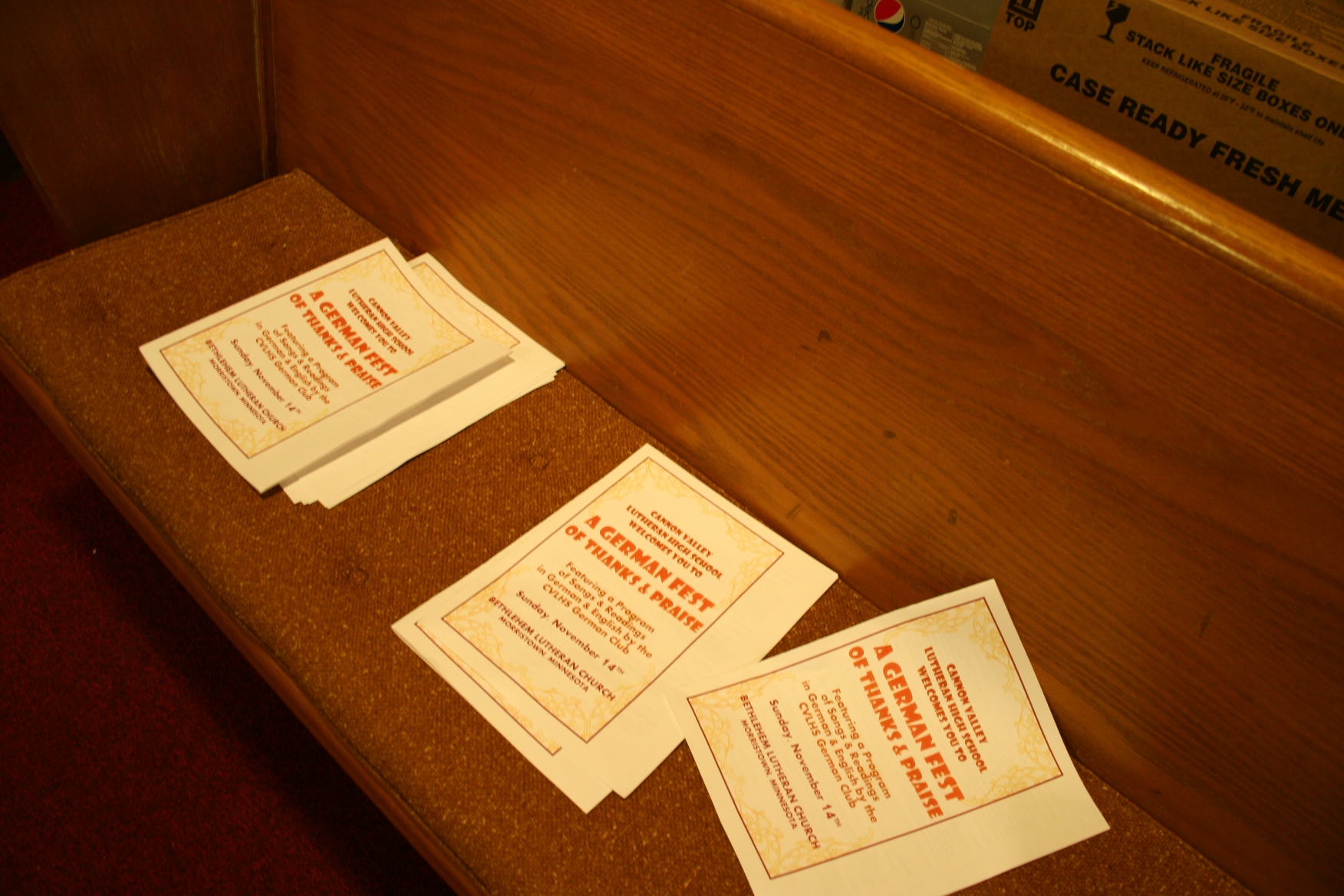
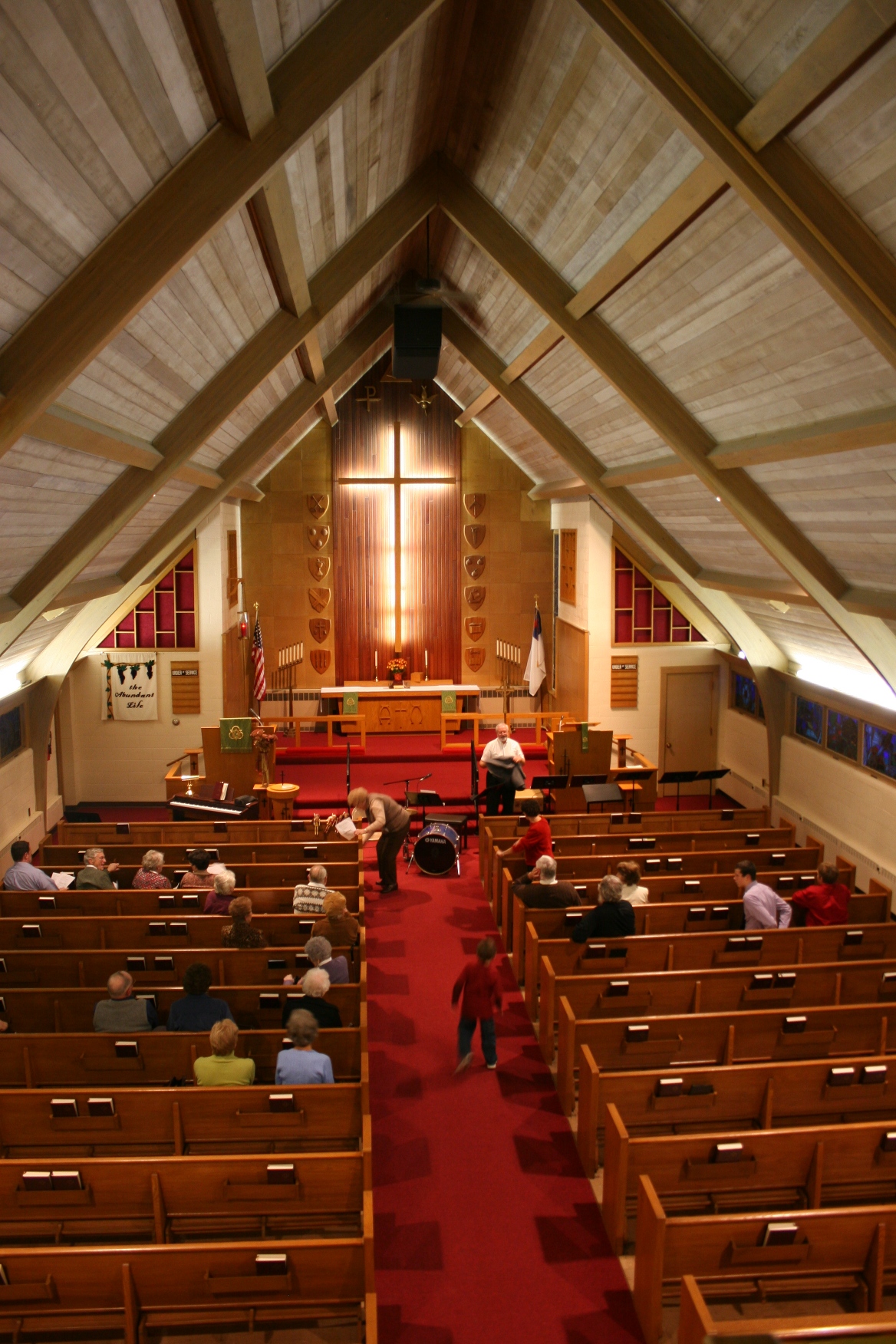
Programs from the pre-dinner German Fest of Thanks & Praise lie on a pew inside Bethlehem Lutheran Church. The fest included prayers, songs and Scripture readings in German.

Between meal sittings, musicians entertained waiting diners inside the Bethlehem Lutheran Church sanctuary.

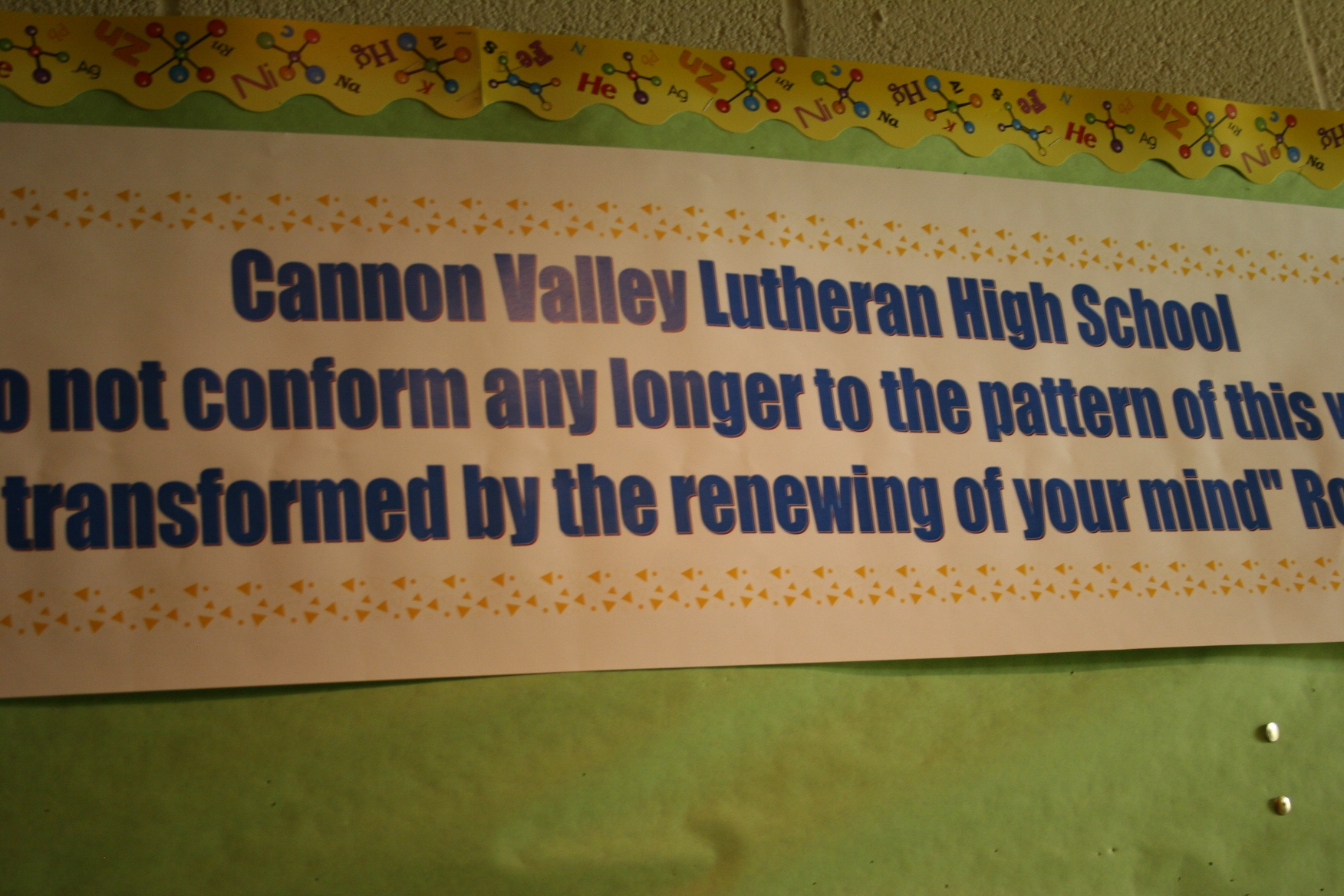
On my way to the church balcony, I found this CVLHS sign on a bulletin board.

© Copyright 2010 Audrey Kletscher Helbling