Minnesota Prairie Roots

Writing and photography by Audrey Kletscher Helbling

Connecting, conversing and celebrating cultural diversity at Faribault festival August 28, 2012

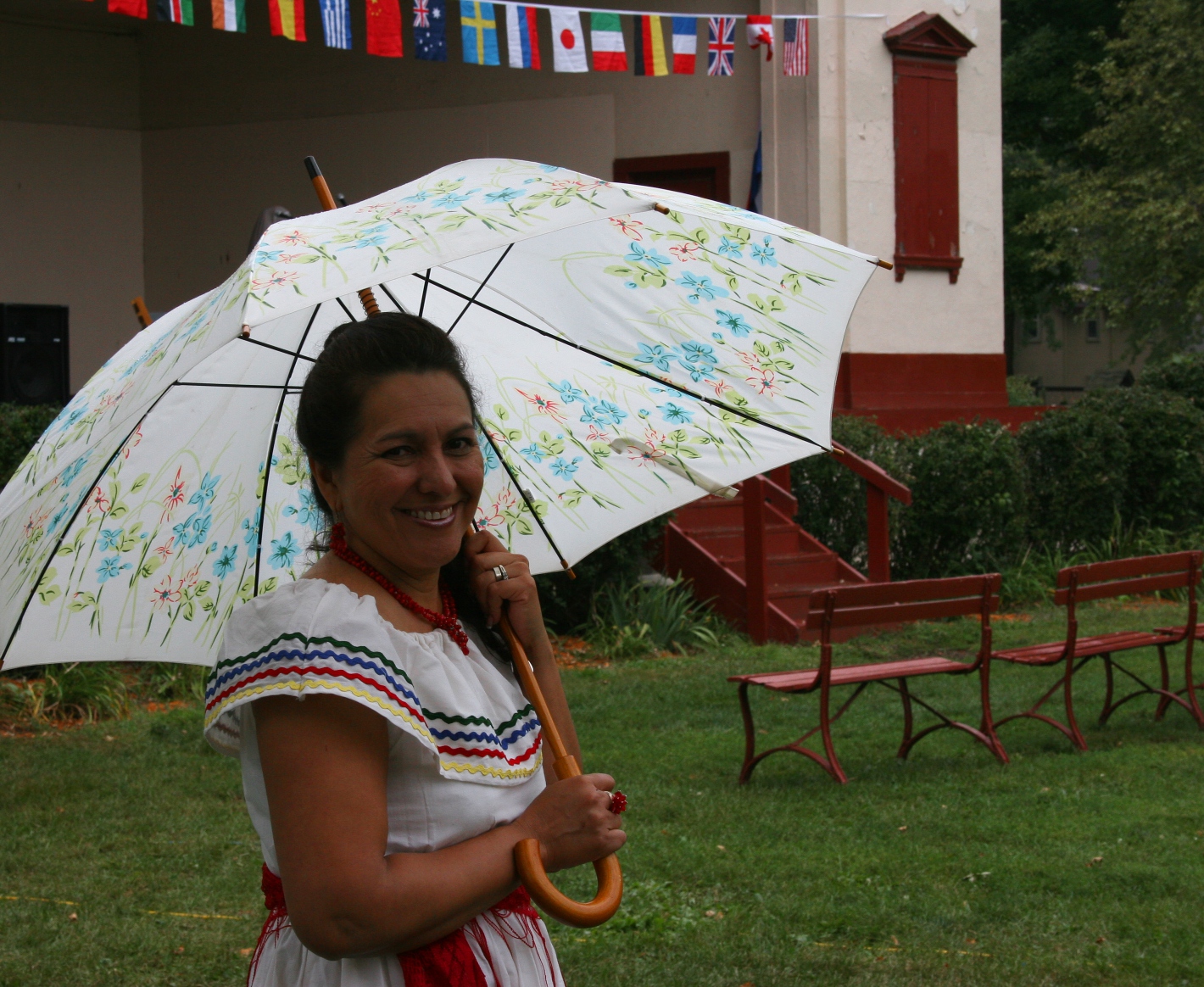
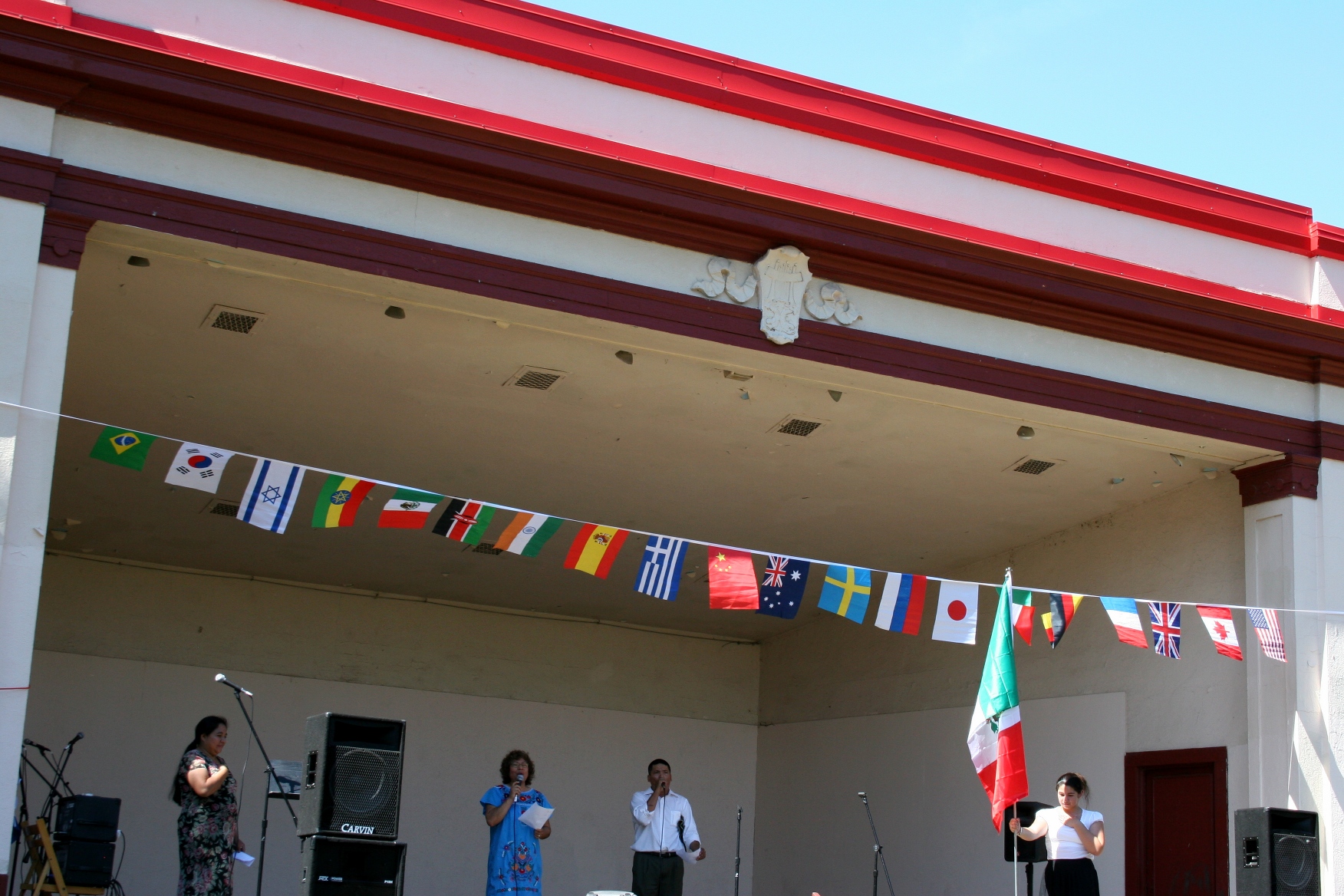
This woman represents El Salvador during the International Festival Faribault on a drizzly Saturday. Flags suspended from the Central Park band shell in the background show the countries participating in the event.

DESCRIBING AN EVENT like International Festival Faribault within the confines of a blog post or two seems daunting. How do I adequately convey the essence of this fest celebrating the cultural diversity of my community?

You can view my first effort by clicking here and reading “Yearning for respect & equality, ‘no matter what color you are.’”

Now, as I scroll again through the many photos I took during the fest (when rain wasn’t drizzling upon my camera), I ponder which images to share, what words to pen.
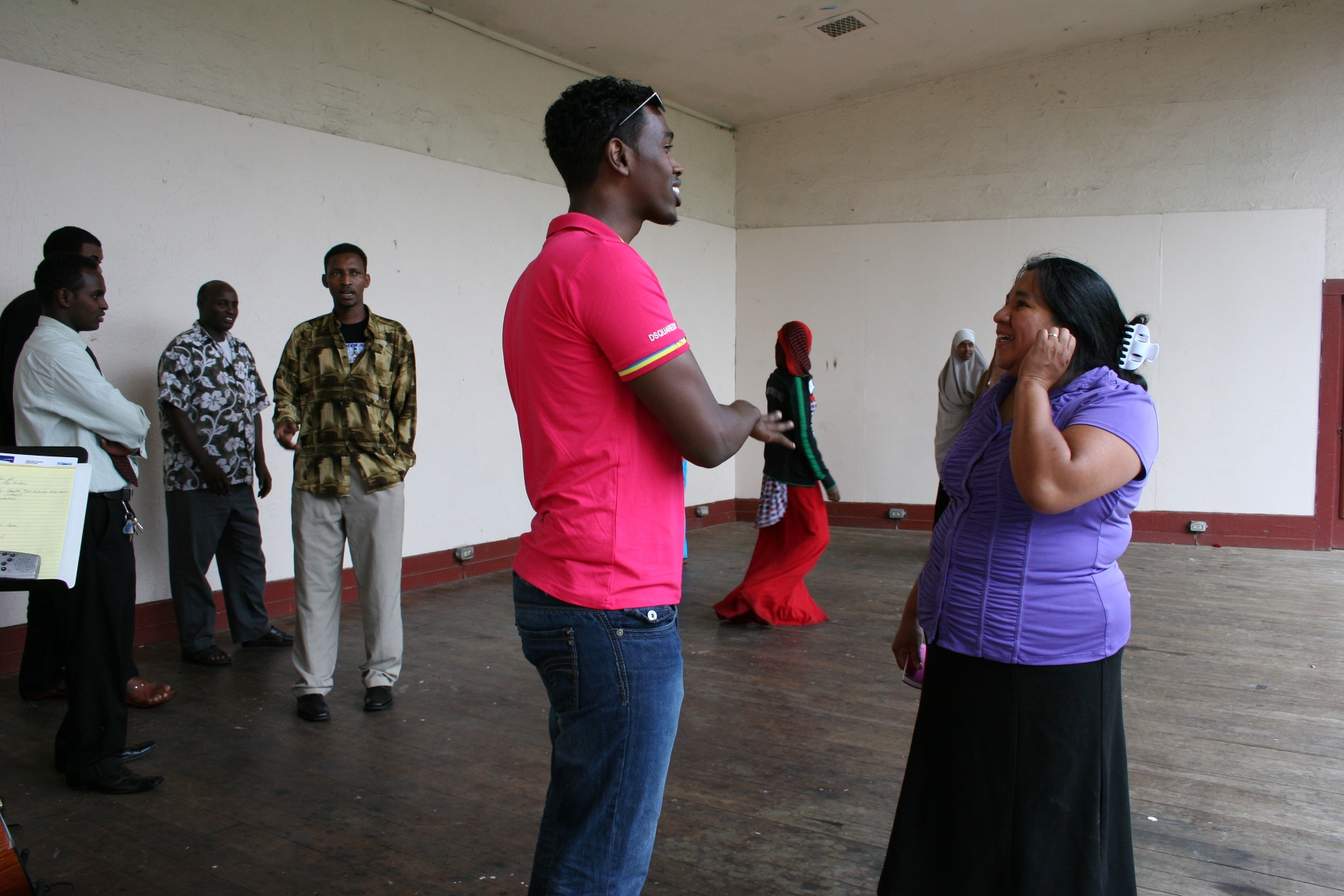
Cultures connecting on the band shell stage between musical acts.

And “c” words—like color, connecting, communicating, conversation, coloring, candy, culture, care, colorful clothing—pop out at me as I view my photos.

I should perhaps add “confusing” to that list because I felt overwhelmed when trying to photograph the wood carvings from Somalia and Kenya peddled by Bashir Omar and Asher Ali.

A woman, without prompting, took this mask from the table manned by Bashir Omar and Asher Ali and asked me to photograph her.

Suddenly, it seemed, everyone wanted to pose for a picture. And I much prefer candid to set up shots. I obliged, though, because it seemed the easiest thing to do.

Lul Abdi shows off beautiful wood crafts from Kenya and Somalia.

Then Lul Abdi, who had grabbed a wooden platter and giraffe, and held them up for me to photograph, asked me to write in my blog that an election is coming up in Somalia and I should tell everyone to vote for whomever it is she supports. Bashir Omar translated my answer—I don’t write about international political issues.

While this back-and-forth translation was occurring, I felt befuddled because, when too much noise (in this instance lots of conversation going on around me and music in the background), is coming my way, my brain doesn’t process anything. That issue is related to the 70 percent hearing loss in my right ear.

Despite the difficulties, this muddle served as an aha moment. Imagine if I was Lul, struggling on a daily basis to understand those around me. Life would be challenging.
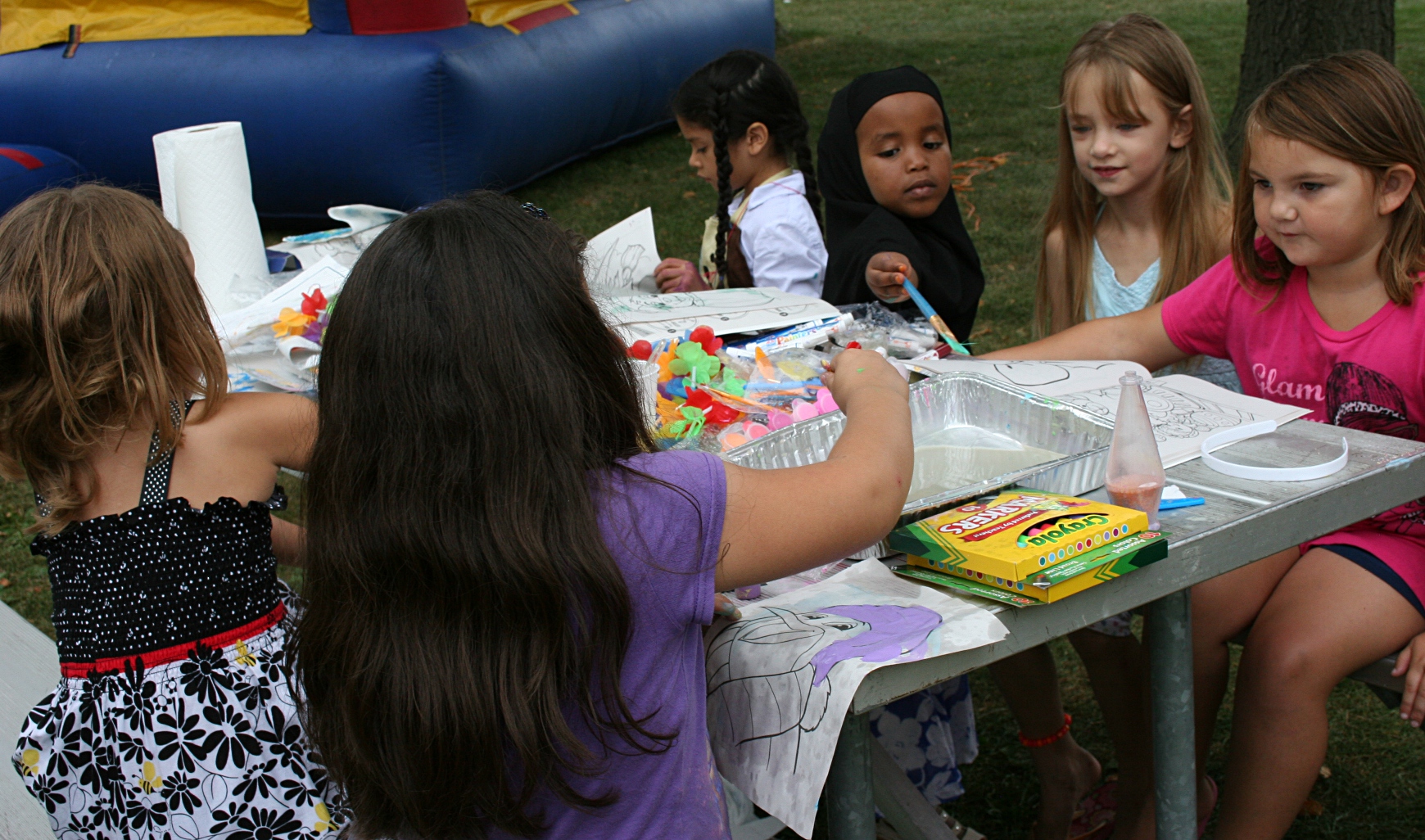
Busy artists at the kids’ activity table.

But sometimes we all speak the same language. And I saw, rather than heard, that on Saturday, at the festival, especially among the children. They sat side-by-side painting at the kids’ activity table, bounced side-by-side in the bouncy tent, stood side-by-side in line to take turns swinging at pinatas.

A little girl stands on the opposite side of the group of children waiting to swing at the pinata.

Differences in color and culture and language mattered not to these children. They shouldn’t matter to any of us. Therein lies the message I most want to communicate to you today and which was communicated so well via International Festival Faribault.
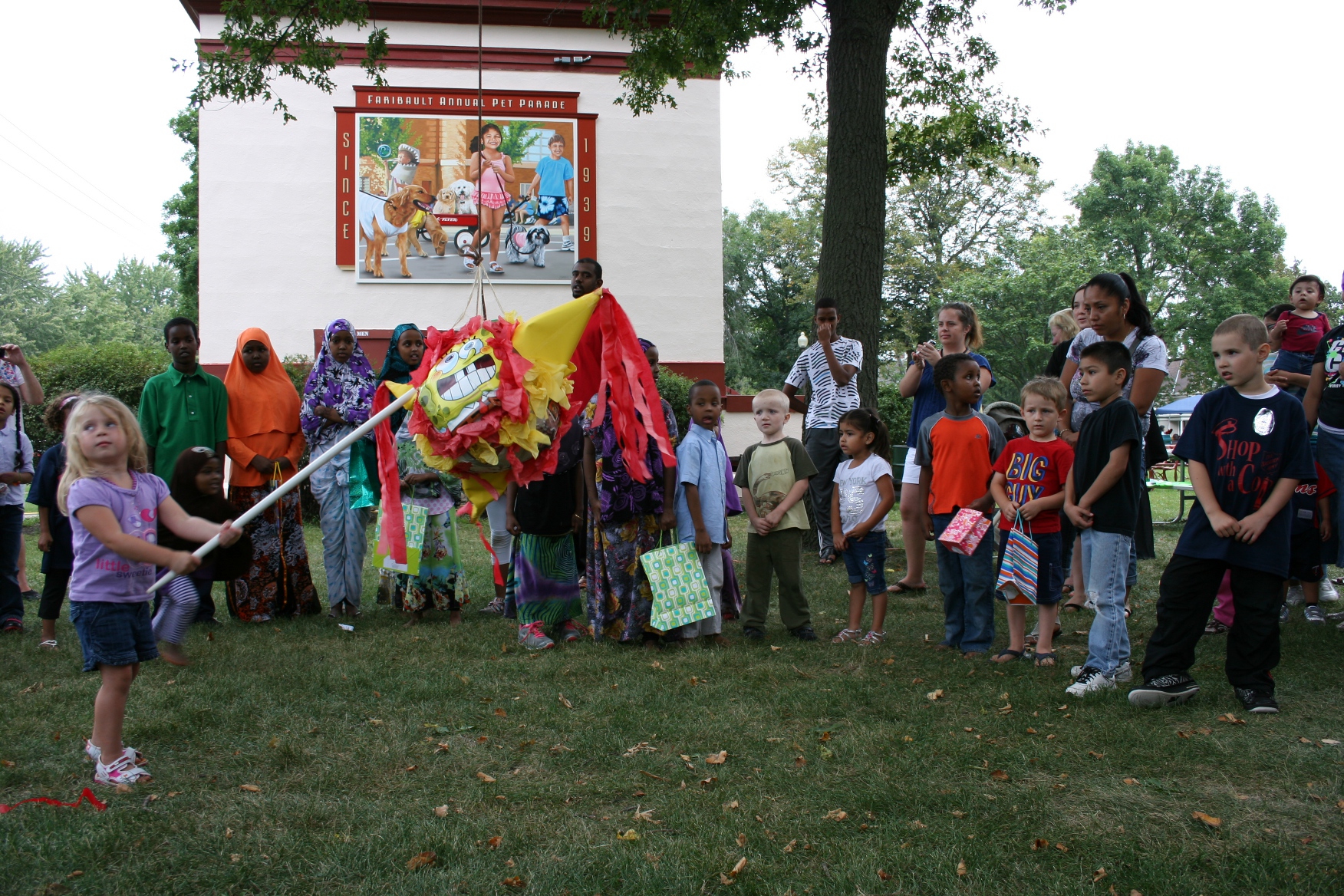
Happy children all focused on the same goal: breaking the pinata.
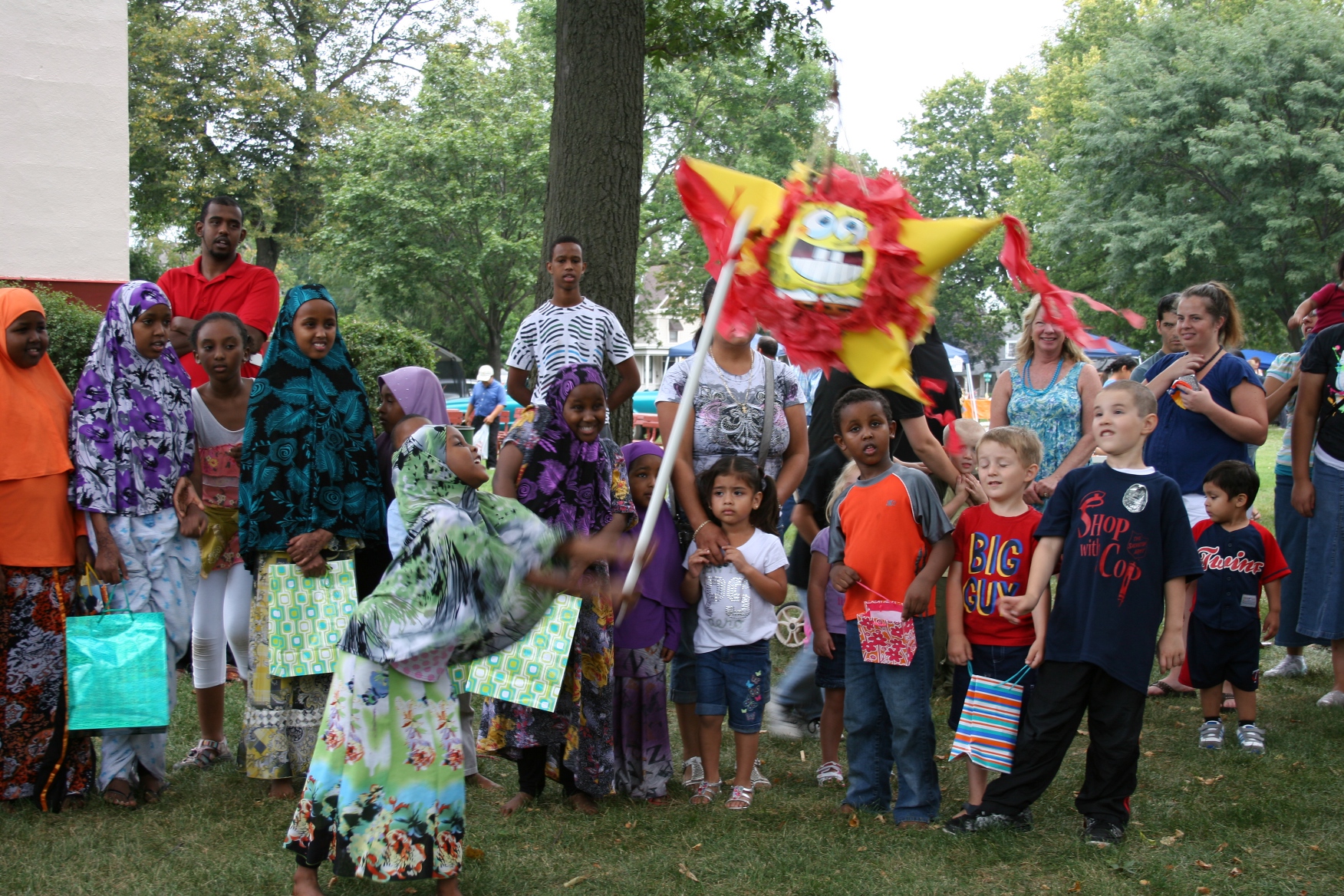
All around me, children and adults of all colors mingled.
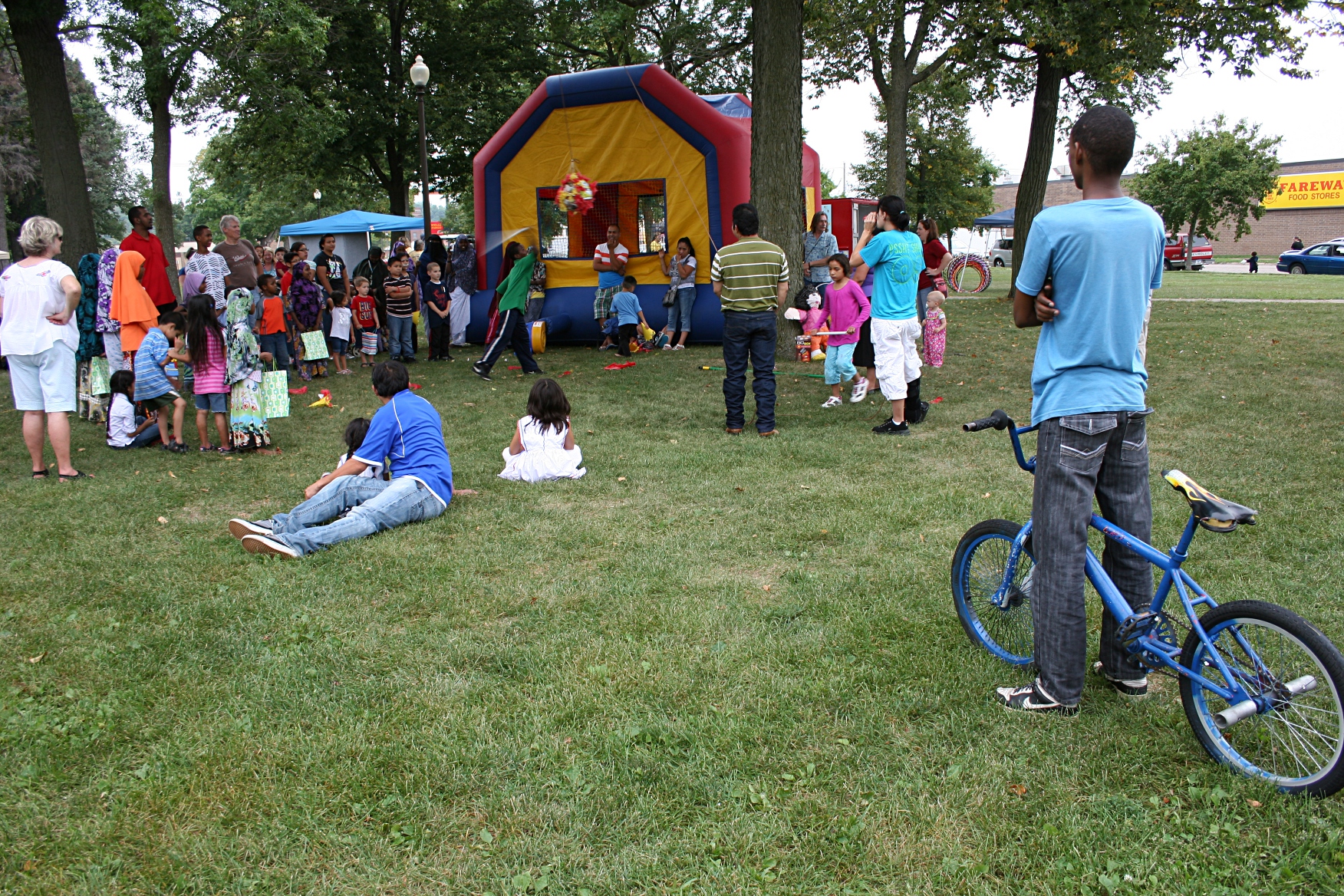
The boy on the right was biking past Central Park and stopped to watch the activities at a distance.

The scramble for candy once one of three pinatas is broken.

AND HERE ARE SOME ADDITIONAL BONUS PHOTOS:
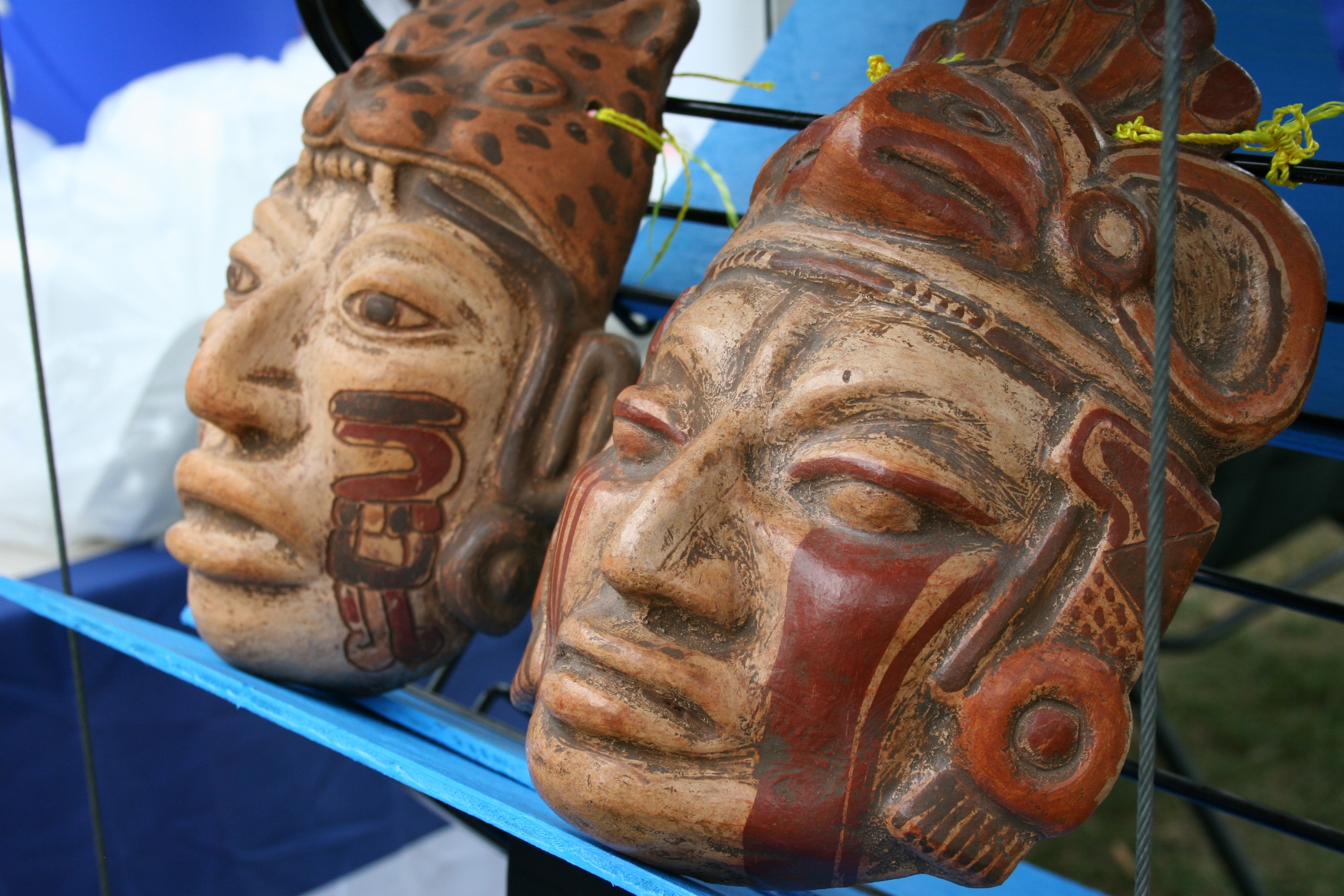
Masks displayed at the food vendor representing El Salvador.
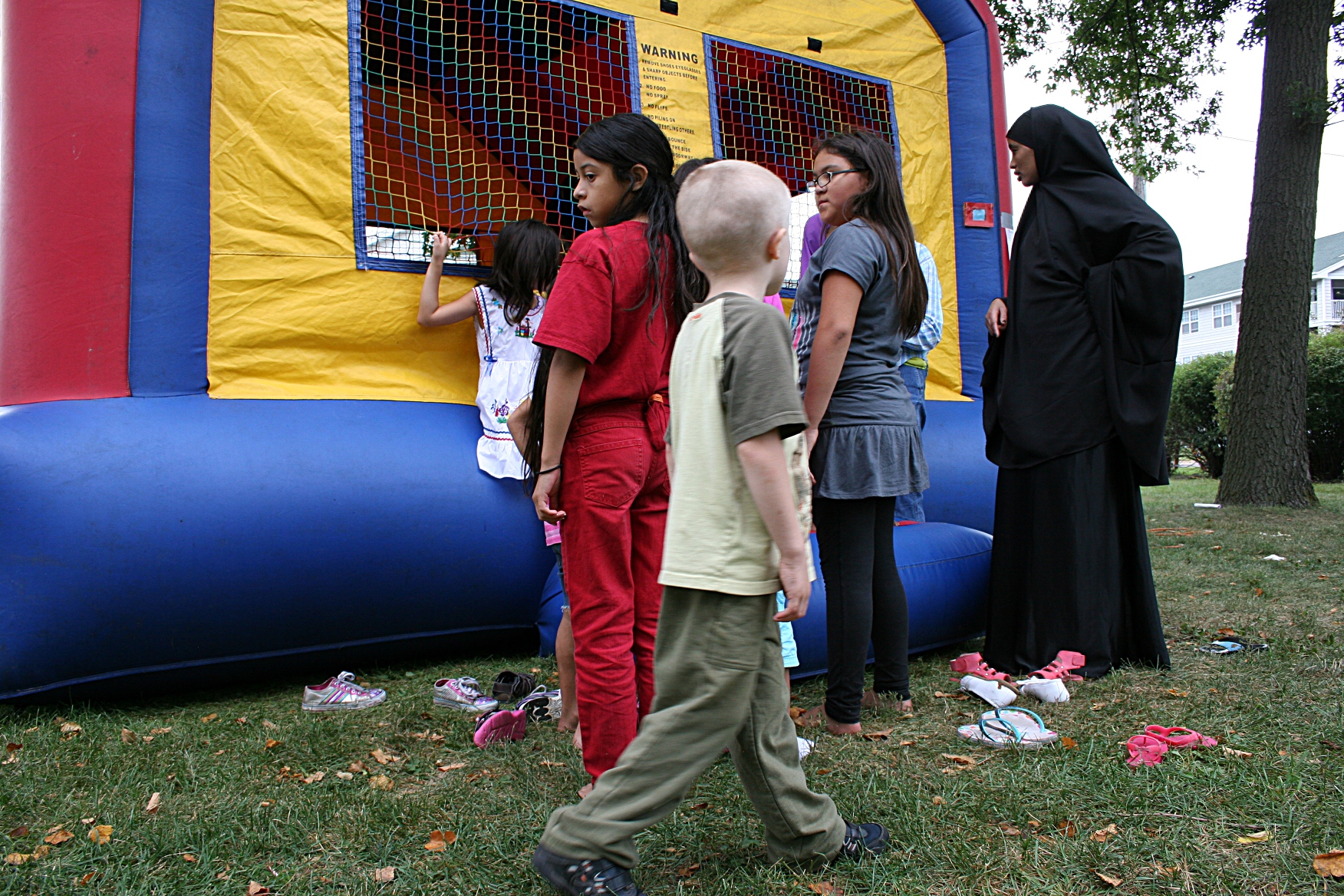
Waiting at the bouncy tent.
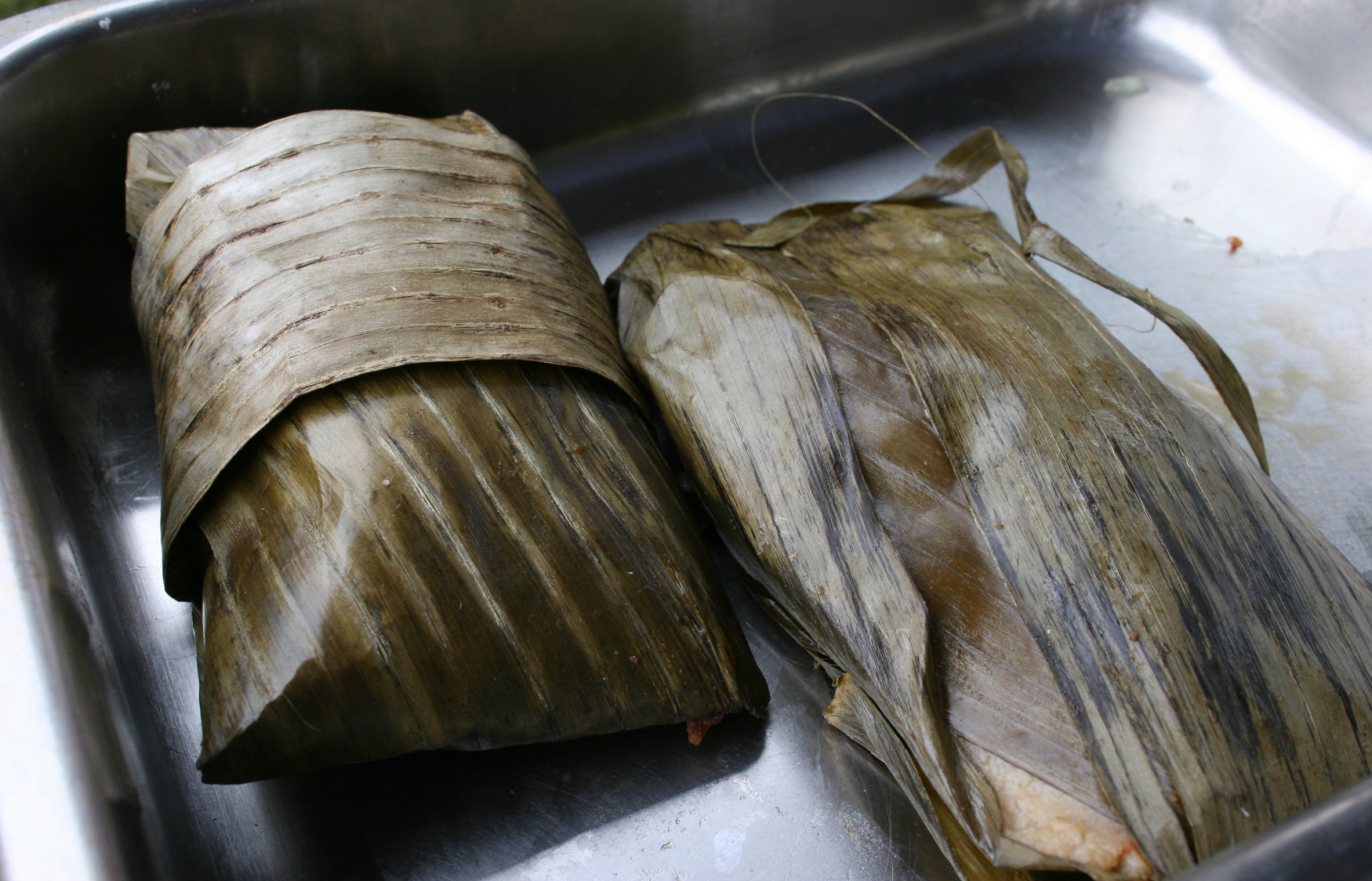
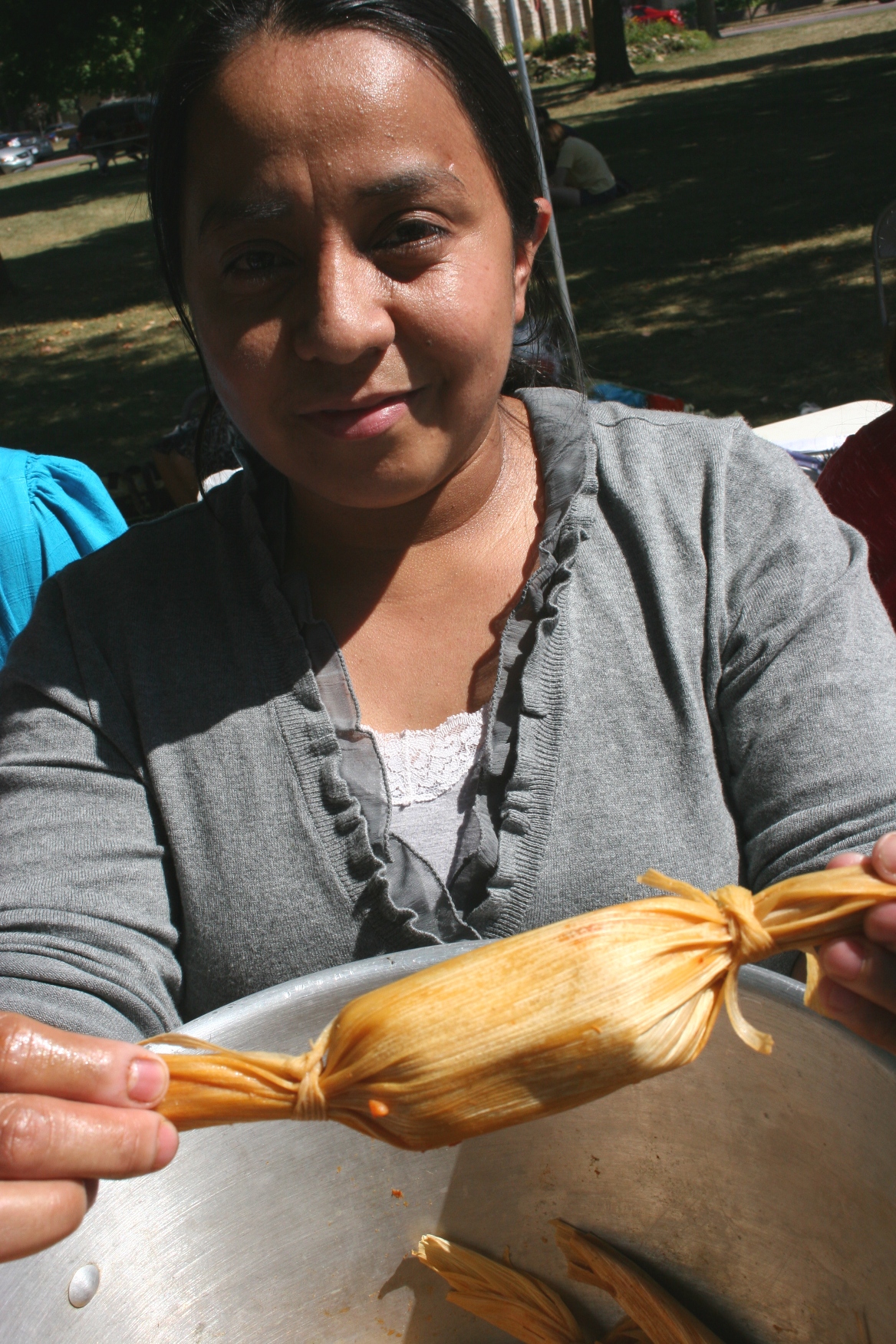
A Mexican dish (help me out if you know, but I think tortillas) was wrapped in banana leaves. My husband and I tried this.
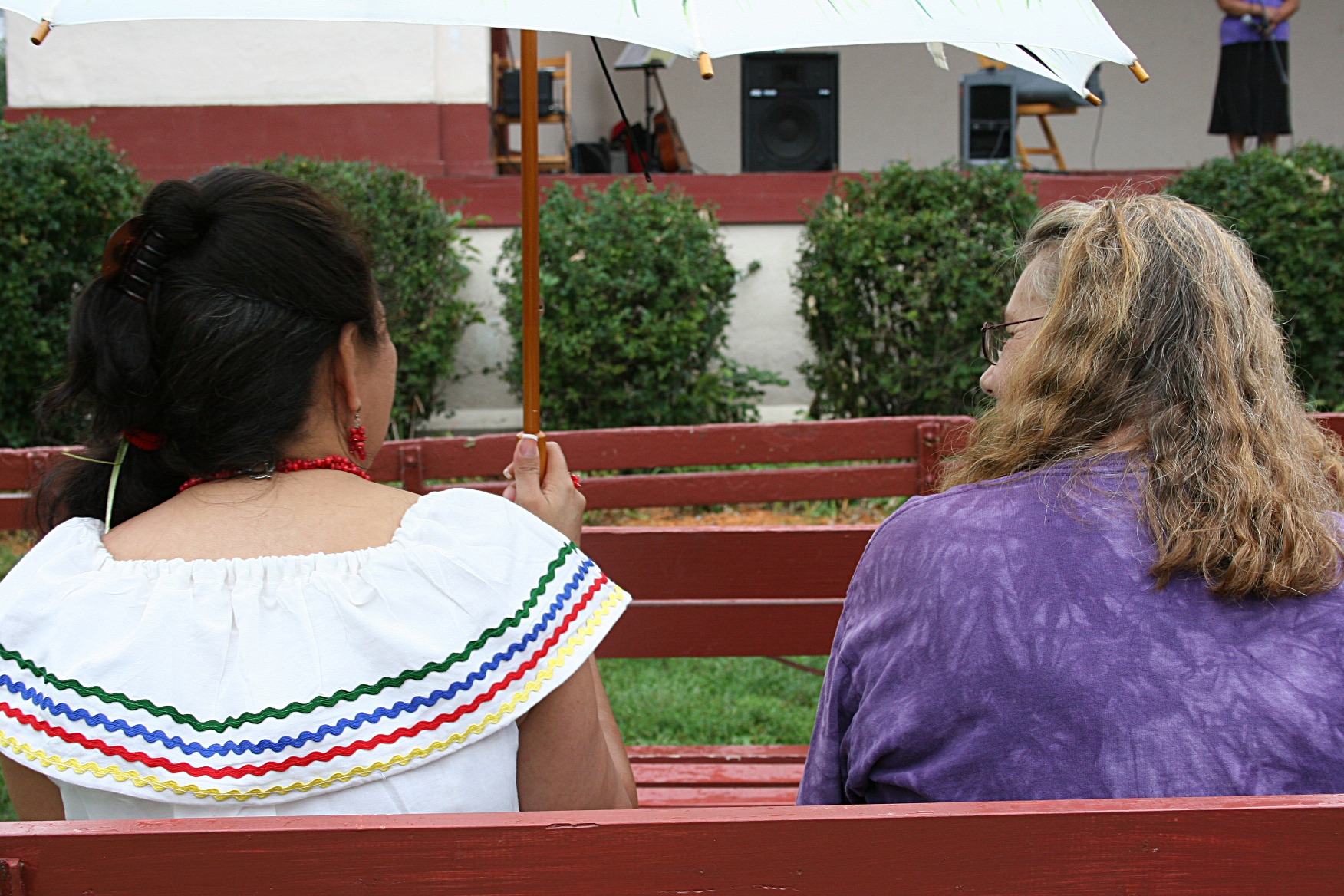
Conversation and connecting…, no other words necessary.
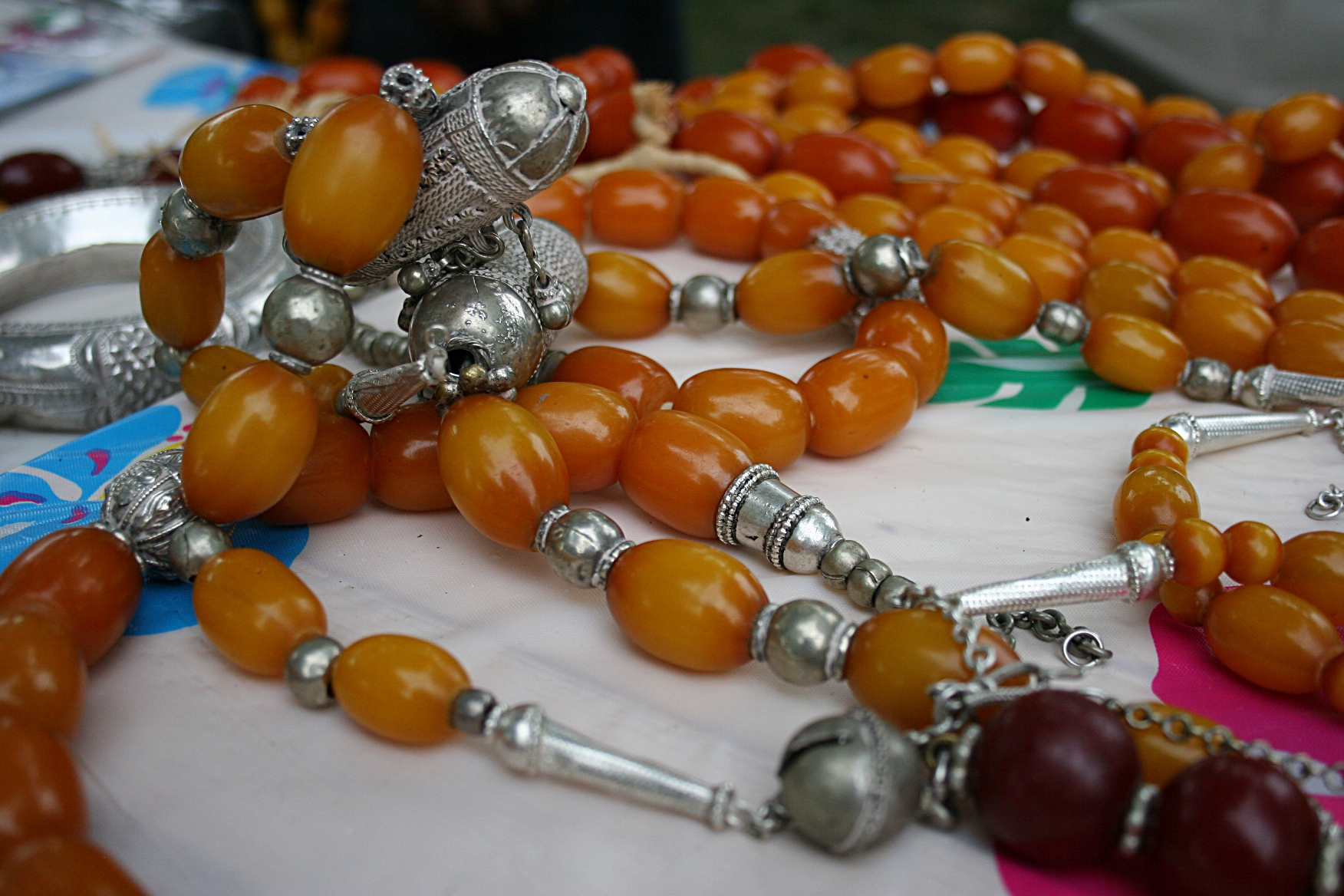
Necklaces and other jewelry from Kenya and/or Somalia and for sale at the festival.
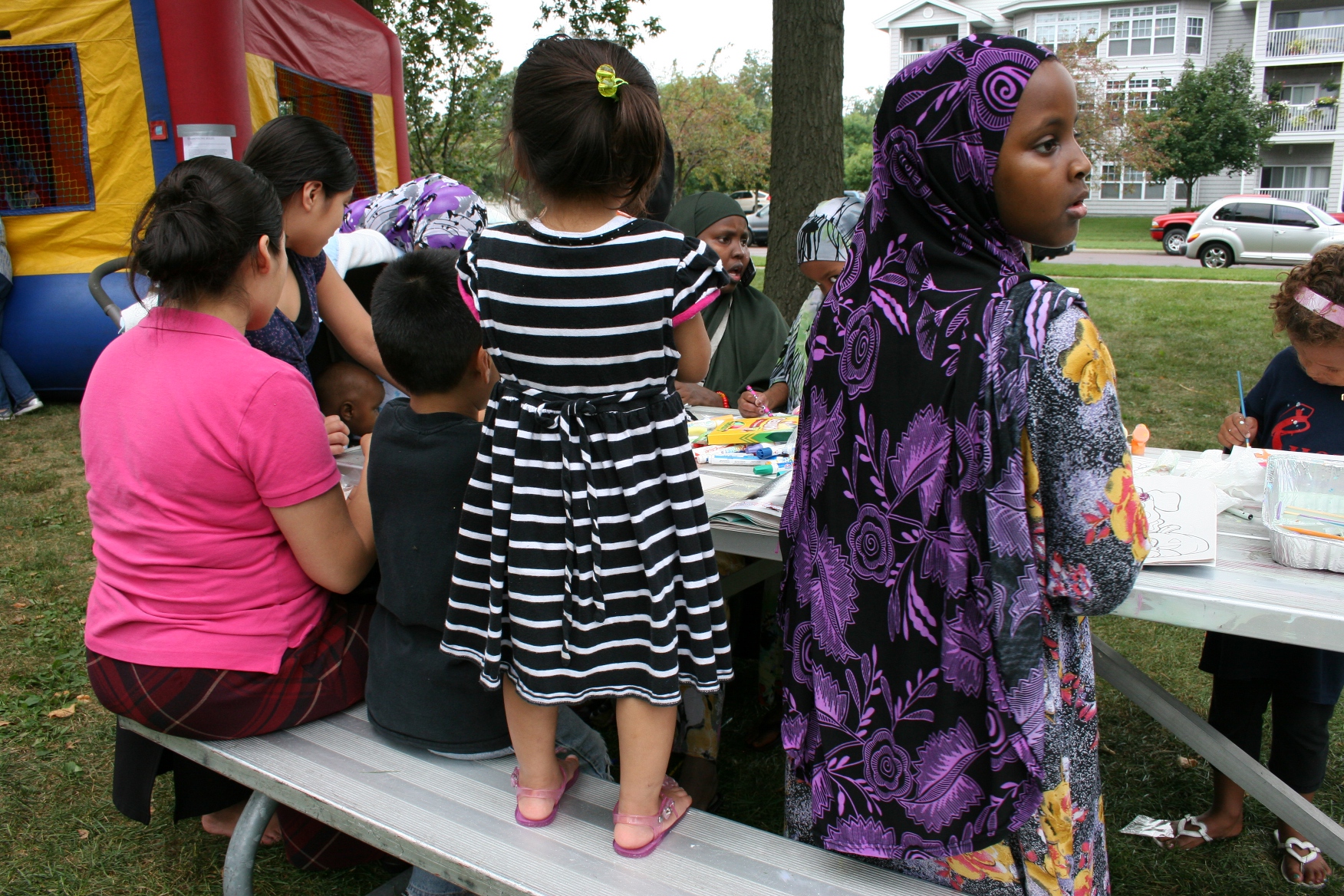
Kids painted and colored, etc., elbow to elbow at the always busy kids’ activity table.
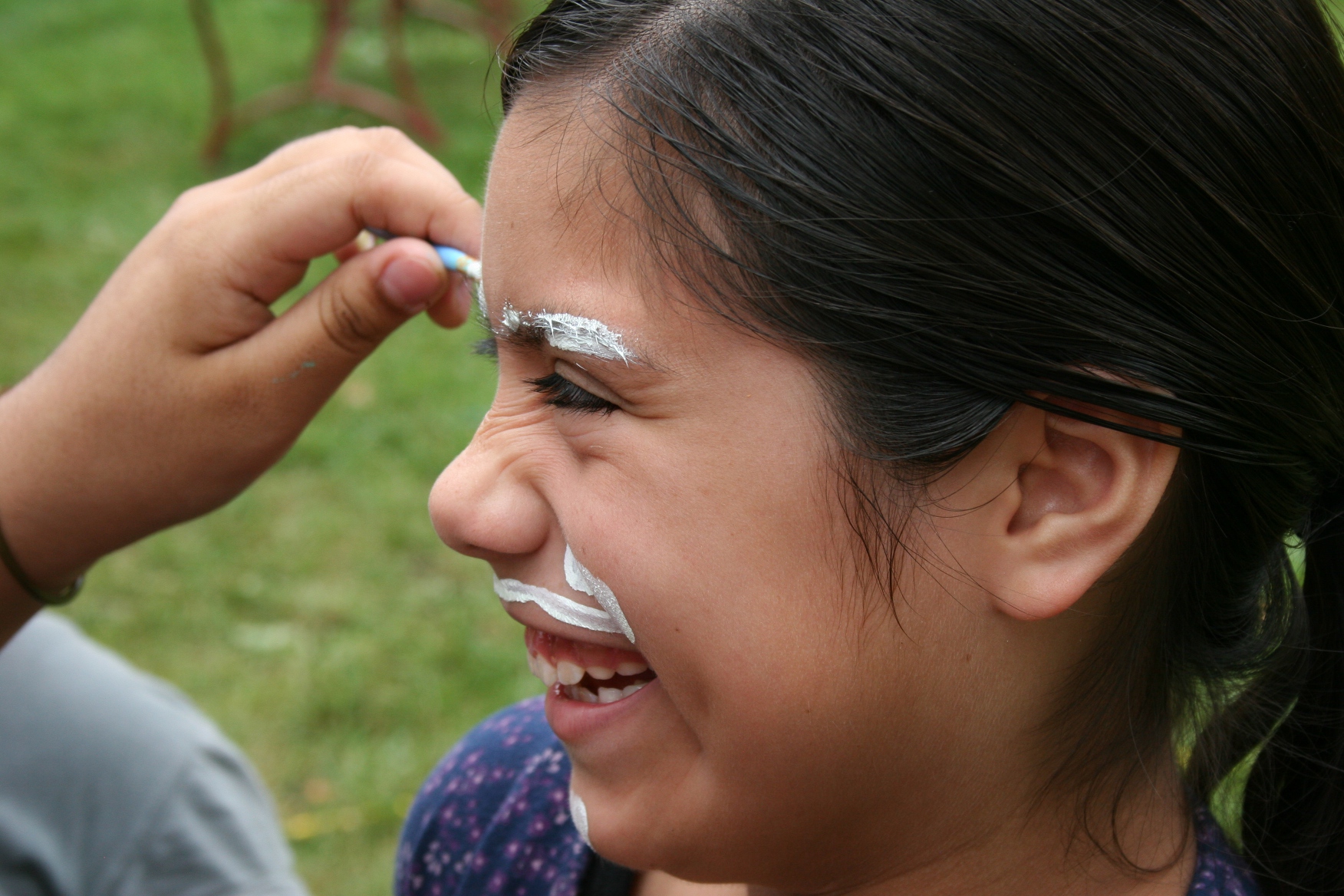
Some mischievous face painting was also part of the fun.

© Copyright 2012 Audrey Kletscher Helbling


Join efforts to connect neighbors in a celebration of cultural diversity July 14, 2012

Several Latinos lead in singing of Mexico’s national anthem last September during the International Festival Faribault at Faribault’s Central Park.

ORGANIZERS OF THE SEVENTH ANNUAL international festival celebrating the cultural diversity of Faribault are looking for participants, help and donations for the Saturday, August 25 event.

Can you help?

And when I say “you,” I mean anyone, whether you live in or near Faribault or not.

Served at the 2011 fest: Guatemalan chuchitos– chicken, corn and salsa wrapped in a corn husk.

Drive on down from the Cities; we’re only an hour from downtown Minneapolis. Or drive across town to set up a booth showcasing your culture at International Festival Faribault. Sell ethnic cuisine. Pedal your ethnic arts and crafts or other merchandise. Show and tell and educate the public about your culture in this event pegged as “neighbor meeting neighbor.”

I like that neighborly phrase, for it is when we meet face-to-face and engage in conversation and sample each others food and learn each others customs that the cultural barriers begin to fall and friendships (or at least understanding) form.

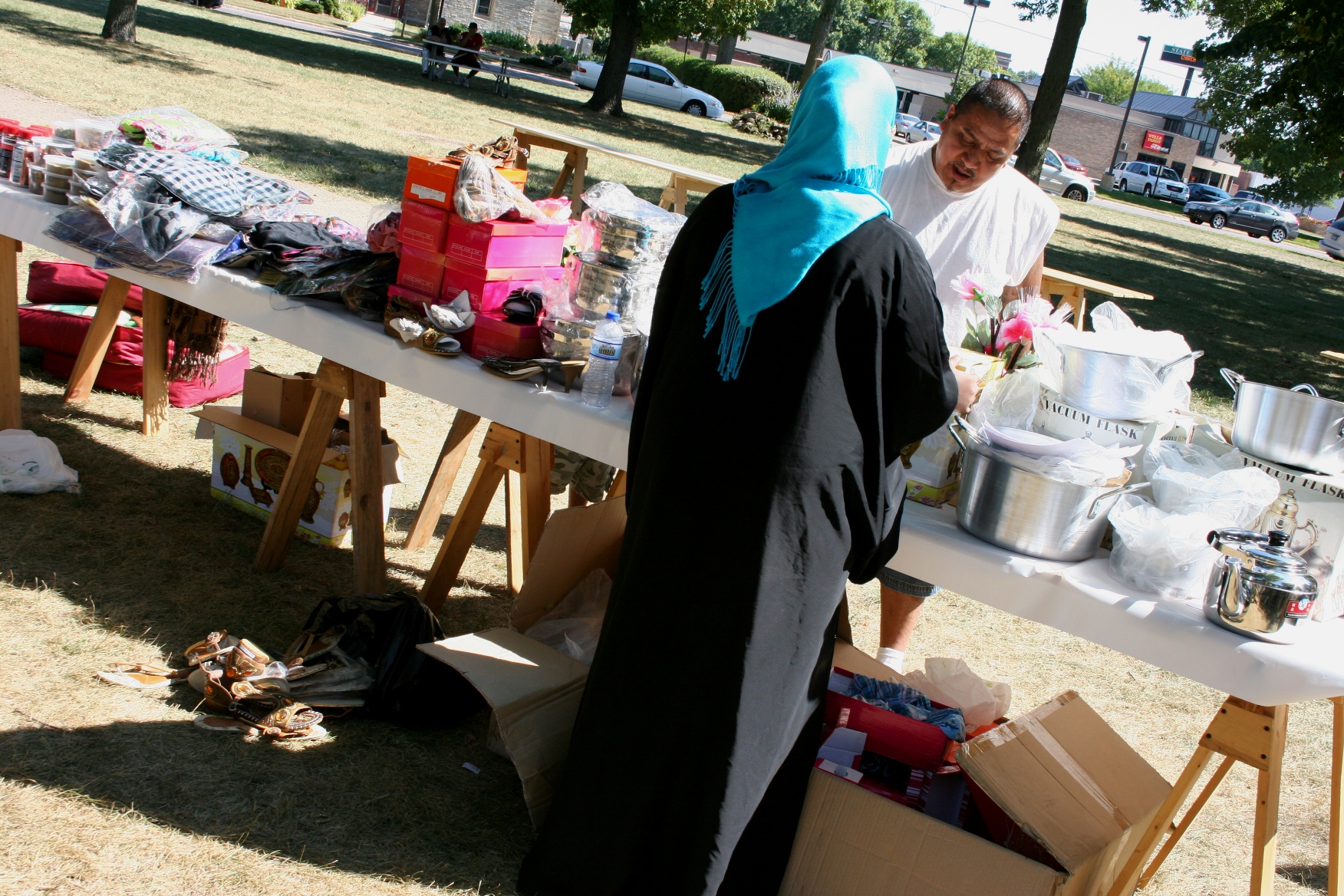
Vendors, like this Somali woman, peddled their wares at the 2011 festival.

Table and booth space at the 10 a.m. – 4 p.m. festival are currently available to the public for a $20 fee. But get this: You keep all profits earned. Non-profit organizations get free space.

Now if that isn’t enough incentive to book a spot in Faribault’s Central Park for the day, consider how you will help advance the mission of the non-profit International Festival Faribault. Here’s the organization’s mission:

…to promote understanding between diverse cultures within Faribault, MN; uniting the community with music, dance, ethnic foods and merchandise which is experienced at a once a year festival organized by the committee.

Hoop maker, performer and teacher Adrienne Lee teaches a Girl Scout the art of hoop dancing. The Girl Scouts were among the non-profit groups with booths at the 2011 fest.

Already, Spanish and Somali singers, a local dance academy and several small bands have committed to providing on-stage entertainment. A hula hooper and jugglers are signed on to wander through the crowd.

The scramble for candy after the pinata is broken at last year’s festival.

What can you contribute? Dancing, singing or other musical entertainment from your culture? On-site ethnic art/crafts demonstrations? Are you willing to sing your country’s National Anthem on the Central Park Bandshell stage? How about presenting a mini drama or storytelling focused on your ethnicity? Can you plan and lead ethnic activities for kids?

The group also needs volunteers to assist with set-up and clean-up, help throughout the day, etc.

Monetary and silent auction donations are also needed. Do you have a tent and/or tables the group can borrow? Can you help with banners or flyers? Donate food items?

Yes, the list of needs is lengthy. But remember the “neighbor” part of this festival? Neighbors help neighbors.

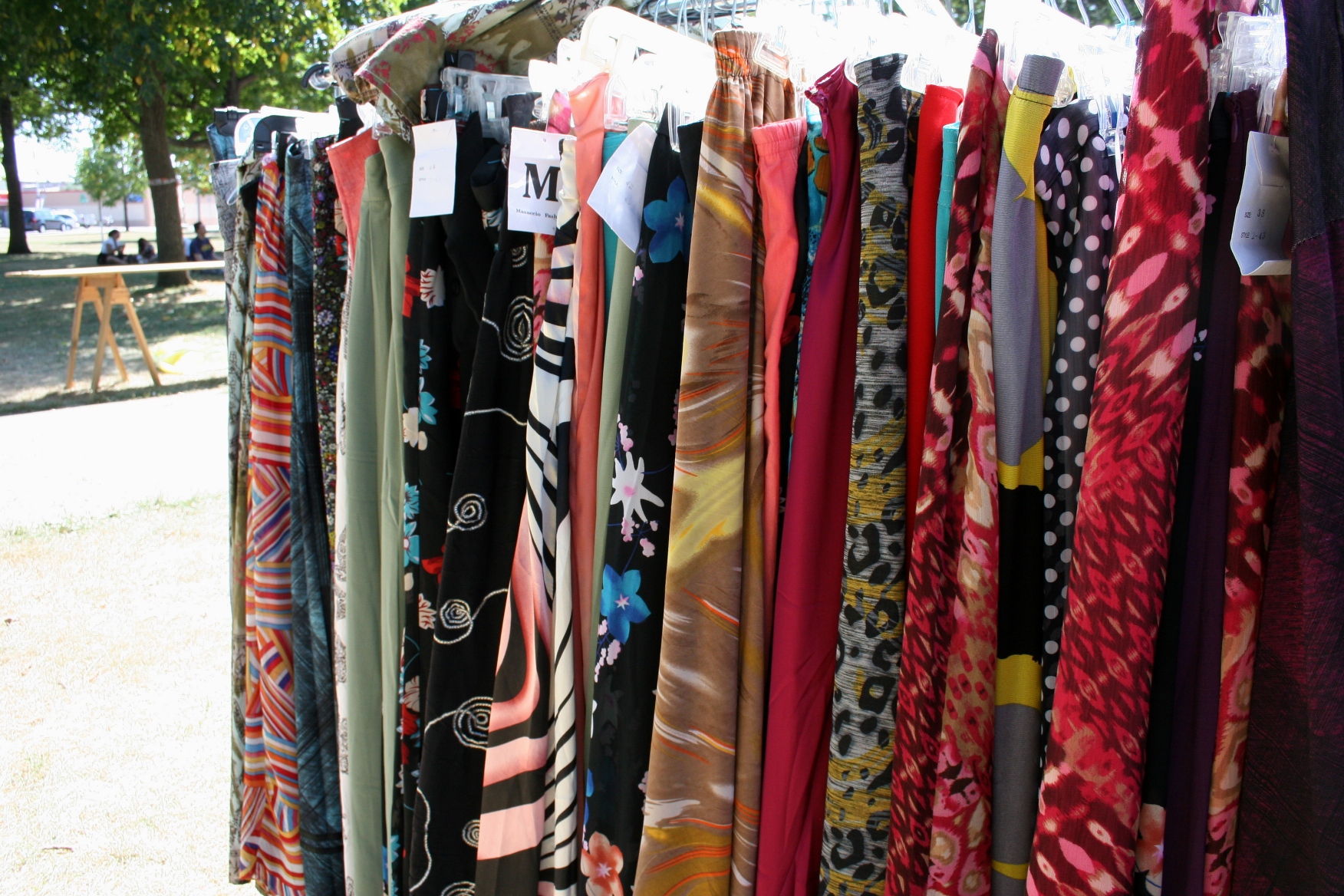
Colorful skirts for sale at Riyaam’s booth during the 2011 celebration.

If you are interested in participating, contributing or helping in any way, email internationalfestivalfaribault@gmail.com or call (507) 412-9139. You must complete an application form and submit the $20 payment in advance to reserve a booth/table space.

Also, click here to visit the festival website at http://internationalfestivalfaribault.blogspot.com.

Finally, even if you’re unable to participate or donate, mark your calendar for 10 a.m. – 4 p.m., Saturday, August 25, for the International Festival Faribault. Admission is free and I promise, you’ll come one step closer to understanding your neighbors.

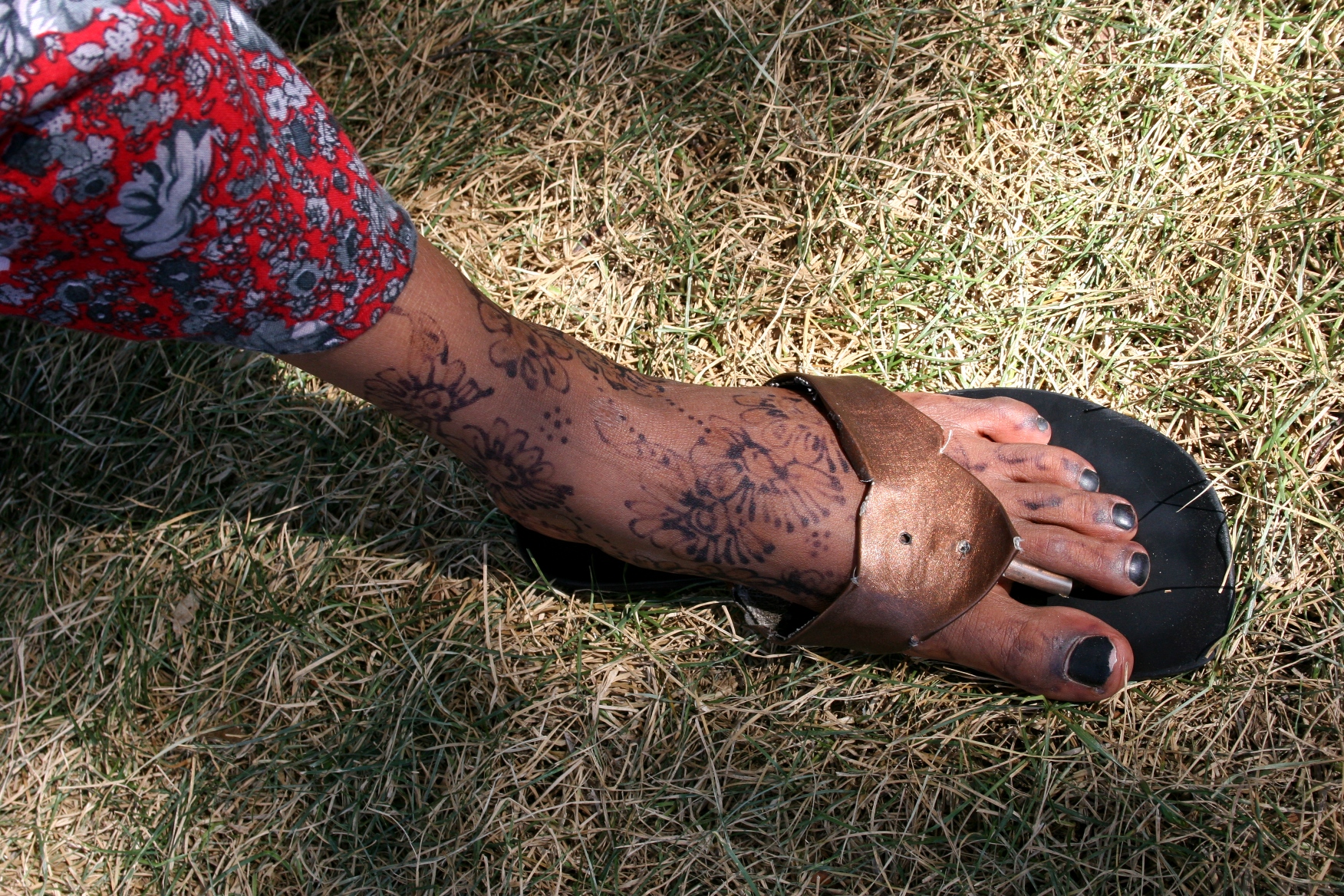
A young girl’s henna stained foot, photographed at the 2011 fest..

© Copyright 2012 Audrey Kletscher Helbling
 

Reaching “the nations” November 21, 2011

I STILL REMEMBER the derogatory label, even after all these years. “Gooks,” he called them. I lashed back, defending the Asian families who fled their war torn countries to start new lives in America in the late 1970s and early 1980s.

“Didn’t your great grandparents immigrate here?” I asked, trying to control my emotions as I confronted the Faribault man who spit out the venomous word. But I knew, even as I spoke, that I could not quell his hatred.

Now, nearly 30 years later, I hear similar disparaging terms directed toward Somalis and Sudanese and, yes, Hispanics, too.

Don’t we ever learn?

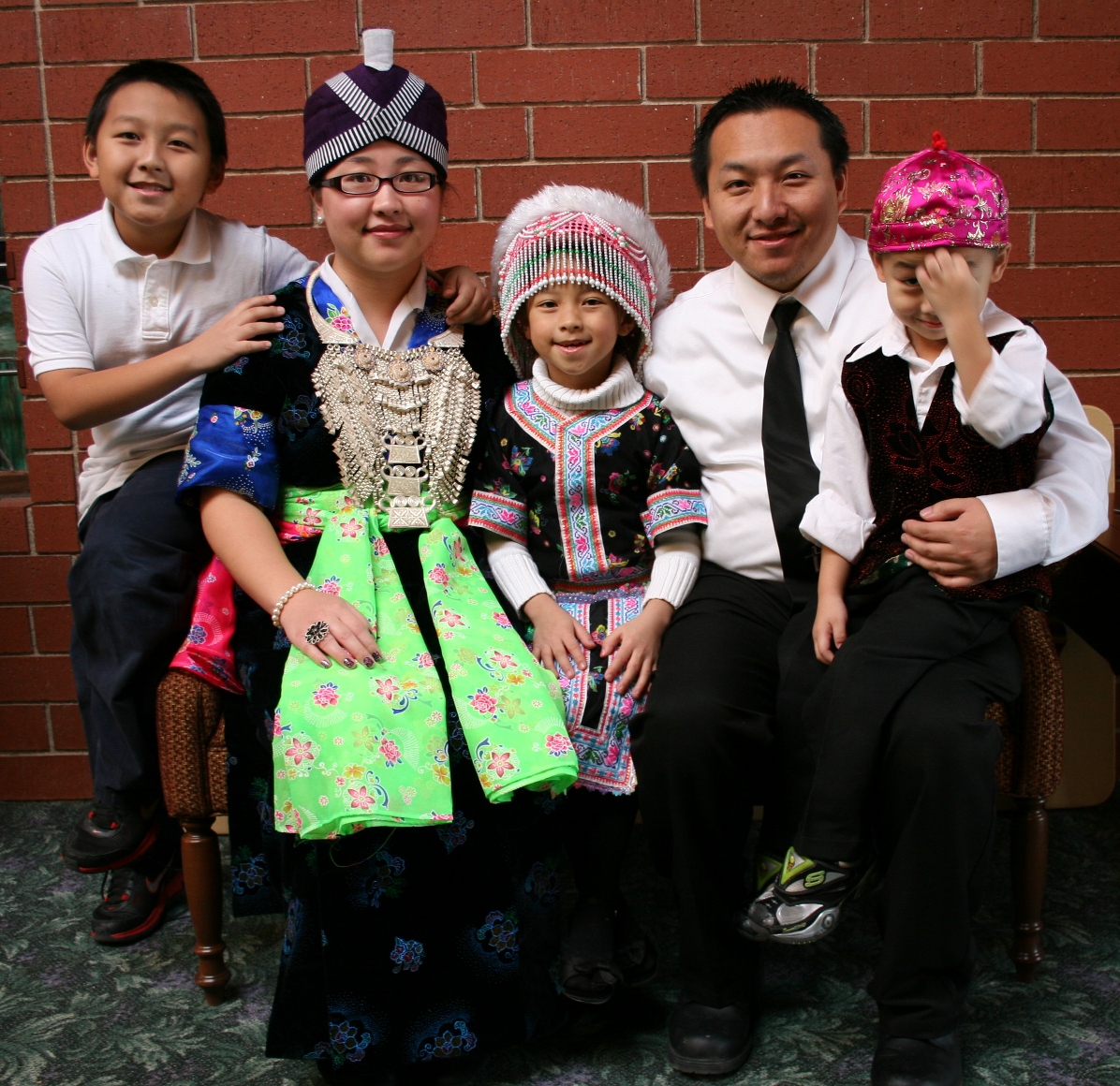
These thoughts, of anything I could have considered, passed through my mind yesterday afternoon as I photographed Hmong families participating in a “Let the People Praise!” mission event at my Faribault church, Trinity Lutheran.

Deacon Johnny Vang of New Life Lutheran Church, Robbinsdale, with his wife Tina and children, Leviticus, 10, Cecilia, 7, and Christian, 4.

I could forgive the man who nearly three decades prior had spoken with such ignorance. But I could not forget.

The organizers and participants in Sunday’s mission gathering wouldn’t expect my thoughts to wander back to that previous unwelcoming American attitude toward Southeast Asians. But I am honest and this post would not be mine if I ignored that unsettling flashback.

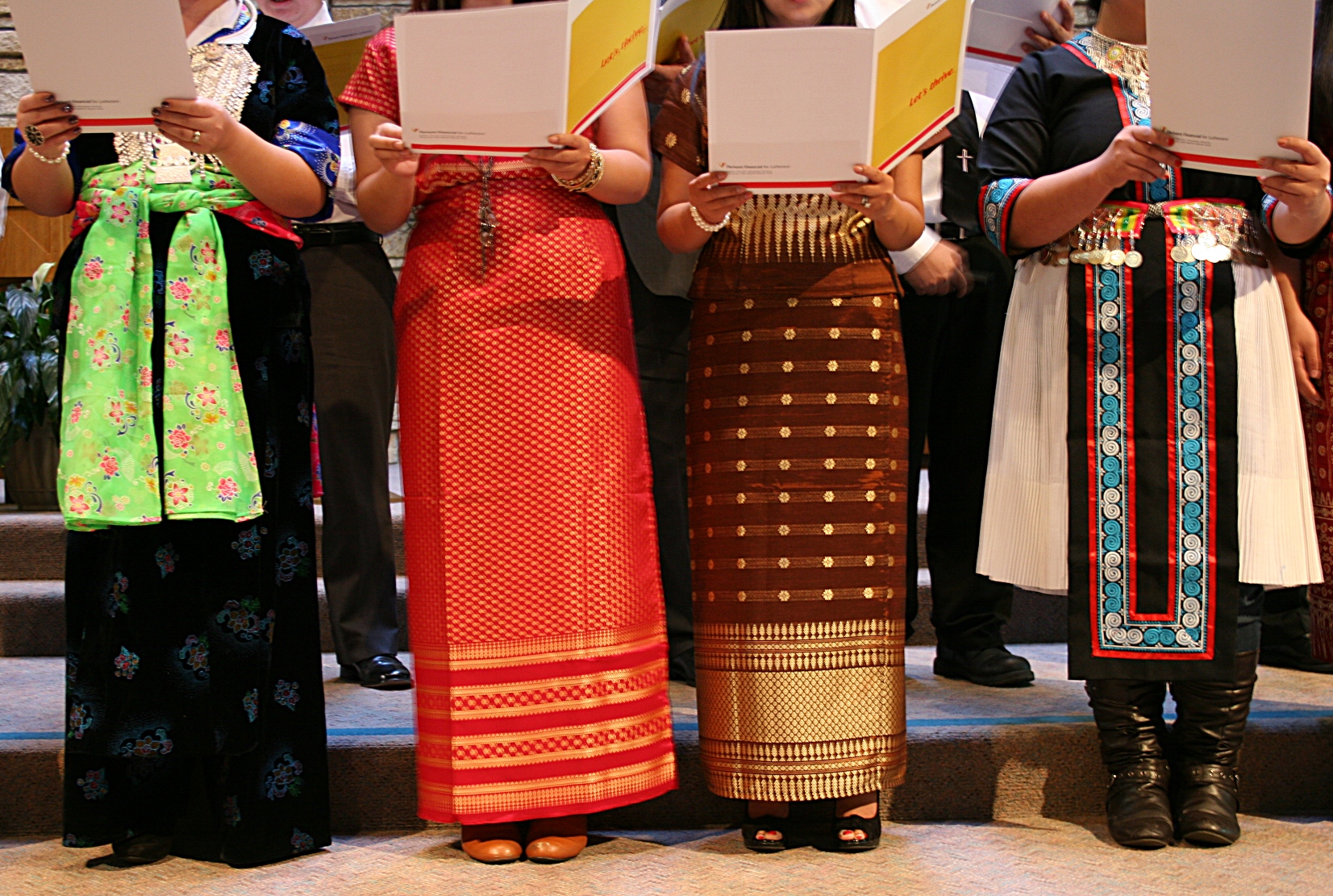
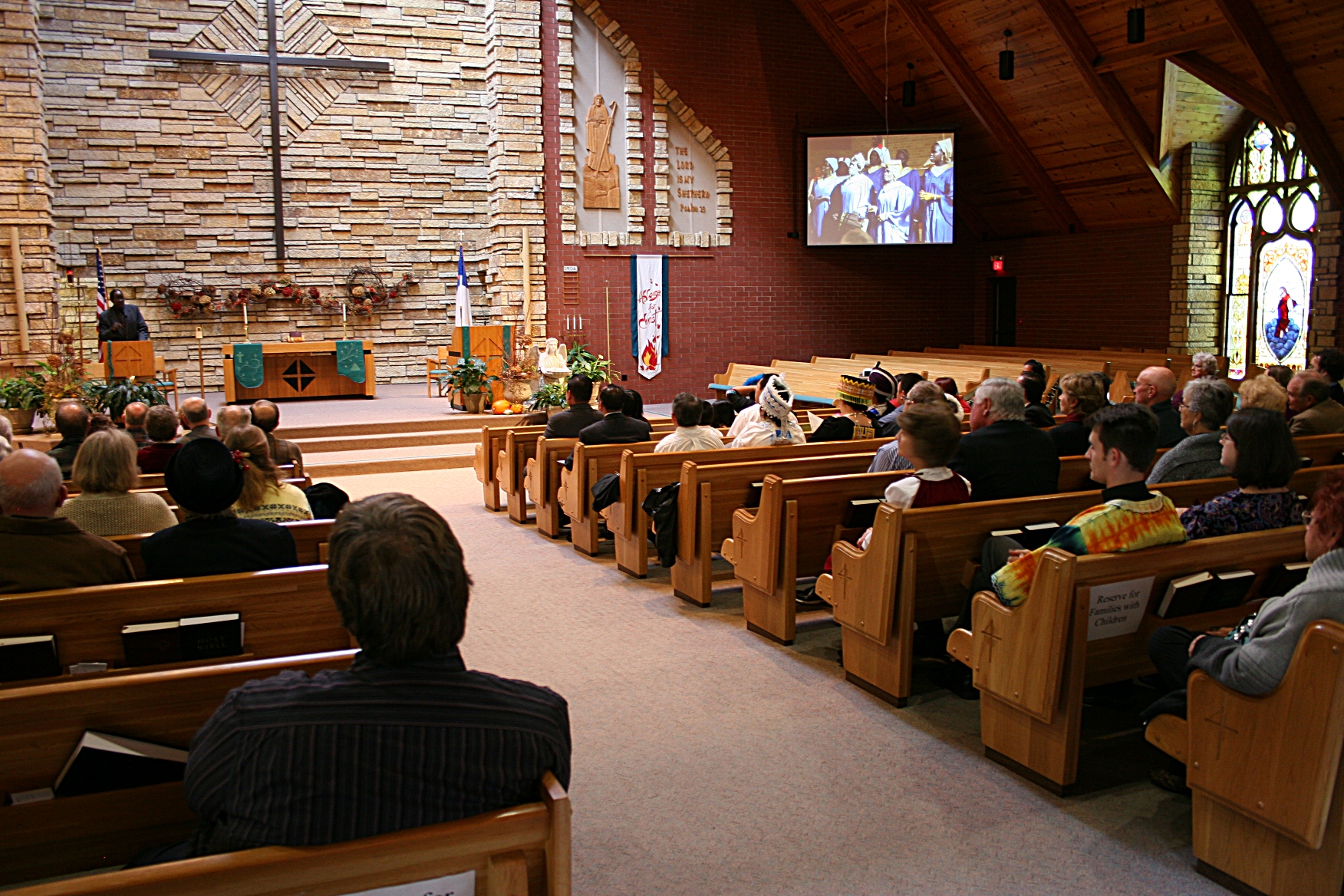
With that historic frame of reference, I could only admire the faith and fortitude of the men and women who stood before me in the sanctuary singing in the Hmong choir, speaking of their mission outreach to Southeast Asia and in Minnesota, specifically in Robbinsdale and the east side of St. Paul.

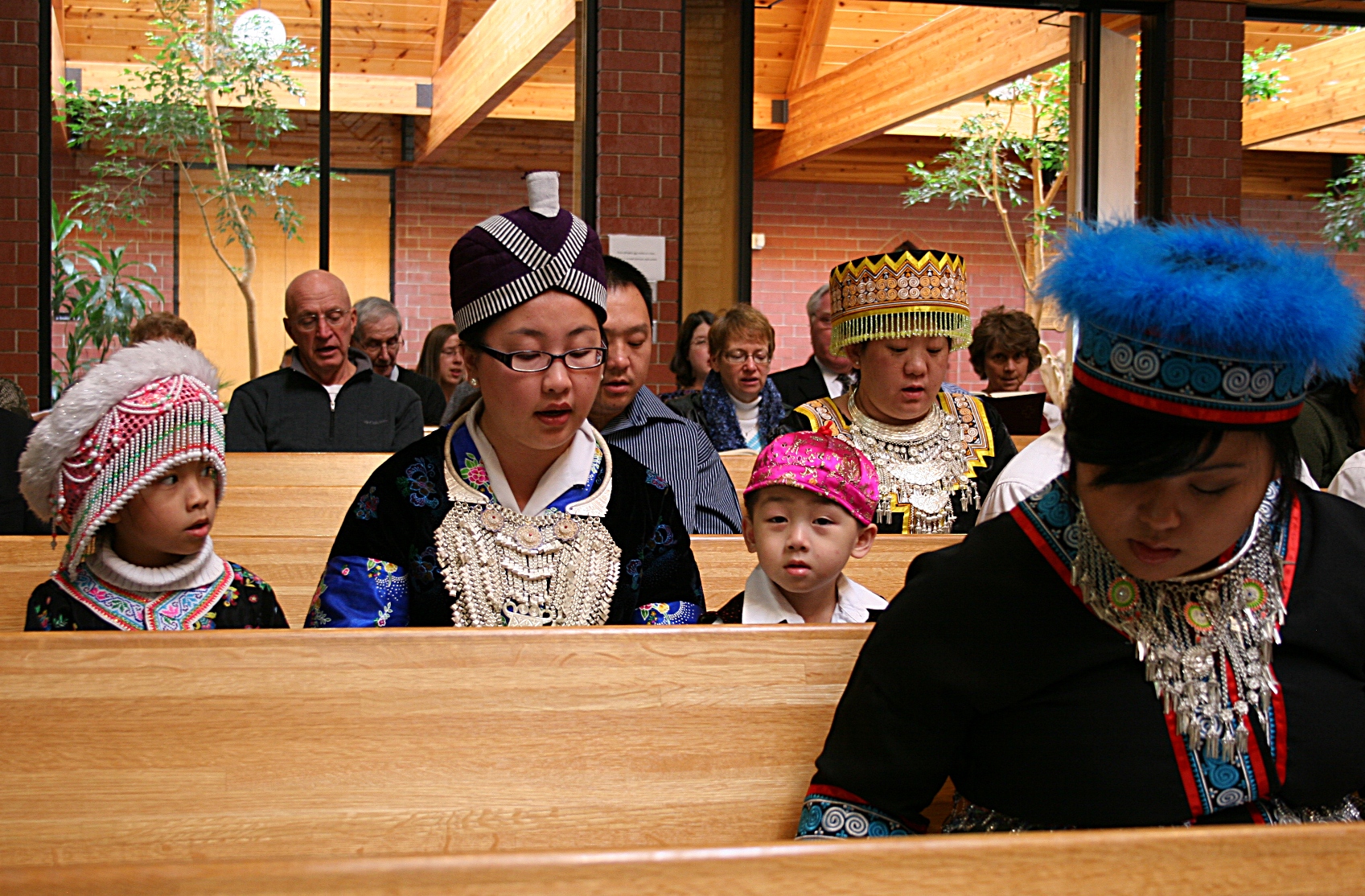
Members of the Hmong choir wore colorful, ethnic costumes.

The congregation, including individuals from the Hmong community, sang at Sunday's mission celebration.

Churches initially embraced Cambodian and Laotian refugees in the years following the divisive and turbulent Vietnam War. I remember, during my first newspaper reporting job out of college in 1978, writing about a Southeast Asian family resettling to the small Minnesota town of Gaylord. I don’t recall details now, but the compassionate sponsorship of this family by a local church made an impression on me.

That care and love triumph over the hateful words and attitudes of the past.

It pleased me to listen to those involved in the Hmong Lutheran Ministry speak of mission trips to the Communist countries of Laos and Vietnam and to Cambodia and Thailand. The “Communist” part certainly doesn’t please me, but the Christian outreach does.

“They are hungry for the gospel and they want to be saved,” a Hmong deacon told us.

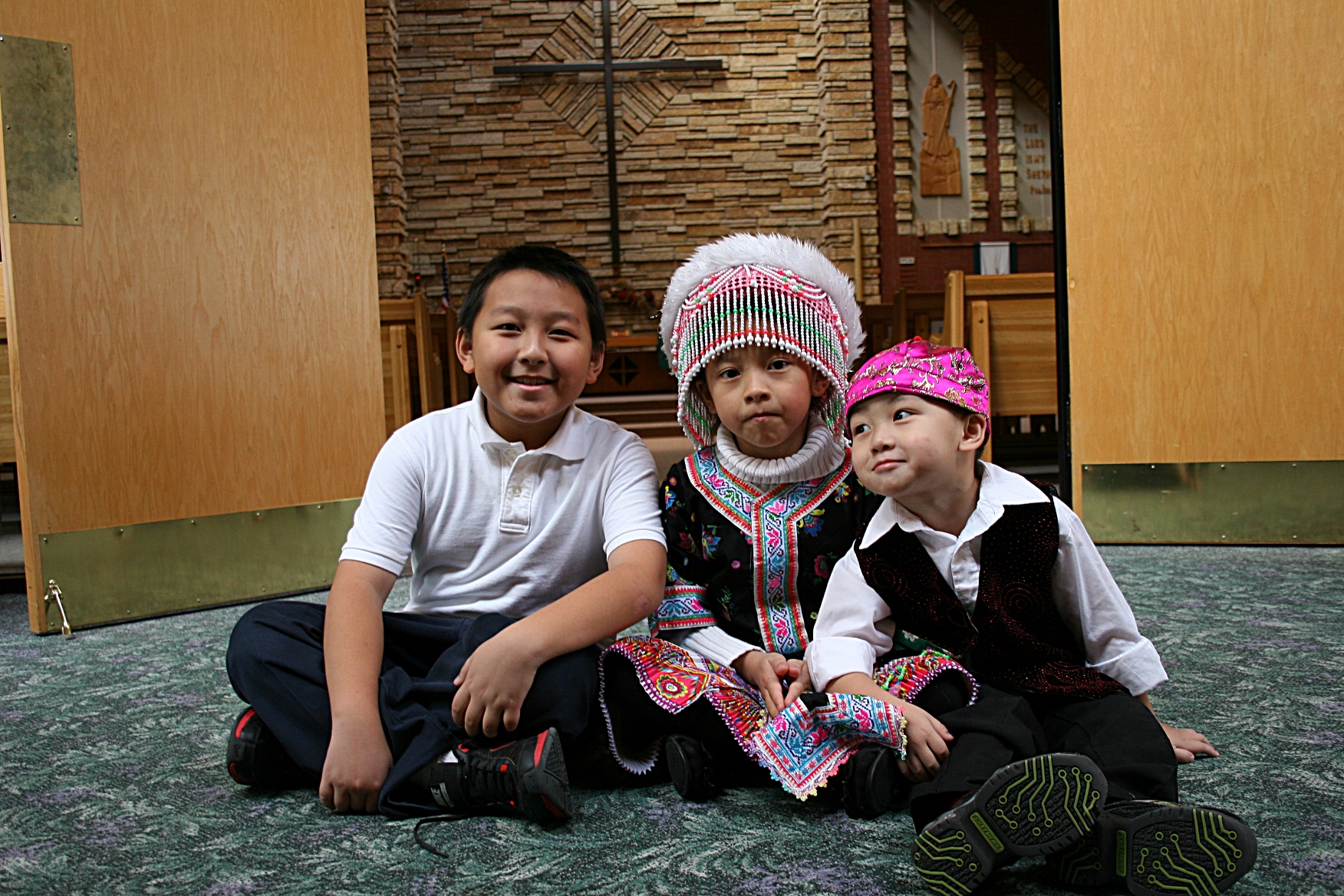
My favorite photo of the day shows the Vang children, Leviticus, Cecilia and Christian on the floor in the narthex, the church doors into the sanctuary flung wide open. This symbolizes to me the doors that are being opened to Christianity through mission work here in Minnesota and in Southeast Asia.

Later the Rev. David Seabaugh of Bethel Lutheran Church in St. Paul, home to a Liberian ministry, used nearly the same words: “The Liberian people are hungry for the gospel.”

I considered then how complacent I’ve sometimes become in my Christian faith, even in my free access to the bible, and in my personal outreach.

I needed to hear this Scripture from I Chronicles 16: 24:

Declare his glory among the nations, his marvelous deeds among all peoples.

God doesn’t care if we’re black or white or yellow, or even Lutheran for that matter, or where we live. He considers us “the nations.”

Today, just like 100 years ago when the Germans and Italians and Swedes and Norwegians and so many others immigrated to America, “the nations” are still arriving on our doorstep.

Are you welcoming them?

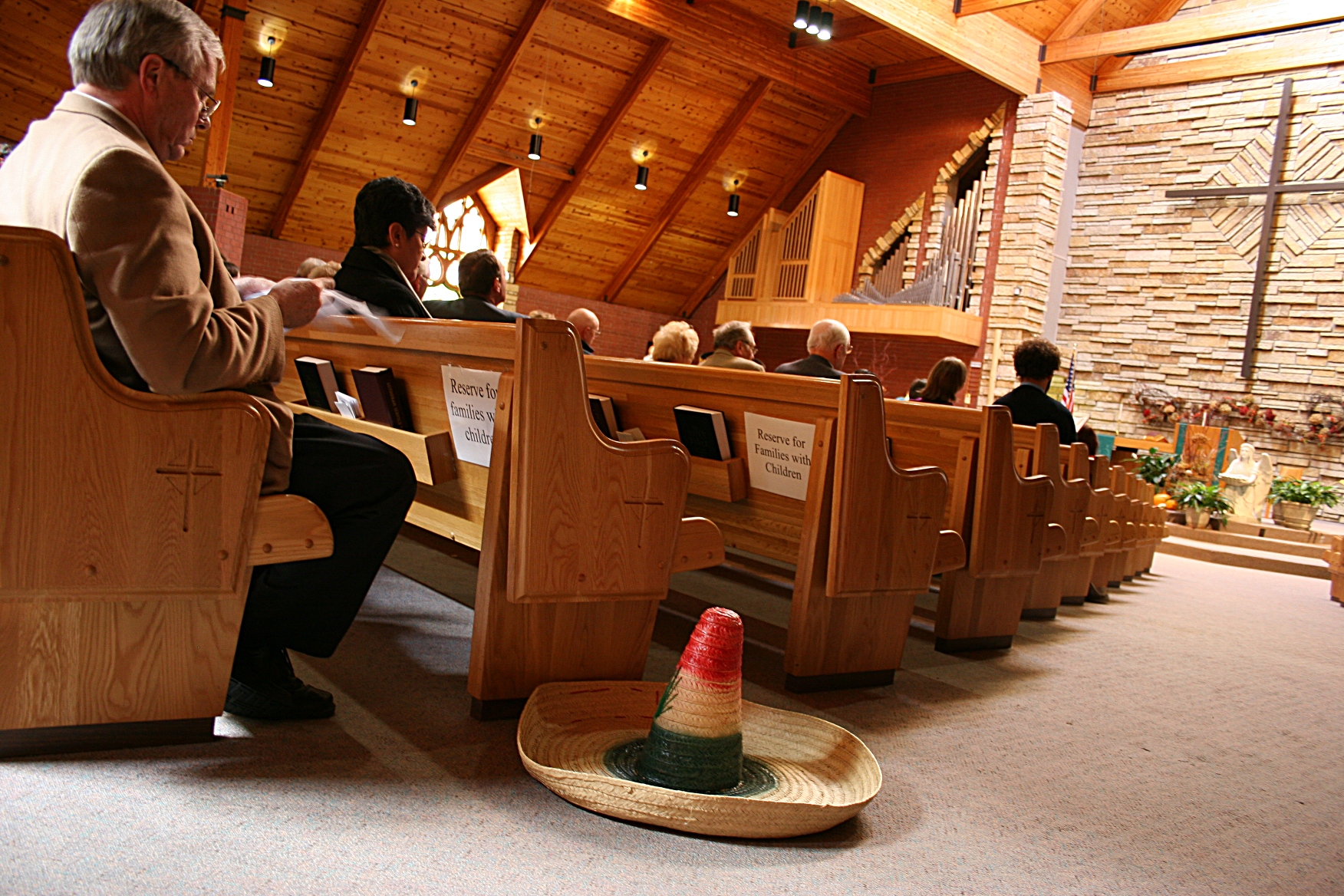
A sombrero rests in the side aisle prior to a musical performance by Hispanic children from the Le Sueur and Henderson areas.

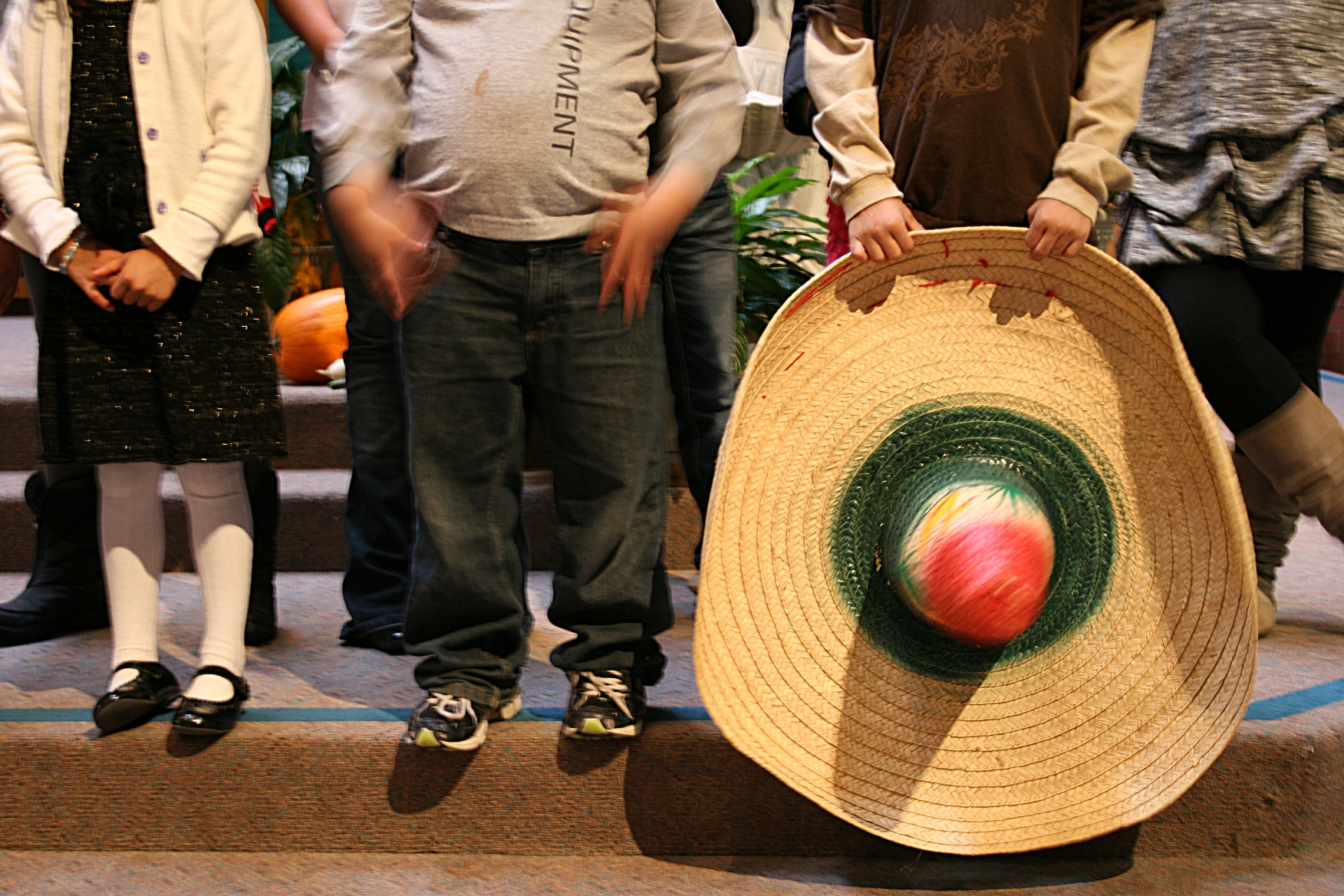
Members of the Hispanic children's choir perform.

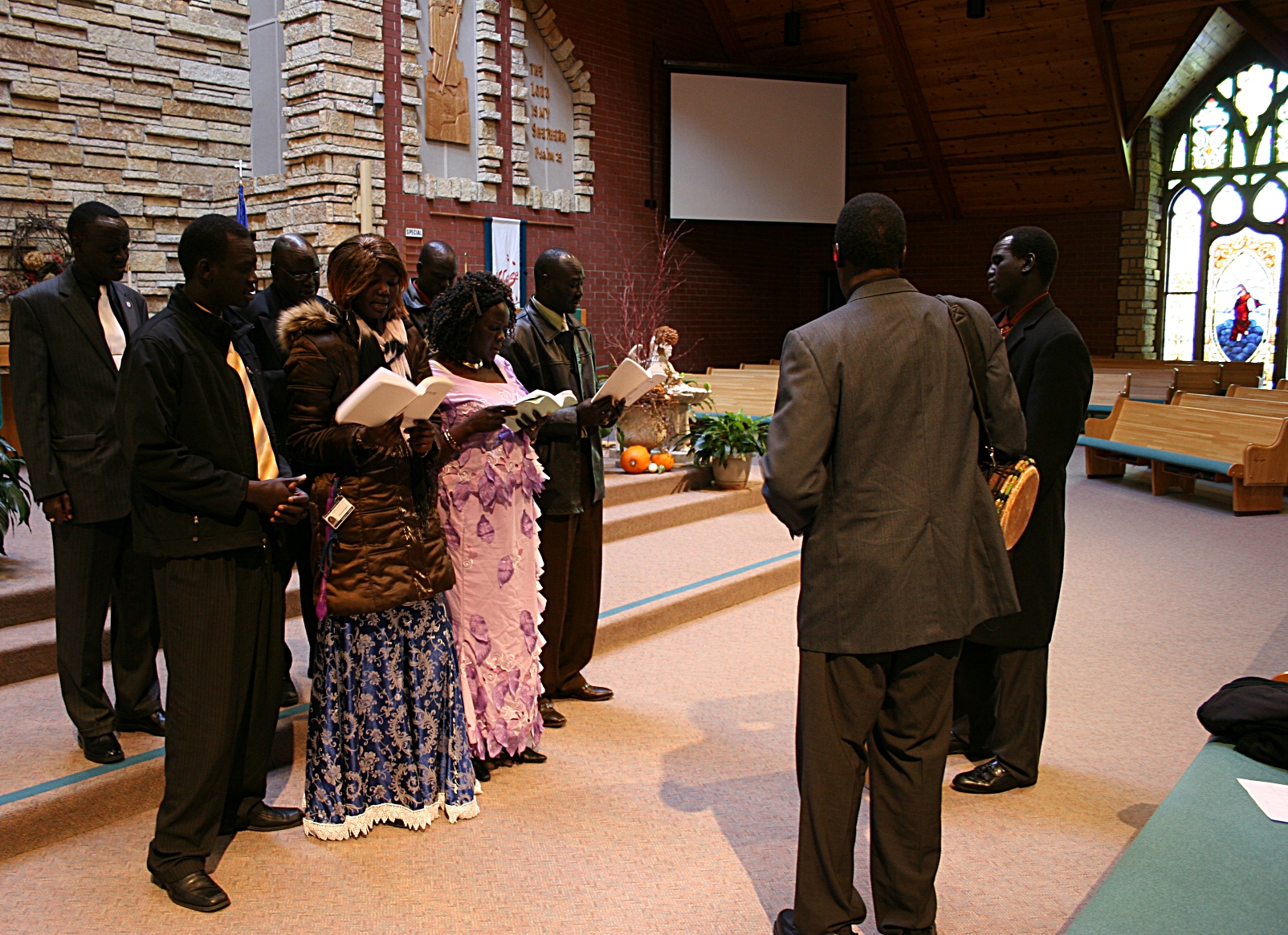
A representative of the Sudanese ministry spoke at the mission gathering. "Before, we suffer a lot," he said, calling it "God' s plan" that the Sudanese came to America and to Minnesota.

A musical performance by the Sudanese.

Copyright 2011 Audrey Kletscher Helbling