Minnesota Prairie Roots

Writing and photography by Audrey Kletscher Helbling

In loving memory of Uncle Robin January 14, 2024

Photo used for illustration only. (Minnesota Prairie Roots copyrighted file photo)

HE LOOKED NOTHING like a leprechaun. No pointy ears. No red hair or freckles. Rather he was a slim man with definitive wavy hair. Not at all what I expected given my Aunt Dorothy’s description of her fiancé. Clearly I misheard and in my 10-year-old self’s excitement missed the word “not.” “Robin does not look like a leprechaun,” Dorothy told me and my sister Lanae. We apparently were hoping for a boisterous leprechaun like that pictured on boxes of Lucky Charms cereal.

Instead, we got a soft-spoken Irishman with an Irish brogue who in no way resembled a leprechaun. Robin, born Robert Mathews Bowman in Bangor, Ireland, married my aunt 56 years ago. He died last Sunday, January 7, following a long battle with Parkinson’s.

ENDEARING NAMES

The morning after my uncle’s death, I called Dorothy at her New Jersey home. I needed to talk to her as much as she needed to talk to me. We share a special bond. She’s always called me, “My Little Princess.” I cannot even begin to tell you how loved I feel when Dorothy calls me by that endearing name. I never grow weary of those loving words.

But it is the loving name she had for her beloved Robin that sticks with me also. She always called him “My love” or simply “Love.” Dorothy and I talked about this in our phone conversation, about how the two met at a party at the University of Minnesota where Robin was doing his post doctorate studies. Within the year, they married. I learned from Dorothy that speaking love aloud to a spouse within a stoic German family is not only OK, but quite lovely. That has stuck with me through the decades. To be witness to the love my aunt and uncle shared was a gift.

CREATING A LIFE-SAVING DRUG

In his professional career, Robin gave another gift, one with a broad, life-saving reach. He was the lead chemist in the development of the compound Letrozole (brand name Femara) used to treat certain types of breast cancer in postmenopausal women. As I spoke with Dorothy, she underscored how grateful Robin felt to accomplish this, to potentially save the lives of women via this hormone therapy drug.

Robin was clearly passionate about research. He was also passionate about golf. But of one thing he wasn’t passionate and that was eating leftovers. He didn’t. I don’t know why I knew this or why it matters, but it was something we all simply understood about Uncle Robin.

AN EMBARRASSING MOMENT

That leads to a food story. Once while visiting my childhood farm, Robin’s dinner plate broke in his hands. He was just sitting there in an easy chair in the living room eating his meal when the vintage plate broke. Someone snapped a photo, thus documenting this as part of family lore. I remember the laughter that erupted and the absolute embarrassment this quiet Irishman felt. Perhaps in this moment he wished he could, like a leprechaun, magically disappear.

BLESSED BE HIS MEMORY

In the funeral flowers my youngest brother ordered from our family for Robin’s funeral, Brad included this fitting Irish blessing:

May the road rise up to meet you. May the wind be always at your back. May the sun shine warm upon your face. Until we meet again, may God hold you in the palm of His hand.

Loving words for an Irishman who looked nothing like a leprechaun.

© Copyright 2024 Audrey Kletscher Helbling


Spotlighting cancer in the light of hope October 2, 2023

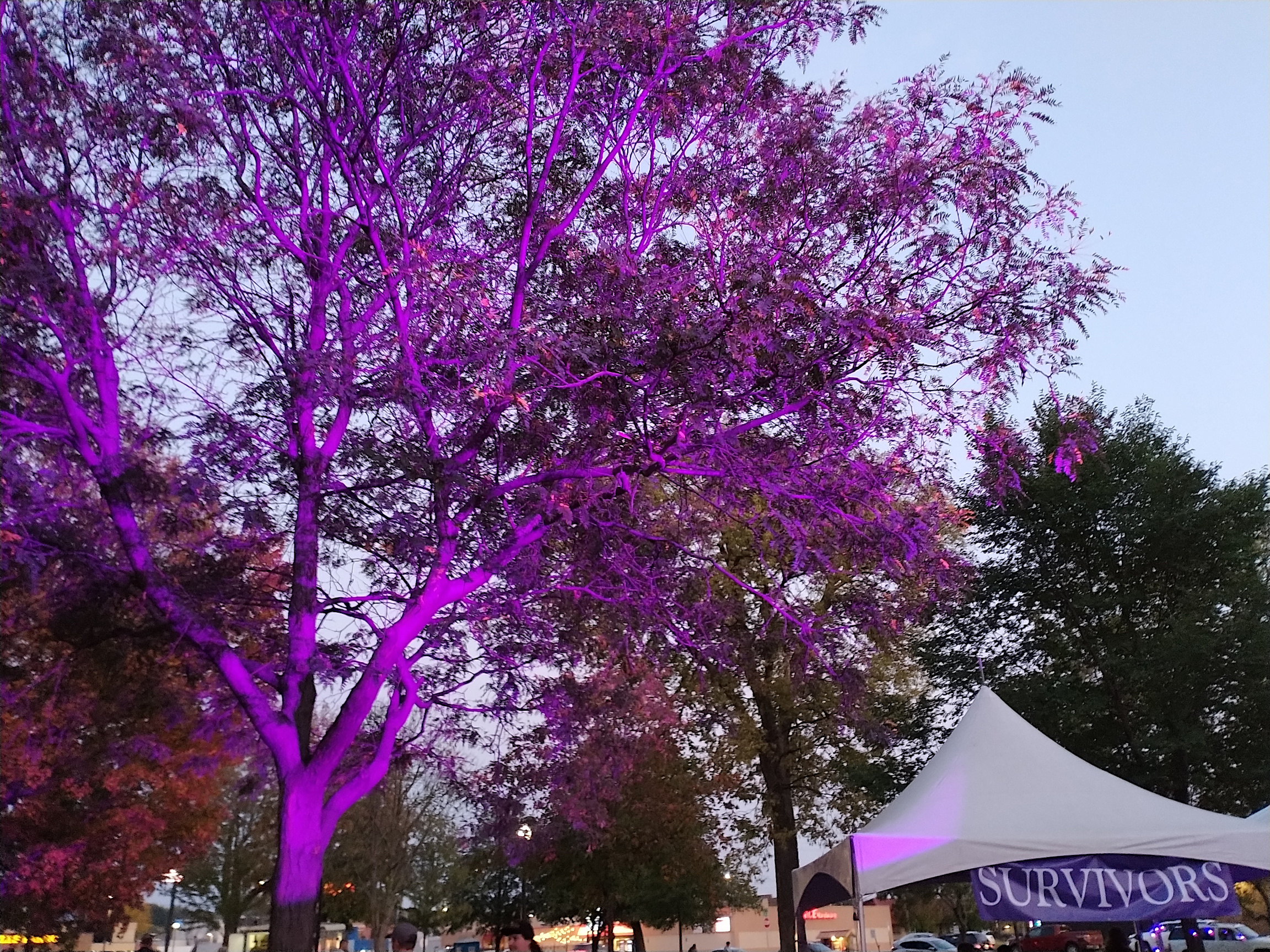
Purple spotlights transformed trees to shades of purple. (Minnesota Prairie Roots copyrighted photo September 2023)

IN THE EARLY EVENING DARKNESS of Faribault’s Central Park, on an unseasonably summery September Saturday, I felt enveloped in a magical world of autumn leaves sparkling purple. The setting seemed surreal, magical, enchanting. And the feeling felt hopeful.

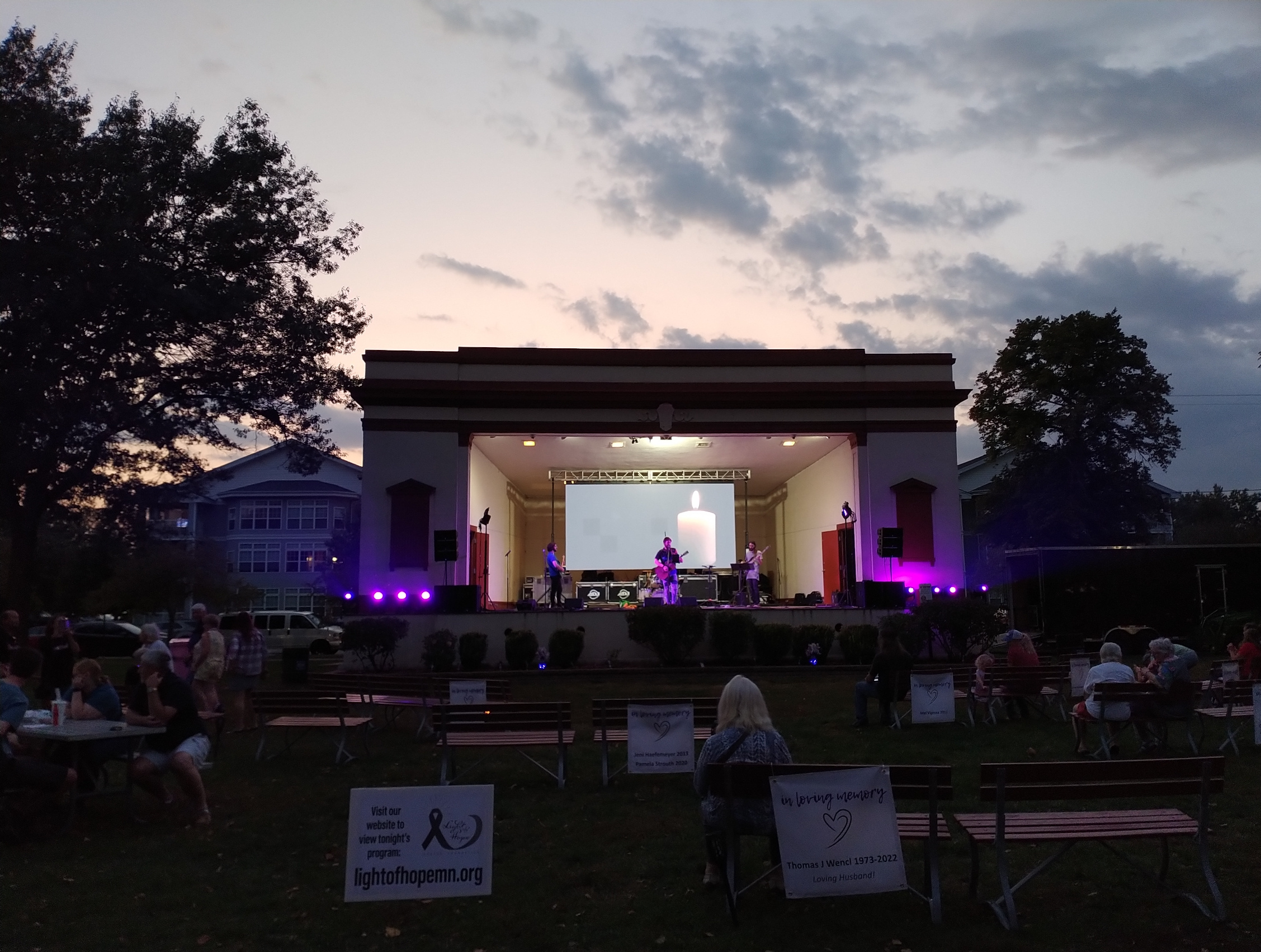
Musician Steve Huber performed first followed by Joe and the Mechanics in the Central Park Bandshell. (Minnesota Prairie Roots copyrighted photo September 2023)

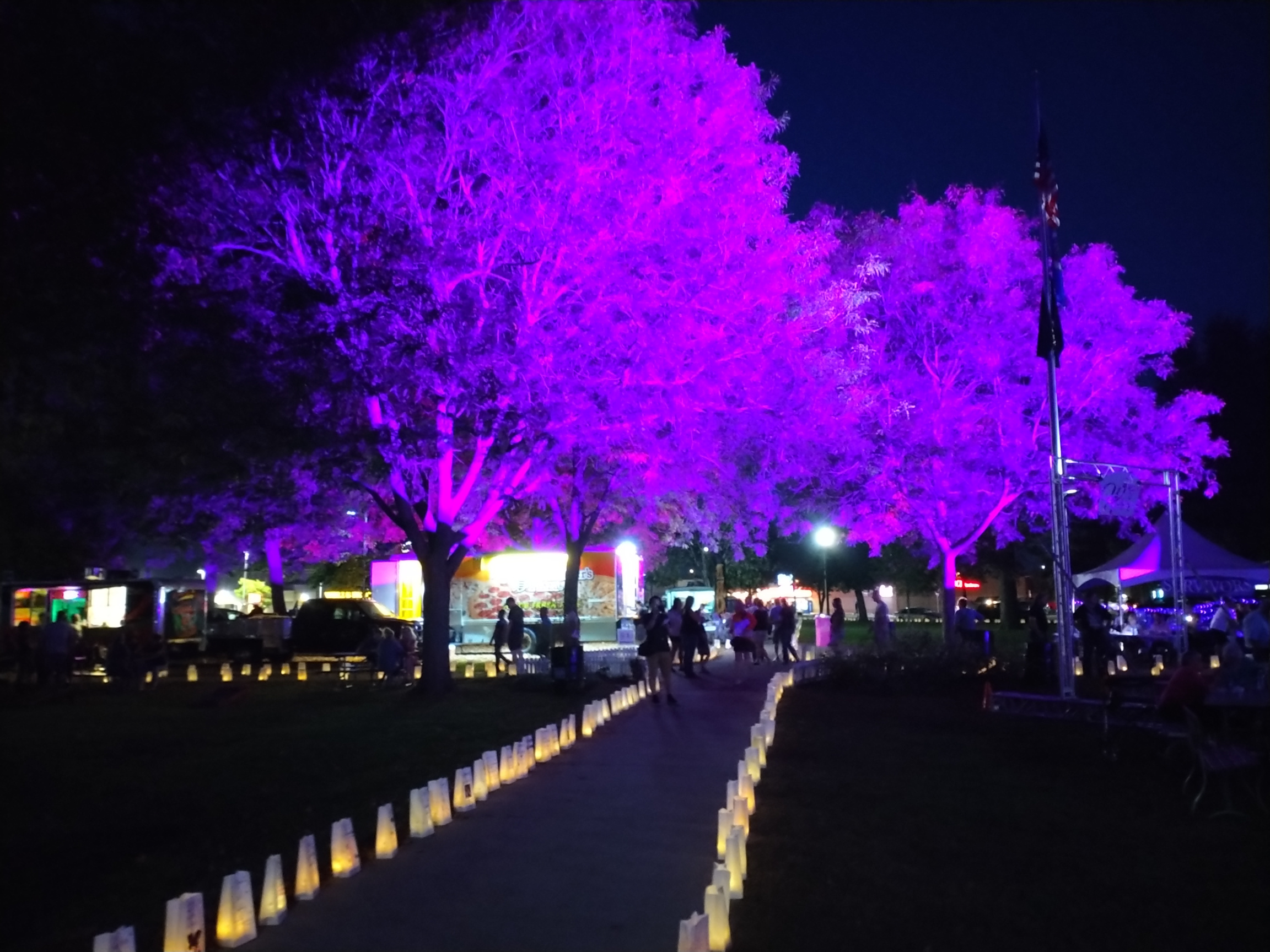
I was among hundreds gathered for the first-ever Light of Hope Celebration to recognize those lost to cancer, those battling cancer, those who’ve survived cancer…and those of us who love (d) them. Purple spotlights shone on trees centering the park, creating a serene, yet celebratory, scene while musicians performed in the bandshell, speakers spoke and kids engaged in activities just for them.

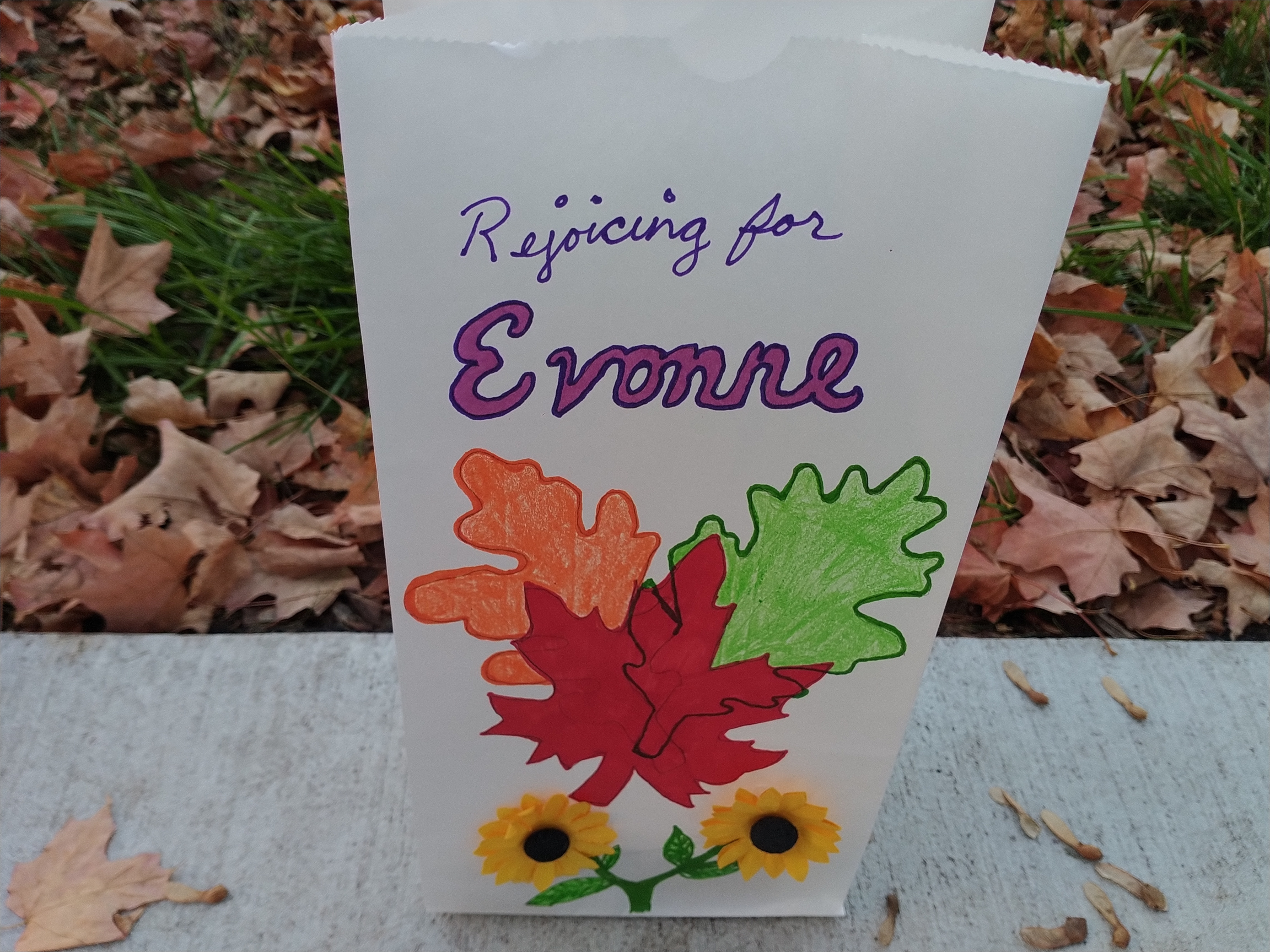
An autumn-themed luminary for a cancer survivor. (Minnesota Prairie Roots copyrighted photo September 2023)

My focus, though, was on the hundreds of luminaries lining the sidewalks that edged and crisscrossed this central community gathering spot. I walk here daily, among the towering trees and scampering squirrels. The din of traffic, the presence of others, the locations of St. Vincent de Paul and the Cathedral of Our Merciful Saviour across the streets are all reminders that Faribault truly is about community. We need one another. And I felt, at this event, a strong sense of community, of coming together, of leaning on one another.

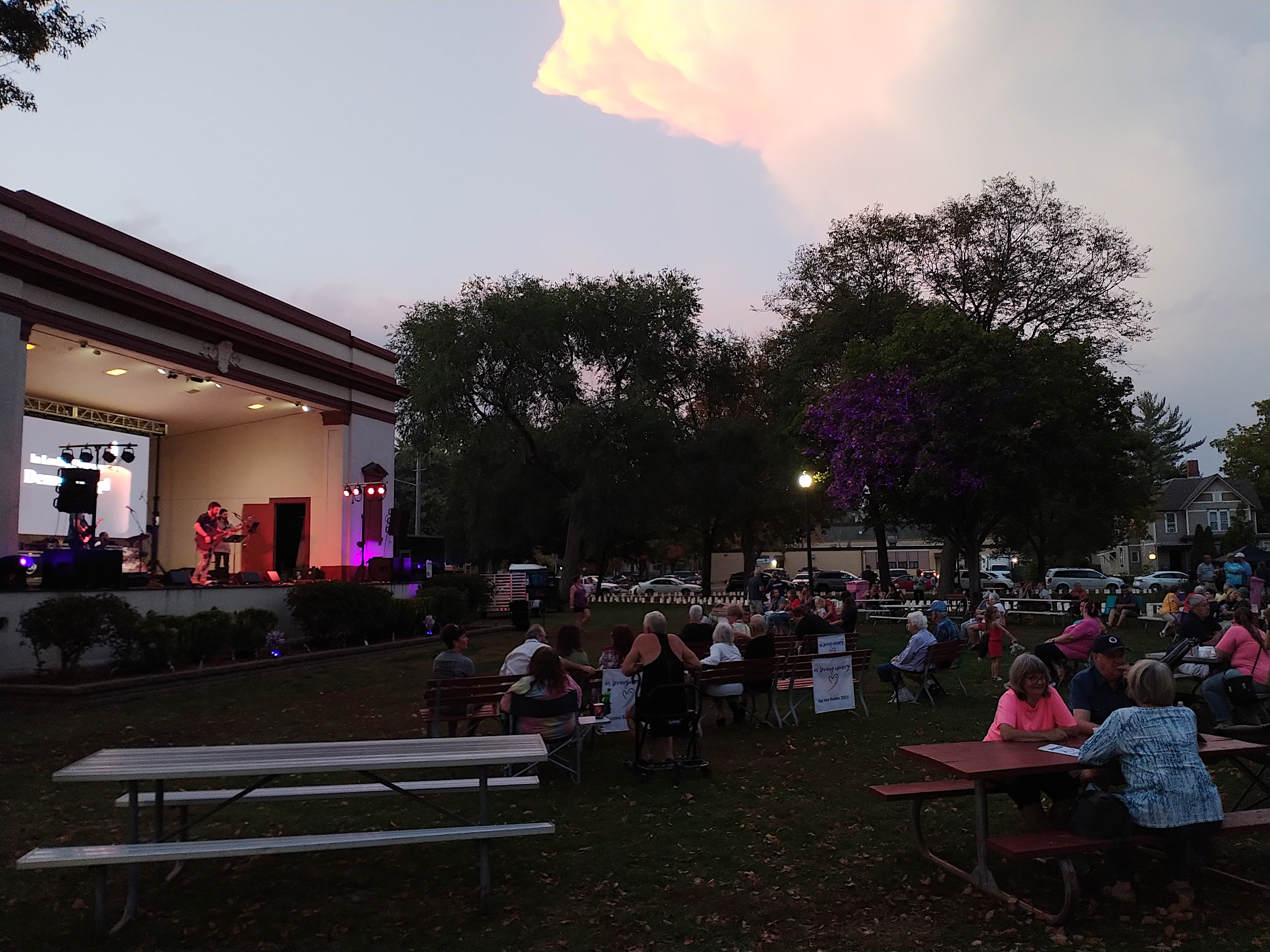
Gathering to talk, to listen to music, to celebrate. (Minnesota Prairie Roots copyrighted photo September 2023)

I felt such love as I hugged the local x-ray tech who did my recent mammogram. I assured her my results were good. She and I have a history, meeting several years ago in the hospital ER when I broke my wrist. I hugged others, too, whom I haven’t seen in a while. It felt right, to reach out and encircle these individuals who, at some point, have been there for me, whether personally or professionally. And if my cousin and a friend, who are currently undergoing chemotherapy for aggressive, advanced breast cancer, had been there, I would have held them close in prolonged hugs also.

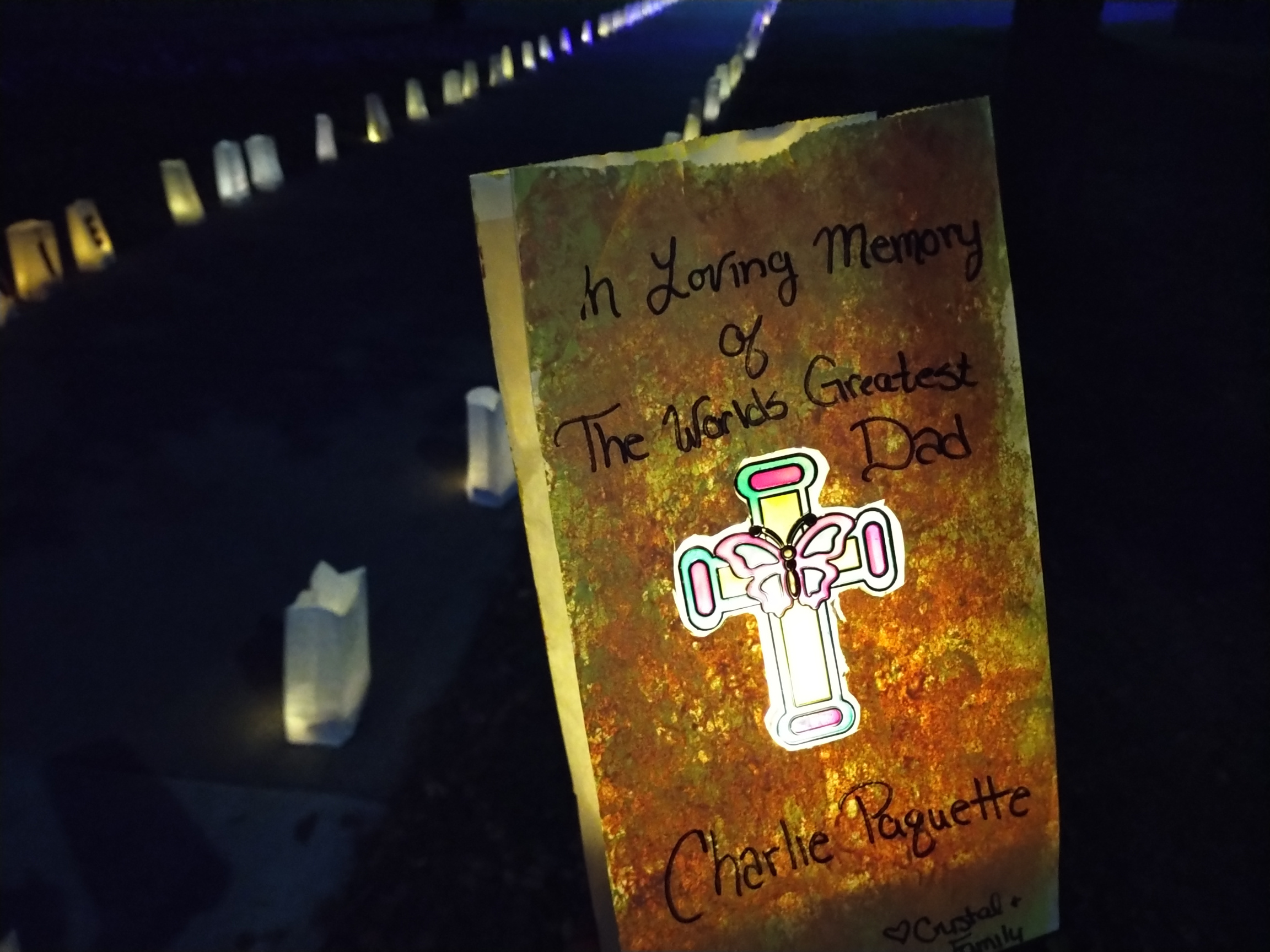
I saw so much love written upon luminaries by those who lost loved ones to cancer. (Minnesota Prairie Roots copyrighted photo September 2023)

Twenty years ago I was on the receiving end of many hugs as I stood inside my hometown church, St. John’s Lutheran in Vesta, embracing family and friends at the death of my dad. He died of esophageal cancer and other health issues. At the cemetery, I wrapped my arm around my mom, shaking with cold and grief on that brutal winter day. She was a breast cancer survivor.

Many family—including my husband, a sister and sister-in-law—and friends have survived cancer. Many family—including a dear nephew and aunt—and friends have died of cancer. And today many in my circle are battling cancer, including a much-beloved cousin, a brother-in-law and a dear friend. Cancer is brutal and awful and horrible. And it seemingly spares no family.

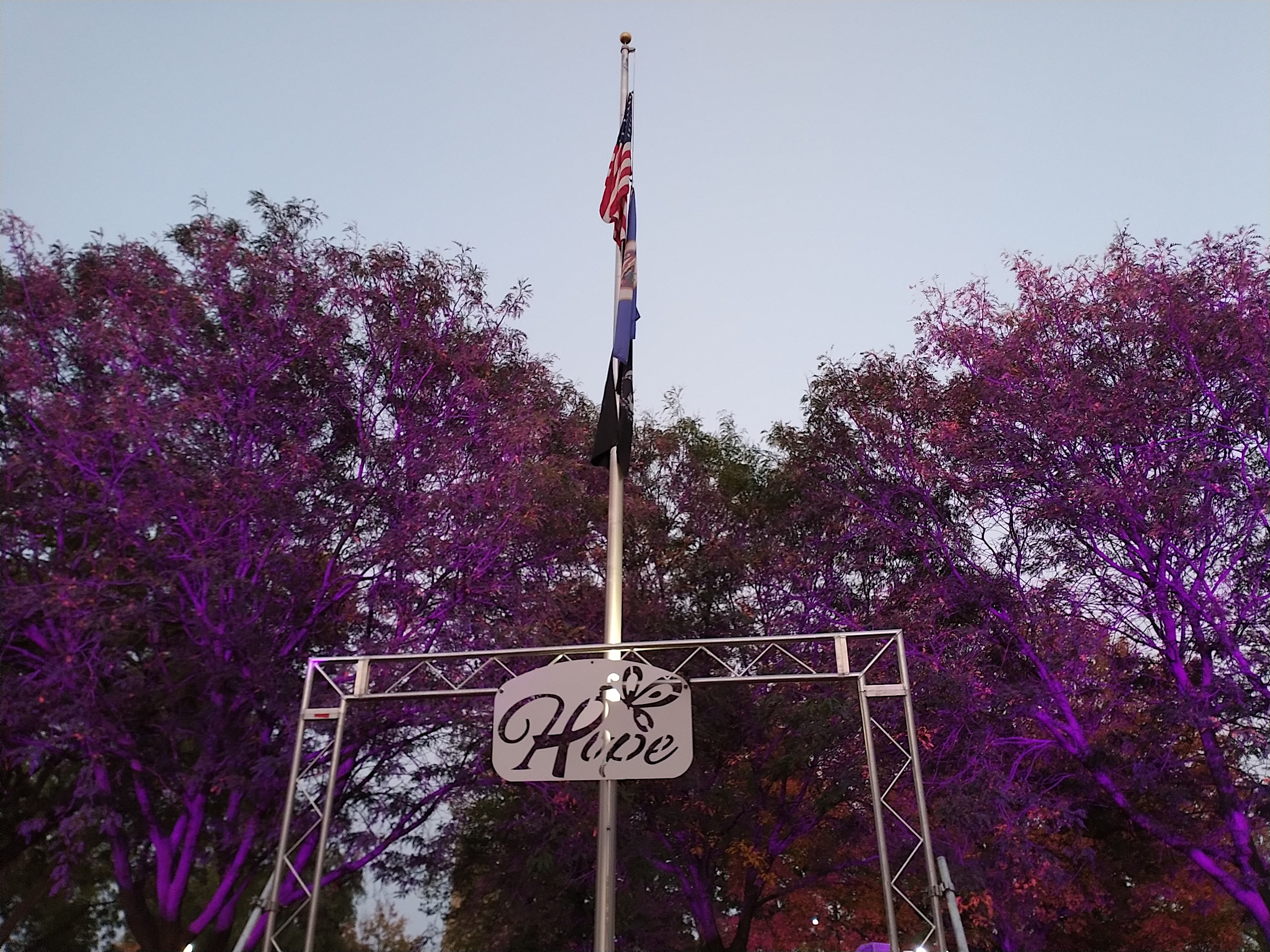
A beautiful hope sign suspended in the center of the park. (Minnesota Prairie Roots copyrighted photo September 2023)

But there is hope. In the support of others. In events like the one on Saturday organized by the Light of Hope Cancer Foundation with a mission “to empower local cancer patients and families to focus on treatment and healing by providing immediate and practical financial support while advocating and fundraising for research, education and cancer prevention.” There is strength in a supportive and caring community.

A survivors’ tent, right, offered survivors of cancer a place to gather, celebrate and enjoy cake. (Minnesota Prairie Roots copyrighted photo September 2023)

And there is hope, too, in knowing options are available for treatment. That is also personal for me as my uncle, Dr. Robert M. Bowman, developed the drug Letrozole (Femara), approved by the Food and Drug Administration in 1998 to treat certain types of breast cancer in post-menopausal women. Today, as my retired chemist uncle lies in hospice suffering from Parkinson’s, his wife, my beloved Aunt Dorothy, tells me how grateful Robin feels for having created a life-saving drug. He gave women hope.

I shot this scene shortly before leaving at 7:45 pm. So beautiful…the luminaries, the trees morphed purple by spotlights. (Minnesota Prairie Roots copyrighted photo September 2023)

As I walked among the hundreds of luminaries, first in the light of early evening and then in the darkness, I remembered, grieved silently, contemplated, celebrated… And I felt hope. Strong, beautiful, powerful hope.

© Copyright 2023 Audrey Kletscher Helbling


Too much pink? October 27, 2012

ENOUGH PINK ALREADY.

Northeastern Minnesota writer Ada Igoe, who blogs at “Of Woods and Words,” writes this week about all the pink out there during this, Breast Cancer Awareness Month.

While I don’t agree with everything she says in her “Rage Against the Pink” post, I agree that this whole “pink” thing is being overdone and has become too commercialized. Just like the right amount of salt can flavor a dish, too much salt can ruin it.

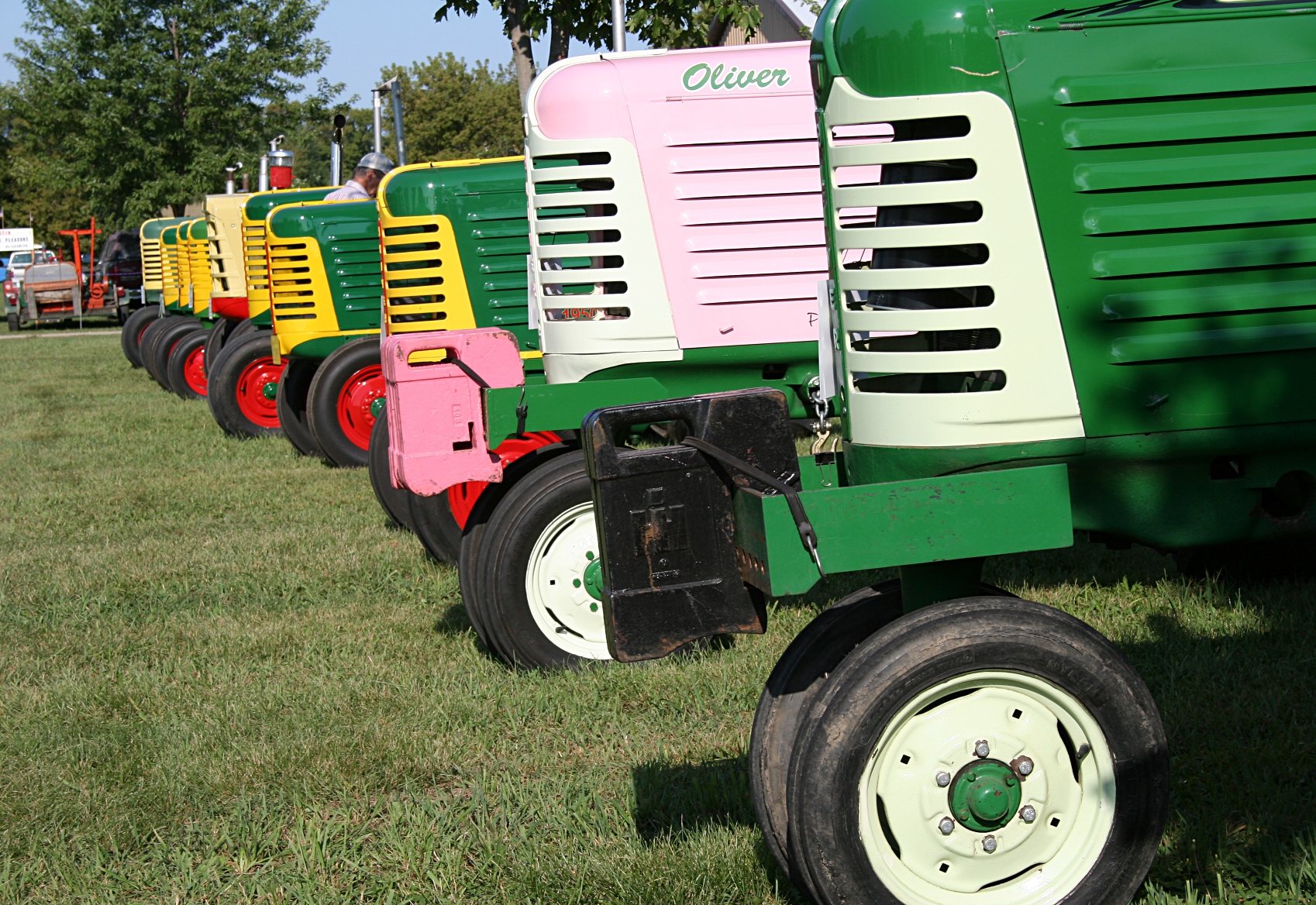
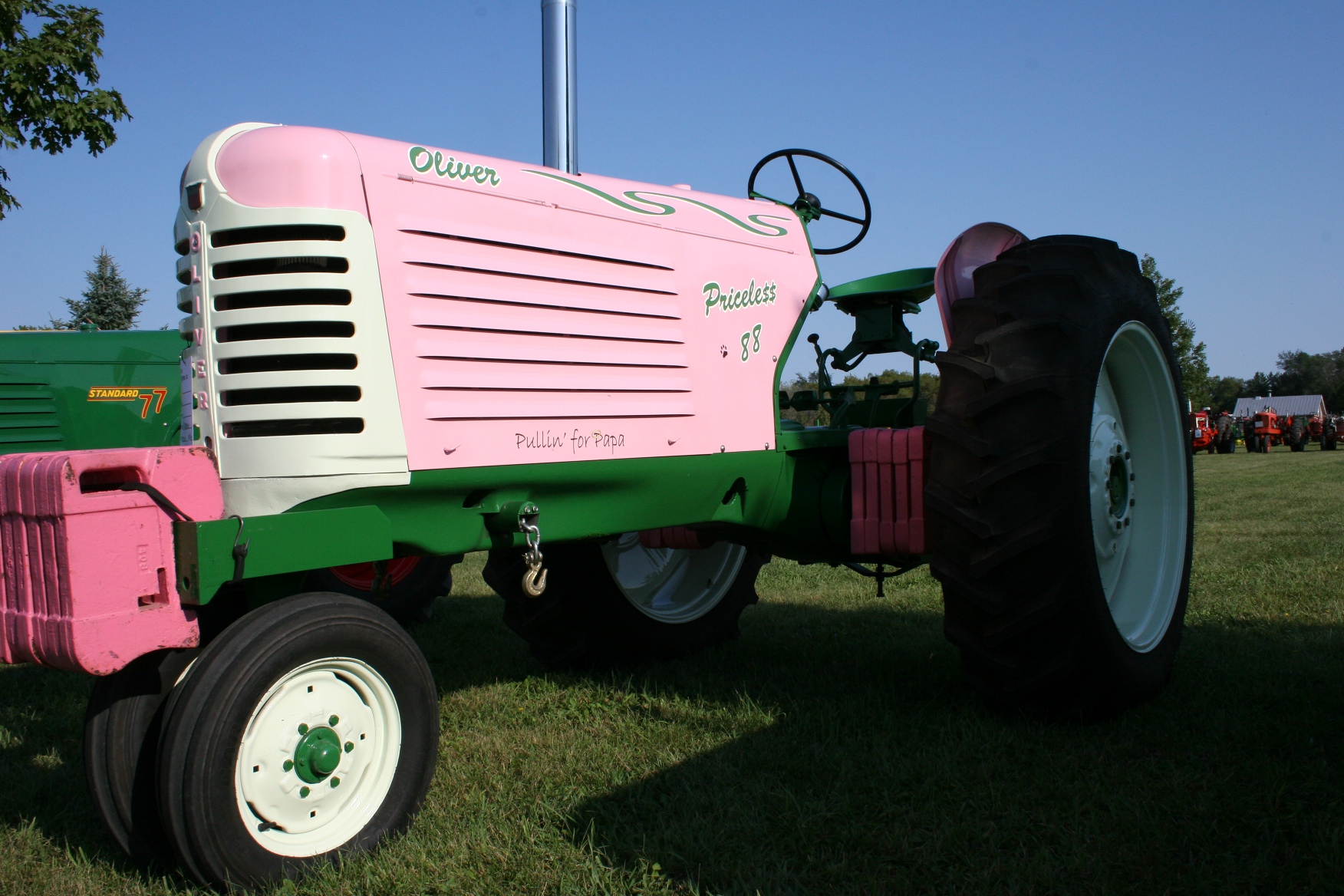
In a row of green and yellow Olivers, I spotted this pink one at the Rice County Steam & Gas Engines Show earlier this fall. I have no reason to doubt the genuineness of this tractor owner in calling attention to the fight against breast cancer.

How do we separate those who truly are genuine in their pinkness as opposed to those simply out to perhaps earn a buck or get some media attention for whatever they are selling or promoting?

Ada raises issues like that in her thoughtful piece. I’m not going to steal and repeat all this blogger wrote. Rather, I will point you directly to the source, so click here.

And just for the record:

  • My mother is a breast cancer survivor.
  • My uncle, Dr. Robert M. Bowman, created Femara, a hormone therapy drug used to treat breast cancer in post-menopausal women.
  • A dear friend is currently being treated for breast cancer.
  • Last evening I waited in line for one hour and 15 minutes to comfort friends and their daughter who lost their youngest daughter/sister to colon cancer after two courageous years of battling the disease. Stacey was only 39.
  • Sometimes it’s genuinely easy to separate those who mean well by emphasizing pink from those who have other than the best intentions. Absolutely, this pink tractor showcases one family’s personal story and does not seek to commercialize or gain anything financially from using the color pink.

    WHAT ARE YOUR THOUGHTS on the use of pink to promote breast cancer awareness? Overkill? Just right? Let’s hear.