
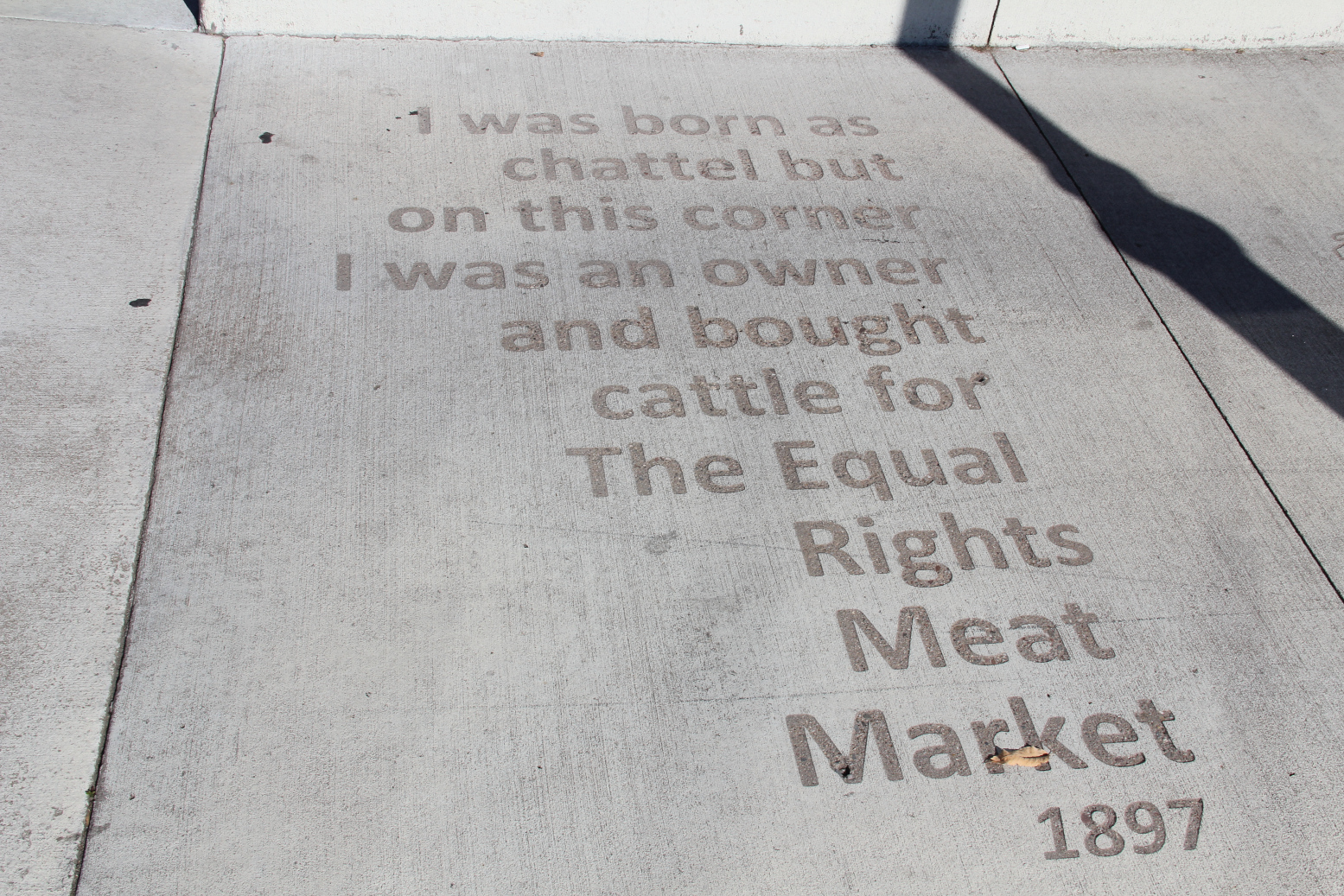
Oh, the things you discover when you least expect it. That can be said for the local history highlighted outside the Red Wing Salvation Army Thrift Store. There, imprinted upon the sidewalk, I found these words: I was born as chattel but on this corner I was an owner and bought cattle for The Equal Rights Meat Market—1897.
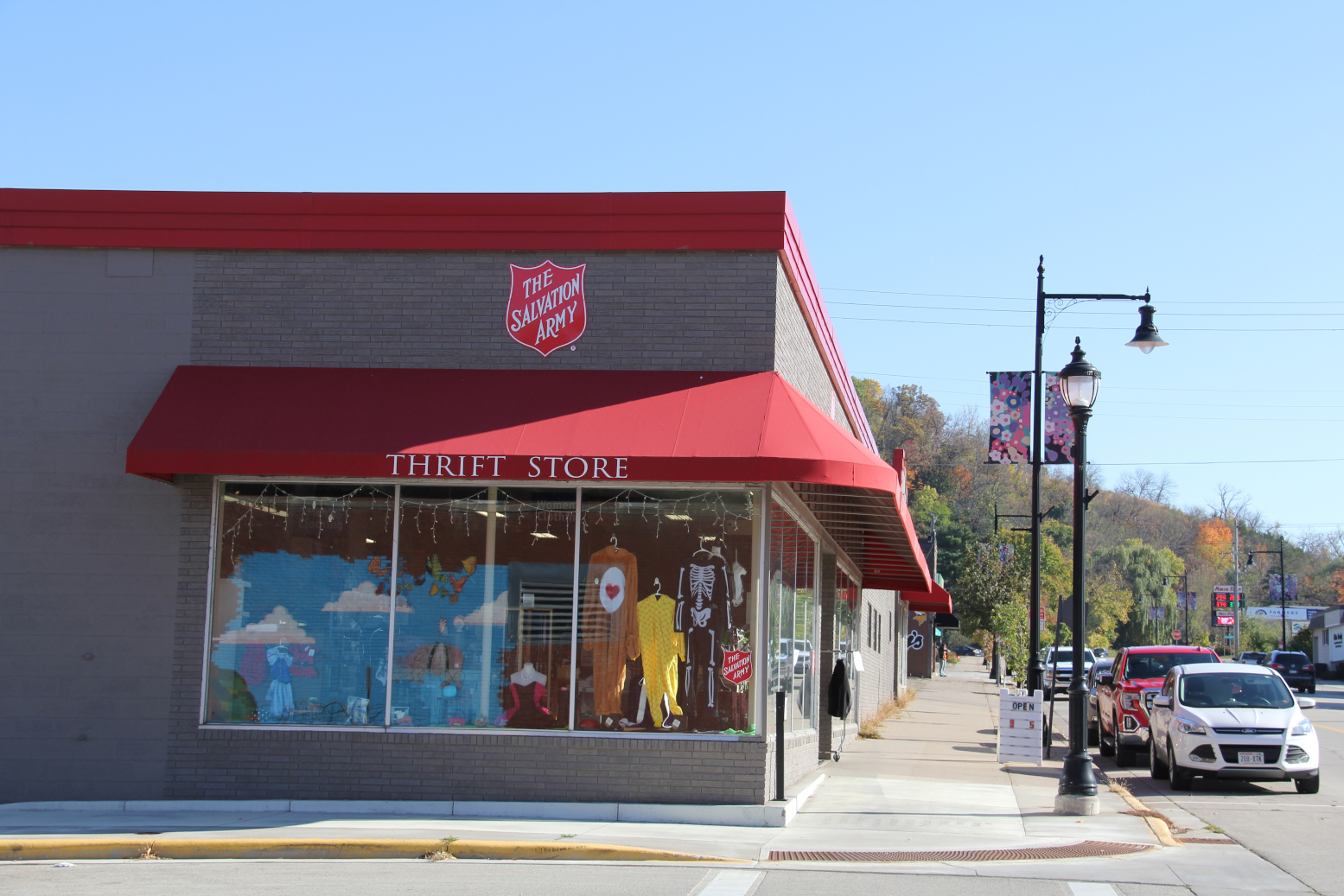
And that’s how I learned about Red Wing’s first Black-white owned business opened in 1897 at the site of the current-day thrift shop on the corner of Plum and Fifth streets. Jeremiah Patterson, born into slavery, and activist Julia Bullard Nelson co-owned the meat market in this Mississippi riverside community in southern Minnesota.
I love when communities pull hidden history out of the archives and publicly share it in creative ways. If not for this “Stand in the Shadows” public arts project, I would have had no idea that the thrift shop I was about to enter stood on the site of The Equal Rights Meat Market.
That name, oh, that name. Equal Rights. It fits. Nelson was a leader in women’s suffrage. For a white woman and a Black man (freed from slavery) to go into business together in the late 19th century, especially in predominantly white rural Minnesota, speaks to their strength, confidence and courage.
But then again, the two forged ahead on multiple fronts. Nelson taught African Americans in government Freedmen Schools down South when that was not necessarily well-received during post Civil War Reconstruction. Patterson was her student. He eventually moved to Minnesota to manage Nelson’s farm south of Red Wing near Belvidere. Patterson would marry a local white woman, Verna Gaylord, in 1886 with the interracial couple having nine children.
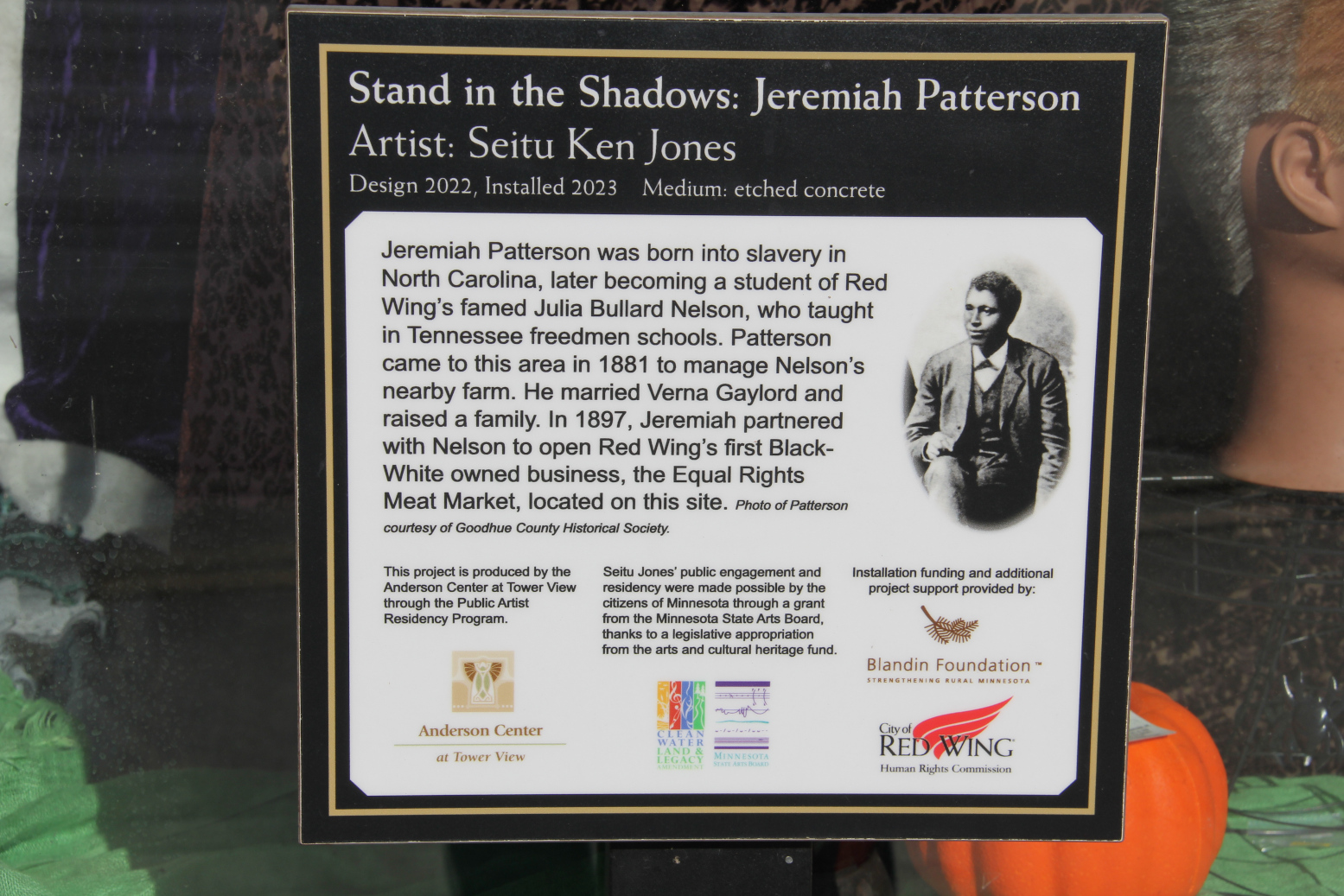
I considered all of this fascinating as I researched information based on that sidewalk message and on a plaque posted outside the Salvation Army thrift store.
Similar historical info and a sidewalk imprint are also located by Red Wing’s St. James Hotel, although I missed seeing that. That poem reads: Bondage and war behind me/Back and forth, trunks and trolley, from train, from steamboat to the St. James Hotel/I landed here, worked and forged a life. This honors another Black man, Joseph Parker, enslaved in Kentucky and later a porter at the hotel. He is the great grandfather of Seitu Ken Jones, a multidisciplinary artist from St. Paul and lead on the “Stand in the Shadows” public art in Red Wing.
As I searched out the backstory, I learned that the Patterson family eventually left Red Wing, after the Ku Klux Klan became active in the area in the early 1920s. It’s an unsavory part of Minnesota history that some would prefer remain hidden. I’d rather know about such hatred than pretend it never happened.
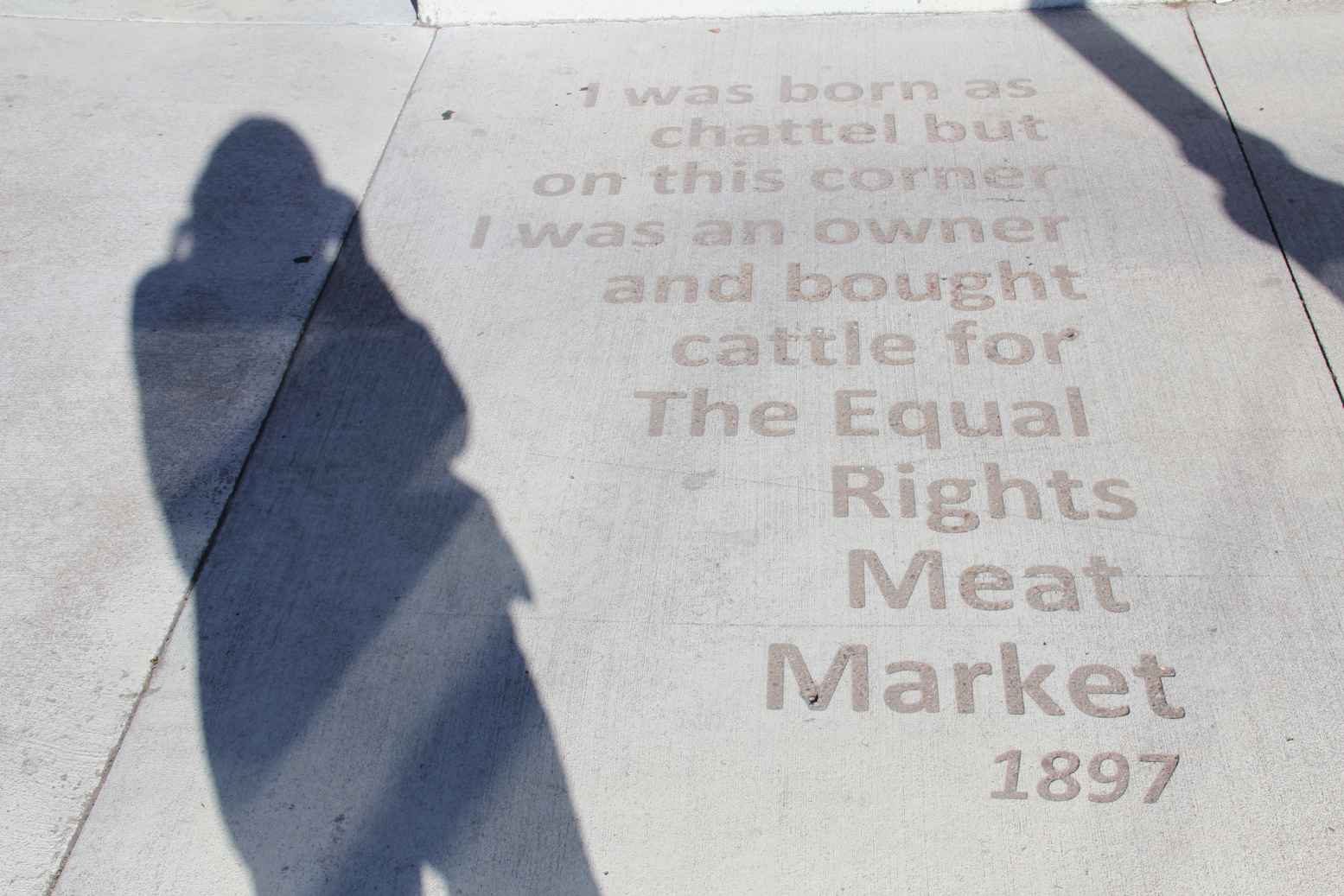
On this day in Red Wing outside the Salvation Army Thrift Store, I learned about two strong individuals who owned The Equal Rights Meat Market. Although the business remained open for only a short time, it leaves a legacy of strength and equality in this community.
This public arts project reminds us that history cannot, should not, be erased, rewritten or hidden. Those words—“born as chattel” to “I was an owner and bought cattle for The Equal Rights Meat Market”—need to be imprinted not only upon a sidewalk, but also upon our collective spirits. Especially now. And in recognition of civil rights leader and activist Dr. Martin Luther King Jr, who is honored annually, this year on Monday, January 19.
© Copyright 2025 Audrey Kletscher Helbling



 Minnesota Prairie Roots
Recent Comments