Minnesota Prairie Roots

Writing and photography by Audrey Kletscher Helbling

Living history along the Cannon River May 18, 2026

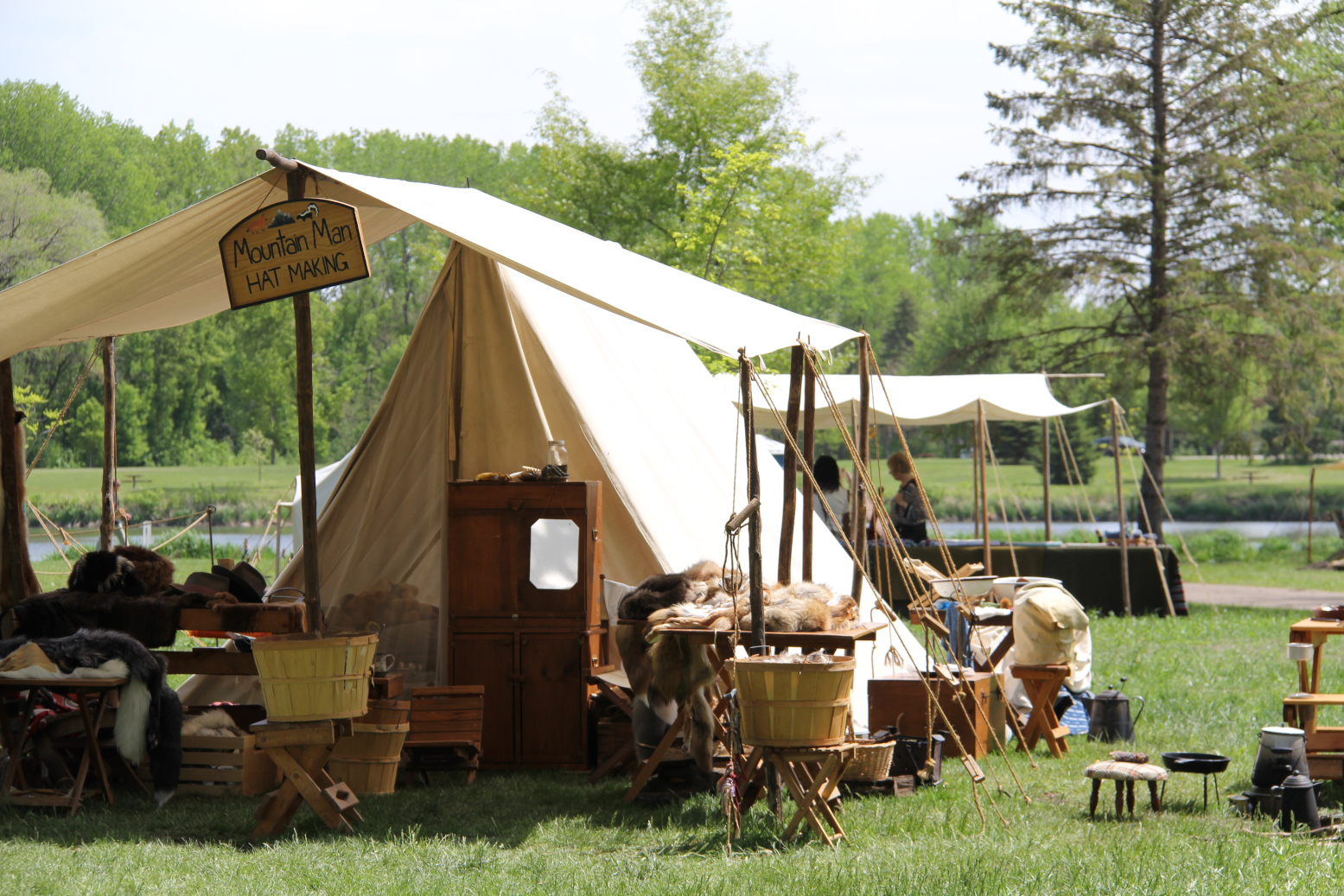
Tents aplenty, including that of a hat maker, were set up by the Cannon River for the Riverside Rendezvous in Faribault. (Minnesota Prairie Roots copyrighted photo May 2026)

ALONG THE BANKS of the Cannon River in Faribault’s North Alexander Park, they set up camp. The fur trappers, the blacksmith, the weaver, the spinner, the tinsmith, the shopkeeper, the hat maker…all of them in a community founded by a fur trader, Alexander Faribault.
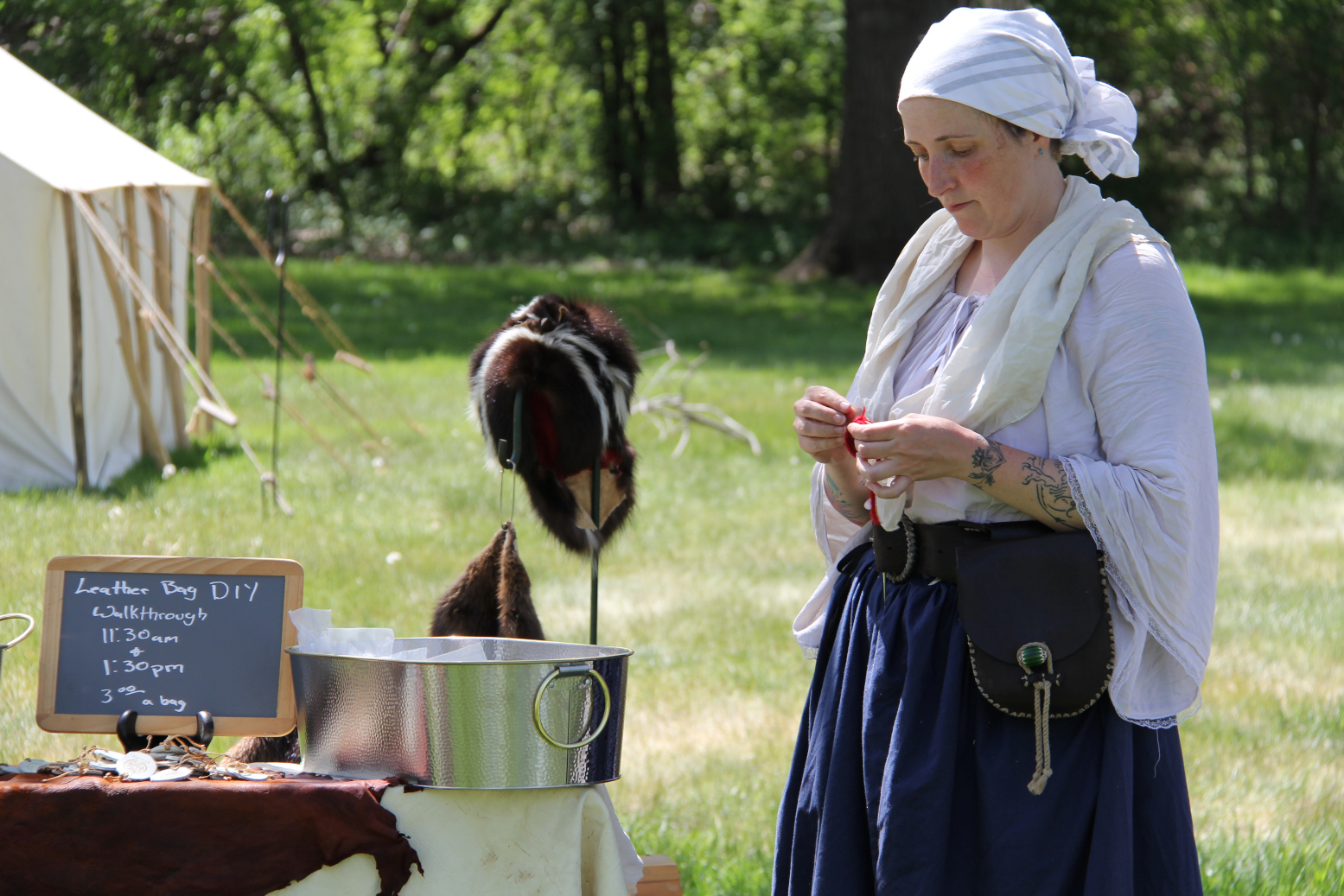
In between stitching leather, this re-enactor weaves a cord. (Minnesota Prairie Roots copyrighted photo May 2026)

History came to life here, at the second annual Riverside Rendezvous and History Festival organized by the Rice County Historical Society. This event is like a step back in time to the 18th and 19th centuries with history enthusiasts in period costume demonstrating long ago hands-on work and talking up their passions.
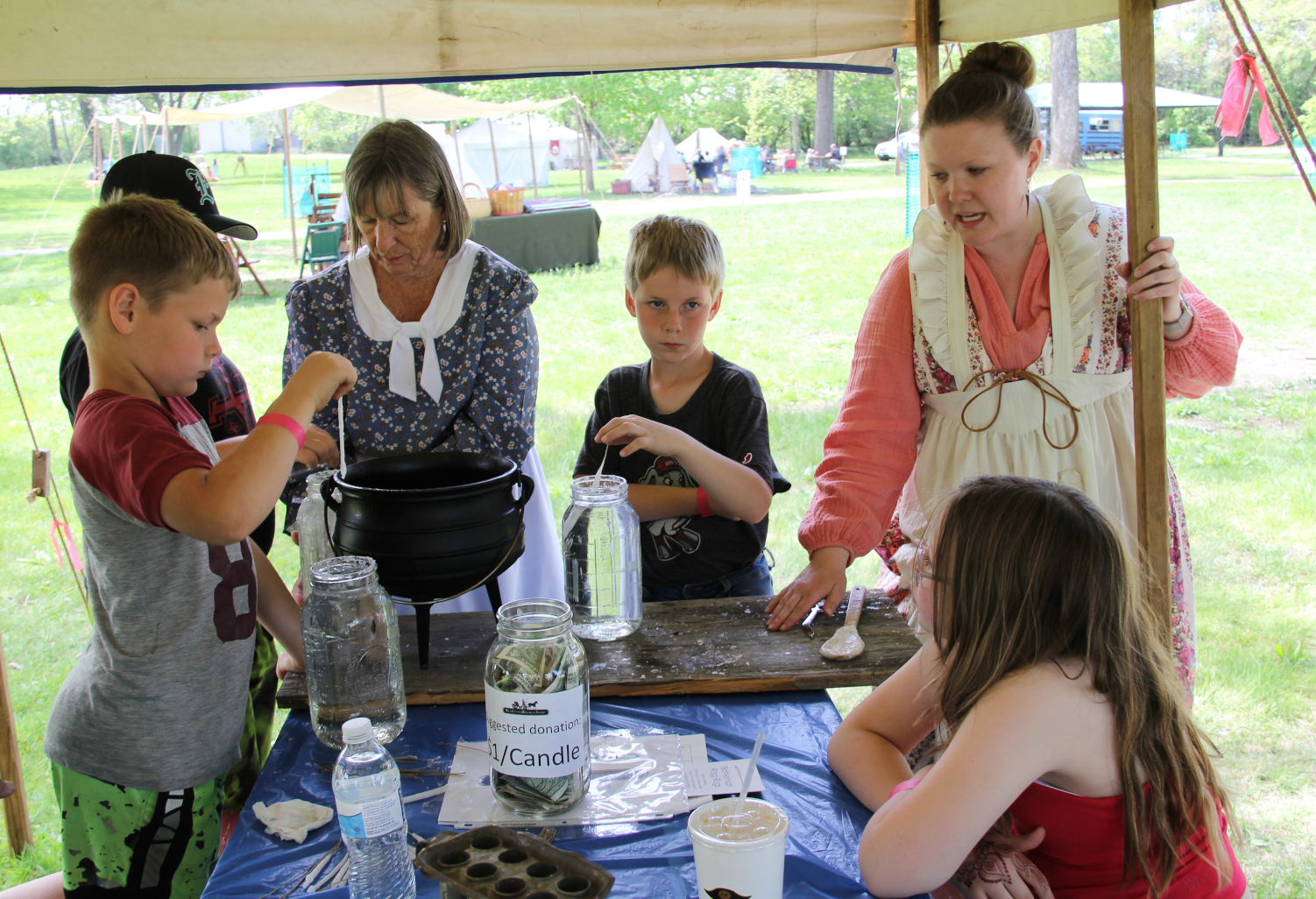
One of the hands-on activities, making candles. (Minnesota Prairie Roots copyrighted photo May 2026)
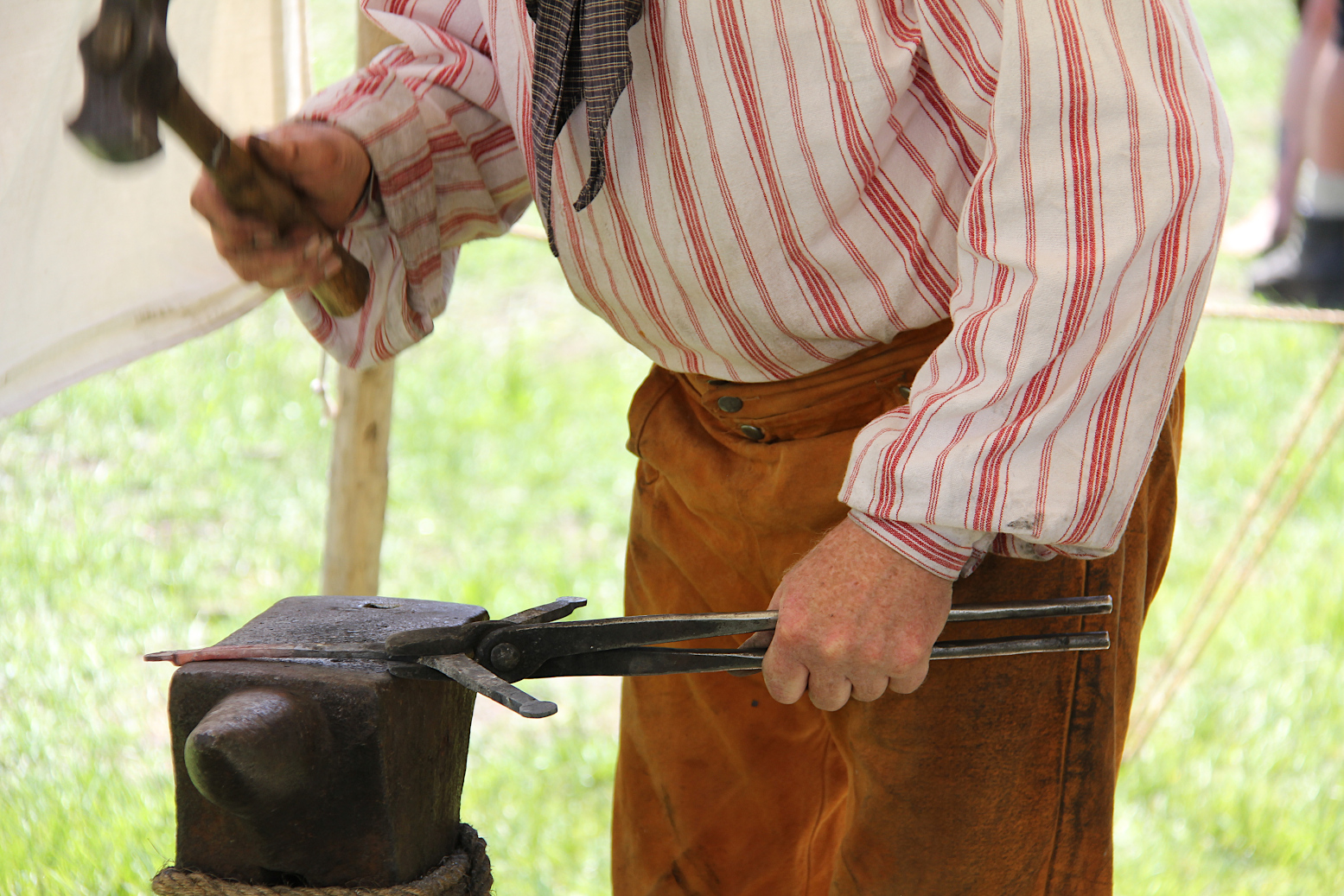
The blacksmith pounds hot metal. (Minnesota Prairie Roots copyrighted photo May 2026)
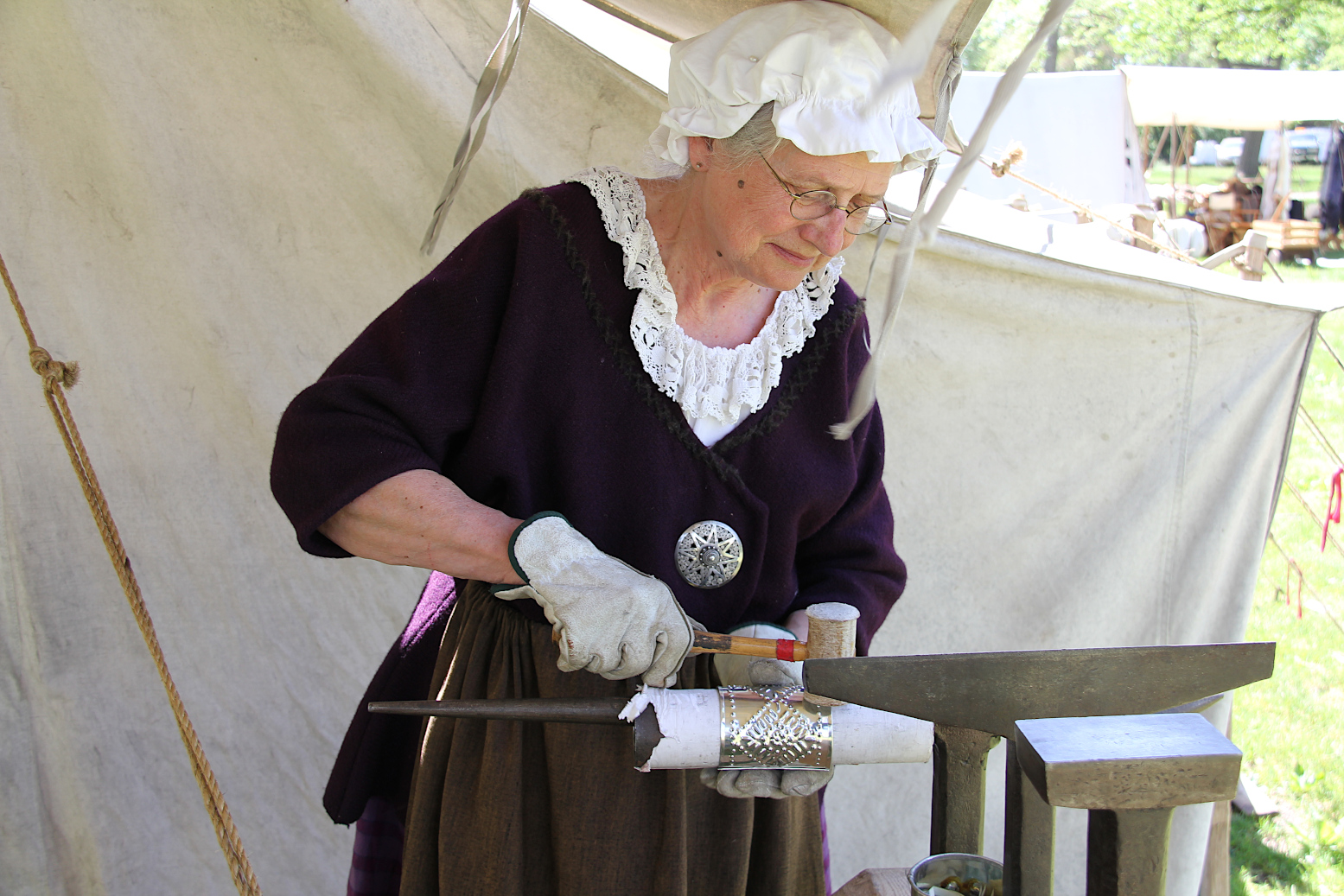
Tinsmith Kitty from Lake Pepin demonstrates tinsmithing. (Minnesota Prairie Roots copyrighted photo May 2026)

Here I watched candle-making, blacksmithing, rug weaving, spinning of wool into yarn, tinsmithing…
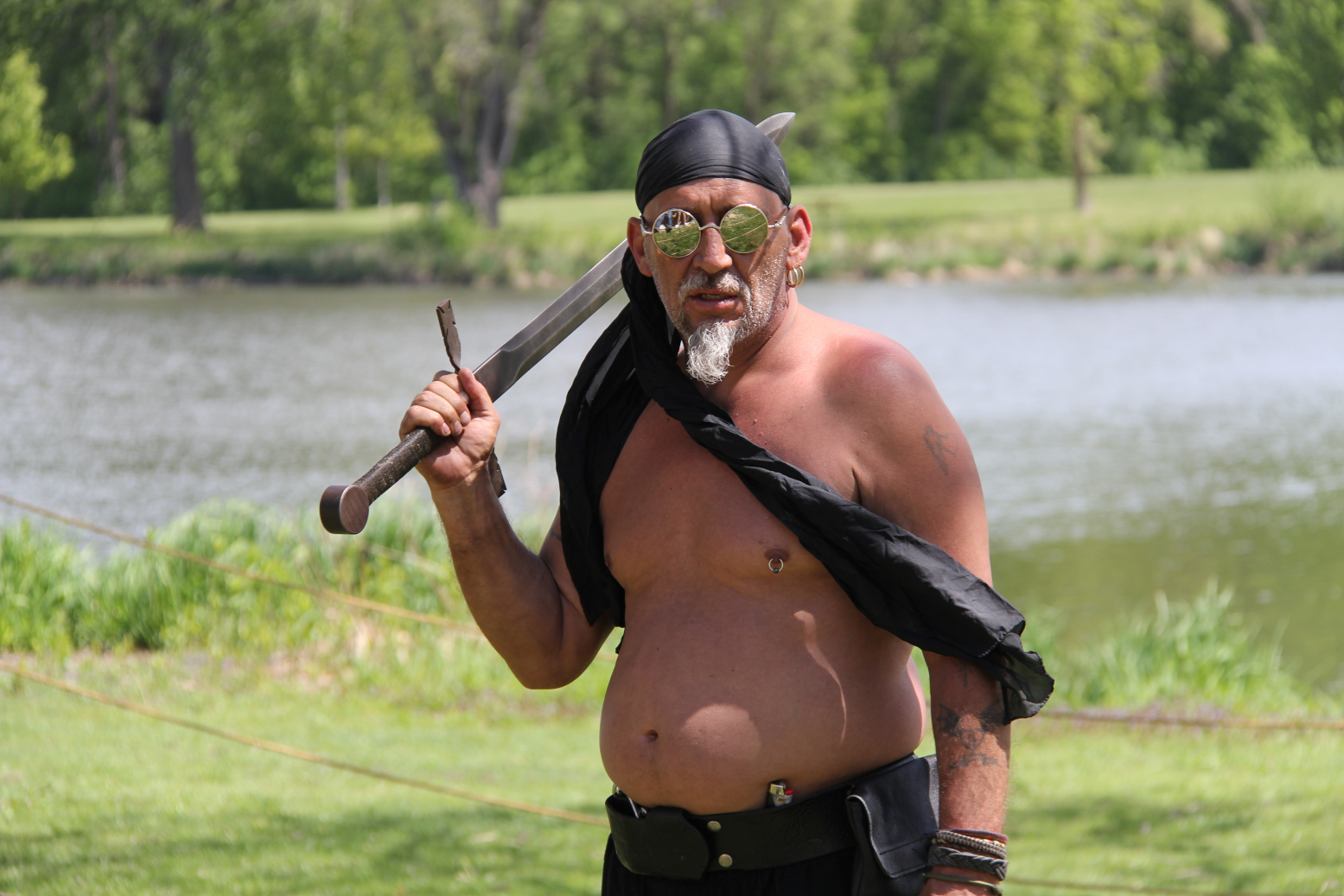
Attendees listened to this participant give a lesson in defense and weaponry. (Minnesota Prairie Roots copyrighted photo May 2026)

I learned about crests and weapons.

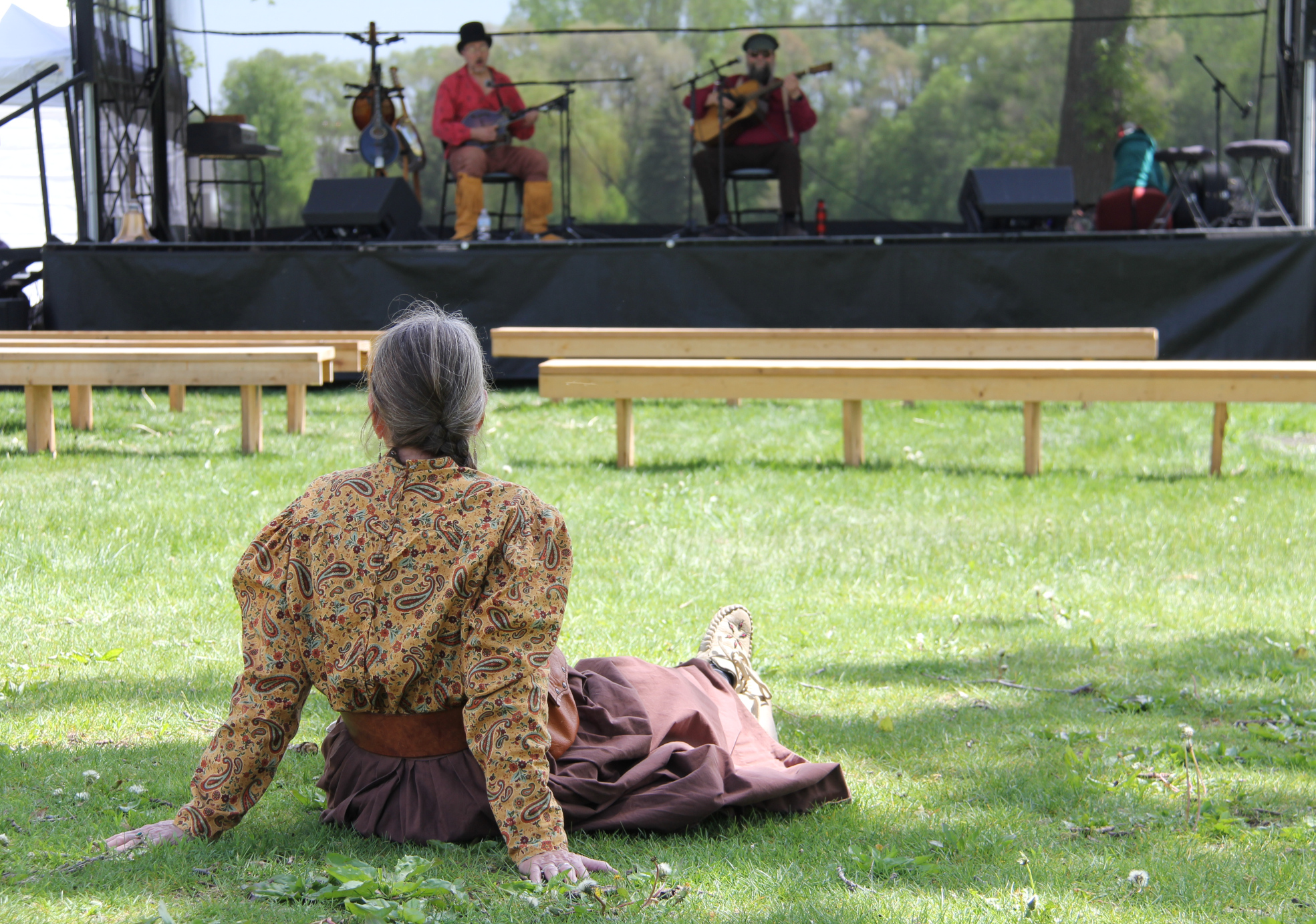
Listening to The Skally Line musicians. (Minnesota Prairie Roots copyrighted photo May 2026)

I listened to musicians on-stage, one group singing about Tator Tot Hotdish, not exactly period appropriate, but entertaining none-the-less.
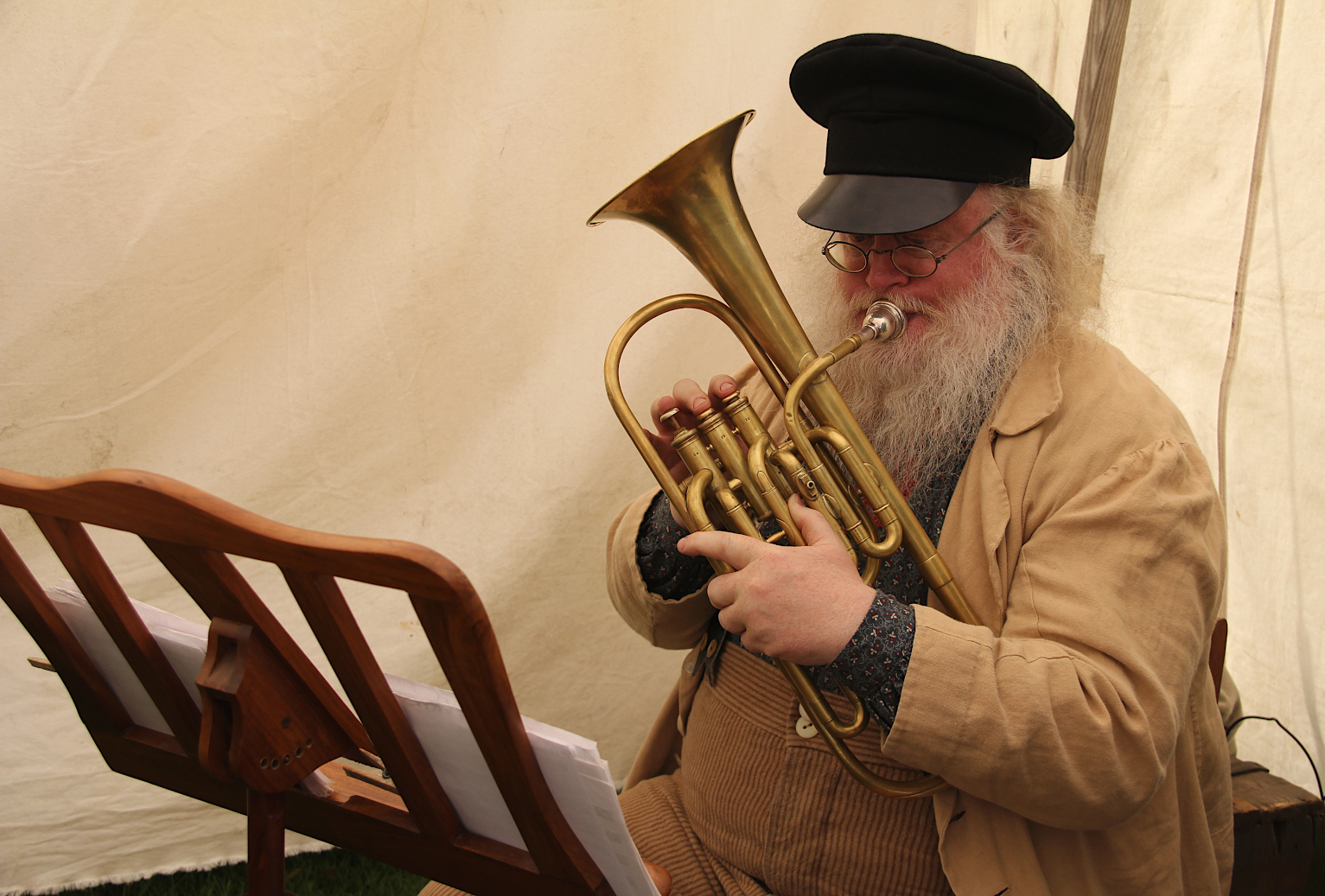

Playing an historic saxhorn inside a dry goods tent. (Minnesota Prairie Roots copyrighted photo May 2026)
History-themed books filled a tent, these appropriate to the event. (Minnesota Prairie Roots copyrighted photo May 2026)
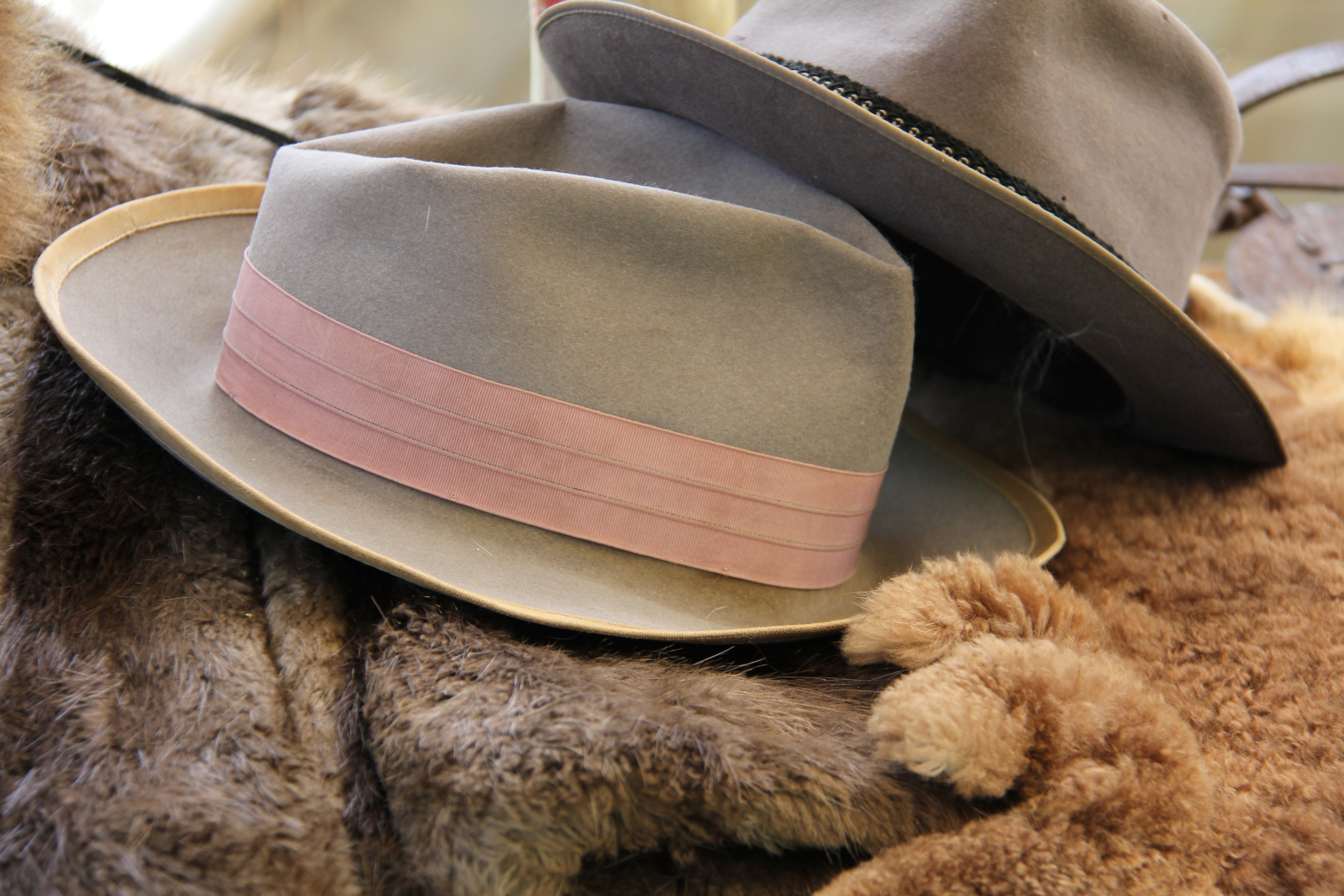
Lots of hats for sale. (Minnesota Prairie Roots copyrighted photo May 2026)

Inside Stick and Stump Dry Goods, a musician blew into an 1873 saxhorn, drawing attendees into the tent to peruse the merchandise. A row of merchants vended goods from tents, selling period weapons, beads, books, belts, soap, hats, knives, clothing and a whole lot more.
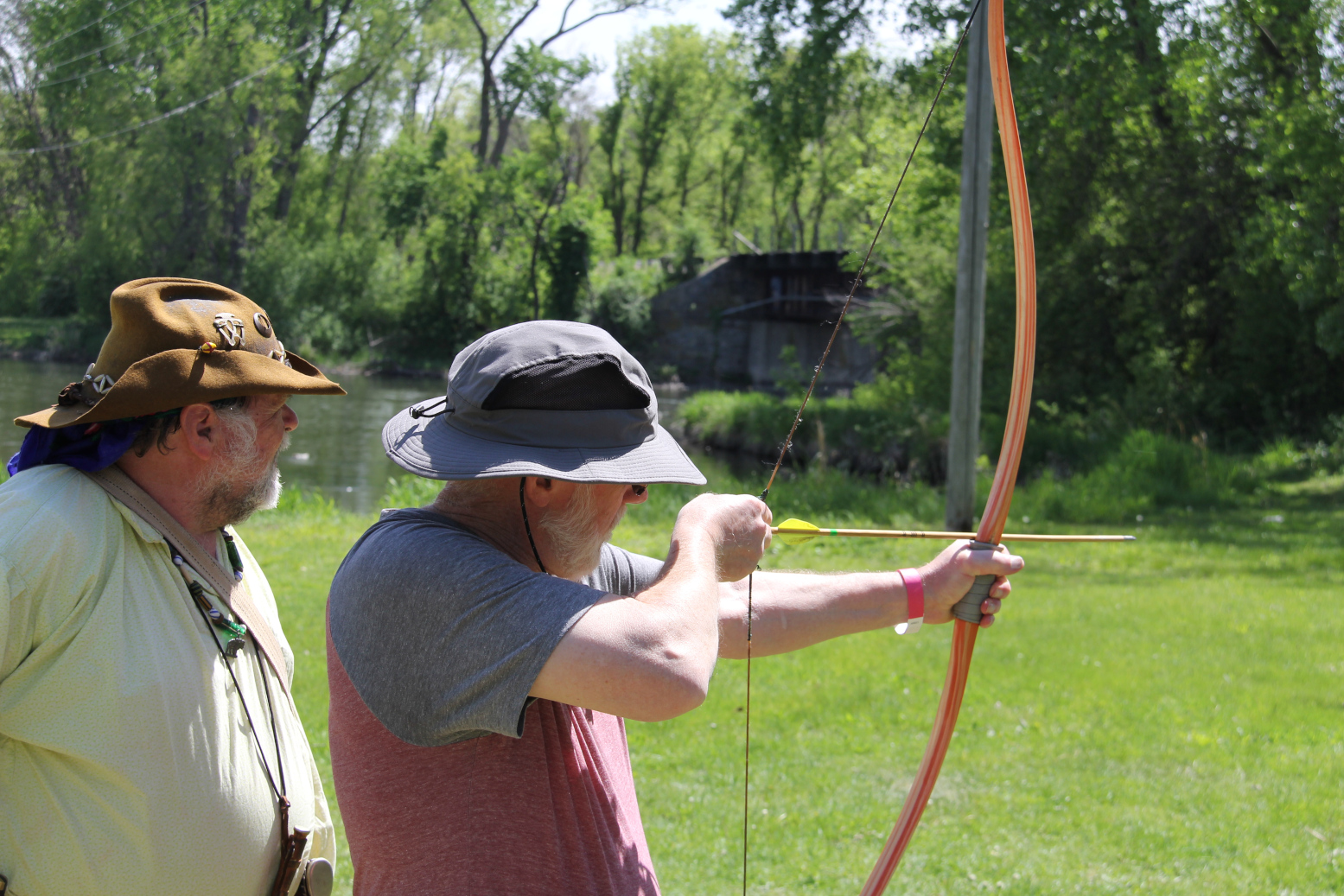
Guided by the archer, Randy aims at the target. (Minnesota Prairie Roots copyrighted photo May 2026)

In a far corner of the park, rendezvous attendees stepped up and tried their skills at archery and tomahawk throwing. I passed given my lack of athleticism. I watched, though, while my husband, Randy, pulled the bowstring and, in one of three attempts, hit the target.
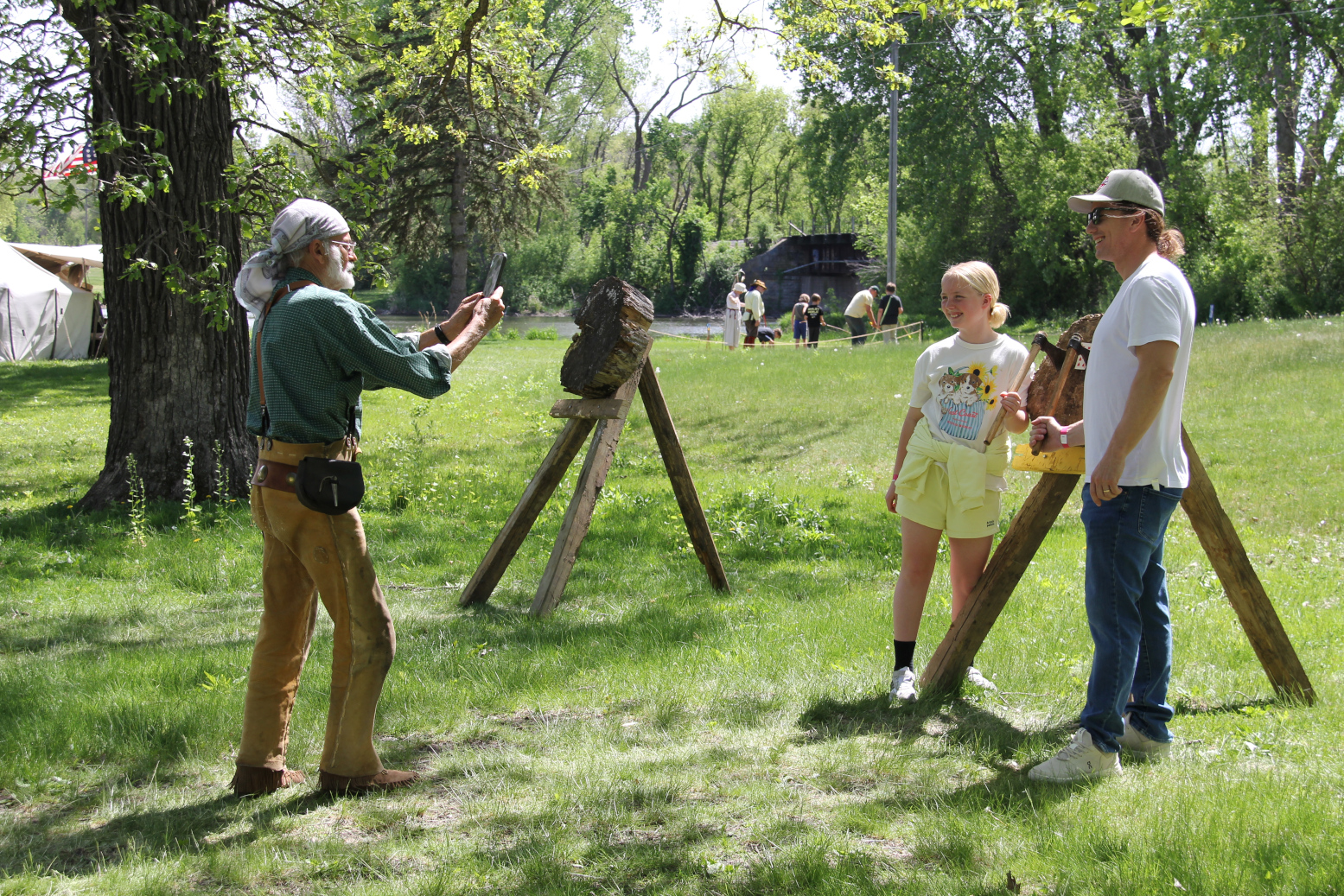
A photo opp after tomahawk throwing. (Minnesota Prairie Roots copyrighted photo May 2026)

I also observed a re-enactor taking a photo of two tomahawk throwers with their smartphone, another example of present day and yesteryear mingling in an almost (at least to me) comical moment. Those long ago dwellers of this land could never have imagined the technology of today.
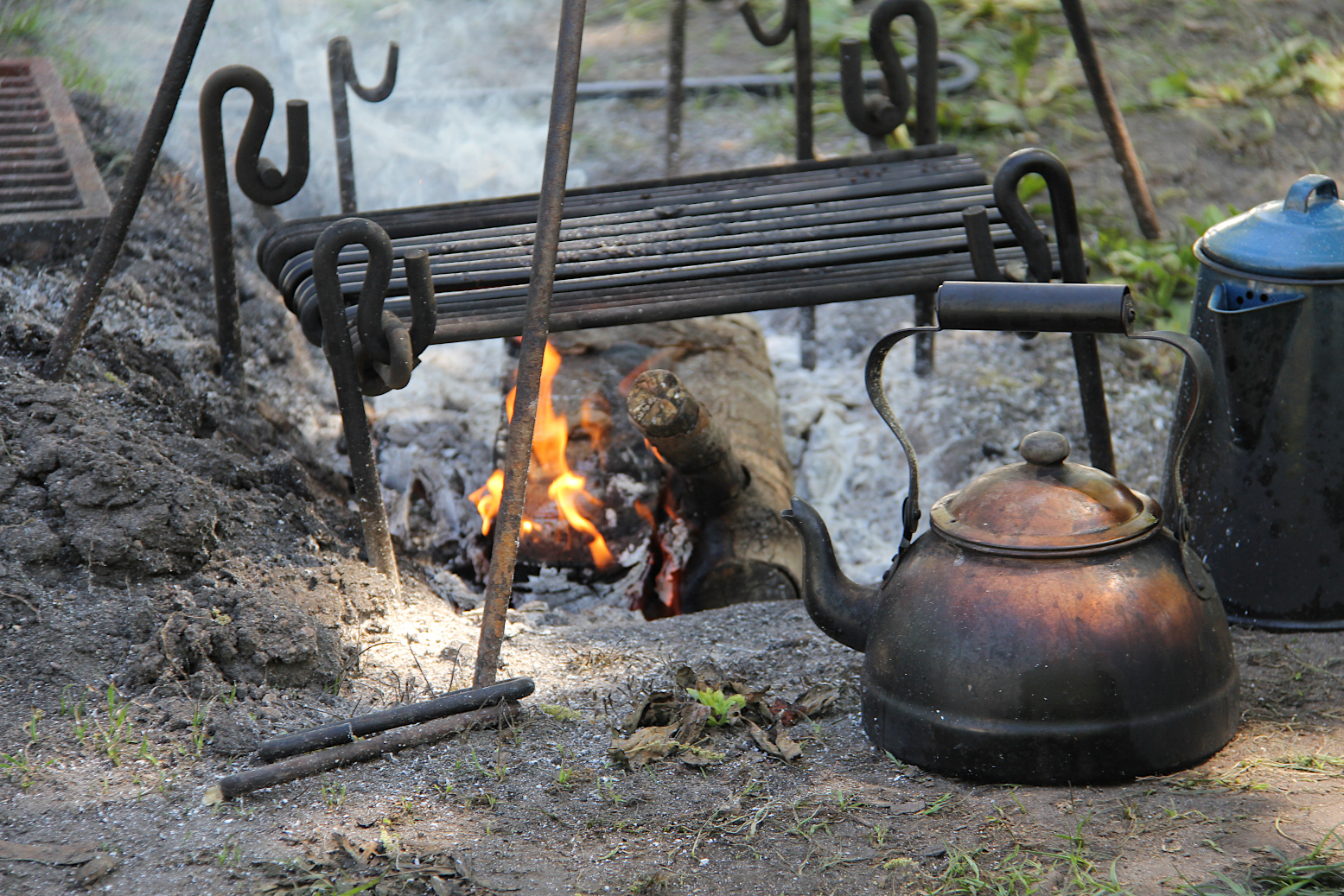
There were many open campfires for cooking on the encampment grounds. (Minnesota Prairie Roots copyrighted photo May 2026)
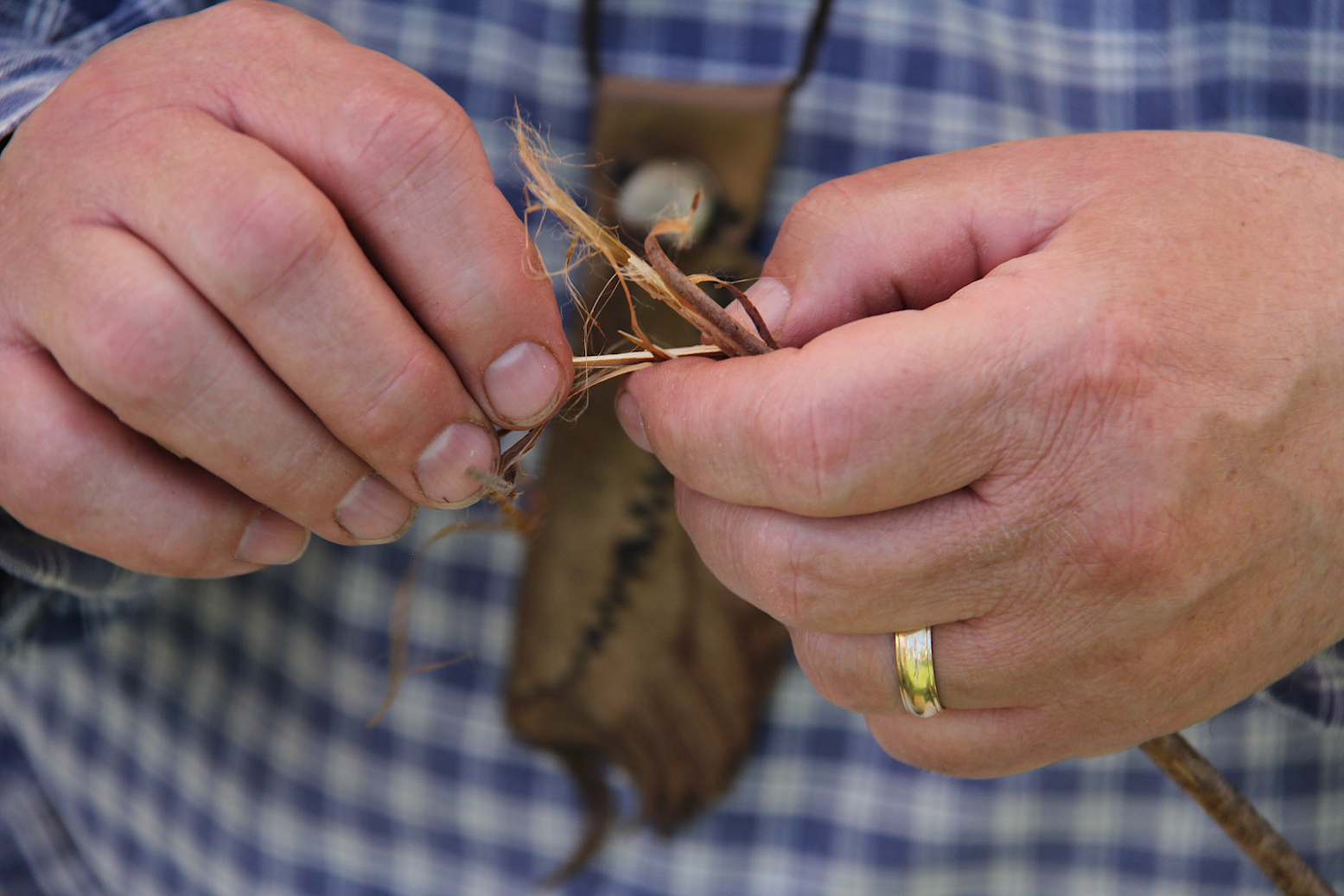
Stripping the plant dogbane to make into a strong thread. (Minnesota Prairie Roots copyrighted photo May 2026)
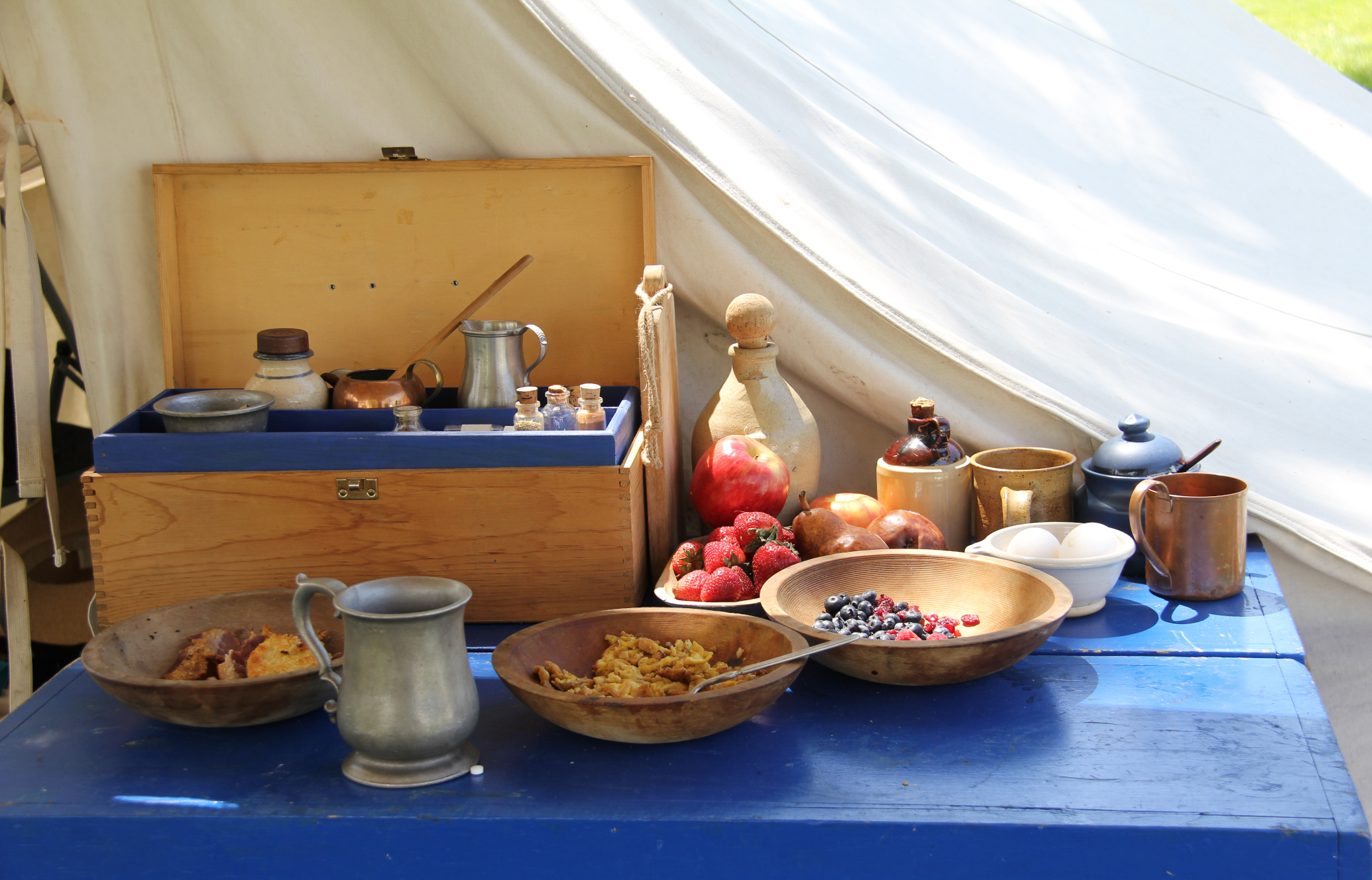
A still life of simple foods and dinnerware. (Minnesota Prairie Roots copyrighted photo May 2026)

Events like this not only preserve and celebrate history, but serve as visual reminders of how much has changed with the passage of time. Progress can often be measured by the past.
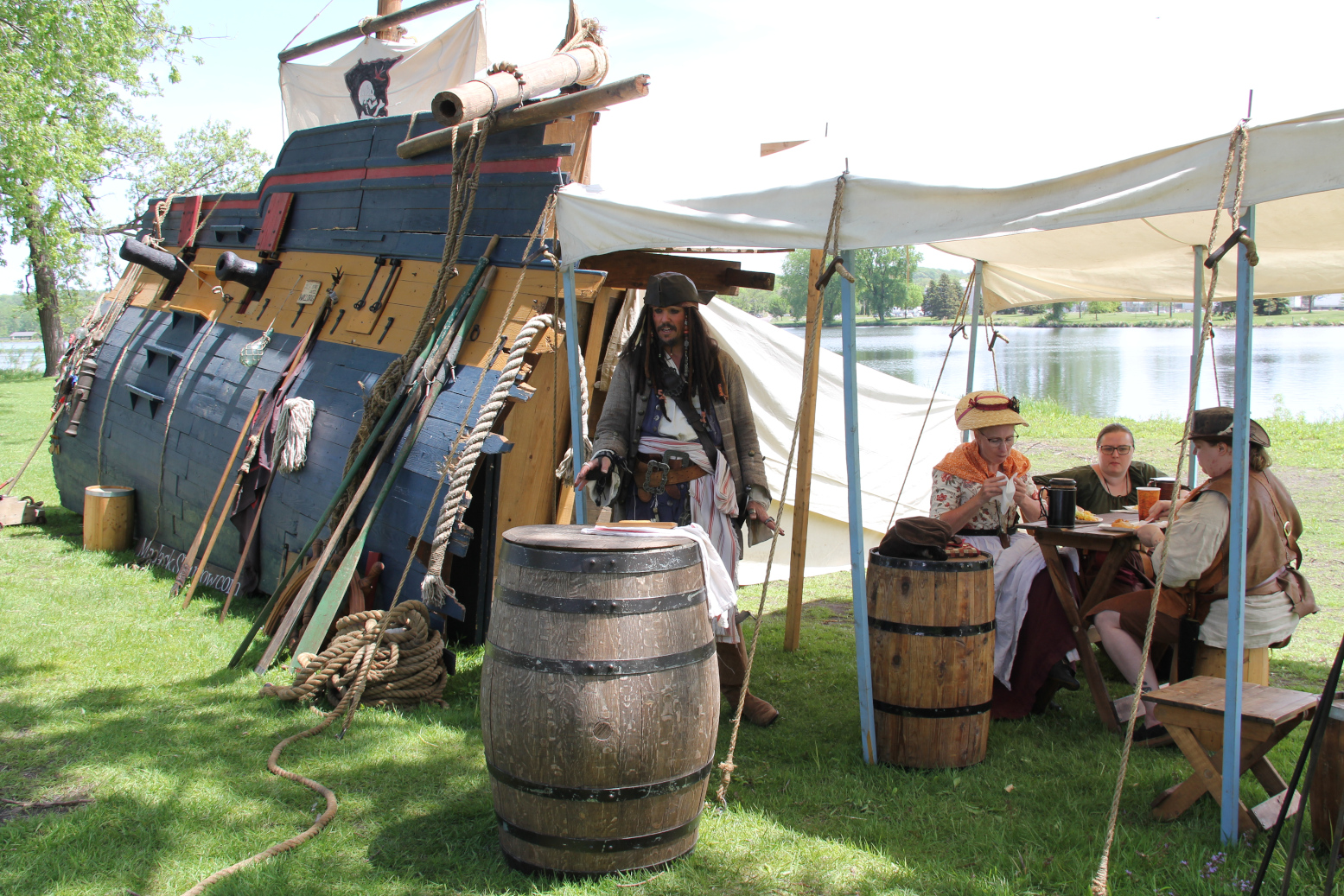
MN Jack Sparrow and his pirate “ship” were a draw, especially for the kids. (Minnesota Prairie Roots copyrighted photo May 2026)

I’m not a history buff. Yet history interests me enough to want to learn more, to attend events like the rendezvous. Before the encampment opened to the public over the weekend, local students came by the hundreds to North Alexander Park for a living history lesson. I would have enjoyed history a whole lot more as a child had I gone to something like this.
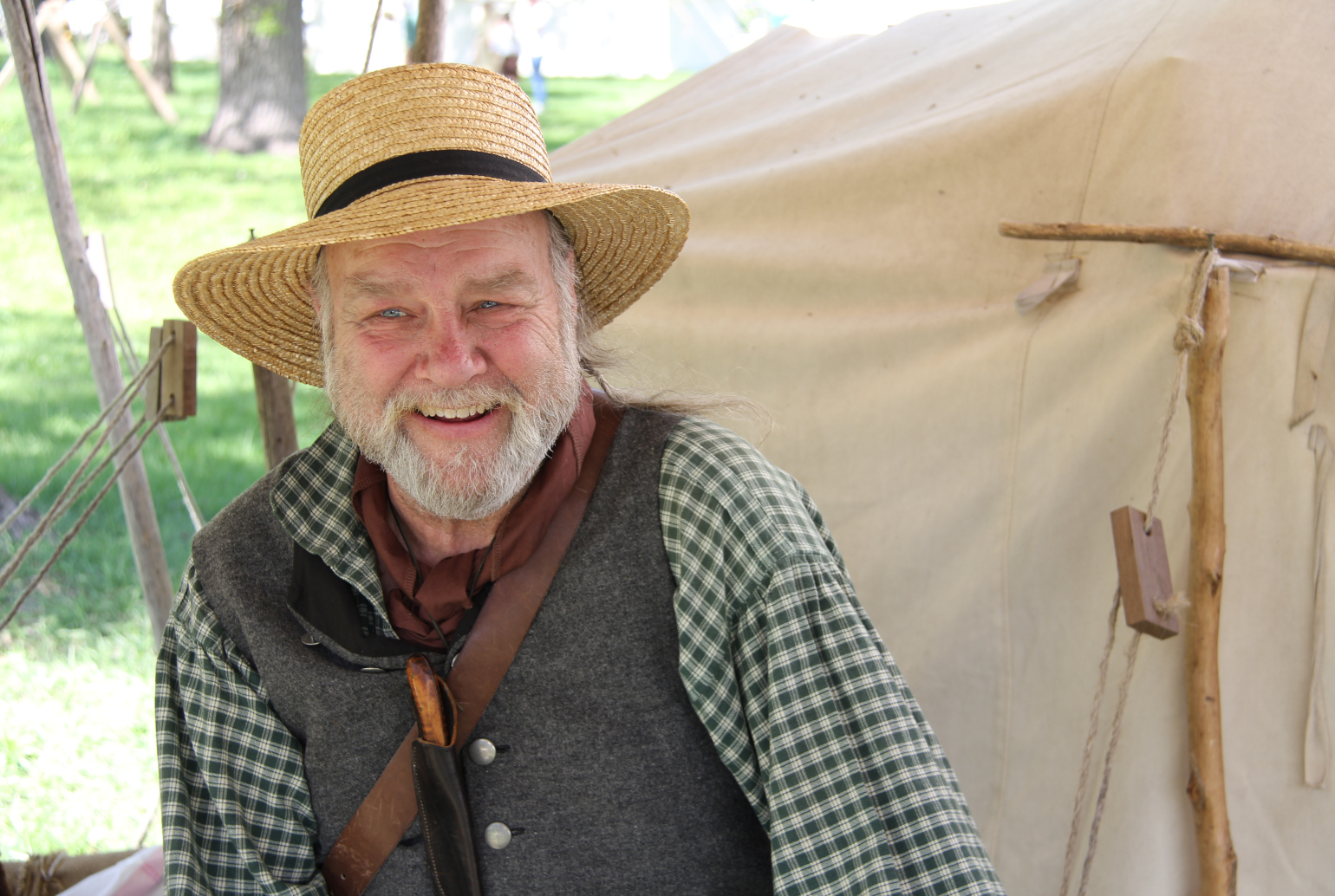
Period dress is an important part of the rendezvous. (Minnesota Prairie Roots copyrighted photo May 2026)
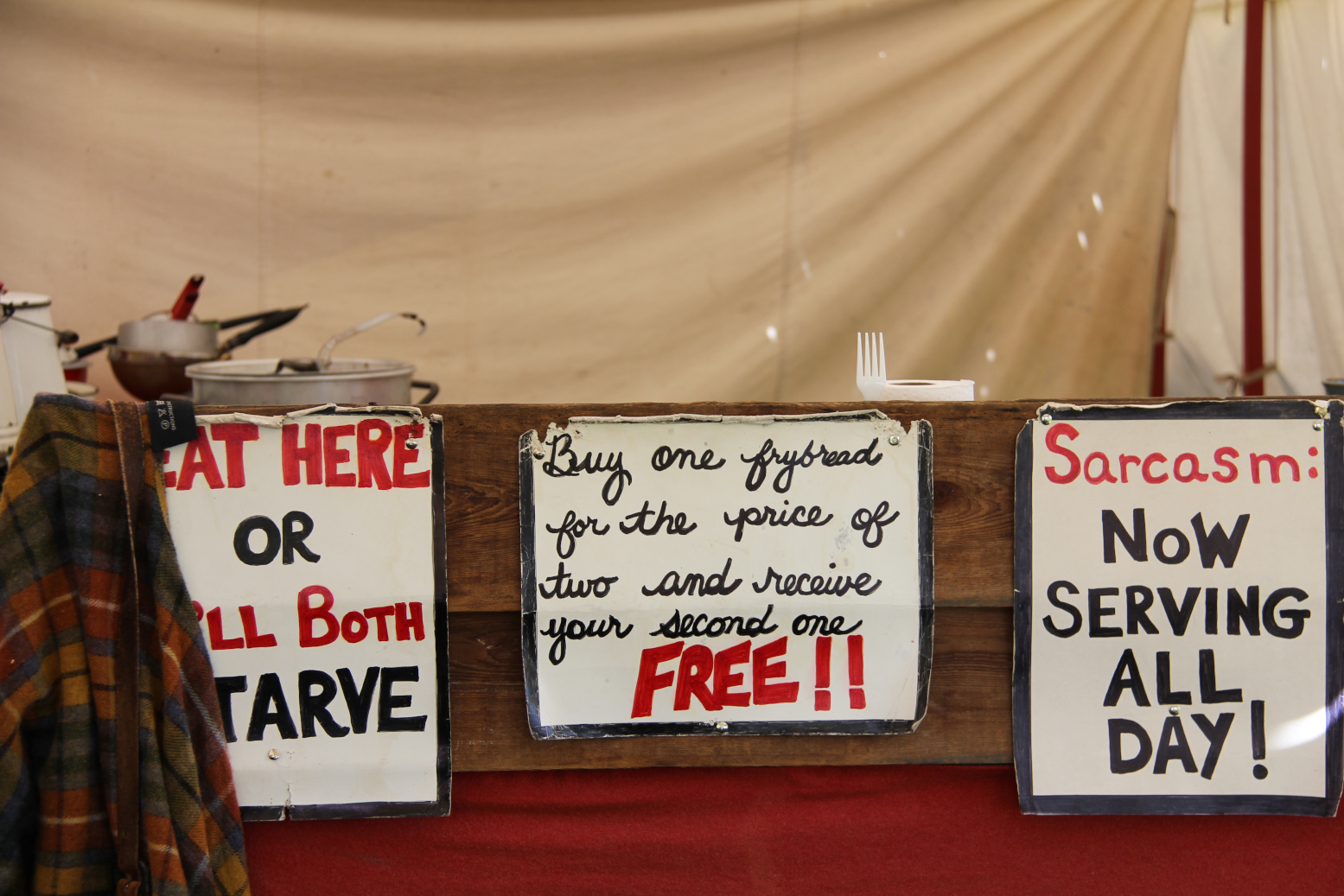
Humorous signs inside the Baby’s Indian Frybread tent. (Minnesota Prairie Roots copyrighted photo May 2026)
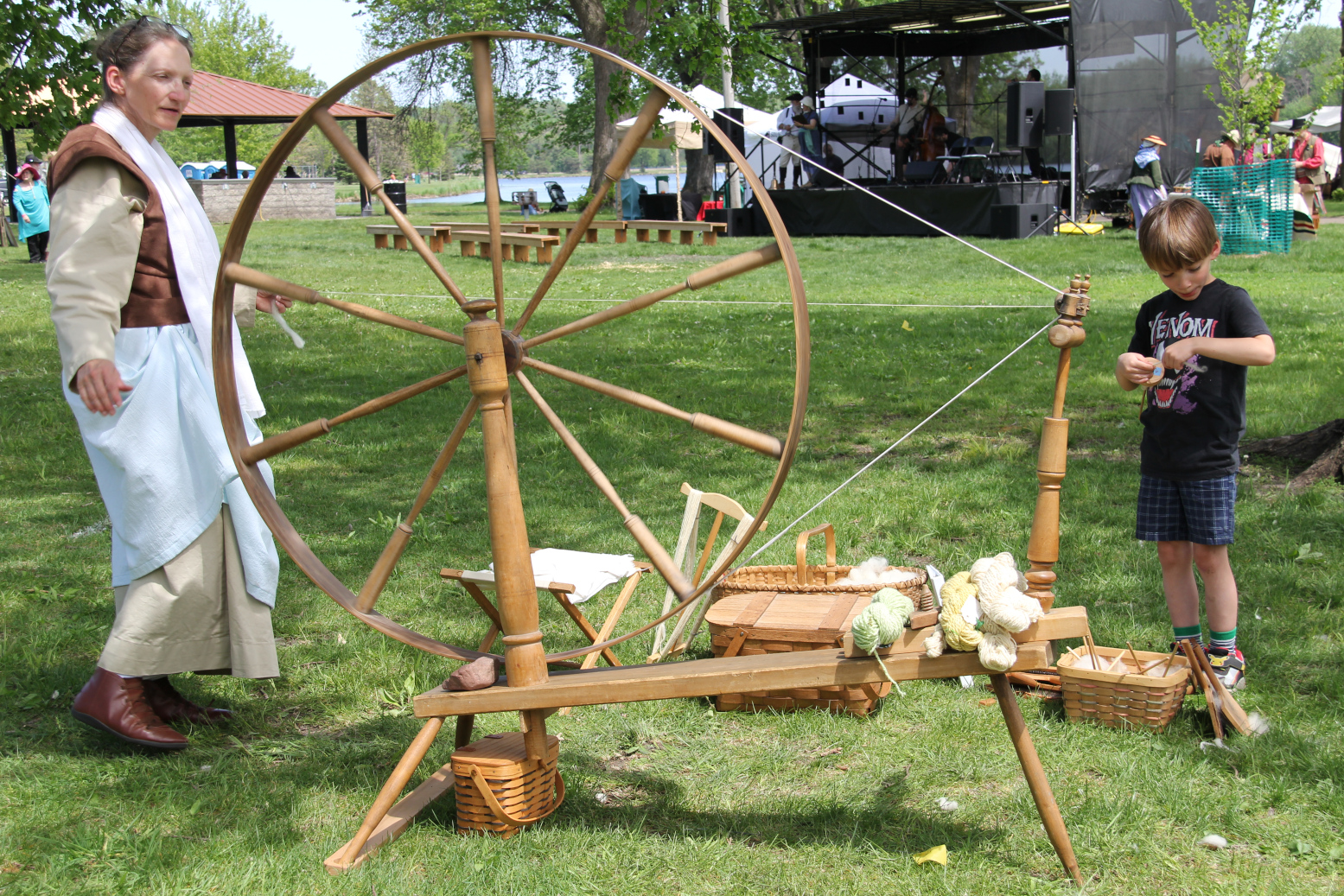
Spinning and playing with a toy spinner. (Minnesota Prairie Roots copyrighted photo May 2026)

As I wandered around the grounds, photographed, listened, conversed, paused to eat first savory, then sweet, Baby’s Indian Frybread, I considered the time, effort and work involved in putting an event like this together. It’s a lot for the organizers, volunteers and participants.
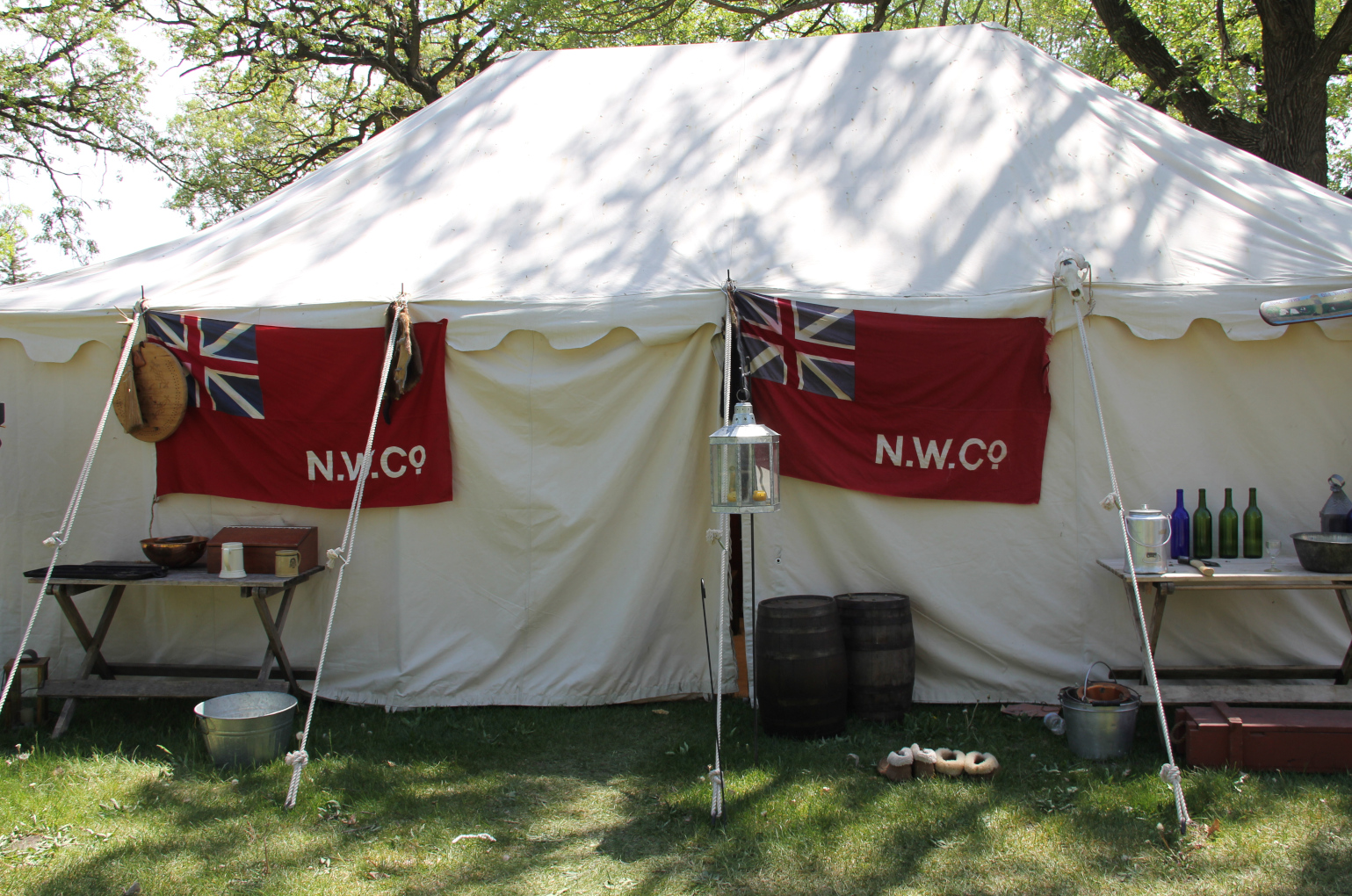
The North West Company was a Canadian fur trading company important in early fur trade in this area. (Minnesota Prairie Roots copyrighted photo May 2026)

I’m grateful for this rendezvous which brings living history to Faribault, a place where the Wahpekute once fished and trapped and traded and dwelt. This place, too, where Alexander Faribault came to trade with the native Dakota, to settle, to establish the town named after him.
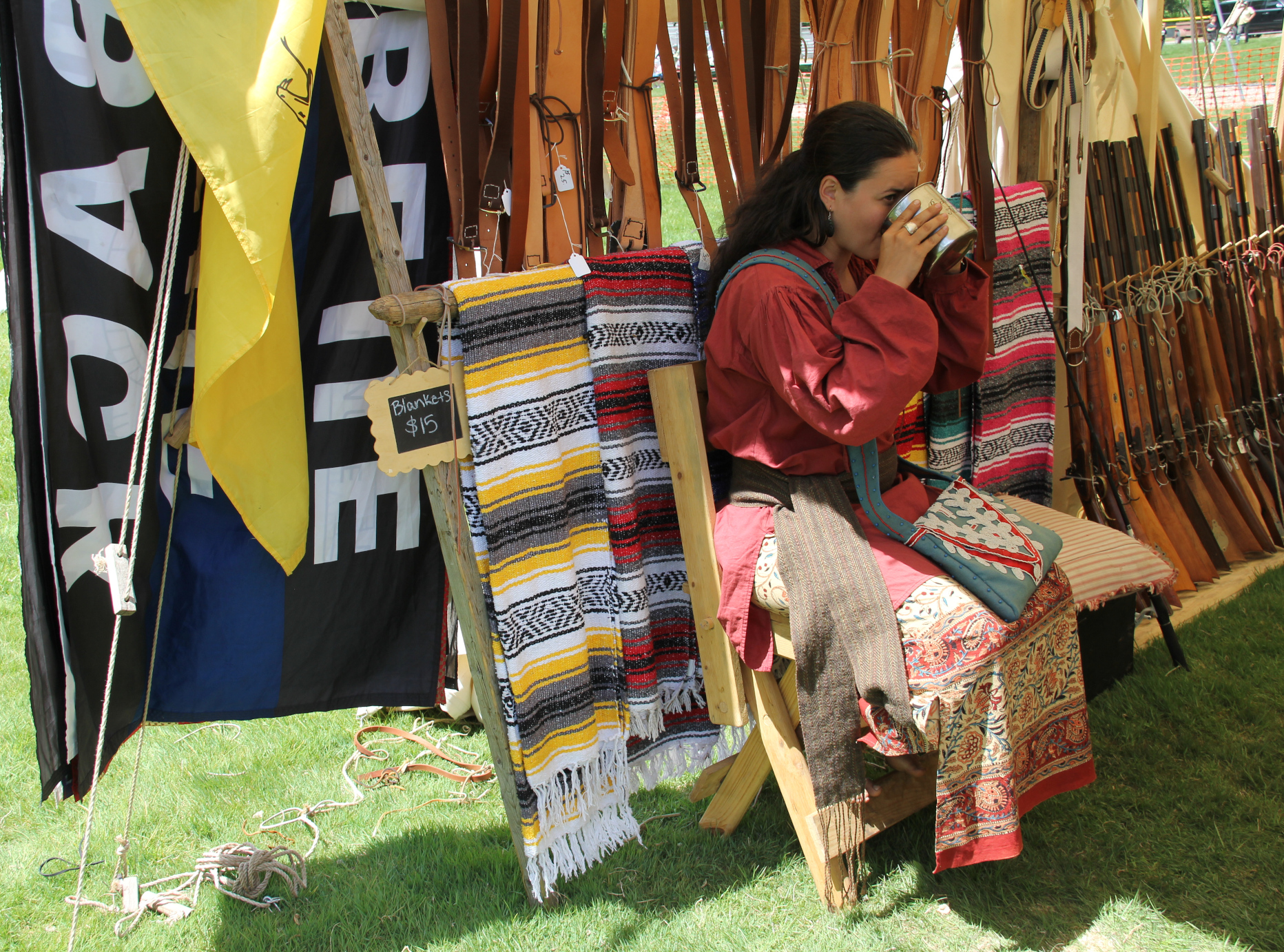
A vendor inside a tent with blankets, weapons and an assortment of goods for sale. (Minnesota Prairie Roots copyrighted photo May 2026)

Faribault is a town rich in history. Rice County is a county rich in history. Minnesota is a state rich in history. And, on Saturday, for a few hours, I glimpsed that history along the banks of the Cannon River, where the water flows into the nearby Straight River, stories carried on the current of the water from the past into the present.

© Copyright 2026 Audrey Kletscher Helbling


From Red Wing: The Equal Rights Meat Market January 14, 2026

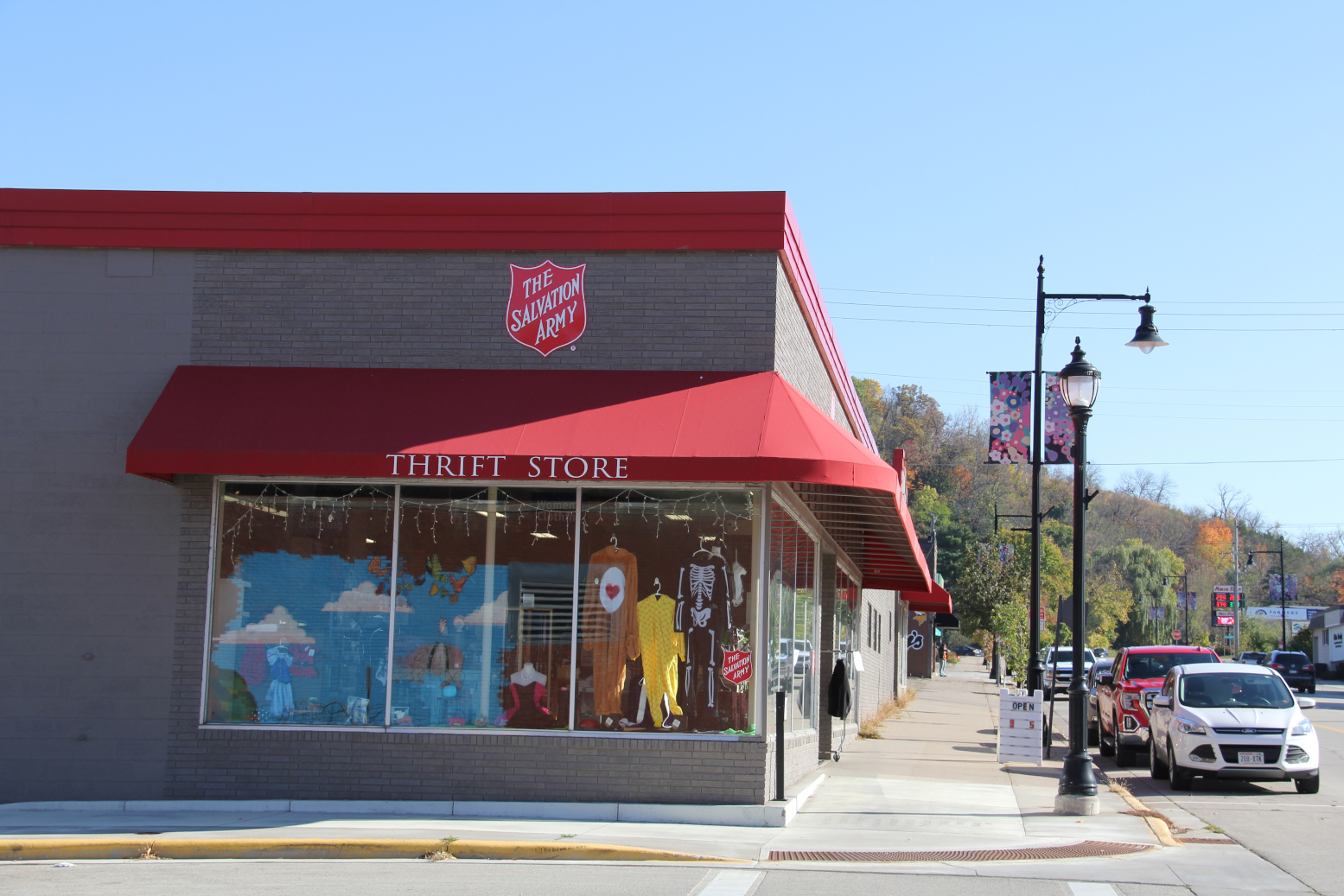
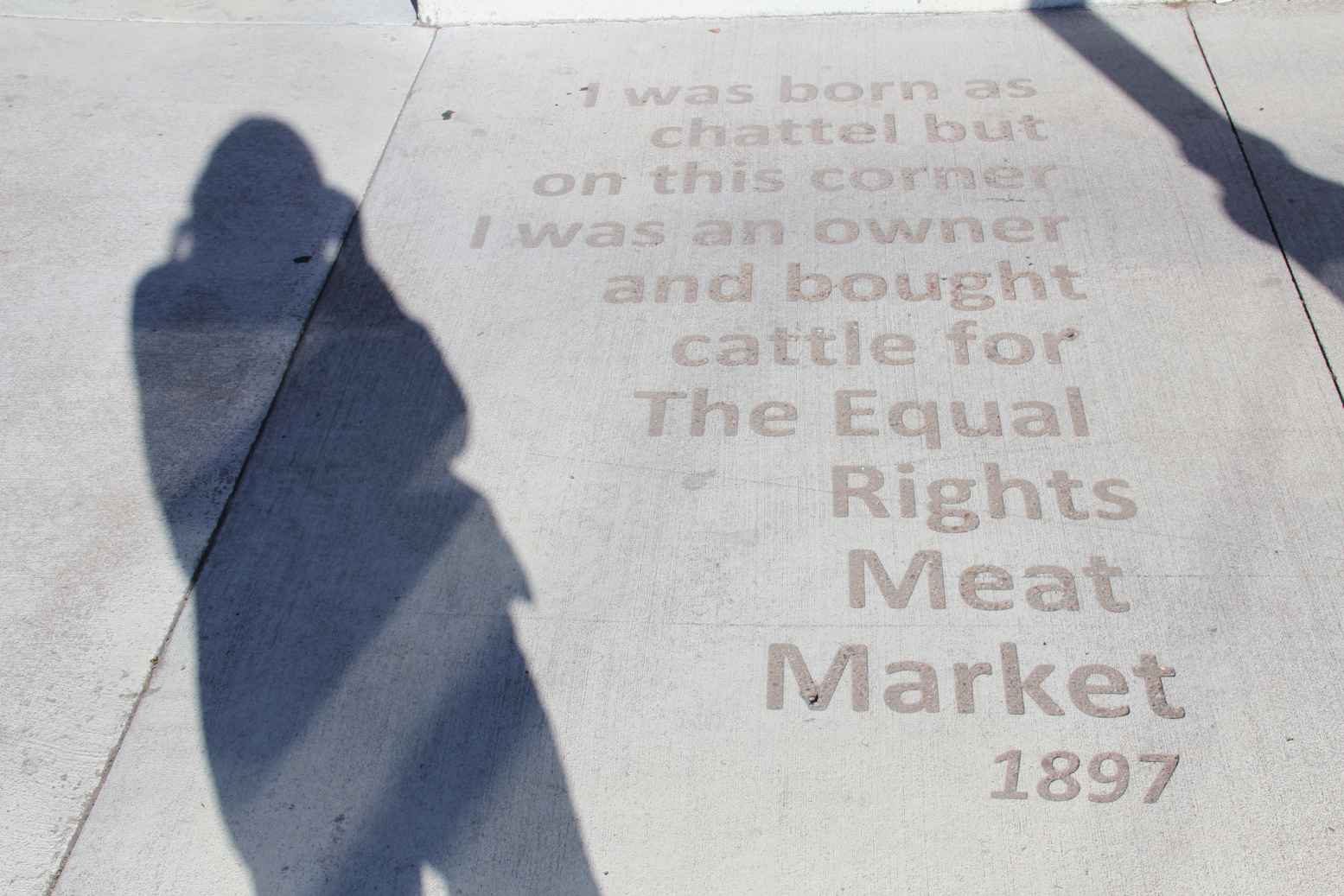
“Stand in the Shadows” public art outside the Salvation Army Thrift Store in Red Wing shares interesting local history. (Minnesota Prairie Roots copyrighted photo October 2025)

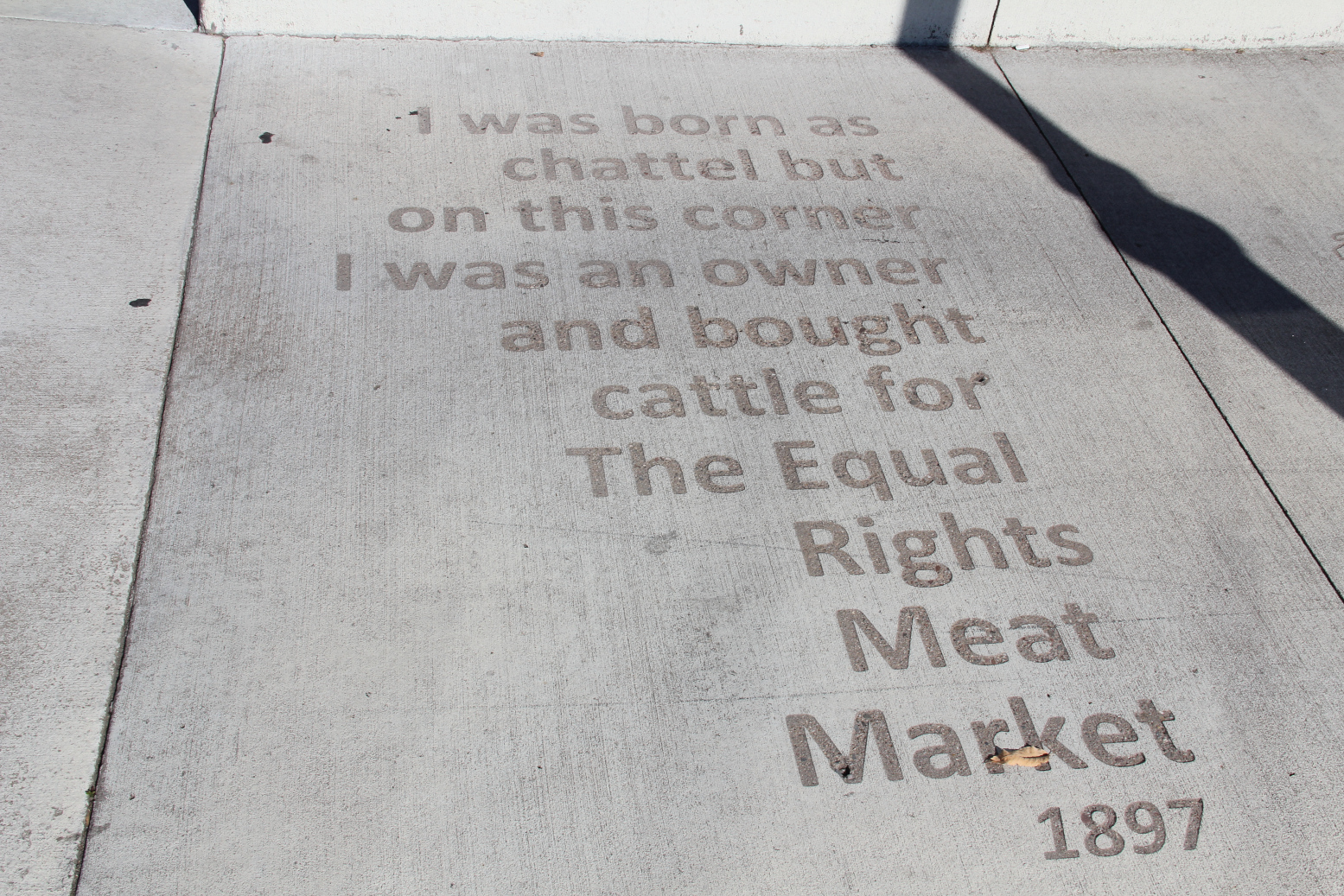
Oh, the things you discover when you least expect it. That can be said for the local history highlighted outside the Red Wing Salvation Army Thrift Store. There, imprinted upon the sidewalk, I found these words: I was born as chattel but on this corner I was an owner and bought cattle for The Equal Rights Meat Market—1897.

The Equal Rights Meat Market once stood at this location. (Minnesota Prairie Roots copyrighted photo October 2025)

And that’s how I learned about Red Wing’s first Black-white owned business opened in 1897 at the site of the current-day thrift shop on the corner of Plum and Fifth streets. Jeremiah Patterson, born into slavery, and activist Julia Bullard Nelson co-owned the meat market in this Mississippi riverside community in southern Minnesota.

I love when communities pull hidden history out of the archives and publicly share it in creative ways. If not for this “Stand in the Shadows” public arts project, I would have had no idea that the thrift shop I was about to enter stood on the site of The Equal Rights Meat Market.

That name, oh, that name. Equal Rights. It fits. Nelson was a leader in women’s suffrage. For a white woman and a Black man (freed from slavery) to go into business together in the late 19th century, especially in predominantly white rural Minnesota, speaks to their strength, confidence and courage.

But then again, the two forged ahead on multiple fronts. Nelson taught African Americans in government Freedmen Schools down South when that was not necessarily well-received during post Civil War Reconstruction. Patterson was her student. He eventually moved to Minnesota to manage Nelson’s farm south of Red Wing near Belvidere. Patterson would marry a local white woman, Verna Gaylord, in 1886 with the interracial couple having nine children.

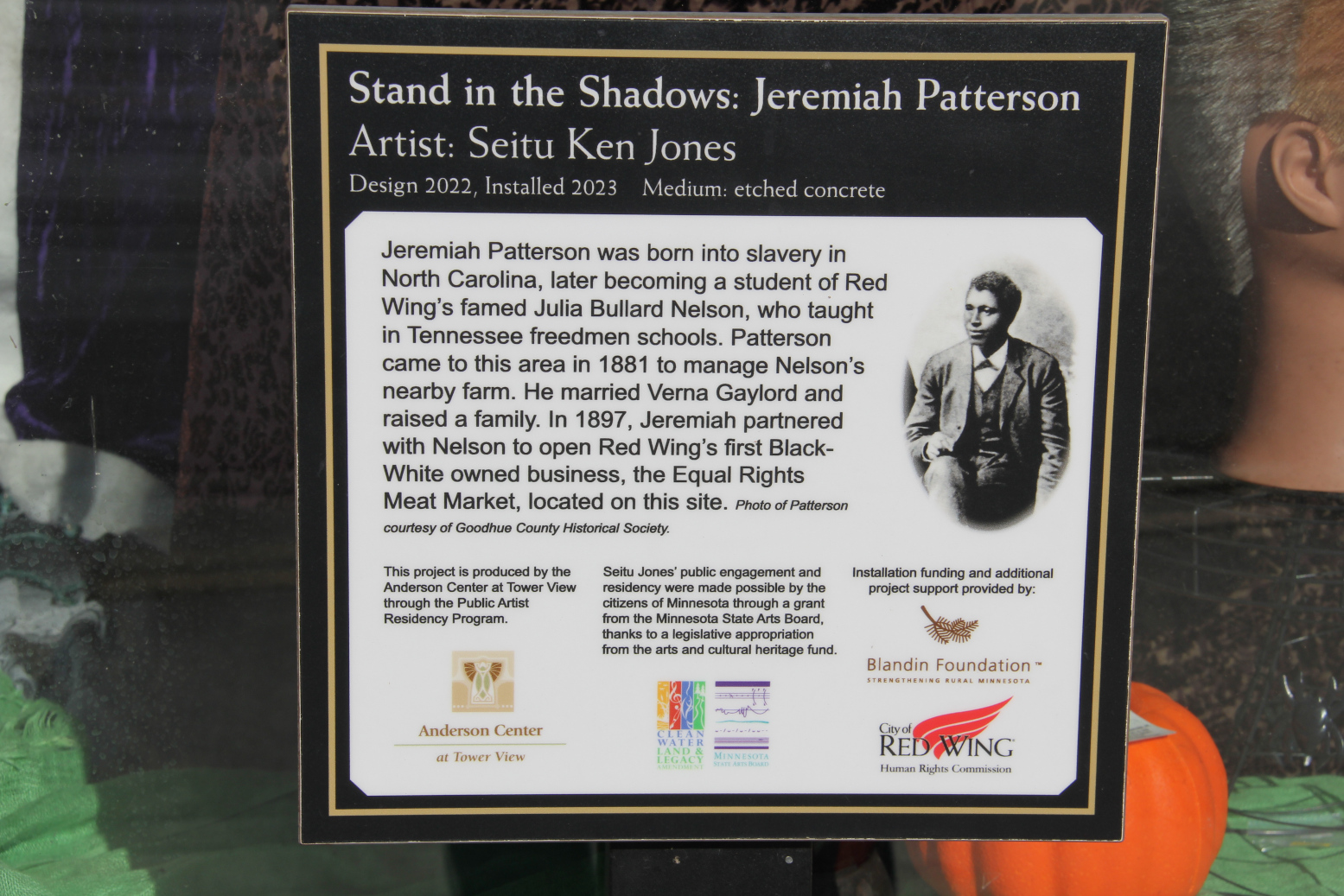
A summary of the story behind The Equal Rights Meat Market is showcased at the thrift shop. (Minnesota Prairie Roots copyrighted photo October 2025)

I considered all of this fascinating as I researched information based on that sidewalk message and on a plaque posted outside the Salvation Army thrift store.

Similar historical info and a sidewalk imprint are also located by Red Wing’s St. James Hotel, although I missed seeing that. That poem reads: Bondage and war behind me/Back and forth, trunks and trolley, from train, from steamboat to the St. James Hotel/I landed here, worked and forged a life. This honors another Black man, Joseph Parker, enslaved in Kentucky and later a porter at the hotel. He is the great grandfather of Seitu Ken Jones, a multidisciplinary artist from St. Paul and lead on the “Stand in the Shadows” public art in Red Wing.

As I searched out the backstory, I learned that the Patterson family eventually left Red Wing, after the Ku Klux Klan became active in the area in the early 1920s. It’s an unsavory part of Minnesota history that some would prefer remain hidden. I’d rather know about such hatred than pretend it never happened.

My shadow falls on the sidewalk as I photograph the words. This art also includes a sidewalk silhouette although I don’t recall seeing it. (Minnesota Prairie Roots copyrighted photo October 2025)

On this day in Red Wing outside the Salvation Army Thrift Store, I learned about two strong individuals who owned The Equal Rights Meat Market. Although the business remained open for only a short time, it leaves a legacy of strength and equality in this community.

This public arts project reminds us that history cannot, should not, be erased, rewritten or hidden. Those words—“born as chattel” to “I was an owner and bought cattle for The Equal Rights Meat Market”—need to be imprinted not only upon a sidewalk, but also upon our collective spirits. Especially now. And in recognition of civil rights leader and activist Dr. Martin Luther King Jr, who is honored annually, this year on Monday, January 19.

© Copyright 2025 Audrey Kletscher Helbling