

WHENEVER SOMEONE ASKS if I’m from Faribault, I respond, “Well, I’ve lived here for 44 years, but I’m new.” I say that half-jokingly, half-truthfully. I’ll never be “from” here. And I am “new” because I haven’t lived here my entire life, like many have. And I’m not related to half the town (semi-exaggerating), like many are.

Then I attempt to explain from whence I came. I start with Mankato, the nearest large city to the west, then work my way westward to New Ulm and Redwood Falls, eventually landing on my hometown of Vesta in northwestern Redwood County. Most have never heard of this southwestern Minnesota small town, but a few have.


Recently I returned to this farming community of some 300 for an aunt’s funeral. After the church service, burial service and a luncheon at St. John’s Lutheran Church, and before the 120-mile return trip to Faribault, I stopped downtown. By downtown, I mean a single block, today defined primarily by vacant lots and abandoned buildings.

Vesta, like so many small towns, once had a thriving core business community. That declined as society became more mobile, as young people graduated and left the area, as shopping habits changed. I could see that already when I left my hometown in 1974. My mom shopped for groceries once a month or so in neighboring Redwood Falls. That city and Marshall, 20 miles to the west, centered regional shopping then.


Back to Vesta today. The former municipal liquor store, now privately-owned, and the bank anchor the south corners of the downtown block, with the post office and grain elevator complex just across the street. Long gone is the towering grain elevator where farmers, including my dad, once delivered corn and soybeans. Clusters of grain bins now hold harvested crops.

Also long gone is the feed mill and the lumberyard across the street. I remember going to the dusty feed mill with my dad. And I remember my mom gathering booklets of house floor plans from the lumberyard. After years of hoping and planning, my parents built a new house on our farm just south of town in 1967 to accommodate their growing family. We were all happy to move from our aged, cramped farmhouse into a spacious home with more bedrooms and a bathroom.

Downtown Vesta today bears little resemblance to the teeming town of my youth—the place where I was baptized, married, attended elementary school (long closed), ice skated in the shadow of the grain elevator, visited my grandparents… The place where I bought caps for my cap gun at Joe Engel’s Hardware Store, Bazooka bubblegum at Rasmussen’s grocery, a set of amber drinking glasses at Marquardt’s Hardware for my mom on Mother’s Day. The place where Dad occasionally treated me to a candy bar at Wiegers’ or the muni or to a bottle of pop at my Uncle Harold’s service station.

This is the place where I sold poppies on Poppy Day and read “In Flanders Fields” during the annual Memorial Day program. The place where I boarded a Greyhound bus as a kid and rode alone all the way to Minneapolis to visit an aunt and uncle. The memories go on and on.

I knew I would eventually leave Vesta for good with no opportunities to keep me in my hometown. But that doesn’t diminish how much I still appreciate this prairie place which shaped me. I need to revisit Vesta occasionally to remind me of its importance in my life. I will be forever connected to this small town and its people.


Toward the north end of the downtown block stands the Vesta Cafe, new since I left, although Don’s Cafe was open when I was a kid. Locals gather here for morning coffee and cards, catching up on the latest. And when the town whistle blows at noon, as I heard it recently while standing at my aunt’s graveside, customers arrive at the cafe for dinner. And, yes, the noon meal is “dinner,” the evening meal, “supper,” in this rural area. Menu items and specials like hamburger corn hotdish, liver and onions, and a beef commercial draw diners. My Dad, on the rare occasion he dined out, would always order a beef commercial—roast beef piled onto white bread, topped with gravy, then a scoop of mashed potatoes smothered with more gravy. That’s the ultimate in old school rural dining.


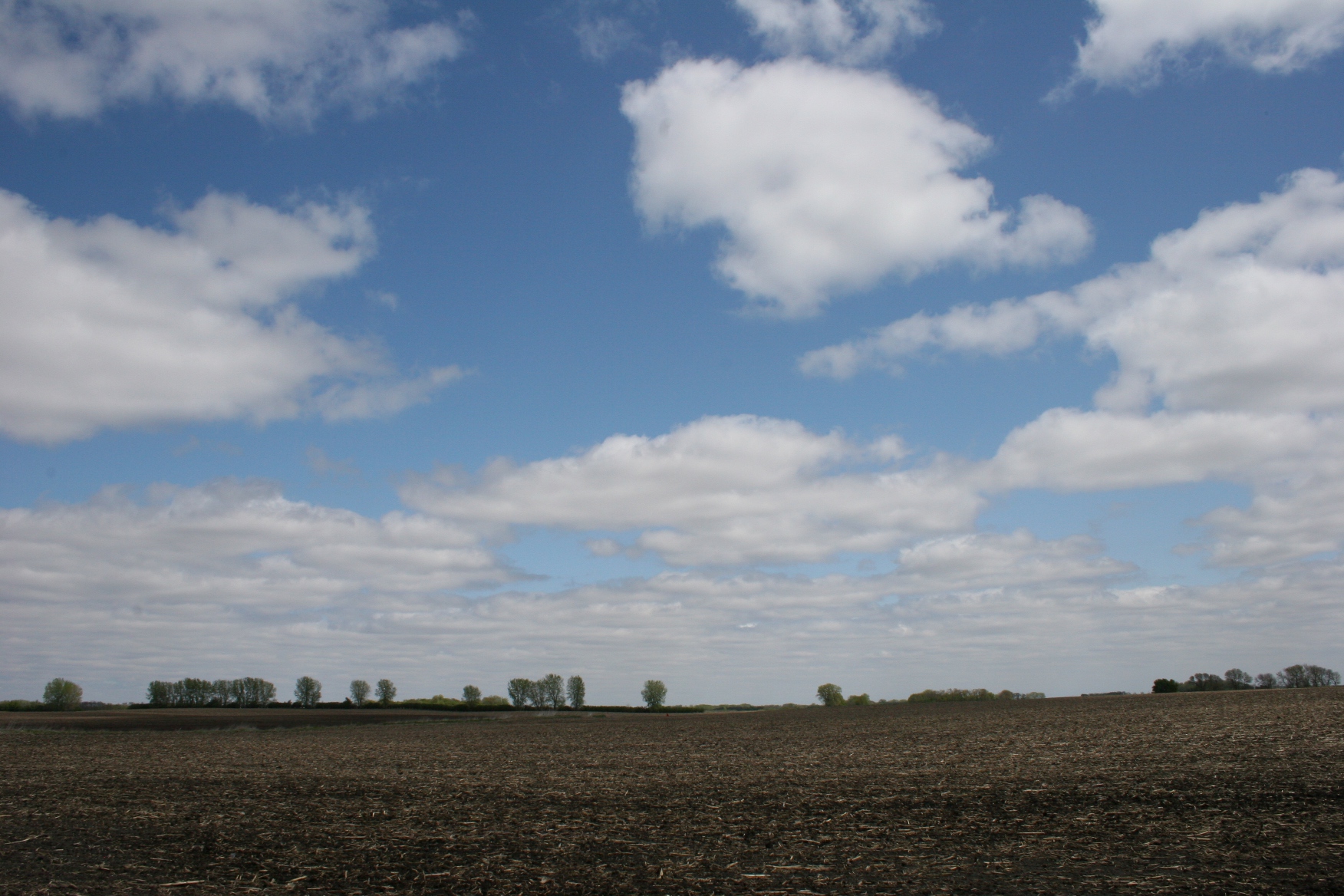
Rural rooted and grew me. From the once-flourishing community of Vesta to the crop and dairy farm across the Redwood River a mile south of town on the county road to Lucan, this prairie place shaped me as a person, a writer and a photographer. I am still “from” here, even though gone for more than 50 years now.
© Copyright 2026 Audrey Kletscher Helbling



















































































ICE OUT, a photo essay & commentary from Minnesota February 13, 2026
Tags: businesses, commentary, Content Bookstore, Division Street, Governor Tim Walz, ICE OUT, immigration, Immigration and Customs Enforcement, Minnesota, Minnesota Strong, news, Northfield, photo essay, photography, signs, strength
THE DAY AFTER BORDER CZAR (anyone dislike that title as much as me?) Tom Homan announced a draw-down of federal immigration agents in Minnesota, I’m feeling, as Governor Tim Walz said, “cautiously optimistic.” Recent history has proven that we can’t necessarily believe or trust what federal government officials tell us. But I’m trying to be hopeful.
For more than two months, 3,000 immigration enforcement agents have been working in Minnesota. And if anyone still believes that they are/were doing only targeted enforcement, arresting “the worst of the worst,” then I have some lakefront property to sell you.
Let’s go back to Thursday morning, when Homan made his draw-down announcement complete with praise for his agents and the success of their mission in Minnesota. I couldn’t listen any more. I’d heard enough.
I had an appointment in neighboring Northfield anyway so off I went to this college town that, like Faribault, has been recently inundated by ICE. Except in Northfield, a decidedly blue city, the business community is publicly vocal about its opposition to ICE’s presence unlike in my decidedly red city.
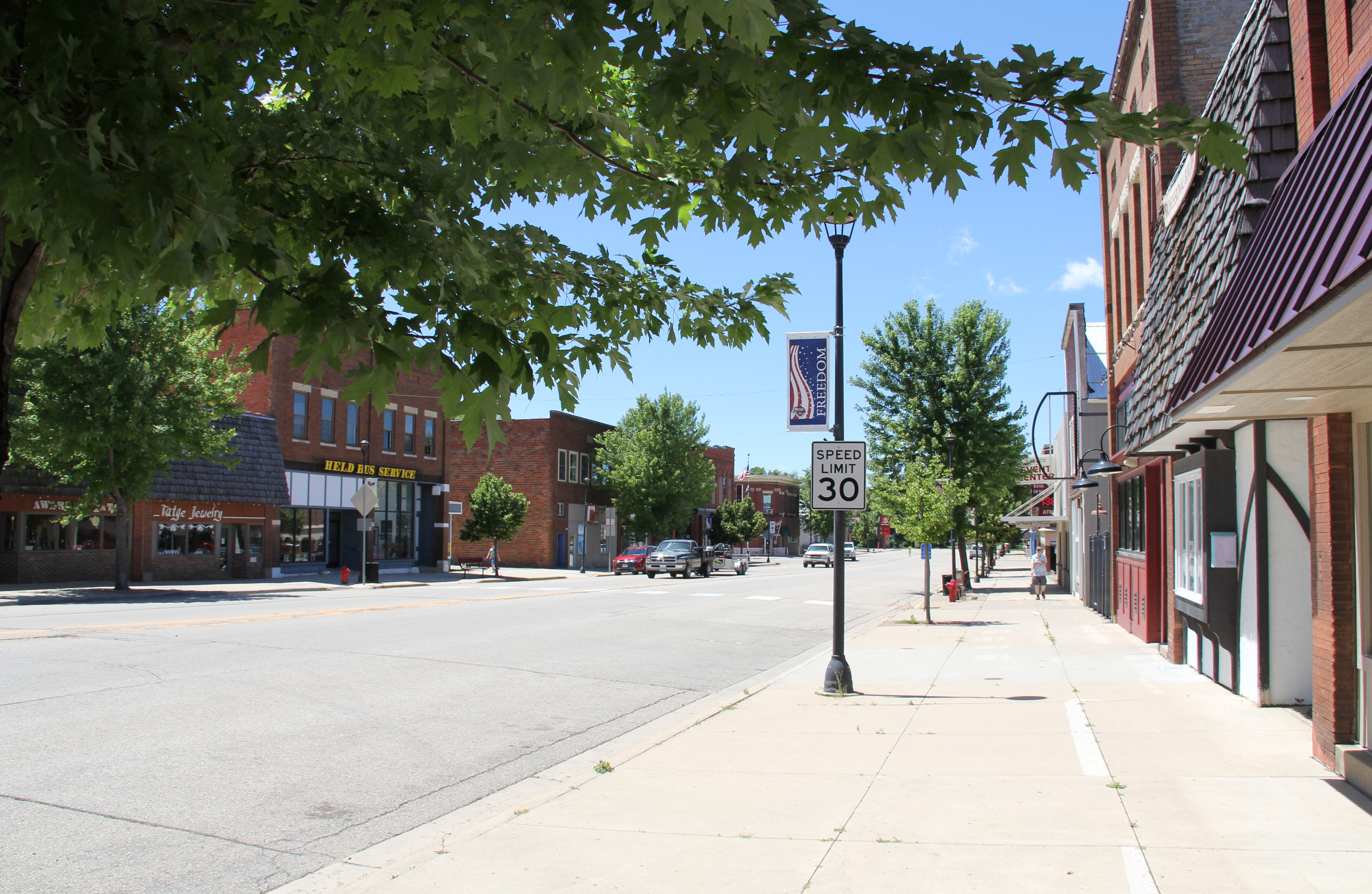
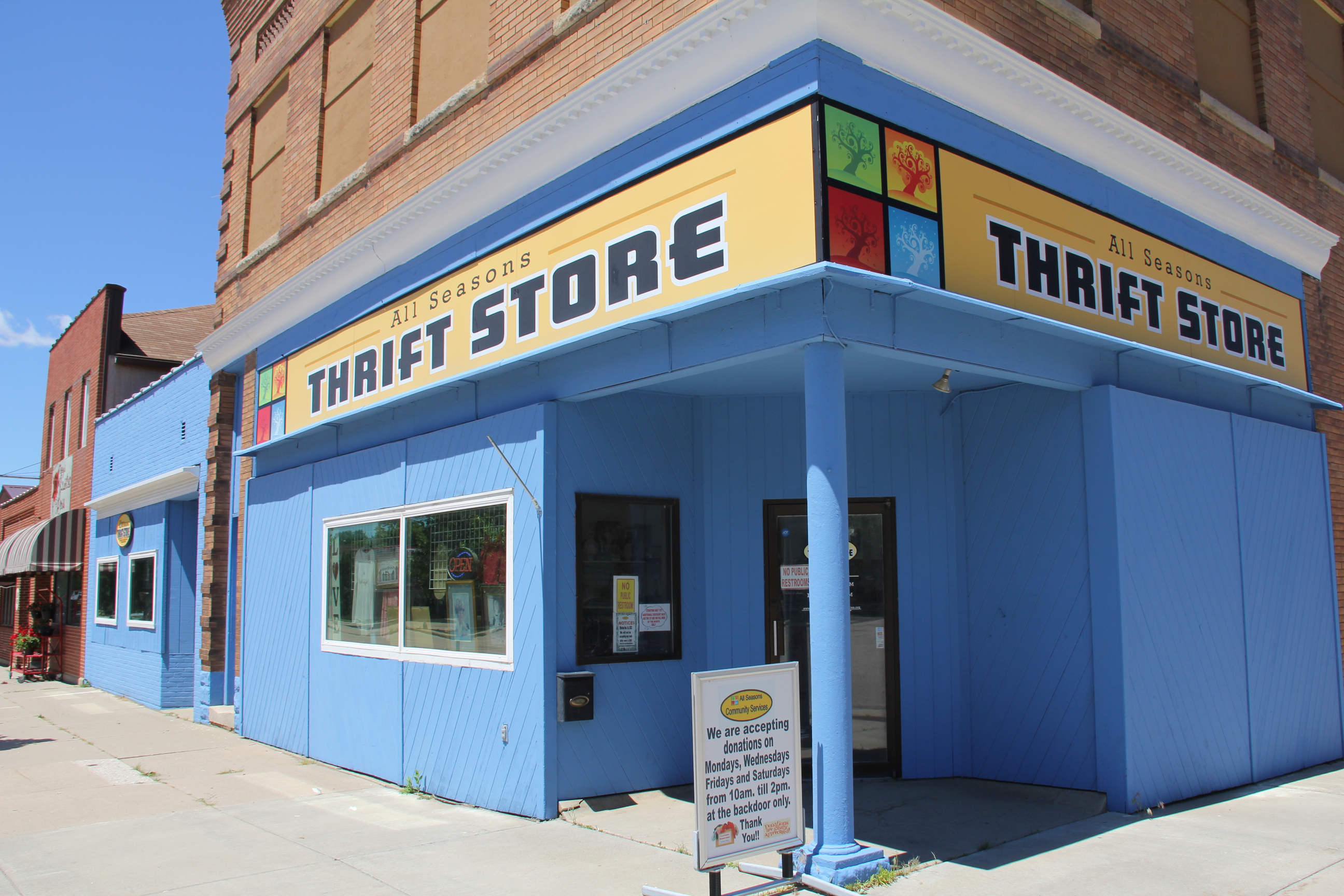
In the heart of downtown Northfield, on one side of a block along Division Street, nearly every business has posted an anti-ICE sign and/or uplifting signage. I felt the strength of those shopkeepers willing to stand up for and encourage others. There’s power in raising united voices in opposition to wrong.
Inside Content Bookstore, where I stopped to shop for a baby shower gift, I discovered even more messaging and ways in which the Northfield community is stepping up to help their immigrant neighbors, including children affected by ICE’s actions. Monies from the sale of Minnesota state flag and “Rebel Loon” (our state bird) stickers will go toward books and activities for those kids. Content is also collaborating on a poetry chapbook, Words to Meet the Moment: Poetry Against Fascism, releasing soon.
As ICE supposedly ends Operation Metro Surge in Minnesota (which also encompassed cities and small towns outside the metro like my city of 25,000), we are left with a mess. Let me define that. The personal toll is huge. Trauma has been inflicted upon thousands. “Generational trauma,” Governor Walz said.
I worry about the kids who witnessed family members being taken or who saw armed, masked immigration officers with guns outside their schools (with classmates taken by ICE), outside their daycares, outside or inside their homes, at their bus stops, on the streets. It’s hard enough for adults to see such threatening power, aggression and use of excessive force. But our children? The mental health of all Minnesotans concerns me, especially that of the youngest among us.
And then there is the financial fall-out with people now unable to pay their bills, including rent, facing eviction because they haven’t gone to work out of fear of ICE. Again, legal status matters not as anyone with brown or black skin has been targeted. These same individuals and families have relied on community members and nonprofits to help with rent payments and to bring them groceries. This is not long-term sustainable.
Until we are all confident that ICE is really, truly gone and is doing only targeted enforcement of “the worst of the worst,” we will all remain on edge. Rebuilding trust, restoring life to normalcy will assuredly take time.
Likewise, the Minnesota economy has suffered severe damage, especially small businesses. Governor Walz has proposed a $10 million forgivable loan recovery plan to help the business community and is also hoping for help from the federal government. Good luck with that.
While in Northfield on Thursday, I learned that ICE agents recently went along Division Street, asking for employment records at some businesses. I don’t know details. But in my mind, I envision these armed, masked officers as a threatening presence in the heart of this picturesque, riverside American city. This community doesn’t back down from threats. In September 1876, townsfolk stopped the James-Younger Gang from robbing the First National Bank. Northfield is a community which cares for one another and which, in the midst of a federal invasion, has stood, is still standing, Minnesota Strong.
© Copyright 2026 Audrey Kletscher Helbling