
TO WRITE A FICTIONAL BOOK, you begin with an idea, which births words. Words beget sentences, then paragraphs, then chapters. But the process is not quite that simple. Creating a work of fiction requires attention to detail from character development to dialogue to setting to plot. I’ve written short stories that have published, thus understand the craft.
I want to hone in on one word—details. They are a hallmark of a good story, of creative writing. And they are also the hallmark of small towns. Let me explain.

How many times have you driven through a community without really seeing it, without noticing the rich details that, like details in a story, make it unique, interesting?
I notice the little things. Perhaps it’s my journalism and photography background that draw me to look closer, beyond the surface. I seek out anything that is different, unusual, surprising. And I’m never disappointed.
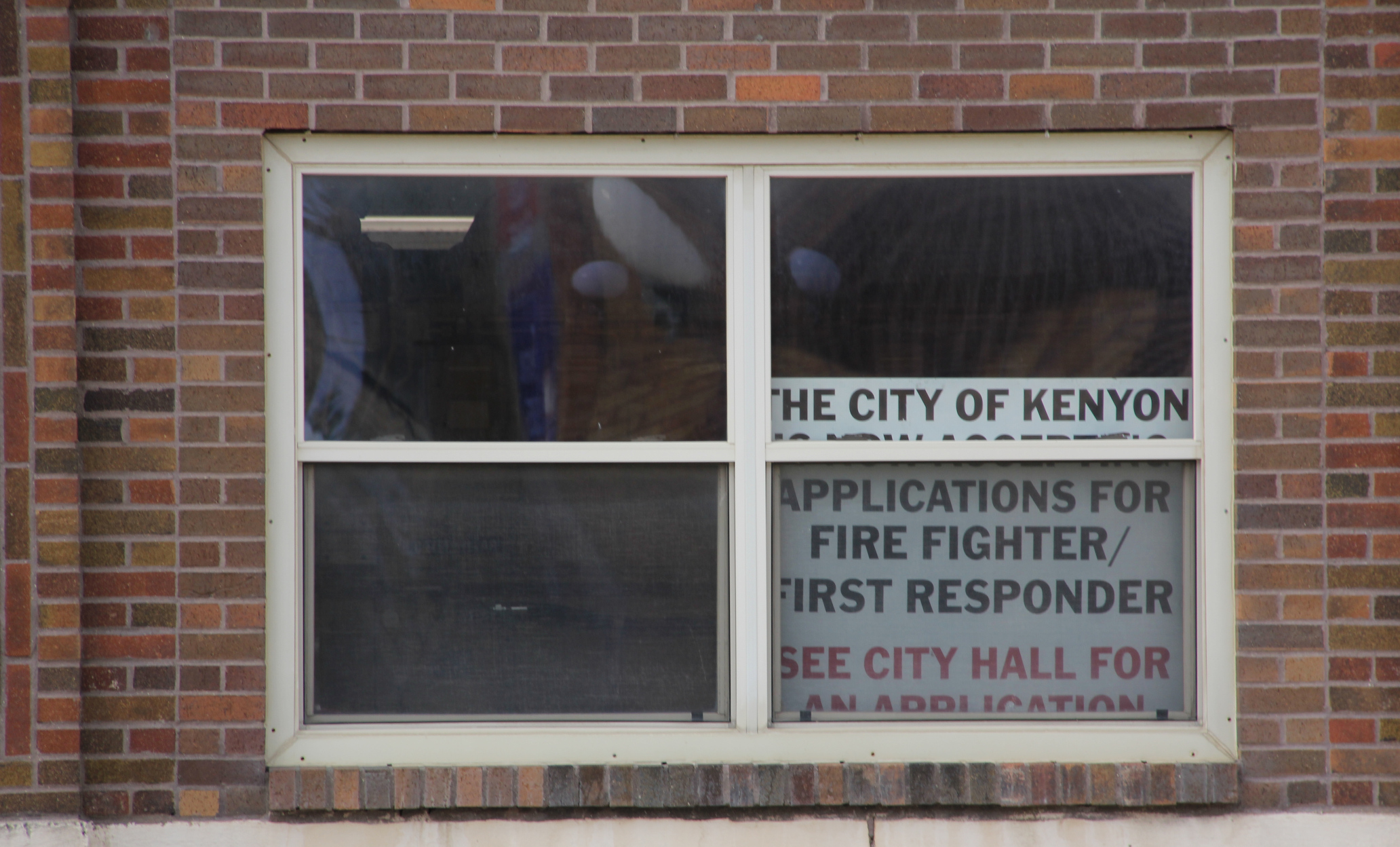
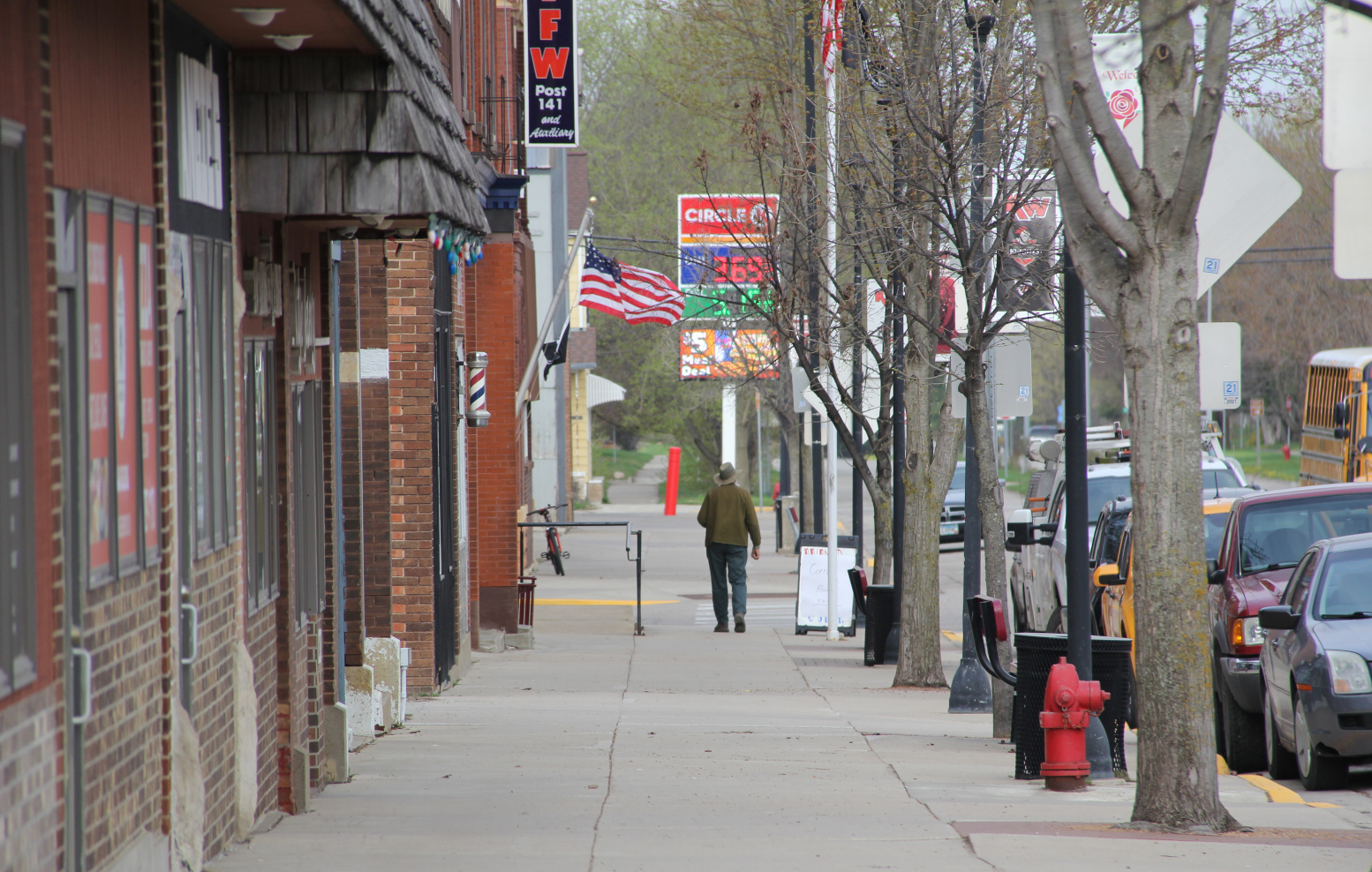
Drive slowly around any small town or walk along Main Street with a focused perspective and you will soon see the details that integrate into the story line of a community. That includes Kenyon, a Goodhue County town of around 1,900 best known for its Boulevard of Roses.
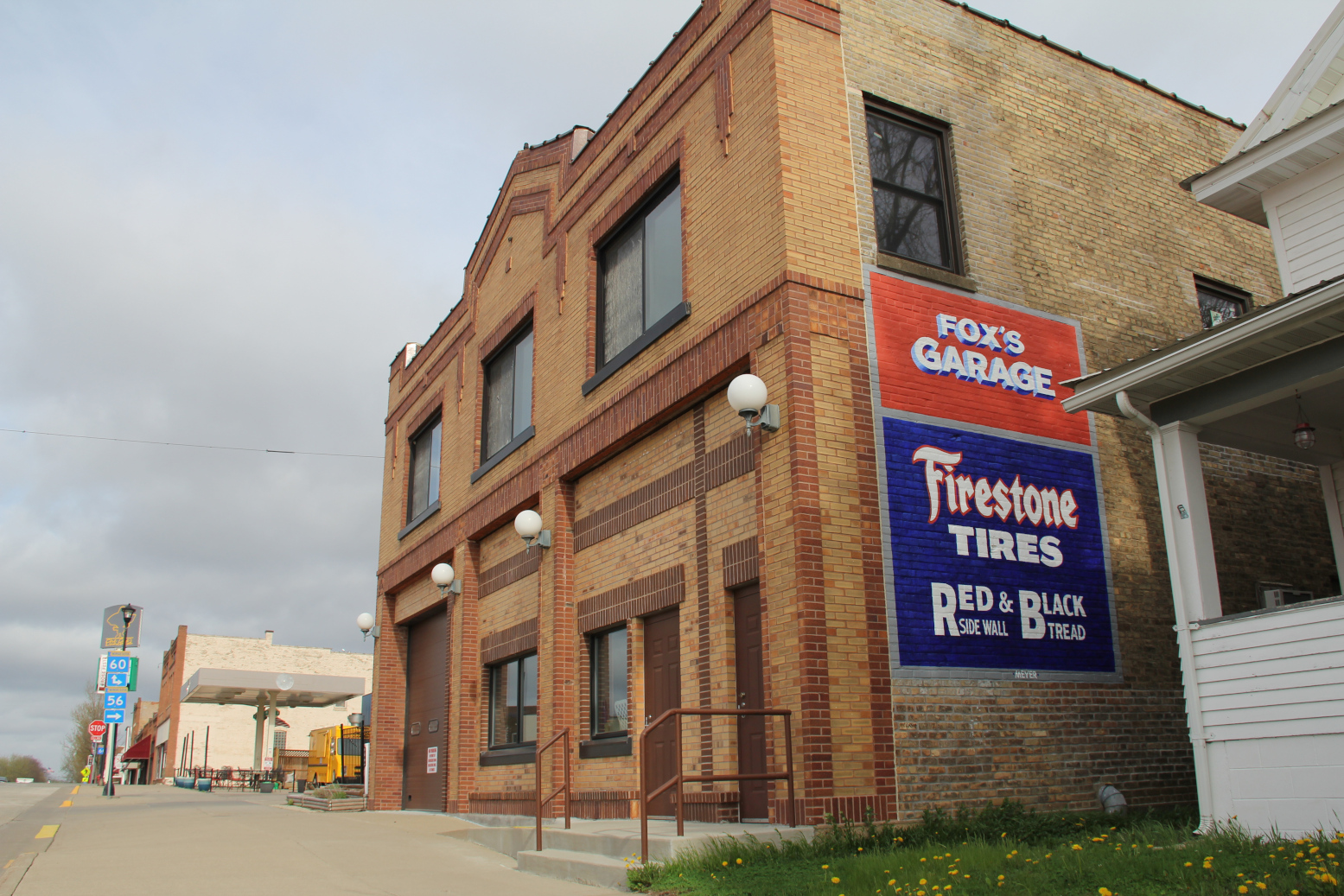
Minnesota State Highway 60, along which all those roses grow, runs right through the heart of Kenyon, intersecting with state highway 56. The intersection thrums with traffic. But I wonder how many motorists notice the bold Fox’s Garage Firestone Tires sign painted on the side of a stalwart brick building half a block away from that busy intersection? It’s an artsy nod to local history.
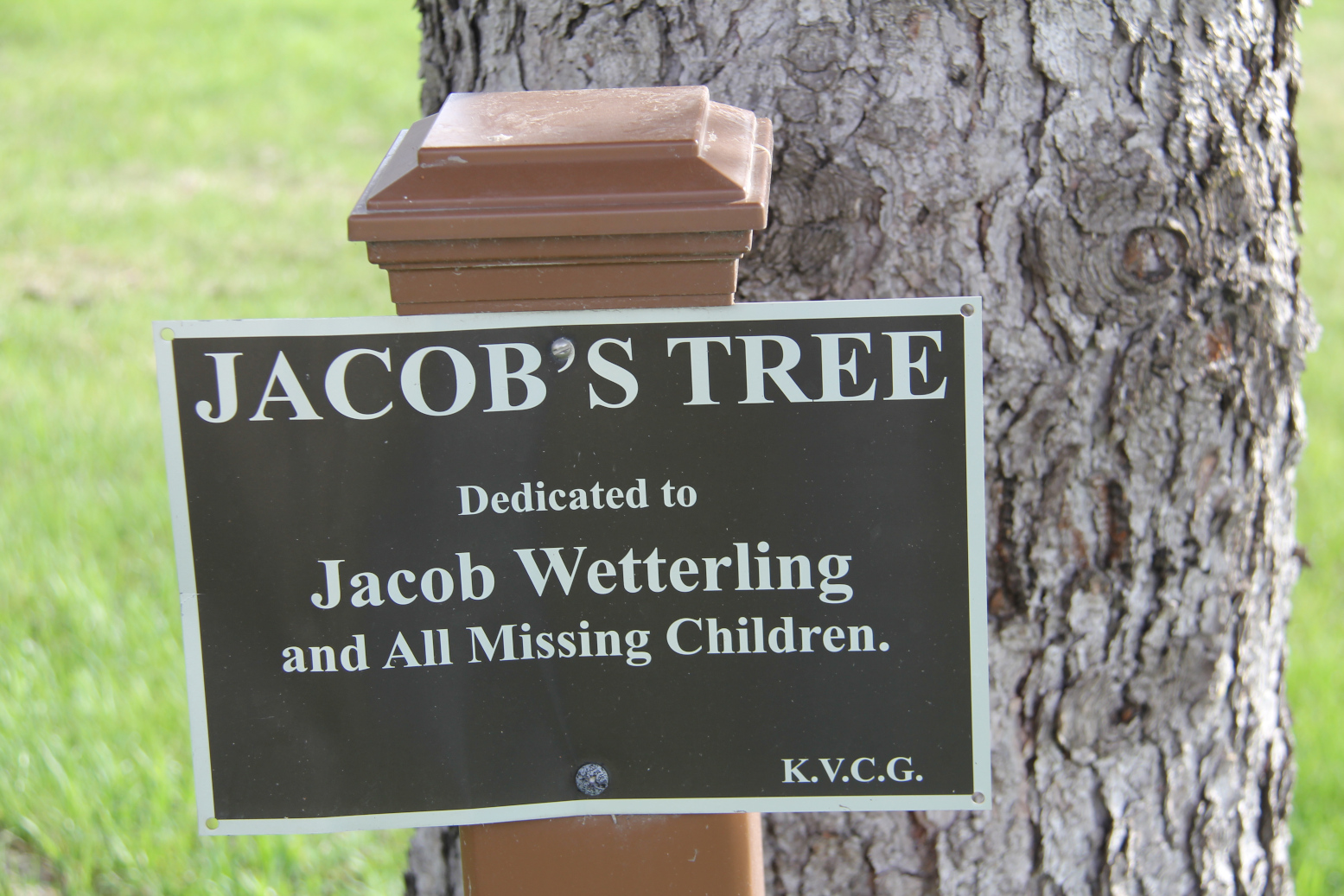
Nearby, at the Kenyon Veterans Memorial Park, I discovered Jacob’s Tree and a plaque honoring Jacob Wetterling and all missing children. It was an unexpected memorial in a place focused on veterans. But it also seemed fitting to honor the 11-year-old Minnesota boy who was abducted by a stranger in 1989, his remains found 27 years later. Jacob was, after all, a small town boy grabbed while biking to a video store.
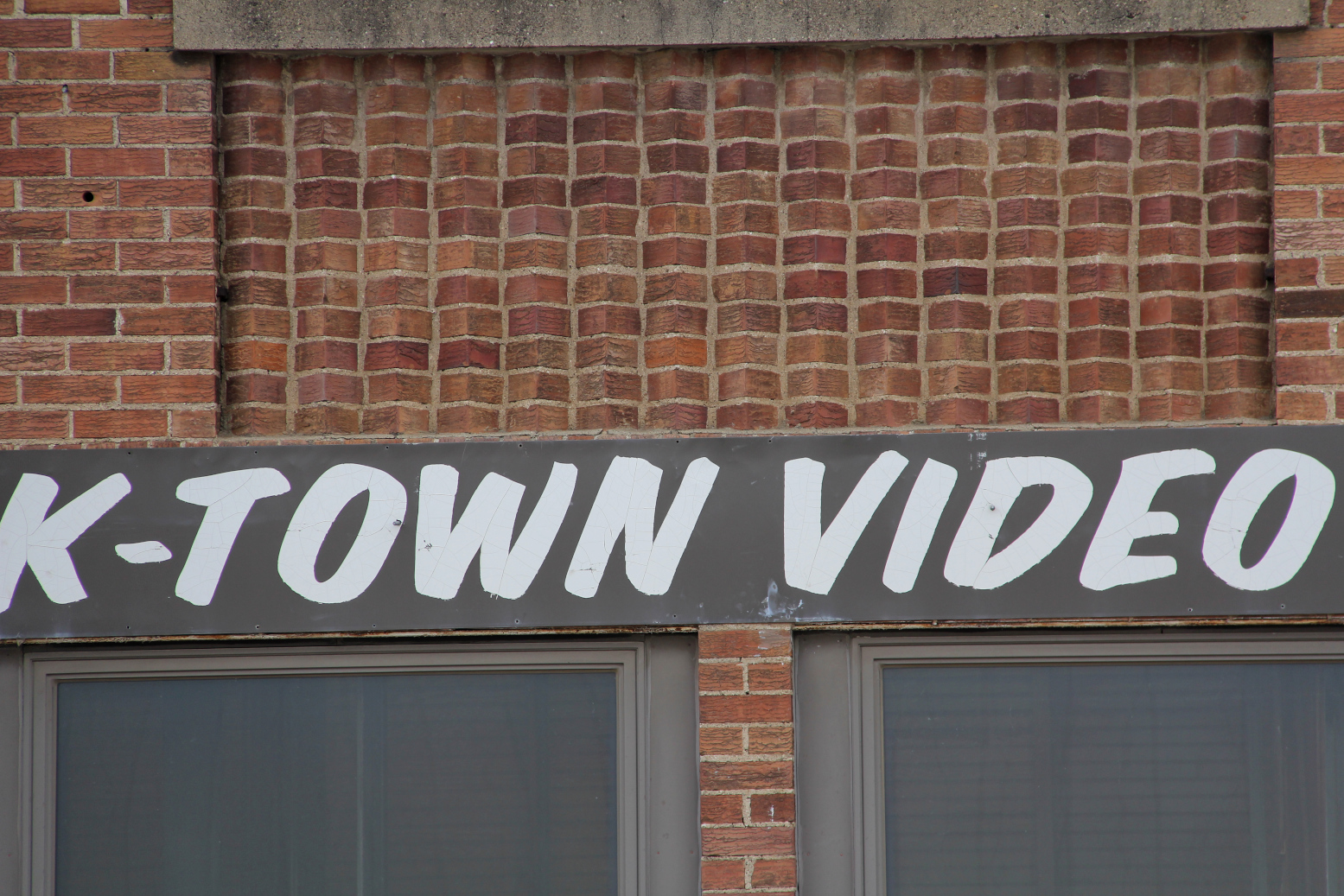
Kenyon once had a video store, now a tobacco and vape shop. The K-Town Video sign tells me that.
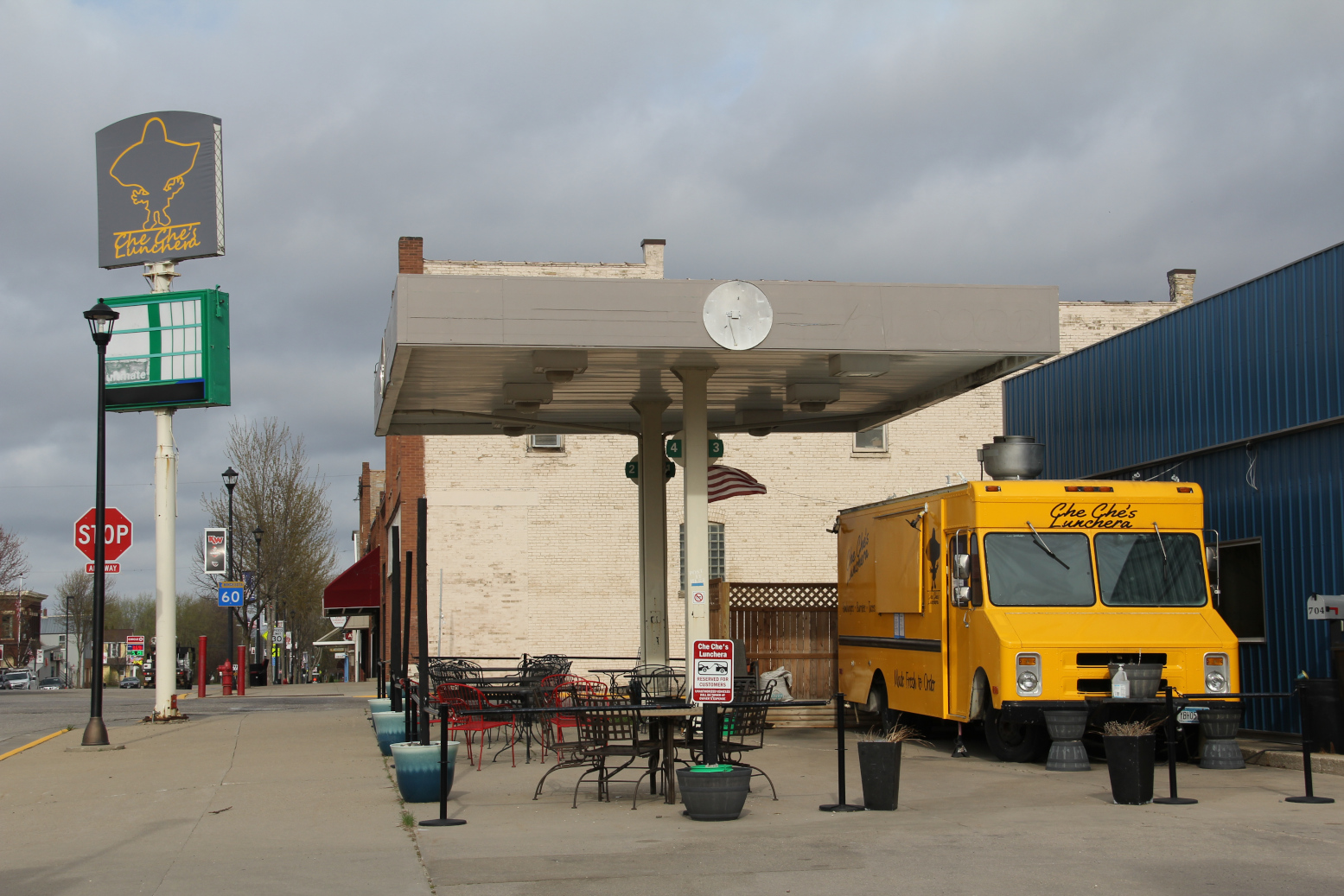
Likewise, remnants of fuel pricing signage still banner a former gas station where today Che Che’s Lunchera food truck serves up Mexican food under the station canopy.
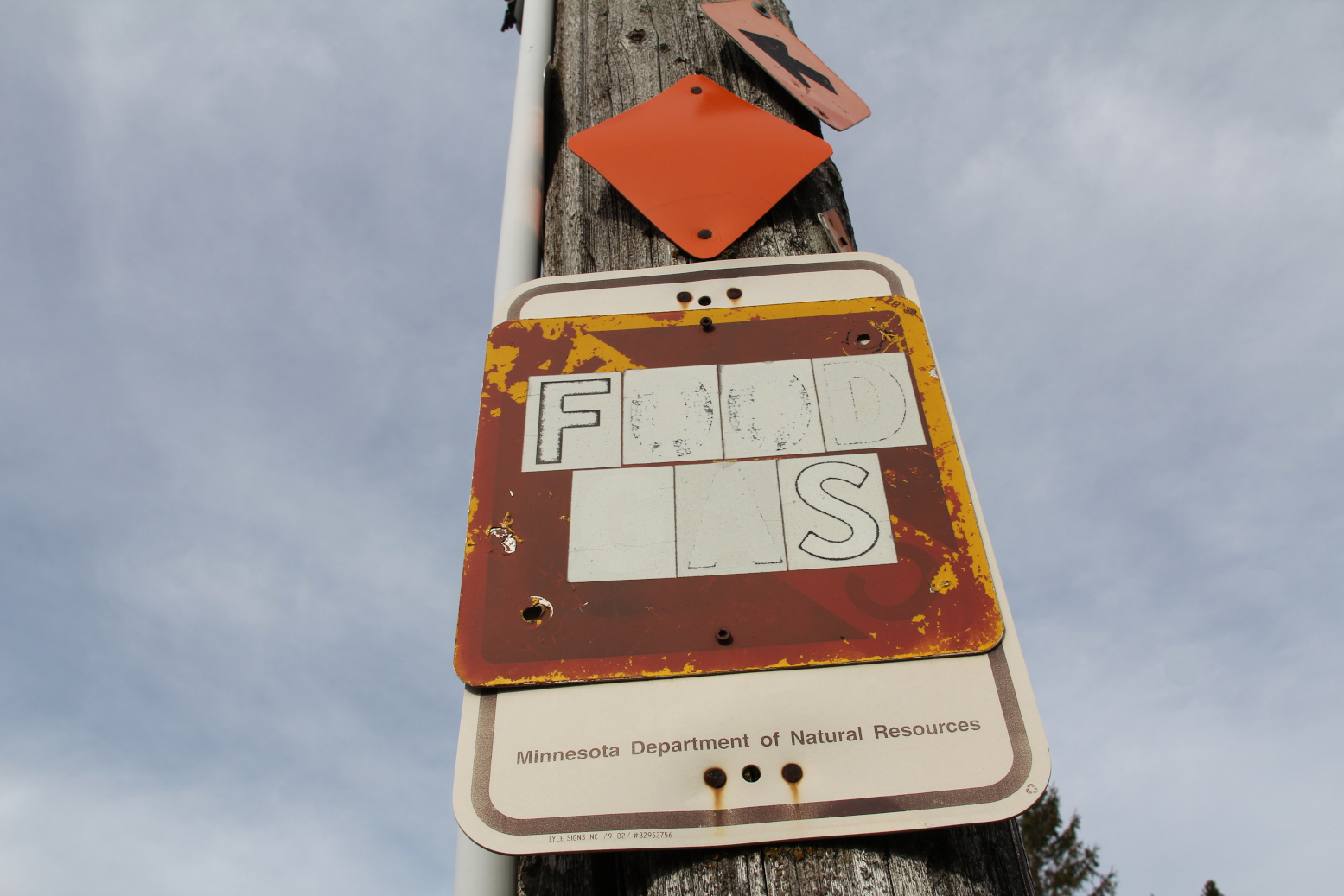
Details like these point to a town’s history, to its evolution. Back at the vets park, a fading vintage sign once directed snowmobilers to gas and food along a designated trail route.
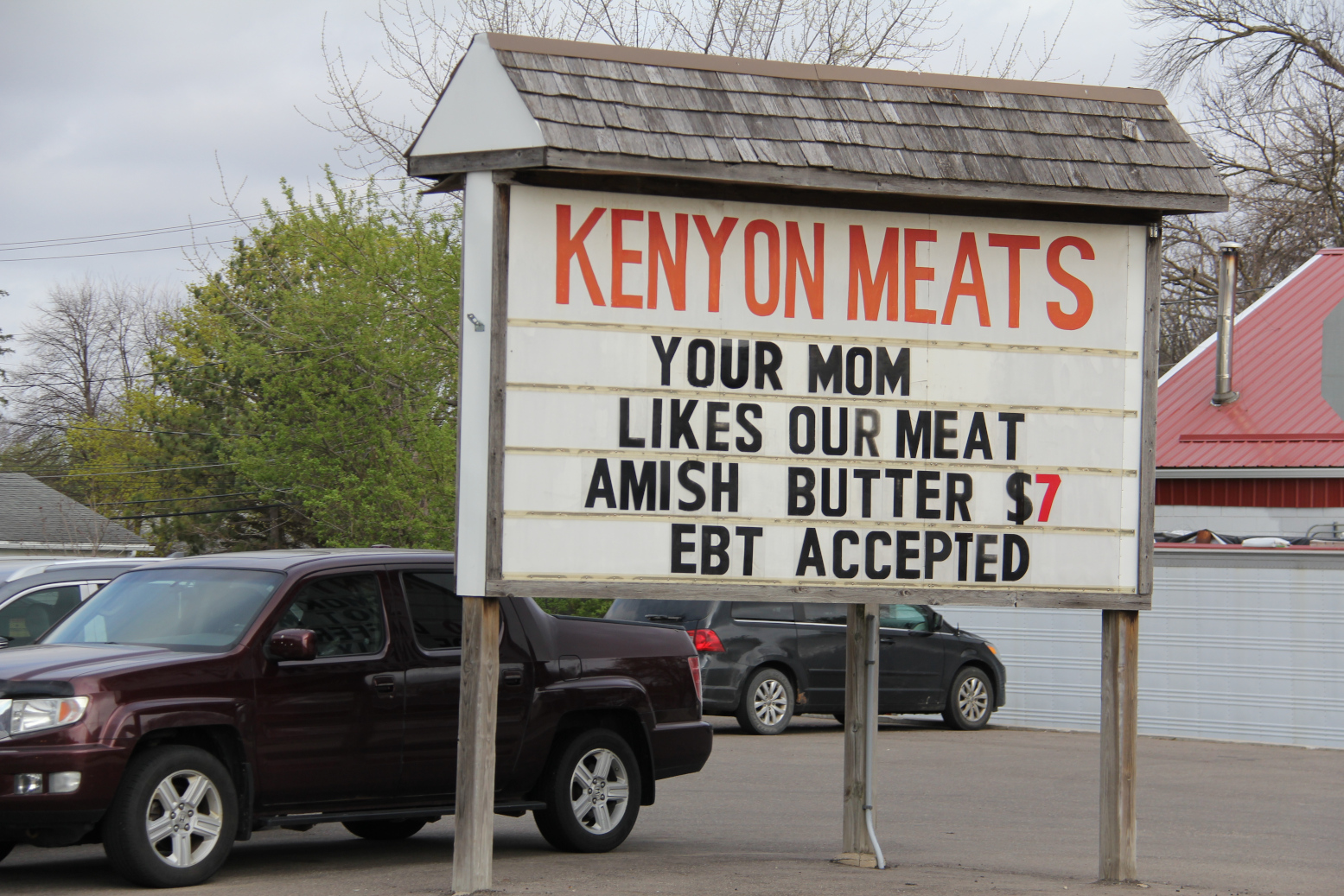
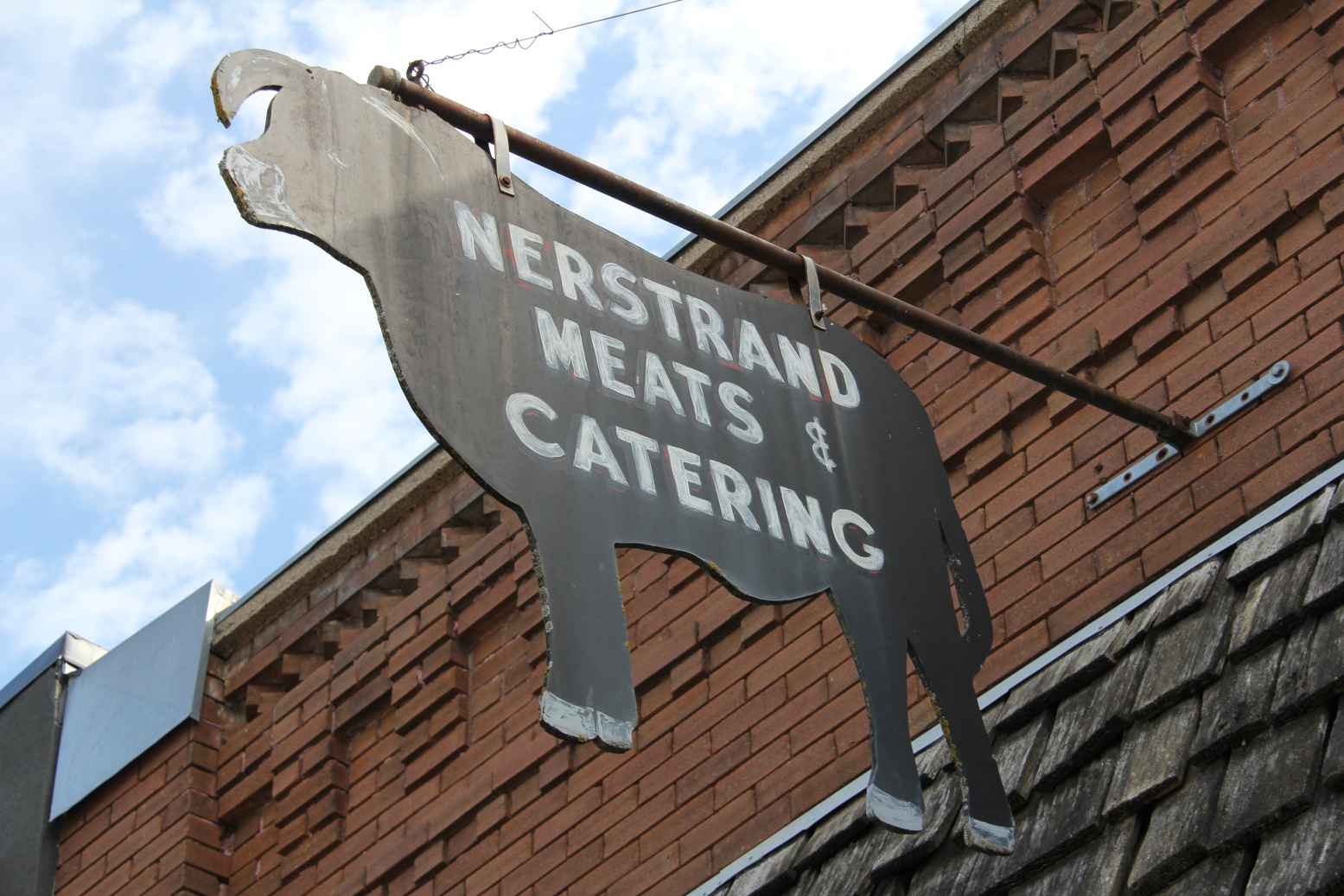
I hold a fondness for signs and Kenyon offers plenty of homegrown signage. That includes clever and humorous messages posted outside Kenyon Meats along highway 60. I expect many motorists have noticed SMOKE MEAT NOT METH and DON’T FRY BACON NAKED. And now the newest—YOUR MOM LIKES OUR MEAT.
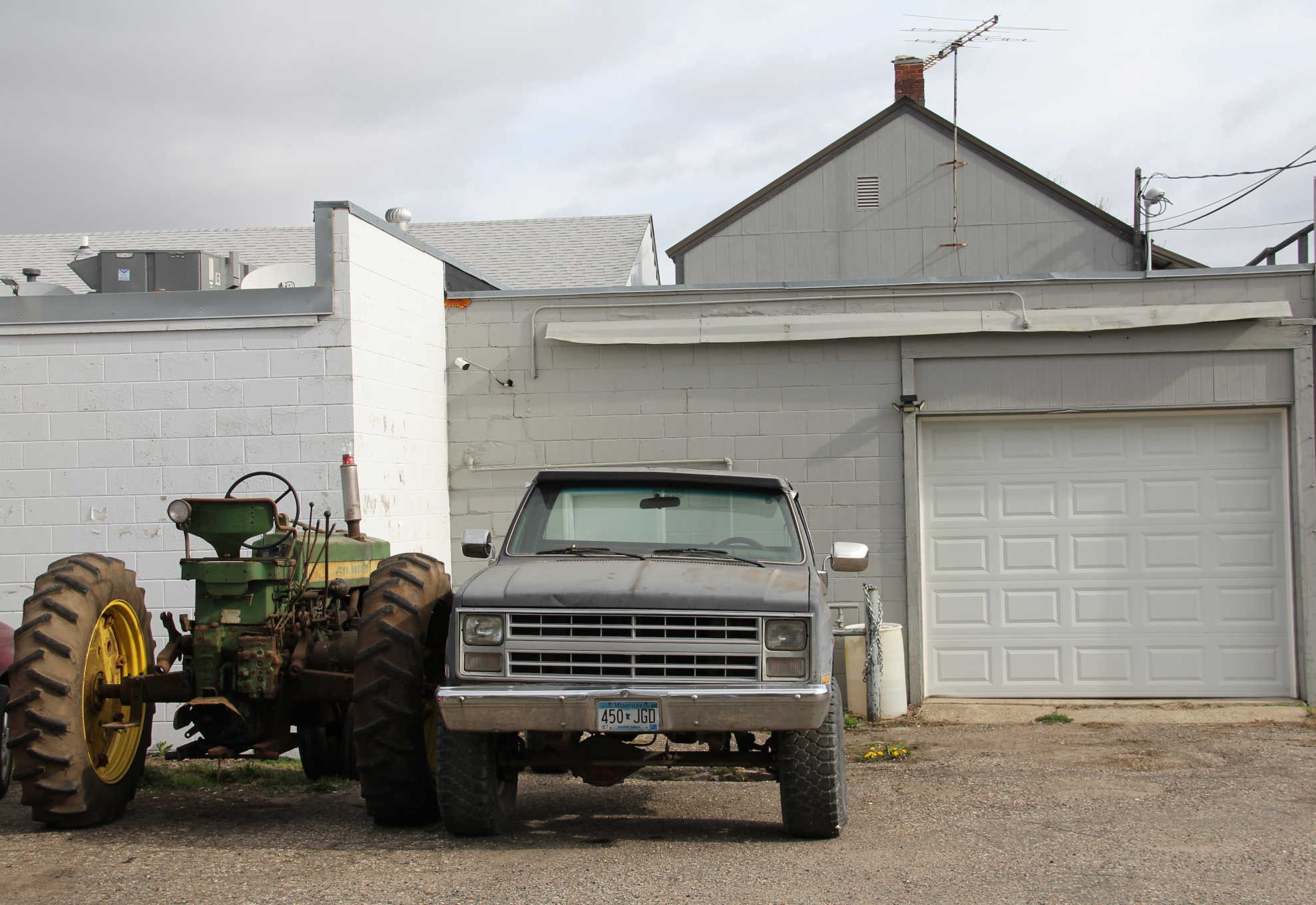
But it takes a turn onto a side street and through an alley to see an old John Deere tractor parked next to a pick-up truck behind a building. This is a farming community rooted in rural.
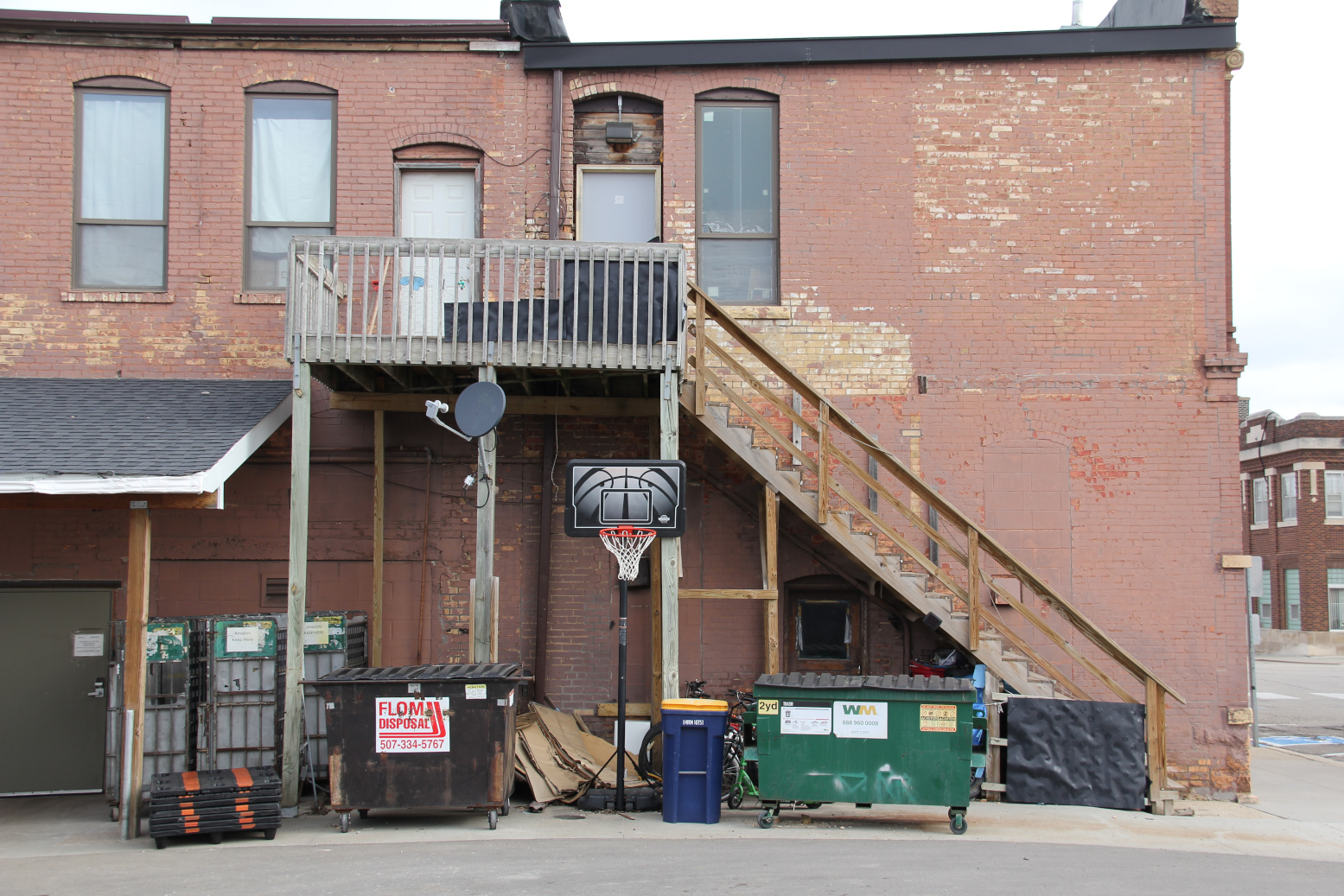
Along that same alley, next to the post office parking lot, I noticed a basketball hoop standing between dumpsters and a recycling bin. It seemed out of place until I realized there’s probably an apartment above the post office. The hoop hints at teens dribbling a basketball across the pavement on a hot summer evening, arms and legs flailing in a pick-up game, sweat beading their foreheads.
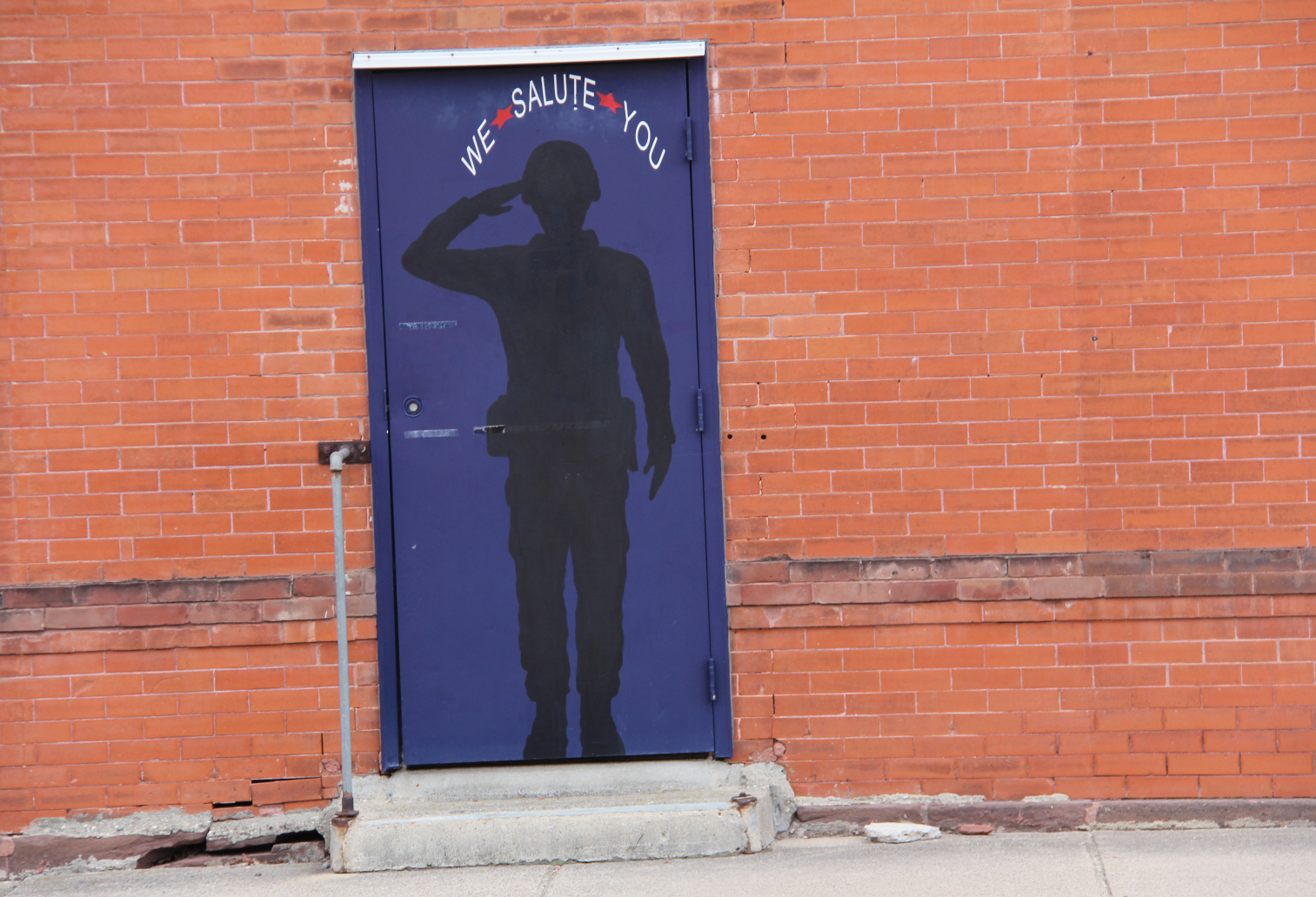
Across the street at the Kenyon VFW, I spotted the silhouette of a veteran on a side door with an honoring message of “WE SALUTE YOU.” More characters, more dialogue, more stories. On this visit to Kenyon, I looked for details that often go unnoticed. And when I looked, I saw community.
© Copyright 2026 Audrey Kletscher Helbling























In appreciation of those protesting in rural areas on No Kings Day March 27, 2026
Tags: commentary, democracy, Minnesota, No Kings Day, opinion, protesting, protests, resistance, rural Minnesota, small towns
ON THIS, THE DAY before nationwide No Kings Day protests, I want to pause and thank the many people in small towns, in the most rural of regions, who are standing up for democracy. Media attention tomorrow will focus on protests in big cities. That coverage is expected. But equally as important are the rallies in communities of a couple hundred or several thousand deep in red territory.
In these places, publicly standing against the Trump administration takes, simply put, guts. Everyone knows everyone in small towns and it’s not necessarily easy to be politically at odds with one another. These are the people you see at the post office, worship with, meet for coffee, work beside, live next door to, do business with.
When those who oppose Trump, his administration and policies protest in rural Republican strongholds, they expose themselves as “the other.” Yet, it is this very public act of defiance and resistance which can get people thinking, start conversations, open doors to change. Now, more than ever, it’s important to fearlessly oppose tyranny. It’s important to stand up for freedom, voting rights, immigrants, justice, due process… It’s important to express concerns about the economy, the war in Iran, the overall state of this country.
Upon looking at a map of all the No Kings Day protest sites in Minnesota, I found many in rural areas. From Madison, population 1,500 and the self-proclaimed “Lutefisk Capital of the USA” near the South Dakota border, to Baudette, population 1,100 and the “Walleye Capital of the World” near the Canadian border, Minnesotans will gather. Even in my deeply red home county of Redwood in southwestern Minnesota, a protest is planned in the county seat of Redwood Falls.
In St. James, also in southwestern Minnesota and a town where I once lived and worked as a regional news reporter for the Mankato Free Press, a No Kings Day event is set. The community of 4,800 is home to many Hispanics and Latinos and was targeted by federal immigration enforcement agents during Operation Metro Surge.
Even Hackensack, in Paul Bunyan’s northern Minnesota lake country, is on the Saturday protest map. That town has a population of just under 300 as does Cyrus, near Morris in far western Minnesota, also holding a No Kings Day protest.
From my community of Faribault, with a population of around 25,000, to Kenyon to the east with some 1,800 residents, to the small towns of Rushford, St. Charles, Spring Grove and Preston in the far southeastern corner of Minnesota, and many small towns and cities across the state, people will gather in protest on Saturday.
In St. Paul, organizers are expecting up to 100,000 to rally at the state capitol. Those are some impressive numbers. Yet, if even five people show up in a small town to protest, that’s impressive, too.
Every voice of resistance matters, wherever you live, rural, suburban or urban.
FYI: The Faribault No Kings Day protest is from 11 a.m.-noon March 28 (and every Saturday) by the Rice County government services building along Minnesota State Highway 60.
© Copyright 2026 Audrey Kletscher Helbling