Minnesota Prairie Roots

Writing and photography by Audrey Kletscher Helbling

Living history along the Cannon River May 18, 2026

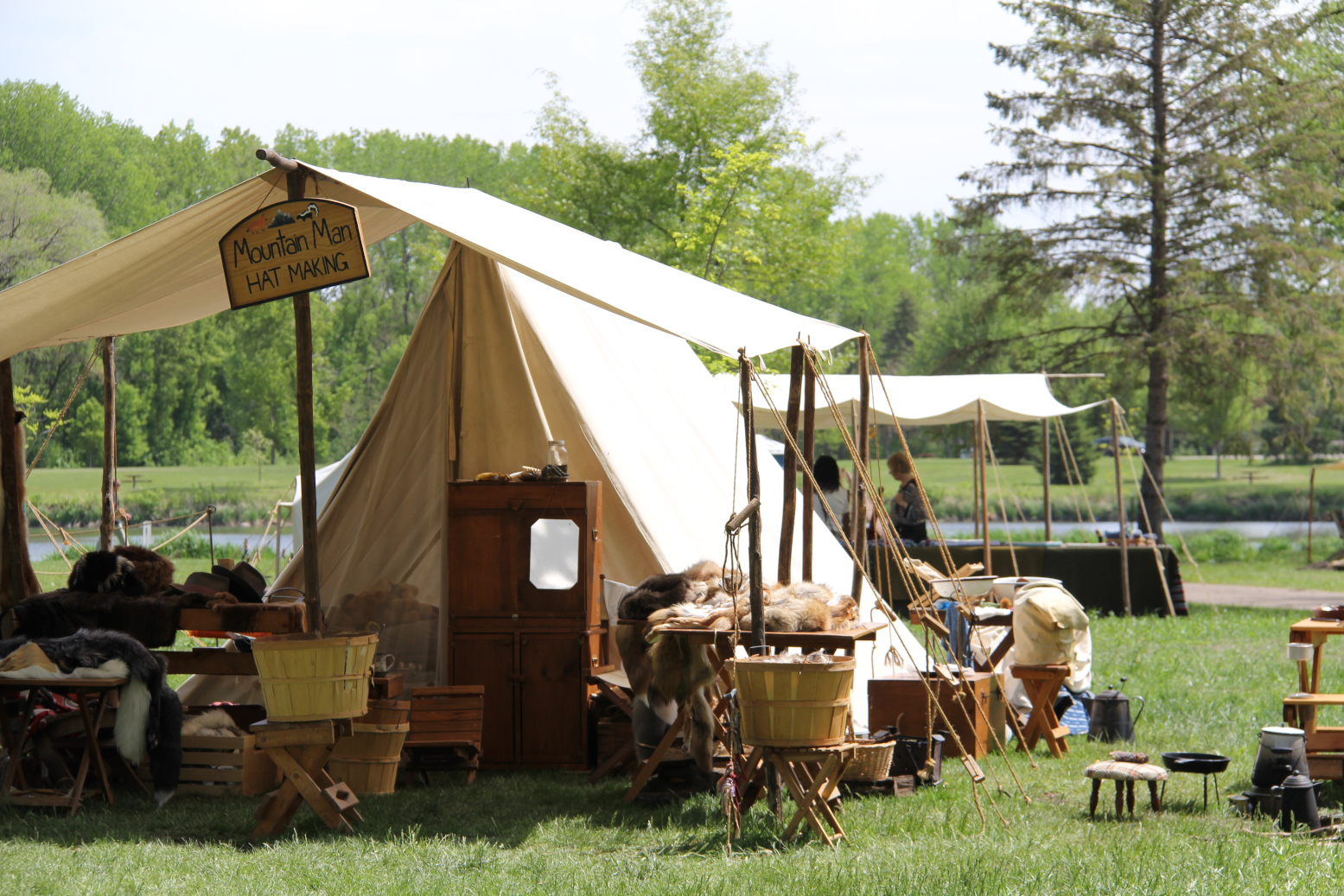
Tents aplenty, including that of a hat maker, were set up by the Cannon River for the Riverside Rendezvous in Faribault. (Minnesota Prairie Roots copyrighted photo May 2026)

ALONG THE BANKS of the Cannon River in Faribault’s North Alexander Park, they set up camp. The fur trappers, the blacksmith, the weaver, the spinner, the tinsmith, the shopkeeper, the hat maker…all of them in a community founded by a fur trader, Alexander Faribault.
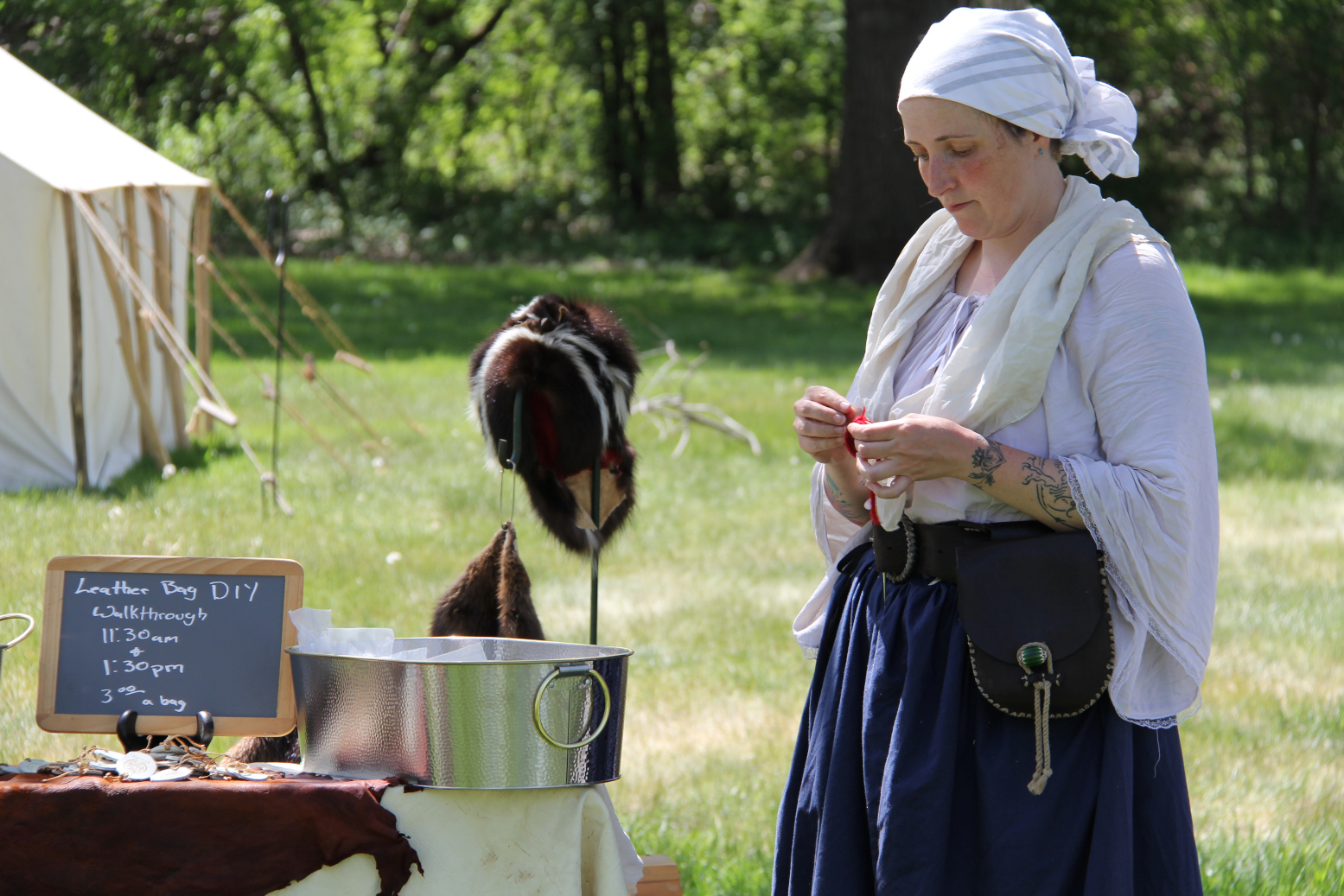
In between stitching leather, this re-enactor weaves a cord. (Minnesota Prairie Roots copyrighted photo May 2026)

History came to life here, at the second annual Riverside Rendezvous and History Festival organized by the Rice County Historical Society. This event is like a step back in time to the 18th and 19th centuries with history enthusiasts in period costume demonstrating long ago hands-on work and talking up their passions.
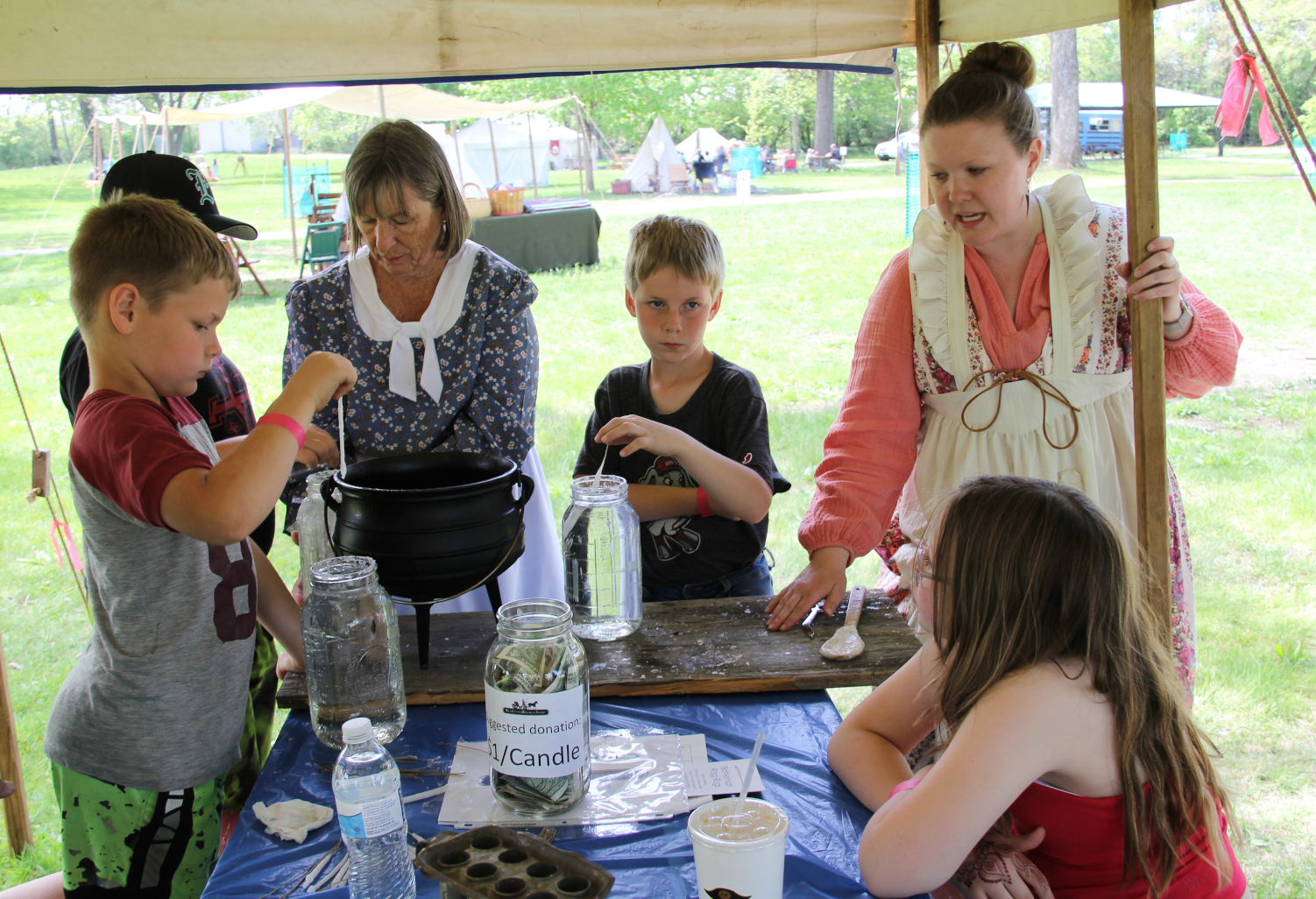
One of the hands-on activities, making candles. (Minnesota Prairie Roots copyrighted photo May 2026)
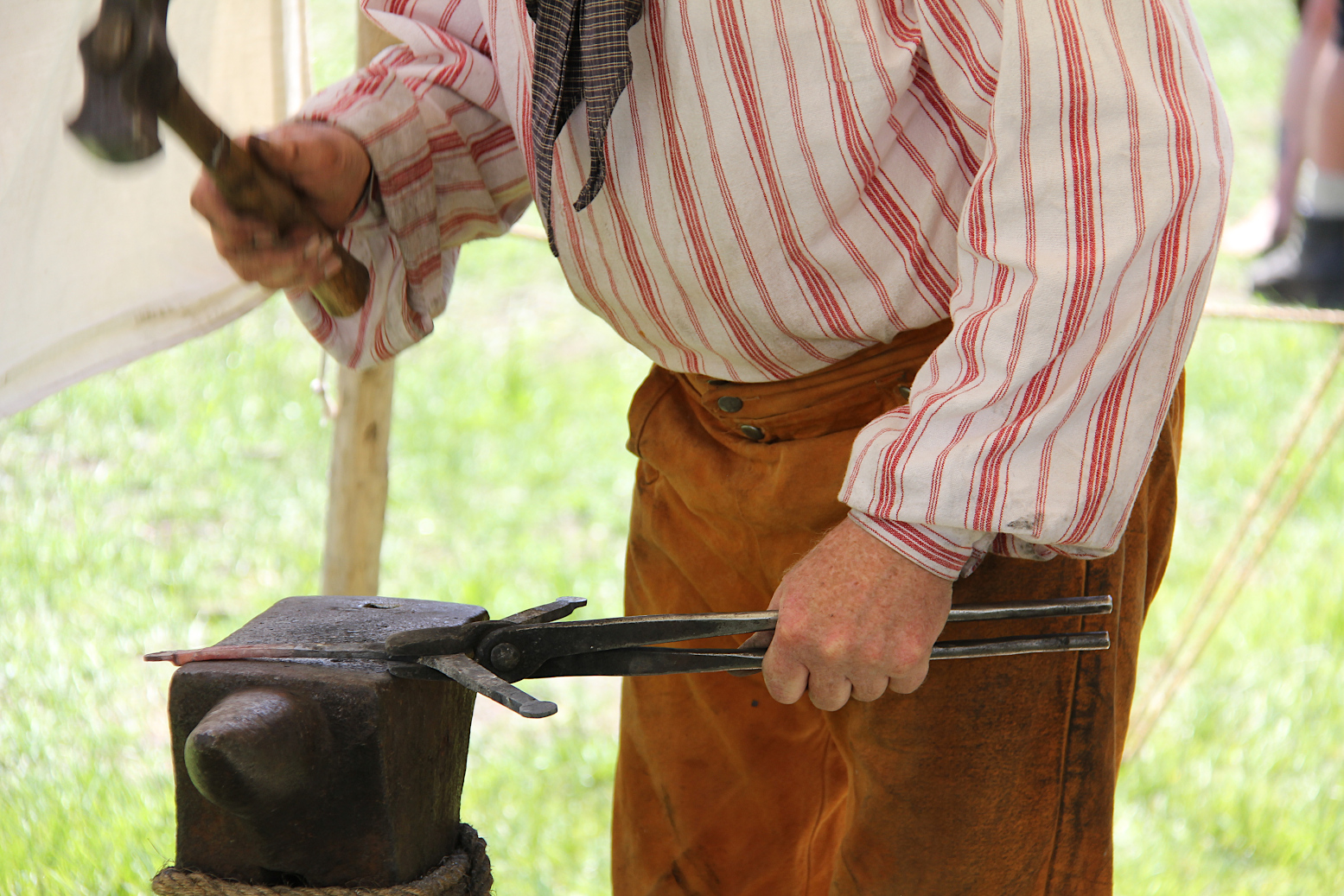
The blacksmith pounds hot metal. (Minnesota Prairie Roots copyrighted photo May 2026)
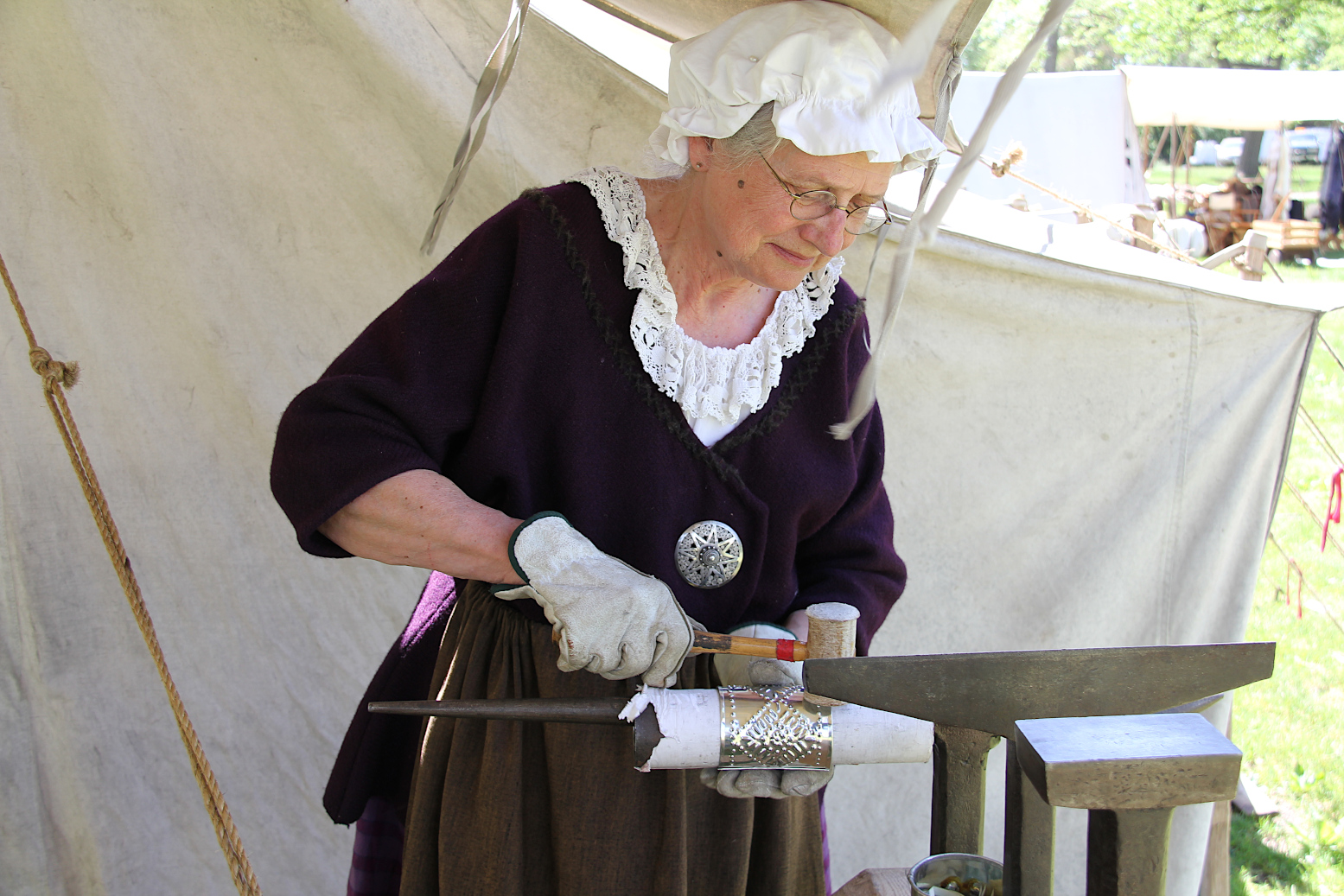
Tinsmith Kitty from Lake Pepin demonstrates tinsmithing. (Minnesota Prairie Roots copyrighted photo May 2026)

Here I watched candle-making, blacksmithing, rug weaving, spinning of wool into yarn, tinsmithing…
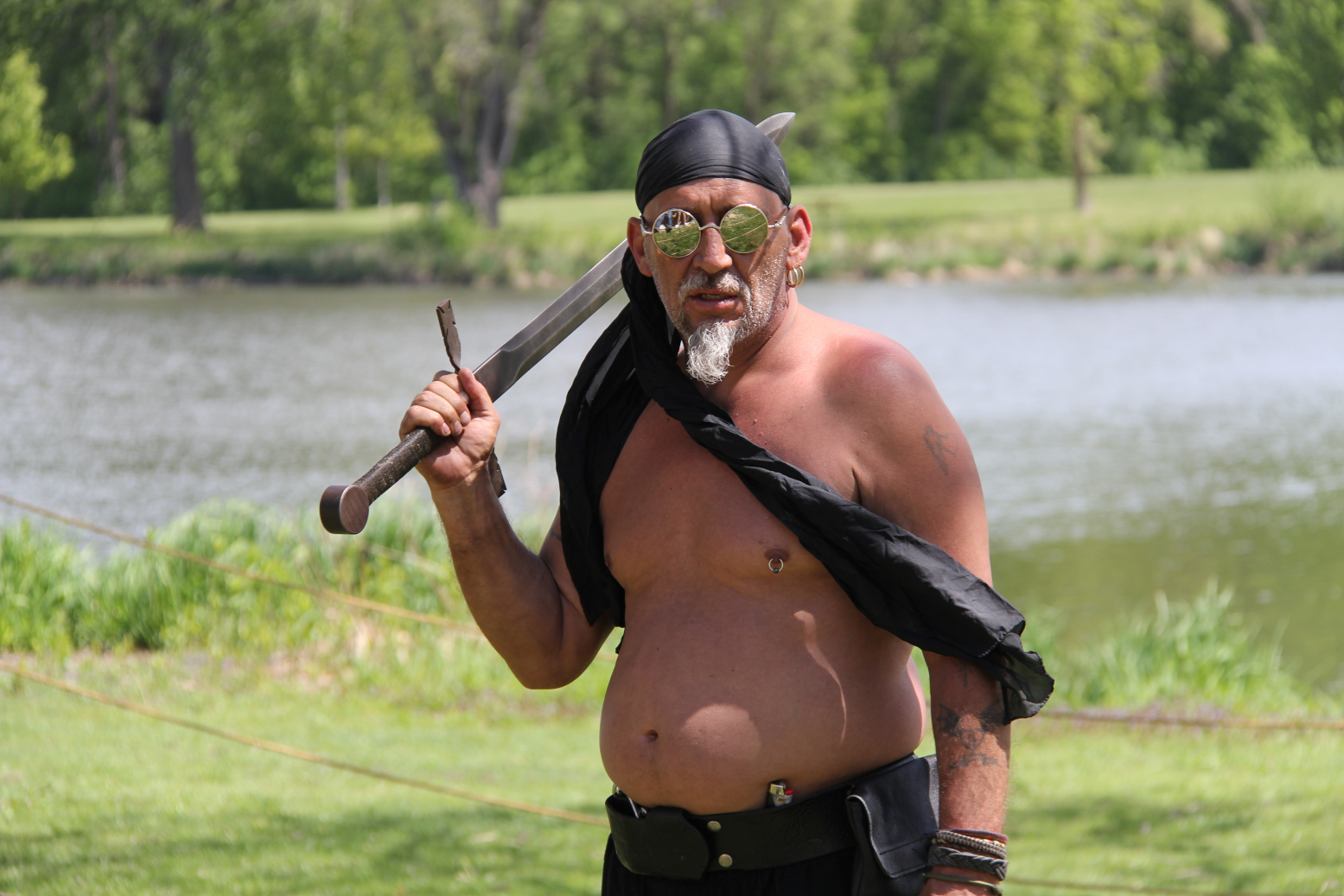
Attendees listened to this participant give a lesson in defense and weaponry. (Minnesota Prairie Roots copyrighted photo May 2026)

I learned about crests and weapons.

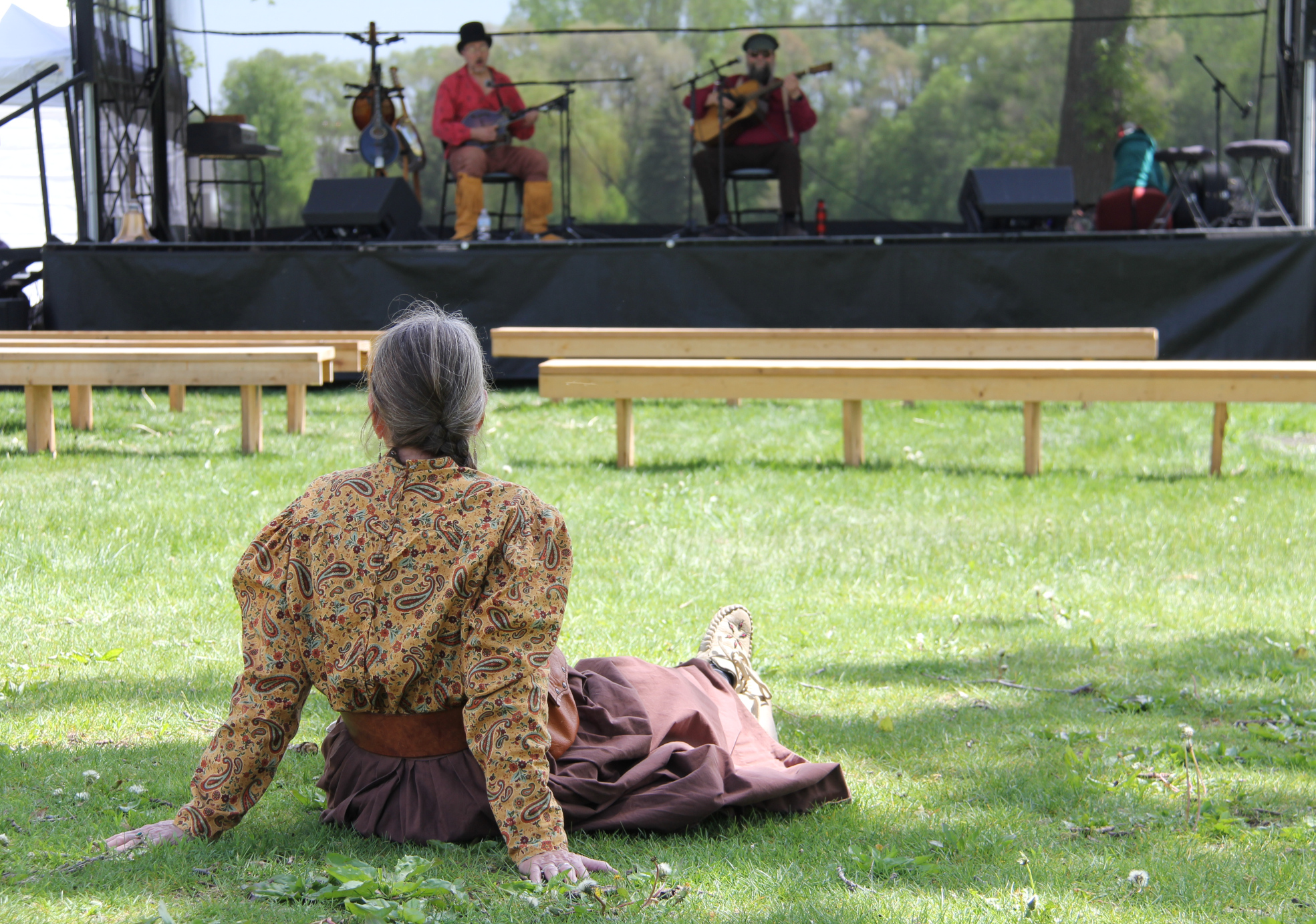
Listening to The Skally Line musicians. (Minnesota Prairie Roots copyrighted photo May 2026)

I listened to musicians on-stage, one group singing about Tator Tot Hotdish, not exactly period appropriate, but entertaining none-the-less.
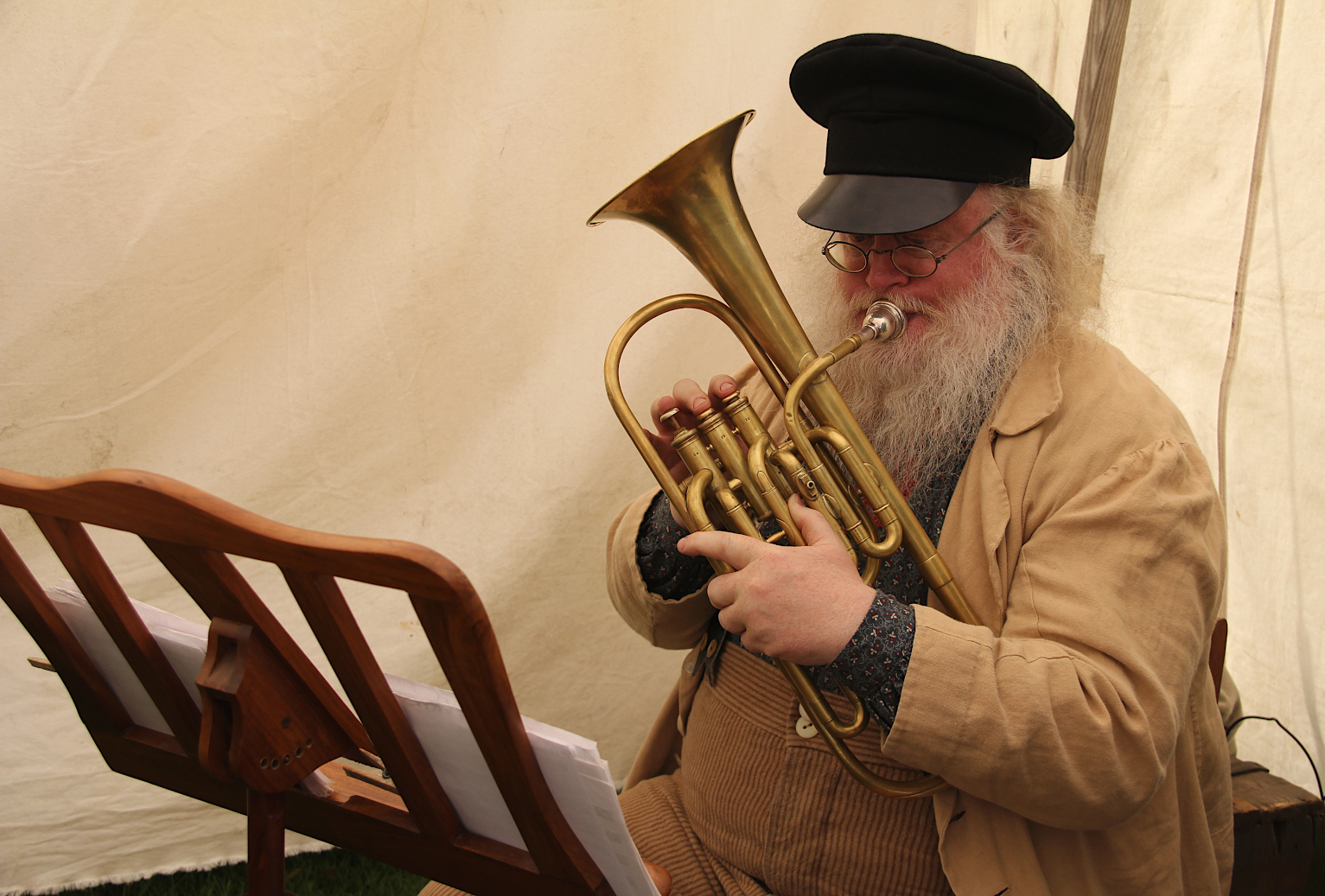

Playing an historic saxhorn inside a dry goods tent. (Minnesota Prairie Roots copyrighted photo May 2026)
History-themed books filled a tent, these appropriate to the event. (Minnesota Prairie Roots copyrighted photo May 2026)
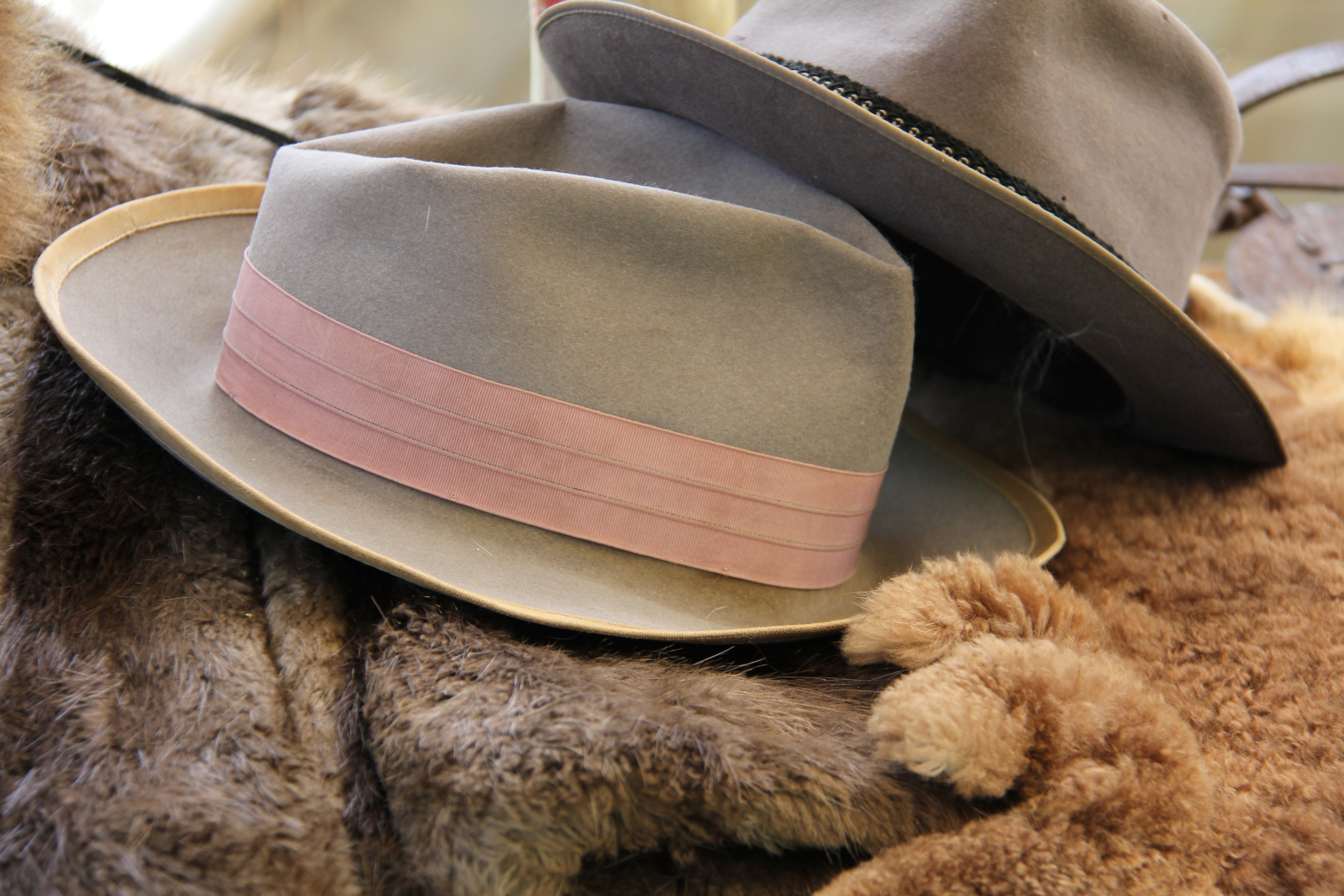
Lots of hats for sale. (Minnesota Prairie Roots copyrighted photo May 2026)

Inside Stick and Stump Dry Goods, a musician blew into an 1873 saxhorn, drawing attendees into the tent to peruse the merchandise. A row of merchants vended goods from tents, selling period weapons, beads, books, belts, soap, hats, knives, clothing and a whole lot more.
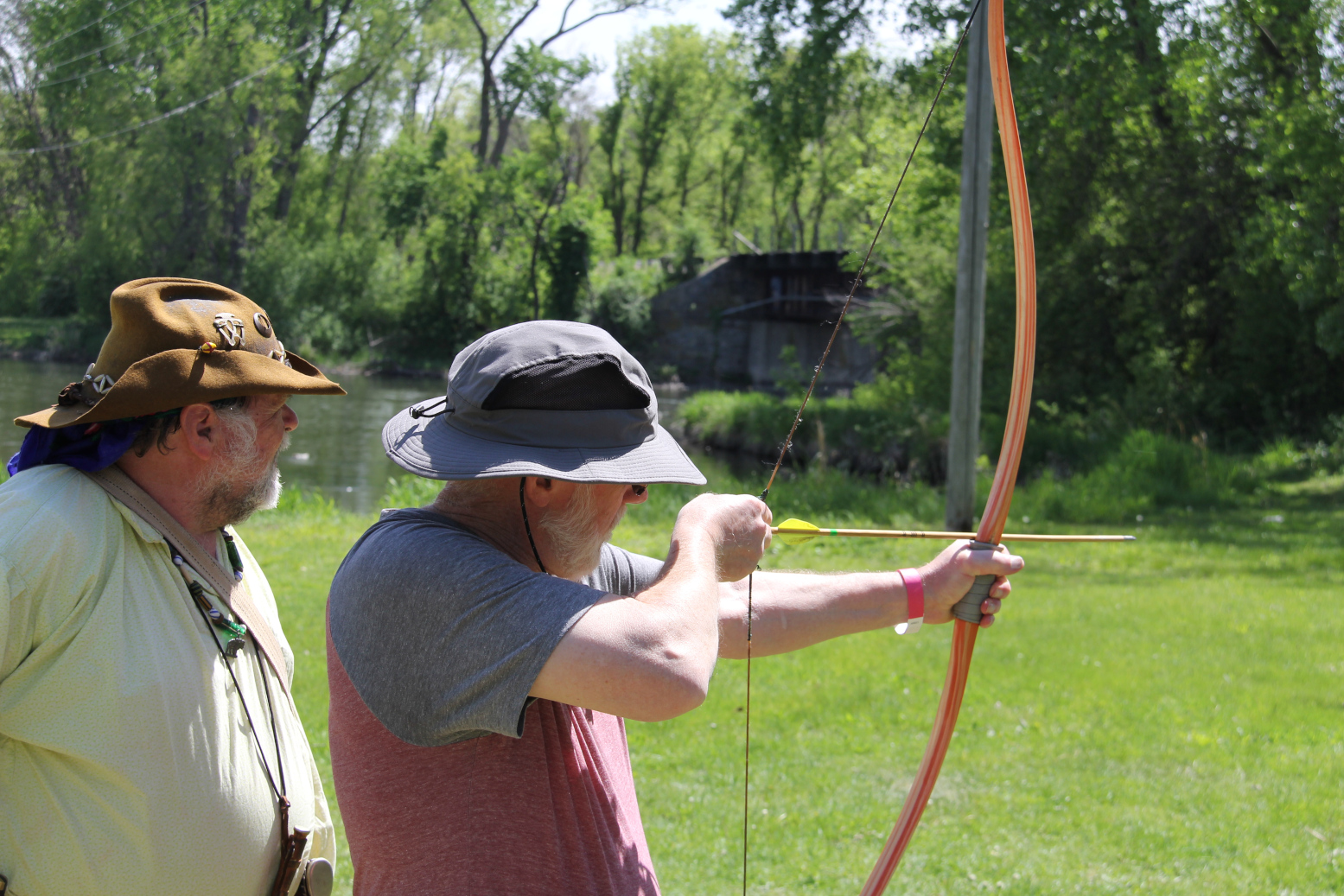
Guided by the archer, Randy aims at the target. (Minnesota Prairie Roots copyrighted photo May 2026)

In a far corner of the park, rendezvous attendees stepped up and tried their skills at archery and tomahawk throwing. I passed given my lack of athleticism. I watched, though, while my husband, Randy, pulled the bowstring and, in one of three attempts, hit the target.
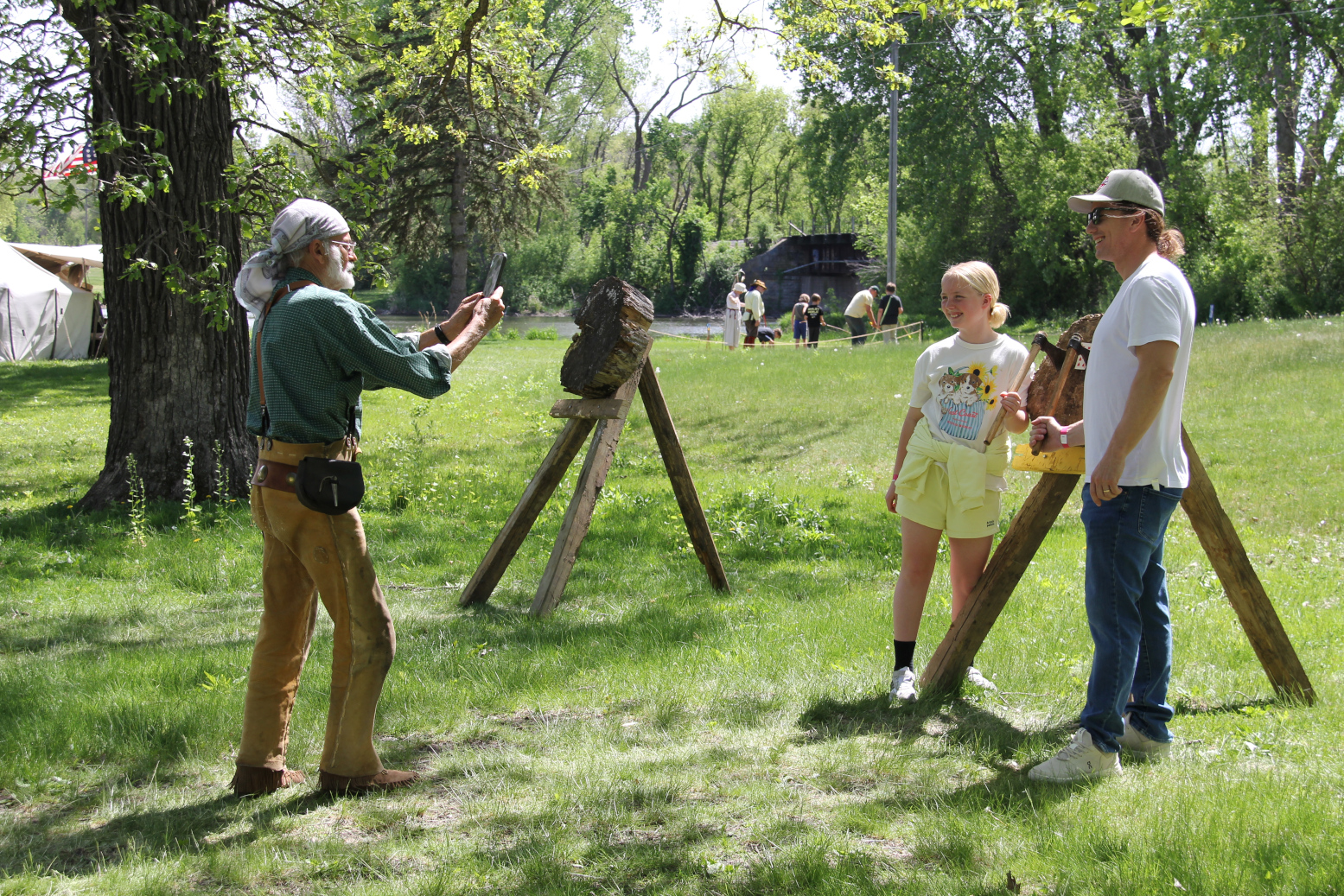
A photo opp after tomahawk throwing. (Minnesota Prairie Roots copyrighted photo May 2026)

I also observed a re-enactor taking a photo of two tomahawk throwers with their smartphone, another example of present day and yesteryear mingling in an almost (at least to me) comical moment. Those long ago dwellers of this land could never have imagined the technology of today.
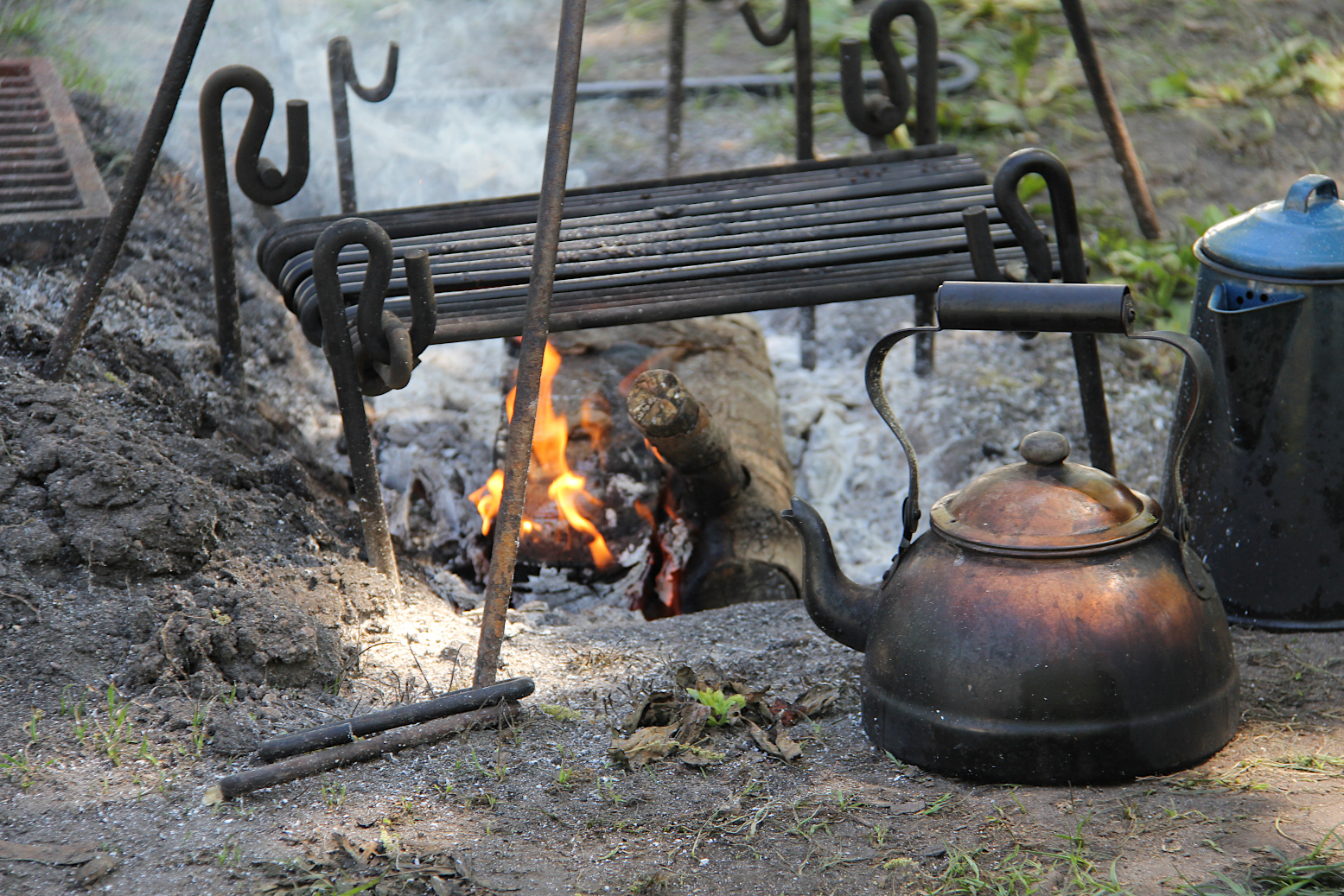
There were many open campfires for cooking on the encampment grounds. (Minnesota Prairie Roots copyrighted photo May 2026)
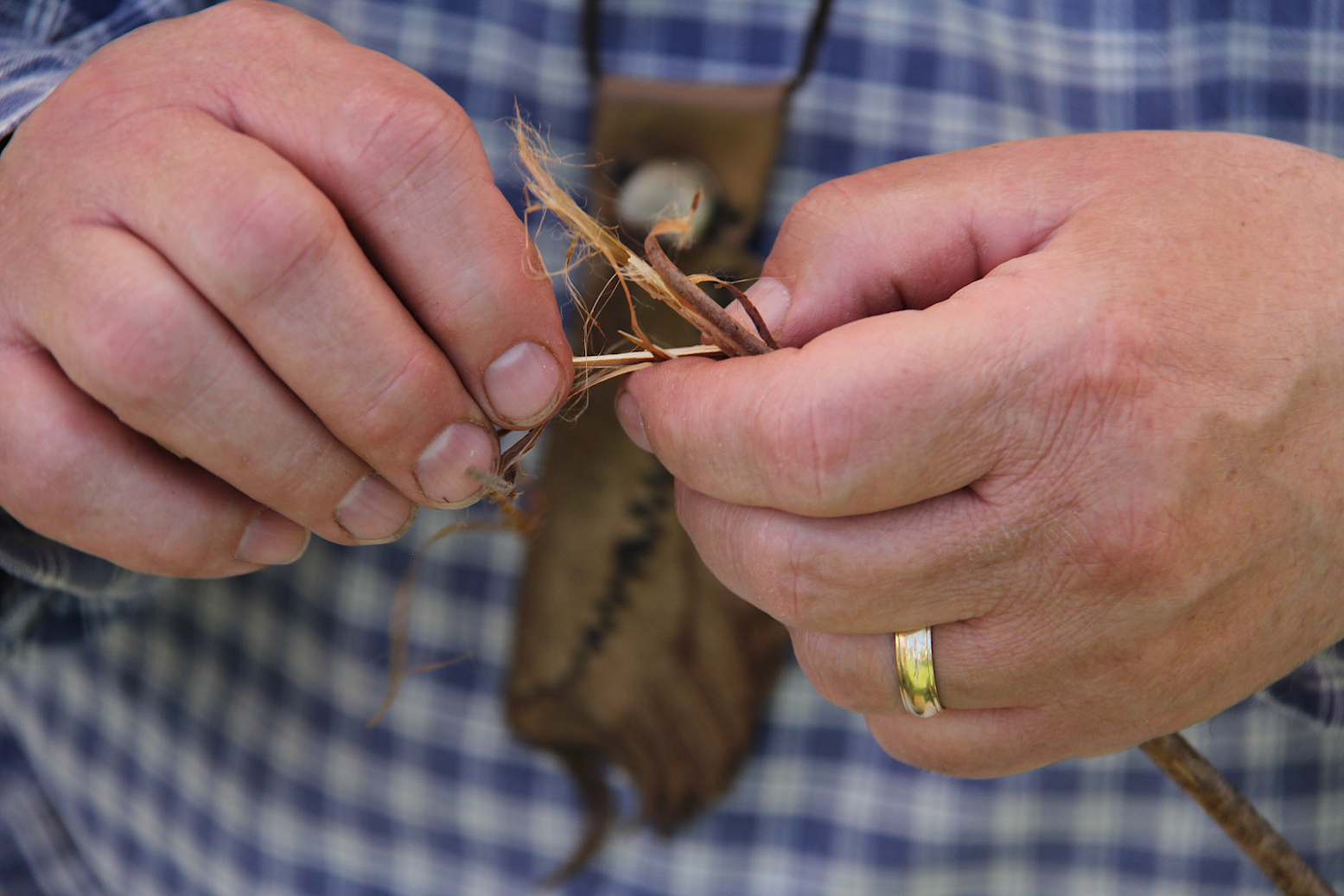
Stripping the plant dogbane to make into a strong thread. (Minnesota Prairie Roots copyrighted photo May 2026)
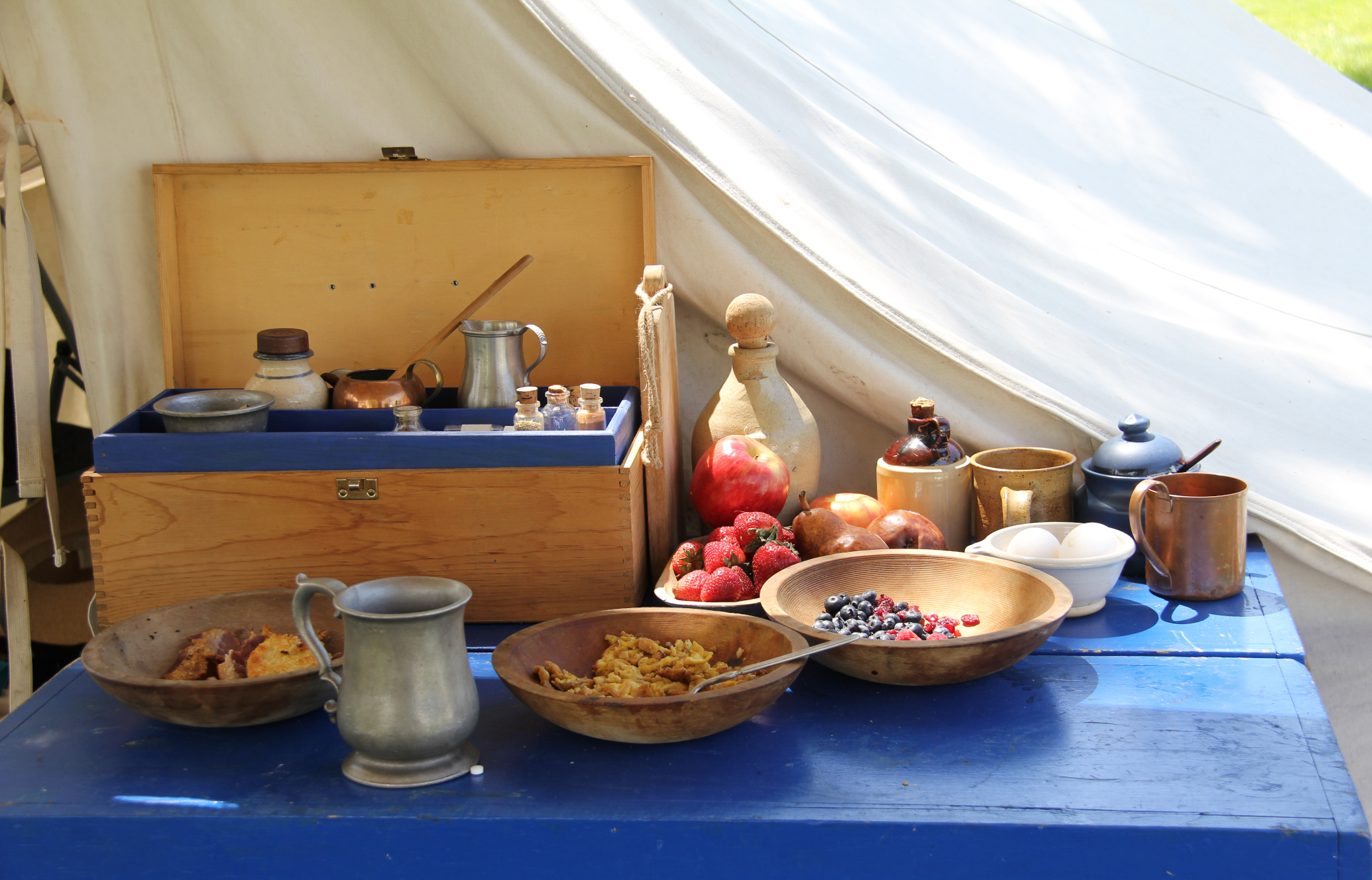
A still life of simple foods and dinnerware. (Minnesota Prairie Roots copyrighted photo May 2026)

Events like this not only preserve and celebrate history, but serve as visual reminders of how much has changed with the passage of time. Progress can often be measured by the past.
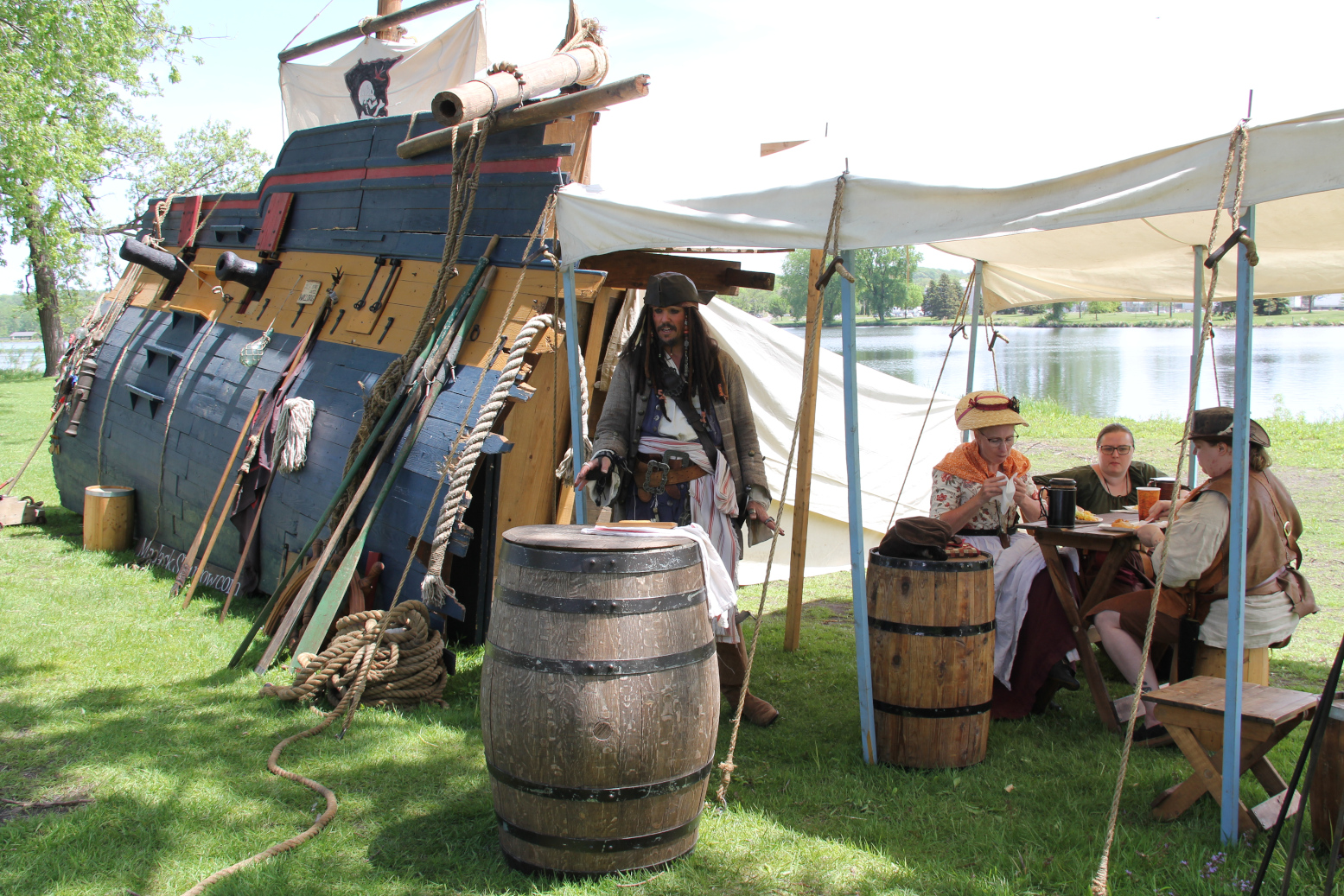
MN Jack Sparrow and his pirate “ship” were a draw, especially for the kids. (Minnesota Prairie Roots copyrighted photo May 2026)

I’m not a history buff. Yet history interests me enough to want to learn more, to attend events like the rendezvous. Before the encampment opened to the public over the weekend, local students came by the hundreds to North Alexander Park for a living history lesson. I would have enjoyed history a whole lot more as a child had I gone to something like this.
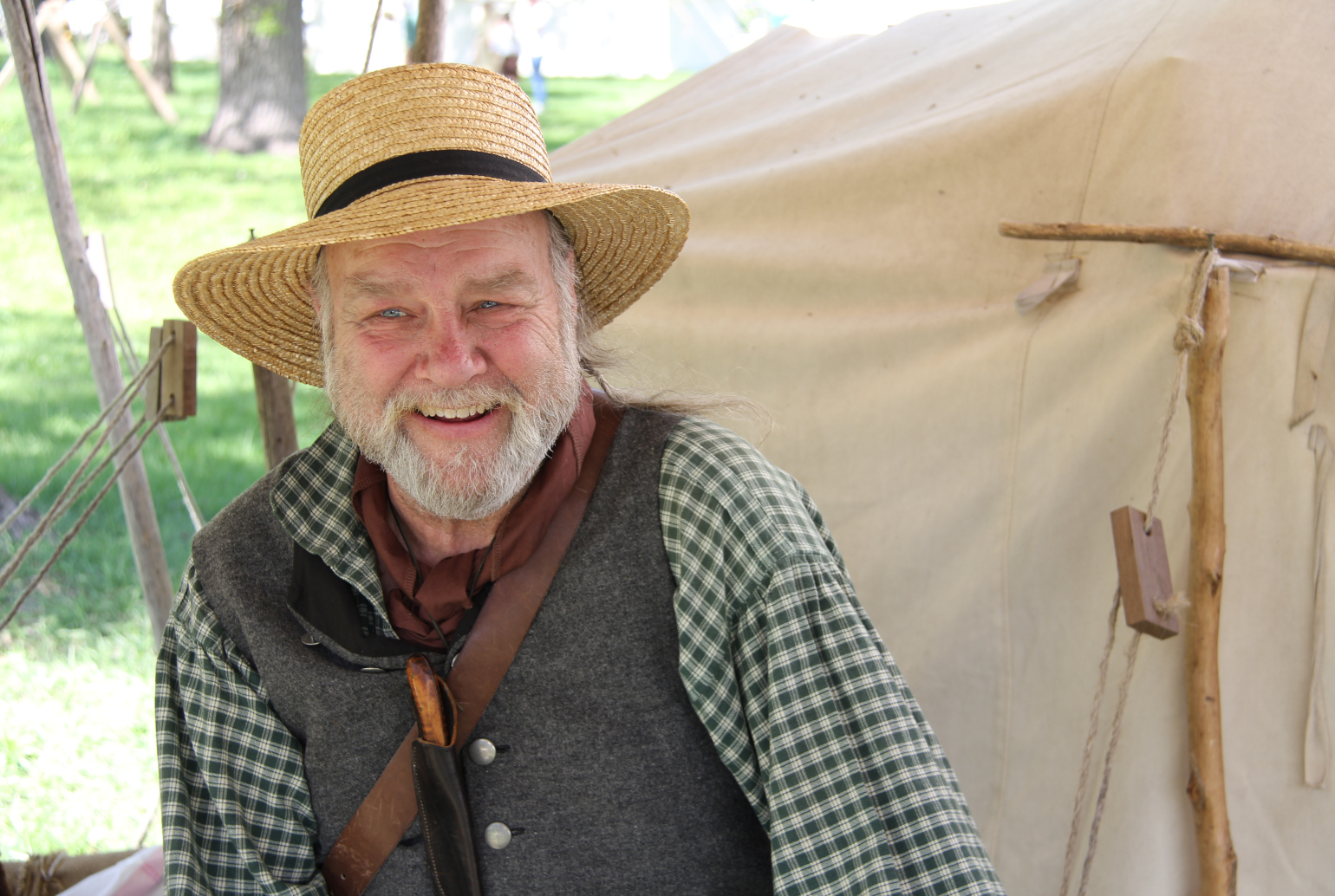
Period dress is an important part of the rendezvous. (Minnesota Prairie Roots copyrighted photo May 2026)
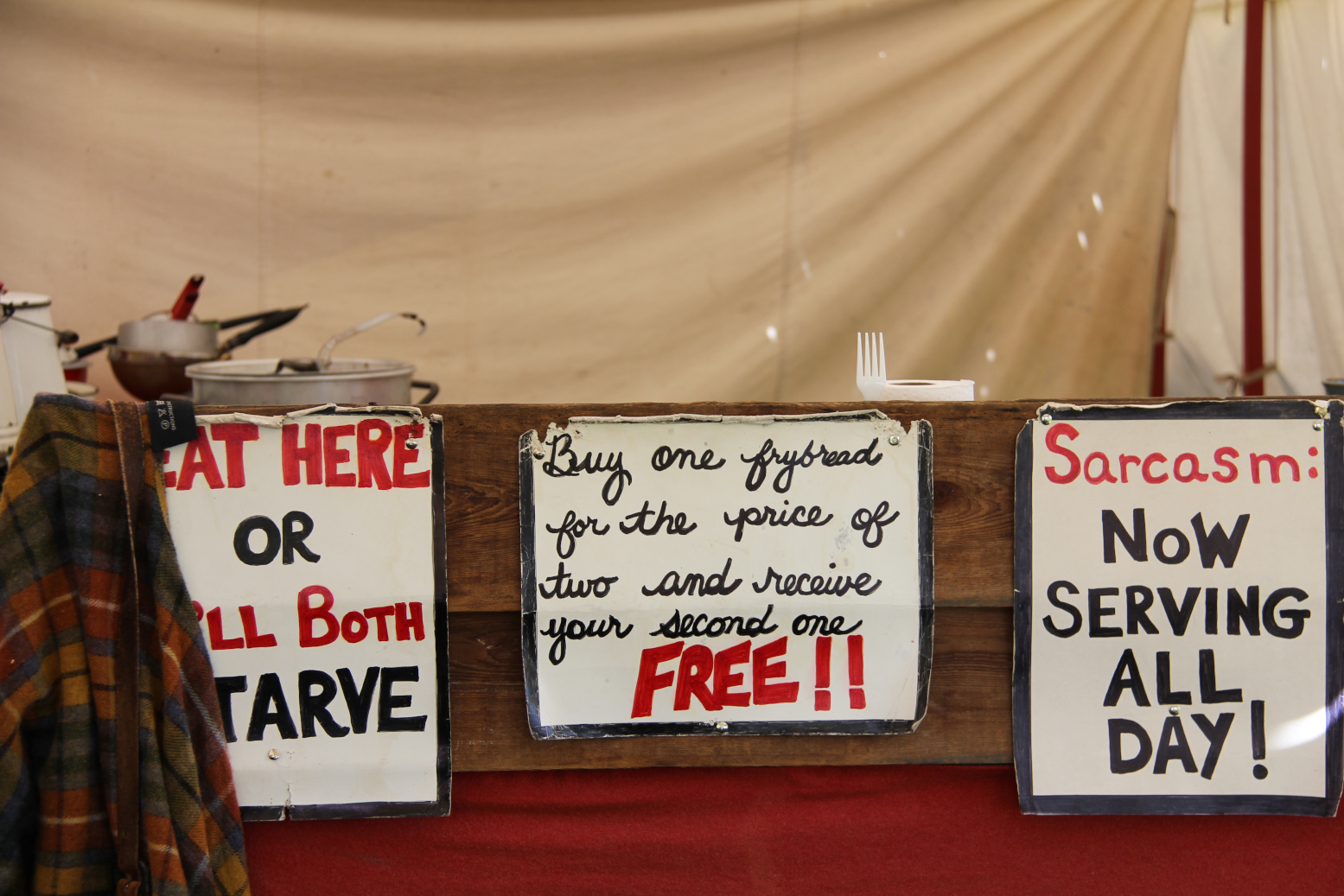
Humorous signs inside the Baby’s Indian Frybread tent. (Minnesota Prairie Roots copyrighted photo May 2026)
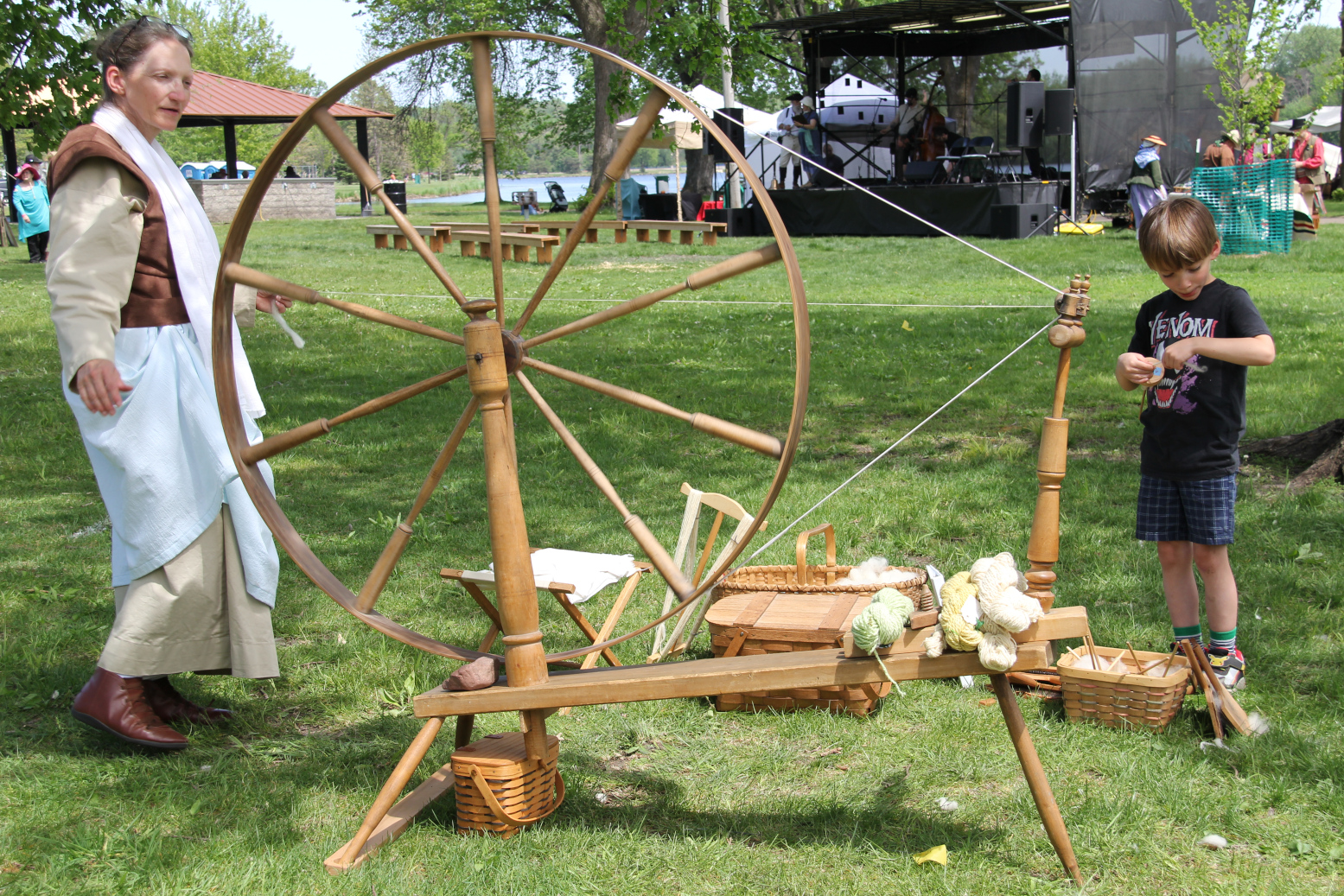
Spinning and playing with a toy spinner. (Minnesota Prairie Roots copyrighted photo May 2026)

As I wandered around the grounds, photographed, listened, conversed, paused to eat first savory, then sweet, Baby’s Indian Frybread, I considered the time, effort and work involved in putting an event like this together. It’s a lot for the organizers, volunteers and participants.
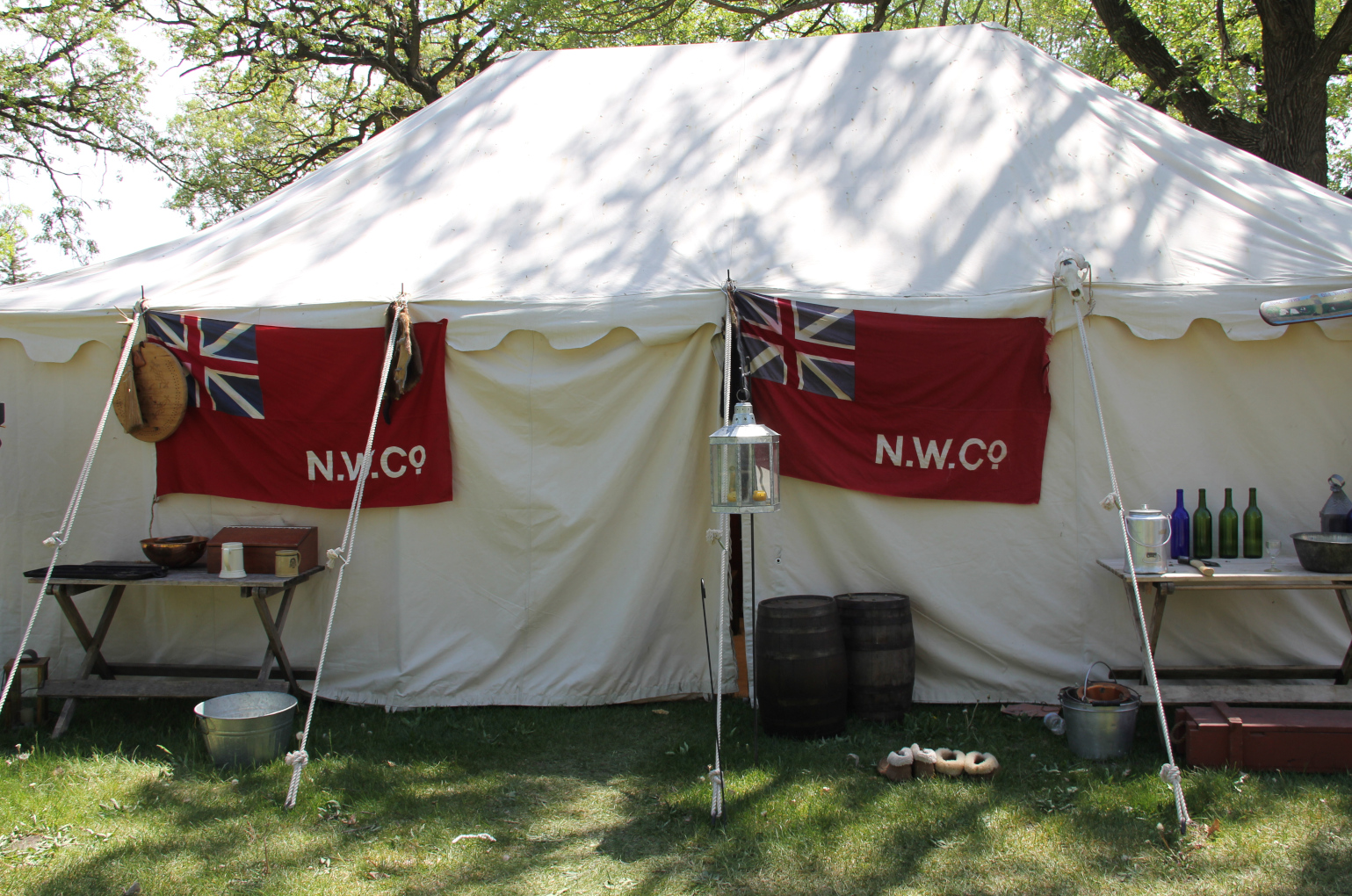
The North West Company was a Canadian fur trading company important in early fur trade in this area. (Minnesota Prairie Roots copyrighted photo May 2026)

I’m grateful for this rendezvous which brings living history to Faribault, a place where the Wahpekute once fished and trapped and traded and dwelt. This place, too, where Alexander Faribault came to trade with the native Dakota, to settle, to establish the town named after him.
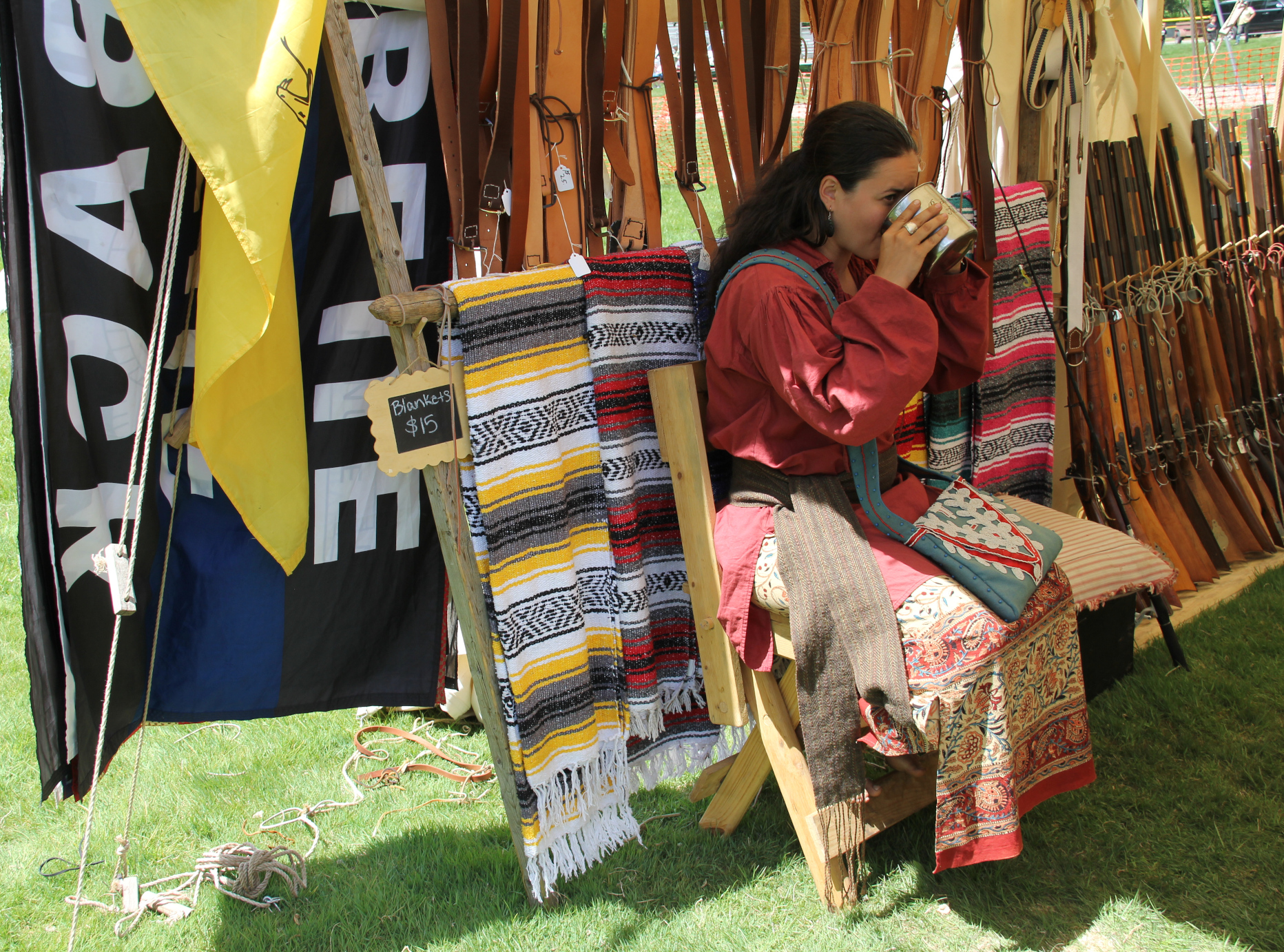
A vendor inside a tent with blankets, weapons and an assortment of goods for sale. (Minnesota Prairie Roots copyrighted photo May 2026)

Faribault is a town rich in history. Rice County is a county rich in history. Minnesota is a state rich in history. And, on Saturday, for a few hours, I glimpsed that history along the banks of the Cannon River, where the water flows into the nearby Straight River, stories carried on the current of the water from the past into the present.

© Copyright 2026 Audrey Kletscher Helbling


The sign painter of Mazeppa, Part I March 28, 2018

Filed under: Uncategorized — Audrey Kletscher Helbling @ 5:00 AM
Tags: , , , , , , , , ,

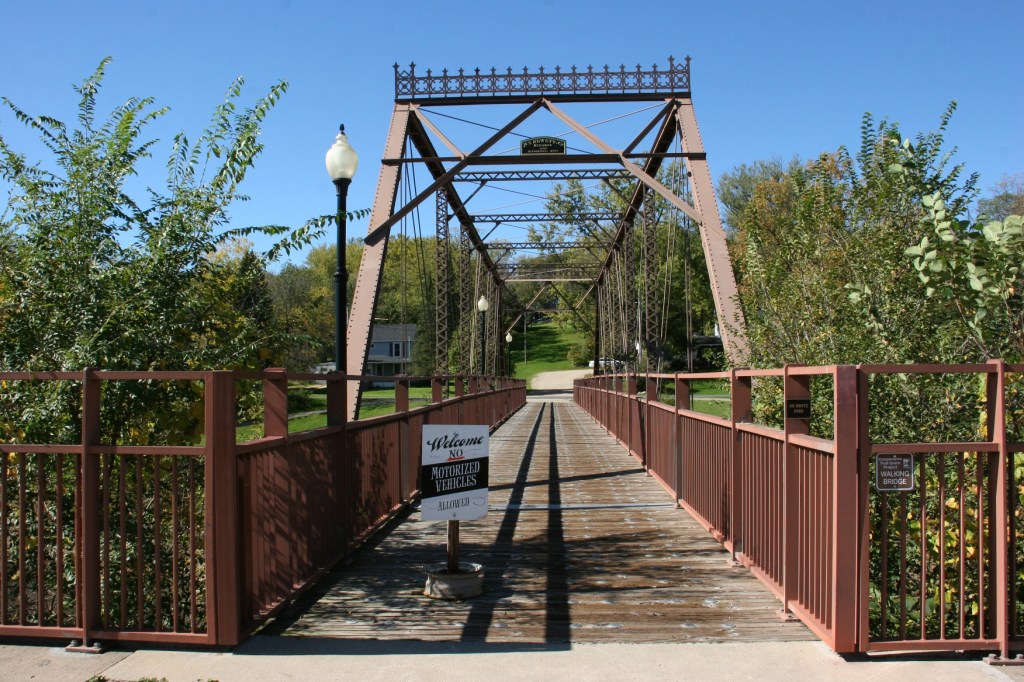
I love that Mazeppa restored this historic bridge spanning the Zumbro River and converted it into a pedestrian walkway. Noted W.S. Hewett Company designed the Walnut Street Bridge in 1904.


WHEN I VISITED MAZEPPA awhile back, I fell in love with this town of some 800 just north of Rochester and along the north branch of the Zumbro River.


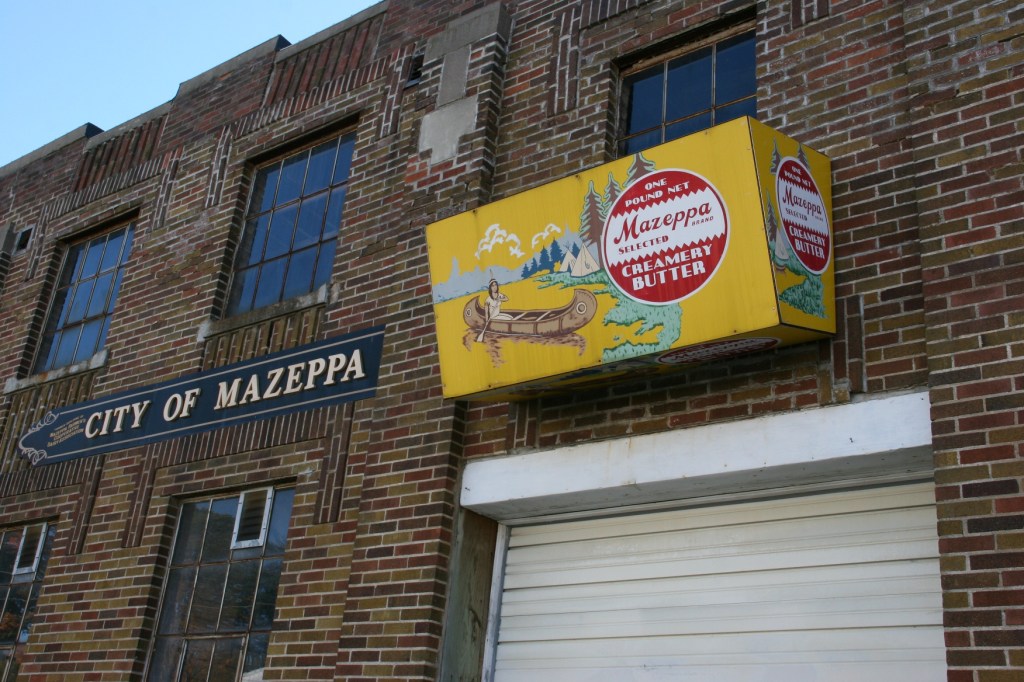
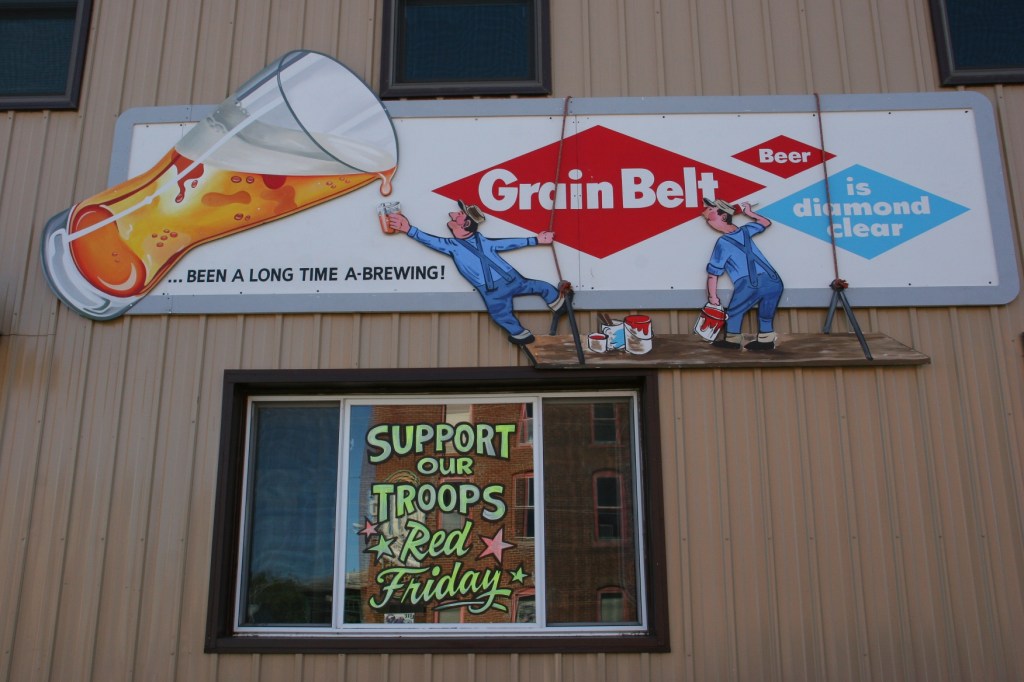
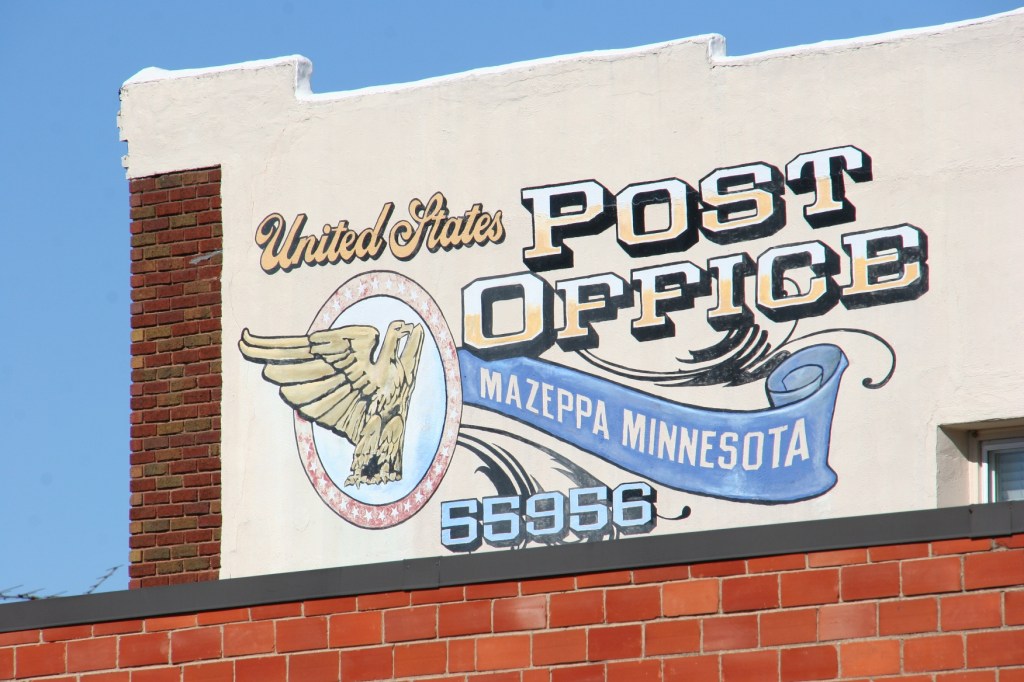
Some of my favorite signage hangs on the City of Mazeppa maintenance garage housed in a former creamery.


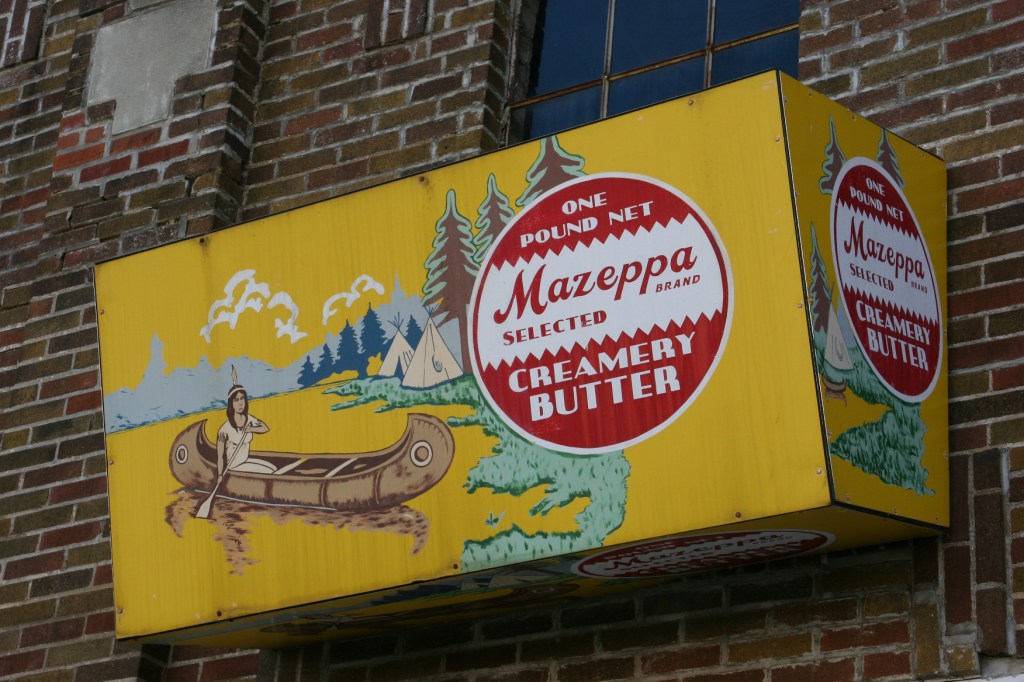
This signage honors the butter crafted by the former Mazeppa Farmers’ Cooperative Dairy Association.


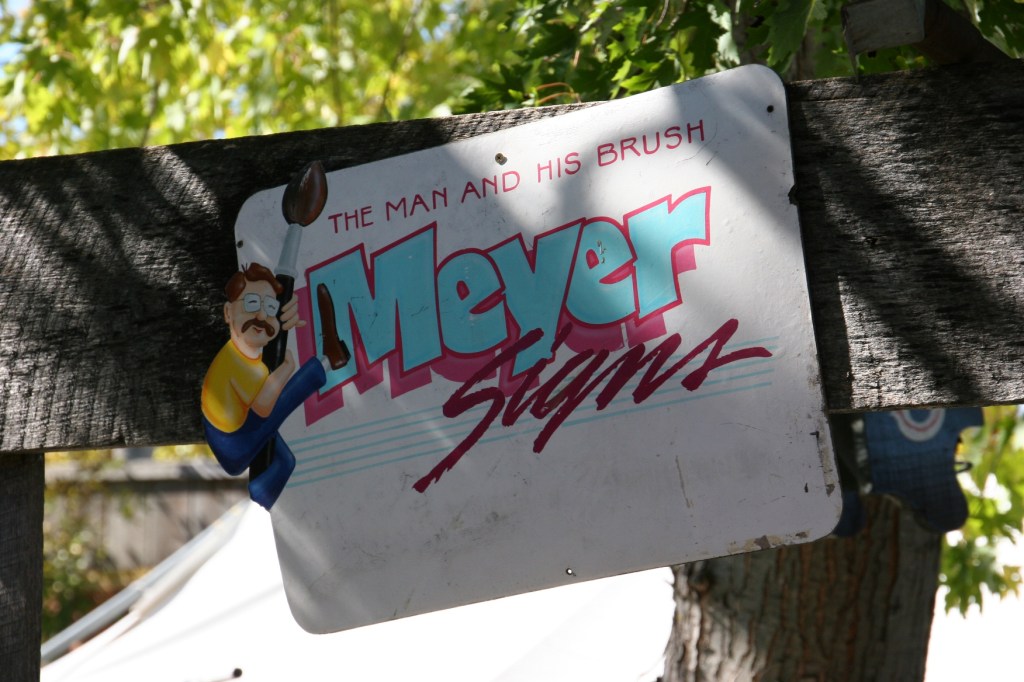
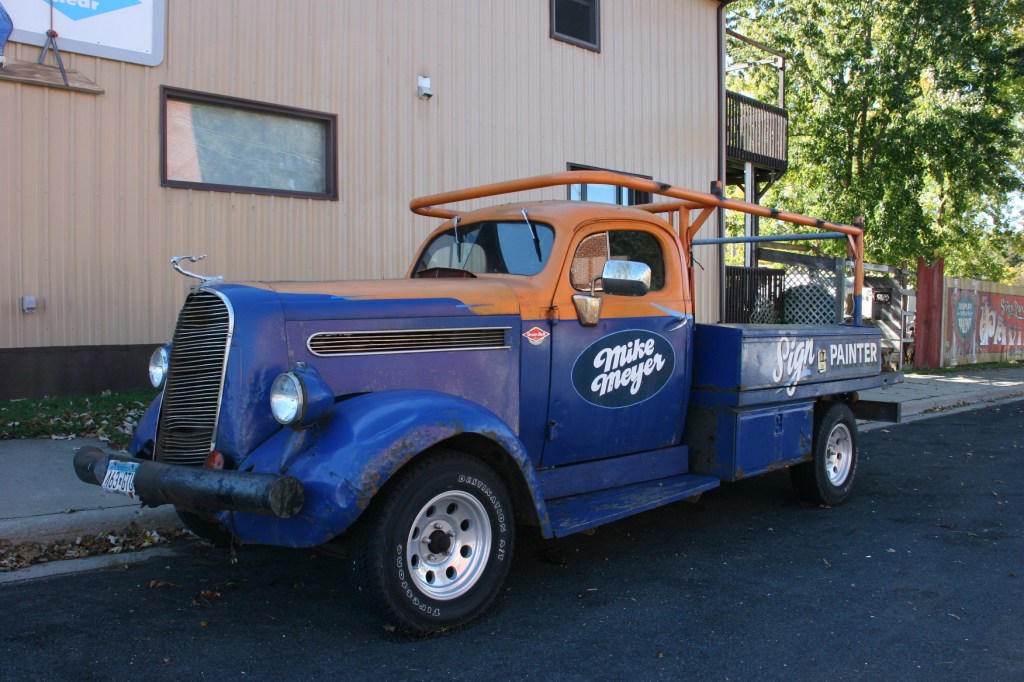
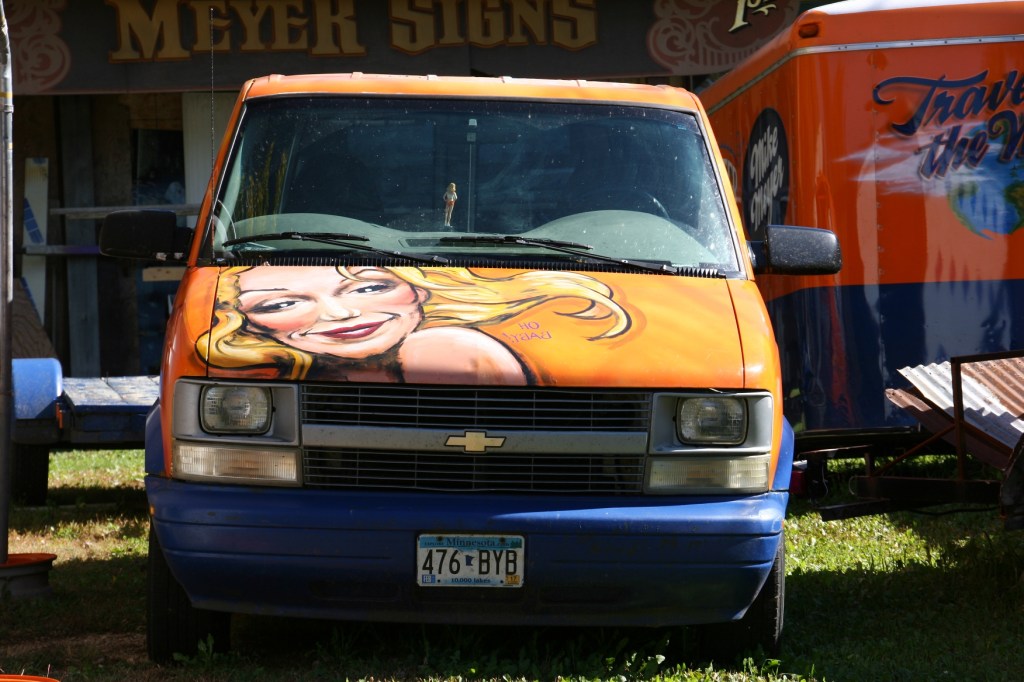
Another favorite of mine: this sign on Mike Meyer’s shop.


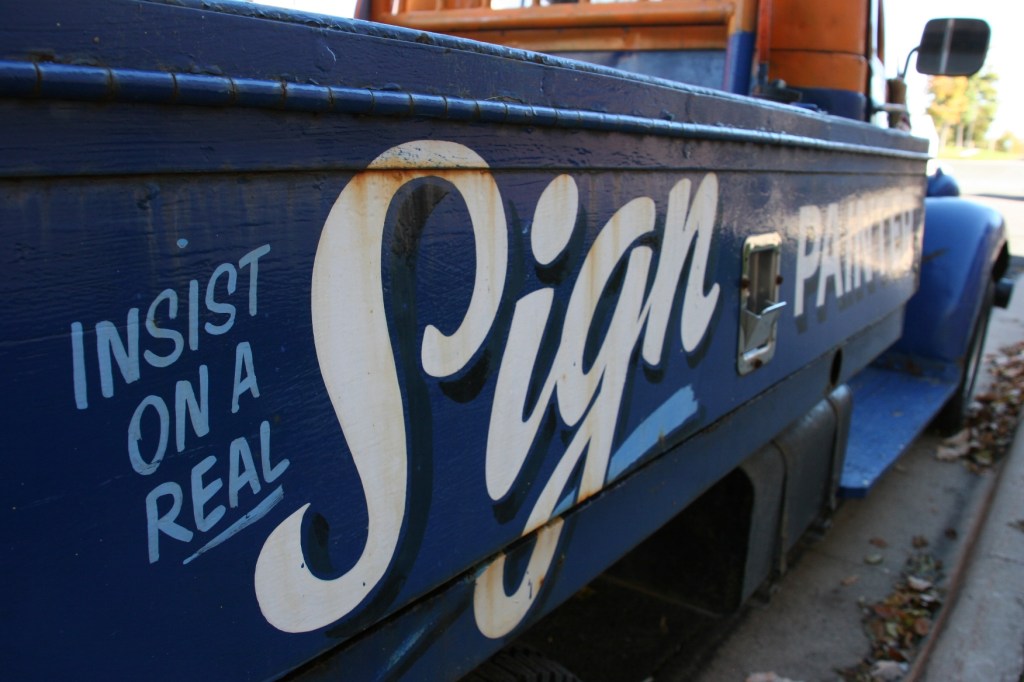
Or to be more specific, I fell for the hand-painted signs that grace buildings in this community. Most are the work of local sign painter, Mike Meyer.


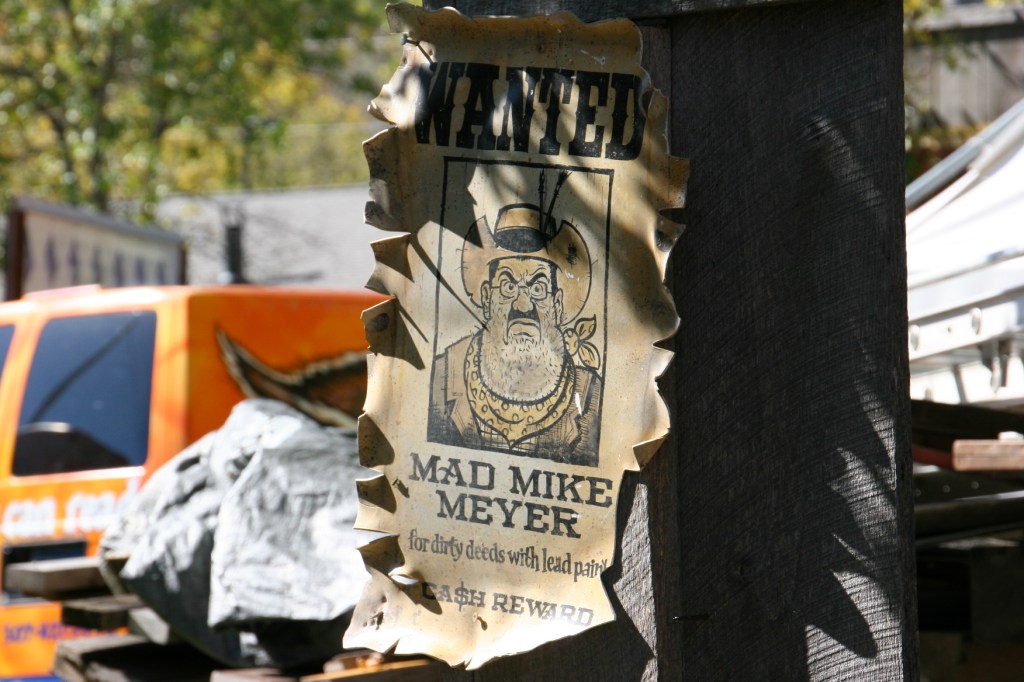
Meyer’s corner sign shop was closed on the day I visited. So I knew nothing then of his notoriety. But he is world-renowned for his sign painting skills. This I learned while researching him online and watching the short film, “Man with a Brush.” He leads hand lettering workshops across the country and around the world from Amsterdam to Berlin to Dublin to Barcelona to Sweden and beyond.


Alright then. I’m impressed. But I’m even more impressed by the humbleness of this artist who grew up in Mazeppa and claims there’s no place he’d rather live than in his southeastern Minnesota hometown. His father barbered and painted signs in between cutting hair and Meyer learned from him. He left for three years to serve in the Army, but came right back home to follow his passion of painting signs. He went to sign school, too, and worked for a sign painter before being laid off.


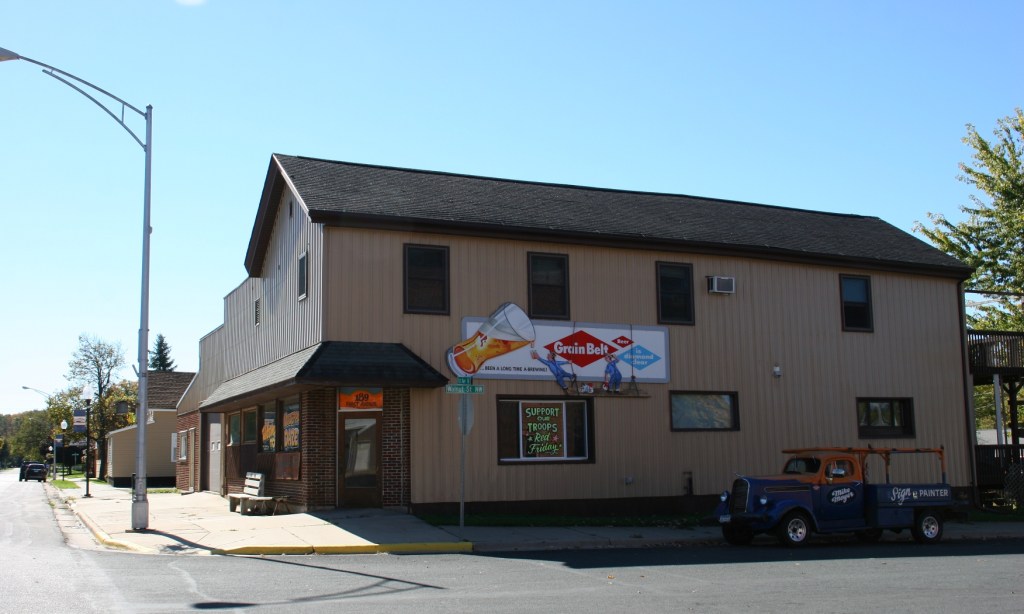
Meyer’s shop anchors a corner of downtown Mazeppa.


That prompted him to take the bold step of opening his own sign shop. One quote in the “Man with a Brush” strikes me in particular: “Nobody really said, ‘Don’t run over the hill like the rest of the rats. Go the other way,’” Meyer says. He chose to make his future in his hometown doing what he loves. Away from the rat race. How many people can say they are doing what they love in a place they love as they go to work every day? Probably not many.


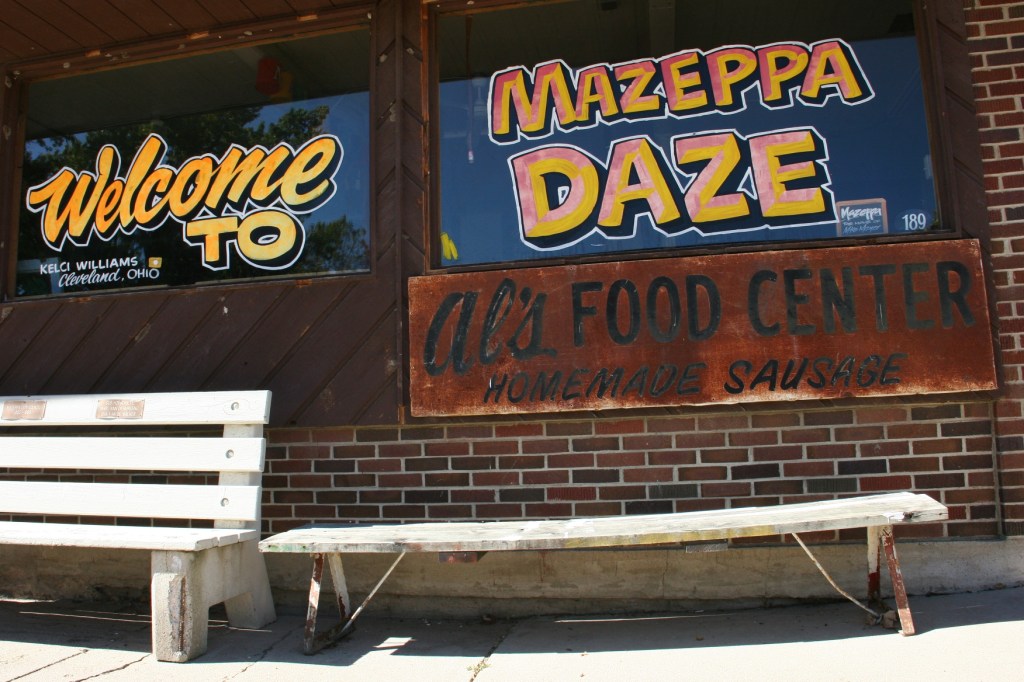
Now Meyer could have just stayed in Mazeppa, tucked away quietly painting signs for businesses and such. But he didn’t. He holds an innate desire to pass along his knowledge, his skills, his passion, to others. That theme of mentorship threads throughout the film on Meyer’s life as a sign painter. He teaches others the artistry of the trade.  Watch the film (click here) and you see the undeniable joy this long-time painter experiences in sharing his expertise while working side-by-side with novices and beyond. He’ll lead workshops locally during Mazeppa Daze in July.


Individuals like Meyer make our small towns unique places that exist outside the rat race. He proves that success and happiness come from within ourselves in following our passions. No matter where we live.


Please check back for another post from Mazeppa.

© Photos copyright 2018 Audrey Kletscher Helbling
Sources: Mike Meyer’s Facebook page, Better Letters Co. and “Man with a Brush” (directed and produced by UK-based Dimension 2)


In which I meet a Wisconsin blacksmith November 13, 2014

DARKNESS AND RED-HOT HEAT and banging of metal against metal…

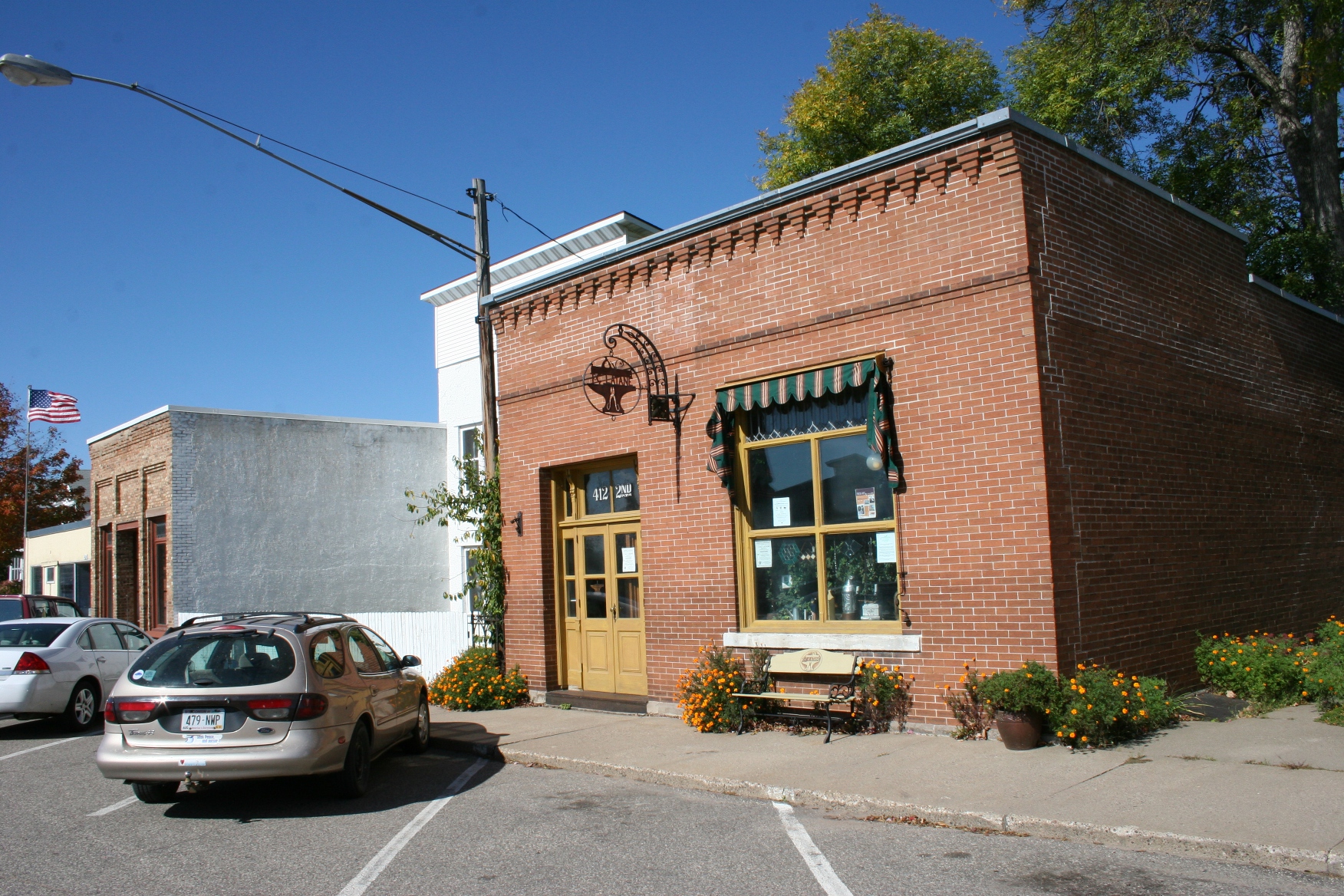
T-C Latane, 412 Second Street in Pepin, Wisconsin.

T-C Latane, 412 Second Street in Pepin, Wisconsin.

Memories of accompanying my farmer father to the blacksmith shop in my hometown of Vesta flash through my mind as I step into the shop of Tom Latané in Pepin, Wisconsin.

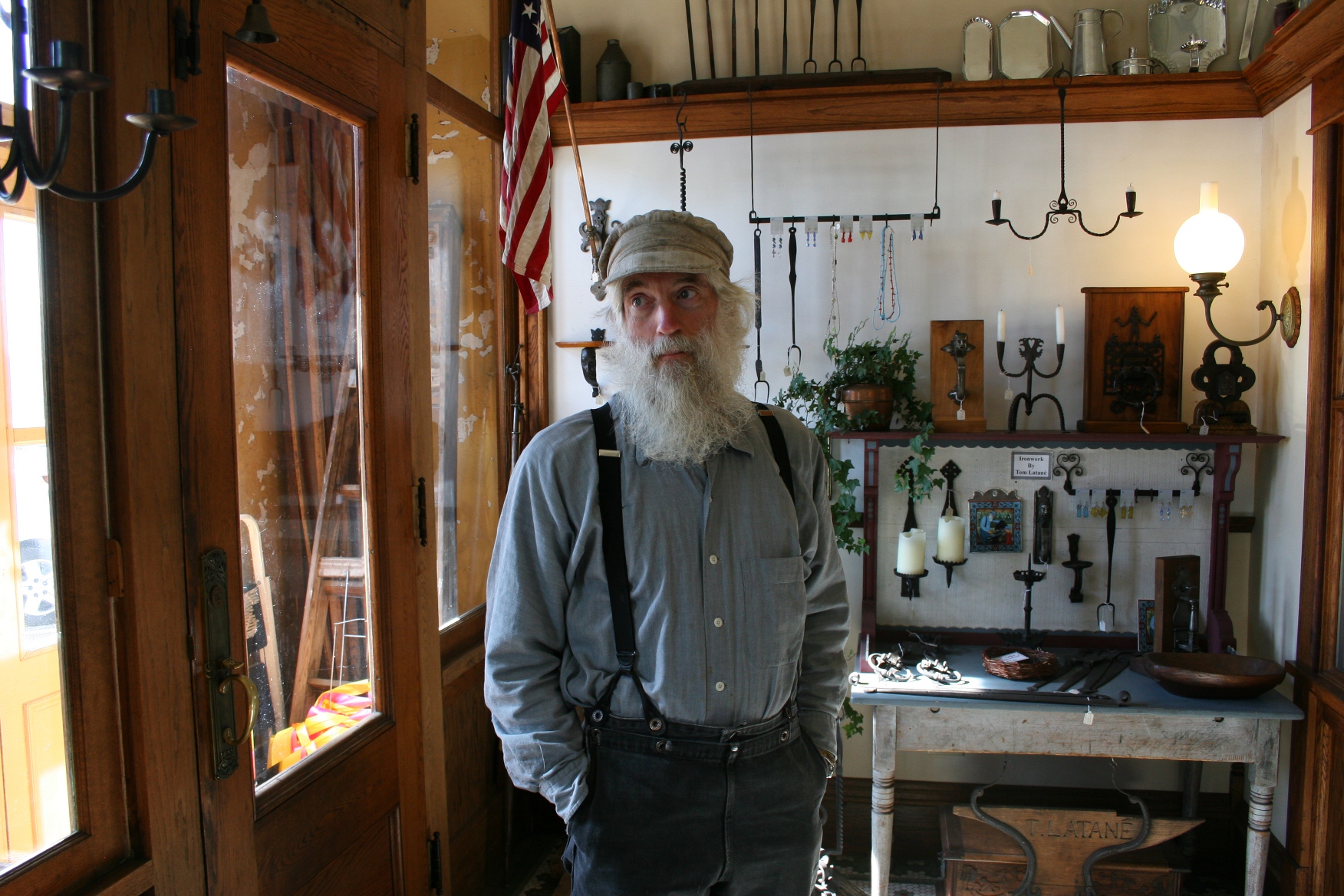
Blacksmith Tom Latane talks about his craft  in the front part of his shop. Behind him are examples of his work.

Blacksmith Tom Latane talks about his craft in the front part of the shop he shares with his wife, Catherine. Behind him are examples of his work. Several artisans sells their wares here.

My husband and I have stopped here on a mid-week October afternoon during a brief get-away. By chance, we have found this life-long blacksmith in his shop where anvils and vises, buckets and axe and tools of the trade crowd the brick-floored space.

Tom splits wood in the area where he blacksmiths.

Tom splits wood in the area where he blacksmiths.

While Tom rapid-splits wood for a forge fire, I scan this grimy room with a good luck horseshoe clamped on brick above a neatly lined shelf of corralled chisels.

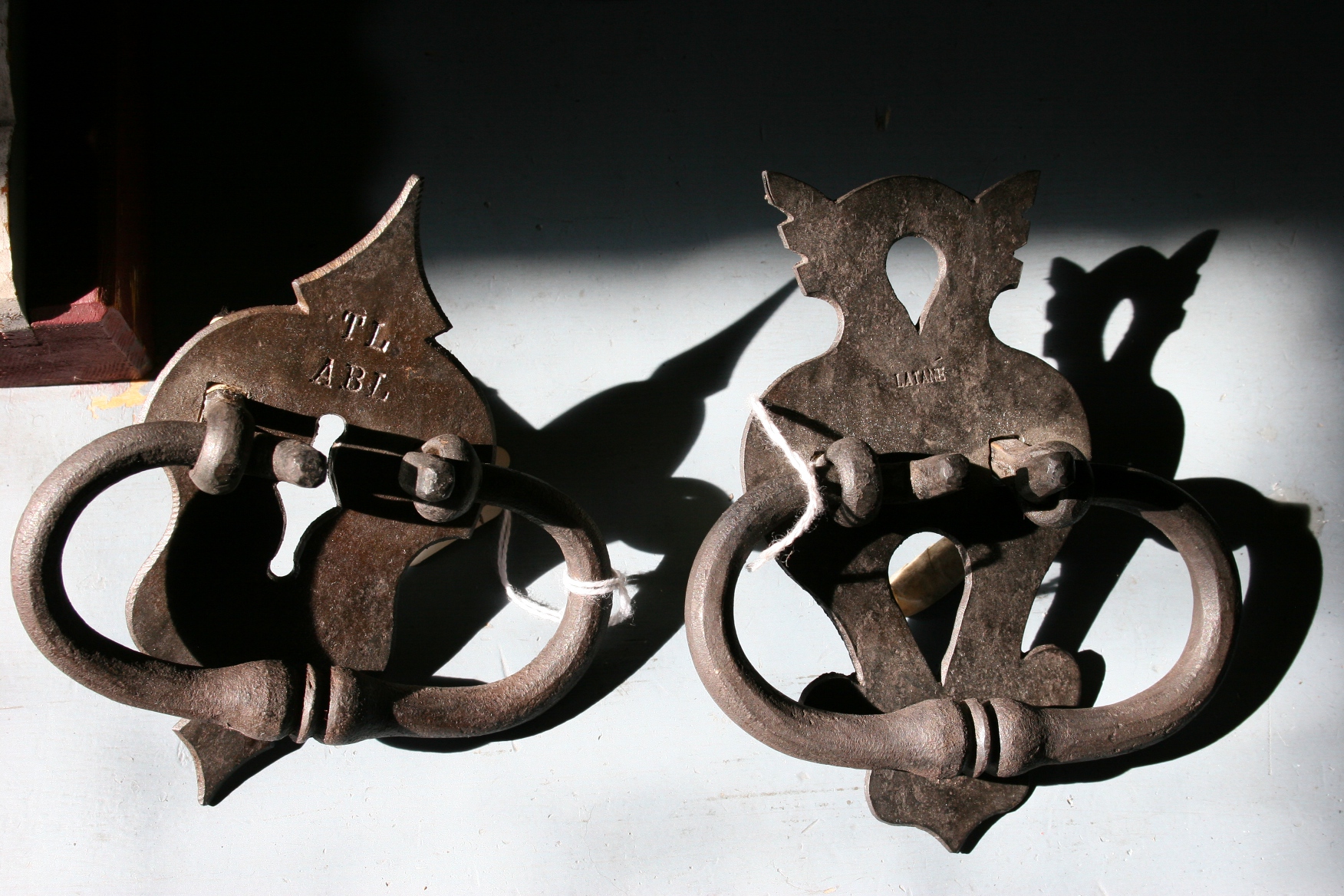
Hardware crafted by Tom.

Hardware crafted by Tom.

Tom also works with wood, sometimes combining wood and metal in pieces.

Tom also works with wood, sometimes combining wood and metal in pieces.

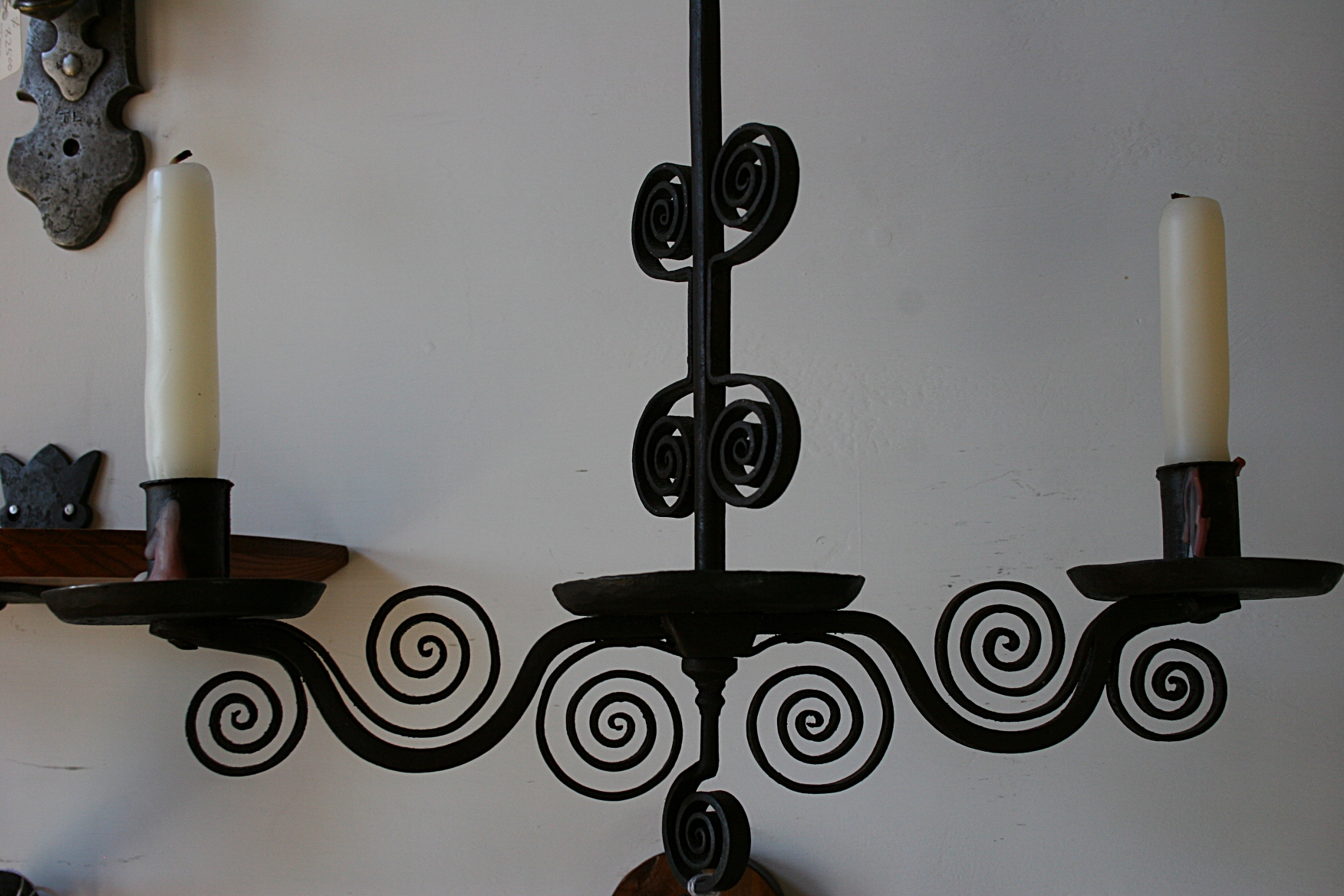
Tom created this candleholder.

Tom created this candleholding masterpiece.

Standing here in this time, in this place, with a man practicing the aged craft of blacksmithing seems almost surreal. But Tom has been doing this all his adult life, relocating from Maryland to open his Pepin shop in 1983 with his wife, Catherine, a tinsmith.

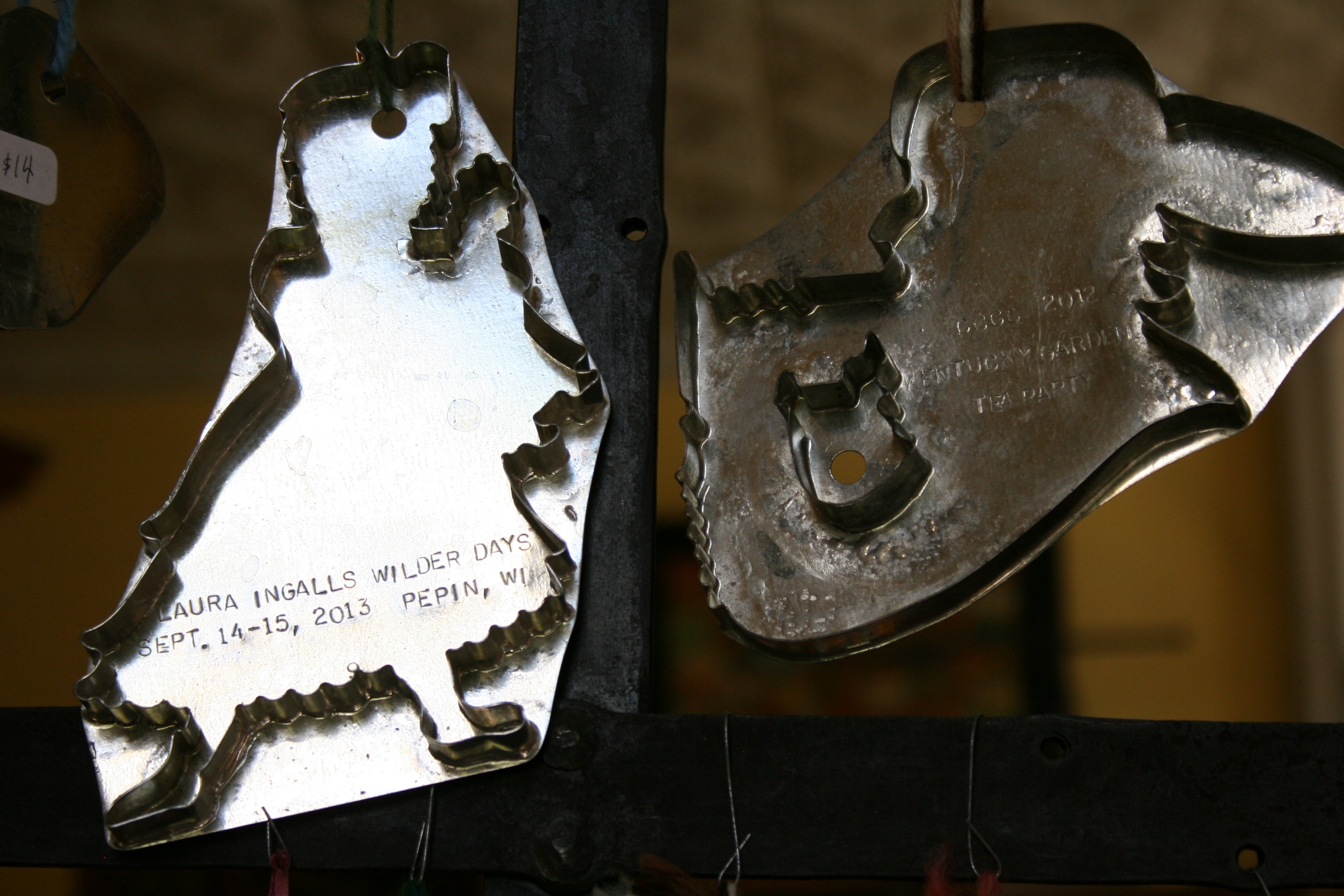
Two of Catherine's cookie cutters.

Two of Catherine’s cookie cutters.

She’s a native of Minnesota, just across the river, and an artist, too, who crafts tin cookie cutters by hand. Catherine is known for her commemorative Laura Ingalls Wilder cookie cutters in a community that each year celebrates its most famous native daughter.

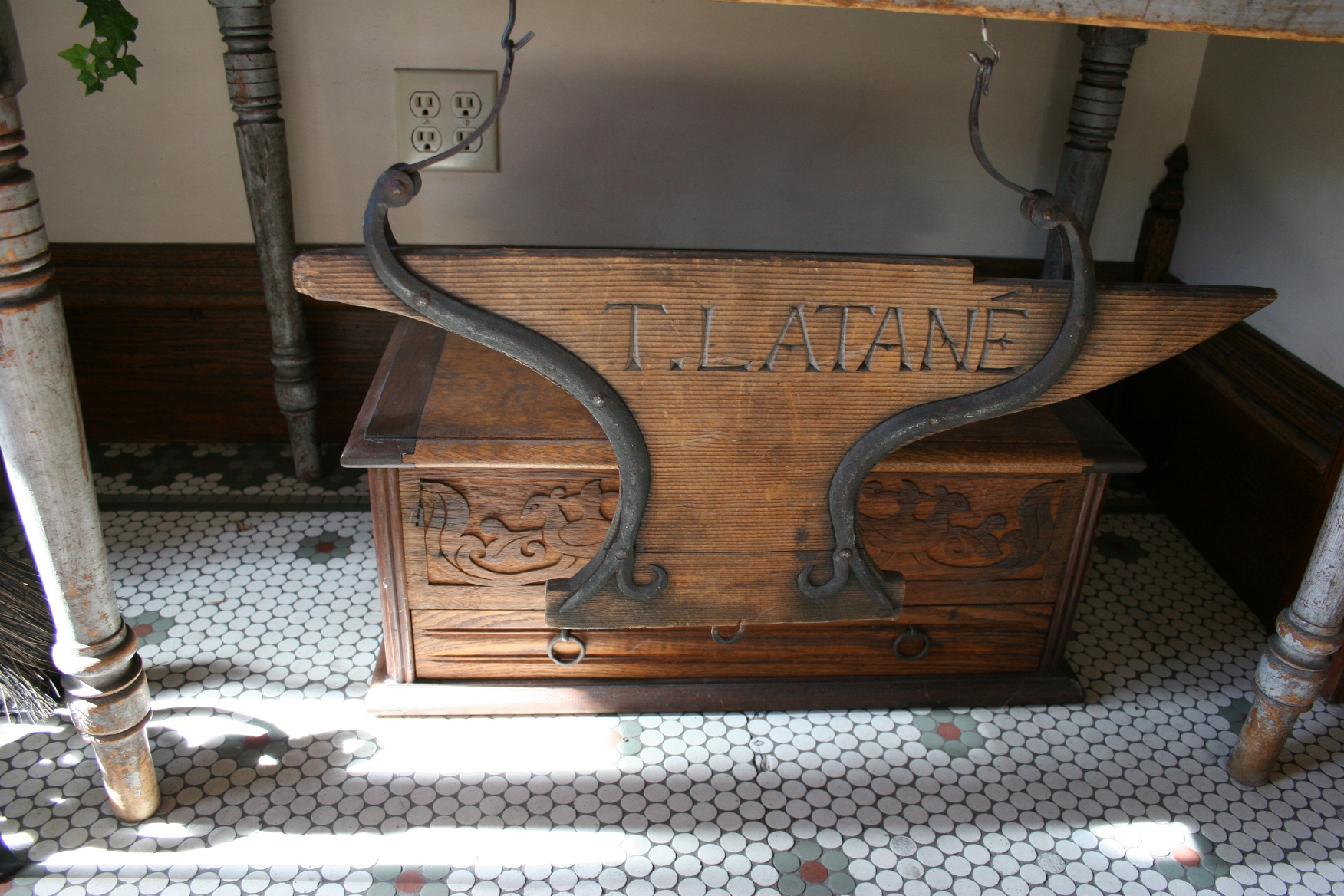
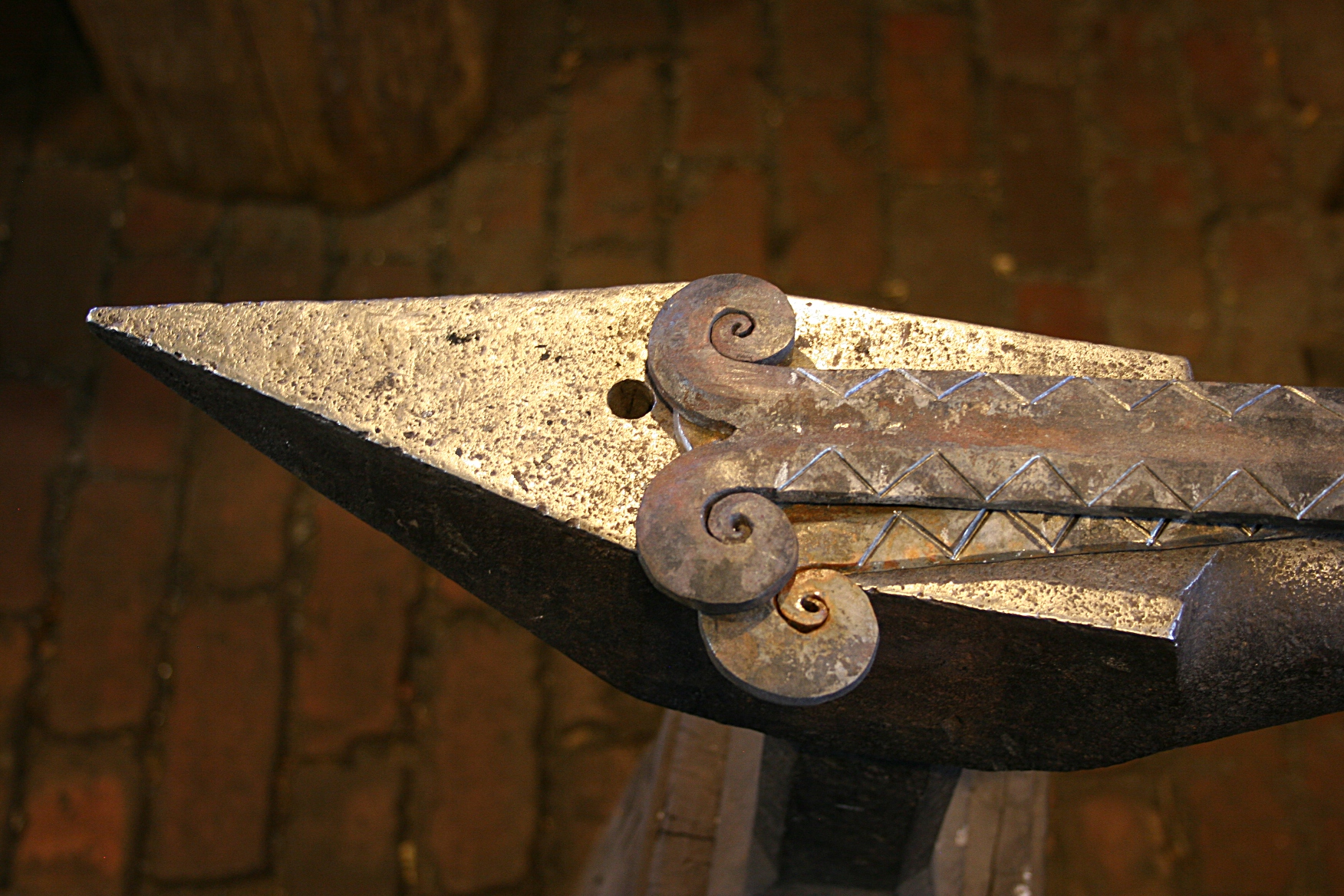
An anvil in Tom's shop.

An anvil in Tom’s shop.

Surely blacksmith shops existed in this area during the late 1860s when Charles and Caroline Ingalls lived with their family in a cabin in the Big Woods near Pepin.

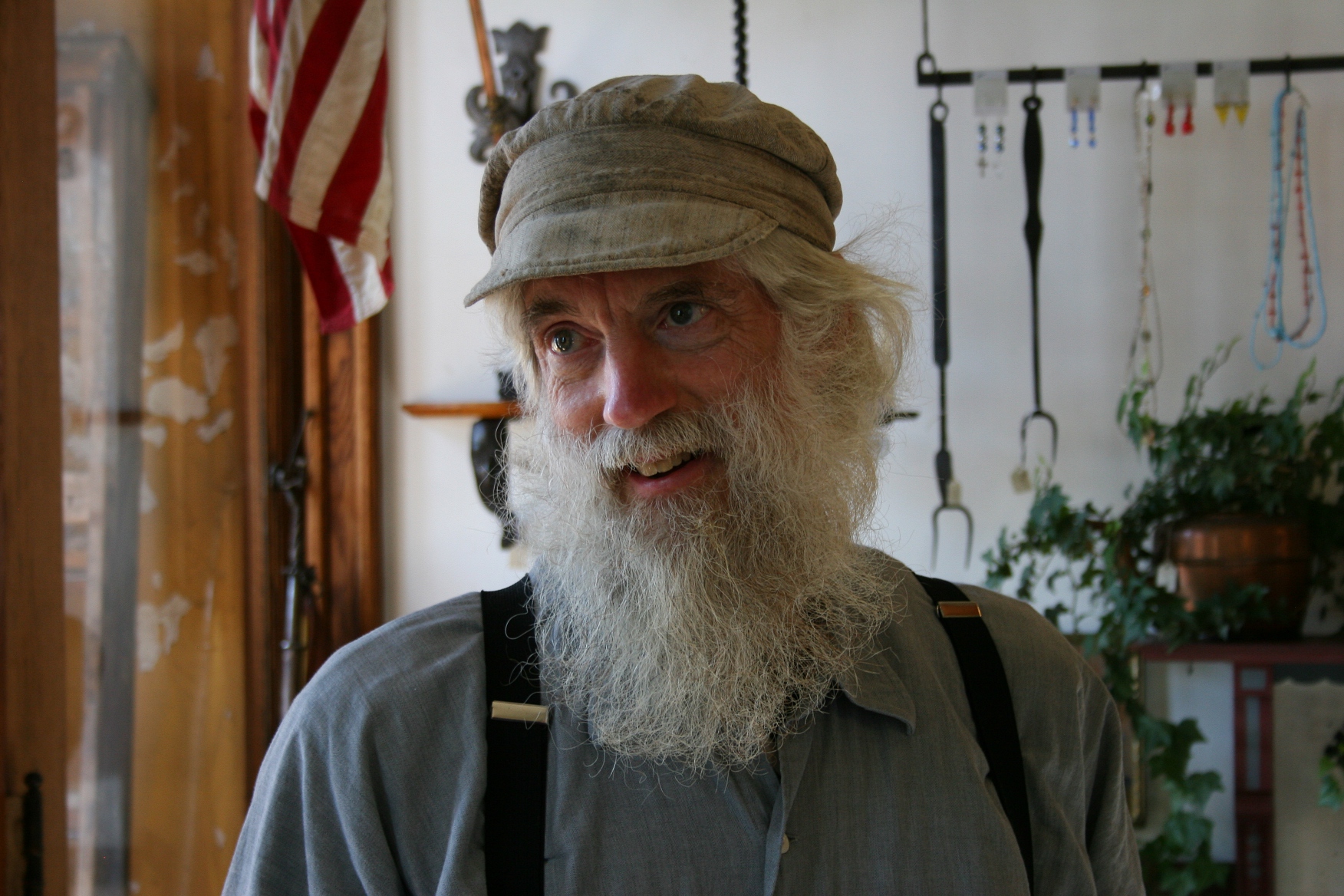
Tom looks the part of a craftsman.

Tom looks the part of a craftsman.

History holds this town. And Tom looks every bit the part of a long ago craftsman, untamed white beard and longish hair and period cap and suspenders giving him the appearance of a historic reenactor. But he is authentic, hand-forging locks, hardware, tools and candle fixtures.

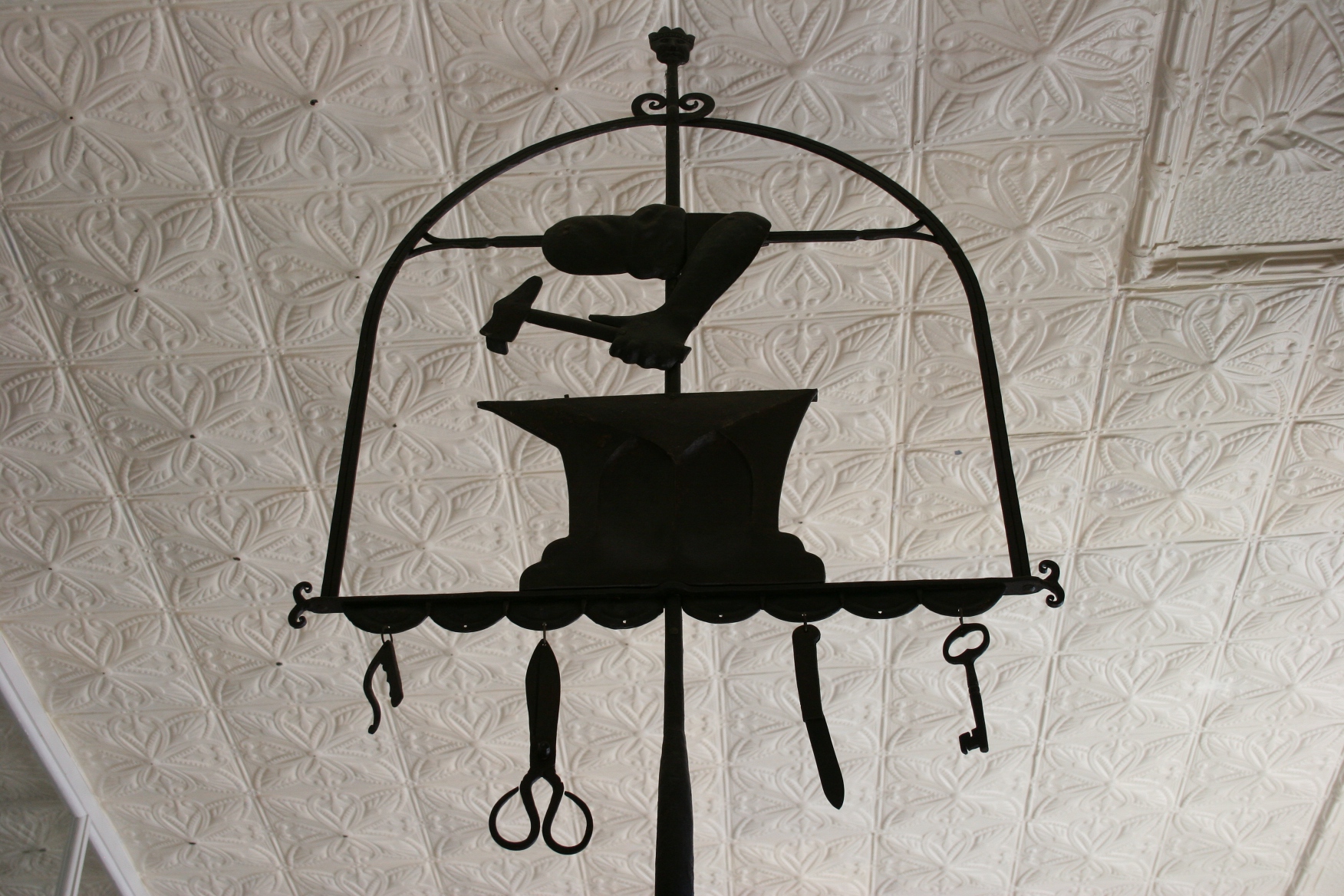
Symbols of the trade for blacksmithing and tin cutting.

Symbols of the trade for blacksmithing and tin cutting.

I almost expect Charles Ingalls to walk in the door.

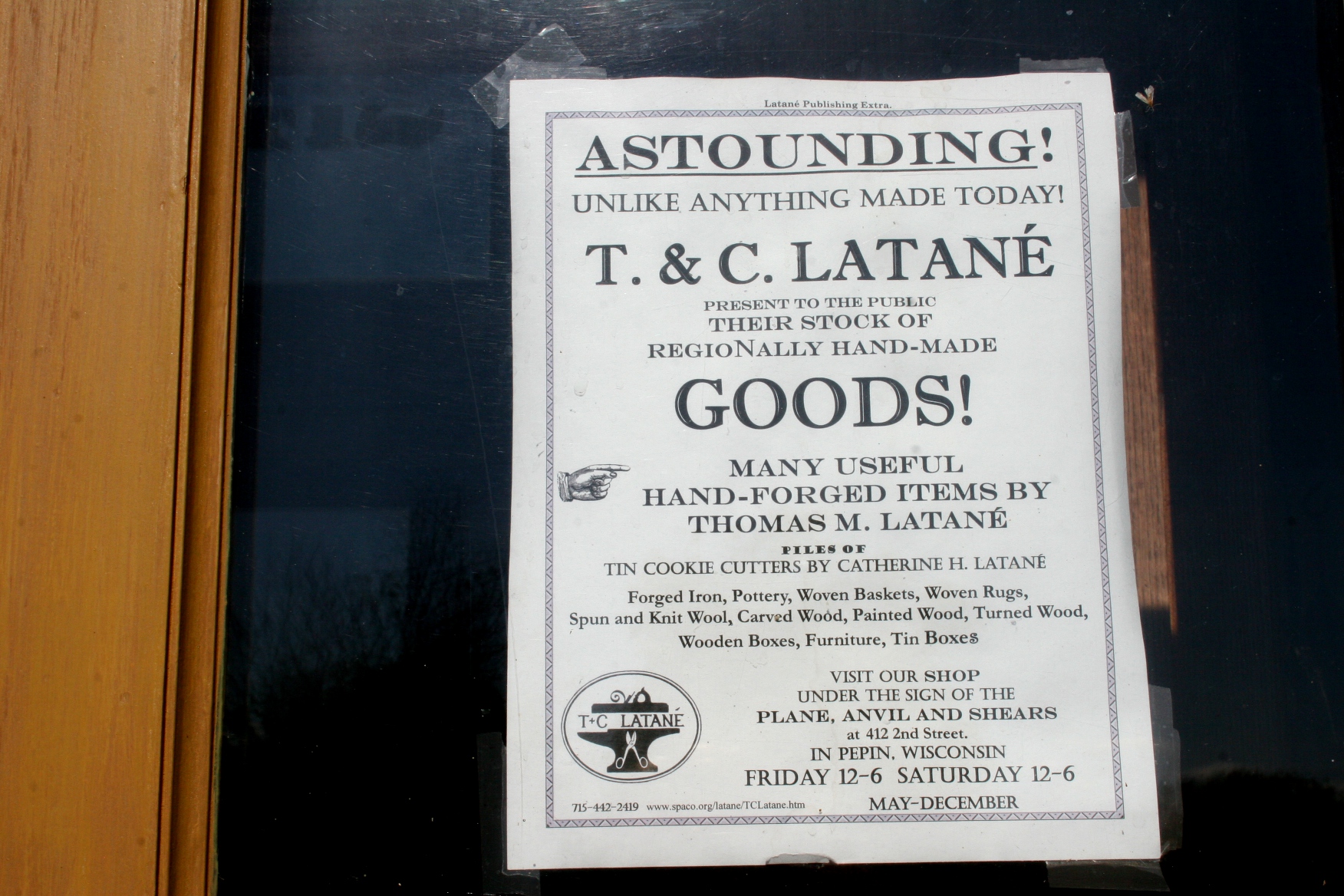
A sign at the shop.

A sign at the shop.

FYI: For more information about T. & C. Latané, as this couple calls their business, click here. The shop at 412 Second Street in Pepin is open from noon – 6 p.m. Fridays and Saturdays, May – December or by chance.

© Copyright 2014 Audrey Kletscher Helbling