Minnesota Prairie Roots

Writing and photography by Audrey Kletscher Helbling

Courageous crocuses April 9, 2026

Filed under: Uncategorized — Audrey Kletscher Helbling @ 6:00 AM
Tags: , , , , , , , , , , ,
Crocuses bloom in my flowerbed. (Minnesota Prairie Roots copyrighted photo March 2026)

EACH SPRING THEY EMERGE, poking through a layer of dried leaves mulching my front flowerbed.

When I spot the tender green shoots of crocuses, I feel a surge of optimism that winter is winding down. However, as a life-long Minnesotan, I also tamp my excitement. Snow falls in April here and sometimes in May. And these crocuses were bursting already in late March.

Days after I removed the leaves, exposing the crocuses to sunshine and air, they grew quickly. Soon purple blossoms spread wide, revealing golden centers like spots of sunshine.

I delight in the shades of purple, notice the lines tracing the petals, the way the flowers hug the ground as if also tentative about the season.

This first flower of spring seems to me courageous. Braving the cold of Minnesota, determined to reach the sunshine, to make a strong statement of hope that the cold and dark of winter will give way to warmth and light.

TELL ME: I’d like to hear your first flower of spring story.

© Copyright 2026 Audrey Kletscher Helbling


The value of village, especially now April 7, 2026

Colorful, eye-catching art decorates a collection box for donations to the Faribault Community Action Center. This box is located just inside the entry to the Shattuck-St. Mary’s School athletic complex. (Minnesota Prairie Roots copyrighted photo April 2026)

IT TAKES A VILLAGE to raise a child,” according to an African proverb turned catchphrase by First Lady Hillary Rodham Clinton in her 1996 book, It Takes a Village: And Other Lessons Children Teach Us.

While I’ve not read Clinton’s book, I understand the importance of a village, of community, in the lives of children. Kids learn, not only from their parents, teachers and each other, but also from being out and about in their communities.

They learn, and teach us adults, about care and compassion, about service and giving back, of lifting up community. In these days of innumerable challenges in America, such lessons are truly more important than ever.

Some of the items collected at St. John’s Lutheran Church, Lakeville, during a special food shelf drive earlier this year. (Minnesota Prairie Roots copyrighted file photo)

I need only look within my own core family to see this. In mid-February, my two elementary-aged grandchildren helped their mom, my eldest, transport items from their Lakeville church to a food shelf in nearby Farmington. The kids sorted donated items. And my first grade grandson wrote about the experience for a school assignment complete with illustrations. “I helped at church (beacus (sic) of ICE),” Isaac wrote.

He knew. His mom has been working tirelessly soliciting cash donations, buying and delivering groceries to a south metro food shelf, and sorting and bagging donations during and after Operation Metro Surge. Not only has she assisted those sheltering in their homes, but she has also taught her children an important lesson in helping others.

Kids are never too young to learn about generosity, about loving their neighbors. About giving of themselves in service to community.

This shows the entry to the Shattuck-St. Mary’s athletic complex, a gym on the left, the soccer dome (where I sometimes walk) to the right and the ice arenas straight ahead. (Minnesota Prairie Roots copyrighted photo April 2026)

That brings me to Shattuck-St. Mary’s, a private college prep school in Faribault. While heading to walk at the Shattuck dome on a recent morning, I noticed several cardboard collection boxes in the public gathering space/hallway of the athletic complex. I stopped to investigate.

Promotional photos of Shattuck are posted on a wall behind a collection box set outside an ice arena and the hallway leading to the soccer dome. (Minnesota Prairie Roots copyrighted photo April 2026)

While the boxes were empty, I read about their purpose. Students, calling themselves “Sabre Storm,” “The Breakfast Club” and “Team Cheese,” are collecting non-perishable food and household and personal care items for the Faribault Community Action Center.

Signage details the project. (Minnesota Prairie Roots copyrighted photo April 2026)

Most needed are: dry beans, canned soups, ramen noodles, canned chicken/tuna, size 7 diapers and pull-ups. I expect those attending hockey and soccer games, and other activities inside the sports complex will drop donations into the collection boxes.

A dozen Shattuck students signed their names on a collection box outside an ice arena. Sabre is the school name and symbol. (Minnesota Prairie Roots copyrighted photo April 2026)

I love that students like Jorge, Lara, Max, Miranda, Yujin, Rhys, Gael and 38 others, who signed the boxes, are connecting with the Faribault community via this drive. There’s not only a “heightened need” for food, household and personal care items at the Community Action Center, but also for cash donations.

Loving this “Sabre Storm” collection box art showing diverse hands reaching out and encircling a state of Minnesota map. (Minnesota Prairie Roots copyrighted photo April 2026)

I read that on the CAC website. But I’ve also heard this from a friend who volunteers at the CAC. The increased need all circles back to my grandson’s words, “beacus (sic) of ICE.” Many people in Faribault were sheltering in place, unable to work, during the height of federal immigration enforcement. And just because that operation has scaled back, the crisis has not ended.

A group of students calling themselves “The Breakfast Club” have signed on to collect donations for the Community Action Center in Faribault. (Minnesota Prairie Roots copyrighted photo April 2026)

The CAC has established a Community Response Fund “to meet urgent and evolving community needs” for food, rental assistance, etc. Every donation helps, my friend says. Even $10.

Growing generosity and kindness at Shattuck-St. Mary’s School via collecting donations. (Minnesota Prairie Roots copyrighted photo April 2026)

It takes a village. It takes a village to raise children. And it takes a village to help our neighbors through a crisis, a crisis created by the federal government. A crisis that has left too many Minnesota families facing overwhelming financial challenges, trauma, personal struggles and an uncertain future.

Fifteen Shattuck students signed this donation box as “Team Cheese.” (Minnesota Prairie Roots copyrighted photo April 2026)

FYI: Please consider making a financial gift to the Faribault Community Action Center Community Response Fund. Click here to learn more. To those of you who have already donated, thank you. I appreciate your generosity during these challenging times in my community. It takes a village.

© Copyright 2026 Audrey Kletscher Helbling
 

Observations from a southern Minnesota protest line April 6, 2026

A sign held during a February protest in Faribault. (Minnesota Prairie Roots copyrighted file photo February 2026)

STANDING ON THE PROTEST LINE in Faribault nearly every Saturday morning for three months, I’ve felt uplifted and loved by other protesters. And I’ve felt tremendous support, too, from the majority of passing motorists who wave, give us the thumbs up and honk their horns.

But I’ve also witnessed outrage, raging anger, dangerous behavior and hostility directed at those of us who are peacefully protesting against the current regime, etc., in this country. Everyone, under the First Amendment, is entitled to their opinion. It’s OK to disagree with us. But, the level of animosity I see and hear is truly disheartening.

BULLYING BEHAVIOR

We, as protesters, expect some negativity to be directed at us. But when it becomes dangerous, such as guys in mammoth pick-up trucks driving dangerously close at a high rate of speed and rolling coal, that crosses the line. We all understand that they are trying to intimidate us, to silence our voices. It’s a tactic that comes down from the top. Bullying is as old as time itself. We won’t be bullied into silence.

DISTURBING BEHAVIOR

That brings me to one particular driver whose behavior on Saturday had two of my new protest friends and me asking, “Did you see that?” That was a dad who had rolled down his window to give us the middle finger and shout profanities at us, with his young child strapped in a car seat behind him. This proved the most disturbing behavior I’ve witnessed while protesting. Children mimic what they see and hear. And this dad was teaching his child hatred and disrespect toward others.

UNSUITABLE WORDS

That brings me to the president’s profanity-laced social media post on Easter Sunday. I won’t type his warning to Iran about the Strait of Hormuz because his message is not suited for a general audience. But suffice to say that his language is unsuitable for the office he holds. I often wonder how anyone can be OK with what he writes, says and does.

From my private collection, a peace dove painting on burlap by Jose Maria de Servin This shows only a portion of the artwork, which I purchased at a recycled art sale many years ago. (Minnesota Prairie Roots copyrighted file photo)

WORDS OF PEACE

Then there’s Pope Leo XIV, who delivered a message of peace on Easter, as one would expect of a world faith leader. “Let those who have the power to unleash wars choose peace,” the pontiff said. Amen to that. I am thankful for leaders like him who stand publicly strong for what is right and good and moral. Now if only Pope Leo could have a one-on-one with the president or that dad driving past our protest line, flipping the bird and shouting profanities at us as his child watched and listened.

#

FYI: I encourage you to click here and read a recent article published in The Daily Yonder about No Kings Day 3 protests in three southern Minnesota communities, including Faribault. The well-written story offers insights into protesting and opinions in rural America.

© Copyright 2026 Audrey Kletscher Helbling

 

Maundy Thursday reflections April 2, 2026

This paint-by-number painting was displayed at the 63rd annual Last Supper Drama, performed at St. John’s United Church of Christ, Wheeling Township, rural Faribault, on Palm Sunday. Jean Pederson painted this “The Last Supper” in 1952. (Minnesota Prairie Roots copyrighted photo March 2026)

IMAGINE IF YOU were sitting down to your last meal with dear friends. How would you feel? What would you say to them?

Jesus faced this scenario on Maundy Thursday as he gathered with his 12 disciples for a final Passover meal before his death by crucifixion the next day. Had it been me, I would have been terrified at the thought of such an agonizing death.

Christ showed incredible strength. He managed to continue teaching, loving, forgiving, even as the time of his death approached. He was certainly troubled, as Scripture tells us. I mean, how could he not be bothered, knowing that one of his disciples would betray him, with a kiss of all things? I would feel devastated.

From John 13:34, photographed years ago in downtown Faribault. (Minnesota Prairie Roots copyrighted file photo)

But Jesus is not anyone. He embodies love. And he tells us to love. Correction, he commands his disciples (and us, too) to love each other. He says: A new command I give you: Love one another. As I have loved you, so you must love one another (John 13:34).

As I consider all the division and hatred among us today, I focus on Christ and his example of unconditional love. Throughout his earthly life, Jesus continually showed compassion and care, often to the downtrodden, the outcasts, the lowly. I’m quite certain if he was physically walking on this earth today, he would still be showing such mercy.

He’d also be greatly disappointed, even upset, about the way we sometimes treat each other.

So what’s the point here? Maundy Thursday marks a monumental day for reflection. For change. For striving to follow Christ’s directive to love one another. And that starts with each of us. Today.

© Copyright 2026 Audrey Kletscher Helbling

 

Thither will we go March 28, 2026

Sunrise on Horseshoe Lake in the central Minnesota lakes region. (Minnesota Prairie Roots copyrighted file photo)

I ATTENDED A CONCERT at my church, Trinity Lutheran, Friday evening. Students from Concordia Academy in Roseville kicked off their spring break “Walk in the Light Tour” to Nashville with their first stop here in Faribault.

What a talented group of high school musicians who sang with joy, energy and depth. From spirituals to traditional worship to blessing songs and more, they performed in the light of faith.

One song in particular, “Thither Will I Go” by composer Tom Trenney, resonated with me. It’s based on a poem, “Light Looked Down,” by Laurence Housman (1865-1959). Although this poem was written long ago, the words are timeless.

The short three-line poem centers on light and darkness, war and peace, and hatred and love.

As I sat listening to these young people, my mind wandered to the No Kings Day protests today. “Thither Will I Go” would be a great protest song. As protesters, we shine light, peace and love.

I’d like those who criticize us, who question our reasons for protesting, who claim we are paid (we are not), who shout profanities at us, call us stupid and more, to consider the words written long ago by Laurence Housman. As protesters, we choose light over darkness, peace over war, love over hatred.

Thither will we go.

Where there is darkness, let there be light. Where there is war, let there be peace. Where there is hatred, let there be love.

© Copyright 2026 Audrey Kletscher Helbling
 

In appreciation of those protesting in rural areas on No Kings Day March 27, 2026

Filed under: Uncategorized — Audrey Kletscher Helbling @ 6:00 AM
Tags: , , , , , , , , ,
An abandoned farmhouse in rural southwestern Minnesota. (Minnesota Prairie Roots copyrighted file photo)

ON THIS, THE DAY before nationwide No Kings Day protests, I want to pause and thank the many people in small towns, in the most rural of regions, who are standing up for democracy. Media attention tomorrow will focus on protests in big cities. That coverage is expected. But equally as important are the rallies in communities of a couple hundred or several thousand deep in red territory.

In these places, publicly standing against the Trump administration takes, simply put, guts. Everyone knows everyone in small towns and it’s not necessarily easy to be politically at odds with one another. These are the people you see at the post office, worship with, meet for coffee, work beside, live next door to, do business with.

A protester at a No Kings Day protest in Northfield, a college town of about 21,000 and 20 minutes from my community. I protested in Northfield before protests began in Faribault. (Minnesota Prairie Roots copyrighted file photo June 2025)

When those who oppose Trump, his administration and policies protest in rural Republican strongholds, they expose themselves as “the other.” Yet, it is this very public act of defiance and resistance which can get people thinking, start conversations, open doors to change. Now, more than ever, it’s important to fearlessly oppose tyranny. It’s important to stand up for freedom, voting rights, immigrants, justice, due process… It’s important to express concerns about the economy, the war in Iran, the overall state of this country.

Upon looking at a map of all the No Kings Day protest sites in Minnesota, I found many in rural areas. From Madison, population 1,500 and the self-proclaimed “Lutefisk Capital of the USA” near the South Dakota border, to Baudette, population 1,100 and the “Walleye Capital of the World” near the Canadian border, Minnesotans will gather. Even in my deeply red home county of Redwood in southwestern Minnesota, a protest is planned in the county seat of Redwood Falls.

In St. James, also in southwestern Minnesota and a town where I once lived and worked as a regional news reporter for the Mankato Free Press, a No Kings Day event is set. The community of 4,800 is home to many Hispanics and Latinos and was targeted by federal immigration enforcement agents during Operation Metro Surge.

A photograph of Paul Bunyan taken many years ago in Hackensack. (Minnesota Prairie Roots copyrighted file photo)

Even Hackensack, in Paul Bunyan’s northern Minnesota lake country, is on the Saturday protest map. That town has a population of just under 300 as does Cyrus, near Morris in far western Minnesota, also holding a No Kings Day protest.

From my community of Faribault, with a population of around 25,000, to Kenyon to the east with some 1,800 residents, to the small towns of Rushford, St. Charles, Spring Grove and Preston in the far southeastern corner of Minnesota, and many small towns and cities across the state, people will gather in protest on Saturday.

In St. Paul, organizers are expecting up to 100,000 to rally at the state capitol. Those are some impressive numbers. Yet, if even five people show up in a small town to protest, that’s impressive, too.

Fellow protester Susan gifted me with this Rebel Loon pin crafted by her husband. The loon is Minnesota’s state bird. The graphic symbolizes resistance in the North Star state. (Minnesota Prairie Roots copyrighted and edited photo March 2026)

Every voice of resistance matters, wherever you live, rural, suburban or urban.

FYI: The Faribault No Kings Day protest is from 11 a.m.-noon March 28 (and every Saturday) by the Rice County government services building along Minnesota State Highway 60.

© Copyright 2026 Audrey Kletscher Helbling

 

ICE OUT, a photo essay & commentary from Minnesota February 13, 2026

Northfield, typically a welcoming community, has not welcomed ICE as seen in this sign downtown. (Minnesota Prairie Roots copyrighted photo February 2026)

THE DAY AFTER BORDER CZAR (anyone dislike that title as much as me?) Tom Homan announced a draw-down of federal immigration agents in Minnesota, I’m feeling, as Governor Tim Walz said, “cautiously optimistic.” Recent history has proven that we can’t necessarily believe or trust what federal government officials tell us. But I’m trying to be hopeful.

T-shirts for sale at Content Bookstore in Northfield. (Minnesota Prairie Roots copyrighted photo February 2026)

For more than two months, 3,000 immigration enforcement agents have been working in Minnesota. And if anyone still believes that they are/were doing only targeted enforcement, arresting “the worst of the worst,” then I have some lakefront property to sell you.

Let’s go back to Thursday morning, when Homan made his draw-down announcement complete with praise for his agents and the success of their mission in Minnesota. I couldn’t listen any more. I’d heard enough.

Buttons for sale at Content Bookstore, an independent bookshop in Northfield. (Minnesota Prairie Roots copyrighted photo February 2026)

I had an appointment in neighboring Northfield anyway so off I went to this college town that, like Faribault, has been recently inundated by ICE. Except in Northfield, a decidedly blue city, the business community is publicly vocal about its opposition to ICE’s presence unlike in my decidedly red city.

Empowering signage in the window of a downtown Northfield business. (Minnesota Prairie Roots copyrighted photo February 2026)

In the heart of downtown Northfield, on one side of a block along Division Street, nearly every business has posted an anti-ICE sign and/or uplifting signage. I felt the strength of those shopkeepers willing to stand up for and encourage others. There’s power in raising united voices in opposition to wrong.

Buy a sticker at Content and help Northfield’s children. (Minnesota Prairie Roots copyrighted photo February 2026)

Inside Content Bookstore, where I stopped to shop for a baby shower gift, I discovered even more messaging and ways in which the Northfield community is stepping up to help their immigrant neighbors, including children affected by ICE’s actions. Monies from the sale of Minnesota state flag and “Rebel Loon” (our state bird) stickers will go toward books and activities for those kids. Content is also collaborating on a poetry chapbook, Words to Meet the Moment: Poetry Against Fascism, releasing soon.

Strong words for ICE posted on a downtown Northfield business. (Minnesota Prairie Roots copyrighted photo February 2026)

As ICE supposedly ends Operation Metro Surge in Minnesota (which also encompassed cities and small towns outside the metro like my city of 25,000), we are left with a mess. Let me define that. The personal toll is huge. Trauma has been inflicted upon thousands. “Generational trauma,” Governor Walz said.

Another inspirational message posted at a Northfield business. (Minnesota Prairie Roots copyrighted photo February 2026)

I worry about the kids who witnessed family members being taken or who saw armed, masked immigration officers with guns outside their schools (with classmates taken by ICE), outside their daycares, outside or inside their homes, at their bus stops, on the streets. It’s hard enough for adults to see such threatening power, aggression and use of excessive force. But our children? The mental health of all Minnesotans concerns me, especially that of the youngest among us.

Northfielders have stepped up to help one another as seen in this sign. (Minnesota Prairie Roots copyrighted photo February 2026)

And then there is the financial fall-out with people now unable to pay their bills, including rent, facing eviction because they haven’t gone to work out of fear of ICE. Again, legal status matters not as anyone with brown or black skin has been targeted. These same individuals and families have relied on community members and nonprofits to help with rent payments and to bring them groceries. This is not long-term sustainable.

Against the backdrop of the Minnesota state flag, the message is clear on a Northfield business: ICE OUT. (Minnesota Prairie Roots copyrighted photo February 2026)

Until we are all confident that ICE is really, truly gone and is doing only targeted enforcement of “the worst of the worst,” we will all remain on edge. Rebuilding trust, restoring life to normalcy will assuredly take time.

A great quote from Maya Angelou fits the strength and resilience of Minnesotans. (Minnesota Prairie Roots copyrighted photo February 2026)

Likewise, the Minnesota economy has suffered severe damage, especially small businesses. Governor Walz has proposed a $10 million forgivable loan recovery plan to help the business community and is also hoping for help from the federal government. Good luck with that.

While on the Riverwalk in Northfield, I spotted this graffiti on the pedestrian bridge over the Cannon River. I don’t condone this graffiti, but I certainly understand it. (Minnesota Prairie Roots copyrighted photo February 2026)

While in Northfield on Thursday, I learned that ICE agents recently went along Division Street, asking for employment records at some businesses. I don’t know details. But in my mind, I envision these armed, masked officers as a threatening presence in the heart of this picturesque, riverside American city. This community doesn’t back down from threats. In September 1876, townsfolk stopped the James-Younger Gang from robbing the First National Bank. Northfield is a community which cares for one another and which, in the midst of a federal invasion, has stood, is still standing, Minnesota Strong.

© Copyright 2026 Audrey Kletscher Helbling
 

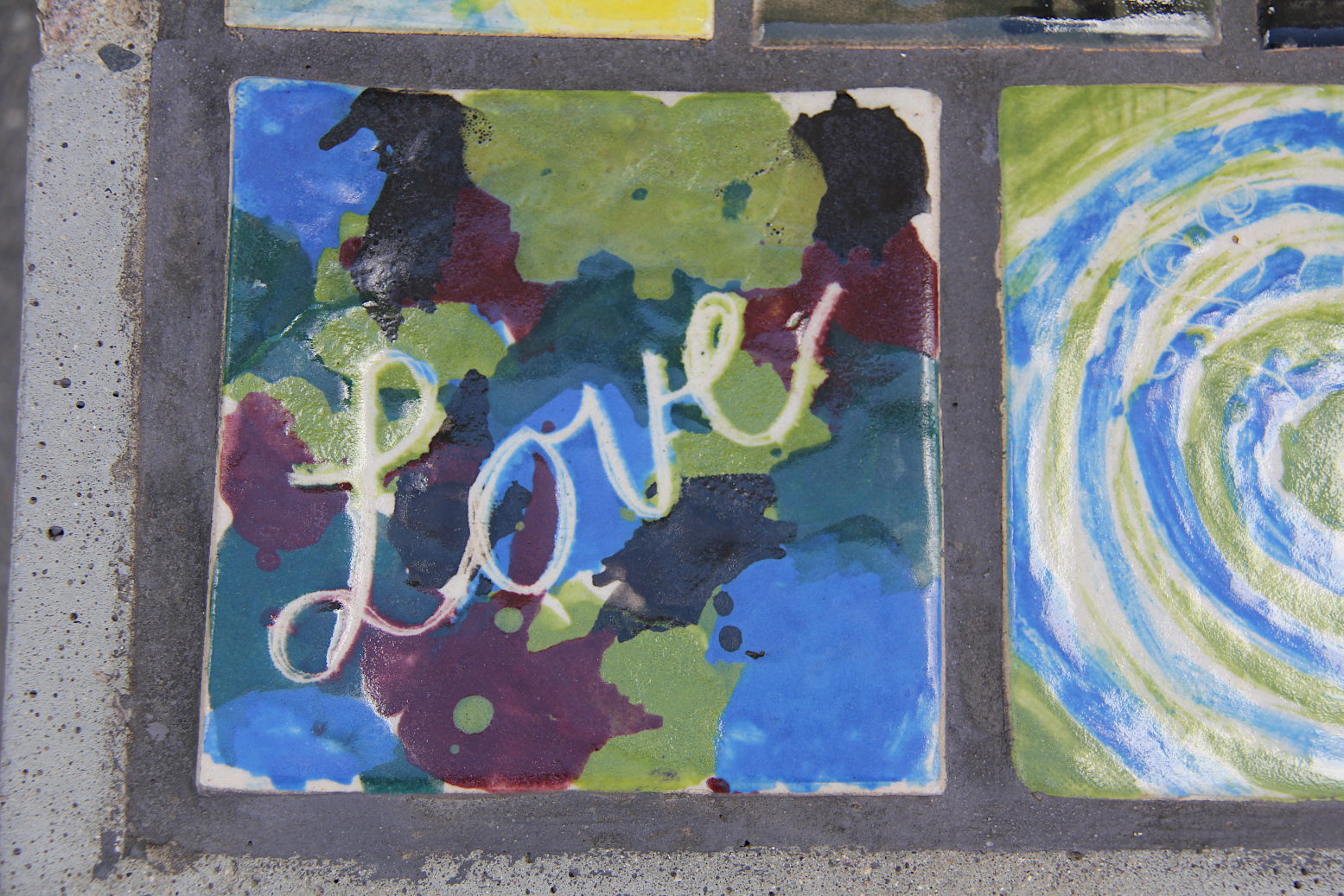
This is love February 12, 2026

A love message posted along a recreational trail in Madison, Wisconsin. (Minnesota Prairie Roots copyrighted file photo)

WHAT IS LOVE if not compassion, care and kindness, often privately, but also publicly, expressed? Each holds value.

Roses from my husband. (Minnesota Prairie Roots copyrighted file photo)

On Valentine’s Day, I appreciate a loving valentine, a box of chocolates and/or a dozen roses as much as anyone. But what I value even more is the steadfast love that is part of my daily life. The love that comes in a hug, a kind word, a loving gesture, a caring act, a text.

A look inside a food pantry outside the Cathedral of Our Merciful Saviour, Faribault. (Minnesota Prairie Roots copyrighted file photo)

I also appreciate the ways in which communities show love. Neighbors helping neighbors. Nonprofits providing for those in need of food, housing, financial assistance. Volunteers helping in their communities in whatever ways they can, whenever they can. We are seeing a lot of that right now.

This is love.

A beautiful love-themed mural in Northfield. (Minnesota Prairie Roots copyrighted file photo)

And then there’s love-themed art found in public spaces. I’ve discovered love on murals, in signs, even on the back of a car. I often photograph these love messages because I think it’s important to document the positive, that which uplifts, that which connects all of us no matter our differences.

A personal, loving message photographed on the back of a car several years ago at River Bend Nature Center in Faribault. (Minnesota Prairie Roots copyrighted file photo)

Love is universal. And how we express and live love matters in connecting us, building relationships, bettering our communities.

One of my favorite photos, taken in Pine Island, shows a loving act. (Minnesota Prairie Roots copyrighted file photo)

Love comes in a smile, a door held, a supportive arm offered, an encouraging word spoken. Words matter. They need not be poetic or profound, simply rooted in kindness, understanding, care.

A vintage valentine from my mom’s collection. (Minnesota Prairie Roots copyrighted file photo)

Listening, too, is love, something we could all be better at practicing. The same goes for thinking before we speak or anonymously type behind our screens.

Photographed in Pine Island. (Minnesota Prairie Roots copyrighted file photo)

On Valentine’s Day, I hope we can all pause and ponder the ways in which we can grow love. In our personal lives. In our neighborhoods. In our communities. For “what the world needs now is love, sweet love.” And a whole lot more of it.

© Copyright 2026 Audrey Kletscher Helbling
 

Continuing to raise our Minnesota Strong voices in Faribault February 9, 2026

My protest sign focuses on human rights while another sign I created calls for ICE to get out of Rice County and Minnesota. (Minnesota Prairie Roots copyrighted photo February 2026)

I PULLED OUT my long johns, wool socks, stocking cap, mittens, hand warmers, winter boots and scarf. Then I pulled out my parka and my protest sign: STAND UP FOR HUMAN RIGHTS.

This photo shows just a section of the protesters lining Minnesota State Highway 60 on Saturday. Protesters meet here weekly at 11 a.m. for an hour of peaceful protest. (Minnesota Prairie Roots copyrighted photo February 2026)

Just before 11 a.m. Saturday, Randy and I joined others outside the Rice County government services building along Minnesota State Highway 60 for our fourth protest there and the fifth in Faribault. Each week numbers grow, this time reaching some 80 of us stretched along the sidewalk with our signs.

Bundled up in 25-degree temps, a protester displays a sign against ICE. (Minnesota Prairie Roots copyrighted photo February 2026)

We are not agitators or paid protesters as some claim, but rather ordinary Minnesotans united, called by our morals, our compassion, our concerns, to publicly say we are not OK with what is happening in this country. We are Minnesotans who care about immigrants and refugees, about freedom, about the Constitution, about due process and much more. We are concerned about the presence of ICE agents, whom we want out of our community, out of our state, after two-plus months of occupation.

If you look closely at the banner on the lamp post, you will see a photo of a local veteran. Many veterans have joined the Saturday protests, recognizing the importance of standing up for freedom and Constitutional rights. (Minnesota Prairie Roots copyrighted photo February 2026)

And so we protest, week after week in our community an hour south of Minneapolis, because our city, too, has been impacted by ICE. People have been taken by federal agents from an apartment complex near the public library, by the railroad tracks near the turkey processing plant, from the trailer parks… It’s documented in videos. Warning horns blare, whistles sound, bystanders yell, sometimes. ICE has parked for hours in a neighborhood with Hispanic families. Watching, intimidating, silently threatening. Agents have photographed license plates at a gas station. This is reality in my city of 25,000.

School attendance has dropped. People are afraid to go to work, afraid to go grocery shopping and/or to food shelves (because ICE is watching), afraid to go to the doctor, afraid to leave their homes for fear of being taken by ICE. Legal status doesn’t seem to matter, only skin color, although even white people have been detained (with two killed) in Minnesota. Neighbors, churches and more have rallied to help with grocery shopping and delivery, walking kids to bus stops, giving co-workers rides. That support matters as does participating in protests. I’ve personally been thanked by Latinos and a Somali man for protesting.

This is why I’ve become an activist. This is why I use my voice as a writer and photographer. That is why I’ve started volunteering at a local food shelf. No one should live in fear of simply going about their daily lives. I am also doing this for my young grandchildren. I want them to understand the importance of speaking up for others. I want them to realize, when they are old enough, that their grandma did not remain silent in the face of atrocities inflicted by the federal government upon its people.

One protester drew on history to create his protest sign. (Minnesota Prairie Roots copyrighted photo February 2026)

There is value in publicly taking a stand, especially in a city like mine which votes red. (Well, certainly not all of us.) Every protest brings out some who object to our activism as they drive by. That is their Constitutional right. They flash middle fingers, shout profanities, sometimes drive aggressively close, raging mad. That is not OK, potentially endangering people protesting in a public space. But we remain undeterred in raising our voices.

Cold winter weather has not stopped Minnesotans from bundling up to speak up. (Minnesota Prairie Roots copyrighted photo February 2026)

ON TUESDAY, FEBRUARY 10, a group of county residents are going to the Rice County Board of Commissioners meeting to speak about the impact of ICE on the community. That will happen during the open comments portion of the meeting at 8 a.m. I’m not part of that group, but was made aware of it. I’ve felt for a while that our local city and county government officials need to address this topic. ICE is certainly having a negative impact on the health, safety and well-being of county residents both directly and indirectly. That should not, and cannot, be ignored.

We must all do whatever we can, whenever we can, however we can to speak up, help and love our neighbors, and stand strong in the face of tyranny and injustice.

© Copyright 2026 Audrey Kletscher Helbling
 

“Evening Prayer for Our Nation” planned at Bishop Whipple’s church in Faribault February 2, 2026
(Promo courtesy of the Cathedral of Our Merciful Saviour)

FIFTY MILES FROM THE NON-DESCRIPT Bishop Henry Whipple Federal Building currently housing ICE detainees in Minneapolis, a beautiful, aged cathedral rises high in the heart of Faribault. Wednesday evening, February 4, that magnificent, massive cathedral—Bishop Whipple’s church—will center a community gathering.
The historic Cathedral of Our Merciful Saviour, 515 Second Avenue Northwest, across from Central Park in Faribault. (Minnesota Prairie Roots copyrighted file photo November 2025)

Beginning at 7 p.m. the historic Cathedral of Our Merciful Saviour will open its doors for “Evening Prayer for Our Nation” in support of Faribault’s refugees and immigrants. The Cathedral’s pastor, the Rev. James Zotalis, and the Rev. Henry Doyle will lead the event, which includes prayers, readings, music and teachings from Bishop Whipple.

Organizers also promise networking opportunities and information about ways to help others.

A mural on the back side of the Central Park bandshell in Faribault features a portrait and information about Bishop Henry Whipple. (Minnesota Prairie Roots copyrighted file photo)

Bishop Whipple, who shepherded this congregation while serving as the first Episcopal bishop of Minnesota beginning in 1859, would surely be pleased with the upcoming gathering just as he would surely be displeased with the imprisonment of detainees at the federal building bearing his name. He would likely be standing alongside protesters protesting immigration enforcement and asking to visit detainees inside.

This clergyman focused his ministry on “justice and mercy for all.” And that is evidenced in his ministry to the Dakota both in Faribault and parts west in Minnesota and then at Fort Snelling. Whipple went to the fort and ministered to the Dakota held captive there following the U.S.-Dakota War of 1862.

When 303 Dakota were sentenced to hanging after the war, Whipple traveled to Washington DC to ask President Abraham Lincoln to spare their lives. Lincoln pardoned most, but 38 were still hung in the nation’s largest mass execution.

Encouraging words posted near a garden in the heart of downtown Faribault many years ago. (Minnesota Prairie Roots copyrighted file photo)

If Bishop Whipple was alive today, I expect he would be doing everything in his power to help anyone threatened and/or taken by ICE and CBC. But because he is not here, it is up to us to help. I know many people in my community are helping quietly behind the scenes. Walking kids to bus stops. Giving co-workers rides. Delivering groceries. Donating money and food. Volunteering.

Wednesday evening’s “Evening Prayer for Our Nation” is needed, too. It’s needed to bring people together in community, to unite, to uplift, to pray, to share, to recharge, to publicly support our neighbors, to find tangible ways to help. Bishop Whipple would feel grateful. He cared. And so should we.

#

FYI: Whether you live near or far, Faribault nonprofits are in need of donations to help families sheltering in place during ICE operations in Minnesota. This is not just a Twin Cities metro enforcement. Many communities in greater Minnesota, including mine, are suffering.

Please consider helping immigrants and refugees in my community via a monetary donation to the Community Action Center in Faribault (Community Response Fund) or to St. Vincent de Paul. The need for rental assistance, especially, is growing.

© Copyright 2026 Audrey Kletscher Helbling