I own this children’s picture book about rabbits. It includes a pop-up page full of rabbits. Fun book. (Book cover sourced online)
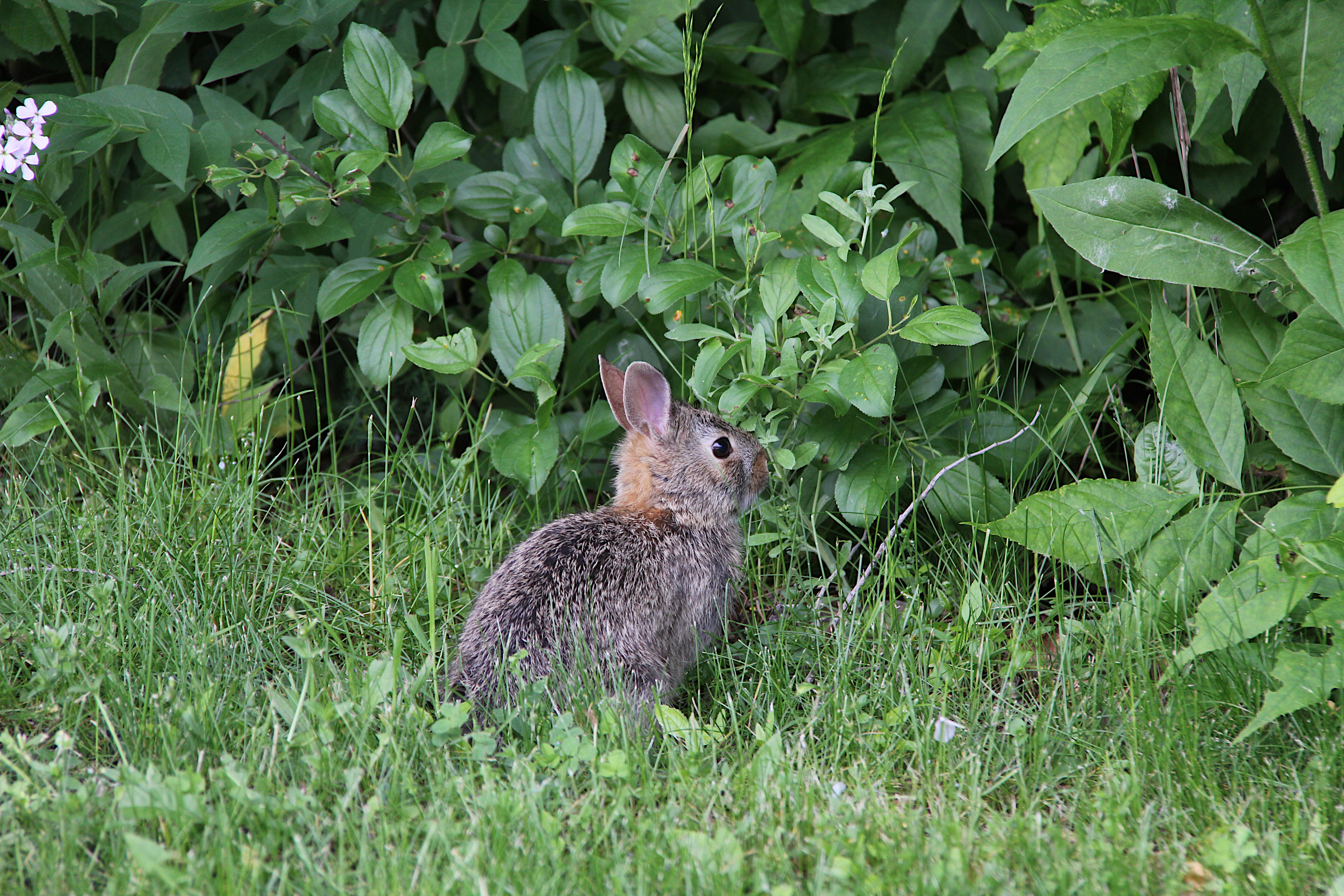
I HAD NO IDEA, none, that rabbits eat milkweed leaves. But, looking out the kitchen window toward my mess of plants, I saw two young rabbits, one feasting on milkweed. The bunny stood, grabbed a fat leaf and devoured it in less than a minute.
Alright then. Naughty bunny!
This feasting came as a surprise, although I wondered why several milkweeds appeared partially eaten with one even snapped and dead. Now I’ve seen firsthand who’s been dining in my yard.
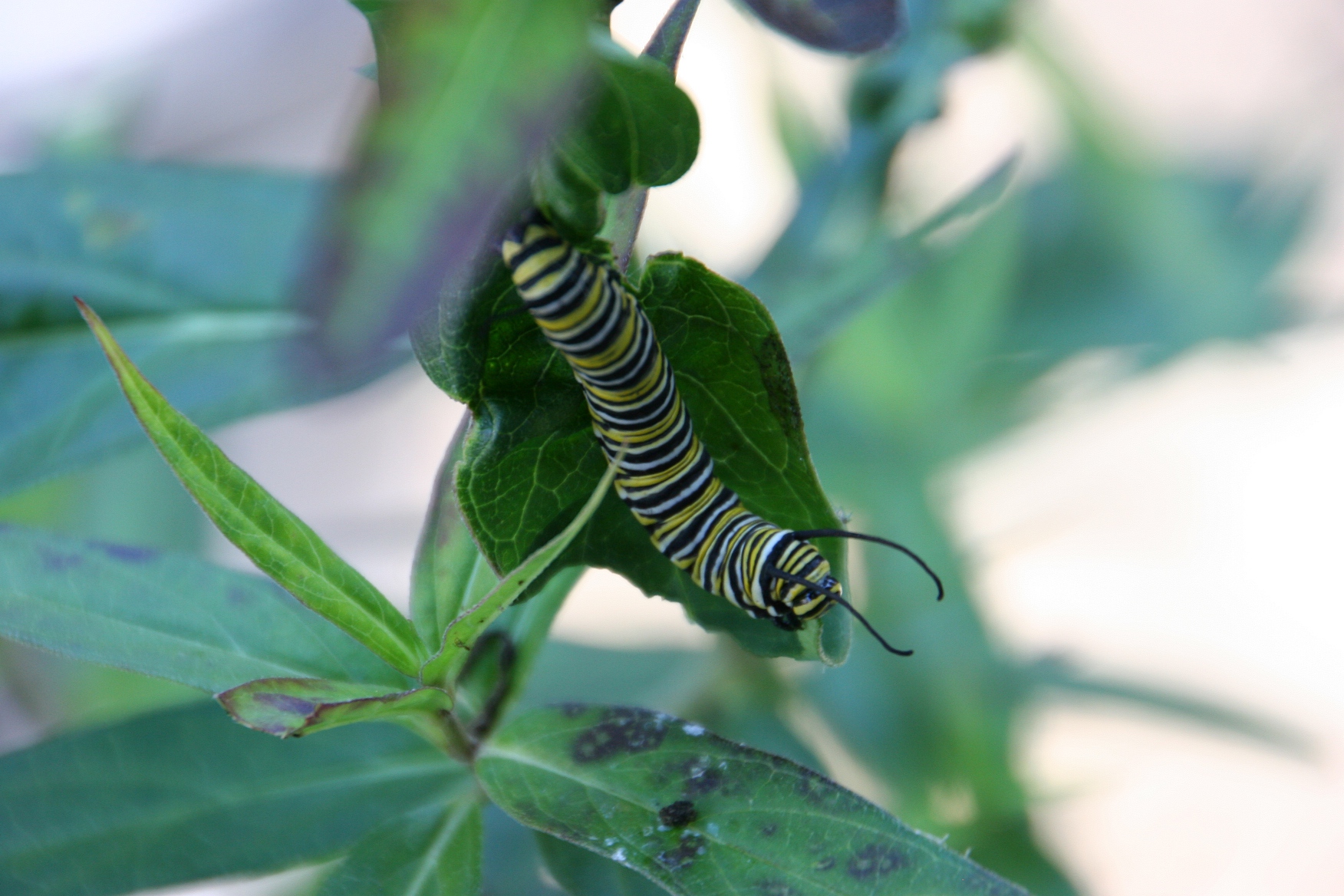
A monarch caterpillar on a milkweed. (Minnesota Prairie Roots copyrighted file photo)
I would prefer the rabbits leave the milkweeds for their intended purpose—as a host plant for monarchs to lay their eggs and as the sole source of food for monarch caterpillars. But no adolescent bunny is going to listen to me.
My eldest daughter has battled rabbits for years at her south metro home. They eat the flowers in her front yard like it’s Mr. McGregor’s garden. And they are even so brazen as to hop up the steep back deck steps and nibble on potted flowers. Naughty bunnies! She certainly has a rabbit problem and definitely dislikes cottontails. I’m not at that level. I still think rabbits are mostly cute.
Not the rabbit I saw eating a milkweed in my yard, but similar in size. (Minnesota Prairie Roots copyrighted file photo)
Despite this unwelcome feeding on the many milkweed plants that grow randomly and prolifically on my property, I have no intention of chasing away the rabbits. I mean, they do have to eat and I have not provided them with any tempting options like petunias.
Plus, they are fun to watch when they’re little and cute.
TELL ME: How do you feel about rabbits?Are they an issue for you?
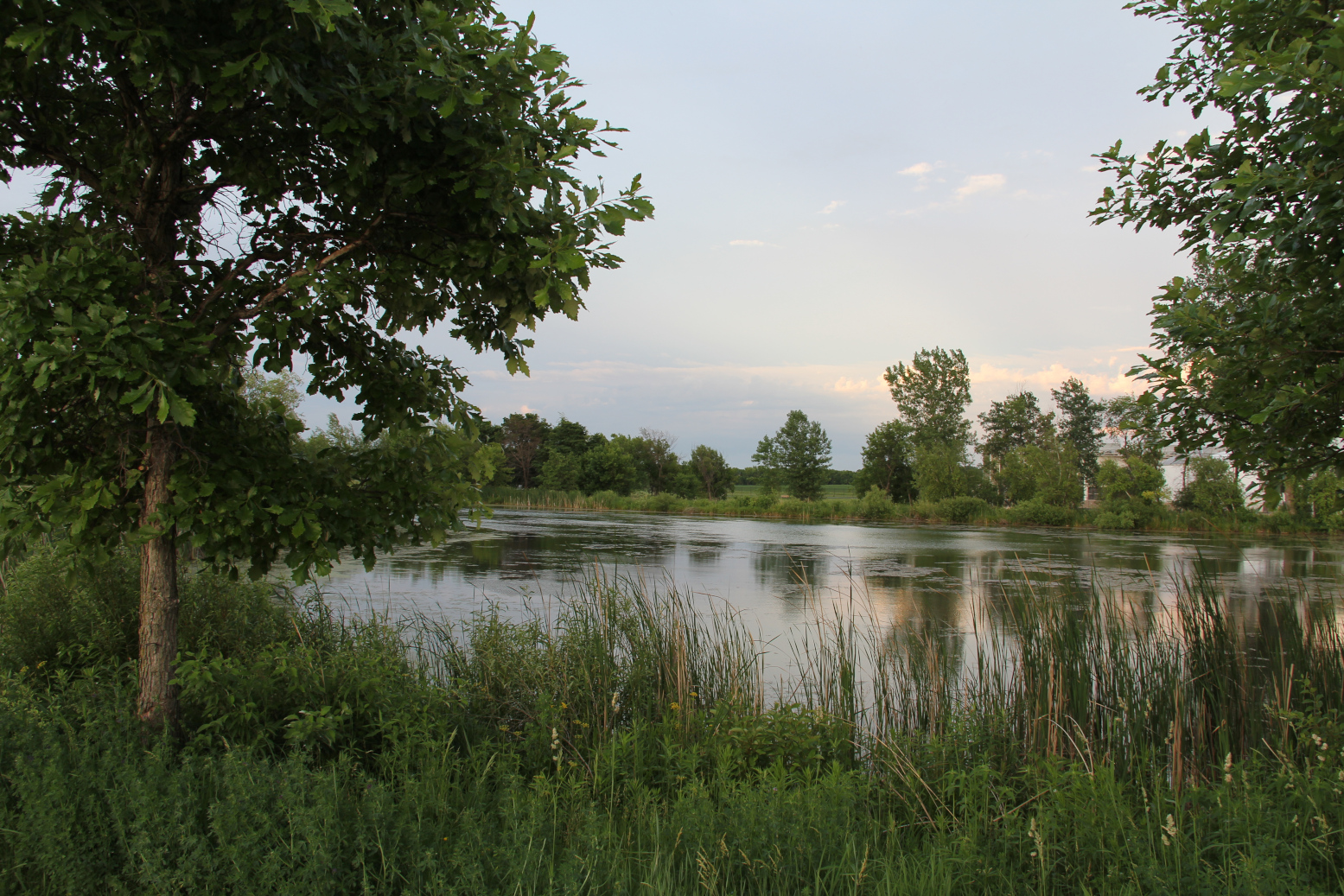
Oh, how lovely the light on the pond. (Minnesota Prairie Roots copyrighted photo June 2026)
IN THE ETHEREAL LIGHT of the setting sun, Randy and I loop around the ponds at Faribault Energy Park, our shoes crunching on gravel.
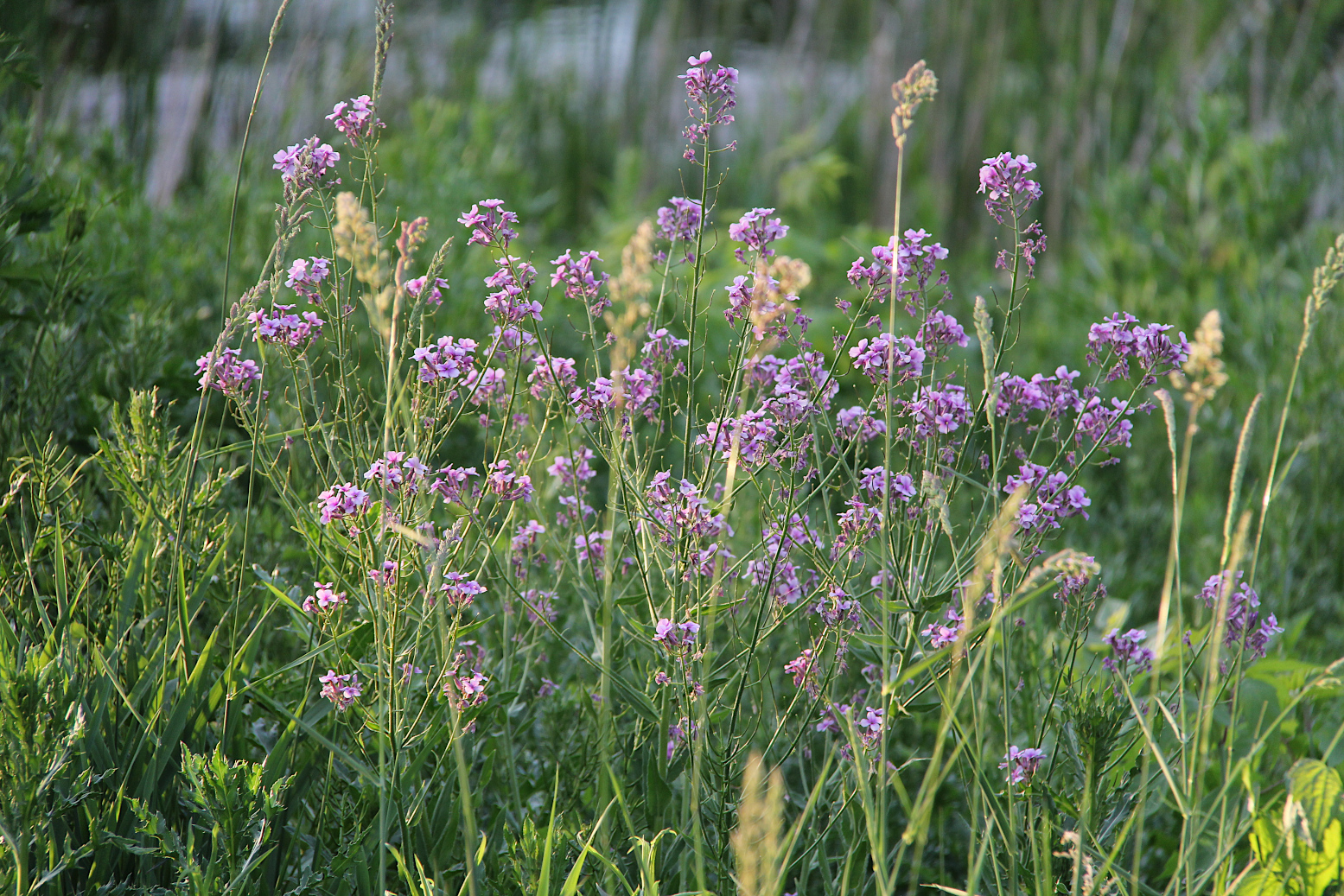
There’s an abundance of wildflowers in the park. (Minnesota Prairie Roots copyrighted photo June 2026)
If not for the steady roar of traffic on adjacent Interstate 35, this parcel of parkland would prove especially peaceful.
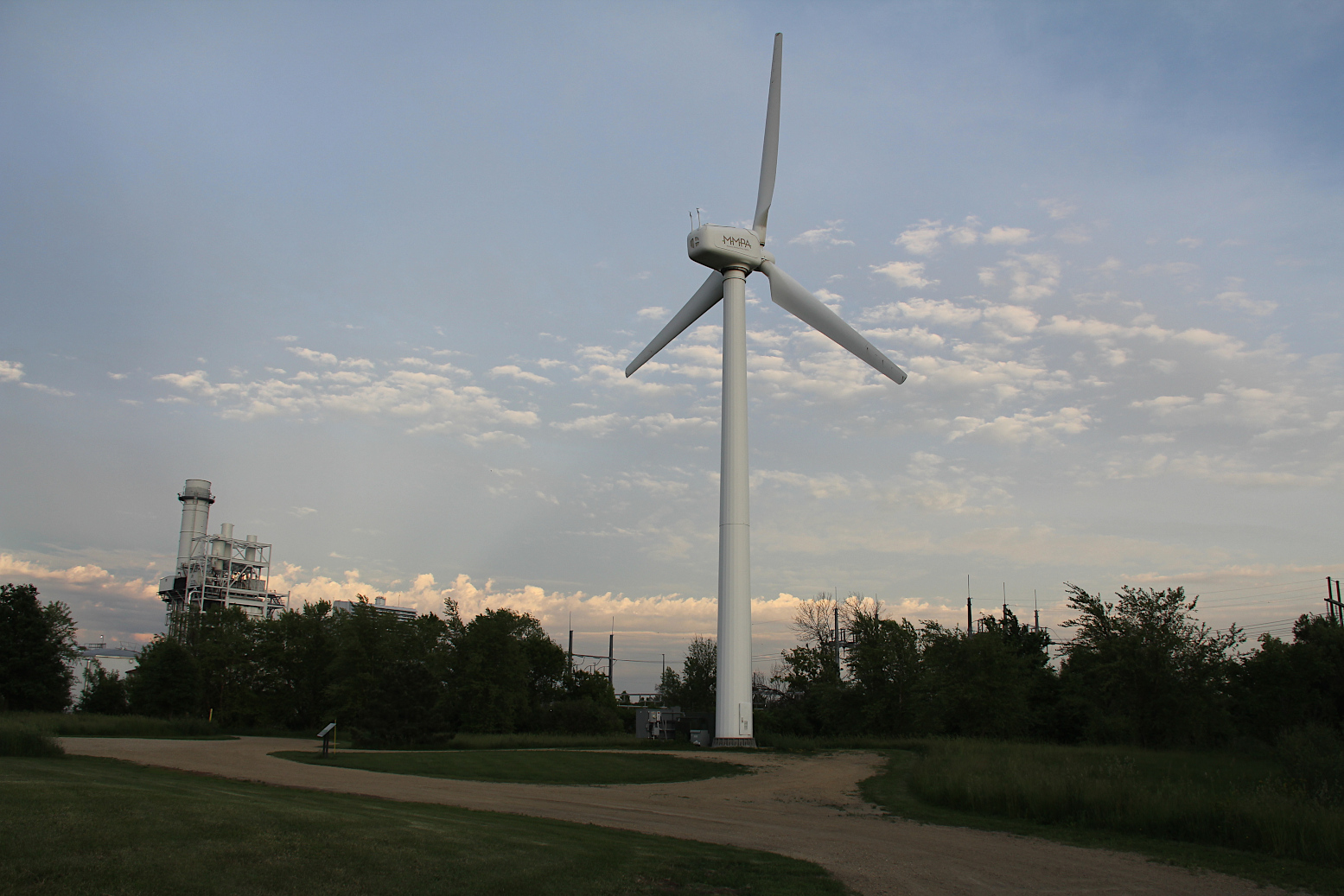
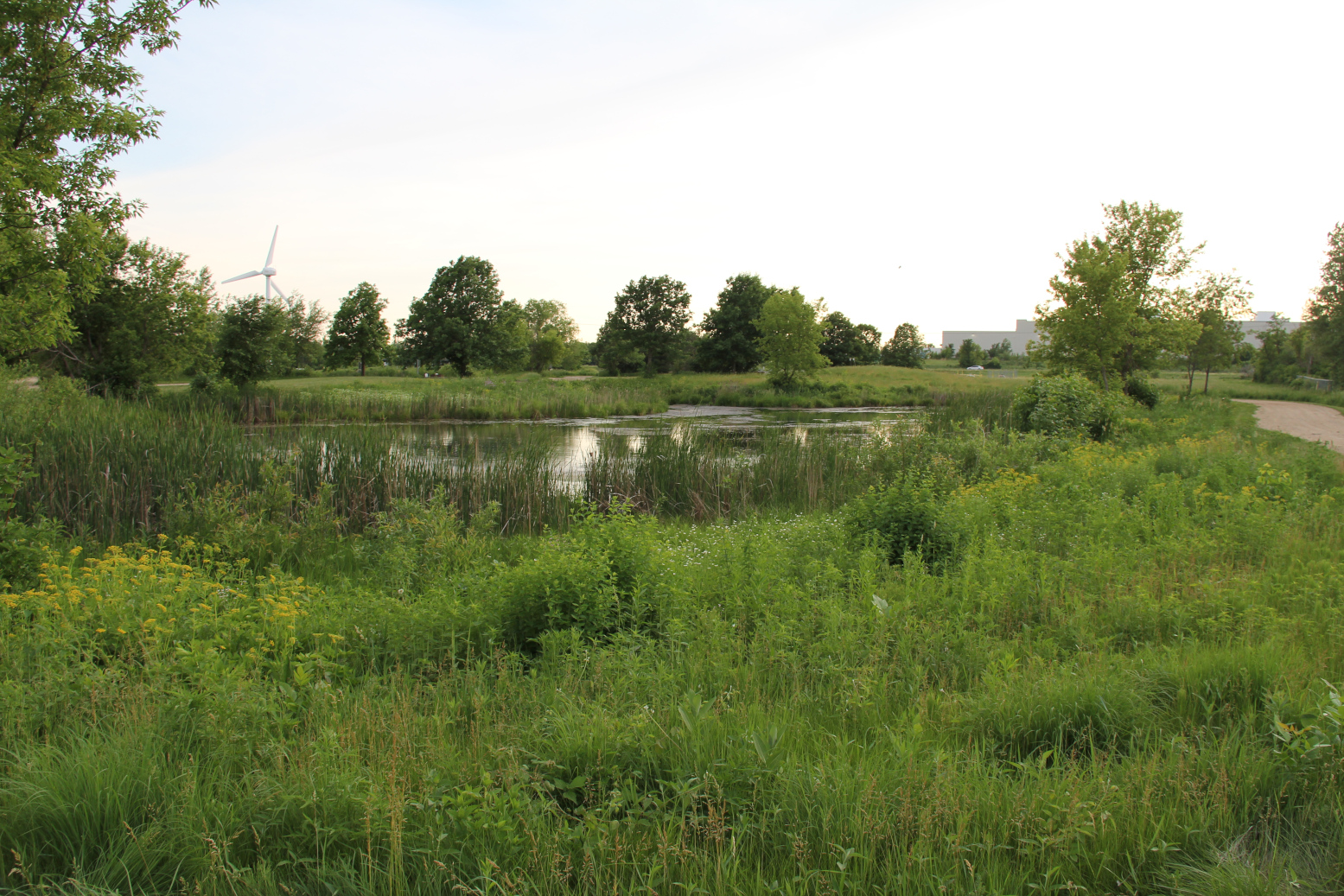
Trails lead to and around the wind turbine, unmoving on this evening. A portion of the power plant is visible in the distance. (Minnesota Prairie Roots copyrighted photo June 2026)
Despite the drone of vehicles, I still appreciate this 35-acre park that takes visitors past three ponds, a wind turbine and solar panels. Often we are alone here, which makes this park even more appealing. Occasionally, though, a dog runs free, despite rules requiring leashing.
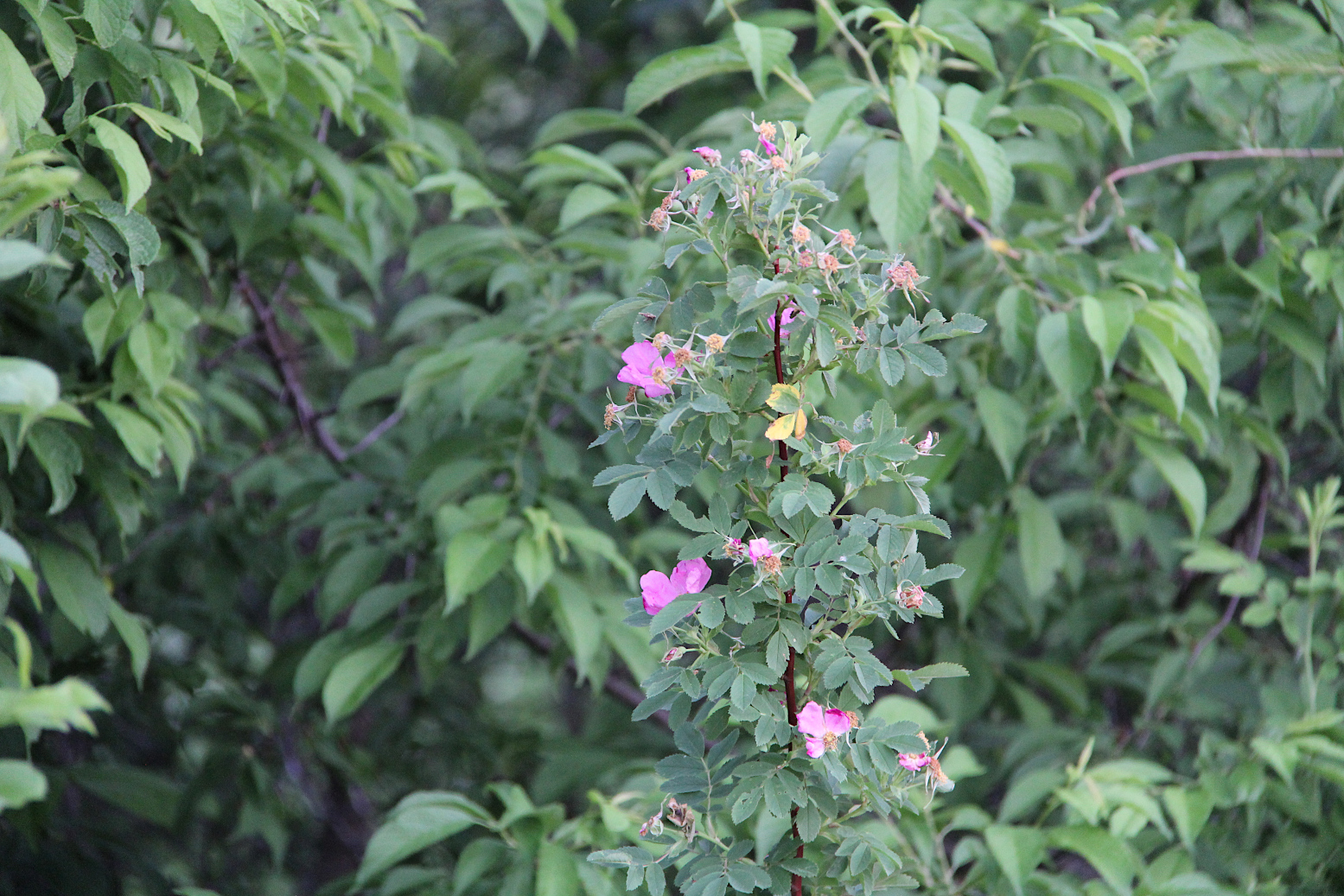
Wild roses along the trail. (Minnesota Prairie Roots copyrighted photo June 2026)
On this visit, I focus on the wildflowers and grasses that flourish here as late spring transitions toward summer. Only steps into our walk, Randy discovers a wild rose bush along the trail. We both step off the path to dip our noses into a five-petaled pink rose, to smell the delicate scent of nature’s perfume. I recall youthful days of biking along country roads, the ditches populated with fragrant wild roses.
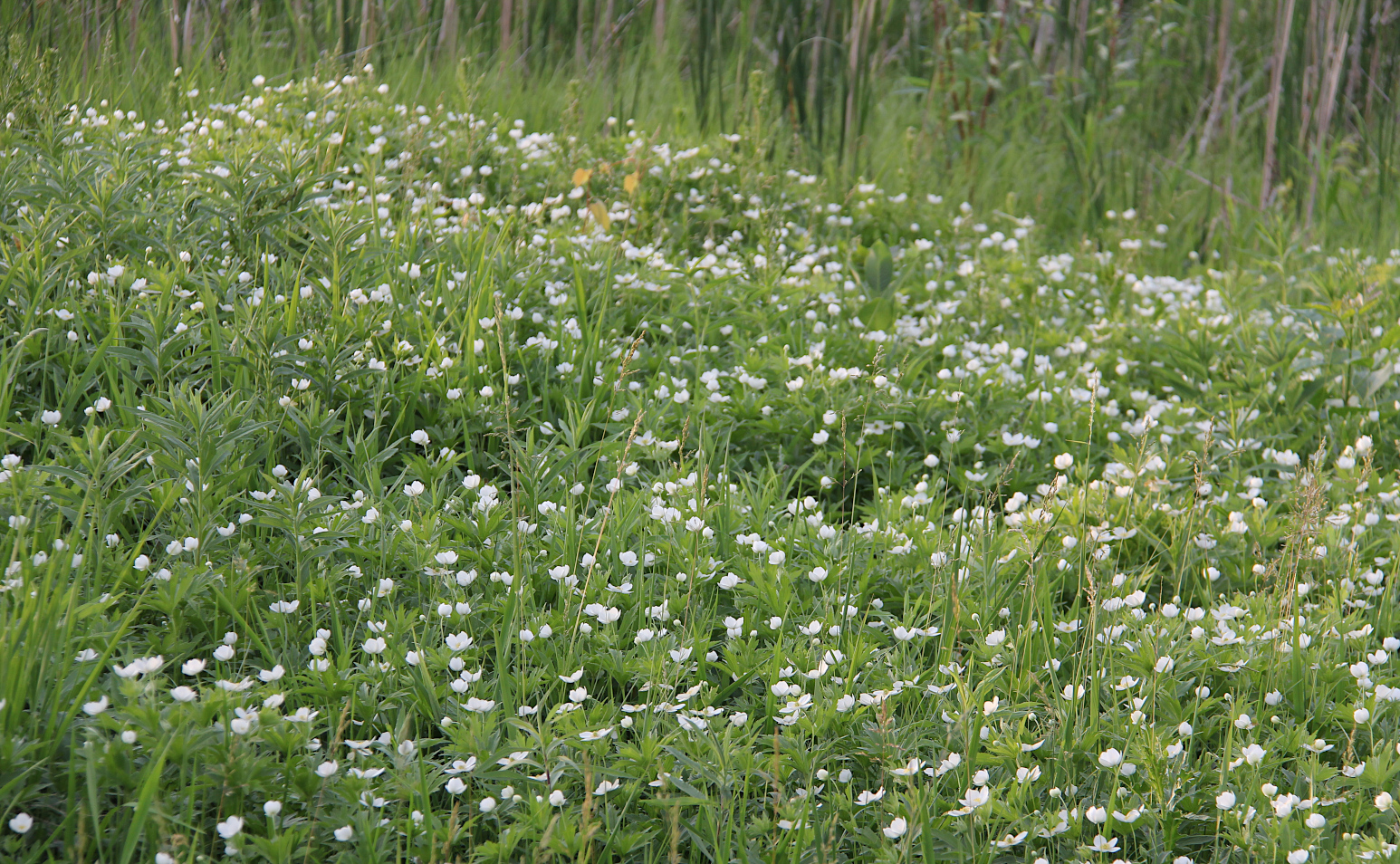
More wildflowers. (Minnesota Prairie Roots copyrighted photo June 2026)
I’m no plant expert, thus can’t identify most of the other flowers I see here. But I do know enough to stay away from the invasive wild parsnip. The toxic yellow plant, if touched, burns the skin.
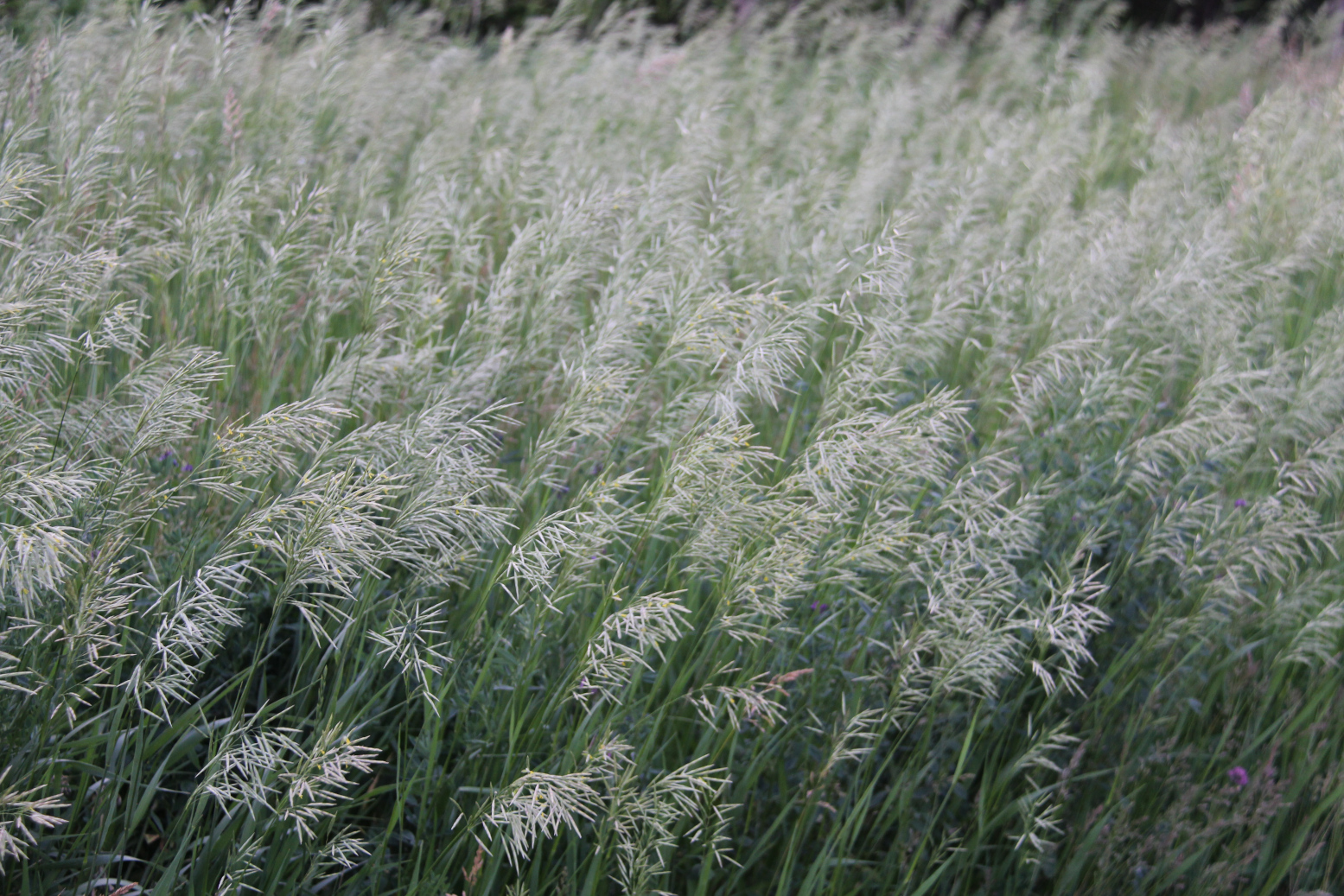
Brome grass catches the beautiful light and sways in the wind. (Minnesota Prairie Roots copyrighted photo June 2026)
Brome, pond-side and other grasses draw my eye as they stretch toward the sky. Or, on this evening, bend in the wind as if dancing a farewell recital to daylight.
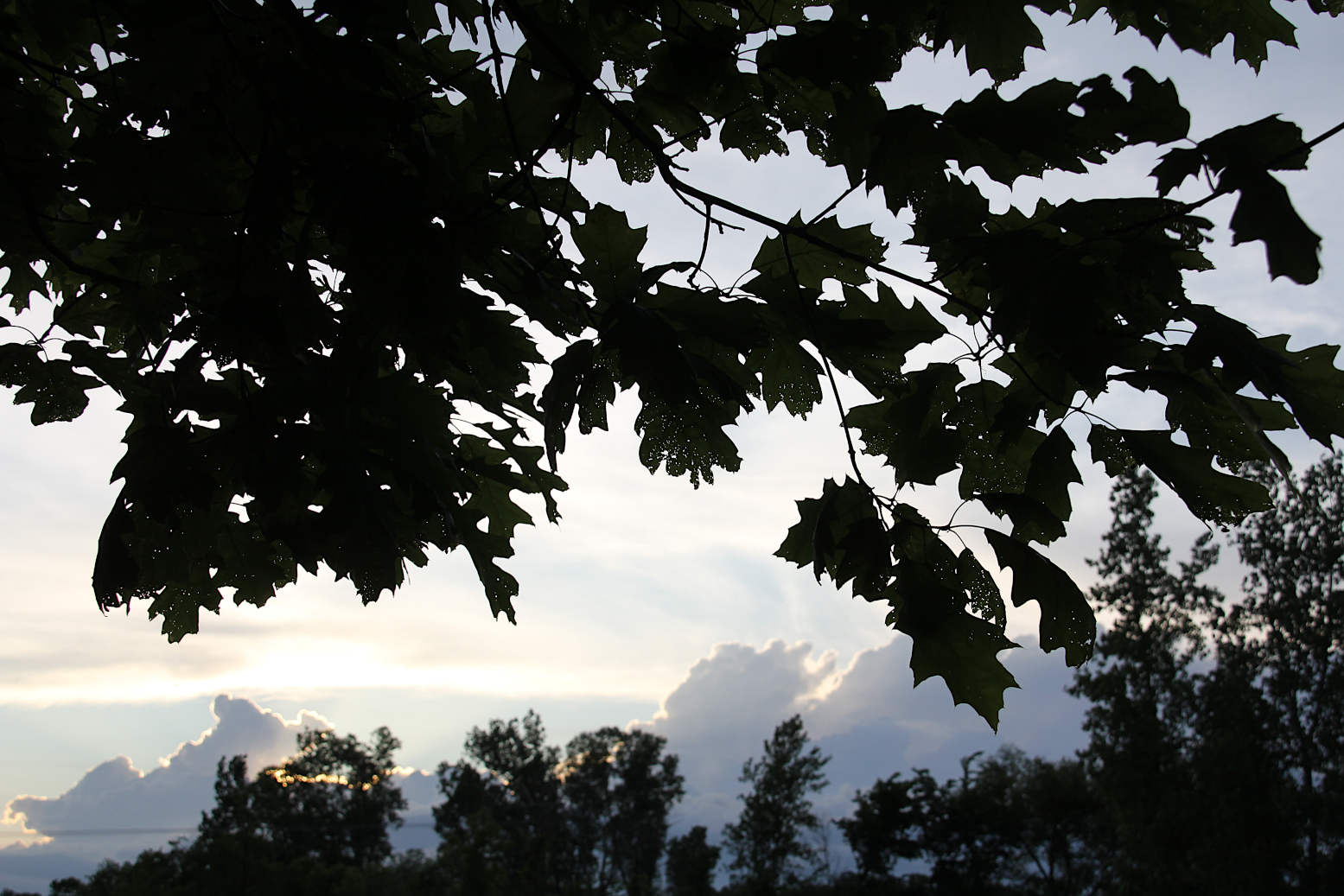
Looking through the trees, I see clouds building. (Minnesota Prairie Roots copyrighted photo June 2026)
Clouds build to the west and north, sometimes blocking the sun.
An egret takes flight from a pond, its wings lifting, flapping, long black legs trailing in a straight line. The bird rises high out of camera range.
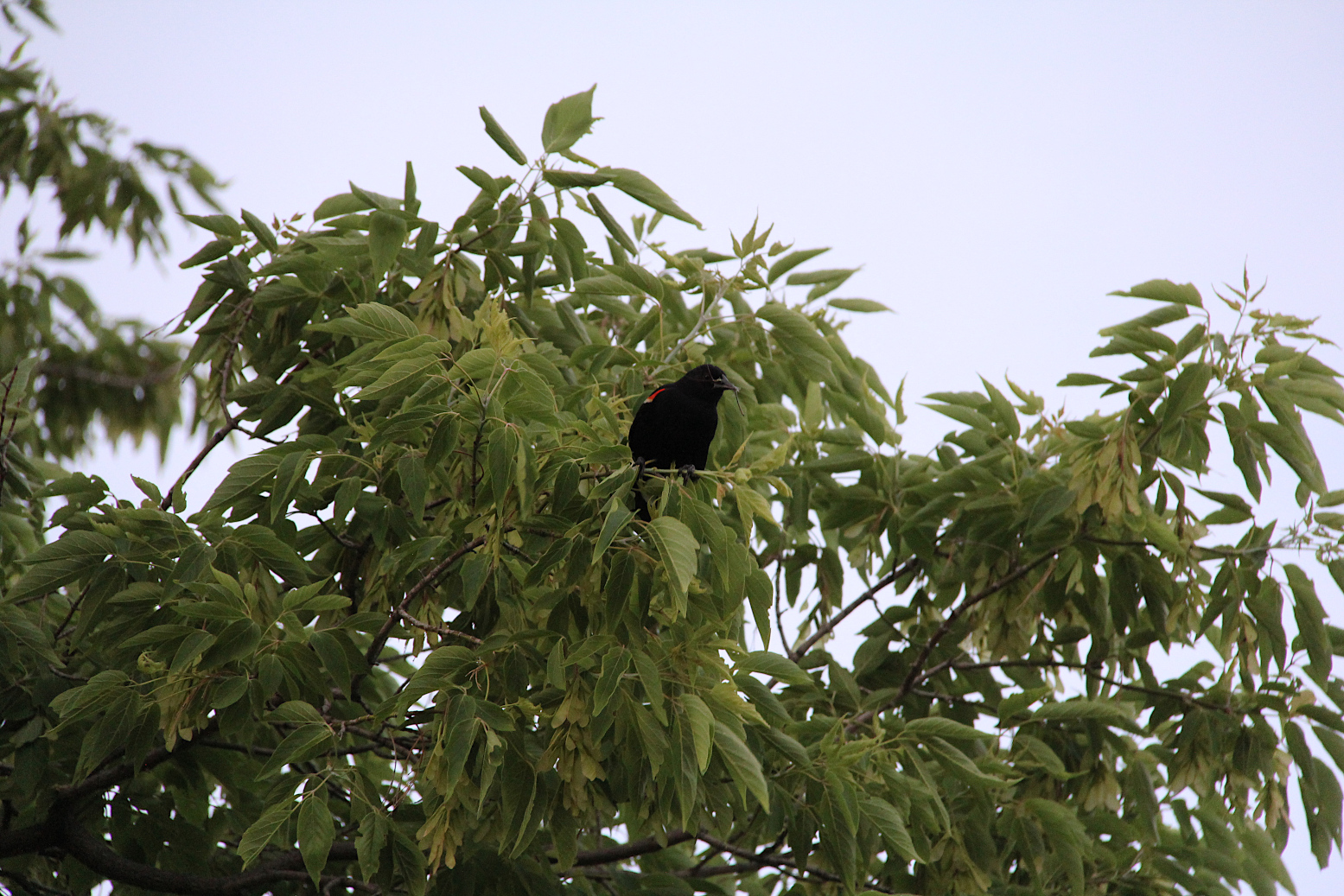
A red-winged blackbird perches near the power plant pond. (Minnesota Prairie Roots copyrighted photo June 2026)
A chorus of birds, mostly unseen, sing as we walk along the trails, around the ponds. I can only distinguish the unique voice of a red-winged blackbird.
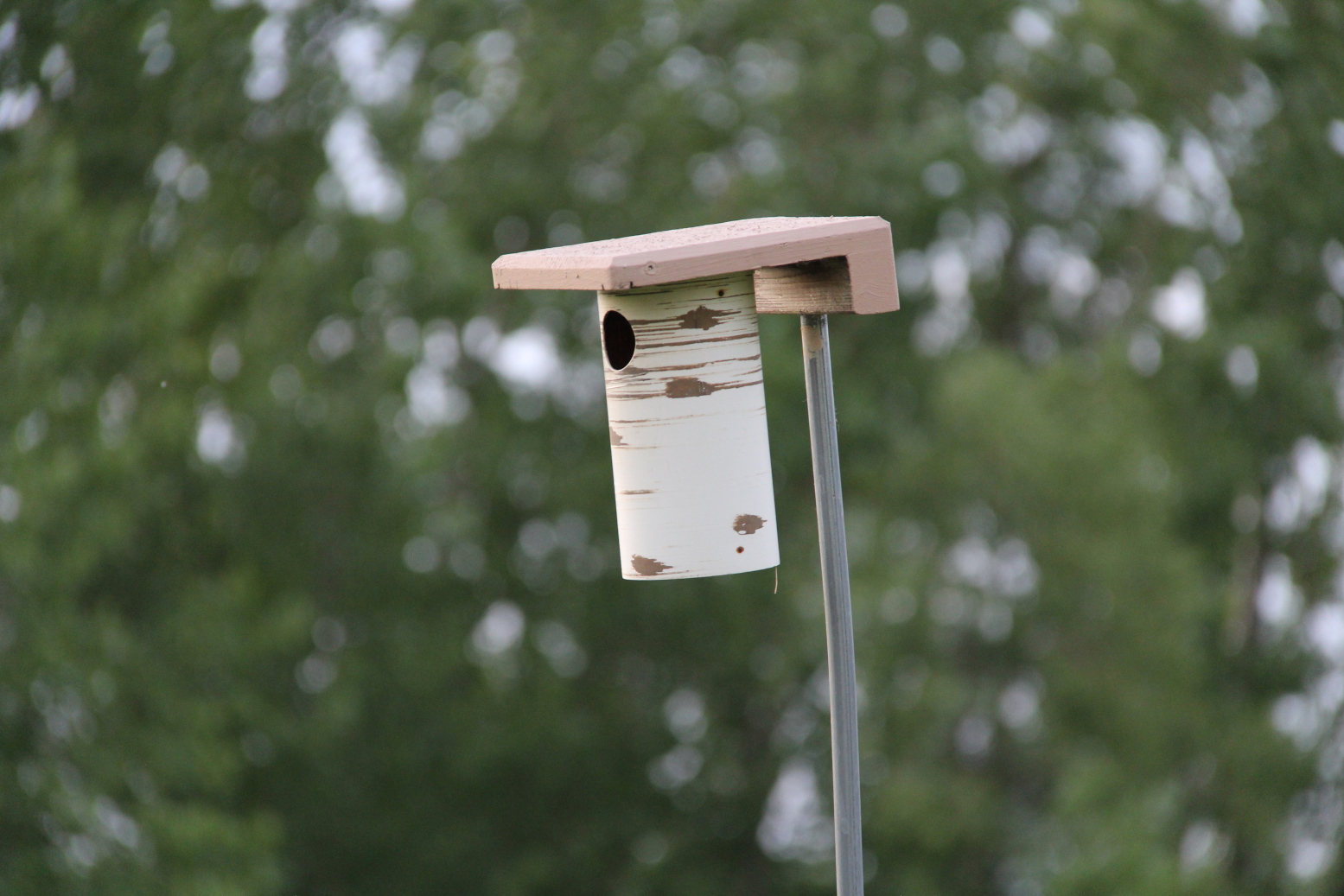
One of several bluebird houses in the park. (Minnesota Prairie Roots copyrighted photo June 2026)
Randy weaves through the tall grass to check a bluebird house, finding only a few feathers and dried grass inside.
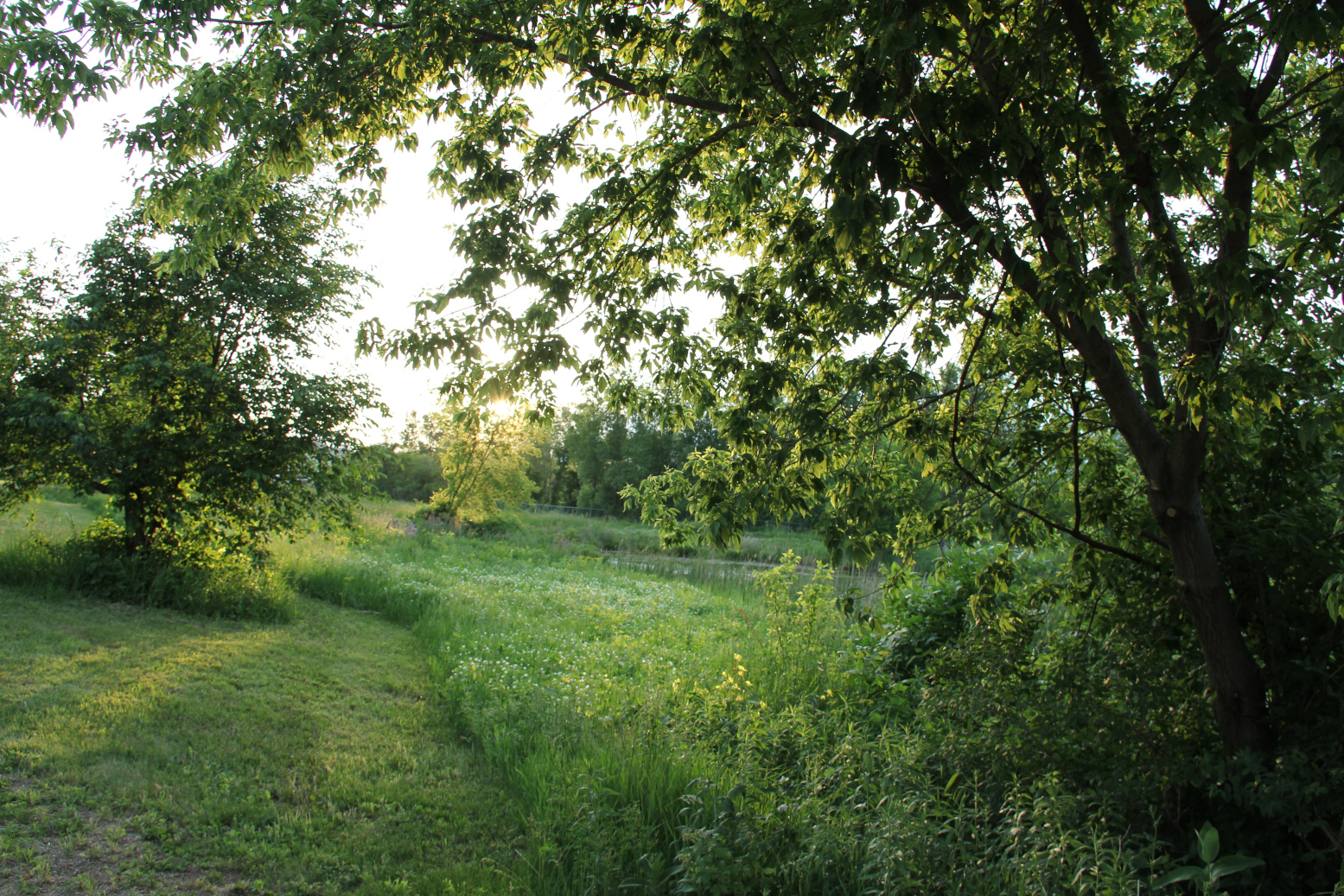
Sunlight dapples the landscape. (Minnesota Prairie Roots copyrighted photo June 2026)
Sunlight glints on water, shadows through trees. This time of day—the golden hour before sunset—holds a light-beauty matched only by the hour after sunrise. This is the time I want to be out with my camera composing images, but also simply in the moment. As trite as the word may seem, “beautiful” defines the light.
A trail circles a pond, wind turbine in the distance, a warehouse on the other side of the interstate. (Minnesota Prairie Roots copyrighted photo June 2026)
To hike and take photos at Faribault Energy Park in this hour settles my spirit in a way that only nature can. Wildflowers. Tall grasses. Bird song. Sunlight on water. Clouds rising. The wind touching my face. The scent of a wild rose.
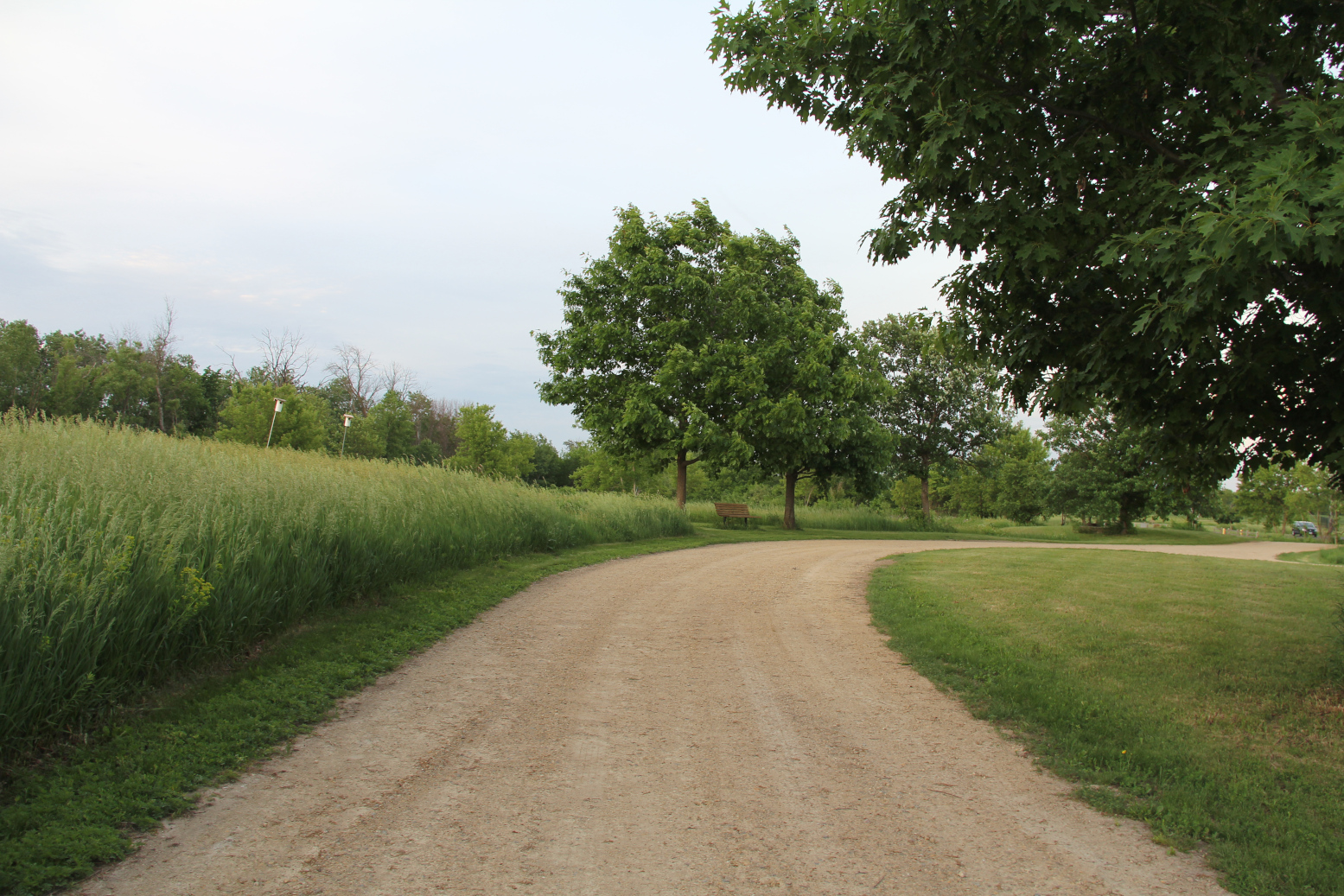
Gravel roadways wind through the park. (Minnesota Prairie Roots copyrighted photo June 2026)
All of this I find here on this parcel of parkland, this place beside the busy interstate where motorists rush by while I walk, shoes crunching on gravel.
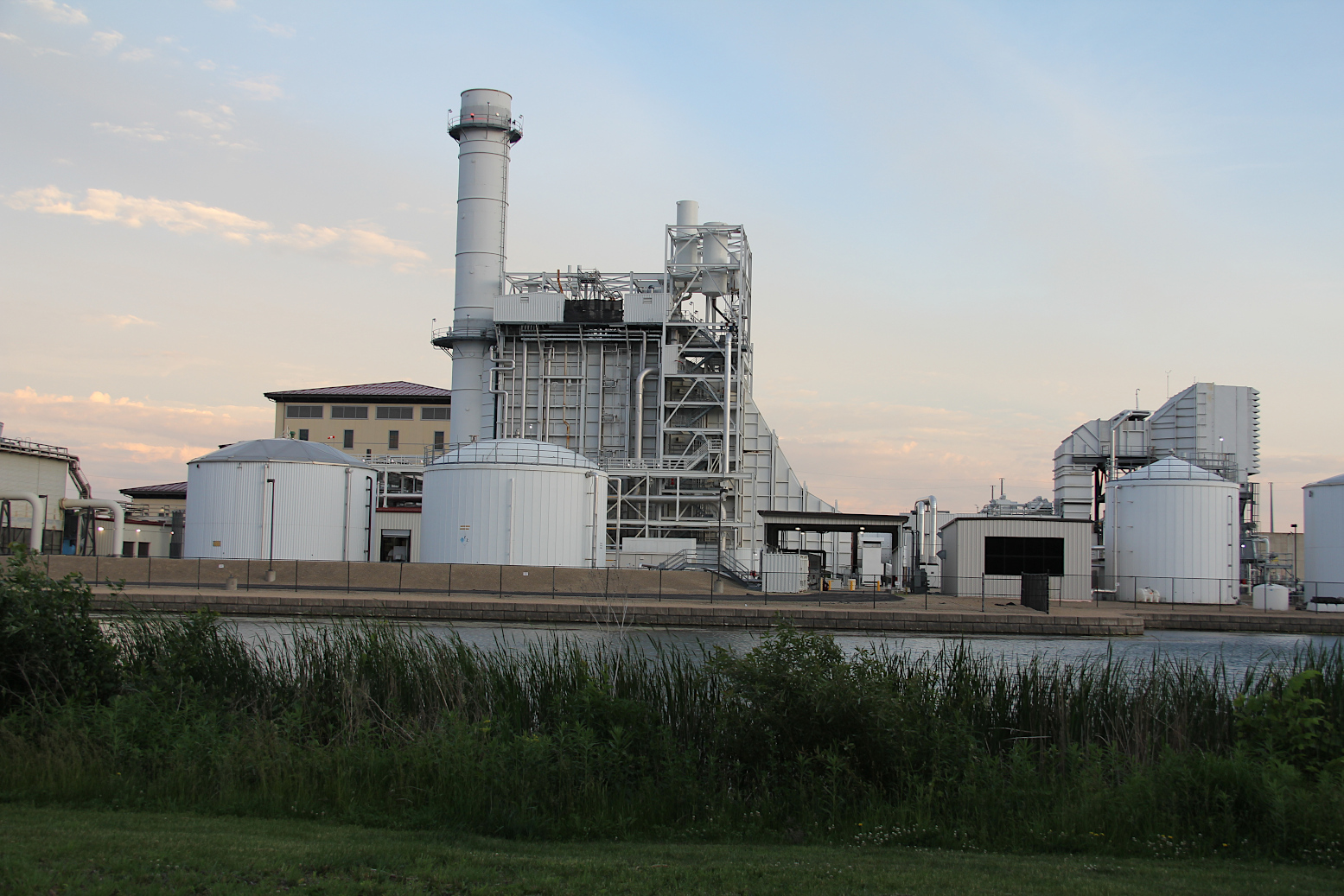
The pond next to the power plant is also a fishing spot. (Minnesota Prairie Roots copyrighted photo June 2026)
FYI: Minnesota Municipal Power Agency owns Faribault Energy Park, which includes parkland and a power plant. The park is located at 4100 Park Avenue North on Faribault’s north side and is open from sunrise to sunset. Here visitors can hike, enjoy a picnic and fish in the pond next to the power plant.
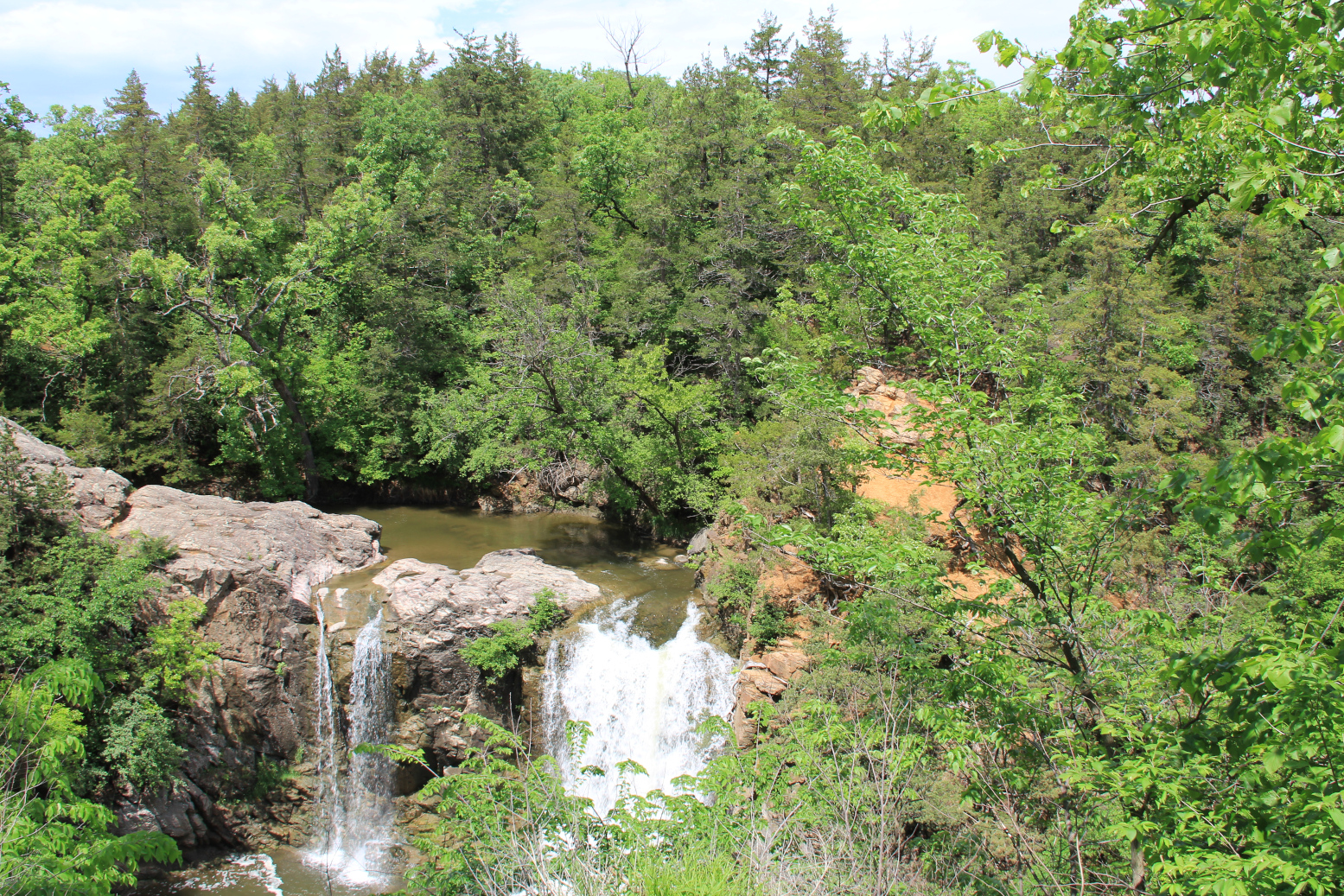
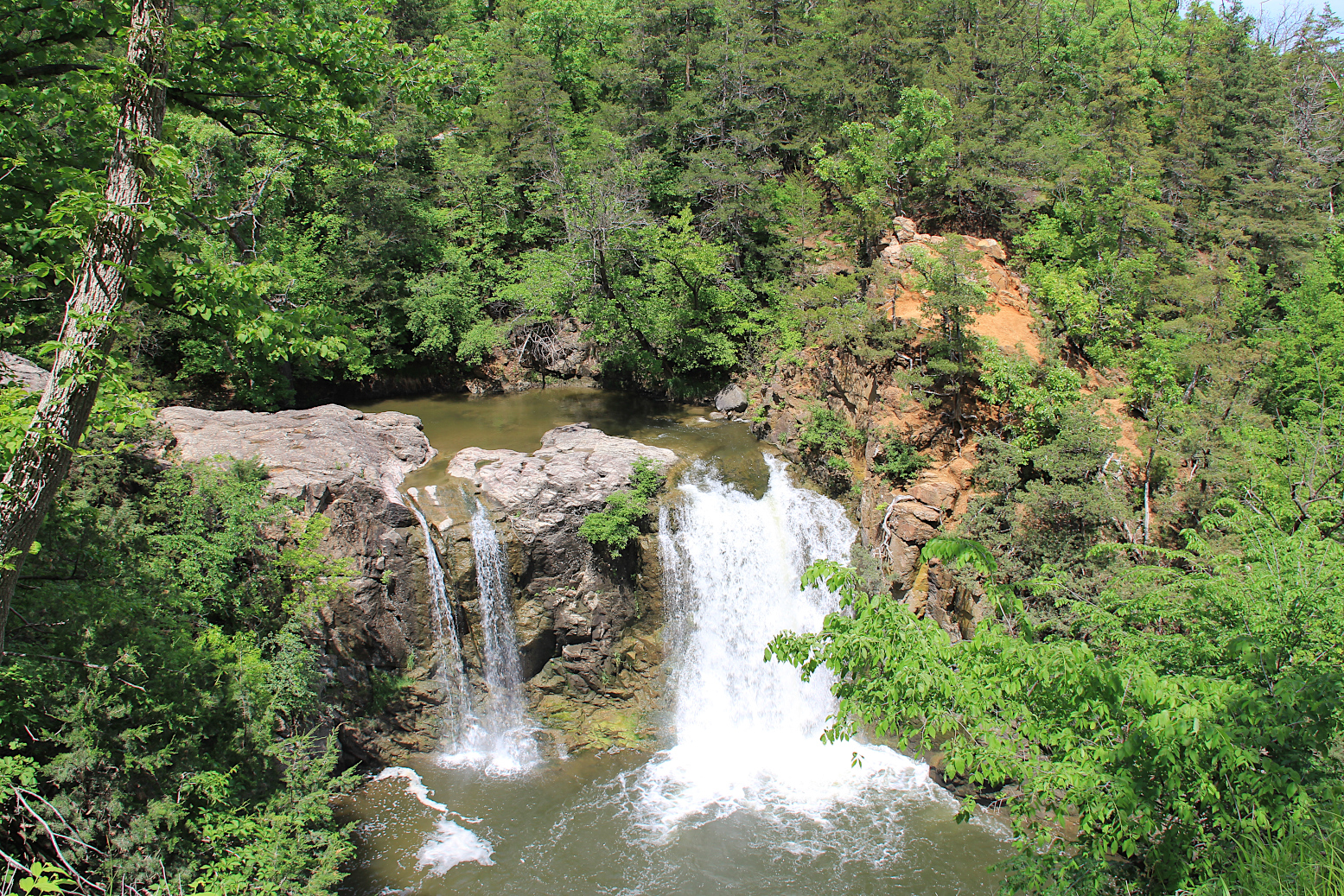
Ramsey Falls in Redwood Falls. (Minnesota Prairie Roots copyrighted photo May 2026)
WATER RUSHES OVER the aged granite rock, roaring into the gorge below. It is a scene so beautiful, so unexpected, that this 256-acre city park has been dubbed the “Little Yellowstone of Minnesota.”
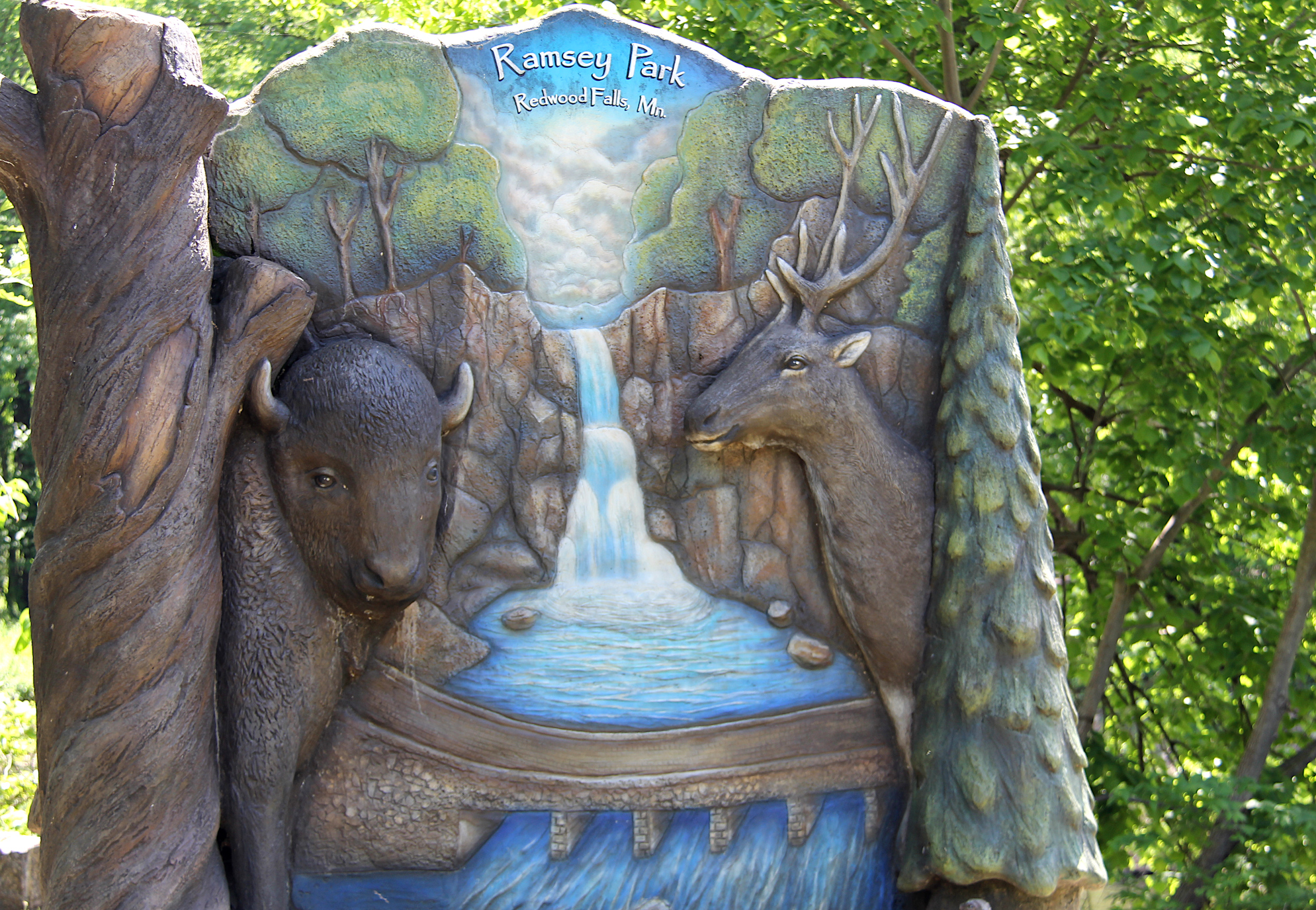
Park signage along the river in the zoo area. (Minnesota Prairie Roots copyrighted photo May 2026)
Recently I revisited Ramsey Park, also known as Cansa’yapi, translated to “where they paint the trees red” from the Dakota language. A Mdewakanton Band of the Dakota live near neighboring Morton and refer to their traditional Minnesota River Valley homeland as Cansa’yapi.
On this day, I come to see Ramsey Falls along Ramsey Creek, which feeds into the Redwood River inside the park. The Redwood then flows into the Minnesota River.
If the creek level is high, water spills over two areas of the rock. (Minnesota Prairie Roots copyrighted photo May 2026)
Ramsey Falls, with its 30-foot drop, is the star attraction in this park founded in 1911 as a state park with ownership transferred to the city of Redwood Falls in 1957. This is a gem in a county marked by farm fields, farm sites, small towns and mostly flat topography.
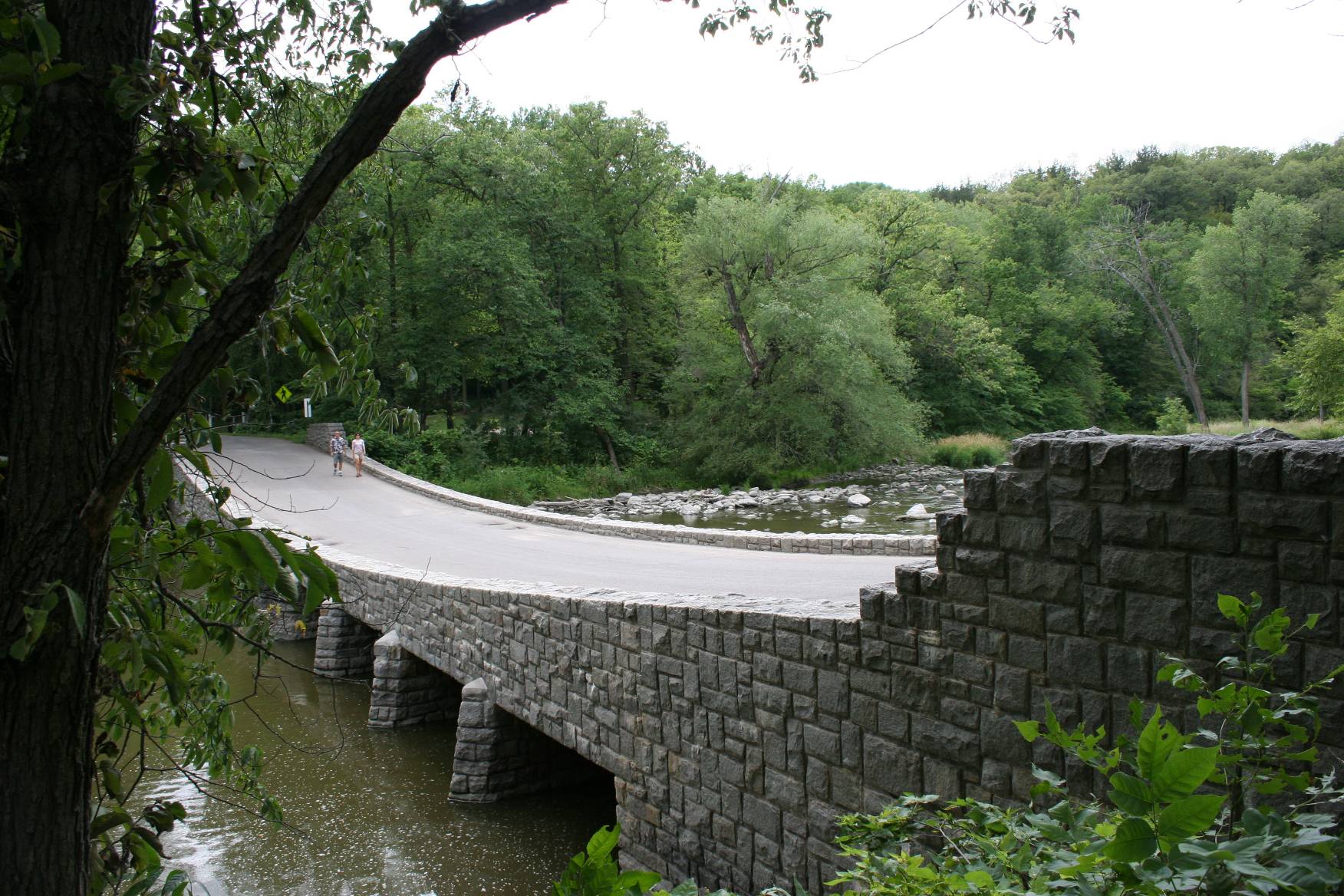
A side view of the swayback bridge from a previous park visit. (Minnesota Prairie Roots copyrighted file photo)
Here, within this park, narrow roads twist and turn through woods, descending to the river bottom. Creek and river waters flow. Three and a half miles of cemented hiking trails (new since I left the area 50 years ago), run throughout the park. A swayback bridge built in 1938 by workers with the Works Progress Administration Project along the Redwood River adds an historic architectural element to the park.
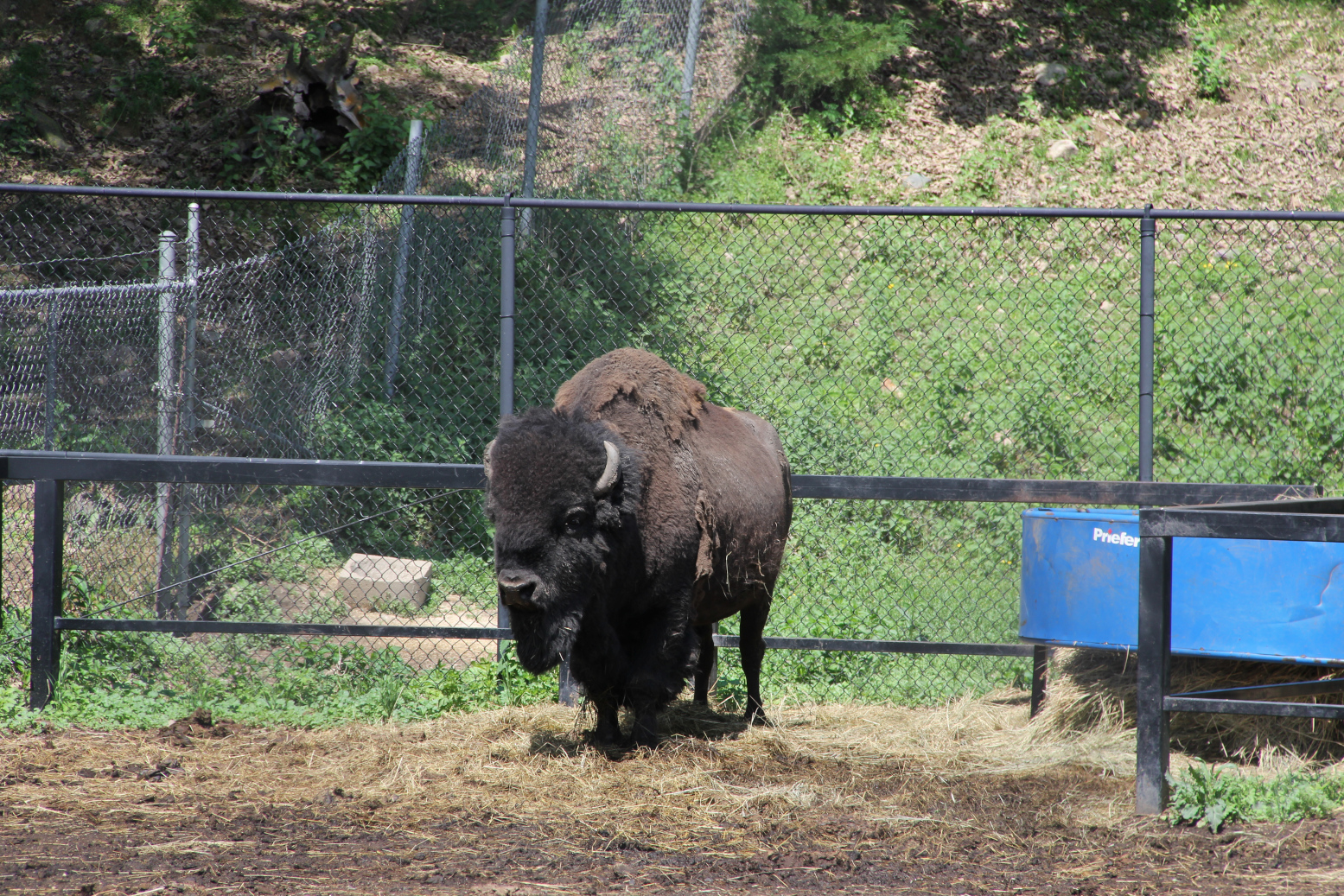
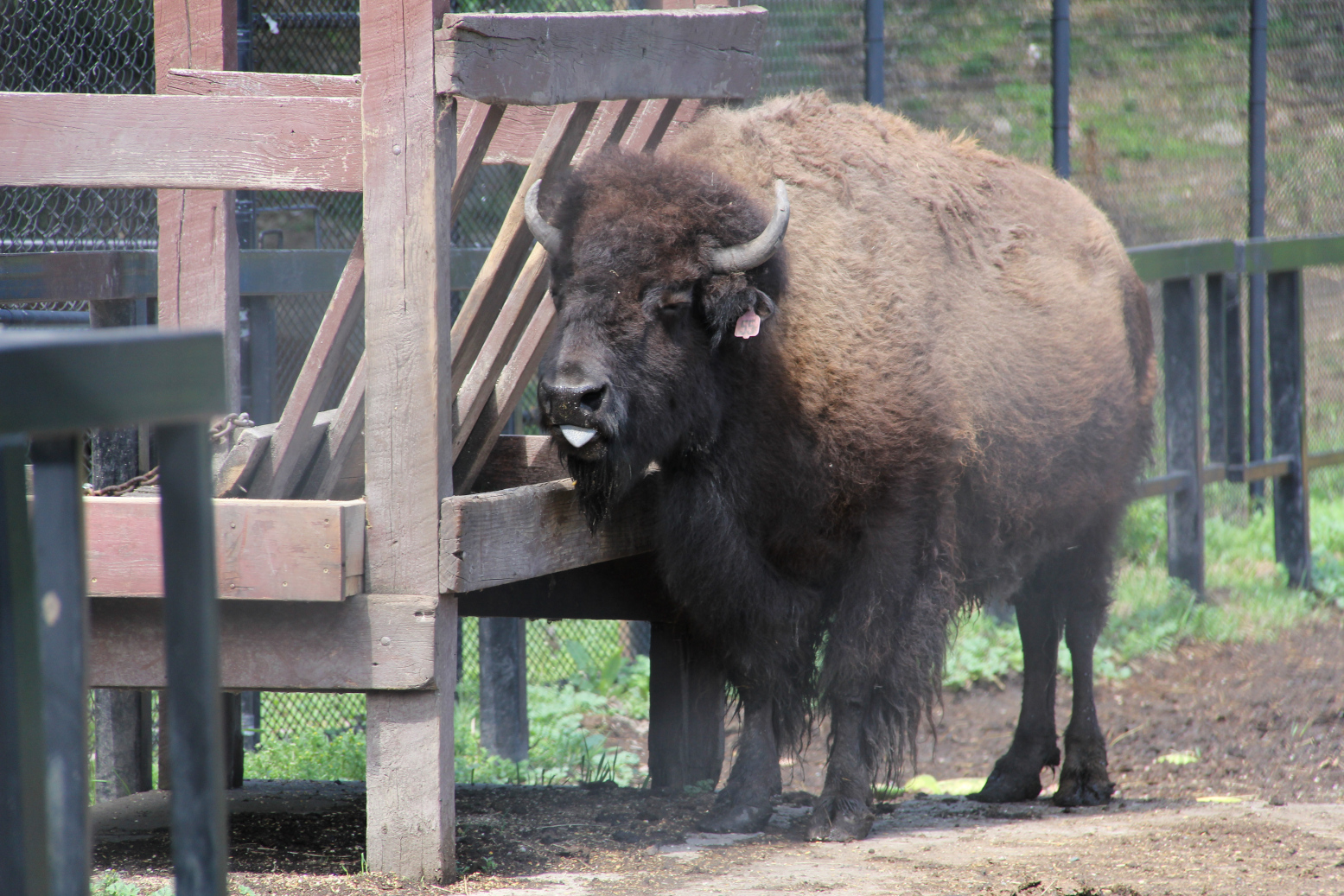
Zooming in on a buffalo through a fence. (Minnesota Prairie Roots copyrighted photo May 2026)
For anyone who loves the outdoors—fishing, hiking, camping, picnicking—this park offers it all. The park is also of interest to geologists and history buffs. A small zoo with its resident buffalo and other animals has always been an attraction, too.
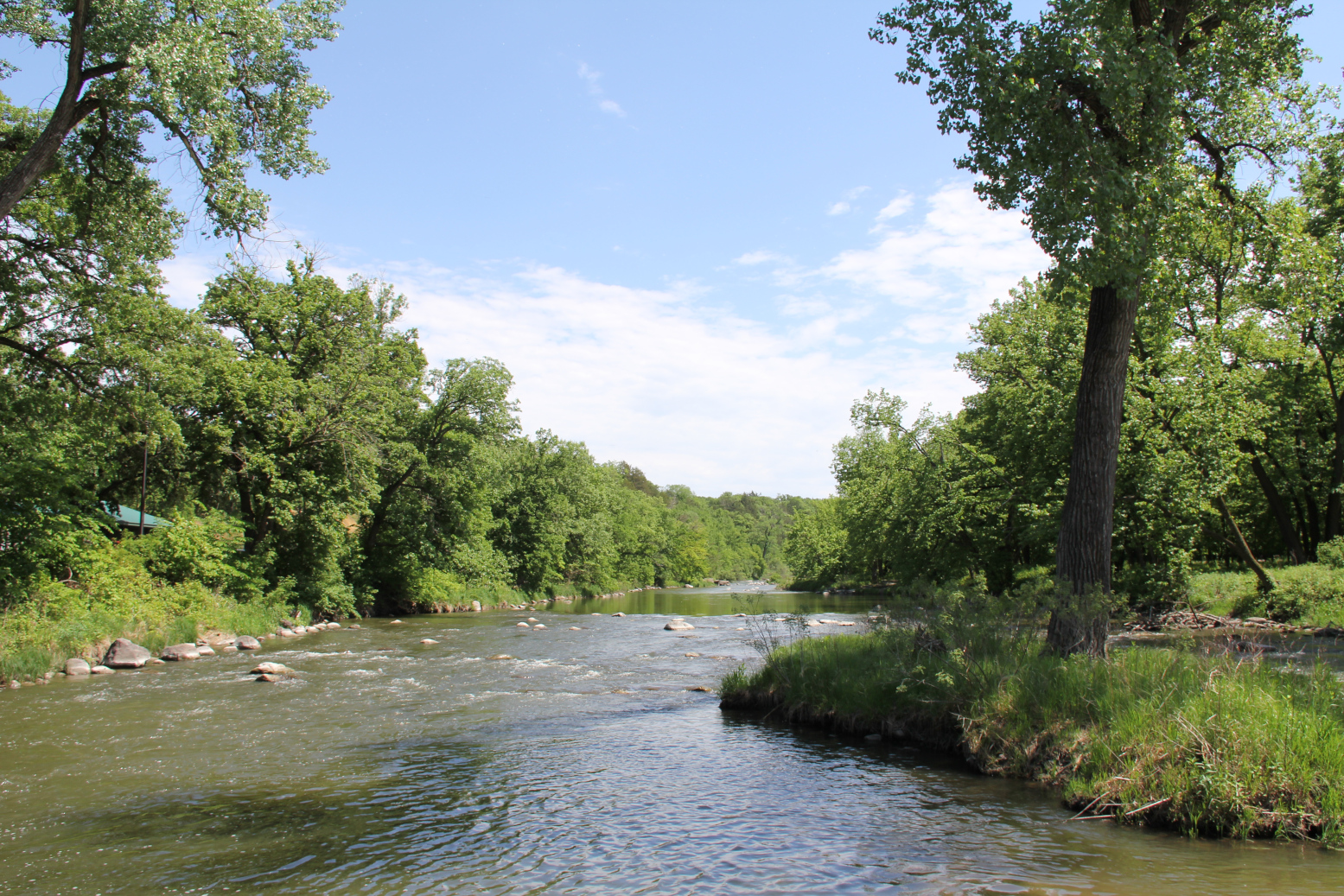
The Redwood River photographed from the swayback bridge. (Minnesota Prairie Roots copyrighted photo May 2026)
But it is really the land and the water that brings visitors like me here. Hills and gorges. Waterways. Trees thickening into dense woods, vastly different than the shelterbelts protecting farm sites from prairie winds.
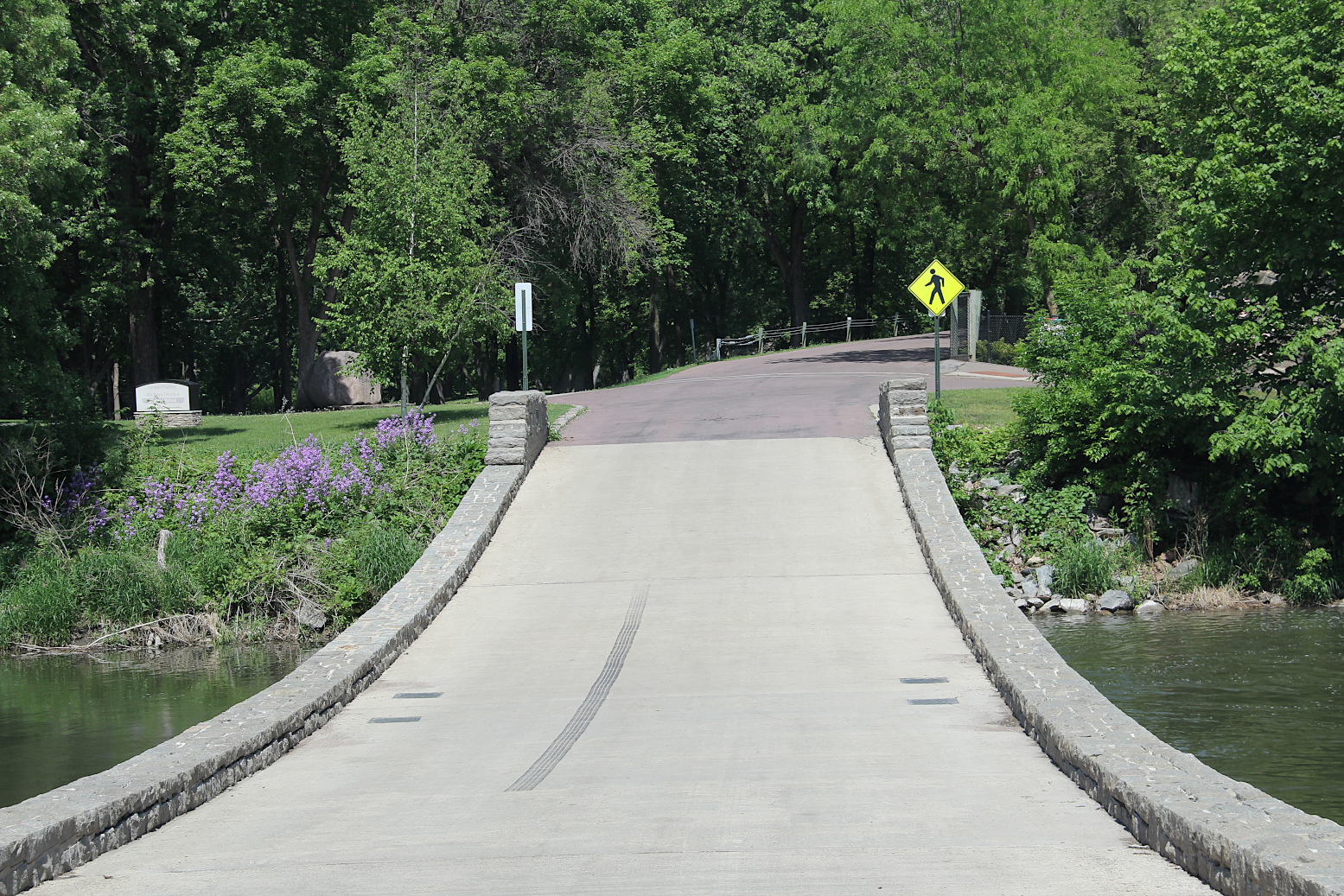
Crossing the WPA swayback bridge over the Redwood River. (Minnesota Prairie Roots copyrighted photo May 2026)
I remember coming here as a child and feeling like I’d entered a different world. Yet, I was still in Redwood County, only 20 miles from the flat farm fields of home to the west. I recall the terror I felt when Dad maneuvered the Chevy around a tight hairpin curve in the park, the steep hillside falling below us. I remember standing in awe of Ramsey Falls, and being more than a little afraid of stepping too close to the fence at the falls overlook. I remember the car dipping across the swayback bridge.
Teenage years took me along a steep, narrow dirt path down to the massive rocks beside the falls for a picnic lunch with friends.
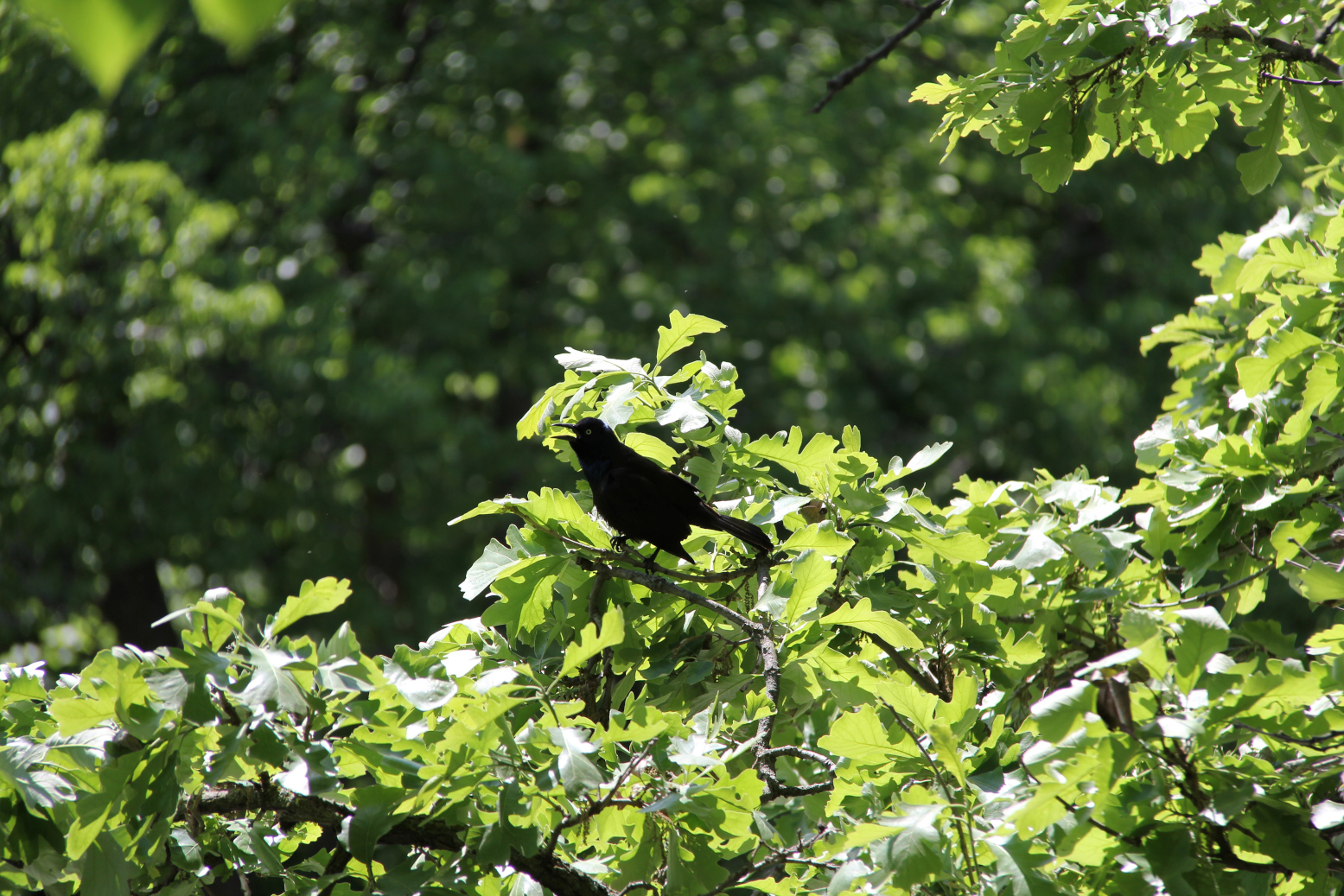
A bird sings in a riverside tree. (Minnesota Prairie Roots copyrighted photo May 2026)
On this afternoon, I lean into the sturdy overlook fence, focus my camera on the rushing waterfalls, notice the surrounding greenery, appreciate this Little Yellowstone of Minnesota. I’ve never been to the Wyoming national park, thus have no comparison to make. That really doesn’t matter; this place holds its own Yellowstone beauty.
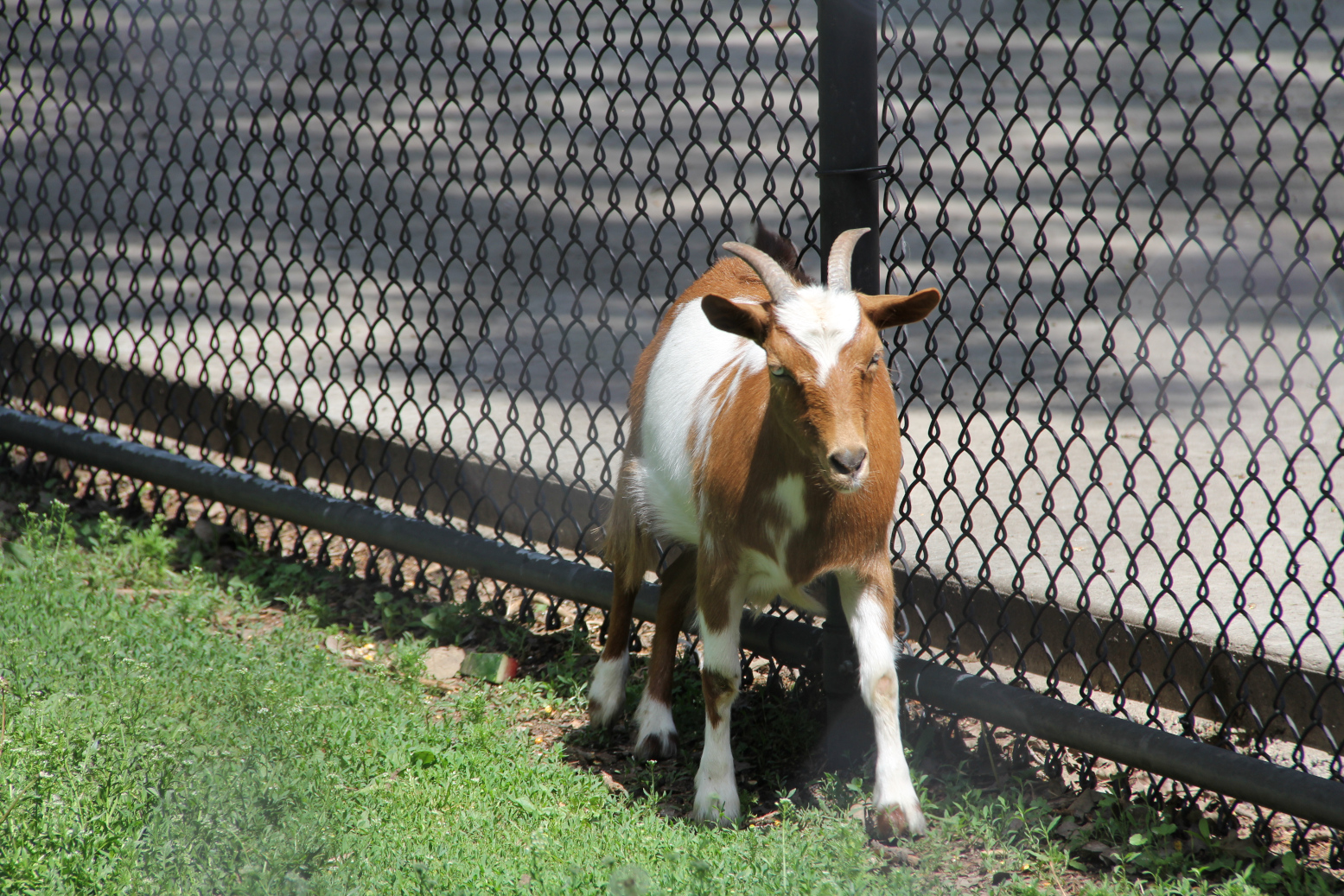
The small zoo is home to several playful goats, other animals and birds. (Minnesota Prairie Roots copyrighted photo May 2026)
At the Ramsey Park Zoo, I focus on the buffalo, who seem considerably more docile than I remember. Still, I respect them and understand their importance to the Dakota, original inhabitants of this land. Long gone are the caged monkeys that once entertained me with their antics.
Close up with a buffalo in the Ramsey Park Zoo. (Minnesota Prairie Roots copyrighted photo May 2026)
Ramsey/Cansa’yapi Park lies 110 miles to the north and west of my current home in Faribault. Decades removed from Redwood County, I still feel connected to this oasis in the prairie where the water falls and they paint the trees red.
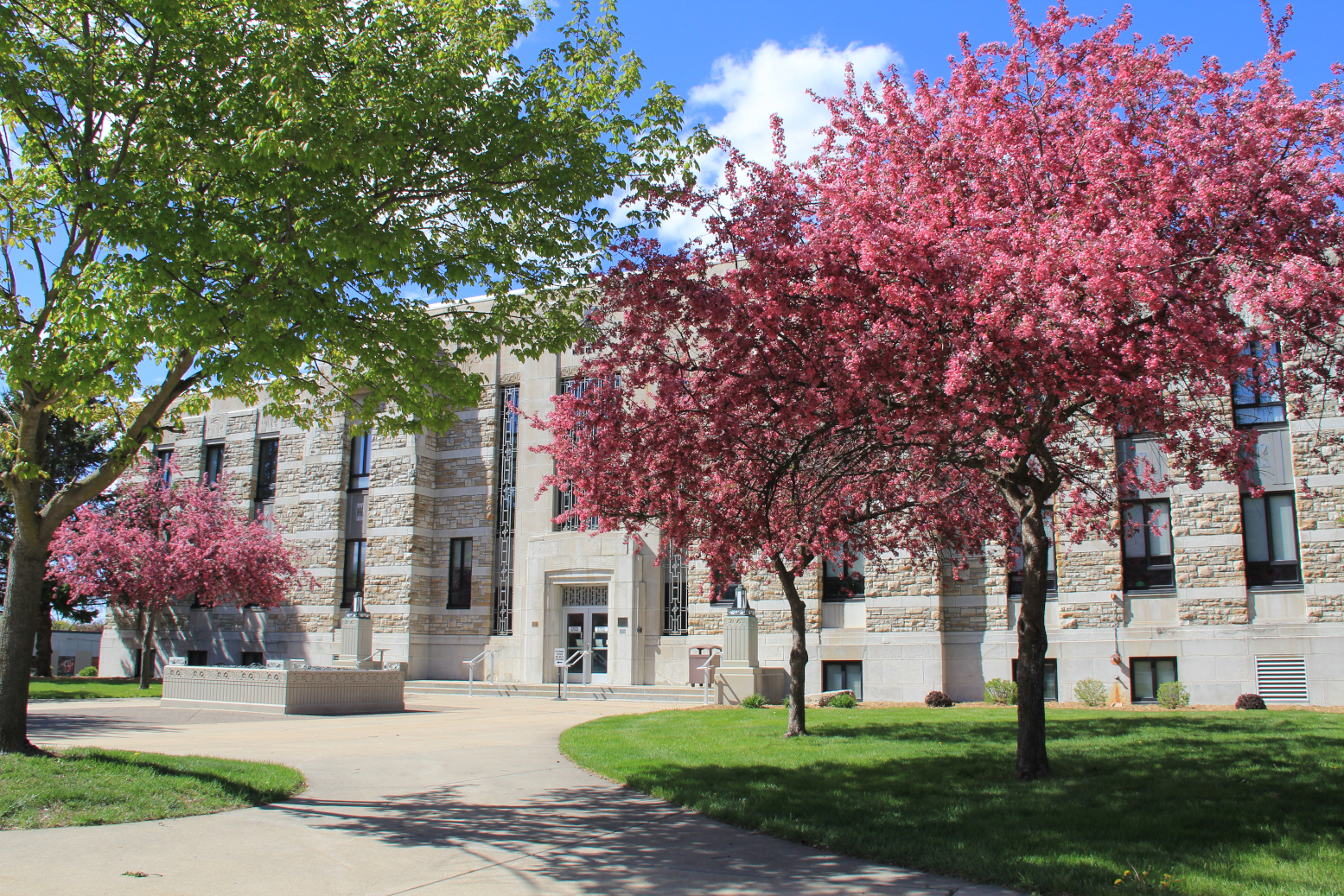
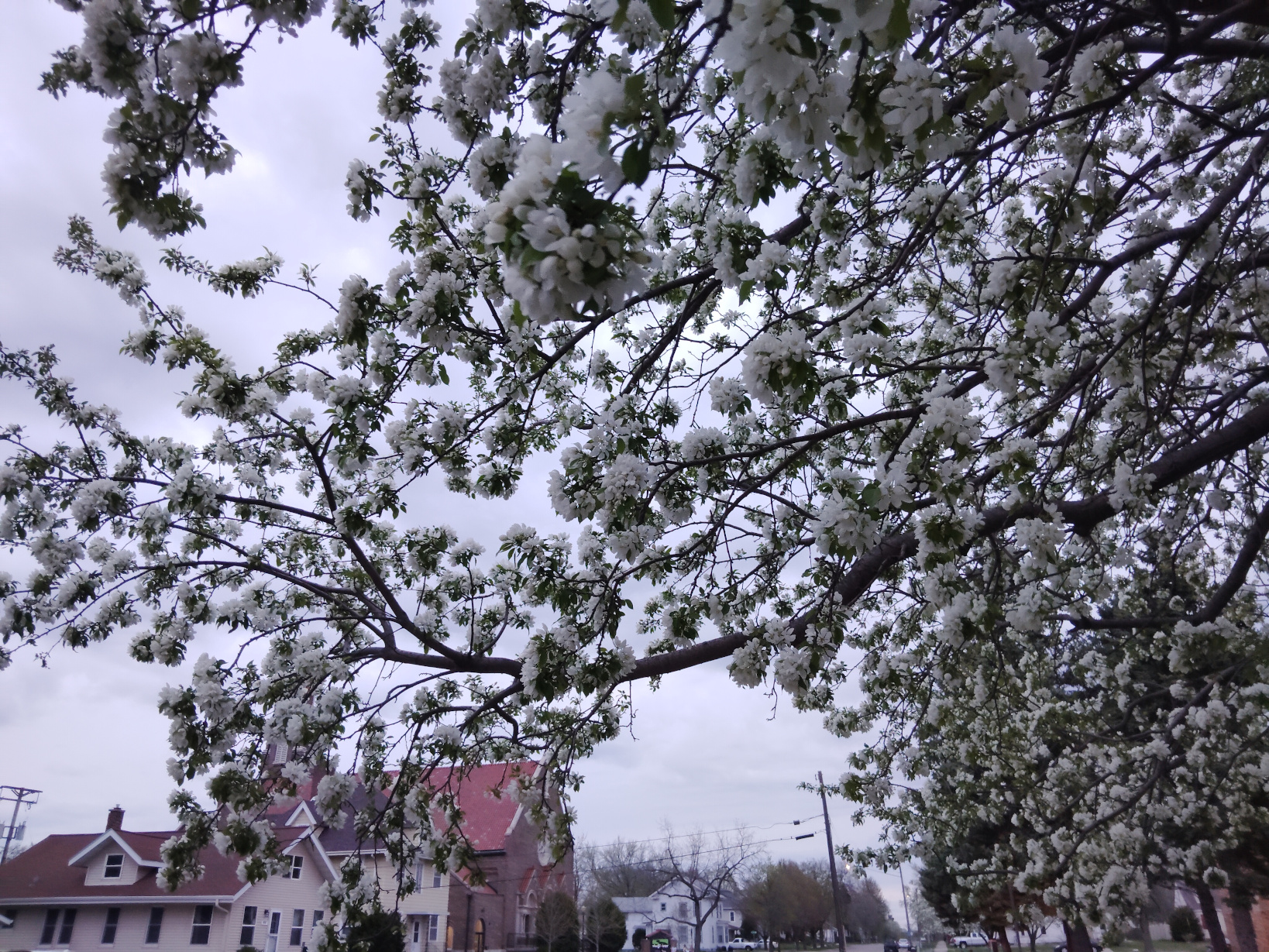
Beautiful flowering trees outside the Rice County courthouse, Faribault. (Minnesota Prairie Roots copyrighted photo May 2026)
I’VE NEVER TRAVELED to Washington, DC, thus never seen the masses of cherry blossoms. I’m quite certain I would love them. Flowering trees began blooming here about two weeks ago and I can’t get enough of their beauty.
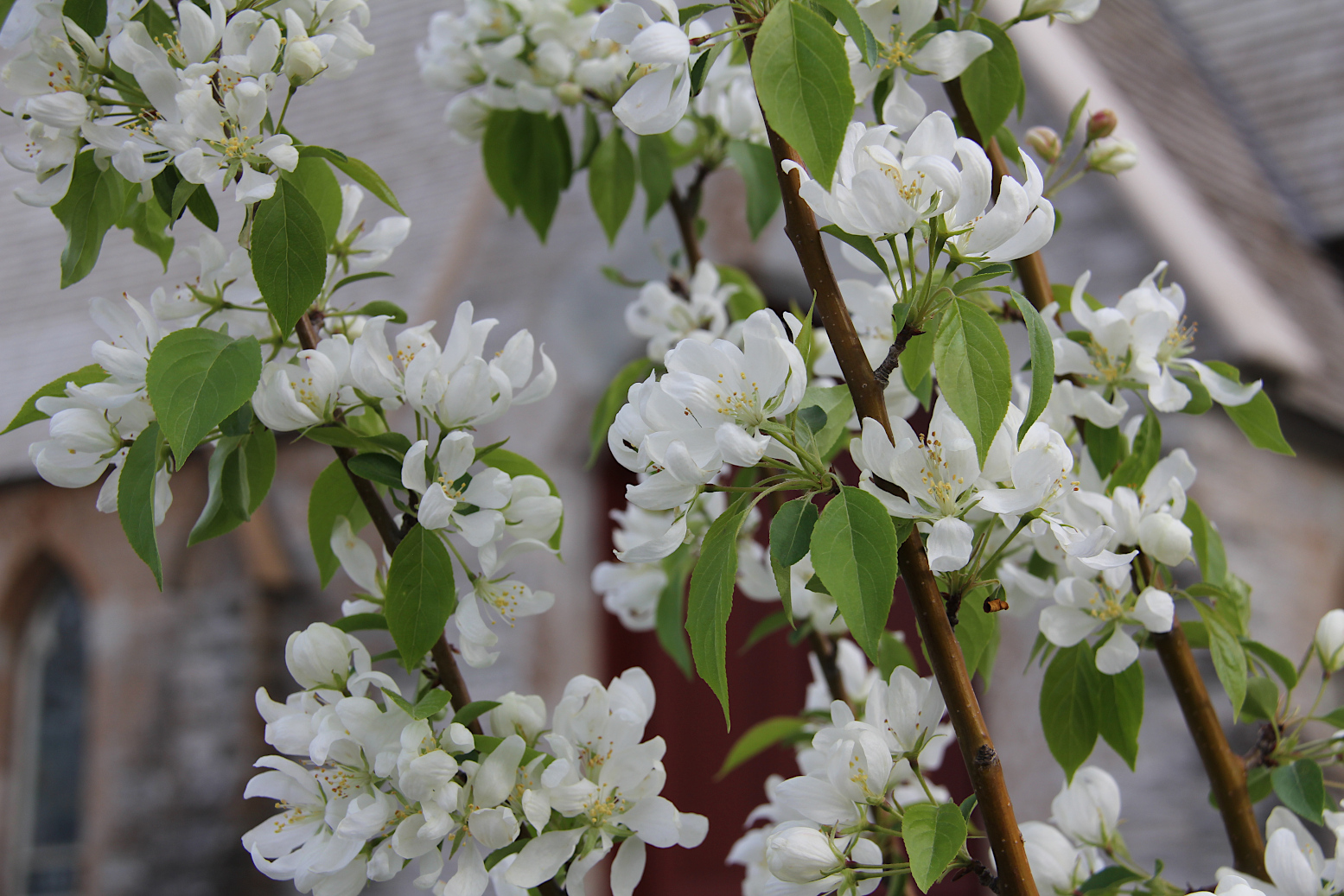
A young tree outside the Cathedral of Our Merciful Saviour in Faribault blooms in late April. (Minnesota Prairie Roots copyrighted photo April 2026)
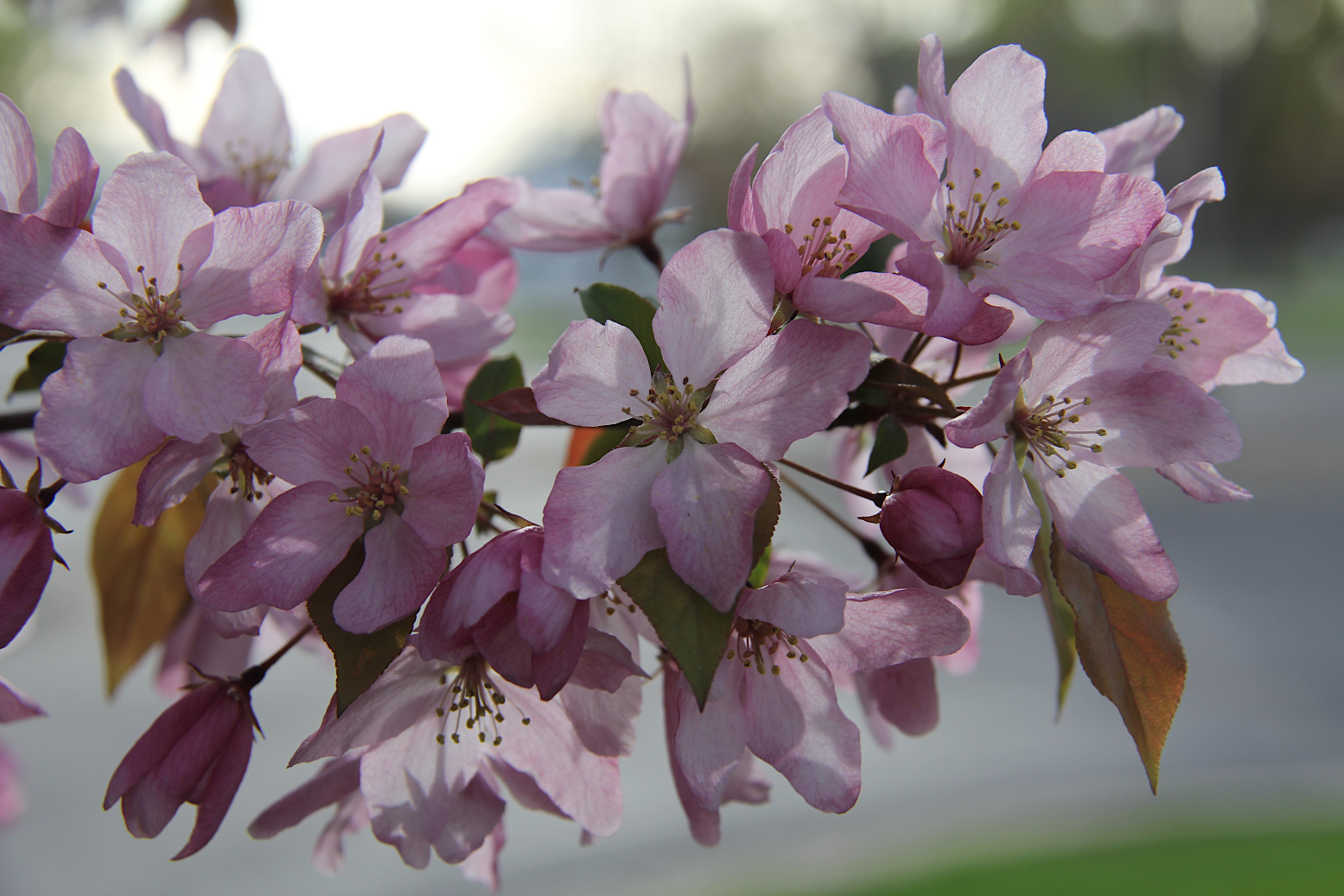
Whether pink or white, the petals add an artistic and poetic touch to the landscape. It’s as if an artist meticulously brushed petals upon a tree. It’s as if a poet wrote lovely words upon apple and ornamental trees, petal by petal.
Against the backdrop of the Guild House at the Cathedral of Our Merciful Saviour, a flowering tree buds and blooms. (Minnesota Prairie Roots copyrighted photo April 2026)
In poetry, every word counts. In art, every brush stroke matters. On a flowering tree, both create a canopy of loveliness.
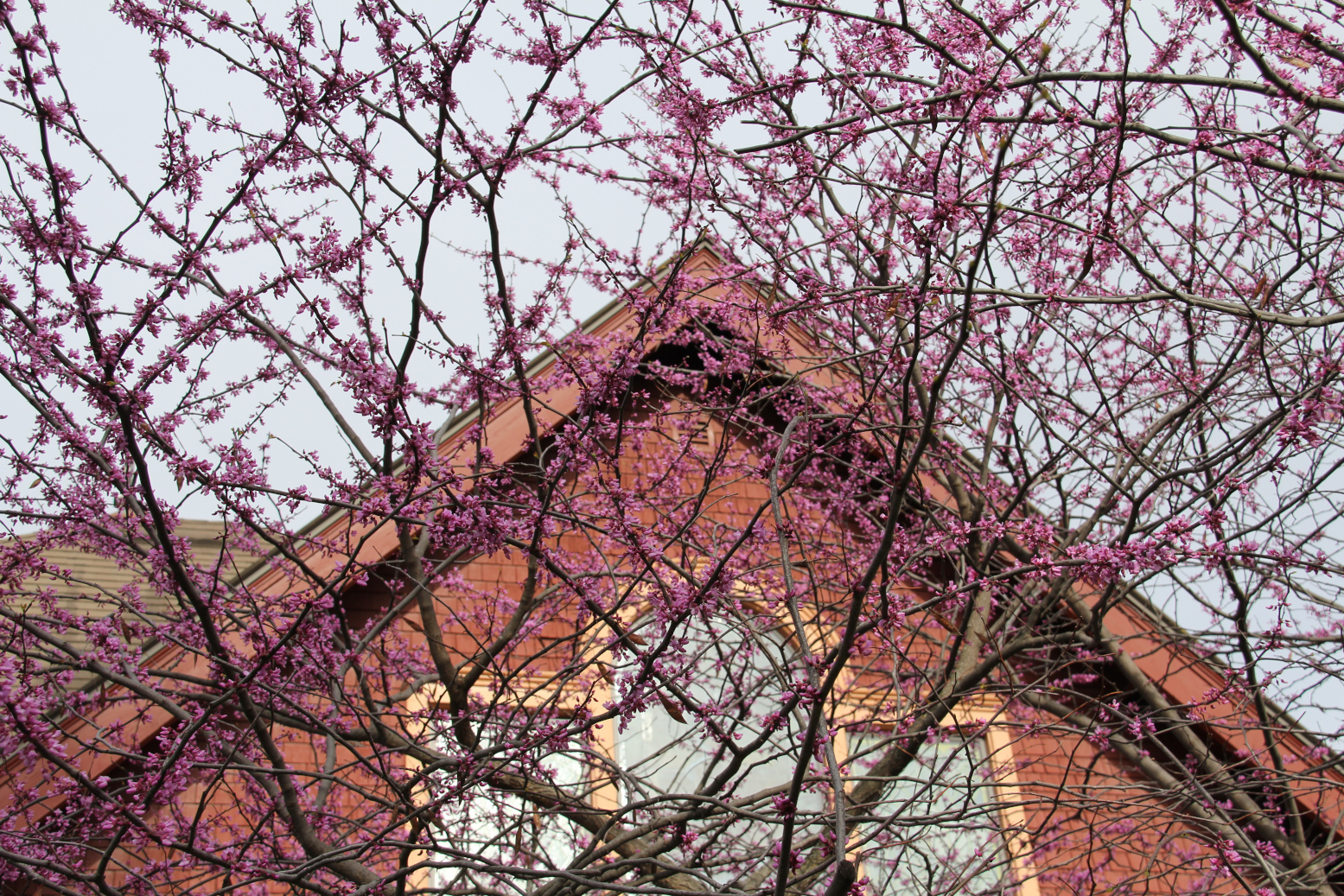
Masses of flowers on a tree at the intersection of Third Avenue NW and Fifth Street NW, Faribault. (Minnesota Prairie Roots copyrighted photo late April 2026)
I don’t paint. But I create with my camera and with words. I write poetry—poetry which has published on the pages of anthologies and literary journals, inspired artists and a musician, graced signs in public places.
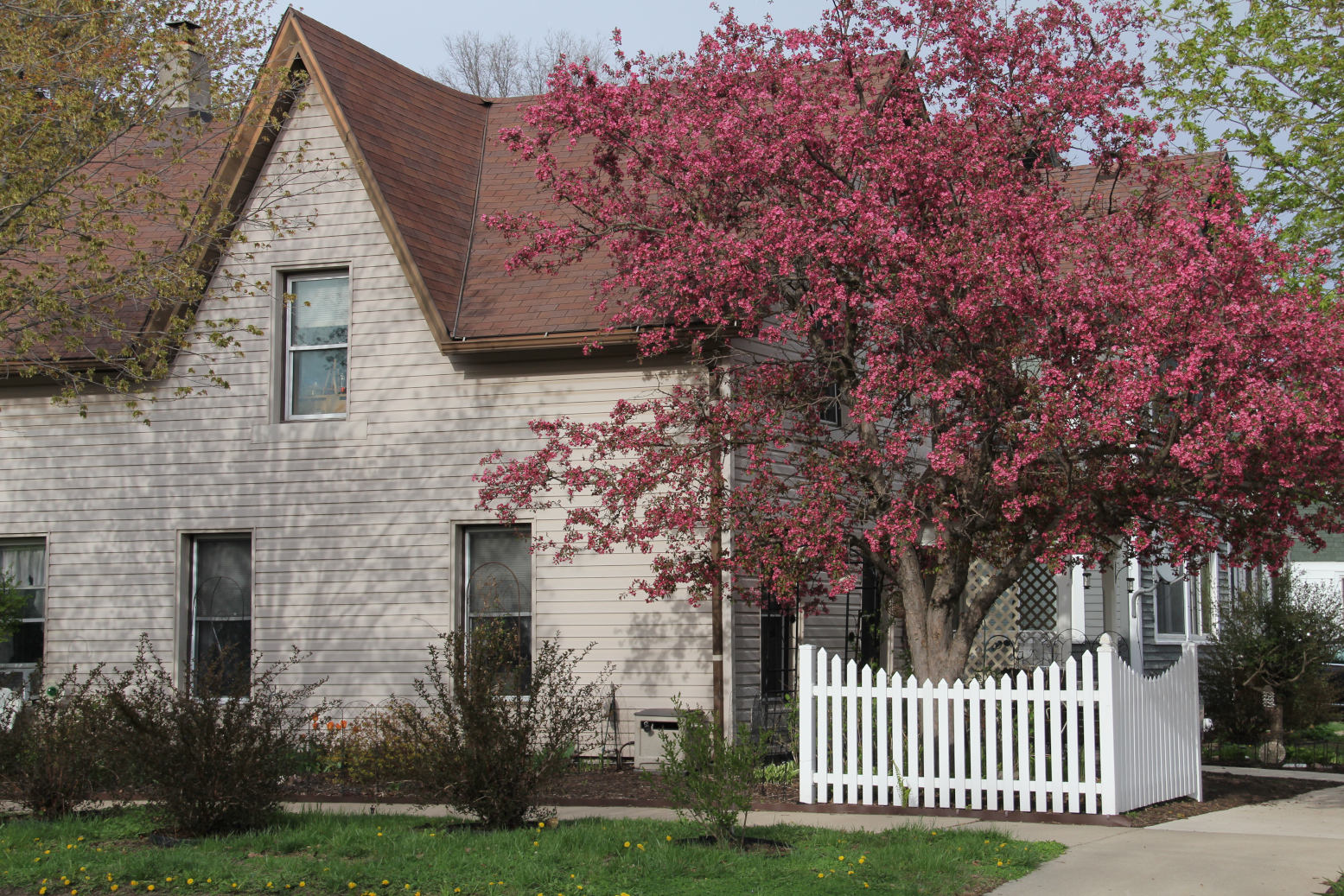
At the intersection of First Avenue NW and Sixth Street NW in Faribault, a flowering tree graces a front yard. (Minnesota Prairie Roots copyrighted photo April 28, 2026)
And so I see poetry where others may not. A flowering tree is not simply a tree with flowers. It is a work of literary and visual art. It is a love letter. It is a painting. It is romance. It is a thousand stories. It is more than a tree blushing beauty into the landscape on a spring day.
Sunshine dapples a tree along Third Avenue NW, Faribault. (Minnesota Prairie Roots copyrighted photo late April 2026)
In residential neighborhoods, in parks and in other spaces, flowering trees bloom poetic verse. Above. And in a carpet of petals upon the ground. I’m inspired to write: Apple blossoms fall/like kisses from their lips/teasing, tempting, tasting/not of promised, forbidden fruit/but of young love blooming.
The Guild House tree in bud and now bloom. (Minnesota Prairie Roots copyrighted photo April 2026)
And so spring seems a time of young love. Of beginnings. Of feeling the heart beat faster.
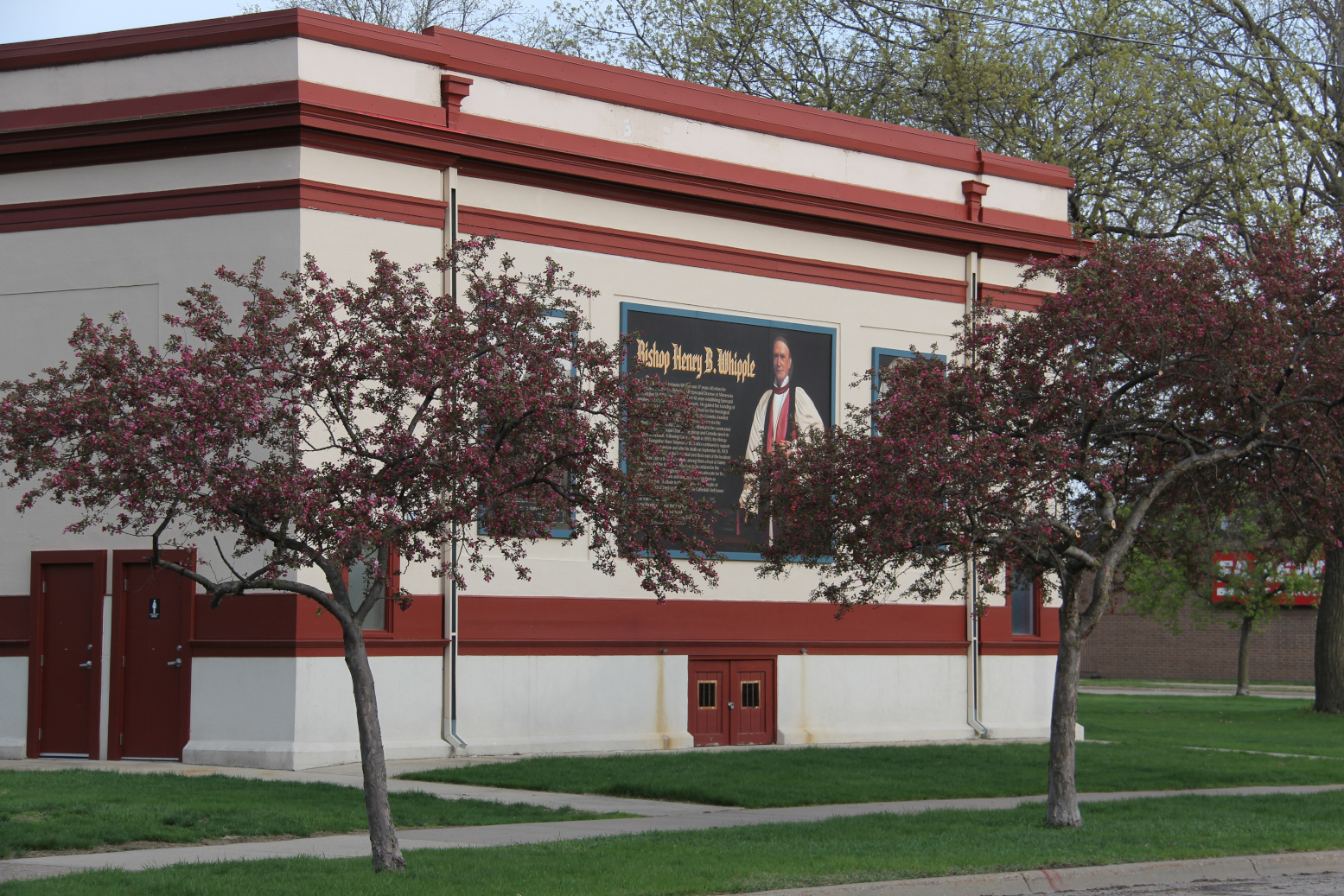
Trees flower on the back side of Faribault’s Central Park bandshell which features murals honoring the life of Bishop Henry Whipple. (Minnesota Prairie Roots copyrighted photo April 2026)
Yet spring also celebrates the seasoned love of many years, even decades, together. Love that has seen countless springs of flowering trees blushing beauty into the landscape. For my husband, Randy, and me, 44 years of married life marked on May 15.
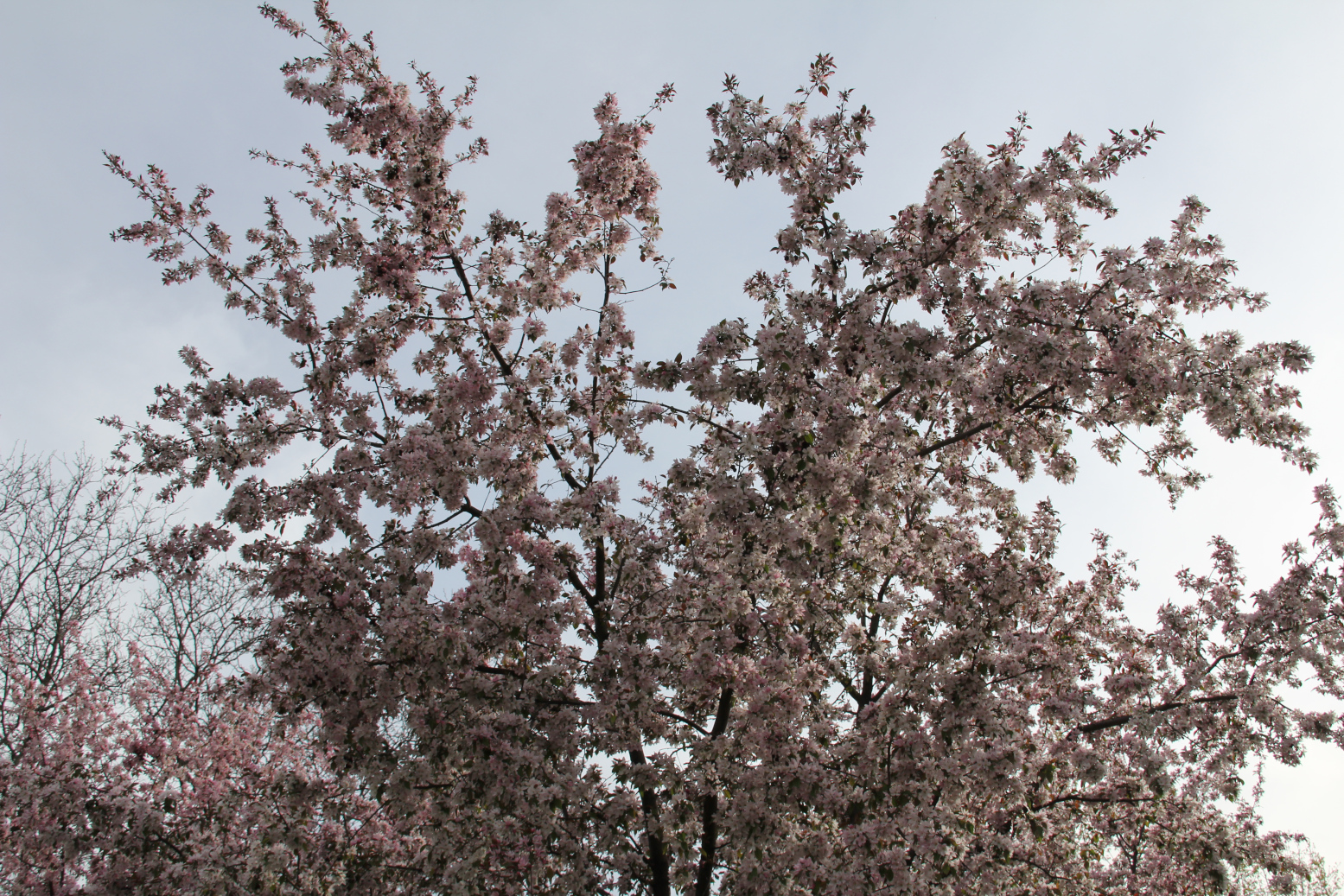
Looking up at flowering treetops outside an office building along Third Avenue NW in Faribault. (Minnesota Prairie Roots copyrighted photo April 2026)
We walk beneath those trees, petals underfoot representing the poetry of days past and those above of poetry yet unwritten.
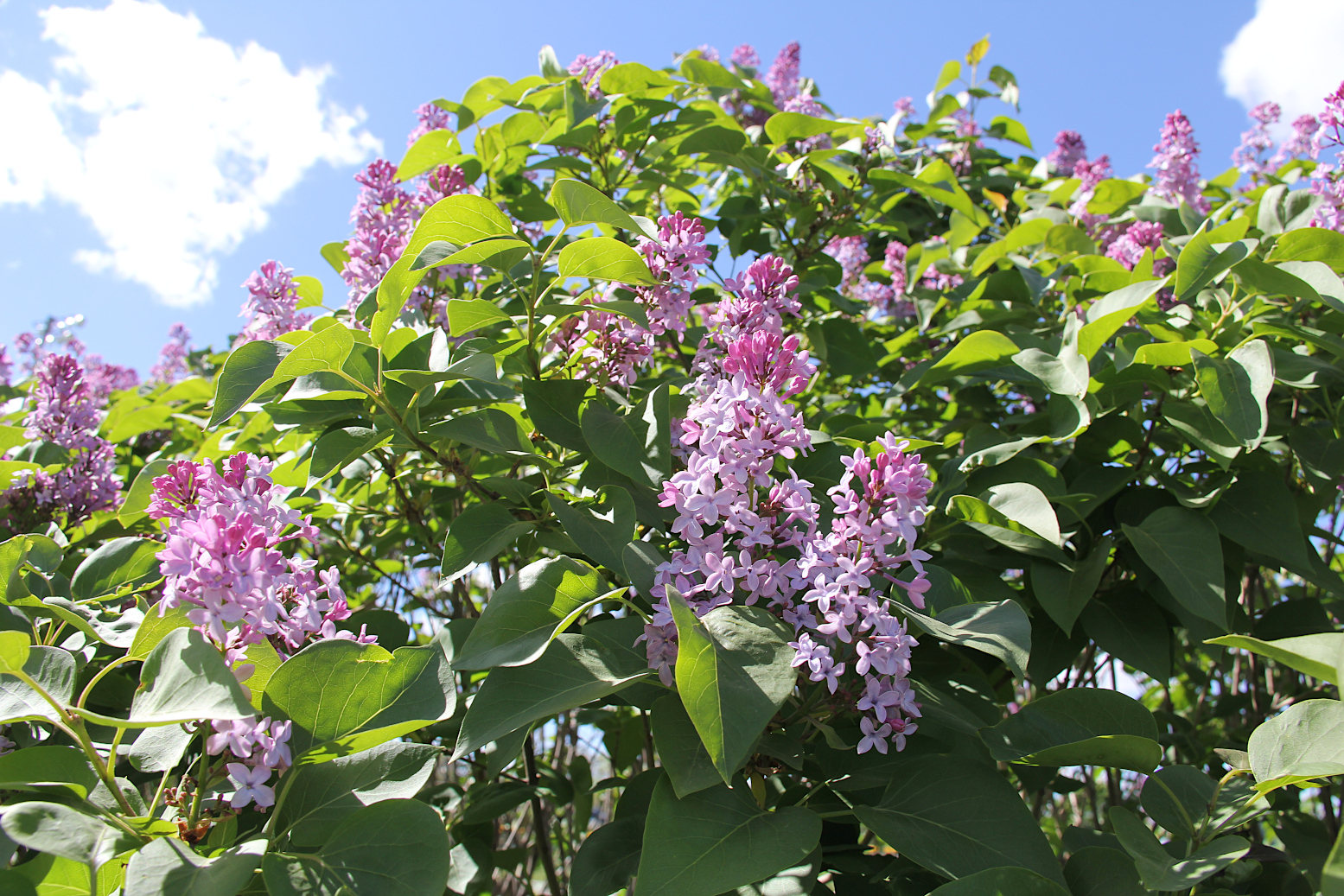
Lilacs bloom in North Alexander Park, Faribault. (Minnesota Prairie Roots copyrighted photo May 2026)
EARLY MAY IN MINNESOTA always appears fresh, vibrant, new.
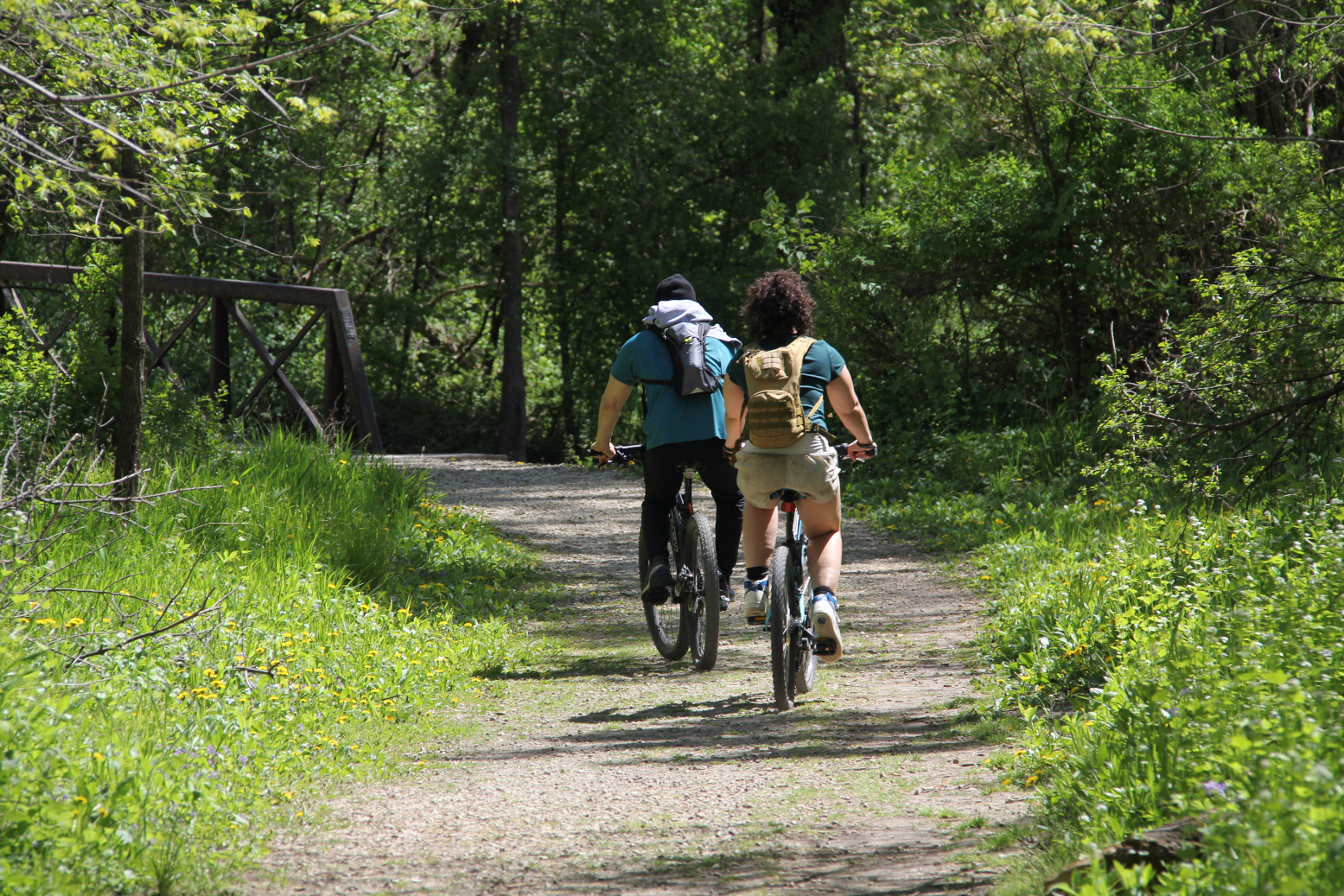
Biking toward the pedestrian bridge across the Straight River in Teepee Tonka Park. (Minnesota Prairie Roots copyrighted photo May 2026)
It’s as if our senses have reawakened from hibernation. The landscape looks especially lush. The sun feels warmer. Birdsong sounds louder. And the desire to get outdoors and take it all in runs strong.
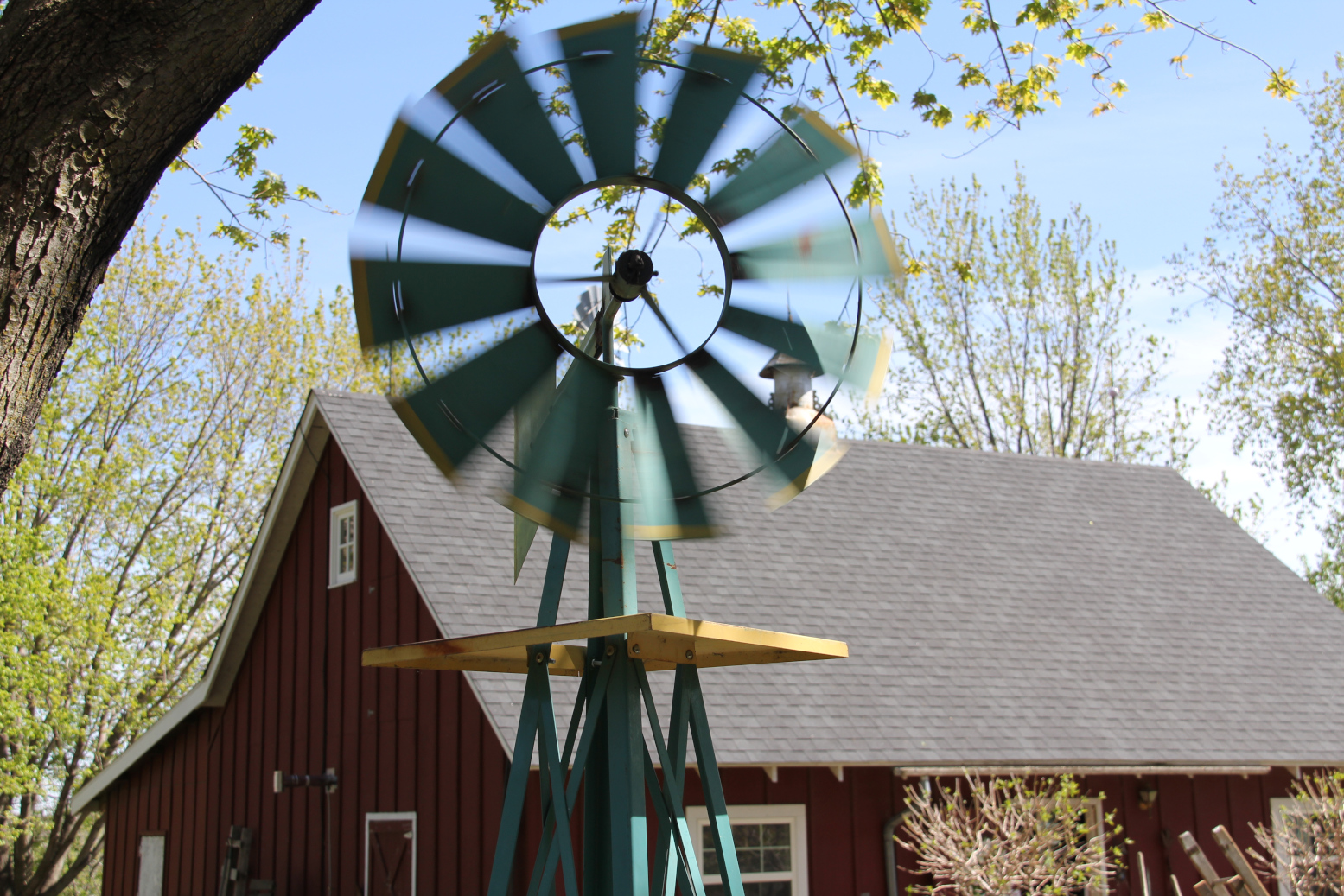
A windmill spins at The Crabby Wren barn sale in Cannon City during a vintage shop hop. (Minnesota Prairie Roots copyrighted photo May 2026)
Mother’s Day weekend brought locals out in droves in the Faribault area, including me. Bikers, hikers, dog walkers, anglers, picnickers, shoppers at a vintage shop hop…
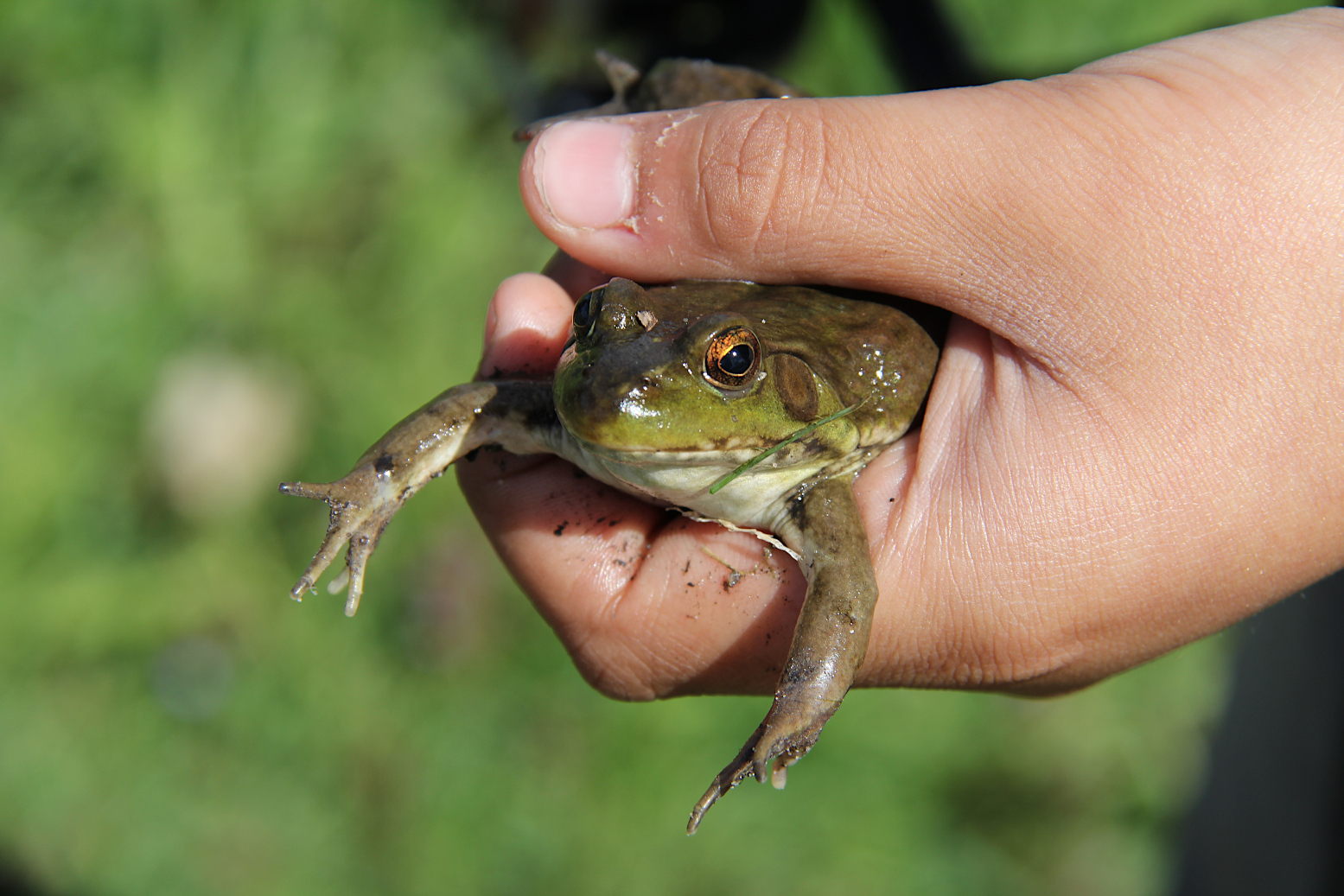
A frog caught along the Cannon River. (Minnesota Prairie Roots copyrighted photo May 2026)
The river drew many. A father and his young son fished at Two Rivers Park, using chicken skin coated in red Kool-Aid as bait. A young boy snagged a frog along the Cannon River in North Alexander Park where he fished with a friend. Anglers lined the river banks by the two dams near the Faribault Mill.
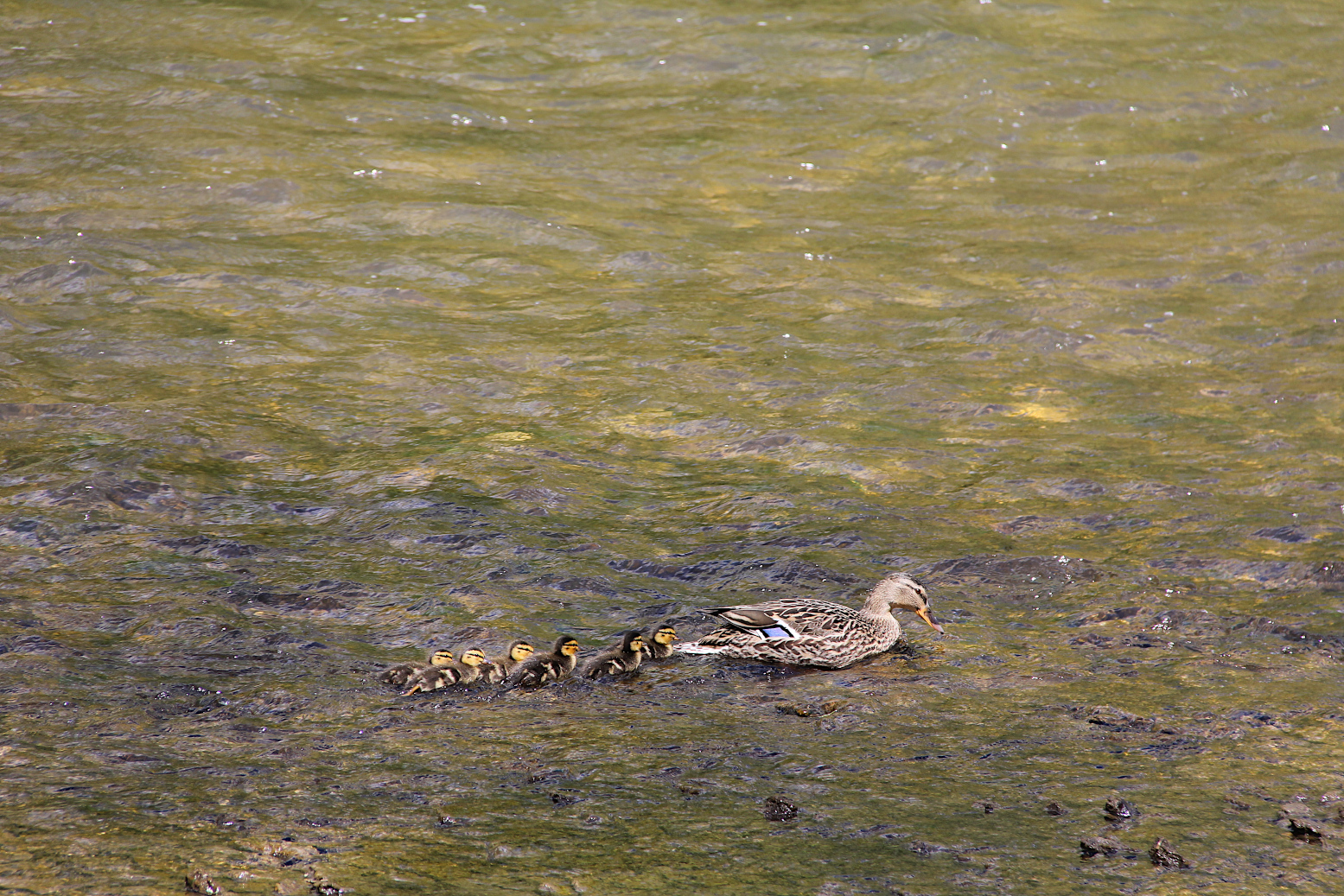
Six ducklings and their mother swim in the shallow water of the Straight River at Teepee Tonka Park. (Minnesota Prairie Roots copyrighted photo May 2026)
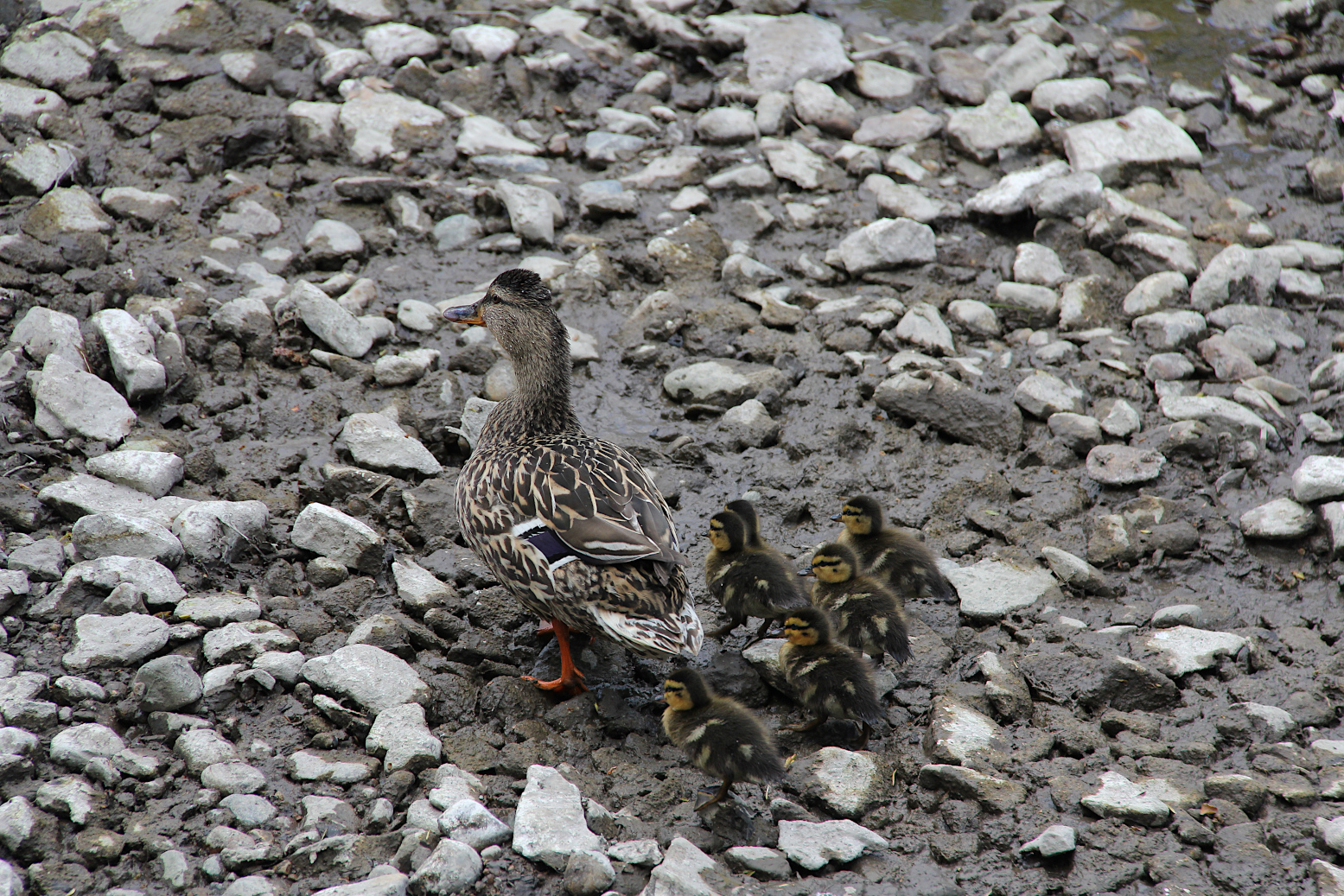
And some, like me, watched six fluffy ducklings swim against the current and traverse the rocky bed of the Straight River in Teepee Tonka Park as they tried to keep up with their mother. The word “cute” fit.
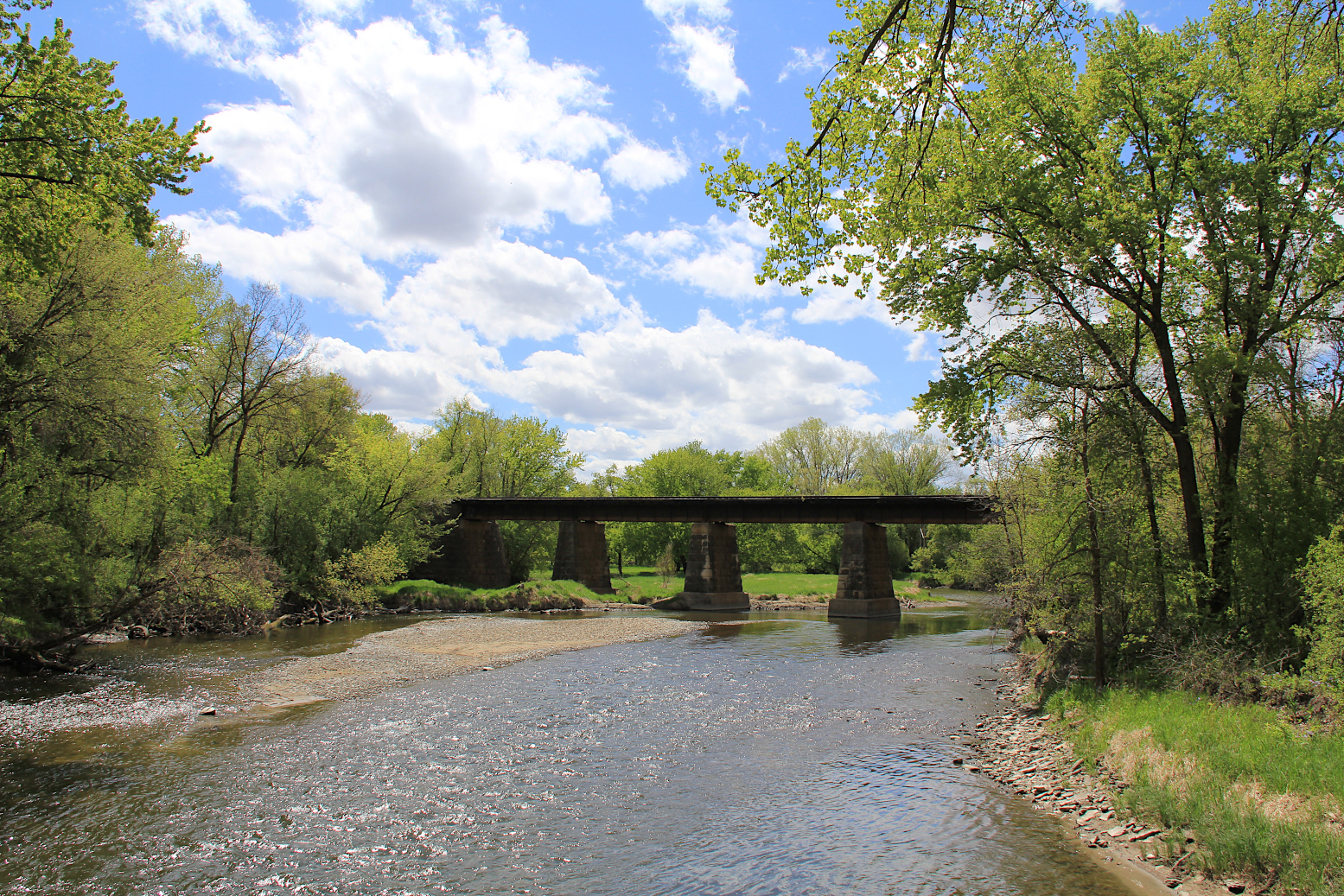
The Straight River and railroad bridge as photographed on a pedestrian bridge linking Teepee Tonka Park to River Bend Nature Center. (Minnesota Prairie Roots copyrighted photo May 2026)
Everywhere Randy and I hiked on this splendid—and, yes, that word fits—Sunday, the essence of spring enveloped us. Wildflowers bloomed. Greenery enveloped us. The water of the Straight River flowed clear below us. Clouds puffed the blue sky.
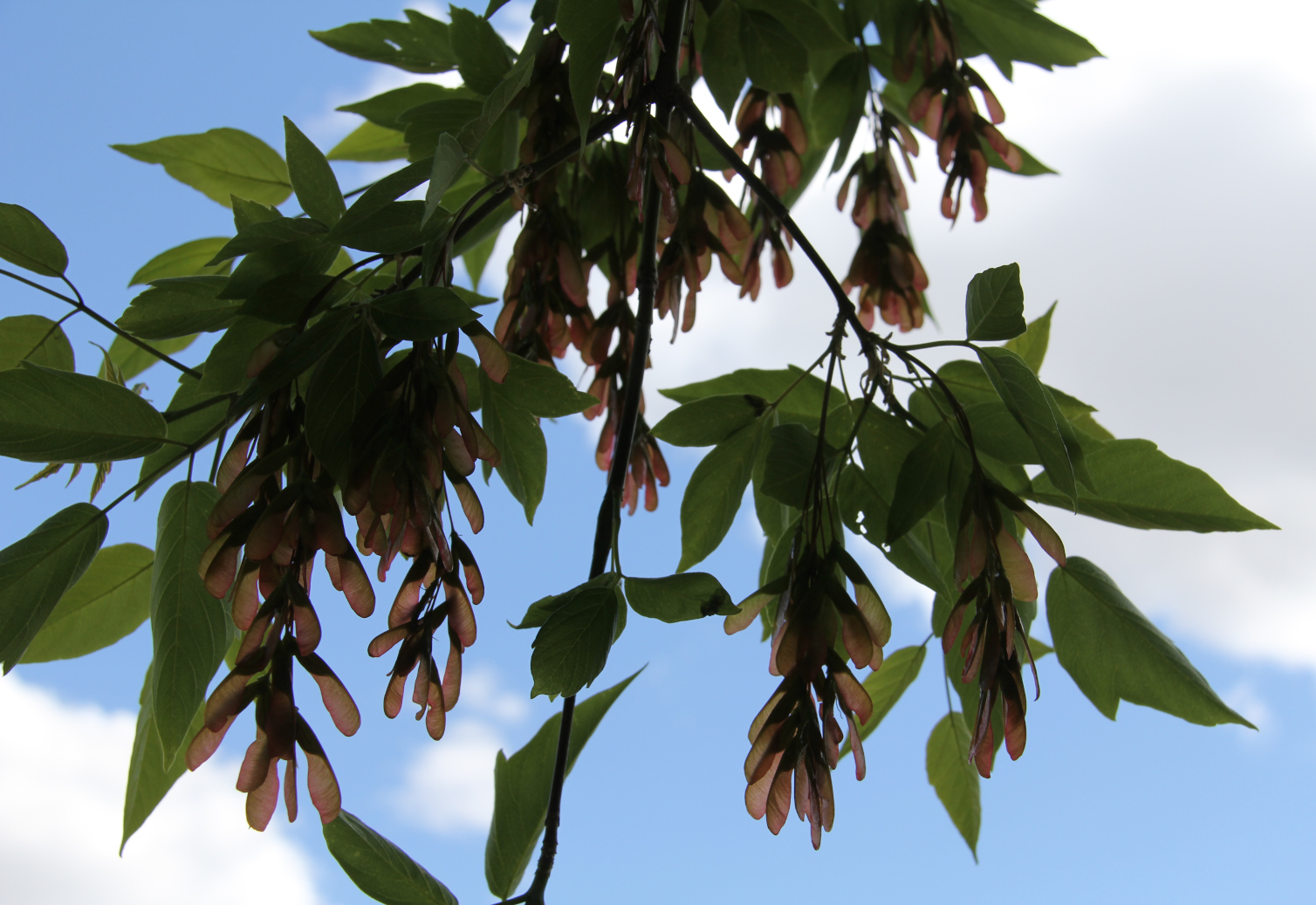
Maple leaf seed pods against the blue May sky. (Minnesota Prairie Roots copyrighted photo May 2026)
The perfume of lilacs scented the air. Maple leaf seed pods dangled from branches. Maple leaves shadowed a tree trunk.
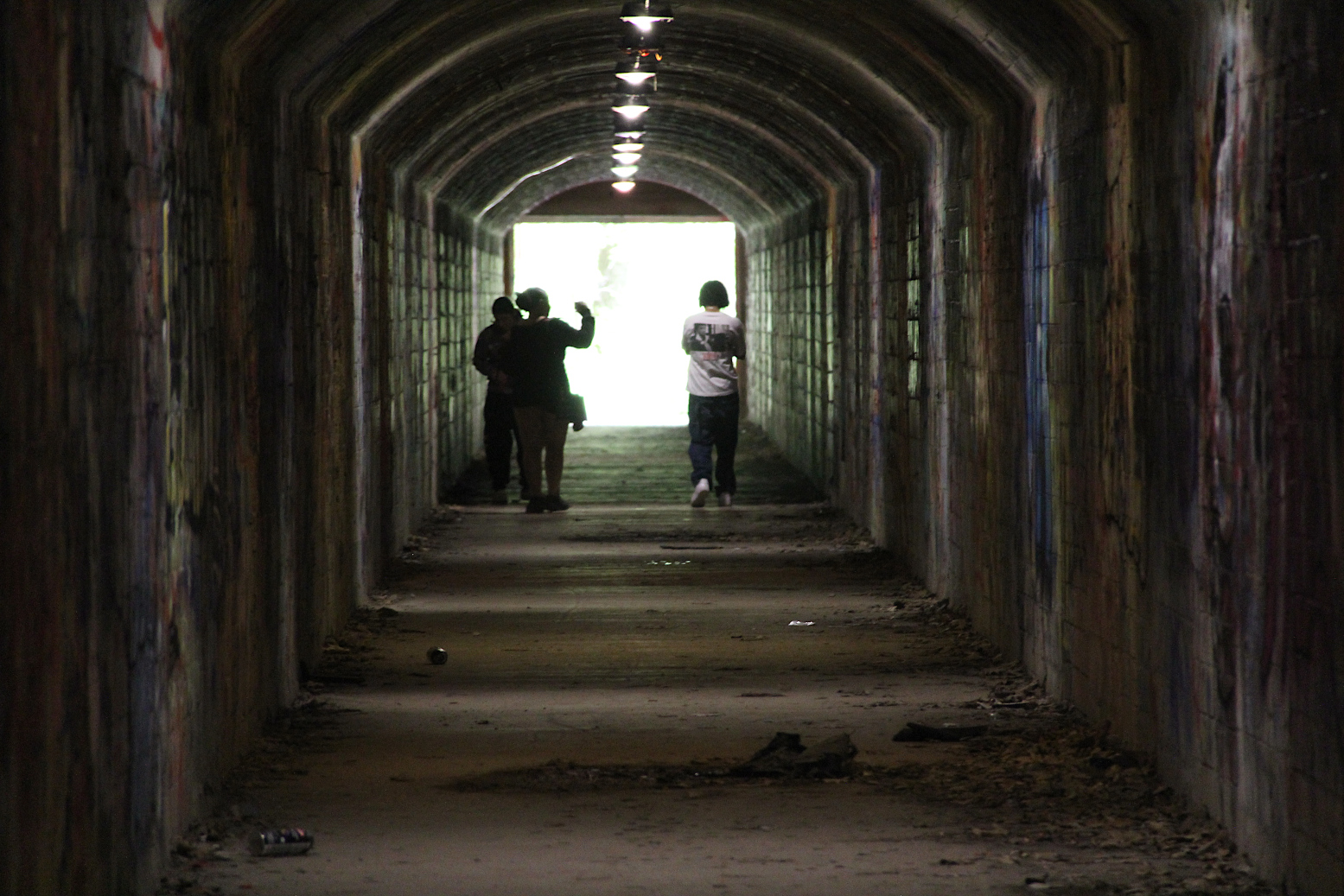
Teens in the tunnel. (Minnesota Prairie Roots copyrighted photo May 2026)
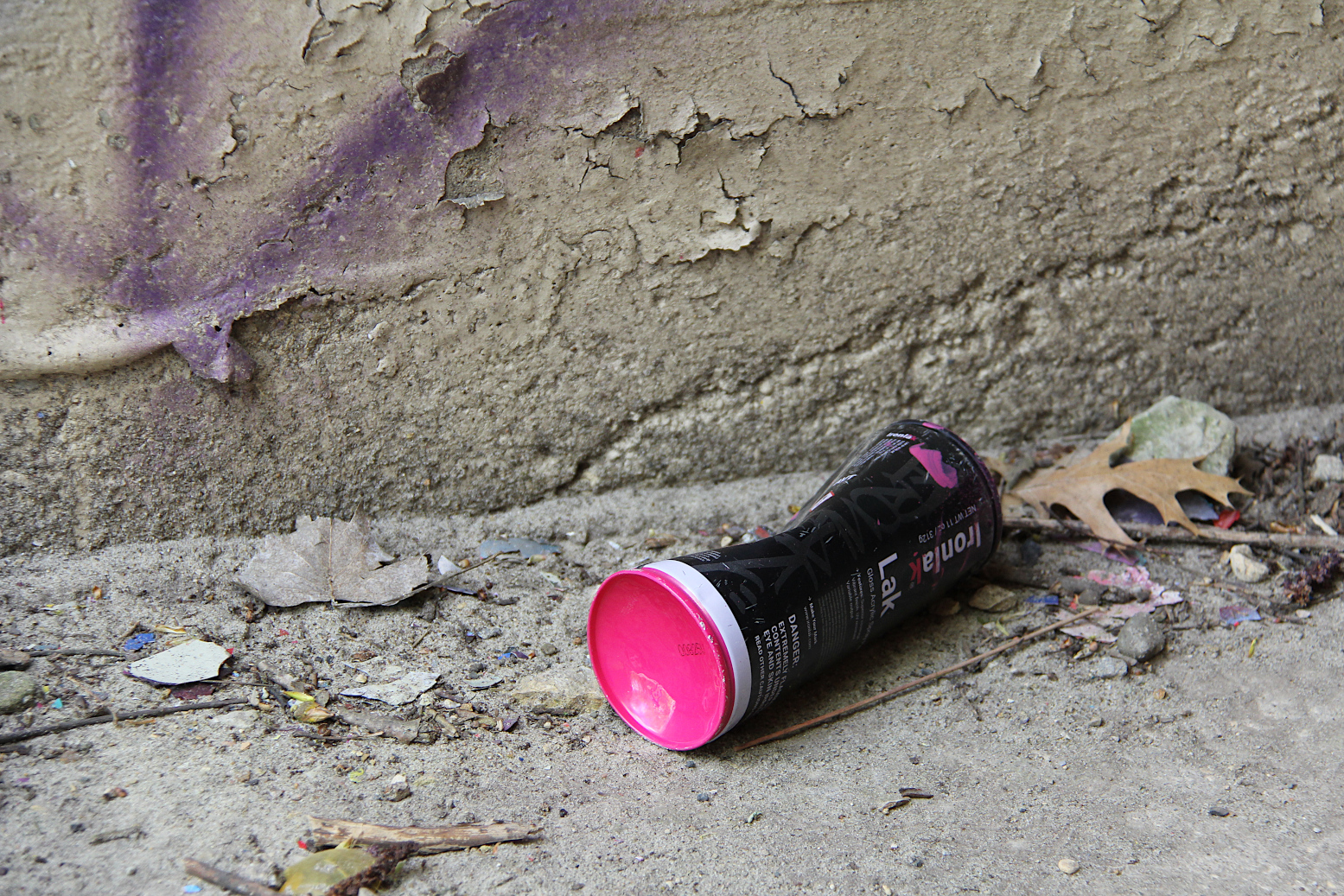
One of several cans of spray paint lying inside the tunnel. (Minnesota Prairie Roots copyrighted photo May 2026)
Tunnel graffiti. (Minnesota Prairie Roots copyrighted photo May 2026)
And in the shadows of a 442-foot long tunnel leading into River Bend Nature Center, several teens clustered, music blaring. We didn’t walk far enough to see what they were doing, but rather scanned the graffiti covering the walls of this 1937 Works Progress Administration project, built as a root cellar for the former Minnesota School and Colony (state hospital). I’m not informed enough to interpret the art, much of which includes obscene language and unidentifiable symbols. Yet, I found a patch of art that seemed devoid of anything offensive.
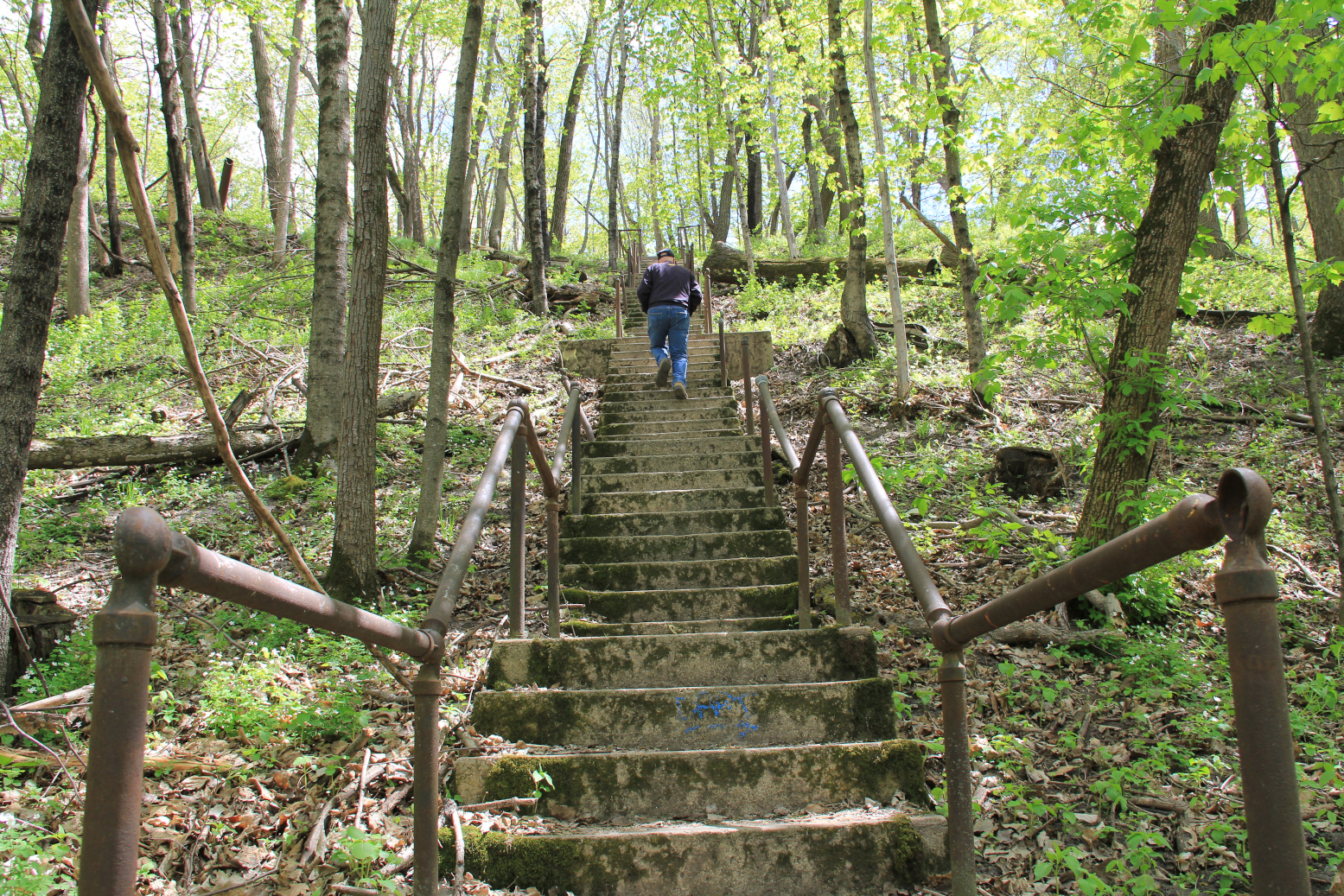
Randy climbs partially up a steep flight of stairs in the woods. (Minnesota Prairie Roots copyrighted photo May 2026)
We emerged from the coolness of the tunnel back into woods hugging a steep hill on one side of the trail, the river bottom on the other. A rail line rises high like a wall along a portion of the path. Only later, in another location, did I hear the blast of a train whistle.
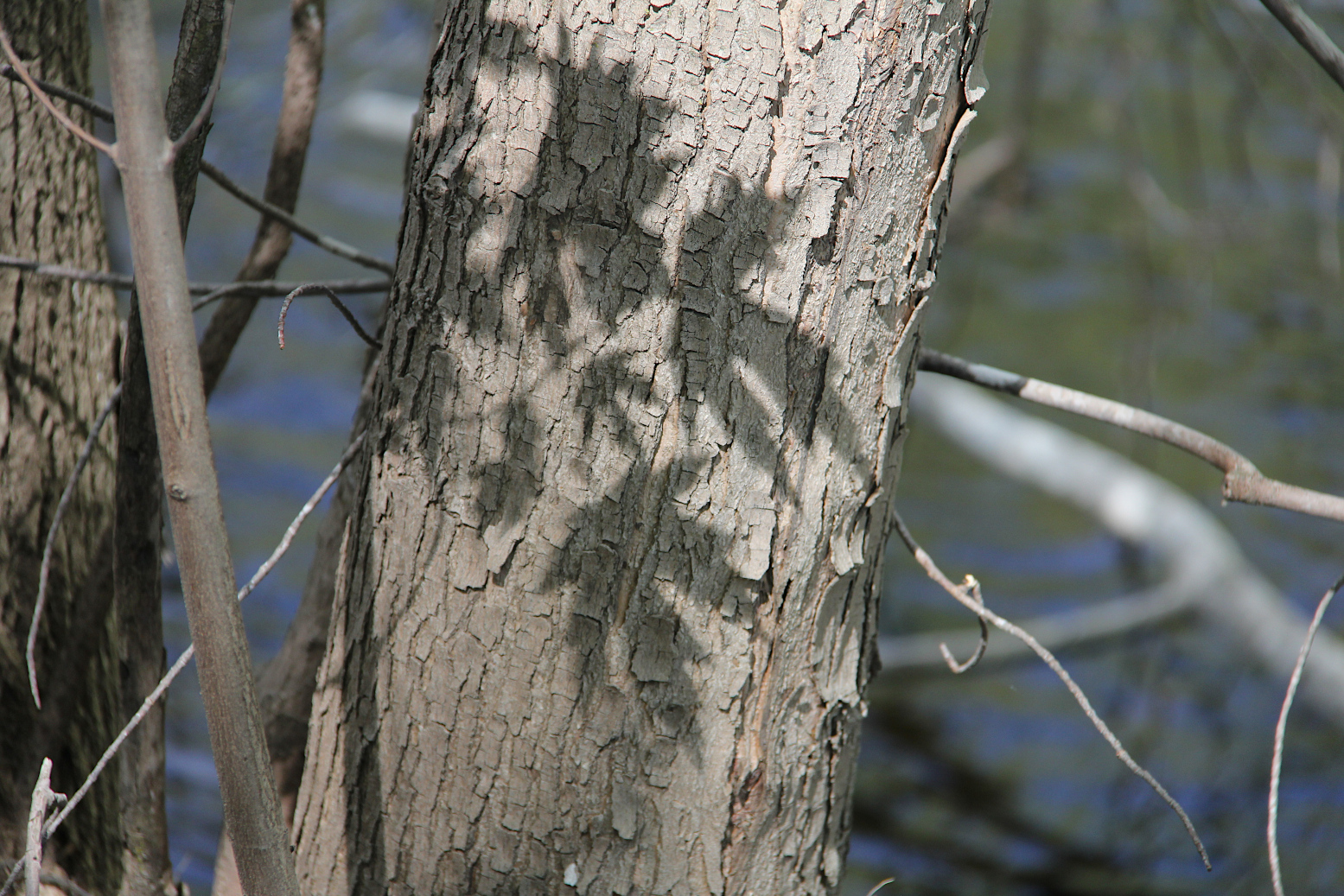
Maple leaf shadows on a tree trunk along the Straight River. (Minnesota Prairie Roots copyrighted photo May 2026)
Even in the quiet of parks and trails, the background of city noise, the presence of people remains. Yet, it’s possible to shut out the distractions, to immerse one’s self in nature.
Nearly camouflaged in the rocky bed of the Straight River, a mama duck and her six babies. (Minnesota Prairie Roots copyrighted photo May 2026)
I deeply appreciate the trail system, many parks and nature center within the city limits of Faribault. For a while on Mother’s Day afternoon, I observed just how much they are used, valued. To see people out and about like the young boys angling for fish and frogs, the families grilling in the park, the bikers pedaling, the dog owners walking their canines and more, reaffirms the importance of the outdoors to all of us, for our physical and mental well-being. To embrace spring after the season of winter feels good, oh, so good.
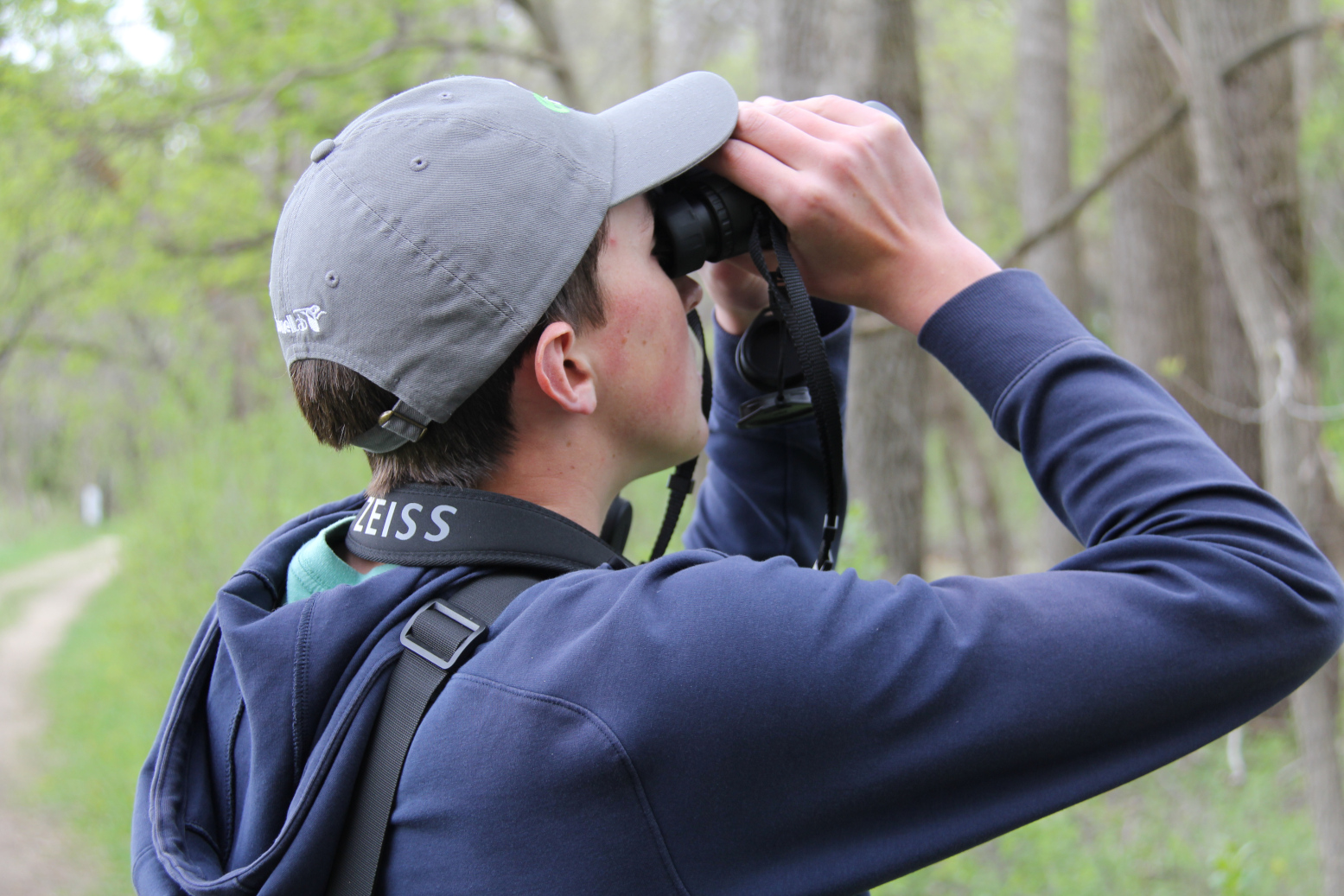
Langston Richter looks for birds at River Bend Nature Center in Faribault. (Minnesota Prairie Roots copyrighted photo April 2026)
THEY ARE BIRDERS. I am not. But I love encountering people who are passionate about interests like birding. That would be Tom Boevers and Langston Richter.
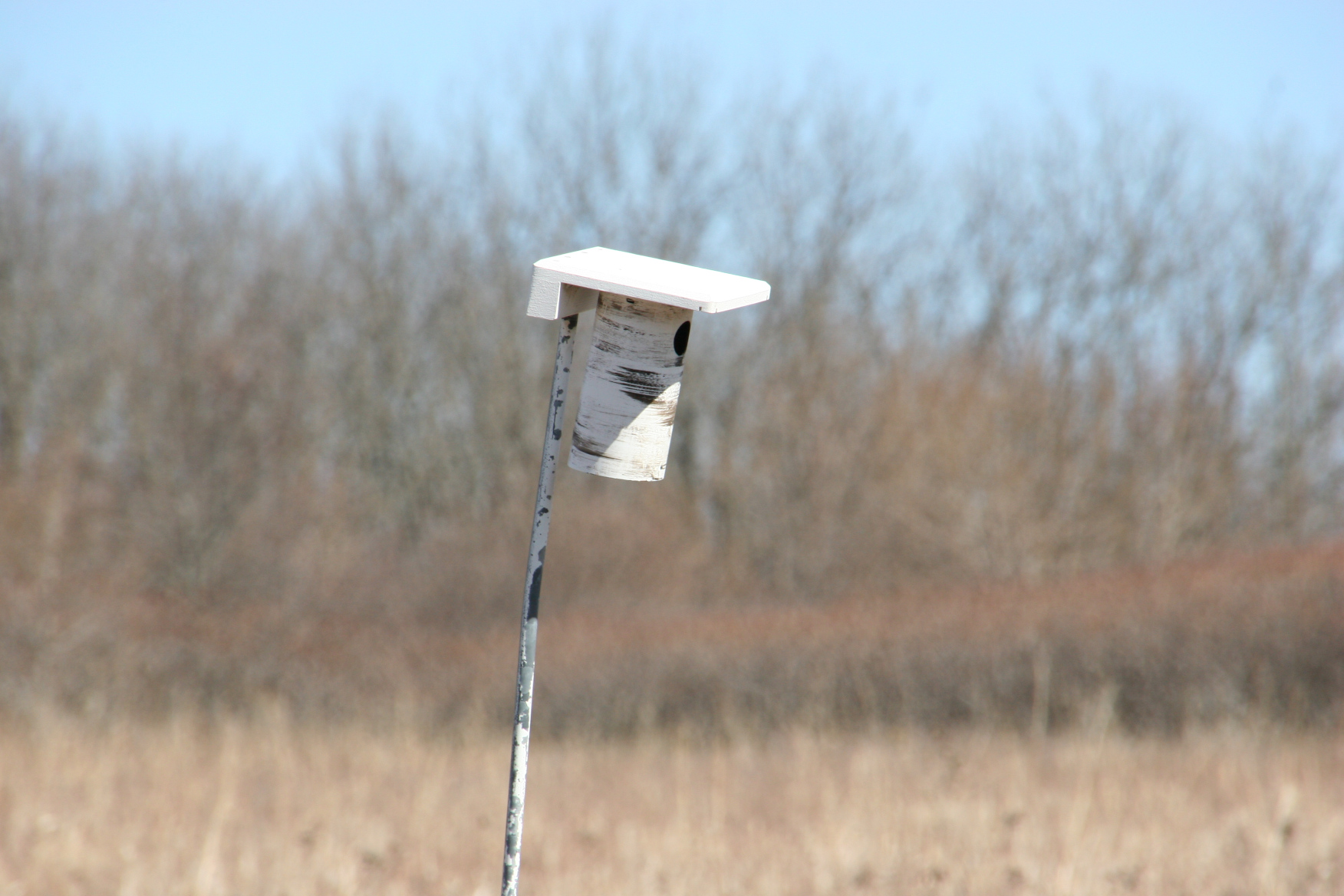
A bluebird house photographed during a previous visit to River Bend. (Minnesota Prairie Roots copyrighted file photo)
The two were walking the trails of River Bend Nature Center in Faribault recently when Randy and I met them along a section of the Prairie Loop. We’d just been talking about bluebirds and Tom, whom we know to be the caretaker of bluebird houses at River Bend.
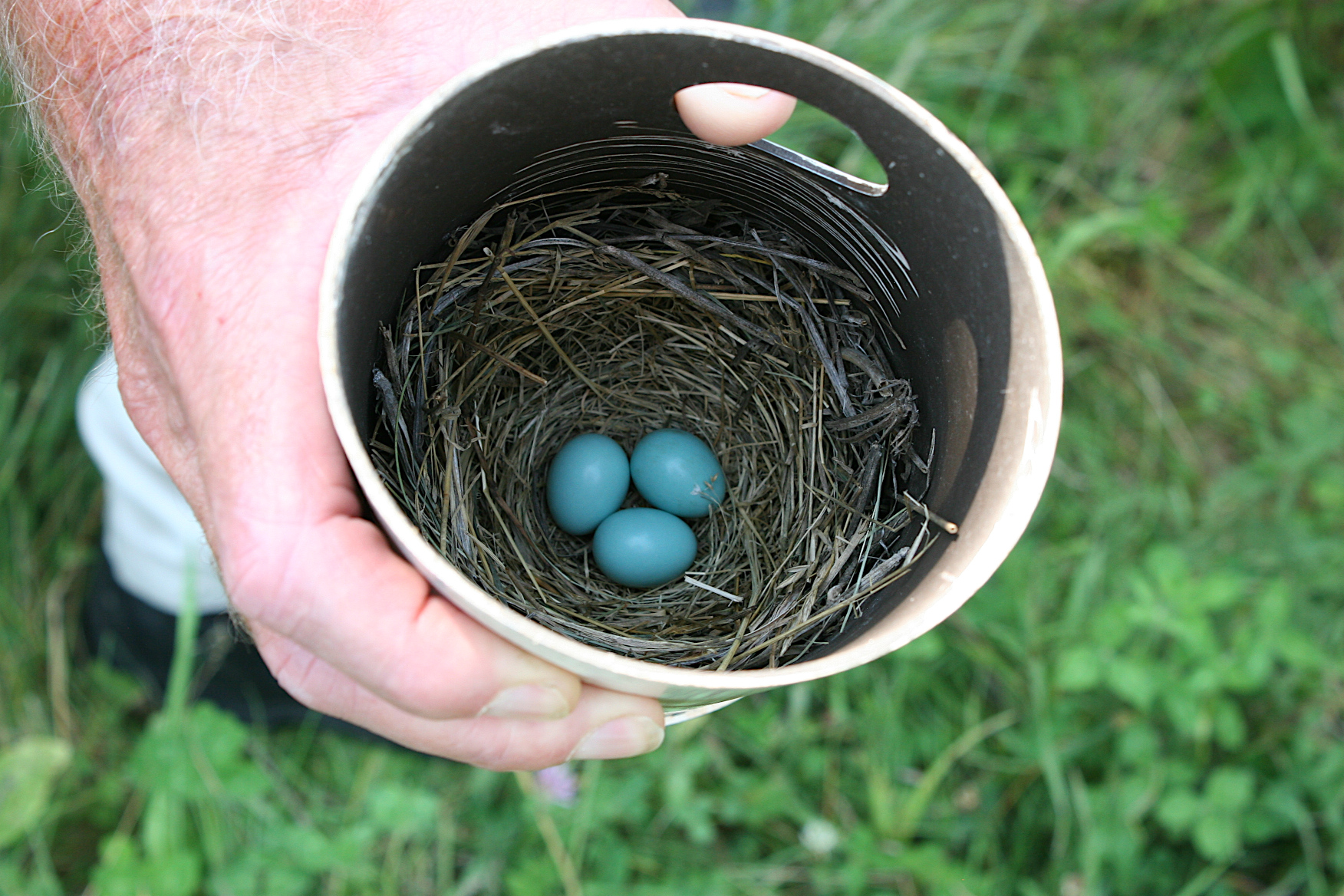
Bluebird eggs in a nest, as shown to me by Mr. Bluebird, Keith Radel, several years ago. (Minnesota Prairie Roots copyrighted file photo)
And there Tom was, looking for birds with Langston, a Bethlehem Academy senior. Tom shared that he’s tallied five bluebird eggs at his Faribault home and 23 in the nature center this spring. I don’t recall other details. But the pair’s interest, knowledge and ability to spot birds impresses me.
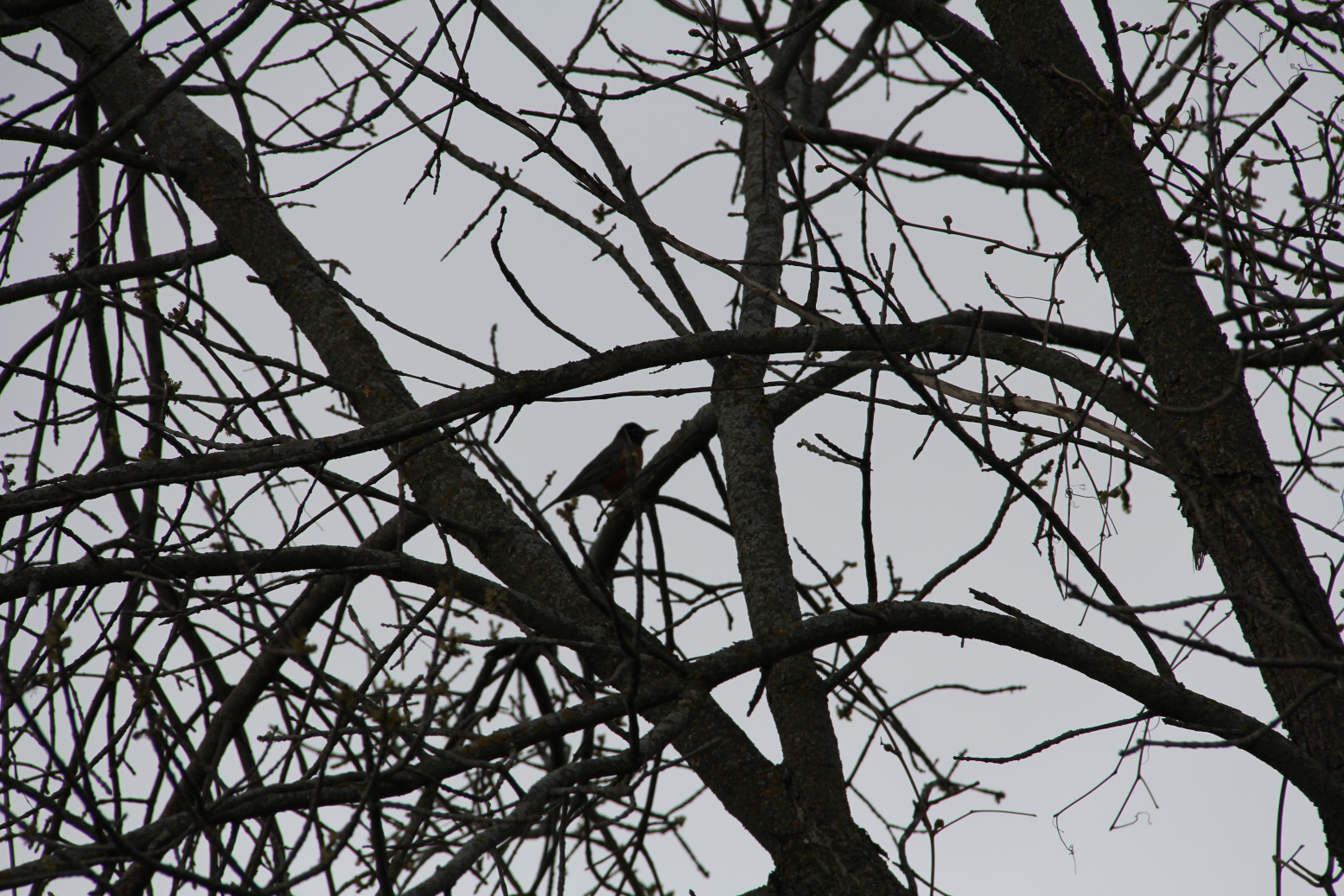
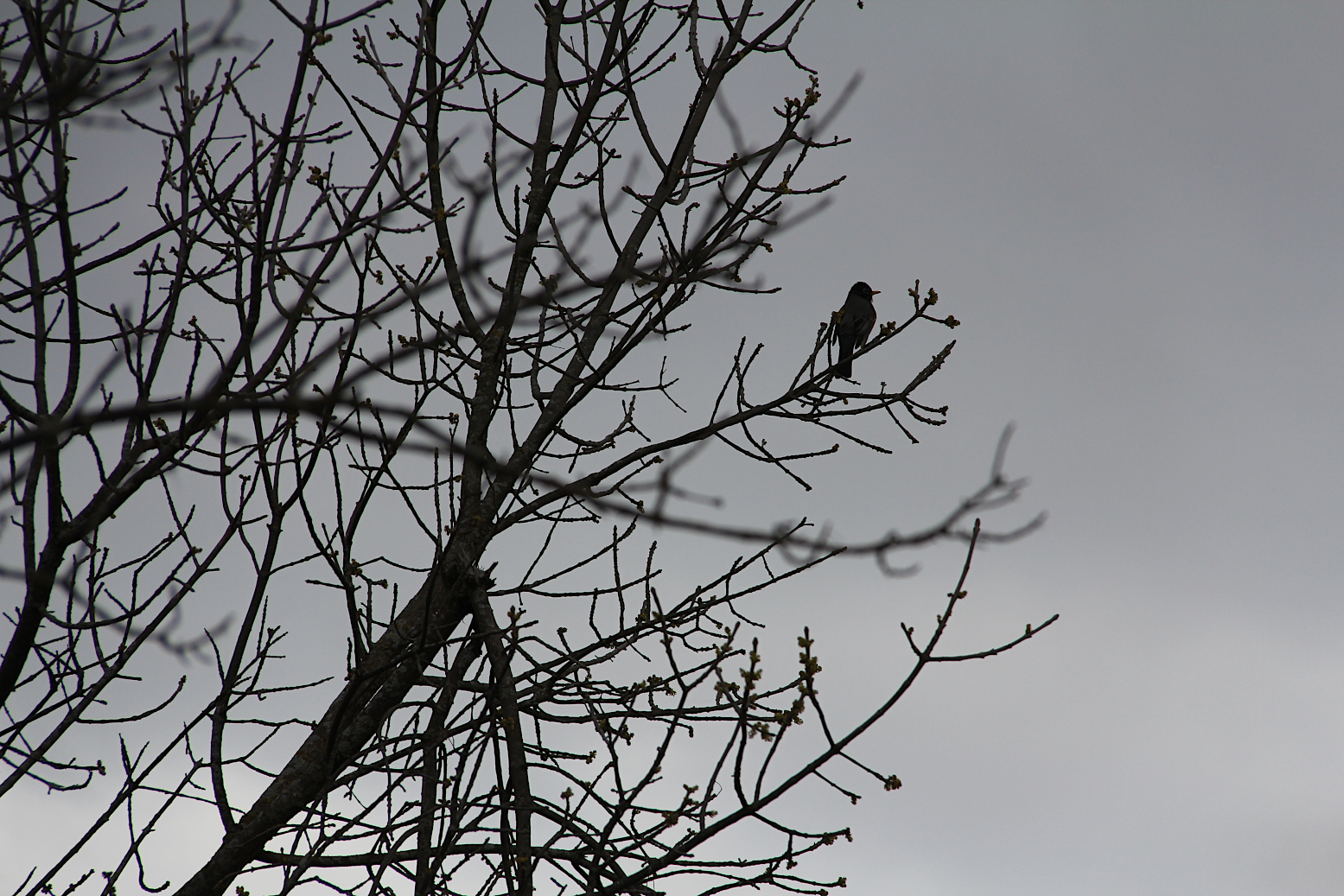
In the jumble of branches, a bird perches. (Minnesota Prairie Roots copyrighted photo April 2026)
As we chatted, Langston suddenly swung his binoculars upward toward the top of a tree. While he spotted a bird immediately, I took much longer to find it camouflaged among the bare branches. I hear plenty of birdsong while hiking at River Bend, but can’t find birds with much ease.
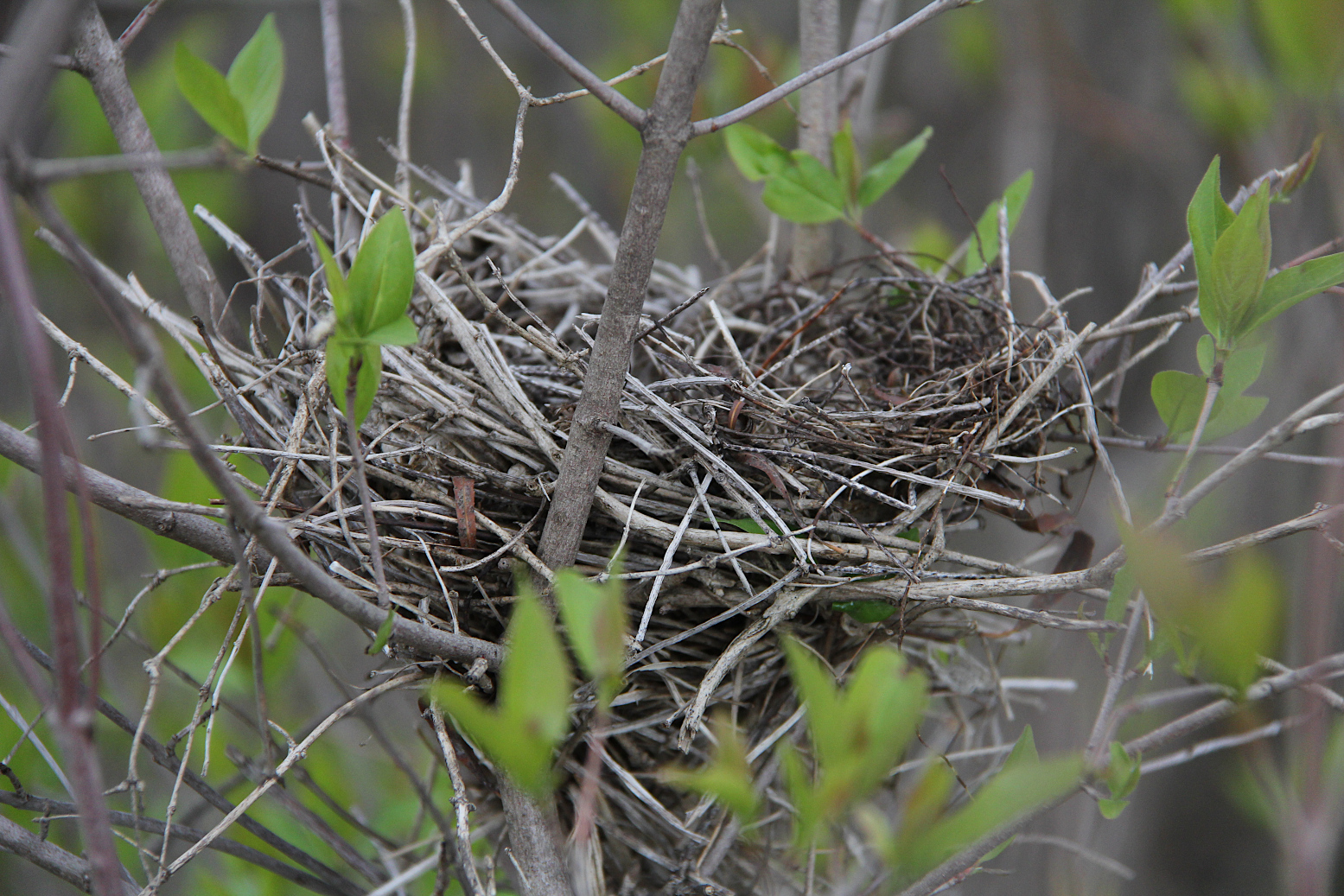
A low-lying nest at River Bend, likely left from last season. (Minnesota Prairie Roots copyrighted photo April 2026)
I suppose good vision, a knowledge of bird species, habits and habitat, plus experience, factor into successful bird watching. These two have all of that down. They met when Langston was volunteering at the senior center and someone, knowing their shared avian interest, connected them.
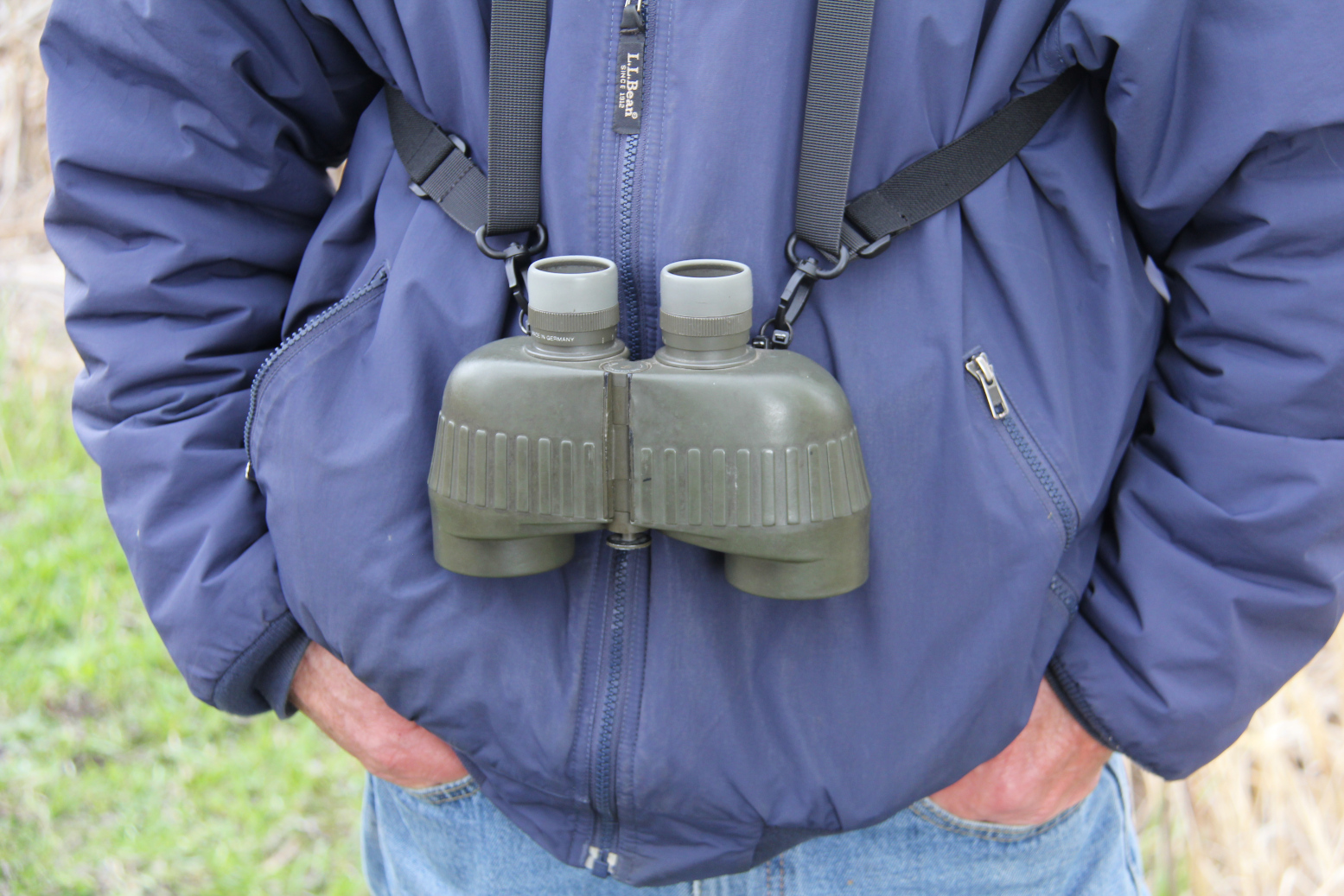
Tom wears his binoculars, ready to watch birds. (Minnesota Prairie Roots copyrighted photo April 2026)
Both carry binoculars. Langston also brings a camera to photograph birds. And on this afternoon, he sported an eBird cap. Ebird is an online database for logging bird sightings. Later I checked eBird, where Langston noted seeing the following (and more) on April 29 at River Bend: a Virginia Rail, Blue-headed Vireo, Sedge Wren, Marsh Wren, Orange-crowned Warbler and Palm Warbler.
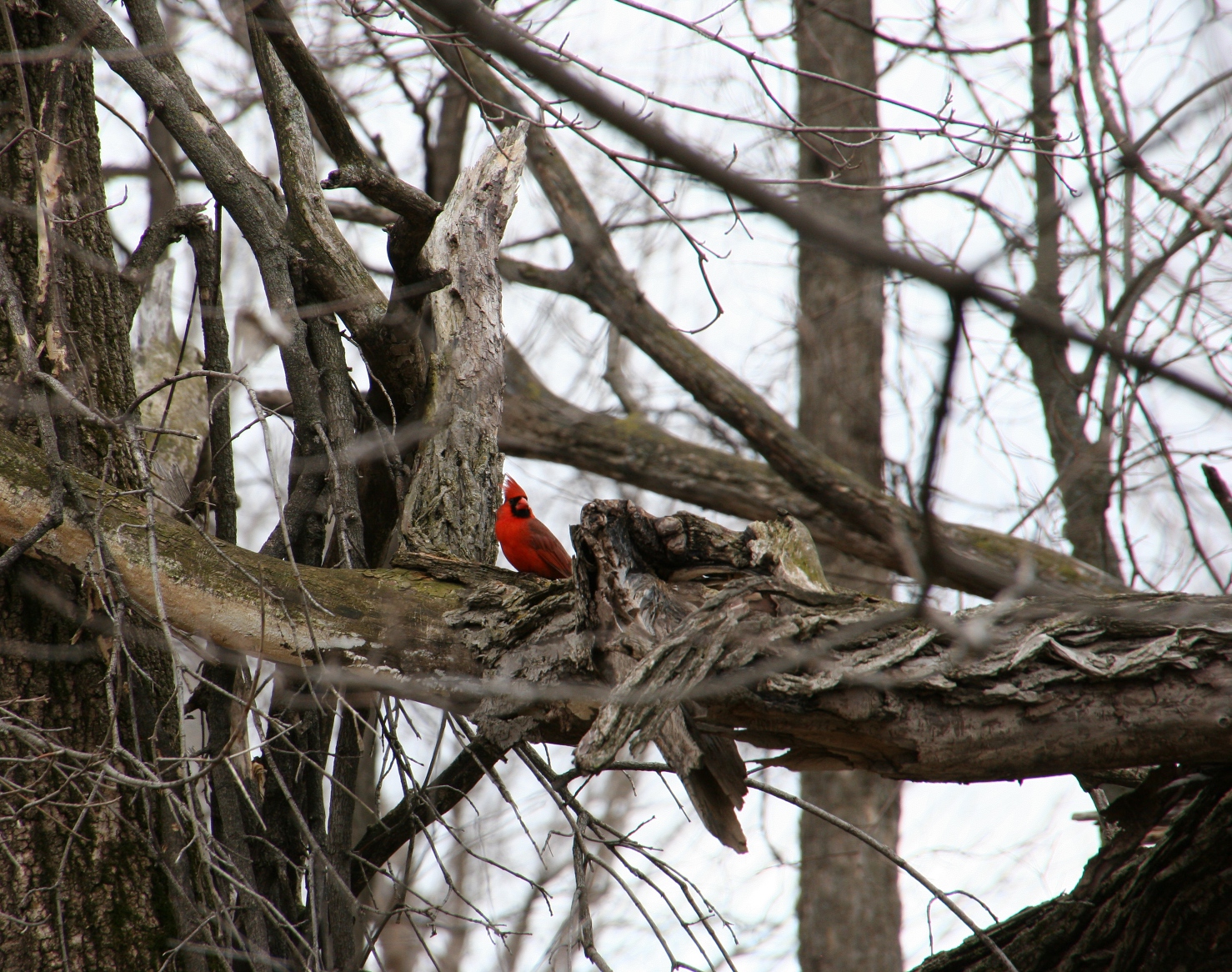
A cardinal, photographed during a past nature center hike. (Minnesota Prairie Roots copyrighted file photo)
Now if you’re familiar with those specific birds’ names, you’re smarter than me. I thought a wren was a wren was a wren. Tom and Langston understand otherwise. They are serious birders, who probably wished I would quit talking so they could go about scouting for birds in silence. I appreciated their patience with me.
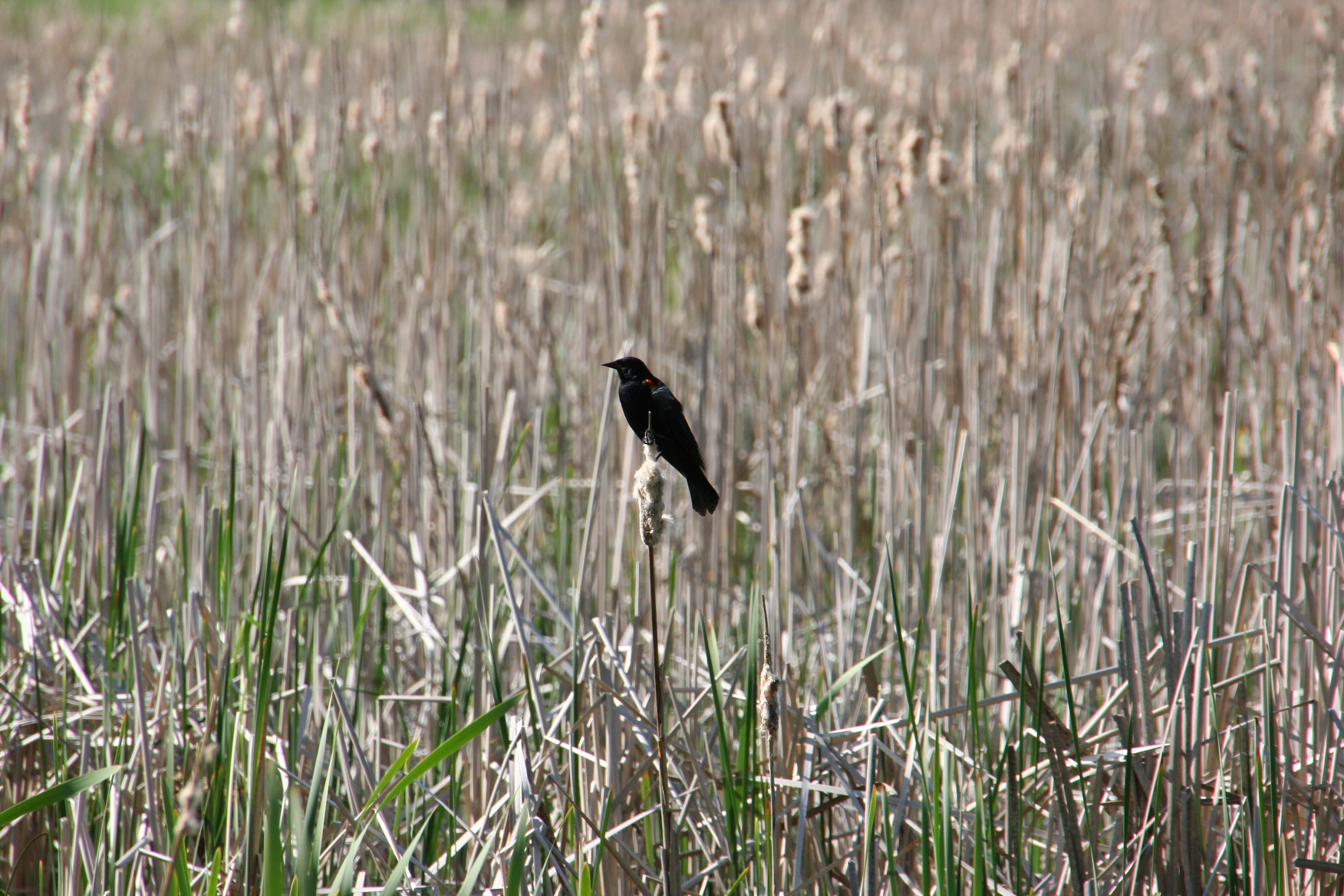
A bird among pond grass and dried cattails on a previous visit to River Bend. (Minnesota Prairie Roots copyrighted file photo)
Later, Randy and I connected with them again, this time in the woods. Tom motioned for us to come closer. They’d spotted woodpeckers and some other bird, which I don’t recall. I looked and saw nothing. The guys all saw the birds. Finally, I noticed movement and then a woodpecker. I wished I was closer, quicker and had a longer telephoto lens. Or maybe the patience to stand still and observe.
This bird was easy to see on the end of a branch. (Minnesota Prairie Roots copyrighted photo April 2026)
Tom and Langston definitely have patience and a certain calmness likely necessary when bird watching. Their love of the outdoors is apparent. It was no surprise then to hear Langston tell of his post high school plans to attend Cornell University in New York and eventually become an environmental lawyer. I have no doubt he will achieve that goal.
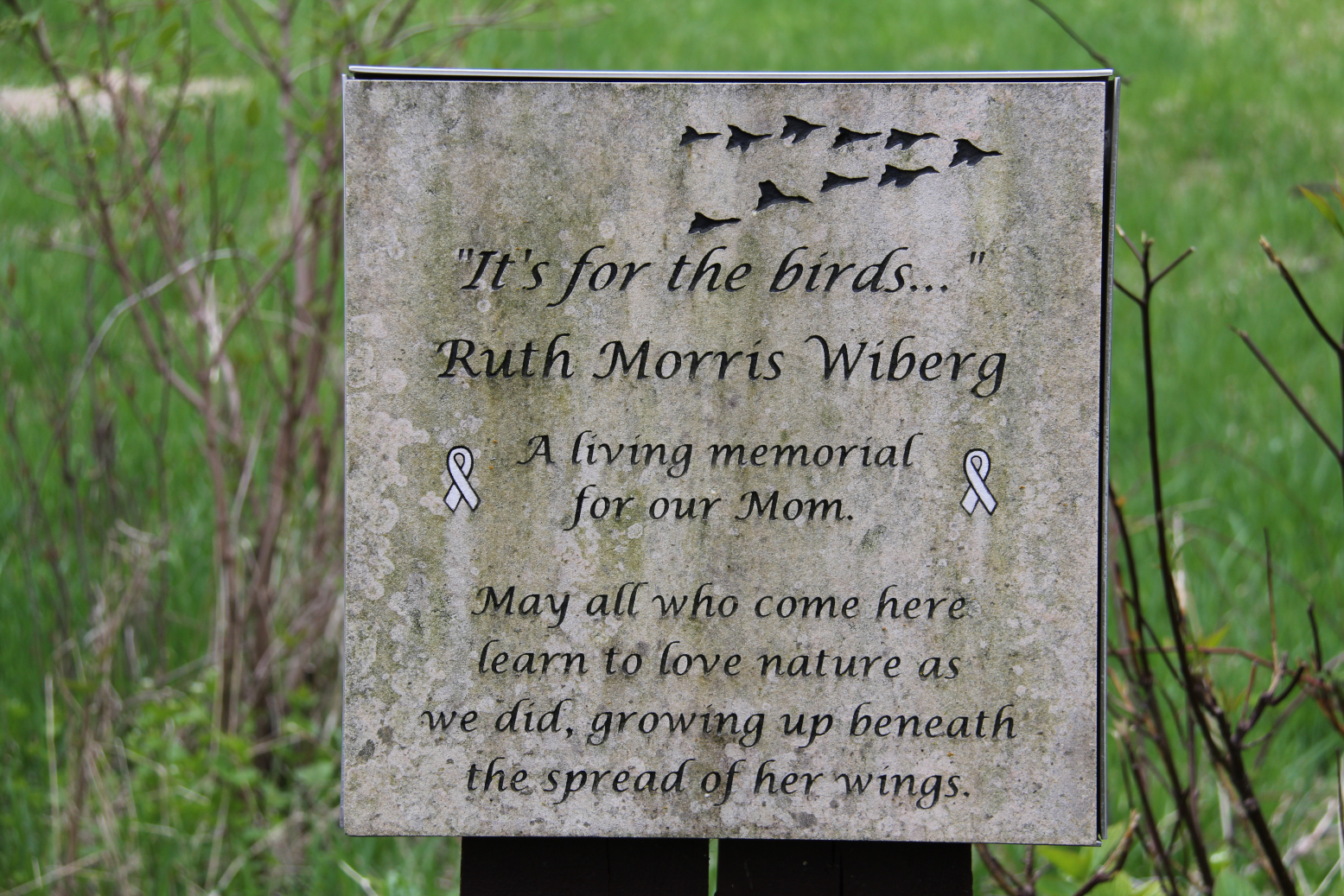
Celebrating mom, nature and birds in a memorial plaque. (Minnesota Prairie Roots copyrighted photo April 2026)
As Randy and I continued along Raccoon Trail, Tom and Langston well ahead of us again, I stopped to photograph a memorial stone. The words fit the moment: “It’s for the birds…May all who come here learn to love nature as we did, growing up beneath the spread of her wings.”
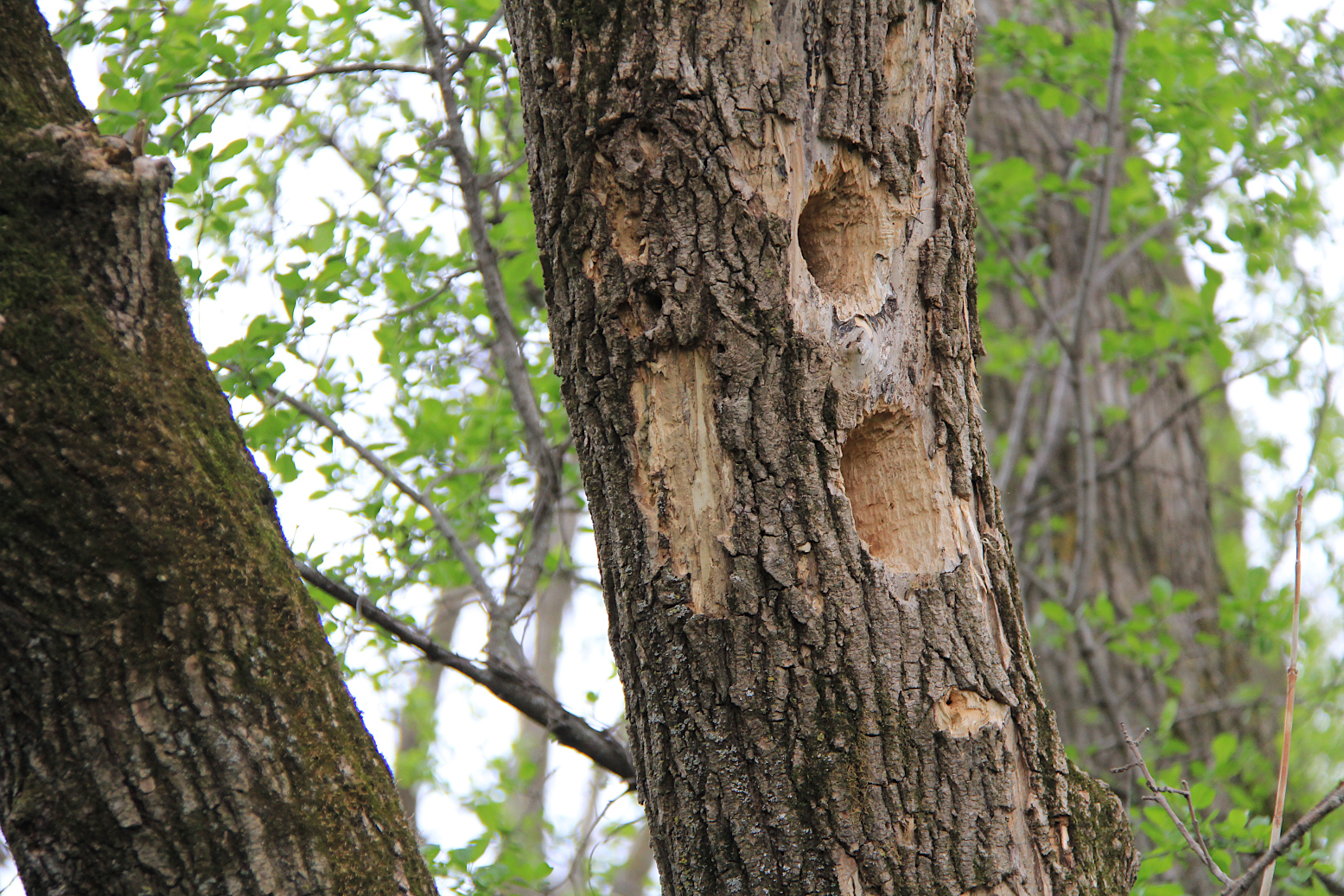
Diseased ash attract woodpeckers to peck for bugs below the bark. (Minnesota Prairie Roots copyrighted photo April 2026)
FYI:Several opportunities to learn more about birds are coming up in the area. Those include a campfire program, “Woodpecker Wonders,” from 7-8 p.m. May 30 and a naturalist-led hike, “Birding in the Big Woods,” from 9-10 a.m. May 31, both at Nerstrand Big Woods State Park. Then from 10-11 a.m. June 6, River Bend Nature Center hosts “Bagels & Birds.” Attendees can enjoy coffee and bagels in the Interpretative Center while viewing birds through the Windows on the Wild viewing area.
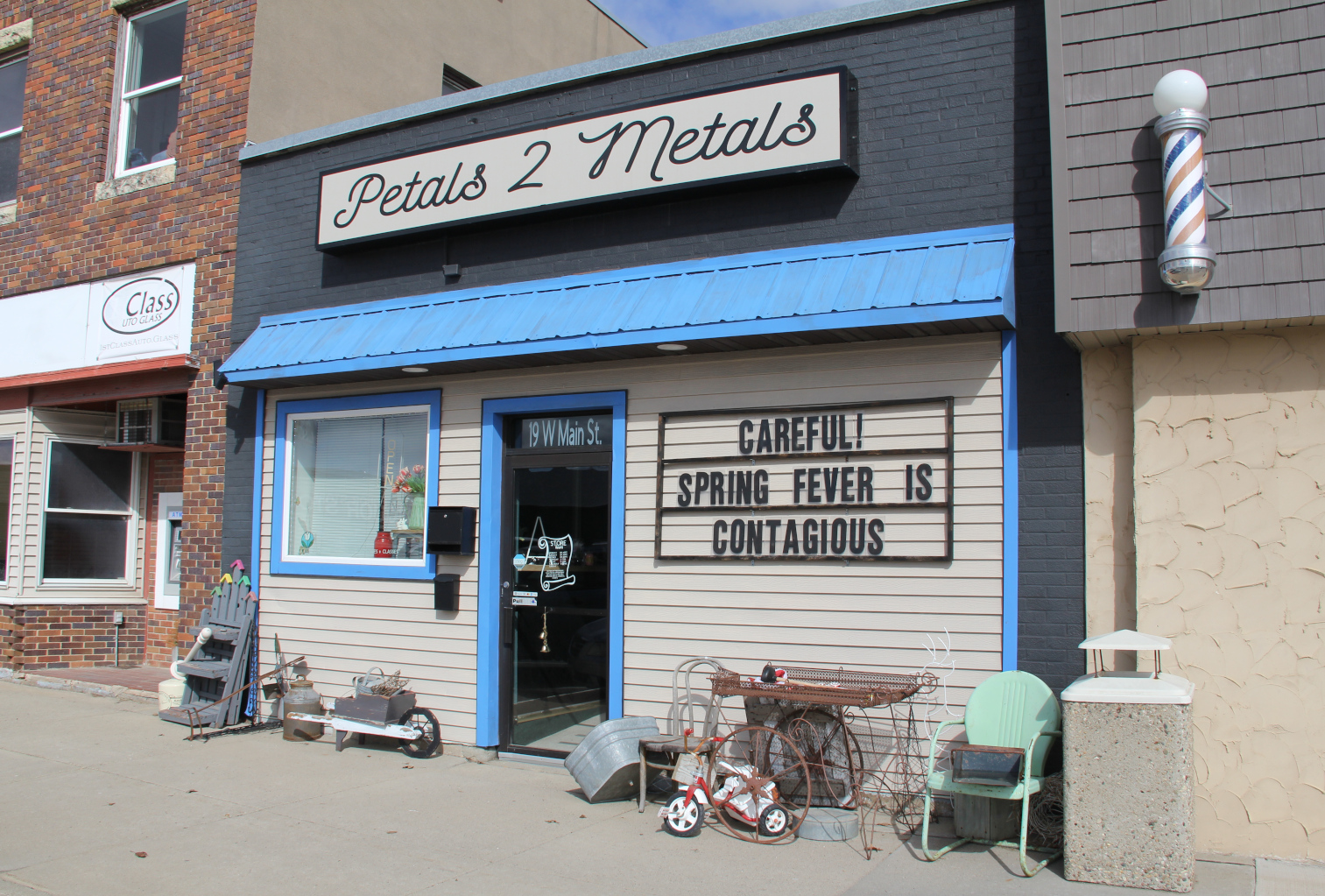
Petals 2 Metal, a flower shop in Kasson, features a spring message, floral arrangements and salvaged treasures. (Minnesota Prairie Roots copyrighted photo March 2026)
RAIN DRIPS OFF the roof line, big fat drops plopping onto brown stalks of hydrangea emerging from dormancy into a world reawakening.
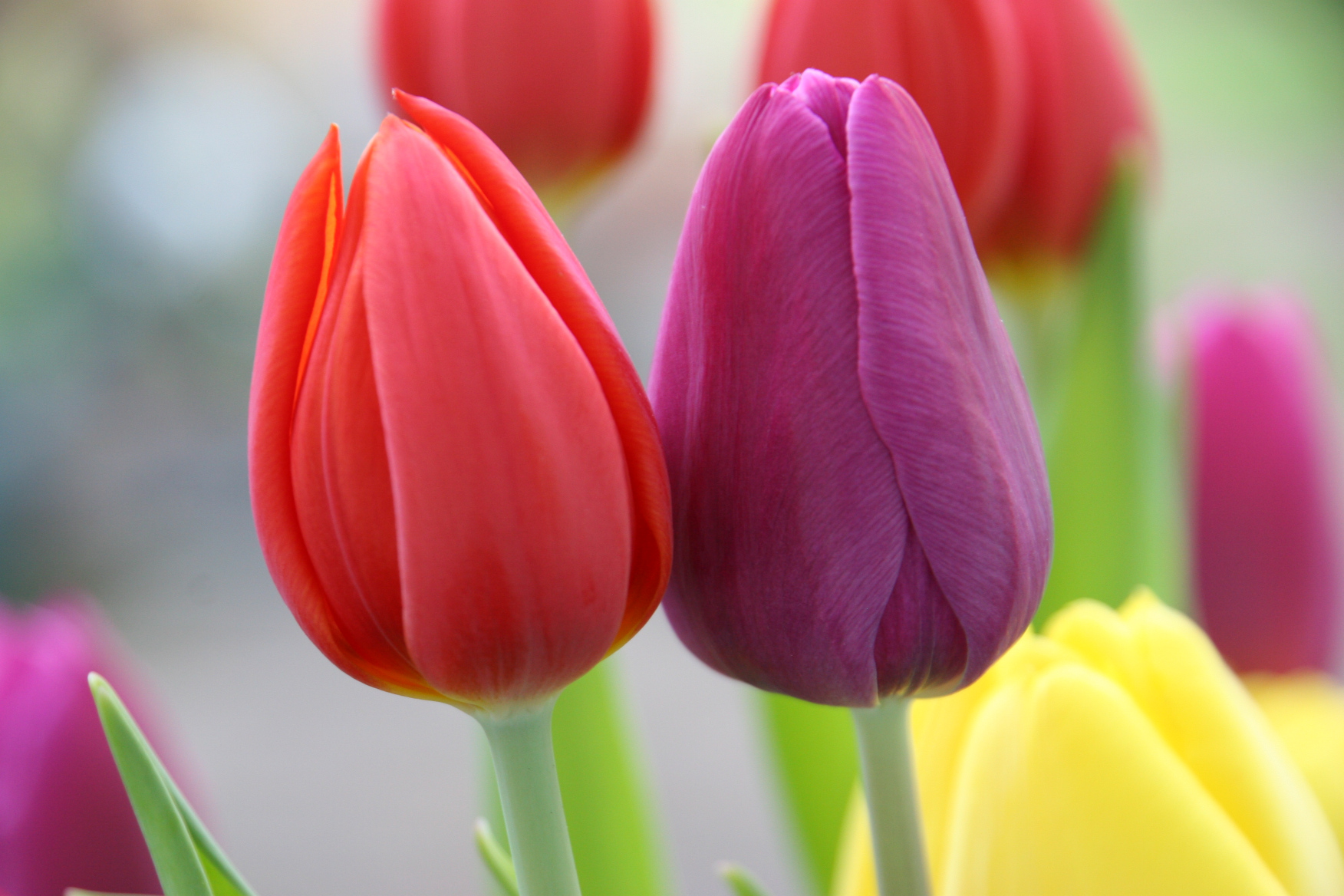
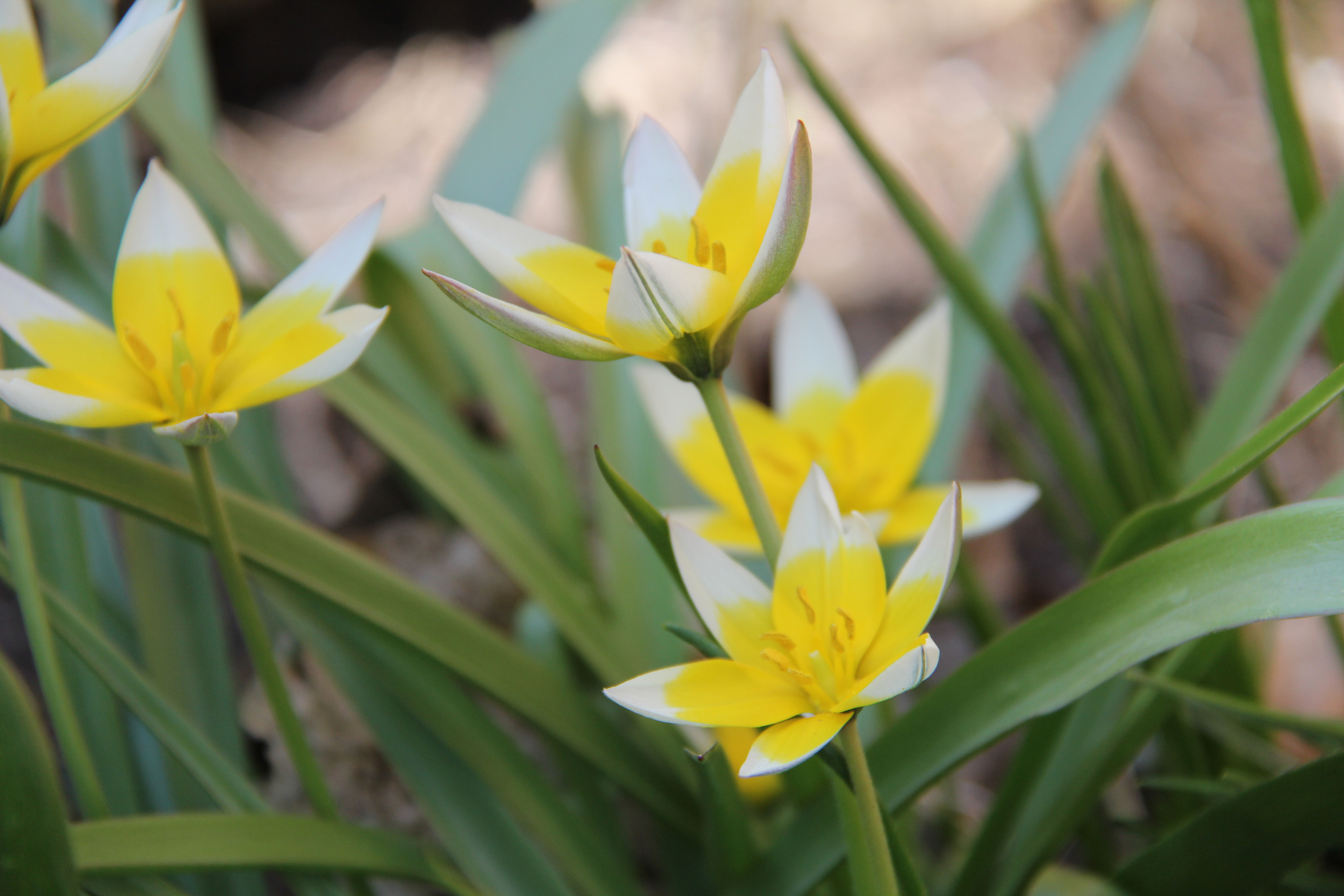
Tulips about to bloom. (Minnesota Prairie Roots copyrighted file photo)
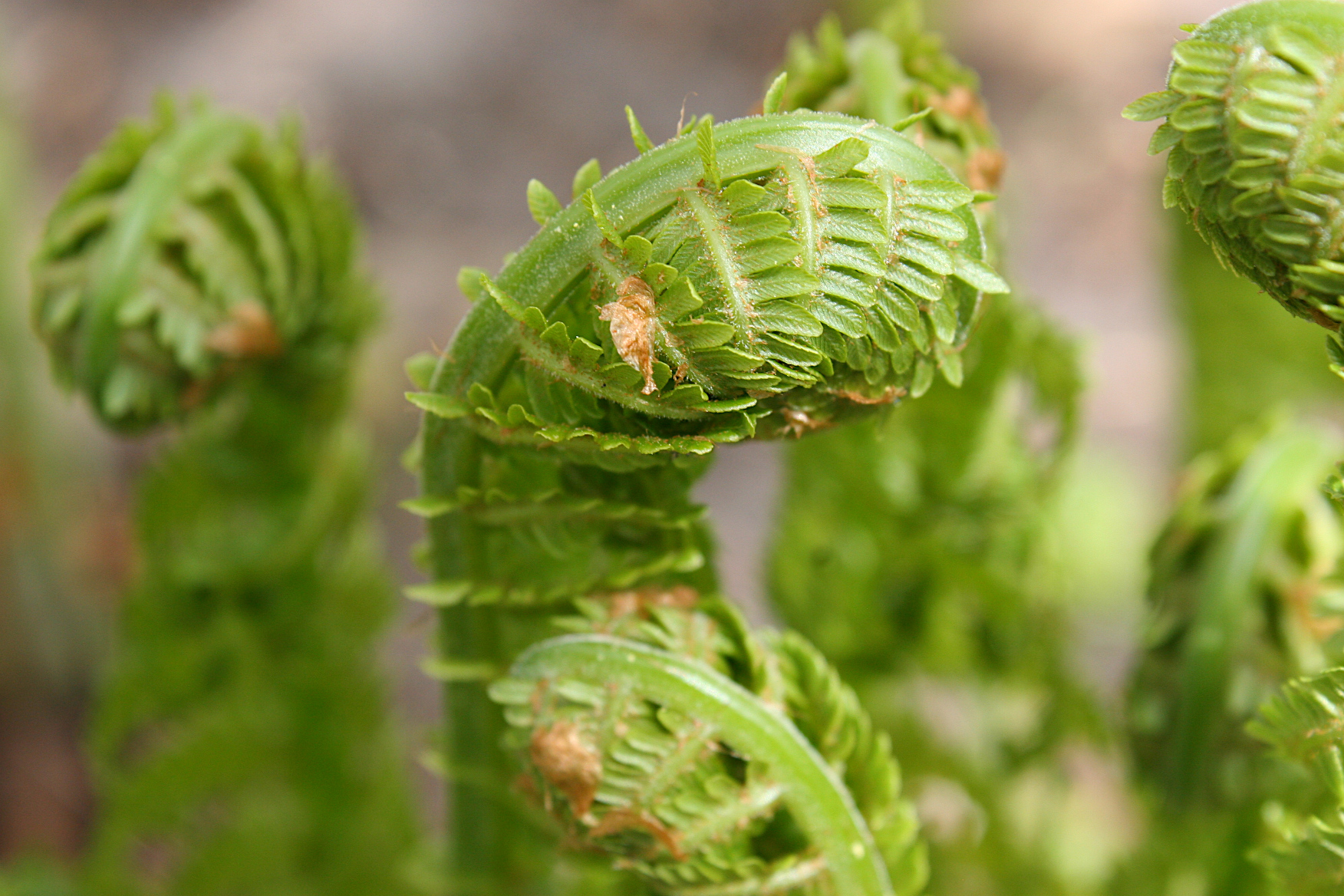
April showers bring May flowers. Tulips bloom, replacing the crocuses and daffodils already finished flowering. Fiddleheads pop through the soil, reaching for the sun, unfurling into leafy ferns that bend in the wind. Peony plants push up. Bleeding hearts dangle from stems, strong, yet vulnerable.
This is spring in southern Minnesota, a time of transition, of new growth, new life. Lush. Vivid. Visually-pleasing after months of drab surroundings.
A flowering crabapple tree at the corner of Fifth St. NW and Fourth Avenue NW in a residential neighborhood near the River Community Church in Faribault.(Minnesota Prairie Roots copyrighted photo April 2026)
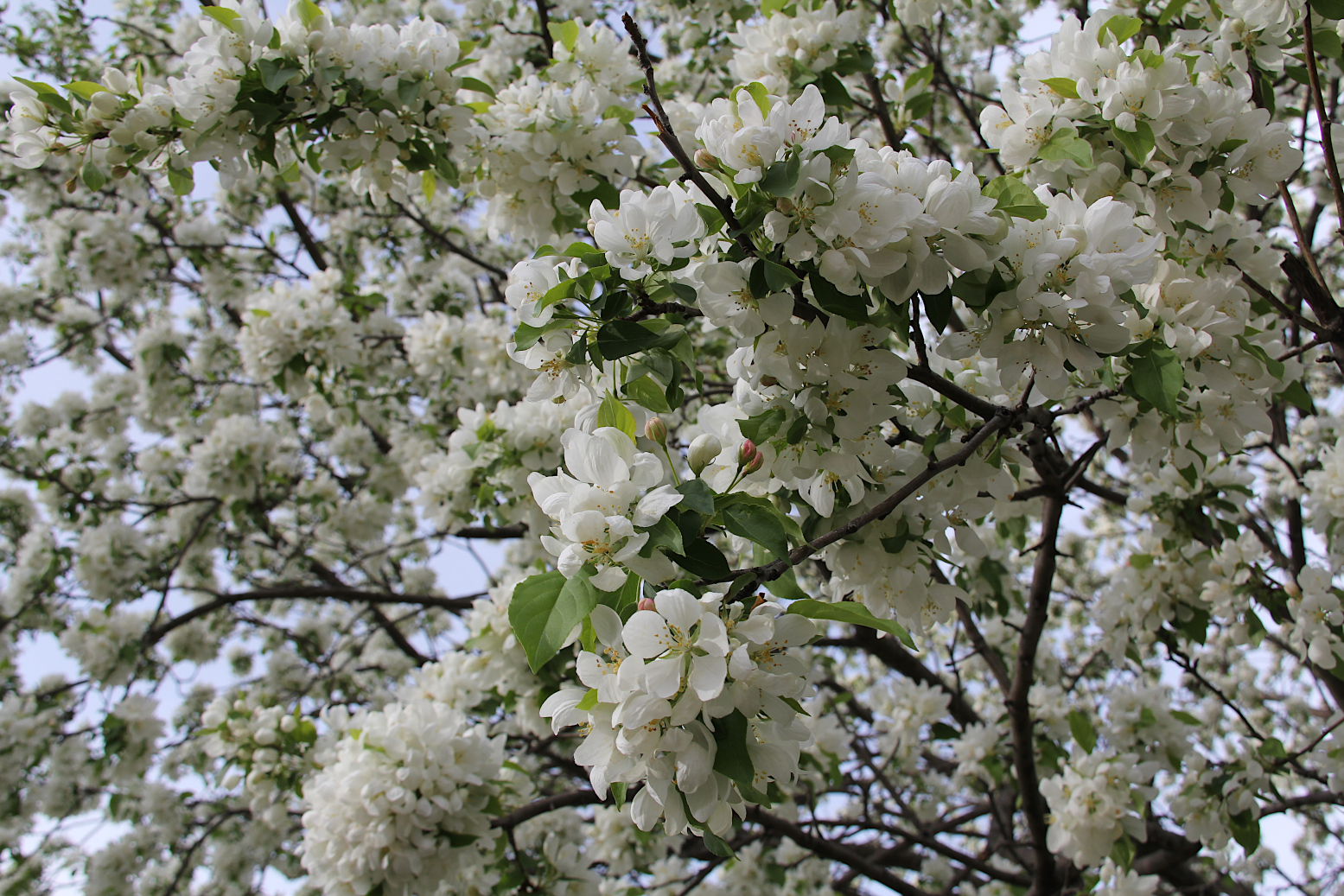
Leaves, only weeks ago tight buds on branches, now color a canopy of green across the land. Spring Snow ornamental crabapple trees scent the air with perfume in a blizzard of blossoms clinging to branches.
Off the grill, a burger topped with peanut butter, blueberry jam, pepperjack cheese and bacon with a side of charred broccoli. (Minnesota Prairie Roots copyrighted photo April 2026)
There’s so much to take in. So much to experience with all of the senses. The intoxicating scent of apple blossoms, of earth and April rain. The birdsong of early morning. The green, oh, the greenery, everywhere. The furry softness of a fuzzy curled caterpillar found among decaying leaves. The taste of burgers from the grill.
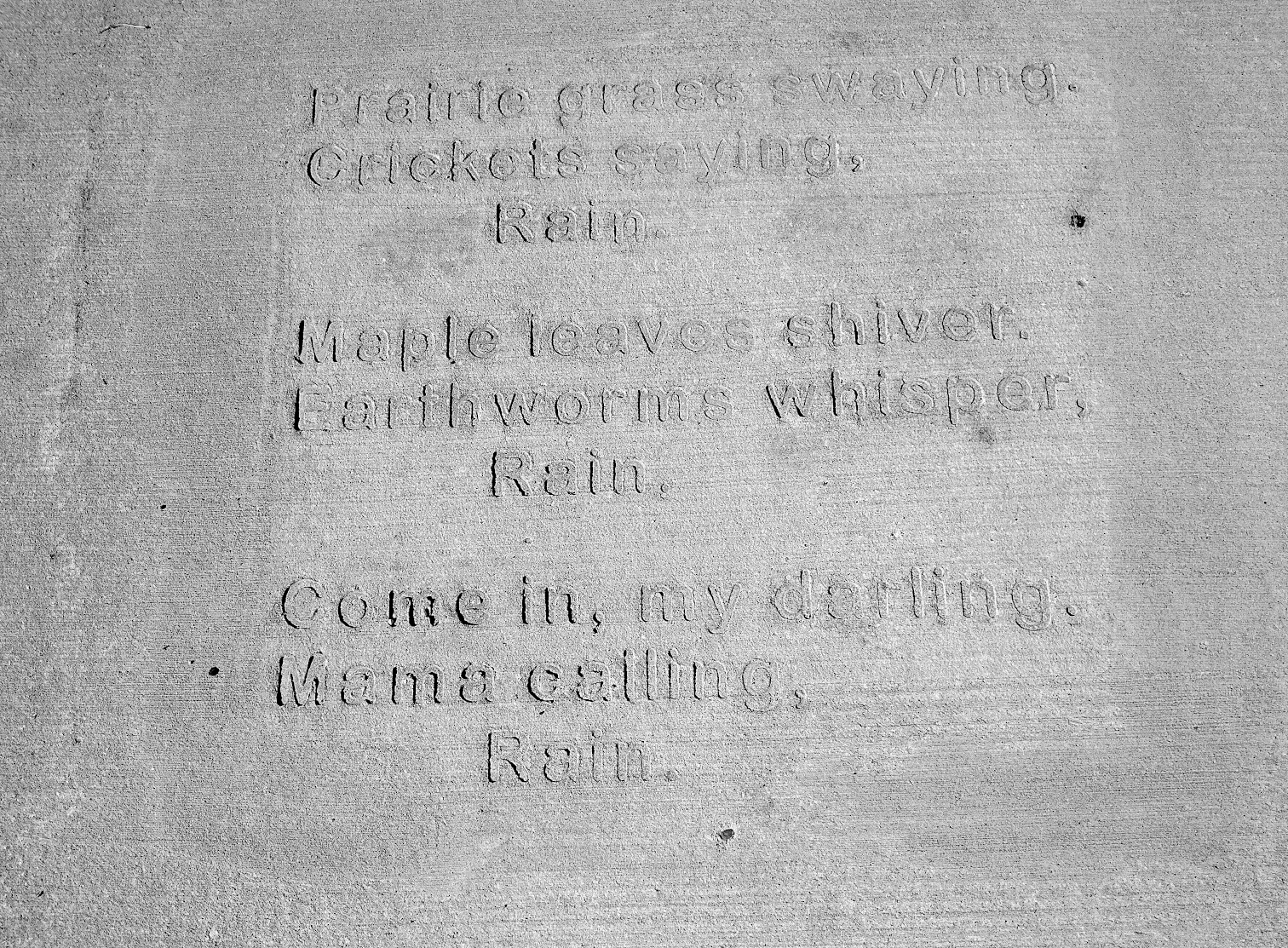
A poem about rain by Aimee Hagerty Johnson outside the Northfield Ice Arena and part of Northfield’s Sidewalk Poetry Project. (Minnesota Prairie Roots copyrighted photo April 2026)
And a poem imprinted in the sidewalk outside an ice arena. Poetry not about icy winter, but about welcoming rain.
April showers bring May flowers. Gardeners tend perennial flowerbeds, plan plantings, shop for annuals, buy flowering baskets. Planters are plumped with fillers, spillers and thrillers.
Low-growing spring flowers. (Minnesota Prairie Roots copyrighted file photo)
We Minnesotans thrill in welcoming spring, when rain replenishes a land awakening from yet another winter.
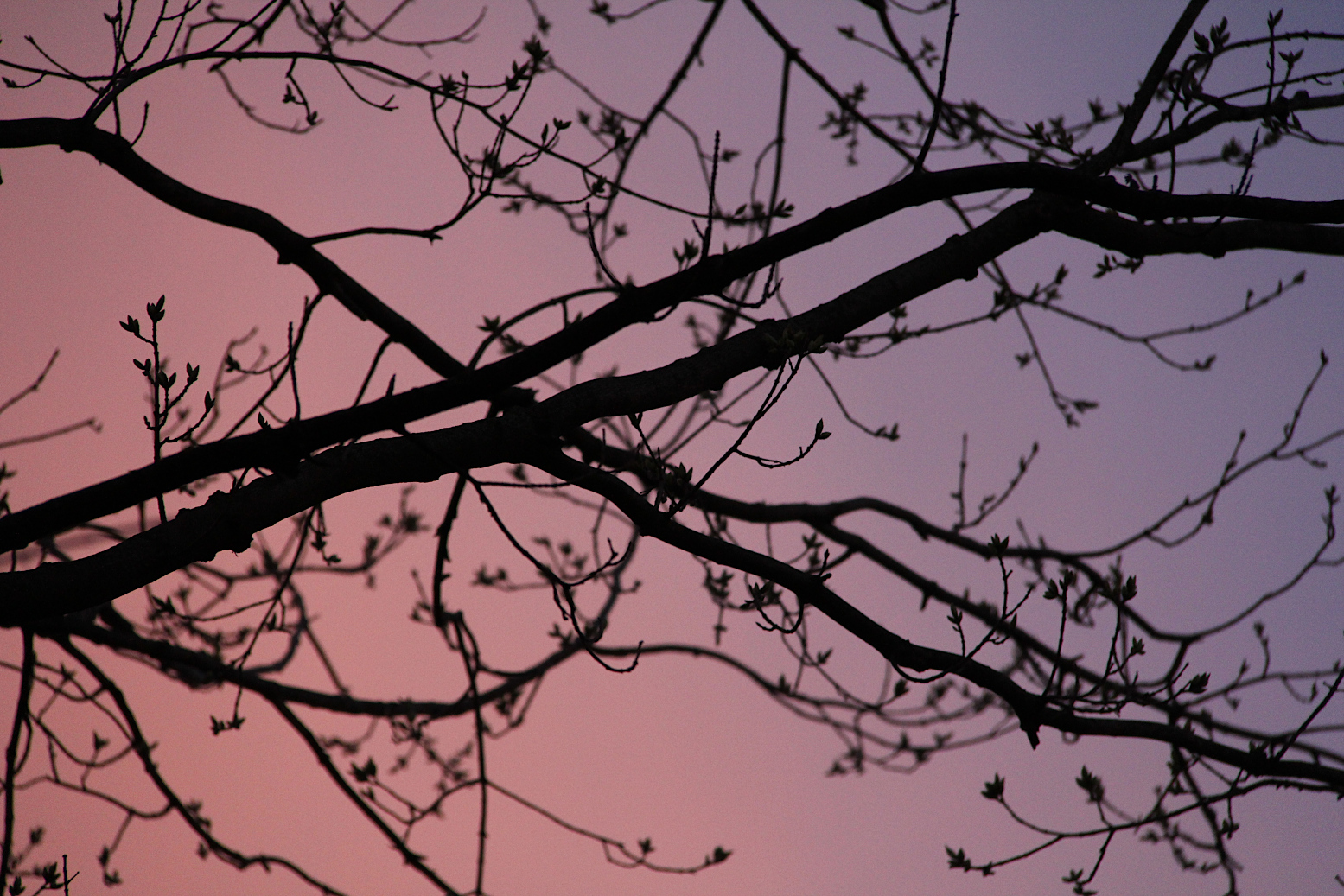
Budding branches on the maple tree in my backyard during a recent sunset of pink sky. (Minnesota Prairie Roots copyrighted photo April 2026)
HERE IN SOUTHERN MINNESOTA, the greening of the land indicates the beginning of spring’s full-on arrival.
April showers, more like recent deluges of rain, and warmer temperatures have reawakened the earth. Once dormant brown grass now colors lawns greens.
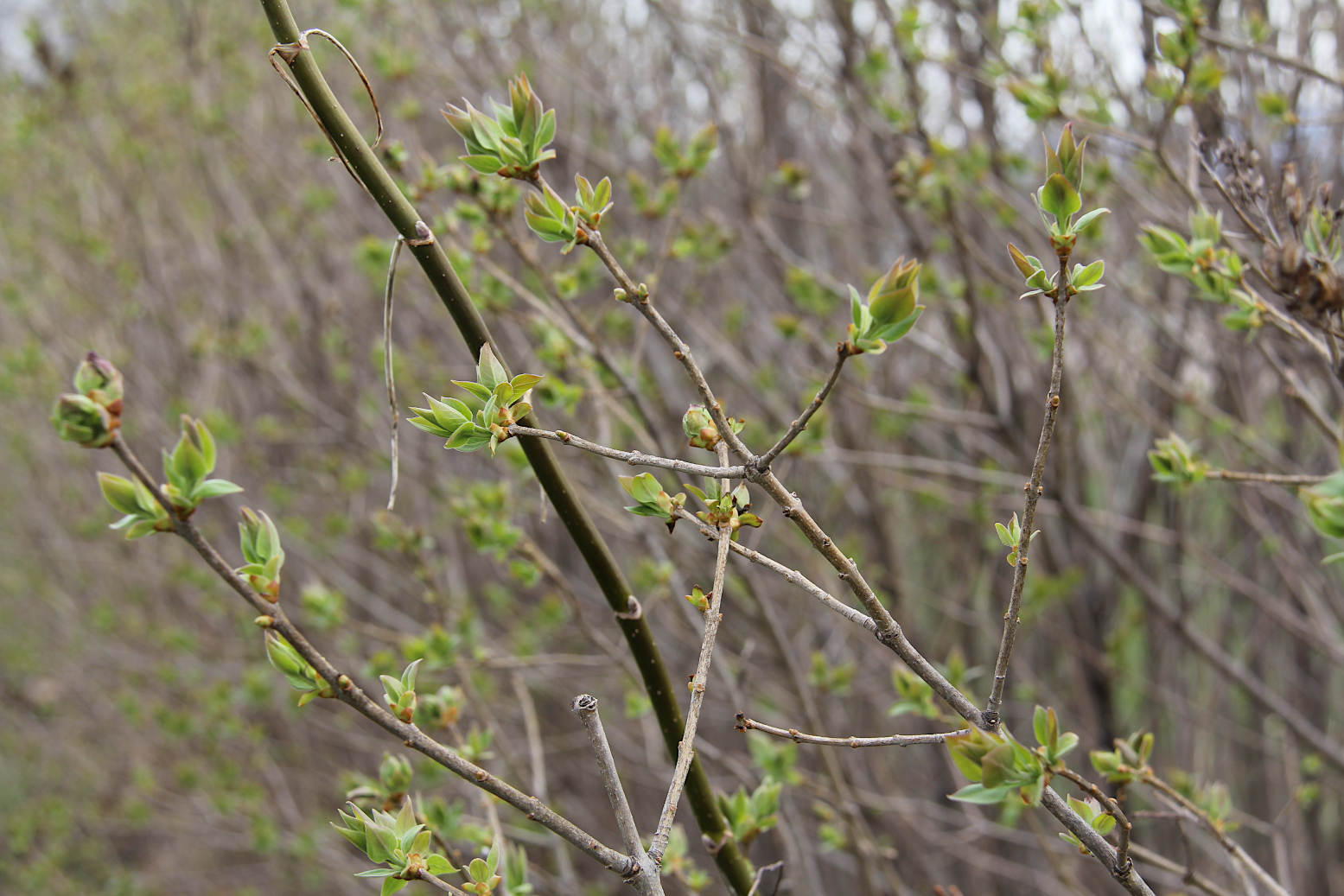
Buds begin to open on lilac bushes at North Alexander Park, Faribault. (Minnesota Prairie Roots copyrighted photo April 2026)
Buds tip tree branches and bushes, promising canopies of leaves and masses of flowers. I’m waiting for the lilacs to bloom in early May, their heady scent a gift to all of us upon winter’s departure.
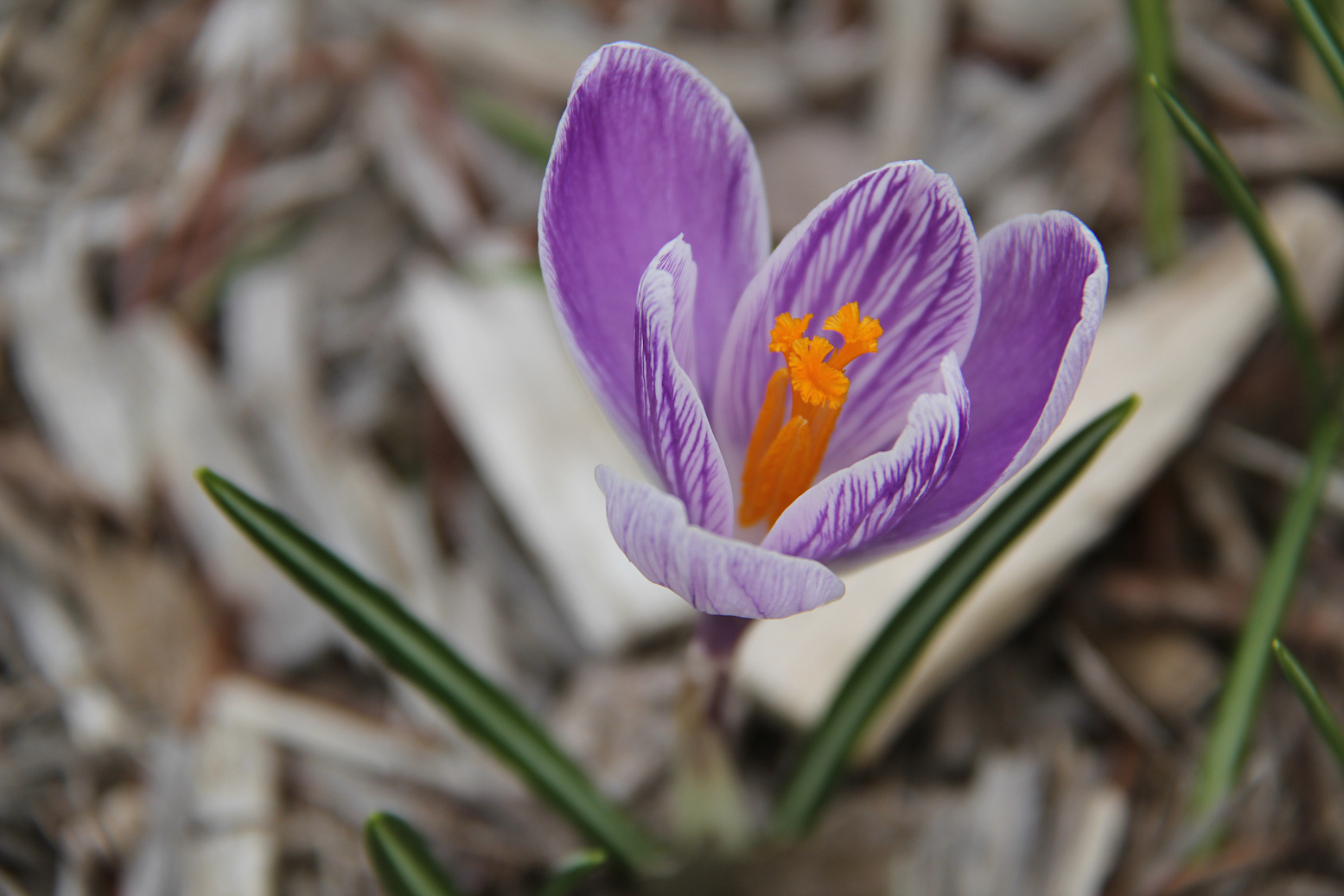
A crocus blooms at the Rice County Master Gardeners’ Teaching Garden on the Rice County Fairgrounds, Faribault. (Minnesota Prairie Roots copyrighted photo April 2026)
Crocuses, daffodils and other spring flowers burst through the soil, opening to the sun in a visual splash of color. A jubilant and celebratory scene that shouts happiness.
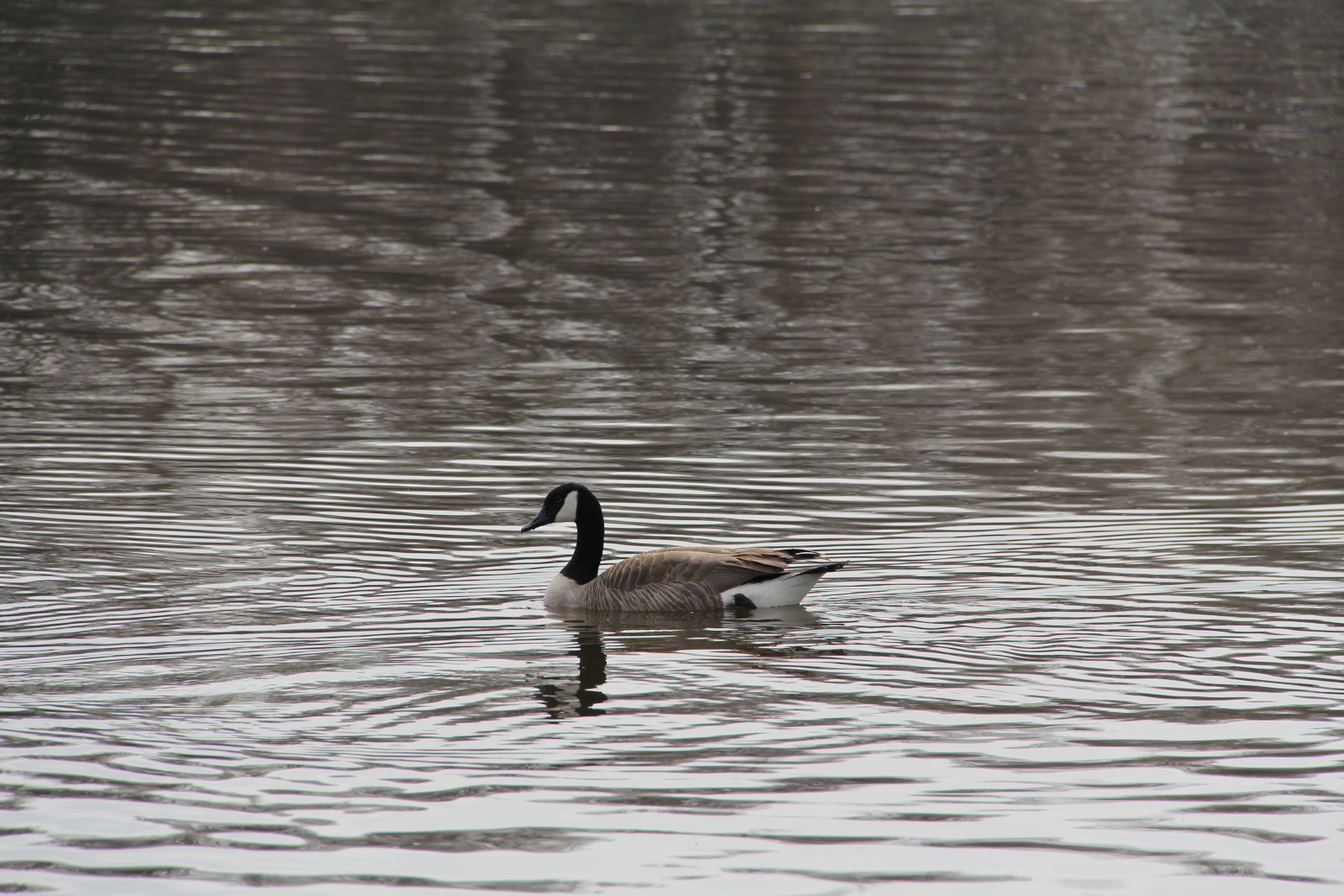
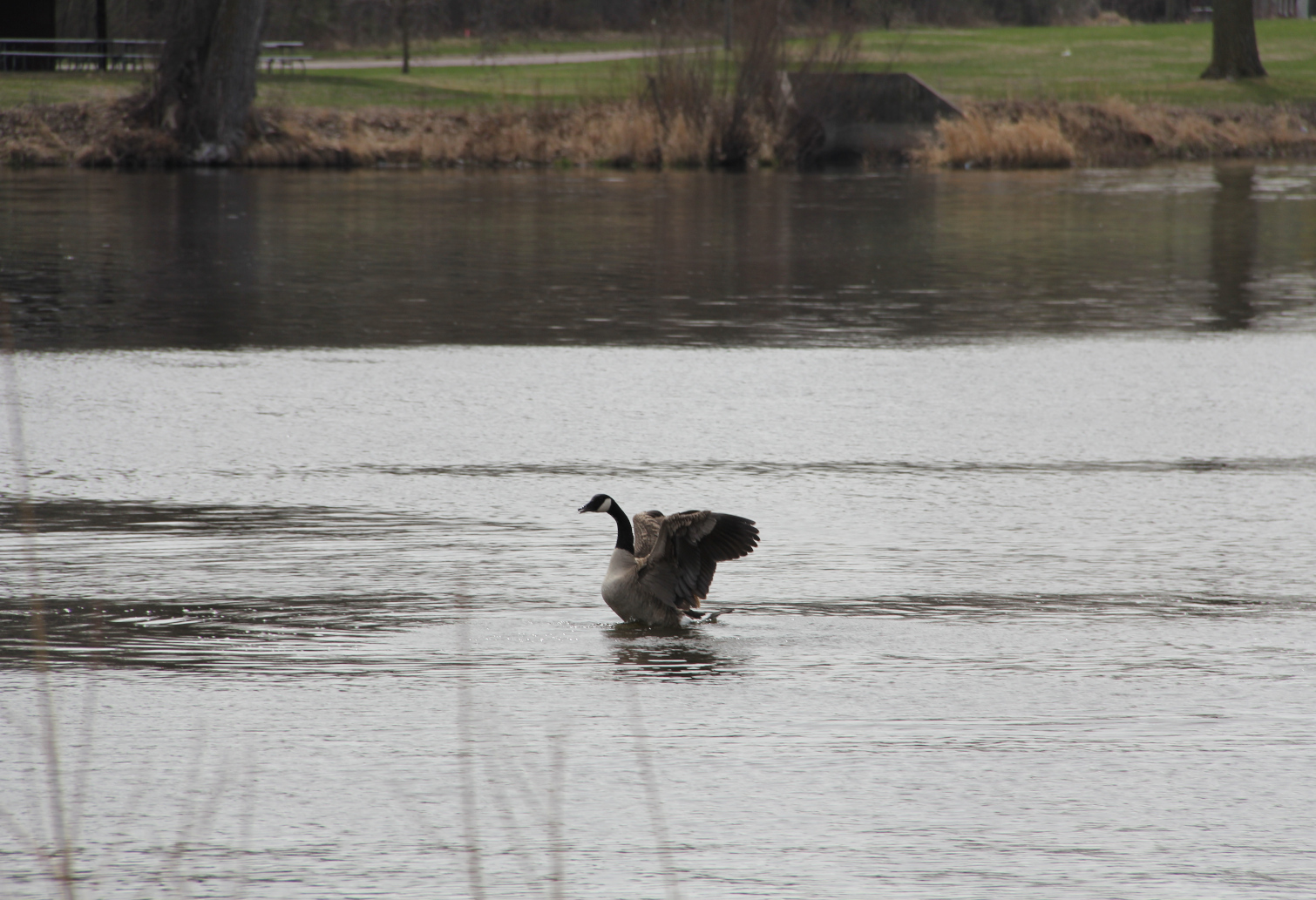
A Canadian goose swims in the Cannon River at North Alexander Park. (Minnesota Prairie Roots copyrighted photo April 2026)
Down by the river, geese and ducks share company, prepare for nesting and the arrival of little ones. I wait each spring for the goslings and ducklings. They fill my spirit with the promise of new beginnings. Hope in a world desperately in need of hope.
In the Cannon River, a Canadian goose spreads its wings. (Minnesota Prairie Roots copyrighted photo April 2026)
Along water’s edge, I simply stand and observe. Waves rippling, wings rising, water flowing under a gray April sky.
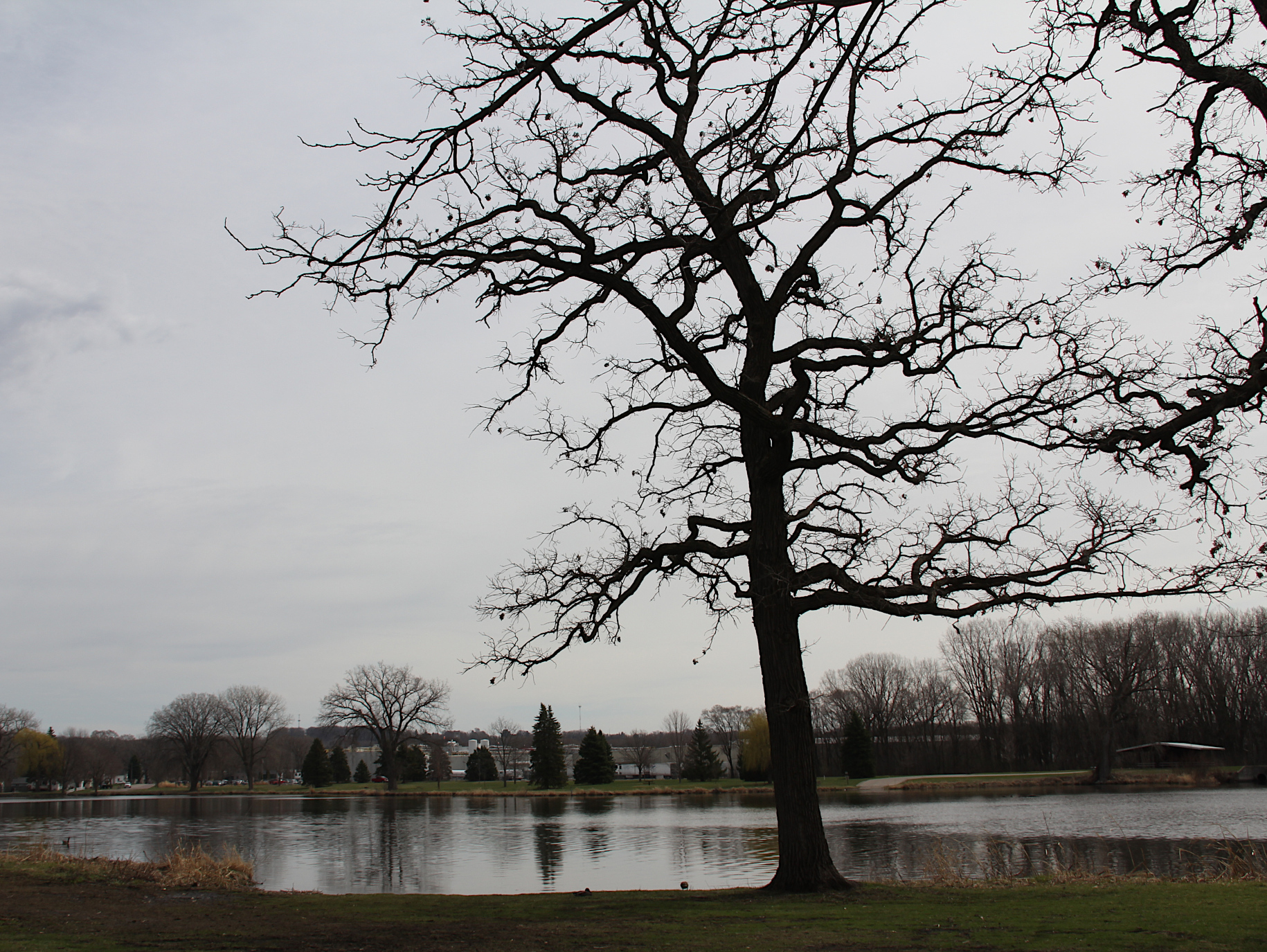
Branches on a riverside tree twist and turn. (Minnesota Prairie Roots copyrighted photo April 2026)
The day feels unsettled in its unseasonable warmth and humidity as I follow a paved path in Faribault’s North Alexander Park. Past the Cannon River, through the trees, then back to the river, I walk with my husband.
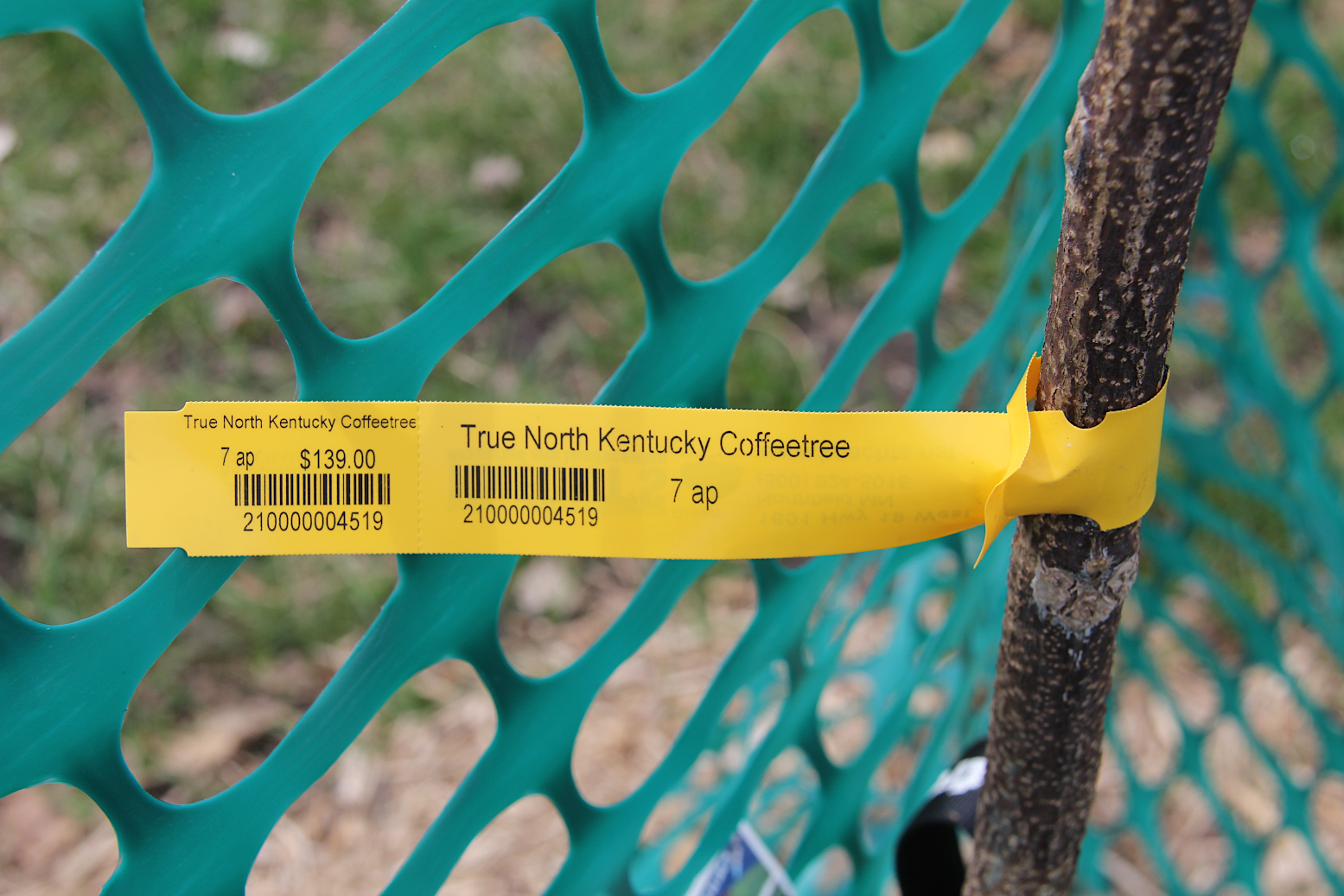
Tagged and planted at North Alexander Park, the True North Kentucky Coffeetree. A flag in the park reads “Tree City USA.” (Minnesota Prairie Roots copyrighted photo April 2026)
We pause to look at several newly-planted trees, including a True North Kentucky Coffeetree, developed, I later learn, through the University of Minnesota woody landscape breeding program. We both wondered about the viability of a coffee tree growing in this northern climate.
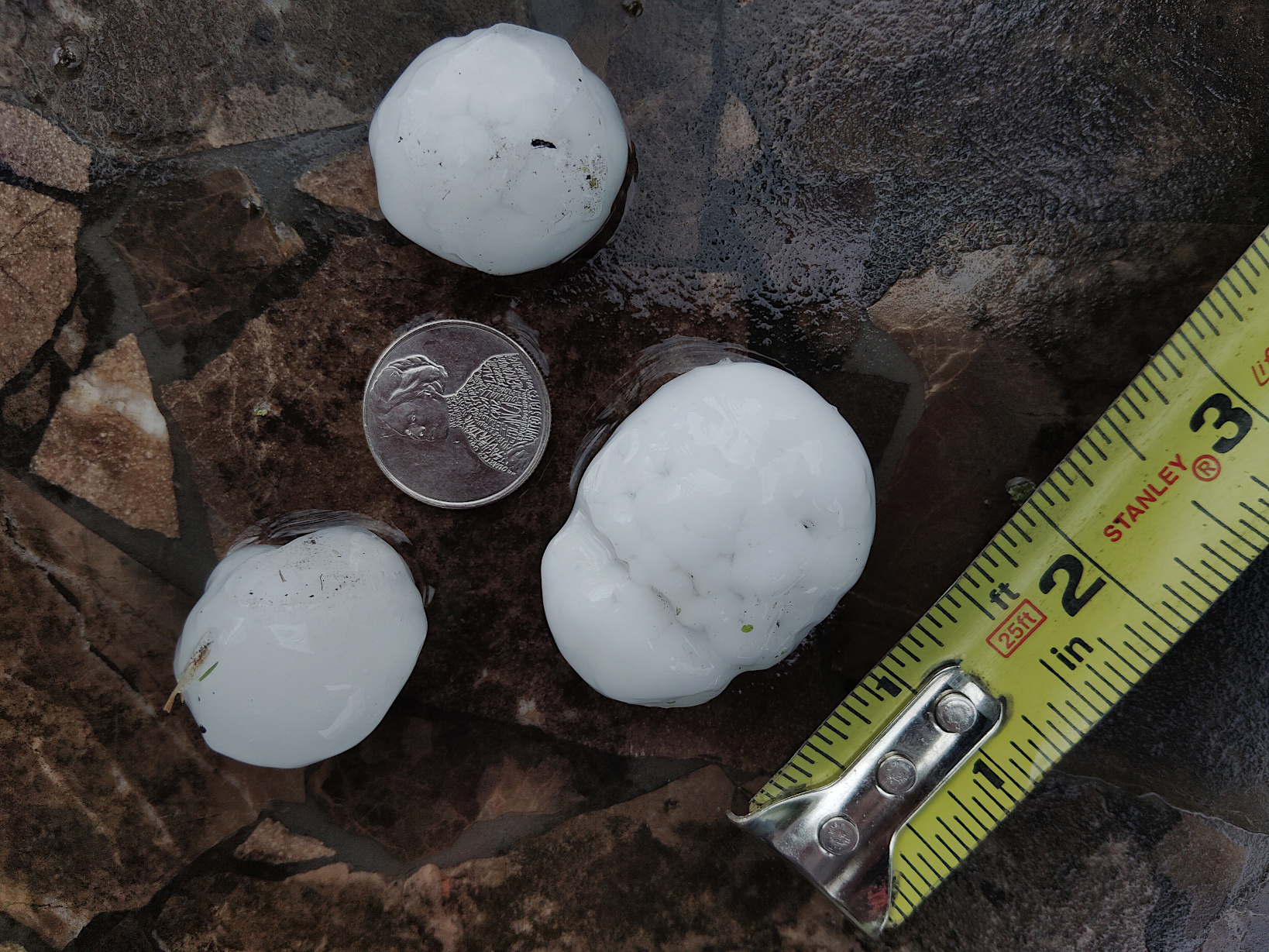
Measured and compared to a quarter, some of the larger hail that fell at our home on Monday afternoon. (Minnesota Prairie Roots copyrighted photo April 2026)
Hours later, the rain comes. And then the hail. First small, then some larger hailstones, pelt the lawn, the patio, the driveway, the street, the old rusty van. The house. Stones hit the aluminum awning over the back door with an unnerving shot-like bang. Randy and I stand and watch, moving from window to window, hoping the hail doesn’t damage our roof.
Afterwards I head outside to gather a few hailstones in baggies for freezing and measuring. We have yet to inspect for damage. The day after, out-of-town roofing companies are descending on Faribault like birds returning in the spring. There is no birdsong, though, only a circling around.
These Canadian geese stand guard on the bank of the Cannon River in North Alexander Park. (Minnesota Prairie Roots copyrighted photo April 2026)
With spring comes the greening of grass, the blooming of flowers, the budding of trees, the gathering of waterfowl and the occasional severe storm that moves across the land. Unwelcome, but not unexpected in this season of change.
Crocuses bloom in my flowerbed. (Minnesota Prairie Roots copyrighted photo March 2026)
EACH SPRING THEY EMERGE, poking through a layer of dried leaves mulching my front flowerbed.
When I spot the tender green shoots of crocuses, I feel a surge of optimism that winter is winding down. However, as a life-long Minnesotan, I also tamp my excitement. Snow falls in April here and sometimes in May. And these crocuses were bursting already in late March.
Days after I removed the leaves, exposing the crocuses to sunshine and air, they grew quickly. Soon purple blossoms spread wide, revealing golden centers like spots of sunshine.
I delight in the shades of purple, notice the lines tracing the petals, the way the flowers hug the ground as if also tentative about the season.
This first flower of spring seems to me courageous. Braving the cold of Minnesota, determined to reach the sunshine, to make a strong statement of hope that the cold and dark of winter will give way to warmth and light.
TELL ME: I’d like to hear your first flower of spring story.
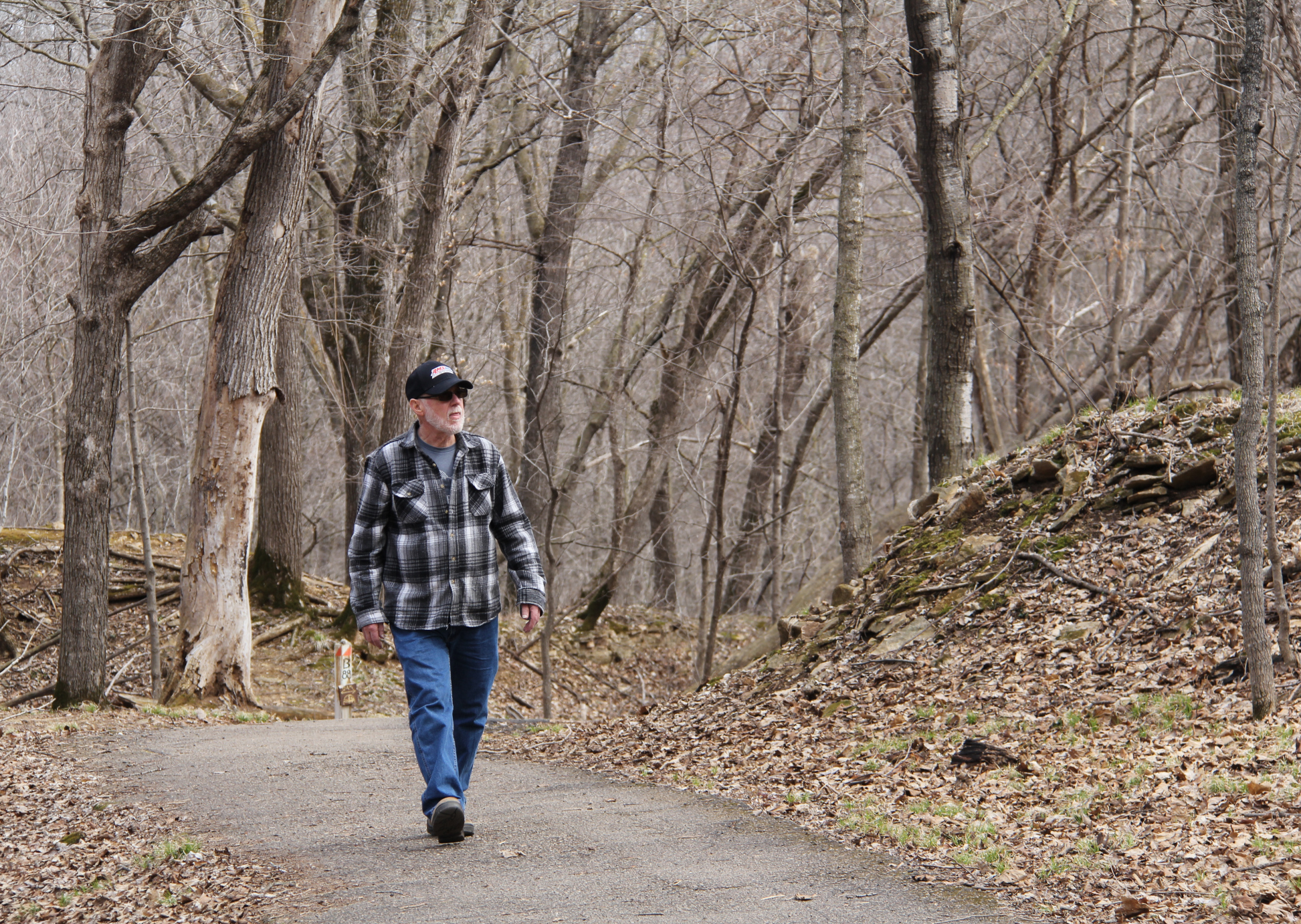
My husband, Randy, follows a paved trail through the woods at River Bend. (Minnesota Prairie Roots copyrighted photo March 2026)
A WALK INTO THE WOODS of River Bend Nature Center on a near 70-degree late March Sunday afternoon in Faribault yielded glimpses of spring unfolding, ever so slowly.
Patches of greenery emerged among dried and decaying leaves layering the earth. Tightly-clenched red buds tipped some branches. Subtle signs of early spring existed, if I looked closely. And listened.
A cardinal whistled. A woodpecker hammered. Both deep in the woods, unseen, but heard.
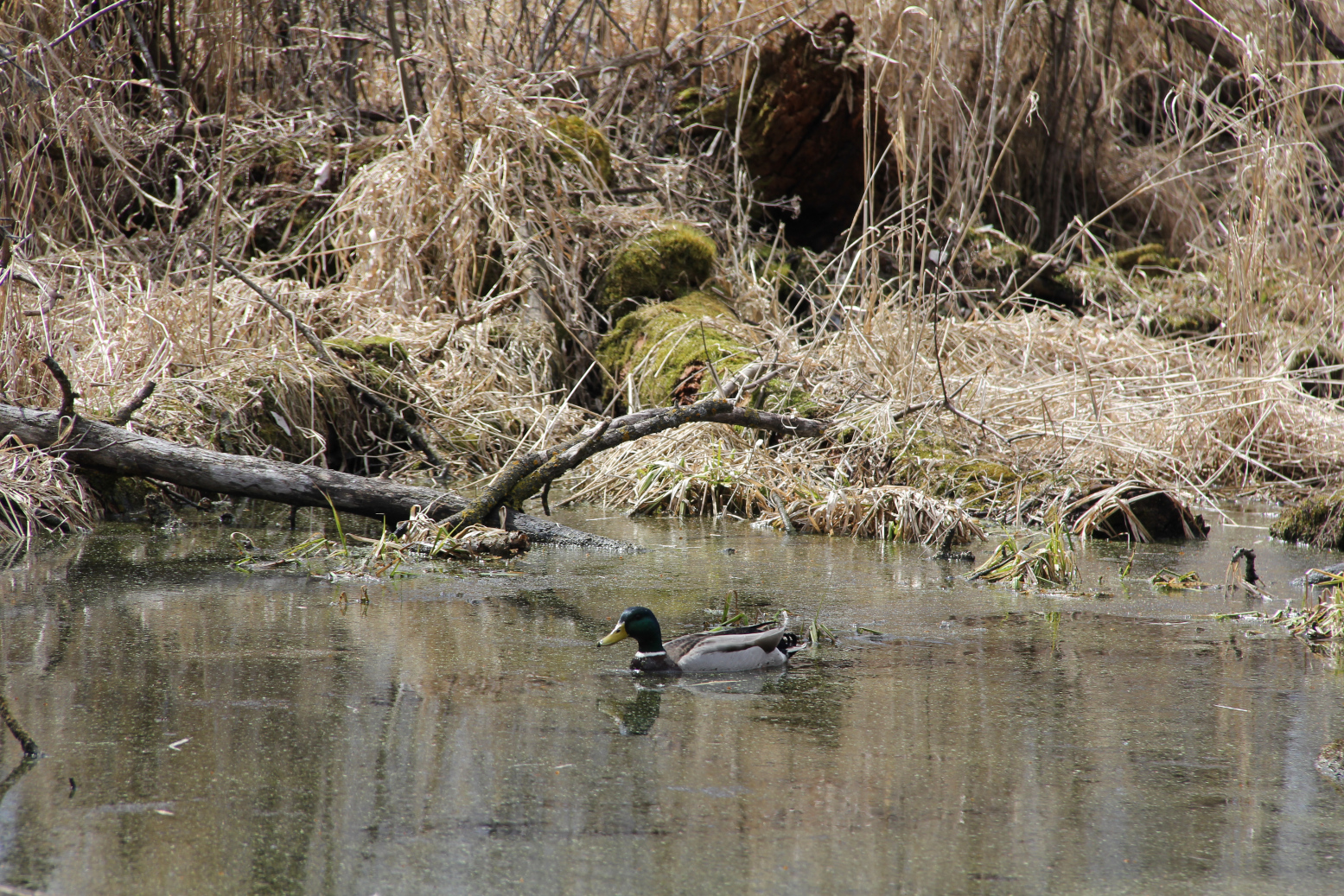
A mallard duck swims in the Turtle Pond. (Minnesota Prairie Roots copyrighted photo March 2026)
At the Turtle Pond, I expected turtles lining logs, basking in the afternoon sunshine. But I spotted only one, slipping into the slimy water before I could even lift my camera to focus a shot. Yet, the pond did not disappoint as a lone mallard duck glided across the shallow water, stopped and stood before swimming again, on toward the floating pedestrian bridge.
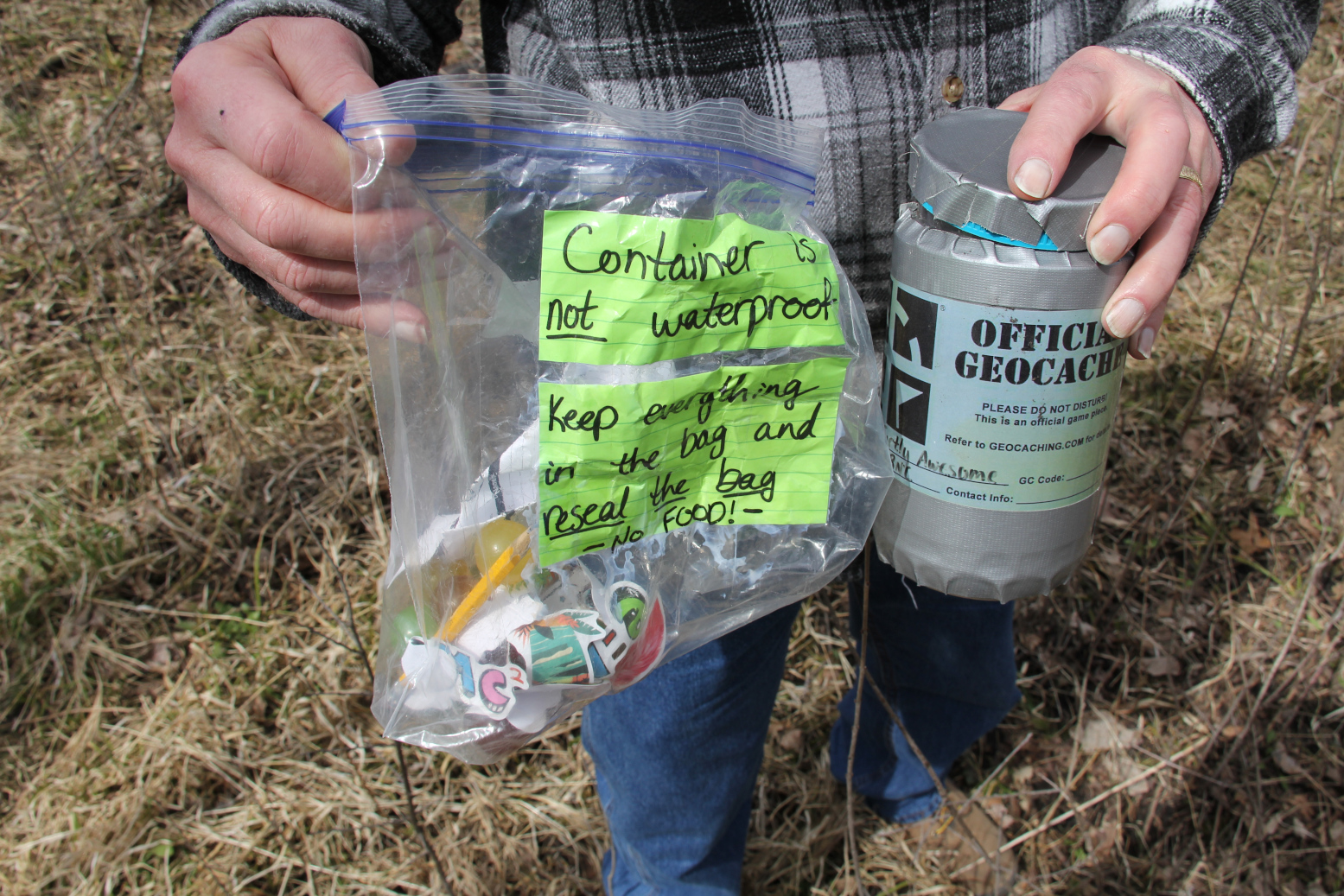
A geocache, found without geocaching. (Minnesota Prairie Roots copyrighted photo March 2026)
Randy and I paused in the brush near pond’s edge to examine a canister seemingly tossed on the ground. A geocache, perhaps in its proper place, perhaps not. We looked inside, then left it where found.
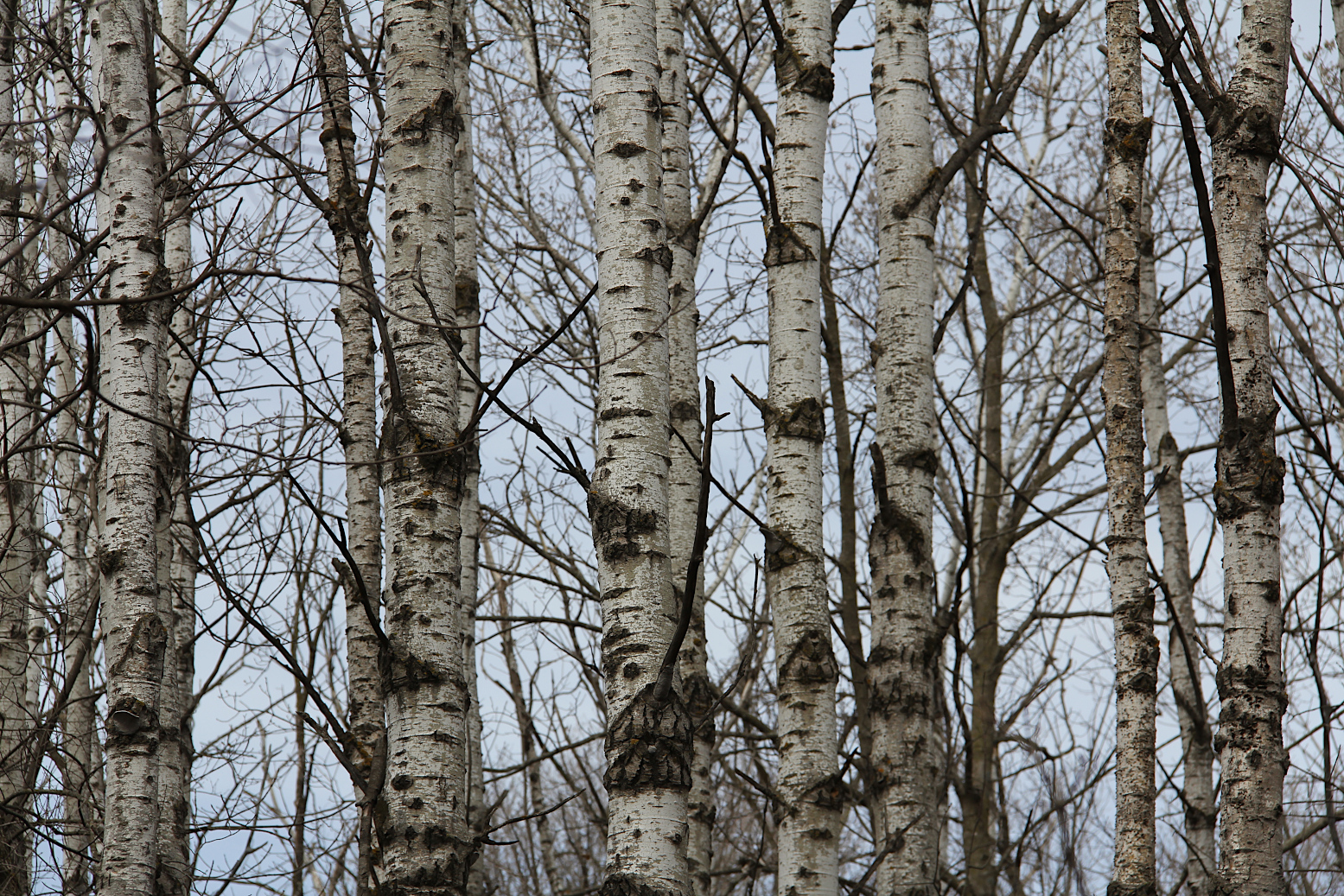
Lovely aspens cluster in the woods. (Minnesota Prairie Roots copyrighted photo March 2026)
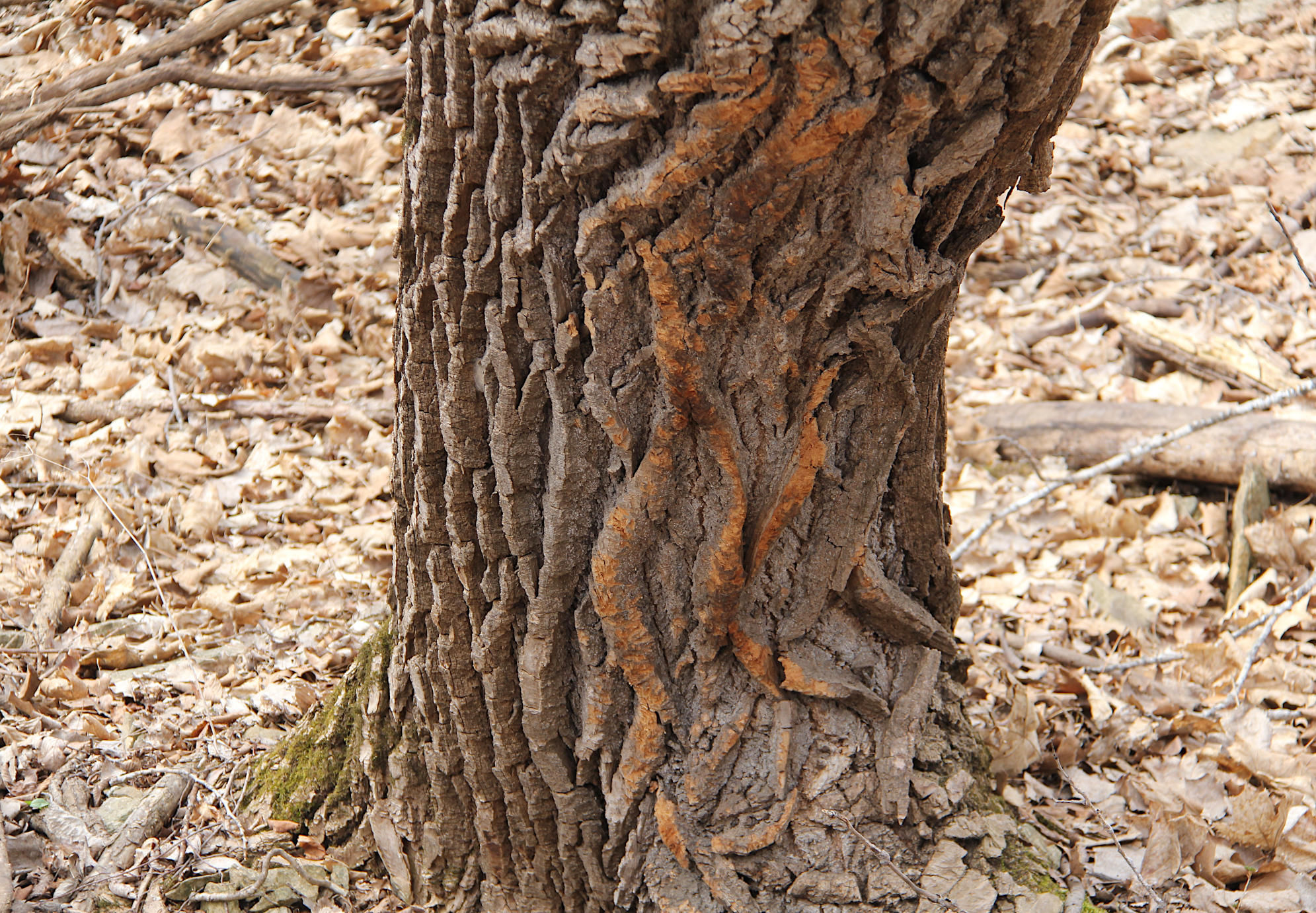
I kept scanning the woods for wildflowers (too early), anything that would visually cue me to this season of spring. Finding little, I concentrated on the trees. The texture of bark, which I always find artistically fascinating. A cluster of aspens, a splash of white in the gray woods. Piles and slices of wood from trees cut down.
Signage on the interpretative center door. (Minnesota Prairie Roots copyrighted photo March 2026)
I observed a scattering of plastic bags attached to trees, collection vessels for sap that will be cooked into maple syrup. The bags proved a conversation starter with a young family who moved here from Iowa a year ago and was on their first hike at River Bend. I love meeting new people. I explained the sap collecting, welcomed them to Faribault. And then the attention quickly turned to the four-year-old, who showed me the gray stone she found, then the faded temporary tattoos laddering her left leg and then her sparkly shoes. She bubbled with joy, only frowning when her mom mentioned her cousins back in Iowa. Cousins she misses and will see at Easter.
I found the bark on the base of this tree visually interesting. (Minnesota Prairie Roots copyrighted photo March 2026)
Other families and couples and singles hiked here, too, on this loveliest of March days in Minnesota. Others biked. My friend Lisa and her husband, Tom, avid bird watchers who tend bluebird houses at the nature center, warned us about deer ticks after we exchanged personal updates.
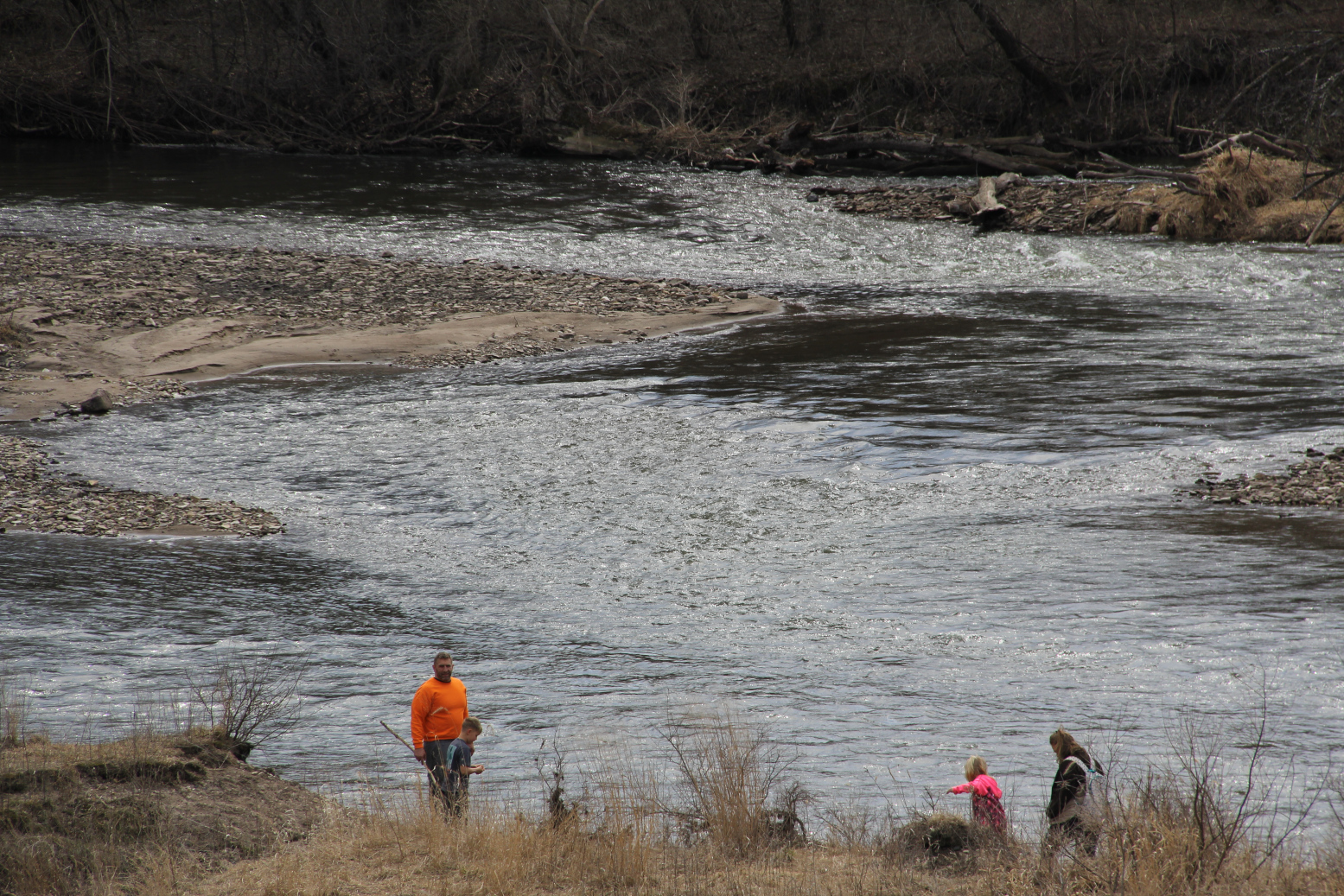
The Straight River winds through River Bend, drawing people to its banks. (Minnesota Prairie Roots copyrighted photo March 2026)
Down by the Straight River, a family played along the shoreline, sunshine sparkling on water. It was so good to see all these families outside, connecting with each other and with nature, away from technology and other distractions of life.
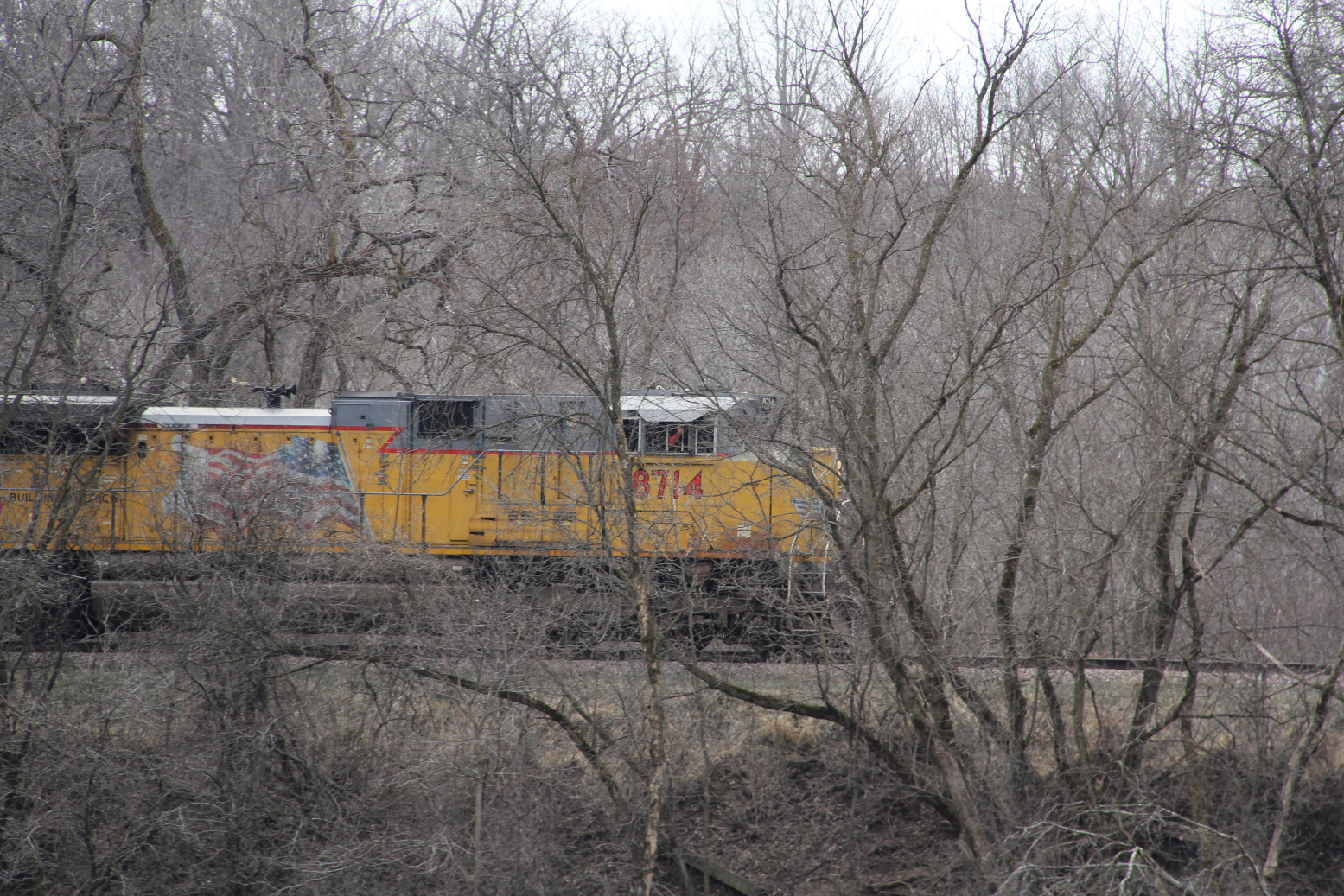
Occasionally a train roars along the tracks that run through River Bend. (Minnesota Prairie Roots copyrighted photo March 2026)
A short train roared by across the river, a flash of yellow in the monotone woods.
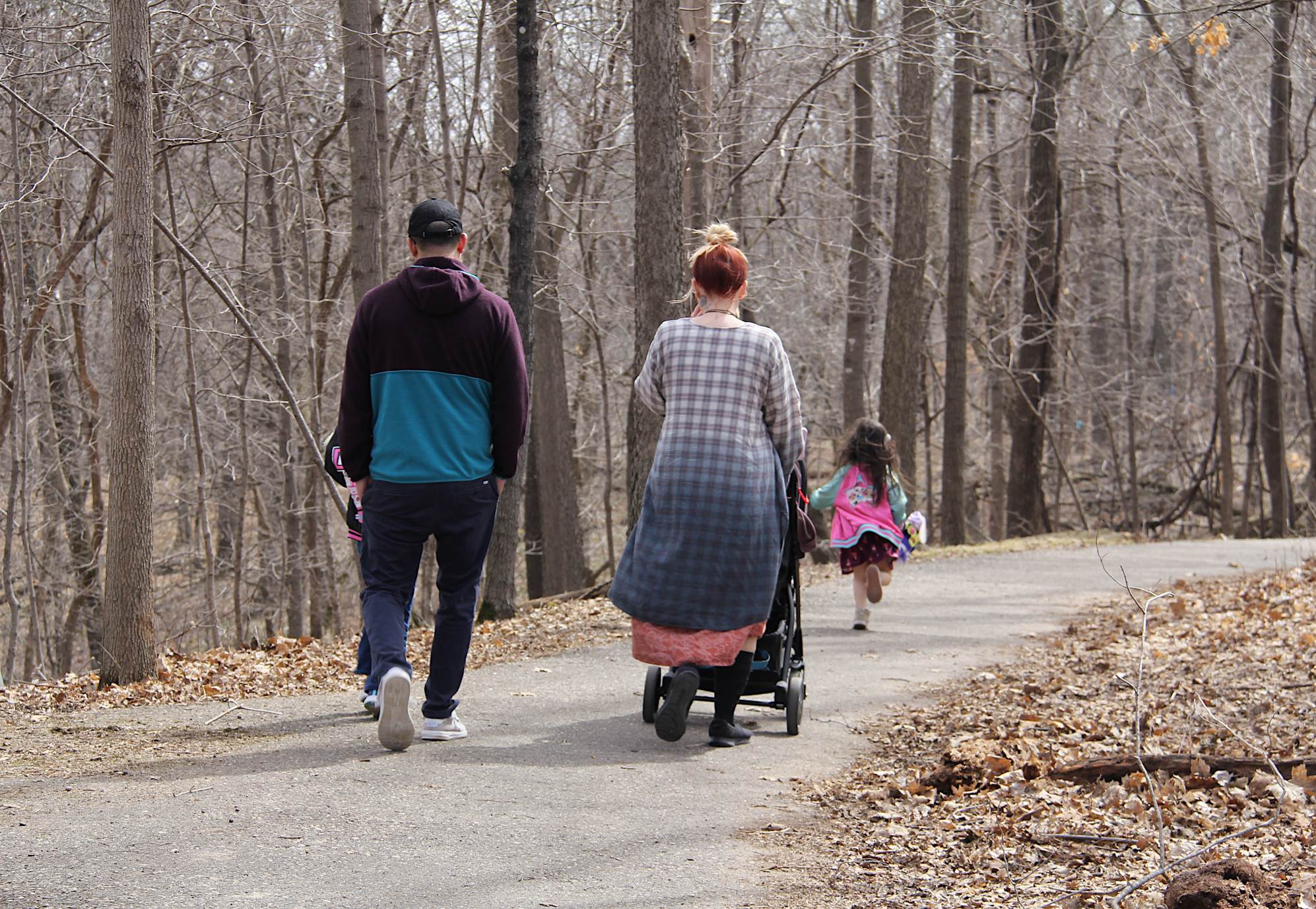
Lots of people, including this family, were hiking on Sunday afternoon. (Minnesota Prairie Roots copyrighted photo March 2026)
Randy and I passed another young family, two little girls clutching stuffies, a child in a stroller. The eldest ran ahead, her long hair flying. And I remembered the times we came here with our preschool grandchildren who also ran like the wind. Free. Immersed in nature.
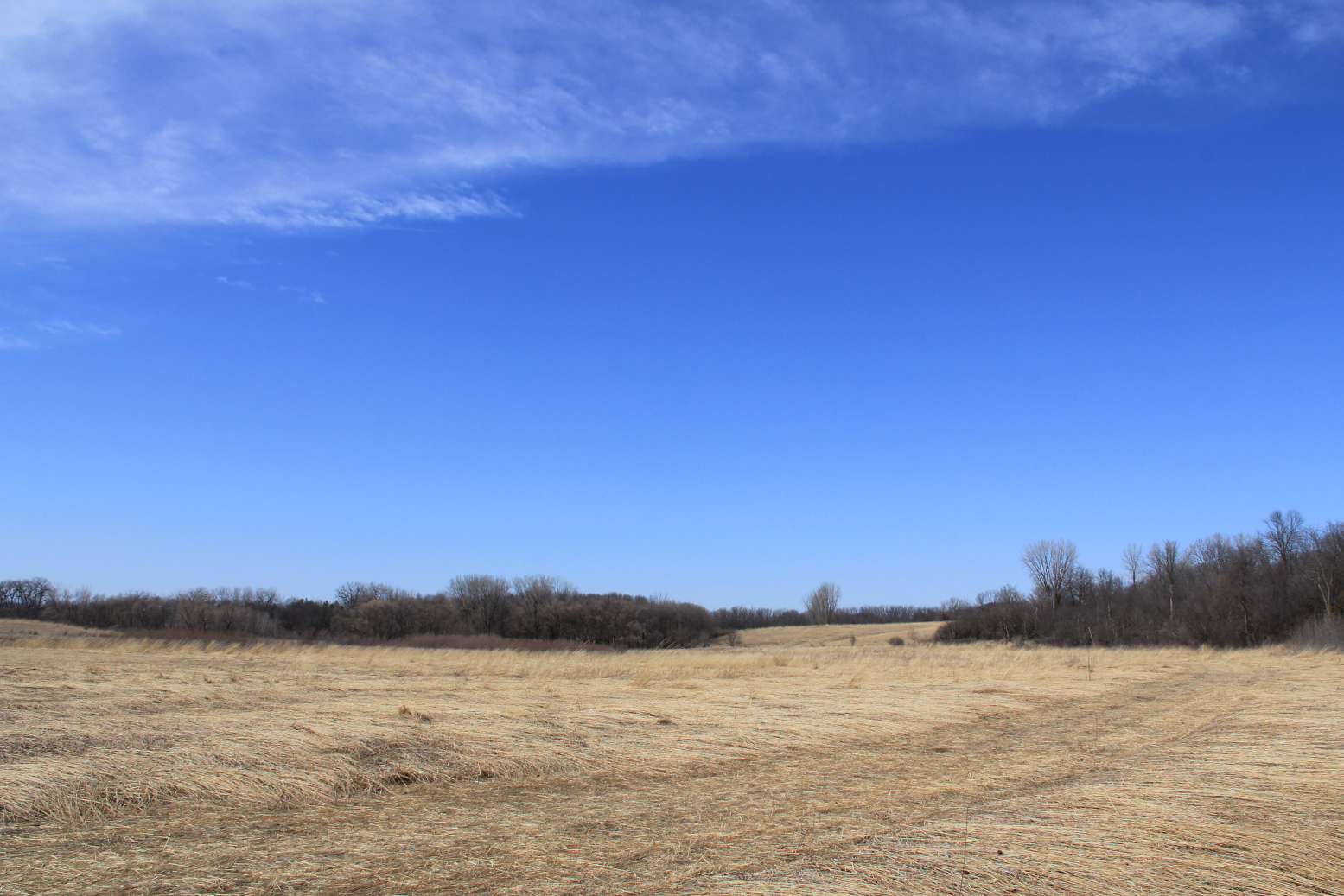
Prairie meets sky at River Bend. (Minnesota Prairie Roots copyrighted photo March 2026)
Exiting the woods, we crossed the prairie, its expanse stretching, meeting the sky.
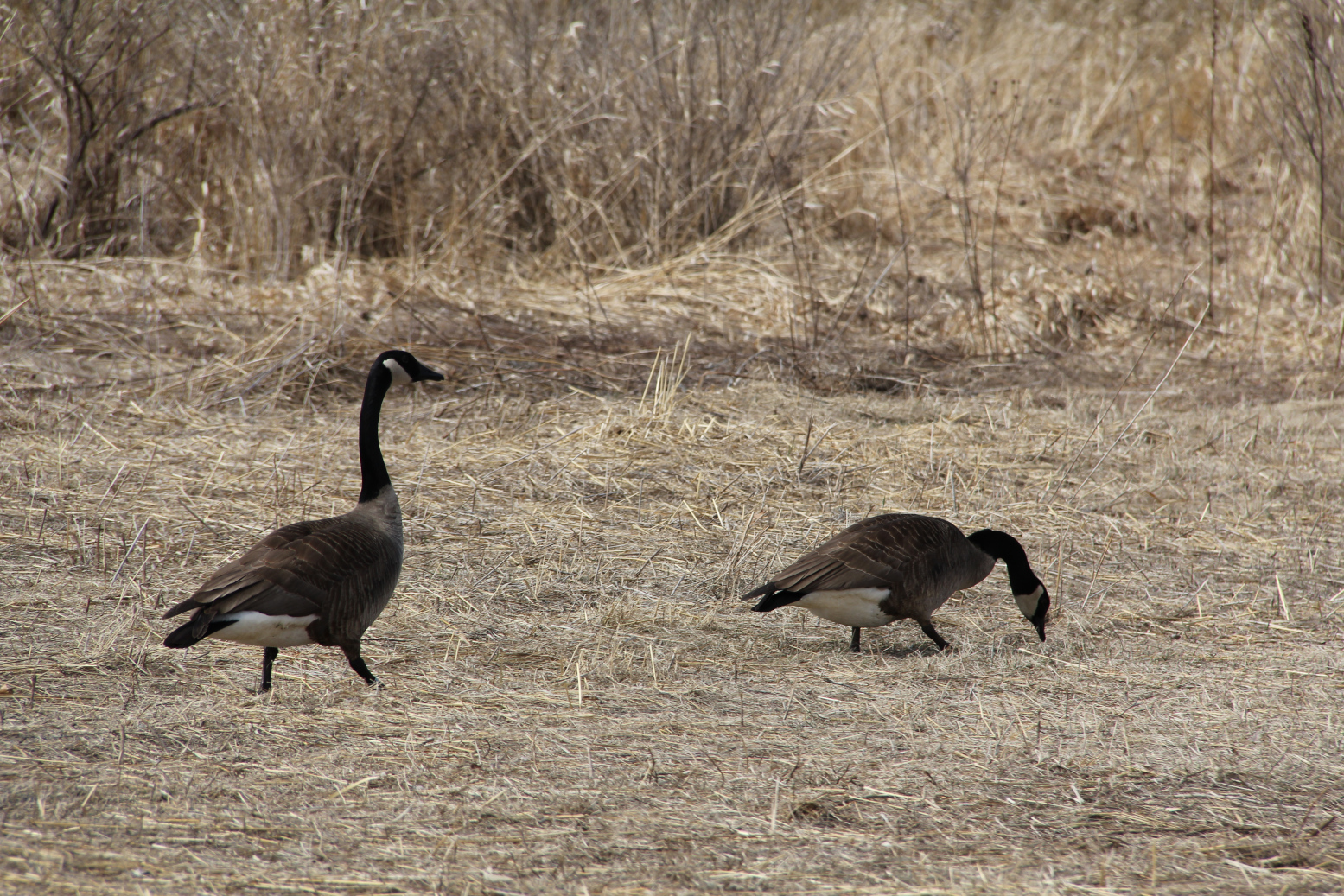
Canadian geese on the prairie. (Minnesota Prairie Roots copyrighted photo March 2026)
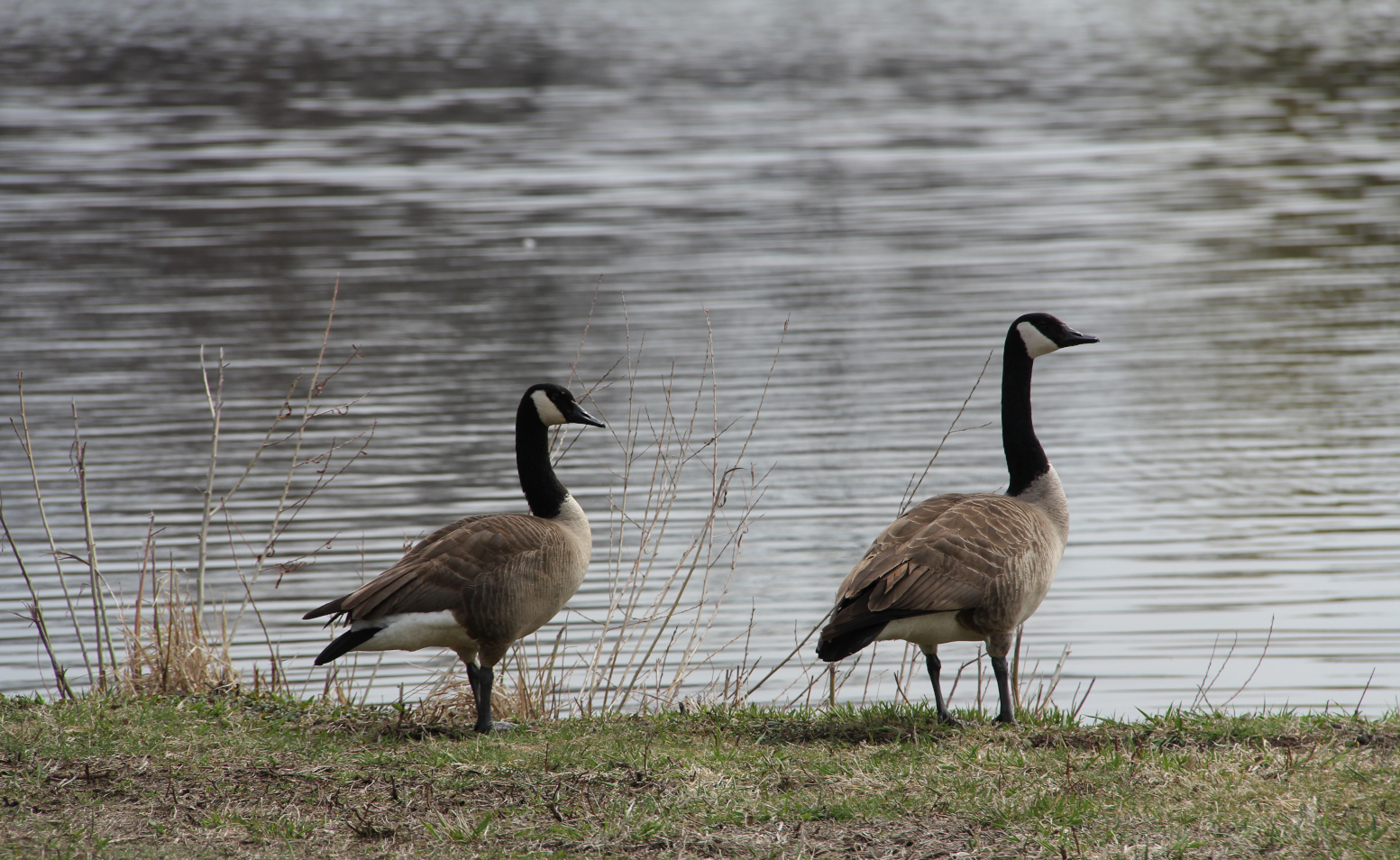
At prairie’s edge, a pair of geese strode across the dried grasses matted by winter’s snow and wind. Occasionally the two would stop, peck at the grass, searching for food.
I arrived at River Bend wanting to photograph signs of spring. Rather, I mostly heard spring—in a din of spring peepers, in the honk of geese, in other unidentified birds singing. And in the voice of a four-year-old, excited to be out with her parents in the woods. Playing. Searching for stones to take home.
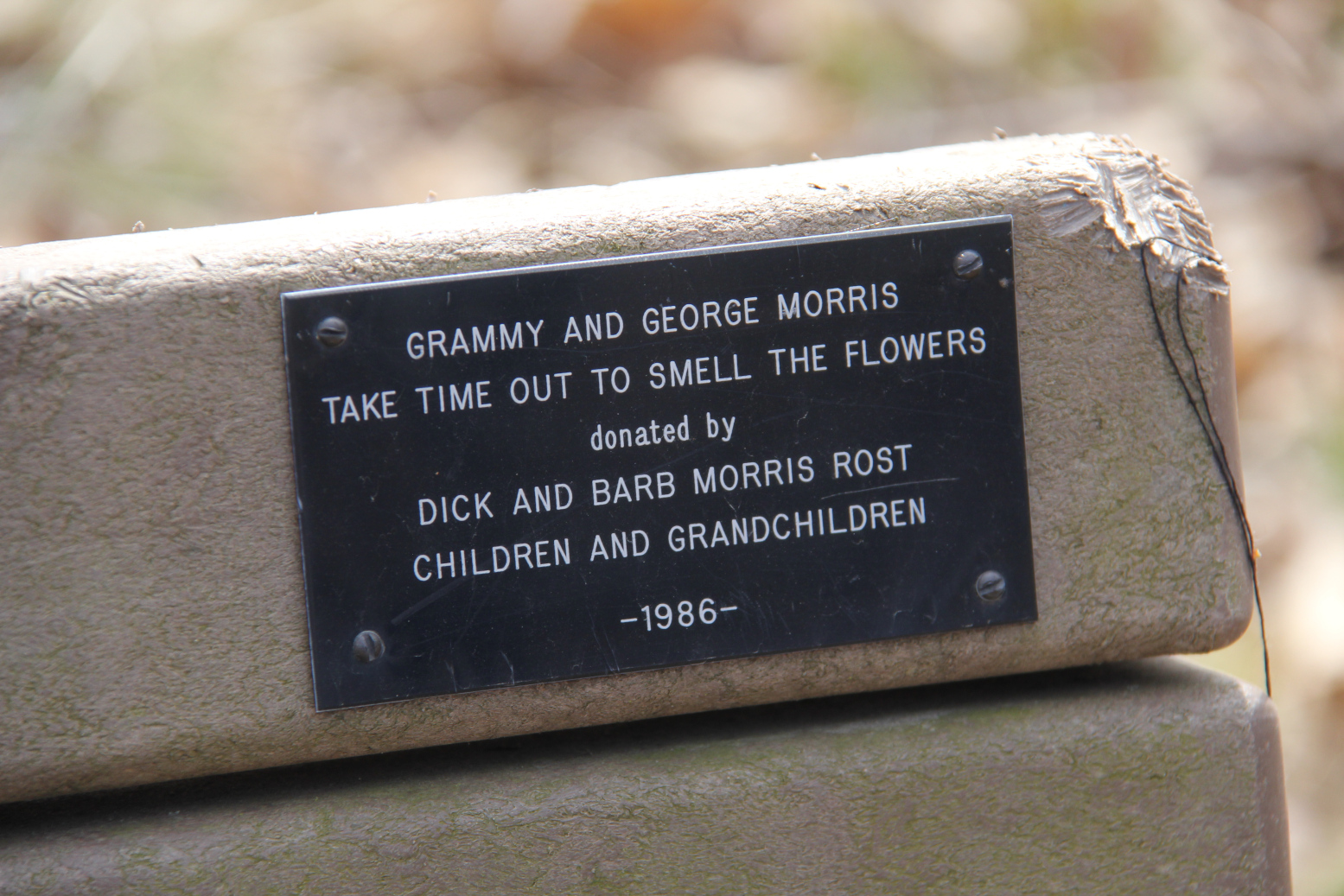
A fitting plaque on a memorial bench. (Minnesota Prairie Roots copyrighted photo March 2026)
Sometimes it takes a child to remind us of the smallest joys in life. To appreciate that which is before us rather than wishing for more.







Courageous crocuses April 9, 2026
Tags: blossoms, cold, commentary, crocus, crocuses, flowers, Minnesota, nature, seasons, spring, spring flowers, winter
EACH SPRING THEY EMERGE, poking through a layer of dried leaves mulching my front flowerbed.
When I spot the tender green shoots of crocuses, I feel a surge of optimism that winter is winding down. However, as a life-long Minnesotan, I also tamp my excitement. Snow falls in April here and sometimes in May. And these crocuses were bursting already in late March.
Days after I removed the leaves, exposing the crocuses to sunshine and air, they grew quickly. Soon purple blossoms spread wide, revealing golden centers like spots of sunshine.
I delight in the shades of purple, notice the lines tracing the petals, the way the flowers hug the ground as if also tentative about the season.
This first flower of spring seems to me courageous. Braving the cold of Minnesota, determined to reach the sunshine, to make a strong statement of hope that the cold and dark of winter will give way to warmth and light.
TELL ME: I’d like to hear your first flower of spring story.
© Copyright 2026 Audrey Kletscher Helbling