

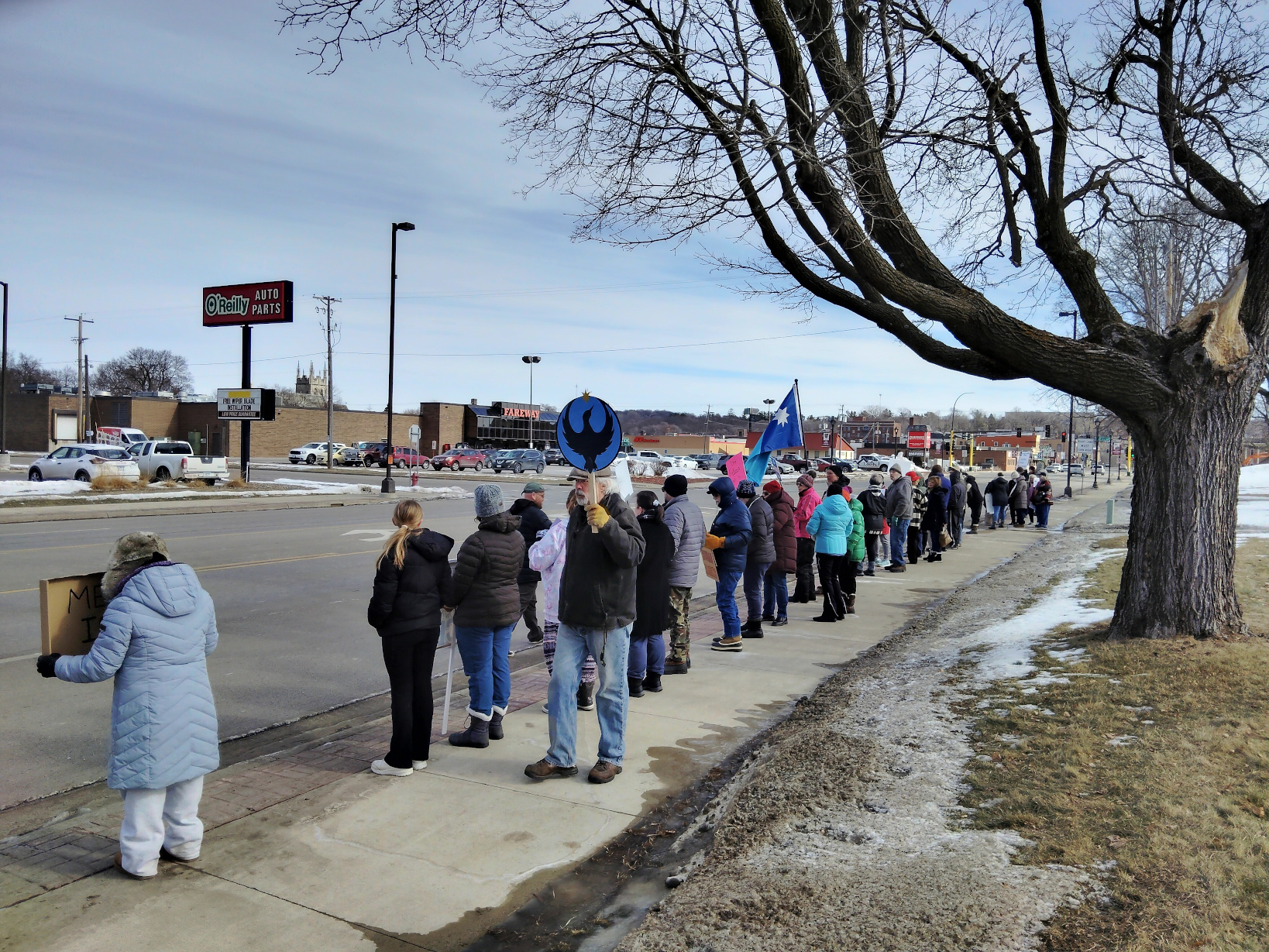
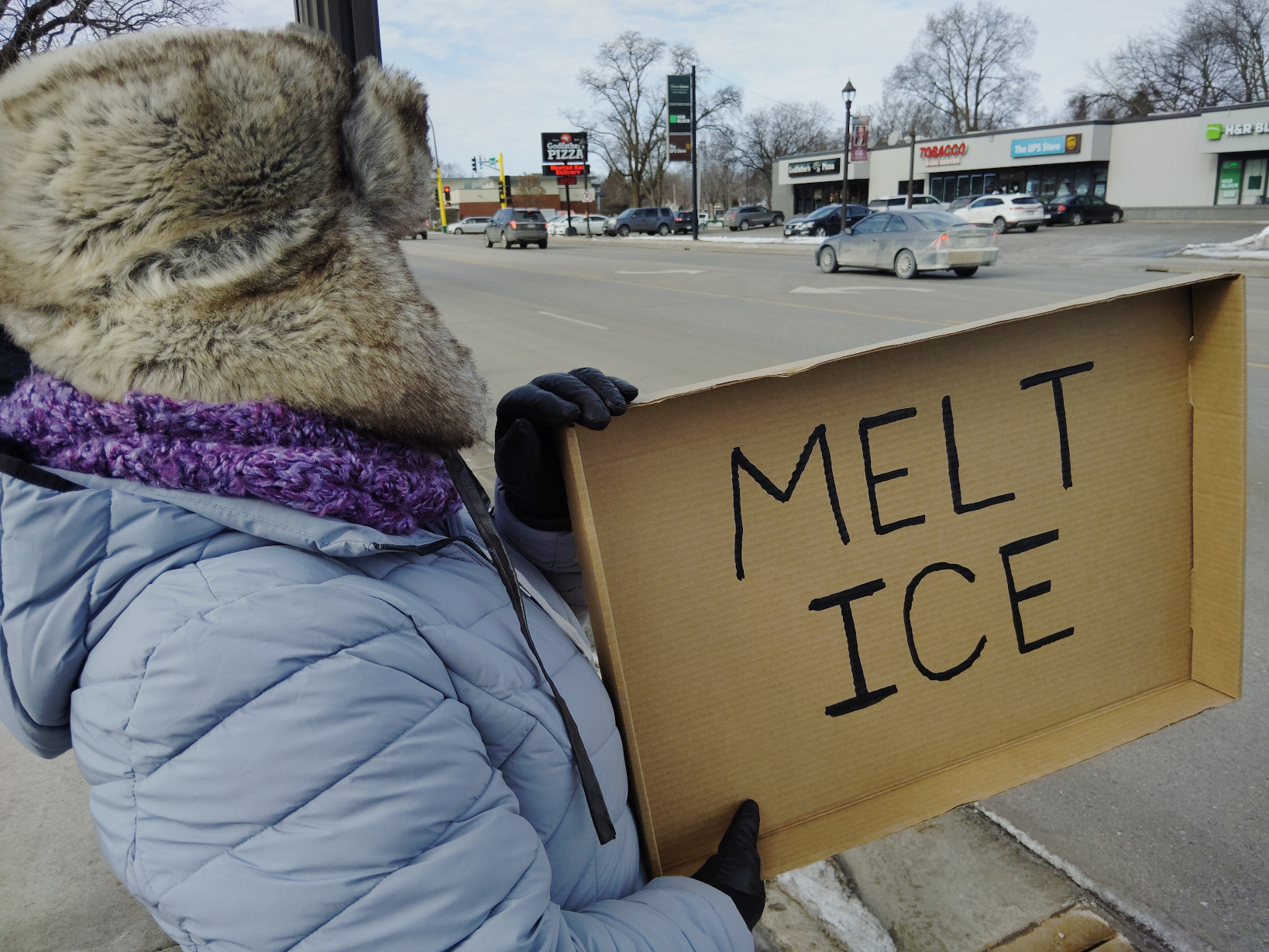
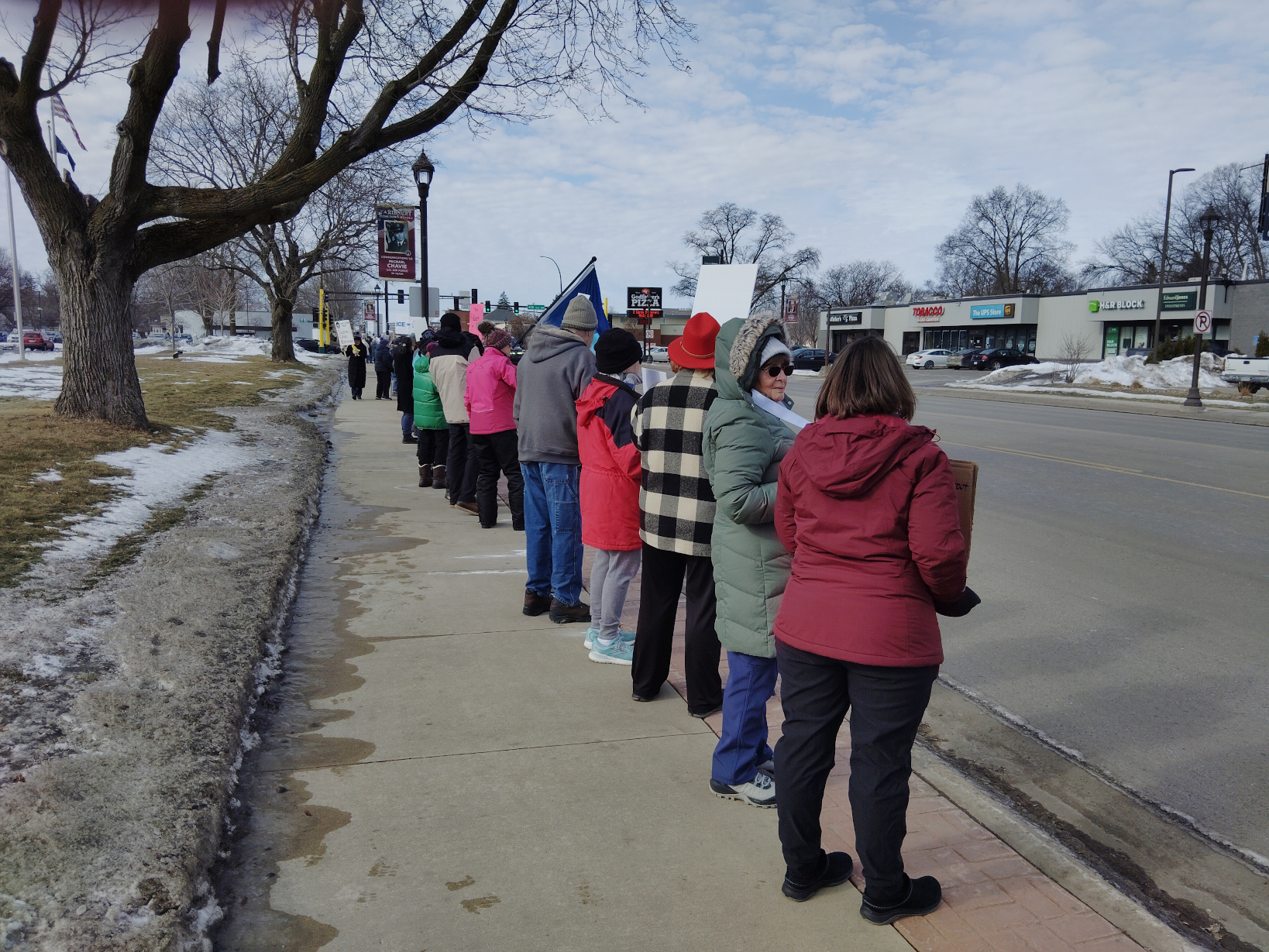
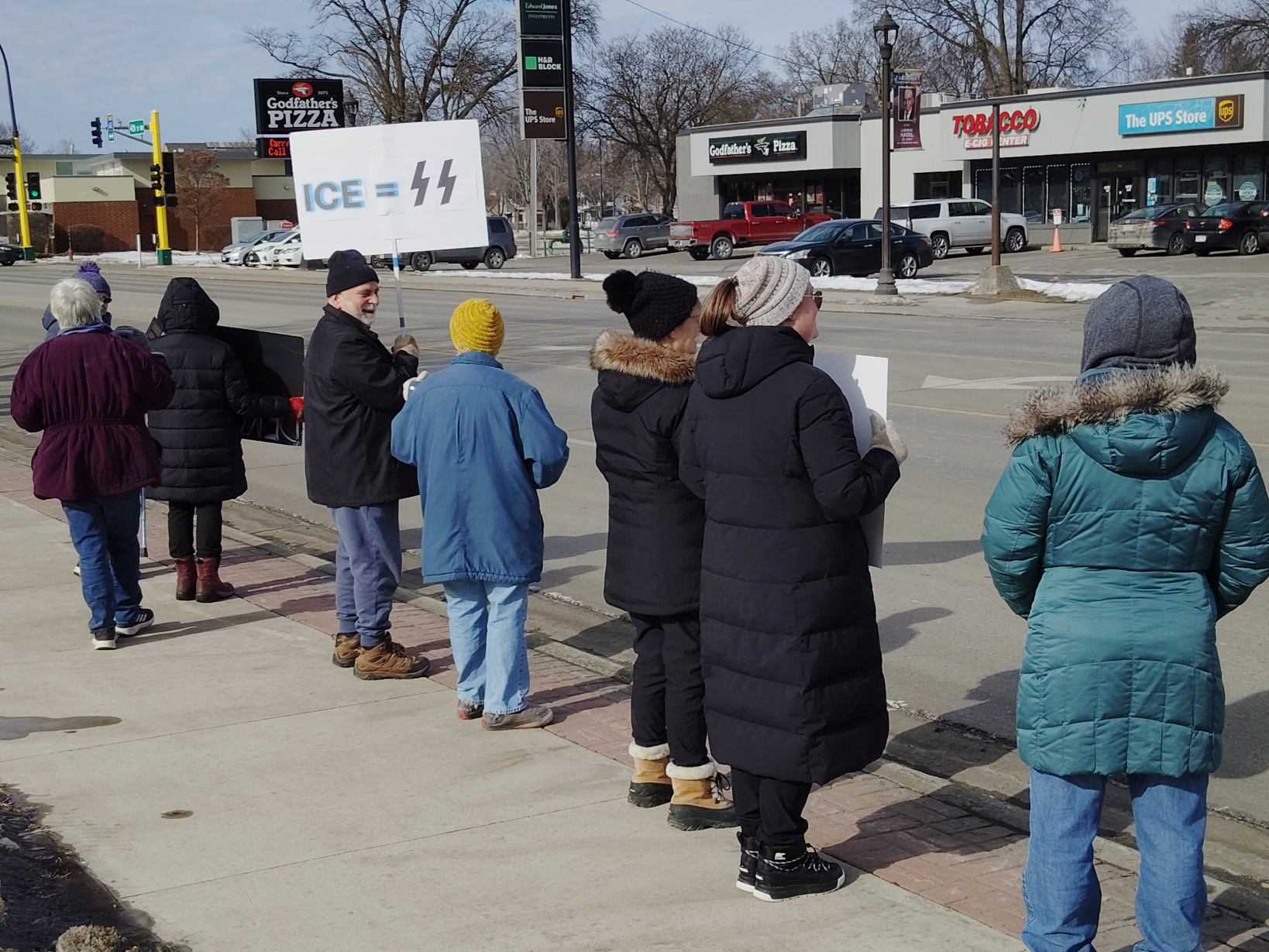
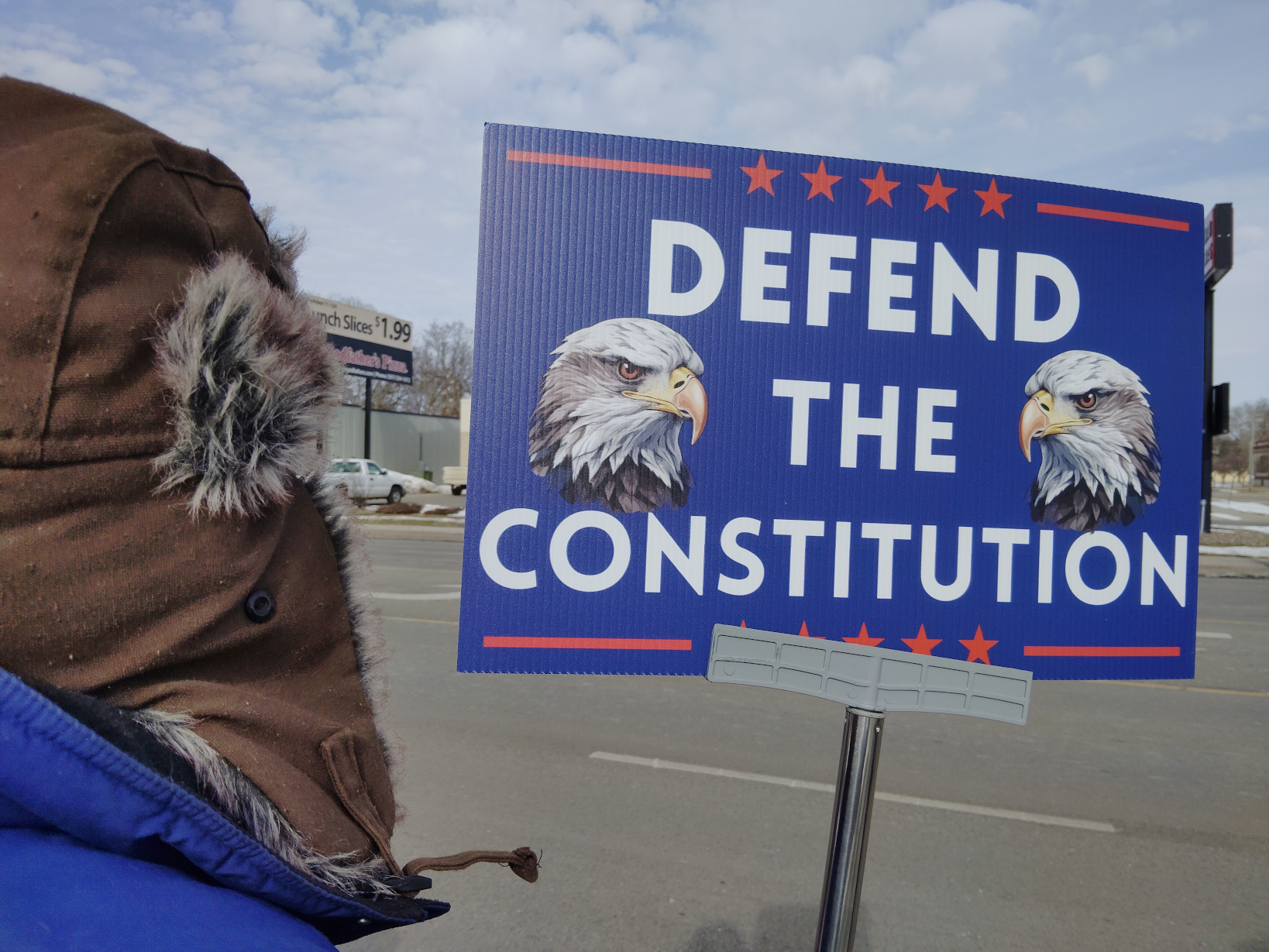
IT WAS THE FOURTH of July and we still showed up, 25-30 strong.
Some of us wore patriotic-themed shirts. We carried our signs. Susan brought mini American flags to distribute. One guy arrived with a full-size US flag. Matt came with his aging dog, Honeybun, who lounged in her dog bed on the sidewalk.
The week prior, we’d briefly talked about whether to gather on the Fourth of July. But we quickly decided that, of all days, we should meet to protest on the 250th birthday of our country. Just like we have every Saturday since January along one of Faribault’s busiest roadways.
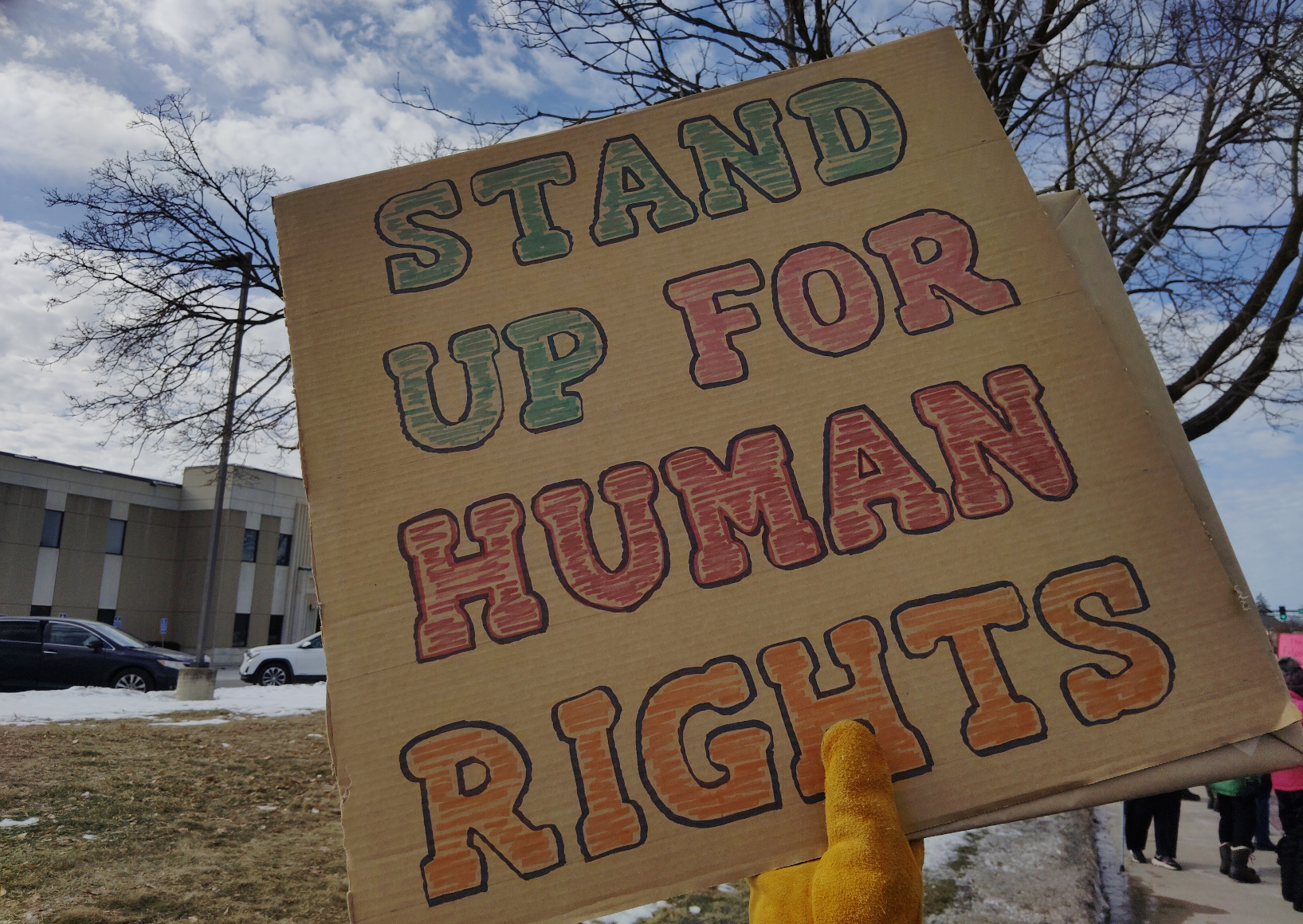
Our love for America, our concern for America under the present administration, our love of freedom and democracy draw us street-side to publicly protest. Love for our immigrant neighbors brings us, too. There are hundreds of reasons to stand up, to rise up, to resist.
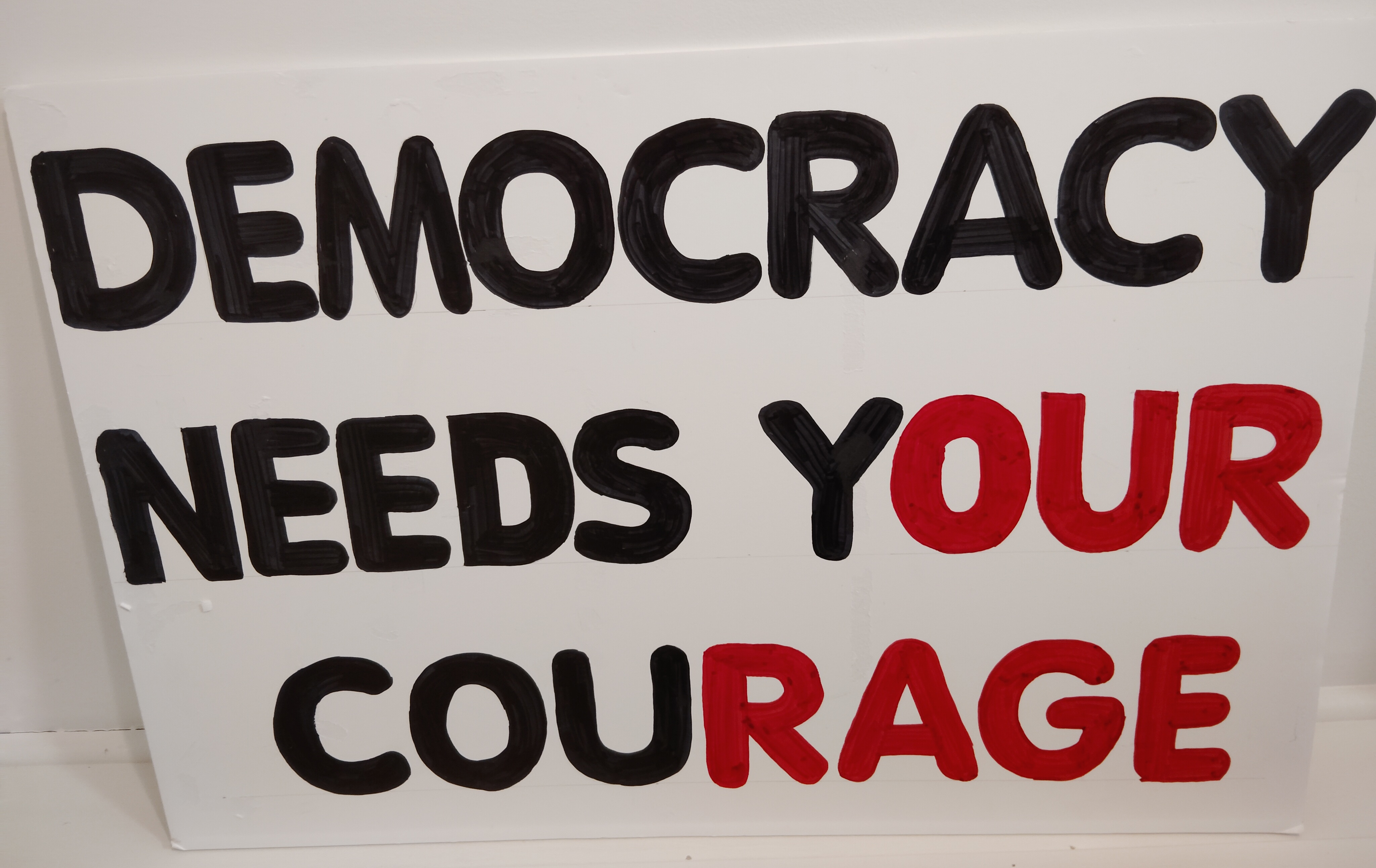
NOTABLE QUOTES ON PATRIOTISM
I reference this quote from a recent reader comment: “A love of country can coexist with a fierce criticism of it, and peaceful protest is arguably the epitome of patriotism. It is the work of those who love a country strongly enough to insist on trying to close the gap between what it is and what it could be.” (Steven B. Smith, The Atlantic, July 2026). That quote from Smith summarizes peaceful protest in a way that really resonates with me.
Another reader shared an equally insightful comment from a speech by Mark Twain: “Patriotism is supporting your country all the time, but your government only when it deserves it.” Oh, how true I find that to be.
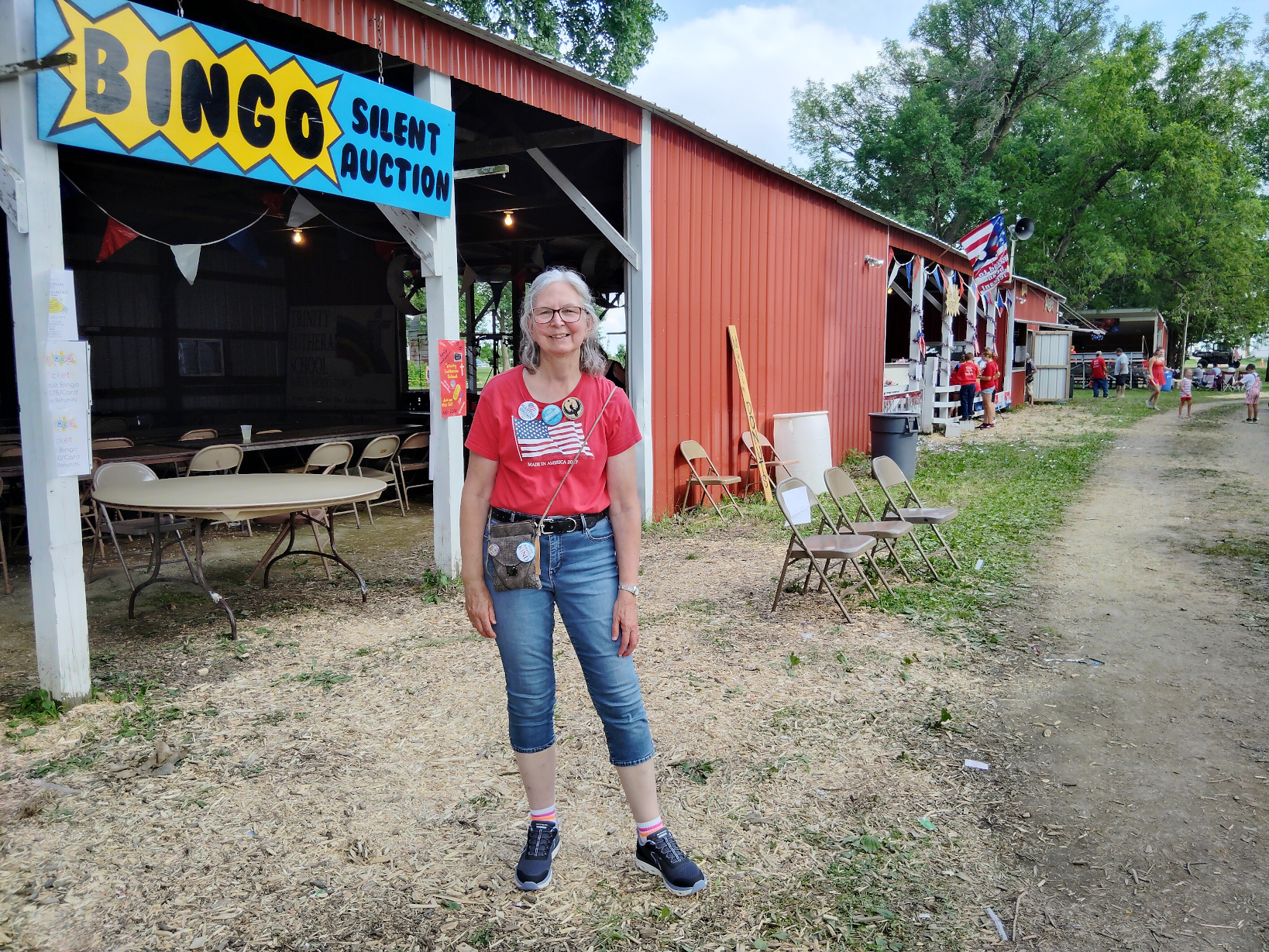
PROTEST LINE OBSERVATIONS
Protesting in my community, which has voted Republican probably in forever (I’ve lived here 42 years), felt initially unnerving. It takes a bit of bravery to publicly stand along busy Minnesota State Highway 60 in this city of 25,000 and protest. You’re not anonymous like you would be among hundreds or thousands of protesters in a much larger city. But I got over that quickly as I found community among others, soon discovering that I am not alone in my viewpoints, my worries, my concerns.
In fact, during seven months of protesting, we’ve all noticed growing support from motorists passing the protest line. The verbal assaults, the rolling coal, the rage and other negativity directed toward us is declining just as support is increasing. The name-calling and bird flipping still happen, but not as frequently and with less intensity.
Now we have the numbers to back up those observations. My husband, Randy, closely watched passing motorists for the past two Saturdays, tallying results on the back of his protest sign. He noted reactions like horn honking, waving, thumbs up, middle fingers, yelling…in two overall categories of support and non-support.
SUPPORT IS GROWING
On Saturday, June 27, support was at 75 percent. On the Fourth of July, that number rose to 82 percent.
Things are shifting. And that began around the time of the Iran War and rising gas prices.
People passing by our protest line represent a cross-section of Faribault, lending validity to the unscientific street-side poll results. I hold hope. And hope is a powerful thing to hold when you love your country enough to stand up in protest.
#
ON ANOTHER NOTE: Sam Temple, candidate for Rice County commissioner in District 3, is holding a town hall from 5:30-7:30 p.m. today, July 6, in the Great Hall of Buckham Memorial Library in Faribault. He intends to focus on data centers. One is being proposed for Faribault. Come, get informed, ask questions, meet Sam and also meet candidates running for Faribault City Council. All have been invited to this town hall. This will be a good opportunity to learn about data centers and about candidates running for local offices.
© Copyright 2026 Audrey Kletscher Helbling





 Minnesota Prairie Roots
In appreciation of those protesting in rural areas on No Kings Day March 27, 2026
Tags: commentary, democracy, Minnesota, No Kings Day, opinion, protesting, protests, resistance, rural Minnesota, small towns
ON THIS, THE DAY before nationwide No Kings Day protests, I want to pause and thank the many people in small towns, in the most rural of regions, who are standing up for democracy. Media attention tomorrow will focus on protests in big cities. That coverage is expected. But equally as important are the rallies in communities of a couple hundred or several thousand deep in red territory.
In these places, publicly standing against the Trump administration takes, simply put, guts. Everyone knows everyone in small towns and it’s not necessarily easy to be politically at odds with one another. These are the people you see at the post office, worship with, meet for coffee, work beside, live next door to, do business with.
When those who oppose Trump, his administration and policies protest in rural Republican strongholds, they expose themselves as “the other.” Yet, it is this very public act of defiance and resistance which can get people thinking, start conversations, open doors to change. Now, more than ever, it’s important to fearlessly oppose tyranny. It’s important to stand up for freedom, voting rights, immigrants, justice, due process… It’s important to express concerns about the economy, the war in Iran, the overall state of this country.
Upon looking at a map of all the No Kings Day protest sites in Minnesota, I found many in rural areas. From Madison, population 1,500 and the self-proclaimed “Lutefisk Capital of the USA” near the South Dakota border, to Baudette, population 1,100 and the “Walleye Capital of the World” near the Canadian border, Minnesotans will gather. Even in my deeply red home county of Redwood in southwestern Minnesota, a protest is planned in the county seat of Redwood Falls.
In St. James, also in southwestern Minnesota and a town where I once lived and worked as a regional news reporter for the Mankato Free Press, a No Kings Day event is set. The community of 4,800 is home to many Hispanics and Latinos and was targeted by federal immigration enforcement agents during Operation Metro Surge.
Even Hackensack, in Paul Bunyan’s northern Minnesota lake country, is on the Saturday protest map. That town has a population of just under 300 as does Cyrus, near Morris in far western Minnesota, also holding a No Kings Day protest.
From my community of Faribault, with a population of around 25,000, to Kenyon to the east with some 1,800 residents, to the small towns of Rushford, St. Charles, Spring Grove and Preston in the far southeastern corner of Minnesota, and many small towns and cities across the state, people will gather in protest on Saturday.
In St. Paul, organizers are expecting up to 100,000 to rally at the state capitol. Those are some impressive numbers. Yet, if even five people show up in a small town to protest, that’s impressive, too.
Every voice of resistance matters, wherever you live, rural, suburban or urban.
FYI: The Faribault No Kings Day protest is from 11 a.m.-noon March 28 (and every Saturday) by the Rice County government services building along Minnesota State Highway 60.
© Copyright 2026 Audrey Kletscher Helbling