Minnesota Prairie Roots

Writing and photography by Audrey Kletscher Helbling

Remembering Minnesota’s Prince 10 years after his death April 20, 2026

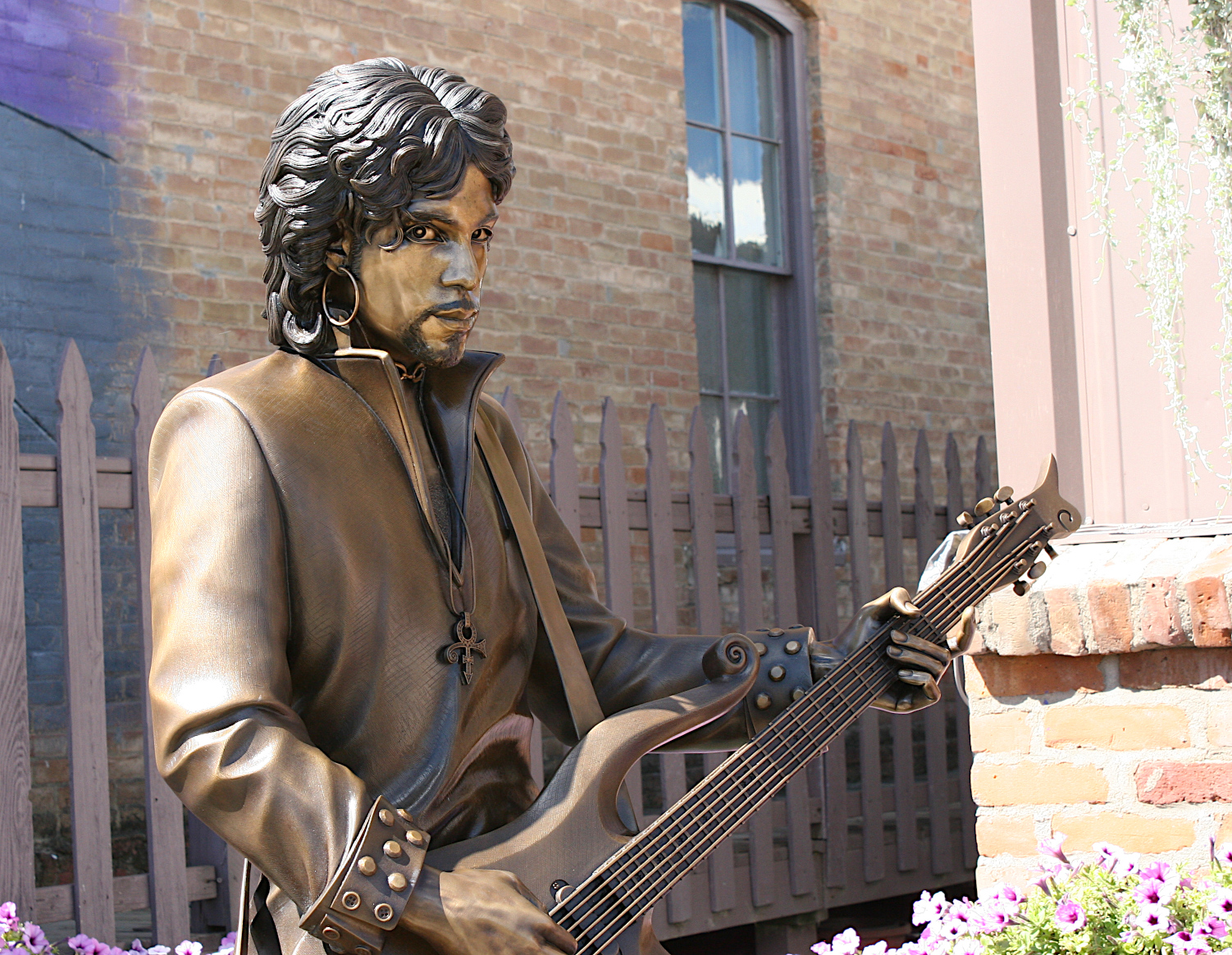
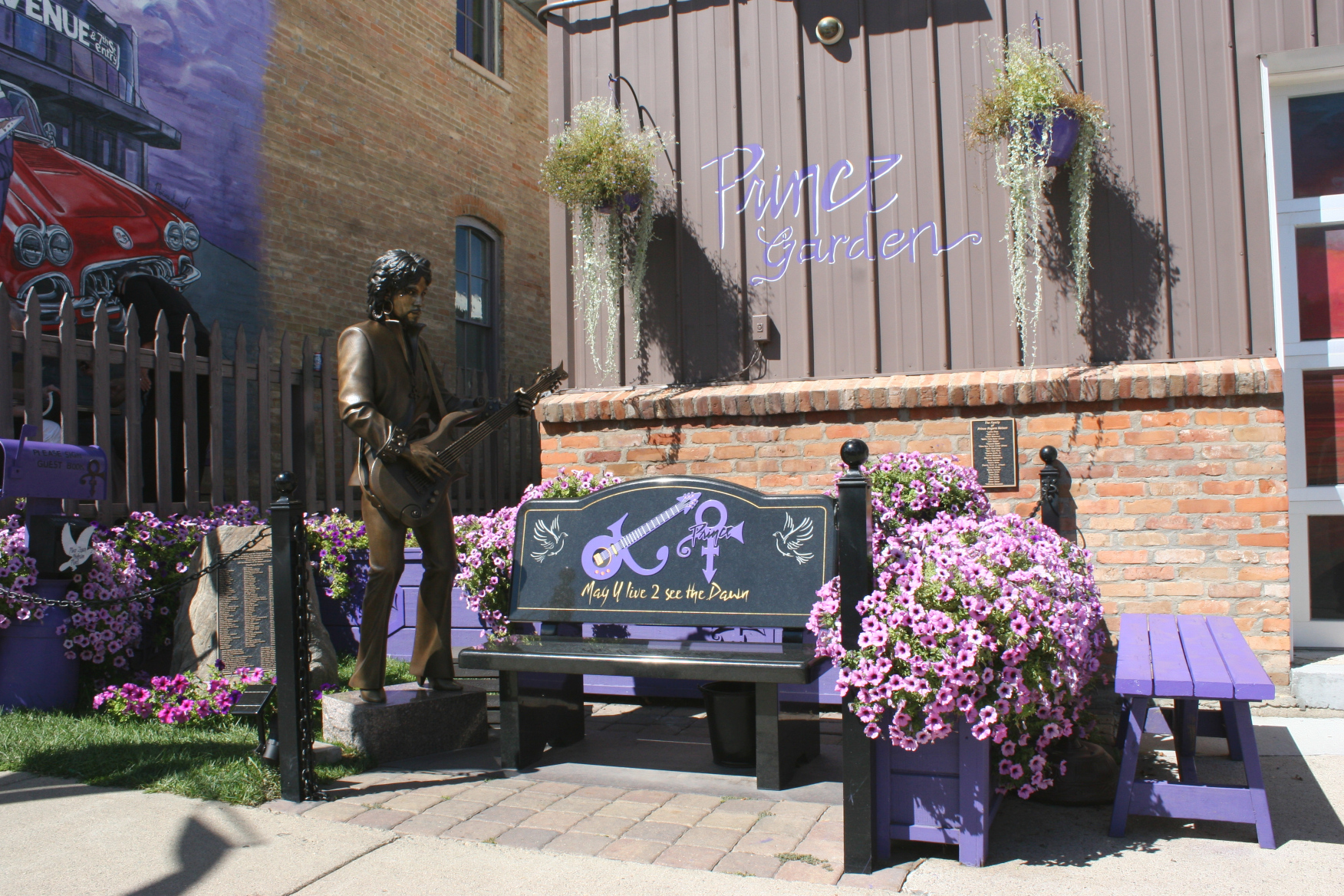
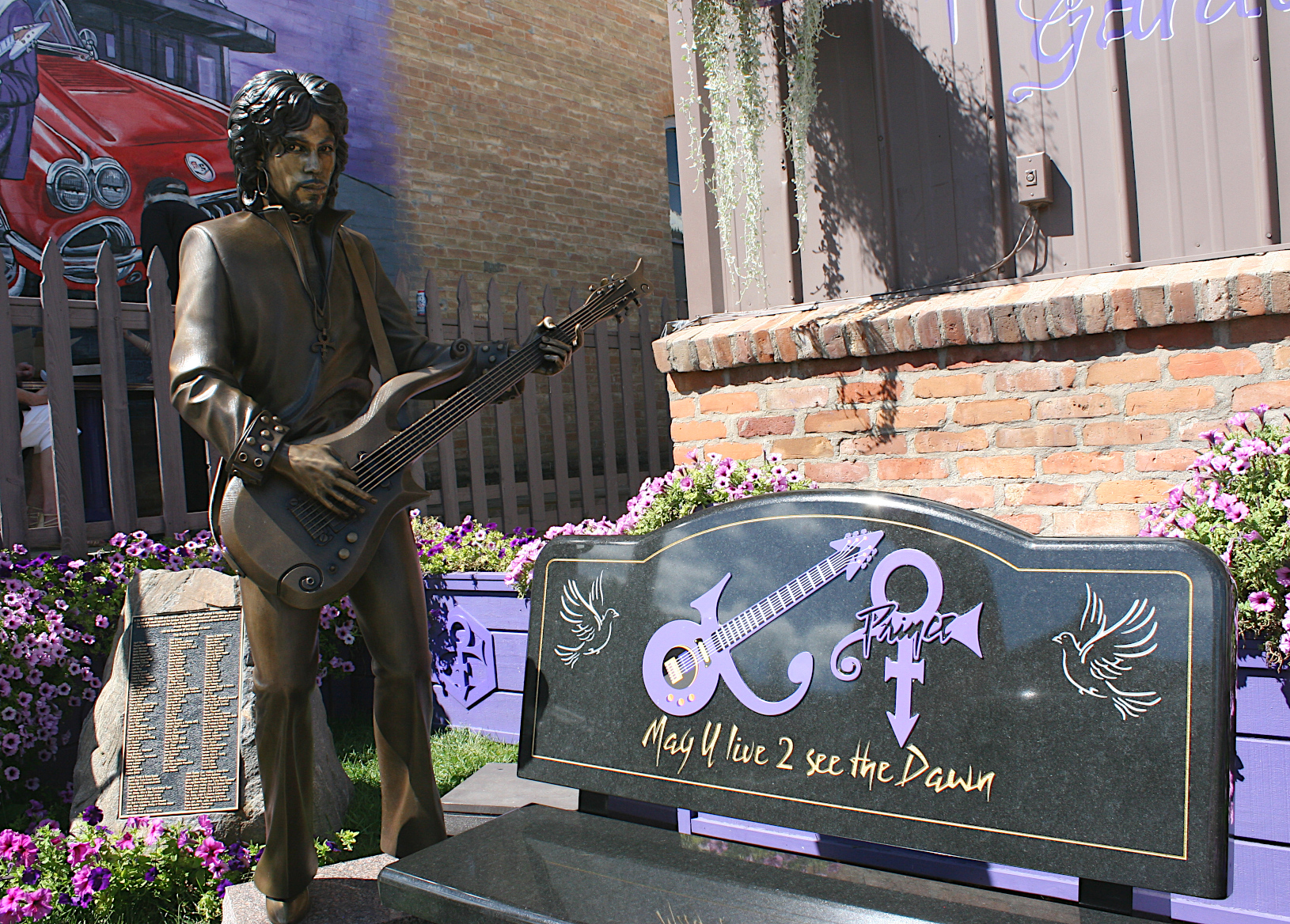
This bronze statue of Prince, photographed in a Prince Memorial Garden in Henderson, is now in a music-themed New Ulm museum. (Minnesota Prairie Roots copyrighted file photo 2020)

MY CLOSEST CONNECTION to Prince, Minnesota singer, songwriter and performer, came in 1983. I was working as a reporter for the Owatonna People’s Press when a co-worker’s girlfriend joined the set of Purple Rain as a movie crowd extra. Had I been thinking, I would have interviewed Kim about her small part in the 1984 film. But, for whatever reason, I didn’t. It was a missed opportunity to take a broader, state-wide story and localize it.

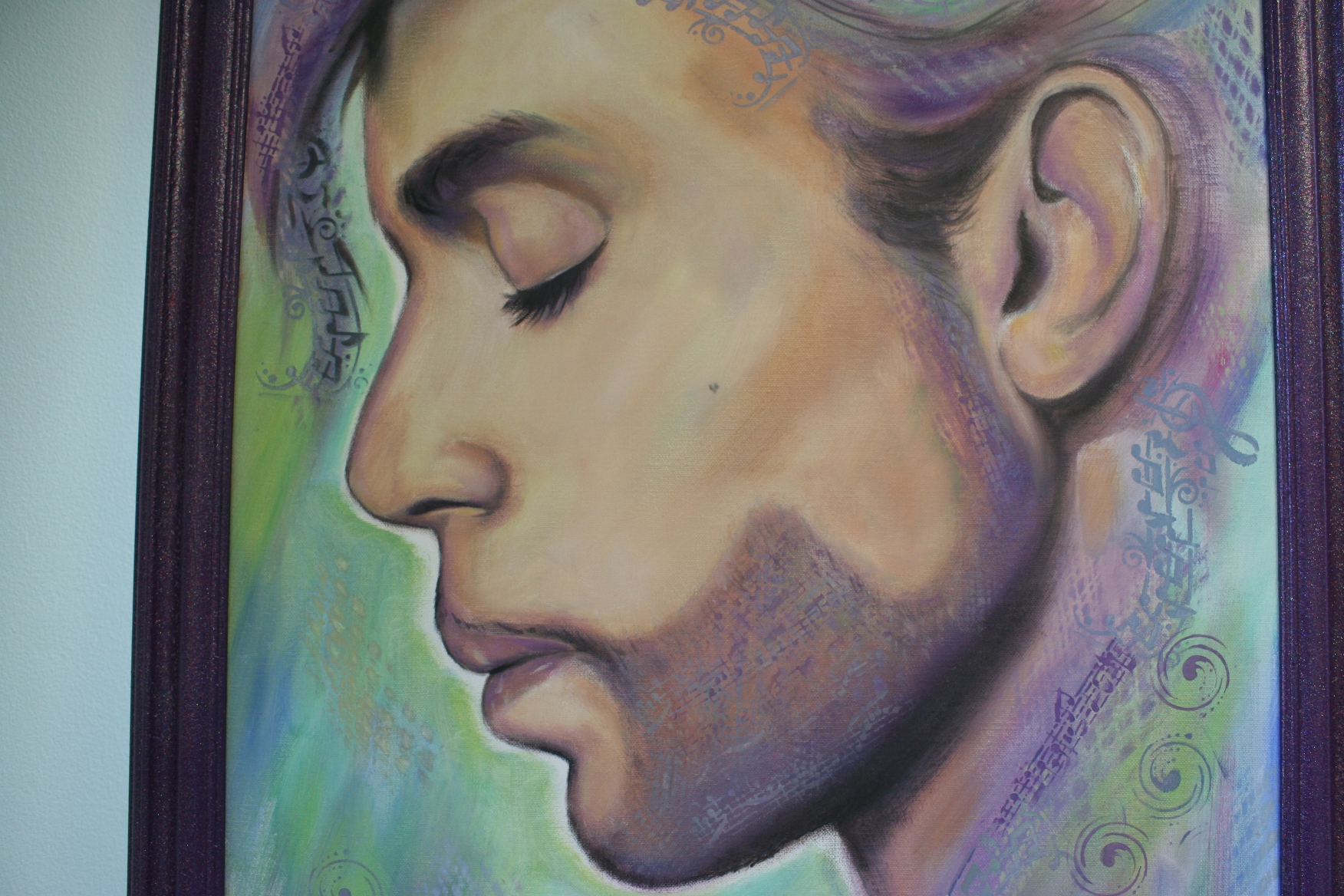
This shows a close-up of a Prince portrait done in oil by Dana Hanson, former Faribault resident, in 2016. (Minnesota Prairie Roots copyrighted file photo 2016)

Flash forward to now and the 10th anniversary of Prince’s death on April 21. I’m not a Prince fan, but I appreciate that many are worldwide. He rates as one of Minnesota’s best-known, most-beloved musicians. As such, it’s fitting to write about him a decade after his untimely passing.

I could write about Paisley Park, Prince’s Chanhassen home and recording studio now turned museum and music venue. Thousands pay homage to the Purple One each year by visiting the site. But 75 miles to the southwest in New Ulm, the Minnesota Music Hall of Fame also honors Prince, among its 229 inductees. Prince was inducted in 2007, joining the likes of Minnesotans Bob Dylan, John Denver, Marilyn Sellars and even the St. Olaf College Choir.

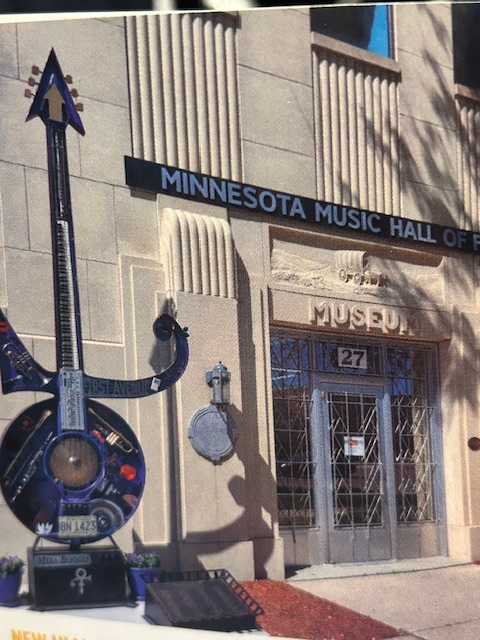
The Prince guitar sculpture outside the Minnesota Music Hall of Fame. (Photo courtesy of the MMHF)

I have yet to visit the MMHF, although I’ve passed by many times en route to my native southwestern Minnesota hometown. Located along a main route, U.S. Highway 14/Broadway Street, the museum is land-marked by a 16-foot tall sculpture of Prince’s purple guitar outside the front entrance. Iowa artist Jefferson Davis created the upcycled metal artwork, showcased first in a sculpture walk in neighboring Mankato before finding a permanent home in New Ulm.

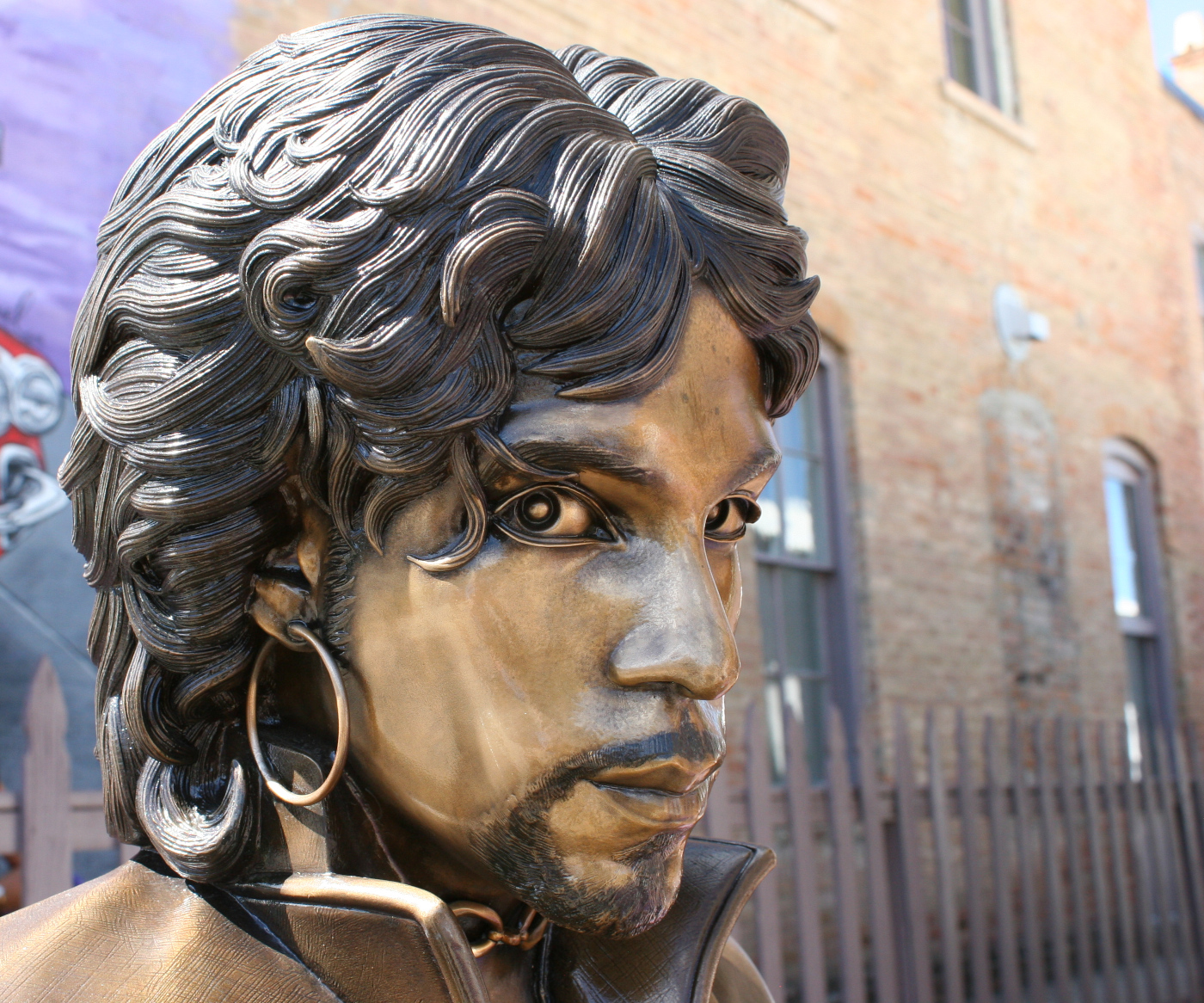
Up close with Prince, in bronze, photographed in Henderson in 2020. The sculpture is now in New Ulm. (Minnesota Prairie Roots copyrighted file photo 2020)

Step inside and volunteer “host to the visitors” John Kass says you’ll find the museum’s largest exhibit to be the one on Prince. It draws people from all over the world, including those who’ve first toured Paisley Park before venturing into rural Minnesota and the New Ulm museum. Many come on the anniversary of Prince’s death and on Prince Roger Nelson’s June 7 birth, Kass notes.

Highlights of the Prince exhibit, according to Kass, include a motorcycle from the movie Purple Rain; a script from Prince’s third movie, Graffiti Bridge; clothing from his wardrobe; memorabilia; and even the valances that went around the curtains in the living room of Prince’s house. I must admit that I inwardly chuckled when Kass mentioned the valances. But I suppose to avid Prince fans, those offer a glimpse inside the musician’s home.

An overview of the Prince Park in downtown Henderson before it was removed. (Minnesota Prairie Roots copyrighted file photo 2020)

Additionally, the exhibit includes a granite memorial bench and also a brass sculpture of Prince crafted by Brodin Studios of Kimball. Both once stood at a memorial garden in downtown Henderson as part of the Prince Legacy Henderson Project. I visited that Minnesota River town’s Prince shrine in 2020 before items were donated to the New Ulm museum.

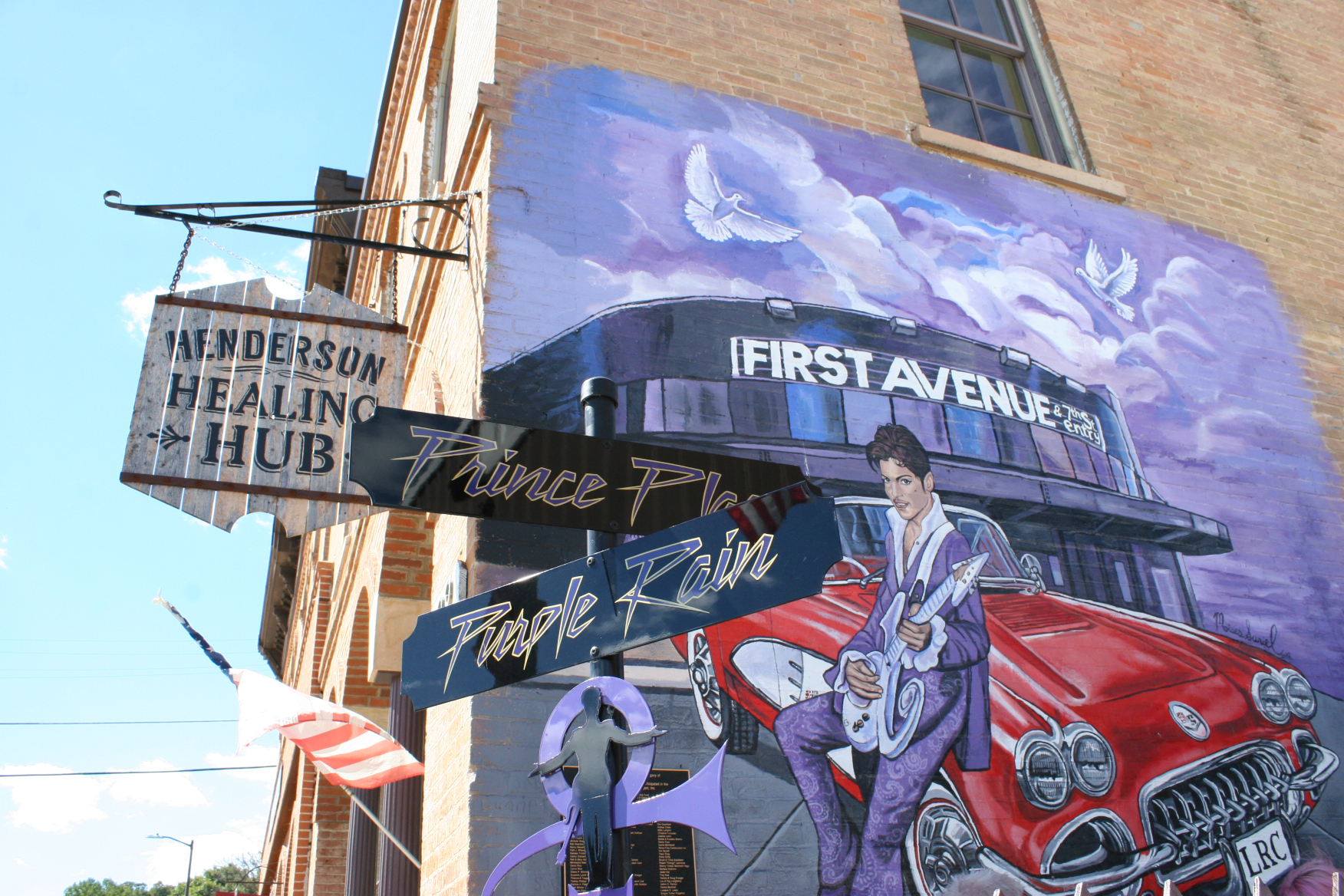
The Prince mural in downtown Henderson. (Minnesota Prairie Roots copyrighted file photo 2020)

Henderson remains a draw for Prince fans where a scene from the movie Purple Rain was filmed along the river. A mural of Prince with his signature purple guitar and little red Corvette is all that’s left of the Henderson tribute site. The artwork graces the side of the Healing Hub along state highway 19 in the heart of downtown.

Prince portrait by Jada Fairbanks displayed at a 2018 student art show at the Paradise Center for the Arts, Faribault. (Minnesota Prairie Roots copyrighted file photo 2018)

Tuesday, April 21, marks a big day for Prince fans as they remember the music icon. In Red Wing, the Sheldon Theatre is hosting a 7 p.m. concert, “Celebrating the Legend of Prince—10 Years Later,” by Chase and Ovation. The Minneapolis-based band exclusively performs the music of Prince.

I expect Twin Cities media will note the day of Prince’s death, too, with tenth anniversary stories. And in the community of New Ulm, the Minnesota Music Hall of Fame, 27 N. Broadway Street, will likely await a surge of visitors later in the week. The MMHF is only open from 10 a.m.-2 p.m. Thursday, Friday and Saturday from April-October. Admission is $7, a small price to pay, says volunteer Kass, for a museum that showcases the best of Minnesota’s musicians. And that includes the Purple One, Prince Roger Nelson.

© Copyright 2026 Audrey Kletscher Helbling


Raining purple as Minnesota honors Prince May 5, 2023

A mural and street signs honor Prince at Prince Garden in Henderson. This pocket park is no longer in Henderson. (Minnesota Prairie Roots copyrighted file photo August 2020)

IF RAIN FELL IN COLOR, the hue would be purple here in Minnesota. Not just for the Minnesota Vikings, but also for beloved homegrown musician Prince of “Purple Rain” fame.

Now road signs bearing Prince’s name will sport his signature color, purple. Thursday the State Senate approved a bill renaming a seven-mile stretch of State Highway 5 as Prince Rogers Nelson Memorial Highway. The House last month approved the same. The roadway runs past Paisley Park, Prince’s home and recording studio in Chanhassen, now open for public tours, concerts and more. Paisley Park is a museum of sorts following Prince’s untimely death from an opioid overdose in April 2016.

Dana Hanson, former Faribault resident, used a stencil to incorporate musical notes in to this painting of Prince. Notice the detail of the heart-shaped mole on the musician’s cheek. (Minnesota Prairie Roots copyrighted file photo)

While I’m admittedly not a Prince fan (I’ve not listened to his music), I respect that he is an accomplished singer, songwriter and performer with a worldwide fan base. With seven Grammy Awards, an Academy Award, music videos, and song releases too numerous to count, Prince certainly succeeded in his profession. He was inducted into the Rock and Roll Hall of Fame in 2004 and into the Minnesota Music Hall of Fame in 2007.

Up close with Prince, in bronze. (Minnesota Prairie Roots copyrighted file photo August 2020)

Ah, the Minnesota Music Hall of Fame. That’s not nearly as familiar to most Minnesotans as Paisley Park. But for Prince lovers, it likely will become a new pilgrimage destination. Located in New Ulm in southern Minnesota, the Hall of Fame now features a bronze statue of Prince, a memorial bench, street signs and more moved from Henderson.

The Prince Garden previously in Henderson. (Minnesota Prairie Roots copyrighted file photo August 2020)

In August 2020, I photographed the outdoor Prince shrine in Henderson, location of a scene in “Purple Rain” along the nearby Minnesota River. I was surprised to learn that the Prince Garden items are now in New Ulm. Apparently there were a few issues in Henderson.

This bronze statue of Prince is now at the Minnesota Music Hall of Fame in New Ulm. (Minnesota Prairie Roots copyrighted file photo August 2020)

Also coming to the New Ulm location is a 15-foot tall sculpture of Prince’s guitar. It was part of the Mankato CityArt Walking Sculpture Tour, a temporary annual installation of outdoor art. Iowa artist Jefferson Davis created the piece from upcycled metal. The now-dissolved Prince Legacy Henderson Project purchased the guitar art via fundraising and a grant. The sculpture will be placed near the entrance to the Minnesota Music Hall of Fame. Located along an arterial street through New Ulm, the over-sized purple guitar is sure to draw attention.

The museum, the movie, the music, the musician. And now a stretch of roadway renamed Prince Rogers Nelson Memorial Highway. I’d say it’s raining purple in Minnesota.

© Copyright 2023 Audrey Kletscher Helbling
 

“The Seed Keeper,” an award-winning book every Minnesotan should read June 21, 2022

Cover design by Mary Austin Speaker. Cover beadwork art by Holly Young. (Credit: Publisher, Milkweed Editions)

VISUALIZE A PACKET OF SEEDS. Then open the envelope and spill a handful of seeds onto your open palm. What do you see? You likely envision seeds planted in rich black soil, covered, watered, sprouting, growing, yielding and, then, harvested. And while that visual is accurate, seeds hold more. Much more.

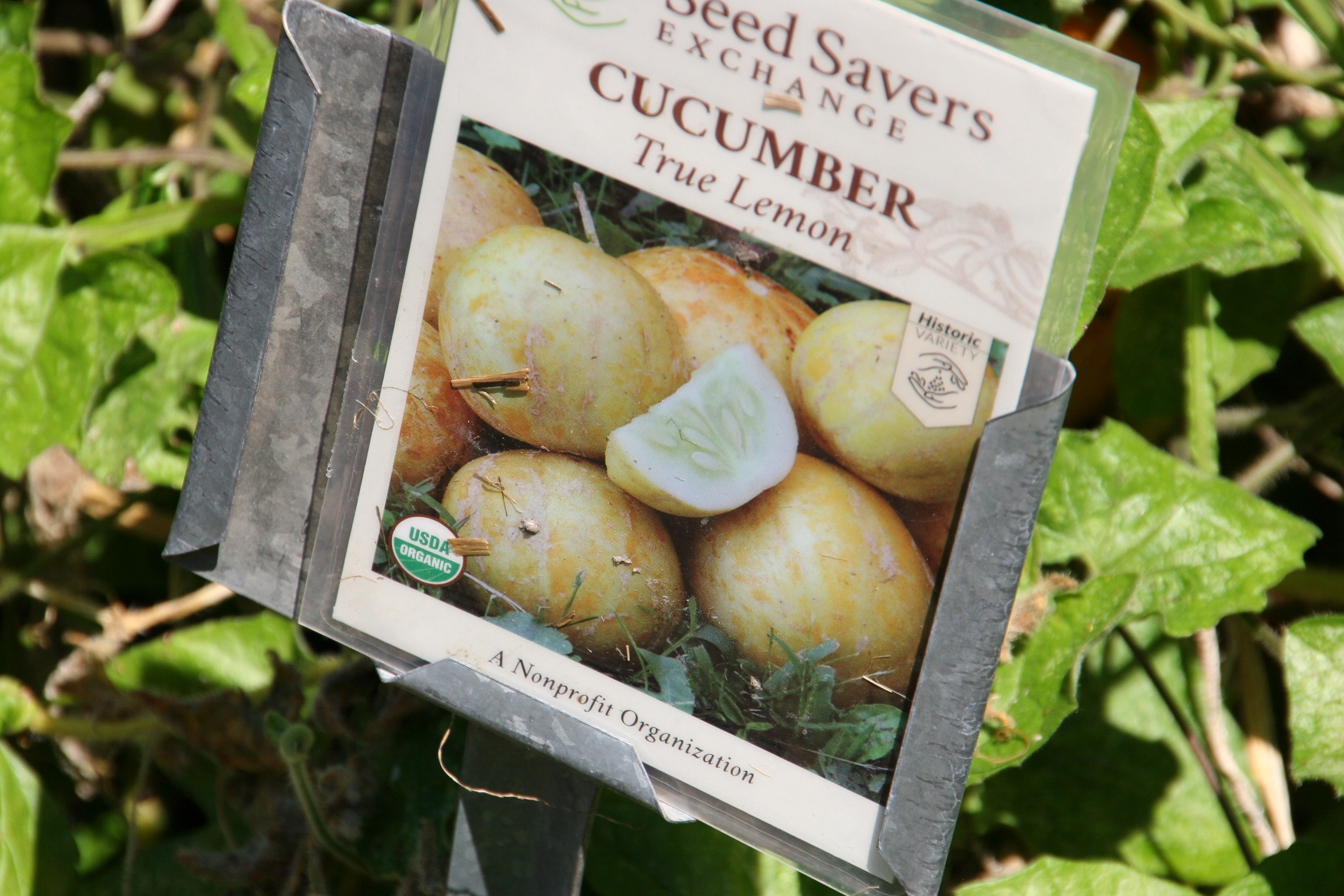
Photographed at Seed Savers Exchange near Decorah, Iowa. The farm specializes in saving heirloom/heritage seeds. (Minnesota Prairie Roots copyrighted file photo October 2018, used here for illustration only)

I just finished reading The Seed Keeper, Diane Wilson’s debut novel and winner of the 2022 Minnesota Book Award in the Novel & Short Story category. I’ve never felt so profoundly and deeply moved by a book rooted in history. Wilson’s writing is like a seed planted, nurtured, then yielding a harvest of insight and understanding.

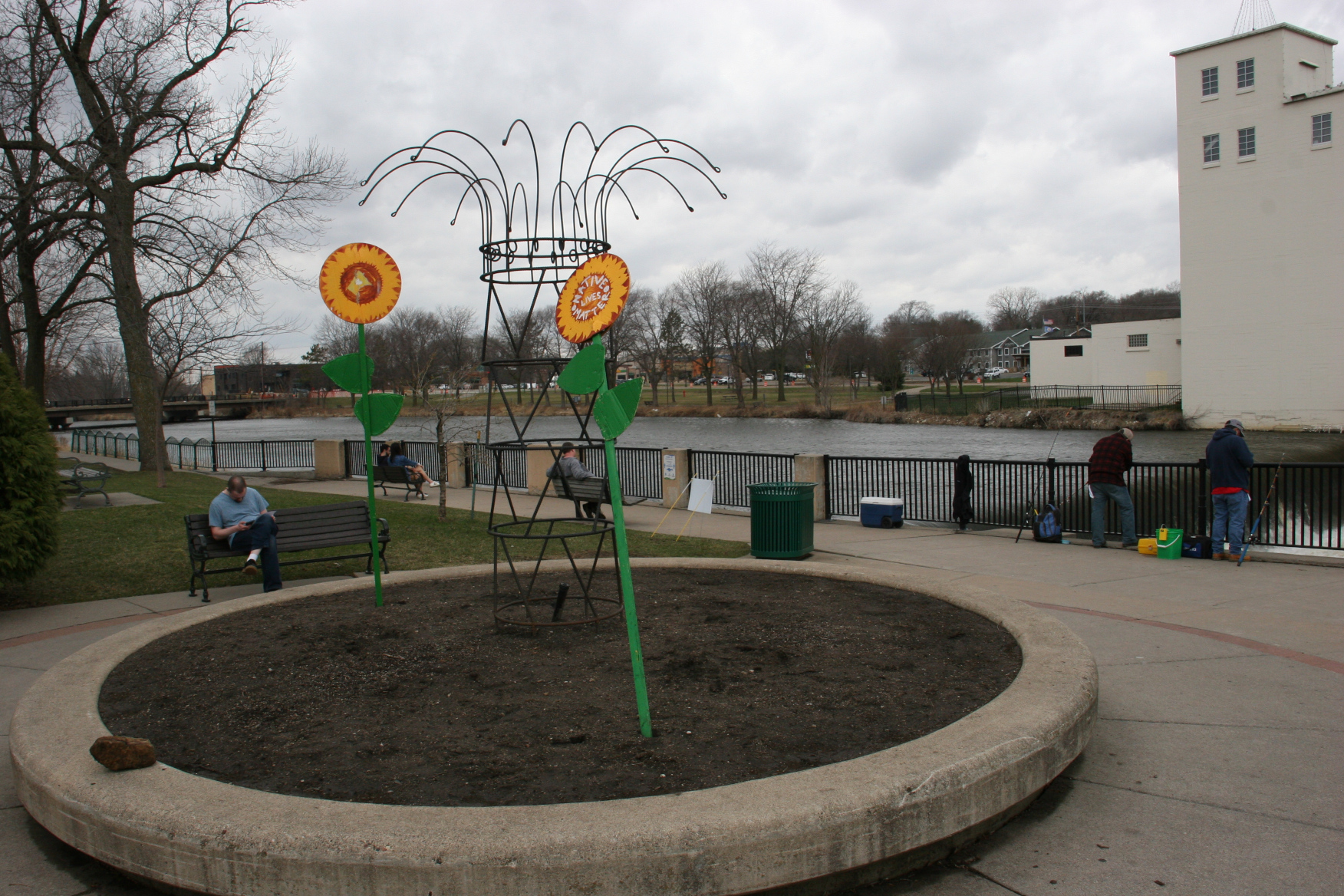
Part of a public art installation at the Northfield Earth Day Celebration in April. (Minnesota Prairie Roots copyrighted file photo April 2022)

Hers is the story of the Dakota people, specifically of several generations of women, The Seed Keepers. Hers is the story of a connection to the land, sky, water, seeds and of reclaiming that relationship. Hers is a story of wrongs done to indigenous people in Minnesota, of atrocities and challenges and struggles. Past and present. Hers is a story of wrongful family separation and of reuniting with family and community.

A full view of the art planted in Northfield for Earth Day. (Minnesota Prairie Roots copyrighted file photo April 2022)

At the core of Wilson’s novel are the seeds. The seeds, stored in a willow basket, and eventually passed through the generations. The seeds that not only provided food for their families’ survival, but held the stories of Dakota ancestors and a way of life.

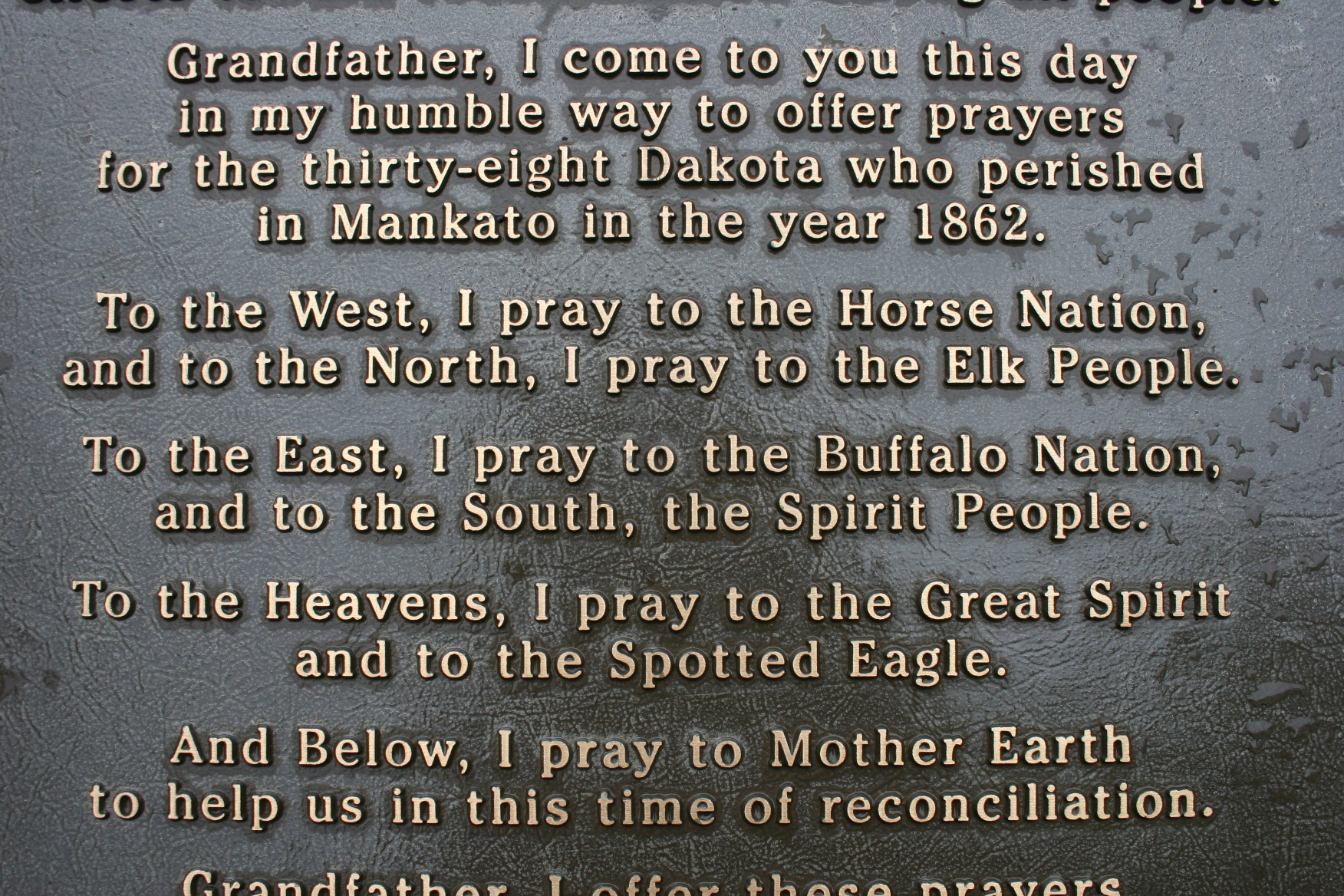
Words on a marker in Reconciliation Park in Mankato where 38 Dakota were hung on December 26, 1862. Wilson references the park, and the theme of forgiveness, in her novel. (Minnesota Prairie Roots copyrighted file photo May 2012)

The subject of this book holds personal interest to me because of its setting in southwestern Minnesota, site of The US-Dakota War of 1862. Wilson covers that war, including the hanging of 38 Dakota warriors in Mankato. As a native of Redwood County, I studied that war, even researched and wrote a term paper on the topic some 50 years ago. But I expect if I read that paper now, I would find many inaccuracies. My writing was shaped by the White (settlers’) narrative without consideration of the Dakota. I long ago realized the failings of that narrow-minded, biased perspective.

Even though I wasn’t taught the whole story, at least I was aware of The U.S.-Dakota War of 1862. It was centered in my home region and in neighboring Brown County, where my maternal ancestors fled their rural New Ulm farm for safety in St. Peter. Many Minnesotans, I’ve discovered, are unaware of this important part of our state’s history.

The Seed Keeper, though fictional, reveals just how devastating this war was to the Dakota people in removal from their native land, in their imprisonment and in efforts by Whites to control and shape them. I found this sentence penned by the author to be particularly powerful: What the white settlers called progress was a storm of fury thundering its way across the land, and none of us were strong enough to withstand it.

This 67-ton Kasota stone sculpture stands in Reconciliation Park in Mankato. It symbolizes the spiritual survival of the Dakota People and honors the area’s Dakota heritage. The park is the site of the largest mass execution in U.S. history. (Minnesota Prairie Roots copyrighted file photo November 2019)

Still, strength sprouts and grows in The Seed Keeper through a riveting storyline that stretches back to Marie Blackbird in 1862 and then follows main character Rosalie Iron Wing through the decades to 2002. Even her name, Iron Wing, evokes strength and freedom. Rosalie marries a White farmer, births a son and her two worlds collide.

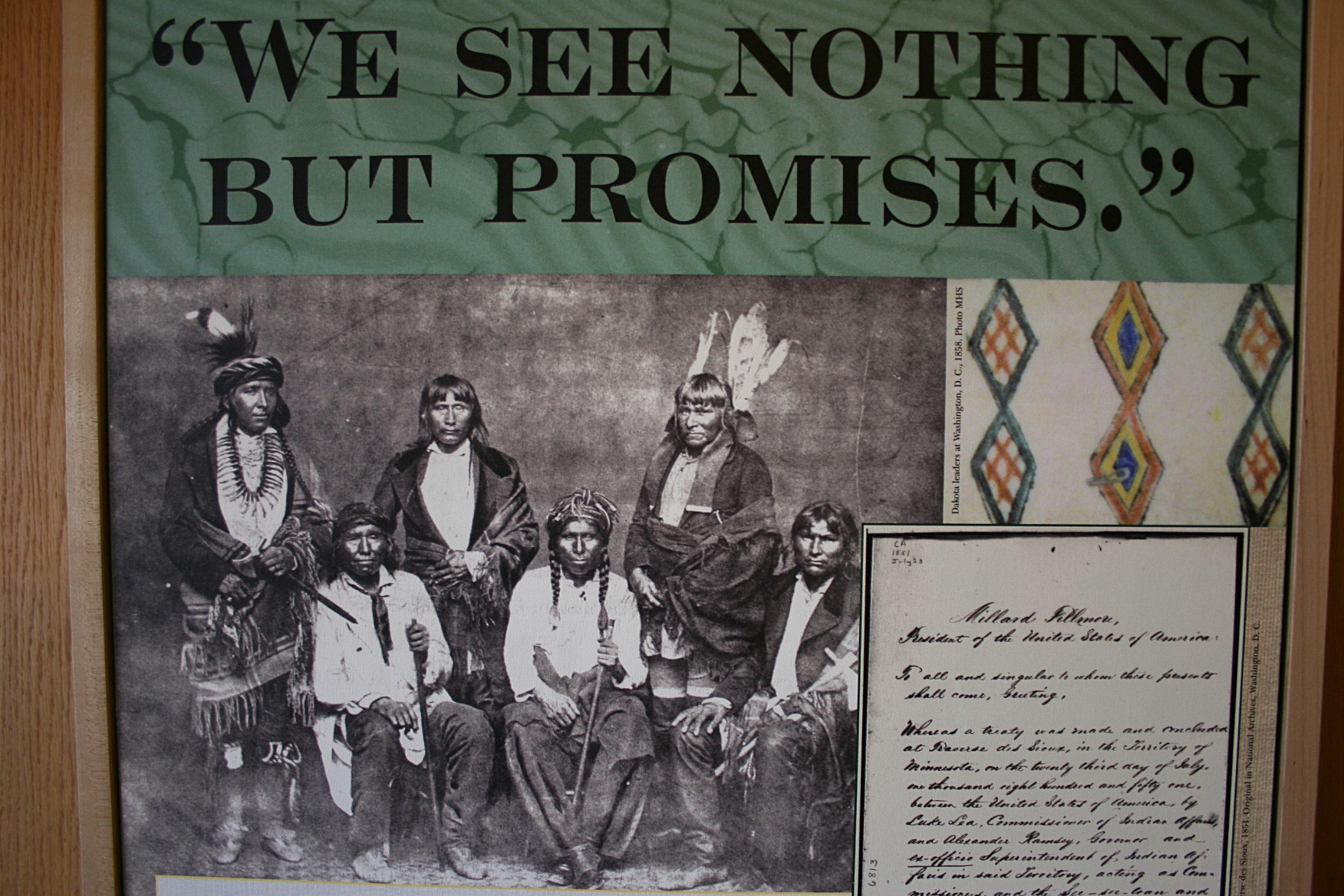
A photo panel at the Traverse des Sioux Treaty Center in St. Peter shows Dakota leaders photographed in Washington D.C. in 1858. The photo is from the Minnesota Historical Society. The quote represents the many broken treaties between the Dakota and the U.S. government. (Minnesota Prairie Roots file photo 2013)

I was especially drawn to this statement by a Dakota elder in Wilson’s book: People don’t understand how hard it is to be Indian. I’m not talking about all the sad history. I’m talking about a way of life that demands your best every single day. Being Dakhóta means every step you take is a prayer.

Wilson writes with authenticity as a Mdewakanton descendant, enrolled on the Rosebud Reservation. She’s walked the steps of the Dakhóta.

#

TELL ME: Have you read The Seed Keeper and, if so, what are your thoughts? I’d encourage everyone, Minnesotan or not, to read this award-winning novel.

© Copyright 2022 Audrey Kletscher Helbling


Improvements to part of the Laura Ingalls Wilder Historic Highway April 21, 2022

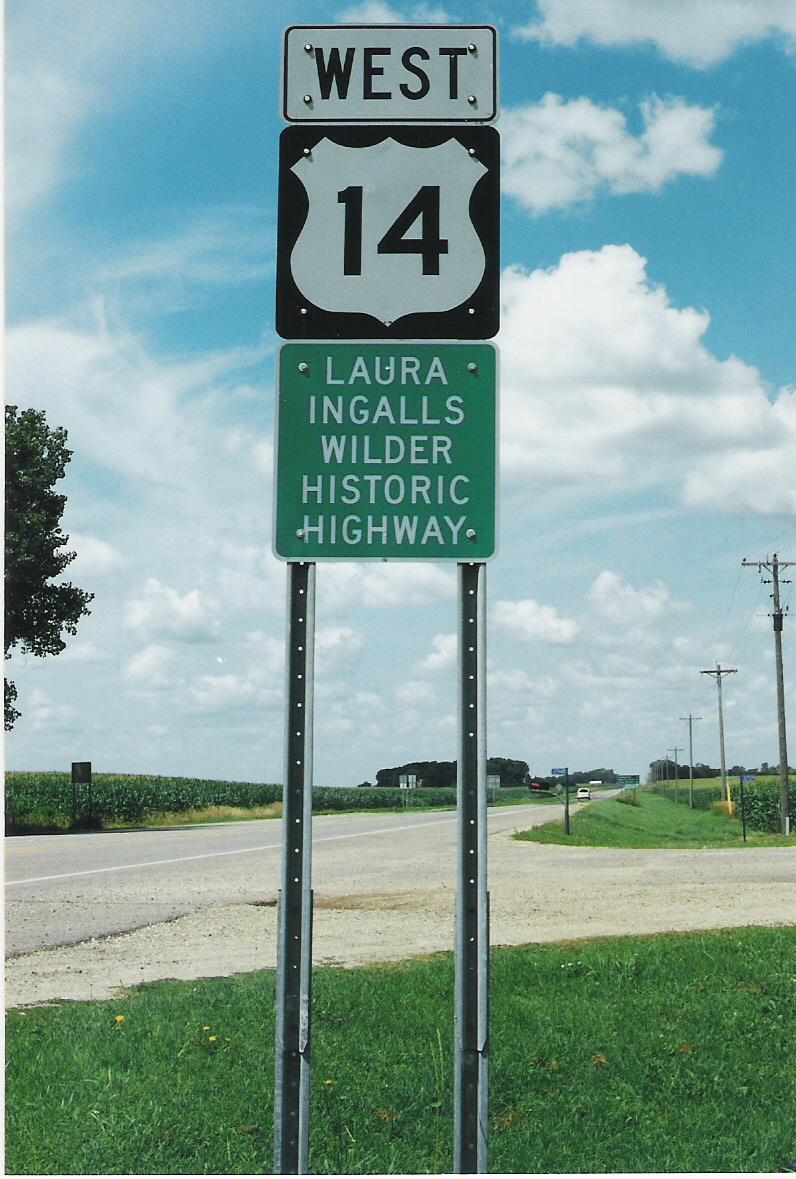
U.S. Highway 14 west of New Ulm in southwestern Minnesota. (Minnesota Prairie Roots copyrighted file photo)

IF YOU’RE A FAN of the “Little House on the Prairie” television series, you will recognize these town names: Walnut Grove. Sleepy Eye. Mankato. In the TV version, the Charles and Caroline Ingalls family lived in Walnut Grove, but also traveled to Sleepy Eye and Mankato. In her books, Laura Ingalls Wilder doesn’t write about journeying to either town from Walnut Grove. Hollywood added its creative perspective, including a setting that is not exactly accurate in its depiction of the prairie. I know this area well. My hometown of Vesta lies 20 miles north of Walnut Grove on the mostly flat prairie of big sky and wide open spaces.

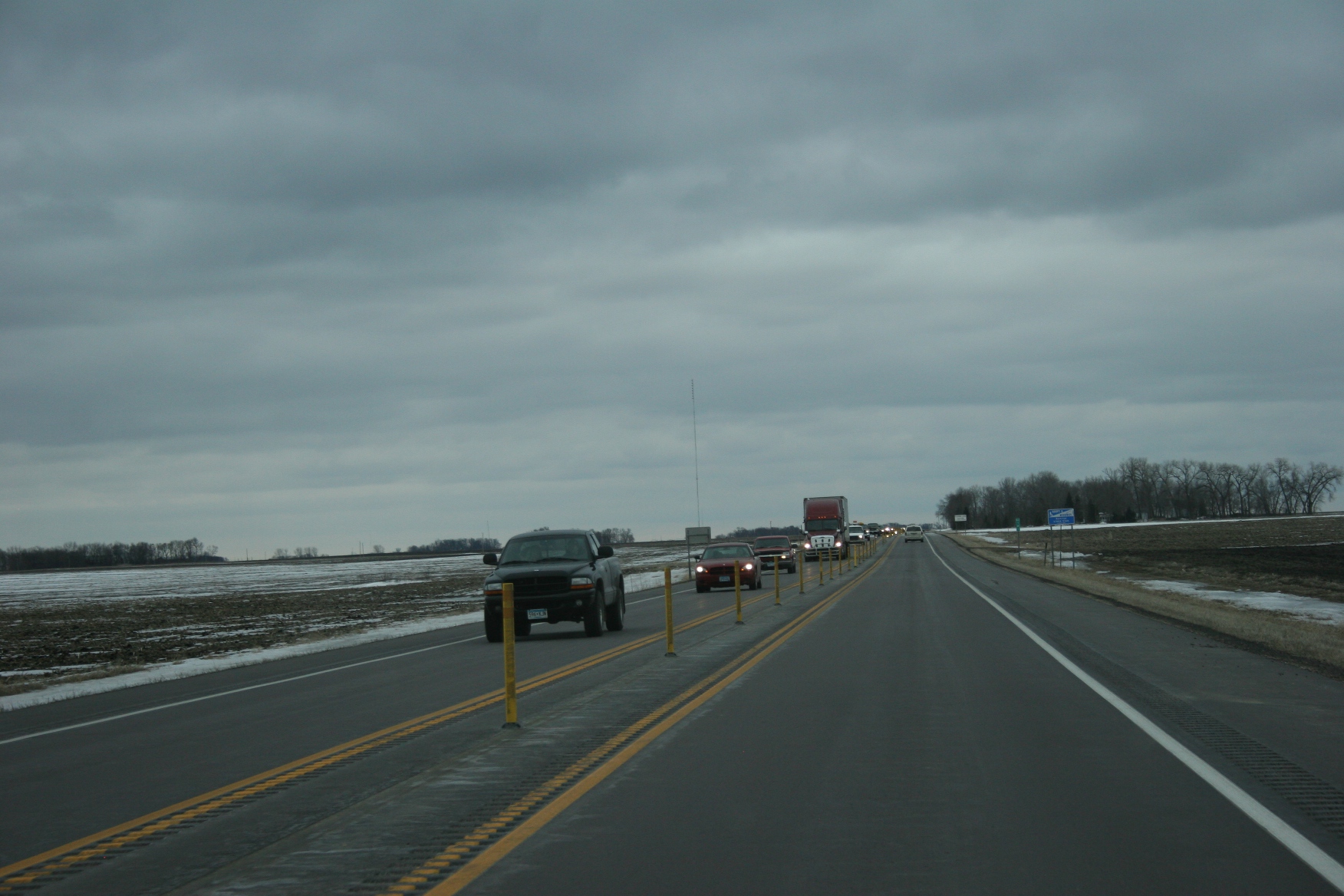
Heavy traffic on U.S. Highway 14 between Nicollet and North Mankato in March 2013, before that section of two-lane expanded to four-lane. (Minnesota Prairie Roots copyrighted photo 2013)

The trip back to Redwood County from my Faribault home takes me along U.S. Highway 14, also known as the Laura Ingalls Wilder Historic Highway. That road passes through Mankato and Sleepy Eye and many other communities into the heart of rural Minnesota, along a particularly dangerous stretch of roadway. Highway 14 has/had a reputation for above average deadly crashes. That’s no surprise given the narrow lanes carrying heavy traffic volumes.

West of Nicollet, signage warns drivers that Highway 14 goes back to two-lane. It’s at this point where the current four-lane expansion begins to New Ulm. (Minnesota Prairie Roots copyrighted file photo December 2016)

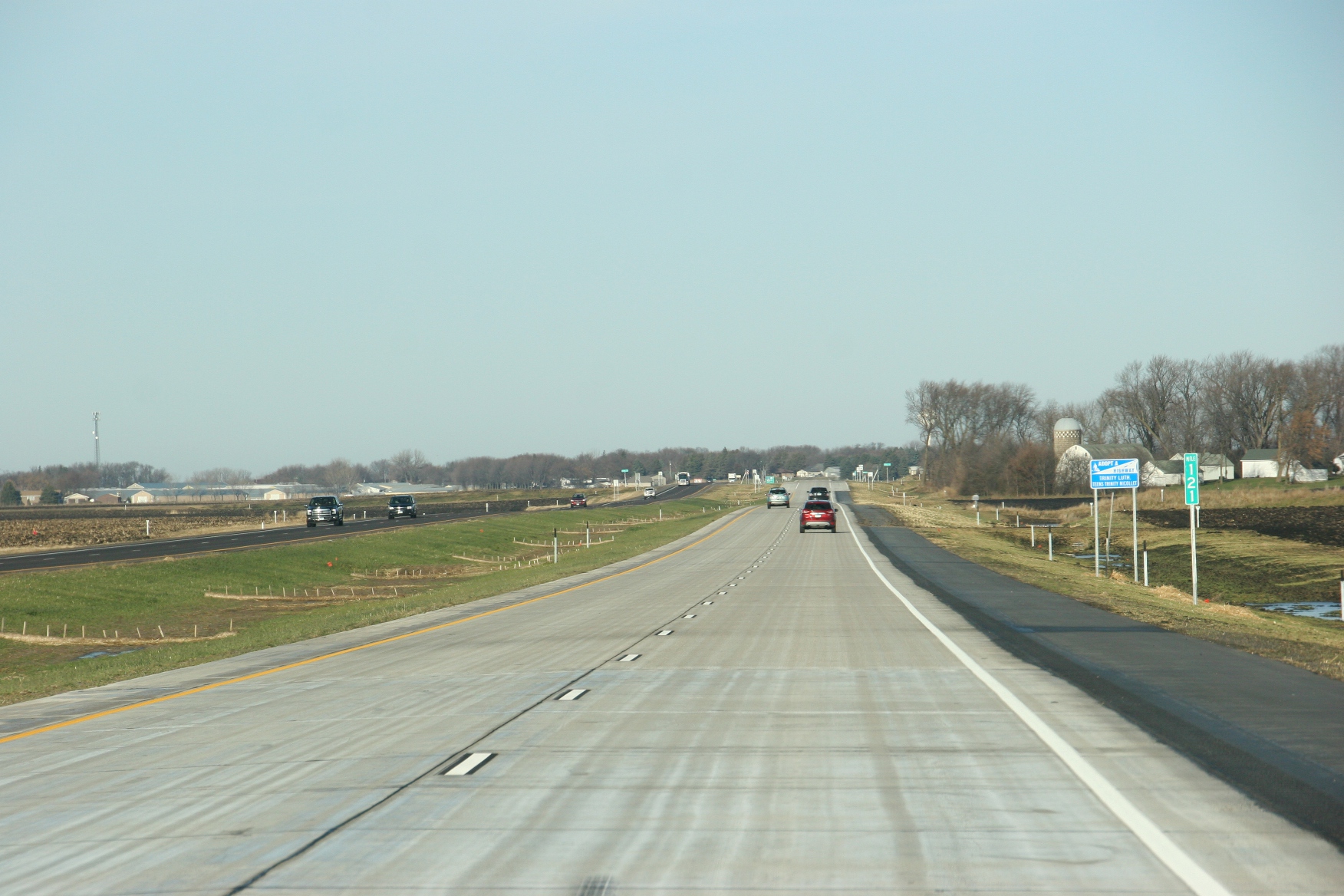
But that is all changing. Several days ago, government officials and others gathered for a ceremonial event to kick off a two-year road construction project that will replace 12 miles of two-lane roadway between Nicollet and New Ulm with a four-lane road. It’s about time. This is the last stretch of two-lane converting to four-lane from Rochester to New Ulm.

Westbound on Highway 14 heading to Nicollet from Mankato. (Minnesota Prairie Roots copyrighted file photo 2016)

I don’t get back to southwestern Minnesota all that often anymore, just for the occasional funeral or family gathering. But I’m thankful that come October 2023, the drive between Nicollet and New Ulm will be easier, safer, faster. Just like it is now between Mankato and Nicollet.

Once west of New Ulm, Highway 14 will remain the same. Narrow. Well-traveled. Not particularly safe. But for today, I’m grateful for the improvements to 12 miles of a route the Ingalls family didn’t follow, but which many fans of “Little House on the Prairie” travel today en route to Walnut Grove.

© Copyright 2022 Audrey Kletscher Helbling
 

In New Ulm: George’s Ballroom, when the music stops April 19, 2021

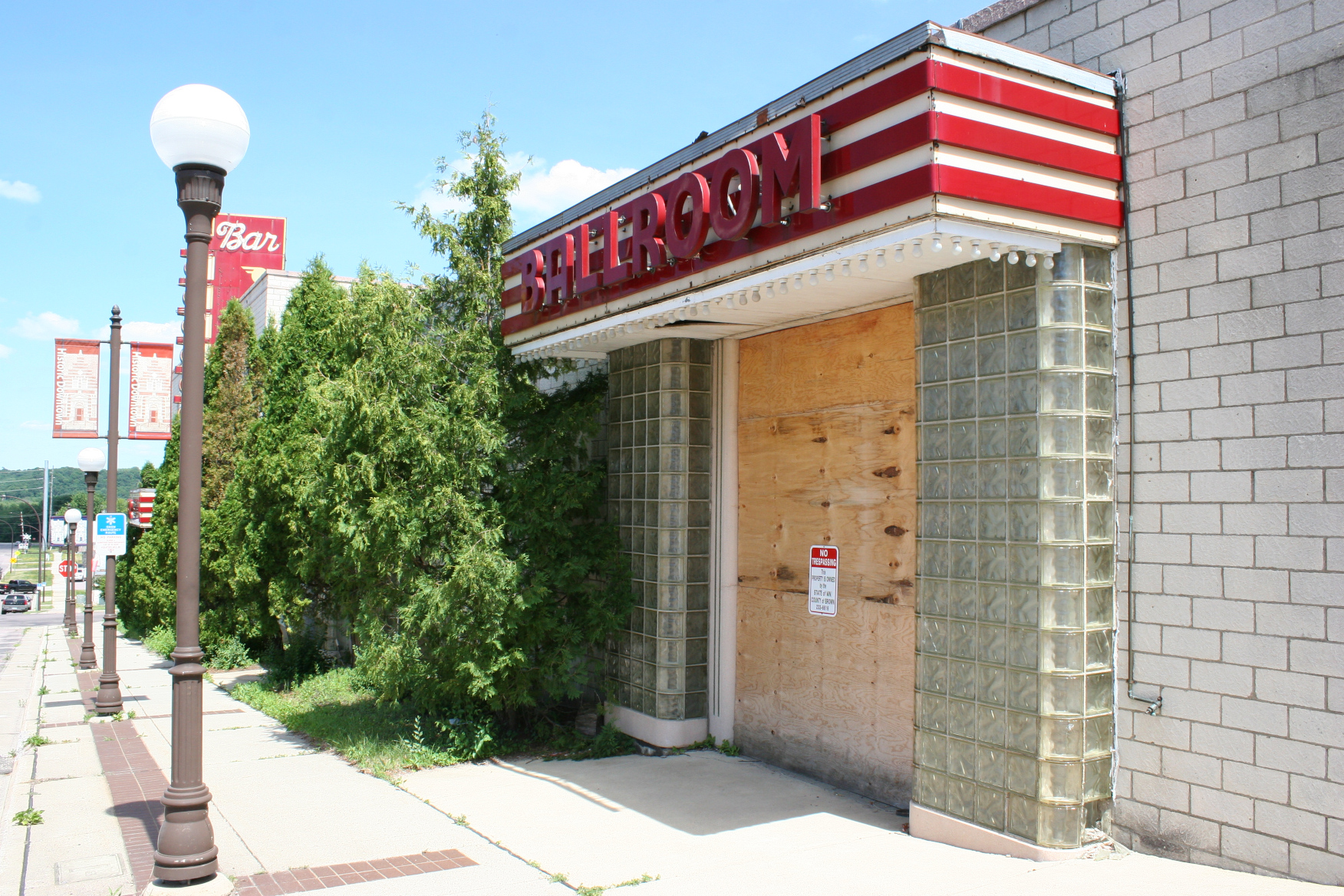
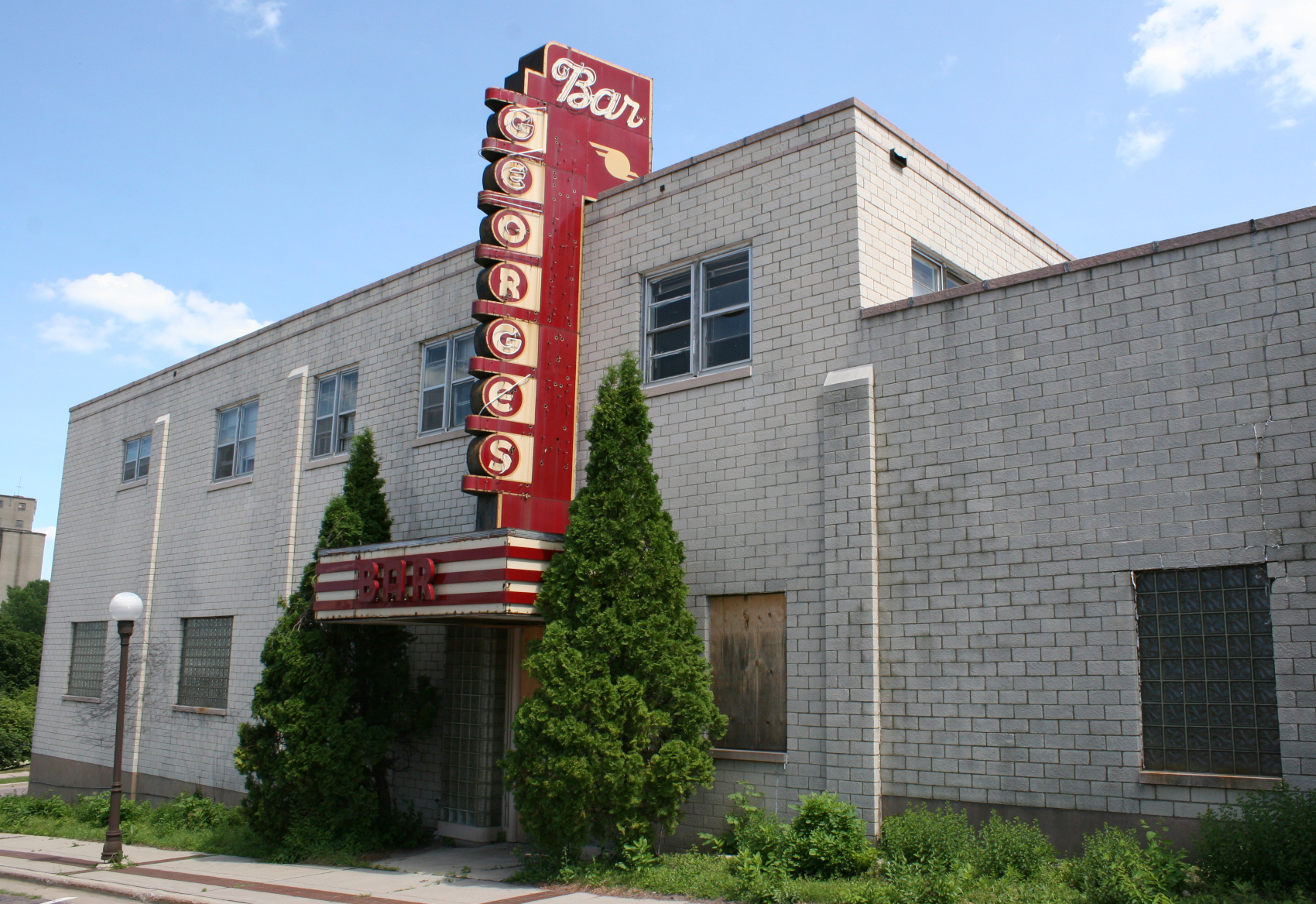
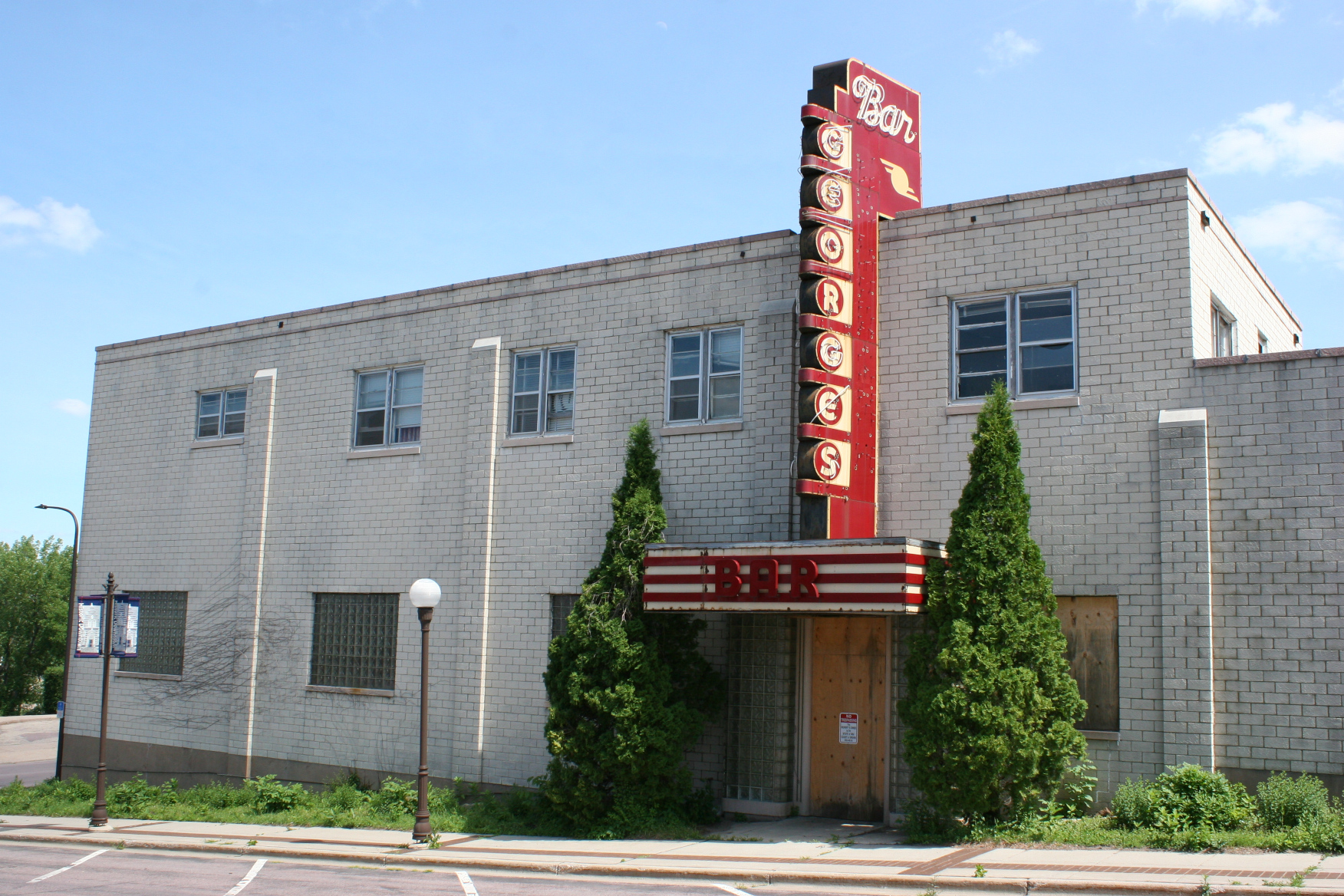
The boarded entrance to the long-closed George’s Ballroom in New Ulm. Minnesota Prairie Roots file photo June 2020.

I CAN ALMOST HEAR the rhythmic oom-pah-pah of the polka, see the couples twirling across the scuffed wooden dance floor, smell the scent of whiskey poured from bottles hidden in brown paper bags.

George’s, on the corner of Center and German Streets, also housed a bar and, at one time, a bowling alley. Minnesota Prairie Roots file photo June 2020.

Across Minnesota, ballrooms once centered Saturday evenings with wedding receptions, concerts and parties celebrating milestones. The Blue Moon Ballroom in Marshall. The Gibbon Ballroom, site of Polka Days, in Gibbon. The Pla-Mor Ballroom in Rochester. George’s Ballroom in New Ulm. And many others.

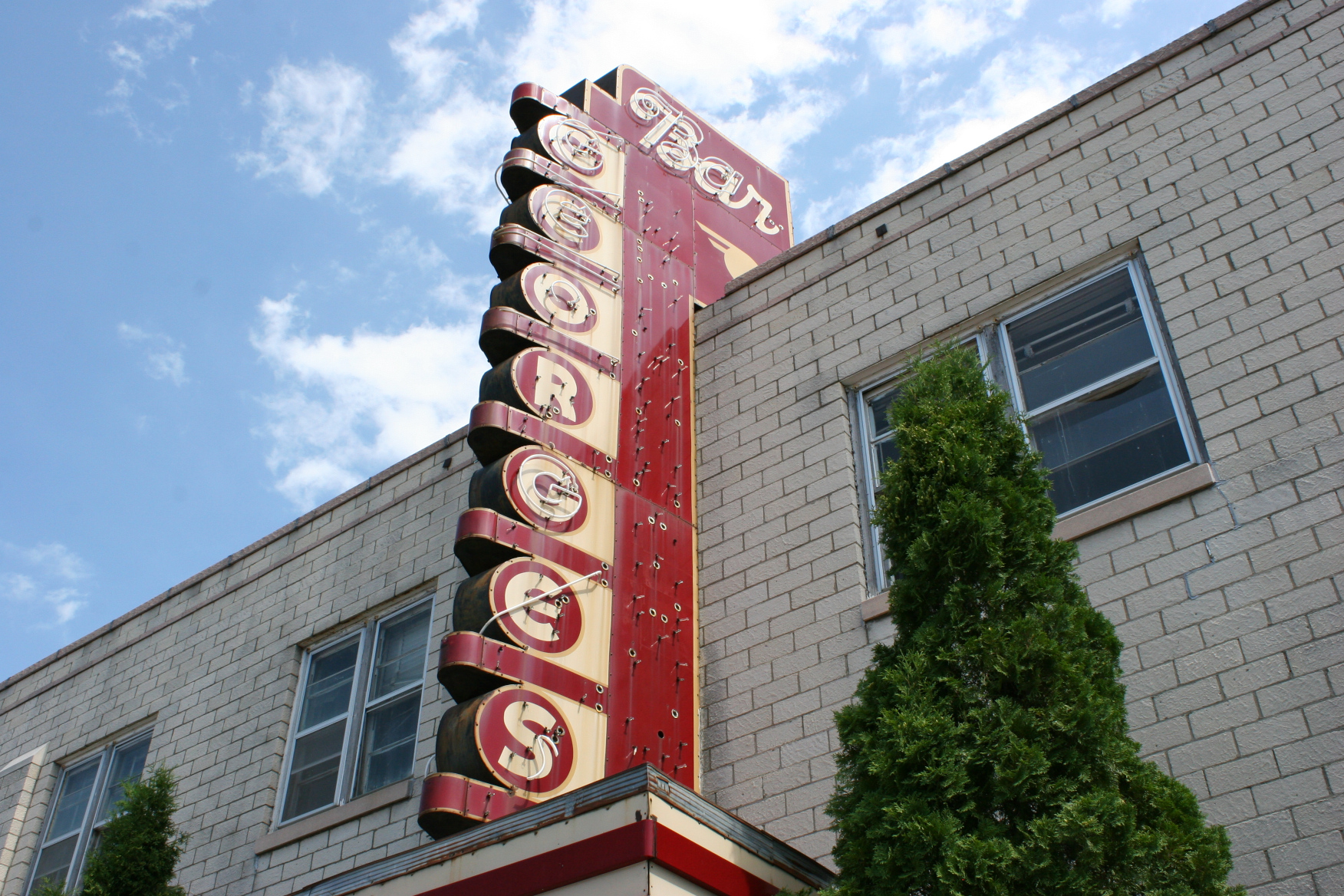
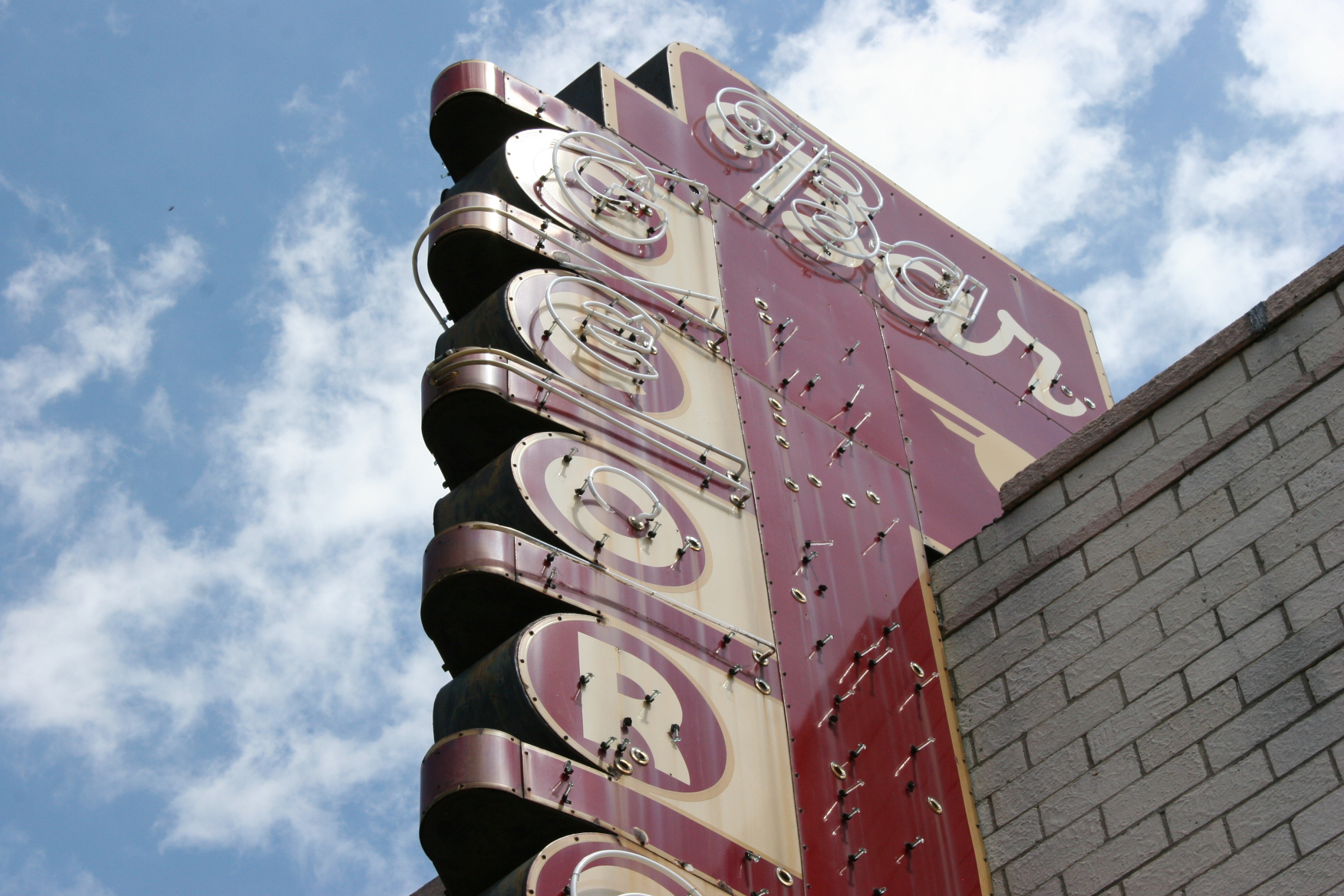
The historic marquee marks George’s Ballroom. What a beautiful piece of art. Minnesota Prairie Roots file photo June 2020.

Now most of these entertainment venues are shuttered. Abandoned. Or gone. The places of memories shared in stories. The places of memories photographed. A bride tossing her bouquet. A couple wrapped in each other’s arms. A trio wildly whirling in The Chicken Dance. My parents met at a dance in a southwestern Minnesota ballroom in the early 1950s. So many Minnesotans hold ballroom memories.

The bar entrance is here, the ballroom entry to the right. Minnesota Prairie Roots file photo June 2020.

Last summer while in New Ulm, I photographed the exterior of George’s Ballroom, an art deco style brick structure built in 1947 by George Neuwirth. The facility, which could hold up to 3,000 guests, once served as this community’s celebration and concert hub. Lawrence Welk, Glen Miller, The Six Fat Dutchmen and other big name bands played here.

George’s closed in 1991, reopened for awhile under new ownership and then shuttered again—permanently—in the early 2000s. Property taxes went unpaid. Options expired.

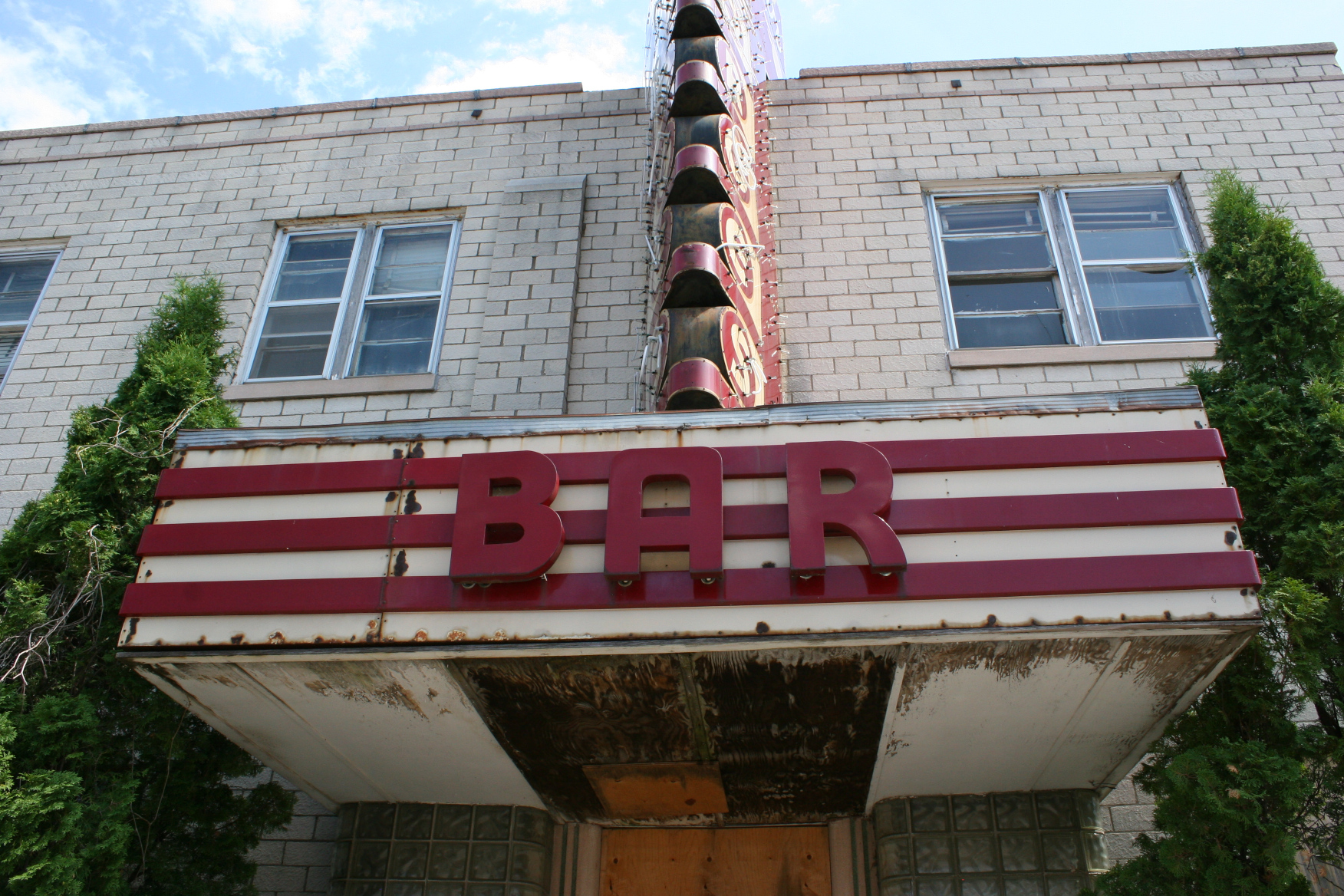
Now, nearly 20 years later, the former dance hall faces likely demolition, according to media reports. Cost to restore the ballroom is estimated at $5 million. Cost to demolish it, $1 million. That’s a lot of money. But when you’re dealing with mold from water damage, asbestos and other health and safety issues, costs climb quickly.

Here you can see some of the damage, underneath that BAR sign. Minnesota Prairie Roots file photo June 2020.

All of this saddens me. I love historic buildings. They’re often well-built and hold important historic, community and personal importance. But I am also a realist who recognizes that not everything can be saved.

The marquee first caught my photographic interest. Minnesota Prairie Roots file photo June 2020.

I do hope, though, that the George’s marquee and signage—which drew me to photograph the building in the heart of downtown New Ulm—will be saved. It sounds like that’s the plan. I hope the historic art can be incorporated into an outdoor public space rather than tucked inside, mostly unseen and under appreciated. People need easy access to George’s memorabilia. To photograph. To reminisce. To remember the Saturday nights of Big Bands and polkas and partying with family and friends. With a little creative thinking, George’s can continue to draw locals and others, adding another attraction to a community that excels as a destination city.

TELL ME: What would you do with George’s Ballroom and/or the marquee and signage? I’d love to hear your creative ideas and/or your memories of George’s or other ballrooms.

© Copyright 2021 Audrey Kletscher Helbling


Alley art in New Ulm April 9, 2021

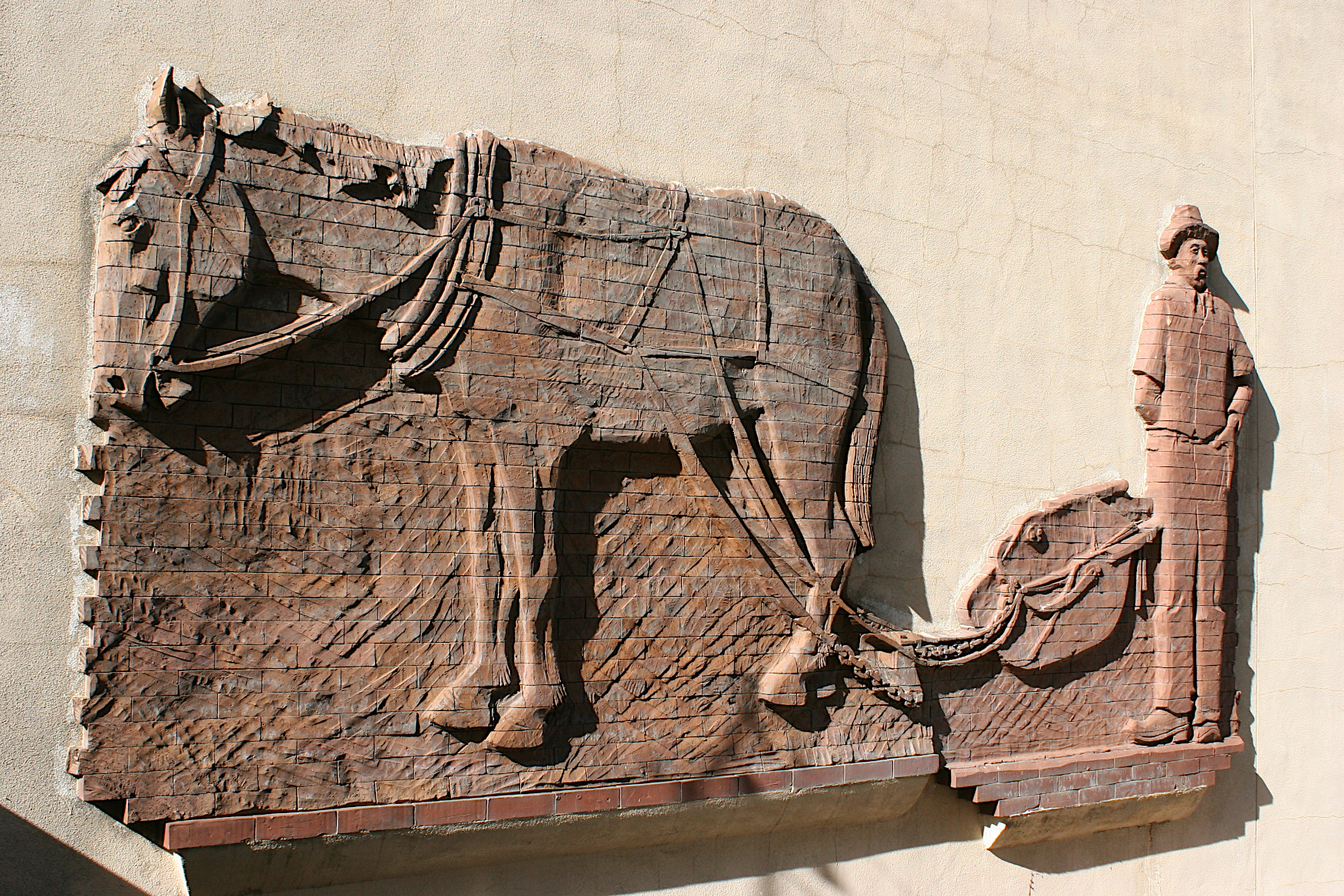
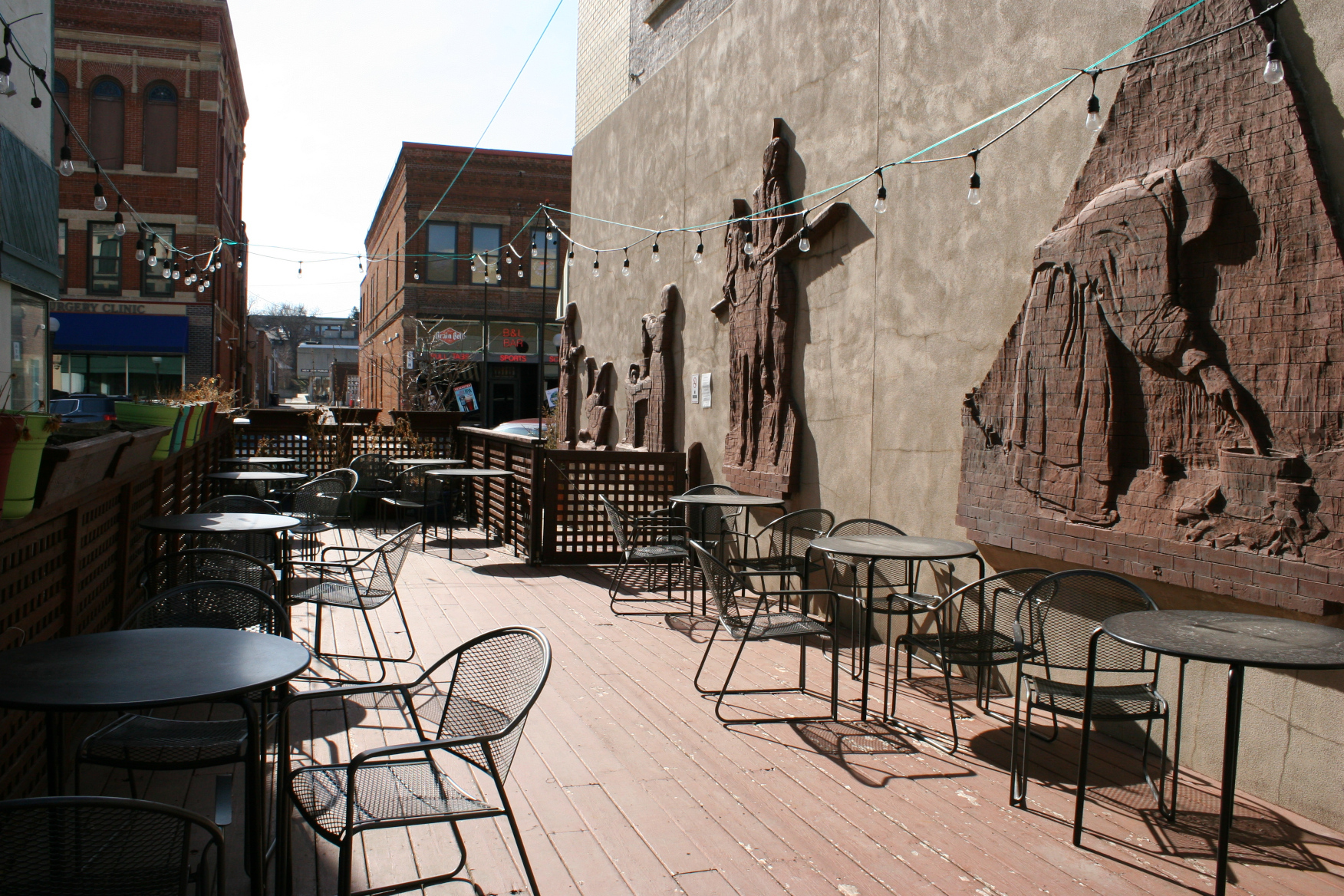
One of several brick sculptures on the side of a building along North Minnesota Street in downtown New Ulm.

I CALL IT ALLEY ART. That tag in no way diminishes its value. Rather, the moniker fits the public art I’ve discovered in alleys, most recently in downtown New Ulm.

Part of an art installation at Lola, an American Bistro.

During a brief stop in this southwestern Minnesota city, Randy and I walked several blocks along the north side of Minnesota Street, popping into The Grand Center for Arts & Culture and also Antiques Plus of New Ulm. Mostly, though, we simply followed the sidewalk with me pausing whenever I found something of photographic interest.

A view of the brick sculptures looking from the end of a deck toward Minnesota Street. The art depicts life in the region in the 1850s.

I’m always delighted when I find the unexpected. And I found that along Minnesota Street in the form of outdoor public art. As an appreciator of the arts, especially easily accessible public art, I get excited about such creative installations.

The finds I feature here represent only a sampling of art you can enjoy in New Ulm. These three were new to me, although they likely have been around for awhile. Brief online searches yielded no information.

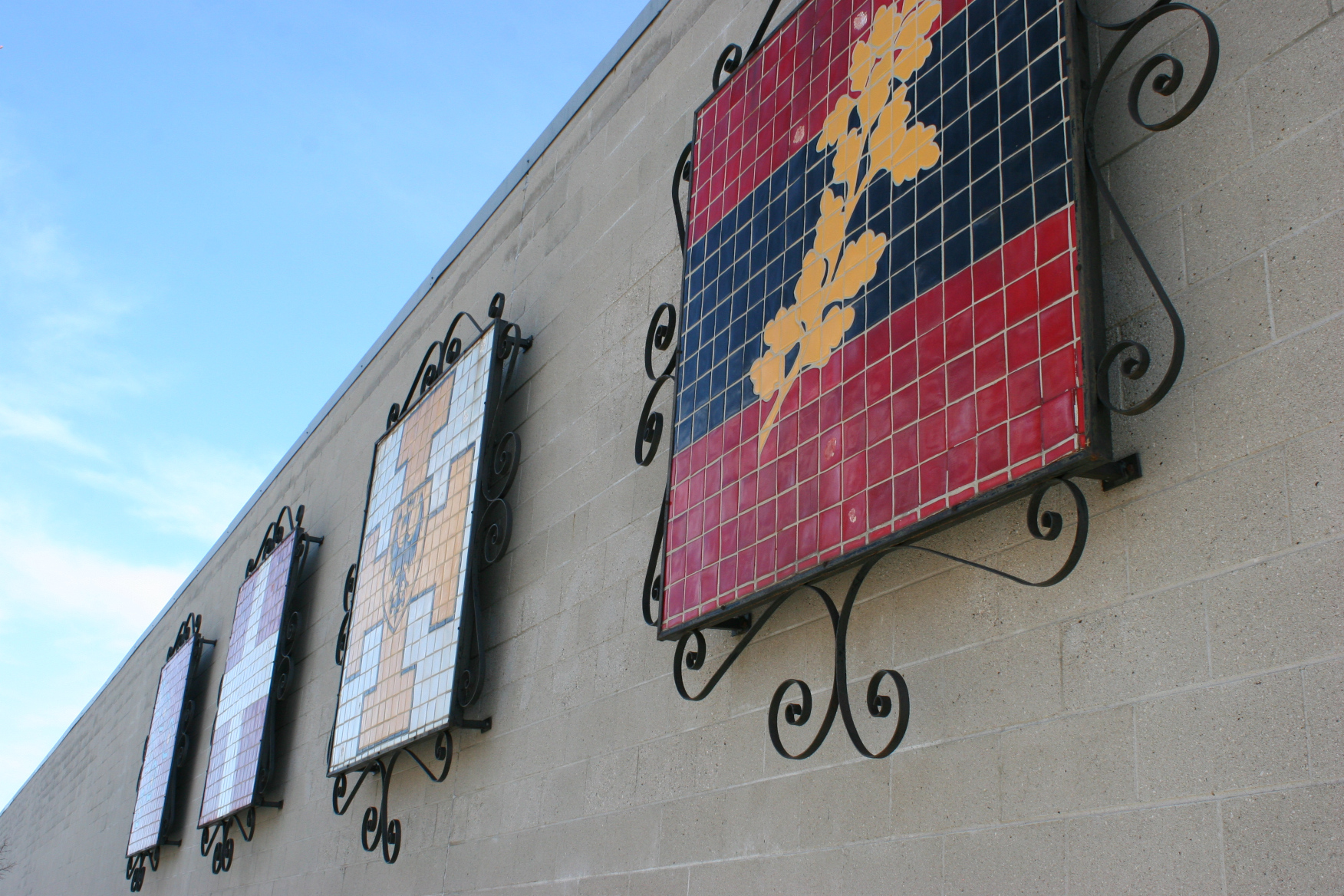
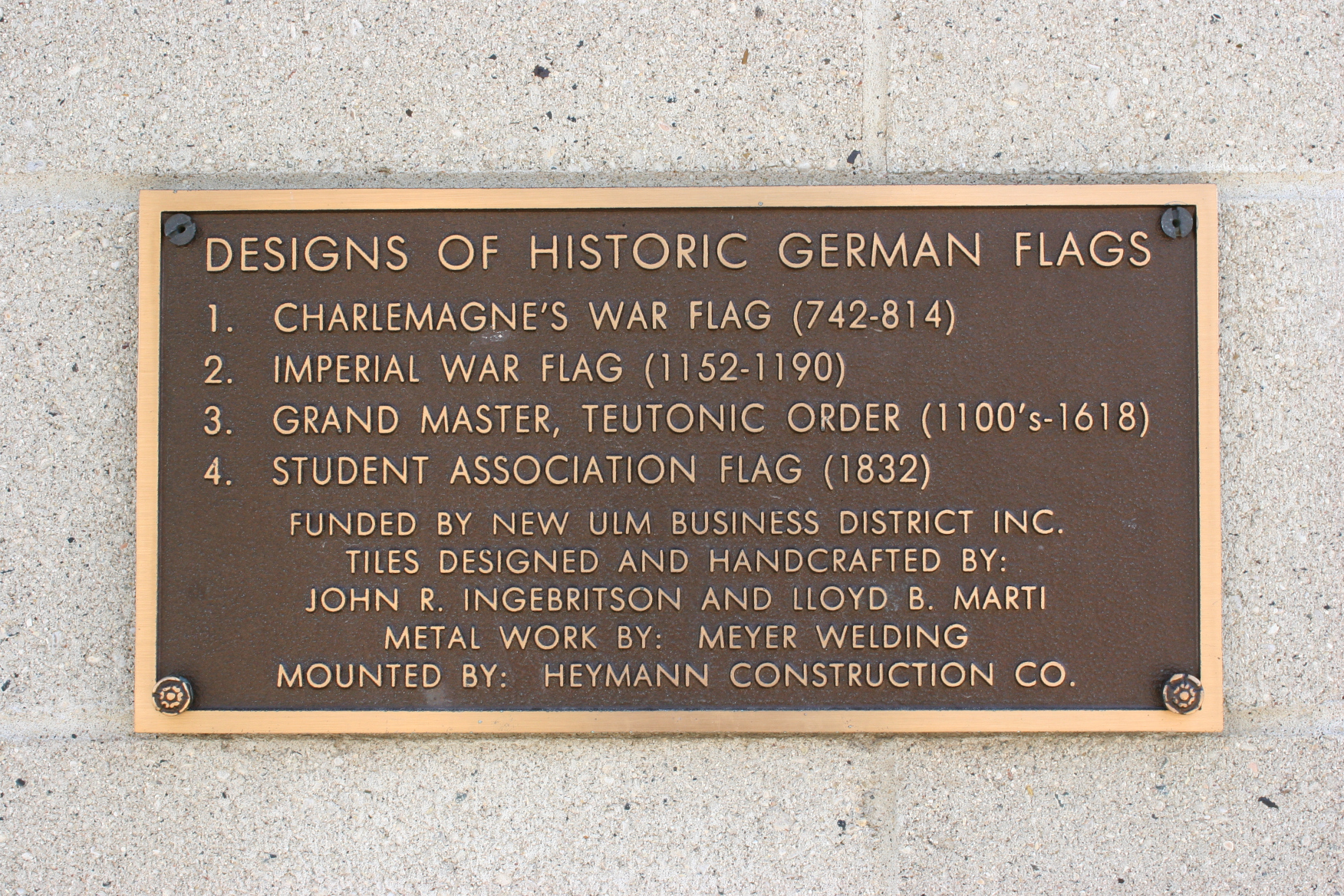
Historic German flags created from handcrafted tiles.

That doesn’t matter as much as my reaction to, and appreciation of, this art. Here were history and heritage. Creative expression. Art which enhances New Ulm and the experiences of visitors like me. Hopefully locals, too.

I considered the early settlers to this region, including the maternal side of my family with roots in neighboring small town Courtland. Generations of the Bode family still live in the area. Drop that German name in New Ulm and locals will recognize it.

Information about the tile flags on the side of a building along Minnesota Street.

I considered, too, the German heritage of this city. Tourism is based primarily on that heritage.

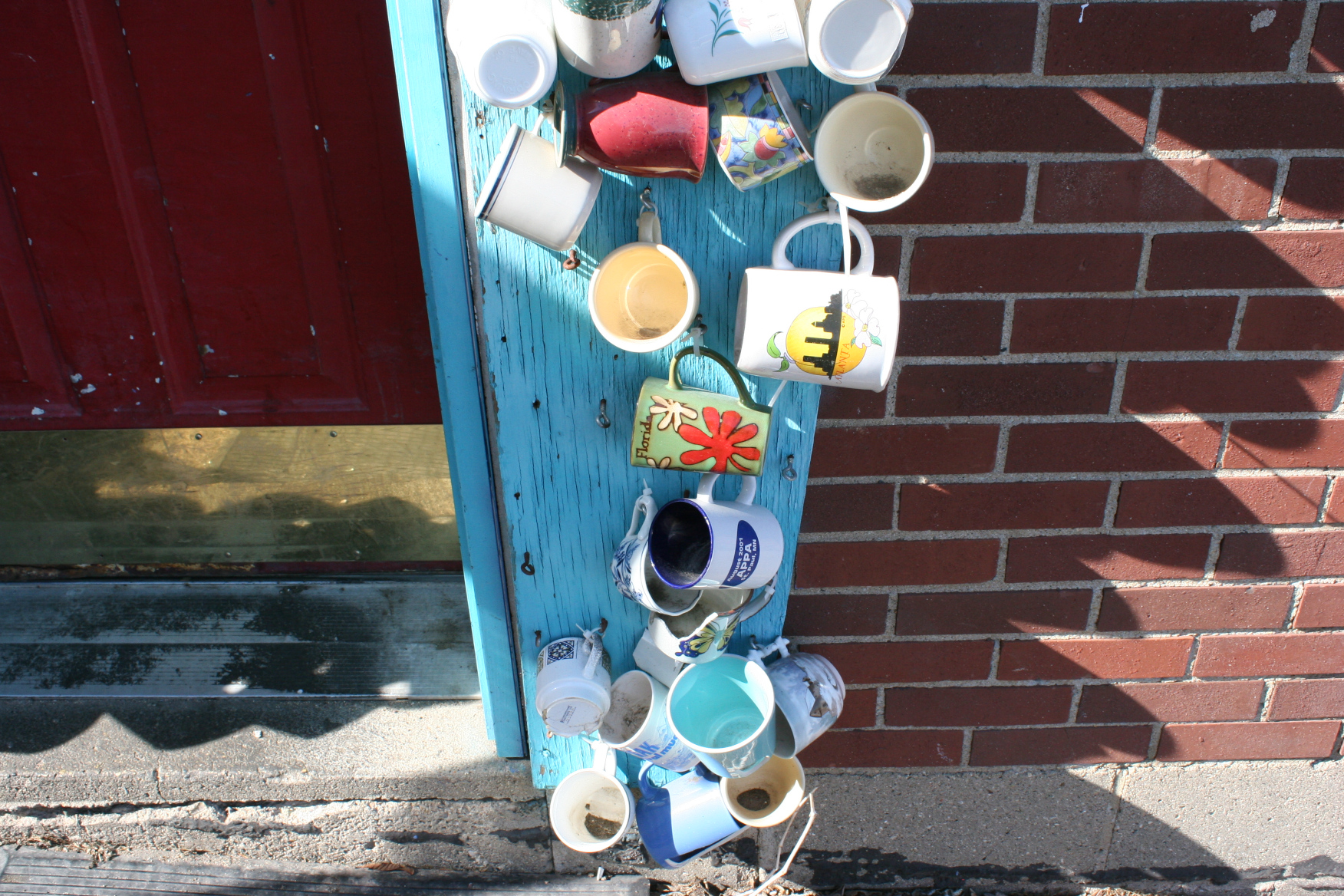
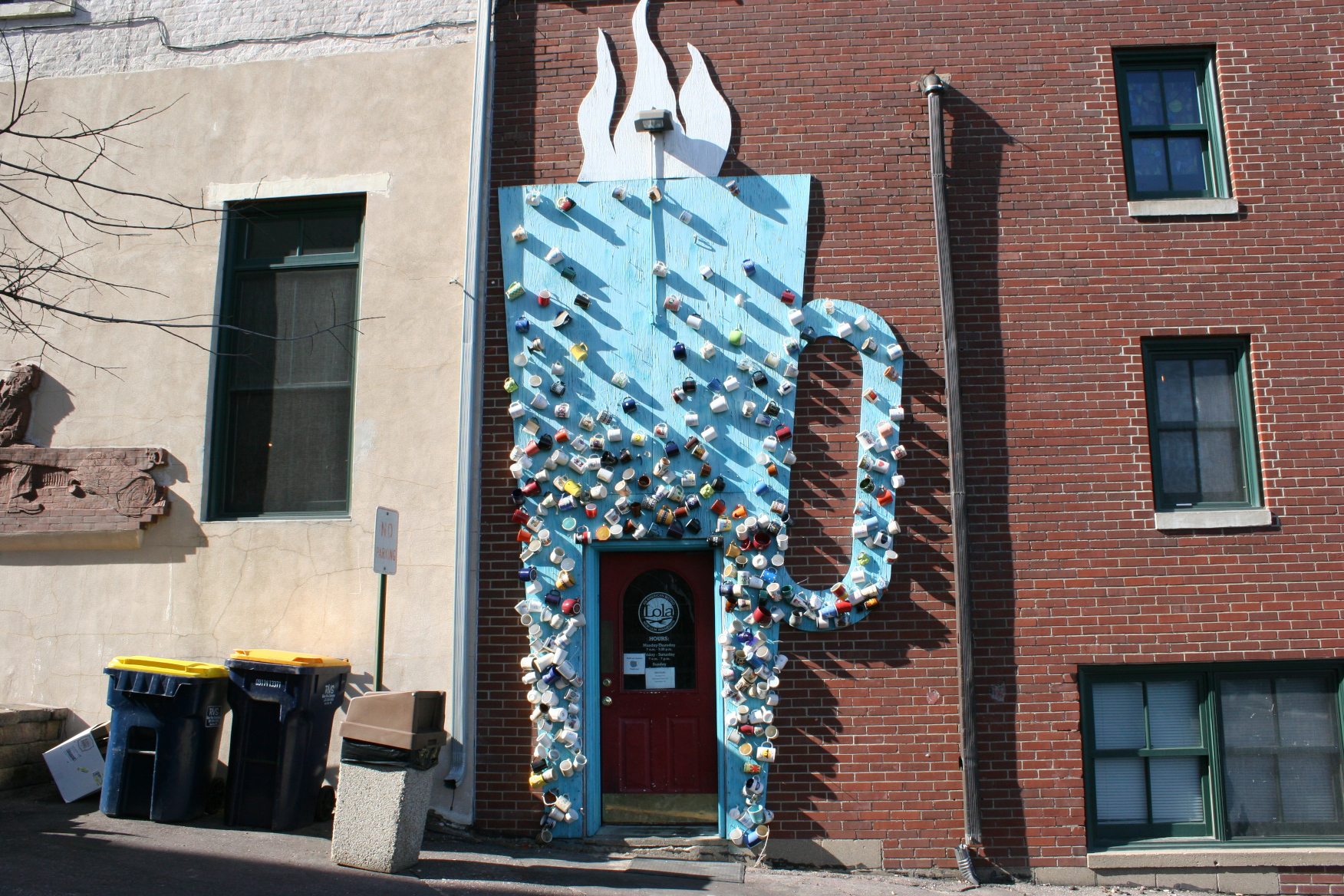
The mug art at Lola’s, found in the alley.
Signage on the alley side door. Lola is located at 16 N. Minnesota Street.
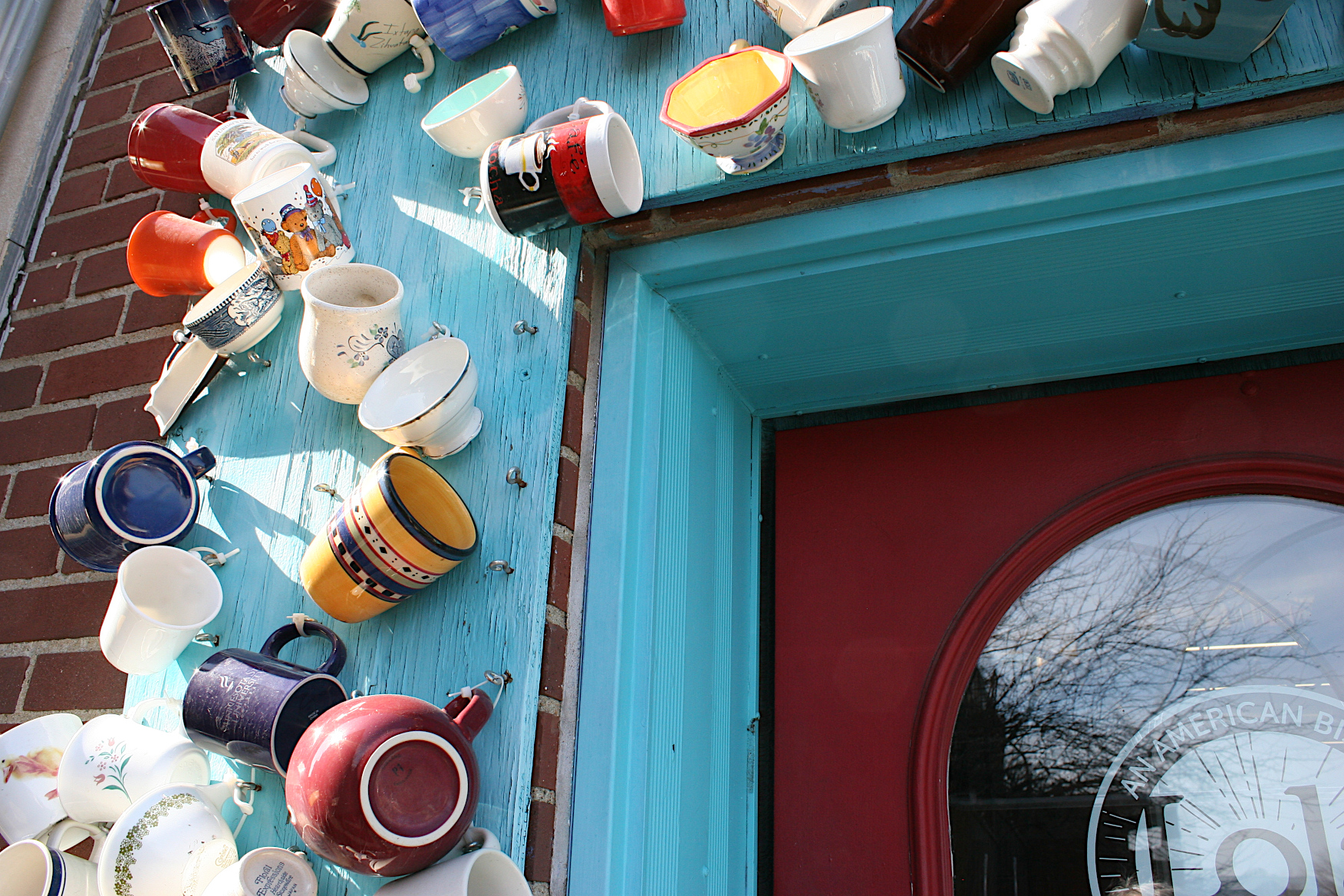
Mugs frame the doorway at Lola, an American Bistro.

And then I considered how a place like Lola, an American Bistro, can carve a food and creative niche here also, drawing my camera eye with an over-sized blue plywood mug constructed around an ally entrance. Mugs attached.

More mugs, up close.

The trio of public art installations I discovered during my short walk along the north side of Minnesota Street added to my appreciation of downtown New Ulm. I expect next time I’ll find even more. If not in an alley, then elsewhere.

FYI: This concludes my recent series of blog posts from New Ulm. Check my March 19, 23 and 24 posts if you missed those. Or type “New Ulm” into my blog search engine to read the many stories I’ve written on this southwestern Minnesota community.

© Copyright 2021 Audrey Kletscher Helbling
 

Along Minnesota Street in New Ulm April 8, 2021

The hometown beer showcased on signage on a business along Minnesota Street.

NEW ULM, NO MATTER how often I visit, continues to draw me back. There’s simply so much to see and do here. This decidedly German community is also conveniently located along US Highway 14, the main route we follow from Faribault to my native southwestern Minnesota.

One of many restaurants along Minnesota Street in downtown New Ulm. The Ulmer Cafe features menu items like meatloaf, liver and onions, chicken spaetzle soup and Beef Commercials.

Recently, while returning from a visit with my mom in her Belview care center, Randy and I stopped in New Ulm, the half-way point on our trip. I wanted to see The Grand Center for Arts & Culture. Once we’d viewed the exhibits, we walked along the sunny side of Minnesota Street in the heart of downtown, popping into only one business. We remain COVID-cautious.

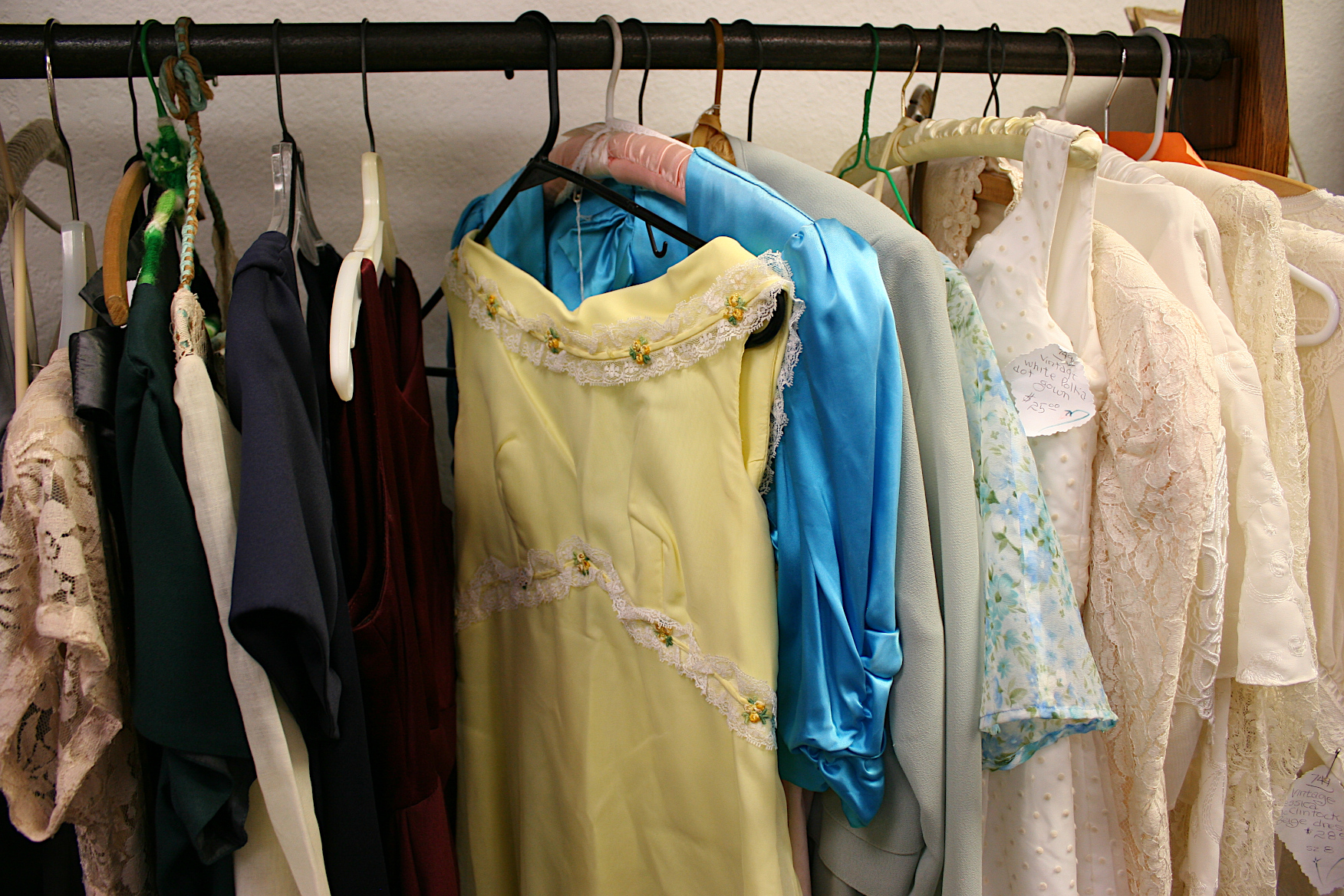
One of several racks of lovely vintage clothing at Antiques Plus. I love the sweet yellow dress.
I was drawn to this artsy fashion display inside Antiques Plus.

With the sun shining and the temp around 60, lots of people were downtown, enjoying an absolutely beautiful Saturday afternoon. We revisited Antiques Plus of New Ulm, a long, narrow shop packed with antiques, vintage finds and collectibles. I found myself once again drawn to the vintage clothing. I couldn’t help but think the lovely formal dresses would fly off the racks in the Twin Cities metro given their pristine condition and prices.

Photographed at Antiques Plus.

I also photographed beer cans inside Antiques Plus, including Schell’s. That’s the hometown beer, brewed at August Schell Brewing, the second oldest family-owned brewery in the US, crafting beer since 1860. You can tour the brewery and sample beer. Across town, Schell’s also features a German beer hall style taproom, The Starkeller, offering mostly sour beers.

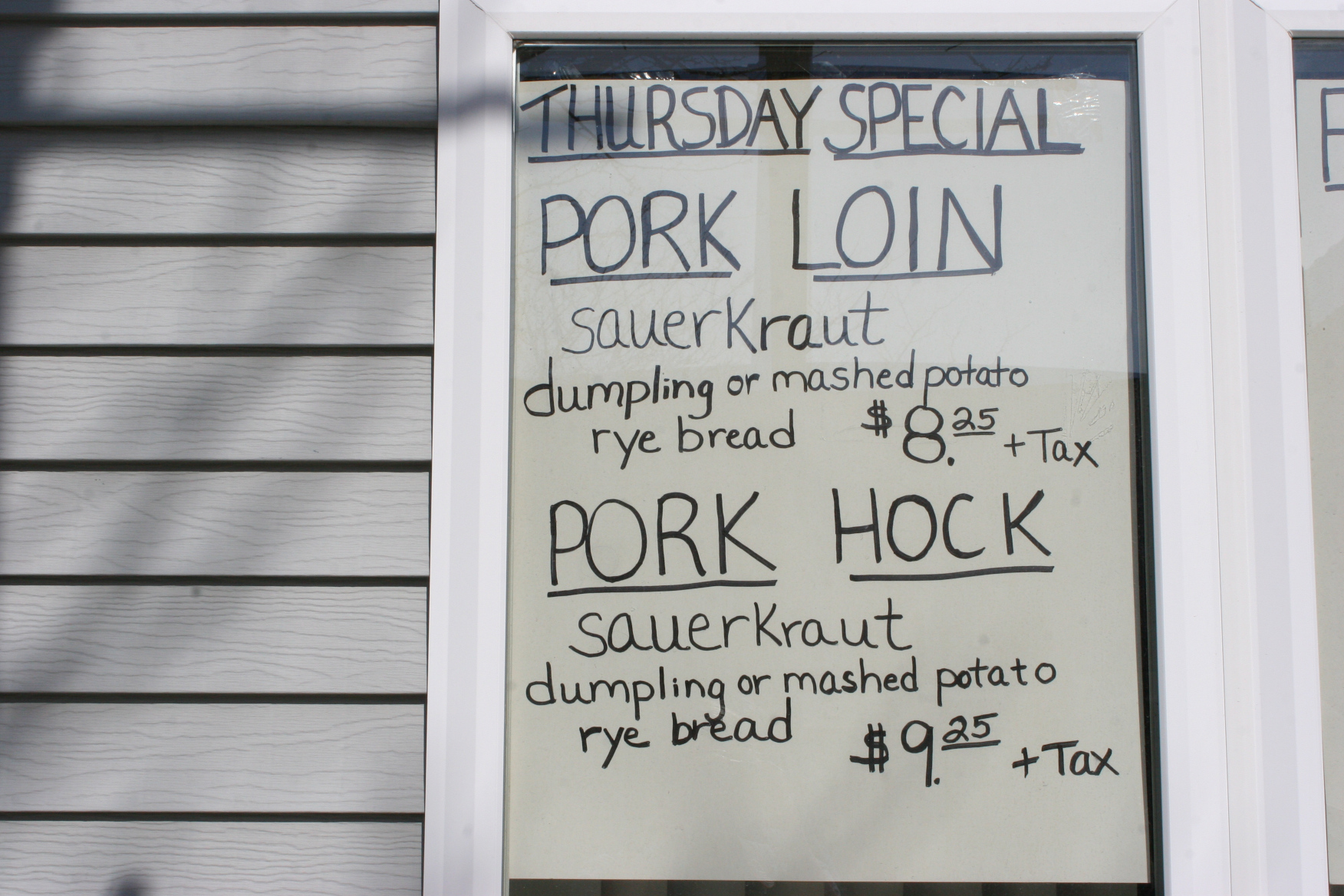
Posted in a restaurant window in downtown New Ulm.

But back to downtown, where you can also find plenty of places to drink and dine. If you appreciate German food, New Ulm offers options. I spotted a handwritten sign in a restaurant window for ethnic meals.

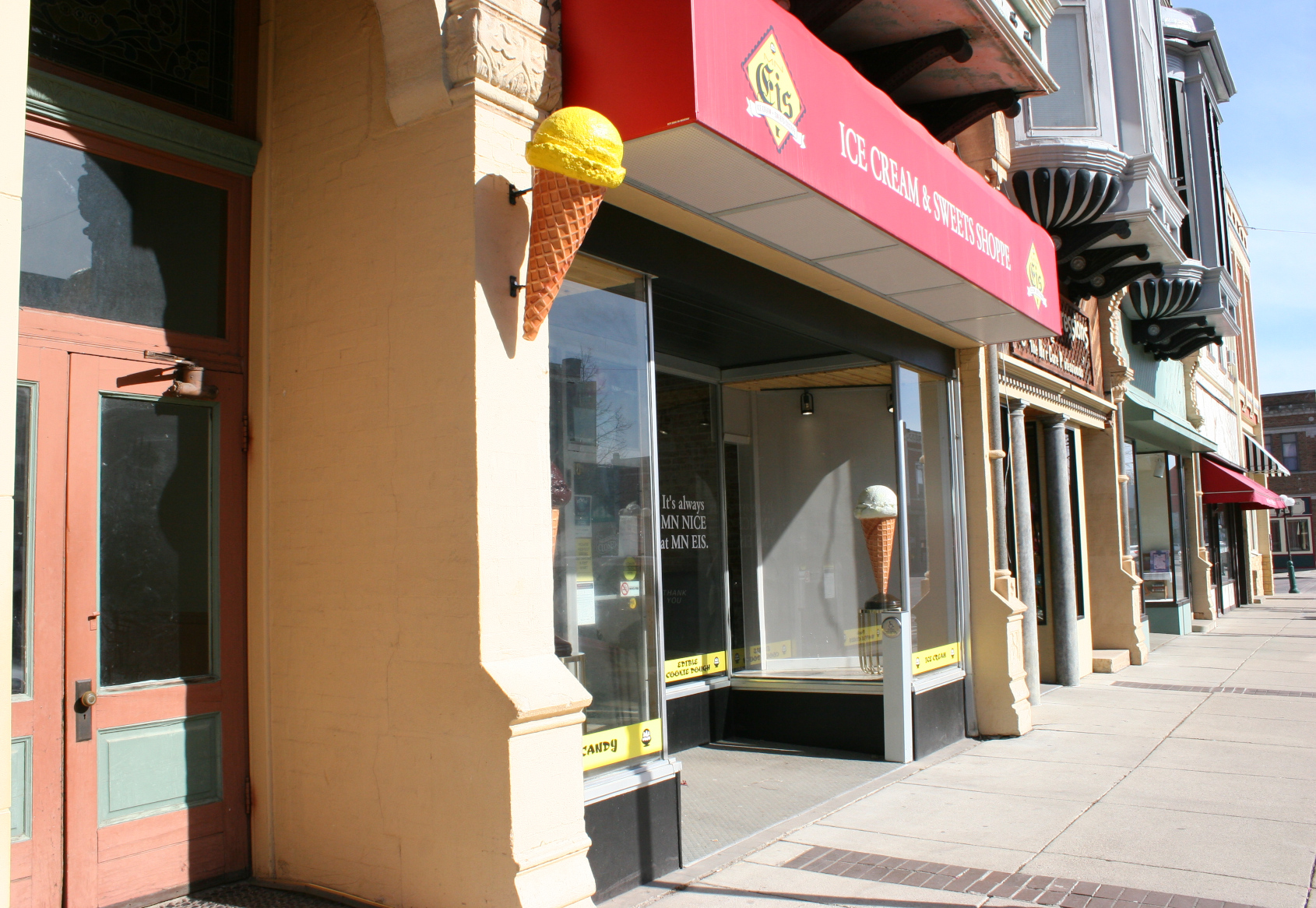
MN EIS serves ice cream and sweets in downtown New Ulm and recently reopened for the season.

I had hoped MN EIS—Ice Cream & Sweets Shoppe would be open. But it remained closed for the season, although it’s since opened. Next time.

Signage remains for this former department store.

While walking along Minnesota Street, we passed the vacated Herberger’s, a regional department store shuttered in 2018. It was a downtown New Ulm anchor for 72 years. The signage remains, a reminder of a once thriving business.

Roger’s is sandwiched into a small space.

Signage at Roger’s Barber Shop also caught my interest on this business wedged between buildings.

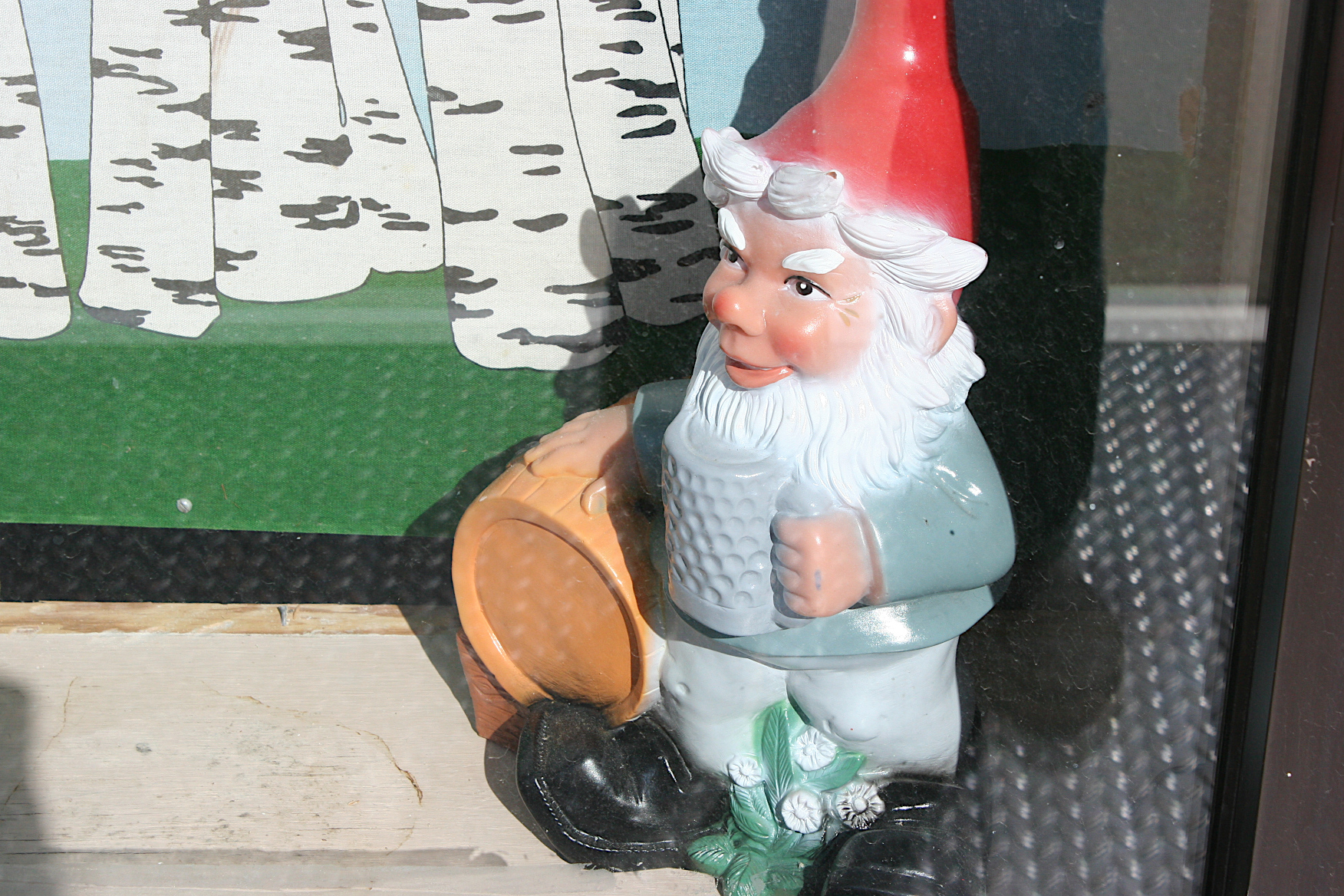
Gnomes are a “thing” in New Ulm. I spotted this one in a downtown window display.

I made three more discoveries while on our several-block walk along one side of Minnesota Street. Check back to see what I found as I conclude my series on New Ulm.

TELL ME: Have you visited New Ulm? If yes, what would you recommend seeing/doing while there?

© Copyright 2021 Audrey Kletscher Helbling


Oh, the joy of the unexpected in a Minnesota arts center March 24, 2021

Jimmy Reagan’s art splashes across a tote and backpack for sale in a New Ulm arts center gift shop.

IT WAS THE VIVID COLORS which first caught my eye inside The Grand Artisan Gift Shop in downtown New Ulm. Bold hues flashed, accented by strong lines of color, as if the artist had pulled every crayon from a box of crayons and dashed them across the canvas.

Backpacks feature Jimmy Reagan’s colorful art.

This is the work of Jimmy Reagan, a 27-year-old St. Paul artist influenced by the likes of Picasso and van Gogh. His art graces backpacks, totes, sweatshirts in this gift shop on the first floor of The Grand Center for Arts & Culture. You’ll find a wide selection of art from other creatives here also.

Reagan’s work “offers him a means to illustrate his perspective of the world,” according to a promotional bio I picked up in the gift shop. This young man views life through the lens of autism. He was diagnosed with complex autism as a toddler.

These sweatshirts, with Jimmy’s signature “tick marks” (left), hang in the entrance to The Grand Kabaret, an entertainment space in The Grand.

Since 2009, he has created art and is internationally-recognized. I admire Reagan, who rose to the challenges of his autism to express himself and to communicate. Strong colors, simple images and signature “tick marks” (those short dashes of color) define his art. I, for one, am a fan.

The colorful bathroom with the canvas for chalk art above.

I’m also a fan of the public restroom on the second floor of The Grand. It’s not often I write about or photograph restrooms, although two photos I took of “The View from Our Window: Grant Wood in Iowa” rest area along I-380 northbound near Cedar Rapids published in the book, Midwest Architecture Journeys, edited by Zach Mortice and printed by Belt Publishing.

A sampling of the temporary art.

The Grand restroom in New Ulm is not artist-themed, but rather an artistic canvas for anyone who steps inside. The lime green walls first caught my eye as I walked past the bathroom. (As a teen, my bedroom was painted a similar lime green.) And then I noticed the chalk art above the tile and thought, what a great idea. Maybe it’s nothing novel for a public bathroom. But it was to me. And, although I didn’t pick up chalk and add to the black canvas, I photographed it. And that, too, is art.

Check back for more photos from downtown New Ulm.

© Copyright 2021 Audrey Kletscher Helbling
 

From New Ulm: The smallest museum in Minnesota March 23, 2021

THE smallest MUSEUM in MINNESOTA is stationed outside The Grand in New Ulm.

OUTSIDE THE GRAND CENTER for Arts & Culture in the heart of downtown New Ulm, I found a most unusual attraction—THE smallest MUSEUM in MINNESOTA.

And when I write “small,” I mean “small.” The enclosed box museum measures 31.75 inches wide x 32.75 inches high x 7.5 inches deep. Just enough space for artists, makers, collectors, culture buffs, writers and historians to create a mini exhibit.

A full front view of the museum shows the compact exhibit space.

I love this concept for its uniqueness and also its public accessibility. Posted outside The Grand, this museum is viewable 24/7. Similar museums, the Hoosesagg Museum (Pants Pocket Museum) and The Smallest Museum in St. Paul, inspired the one in New Ulm. The museum also reminds me of Little Free Libraries.

The top shelf showing cards from Clay Schuldt’s collection.

Local Clay Schuldt curated the first exhibit, “The Stacked Deck,” featuring select playing cards from decks in his long-time collection. His card showcase continues through April 23 and includes a take-home informational sheet explaining his exhibit. For Schuldt, these cards are not just for playing games. He views cards through multiple lenses of art, entertainment, history, storytelling, marketing and more.

More cards inside the mini museum.

This is what I love about creativity. Creatives bring their backgrounds, experiences and individual interpretations into their work. While I considered a deck of cards as just that, a deck of cards, Schuldt views them differently. And now, because of his featured collection and insights, I view cards from a wider perspective.

I look forward to seeing more of these mini exhibits outside The Grand. Creatives, collectors, historians and others are invited to submit museum proposals. You can do that by clicking here and then clicking on the PDF link. Guidelines call for applicants to consider how the proposed exhibit relates to the region, audience engagement and simplicity.

Selected artists receive a $50 stipend for a two-month exhibit.

Please check back one more time as I return inside The Grand Center for Arts & Culture, and two more particularly creative finds. If you missed my first post on The Grand, click here.

© Copyright 2021 Audrey Kletscher Helbling
 

Discovering New Ulm’s The Grand Center for Arts & Culture March 19, 2021

AS SOMEONE WHO GREW UP with minimal exposure to the arts, I feel not so much deprived as deeply appreciative of creativity. I consider myself an artist—of images and of words. To write and to photograph, oh, the joy.

A snippet of an acrylic, “Guitar,” by Caitlin Lang.

I feel gratitude for all the creatives out there who share their talents, whether in published works or performances or art exhibits or whatever in whatever space they choose.

The Grand Center for Arts & Culture in downtown New Ulm.

Recently I discovered a new-to-me center for the arts in New Ulm, a southern Minnesota city known for its German heritage and so much more. Like the Minnesota Music Hall of Fame, the Hermann the German Monument, August Schell Brewery, the Wanda Gag House, the Glockenspiel…small town shops and eateries and, well, enough attractions to fill a weekend.

Beautiful signage and architectural details make this building visually appealing.

During a brief Saturday afternoon stop in New Ulm, my first must-see destination was The Grand Center for Arts and Culture, housed in a former historic hotel in the heart of downtown. The building itself drew my interest with its appealing signage and lovely architectural details.
A portion of the historical plaque outlining the history of the former Grand Hotel, now an arts and cultural center in New Ulm.
A front face plaque summarizes its history. You’ll find such historical info throughout this downtown on plaques, benches and even picnic tables. I appreciate the easy access to history.

Outside the front entry to The Grand Center for Arts & Culture in New Ulm.

Inside the arts center, the first floor features a gift shop brimming with great art and, across the hall, The Grand Kabaret, for entertainment/the performing arts. Downstairs, the basement houses Cellar Press, a letterpress and printmaking studio, which I didn’t see (but must).
Light floods the gallery, on these walls the art of Sam Matter.

A steep flight of stairs leads to 4 Pillars Gallery and studio space on the second floor. The compact gallery, with abundant natural light flowing into the room, feels intimate, inviting, ideal for showcasing art.

Musician portraits by Caitlin Lang.

Caitlin Lang of Springfield and Sam Matter of New Ulm are the current featured artists in a joint mixed media exhibit, “Intentionally Accidental.” Their show runs through April 3.

The bios of Caitlin Lang and Sam Matter, along with a guestbook, sit on a table in the gallery.

What a joy to see the work of these two young artists. Lang specializes in portraits and Matter describes his art as “a small scene from my heart to the viewer.” I love that poetic description.

Sam Matter’s art, created from the heart.

And I love this center for arts and culture, a must-see in New Ulm.

#

FYI: The Grand Center for Arts & Culture is changing its hours starting March 23 and will be open from 11 am – 4 pm Tuesday – Saturday.

#

Please check back for more photos from the arts center.

© Copyright 2021 Audrey Kletscher Helbling