Minnesota Prairie Roots

Writing and photography by Audrey Kletscher Helbling

The dance goes on June 23, 2023

I’ve owned this classical music album since the 1970s. (Minnesota Prairie Roots copyrighted photo June 2023)

IT’S BEFORE 8 AM, and I am twirling across my living room to early 18th century classical music playing on a stereo.

You might call this dancing. But, for me, this is an exercise in balance. For two months now I’ve been in physical therapy to help retrain my brain. That followed a diagnosis of vestibular neuronitis in my right ear and Meniere’s Disease in early April. And now I have the added diagnosis of peripheral sensory neuropathy. And more, possibly post-COVID symptoms, even though I’ve never tested positive for the virus. I had a virus in January and all of my symptoms started in the months thereafter.

I have been working really hard to do whatever I can to help my body adapt to the deficits in my brain that stretch well beyond a loss of balance. Thankfully, I can still write. There are many days when I feel frustrated, impatient, overwhelmed, anxious, exhausted, wondering if I will ever feel better. Able to live the life I once lived.

And so I continue this dance. Four steps across the living room floor, turn a 360, four more steps, turn, four more steps and turn again. By the third turn, I am feeling dizzy. Then it’s back twirling the other direction, pausing at the end of each set to regain my balance. Back and forth several times, the energetic music of Johann Ernst von Sachsen Weimar, Francesco Antonio Rosetti and Johann Wilhelm Hertel propels me across the floor.

IMPROVEMENT & DETERMINATION

There was a time early on in my diagnoses when I couldn’t have listened to this music. All I wanted was quiet, minimal auditory input. I worked in physical therapy to build my tolerance to sound. I still struggle with sound and other sensory issues. But I know I’m better than early on. The fact that I can even sit at a computer and type is proof. Early on that was difficult, if not impossible.

I just now paused to turn off that classical music. It was too much after 45 minutes of listening while exercising and now writing. The right side of my head feels as if it’s been slapped. I recognize that as a symptom that I need, in this moment, to calm.

Dealing with these multiple diagnoses feels as much a mental challenge as a physical one. I suppose anyone experiencing a serious health issue would say the same. I try to remain positive and hopeful, but I recognize that, in all reality, feeling upbeat takes effort.

Just like my physical therapy takes effort and commitment. I’m determined to follow through with the exercises my therapist, Ryan, gives me during our weekly sessions. I look forward to therapy because I feel so encouraged and empowered, like there’s something I can do to help myself get better and that I have the strong support of a caring and compassionate professional.

FOCUS, EXERCISE, TRY

And so I continue twirling across my living room. In another exercise, I focus my eyes on an X slashed on a Post It note I’ve placed at eye level on the wall. I keep my eyes on that X as I do figure eights around two containers of therapy putty I kept after breaking my left wrist several years ago. Because I also have diplopia, I see two Xes due to my eyes not tracking together.

Another exercise takes me outdoors to Central Park or the campus of the Minnesota State Academy for the Deaf. There I walk along the sidewalk and then on the uneven surface of grass, turning my head from side to side and then up and down. Randy walks near me as my spotter. I invariably veer hard to the left. It’s his job to keep me safe and I am grateful for his loving care and attention.

One of my biggest challenges remains the ability to engage in conversation. Listening and talking for any length of time tax my brain. When my dear aunt phoned the other day from Missouri, I finally had to end the call because my head was hurting so bad. I’m hoping my therapist can give me some exercises that will improve my ability to engage in conversation without experiencing symptoms.

And so I keep trying. I keep dancing, twirling to the early 18th century music of classical composers.

TELL ME: If you’re living with a chronic illness/disease or have dealt with a major health issues, what helped you cope? I’ve found coloring, playing with therapy putty, doing crosswords, lifting hand weights and rocking in the recliner with my eyes closed to be soothing, helpful distractions.

© Copyright 2023 Audrey Kletscher Helbling


A health update: I like savory food, but not this tasty June 17, 2023

Nothing spicy for me last week. Nope. (Minnesota Prairie Roots copyrighted file photo)

AT 7:11 PM TUESDAY I TEXTED this to my oldest daughter: Do not forget you have super sensitive taste buds & lick an envelope flap. Really bad idea.

I was the one who forgot, not her. I was the one with the hypersensitive taste buds. I was the one who grabbed my bottled water and ran to the bathroom to repeatedly rinse the strong taste from my mouth. I was the one with overly-active taste buds, just another of the many sensory overload symptoms I’ve experienced following a virus in early January.

Of all the past and present symptoms—from imbalance; short-lived vertigo (only when prone): ear ringing, popping and pain and feeling of moisture in my ear; sensitivity to light, sound, smell and touch; feelings of ice water coursing through my body; feeling like I’ve been slapped on the face; headaches; and more I’m likely forgetting right now—this taste issue proved particularly challenging. It landed me in the ER one Thursday afternoon recently with swelling of my tongue and lips and a feeling of my throat closing. That’s scary, darned scary.

Oatmeal with brown sugar, not bananas or any other fruit, was one of the few foods I could eat last week. (Minnesota Prairie Roots copyrighted file photo)

WEARY OF OATMEAL

Thereafter, for the next week, I could eat only bland foods and only small amounts. Oatmeal. Graham crackers. A blueberry proved too intense. So did a grape. It tasted awful. In five days, I lost nine pounds. Not a weigh loss program I recommend. Anything I ate caused an allergic reaction, but thankfully not enough for a return ER visit.

I couldn’t brush my teeth because my taste buds couldn’t tolerate even a non-flavored toothpaste. Toothpaste set my mouth afire. Eventually, after contacting my dentist’s office, I tried baking soda. That tasted like someone dumped a load of salt in my mouth.

I feel like I’m reaching reaching for help as seen in this public art sculpture, “Waist Deep,” photographed in Northfield in 2019. (Minnesota Prairie Roots copyrighted file photo)

JUST WANTING TO BE WELL

To say it was a hellish week would be an understatement. I was scared. Frustrated. Anxious. Wanting answers and hope. More than once, Randy heard me state, “I just want to feel better.” He was patient, encouraging, supportive, as he has been through the past six months of multiple building symptoms.

Back at the end of May already, I noticed toothpaste seemed especially minty. I told two of the doctors I was seeing of this occasional taste oddity. That went nowhere and perhaps I did not push the point enough. And then came that Thursday afternoon ER trip and my taste buds run amok.

This art by Faribault eighth grader Mohamed represents how I feel regarding my overstimulated senses. This art was shown at a student art show earlier this year. (Minnesota Prairie Roots copyrighted file photo 2023)

TIME TO CALM THOSE NERVES IN MY BRAIN

It was at my ER follow-up visit with my primary care doctor that I found hope in a physician with deep compassion and care. I could see both in his eyes, hear both in his words. He pledged to try what he could to help me. He prescribed a medication to help calm the overactive nerves in my brain which control the senses. After one dose, I was already feeling relief. My taste buds are back to normal. I can eat without feeling like the food I just put in my mouth is starting a fire. No more throat, tongue or lip swelling. If it continues to work, and I have no reason to think otherwise, then I am grateful.

A THEORY, GUESS OR WHATEVER YOU WANT TO CALL IT

This is all a bit of a guessing game, a try and see what works process. Even my family doctor’s diagnosis of peripheral sensory neuropathy seems a best guess. The sensory part fits for sure. His theory is that the virus I had in January was COVID, even though I self-tested negative twice for the virus. Those home tests, he said, can be inaccurate if the tester doesn’t quite do things right. I am beginning to believe more and more that he’s right, that I am experiencing post-COVID symptoms.

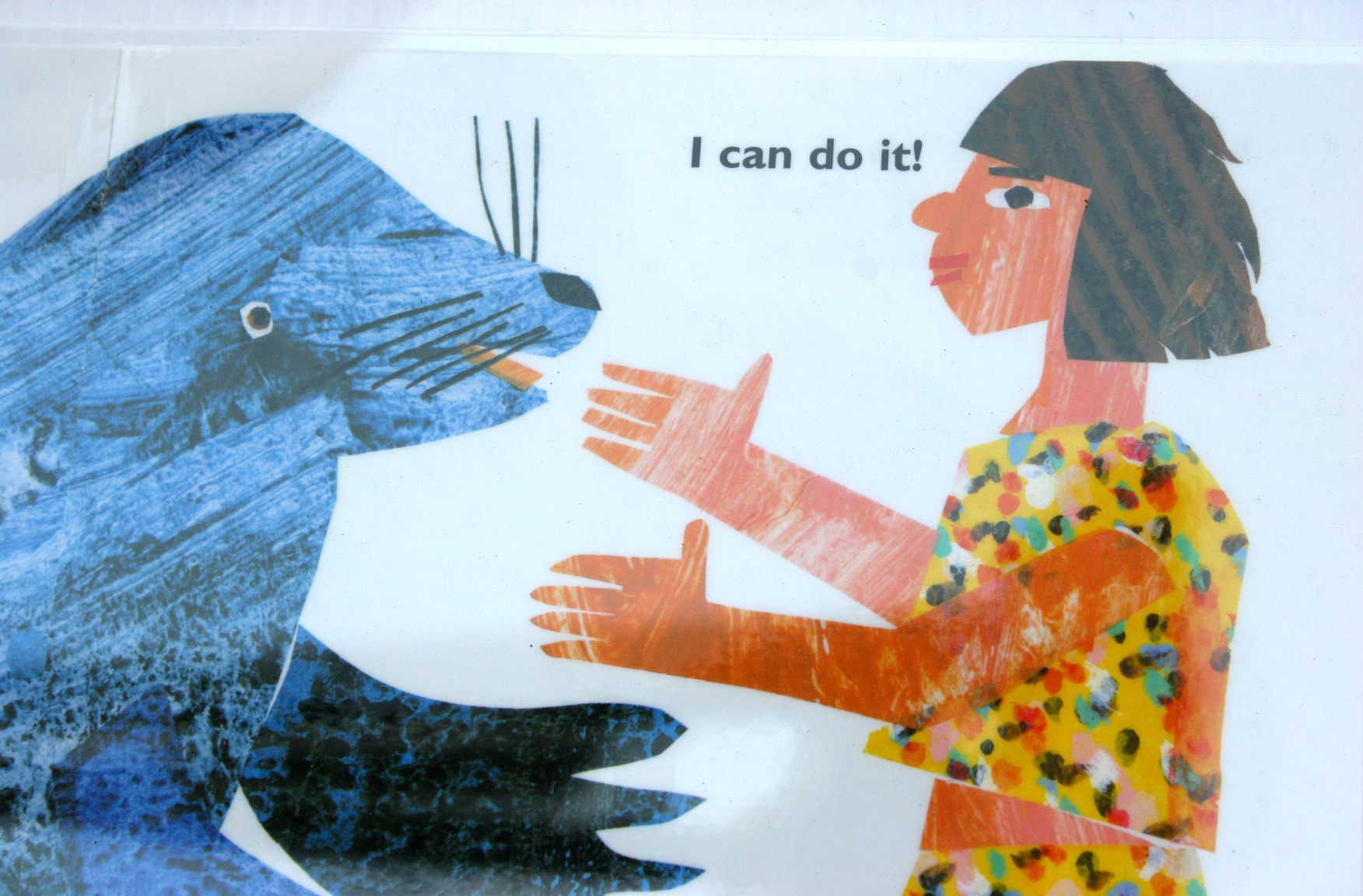
A page from Eric Carle’s book, From Head to Toe. I ought to frame this page and hang it in my office. (Minnesota Prairie Roots copyrighted file photo)

PHYSICAL THERAPY CONTINUES

I continue with vestibular rehab therapy to retrain my brain to compensate for the irreversibly-damaged 8th vestibular nerve in my right ear. That nerve controls balance. My initial diagnoses of vestibular neuritis and Meniere’s Disease (due to hearing loss caused by a virus in 2011) remain.

All of this is a lot. These are diseases that I must learn to live with and manage. I have good days and bad. But I am determined, working hard at therapy, getting out and about to build up my sensory tolerance. A recent attempt to dine out at a restaurant proved overwhelming. But I managed a dental cleaning with a sensory accommodating hygienist. A trip to a big box store nearly proved too much given the music, the people, all the visual stuff. I managed an outdoor concert with an ear plug in my good ear. I struggled to get through a meeting with a financial planner when I had to listen closely and engage in conversation. I am beginning to understand my limits, yet try to push myself just over, to challenge myself without experiencing full-blown symptoms.

These roses are for you, dear blog readers, for your kindness, compassion and support. (Minnesota Prairie Roots copyrighted file photo)

WITH GRATITUDE

Onward I go. I want to pause and thank you, my dear readers, for your ongoing encouragement and support. I’ve needed both, welcomed both, felt so very loved. I am grateful. I told Randy, “I have the best blog readers!” You are. The best.

© Copyright 2023 Audrey Kletscher Helbling

 

The realities of sleep deprivation, my story April 28, 2023

Filed under: Uncategorized — Audrey Kletscher Helbling @ 5:00 AM
Tags: , , , , , , , ,

The last Prednisone pill in my 14-day regimen of 68 pills, 10 mg per tablet. (Minnesota Prairie Roots copyrighted photo April 2023)

I HAVEN’T BEEN THIS EXHAUSTED since last giving birth 29 years ago or since enduring a three-month severe bout of whooping cough in 2005. But the past two weeks, I’ve experienced such a sleep deficit that I feel like a mom with a newborn or a woman with an uncontrollable, body-wracking cough unable to sleep. I feel absolutely, utterly sleep-deprived to the point of wondering how I can function.

The culprit? Medication, specifically the anti-inflammatory steroid Prednisone. For 10 days I took 60 mg daily. Then I tapered down over four more days to 10 mg on the final day, Tuesday. Prednisone has horrible side effects, the primary one being insomnia. I managed several hours of sleep most nights. Do the math and I am basically 70 hours short of sleep over a two-week period. That’s a lot. Enough to mess with my mind, my body, my mental and emotional health.

From the get-go, I hesitated to take this drug prescribed by my ENT doctor. I have been on Prednisone twice previously and understood it would wreak havoc with my body. Besides insomnia, the med also causes restlessness and an irregular heart beat in some people. I am “some people.” But I also understood the need to reduce inflammation, specifically an inflamed vestibular nerve in my right ear that controls balance. I’ve been diagnosed with Meniere’s Disease (related to previous sudden sensory hearing loss in my right ear) and vestibular neuronitis (caused by a virus I had in January). For now, Google my diagnoses; I’ll follow up with a second post next week.

POWERING ON & COPING

After the first few awful days on Prednisone, I messaged my doctor about my struggles. She suggested I taper off earlier if I just couldn’t handle the side effects. Reading between the lines of her telling me insomnia was a common side effect (yes, I know that), I decided to continue on with the med as prescribed. I could, I encouraged myself, power on through this. And, I did. But it wasn’t easy.

When I found myself wide awake after only a few hours of sleep, I exited the bedroom for the living room recliner. (No sense keeping Randy awake with my tossing and turning.) I coped by coloring. I coped by working crossword puzzles in the middle of the night and in the wee hours of the morning. I drank tea. I used a heating pad. Reading proved impossible. Sleep proved impossible. On and on the hours went until daylight began to break and light seeped into the room and the pace of traffic picked up along our busy street.

And so this has been my state of being. Mostly exhausted. All the time. Between dealing with med side effects and symptoms of my diagnoses—especially sensory sensitivity, tinnitus and feeling like someone slapped me on the right side of my head—I often feel overwhelmed. My brain is working overtime to deal with everything. But I am determined to power on. So I write when my vision allows me to do so. I need the distraction, the mental escape, the act of creating which sparks joy within. I do my vestibular rehab therapy exercises designed to retrain my brain. I’m seeing some improvements, pushing myself just to the edge, as my therapist advised. I recognize my limits.

CLARIFICATION & GRATITUDE

I’ve asked my husband to stop telling people I have vertigo, even if he says at least they can understand that. I mostly don’t have vertigo anymore (which, for me, was only when arising or turning in a supine position). My symptoms are much more layered and many.

It’s complicated and a lot and not something most people “get.” I’ve learned a lot in recent weeks. For those who attempt to understand and have reached out to me, I feel grateful. Compassion, care and connecting uplift me as I continue on this journey of retraining my brain, managing, coping. And maybe, just maybe, soon getting eight hours of sleep in a single night. Onward.

© Copyright 2023 Audrey Kletscher Helbling


Suddenly going nearly deaf in one ear March 21, 2011

THE ELDERLY COUPLE stood in line next to me at the pharmacy gripping their skinny white canes.

He fidgeted, a plastic grocery store bag rustling in his hands. I wondered how much he could see through the thick lenses of his glasses.

She waited beside him. Calm. Steady. Sure. I doubted she could see me, only sense that I was there, close by.

I considered for a minute allowing them ahead of me. But I’d already returned for the second time to the pharmacy and didn’t want to give up my spot.

So I stood there, health insurance and debit cards clenched in my right hand, arms folded across my chest. I did not want to be there sandwiched between the mom with a clearly sick child and the visually-impaired couple. But, mostly, I did not want to be there because I did not want the prescription drugs I was picking up.

Eight hours earlier I laid on my back, head strapped down, face covered with a mask, as my head and upper body slid inside a magnetic resonance imaging machine.

Several hours after that, I sat in a sound-proof booth getting my hearing tested.

A half hour later I braced myself for the MRI results, hoping for the best, semi-prepared for the worst. The news was good. No tumor. No stroke. No anything abnormal, the ear specialist told me. I breathed deeply, the release of tension in my body palpable.

But the hearing, that was different. I had lost most of the hearing in my right ear. I had “one shot,” the doctor told me, to restore some of my hearing. There were no guarantees.

That is when I cried, although the tears had been building since the audiologist pointed to a graph showing that I had lost 70 percent of the hearing in my right ear. I verged on tears when she told me, too, that a hearing aid would not help me.

I listened to the doctor tell me that a 10-day mega dose of steroids could possibly restore some of my hearing. No promises. The Prednisone is most effective within 48 hours of symptom onset. Four days had passed since my symptoms—sudden hearing loss and eight hours of dizziness and nausea—began.

“You’ll cry some more,” he said, explaining that the steroid will throw me into emotional mood swings, cause insomnia, make me jittery, maybe even nauseated. He minced no words: The treatment course “will be difficult.”

And then I asked, “Is it worth it?”

He told me this was my “one shot” to regain some of my hearing.

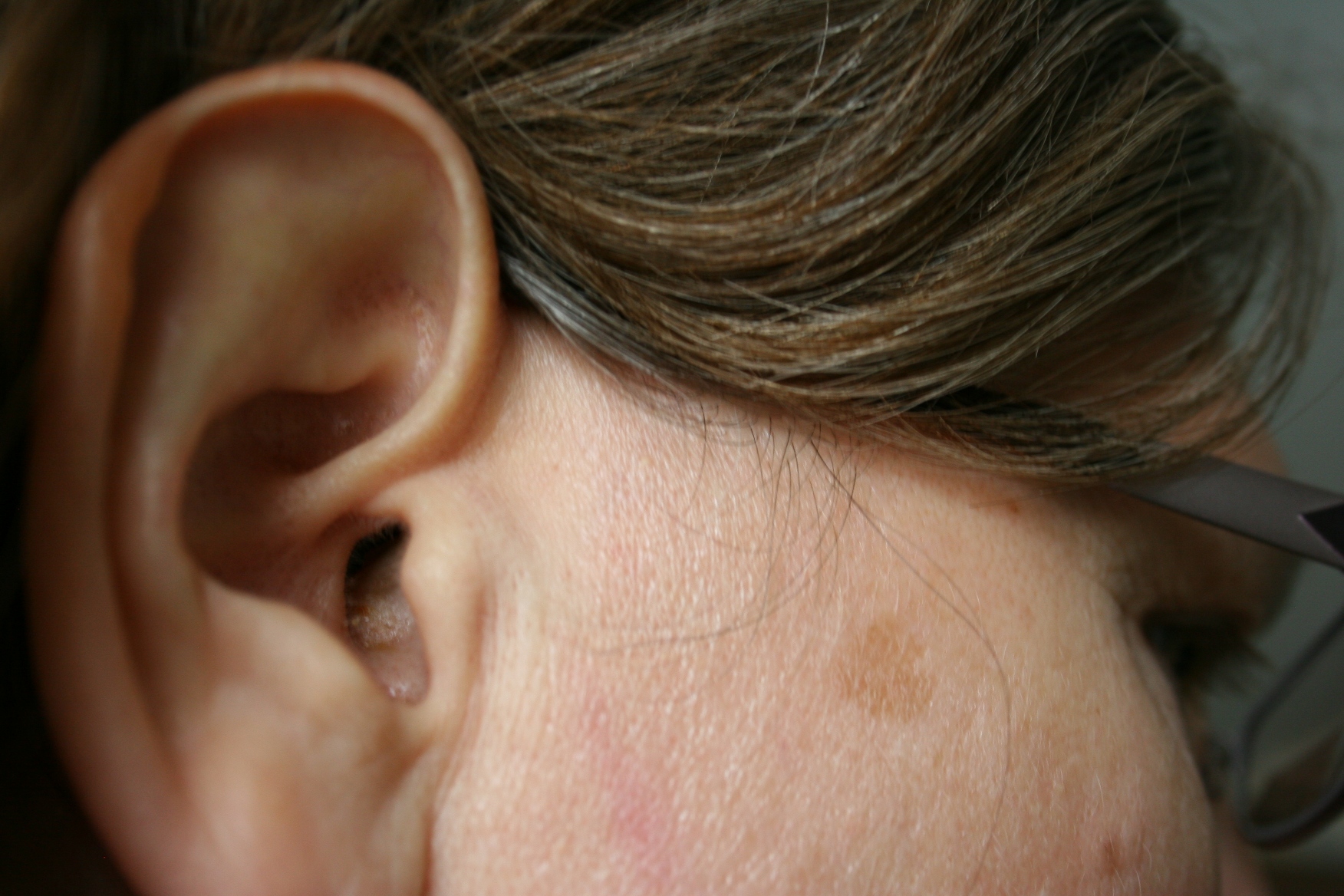
Do you know how difficult it is to photograph one's ear? This is my best shot after many attempts. I could have done without the photo, but images always add to a blog. So there you have it, my right ear that I am hoping, praying, will be healed. Yes, I see the wax. Yes, I know my ear is not petite. Typically it's draped by my hair. But I don't care about lack of prettiness right now. I care only that I get some, or all, of my hearing back.

AND SO I FOUND MYSELF waiting in line at the pharmacy, next to the visually-impaired couple. As I watched them, I asked myself, “Would you rather be blind or deaf?” I don’t mean to offend any of you readers, but that is, honestly, what I was thinking.

The debate swirled briefly through my brain. As the store clerk placed the visually-impaired woman’s hand on a bottle and told her it was fish oil, I chose deafness. I determined that I would rather deal with the loss of hearing in one ear than lose my ability to see.

And so the next 10 days will reveal whether a portion of my hearing can be salvaged. Ten days. I am trying to steel myself for the negative physical and emotional side effects I am certain to experience from the high steroid dosage. I’ve been on the drug before, for whooping cough. I hate it.

I am trying to prepare myself, too, for the very real possibility that this course of treatment will not work—because I waited too long. I did call my clinic within an hour of the symptom onset, but was advised only to come in if my condition worsened. Within several hours, I was feeling better, although my hearing had not improved.

I thought I might be suffering a Meniere’s disease attack related to a previous ear trauma as my symptoms matched those of Meniere’s.

I am writing this post because I need your prayers for healing and strength through my treatment.

I am also writing to warn you that, should you ever experience sudden hearing loss, see a doctor immediately. Don’t wait. Ever. I waited four days to schedule a clinic appointment, another day to get in and then another day to have the MRI and get the diagnosis.

My ear doctor saw several patients just this week with the same sudden sensory hearing loss, leading him to believe a viral infection of some type is going around the Faribault community.

Since developing this issue, I’ve had several friends tell me of acquaintances who’ve suffered the same snap-of-the-finger hearing loss. One regained her hearing; two did not.

The cause of my sudden sensory hearing loss has not been determined. I’m following up with another specialist in several weeks, the same expert I’ve seen since that traumatic ear injury at a Wisconsin water park several years ago.

In the meantime, I am adjusting to the ringing and static (like a bad transistor radio) and partial deafness that are now a part of my world.

I am learning to position myself with my “good” left ear to anyone who is speaking to me.

And I am holding on to hope.

FOLLOW-UP: Today I started my fourth day of steroid treatment. Thus far I’ve noticed no improvement in my hearing. But I am still hopeful that some of my hearing may be restored. Many family and friends are praying for me and for that I am grateful.

I am feeling the effects of taking the Prednisone. Yesterday afternoon and into the evening, I was unsettled and sat twirling my hair, which is not a regular habit of mine. I had trouble falling, and staying, asleep.

Yet, through all of this, I remain cognizant that this diagnosis could have been something far worse than a hearing loss. In the realm of possible medical issues, this is minor.

If, by telling my story, I can prevent one person, even one, from delaying treatment for a sudden sensory hearing loss, then something good will have come from this.

Seven more days to go…

© Copyright 2011 Audrey Kletscher Helbling