Minnesota Prairie Roots

Writing and photography by Audrey Kletscher Helbling

A Sunday afternoon at Valley Grove September 21, 2010

Filed under: Uncategorized — Audrey Kletscher Helbling @ 7:22 AM
Tags: , , , , , , , ,

PRAIRIE GRASSES and wild flowers dipped in the wind, swaying to the folksy music of Hütenänny. And I thought, as l listened, of the movie, Sweet Land, filmed in southwestern Minnesota and based on Minnesota writer Will Weaver’s book.

But I wasn’t in the southwestern part of the state. Rather, I stood atop a prairie hillside in southeastern Minnesota, in the backyard of the Valley Grove churches, delighting in the rhythm of the Nordic music so fitting for this place settled by Norwegian immigrants.
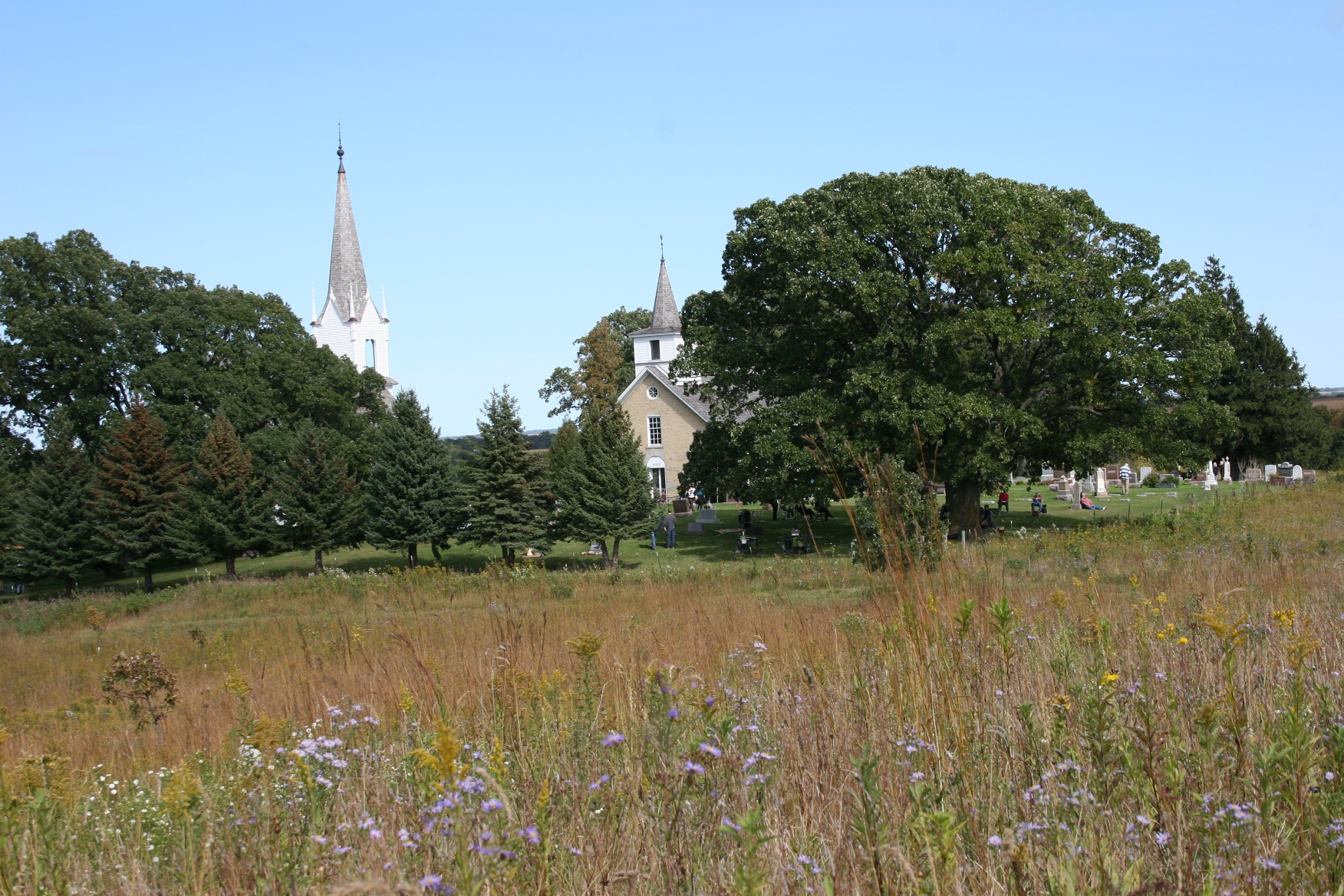
A view of the Valley Grove churches from the prairie that edges the churchyard.
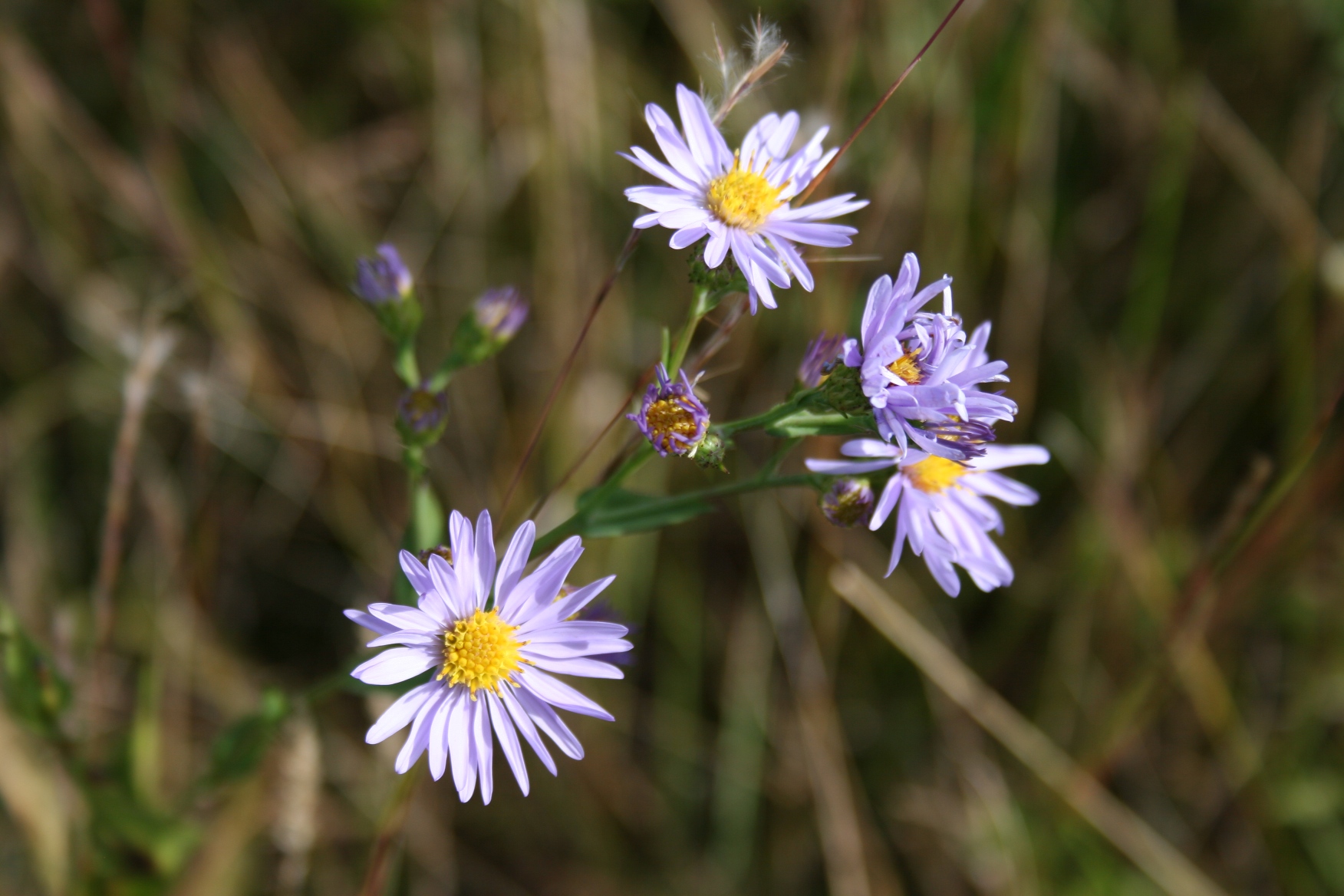
Valley Grove visitors can walk through a restored prairie, where wildflowers grow.

On this Sunday afternoon in September, folks gathered outside and inside the 1862 stone church and the neighboring 1894 white clapboard church, in the graveyard, underneath the majestic sprawling oak where the musicians played, and on the prairie, close to the land.
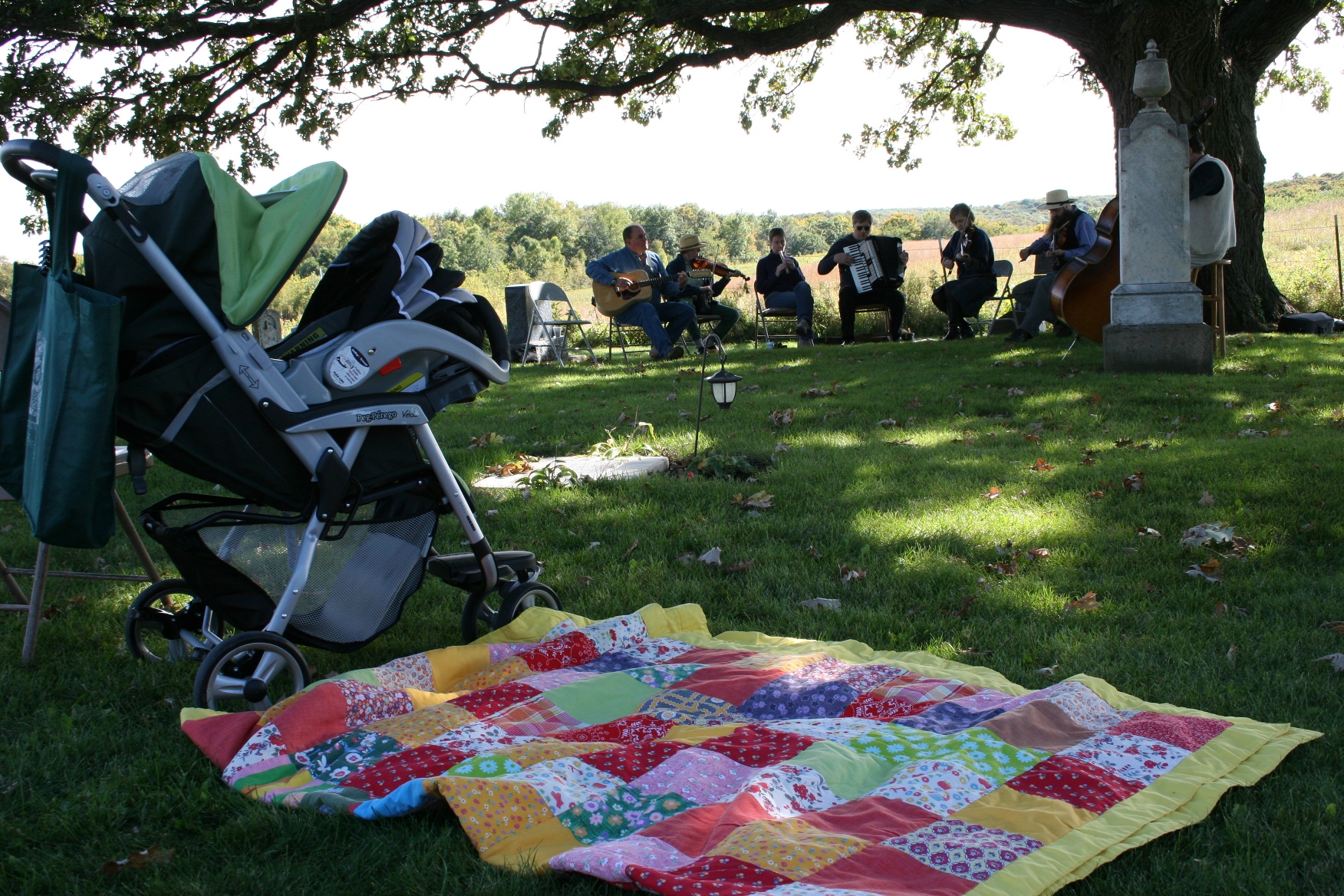
Visitors spread quilts upon the grass and enjoyed the music of Hutenanny.

A group of mostly Northfield area musicians performed as Hutenanny at the Valley Grove Country Social. On Sunday evenings they perform as the Northern Roots Session at the Contented Cow in Northfield.
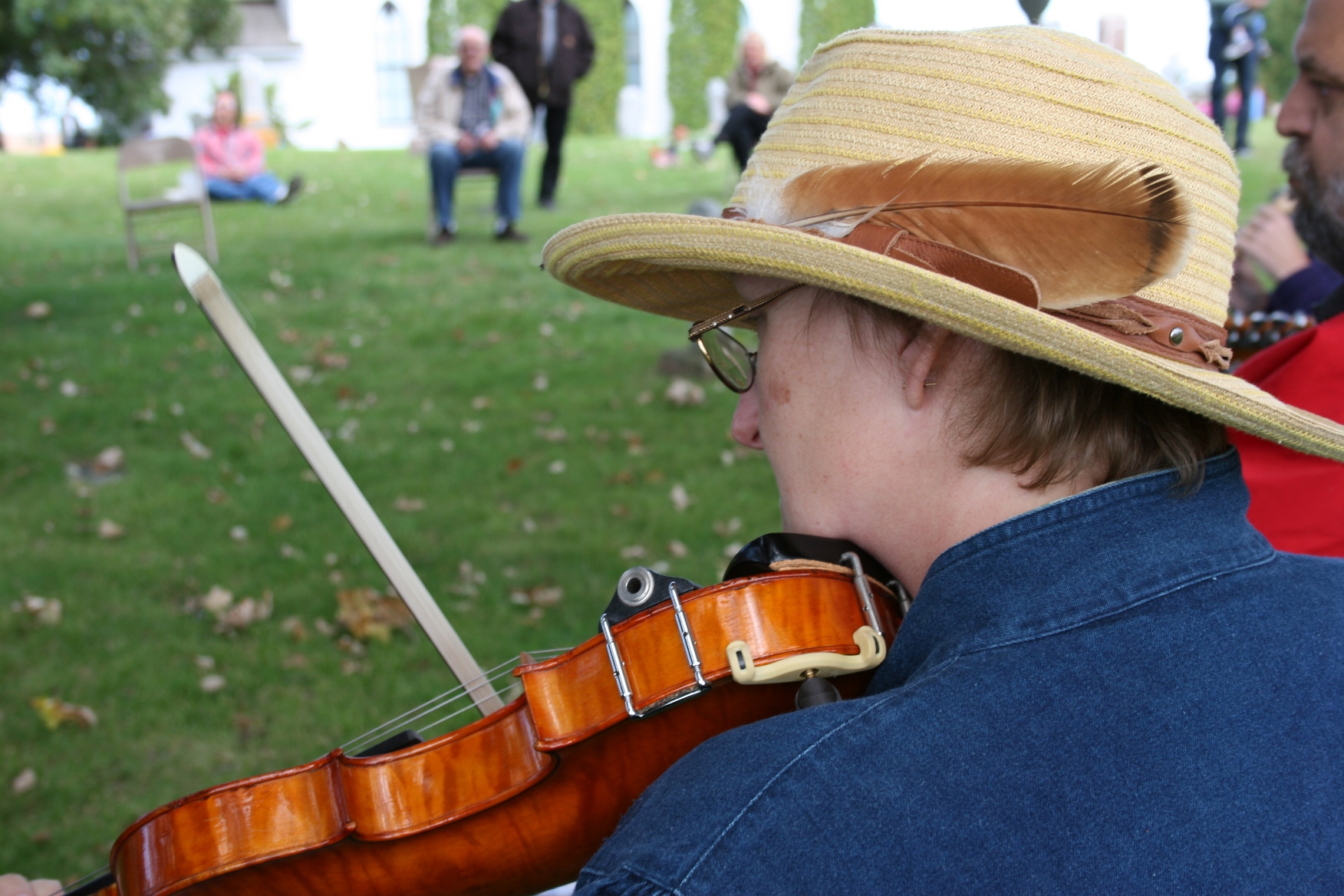
A member of Hutenanny dresses country for the folksy Nordic music performed at Sunday's Social.

In the churchyard, next to the simple wooden church, youngsters swish-swished goat milk into a pail, admired colorful caged chickens and crafted ropes to twirl high above their heads.

Kathy Zeman of next-door Simple Harvest Organic Farm gave a young boy lessons in milking a goat.

Fresh eggs and caged chickens attracted lots of interest.

Along the fenceline that guards the duo hillside churches near Nerstrand, families waited to board a horse-drawn wagon that would take them along a path past the churchyard, up and down the prairie hill, where, if they looked, the land stretched down to farms and to woods tipped in the first rustic colors of autumn.
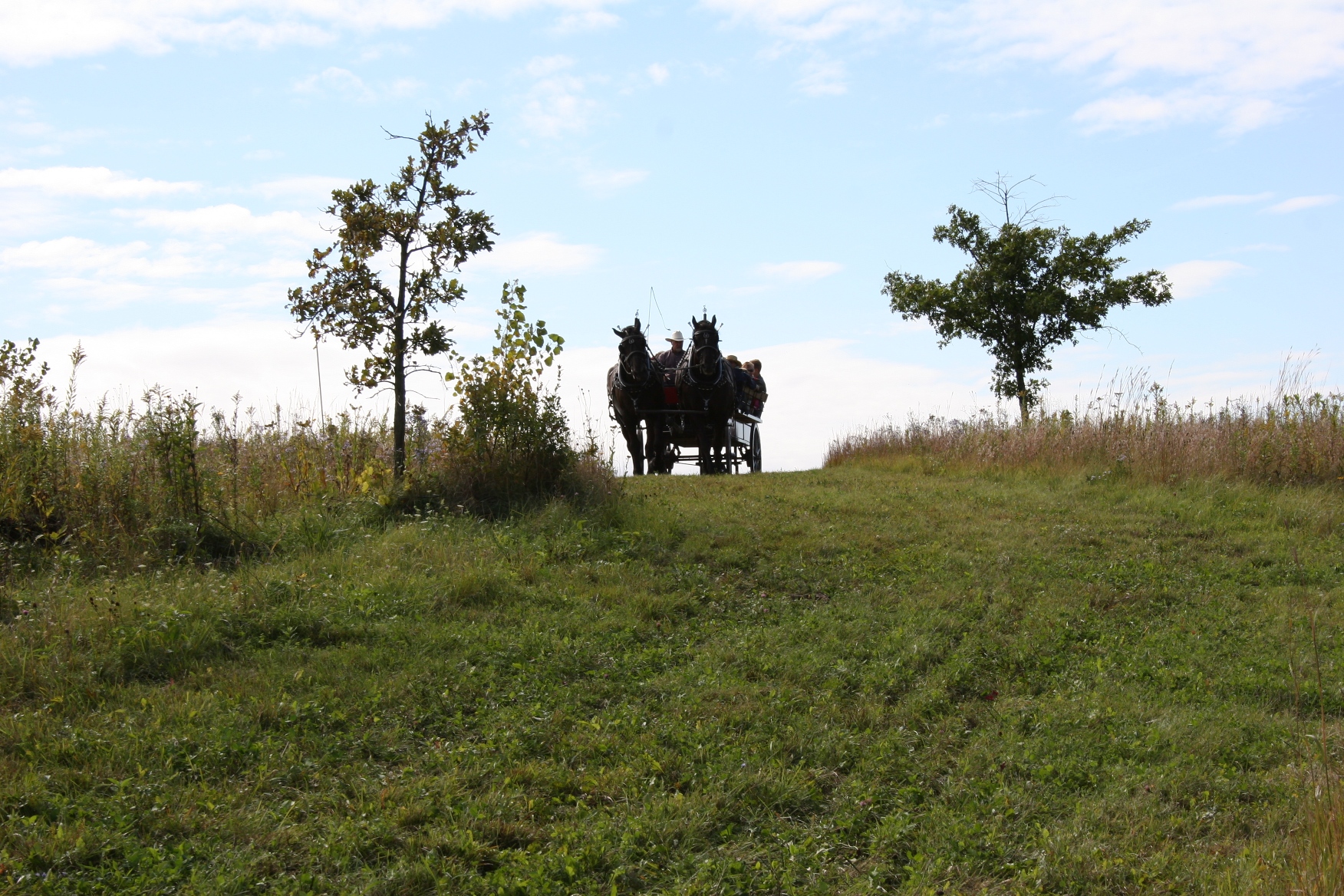
A horse-drawn wagon carried visitors on a path through the 50-acre prairie.

Inside the 1894 historic church, a musician pressed pedals and keys and tugged at pulls as the faithful lifted their voices in reverent song. “Praise to the Lord, the Almighty,” they sang, followed by “Amazing Grace.”
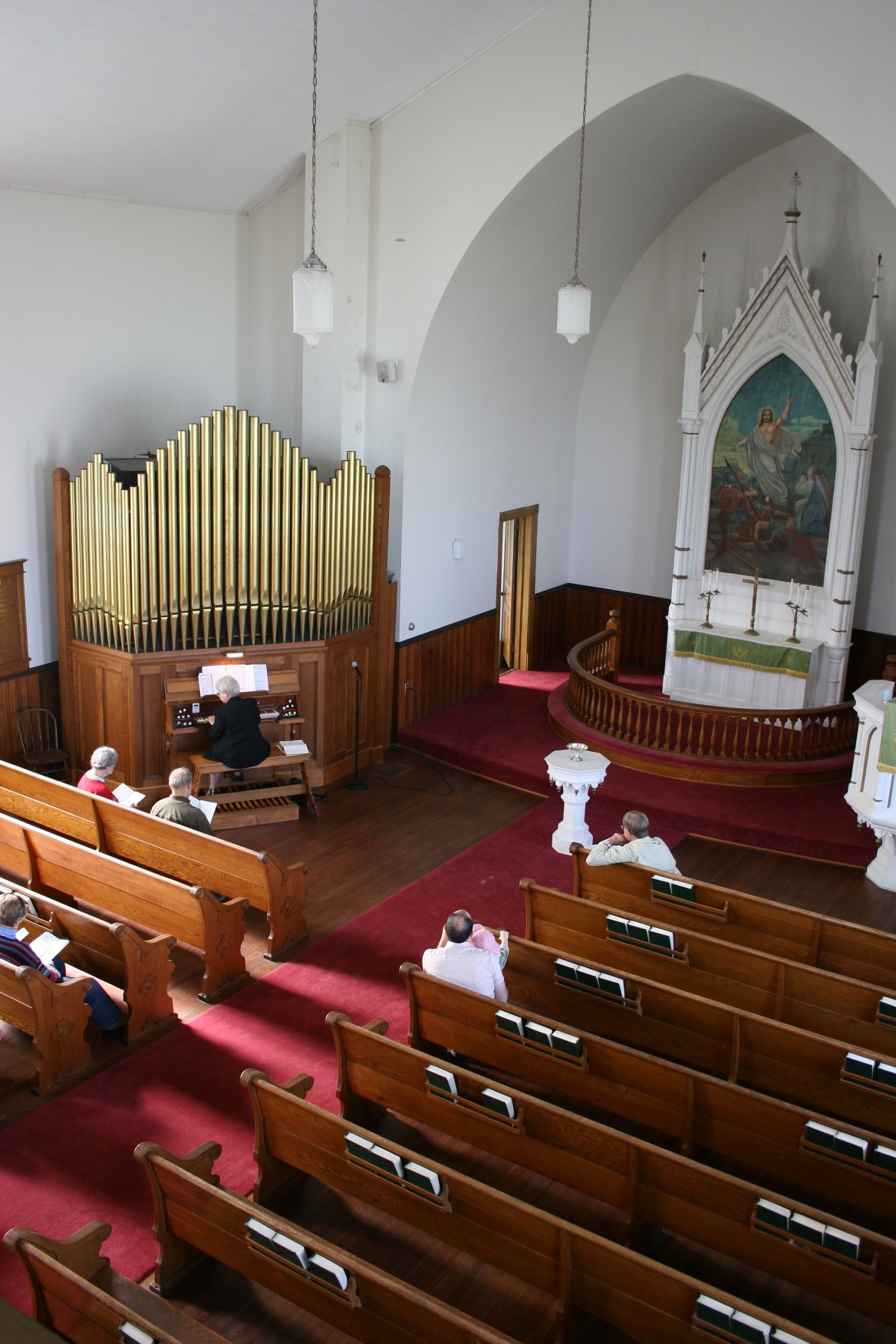
Organists performed several concerts inside the 1894 Valley Grove Church on a pipe organ built in St. Louis and installed in 1911.

Art and bluebirds and old photos. Sunshine, mixed with clouds. Memories shared, new memories made. Photos snapped. Gravesites visited. Hugs exchanged. All comprised the Valley Grove Country Social, a soul-satisfying way to spend a Sunday afternoon in September in Minnesota.
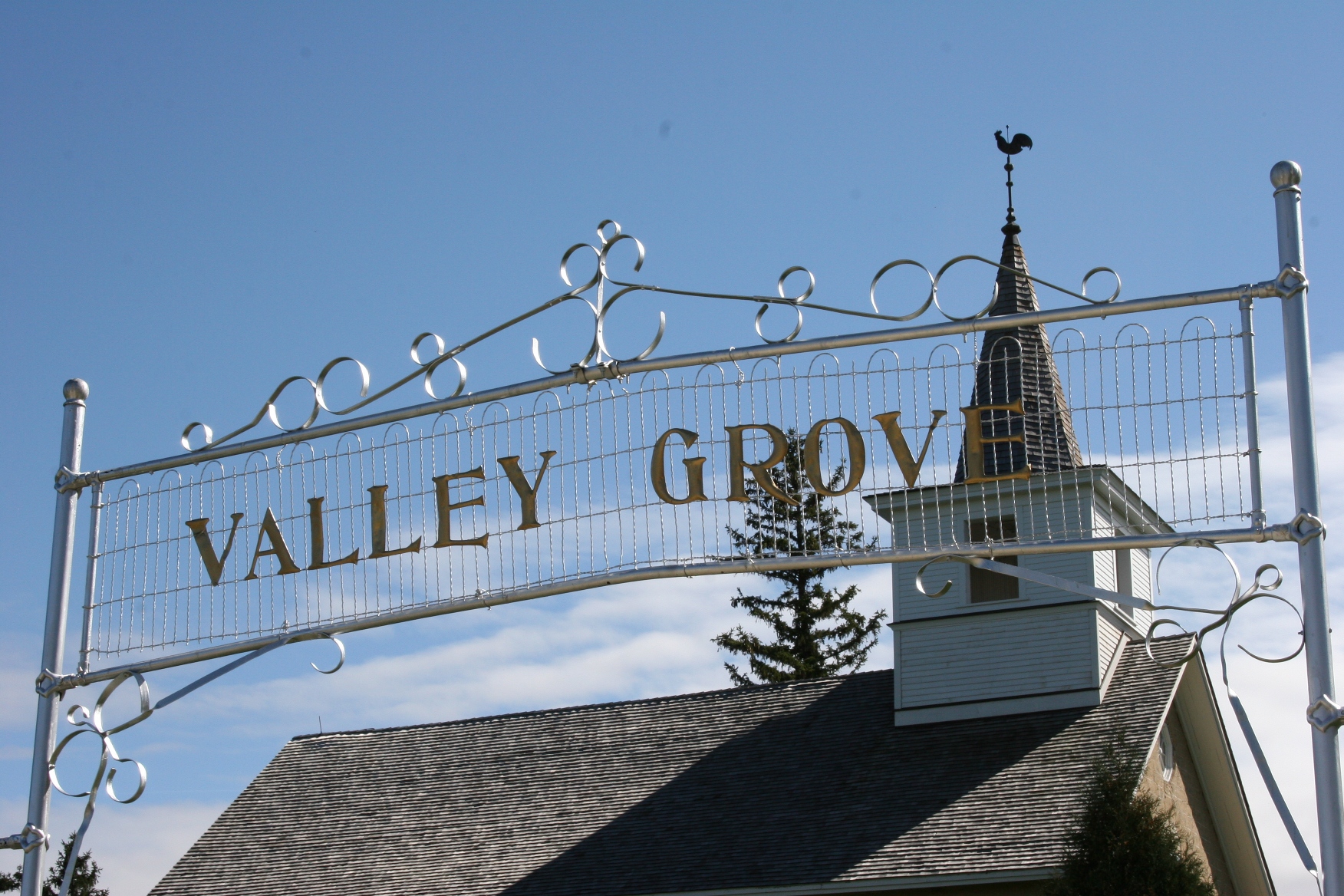
An archway at the entry to the Valley Grove churchyard.

The Valley Grove churches are on the National Register of Historic Sites.
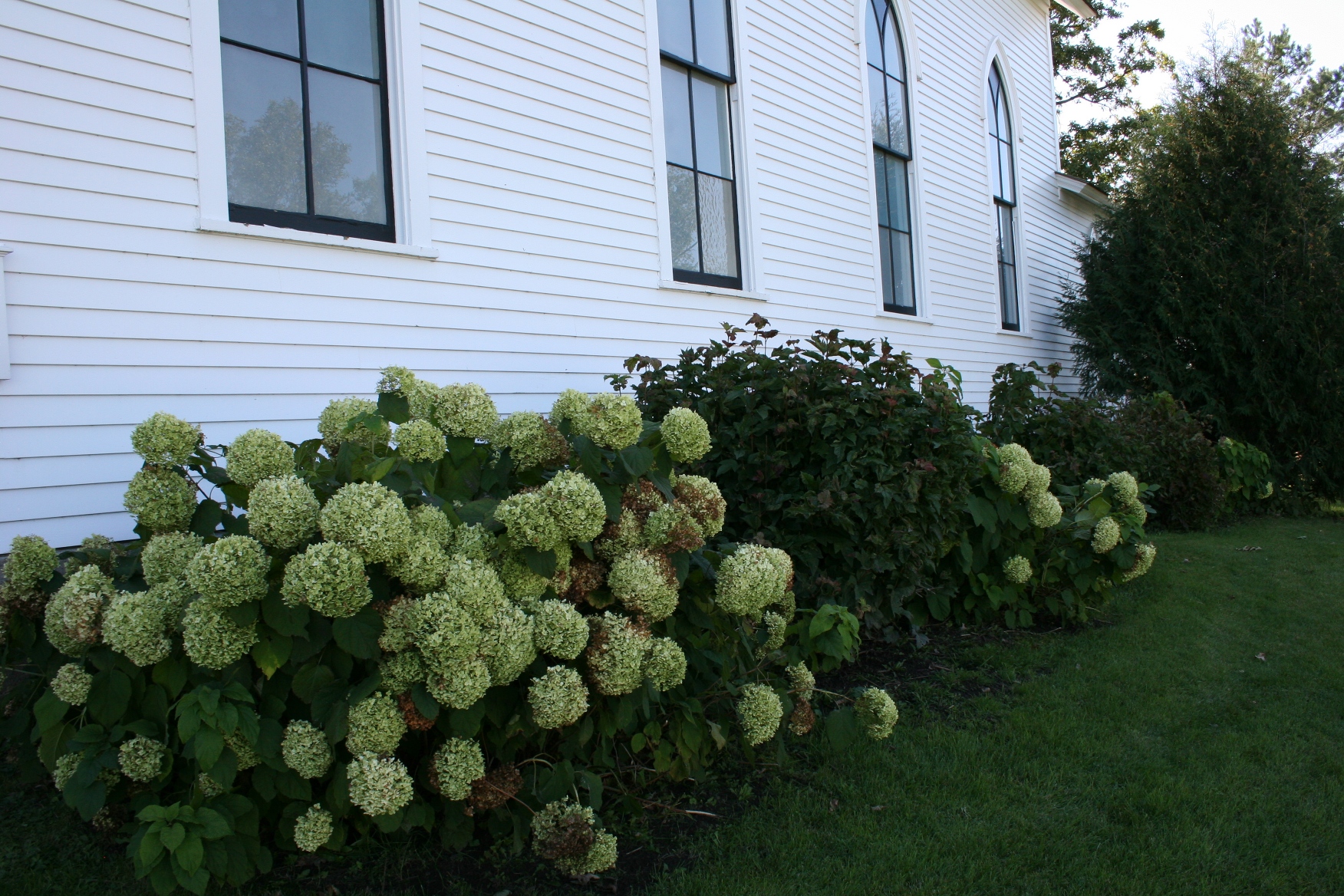
Old-fashioned hydrangea bushes nestle against the clapboard church.
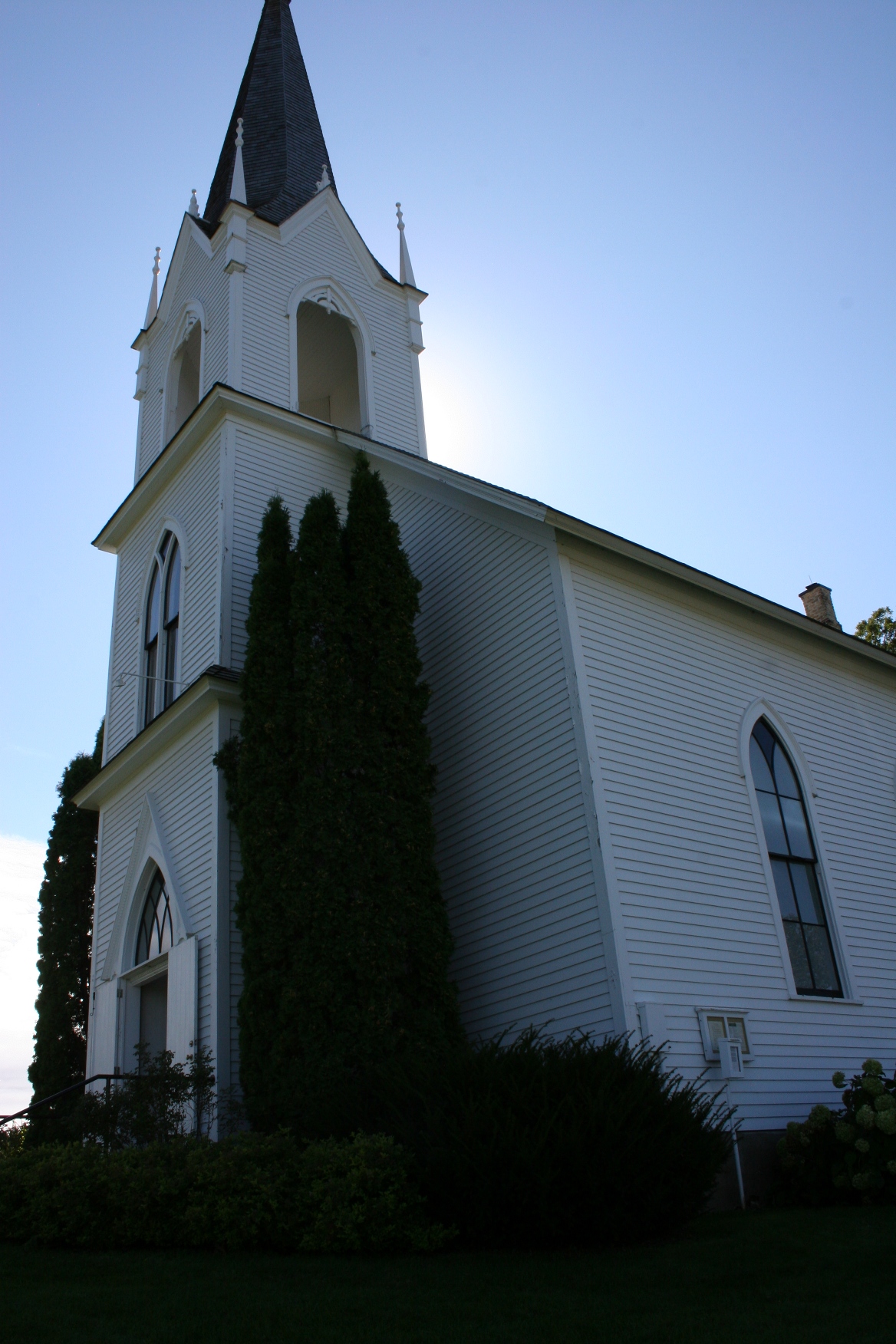
The spire of the 1894 church can be seen for miles.
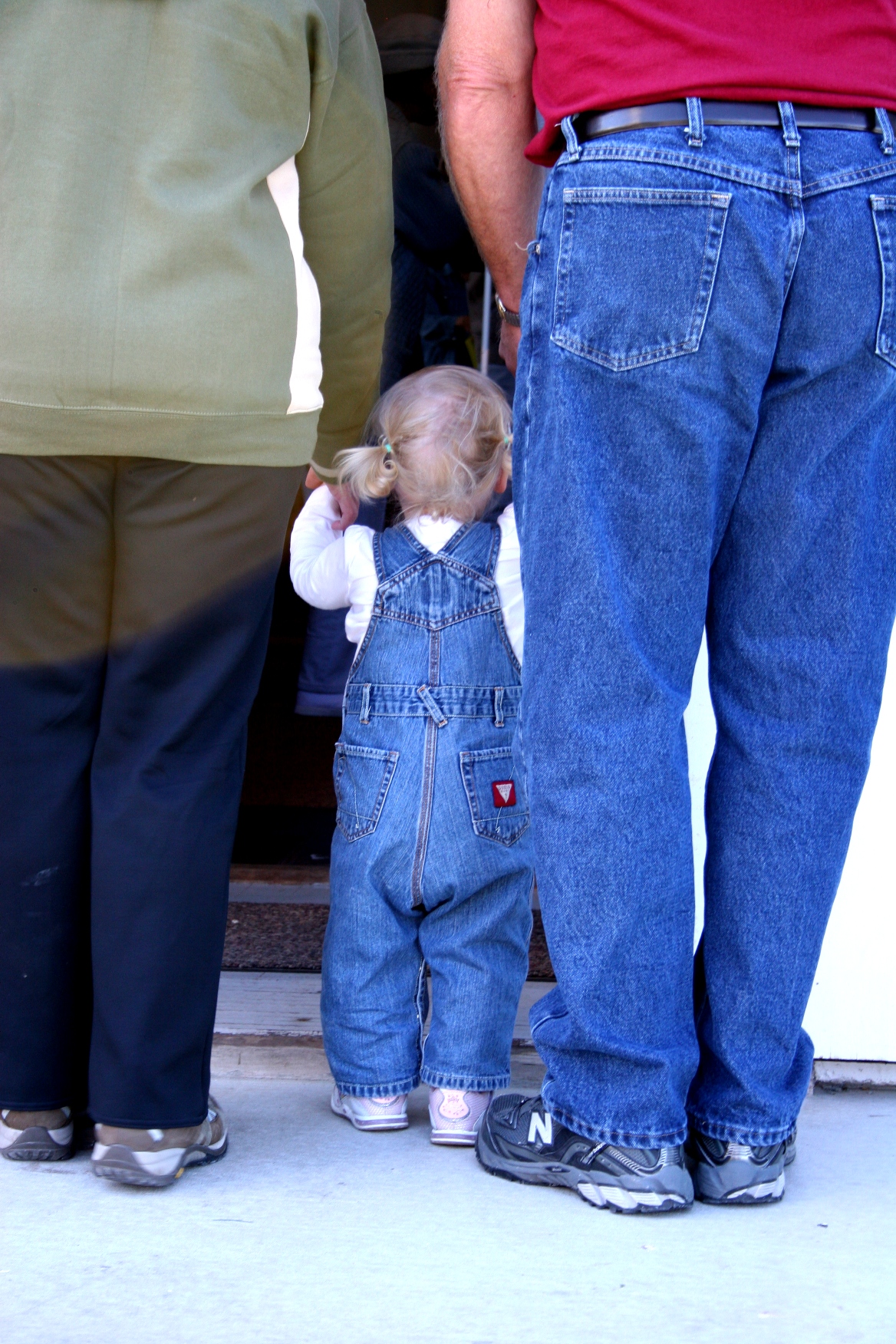
The Valley Grove Preservation Society is working to preserve the buildings, land and history for future generations.

CHECK OUT THESE PLACES/GROUPS referenced in this Minnesota Prairie Roots blog post:

Bluebird Recovery Program of Minnesota

Simple Harvest Organic Farm

The Contented Cow

Northern Roots Session

ALSO CHECK OUT my previous Valley Grove posts published Oct. 9, 19 and 31, 2009, and Nov. 2, 2009, on Minnesota Prairie Roots.

© Copyright 2010 Audrey Kletscher Helbling


Gargoyles perform at The Cathedral of Our Merciful Saviour August 9, 2010

THE CHURCH DOOR bangs, the weight of the solid wood slamming against the frame as if decisively shutting out the hot, humid air that oppresses on this sultry Sunday afternoon in August in Minnesota.

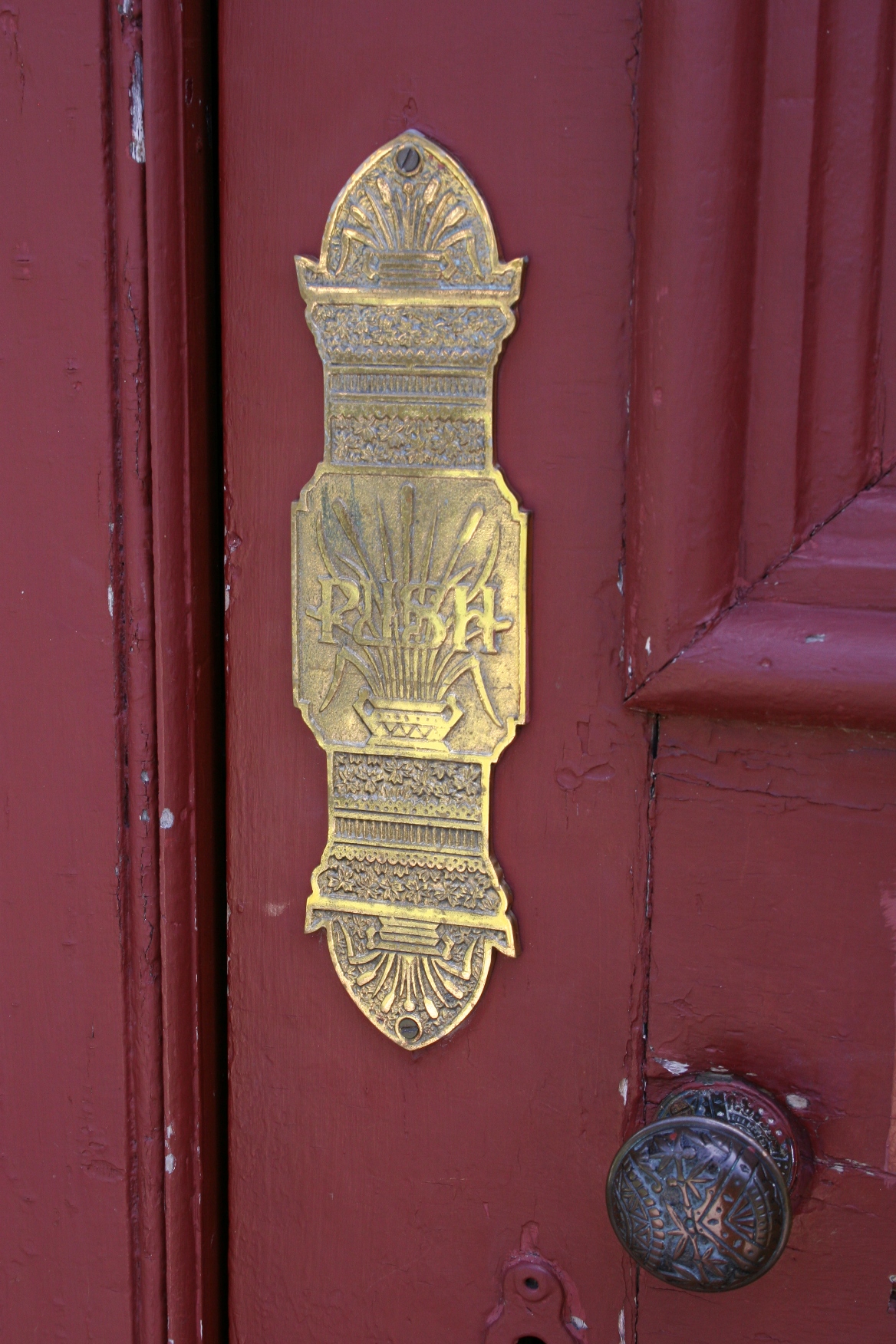
We entered The Cathedral of Our Merciful Saviour through this heavy side door, which you need to push rather than pull, we learned after waiting outside, thinking we were locked out of the church.

Inside the sanctuary, I seek respite from the suffocating 90-plus degree heat. I settle onto a purple cushion which softens the hardness of wood against flesh in a pew that forces me to sit ramrod straight.

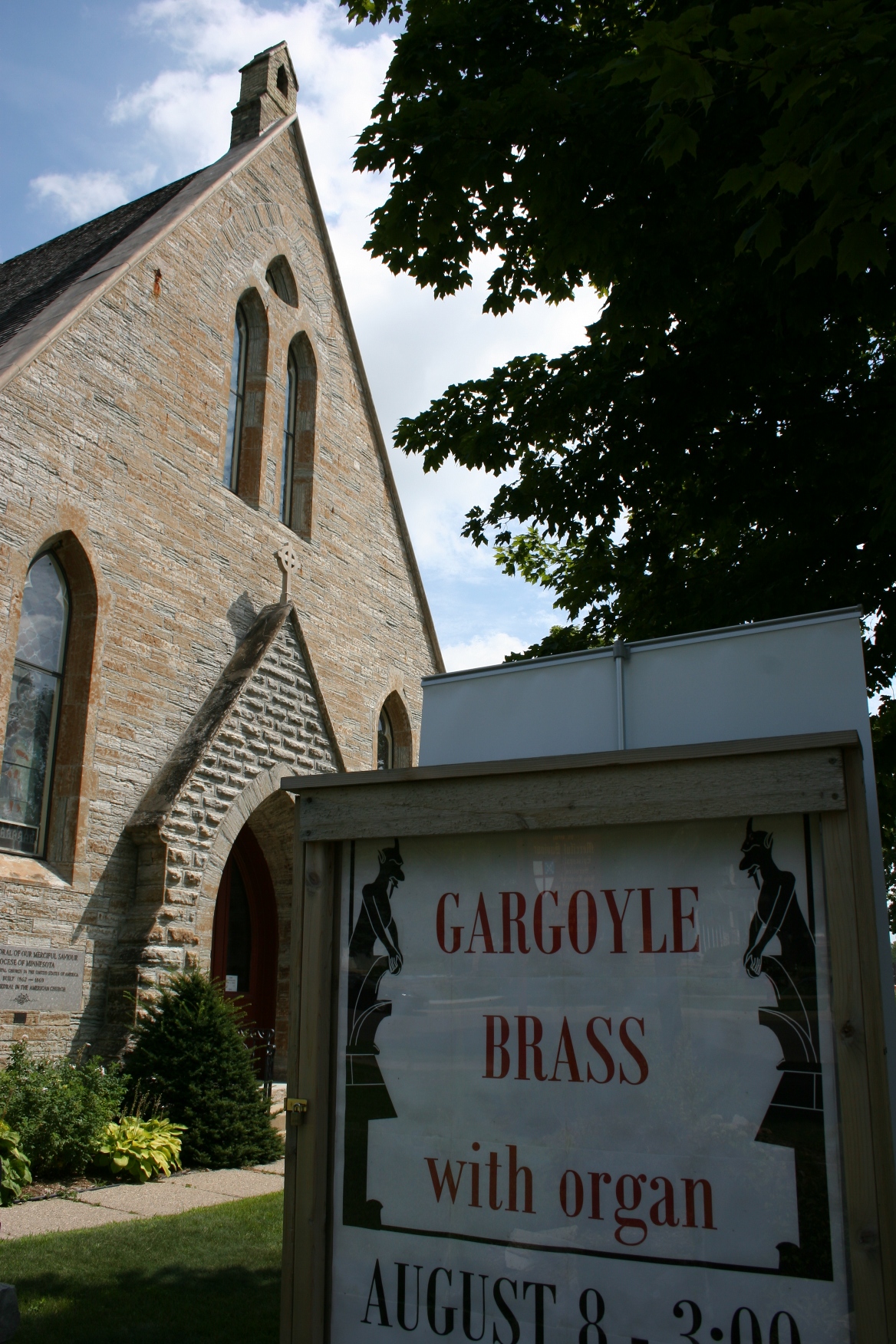
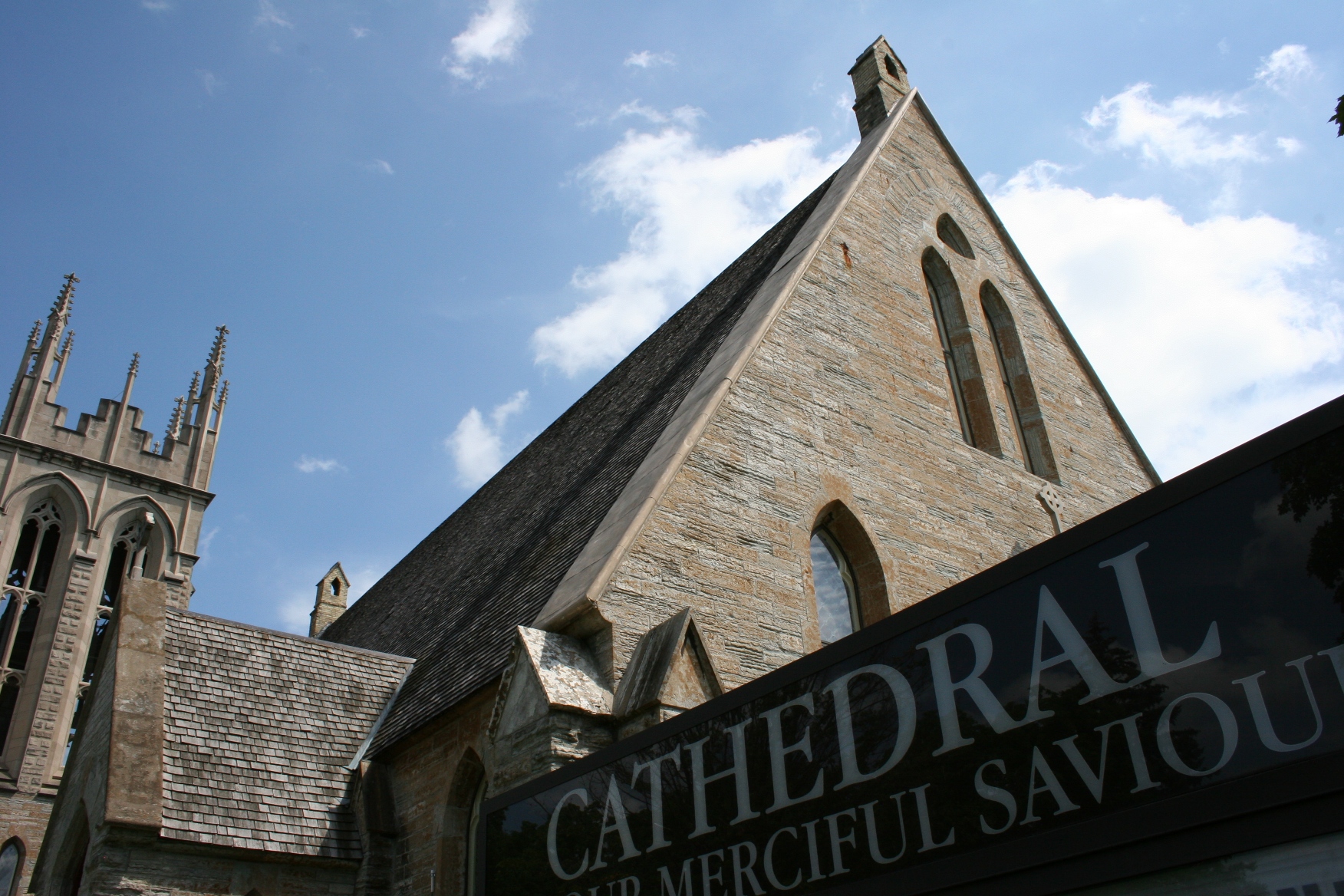
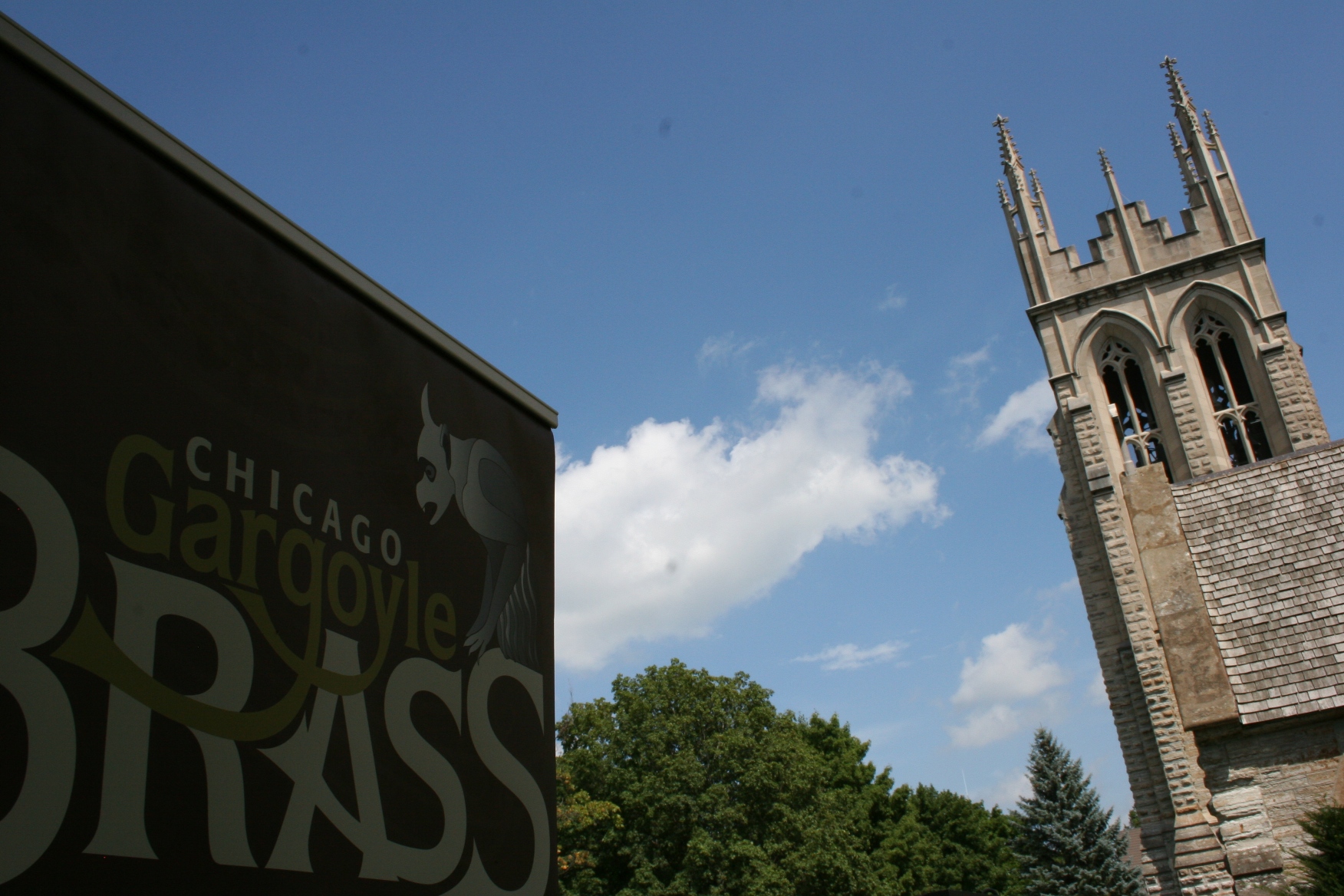
My husband and I, expecting a packed house, have arrived early for a performance by The Chicago Gargoyle Brass at The Cathedral of Our Merciful Saviour in Faribault. This massive structure with its looming tower was constructed from 1862 – 1869 as the first Cathedral of the American Church.

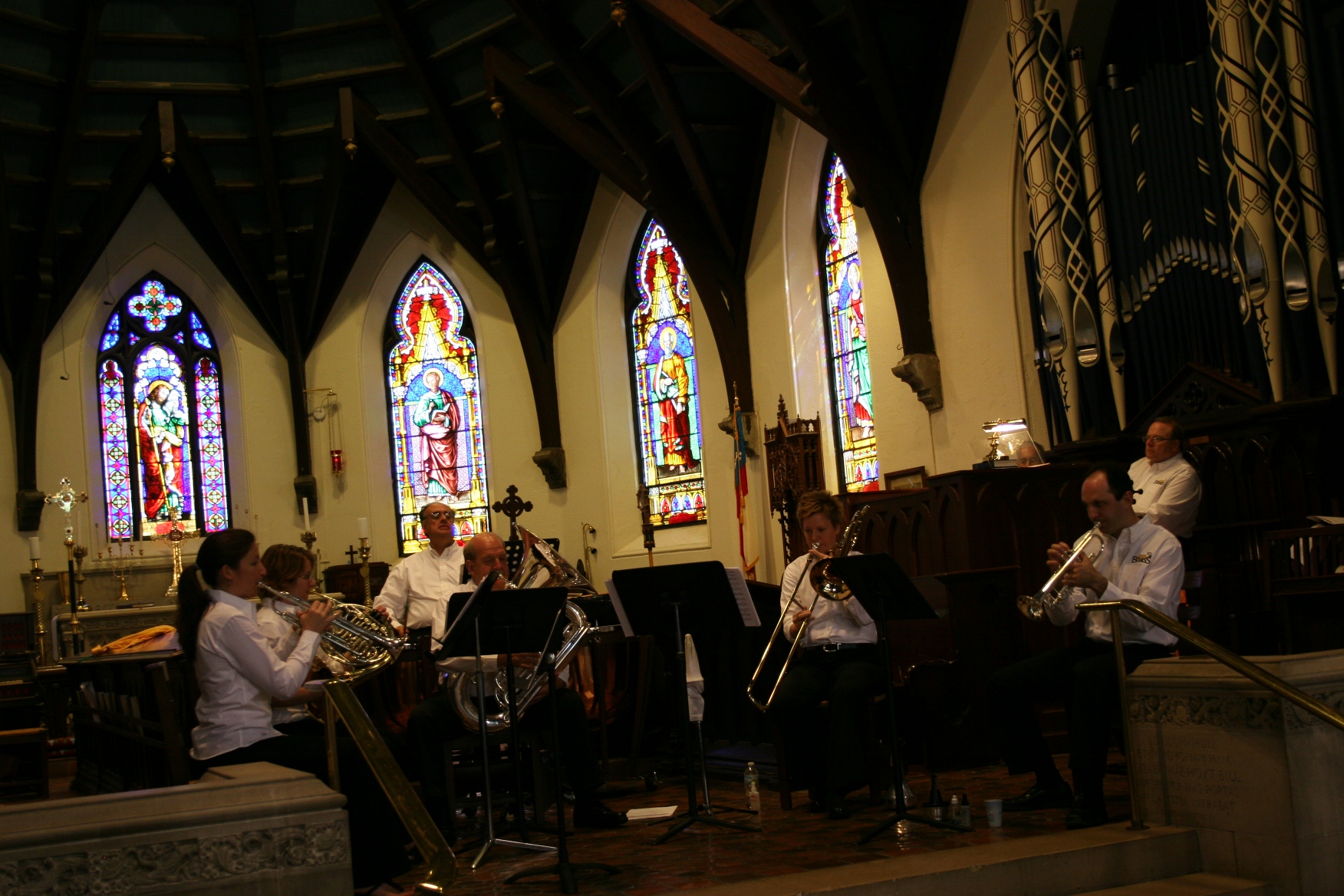
The Chicago Gargoyle Brass presented a Sunday afternoon concert at The Cathedral of Our Merciful Saviour in Faribault.

The Cathedral of Our Merciful Saviour sits along Second Avenue across from Faribault's Central Park.

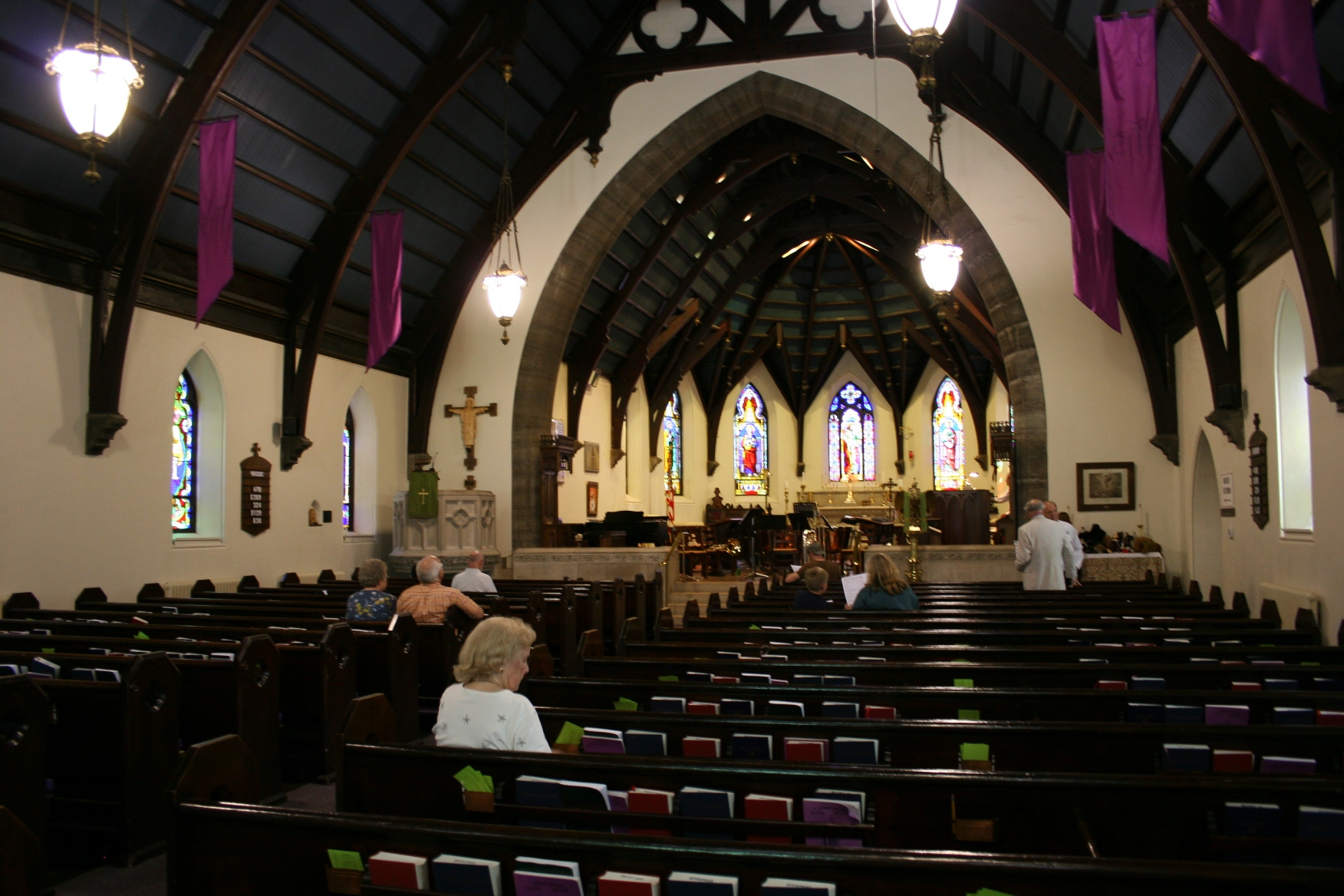
Inside, I welcome the coolness, visually defined by stone and by the dark wood that shapes the arches of the ceiling.

In the chancel area, which stretches an interminable distance from the pews and which is bigger than some country churches I’ve seen, Gargoyle Brass members have positioned their gleaming instruments and music stands at the forefront. Six stained glass windows embrace this “stage” with the glorious 1871 pipe organ (with more old pipes than any other in Minnesota), to the right.

Concert attendees filter into this historic cathedral made of dark wood and stone.

Truly, I am in awe of this cathedral. “This place smells old,” I whisper to Randy as I run my hand along the back of a pew. “Are these the original pews?” They are, I learn upon reading a brochure I’ve picked up. A Civil War veteran cut and planed the wood from northern Minnesota white pine.

I can’t seem to take my eyes off the brass eagle that serves as a lectern given in honor of Bishop Henry Whipple’s wife, Cornelia, who died in July 1890. Bishop Whipple settled in Faribault, oversaw construction of the cathedral and Episcopalian schools and was known for his efforts in helping and befriending Native Americans.

While I wait for the concert to begin, I contemplate the beauty and history of this place and the effort it must have taken to build this stone cathedral.

Soon the concert, part of The Vintage Band Festival hosted in nearby Northfield, begins and we are swept away by the sounds of trumpets, horn, trombone, tuba and timpani (kettledrums) melded with the organ.

The Chicago Gargoyle Brass performs at the Cathedral of Our Merciful Saviour.

I am surprised mostly that the organ does not overpower this cathedral. Often, the music sounds more sedated and muffled than majestic, as I had expected. That has nothing to do with the quality of the organists—for they are superb—but more, I think, to do with the organ placement.

At one point during the concert, a key spring on the organ breaks and a second organist must hold up the key during a performance. “Does someone have some bubblegum?” one of the musicians asks the audience. I’m not sure whether he’s serious or joking, but the concert continues without the gum.

Admittedly, I am no music expert. I can’t read notes. I barely know one instrument from another. So my enjoyment of music is purely, solely authentic, grassroots basic. When my head bobs spontaneously, when I feel the music reverberating, tingling my feet, when I feel an emotional connection, then I know I am hearing good music.

Sunday afternoon I heard good, even great, music from The Chicago Gargoyle Brass, which began in 1992 as a University of Chicago based group. The name was derived from the university’s architecture.

“I love this church,” horn player Arisia Gilmore tells us before performing “Twas a Dark and Stormy Night” with Michael Surratt at the organ. “It’s fitting for the atmosphere we’re trying to portray here.”

As I listen to the music build, like a storm, Randy leans toward me. “Does this remind you of two weeks ago?” he speaks softly into my ear. I nod. He is, like me, recalling the night of July 23 when we were caught in our car on a rural southwestern Minnesota road in the middle of a raging thunderstorm that packed 70 mph winds.

That’s the purpose of music, I think—to stir passions, emotions and, yes, even memories of dark and stormy nights when gargoyles lurk.

A looming tower marks the cathedral located along Second Avenue across from Faribault's Central Park.

© Copyright 2010 Audrey Kletscher Helbling