Minnesota Prairie Roots

Writing and photography by Audrey Kletscher Helbling
Photographing a choral festival: It’s in the details November 20, 2012

Filed under: Uncategorized — Audrey Kletscher Helbling @ 8:00 AM
Tags: , , , , , , , ,

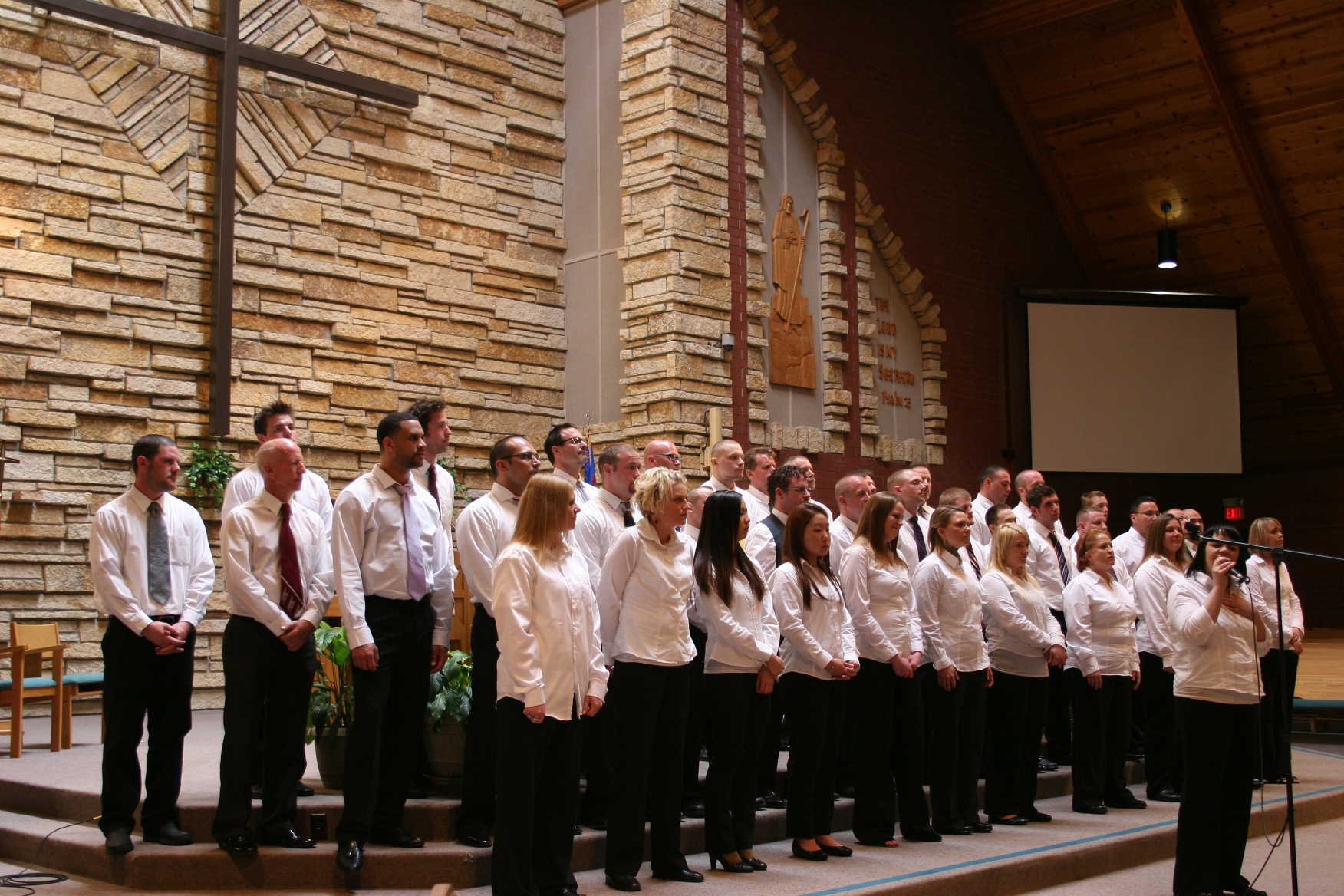
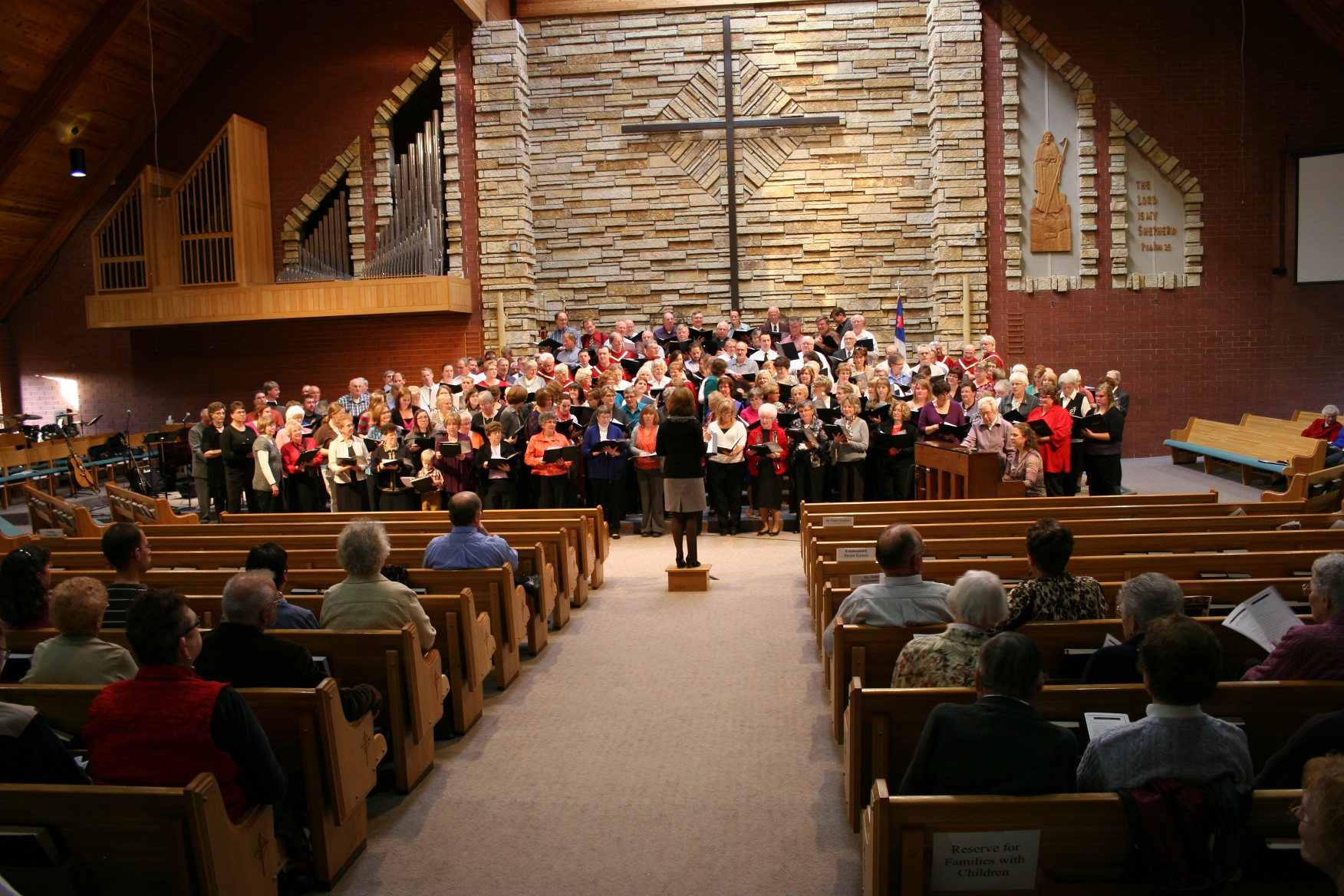
MY VOLUNTEER ASSIGNMENT was to photograph the mass choir comprised of 250 singers from 11 churches.

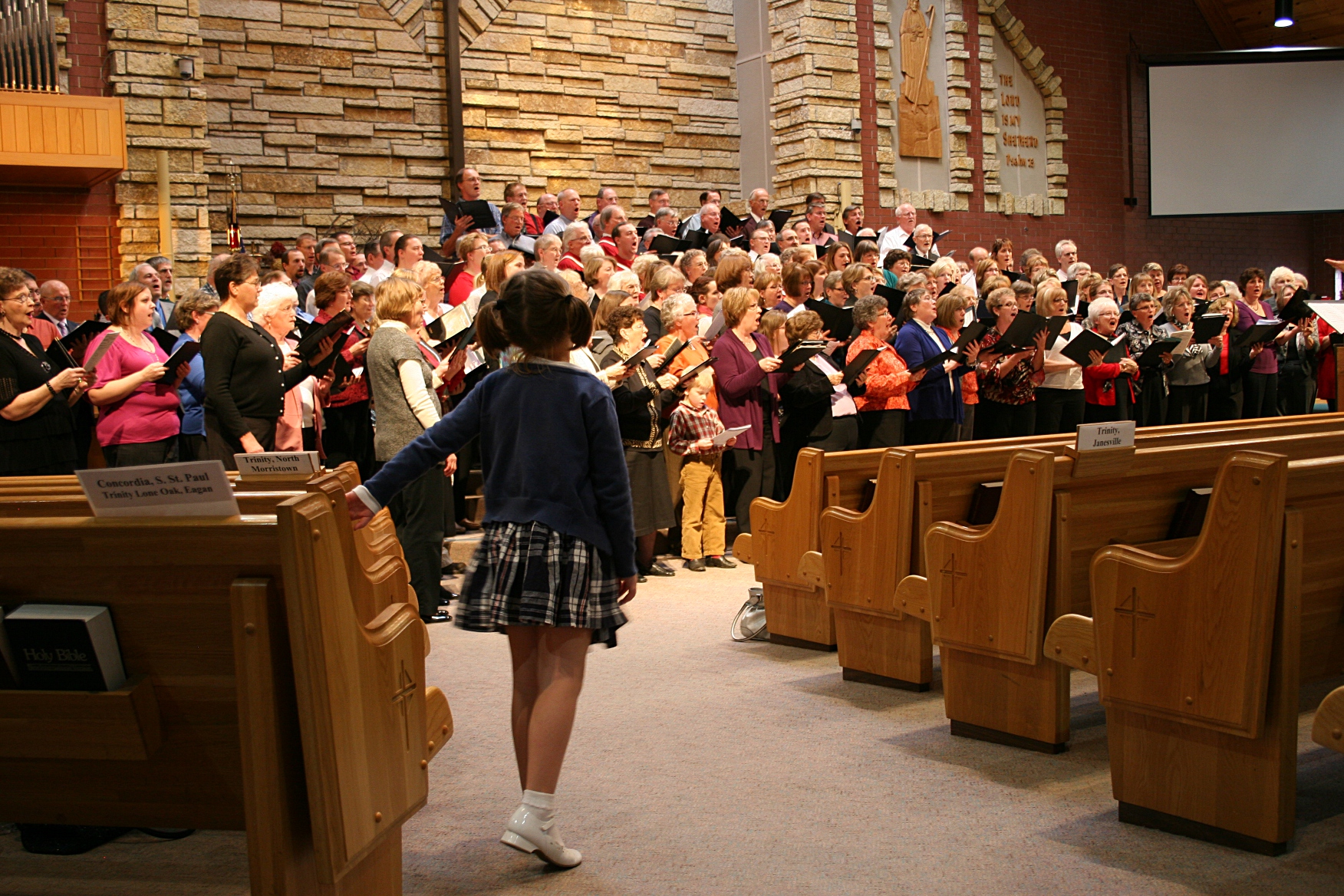
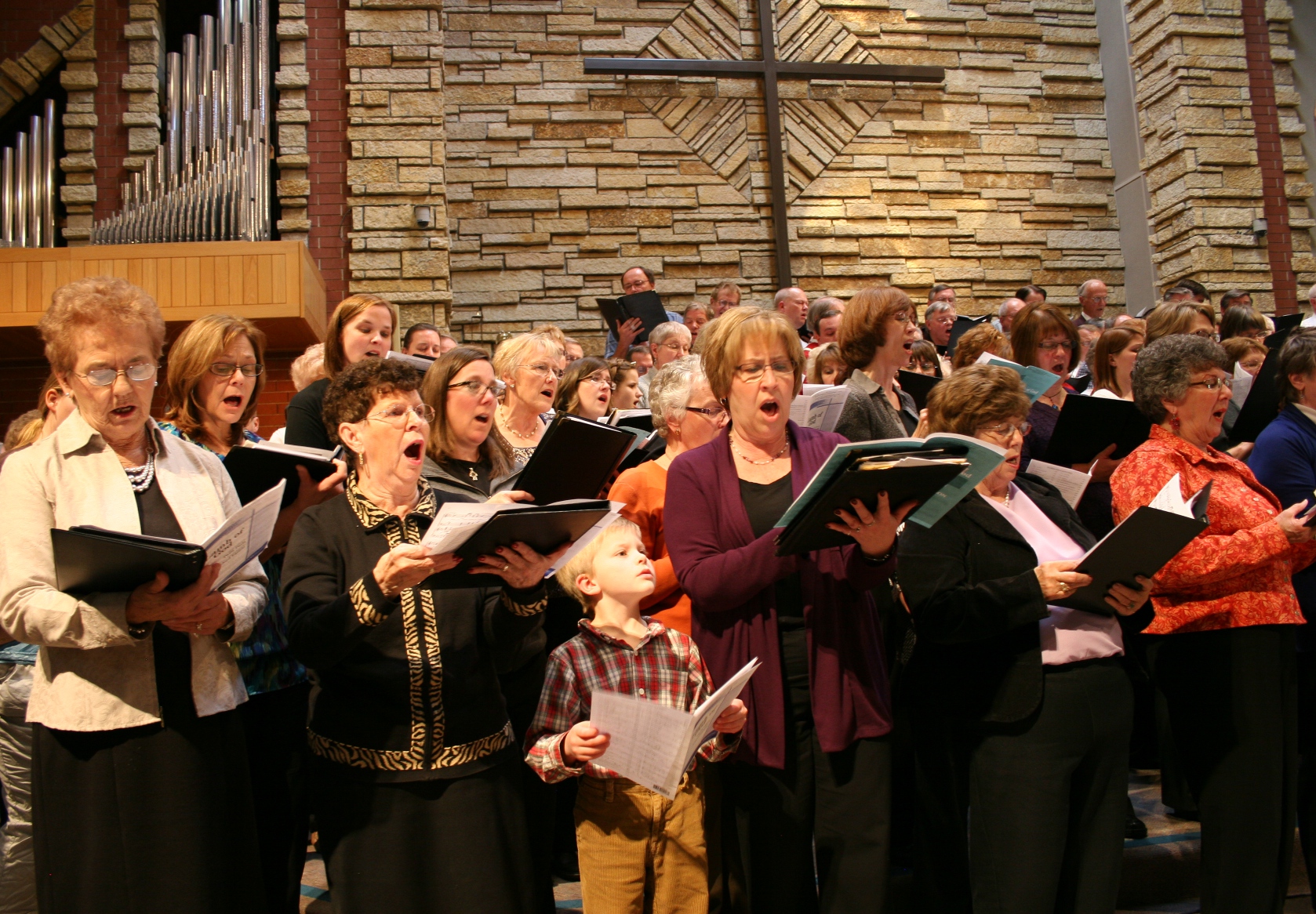
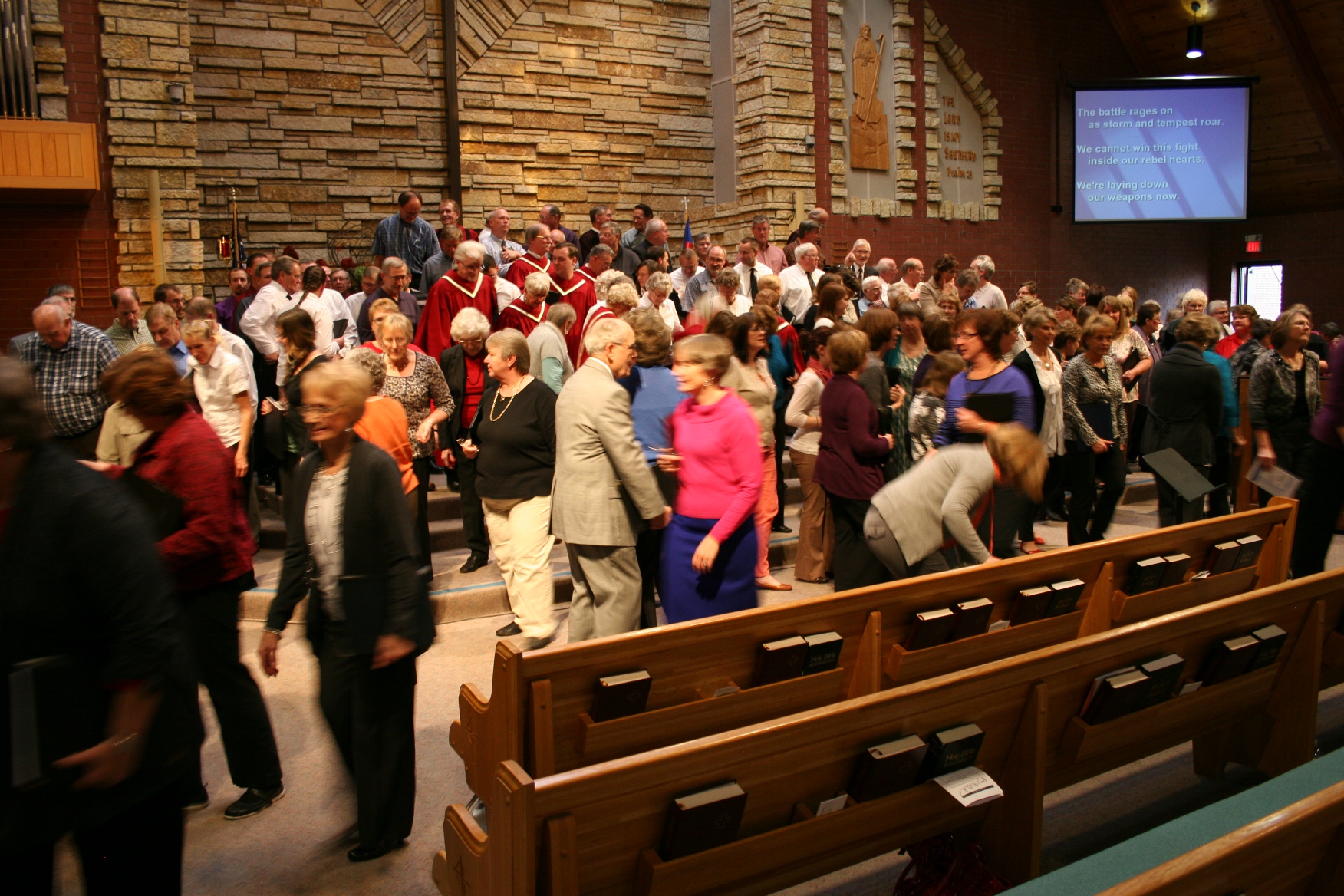
Choir members from 11 churches sing four songs in closing the choral festival.

That shot came near the end of a 1 ½ hour Festival of Choirs event Sunday afternoon at my church, Trinity Lutheran in Faribault. Choir members from churches in Eagan, Faribault, Inver Grove Heights, Janesville, Morristown, Northfield, North Morristown, South St. Paul, Stewartville and Waseca performed separately before joining in singing four songs of praise, thanksgiving and hallelujahs.

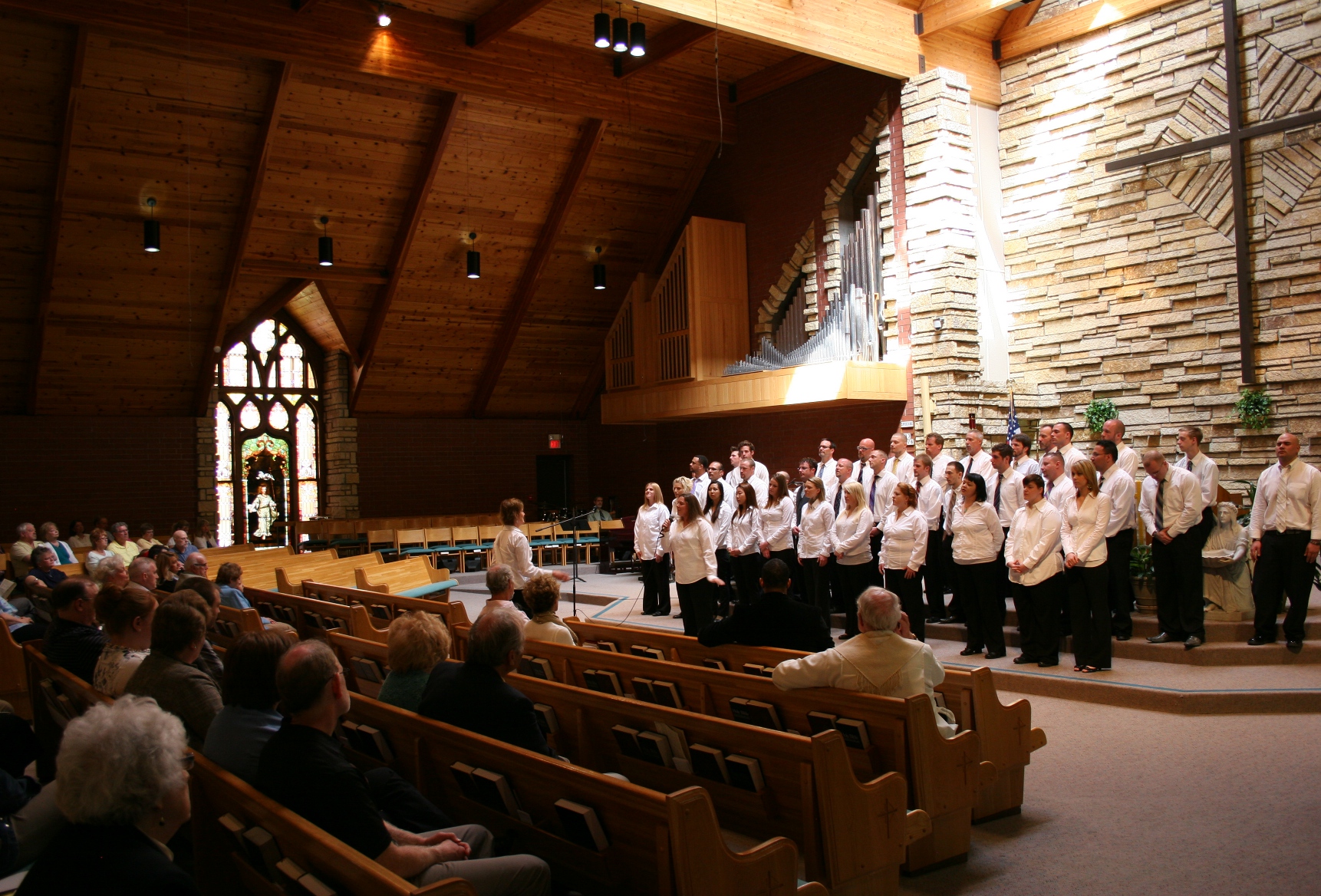
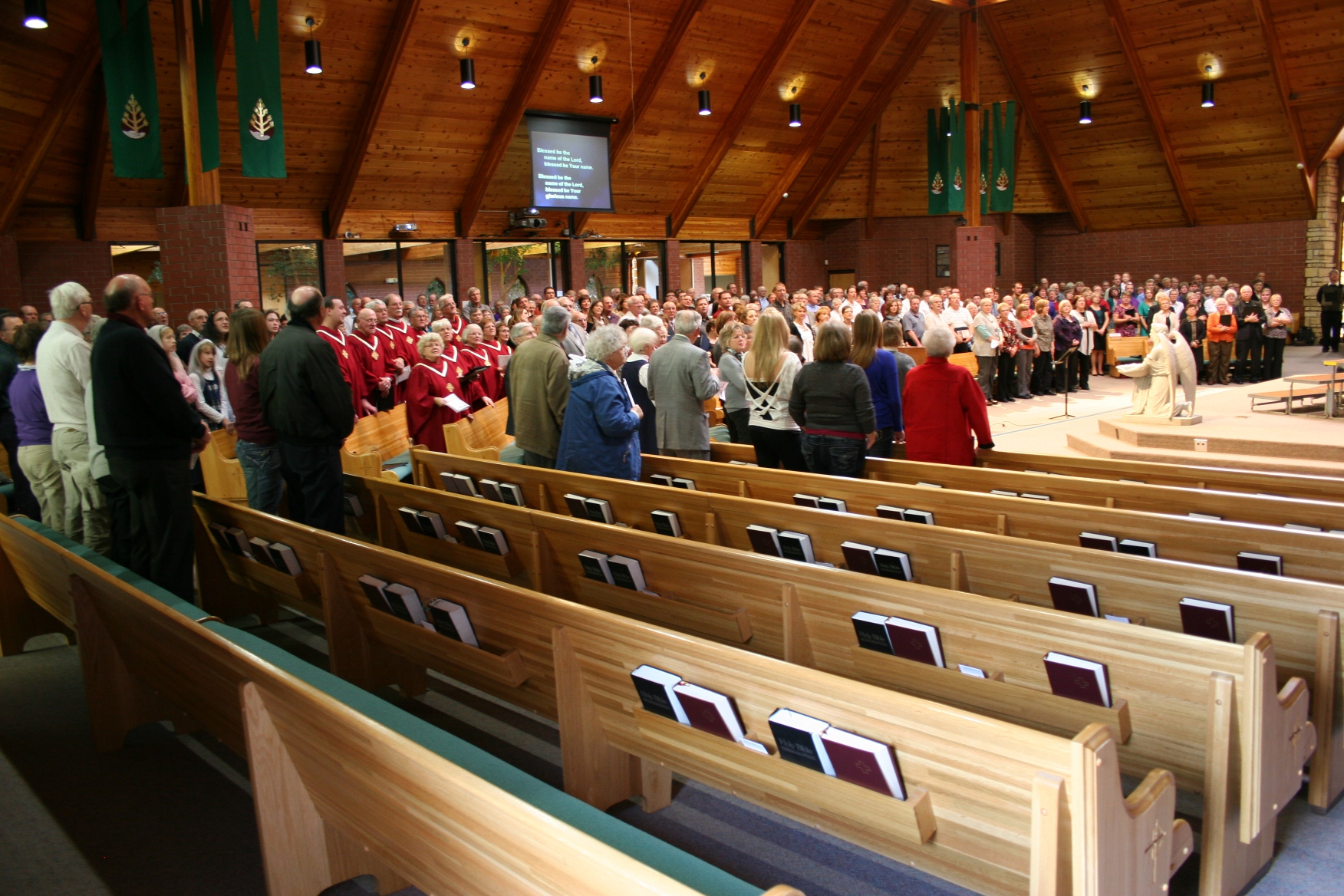
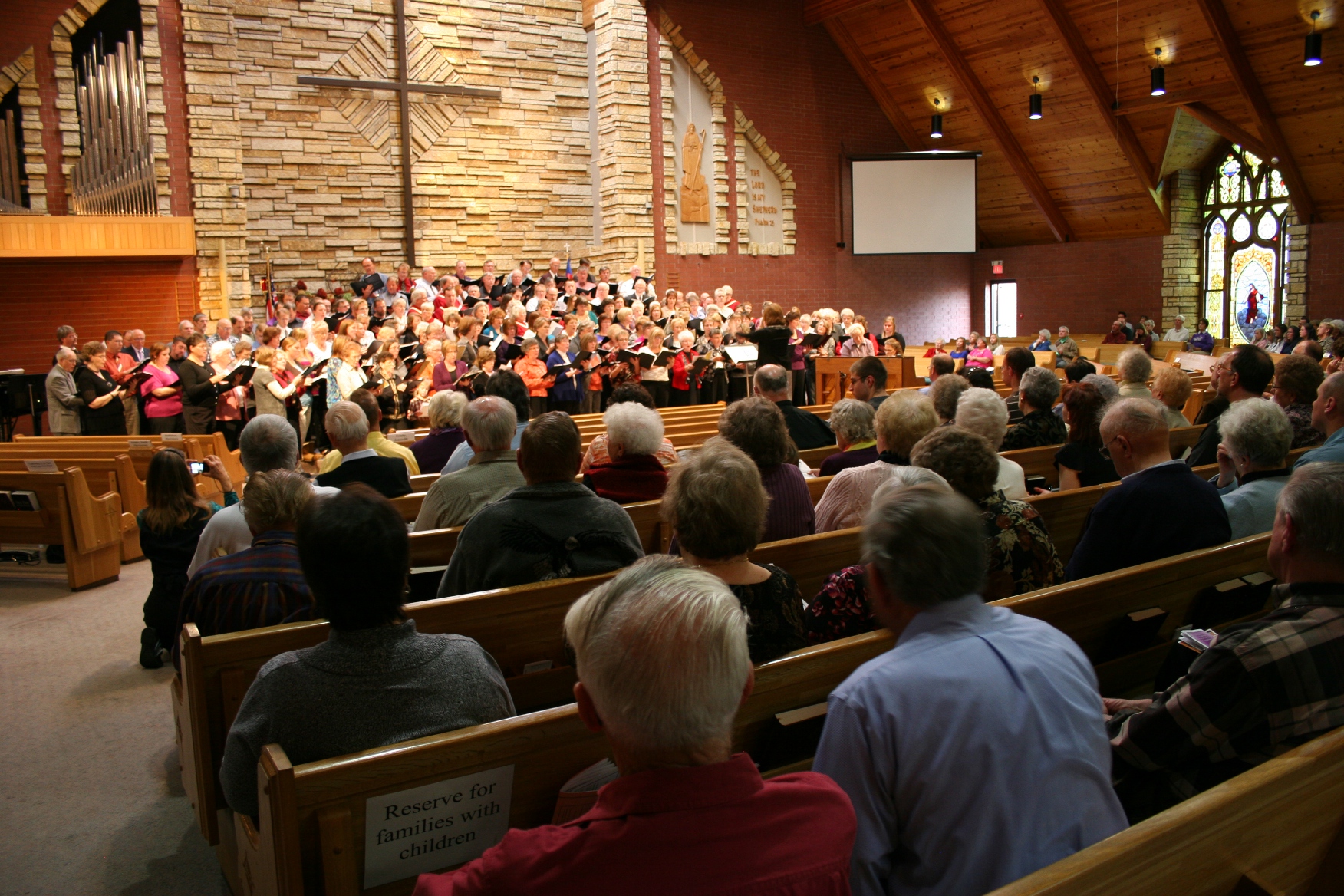
Congregation and mass choir, a side view.

Now, when I cover an event like this, I do not simply stand at the back of the church aiming my camera lens forward. Oh, no. I rove, searching for photo ops and angles that will tell a story. That is the photojournalist, and artist, in me emerging.

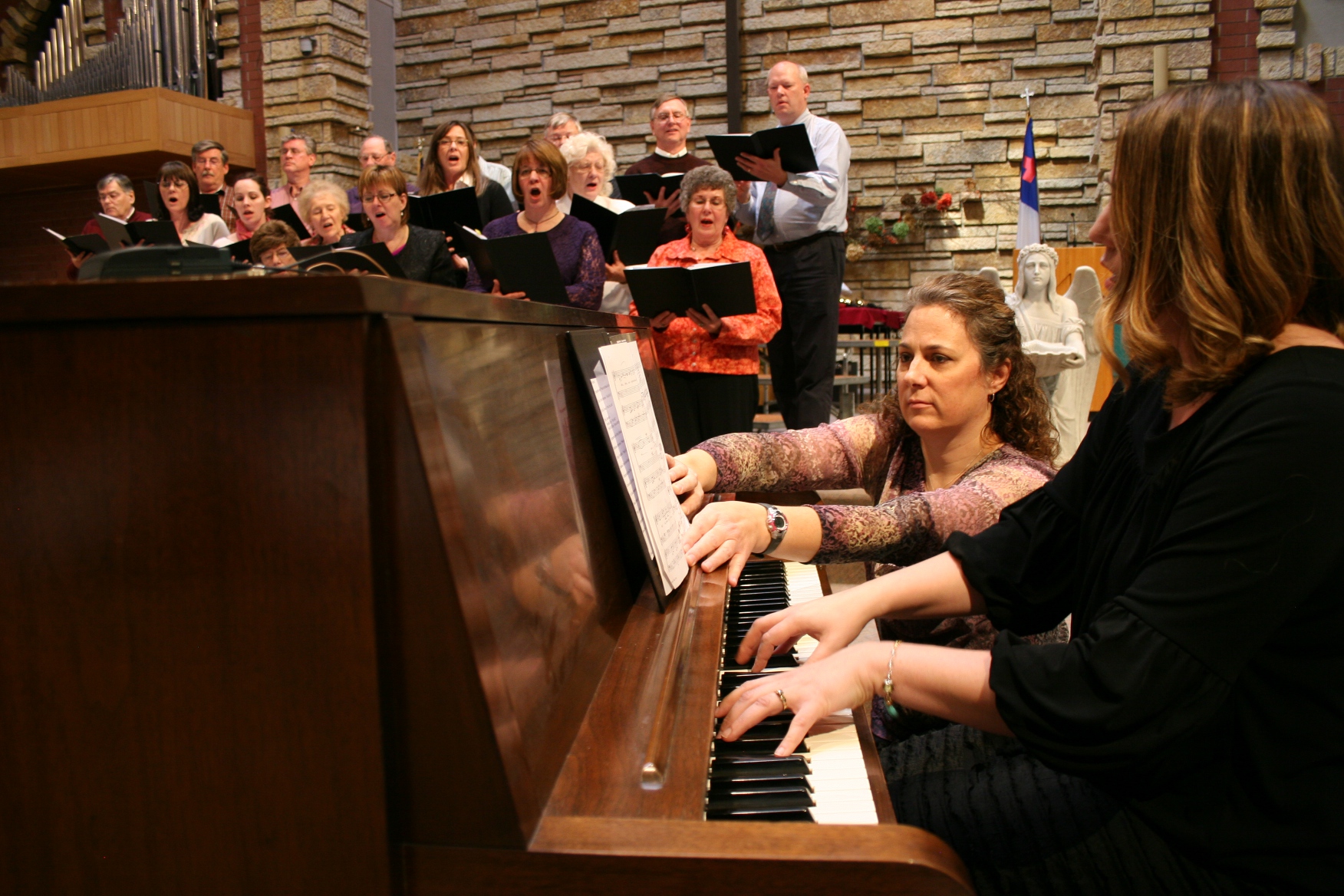
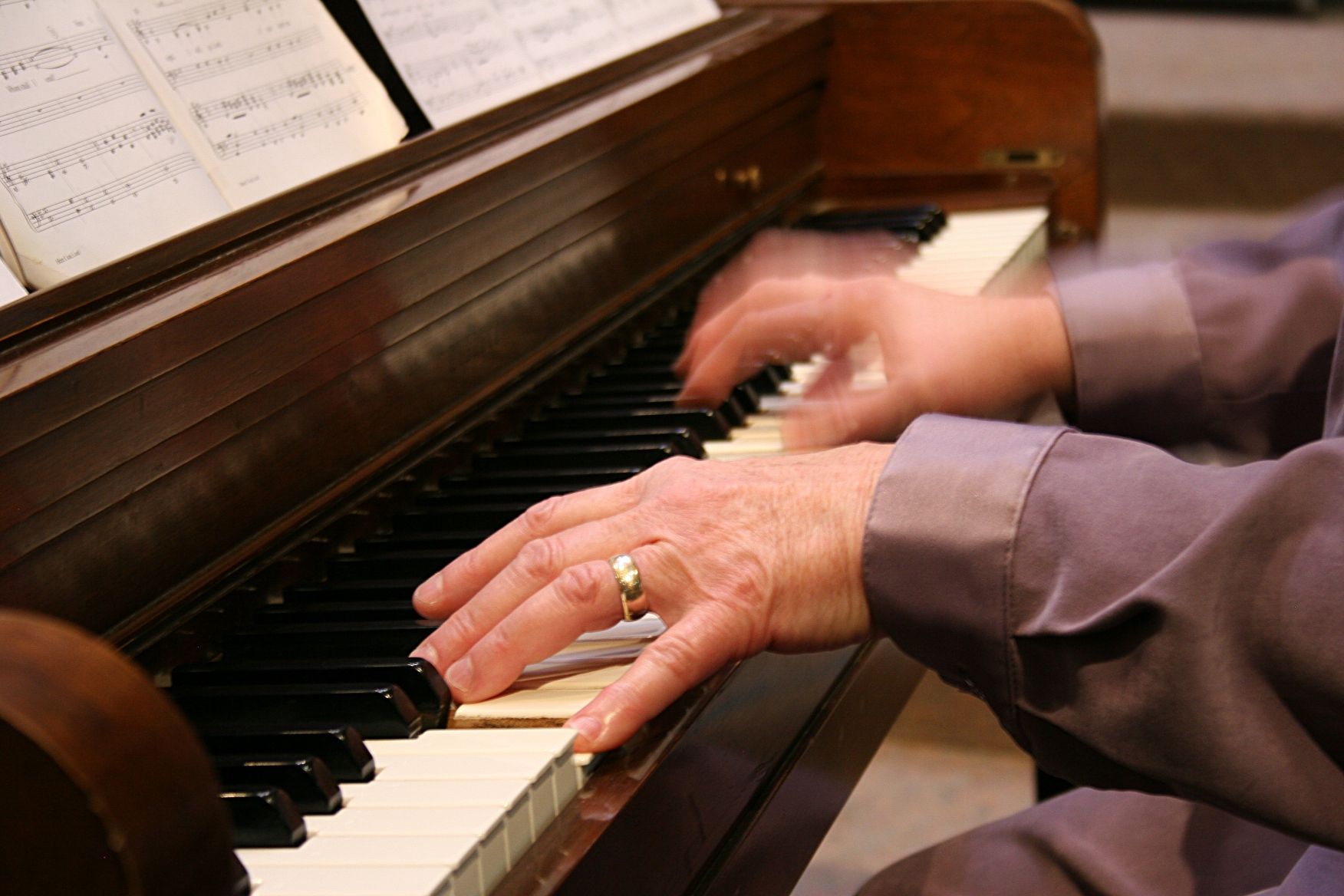
A piano’s player’s hands.

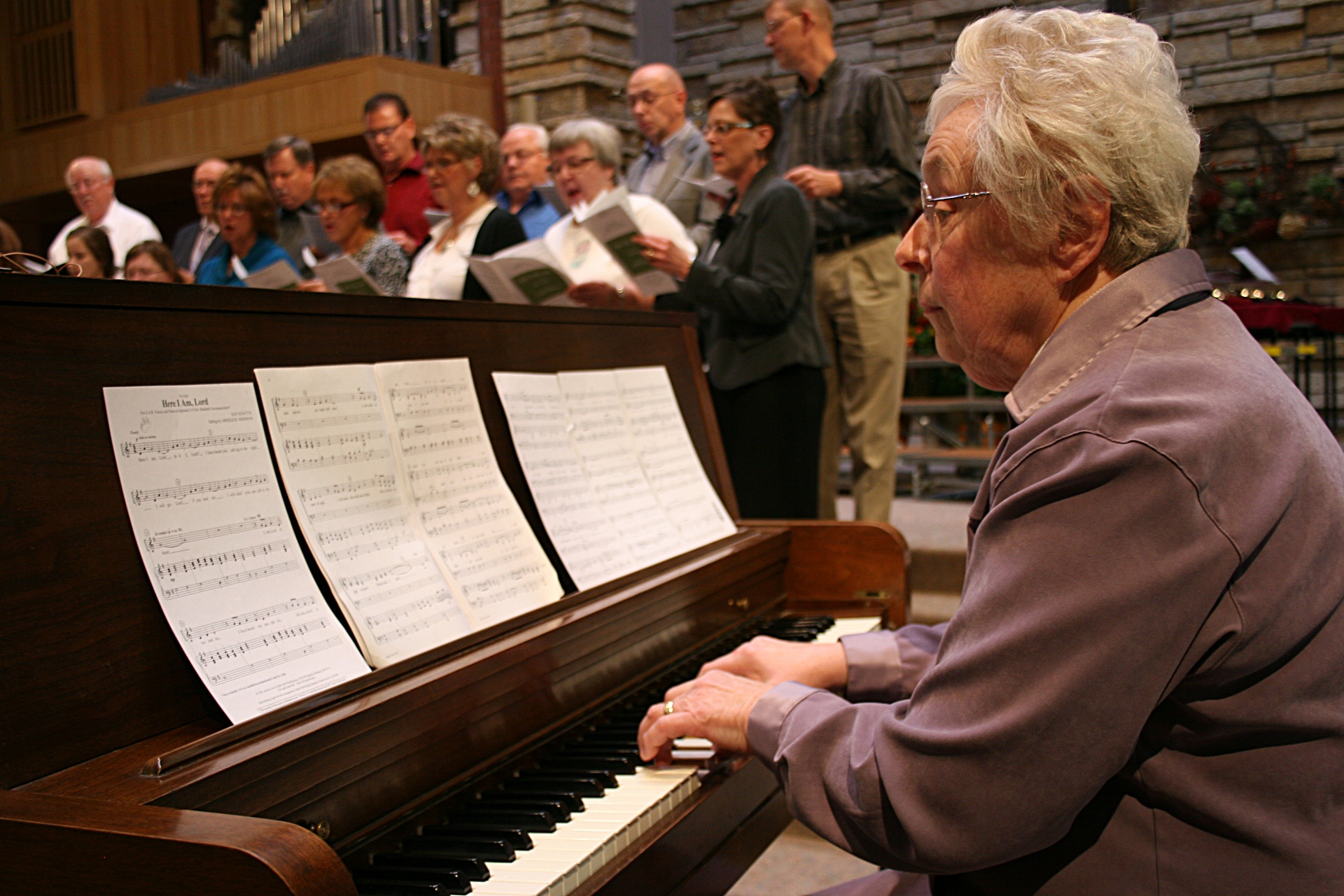
That same piano player and the choir she accompanied.

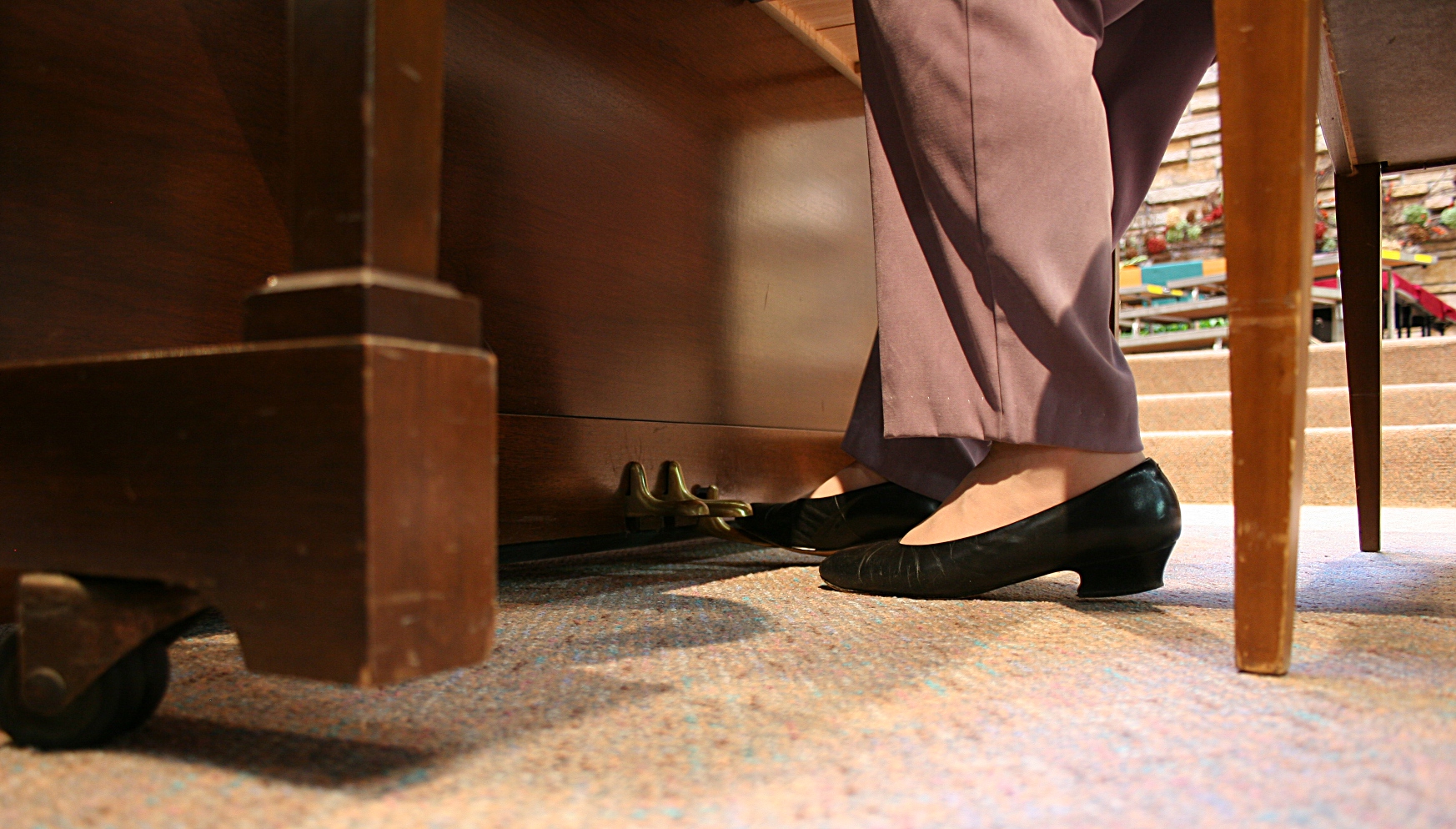
And, of course, the piano player’s feet working the pedals.

My pastor promised that if anyone got upset about me ranging here and there taking photos, they could speak to him. With that pastoral blessing, I set to work, moving from side-to-side of the sanctuary, tucking myself behind pillars, crouching beside pews, scooting along pews, crawling, squatting and, finally, for that mega choir group shot, climbing onto a chair.

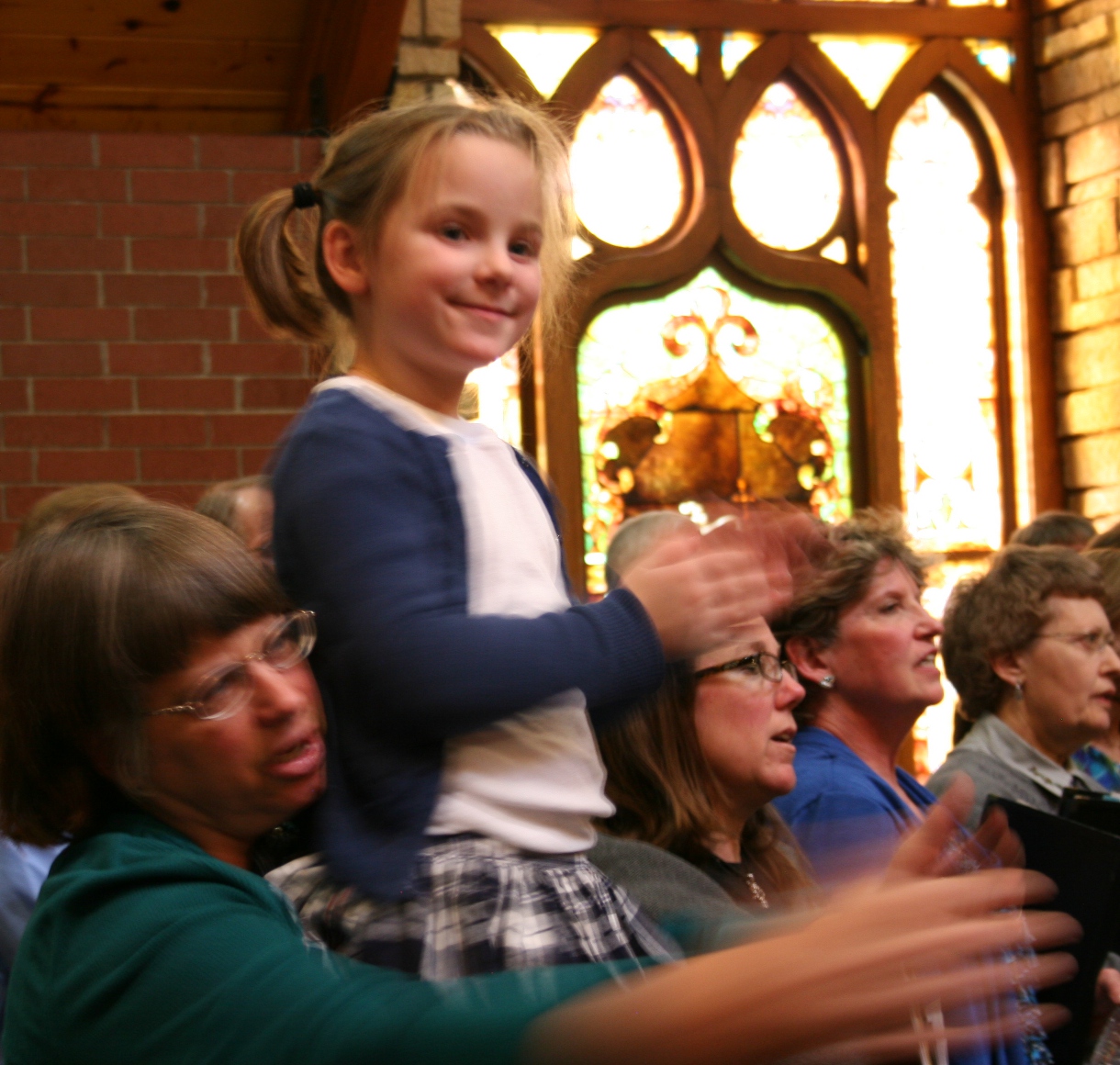
Proof that even kids need someone to lean on while standing on a pew. This is not technically a perfect image. But look at that little girl’s face. Pure joy as she and, I assume, grandma, clap to the music.

At one point, I even slipped off my shoes and stepped onto a back pew, leaning on a stranger’s shoulder for balance. A spongy pew cushion does not make for a stable perch.

Because I shoot without flash, I knew I had to hold my camera perfectly still with each shot. I also knew that would not happen. But that is the beauty of shooting digital. Overshoot and you’re bound to have enough “good” photos.

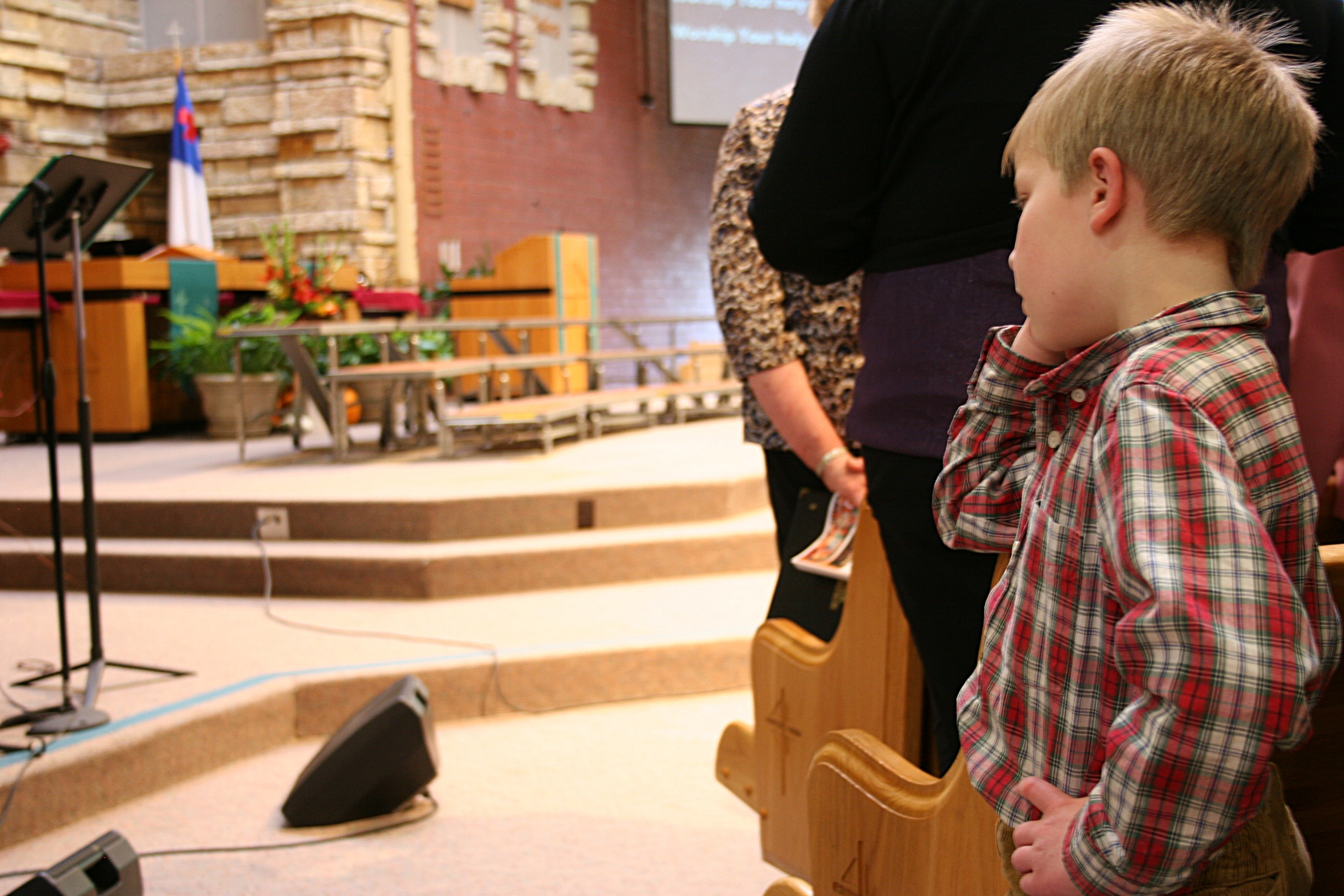
I watched this boy, a member of the Trinity Lutheran Church, North Morristown, choir, for awhile before capturing this moment.

I was also acutely aware that simply photographing choirs performing at the front of the church would not make for particularly interesting shots. So I watched for the personal moments, the snippets that comprise the whole.

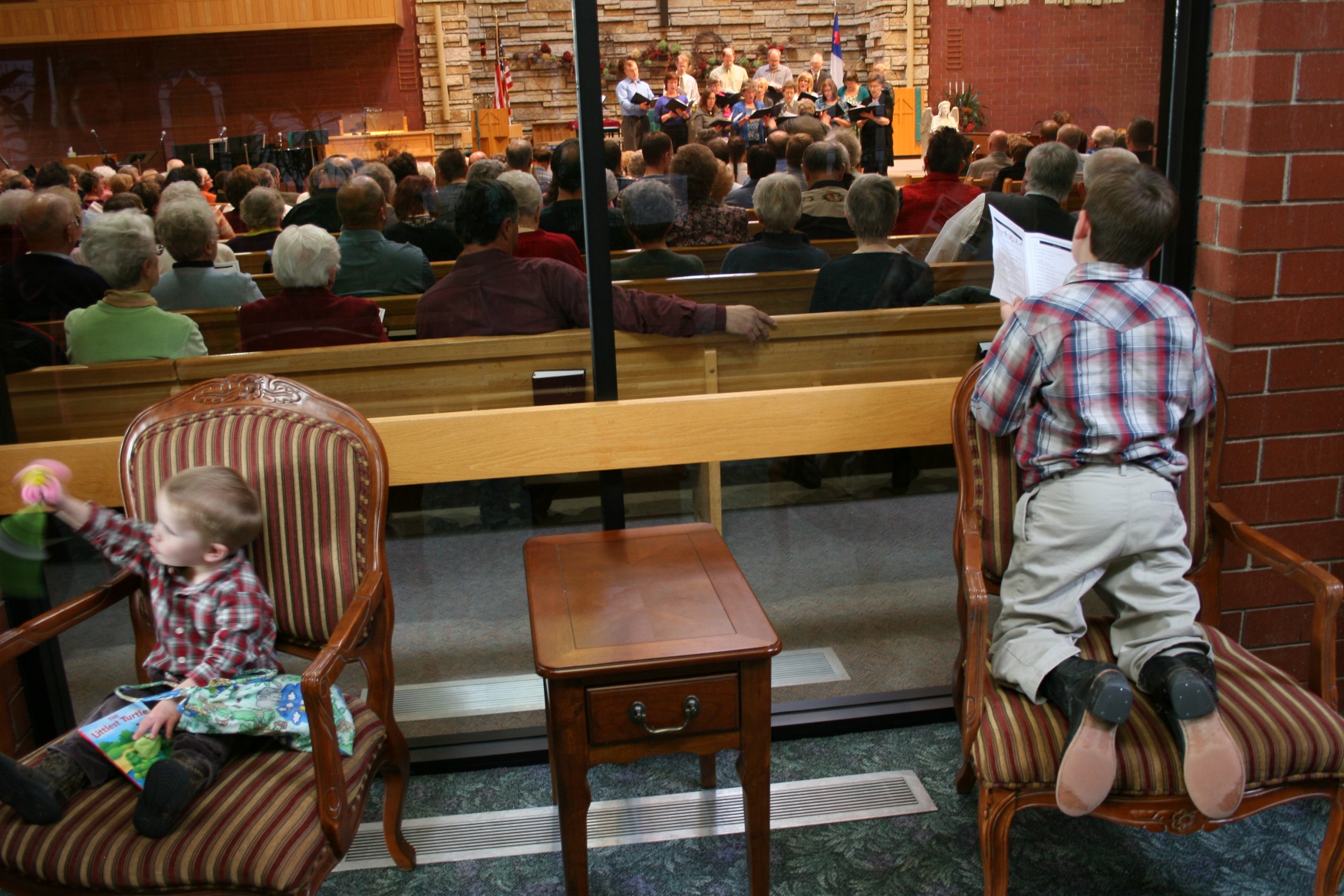
My favorite photo of the day came quite unexpectedly as I was walking through the narthex. These brothers, brothers to the boy in the above image, were hanging out in the narthex with their mom, one watching the concert, the other not.

That takes patience and observation—consciously choosing to notice individuals and details—and often a bit of luck.

I wanted to show all perspectives of the concert, including that of the pianists.

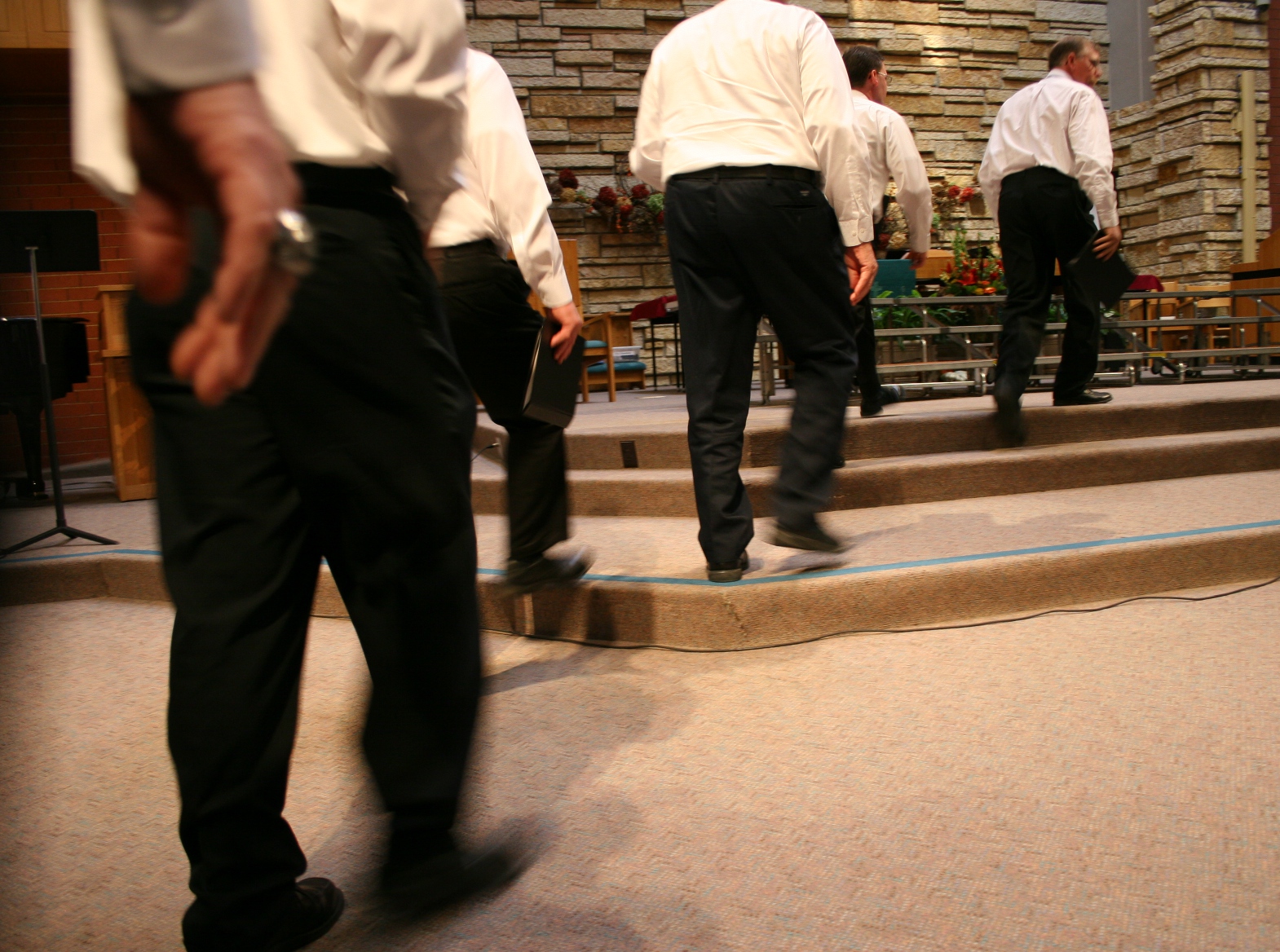
I happened to be on the floor, saw the men from Peace Lutheran walking toward the steps and took one quick shot.

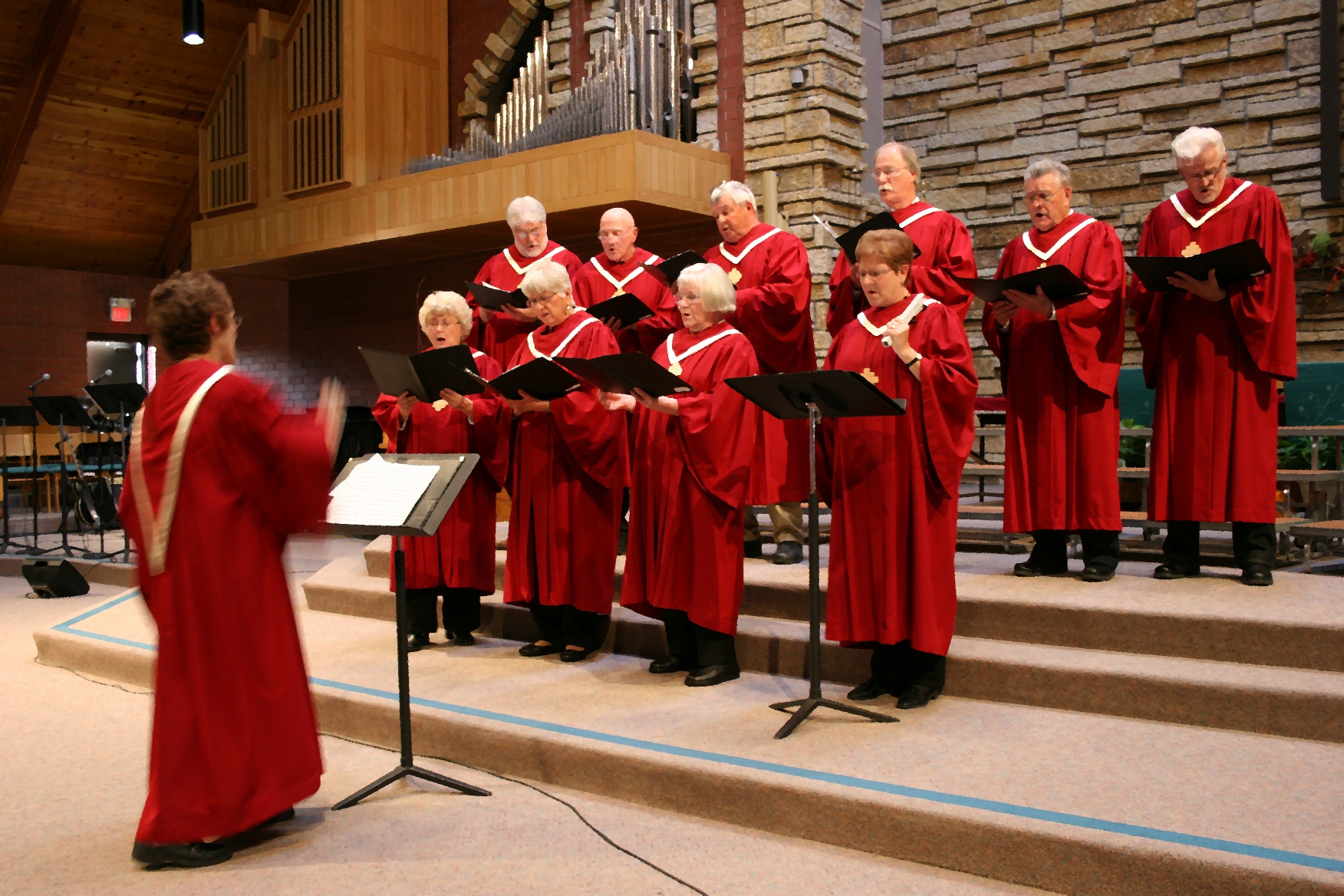
And then I raced to the opposite side of the sanctuary to get this photo of the Peace, Faribault, choir singing.

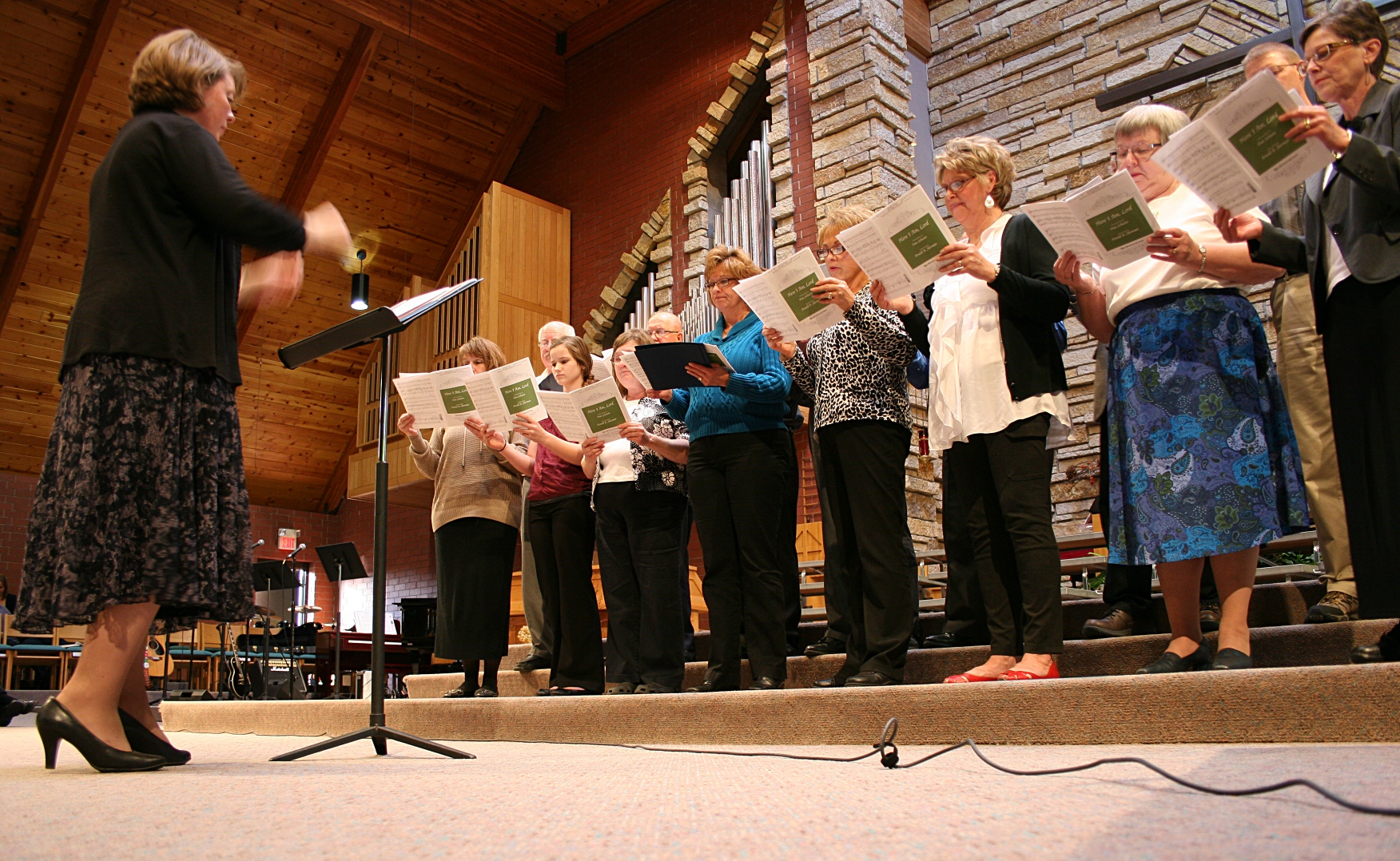
The director of the Trinity Lutheran Church, Northfield, choir exhibited such enthusiasm that I simply had to catch her in motion.

Remember that little girl from earlier? There she is again, watching. She makes me smile.

I set my camera on a front pew and aimed up for this perspective.

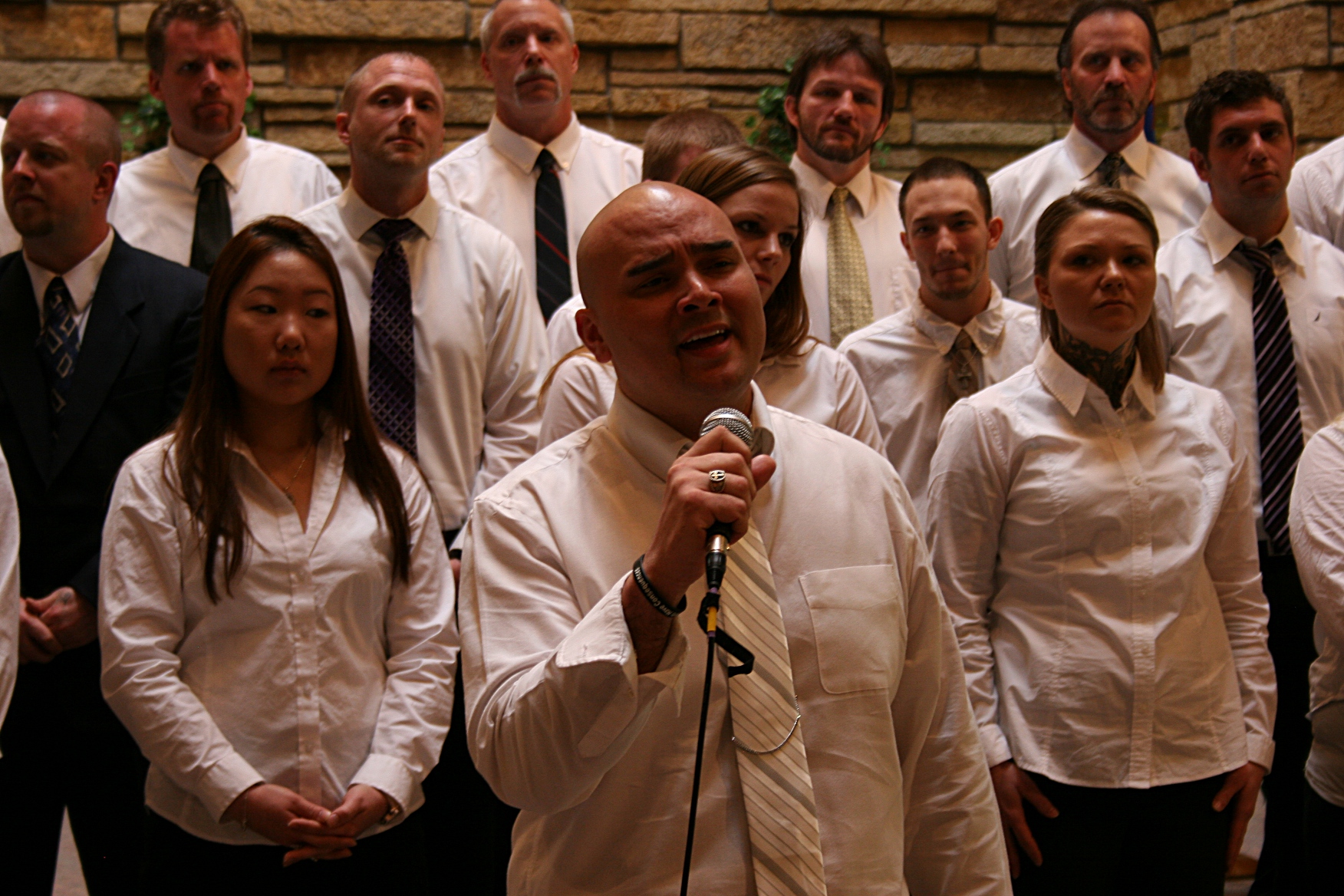
The mass choir can quickly become that, simply a mass, unless you focus. I chose to see the individuals, specifically the little boy in the front row who had lost his place in the music.

While noticing the details is vital to a photo essay, so is the broader view.

The light of late afternoon made the western stained glass window glow in golden tones. Here’s a snippet, Christ’s face.

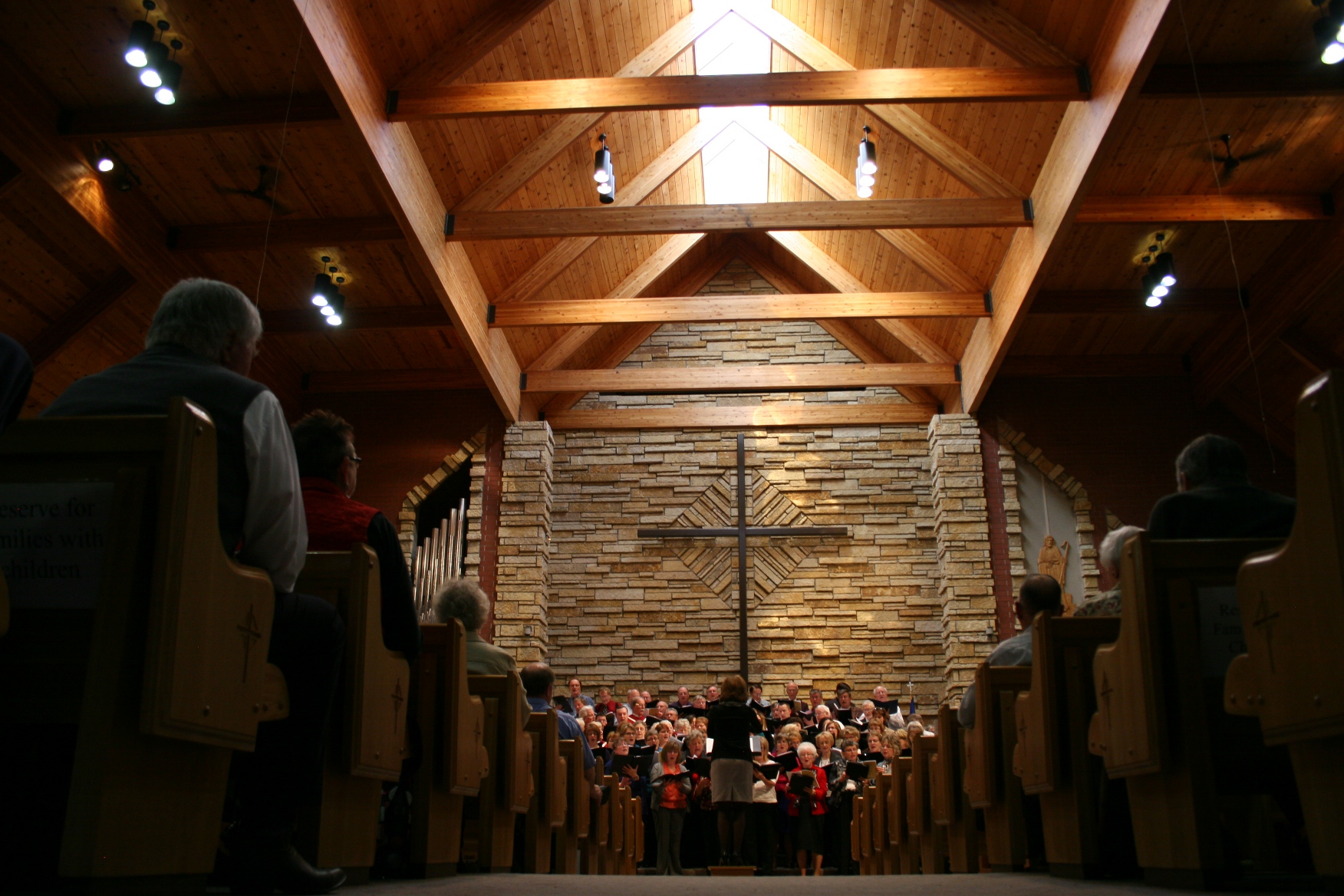
I placed my camera on the floor and shot this mass choir and congregation image, the angle drawing your eye to the cross.

The mass choir disbands and the concert ends.

TO THE ORGANIZERS OF and participants in the choral festival, thank you for blessing us with your musical talents. I cannot read a single note and thus so appreciate those of you who do and who share your gifts.

© Copyright 2012 Audrey Kletscher Helbling
 

Mixing art, music and BBQ at Faribault festival August 12, 2012

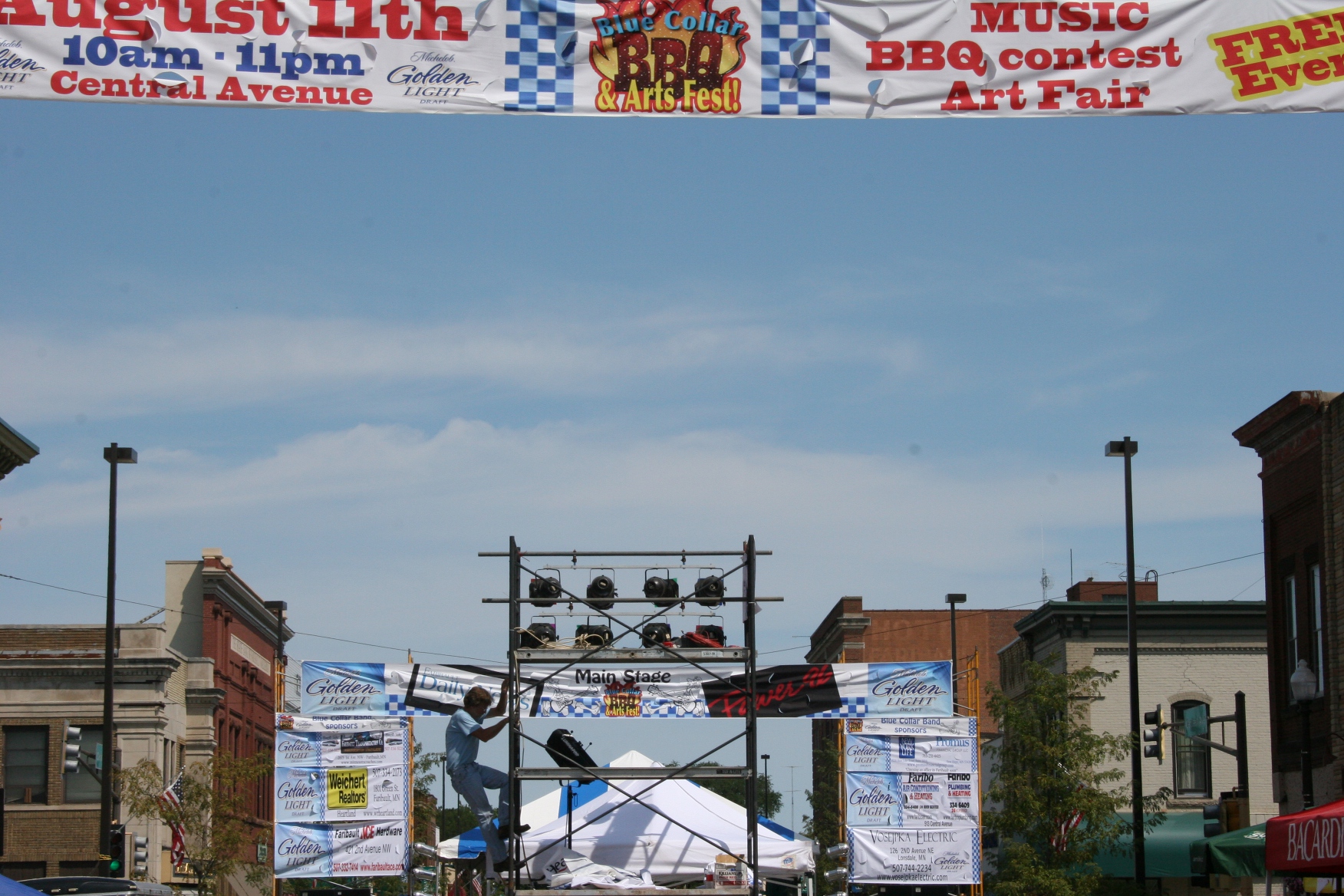
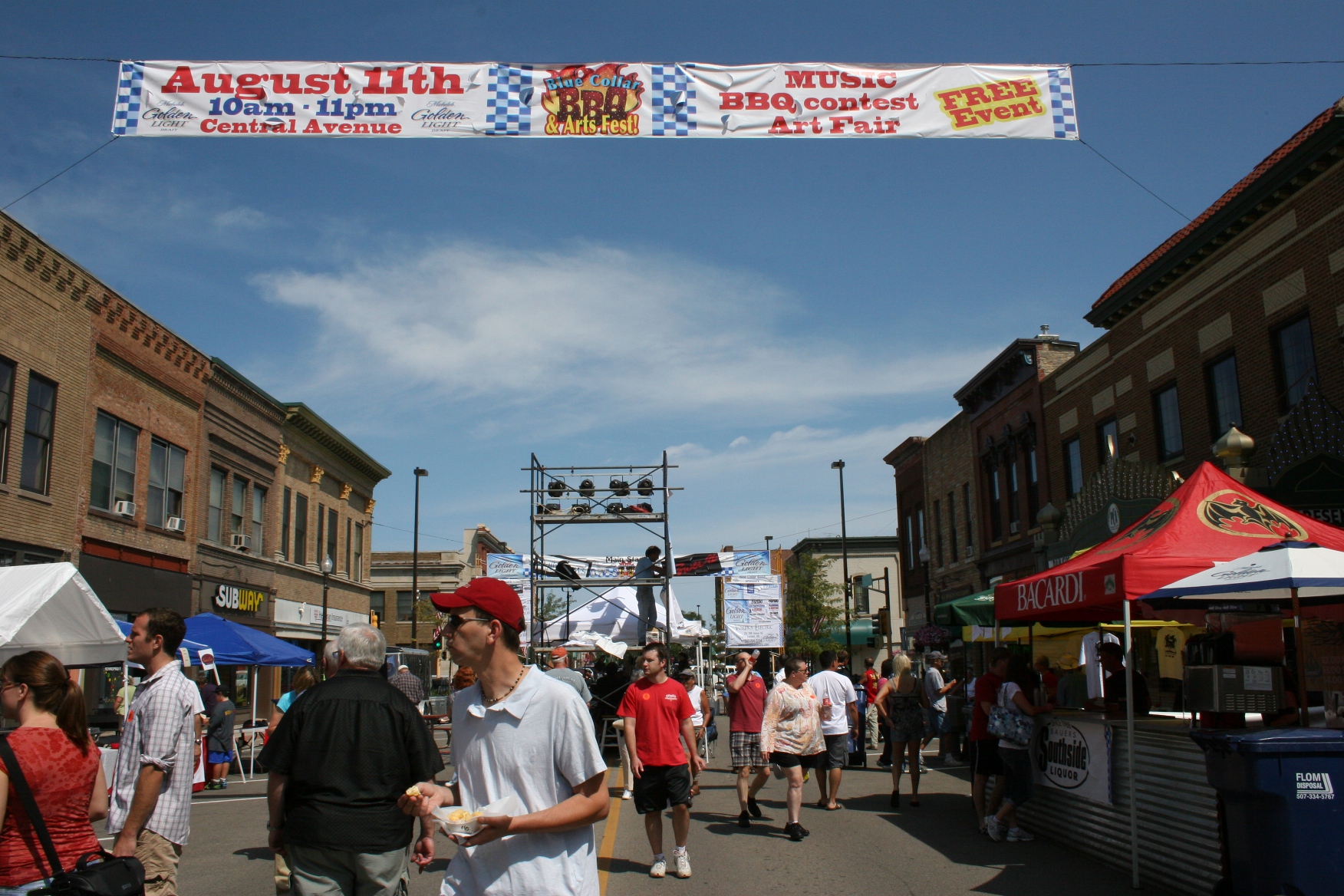
The banner and band scaffolding/set-up in the 300 block of Central Avenue during Saturday’s Blue Collar BBQ & Arts Fest in Faribault

FROM DEAFENING MUSIC that bounced between historic buildings along Faribault’s Central Avenue, to the savory taste and tantalizing, smokey smell of barbecued meat to the cheers of onlookers when a local celebrity plunged into the dunk tank to the clink of washers against asphalt in the washer tournament to human faces morphing, via paint, into animal faces, offerings at the fourth annual Blue Collar BBQ & Arts Fest in Faribault drew crowds, and smiles, on a picture perfect Saturday.

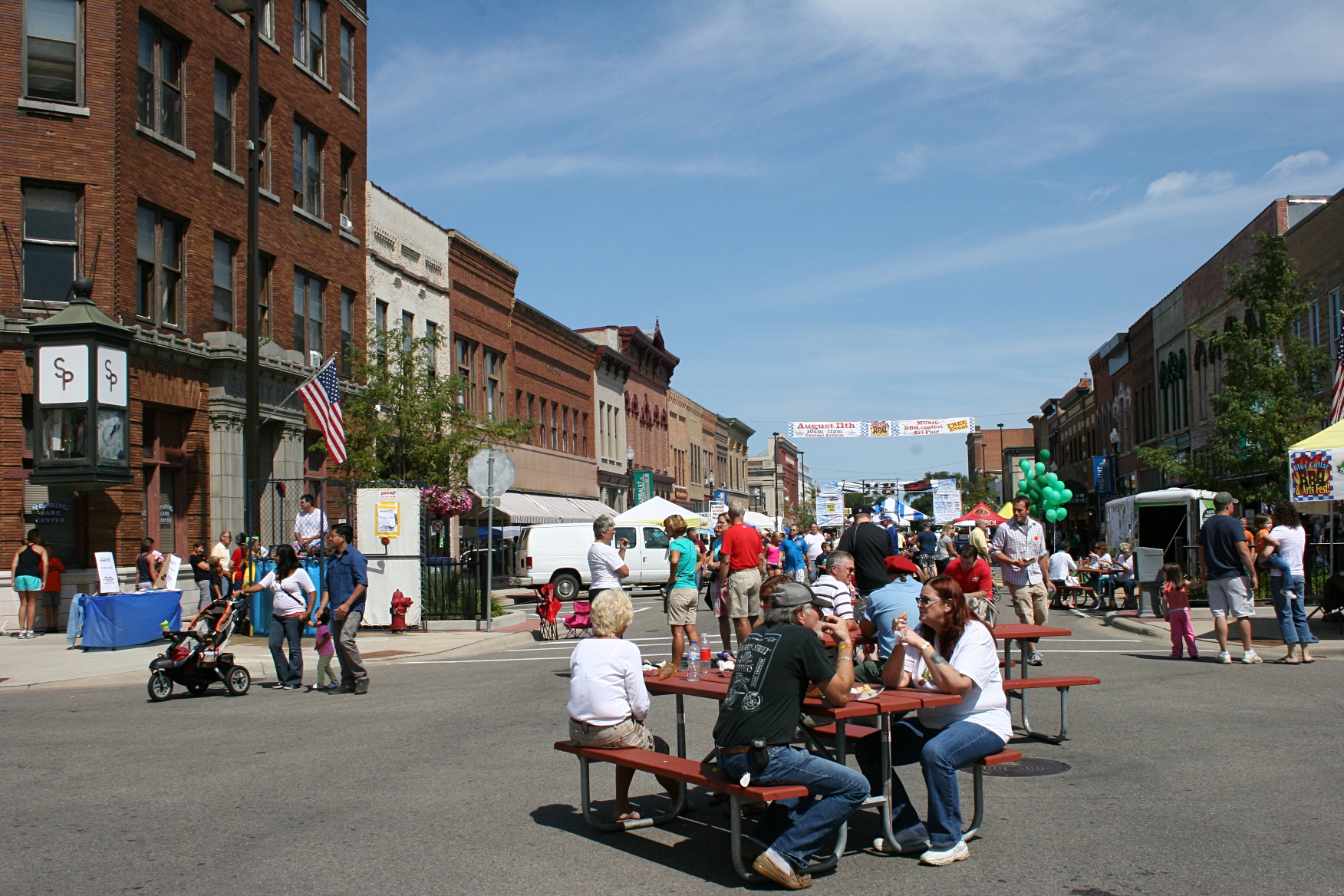
An overview of the crowd early into the event on Saturday, looking to the 300 block of historic downtown Farbault.

Coordinated by the Paradise Center for the Arts, the 13-hour free festival focused on bringing people into the historic downtown to enjoy/participate in the arts, music, food, a BBQ and homemade brew competition, and more.

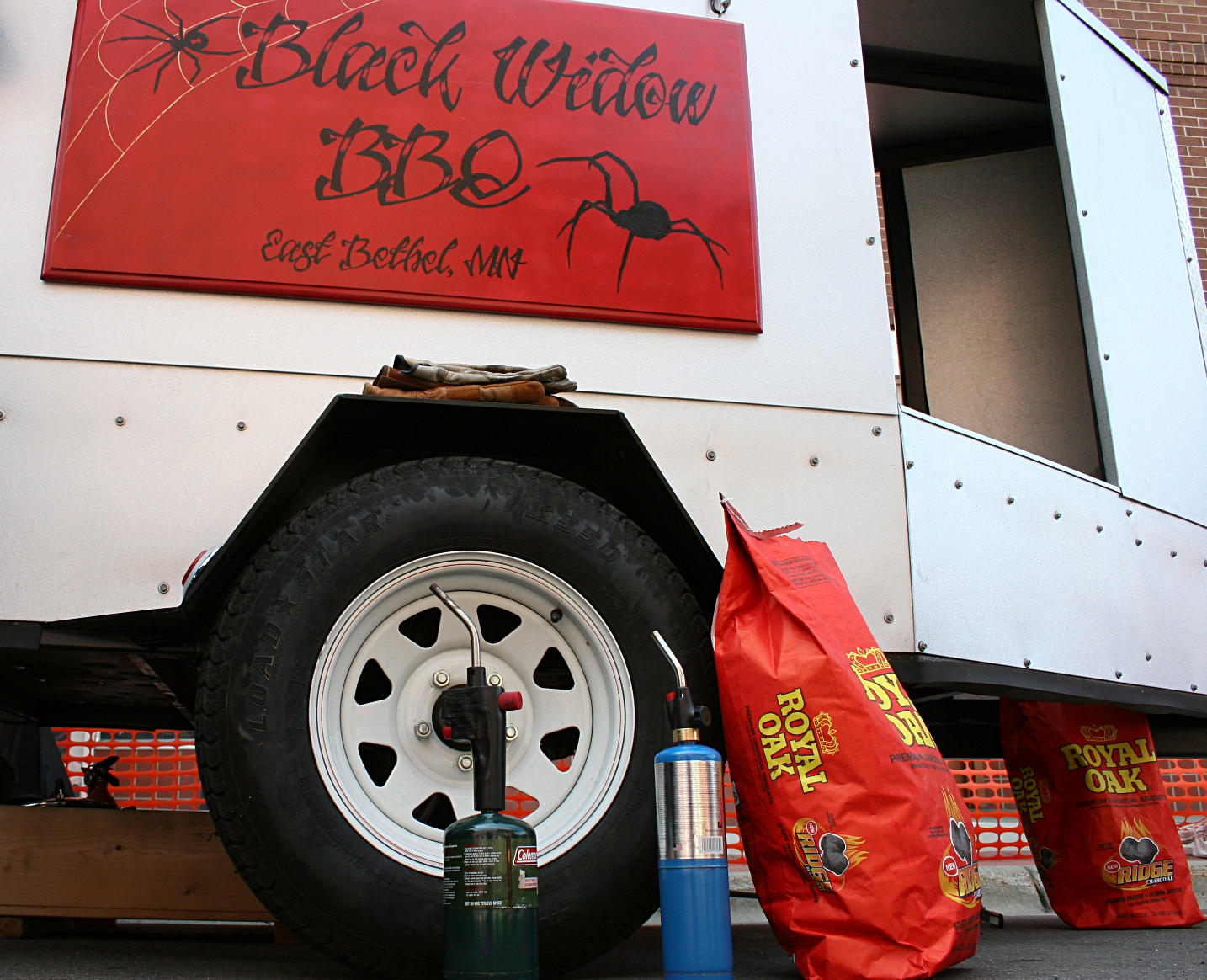
The Black Widow BBQ team, one of about a dozen competing for top prizes of $500 in several categories.

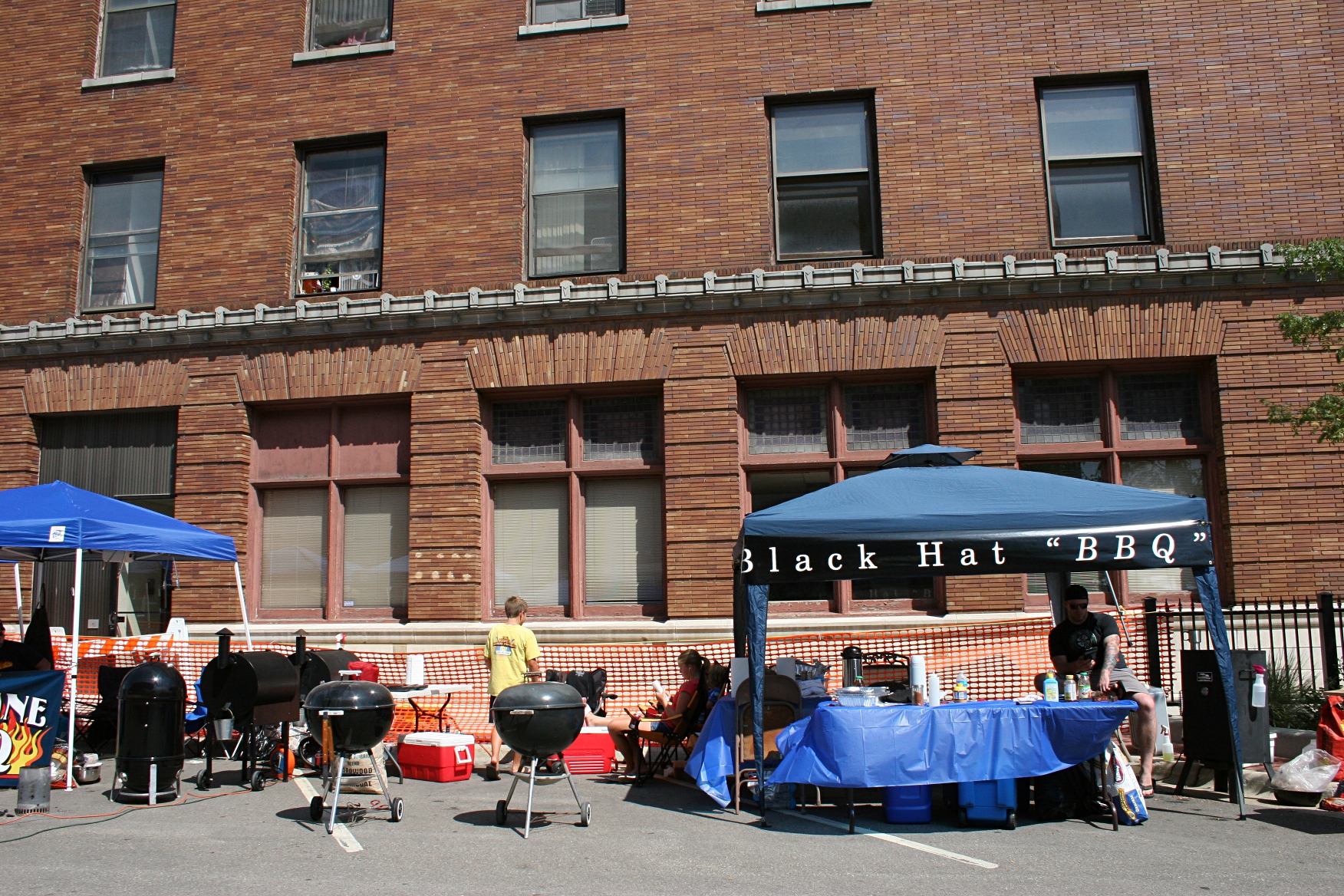
BBQ teams set up along a side street to cook their meats and desserts.

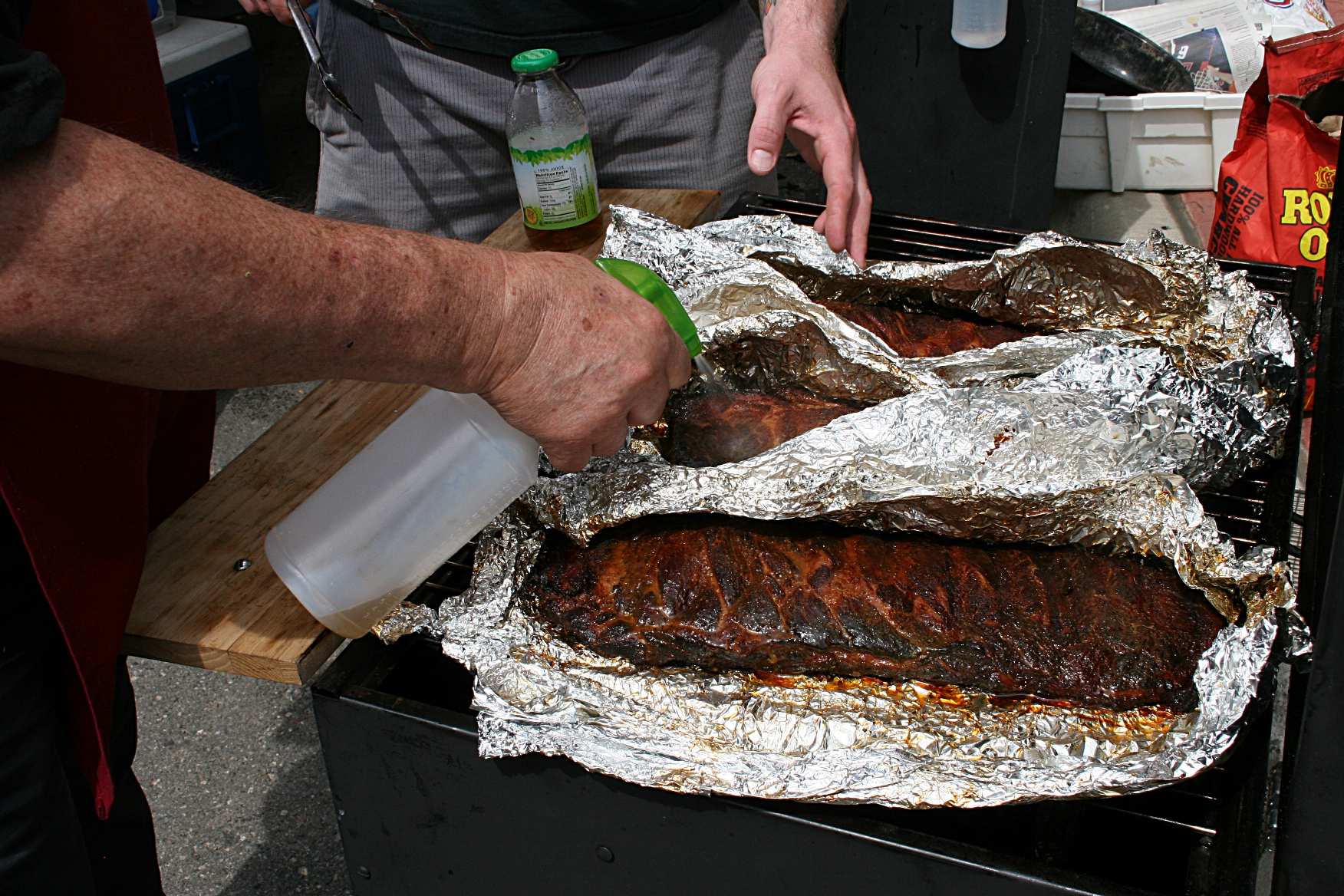
A Texas native, now living in Faribault and a member of The Black Hat “BBQ” team, sprays apple juice onto his St. Louis style pork ribs during the BBQ contest.

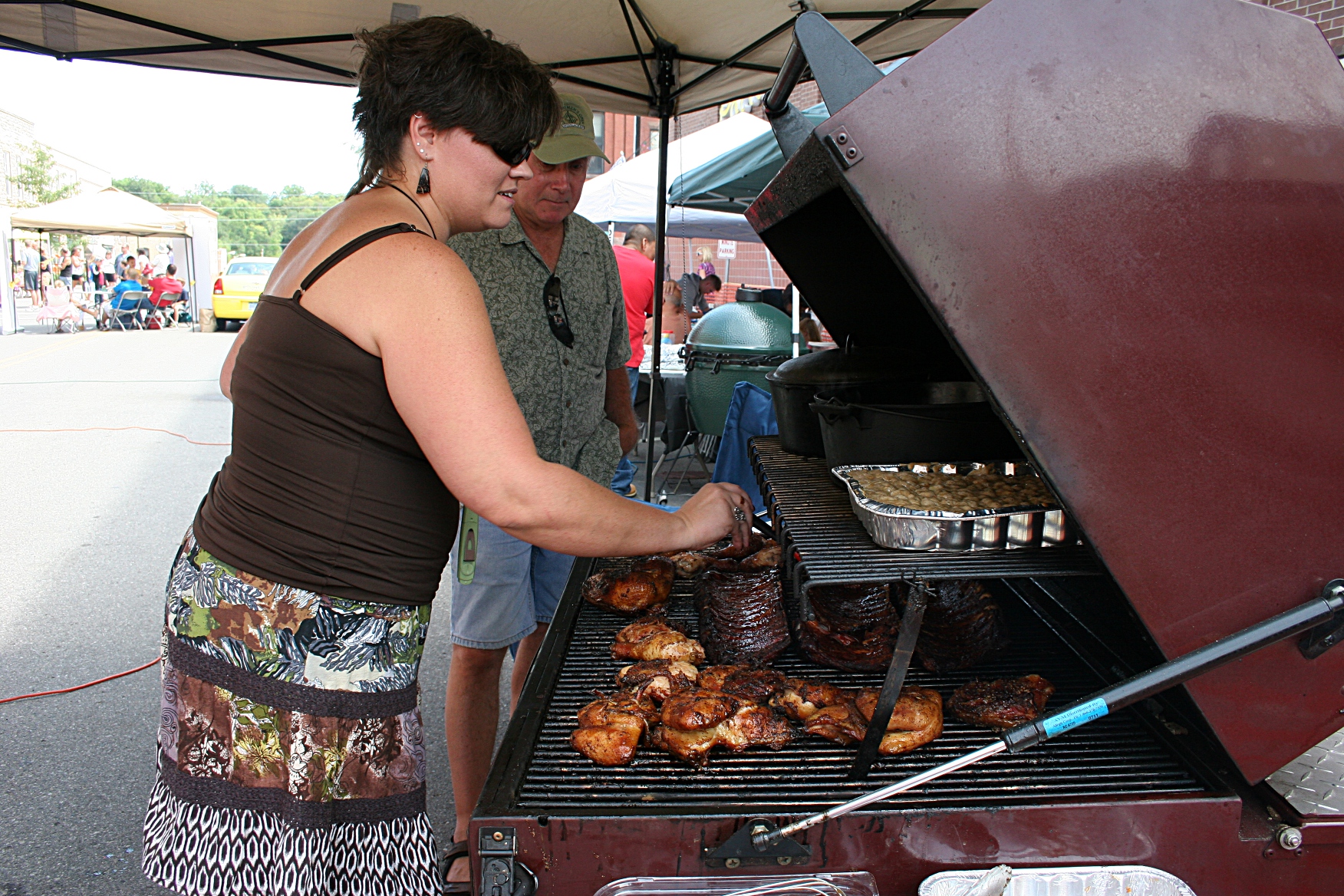
Grill Cabin team members, from New Prague, prepare entries in the BBQ competition.

Retail stores like The Crafty Maven, 212 Central Avenue, at the heart of the arts and crafts fair and kids’ activities, expected an increase in business with an influx of an anticipated 5,000 people into the downtown for the festival. And that’s part of the plan, to celebrate downtown businesses, many of them event supporters. Other businesses in the community also sponsored parts of the festival.

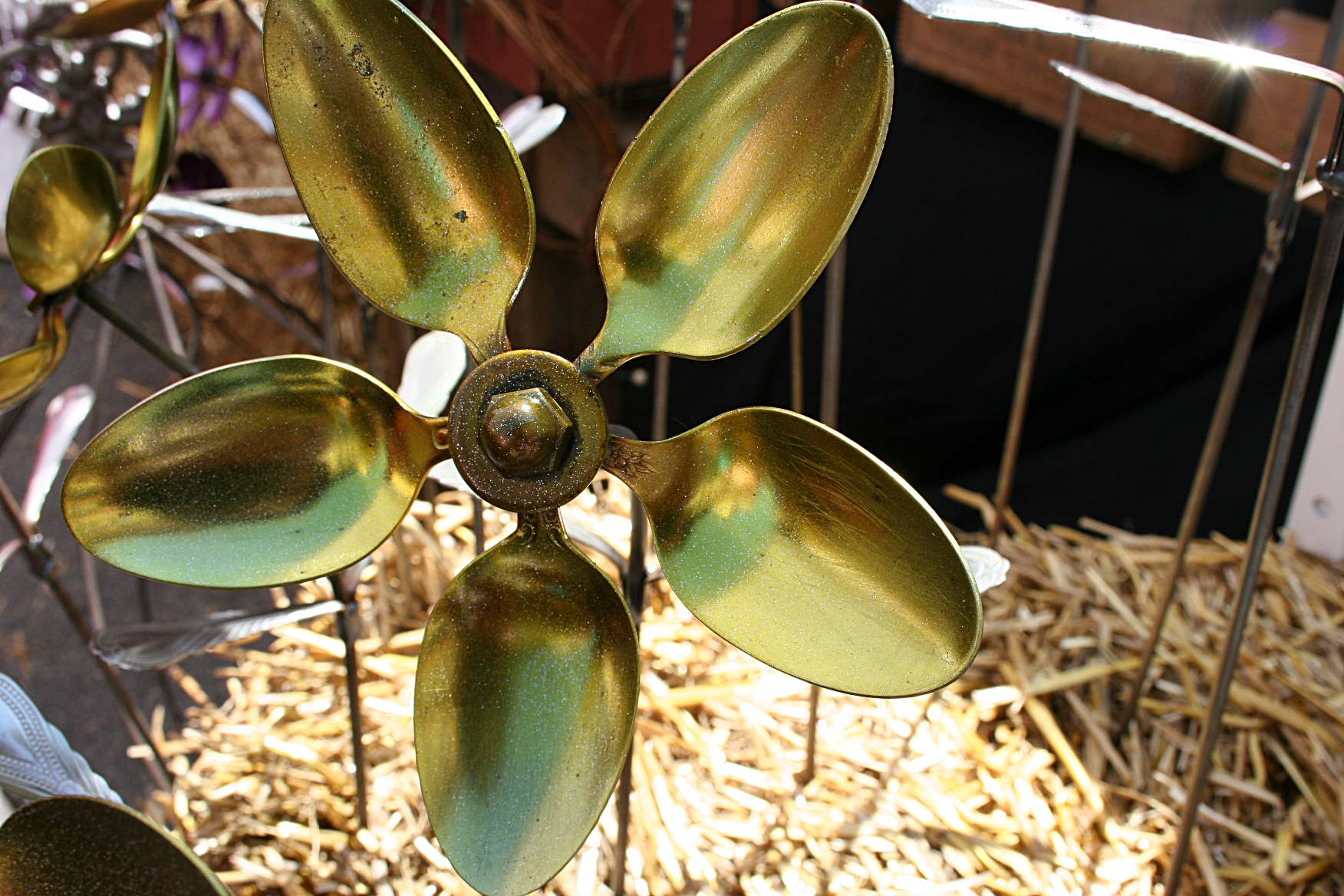
Flower art and more, shaped and welded from old silverware, etc. is helping the DeWall brothers of DeWall Bros Metal Creations of Grand Meadow finance their college educations. Their art was for sale at the arts fest.

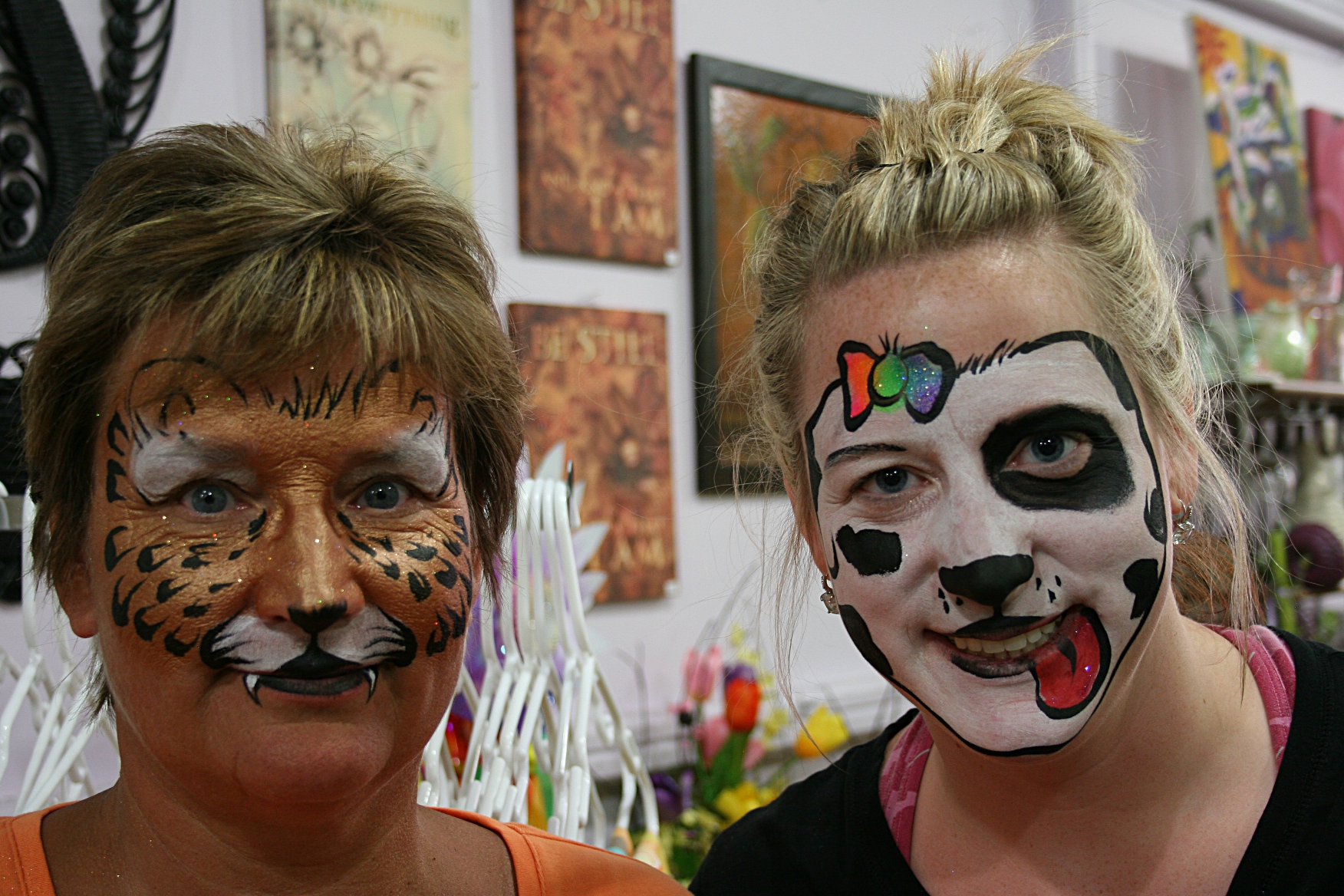
While the DeWall men were peddling their metal art, the women–mom/wife, Cindy, and girlfriend, Allison– were shopping and getting their faces painted by Jodi Gustafson of Big Shoe Entertainment.

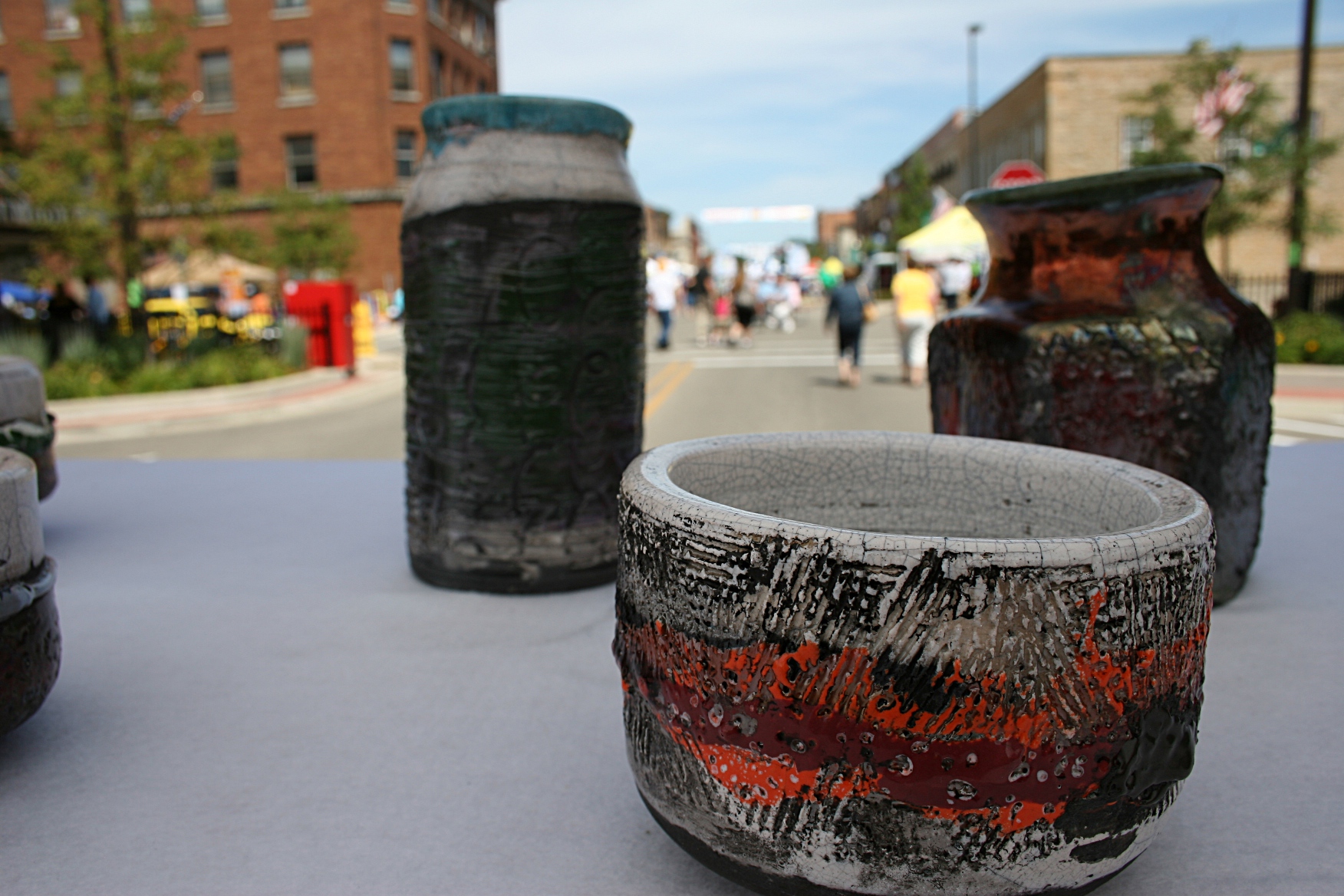
Bob Maegerlein of Rochester, specializing in Raku ware, sold his pottery at the arts fair.

I arrived late morning and wandered for several hours past vendors—wishing I could sample the meat smoking in BBQ contestants’ grills; admiring the artistic creations of artists and a gifted face painter; ducking into the Paradise Center for the Arts to photograph the current art show, Car pARTS; steering mostly clear of the north end of the 300 block of Central because I couldn’t tolerate the volume of the live band music; trying a vendor’s delicious BBQed meat trio sampler that was way overpriced for the quantity (plus, no forks included); and, finally, stopping at Pawn Minnesota and then a Somali clothing shop on my way to the car.

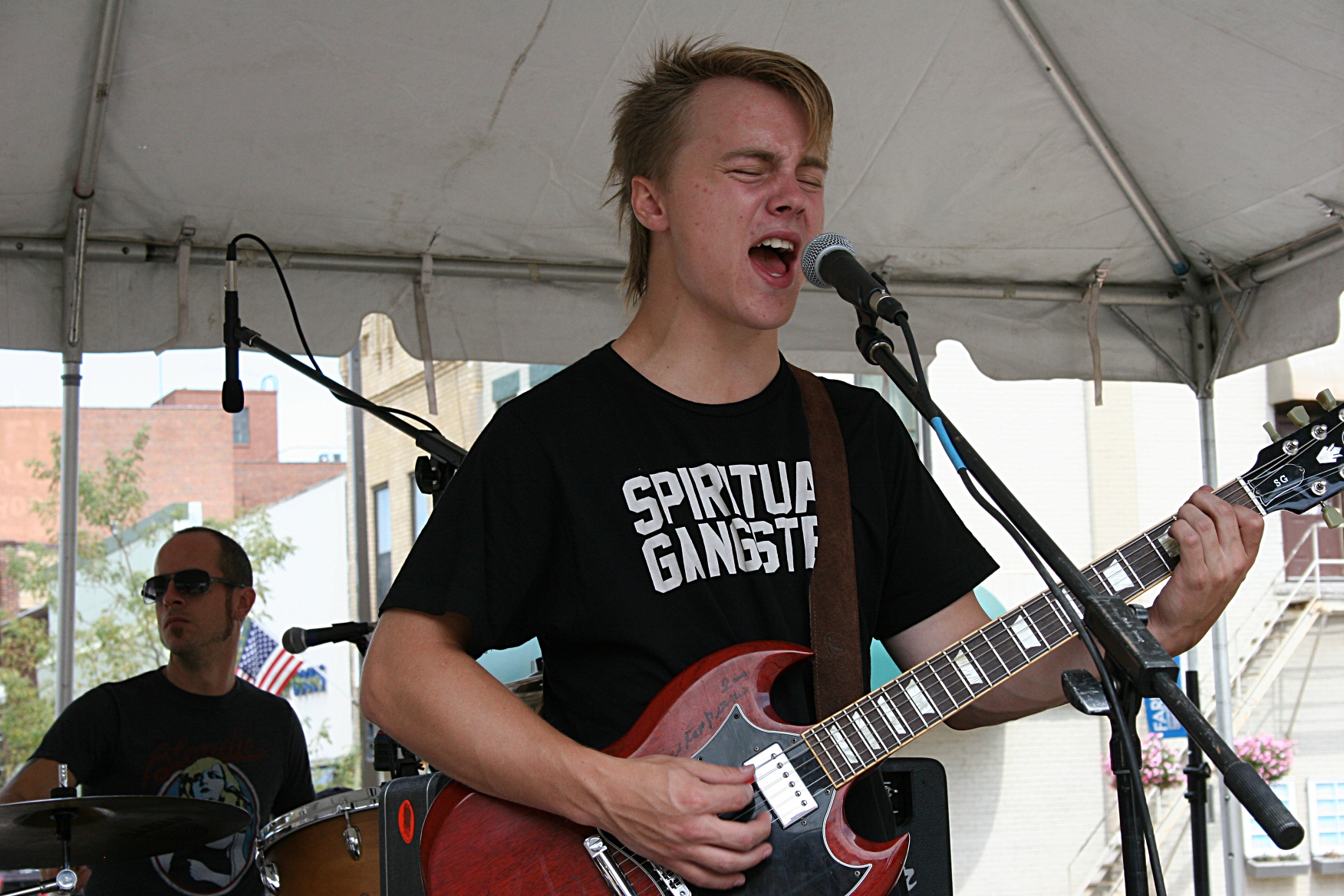
Blues-rock guitarist/musician Trent Romens was among six featured musical acts.

Did the festival accomplish for me what I expected? Yes. I was entertained, although I would have appreciated a much lower volume on the music. Ditto for the price on the meat sampler. And I would have liked access to the home brew competition, which was tucked into the Paradise somewhere.

But all in all, the festival provided a fun way to while away part of a Saturday. And, for those downtown business owners who hoped the event would draw shoppers into stores, it worked for me. I’d never been into the pawn store and wasn’t even aware of the Somali shop or another ethnic business across the street (which wasn’t open).

If you’re from Faribault, I hope you took  time on Saturday to attend the Blue Collar BBQ & Arts Fest and appreciate what we have, right here in our own community.

With the weather about as good as it gets on a summer day, attendance was high at the Blue Collar BBQ & Arts Fest.

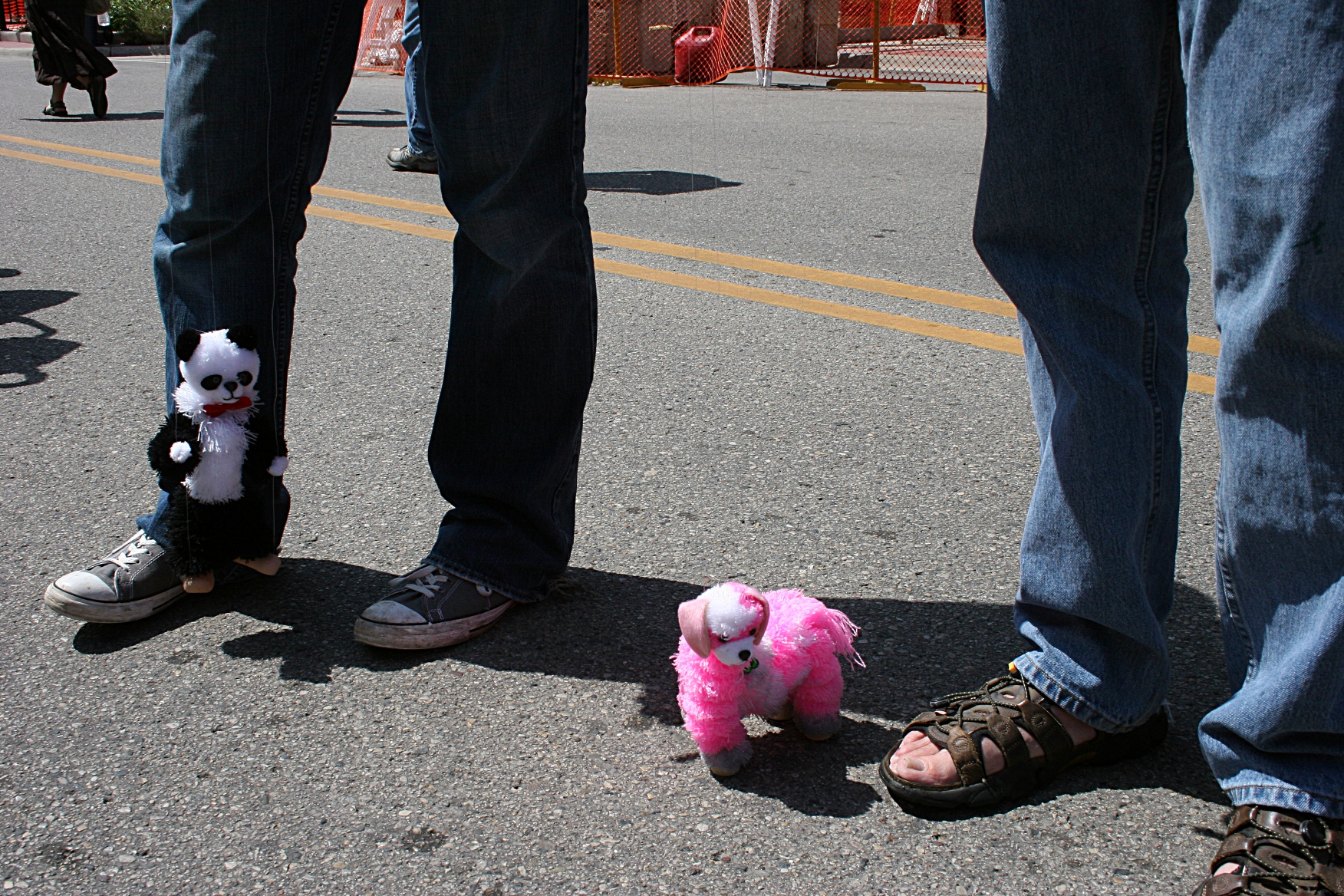
Dad and grandpa watched the pets while the kids played in the bouncy inflatables. These pom pom pets were a popular item sold at the arts fair.

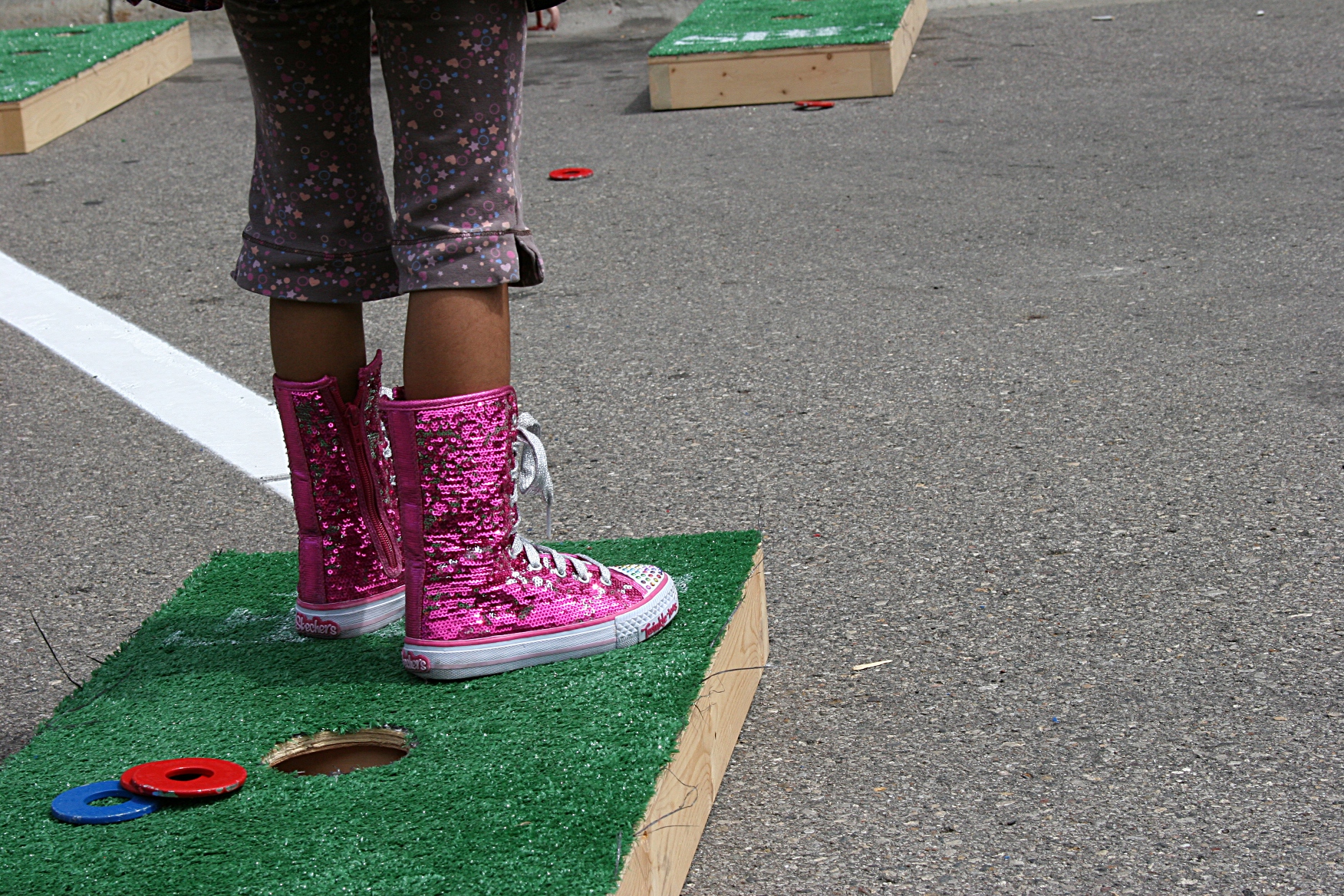
Kids practiced for the washer tournament. I was not convinced by a tournament organizer to participate. “She would throw the washer through a store window,” my husband told him. He would be right. Either that or I would have struck a passerby. We walked away, for the safety of those in attendance.

Isabella, 7, of Faribault, one of the many kids who lined up for the free face painting. Check back for an additional post featuring the artwork of professional face painter Jodi Gustafson of Big Shoe Entertainment.

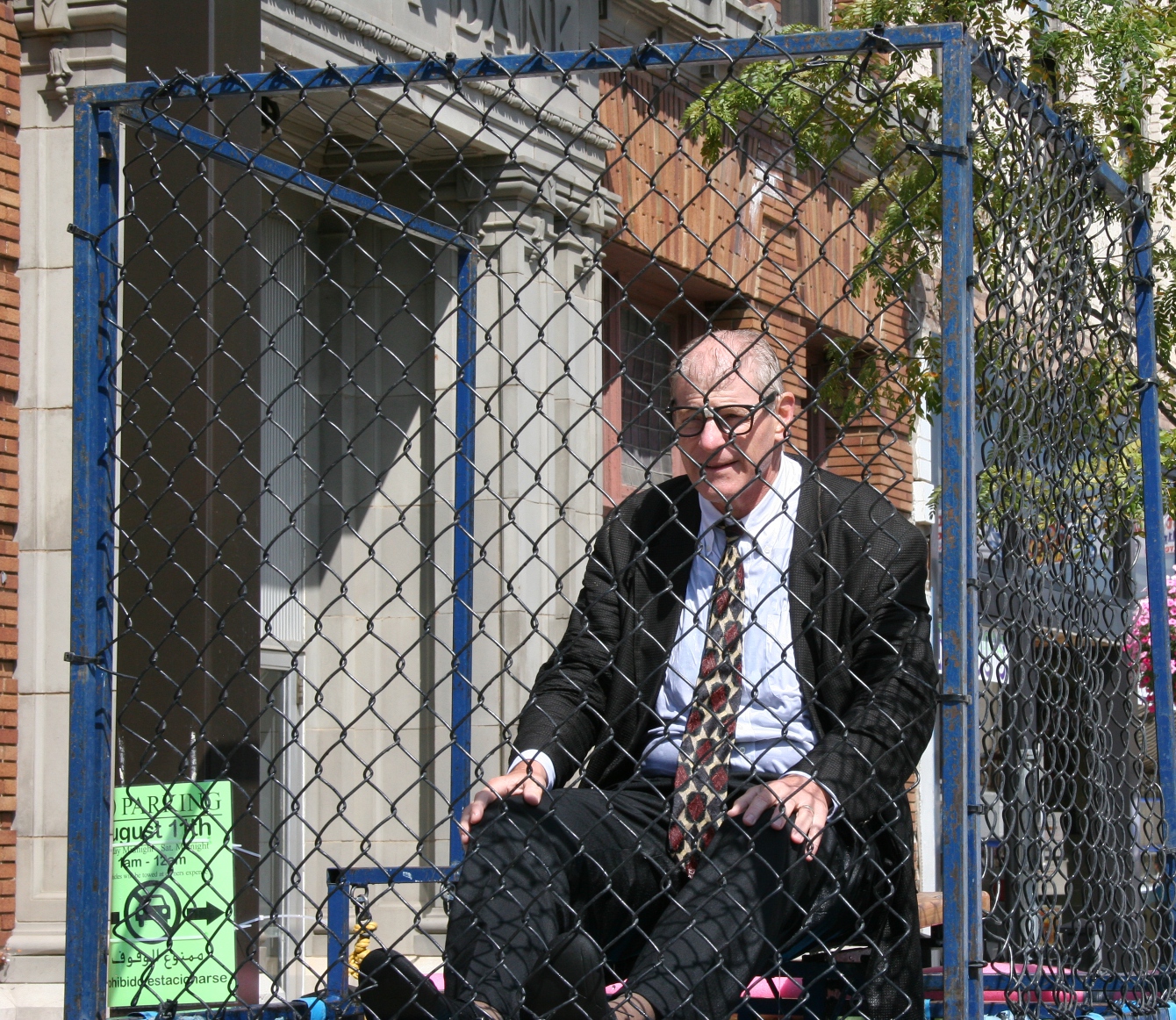
Taking a turn in the dunk tank…

© Copyright 2012 Audrey Kletscher Helbling
 

In southern Minnesota: “An old-time mission festival out in the woods” August 7, 2012

A sign marks the mission festival site at Marquardt’s Grove where cattle gates to the pasture are opened to allow entry. That’s the dry bed of Bull Run Creek on the left.

AT 8 A.M. SUNDAY, Harold Krienke swung his truck into Marquardt’s Grove some 10 miles south of Janesville to help set up for the annual mission festival in the woods near his country church, Immanuel Lutheran.

It was then he spotted the large black cat with the long tail edging dried up Bull Run Creek some 100 feet from the site where worshipers would gather 2 ½ hours later. “It wasn’t a house cat,” Krienke laughs. The cat—perhaps a panther, some speculate—didn’t scare him; it had been seen previously in the area.

Krienke’s animal encounter certainly wasn’t the first, and won’t be the last, at this mission festival held for the past 75 years in a five-acre wooded section of a 70-acre pasture where cattle still graze days before the event. Last year several head of cattle busted through an electric fence and charged across the creek toward the worship site. Another time horses caused a bit of trouble. No harm done, though, as the wayward animals were chased away.

Len Marquardt, who owns the woodlot and pasture, previously owned by his father, Alfred, and Alfred’s father, Gustav, before him, takes it all in stride. A few wandering animals won’t stop him from continuing the tradition of three generations of his family hosting the long-time festival of Freedom Church, as it is commonly known (referencing its location in Freedom Township), and the past two years in conjunction with Trinity Lutheran Church, Wilton Township, also known as the Wilton Church.

An overview of the worship site with the Freedom Band seated on the stage and the audience seated on plank benches and lawn chairs on the hillside. Freedom and Trinity Pastor Glenn Korb is standing at the makeshift altar.

Len’s heart and soul are committed to what he defines as “an old-time mission festival out in the woods.”

That definition seems apt for this event which, many Freedom members estimate, has been ongoing for a century. In the early days, area farmers took turns hosting the annual summer mission festival. The outdoor worship service has always been held around the same time of year, initially chosen, Len says, because the wheat harvest would have just been completed and farmers would have had more money to donate to the church.

Offerings are collected in ice cream buckets at the mission festival.

Money, though, has never been the focus of the festival although a collection is taken. Rather, the purpose is to “help people to focus on missions,” says Len, who several years ago accompanied his daughter, Julie, and others on a mission trip to Nicaragua. It changed him and he now takes personally the words “Here am I, send me” from the hymn “Hark! the Voice of Jesus Crying.” Julie, now a third-year student at Concordia University in Seward, Nebraska, followed up with a mission trip to Hong Kong and is now considering a career as a missionary.

“I think we need to be a church in mission,” Len says as he explains the purpose of the mission fest on his family’s property. The natural setting of farm fields, open pasture and woods, with a cool breeze stirring oak leaves and raising goosebumps on Sunday morning, connected worshipers to the message delivered by the Rev. Dr. Robert Holst, retired president of Concordia University, St. Paul, and a former missionary to Papua, New Guinea.

The Rev. Dr. Robert Holst delivered a message on missions and afterward answered questions about his missionary service in New Guinea. Len Marquardt says the congregation has never had trouble finding a guest pastor as they savor participating in an “old-time mission festival out in the woods.”

As Rev. Holst spoke of his experiences in his sermon, “Global Missions: International Love,” worshipers, sitting among the trees, could easily imagine the primitive ways of the New Guinea people, their belief in spirits, their sacrifice of pigs, their mistrust and misunderstandings and lack of knowledge about God and the challenges the pastor faced in telling them about Christ.

Foreign missions seemed as close as a thought away for attendees like Jeanette Schoenfeld of Wilton Church who enjoys the mission fest because, she says, “It’s like they do in Africa,” worshiping outdoors.

Baby Jaci sits with her dad, Mike, and brother, Bales, during the worship service.

Len Marquardt and others, including his sister, Sally Hodge, appreciate, too, the traditions they are passing from family to family through generations of mission festivals. As Sally samples a vinegary, potato-green bean dish prepared for the mission fest potluck, she glances back to kids racing up the wooded hillside. “I remember tromping up the hills, tromping up the trails, building wood forts…talk about history and family and pleasure in knowing each other…” Sally says as she glances across the table at friend and fellow parishioner Davin Quiram.

All ages, and several generations of families, attended the mission fest on Sunday.

Sally Hodge sings in the choir and usually plays in the band. But this year she didn’t make the practices so was unable to join the Freedom Band. She lives just up the hill from Marquardt’s Grove and grew up on the other side of “just up the hill.”

Davin, like Sally a life-long member of Freedom, concurs as the two reminisce and remember the rare treat of soda pop from the mission fest pop and candy stand, which Davin will later man. The friends don’t recall specific mission speakers or messages from their childhood days, only those racing through the woods and gulping pop memories.

Davin, though, is quick to rattle off the areas of ministry covered by mission speakers in the past 10 years: American Indians, Hispanic, college, Japanese and such.

An elderly man turns to a hymn in the old pocket-size songbook that’s been used for decades.

While guest speakers change from year to year, the music remains constant with worshipers singing hymns from the pocket-size Mission Hymns Suitable for Mission Festivals and Similar Gatherings (out of print for 80 years).

Likewise, the Freedom Band, the church band comprised of Freedom members and others from the area and in existence for an estimated 80 years, uses the same familiar music books such as The Church Band Book—Choral Melodies of the Lutheran church for Military Band by A. Grimm, published in 1919 by Antigo Publishing Co., and a handwritten book of music transposed from a hymnal for the band.

The Freedom Band and some of its handwritten music.

The Freedom Band has always played at the mission fest and other area mission events in years gone by. At any time, 5 – 7 members of Sally’s family, the Marquardts, may be playing in the band—all on the trumpet but for one on the sax.

Gemma Lin returned to the mission fest, one year after her baptism there in 2011.

Part of mission fest also includes the occasional outdoor baptism. Sally’s father, Alfred, born in 1911, was baptized at the Freedom Mission Festival. Last year, a century later, two-month-old Gemma Lin of Mankato was baptized in Marquardt’s Grove and her great uncle was baptized the night before at Freedom Church. Aleta Lin, Gemma’s mom, treasures her daughter’s unique baptism and the story of that baptism which will always be a part of family history. She hopes Gemma will, through the years, continue to attend mission fest, a life-long tradition for Aleta, a life-long member of Freedom Church.

A bible lies on the floor of the stage where the band played and the preachers preached.

For those outside of Freedom, memories of past mission fests also come quickly. Such festivals were once a staple among rural congregations as a time to worship God in the outdoors, to socialize afterward at a potluck dinner and even meet future spouses.

Worshipers line up for a potluck dinner after the worship service.

Guest pastor Holst opened his message by reminiscing about the mission fests of his youth, recalling the washtubs full of soda pop—root beer, 7-UP and Orange Crush—set out by the youth group. He also remembered the ball games between fathers and children.

On Sunday there were no ball games or kids racing for a rare treat of pop. But plenty of kids—from babies to teens—settled onto temporary wood plank benches and lawn chairs or upon blankets or in car seats on the same ground in Marquardt’s Grove that has, for generations, served as an outdoor house of worship on one Sunday in August.

The vintage mini songbook lying on planks and the mission site in the background.

FYI: Check back for an additional post featuring mission fest photos and for a separate photo essay of Freedom Church.

© Copyright 2012 Audrey Kletscher Helbling
 

Join efforts to connect neighbors in a celebration of cultural diversity July 14, 2012

Several Latinos lead in singing of Mexico’s national anthem last September during the International Festival Faribault at Faribault’s Central Park.

ORGANIZERS OF THE SEVENTH ANNUAL international festival celebrating the cultural diversity of Faribault are looking for participants, help and donations for the Saturday, August 25 event.

Can you help?

And when I say “you,” I mean anyone, whether you live in or near Faribault or not.

Served at the 2011 fest: Guatemalan chuchitos– chicken, corn and salsa wrapped in a corn husk.

Drive on down from the Cities; we’re only an hour from downtown Minneapolis. Or drive across town to set up a booth showcasing your culture at International Festival Faribault. Sell ethnic cuisine. Pedal your ethnic arts and crafts or other merchandise. Show and tell and educate the public about your culture in this event pegged as “neighbor meeting neighbor.”

I like that neighborly phrase, for it is when we meet face-to-face and engage in conversation and sample each others food and learn each others customs that the cultural barriers begin to fall and friendships (or at least understanding) form.

Vendors, like this Somali woman, peddled their wares at the 2011 festival.

Table and booth space at the 10 a.m. – 4 p.m. festival are currently available to the public for a $20 fee. But get this: You keep all profits earned. Non-profit organizations get free space.

Now if that isn’t enough incentive to book a spot in Faribault’s Central Park for the day, consider how you will help advance the mission of the non-profit International Festival Faribault. Here’s the organization’s mission:

…to promote understanding between diverse cultures within Faribault, MN; uniting the community with music, dance, ethnic foods and merchandise which is experienced at a once a year festival organized by the committee.

Hoop maker, performer and teacher Adrienne Lee teaches a Girl Scout the art of hoop dancing. The Girl Scouts were among the non-profit groups with booths at the 2011 fest.

Already, Spanish and Somali singers, a local dance academy and several small bands have committed to providing on-stage entertainment. A hula hooper and jugglers are signed on to wander through the crowd.

The scramble for candy after the pinata is broken at last year’s festival.

What can you contribute? Dancing, singing or other musical entertainment from your culture? On-site ethnic art/crafts demonstrations? Are you willing to sing your country’s National Anthem on the Central Park Bandshell stage? How about presenting a mini drama or storytelling focused on your ethnicity? Can you plan and lead ethnic activities for kids?

The group also needs volunteers to assist with set-up and clean-up, help throughout the day, etc.

Monetary and silent auction donations are also needed. Do you have a tent and/or tables the group can borrow? Can you help with banners or flyers? Donate food items?

Yes, the list of needs is lengthy. But remember the “neighbor” part of this festival? Neighbors help neighbors.

Colorful skirts for sale at Riyaam’s booth during the 2011 celebration.

If you are interested in participating, contributing or helping in any way, email internationalfestivalfaribault@gmail.com or call (507) 412-9139. You must complete an application form and submit the $20 payment in advance to reserve a booth/table space.

Also, click here to visit the festival website at http://internationalfestivalfaribault.blogspot.com.

Finally, even if you’re unable to participate or donate, mark your calendar for 10 a.m. – 4 p.m., Saturday, August 25, for the International Festival Faribault. Admission is free and I promise, you’ll come one step closer to understanding your neighbors.

A young girl’s henna stained foot, photographed at the 2011 fest..

© Copyright 2012 Audrey Kletscher Helbling
 

Tom at the organ March 7, 2012

Filed under: Uncategorized — Audrey Kletscher Helbling @ 7:41 AM
Tags: , , , , , , ,

My father-in-law, Tom, at the used Lowrey organ he purchased a few years ago.

THE CONSOLE LIGHTS UP like a Christmas tree or the Vegas strip or a carnival midway as my father-in-law settles onto the bench of his Lowrey organ and flips switches.

I’ve asked Tom to play a tune or two during a brief visit at his St. Cloud apartment.

He’s taking organ lessons. I find that particularly admirable given he’s 81. Not that he’s a musical novice. Tom isn’t. He once played an accordion and piano and even an organ and tuned and repaired pianos. He typically plays music by ear, including on this occasion.

Playing the organ, with his artificial hand, left, and his real hand.

Hank Williams’ “Your Cheatin’ Heart” and “Somewhere My Love,” from the movie “Doctor Zhivago” flow from the keys like music at a supper club all sugary and sweet and smooth. We should be dining in the dark corner of a long ago Saturday night destination, backs pressed against walls pasted with flocked red wallpaper, slicing our serrated knives through pink steaks and sipping our whiskey sours.

But instead, we are cramped into a tiny apartment among a hodgepodge of doll and angel collectibles, beer steins and toy tractors, and a clutter of miscellaneous knickknacks. We’re sipping water in a room flooded with light.

The organ takes up considerable space in the tiny apartment.

In the corner, my step mother-in-law pauses from circling words in a word search book to listen to the organ music, until, finally, she requests that the music stop.

We leave her there, with her words, as we descend several floors to my father-in-law’s art studio, a corner in the basement community room. Just over from a cluster of outdated exercise bicycles, Tom has stashed frames he’s recycling for his own art. Finished and in-progress works lean against each other and we file through them—elk in the mountains, loons, raccoons…

Threshing on the home place, a painting by my father-in-law. While growing up here, Tom already played organ.

He unrolls a scroll onto a table, revealing a sketch of the home place near St. Anthony, North Dakota. His second oldest daughter wants a painting of the farm where Tom grew up with his parents, Alfred and Rosa, and siblings, then later lived with his bride.

My husband studies the drawing, points out the summer kitchen and the creek, the details he remembers of Sunnybrook Farm, the place he called home until moving with his parents to central Minnesota in the early 1960s.

In moments like this, I begin to glimpse the history and the roots of this family I married into 30 years ago.

And in moments like photographing my father-in-law at the organ and in sifting through his paintings, I see the artistic side of this man. The man who once attended Catholic boarding school and worked the land and lost his left hand to a corn chopper in 1967, but never lost his desire, or ability, to pursue his passion to create music and art.

© Copyright 2012 Audrey Kletscher Helbling
 

I may not read music, but… January 29, 2012

GROWING UP, I ALWAYS wanted to play the piano. But I never had the opportunity, although one Christmas I received a toy accordion that temporarily satisfied my yearning to create music.

There was neither money nor space for a piano within the budget constraints of a poor farm family or within the walls of a cramped southwestern Minnesota farmhouse.

And so the years passed without music.

During junior high school I struggled through required music classes, once fake-playing the ukulele at a Christmas concert because the music teacher failed to recognize that I could not read musical notes.

In high school when so many classmates were joining band, I was not among them. Remember that money issue? Still there.

A few years later my younger siblings were allowed to join band—one sister choosing the flute, the other the clarinet. The brothers focused on sports. For awhile I tried to play my sister’s flute, without much success.

During college, a friend allowed me to strum her guitar. The strings bit into my fingertips so I quickly lost interest.

Years later when I had children, I was determined they would have the musical opportunities I never had. I started them on a mini toy organ. Later, the eldest tried playing my sister’s flute for awhile, then quit. The second daughter borrowed my youngest sister’s clarinet, sticking with band lessons for several years. My son had no interest in an instrument until recently, when he inquired about playing the guitar. He’s meeting with a family member soon to try out guitar-playing.

I tell you all of this because of a recent musical opportunity that came my way. It’s ironic really, given my inability to play any type of instrument or, in fact, read a single musical note. If you put a song sheet in front of me right now, I’d stare at it like I was reading Greek.

But composer Curtis Lanoue, also an elementary music teacher and the director of music at Lord of Life Lutheran Church in Miami, found the music in my soul. Seeking a cover photo for his 29-page Four Organ Preludes Based on Common Hymn Tunes book, Lanoue did an online image search and discovered my photo of the old pipe organ at Immanuel Lutheran Church, rural Courtland, Minnesota, the congregational home of my maternal forefathers.

“As you can imagine, there were a ton of (image) results,” Lanoue says. “Most of them were those flowery European organs in the cathedrals. That didn’t go too well with the style of the music. Somehow through the eye strain of looking through hundreds of photos, I found yours. It’s not surprising my eye was drawn to it as I was raised in a Midwest Lutheran church.”

Once I received a copy of this musician’s recently self-published book, I understood why he selected my photo of Immanuel’s organ that was built in 1895 by Vogelpohl and Spaeth Organ Company of New Ulm at a cost of $1,500.

It’s the perfect fit for Lanoue’s preludes based on the definitively Lutheran hymn, “A Mighty Fortress,” and on “Amazing Grace,” “Out of the Depths I Cry to Thee,” and “From Heaven Above to Earth I Come.”

As I flip through these compositions written by a musician with degrees in jazz performance and studio jazz writing and experience as a working organist since age 16, I can only smile at the contrast between his vast musical knowledge and talent and my musical illiteracy.

FYI: You can purchase Four Organ Preludes Based on Common Hymn Tunes for $9.99 by clicking on this link: https://www.createspace.com/3734555

Disclaimer: I am expecting payment for use of my cover image and have received a free copy of Lanoue’s book. This post, however, has been written solely at my discretion.

A rear photo shot of Immanuel Lutheran Church, Courtland, looking up to the balcony (where the 1895 pipe organ is located) and toward the spacious fellowship hall.

The beautiful pipes on Immanuel's organ.

JUST BECAUSE I THOUGHT it important to include, here’s some additional information about Immanuel’s organ, as shared by Immanuel’s pastor, Wayne Bernau:

The 1895 organ was renovated in 1988 at a cost of $25,000.

When Immanuel built a new church in 2007, Rollie Rutz and crew from Rutz Organ Company in Morristown (about 10 miles from my Faribault home), helped move the organ from the old church into the balcony of the new sanctuary.

A set of chimes was added to the organ in 2007.

Immanuel’s organ is today valued at around $200,000.

Says Pastor Bernau: “With the balcony constructed the way it is and the excellent acoustics for music in our new church, I believe the organ sounds better now, maybe twice as good, as it ever did in our 1881 building.”

I’ve heard the organ played in Immanuel and I agree. The acoustics in the new house of worship truly showcase the sounds of this 117-year-old organ played each Sunday by Lisa (Bode) Fischer, the daughter of my mom’s first cousin and a descendant of the Bode family members who helped found this rural congregation in the Minnesota River Valley more than a century ago.

A historical sign outside of Immanuel Lutheran Church, east of Courtland, Minnesota.

This photo, taken in September, shows primarily Immanuel's social hall and the adjacent cemetery where many of my Bode forefathers are buried.

A view of Immanuel's sanctuary from the balcony. The pews, the chancel furnishings and the stained glass windows from the old church were incorporated into the new church.

© Copyright 2012 Audrey Kletscher Helbling
 

In praise of old, familiar Christmas hymns December 25, 2011

The doll representing the Christ Child during the Trinity Lutheran Sunday School program on December 17.

FOR THE FIRST TIME in as long as I can remember, I missed Christmas Eve worship services. We were traveling home from a family gathering in southwestern Minnesota.

So this morning, back in Faribault, my husband, eldest daughter, son and I attended Christmas Day services at Trinity Lutheran Church in Faribault.

While a morning worship service doesn’t hold quite the mood-setting anticipation of worshiping on Christmas Eve with candles glowing soft and white holiday lights sparkling bright in the fading daylight and kids restless with excitement, I appreciated the contentment of singing old, familiar hymns on Christmas morning.

From the opening “Oh, Come, All Ye Faithful” to the recessional “Joy to the World,” and many songs in between, I was reminded of all those childhood Christmas Eve worship services at St. John’s Lutheran in Vesta.

Dad hurried to finish the milking early so we could get to church, to participate in the Sunday School program and sing the same old, familiar hymns we sang today: “Hark! The Herald Angels Sing,” “It Came Upon a Midnight Clear,” “From Heaven Above to Earth I Come,” and “Angels We Have Heard on High.”

Although we didn’t sing “Silent Night, Holy Night” this morning, we listened to a teenage girl coo a sweet, lovely rendition. And we heard another teen strum “What Child Is This?” on his guitar.

It was a lovely service of praise, voices uplifted in the joyful comfort of aged hymns to celebrate Christ’s birth.

From my family to yours, we wish you a most blessed Christmas.

© Copyright 2011 Audrey Kletscher Helbling
 

Walking into yesteryear at the Oak Center General Store October 17, 2011

IF NOT FOR THE MINNESOTA Highway 60 detour onto U.S. Highway 63 north of Zumbro Falls, we never would have found Oak Center.

And had we not seen the writing on the window, “Stop on in and explore the store,” and the OPEN sign, we might have driven right by the Oak Center General Store.

That message on the front window that urged us inside.

The general store sits nearly on top of Highway 63, right, in Oak Center.

From the exterior, it’s that type of structure and setting—a visual hodgepodge which makes you question whether the place truly is open.

My husband and I wondered that when we pulled off the highway and parked next to the old building. Then we stepped inside and it was like we had walked into a general store of yesteryear, right down to the vintage push-button cash register.

The vintage cash register sits atop a counter labeled with strongly-worded messages.

For the longest time we meandered around the shelves, taking it all in—the worn wood-plank floor, the tin ceiling, the old wooden refrigerators, the vintage bottled pop machine, the bulk spices…

An eclectic mix of merchandise is crammed into the store.

Old-style refrigerators, still in use in the store.

Brooms for sale tucked into a basket on the floor.

Hacky sacks and handmade woolen mittens on display near a front window.

You can purchase pop in bottles from a vintage pop machine.

I couldn’t get enough of this historic general store, which hearkens back to 1913 in this unincorporated locale. I’m not sure exactly what I said to my husband when we were there, all alone, perusing the place. I think we were both too in awe to even talk much.

That’s a good thing, because, even though no one was minding the shop, the baby monitor was switched on, we later learned, and our conversation could be overheard.

A message on the cash register advises customers to leave their payment on the counter with a note if no one is around.

Rows of bulk spices line the shelves behind the counter.

Steven Schwen

About the time I stepped behind the counter to photograph the cash register, Strider Hammer strode into the room and, when I began asking questions, he fetched owner Steven Schwen.

Introducing himself as a “voluntary peasant,” Steven and I shook hands and he apologized for the damp hand. He’d been washing dishes.

Strider clamped my hand in a friendly vise grip handshake.

And so, properly introduced, Randy and I learned a thing or ten about the Oak Center General Store, which Steven purchased 35 years ago after the business closed and the building sat vacant for five years.

Today the Oak Center General Store is “dedicated to rebuilding a better world from the earth up.”

Although I didn’t ask for details about his life views, Steven’s comments and signage inside the store speak to an outspoken, yet gentle, man deeply-rooted in his independent, self-sufficient, non-materialistic, environmental, anti-war beliefs.

“Produce, don’t consume,” he says.

With that philosophy, Steven runs this general store which sells organic foods, kitchenware, candles, incense, local fair trade products, herbs and a lengthy list of other miscellaneous items.

He also operates Earthen Path Organic Farm, a 14-acre fruit, vegetable and herb farm based directly behind the general store, and works with son Joe and daughter-in-law Rebecca of Heartbeet Farm. They sell their products at the Rochester Farmers’ Market and to co-ops in Northfield and the metro area. The Community Supported Agriculture farm, Steven says, supports his family and the store. He also builds furniture and cabinets during the winter months.

Later, after touring the other facet of Oak Center General Store—the music scene—Strider would take us out back to see the farm.

But first things first. Steven disappeared and Strider led us through a dark middle room gathering place cozied with worn couches and a wood burning kitchen stove, past the corner media center (aka computer) to a back stairway nearly as steep as a ladder.

Those steps led us to the old Grange Hall, a former meeting place for farmers and now an entertainment center for local, national and international bluegrass, blues, folk, jazz and similar musical acts.

Earlier, Steven defined the 30-year run of October – April Folk Forum weekend concerts as “non-commercial entertainment connecting people to the land, music and each other.”

The former Grange Hall stage where musicians perform during the Folk Forums.

Rows of seating in the old Grange Hall.

I know nothing really about the music genres that entertain at Oak Center. But I recognized Monroe Crossing, the bluegrass group which will present a 2 p.m. Christmas Matinee on Sunday, December 4.

Other upcoming performers include Bingham and Thorne, Marty Marrone & Tangled Roots, Robby Vee, Galactic Cowboy Orchestra and many more slated in from now through December 23. (Click here to get the full line-up of musicians.)

Strider invited us to return for a concert with a recommended $5 – $15, but “pay what you’re able,” ticket price and what I expect would be a laid-back atmosphere.

He’s a personable guy, who, when I asked, said he’s a friend and extended family to Steven. You get the sense that anyone who steps inside Oak Center General Store is family.

Even the animals out back are the friendly sort; they nuzzle up to the fence when Strider beckons.

Strider Hammer calls animals to the fence at Earthen Path Organic Farm.

The friendly animals on the "Old McDonald" style farm. Steven's son Joe and his wife Rebecca farm with draft horses. Steven once used those horses to farm, but now, because he can no longer lift the harnesses, relies on tractors.

The mishmash of buildings behind the general store.

Back at the side door that leads to the former Grange Hall and back room gathering place, Strider climbed the few stairs onto the weathered deck and bid us farewell with a single and seemingly fitting word for the vibe of the Oak Center General Store:

“Peace,” he said and walked away.

A flower blooms next to the general store.

A side view of the store from Highway 63.

FYI: The store is open from 9 a.m. – 6 p.m. Monday – Saturday and some Sundays. In addition to music, Oak Center General Store hosts theater, round table discussions and workshops (ie., holistic medicine, organic gardening, batik) at its Folk Forums.

For more information about the Oak Center General Store, click here.

To learn about  Earthen Path Organic Farm, click here.

For info about  Heartbeet Farm, click here.

© Copyright 2011 Audrey Kletscher Helbling
 

Harvest barn dance celebrates family, friends and yesteryear September 19, 2011

A father and son were among the hundreds of guests attending a dance in this 96-year-old barn.

IN THE 1930s, at the height of The Great Depression, a young Herb Becker attended dances in the sprawling red barn along Rice County Road 1 several miles west of Dundas.

Herb didn’t know it then, but in 1948 he and his wife Dorothy would buy the “Faber farm” site with the 36-foot by 100-foot barn.

Today his youngest son John and wife Debbie own the farm, purchased in 1988. Saturday they hosted their first-ever Harvest Time Barn Dance.

John and Debbie Becker have reshingled and done other work to their barn to keep it from deteriorating.

“It’s a dream come true,” John said several times through-out the event which brought the barn back full circle to his father Herb—who died in 2009—and those long-ago barn dances.

I bet Herb would have been pleased with the party that drew family, friends and neighbors of the Beckers together on a cool autumn evening to visit, eat and dance the night away in the old hay mow. My husband Randy and I were among our friends’ invited guests.

Everything about the celebration in this 1915 barn spoke to the kind of down-home neighborliness and love of family that define the Beckers and the Malechas (Debbie’s family). These are good, honest, hard-working people of faith with their roots planted deep in the earth. I doubt I stopped smiling all evening.

And there was plenty to smile about—from the country-style decorated barn complete with red-and-white checked tablecloths, zinnias/sedum/golden rod in fruit jars, pitchforks, bushel baskets, seed corn signage, wooden barrels, cream separator, horse harness and lots more to the kids and adults sporting cowboy hats, cowboy boots and other western attire to the welcoming, sometimes boot-stomping, music of The Revivals band.

Battery-operated tea light candles and flowers in quart jars decorated tables covered with red and/or red-and-white checked cloths. This photo looks toward the west end of the hay mow.

Everywhere collectibles and antiques were on display, creating a setting of simple country charm.

Guests indulged in tasty roast beef sandwiches, calico beans, an array of salads and bars.

The Beckers created a coffee corner, where guests could grab some "De-Calf" or "Real Calf," visit, maybe even pull a deck of cards from the shelf for a game of Euchre.

Fall and vintage decorations lined the pathway leading into the barn.

It was the type of evening reminiscent of the old-fashioned gatherings of yesteryear, when adults could visit while the kids played with carefree abandon. And they did on Saturday. Tag and hide-and-seek. Pick-up football in the dusty farm yard. Make-believe, chasing each other with cap guns blazing.

Kids ran and played and ran and played--all night.

Heading out the barn door...

The kids, and a few adults, brought cap guns.

Probably my favorite image of the evening...no words necessary to describe these happy boys.

Inside, the adults admired the architectural bones of the barn, cranking necks upward toward the skeletal rafters, toward the conveyor that once carried hay bales across this dairy barn hay mow. And before that, the hay fork, on display outside the barn. They imagined climbing the ladder on the east end of the barn, like daring trapeze artists, to a platform above.

Looking toward the east end of the hay mow.

The east end of the hay mow with the ladder and platform and highlighting the barn's framework.

Looking toward the west end of the hay barn.

Pulling popcorn duty at the barn dance.

And later, when The Revivals from New Prague rocked the rafters with music that spanned polkas and waltzes to country and 1950s-1970s hits, adults and kids alike slid their feet across the corn meal-slicked plywood covering the maple floor that was too unsalvageable for refinishing. They twirled and shook and twisted.

And they danced like Herb would have wanted them to dance, celebrating life.

The Revivals from New Prague played a mix of music from old-time to rock.

Leaving the barn dance. Vehicles packed the farm yard.

CHECK BACK FOR MORE barn dance images. I won’t have photos of the dancing; once I had my band shot, I put away the camera.

HAVE YOU EVER attended a barn dance? If you haven’t, you might want to become friends with the Beckers. I bet they’ll have plenty of requests for a repeat harvest dance next fall. Thanks, John and Debbie, for an absolutely memorable and fun evening.

© Copyright 2011 Audrey Kletscher Helbling
 

The Lucan Community Band: A photo essay August 6, 2011

The Lucan Community Band performs outside the Vesta Community Hall during V-Esta Daze.
IF I WOULD HAVE BEEN less concerned about sinking my teeth into grilled chicken at my hometown’s community celebration on a recent Friday evening, I’d know more about the Lucan Community Band.
The band performed from 5:30 p.m. – 6:30 p.m. under the shade trees outside the Vesta Community Hall, where diners lined up inside for a sumptuous meal of chicken, potato salad, beans and a dinner roll.

I wiggled my way right into the band section for some close-up photos and even inquired, between selections, about the vintage band music, before going indoors for that chicken dinner.
The music book on the left had a 1939 copyright.

Some of the music comes from the Chatfield Brass Band and Music Lending Library in Chatfield, a band member informed me.

The Lucan Community Band is based in Lucan, seven miles south of Vesta along Redwood County Highway 10. Not all of the band members hail from this town of 220, which is also home to Brau Brothers Brewing. (Check out their beer; Strawberry Wheat is my favorite.)

At least one, Tom Schmid, the tuba player who drew my attention with his German style red hat that differed from all the green caps, hails from Springfield. I snuck in a quick question to Tom. He’s been playing the tuba for only about 10 years, but has been playing an instrument since he was in high school in the 1940s. That’s all the information I got before he planted his lips back on that tuba mouthpiece and I headed into the hall to eat.

Tuba player Tom Schmid, also a member of the Minnesota Over 60 Band.

Schmid's hand on the tuba.

Lucan Community Band members play against a back drop of grain bins damaged in a July 1 windstorm in Vesta. Tractors line the street for the antique tractor show.

The band's play list for their one-hour concert at V-Esta Daze.

Green caps are part of the male band members' attire. Musicians' ages range from the young to senior citizens.

IF YOU KNOW ANYTHING about the history of the Lucan Community Band, its members, how often and where the group performs, submit a comment. I’d like to learn more about the band.

© Copyright 2011 Audrey Kletscher Helbling