Minnesota Prairie Roots

Writing and photography by Audrey Kletscher Helbling

So my vision is a little distorted right now May 16, 2024

Filed under: Uncategorized — Audrey Kletscher Helbling @ 5:00 AM
Tags: , , , , , , ,
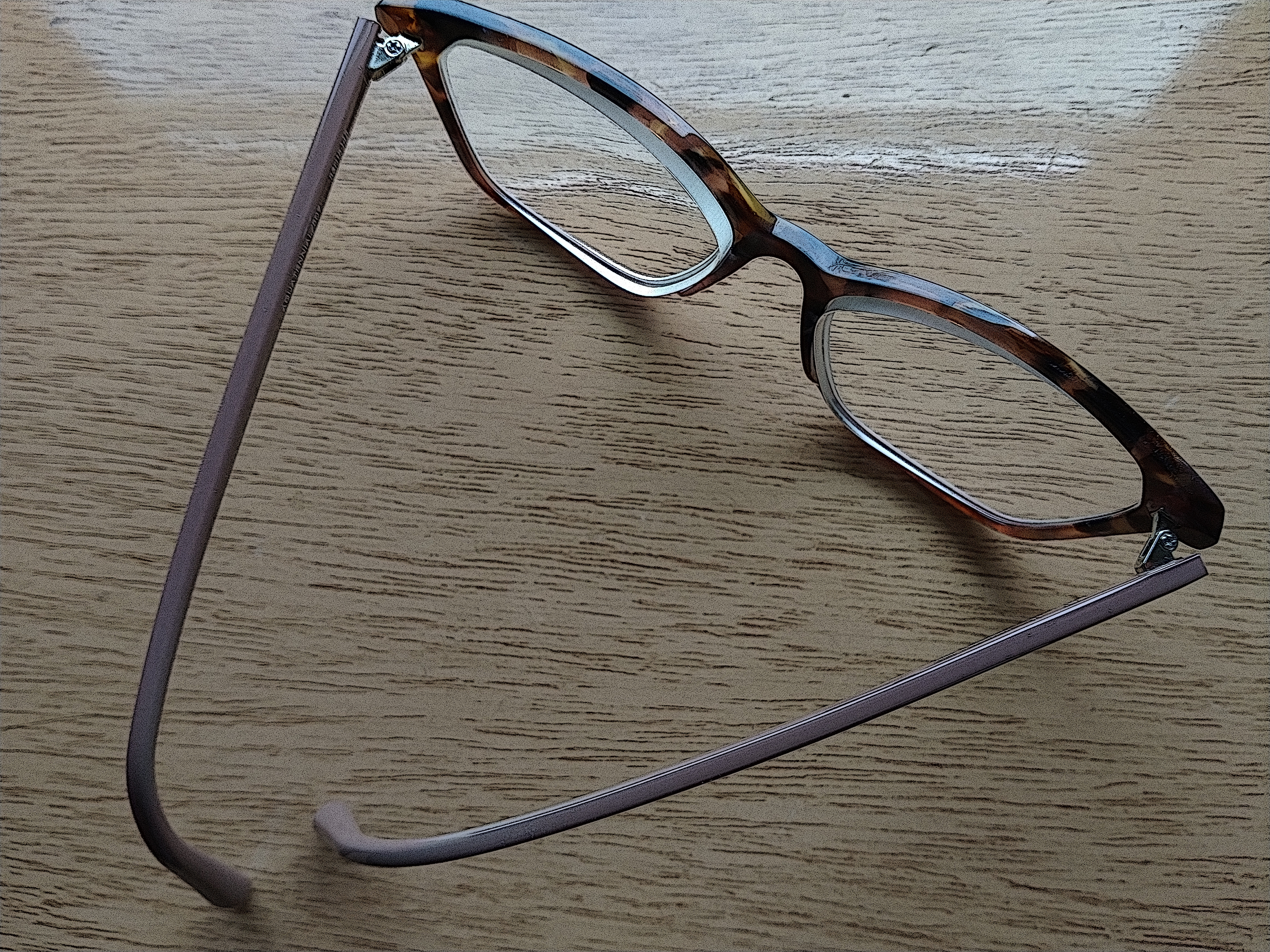
My new glasses with added prisms have rather thick lenses (especially the left one) near the nosepiece. (Minnesota Prairie Roots copyrighted and edited photo May 2024)

“DO NOT WEAR your glasses when you leave here,” she warned. I listened. I didn’t want Heidi picking me up off the pavement outside the eye clinic.

“Be careful going up and down steps tomorrow,” Randy warned Tuesday evening. I listened.

A MAJOR CHANGE

Just hours into my first day of wearing new prism-heavy prescription eyeglasses on Wednesday, I understand why my optician and my husband issued those warnings. These new glasses, which are supposed to help me deal with double vision via prisms, are a big change. Make that a major change.

Time will tell whether I can handle the “5 base in” horizontal prisms ground into each lens. That’s ten total, which Heidi says is a lot. I don’t pretend to understand all of these numbers. But the neuro ophthalmologist who did recent surgery to realign my eyes said I really needed fourteen. He didn’t think I could tolerate that amount.

TRYING TO AVOID ANOTHER SURGERY

Hopefully I can manage the prisms added to my glasses. If not, I will need to consider more surgery, something I’m hoping to avoid. I’ve already had bilateral strabismus surgery twice—at age four and most recently in late January. Immediately post-surgery, my eyes were in near perfect alignment. But then they reverted to being misaligned in a “significant regression of surgical effect.” This happens sometimes.

So here I am today, trying a new prescription with more prisms in hopes it will help me achieve “comfortable binocular vision” and avoid a third surgery on my eyes.

AN OVAL DINNER PLATE

As I type, I am looking at a computer screen that appears slanted, curved. My world is distorted. I’d been warned, but didn’t think the distortion would be quite this bad. A dinner plate, when tilted, appears oval rather than round. And when I pulled a key lime pie from the oven, I nearly dropped it. I saw a pie that was sliding; it wasn’t. I feel almost like I’m up high looking down on the world. It’s weird and odd and disconcerting.

But I’m trying. I intellectually understand that my eyes and brain are adjusting. I must give it time. Two weeks minimum, my surgeon said.

My optician, Heidi, who has supported me from pre-surgery through today, advised me to keep wearing my new glasses, as tempted as I am to pull out my old ones with fewer prisms. I stashed them in a drawer. Out of sight, out of mind. Well, maybe not out of mind.

HOLDING HOPE

I’ll check in with Heidi today. She asked me to do that, going above and beyond because she gets it. She also deals with double vision and prism eyeglasses. Her positive attitude and encouragement have helped me tremendously. The word “hope” runs strong in our conversations.

And that is my focus, along with being really really careful on steps and elsewhere as my eyes and brain adjust to these new lenses through which I view a currently distorted world.

© Copyright 2024 Audrey Kletscher Helbling


The eyes have it until they don’t May 7, 2024

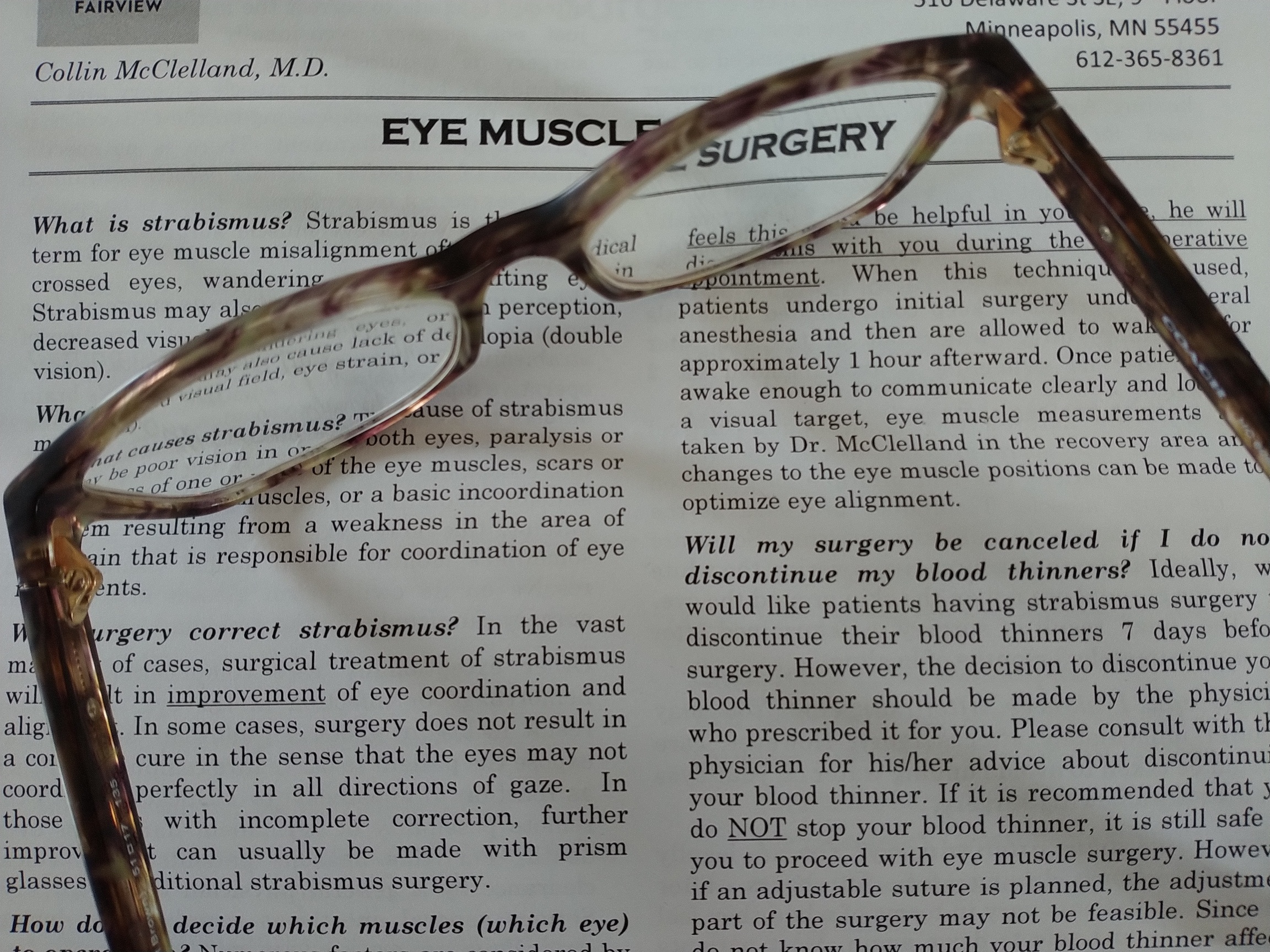
My old glasses atop info about bilateral strabismus eye surgery. (Minnesota Prairie Roots copyrighted file photo November 2023)

SIGNIFICANT REGRESSION OF SURGICAL EFFECT. Those are words you don’t want to read/hear following any surgery. But, three months out from surgery to realign my eyes, that’s where I’m at with my vision.

During my second post-op check last week with my neuro ophthalmologist, Dr. Collin McClleland, I learned that my eyes apparently have a mind of their own. They are back to not working together. This came as no surprise. I’ve been experiencing ongoing double vision, although less than before my January 22 surgery.

What I didn’t expect was the word “significant.” I knew the possibility existed that my eyes would return to misalignment; I did my homework in advance of bilateral strabismus eye surgery. But who thinks they are going to be in the minority of that final surgical outcome? Not me.

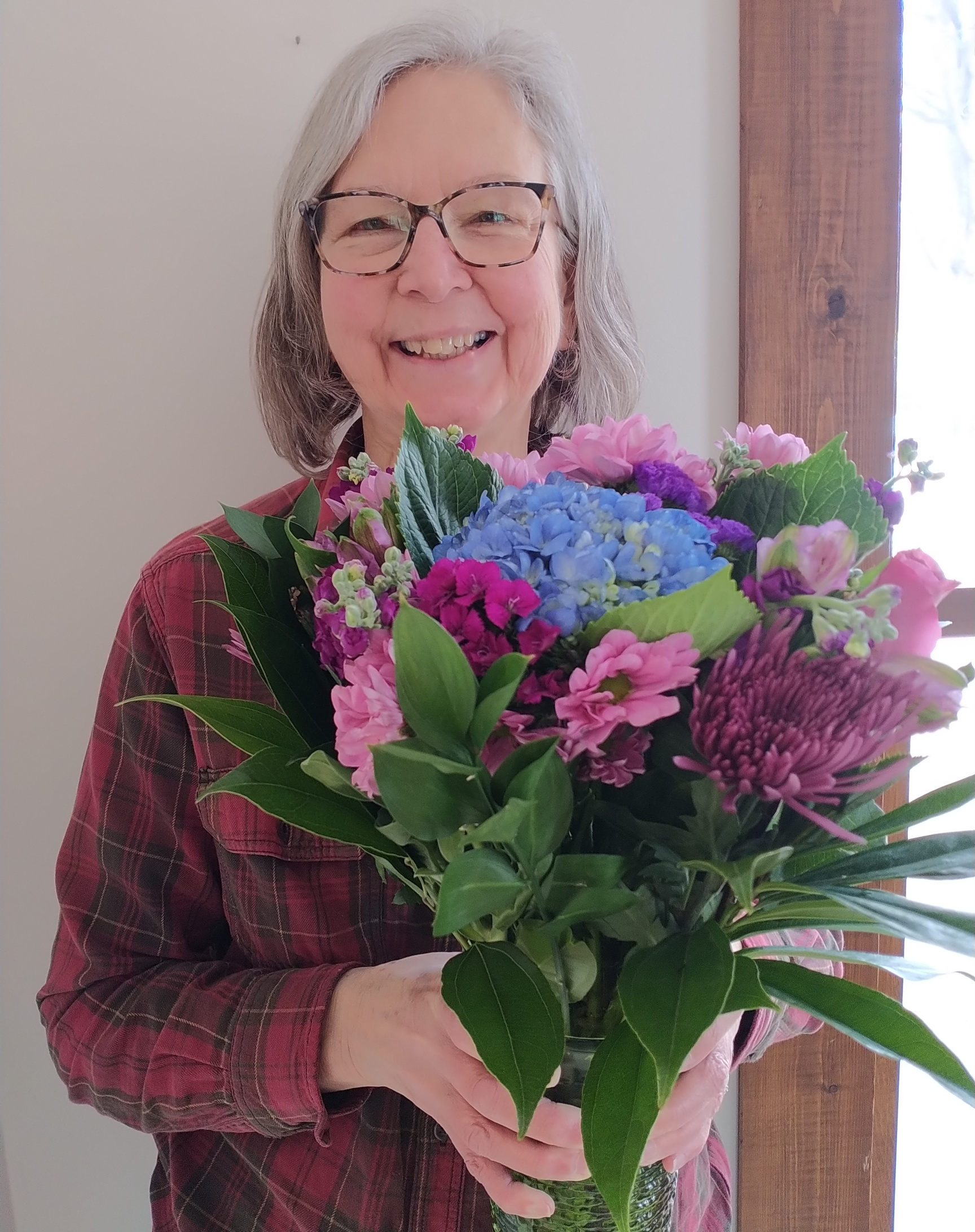
Several days after my January surgery, I was smiling, happy to have surgery behind me, happy with flowers from my family. (Minnesota Prairie Roots copyrighted file photo by Randy Helbling, January 2024)

Immediately after surgery, my eyes were in near perfect alignment. I was happy. My surgeon was happy. But then, as my eye muscles healed and my brain and eyes adjusted, the shift began.

Extensive testing during my recent appointment showed “significant regression.” I won’t confuse you with numbers and medical terminology. Suffice to say I’m frustrated and disappointed as is my surgeon. But, Dr. McClelland said, he wouldn’t have done anything differently during surgery. I needed it, and the surgery did improve alignment. I agree. Why my eyes reverted mostly back to their misaligned positions is unknown. I asked. There’s no answer.

I explained to my doctor that it takes effort sometimes to see just one, and not two. That exhausts me. And if I’m doing anything that requires a lot of visual back-and-forth, like shopping, my eyes feel like they’ve done calisthenics. They hurt. Whenever I have lots of sensory input or am doing multiple things, my double vision worsens. I was experiencing all of this before surgery, too.

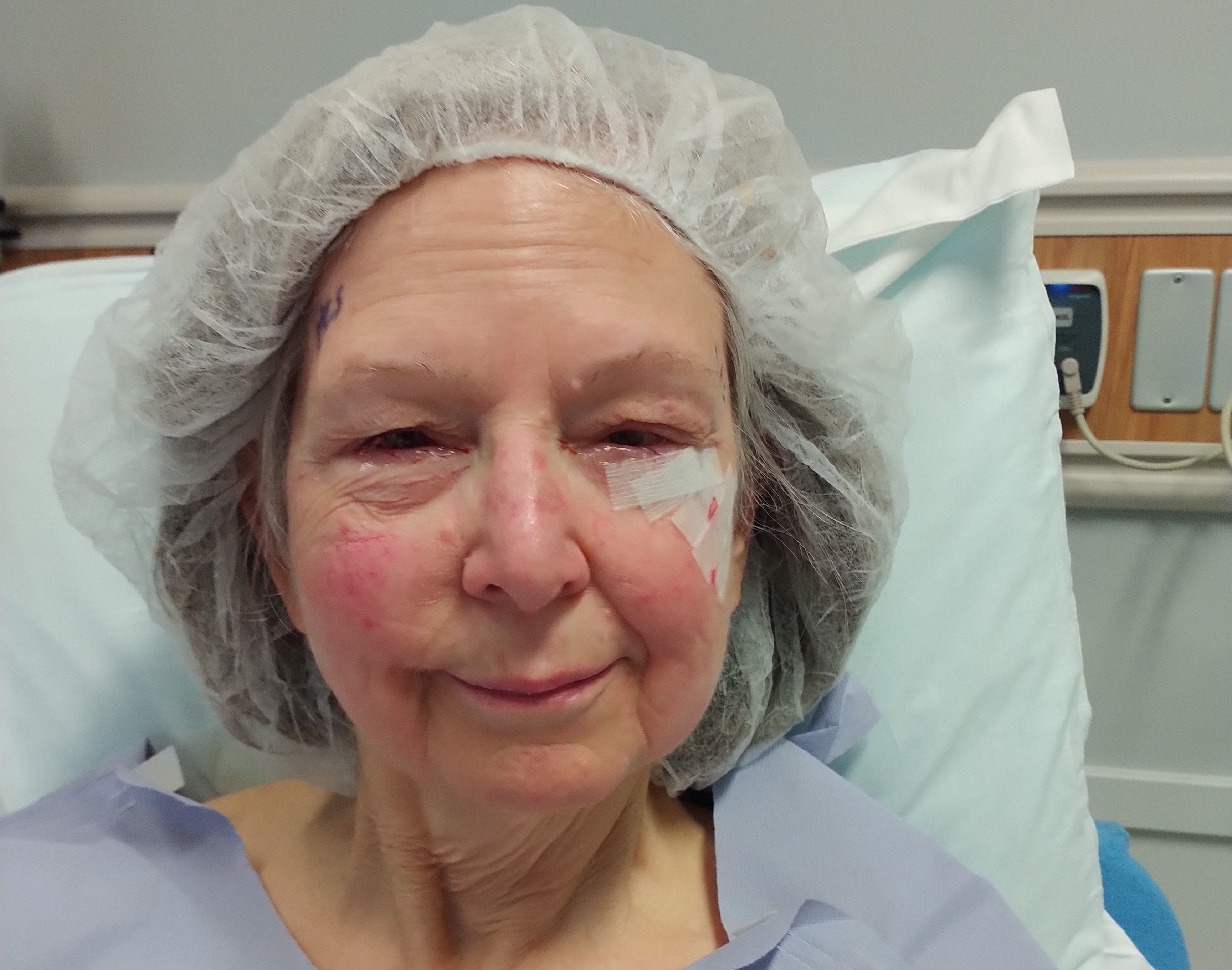
In the recovery room after surgery on both eyes in January. (Minnesota Prairie Roots copyrighted file photo by Randy Helbling, January 2024)

What to do next was the question of the morning. My surgeon offered two choices: One, add more prisms to my glasses and hope that alleviates some of my double vision. Or try surgery again. I was mentally unprepared for this. But I quickly opted for more prisms. I am in no hurry to rush back into an operating room, even if the 1 ½-hour surgery was not horrible and I have full confidence in Dr. McClelland. Surgery is surgery.

So here I am, no line bifocal prism glasses ordered. The lenses will take about two weeks to make given the extensive work required. Then I’ll be without glasses while the lenses are placed in my frames. Then the test begins. Will the added prisms, divided between both lenses, help with my double vision? Time will tell. Prisms bend light before it travels to your eyes and the brain has to sort it all out and create a singular image, or something like that.

The issue, my ophthalmologist explained, is whether I can tolerate more prisms added to my prescription lenses. I could experience distortion, what he calls “the fish bowl effect.” The goal is “comfortable singular binocular vision.” If I can’t handle the added prisms (which are actually less than they should be, but within the hopefully tolerable range), then I will need to revisit surgery.

That’s where I’m at today. Waiting for those prism-heavy lenses. I’m trying to prepare myself for what I know will be several weeks of adjusting to my new prescription. And hoping this non-surgical approach works.

These buildings house outpatient clinics, including the M Health Fairview Eye Clinic, on the campus of the University of Minnesota in Minneapolis. (Minnesota Prairie Roots copyrighted photo May 2024)

As disappointed and frustrated as I feel about the final surgical outcome, I remain grateful for the vision I do have, even if far from perfect. Sitting in the waiting room at M Health Fairview Eye Clinic in Minneapolis puts my situation in perspective. I have watched little kids there navigating with the aid of a white cane…

© Copyright 2024 Audrey Kletscher Helbling