Minnesota Prairie Roots

Writing and photography by Audrey Kletscher Helbling

An Irish blessing for you on St. Patrick’s Day March 17, 2025

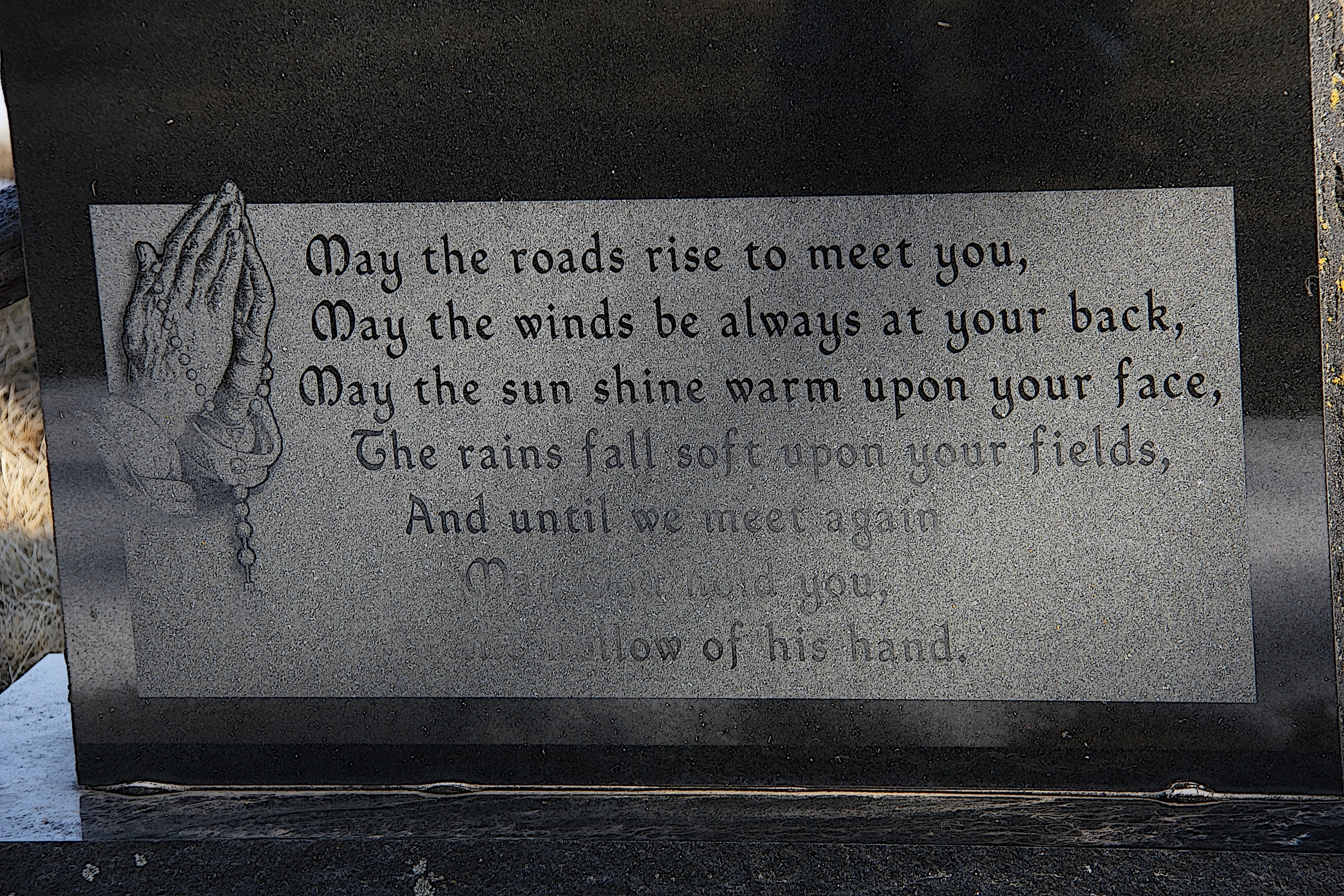
Engraved on a tombstone at Corpus Christi Cemetery. (Minnesota Prairie Roots copyrighted file photo March 2025)

THE SUN SHADOWED the tombstone, making photographing the words thereon a challenge no matter which way I angled my body and camera. So in the end, I settled on two images to share an Irish blessing with you on this, St. Patrick’s Day.
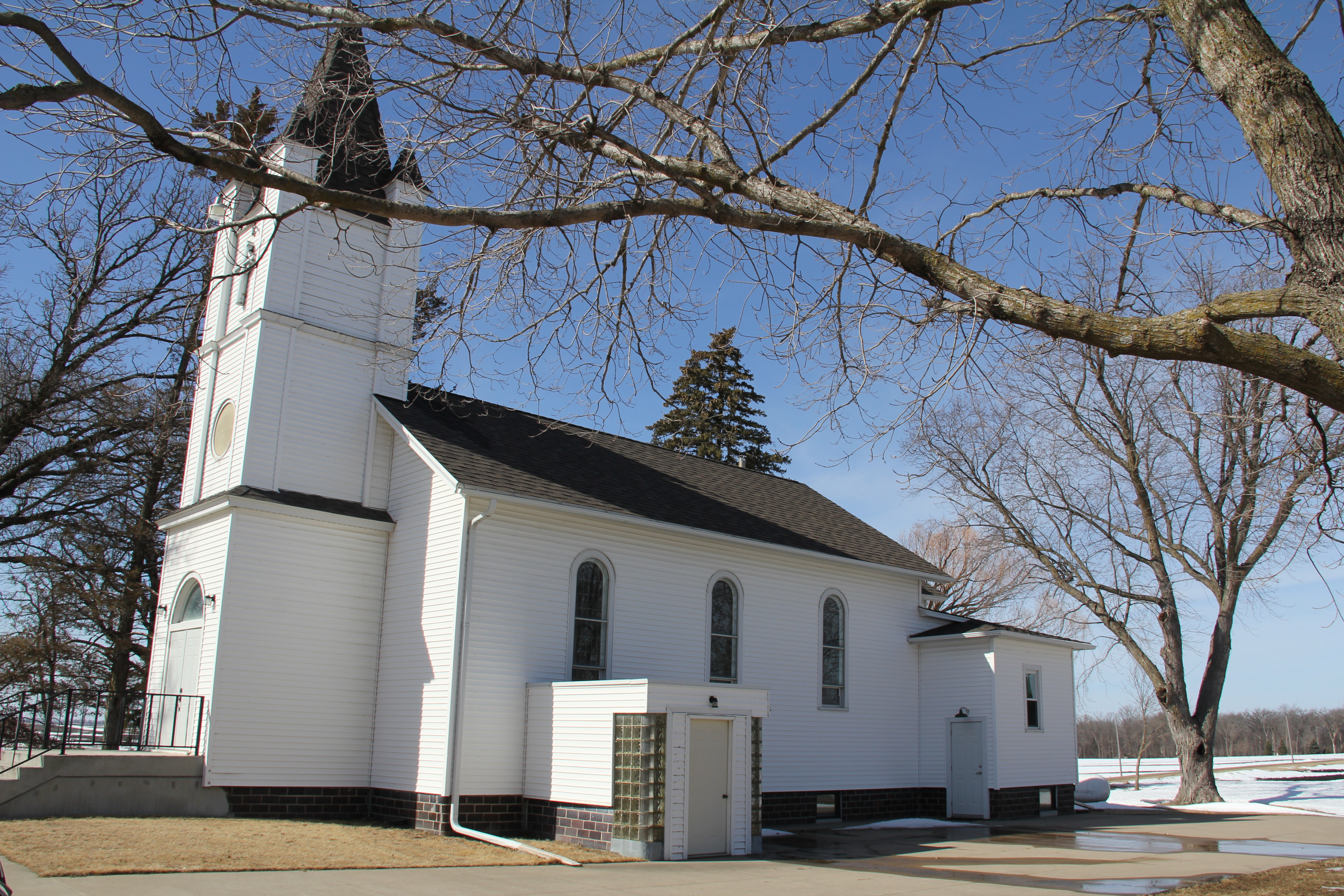
Corpus Christi Catholic Church, Deerfield Township. (Minnesota Prairie Roots copyrighted photo March 2025)

I found this gravestone blessing in the cemetery of Corpus Christi Catholic Church, a shuttered country church in Deerfield Township, rural Steele County, Minnesota. The 1856 church closed in 2016, when it merged with Christ the King Catholic Church in nearby Medford. It opens now for special occasions and is clearly much beloved by those who once worshiped here.
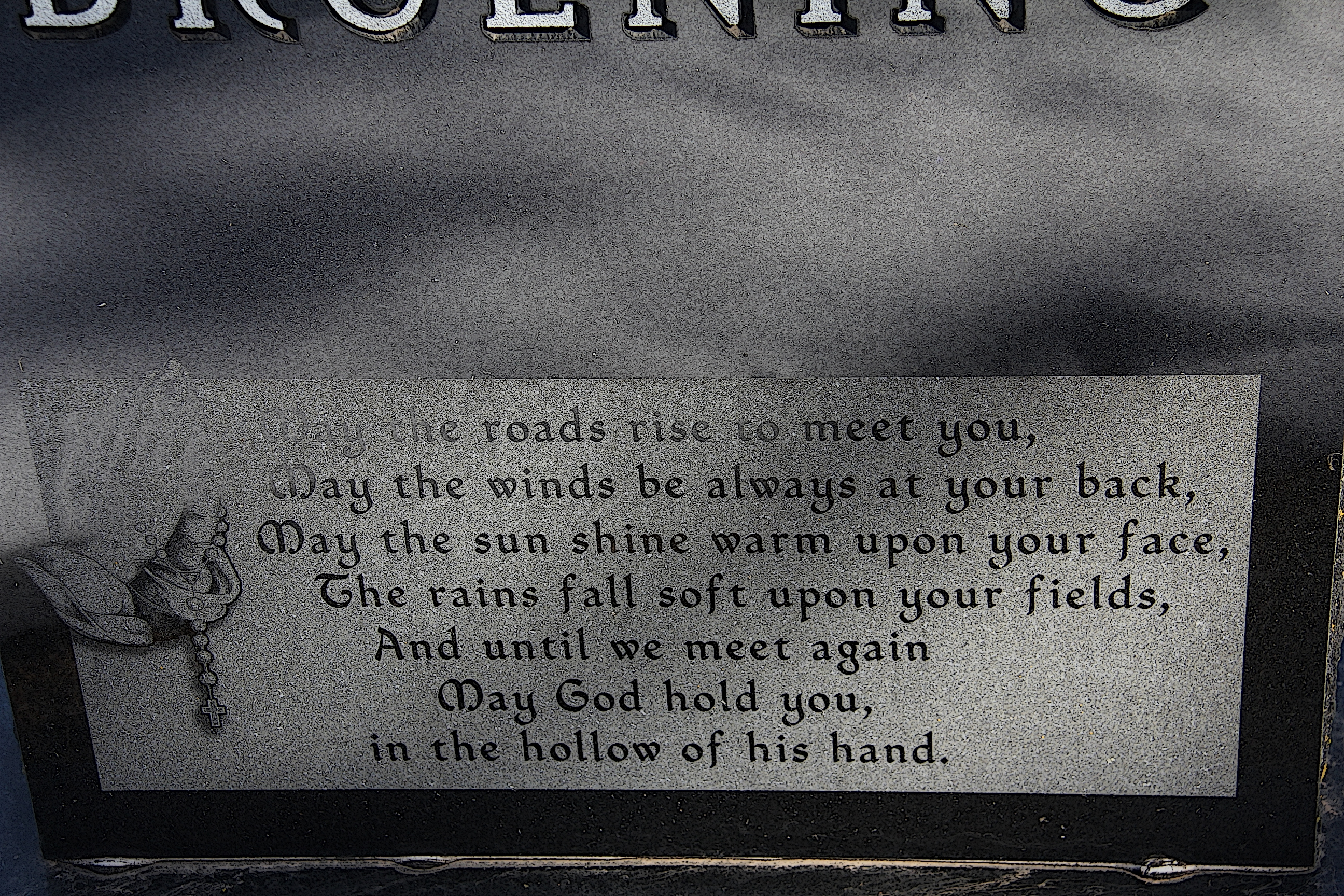
Another view of the Irish blessing with the bottom lines more visible. (Minnesota Prairie Roots copyrighted photo March 2025)

As I wandered among tombstones in the partially snow-covered cemetery, reading names and inscriptions a week before St. Patrick’s Day, I happened upon the familiar Irish blessing. I love the strong visuals the words create. The road. The sun. The fields. I can almost feel the road beneath my feet, the warm sun on my face, the soft rain on my skin, the wind at my back. The hand of God holding me securely.

While the blessing in this context is one of seeing a departed loved one again in heaven, the words fit the living, too. When we say goodbye to family and friends, especially those we won’t see for awhile, our love carries us until the next time we meet.

The message in this Irish blessing is so uplifting, so encouraging, so caring. Gentle words. Loving words. Words that carry us through the days of our lives, whether sunny or rainy. Always hopeful.

Blessed be your St. Patrick’s Day and every day thereafter…until we meet again.

© Copyright 2025 Audrey Kletscher Helbling


Chauncey, a Civil War soldier June 4, 2011

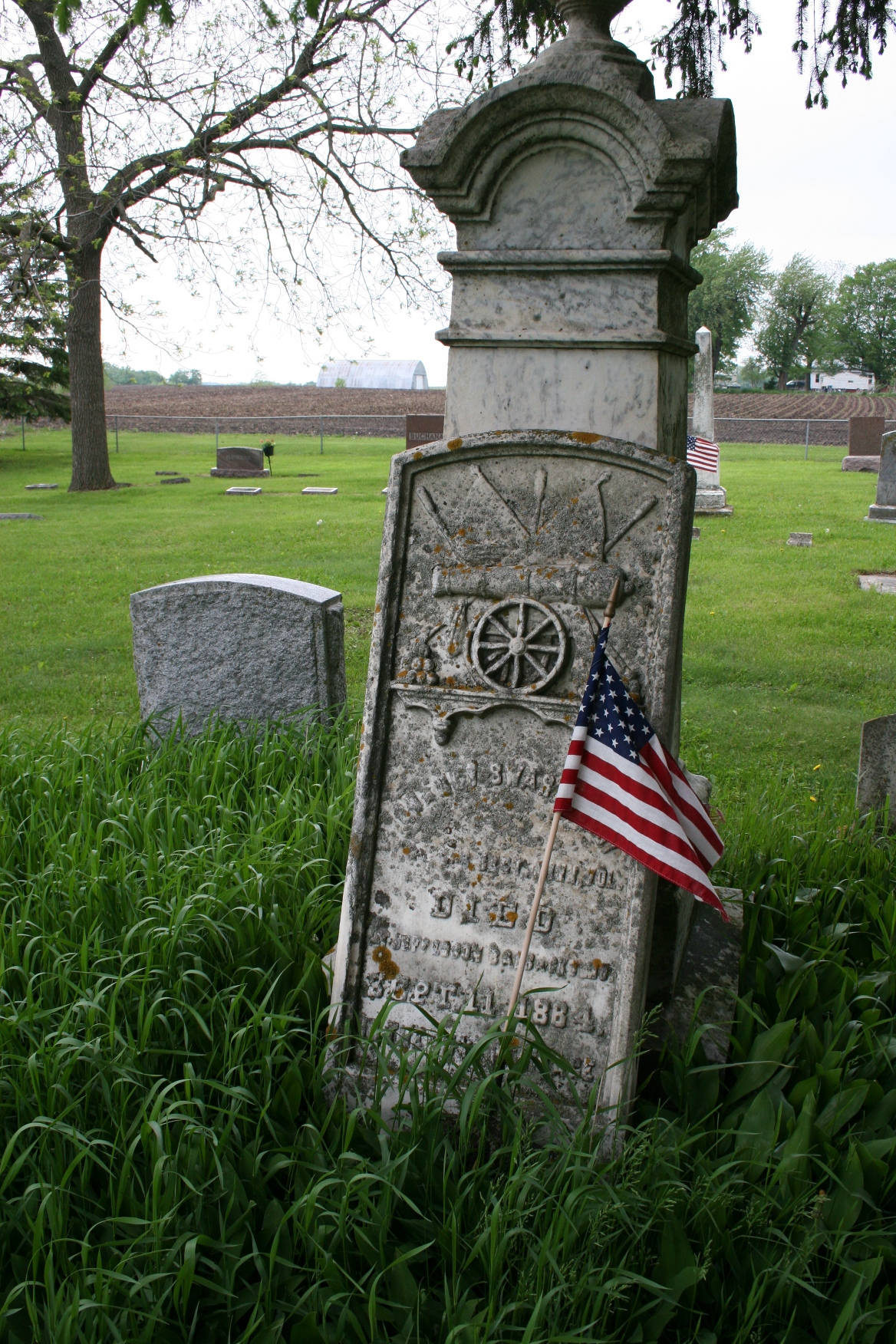
The grave of Chauncey Swartwoudt at the Cannon City Cemetery.

THE NAME ON HIS TOMBSTONE is barely readable as my husband, Randy, struggles to decipher the letters that form “Chauncey Swartwoudt.”

I like how the name rolls off my tongue—the Chauncey part at least. I’m unsure how to pronounce his surname.

He means nothing to me. His is just another tombstone marked by an American flag, among many in a Minnesota country cemetery.

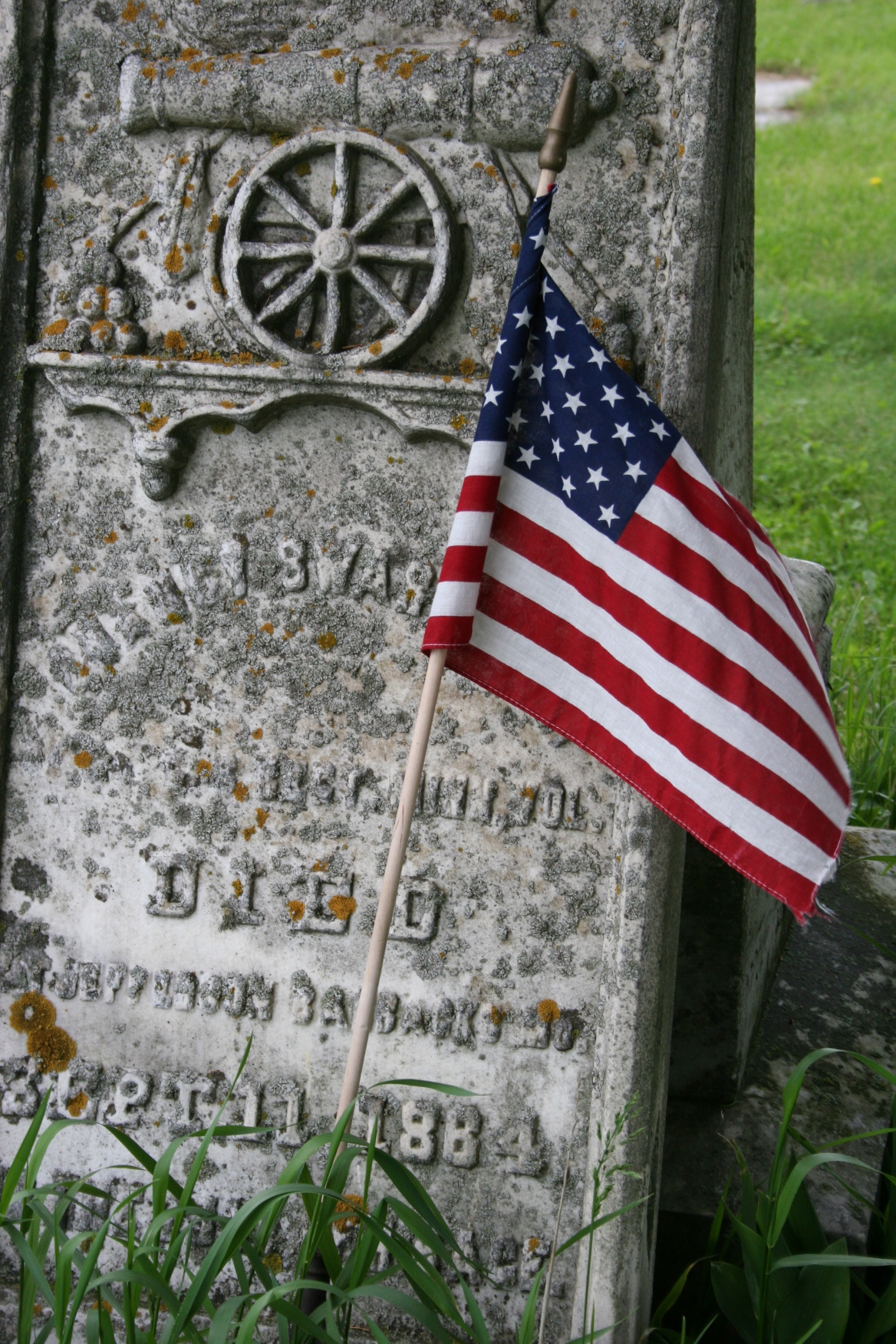
A close-up of Chauncey's tombstone, decorated for Memorial Day.

Yet, because of the size of this grave marker and the rectangular border surrounding it, I am drawn to this spot in the Cannon City Cemetery on Memorial Day.

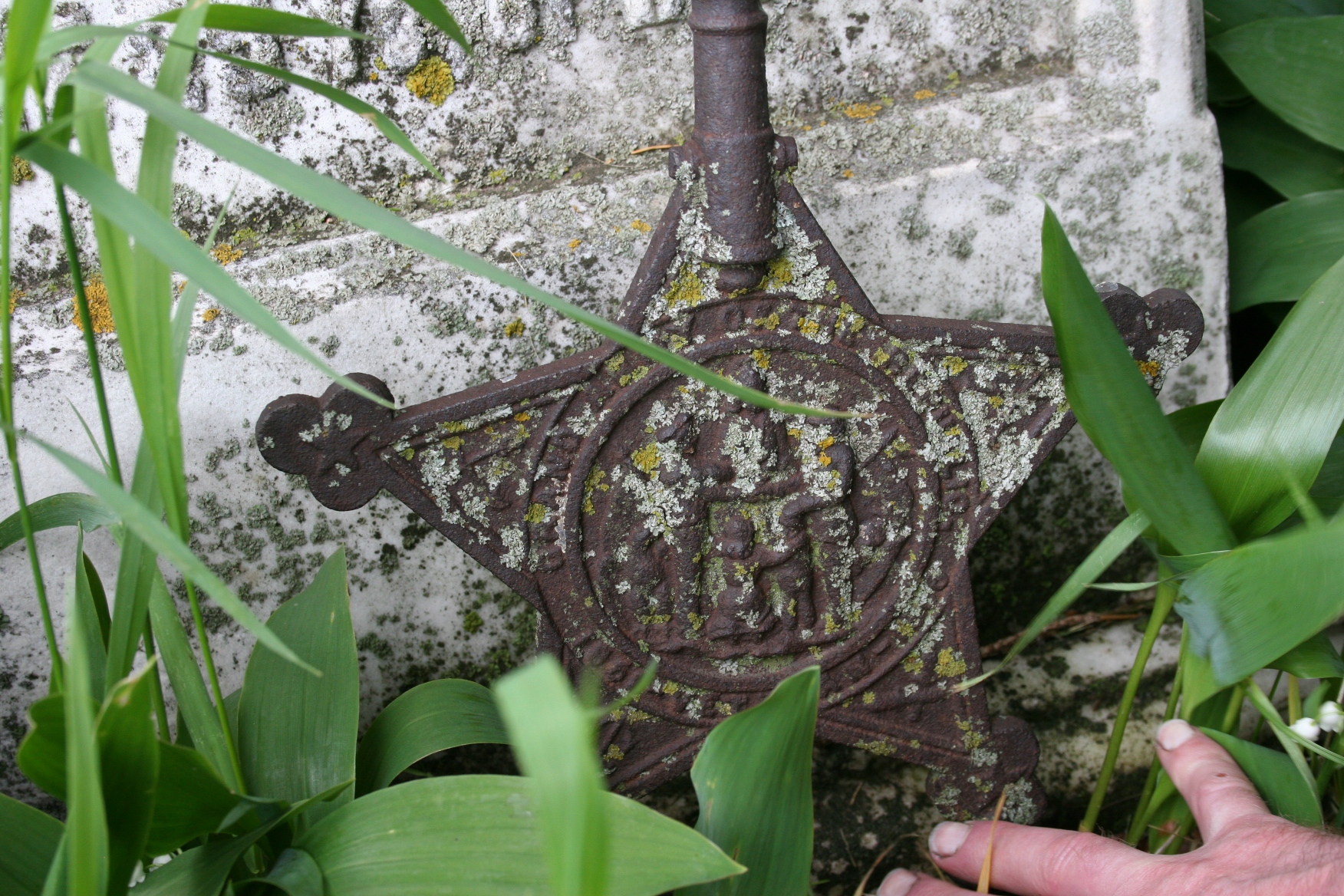
When I lean in close, I discover more. Or, more accurately, Randy uncovers a veteran’s star with difficult-to-read words. He decodes “The Grand Army of the Republic.” GAR equals veterans of the Union Army who served in the Civil War.

Randy pulls back foliage to reveal a GAR star with words that are barely readable and a design that we can't clearly see. Does anyone know what design graces the center of these old GAR stars?

Chauncey was mustered into the military on August 8, 1862, at the age of 22. He served as a Union Army private with Company C, Sixth Minnesota Volunteer Regiment. Two years, one month and three days later, on September 11, 1864, at the age of 24, he died at Jefferson Barracks in St. Louis, Missouri.

He was a soldier, the son of Henry and Catherine and brother of Charles. (He may have  had other siblings, but my quick research reveals only Charles.)

Nine years after Chauncey’s death, on March 15, 1873, Charles and Elizabeth Swartwoudt named their new-born son after his uncle. Little Chauncey lived only three years.

This is all I know about the elder Chauncey who fought in the Civil War, who died far from his Minnesota home. A young man of only 24, his entire life ahead of him.

Why did he die?

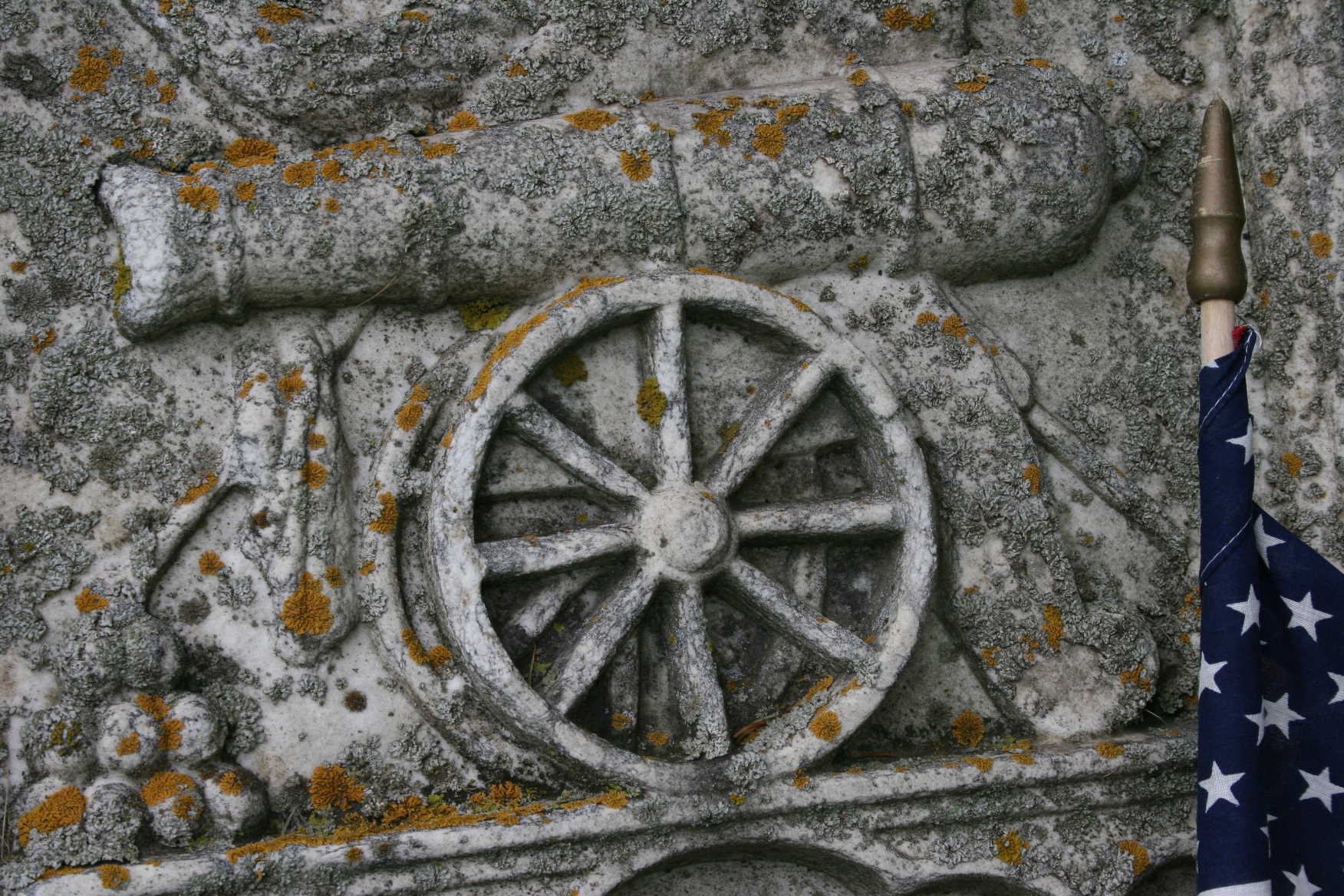
Detailed artwork, in the form of a cannon and cannonballs are engraved on Chauncey's tombstone.

Why is a cannon, with stacked cannonballs, etched into the cold stone of his grave marker? I’ve visited many Minnesota cemeteries and never seen such detailed art on the marker of a Civil War soldier.

It’s not like I should care. I have no connection to Chauncey. Yet I do care. He was a soldier, a son, a brother. I am a mother and a sister. He came home in a box. And a mother wept.

© Copyright 2011 Audrey Kletscher Helbling