
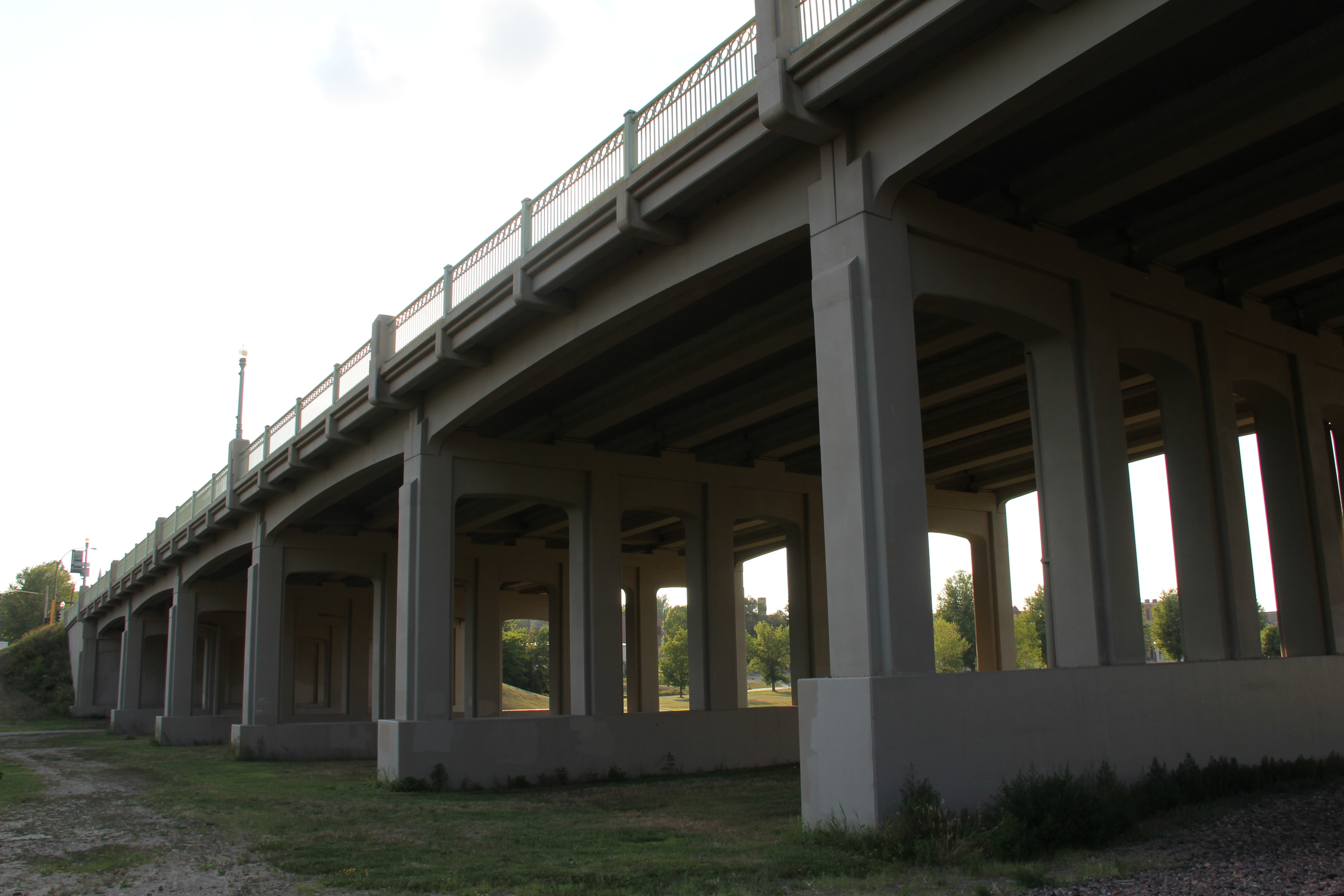
ARCHITECTURE, ART AND HISTORY meld on an expansive structure connecting Faribault’s east and west sides.
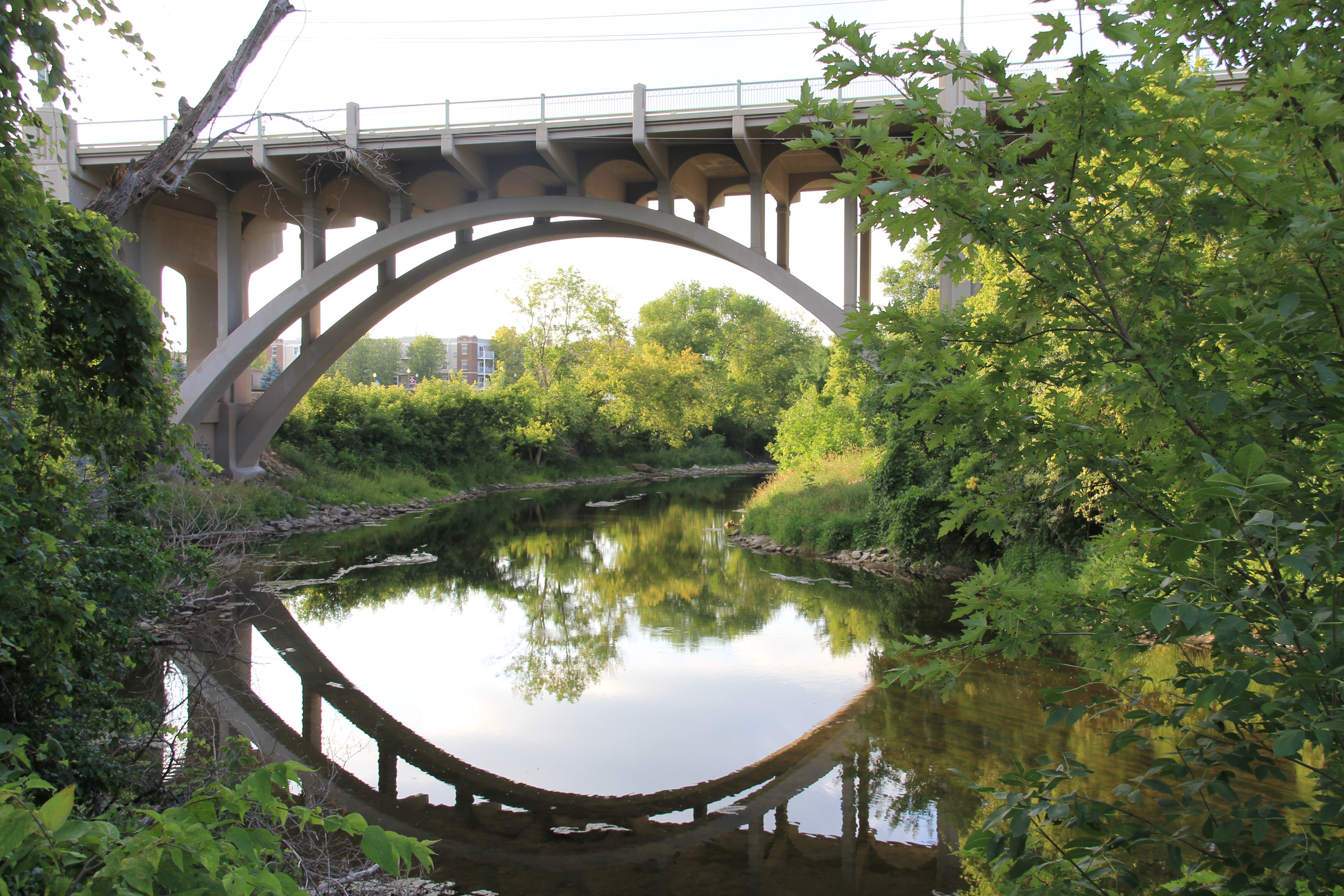
Locally referred to as “The Viaduct,” the continuous concrete rib arch bridge routes pedestrians and traffic along Minnesota State Highway 60 over railroad tracks and the Straight River far below. Three massive reinforced arches distinguish this as a viaduct rather than a bridge.
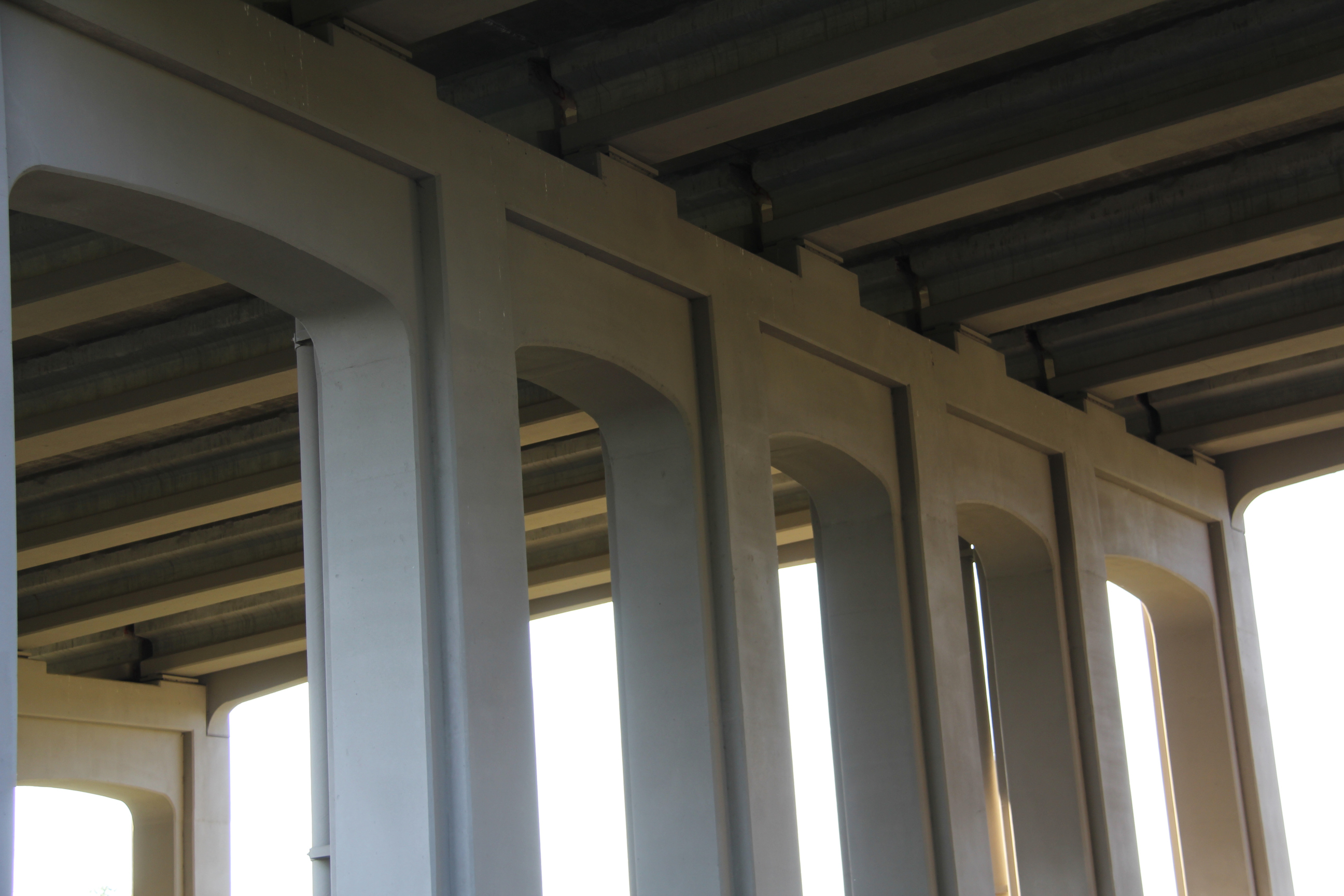
Thousands of times I’ve crossed the viaduct via vehicle in my 41 years living here. But not until recently did I pause to really study the underbelly of this 1937 Works Progress Administration project which is on the National Register of Historic Places. Only via a close-up look from ground level did I fully appreciate this engineering feat.
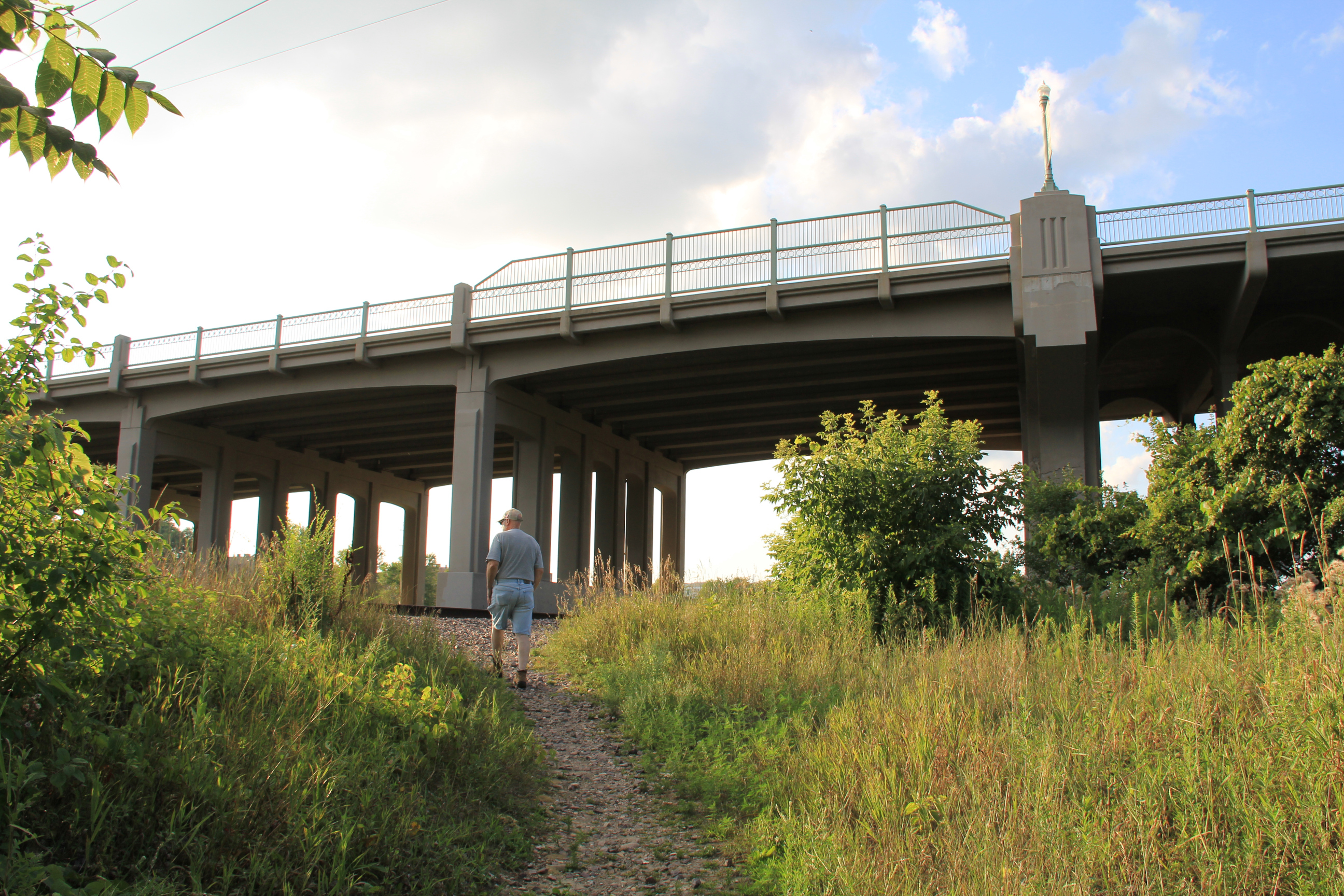
I followed a narrow dirt trail through trees and underbrush in Teepee Tonka Park to reach a good viewing spot of the viaduct underside. From that perspective next to the train tracks, I observed the way patterns and lines repeat to build a strong structure that has withstood the test of traffic and of time. The bridge was rehabilitated, the roadway widened in 2008-2009.
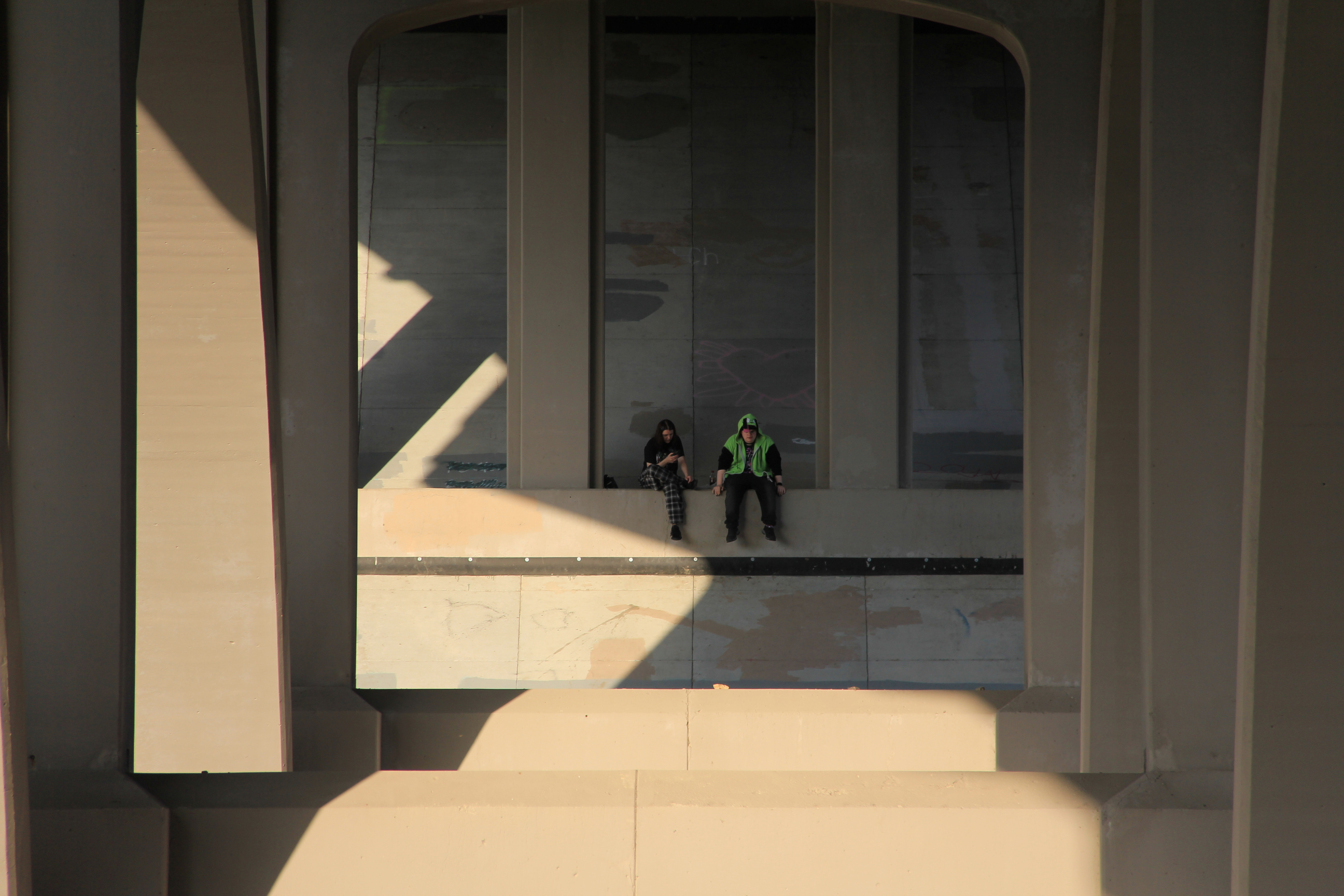
The viaduct impresses in design and size. I felt dwarfed by its massiveness, even more noticeable when I spotted a couple sitting on the far end. They appeared small in comparison to the concrete piers rising above and around them. I felt overpowered, too. I wondered how WPA workers managed to build this wonder in the late 1930s without the modern equipment of today.
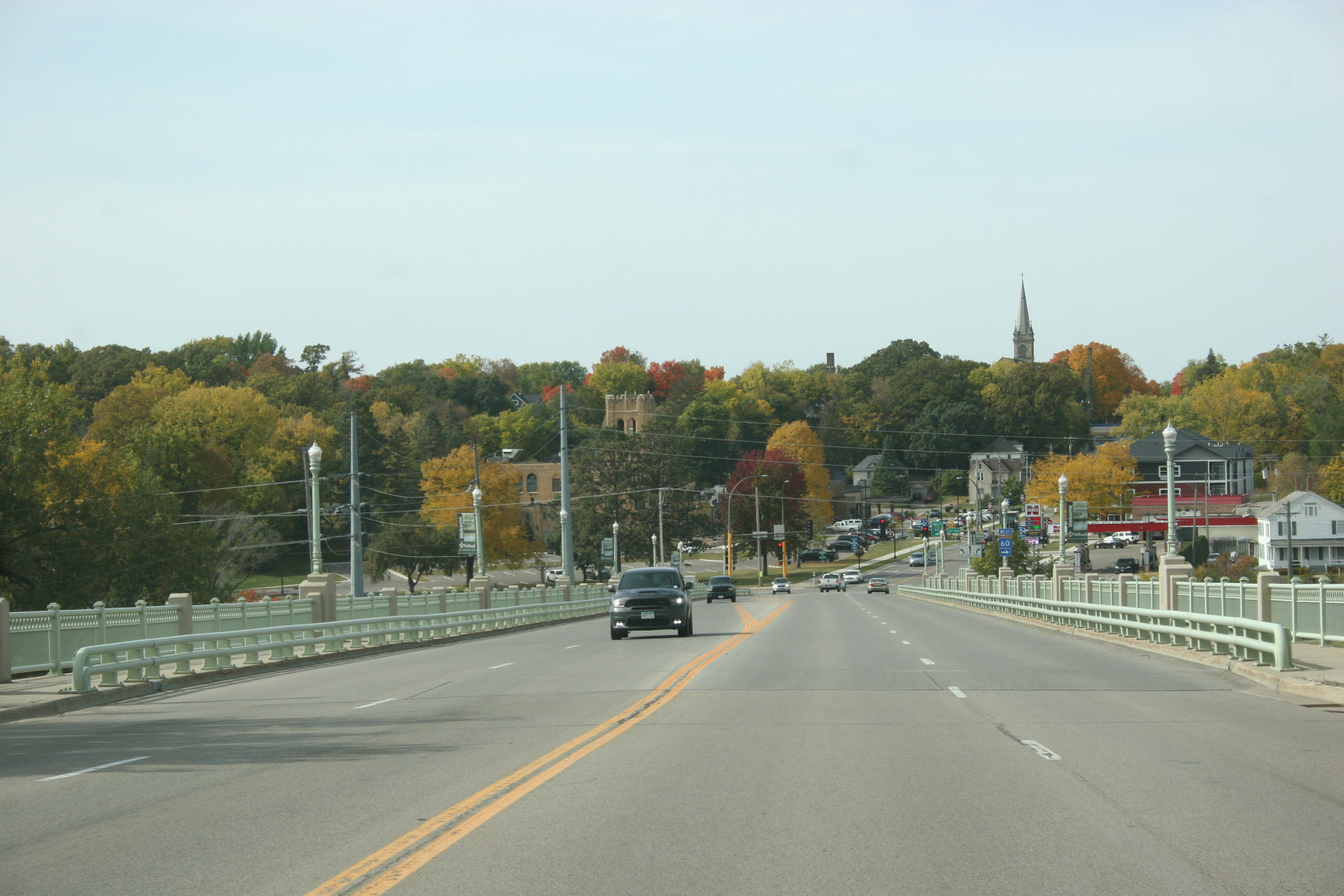
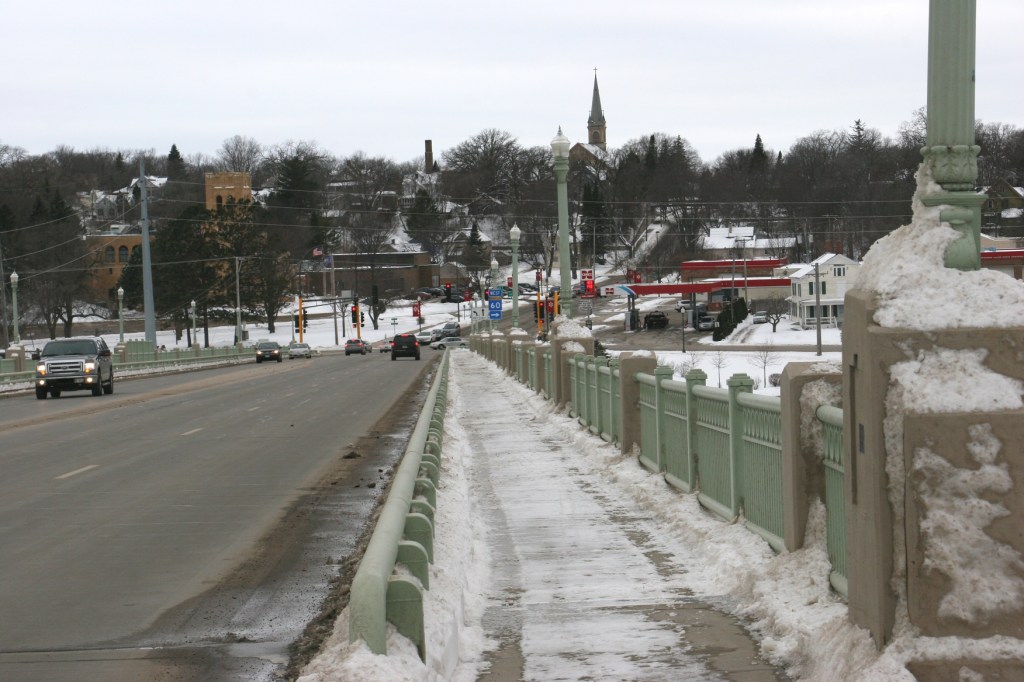
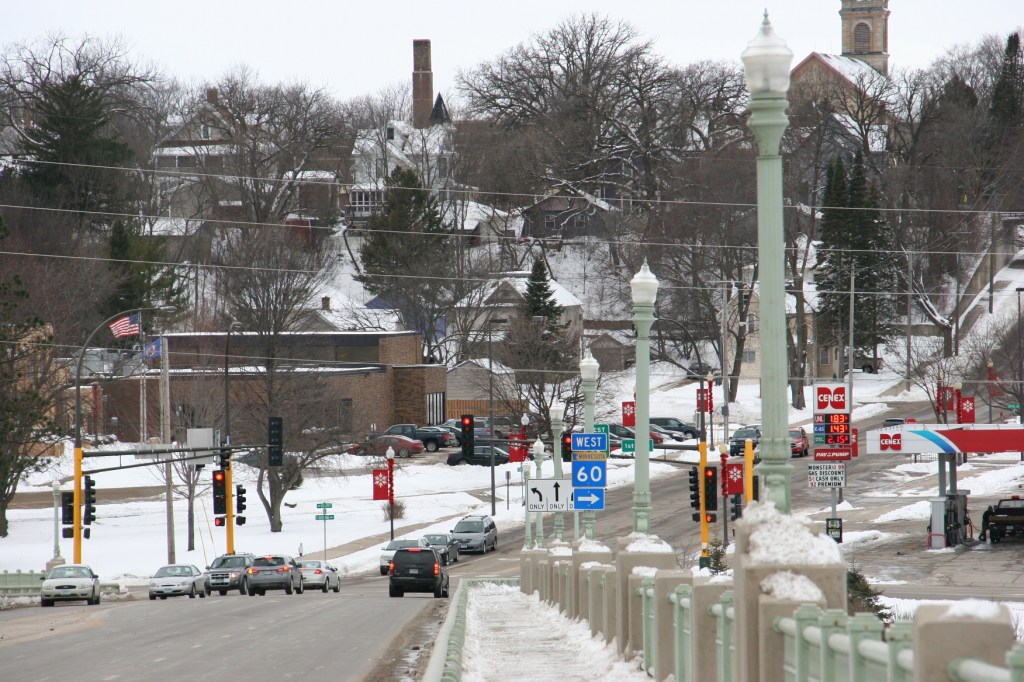
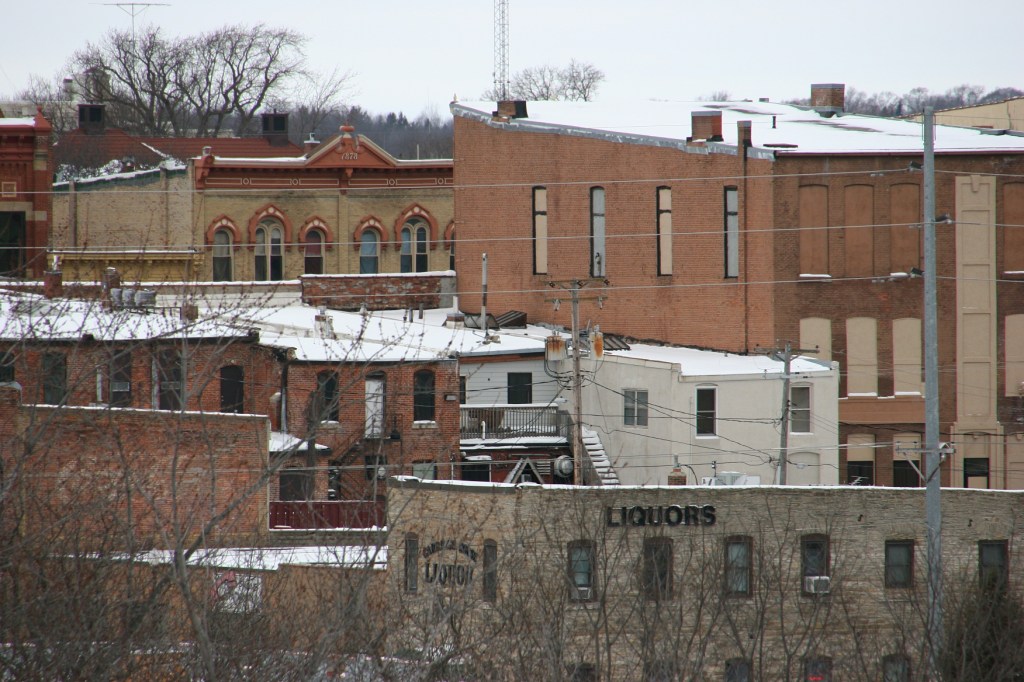
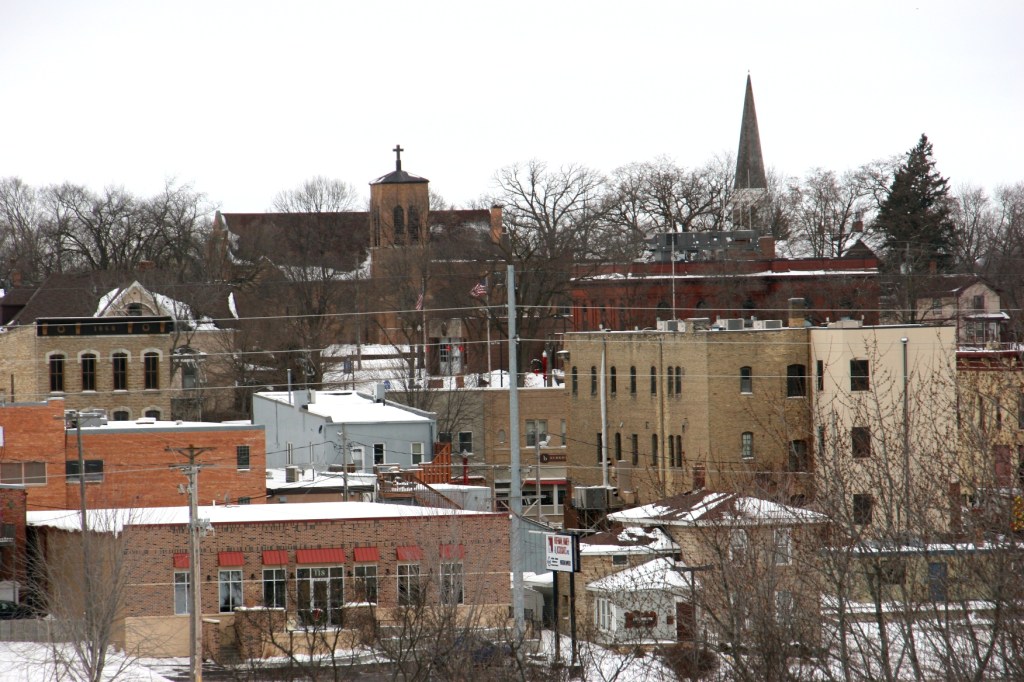
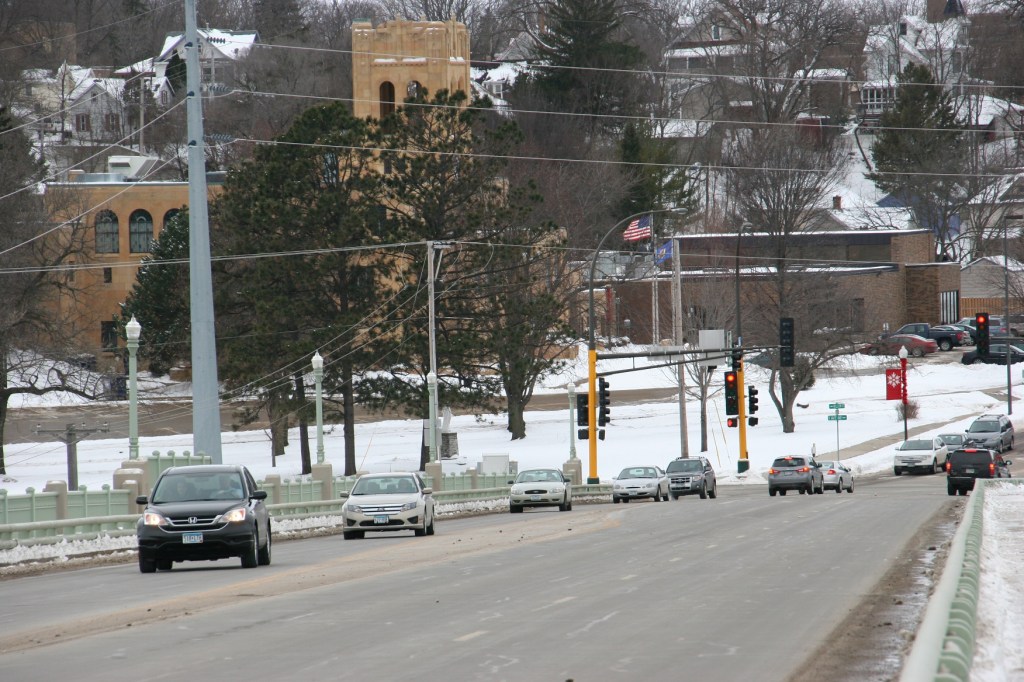
But it is more than utilitarian construction that marks this viaduct as noteworthy. The viaduct is a work of public art—an interactive sculpture which provides a sweeping view of historic downtown Faribault and the surrounding area when heading westbound. To view the bridge from below is to truly see its artsy side, its Art Deco/Classical Revival style. That style carries through in the concrete piers and, on road level, in the decorative railings and lights, replicas of the originals.
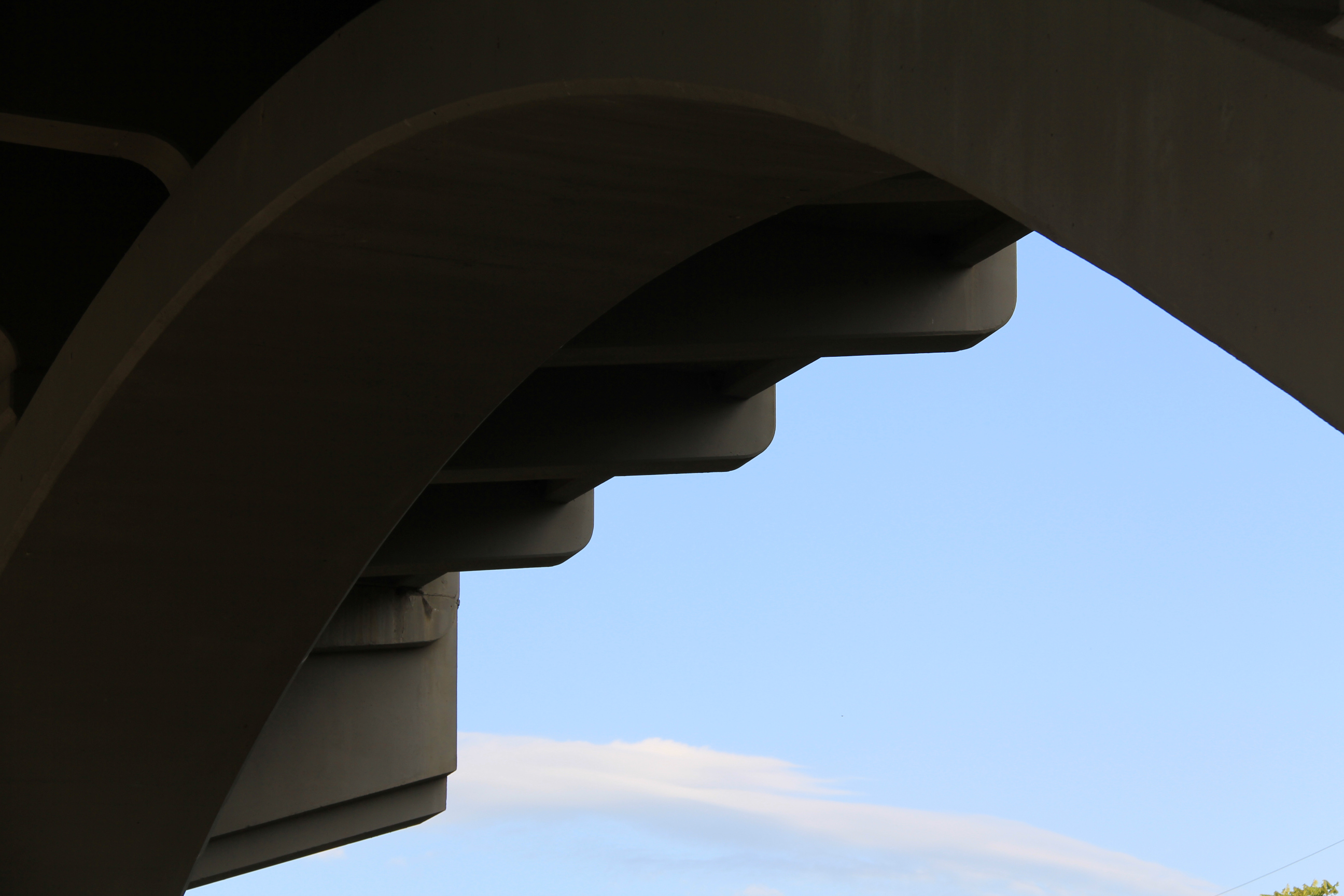
As I stood under the viaduct studying its design, artsy arches, curves and lines, I considered the many people who have traversed this bridge. If only this concrete could speak, oh, the stories it would tell. Stories of construction workers who labored for 1½ years to complete this project. Stories of Ford Model As, among the first to drive across this linkage between east and west. Stories of students arriving at the Minnesota State Academies for the Deaf and Blind. Stories of athletes heading to hockey camp at Shattuck-St. Mary’s School. Stories of prisoners transported to the Minnesota State Correctional Facility, Faribault. Stories of ambulances racing across the viaduct toward the hospital. Stories of expectant parents headed there, too. Stories of families and students on their way to River Bend Nature Center. Stories of travelers simply passing through Faribault.
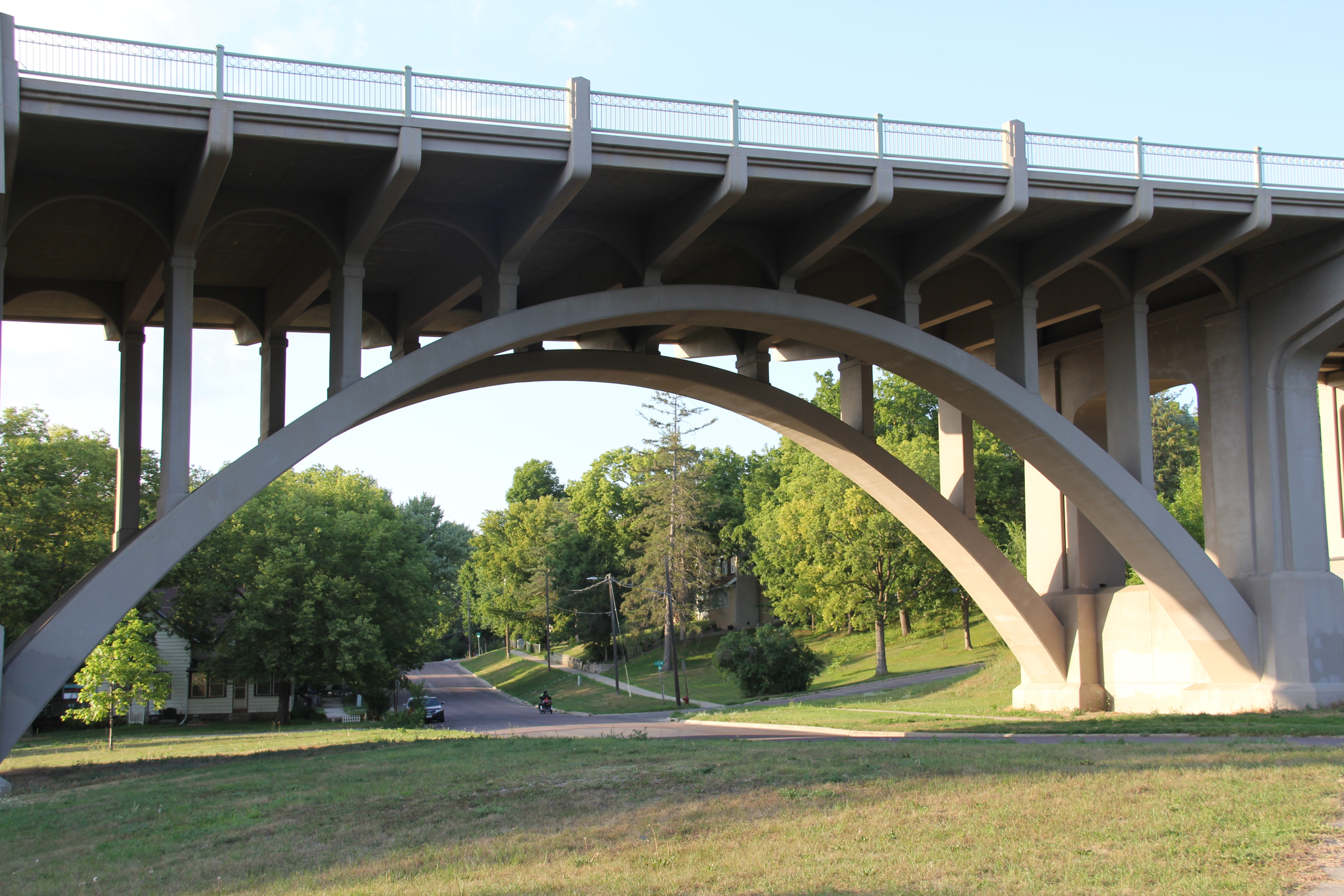
For 86 years, The Viaduct has gathered stories atop graceful arches, upon a roadway that is more than a route. This is a local landmark, an architectural and artistic marvel which visually and historically defines Faribault.
© Copyright 2023 Audrey Kletscher Helbling



 Minnesota Prairie Roots
Recent Comments