Minnesota Prairie Roots

Writing and photography by Audrey Kletscher Helbling

Nighttime roadblock outside Faribault August 21, 2009

Filed under: Uncategorized — Audrey Kletscher Helbling @ 9:10 AM

It’s 11:10 at night and my phone rings. My sister Lanae, who has just left my house, is on her way home from Faribault to Waseca after attending a family picnic in Minneapolis.

“There’s something big going on out here,” she says. “I’m stopped outside of town and there are cop cars all over.”

We speculate that she may have arrived on the scene of an accident. But she sees nothing, except all those squad cars.

“I’ve gotta go,” she blurts abruptly and then she is gone, just like that.

Soon her car pulls into my driveway.

Now she is inside my kitchen telling me about the roadblock. A cop walked up to her car “with a big, honkin’ gun,” she says, and ordered her to back up and leave. She did. No questions asked.

She is still shaken and keeps repeating “big, honkin’ gun.”

I can only imagine how Lanae felt, to have a police officer approach her vehicle with a mammoth weapon in the pitch black of the night.

We pull out the map and figure a new route for her to get home. And she leaves, even though I suggest she stay overnight.

That night I dream, about an escaped prisoner holding my family hostage. I know this nightmare comes from my sister’s experience, from my subconscious fear.

Later I learn there was no accident, no hostage situation, but rather people shooting at bats with a shotgun. A story in the local newspaper reports the bat shooters used 28 shells. Law enforcement arrived because of shots fired and apparently the situation was still unfolding when Lanae drove into the area.

I am relieved, but angry that my sister had to go through this frightening experience because of such stupidity.

How crazy are these people, to fire shotguns in the dark of night, at bats?

© Copyright 2009 Audrey Kletscher Helbling


Celebrating the Bode family heritage August 20, 2009

Filed under: Uncategorized — Audrey Kletscher Helbling @ 12:21 PM
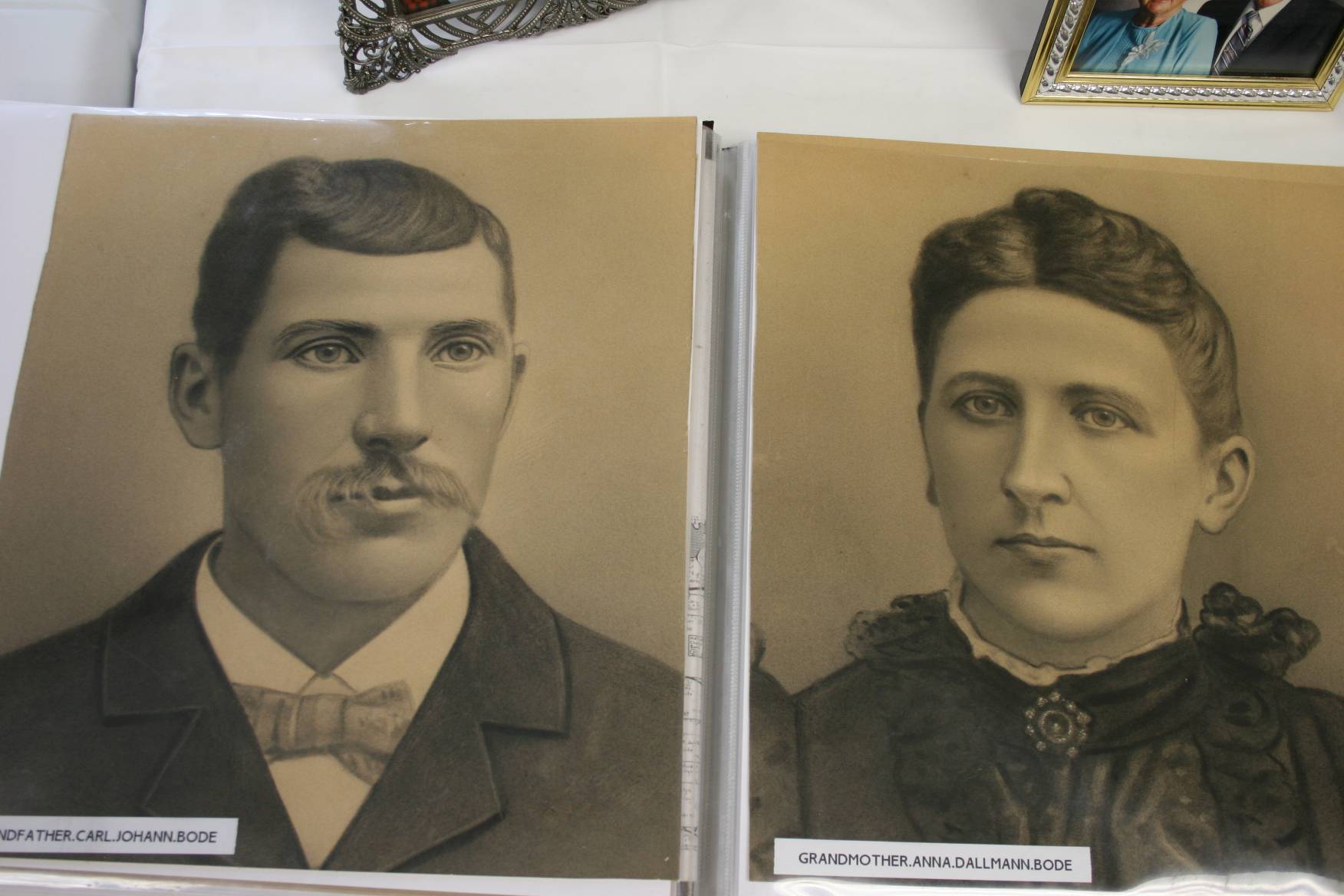
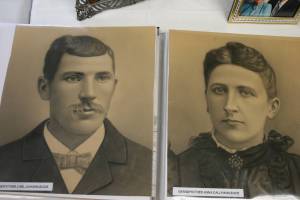
Photo copies of my great grandparents, Karl and Anna Bode, were displayed at the Bode family reunion on August 16 in Courtland, Minnesota.
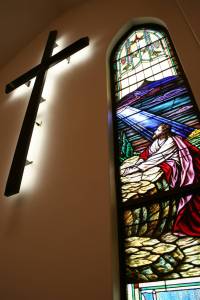
Photo copy portraits of my great grandparents, Karl and Anna Bode, were displayed at the Bode family reunion on August 16 in Courtland, Minnesota.

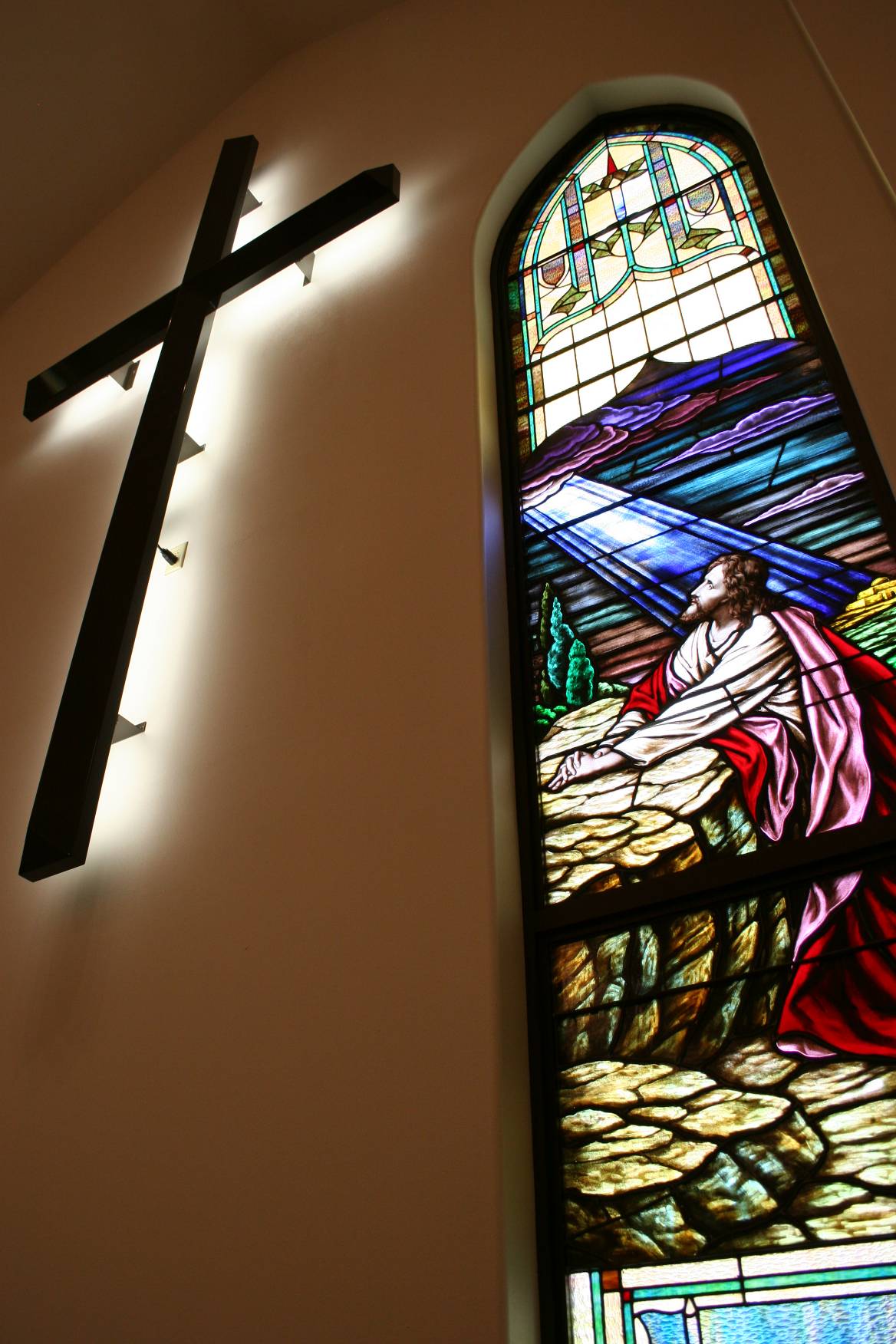
This stained glass window is among many from the old church building incorporated into Immanuel Lutheran's new house of worship.

This stained glass window is among many from the old church building incorporated into Immanuel Lutheran's new house of worship.

Voices raised in unison, we sang, “God’s Word is our great heritage and shall be ours forever… Lord, grant while worlds endure, we keep its teachings pure through-out all generations.”

While we sang this hymn, accompanied by the same pipe organ that has graced Immanuel Lutheran Church in rural Courtland for 114 years, I sensed the presence of those who had gone before us. In the music, in the stained glass windows, in the polished pews, I felt the closeness of family.

“You have a great heritage of faith,” said the Rev. Wayne Bernau, as he welcomed those of us gathered for worship this past Sunday morning. Afterwards, we would meet for a Bode family reunion in a day of food and talk and sharing of our history, here, upon this soil where our forefathers settled, farmed the land, built this country church, and now lay buried in the adjacent cemetery.

The pastor read, his tongue tripping over the German words inscribed upon the tombstones of my maternal great-great and great grandparents. I strained to hear and understand the German I had once learned, had spoken, had now mostly forgotten, this, the native tongue of my ancestors.

Later, in the cemetery, several of us would try to decipher the German: “Das blut Jesu Christi des Sohnes Gottes macht uns rein von aller sünde.” The blood of Jesus Christ, the son of God, makes us clean from all our sins.

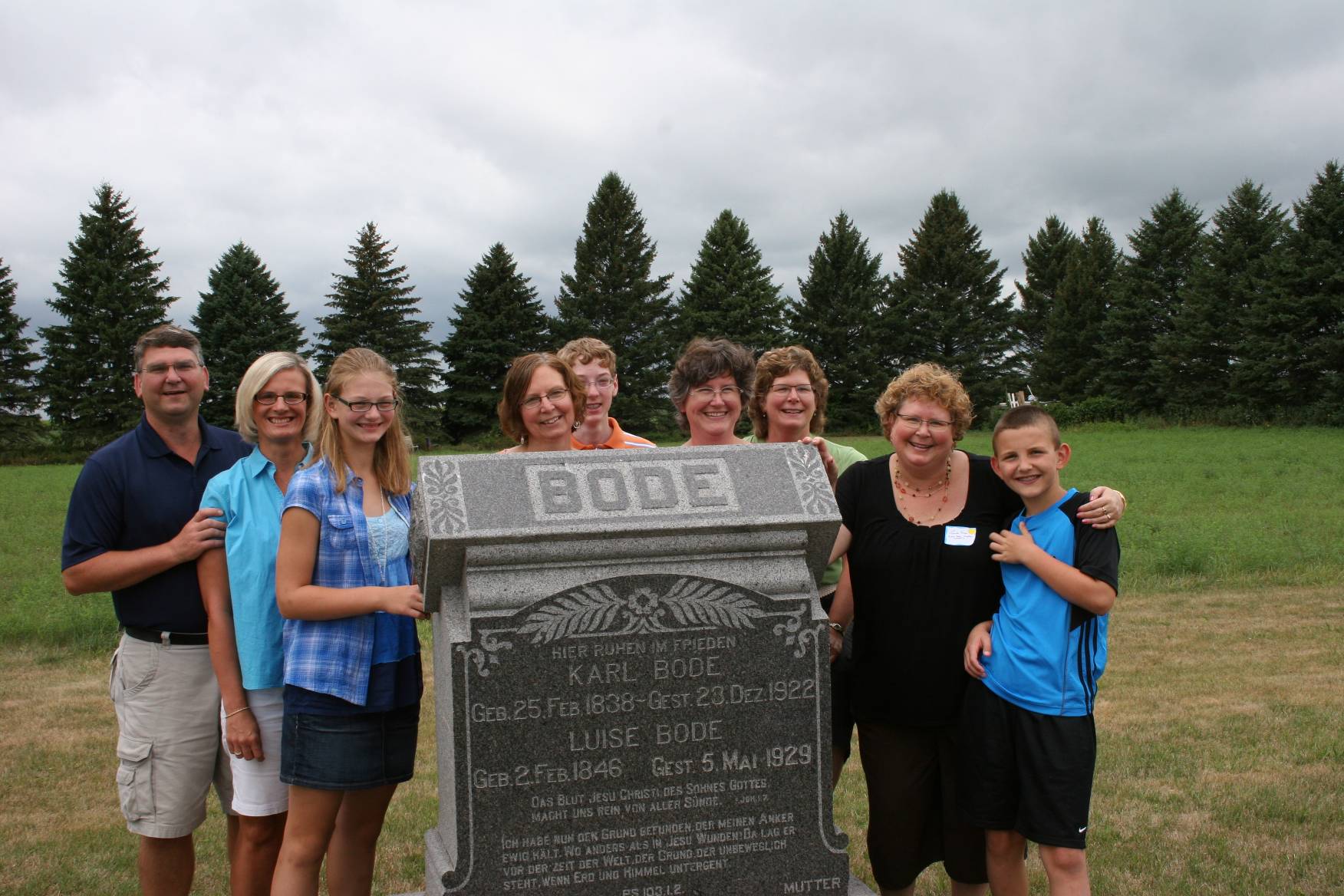
We gave up trying to translate a bible verse from the book of Psalms and instead laughed, then apologized to our great-great grandparents, Karl and Luise Bode, for our language lapse. We posed for a photo behind their tombstone, laughing some more, hoping they appreciated our joyfulness, even in a graveyard.

Again, that closeness of family prevailed, as we recited the books of the bible in an effort to determine the source of another gravestone verse. Recitation. Good Lutherans remembering their memory work, just like the good Lutherans before us.

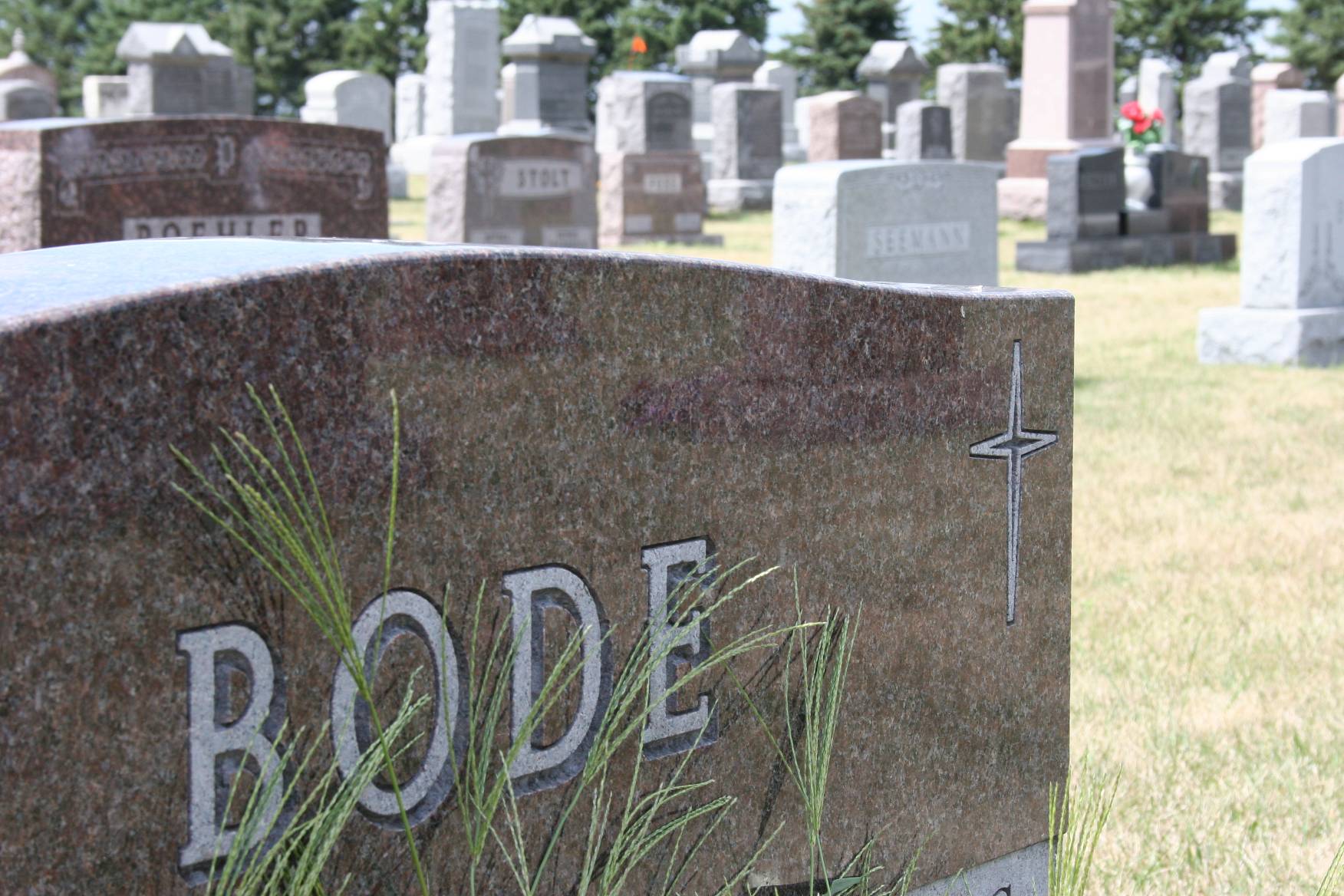
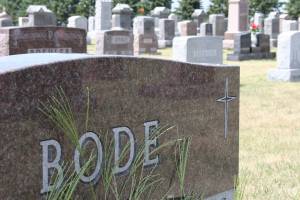
And then, across the grass we walked, past numerous tombstones chiseled with the Bode name. Bodes everywhere. Some from our branch of the family; some from others.

We paused before the graves of Karl and Anna Bode, our great grandparents. More photos.

And then, a snake skin discovered, picked up. The mood turned playful as a slithering baby garter snake was snatched from the grass, passed around to some, shunned by others. Again, we felt, not disrespectful, but embracing of grandparents who likely would have valued our humor.

Later, we sat elbow-to-elbow beside our Bode relatives, dining on grilled pork chops, potatoes and an assortment of other food. Then, for dessert, the absolutely perfect choice—ice cream with “skunk cookies.”

Fudge-striped cookies to most. But to those of us who are the grandchildren and great grandchildren of Lawrence and Josephine Bode, “skunk cookies,” a name derived from the chocolate stripes that slice through the store-bought cookies grandpa always kept in his kitchen after grandma’s death.

Memories. Family. Blessings.

Heritage through-out all generations, shared on a Sunday afternoon in August at Immanuel Lutheran Church, rural Courtland, during a reunion of about 150 Bode family members.
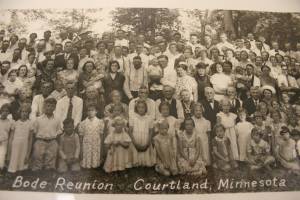
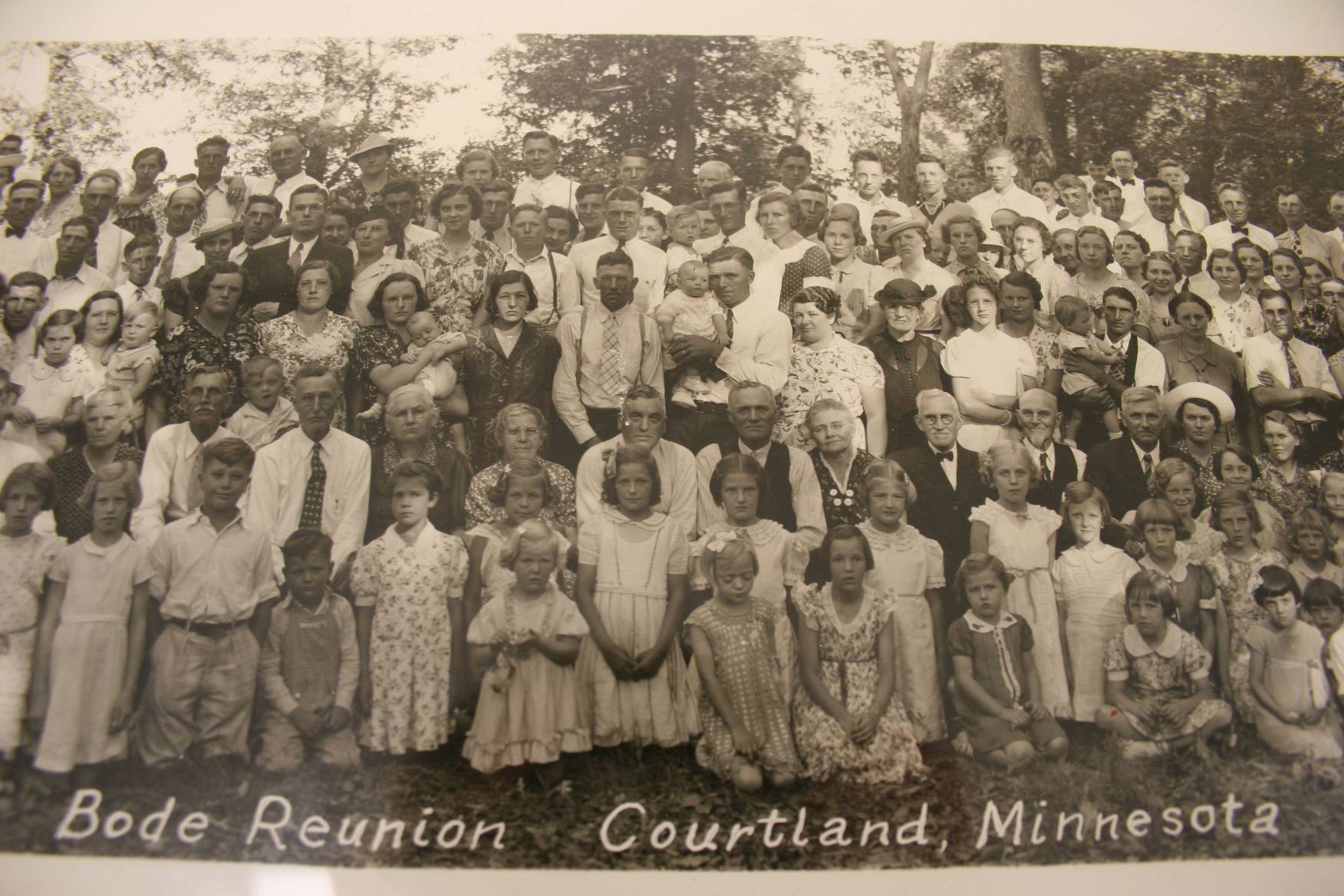
A snippet of a photo from the July 1938 family reunion in Courtland attended by 511 Bodes. My grandparents, Lawrence and Josephine Bode, are in the center of the picture, between the adults holding the babies.

A snippet of a photo from the July 1938 family reunion in Courtland attended by 511 Bodes. My grandparents, Lawrence and Josephine Bode, are near the center of the picture, between the adults holding the babies.
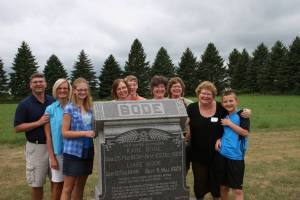
Bode family members, including me, behind the letter "B," gather around the grave of my great-great grandparents, Karl and Luise Bode.
Bode family members, including me behind the letter "B," gather around the grave of my great-great grandparents, Karl and Luise Bode.

Immanuel Lutheran Cemetery, rural Courtland, is filled with the gravestones of many Bodes. This particular Bode tombstone does not belong to one of my direct relatives.

Immanuel Lutheran Cemetery, rural Courtland, is filled with the gravestones of many Bodes.

© Copyright 2009 Audrey Kletscher Helbling

(Return to my blog for more photos of Immanuel Lutheran Church, rural Courtland, the home congregation of my forefathers.)


The friendly Oliver 1655 August 19, 2009

Filed under: Uncategorized — Audrey Kletscher Helbling @ 10:16 AM
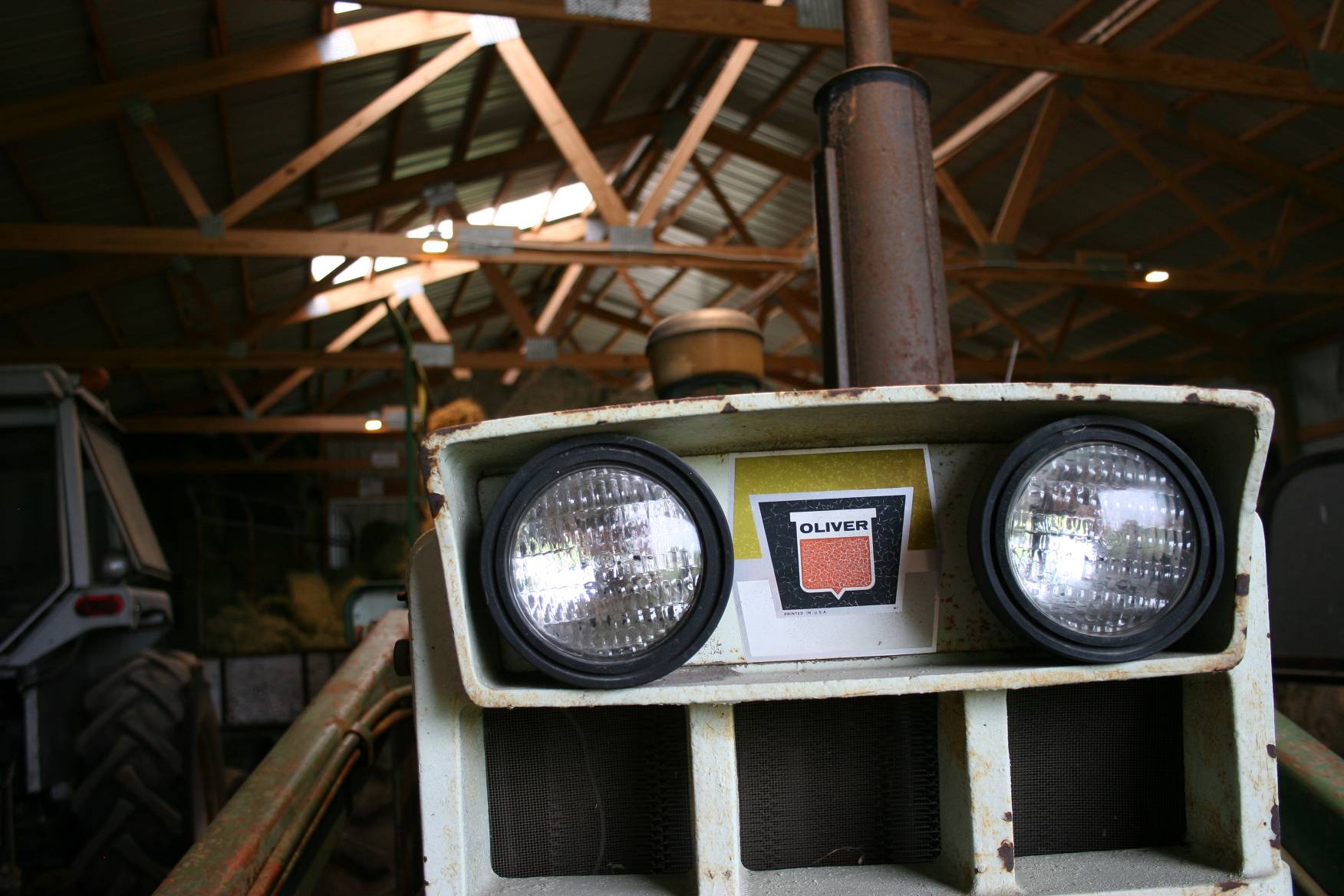
The beautiful "eyes" of an Oliver 1655.

The beautiful "eyes" of an Oliver 1655.

Vintage 1970s Oliver 1655

Vintage 1970s Oliver 1655

If you grew up on a farm, you likely harbor a fondness for a particular brand of ag machinery.

For me, it’s the John Deere. Nothing quite matches the distinct putt-putt-putt I remember of my dad’s yellow-trimmed green tractor.

And then there was always that annual social outing to John Deere Day at the implement dealership in Redwood Falls. I recall little about that event except watching John Deere movies at the local movie theater and eating vanilla ice cream from a little plastic cup with a wooden spoon. One year my cousin Kevin won a coveted silver dollar in a door prize drawing.

Such memories.

I also have an affinity for the B Farmall, the tractor I learned to drive around the farmyard as a youngster.

Those tractors are long gone, replaced by bigger, more powerful equipment.

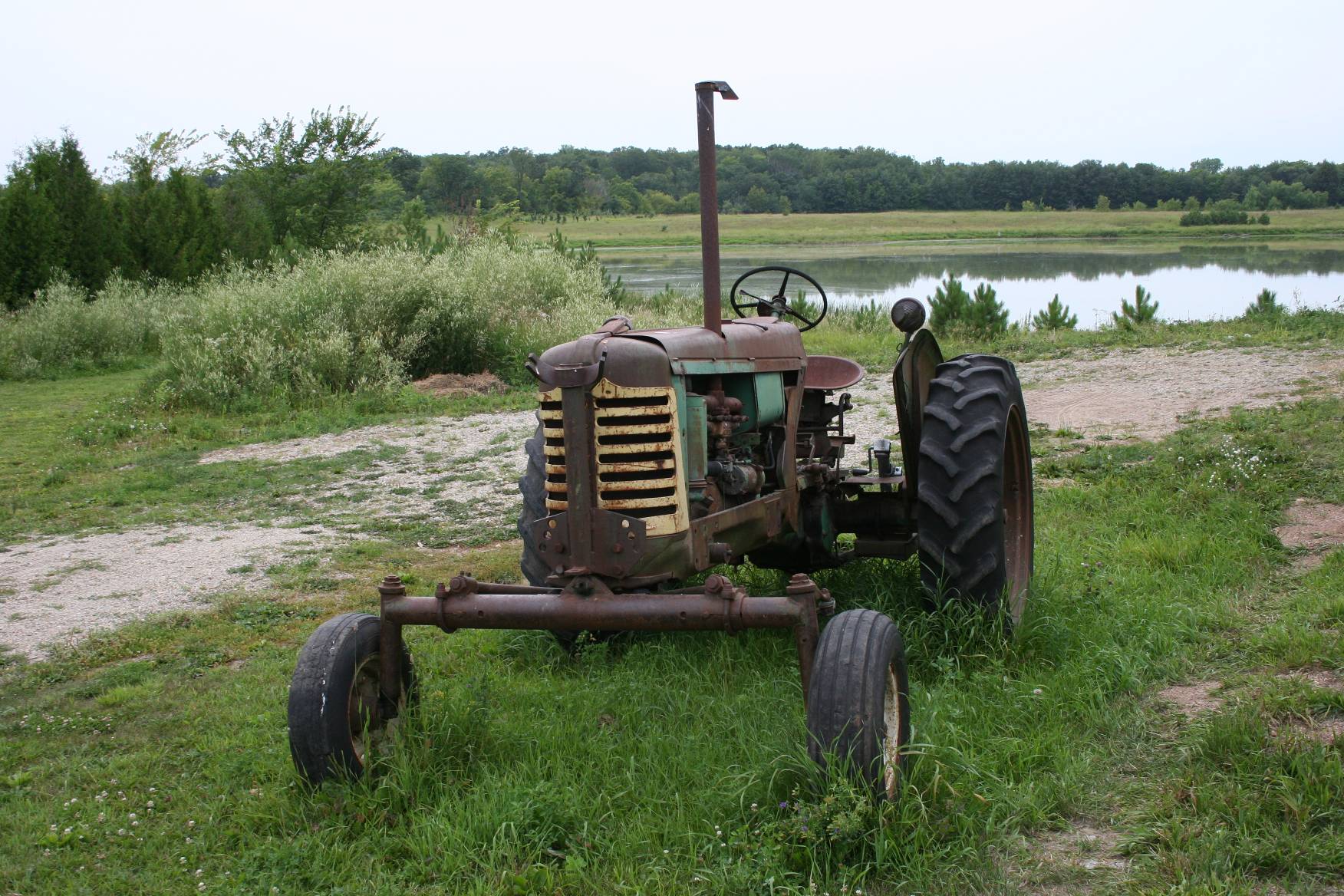
Fortunately, many rural folks today appreciate vintage tractors, collect and restore them. Like this Oliver 1655 from a Faribault area farm. Since I’m more of a John Deere girl, I really know nothing about Olivers, only that this 1970s Oliver 1655 appeals to me visually.

I mean, just look at that friendly face with those big, gorgeous eyes.

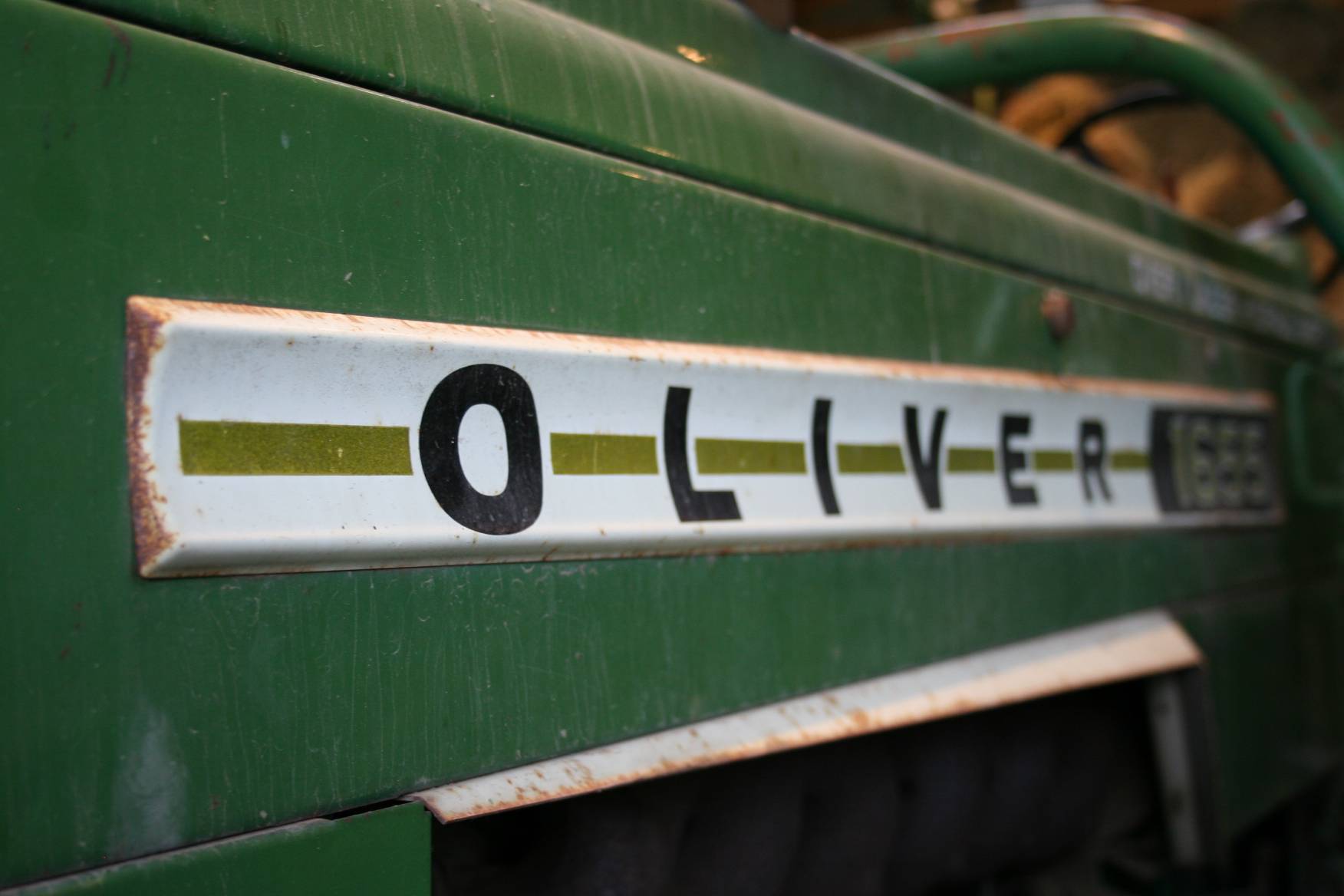
An identifying name on the Oliver 1655

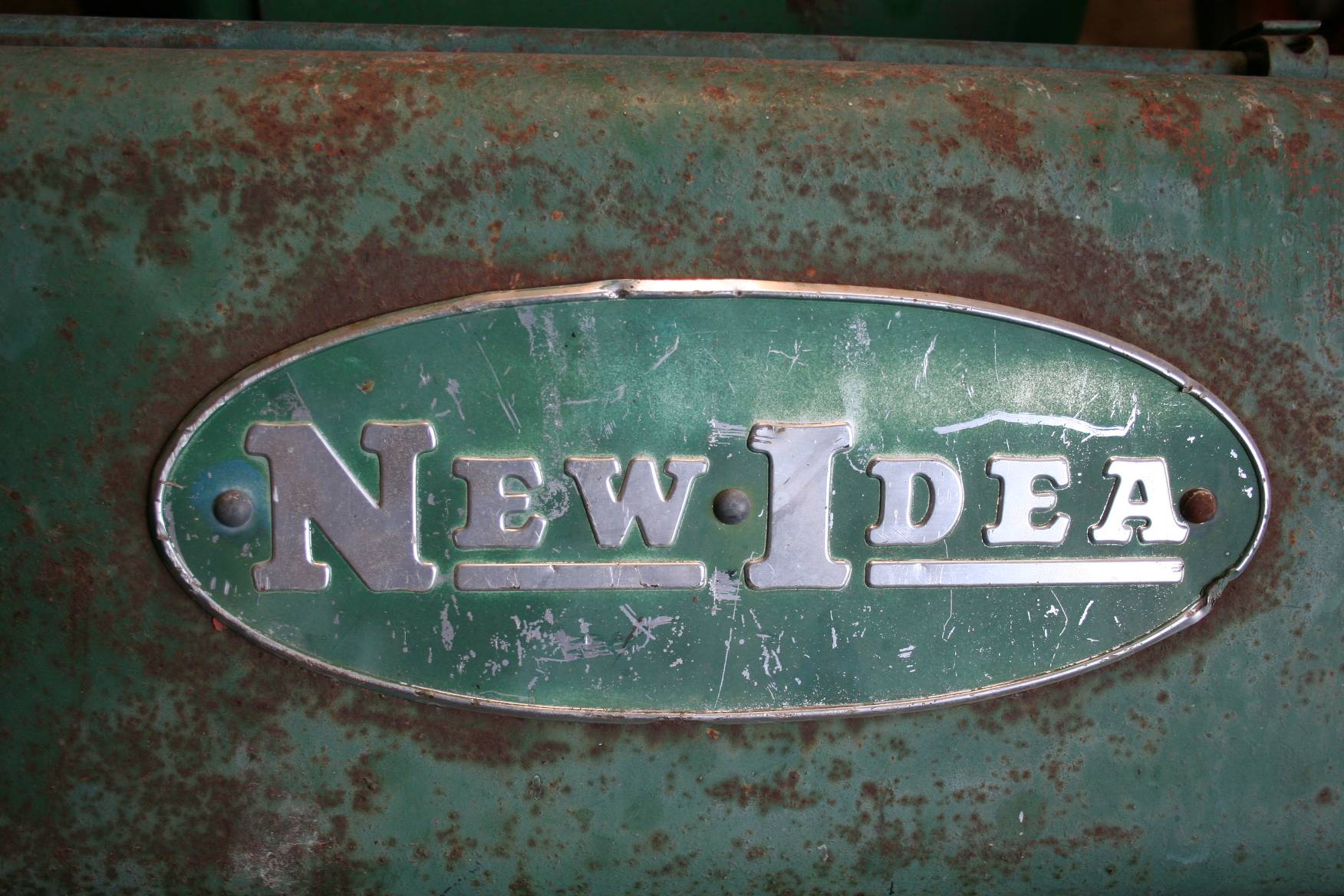
New Idea built the loader on this Oliver 1655.

A Faribault area farmer collects Olivers, including a 1655 from the 1970s.

A Faribault area farmer collects Olivers, including a 1655 from the 1970s, which he still uses to farm.

© Copyright 2009 Audrey Kletscher Helbling


Wabasso, home of the white rabbit August 18, 2009

Filed under: Uncategorized — Audrey Kletscher Helbling @ 9:04 AM
This road-side sculpture welcomes travelers to Wabasso, a small farming community in southwestern Minnesota.

This road-side sculpture welcomes travelers to Wabasso, a small farming community in Redwood County in southwestern Minnesota.

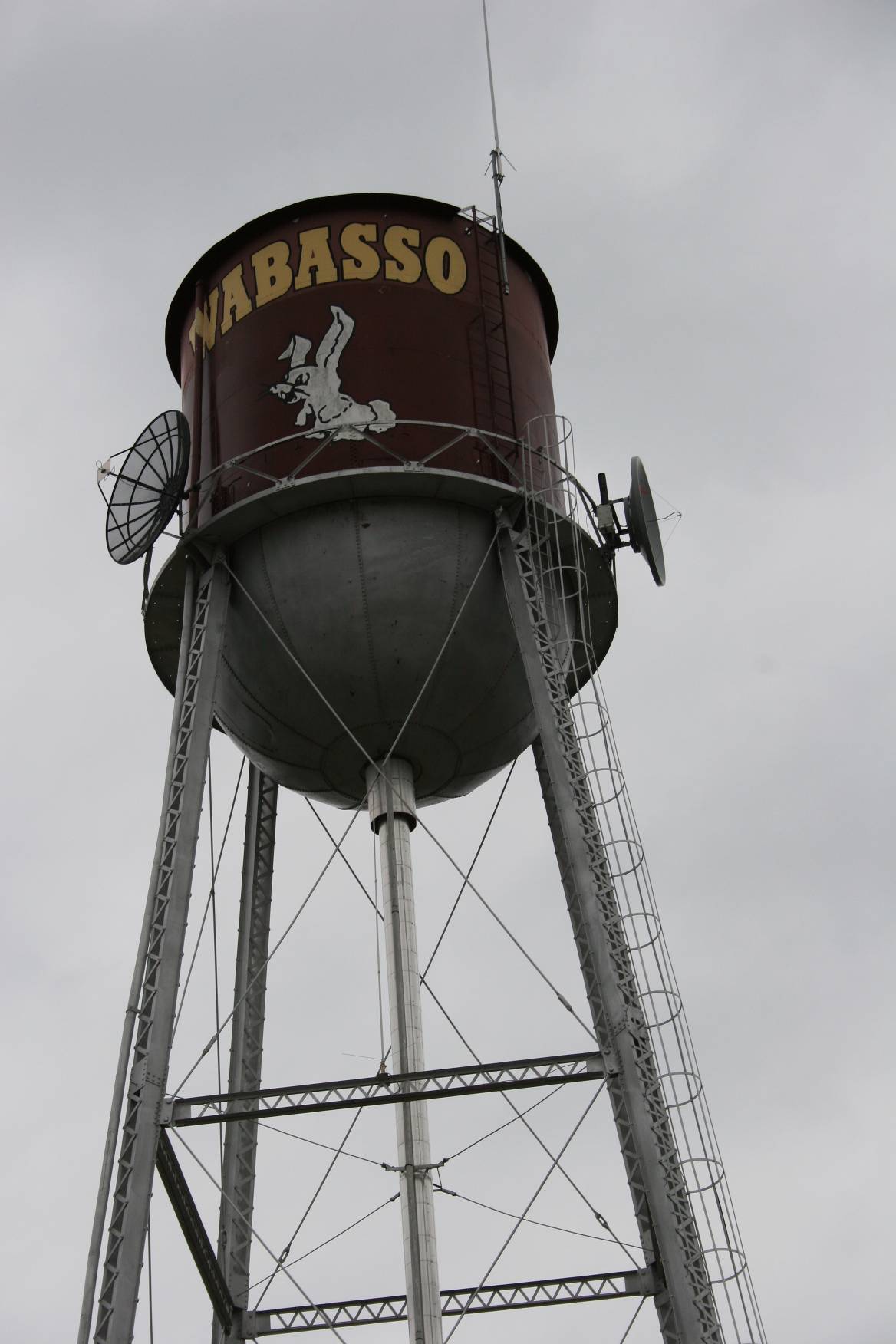
Wabasso's water tower, painted in the school colors and adorned with a white rabbit, the school mascot.

Wabasso's water tower, painted in the school colors and adorned with a white rabbit, the school mascot.

Does Minnesota exist west of Mankato?

Of course it does.

But I’ve noticed through the years that lots of southeastern Minnesotans think the state’s western border ends in Blue Earth County. Heck, a lot of metro residents think there’s nothing outside of “the Cities,” except Duluth and Brainerd and maybe St. Cloud and Rochester.

So when I tell folks I grew up on a farm outside of Vesta and graduated from Wabasso High School, I typically get a blank stare, a questioning look, a “where’s that?”

I then follow up with my own question: “Do you know where Redwood Falls is? Marshall? Vesta is along highway 19 half-way between the two towns.”

If that explanation still doesn’t work, I say, “southwestern Minnesota.”

Yes, I’m proud of my home area, where I traveled this past weekend for my 35-year Wabasso High School class reunion. WHS is in Wabasso, a town of 650 in the heart of Redwood County and a 20-mile bus ride from my childhood home.

Wabasso—home of the rabbits, the white rabbits. Please don’t laugh.

Through the years, we Wabasso students took our share of ribbing about the school mascot. I mean, compared to Wildcats and Tigers and Falcons, a lowly rabbit fails to evoke any image of strength or fierceness.

But there’s a reason behind the mascot. And it is found in the translation of Wabasso, a Native American word for “white rabbit.”

Henry Wadsworth Longfellow even wrote about Wabasso (not the town) in his epic poem, The Song of Hiawatha, which is based on native stories and legends.

Longfellow writes in Part II, The Four Winds:

“But the fierce Kabibonokka
Had his dwelling among icebergs,
In the everlasting snow-drifts,
In the
kingdom of Wabasso,
In the land of the White Rabbit.”

Longfellow got it right on the “everlasting snow-drifts,” which, in the winter, spread like a vast sea of sculpted waves across the flat prairie.

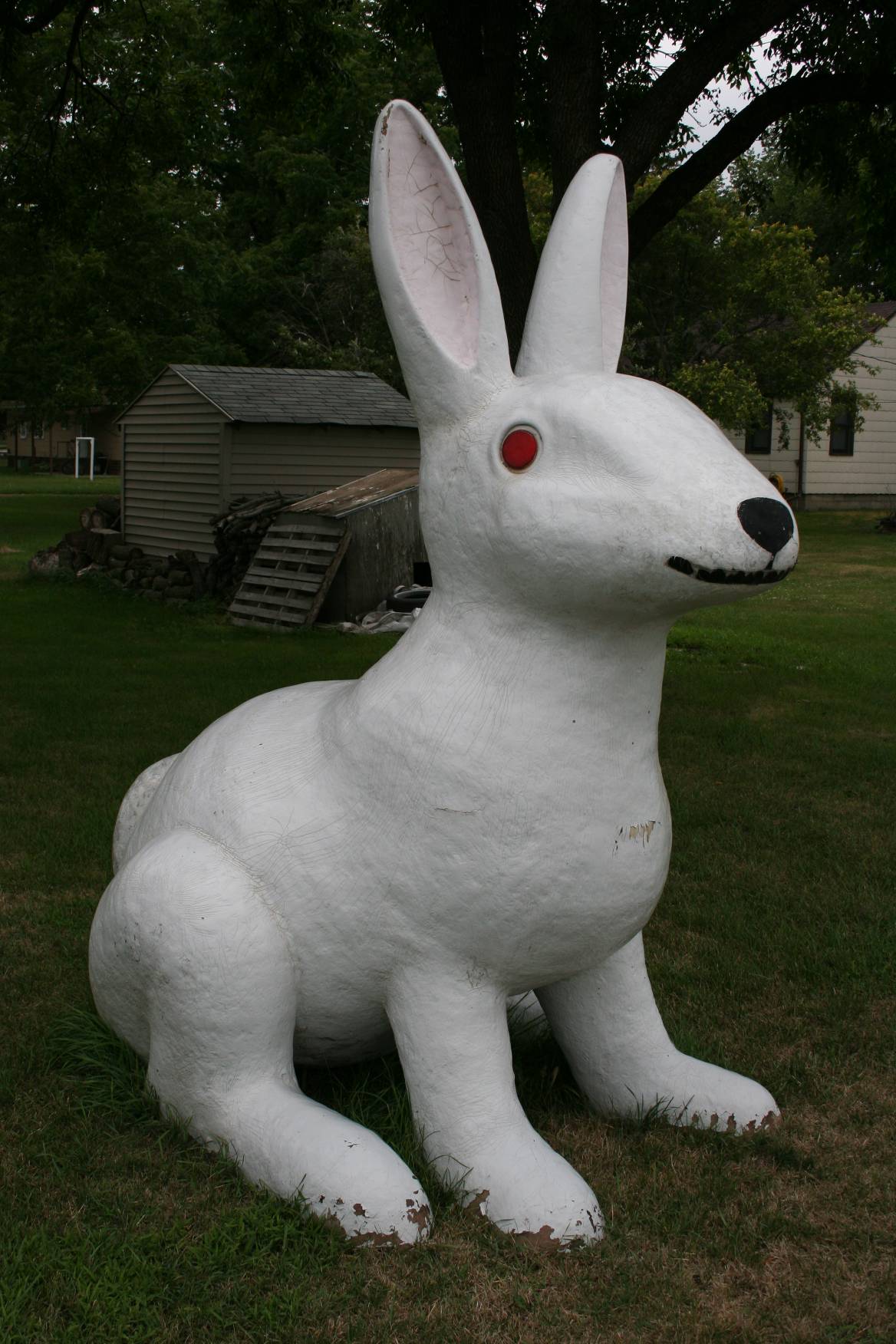
As for a white rabbit… There’s a giant replica along State Highway 68 in Wabasso. That’s in southwestern Minnesota. You know, west of Mankato.

Wabasso's white rabbit

Wabasso's white rabbit

© Copyright 2009 Audrey Kletscher Helbling


Wabasso High School class of 1974 still rocks August 17, 2009

Filed under: Uncategorized — Audrey Kletscher Helbling @ 10:02 AM
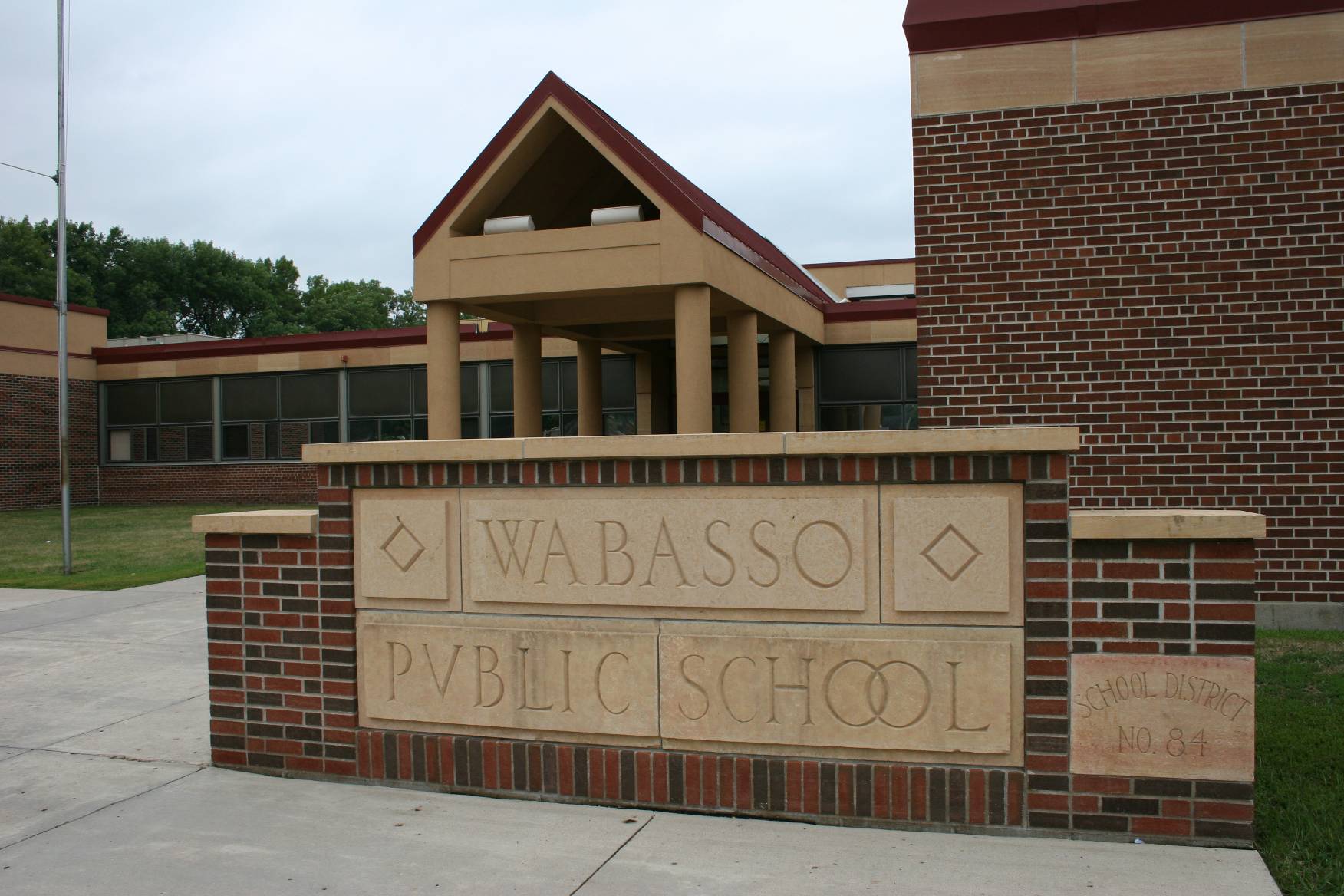
Yes, they do know how to spell at my alma mater in Wabasso. The sign marking the current building came from the old building. And apparently back in the day, a "u" looked like a "v."

Yes, they do know how to spell at my alma mater in Wabasso. The sign marking the current building came from the old school. And apparently back in the day, a "u" looked like a "v," so I was told by a classmate.

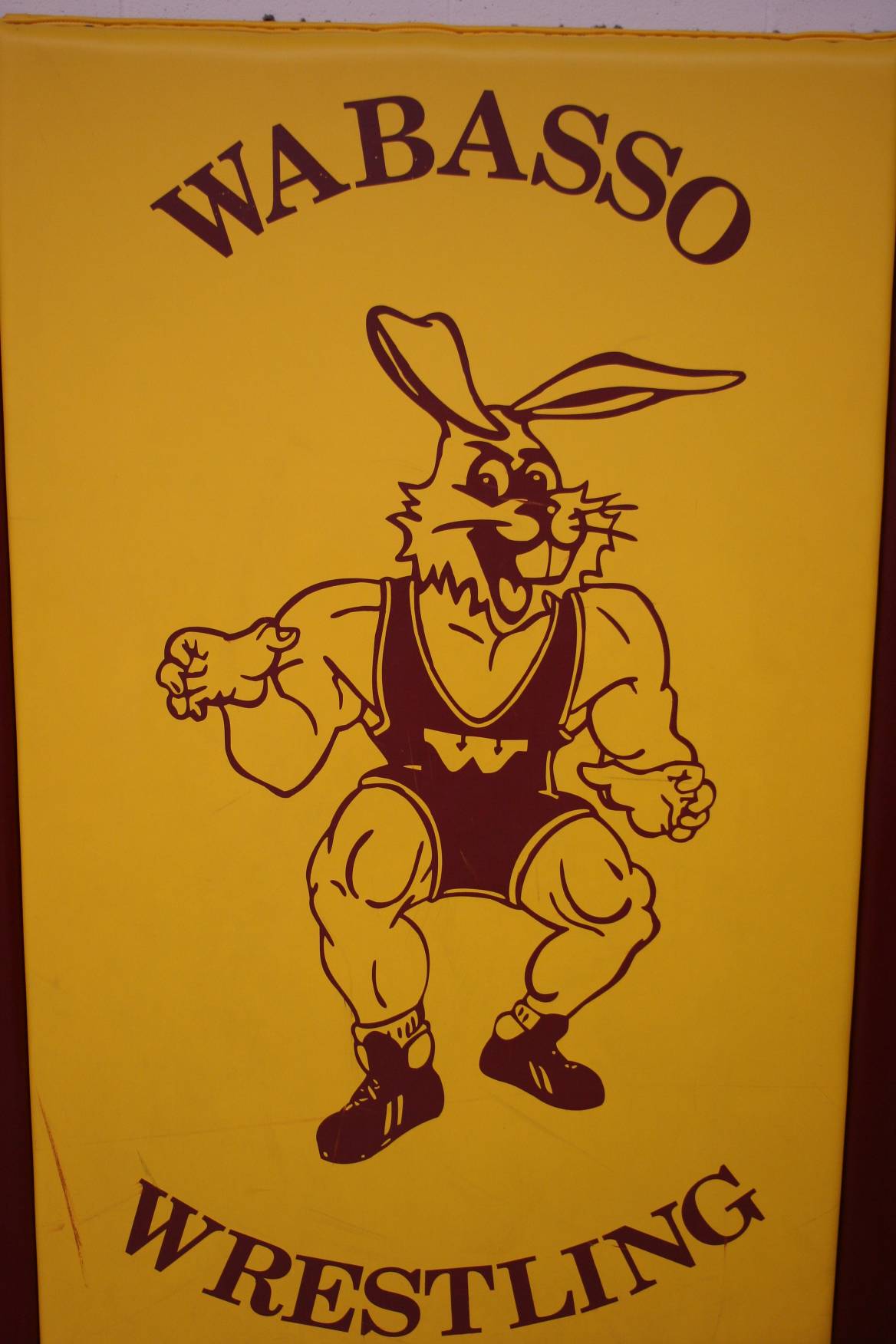
We discovered this muscular rabbit in the wrestling room and quickly decided we prefer the gentler, kinder rabbit of the 1970s. For those who wonder about the unusual rabbit, Wabasso means "white rabbit" in a Native American language.

We discovered this muscular rabbit in the wrestling room and quickly decided we prefer the gentler, kinder rabbit of the 1970s. For those who wonder about the unusual mascot, Wabasso means "white rabbit" in a Native American language.

Tales from Russia, the Tracy swimming pool, the girls’ bathroom, a science room and more entertained those of us who gathered Saturday night for a 35-year Wabasso High School class reunion.

I thought the Russian tales worthy of sharing with you. But to protect the not-so-innocent, I won’t reveal names. I’m not so sure those involved told their moms these stories even three-plus decades after the fact.

Picture several Minnesota farm boys traveling to Russia in the early 1970s on a Future Farmers of America good will trip. Then imagine them at the Kremlin, where one is hauled away by gun-toting guards—for wearing a tank top. Seems he was improperly dressed, or so we were told Saturday night.

The explanation sounds a bit unbelievable. But then this was Communist Russia at the time.

A second tale from Russia followed, this one even more humorous. Guards detained one of the farm boys after questioning his identity. He was asked to write his name 50 times in an effort to match his signature to that on his passport. Not feeling well and not wanting to miss his plane home, he refused and walked away. He too was hauled off. The plane was held for 20 minutes while the FFAer wrote his name, 50 times.

Laughter, shared stories, memories—all marked our evening together, a night that became more comfortable while touring Wabasso Public School.

As we walked the halls of a building that looks nothing like it did in 1974, we began remembering. More laughter. More stories. By simply standing close to each other, back in that school atmosphere, the decades fell away and we were, for an hour, those high school students.

Later, back at the community center, we wondered. How had 35 years passed so quickly?

(Copyright 2009 Audrey Kletscher Helbling)

The rabbit we remember, the friendly rabbit of our era.

The rabbit we remember, the friendly rabbit of our era.

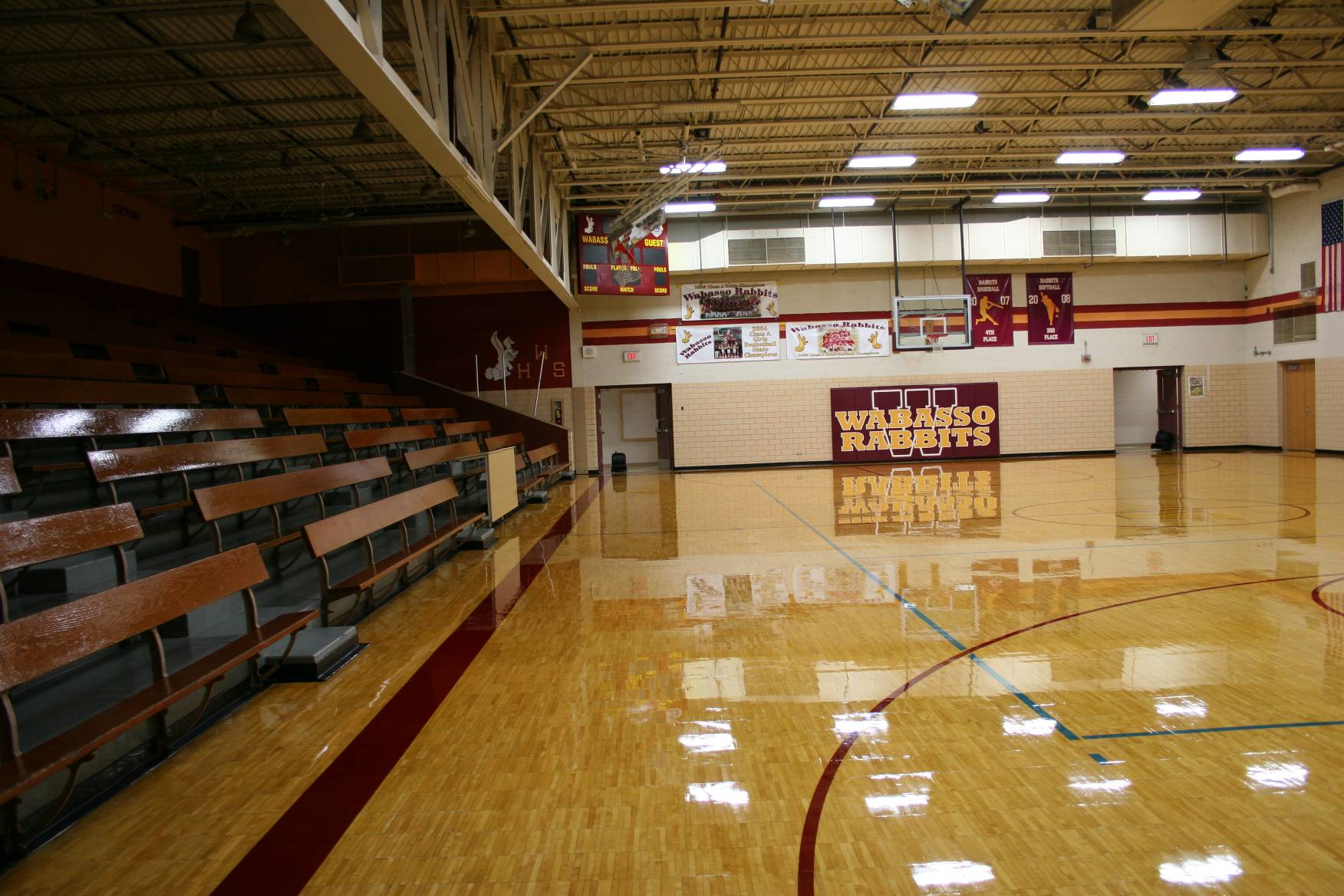
As tempting as it was to step onto the Wabasso High School gym, we were warned to stay off the newly-polished floors. The gym is one of the few area of the school unchanged from the 1970s.

As tempting as it was to step into the Wabasso High School gym, we were warned to stay off the newly-polished floors. The gym is one of the few areas of the school unchanged from the 1970s.

And then we discovered this vintage stove in the Wabasso High School home ec room. Could it possibly be a  vintage stove from the 1970s?

And then we discovered this aging stove in the Wabasso High School home ec room. Could it possibly be a vintage stove from the 1970s?

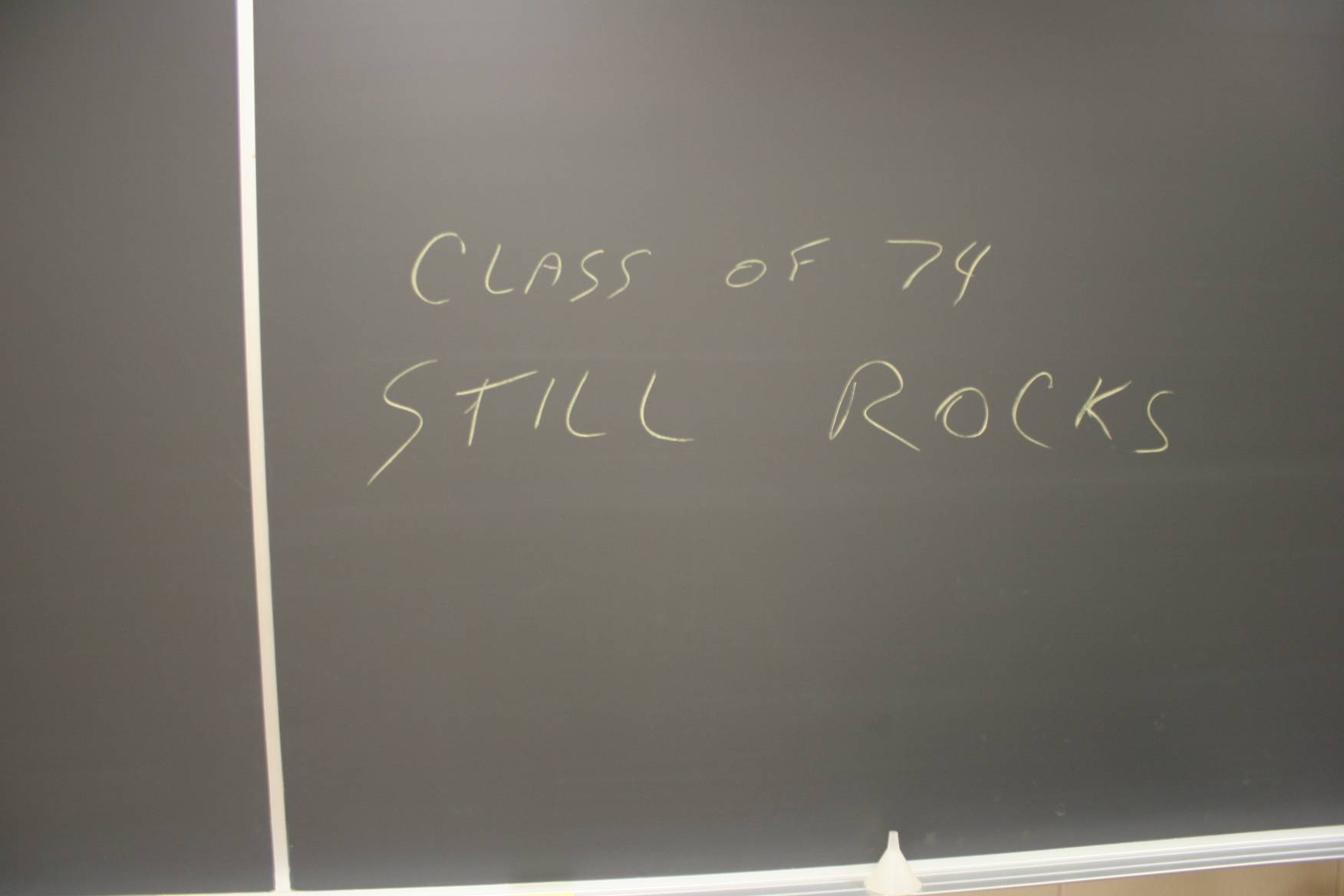
This says it all: "Class of 74 still rocks." We do!

This says it all.


Appreciating vintage farm equipment August 15, 2009

Filed under: Uncategorized — Audrey Kletscher Helbling @ 11:21 AM
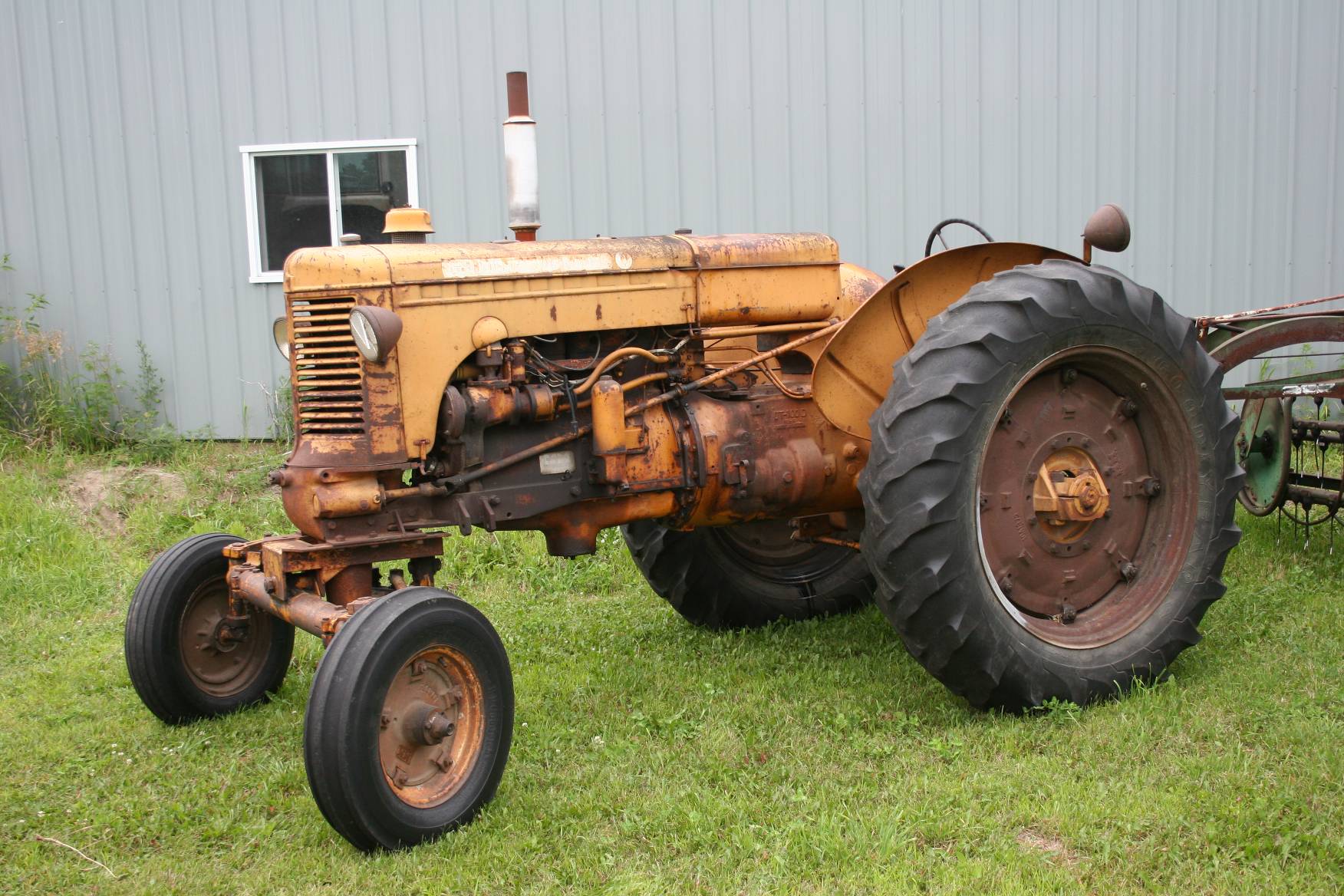
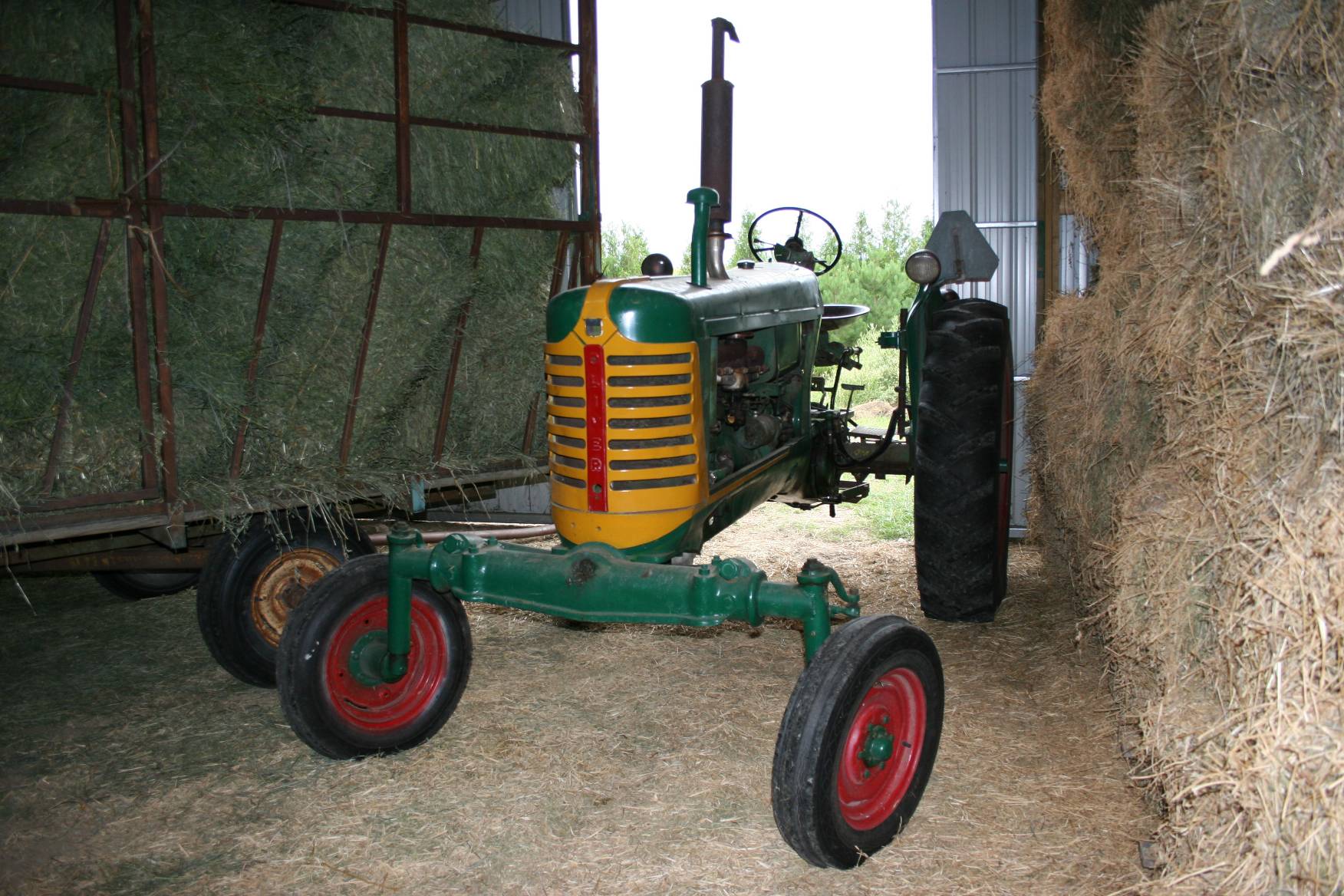
Oliver Super 77

Oliver Super 77

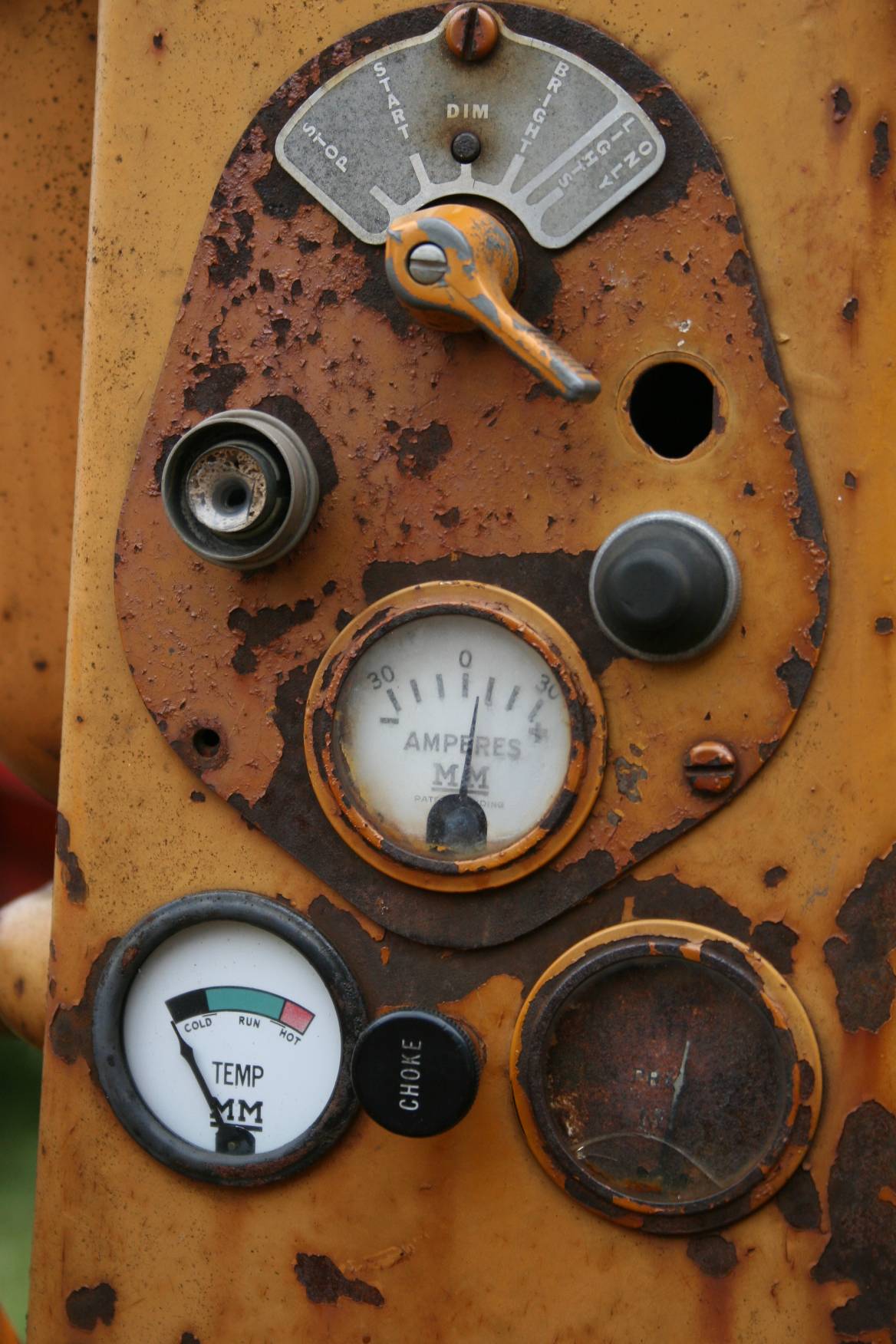
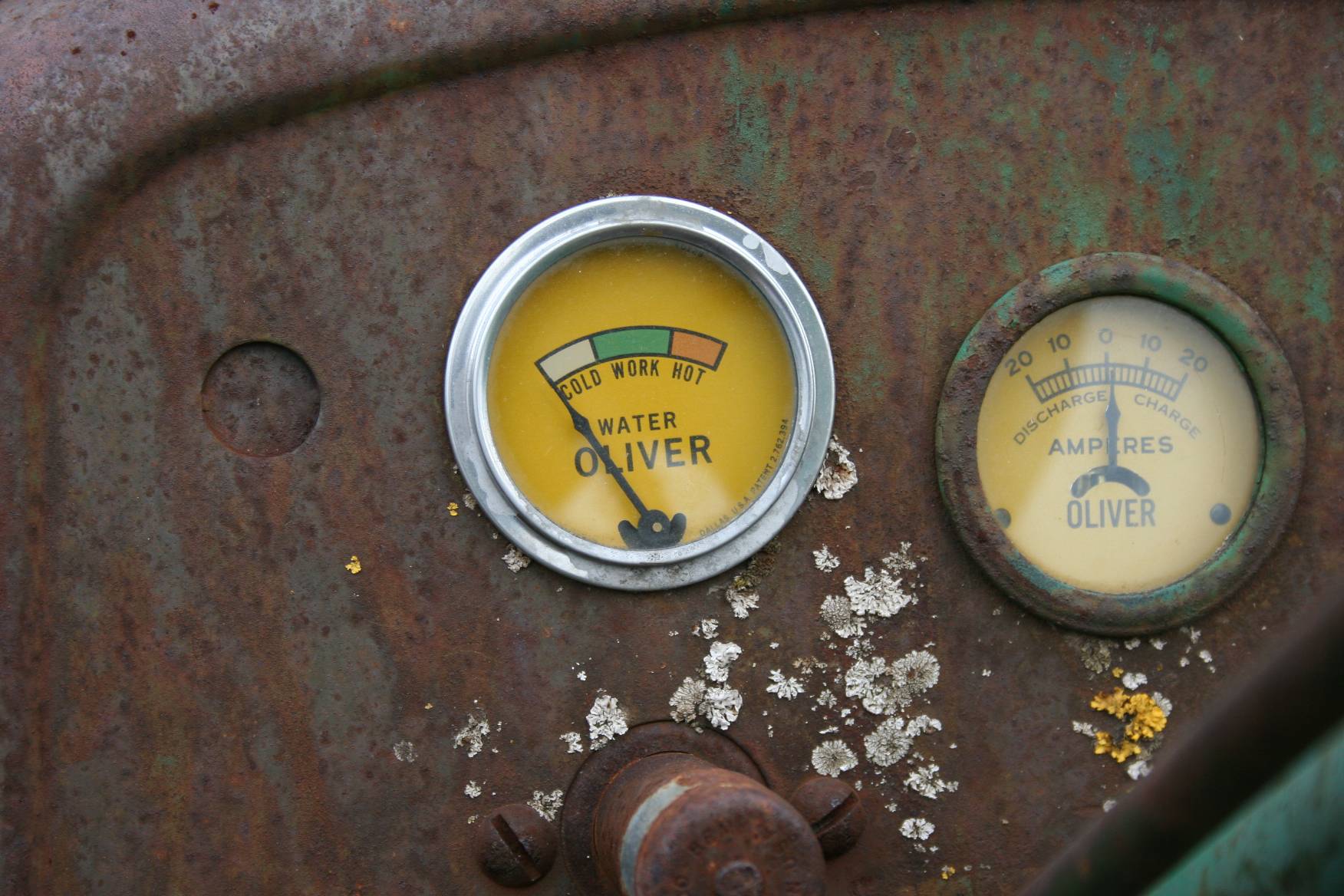
Minneaspolis Moline U gauges

Minneapolis Moline U gauges

Up until several months ago, my interest in old tractors ranked at about zero. I simply couldn’t understand why my husband, Randy, liked looking at outdated farm stuff.

Now I get it.

While driving through Morgan last spring, we stopped to view a row of restored vintage tractors parked across the highway from Morgan Grain and Feed.

It was my idea to stop. Really.

And in the process, I discovered the beauty of old tractors—in the over-sized steering wheels, the curves of grills, the gleaming colors, the unique emblems. I saw not the mechanical, but the artistic, side of these farm machines.

A trip several months later to Minnesota’s Machinery Museum in Hanley Falls reinforced my new interest in vintage tractors. Check out the forthcoming fall issue of Minnesota Moments magazine for a feature and photos from the ag museum.

And then just two weeks ago, while accompanying Randy to a Faribault farm where he is doing motor work on a 1950-T Oliver tractor, I got an eyeful of more aging ag equipment.

Fifteen-year-old Jarett led me on a tour through the farm yard and machine shed, pointing to this Oliver tractor and that Oliver tractor. This teen knows his tractors.

All the while, I snapped photos.

Again, I sought out the artistic aspect of these tractors.

To pique your interest, I’m sharing those photos, hoping that if you have not already discovered the beauty in old farm equipment, these images will entice you to take a second look.

Because I don’t want to overwhelm you, I’ll present a few pictures from this rural art gallery now and then more in a future blog.

Let me know what you think. I’d love to hear why you appreciate old stuff from the farm.

© Copyright 2009 Audrey Kletscher Helbling

Minneapolis Moline U

Minneapolis Moline U

Oliver Super 77 gauges

Oliver Super 77 gauges

Oliver 77

Oliver 77


A fairy tale house in Hackensack August 14, 2009

Filed under: Uncategorized — Audrey Kletscher Helbling @ 1:55 PM
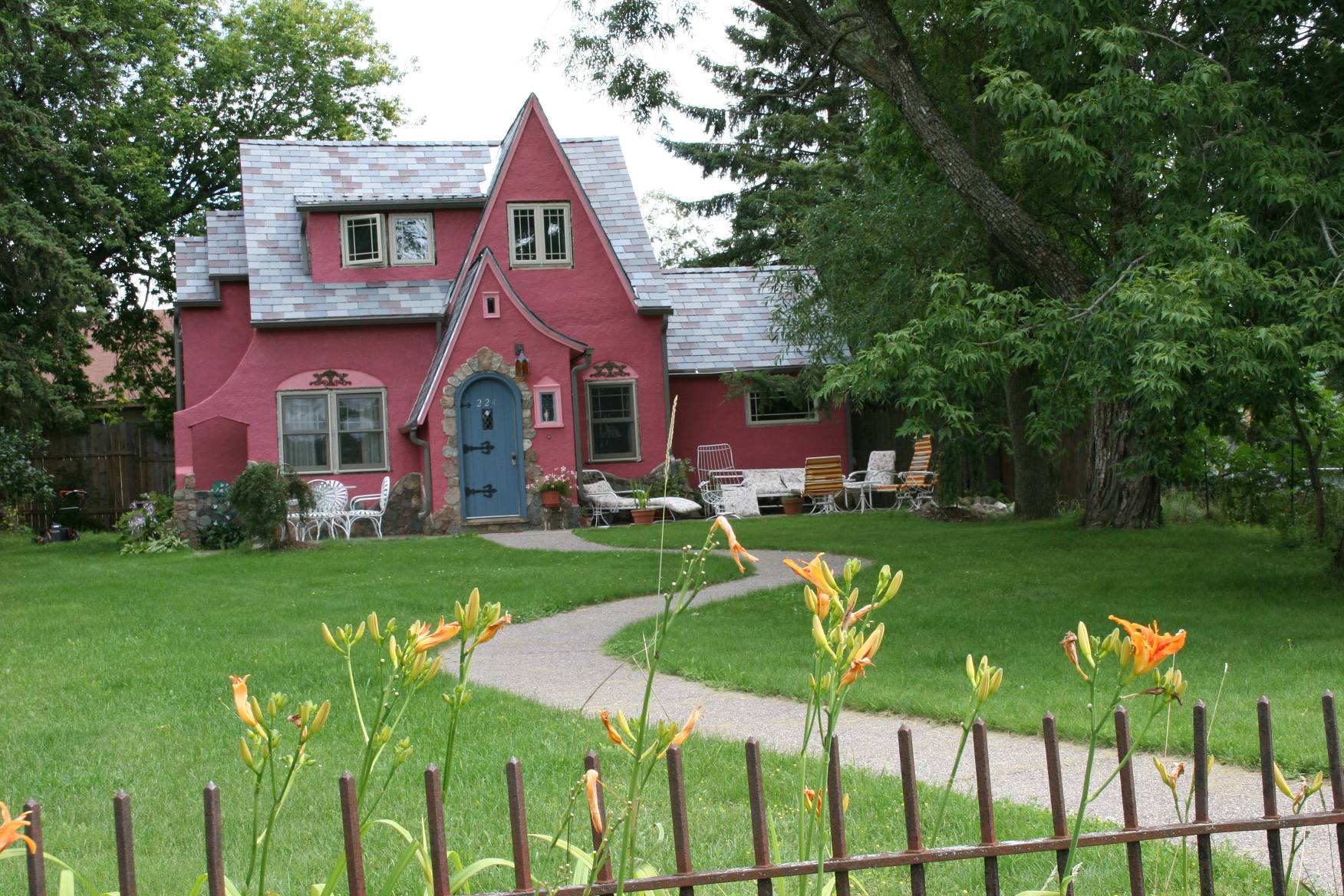
Aesthetically pleasing and enchanting, this Hackensack house invites passersby to

Aesthetically pleasing, this enchanting Hackensack, Minnesota, house invites passersby to linger.

Look at this house. Just look at it.

I couldn’t get enough of this charming home along First Street in Hackensack.

Who paints their house this sweet, sugary pink anyway? Someone artistic and creative and daring, I suspect.

Located only a block from the statue of Paul Bunyan’s sweetheart, Lucette, the fairy tale cottage beckoned me to linger on a recent visit to this small town that lies between Brainerd and Bemidji.

So much for my eyes to take in—a lantern style lamp to the right of the entry, the arch of the door, the black iron decorative hinges, the scrollwork above the first floor windows, an upper window thrown open, stonework edging the doorway and the front of the house, the aesthetically pleasing curves of the sidewalk.

Details. Craftsmanship. No cookie cutter style architecture here.

I love this house.

And although the identity of the homeowner remains unknown to me, clues abound. Groupings of outdoor furniture hint at someone who loves to entertain and socialize, maybe even relaxes here with a good book in the cool of the shade trees.

Plants and flowers indicate a gardener.

Maybe my guesses are correct. Maybe not.

But whoever lives here, know that I appreciate your lovely, pretty, quaint, charming, enchanting dream of a home in Hackensack.

(Click on the photo to enlarge it so that you too can see the detailed beauty of this home.)


The Stars & Stripes Garage, Heidelberg, Mn. August 13, 2009

Filed under: Uncategorized — Audrey Kletscher Helbling @ 3:11 PM
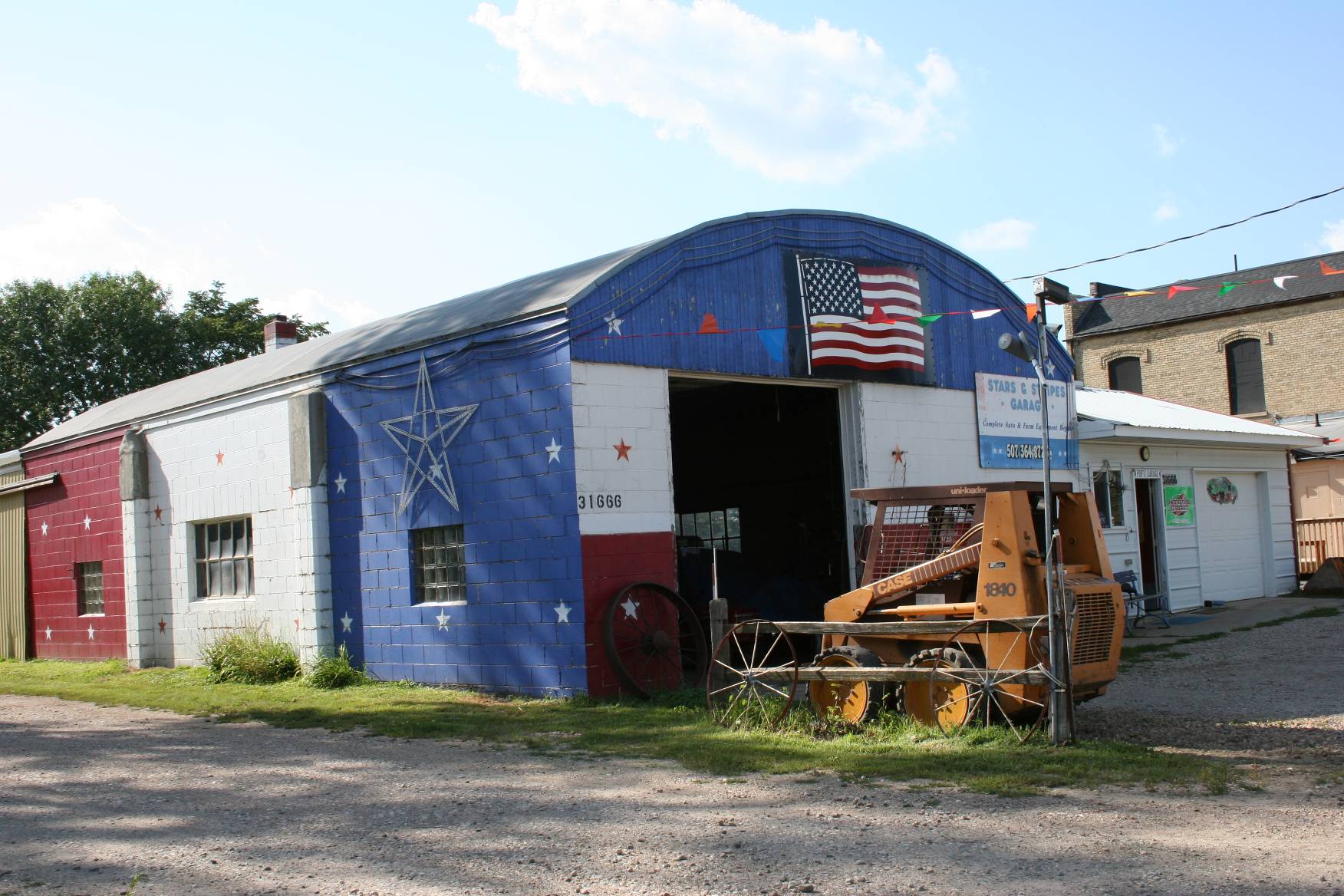
Vietnam veteran Joel Kukacka's patriotic garage in the hamlet of Heidelberg, Minnesota.

Vietnam veteran Joel Kukacka's patriotic garage in Heidelberg, several miles off State Highway 19.

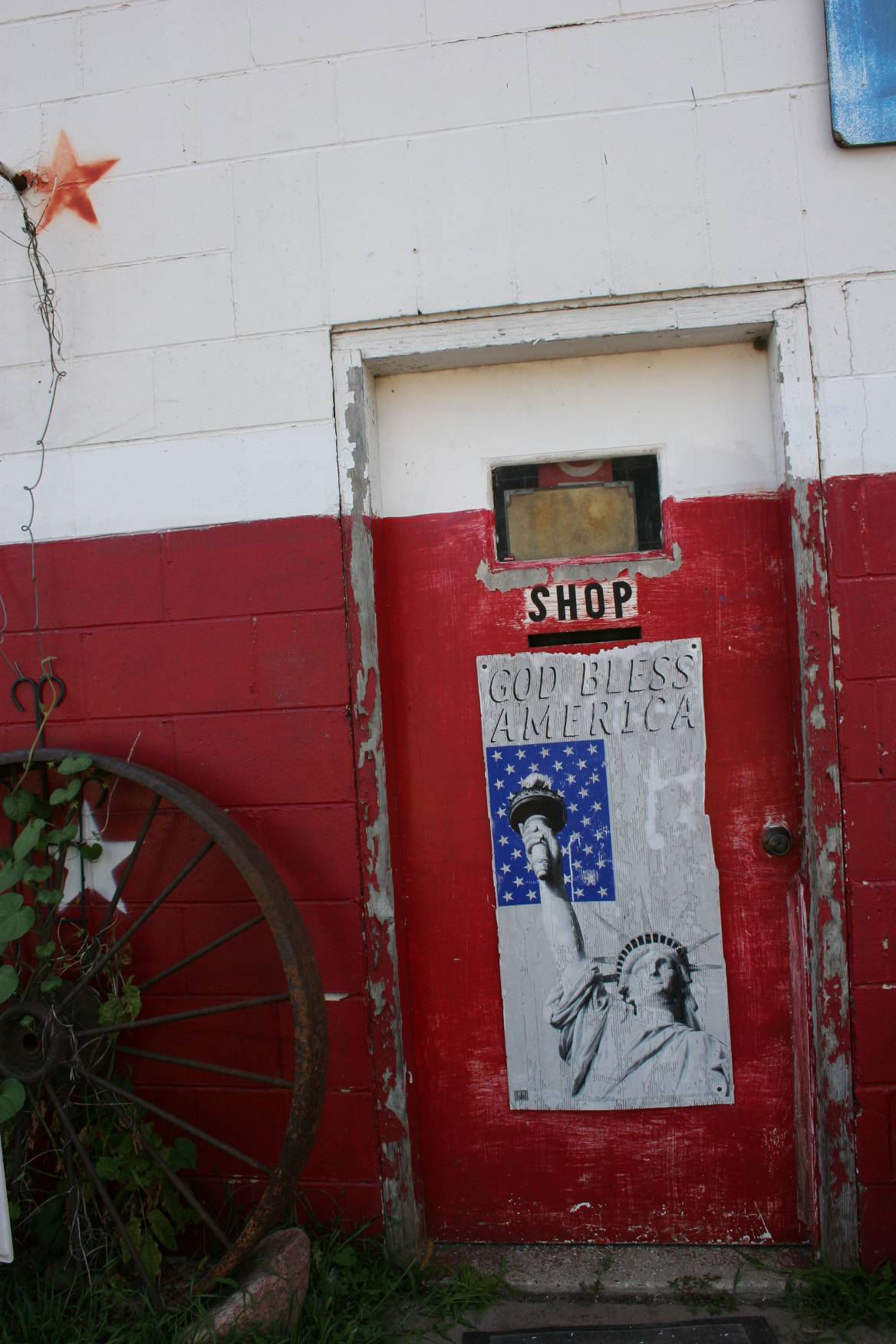
Even the shop door proclaims Joel's loyalty to the United States.

Even the shop door proclaims Joel's loyalty to the United States.

Often times, taking the road less traveled leads to an unexpected discovery, like the Stars & Stripes Garage in the hamlet of Heidelberg, just southwest of New Prague along Le Sueur County Highway 30.

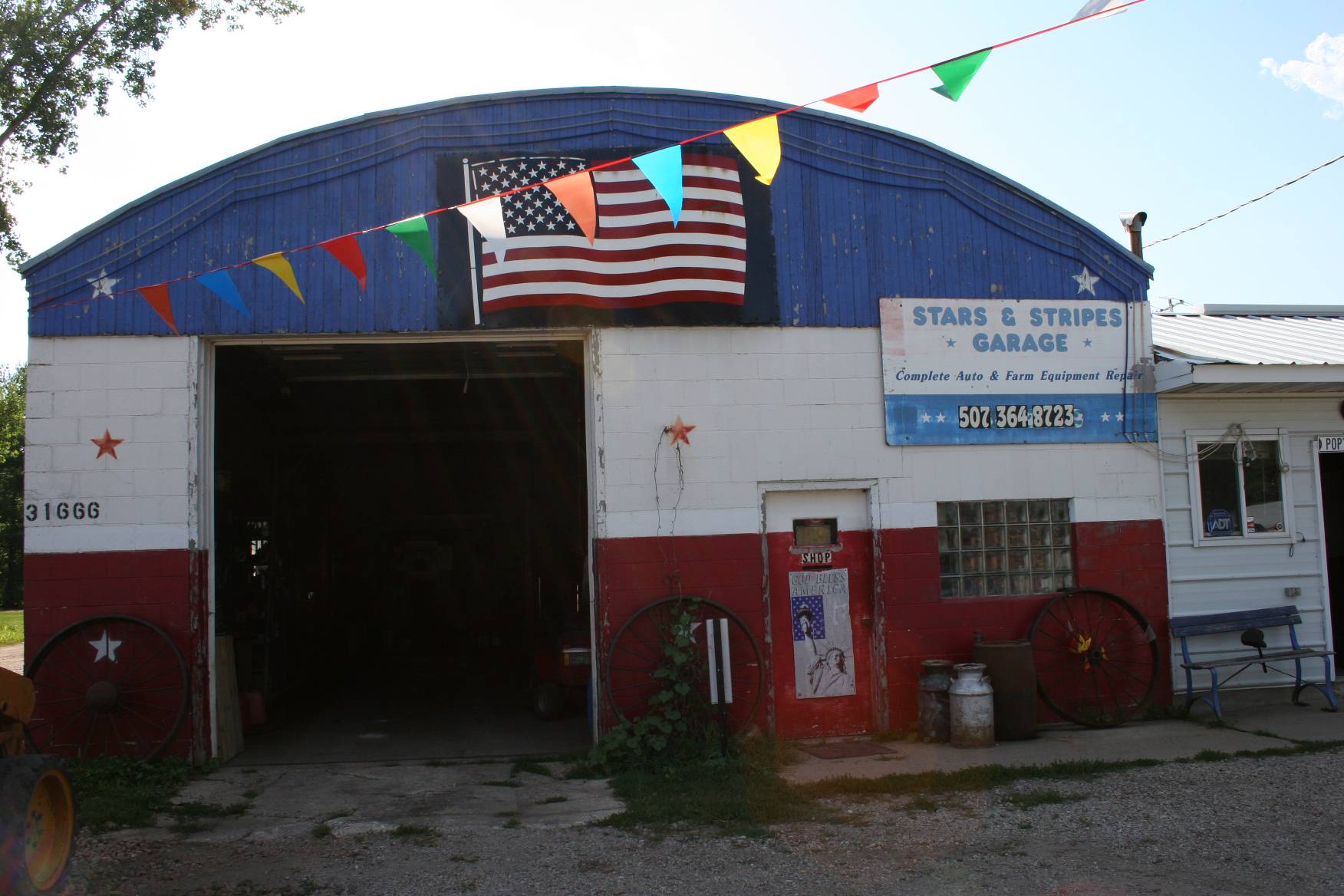
Painted red, white and blue and dotted with stars, this garage stops passersby.

Just ask owner Joel Kukacka, who runs this patriotic-looking general and major automotive and farm repair shop with the help of his son, Louie. Joel was closing for the day when I happened by, curious about the eye-catching business.

He’s had other motorists stop to take pictures, Joel says. Just last week a guy from Burnsville photographed the building with the intention of doing a painting.

“So what’s with the patriotic theme?” I ask Joel after shooting a few images.

“I was in Vietnam,” he answers.

No further explanation given.

But I want to hear more. “Did you see action?”

“No. I was behind the enemy, worked as a mechanic,” the mechanic says.

“When?”

“69.”

Joel doesn’t offer more information and I sense that I probably shouldn’t probe.

And I am satisfied with that, with this proud display of patriotism by a Vietnam veteran in rural Minnesota.

Patriotism shines at the Stars & Stripes Garage in rural Le Sueur County.

Patriotism shines at the Stars & Stripes Garage.


Minnesota country boys August 12, 2009

Filed under: Uncategorized — Audrey Kletscher Helbling @ 7:20 PM
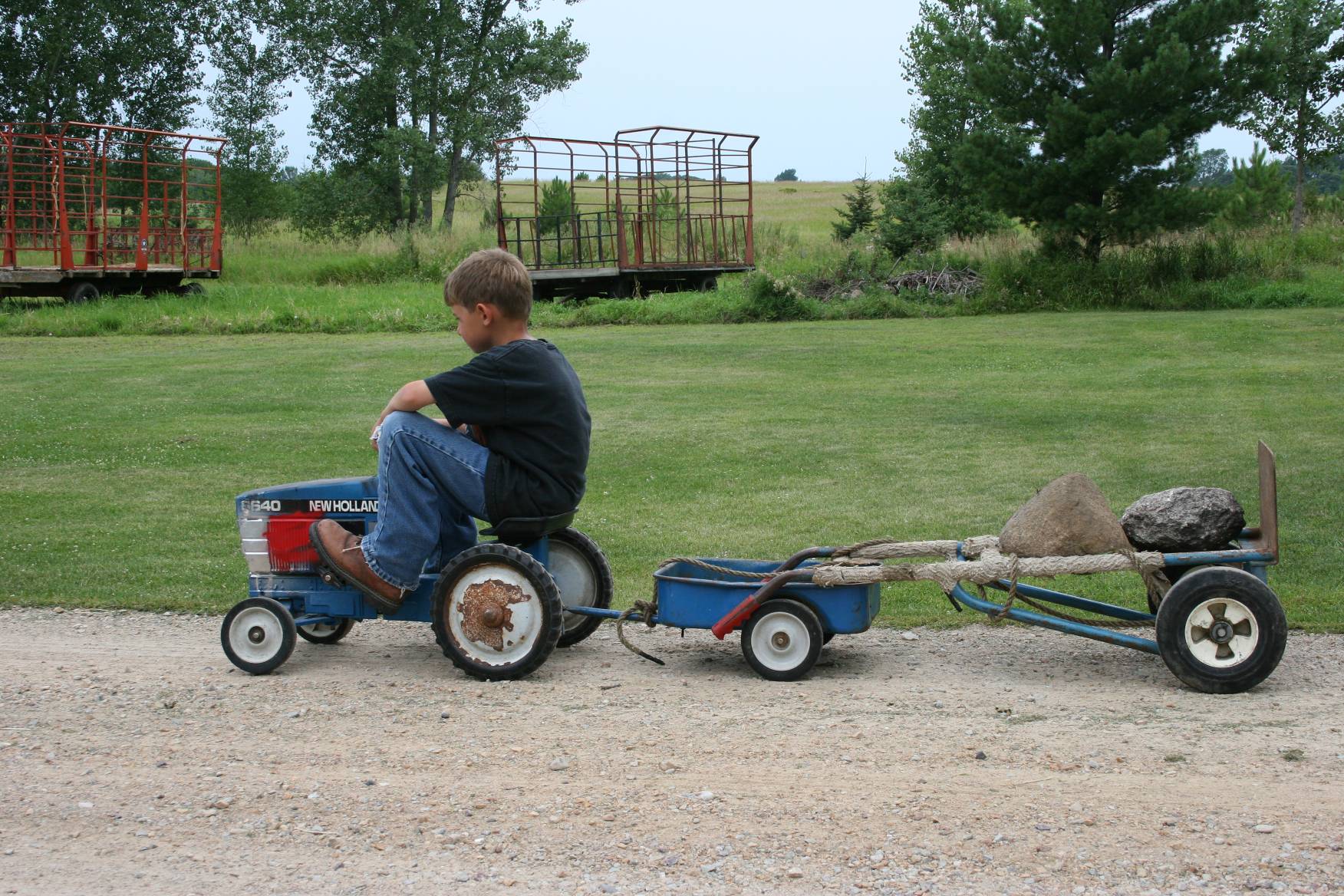
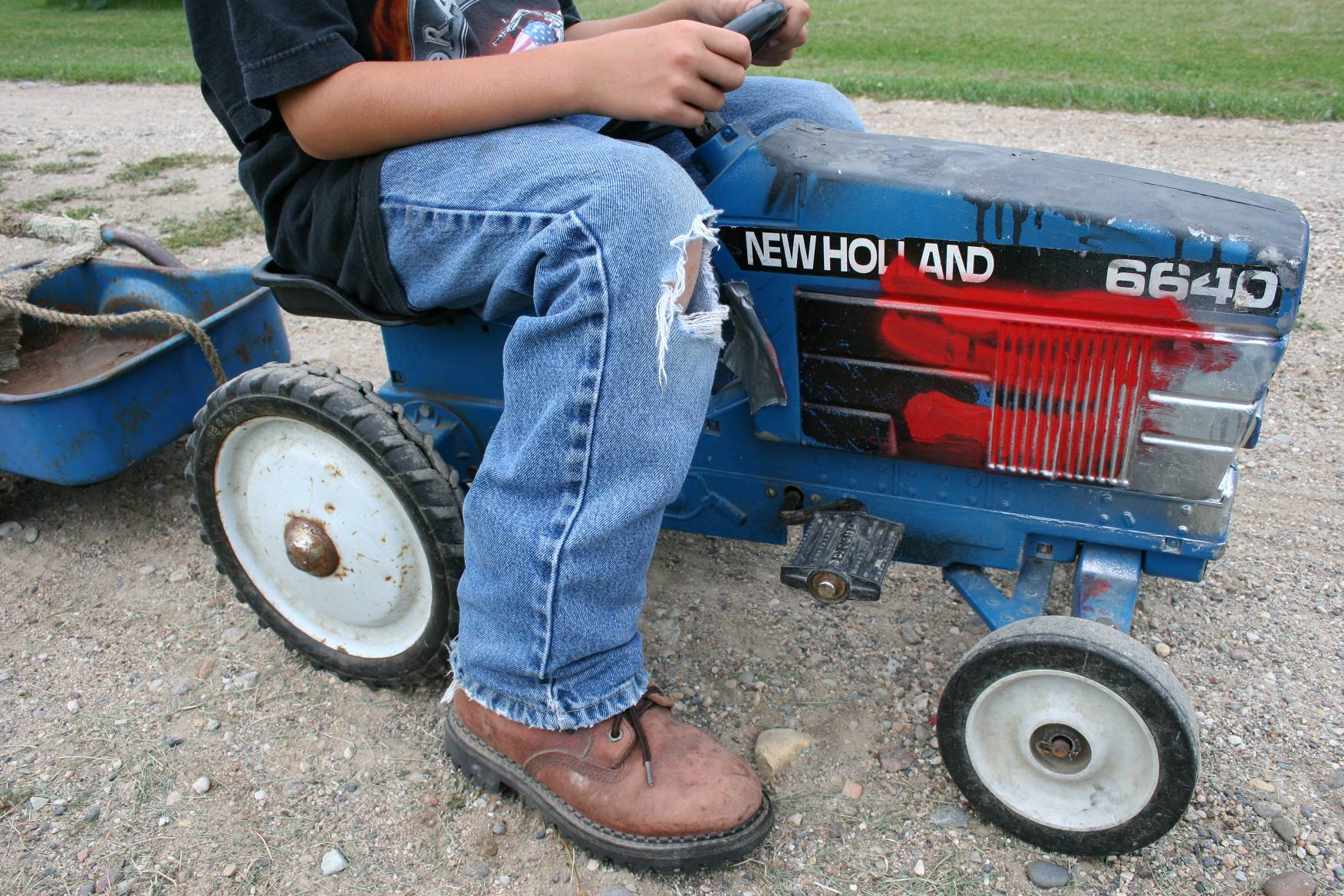
Jayton pedals his pint-sized New Holland tractor on the family farm.

Jayton pedals his pint-sized New Holland tractor on the family farm.

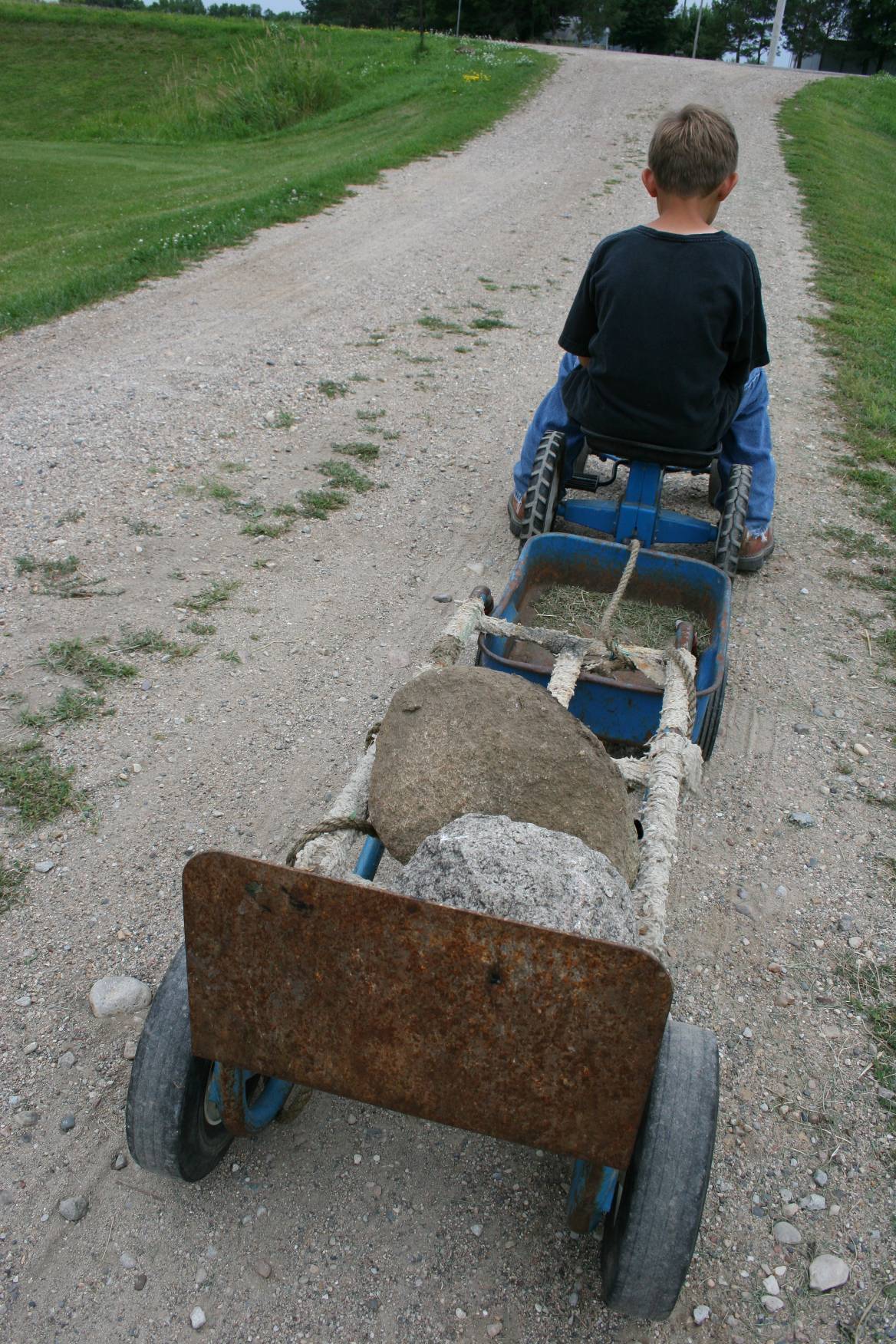
Pulling, not picking, rocks.

Pulling, not picking, rocks.

If Jarett, 15, and Jayton, 8, could, I expect they would build a raft from salvaged wood and journey down the Mississippi River from Minnesota to New Orleans.

They are adventuresome and outdoorsy. Huck and Tom. Imaginative and mischievous.

I met the brothers recently while tagging along with my husband, Randy, to their rural home, where he had gone to measure a tractor motor. I simply yearned for a ride in the country on a spectacular summer evening.

When we pull into the farm yard, Jarett is already putzing in the garage, sporting calf-high waders. Soon, Jayton wanders in.

After some introductory small talk, I ask, “Can I see the lake?” (Randy had told me about the lake.)

Jarett leads. Jayton and I follow, dodging goose poop, walking toward the private lake that nestles up to the building site. At water’s edge we pause as the two tell me about bullheads and deer and geese and coyotes, hunting and fishing, and an island now turned peninsula. And over there, Jarett points, sits his dad’s duck blind.

As we return to the garage, Jayton reveals a grand scheme to capture a goose by setting a trap atop a wood duck house. He pulls a pile of traps from a corner of the garage and demonstrates how he expects a trap to spring tightly around the feet of that coveted goose. I am not thinking about the goose at that moment, but about Jayton’s fingers.

Jarett has already been catching meddlesome gophers for his grandpa, earning $5 per gopher. On my next visit, he tells me he’s caught 40.

On that second trip, Jayton too has gotten into trapping. He checks a trap and returns with news of disappearing bubblegum, gum set in the trap to lure a gopher.

And then I ask Jayton to demonstrate his pedal tractor pulling skills. He and Jarett pile two hefty rocks onto a trailer and Jayton straddles the miniature tractor that he’s outgrown. Last year he earned a second place trophy in a local competition.

“How much can you pull?” I ask.

He hesitates. “Fifty pounds.”

“Probably 20 or 25,” his mom corrects.

It doesn’t matter. Jayton is determined as he pedals down the gravel driveway.

“Why do you do this?” I ask.

“It builds up my leg muscles and makes me work harder.” Jayton says.

“How did you get so smart?” I ask.

He’s heard often, Jayton says, that “your back will be shot” if you don’t use your leg, rather than your back, muscles.

As our brief interview concludes, I recall how my last visit here ended with Jayton racing from the garage. He has something to show me, he says, and then returns with a cattle skull. He plunks it onto the garage floor in front of me, grabs the skull by the horns, angles the jaw directly toward me, bends low. He thinks, Jayton says, that placed in the right location, this could scare someone. I agree. I don’t like those hollow eye sockets staring at me.

But I don’t let on, not to Huck and Tom.

(© Copyright 2009 Audrey Kletscher Helbling)

Building leg muscles.

Building leg muscles.


Milkweed memories August 10, 2009

Filed under: Uncategorized — Audrey Kletscher Helbling @ 9:42 AM
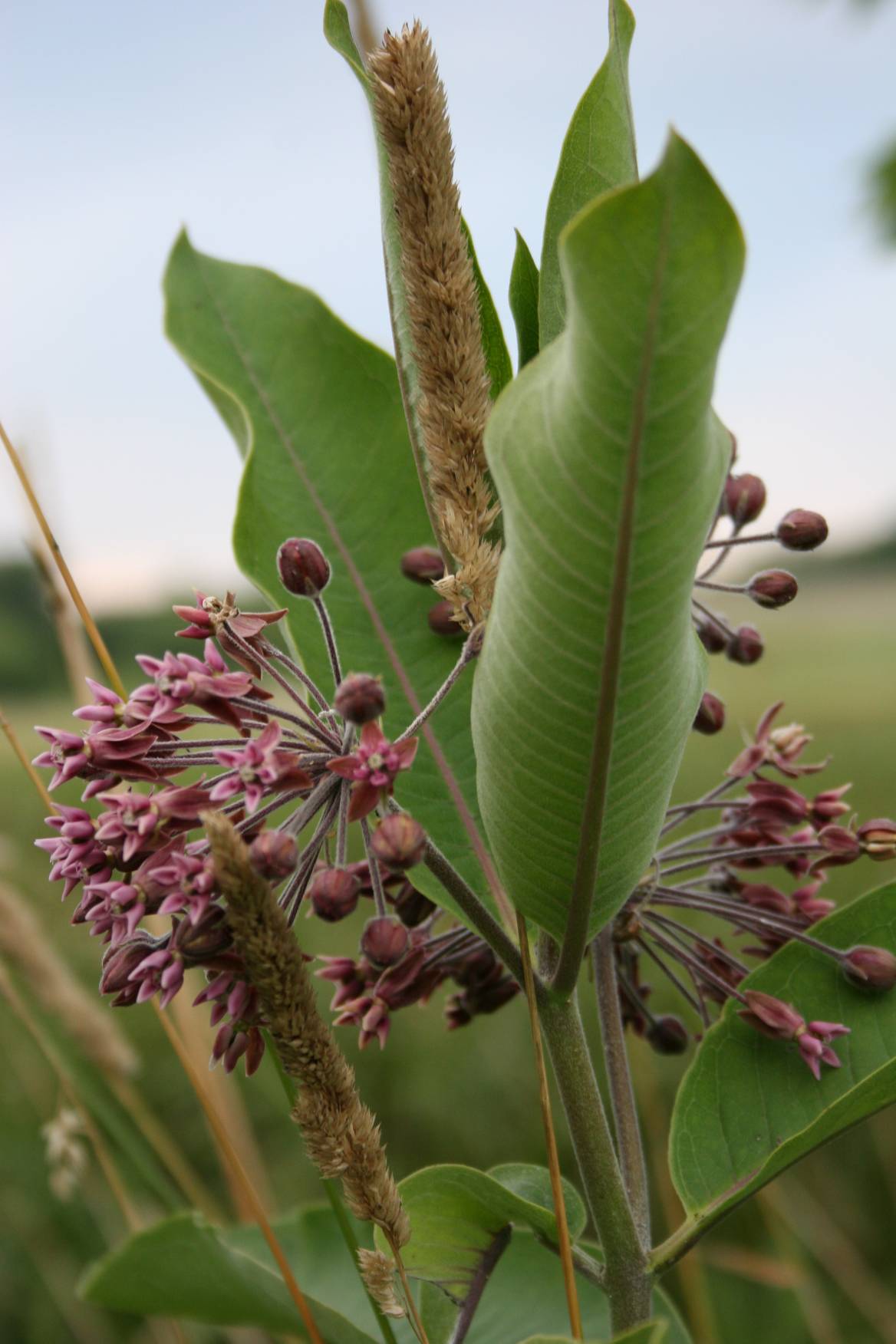
Milkweed, along the prairie path at River Bend Nature Center, Faribault

Milkweed, along the prairie path at River Bend Nature Center, Faribault

No matter where my family goes these days, I seem always to be lagging behind. Like the little child, dawdling, poking along, walking at a snail’s pace.

But that’s OK.

I notice what the others don’t see.

Like milkweeds, for example. If I had simply been out for the sole purpose of an evening walk at the River Bend Nature Center in Faribault recently, I may not have spotted these plants that so captivated my interest as a child, and still do.

So what if my husband had already disappeared around a bend in the path. I would catch up. I had Asclepias to study.

I thrilled in the veins running through the milkweed leaves, in the clusters of purple blossoms, in the pale evening sky presenting the perfect backdrop for a photo.

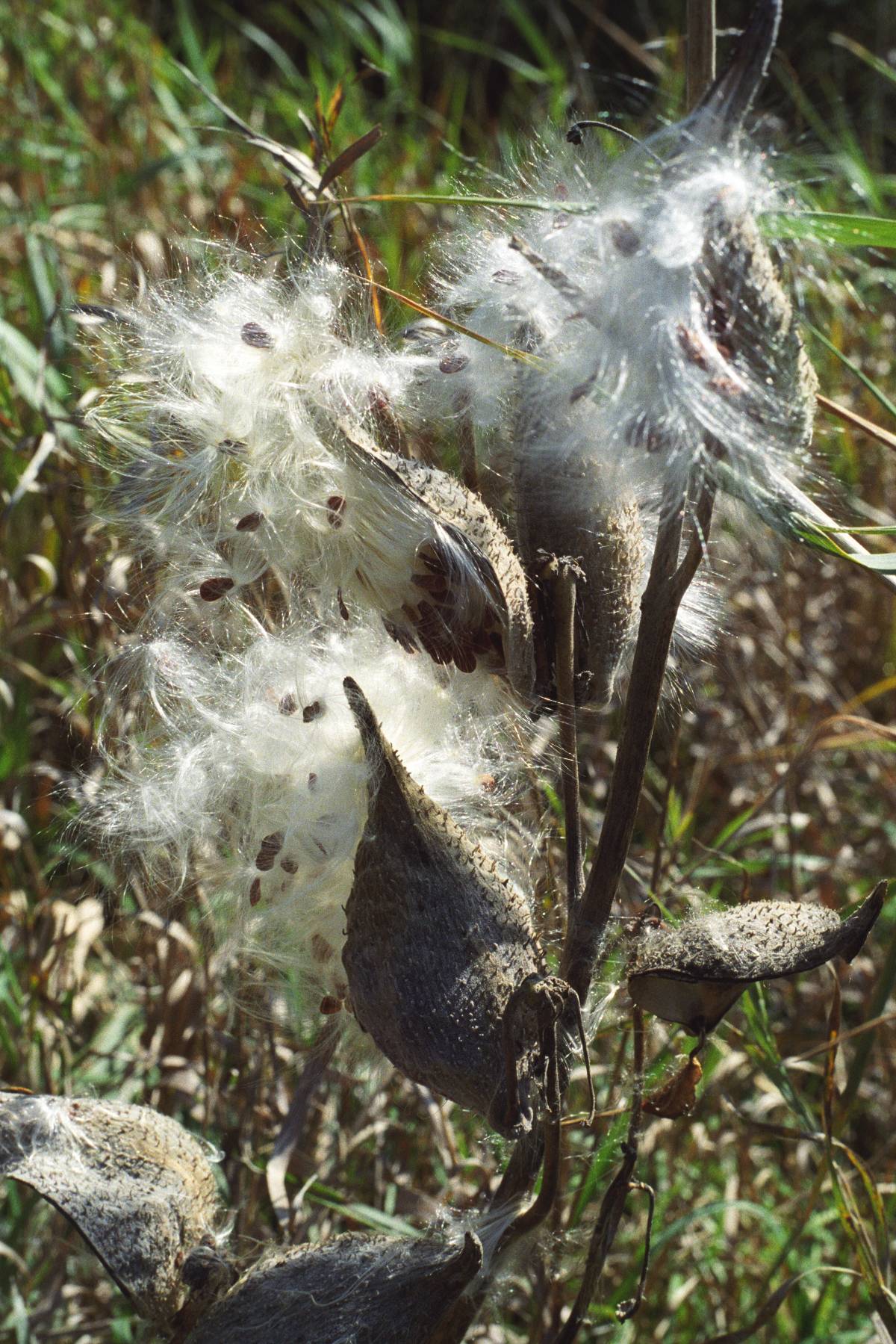
Milkweeds. Memories for me of childhood days harvesting seed pods from fields. Fingers stroking downy fluff, soft as a kitten’s fur.

And then, one Christmas, I cut an elfish child in a glittery red cape from the front of a greeting card, taped a toothpick to the back and then poked the elfin into a dried milkweed pod, upon the drift of snow I imagined there. This, the perfect Christmas gift.

So these were my thoughts as I paused along River Bend Nature Center’s prairie path to appreciate the milkweed, so essential to the life of monarch butterflies.

And the plant of memories for me.

Milkweed pods, along the Minnesota River Valley National Scenic Byway near Morton, autumn 2006

Milkweed pods, along the Minnesota River Valley National Scenic Byway near Morton, autumn 2006