
THE FIRST AND LAST TIME I attended a Cannon Valley Civil War Roundtable meeting, I was impressed by the collective knowledge this Faribault-based organization possesses of the Civil War. The session opened with each member sharing a historical snippet about the conflict.
Even guests like me were expected to offer something, anything. I was getting nervous as my turn neared and I couldn’t think of anything intellectually impressive to share. I had come solely because I wanted to see the slave documents that a guest speaker was bringing to the gathering. I didn’t expect this.
But then I remembered my tour of the Minnesota State Capitol months earlier. I could tell them, although I’m sure they knew, that a Howard Pyle painting, The Battle of Nashville, hangs in the Governor’s Reception Room. The artwork, according to the Capitol tour guide, is among the most noted of the Civil War and depicts the bloody conflict at Shy’s Hill, often defined as the war’s decisive battle.
And just to make sure the Roundtable members understood that I wasn’t completely Civil War illiterate, I also told them that the inclusion of white Georgia marble in Capitol construction drew the ire of Civil War veterans. The marble comprises much of the building’s exterior.
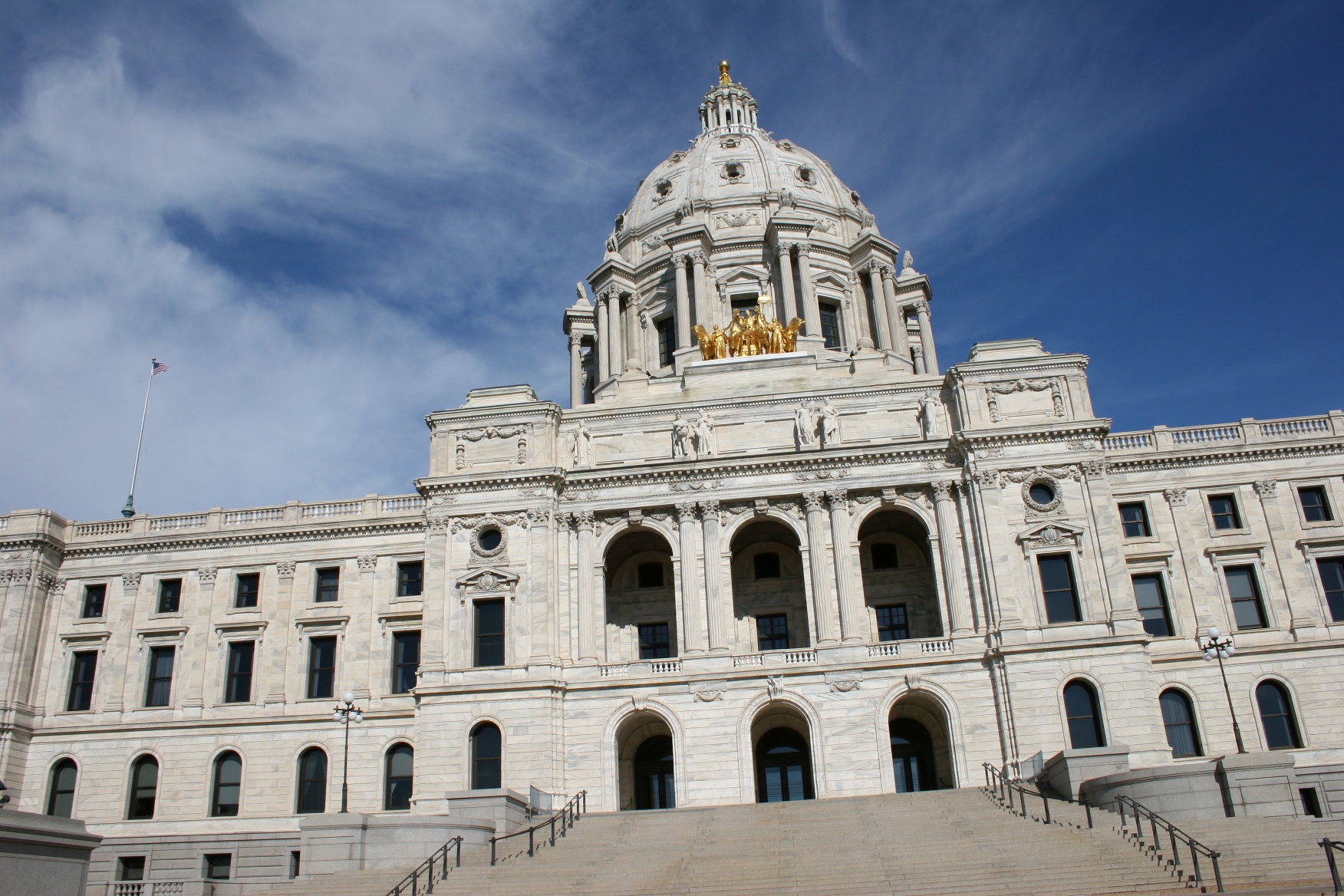
Georgia marble graces the exterior of the Minnesota State Capitol.
I doubt my tidbit facts impressed them, but I tried.
If you’re like me, not well-versed on the details of the Civil War, this year—the 150th anniversary of that conflict—offers the perfect opportunity to learn more. The Minnesota Historical Society has a lengthy list of educational activities planned to commemorate the anniversary.
This Saturday, April 9, for example, is “Civil War Flag Day at the Capitol” featuring three recently-conserved Minnesota Civil War flags and one from the Spanish-American War. The 11 a.m. – 4 p.m. event, with a 1 p.m. program, also includes Civil War artifacts, reenactors, children’s activities and more.
I won’t be at the State Capitol on Saturday because I’ll be attending “Recognition of the Fall of Fort Sumter—The Beginning of the Civil War” hosted by the Cannon Valley Civil War Roundtable and the Rice County Historical Society from 1 p.m. – 4 p.m. in Faribault. On April 12, 1861, the Confederates fired on Fort Sumter, starting the Civil War. Saturday’s event will be held at the Guild House of the 1862 historic Cathedral of Our Merciful Saviour, 101 NW Sixth Street.
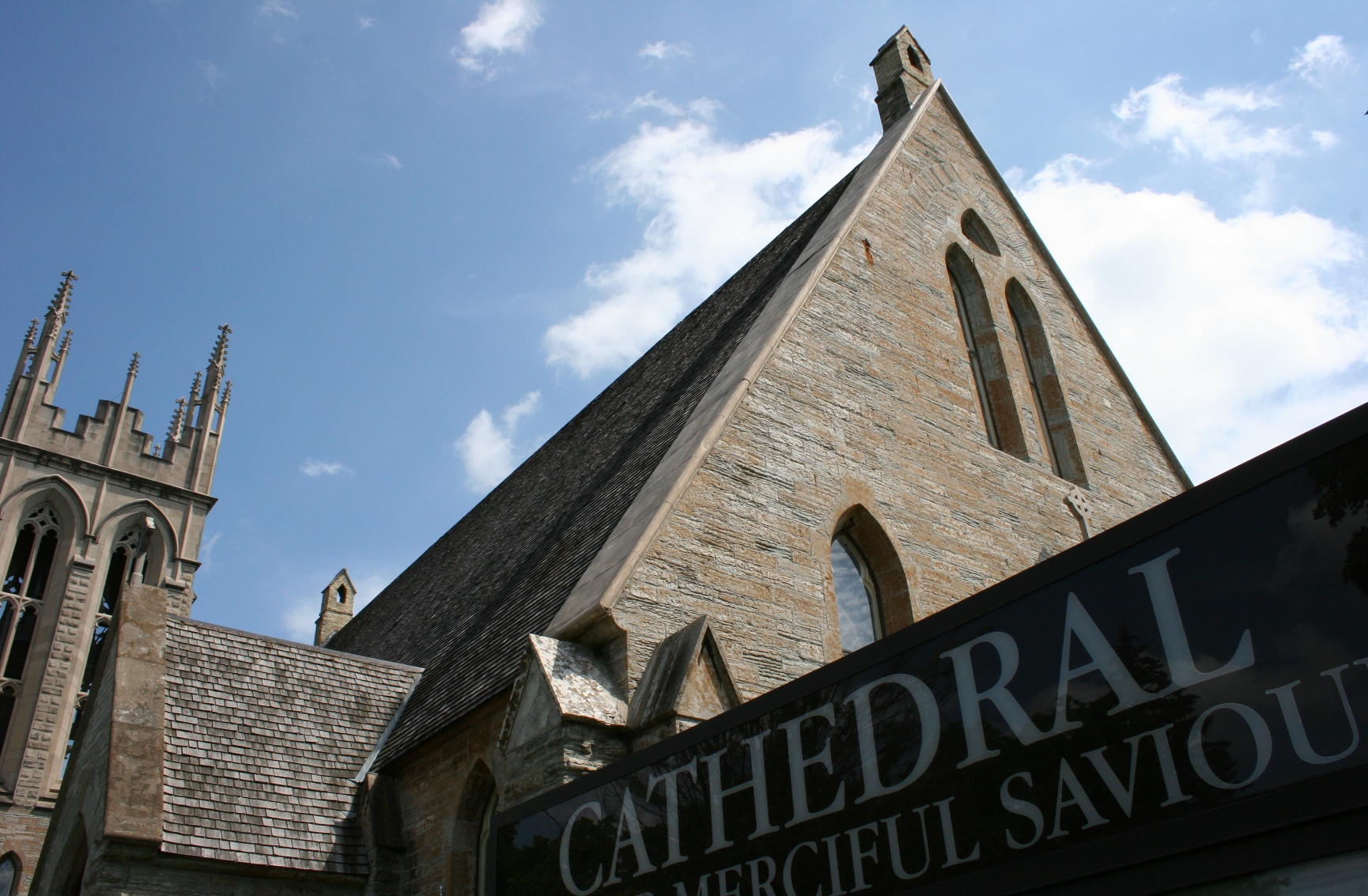
The Guild House is attached to the historic Cathedral of Our Merciful Saviour across from Central Park in Faribault.
I expect that some of the items on display at the Guild House will be artifacts—Abraham Lincoln photos and postcards, Civil War uniform buttons—I saw at the 2009 Roundtable meeting. Back then the presenter failed to bring his slave documents. Slave bills will be displayed on Saturday. There’ll also be weapons and money, buckles and bonds, and more.

Civil War uniform buttons and insignias displayed at a 2009 Cannon Valley Civil War Roundtable meeting.

This Civil War postcard was among the items a collector brought to a Cannon Valley Civil War Roundtable meeting.

An 1840 Philadelphia Derringer, like the pistol used to assassinate President Abraham Lincoln. A collector brought the pistol to the Roundtable meeting I attended in 2009.
Jan Stevens, an area Civil War enthusiast who creates replica historical clothing will dress in period clothing and greet visitors. Another reenactor will recruit visitors to join the cause.
Civil War music will fill the Guild House. Author Richard G. Krom, great grandson of a Civil War soldier from nearby Morristown, will sign and sell copies of his book, The 1st MN Second to None.
Finally, I’m looking forward to once again examining the recently-restored Rice County Civil War battle flag of Company C, Sixth Minnesota Volunteer Infantry. I’ve seen the flag only once before, viewing it at the county historical society under the watchful eye of Director Susan Garwood.
I was disappointed then that Garwood wouldn’t allow me to photograph the flag, even when I promised to turn off the flash on my camera. She wouldn’t be swayed.
But I’ll have my camera with me on Saturday and I’ll try again.
I expect the Civil War artifact collector whom I first met at the 2009 Roundtable meeting will be there too. He, thankfully, allowed me to photograph his historical pieces. But he wouldn’t allow me to publish his name in a blog post I wrote then. He looked me directly in the eye and demanded anonymity to protect his substantial investment. He wasn’t joking when he told me he knew where he could find me.
FYI: This weekend’s activities at the Capitol and in Faribault are free and open to the public. However, donations to the Rice County Historical Society will be accepted at the Faribault event where homemade pie and coffee will be served.
© Copyright 2011 Audrey Kletscher Helbling


 Minnesota Prairie Roots
Something else that we have in common!! I can’t believe this! I once belonged to the Civil War Roundtable for a short time but time constraints didn’t allow me to easily make the meetings although a lovely older neighbor was always willing to let me ride with her to them. I have a direct connection to the Civil War (double actually). My Great Grandfather and his twin brother both fought in the war. My great grandfather was in Co. B, 6th Infantry and his brother Michael was in Co H, 2nd Regiment. His regiment marched with General Sherman in the infamous “March to the Sea”. My most prized possession is the book “Minnesota in the Civil and Indian Wars” that was given to him in 1890 as a veteran of the war and inscribed with his name on the end leaf of the book. That book is a fantastic history written by the men who actually lived it. It has all the names of all the men from Minnesota who were enlisted or drafted into the war. I have included some of that history in a book I am currently writing about the murder of my great uncle in1891 on the farm where I grew up on(his farm). Interesting story. If time and weather allow I will try to attend the program at Faribault tomorrow.
Harriet, hopefully we can connect tomorrow at the Civil War event in Faribault. You have really garnered my interest in that Civil War book you have, the murder and the book you are writing. Interesting, very interesting.
I guess I never realized that Minnesota had civil war buffs or programs on it. In my ignorance, it always seemed like more of a “southern thing” to me. Yes, we have boys fighting for the cause, but the north doesn’t seem to have such a big sense of pomp and pride about it.
Funny story: When we had our Halloween wedding last year, my uncle’s brother was going to come up from Richmond VA for the wedding. It was a costume wedding and my auntie and uncle were Scarlett O’Hara and Rhett Butler. They suggested that the brother come in a Civil War uniform. He refused. He seriously thought that the Yankee’s wouldn’t take too kindly to that.
Minnesota played a major role in the Civil War. Minnesota was the first state to volunteer troops for the war effort. At the time Minnesotans were deploying down South, soldiers were engaged in The Dakota Conflict, aka The Sioux Uprising of 1862, here in Minnesota. It was a challenging time in Minnesota history.
That thought by your wedding guest that he shouldn’t wear a Civil War uniform is an interesting one. I suppose some deep-rooted feelings still exist regarding the Civil War.
Audrey, have you forgotten you had a G-G-Grandfather who was shot in the hip at the Battle of Nashville? He received a pension of $8.00 a month. He died after a fall down stairs later in life. I think his hip was one of the things which did him in. Name John Dallmann. Was with the 7th Regiment of Minnesota Volunteer Infantry, Company K. Mustered in Sept 2, 1862.
Thanks for the reminder, Dorothy. I should have remembered this, but, unlike you, I don’t know family history like you do. I’m so thankful your have worked so hard to preserve the family history and try to instill it in descendants like me.
Audrey. Great photography and interesting dialogue. After all this time you keep it fresh. Thanks.
The Cannon Valley Civil War Roundtable still meets monthly – and we celebrate the beginning of our tenth year in September, 2014, with professional Bill the Bugler of St. Paul coming to Faribault.
DAN Peterson
Thank you, Dan. I’m not familiar with Bill the Bugler. But he sounds interesting.
Late comer Gunny here. This is all old stuff to many of your readers but new stuff to a guy trying to catch up. The ruse on the American people of the day was the same ruse employed to ignite the Mexican American War. U.S. Army cavalry was running around south of the Neuches River – north of the Rio Grande. This was a contested are by the Mexcian Government who also has a horse mounted unit(s) in the area. Mexico claimed their country ran up to the Northern river while about the be new state of Texas claimed far more land thane they are today – down to the Rio Grande. Manifest Destiny was very much in the back of everyone’s mind. The US forces rand into the Mexican forces – and got casualties. The then President of the US then went to Congress and stated American Soldiers were killed on American soil – and to war we went. That ruse was repeated in trying to resupply Fort Sumpter. Now, what is really odd is that U.S. Troops did not occupy Fort Sumpter. I am told they moved in once then moved out before moving back in for the “show”. (they lived in an encampment North side of the bay). When Fort Sumpter was placed under siege, it was a total fireworks show. No one was injured or killed. Union nor Confederate. The Union commander stated he would surrender the for AFTER firing a 100 gun salute to the Union. It was this event that injured a Union soldier. General Twiggs in San Antonio did not want to fire on American citizens but never got instructions from Washington, When he surrendered peacefully, he was disgraced and Union Lieutenant Colonel Robert E. Lee, U.S. Second Calvary formed by Secretary of War Jefferson Davis was almost arrested by the new Confederates. Lee and the Second Cavalry would escape Texas by will power and a small miracle. Twiggs would later volunteer for Confderate service being persona non grata with the Union. His only other option.
You know so much about Civil War history, Gunny.