
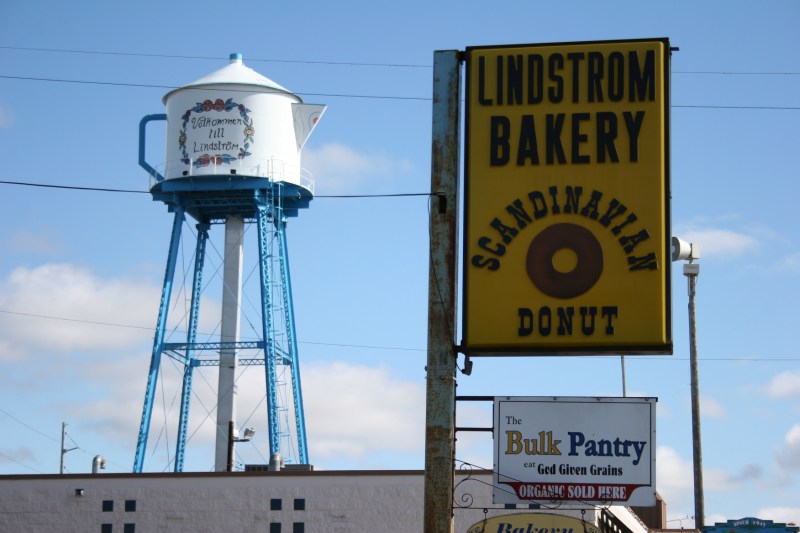
Lindstrom, Minnesota, “America’s Little Sweden.” Minnesota Prairie Roots file photo April 2015.
IN A STATE WITH A STRONG Scandinavian base, nuances of ethnicity show up in lutefisk dinners, lefse-making parties, Lutheran churches named Vasa and Vang, a Swedish coffee pot water tower, the Minneapolis-based American Swedish Institute and more.
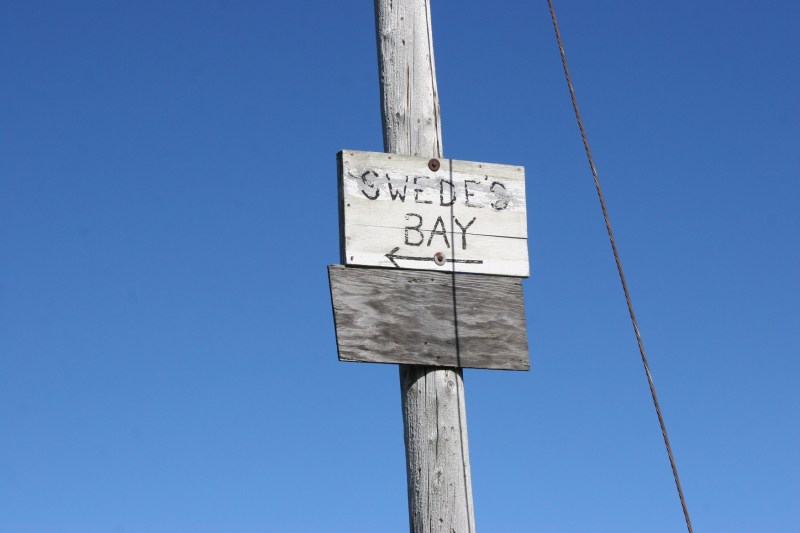
That more includes a fading sign attached to a utility pole in rural Le Sueur County. On a recent Sunday afternoon drive, I noted a posting for SWEDE’S BAY and wondered. But the arrow to the bay pointed in the same direction as a sign warning PRIVATE ROAD DEAD END NO TURN AROUND.
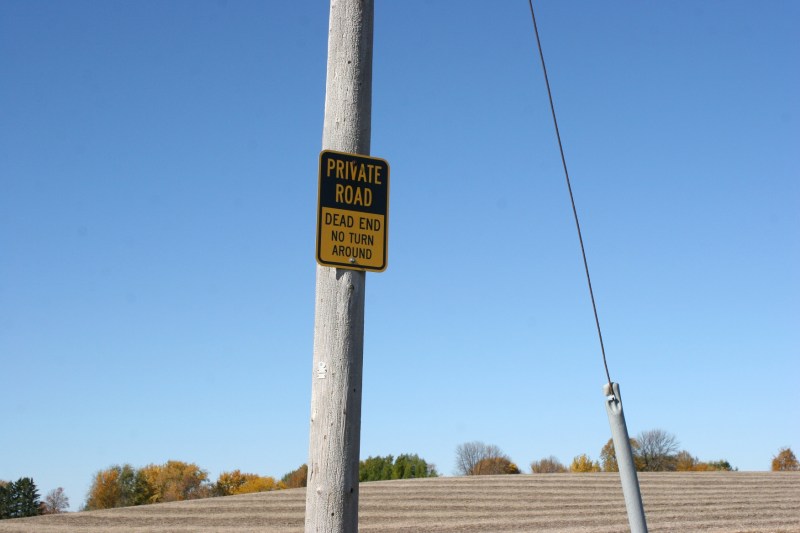
The message was clear. Stay away.
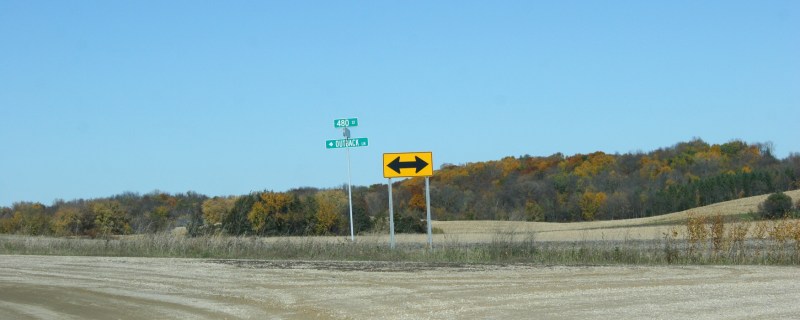
So Randy and I didn’t venture toward Swede’s Bay in the vicinity of 480th Street/Orchard Road/Outback Lane. Sometimes I wish we weren’t such rule followers. But the warning sign was enough to deter me from searching farther along this remote rural gravel road.
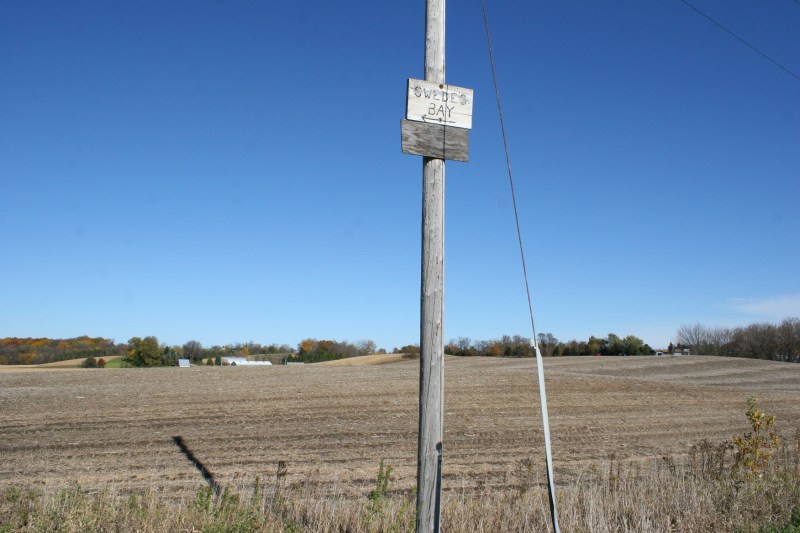
Back home I googled the mysterious bay to discover Swede’s Bay is a lake in a cluster that includes the better known Lake Jefferson and German Lake northeast of Madison Lake. That raises another question: In the naming of the lakes, did the Germans and Swedes convene and decide fair is fair. Name that lake German, this one Swede’s?
© Copyright 2017 Audrey Kletscher Helbling


 Minnesota Prairie Roots
Love that water tower!thanks
It’s probably the most unique I’ve seen.
Well that is an interesting sign for sure. I probably would have heeded it as well.
I expect you would have.
I’m a rule follower too. Don’t go looking for trouble I say! 😀
Amen.
Small world my wife and I have friends living in Lindstrom and have seen that interesting water tower while visiting there. And, just this weekend we went to the Lutheran church (here in Fairbanks) holiday bazaar put on by the Sons of Norway and got our yearly lefse and Krumkake. With a name like mine you can be sure of my Norwegian heritage, however, lutefisk is not on my list of foods to get.
I love those annual holiday bazaars featuring ethnic foods. You might be interested in a newly-released book, JUL: Swedish American Holiday Traditions, by Minnesotan Patrice Johnson and published by the Minnesota Historical Society Press.
Thanks, I’ll look into that book after all my wife is part Swedish too!
There you go. An idea for Christmas.
I would have wanted to go down that road, but I would have needed my Dad with me. He will go anywhere!
I like your dad’s adventuresome and fearless spirit. No wonder you two enjoy your country drives together.
In other words….KEEP OUT!!
Pretty much.
Ha ha they could change the other lake to Norsk and have the whole area covered
There you go. Great idea.
Could anyone explain to me what lefse making is? I visited in 2002 relatives in Minnesota (Vasa) and I still remember they asked me about lutefisk and lefse making. Unfortunately I have lost the contact. I really enjoy following this blog.
Mats, thanks for your kind words regarding Minnesota Prairie Roots.
I’ve never made lefse as I am not of Scandinavian heritage. And I rarely eat it given I don’t find lefse particularly tasty. About all I can tell you is that making lefse involves mashed potatoes, flour, rolling and frying. Perhaps one of my readers can provide details. Lefse is a popular holiday food in Minnesota.
Audrey, thanks a lot for your prompt answer! Now I recognize what lefse is. In swedish we call it “kroppkakor”. Lefse is in some swedish regions still typical, but not in all.
You are welcome, Mats. That’s interesting to hear the Swedish name. I wonder why American’s call it “lefse?”
I don’t have any good answer to that. Maybe one of your readers have a clue?