
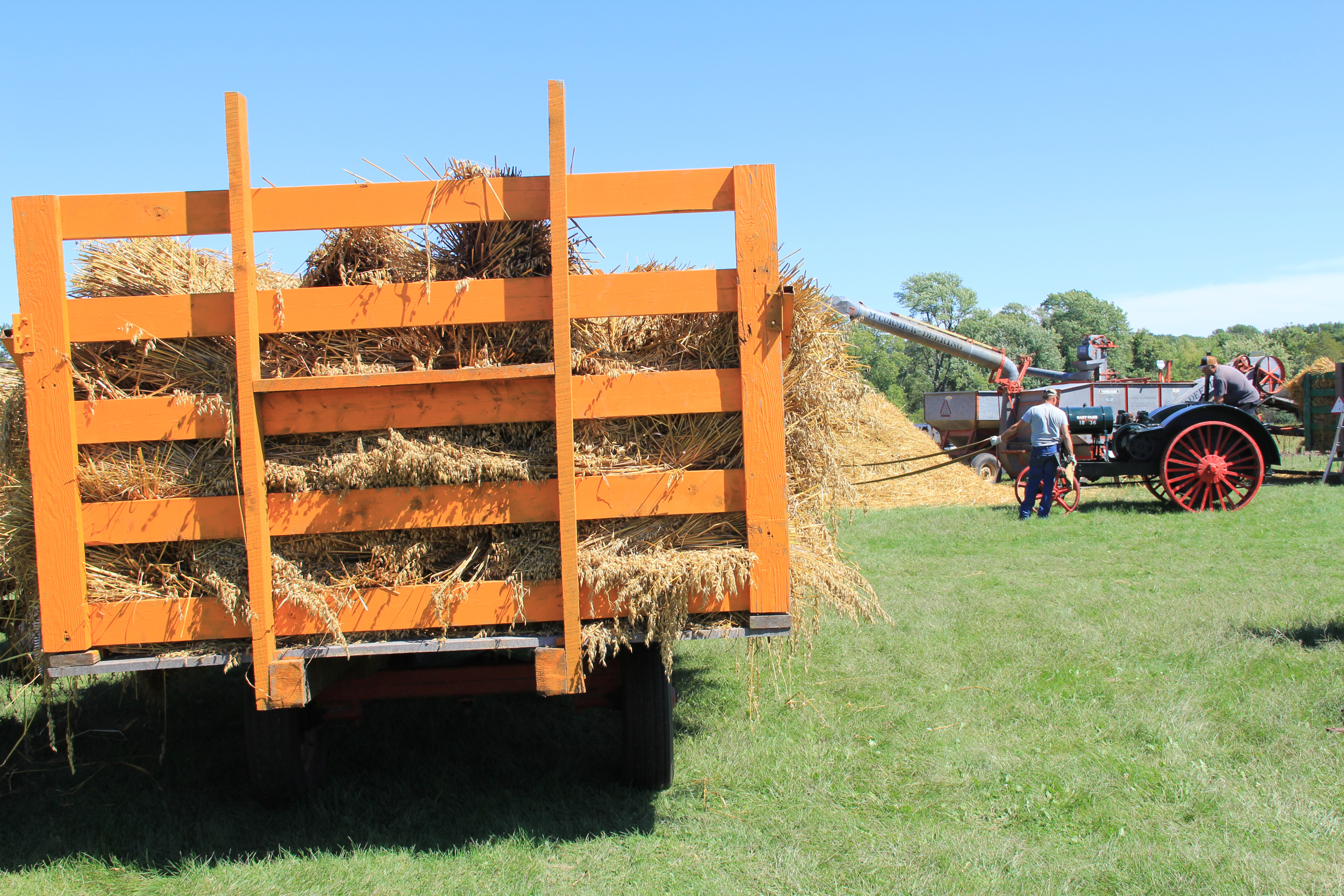
MEMORIES. A HISTORY LESSON. A step back in time. The Rice County Steam & Gas Engines Fall Show is that and more. It’s also entertainment, a coming together of friends and families and neighbors. A reason to focus on farming of yesteryear.
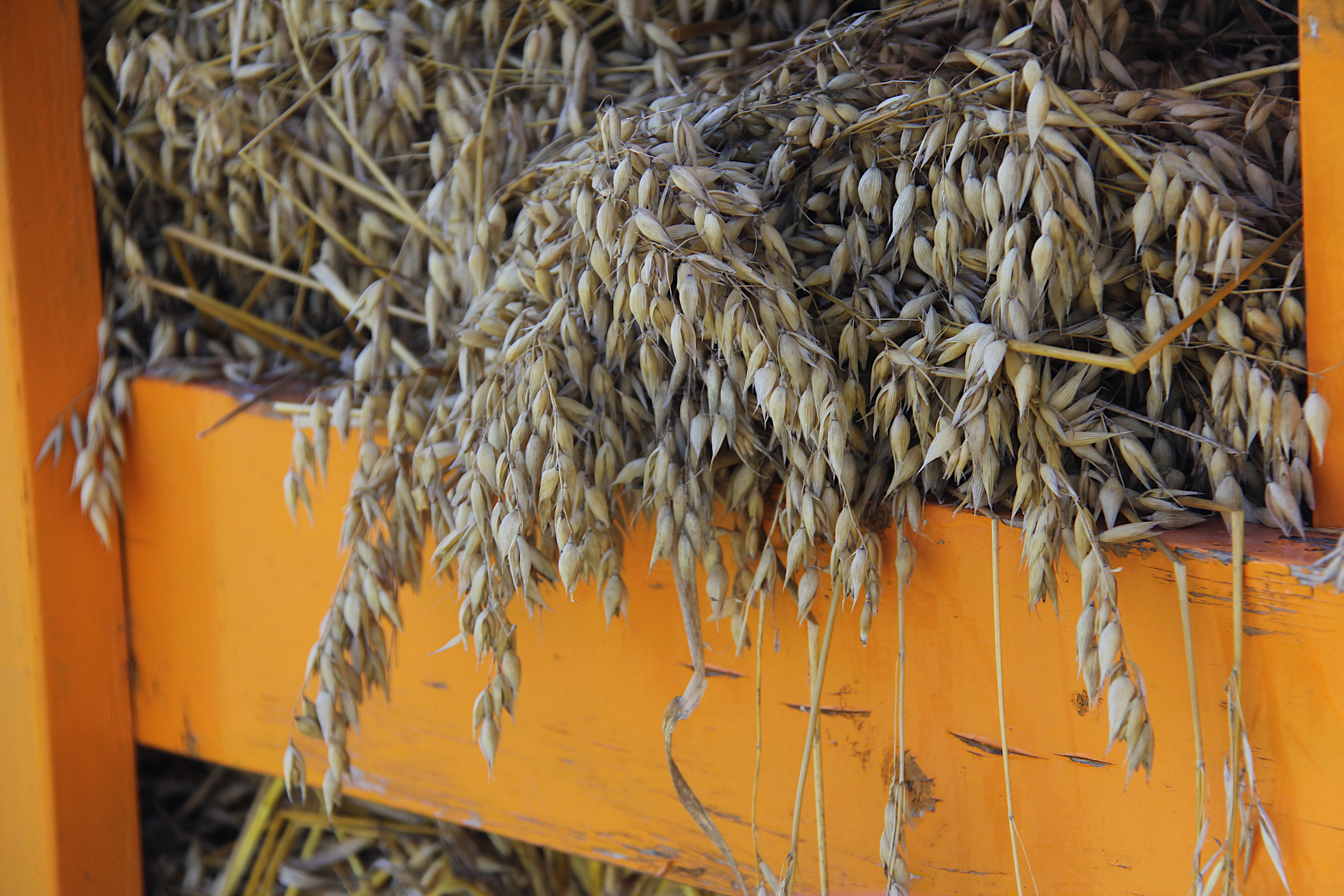
I was among the crowds gathered over the Labor Day weekend at the showgrounds south of Dundas. This show features demos, rows and rows and rows of vintage tractors and aged farm machinery, a tractor pull, flea market, music, petting zoo, mini train rides and a whole lot more.
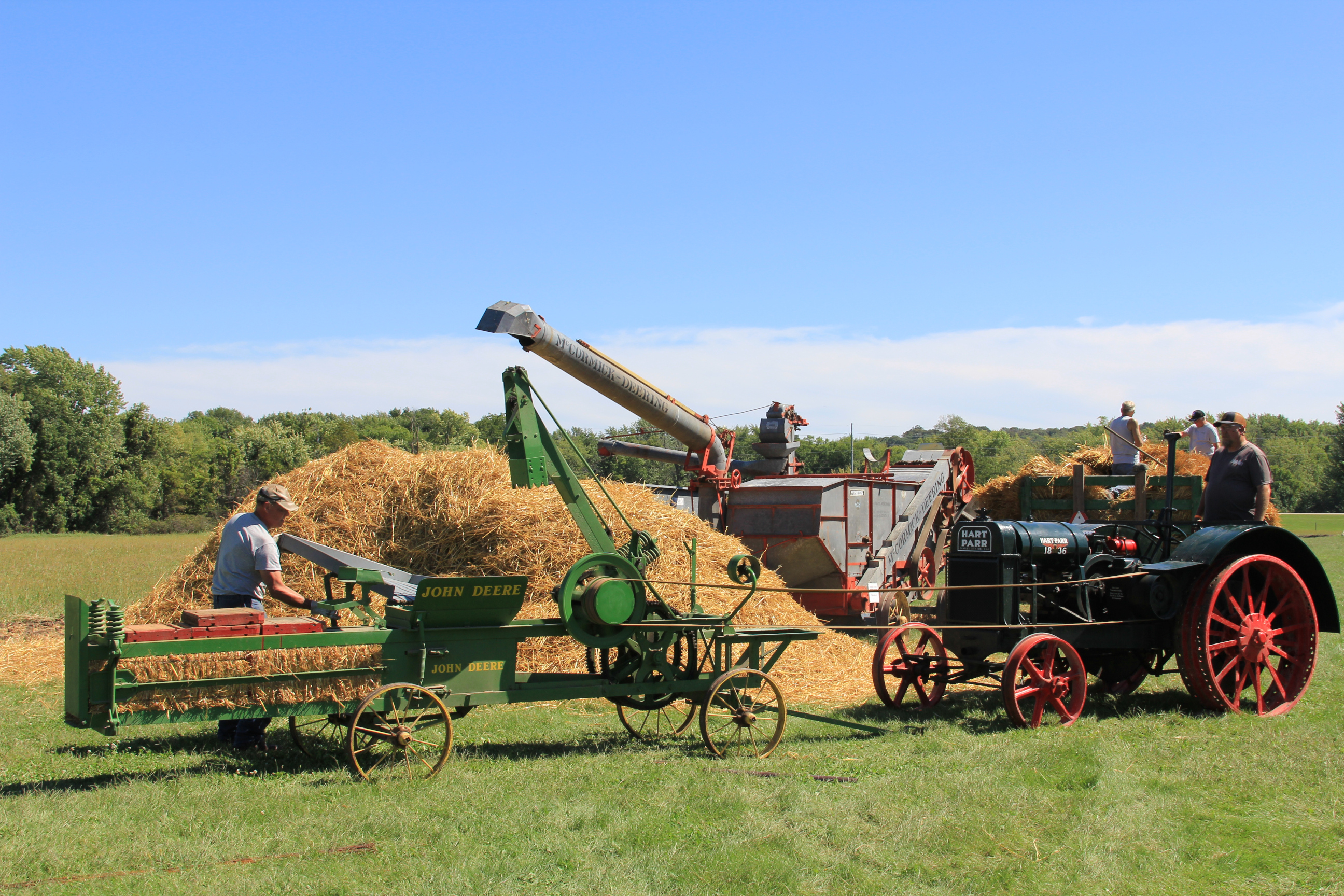
For me, a highlight was watching a crew of men threshing oats. The work is hard, labor intensive, even dangerous with exposed belts and pullies. It’s no wonder farmers lost digits and limbs back in the day.
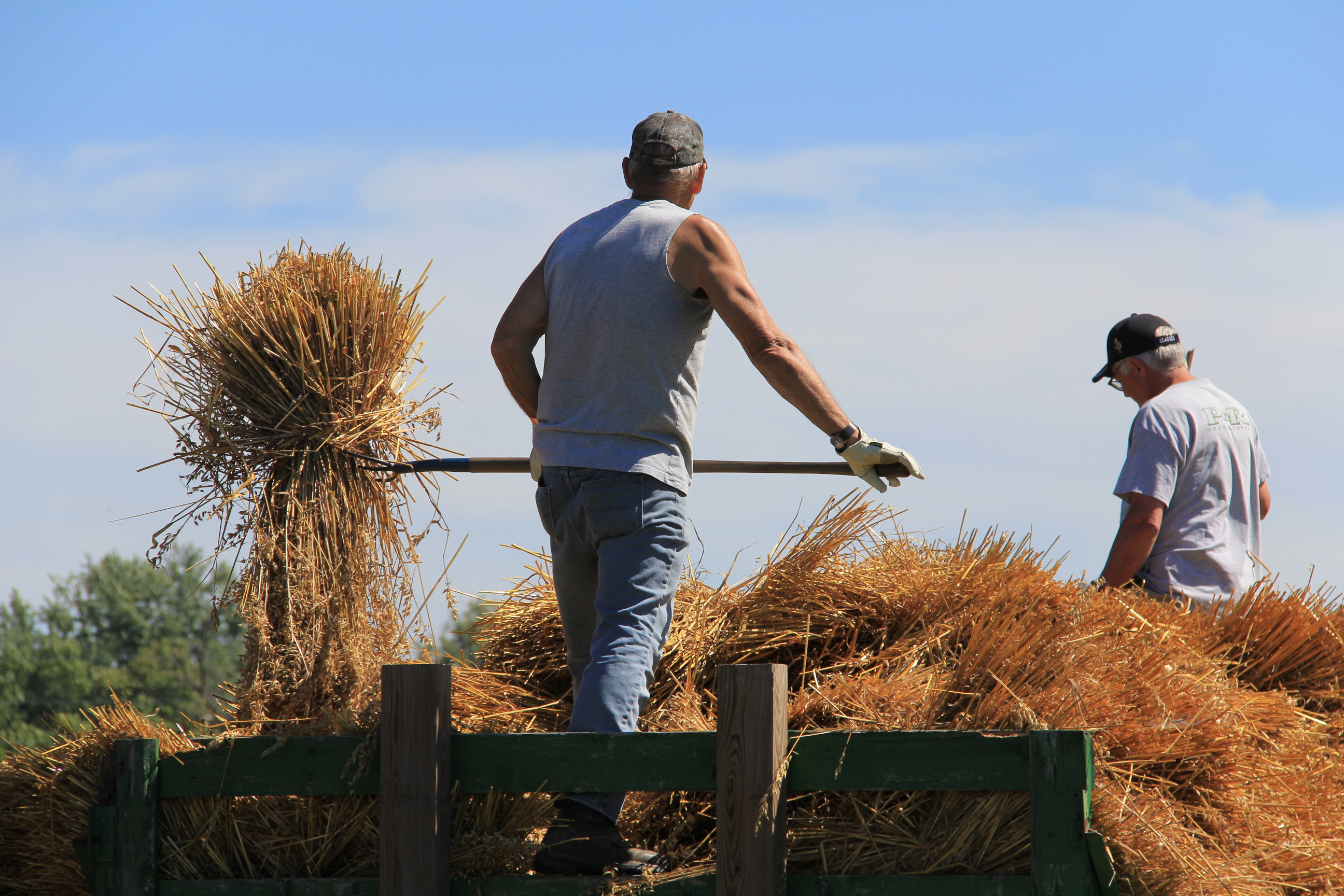
While my observations are not connected to memories, my husband’s are as he recalls threshing on his childhood farm in rural Buckman, Morrison County, Minnesota. After Randy moved with his family from rural St. Anthony, North Dakota (southwest of Mandan), his dad returned to threshing oats. In North Dakota, he used a combine. But his father before him, Randy’s grandfather Alfred, threshed small grains.
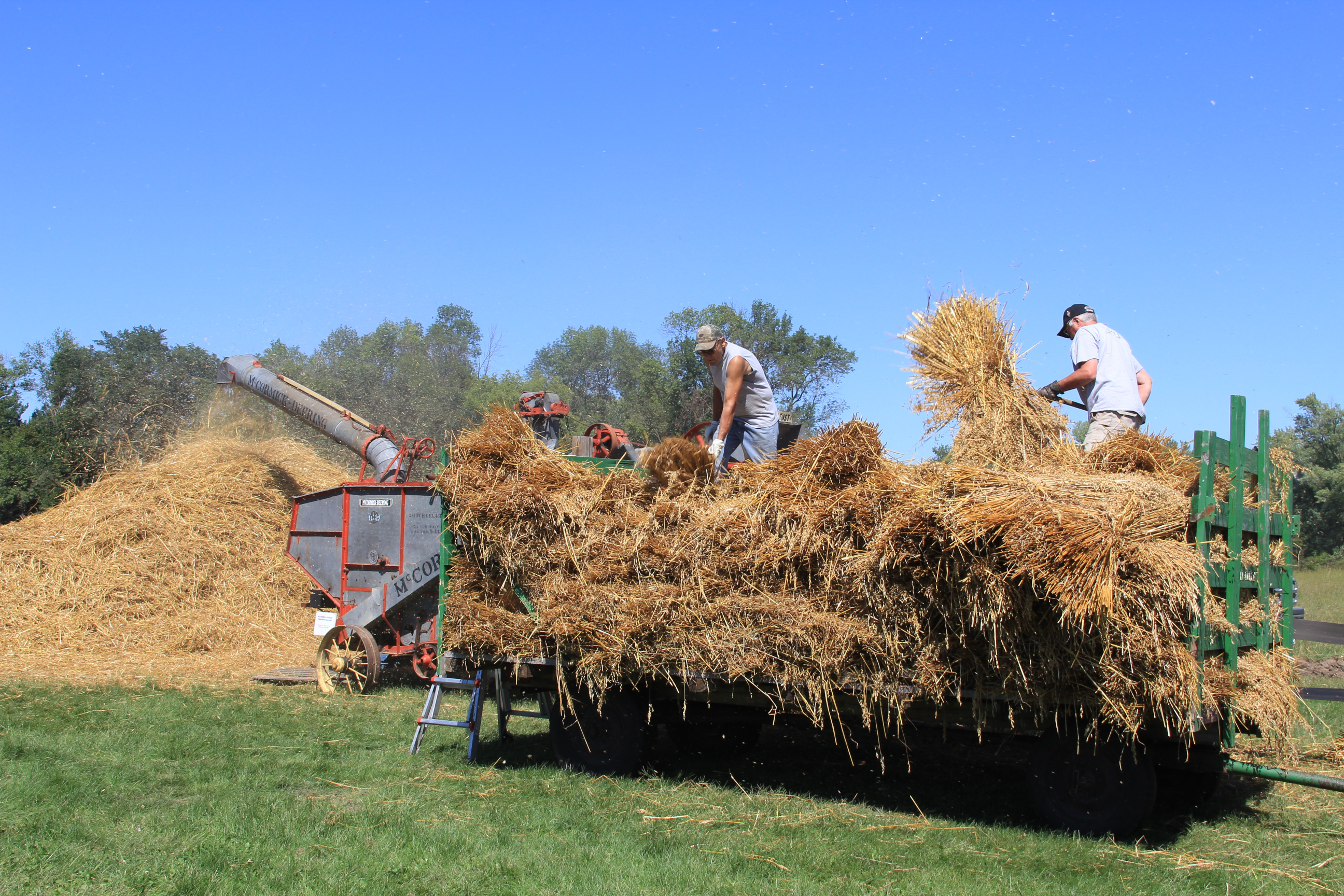
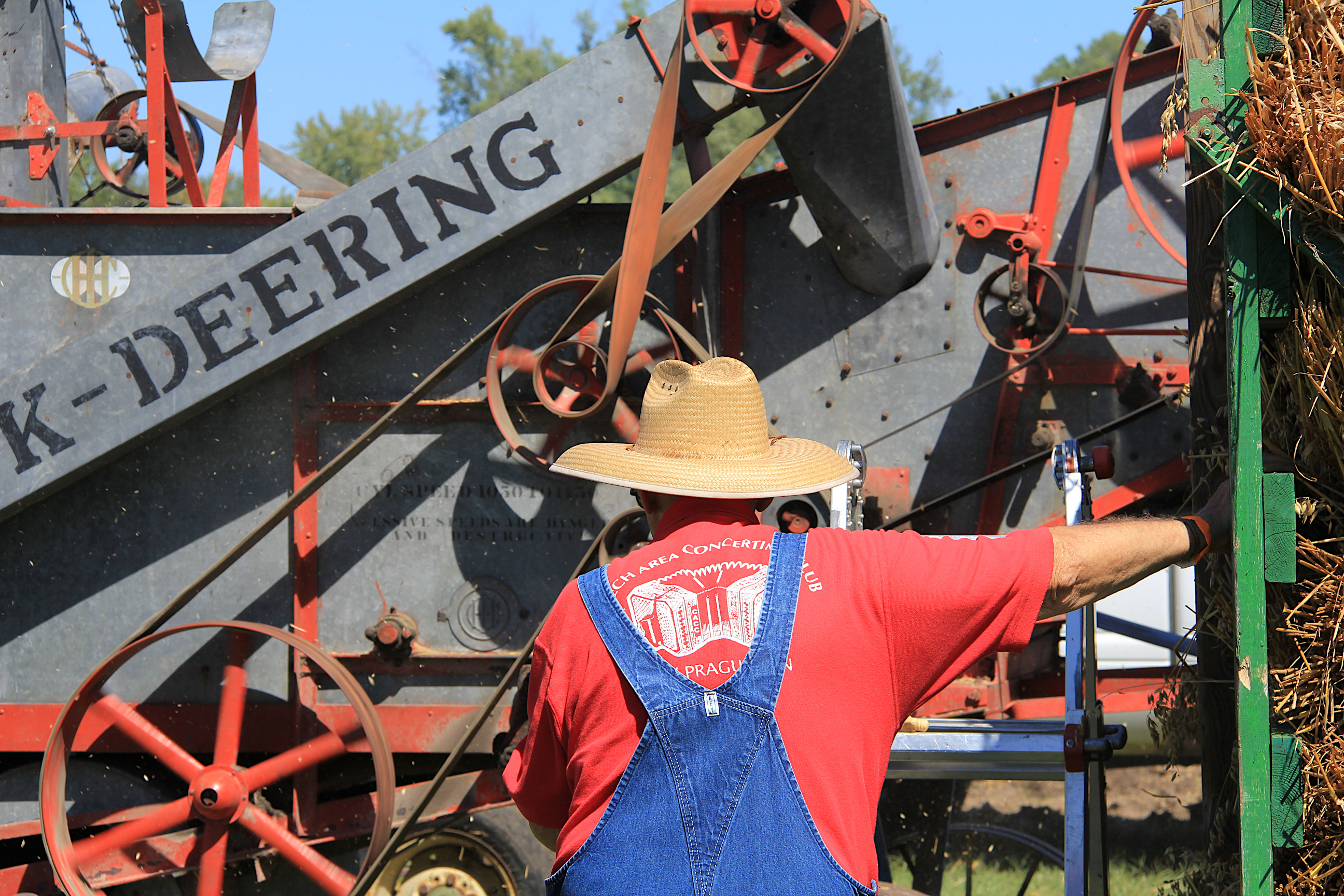
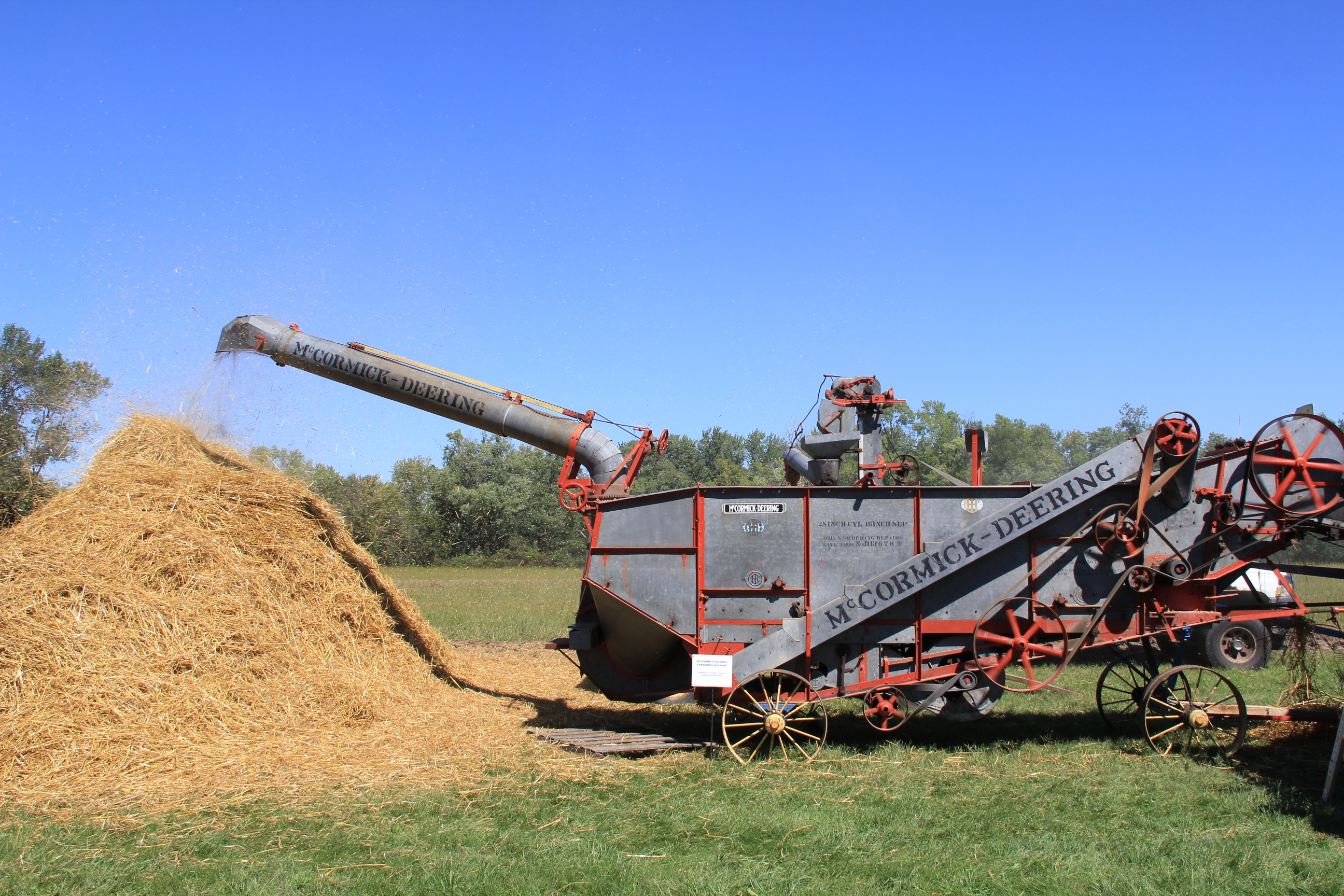
As I watched in Dundas, men forked bundles of oats into a McCormick-Deering thresher. The threshing machine separated the grain from the stalk, the oats shooting one direction into a wagon, the straw the other way into a growing pile. I stood mostly clear of the threshing operation with dust and chafe thick in the air.
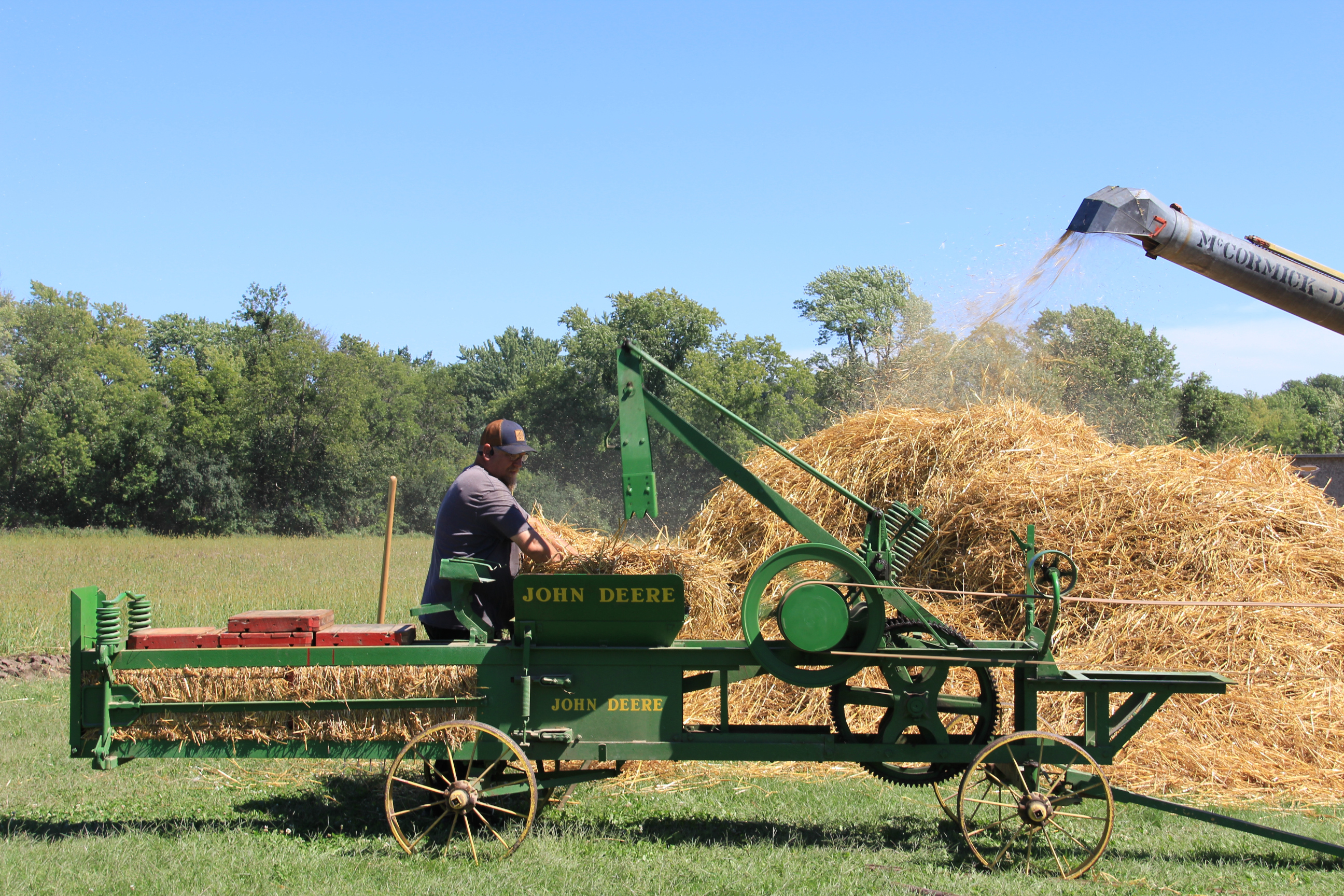
From the straw pile, a volunteer stuffed the stalks into the shoot of an aged baler. An arm tamped the straw, feeding it into the baler. Another guy stood nearby, feeding wire into the baler to wrap the rectangular bales. A slow, tedious process that requires attentiveness and caution.
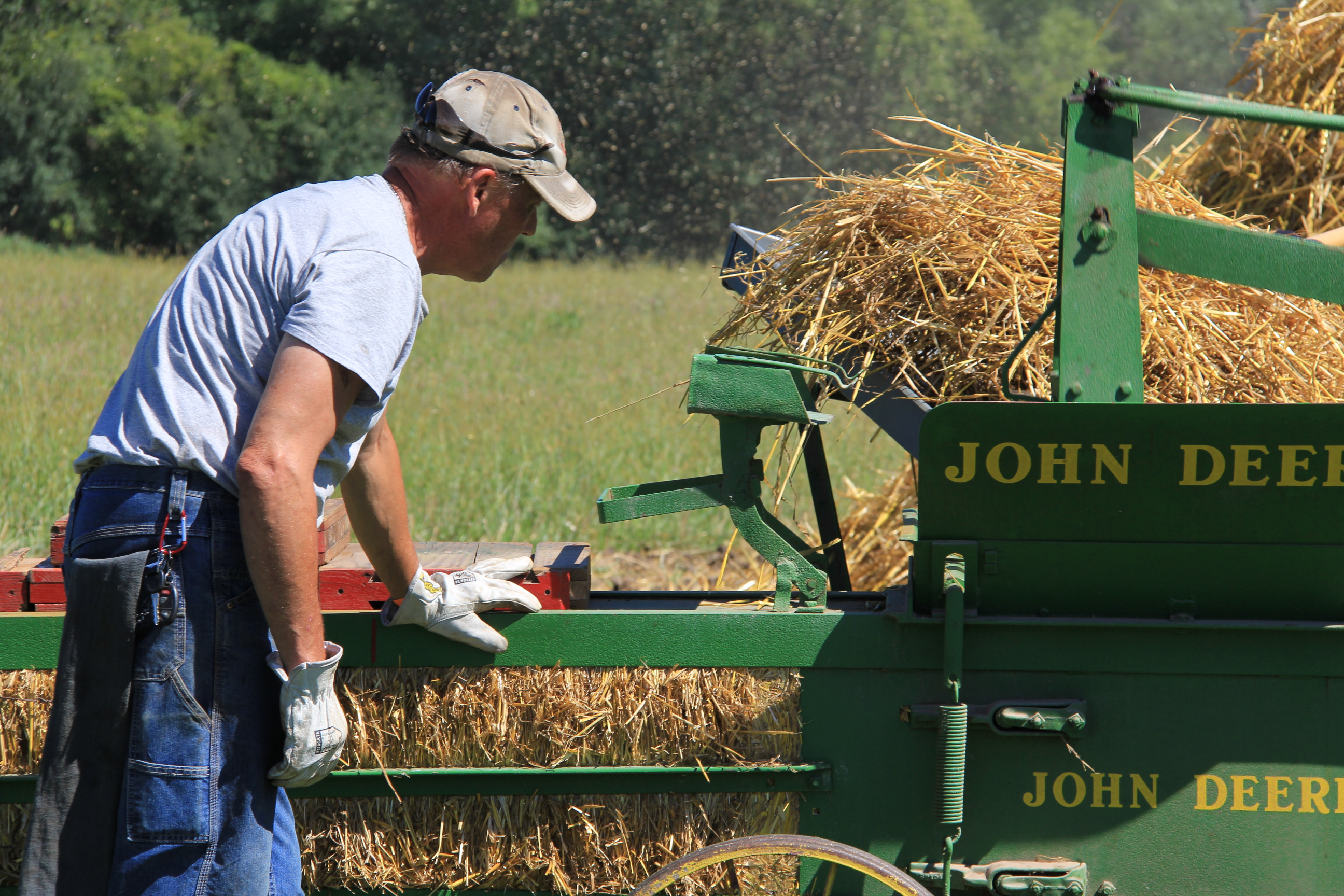
The entire time I watched, I thought how easy it would be to lose focus, to look away for a moment, to get distracted and then, in an instant, to experience the unthinkable. Farming is, and always has been, a dangerous occupation.
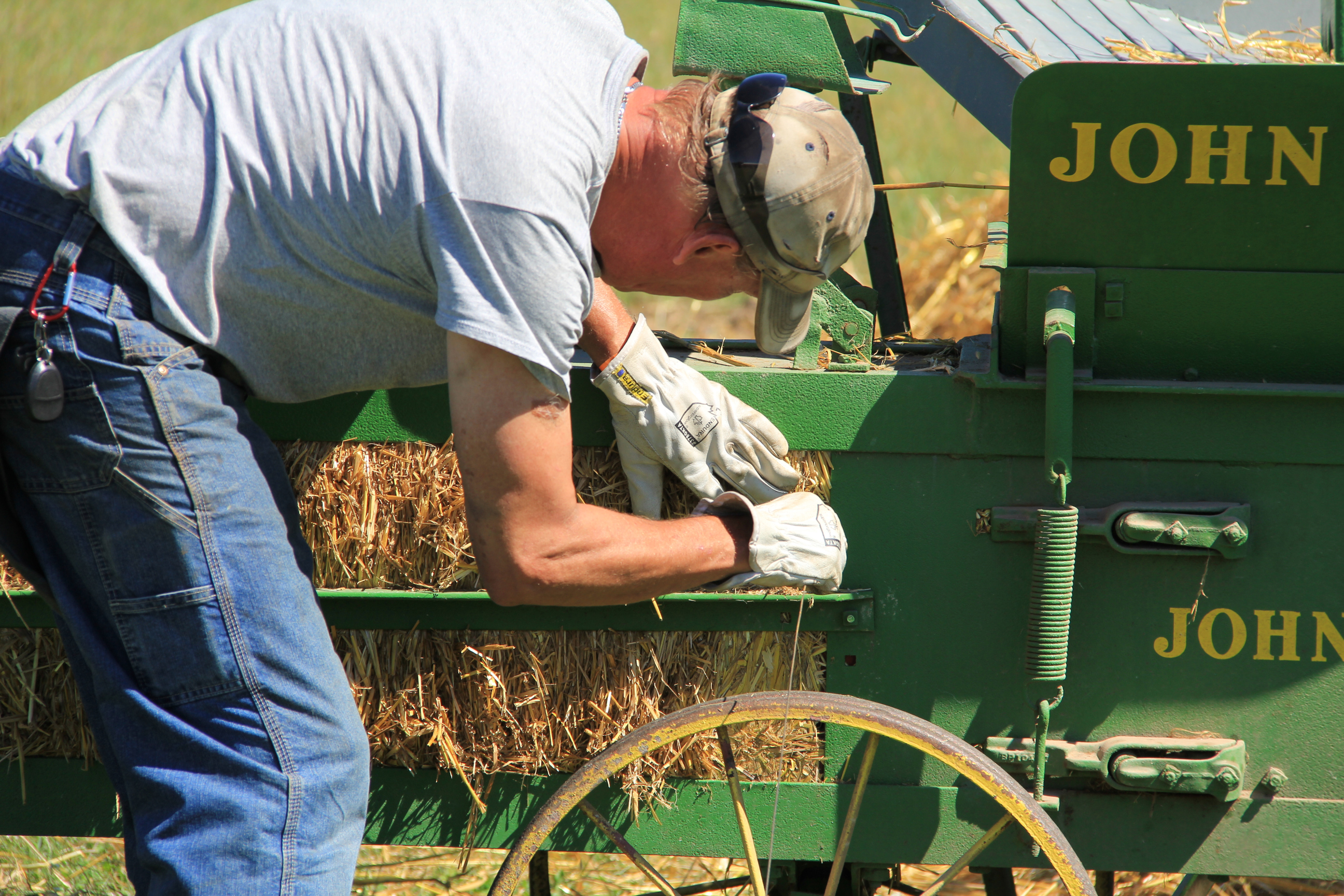
Randy understands that firsthand as he witnessed his father get his hand caught in a corn chopper. Tom lost his left hand and part of his forearm. But Randy saved his life, running across fields and pasture to summon help. It is a traumatic memory he still carries with him 57 years later.
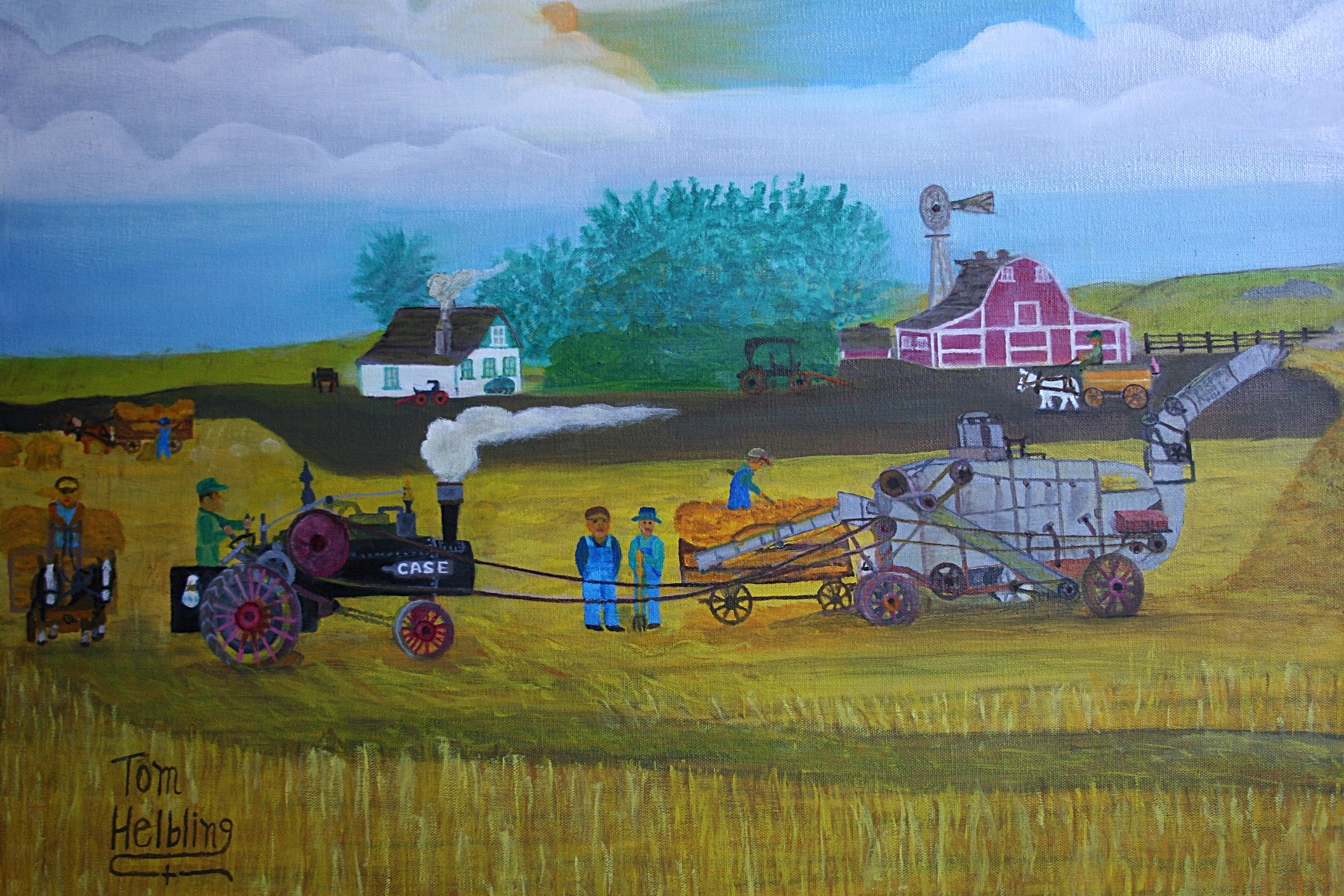
But memories of threshing are good memories, preserved today in an oil painting from the farm in North Dakota, Sunnybrook Farm. My father-in-law took up painting later in life. Among the art he created was a circa 1920s threshing scene. We have that painting, currently displayed in our living room. I treasure it not only for the hands that painted it, but also for the history held in each brush stroke.
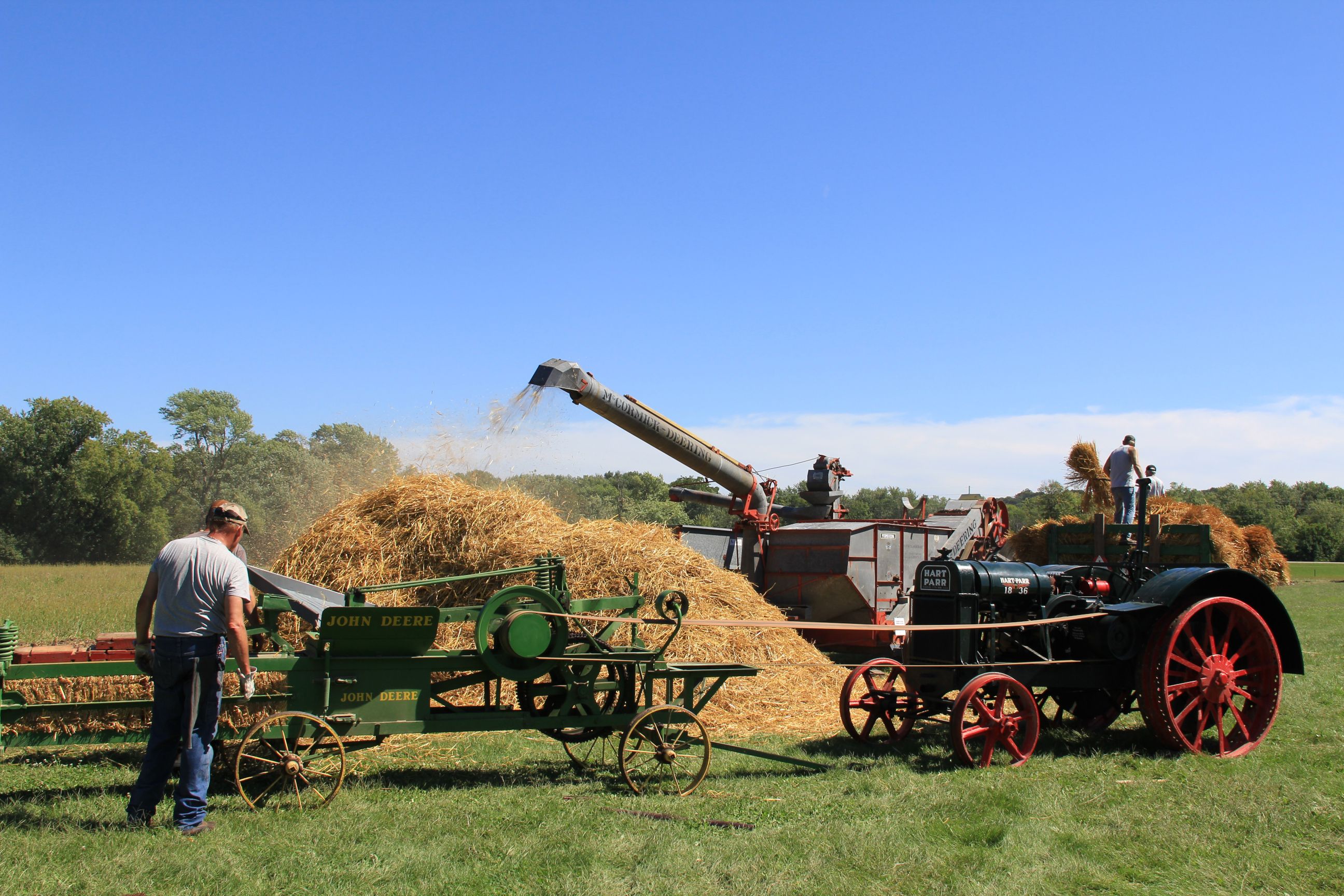
The painted scene differs some from the threshing scene I saw in Dundas. In North Dakota, horses were part of the work team, the tractor steam powered. In Dundas, there were no horses, no steam engine at the threshing site. Still, the threshing machine is the star, performing the same work. And men are still there, laboring under the sun on a late summer afternoon.
© Copyright 2024 Audrey Kletscher Helbling


 Minnesota Prairie Roots
A thoughtful post to consider the dangerous work. Your FIL’s painting illustrating the scene is wonderful.
Thank you, Ruth. I am thankful to have several of my FIL’s paintings.
During my early childhood years, my Uncle Ted brought his threshing machine over to do our oats. Fond memories – the crew of uncles all together, noon meal and all. I remember it as everyone always in a good mood, laughing and joking. Also did the same for silo-filling. Tractors, no horses, but I remember it fondly, dust and all.
Kevin, thanks for sharing your farm memories. Mixed with the work was all that togetherness and good food and simply enjoying each other’s company. It’s good to have you back here in the comments section.
I had this event on my calendar. I wanted to go this year…best laid plans.
An interesting post, Audrey.
I like the painting your father-in-law was able to do.
Maybe next year, Valerie. You are where you are supposed to be right now. 🙂
Working out in the fields, while I have never done much of anything in the fields, you images replicate what was done using machines, formerly augmented with horses, mules, ox and any other large animals, brings to mind the hard work, sans danger inherent in that should bring an appreciation to the dinner table for us all. Even the food wagons, augmented by the women folk who cooked in the same heat and fed the often large work crews working the fields ~ the farmer’s version of the cowboy’s chuck wagon of the day. I got my exposure to this type of work doing pipe inspection out at oil fields of Oklahoma back in the late 70s and early 1980. Temps in to the 100s, I could quaff a very wet, slightly sweet, drink by the quart in seconds. With the light breezy shirts I wore to protect my skin from the heat of the metal pipe and protection from the Sun, I still managed to burn and bronze my skin to ensure the “joints” (as the section of pipe was called) were pronounced safe to use again before being used to drill another well hole. The pipe weighed around 20 plus pounds a foot of length being about 20 feet in length. That was for oil production. I also have had to warn others of unsafe conditions or even play ambulance driver / nurse to rush injured to Emergency Rooms because of accidents and often our work site was just too remote to simply call 911.
Gunny, you’ve led such an interesting life. I always appreciate your stories. You are a gifted storyteller.
Audrey, I thank you for the kind words. I am just an average guy, trying to do at least an above average job to feed. clothe and house my family. You posts bring many issues to the front and with the sound bites of today, the images you capture have certainly got to raise questions by our country’s youth.
Now my thanks are to you, Gunny, for your kind words about my writing and photography.
how wonderful to see this all again, and certainly dangerous if you lose focus and randy’s father learned. I love your picture with the oats hanging over the wagon and the painting.
Thank you, as always, for appreciating my photography and also my FIL’s painting.
Love the painting and pictures. I have attended a threshing event in the past and boy was it interesting to watch. It’s amazing how much farming has changed over the last 200 years.
Your observation is spot on. Farming has changed a lot, even in the 50 years since I left the farm.