March 4, 2025 6:00 AM
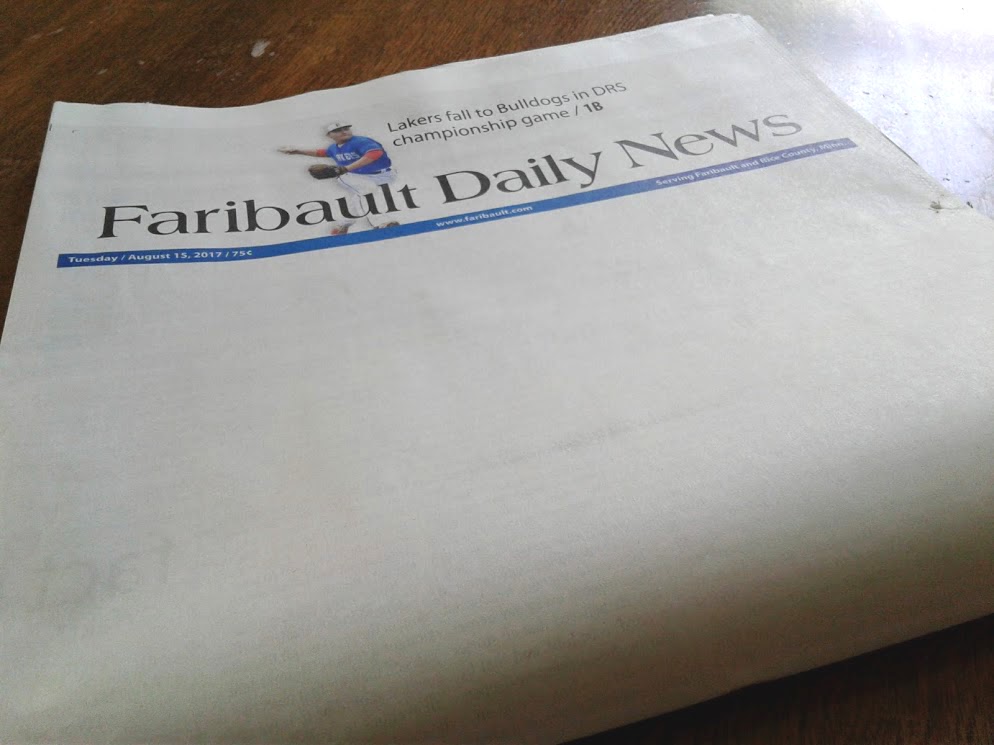
I AM WRITING THIS OPINIONATED POST with no apologies. As an American woman with a college degree in mass communications (news/editorial emphasis) and experience as a newspaper reporter, I’ve always felt strongly about a free press. Even more so today with threats to that freedom. If you are unaware of current actions against the press, research and read. A free press is a vital part of democracy.
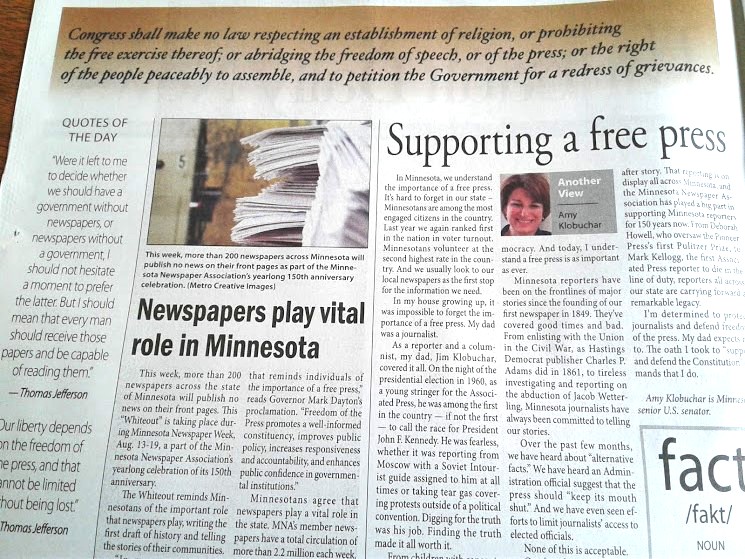
Journalists serve, among other roles, as government watchdogs. That means they, ideally, provide accurate and balanced reporting on government, at all levels. The “fourth estate” holds the government accountable via the stories they write. Not agenda-driven stories shaped by a biased editorial perspective or by information spoon fed to them by a press secretary. But rather stories based on quotes, actions, interviews, facts. Good solid reporting. Not misinformation, disinformation and/or propaganda. I must, though, state the obvious here. Not all sources speak truth to the media. And not all media write truth.
Suppression and criticism of the press are nothing new. Some of the criticism is deserved. Much of it is not. You may like journalists or you may not. That’s not the point. The point is that we need a free press, one unsuppressed/uncensored by those who are in positions of power. If you think otherwise, then look to history and to countries under authoritarian leaders, dictators. Under those leaders, messaging is/has been carefully controlled. Manipulation, intimidation and absolute power rule.
During my journalism career, I have not been immune to those who wanted to control what I wrote. They did that sometimes in a back door way via criticizing me and my work and/or by shutting me out. Thankfully, my editors always had my back.
Let me give you some examples. While covering a school board meeting for a small town southern Minnesota weekly, a teacher said some things that were controversial. Decades out, I can’t recall details. But I do remember how this teacher fumed about my quoting him in a news story. The quote did not reflect favorably on him. But he made the statement at a public meeting. And it needed to be reported. Readers could decide what they thought of his comments.
In that same community, a local realtor called me out for quoting him in a story about a city council meeting. Again, I don’t remember details. But he was absolutely irate and verbally attacked and bullied me for what I’d written. (Sound familiar? Bullying. Fake news.) My reporting was accurate. I was not about to cave to his pressure. Once again, my editor stood up for me. He knew I demanded the best of myself in my work and that I would settle for nothing less than fair and accurate reporting.
Flash ahead to a different small town where I, once again, found myself despised. This time by a school superintendent. He didn’t like that I covered a student walk-out. It happened. I observed, interviewed him and students. And he retaliated. Every time I attended a school board meeting, he refused to give me an agenda or the packet of information distributed to board members and to the editor of the local weekly newspaper. (I worked for a regional daily.) He refused to talk to me. He made no effort to hide his disdain or to make information accessible to me. His was clearly an effort to stop me from reporting on anything school related, including school board meetings. His strategy did not work.
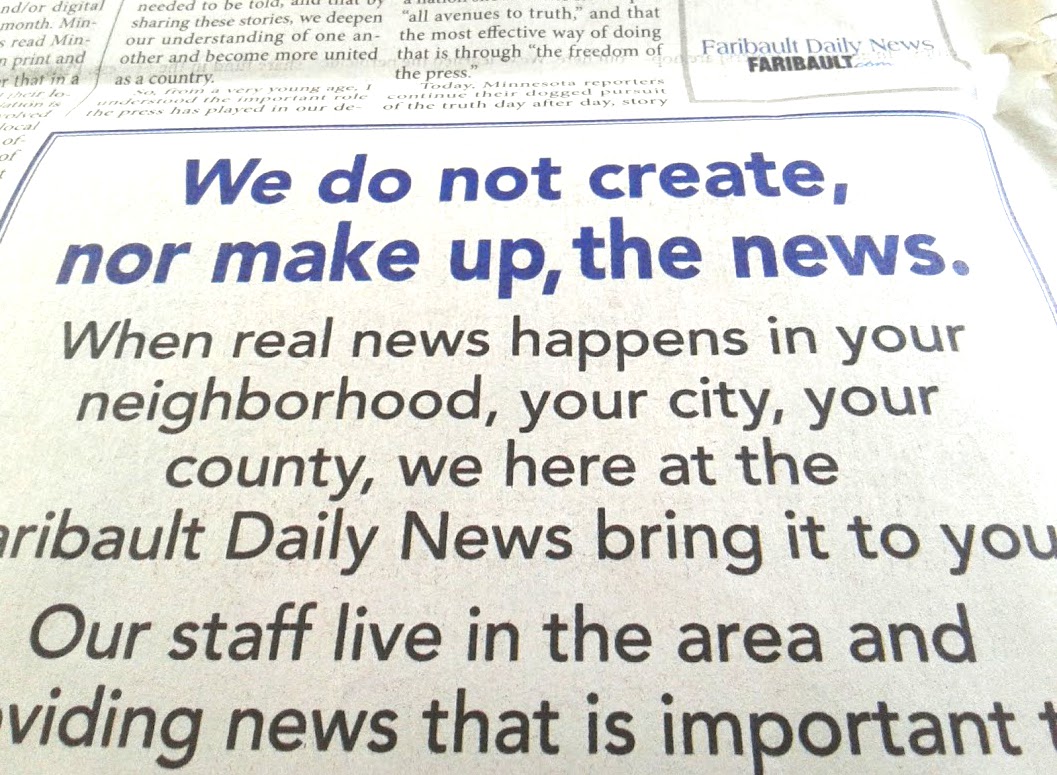
Attacks on journalists have become more rabid in recent years. I think we can all agree on that. Don’t kill the messenger for the message he/she delivers. Respect those journalists who truly are doing their best to report fairly and accurately and who hold themselves and their work to high standards. Turn to those reliable sources for news.
Certainly, some media outlets and journalists are incredibly biased with specific agendas. They have become mouthpieces for government leaders, political parties and issues. I’m not praising those who are manipulating people to shape public opinion and to push ideas. Unfortunately, though, I see more and more government leaders, politicians and others targeting dedicated-to-the-craft journalists. These hardworking reporters are being shut out, degraded and abused because they accurately report what they see and hear in their watchdog role. Kinda like me with that small town school superintendent decades ago, just a lot more amplified and with much more serious consequences.
Thankfully, plenty of journalists committed to writing the truth still remain. They are strong men and women of integrity and morals who give a damn about democracy and a free press. Now, more than ever, we need to recognize the value of a free press, underscore FREE. Even though I no longer work as a newspaper journalist, I still strongly value freedom of the press. It is, always has been, a cornerstone of democracy.
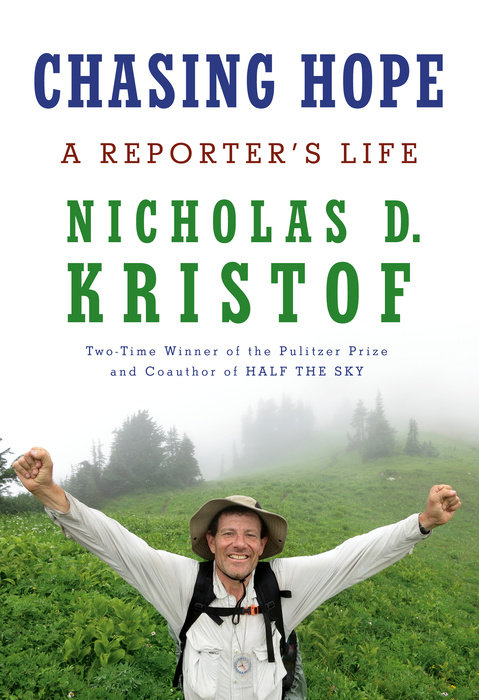
FYI: I encourage you to read Chasing Hope—A Reporter’s Life by Nicholas D. Kristof, currently an op-ed columnist for The New York Times. The two-time Pulitzer Prize-winning journalist worked as a foreign correspondent in Hong Kong, Beijing and Tokyo. He witnessed some pretty horrible atrocities—including the massacre in Tiananmen Square, the genocide in Darfur and much more—and offers remarkable insights via his experiences, observations and exceptional storytelling.
Of special note in Kristof’s book is a reference to an August 2008 campaign rally in Lakeville, Minnesota, which the author calls “one of the finest moments in American politics in my lifetime.” Kristof shares a story about Senator John McCain, who was then vying for the Republican Presidential nomination. I refer you to pages 239 and 240 in Chasing Hope. This book is worth the read for that story alone. It will give you hope. And, no, I’m not telling you more. Read the book.
© Copyright 2025 Audrey Kletscher Helbling
Posted by Audrey Kletscher Helbling
Categories: Uncategorized
Tags: books, Chasing Hope: A Reporter's Life, commentary, democracy, free press, freedom of the press, government, journalism, journalists, media, news reporters, newspapers, Nicholas D. Kristof, opinion, United States
Mobile Site | Full Site
Get a free blog at WordPress.com Theme: WordPress Mobile Edition by Alex King.
The free exchange of ideas and a FREE press are essential to a real democracy. The problem is that people take a free press for granted until it’s not free anymore. And then it’s too late…
By Vanmarmot's Travels on March 4, 2025 at 6:44 AM
You’re absolutely right. Excellent points.
By Audrey Kletscher Helbling on March 4, 2025 at 9:51 AM
The Large Print edition is available at my library branch so after exercise at the senior center tomorrow I’ll check it out and read. Good post today in frightening times.
By Ruth on March 4, 2025 at 6:53 AM
Thank you, Ruth. I could write a lot of other commentaries on what’s unfolding in our country right now. Frightening times, indeed. I’ll be curious to hear your thoughts on the book, which is not an easy read due to some of the content. It’s also a long book. But I would recommend it to anyone.
By Audrey Kletscher Helbling on March 4, 2025 at 9:53 AM
it is becoming increasingly difficult at times to filter through all the biased reporting but well worth the effort to find the accurate reporting. Thank you for your voice.
By Beth Ann on March 4, 2025 at 7:40 AM
We all have a voice. I, for one, won’t be suppressed.
By Audrey Kletscher Helbling on March 4, 2025 at 9:54 AM
Thank you for this powerful post, Audrey. You are one who understands firsthand the dangers of infringing on writers’ rights and the slippery slope of clamping down on the freedom of the press.
Thank you, thank you. I’ll be sure to check out the book you posted –
By beth on March 4, 2025 at 8:40 AM
You are welcome, Beth. And thank you for caring, for understanding and, in advance, for reading this book.
By Audrey Kletscher Helbling on March 4, 2025 at 9:56 AM
Thank you!
By Michael Watson PhD on March 4, 2025 at 9:52 AM
You are welcome. Let our voices be heard!
By Audrey Kletscher Helbling on March 4, 2025 at 9:57 AM
Audrey – I fully agree with you. However, some reporters let their personal political or personal views over ride actual facts that surface. I think this is “Biased Reporting”. Recently there is a black Female PhD that stated there never was a white slave. I guessed she missed the whole point of the Barbary Wars – and a few other events. While I would offer that these viewpoints are not always bad and make for some interesting sparing – , but when a reporter ignores what one political or facet of an issue or entity has done while holding opposition side (in their world view) to a higher standard – the Fix is in. We could meet, dine on open-faced beef sandwiches, over coffee and discuss what reporters have done right and wrong for hours on end. What I find interestingly, slavery ended at the end of the Civil war, no one talks about the fact that Indentured Servitude did not and continued on for I think several decades. God Bless.
By Gunny on March 4, 2025 at 10:36 AM
You are always a wealth of historical information, Gunny. Thank you for sharing your thoughts today.
By Audrey Kletscher Helbling on March 4, 2025 at 2:46 PM
Thank you for this Audrey. I’m grateful for your reporting the facts. The facts are hard to discern these days… Let our voices be heard.
I requested the book.
By vbollinger on March 4, 2025 at 11:35 AM
I agree that facts are sometimes difficult to discern. That’s why we must seek out truth in media. I know you will appreciate the book. It can be a really difficult read at times. But there’s lot to learn, lot to contemplate within the pages of this lengthy book. I am almost done reading it.
By Audrey Kletscher Helbling on March 4, 2025 at 2:48 PM
This is a fantastic article Audrey and so well written. I hope it gets published in your local paper and makes its rounds to other news sources. I admire your bravery to stand up to bullies, and your integrity to get the story right. You are an amazing reporter and blogger. Now more than ever we need to maintain a free press with reporters of integrity who can search for and tell the truth. Thank you so very much for this!! I’ll look for a copy of Chasing Hope.
By Rose on March 4, 2025 at 11:45 AM
You are welcome, Rose. I try to do my best in my writing. It is my voice. Right now, every single voice is especially important. I also encourage people to subscribe to their local newspaper. I’ll be curious to hear what you think of the book.
By Audrey Kletscher Helbling on March 4, 2025 at 2:50 PM
Bravo!
By Keith Goldstein on March 4, 2025 at 12:55 PM
Thank you, Keith. 🙂
By Audrey Kletscher Helbling on March 4, 2025 at 2:50 PM
Yes!! Journalists who remain committed to reporting facts and telling the truth no matter what are heroes. That’s what makes liars fear them.
By Kathleen Cassen Mickelson on March 4, 2025 at 3:12 PM
You’re spot on with this comment, Kathleen. Thank you for sharing your powerful words.
By Audrey Kletscher Helbling on March 4, 2025 at 4:32 PM
Great article. I live near Washington, DC and have recently cancelled my subscription to the Washington Post because of actions taken by the owner, Jeff Bezos. I feel for his staff writers who investigate and produce
By Marie on March 5, 2025 at 3:48 AM
Good for you to take a stand against Jeff Bezos. And, yes, I feel for the staff.
By Audrey Kletscher Helbling on March 5, 2025 at 10:44 AM
Well said, Audrey. You are my kind of journalist–one with high standards and the backbone to stand up for the truth. I agree that a free and fair press is essential in preserving a democracy. But I also know it’s hard for reporters to keep personal biases out of their reporting. The good ones do it so well that you never have a clue as to their political leanings.
What concerns me more, and is not discussed much, is the role editors play in conveying the news to the public. Someone has to decide what news is printed or aired out of all the dozens or hundreds of possible stories that are newsworthy on a given day. We see that mostly in broadcast news, where the phrase, “If it bleeds, it leads,” seems to be the framework upon which the handful of stories that get aired are determined.
Someone or some small group is deciding for each of us what they believe we need to know. As a result, we get a constant streams of natural or manmade disasters, crimes, wars, and outrageous behavior that makes for good sound and video bites. From that, we start believeing that the world is a terrible, violent, evil place that we should cower from. Or we feel the blame for not being able to fix all the problems that are dumped into our laps from television, print, or online news.
My belief is that 95% of the people in the world are good, honest, hard-working folks who just want to live their lives the best way they can. Why can’t we celebrate and broadcast all the good that is happening in the world? Why must we be made to feel that the 5% of the people doing the bad things are normal and that’s the way the world is–a cold, cruel, greedy, violent place? Why must the news make us depressed and feel responsible, yet helpless, for all the evil that is happening? Why can’t we share more regional, local, neighborhood news and good things that happen every day?
Two hundred years ago, no one was concerned about what was happening on the other side of the world because it was impossible to hear about it unless you ran into one of the small number of world travelers who happened to come to your village one day and tell you what they’d seen in China, or Africa, or South America.
Journalism is in a tough place right now, but the powers that be have been degrading it for decades. I’m afraid it will take a mass movement and a reshaping of how news is delivered (some sort of “not for profit” shape where money and power isn’t the driving force behind what is deemed to be news for public consumption.
I’ve ranted too long, but couldn’t help share my views in this forum of obviously thoughtful, caring, intelligent people who want things to be better but feel helpless.
Keep on sharing the truth, Audrey. You’re doing the kind of journalism I wish everyone had access to.
By Chris Norbury on March 5, 2025 at 9:08 AM
Chris, thank you for sharing your thoughts. I agree on most points. As far as news, the media have a responsibility to report hard news (aka all the bad things happening) so we can be informed in a world that is very much interconnected. (Not Mayberry anymore.) I agree, though, that we need a balance of “good news” also, which is where our local newspapers and TV stations can excel. I encourage people to subscribe to their local papers. They will find news there that can’t be found elsewhere, unless you rely on social media. I don’t.
Yes, editors do play a major role in media content and it isn’t talked about often enough. Thank you for bringing up that point.
Journalism is, indeed, a tough place to be right now. And, yes, those in power often attack the media because (as one commenter here notes), they don’t like hearing the truth. “Liars fear them” are her words.
Again, thank you for your thoughtful comment. I appreciate the time and effort you put into expressing your opinion on this important topic.
By Audrey Kletscher Helbling on March 5, 2025 at 11:03 AM
You really had an interesting line of work. I can’t imagine that it would always be a fun job. Rewarding at times but also tedious.
I often am frustrated by the lack of transparency in the news. I take in the news from several different sources just to get a larger range of opinions.
By Missy’s Crafty Mess - 365 Knit Socks on March 7, 2025 at 12:00 PM
My favorite part of reporting was writing feature stories. Loved interviewing people with interesting stories to tell. Good for you to get your news from multiple sources.
By Audrey Kletscher Helbling on March 7, 2025 at 12:26 PM