
THE VISUAL AND PERFORMING ARTS come together under one roof this Friday evening, January 9, at the Paradise Center for the Arts in historic downtown Faribault during an opening gallery reception from 5-7 pm followed by an improv comedy show at 7:30 pm. I’m excited about both. I love art. And I like entertainment that makes me laugh.
First up is the reception celebrating the work of artists showcased in four galleries. That includes “Homegrown Art: The Local Artist Collection of the Rice County Historical Society,” individual artists Barbara Schwenk and Leo Bird, pottery from the Paradise Center for the Arts pottery department and art by Bethlehem Academy students.
The RCHS exhibit in the main gallery kicks off a year-long celebration of the county historical society’s 100th birthday. “From a fantastical creature made of tin to bright, creative pottery and beautiful paintings, this gallery highlights items normally tucked away in storage and spotlights the talents of the Rice County community,” according to a media release from the RCHS.
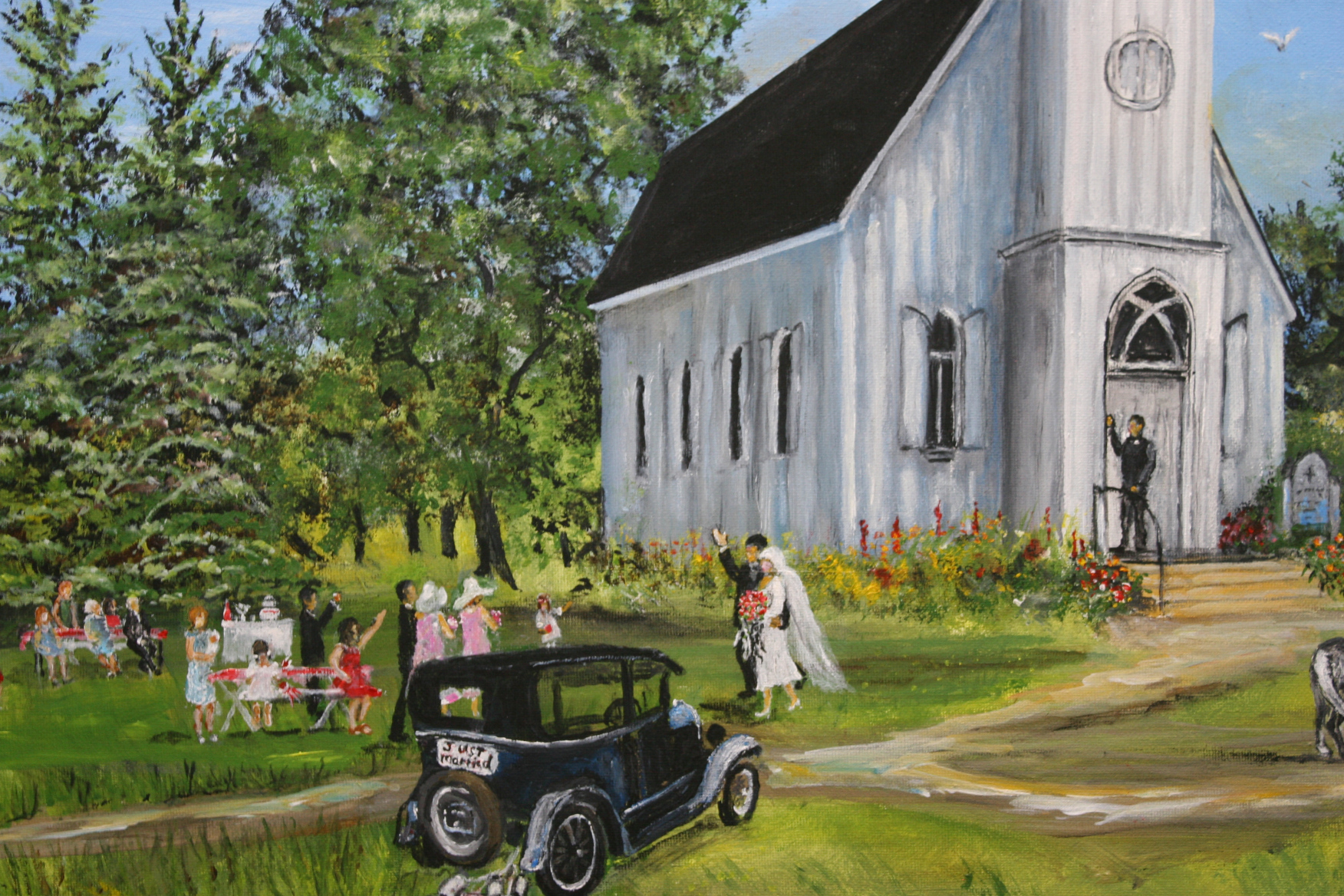
Naturally, I wondered about the artists to be featured in the 20 pieces chosen for the Paradise show. They include, among others, Grace McKinstry, Linda Van Lear, Ivan Whillock, Maybelle Stark and Frieda Lord. I’m familiar with all of them except Lord, although I have seen and photographed the art of her granddaughter, Dana Warmington Hanson. Lord and Stark were among the founding members of the Faribault Art Center, which evolved into the Paradise Center for the Arts.
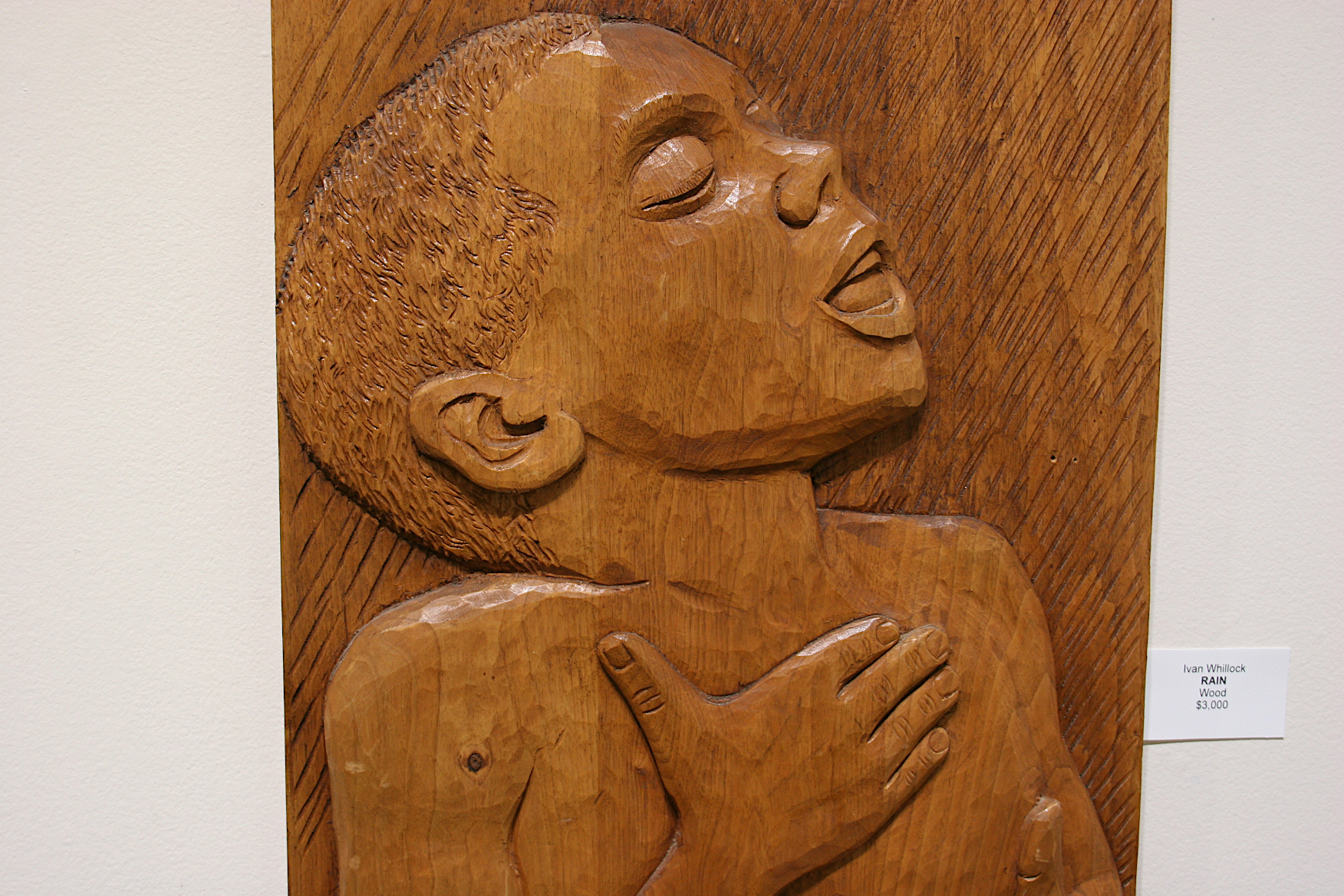
McKinstry and Whillock are perhaps the best-known in that short list shared with me by the RCHS. Whillock, who has a studio in Faribault, is an internationally-renowned woodcarver and also a painter. McKinstry (she died in 1936) traveled the world in pursuit of creating portraits and landscapes. Her art is featured in the Smithsonian, the Minnesota Historical Society, the Minnesota State Capital and elsewhere worldwide. Locally, the county historical society owns more than 40 pieces of her artwork, the largest collection of McKinstry’s art anywhere.
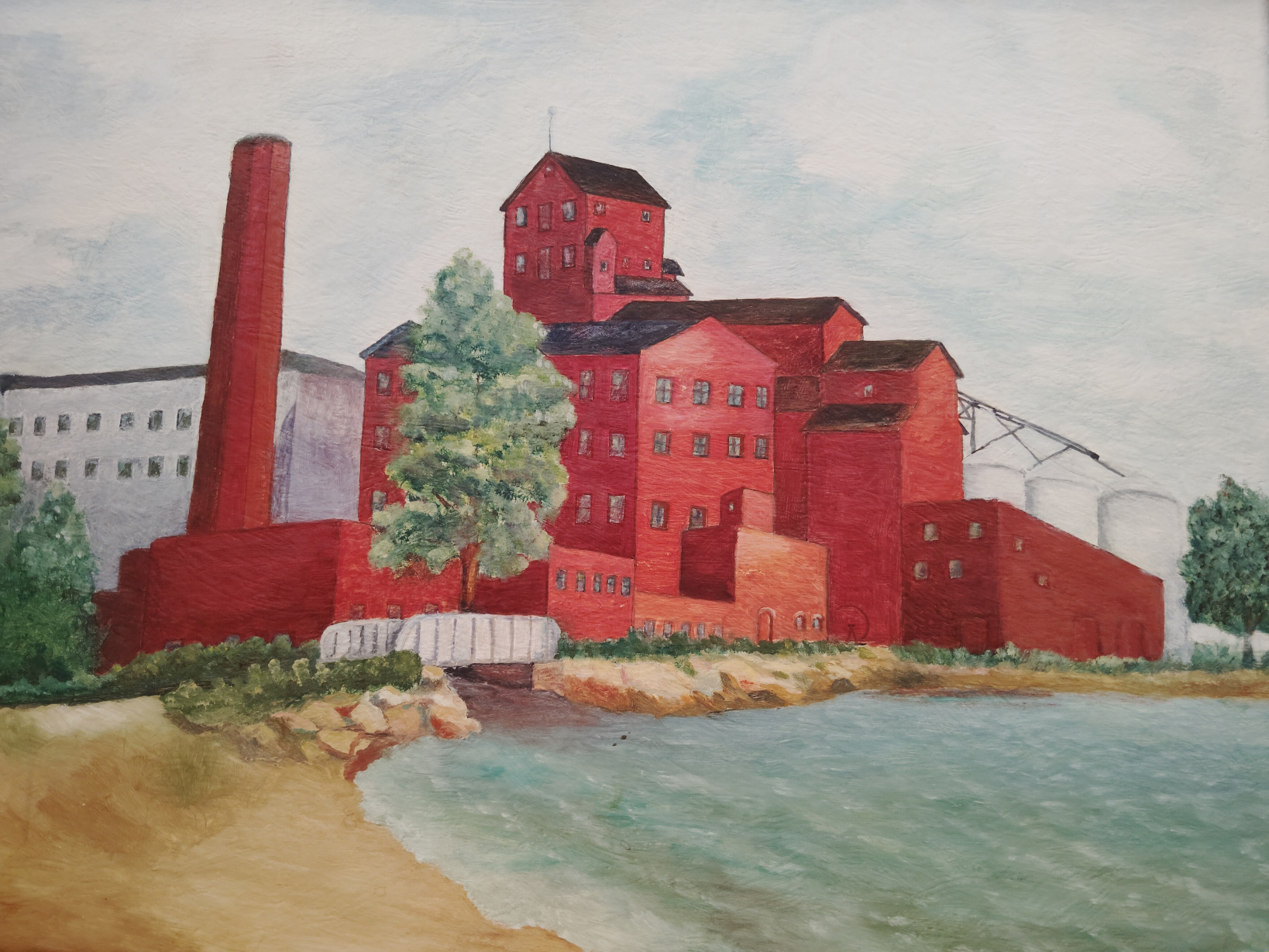
I own art by one of the artists, Maybelle Stark, whose work is included in the RCHS gallery exhibit. That’s a print of the H.H. King Flour Mill, once located along the Cannon River on Faribault’s west side and destroyed by fire in 1975. Stark painted the scene in 1959 and exhibited it locally the same year. Now that painting is back on public display nearly 70 years later.
All of the art showcased in the Paradise galleries from now through February 21 is sure to draw plenty of interest among those who value creativity. And local history.

And for anyone who also values the performing arts, Little Fish Improv presents improv comedy beginning at 7:30 pm Friday. I’ve seen this group of area comedians perform several times on the Paradise stage. They are a talented bunch who think quickly on their feet (thus the word “improv”) and get their audience engaged and laughing. It seems to me a really challenging art form.
Bonus, this comedy show is a fundraiser with all proceeds benefiting the Paradise Center for the Arts. I feel incredibly fortunate to live in a community with an outstanding arts center and with a deep appreciation for the arts.
FYI: Click here to purchase tickets for Little Fish Improv.
At 1 pm Saturday, January 17, Diane Lockerby, pottery instructor at the Paradise, will lead a “Historic Pottery Workshop at the Paradise.” Following her brief talk about pottery and local history, attendees will make a piece of pottery to take home. There is a fee. Space is limited. Click here to register.
© Copyright 2026 Audrey Kletscher Helbling


 Minnesota Prairie Roots
Inside The Land of Plenty under “the king’s” rule January 6, 2026
Tags: commentary, fiction, January 6, king, opinion, stories, The Land of Plenty
ONCE UPON A TIME in The Land of Plenty, the leader of the land ruled like a king. Not a nice king. Not a kind king. But rather a mean-spirited one.
The leader had never been appointed king. It was a title he claimed for himself with oppressive authority. In truth, he’d been voted into his powerful position, not overwhelmingly as he declared, but rather in a close election. That should have been enough to tamp his crowing, rein in his overuse of superfluous adjectives and adverbs, deflate his super-inflated ego and encourage good behavior. But it was not to be.
ONE JANUARY DAY
Rather the self-proclaimed king, who’d been ousted from The Land of Plenty after his first tenure, determined to make up for lost time. Five years earlier, on an early January day, he attempted to retain power when his supporters stormed the castle. He claimed ignorance. Some believed him; many didn’t. Evidence doesn’t lie.
The king’s anger simmered, then boiled over when he returned to the castle feeling vindicated and empowered. A man of vengeance, he sought to punish any who opposed him. On the flip side, he freed those he considered wrongfully shackled. No one would do harm to him or his legion. No one. He was in charge. His decisions held absolute power. Only his voice mattered.
Threats. Intimidation. Cruel and demeaning words. Imprisonment. Deflection. Manipulation. Gaslighting. Conspiracy theories. All fit his mode of ruling. He would make The Land of Plenty great again, whatever that meant.
BROKEN PROMISES
He promised to end wars and claimed he had. He promised to lower prices. He promised to rid the land of strangers and foreigners. That sounded promising to all who supported him. No conflict, only peace. Fewer coins spent on food purchased in the town square marketplace. A strong land unlike any other, without foreigners roaming the streets, taking away jobs, committing crimes and creating chaos (his words).
Except it was the king creating chaos. Doing whatever he pleased. Causing discord. Divisions arose within the kingdom. World conflict increased. Prices spiked as the king imposed new taxes. The ruler of The Land of Plenty was viewed by millions as uncaring, ruthless, self-centered and far worse. Many felt his wrath.
SNATCHED, BANISHED
The king targeted strangers and foreigners who contributed greatly to the economy and success of the kingdom. They toiled in fields, wagon wheel factories, blacksmith shops, bakeries… Some even emptied his golden commode. But to the king, none of that mattered. “Go back to your homeland!” the king screamed. “We don’t want you here!” He decreed that the unwanted should be snatched, grabbed off the streets by his masked henchmen and banished. And so many were.
As the days, weeks, months and then a year passed since the self-proclaimed king resumed his rule, the situation in The Land of Plenty was far from fine. It was, in fact, rather awful, dire, especially for the lowly peasants who labored long hours for every coin. Many realized they’d been duped, led to believe in fairy tale endings. In happily ever after.
And so the story goes with three chapters unwritten, the ending unknown.
© Copyright 2026 Audrey Kletscher Helbling