Minnesota Prairie Roots

Writing and photography by Audrey Kletscher Helbling

Preserving the churches of Valley Grove near Nerstrand October 9, 2009

Filed under: Uncategorized — Audrey Kletscher Helbling @ 8:13 AM
A sign marks the entry into the grounds of Valley Grove church with the 1862 church on the left and the 1894 church on the right.

A sign marks the entry into the grounds of Valley Grove Church with the 1862 stone church on the left and the 1894 wooden church on the right.
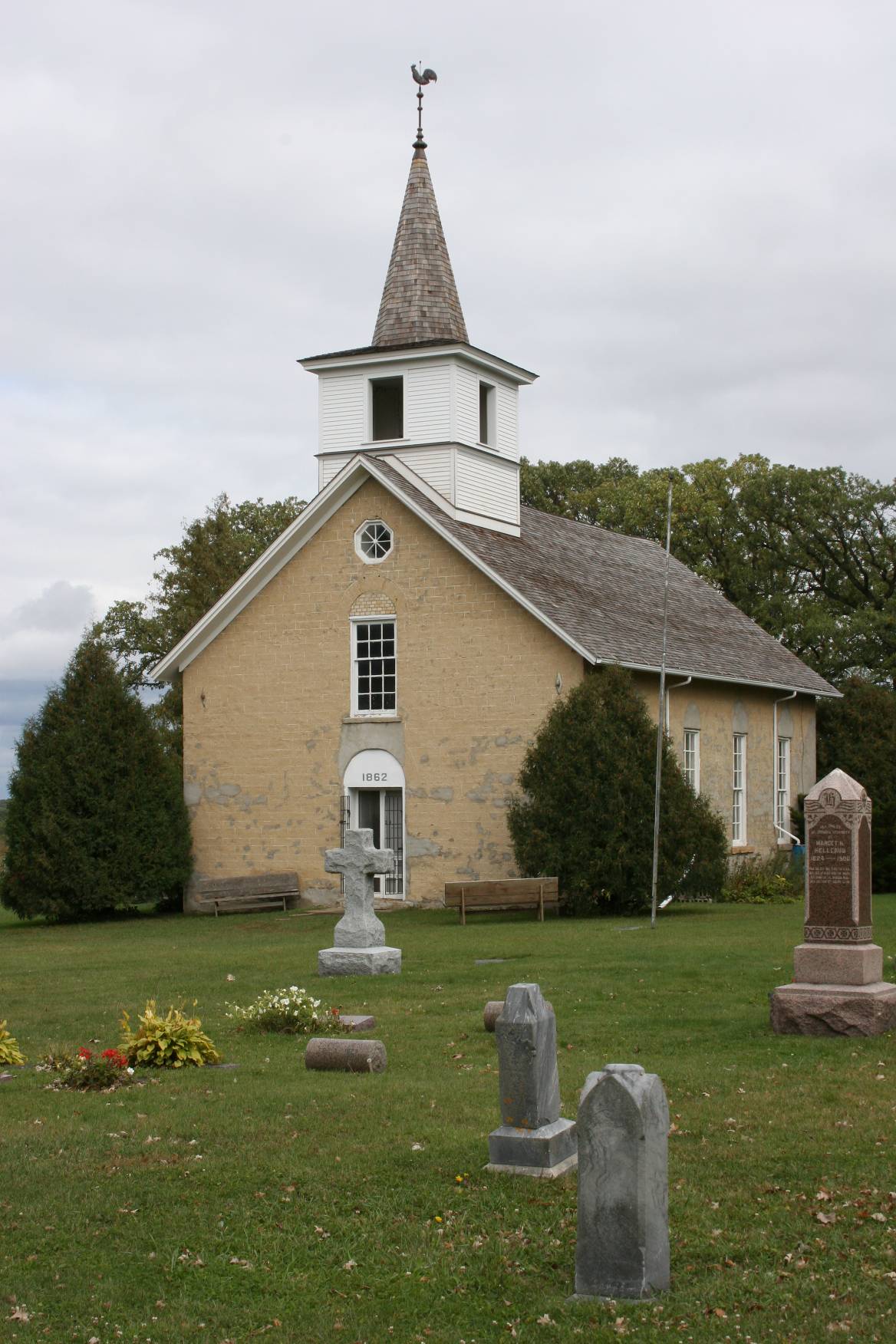
The 1862 stone church, the first one built at Valley Grove.

The 1862 stone church built by Norwegian immigrants.

WINFIELD RUDNINGEN drove three hours from Brainerd to see the graves of his great grandparents, Ole Syverson Rudningen and Gunneld Andersdatter.

They are buried in Valley Grove Cemetery, next to two historic Norwegian immigrant churches that sit atop a hill overlooking the picturesque countryside just northwest of Nerstrand.

Before Winfield arrives, my husband turns our car onto the gravel drive leading up to the churches. “I don’t think they want us in there,” Randy says as he observes the fence surrounding the church yard.

But I don’t hesitate. I throw open the car door and walk over to a double gate, lift the latch, swing open the gate and walk inside. It is that easy.

I am ecstatic that we can wander the church grounds and cemetery on this dreary Sunday afternoon, when gray skies loom heavy and occasional drizzles of rain force me to periodically cover my camera lens.

We are here only a few minutes when Winfield, his wife and two friends pull up to the church. Shortly thereafter, another car zooms up the gravel drive toward us. Valley Grove Preservation Society member Ken Sahlin has come to open the churches for a couple planning to be married here.

We cannot believe our good fortune, or rather, given the locale, the blessing of Ken’s arrival. If anyone knows the history of this place, it’s Ken.

Looking toward the steeple of the 1894 church.

Looking toward the steeple of the 1894 church.

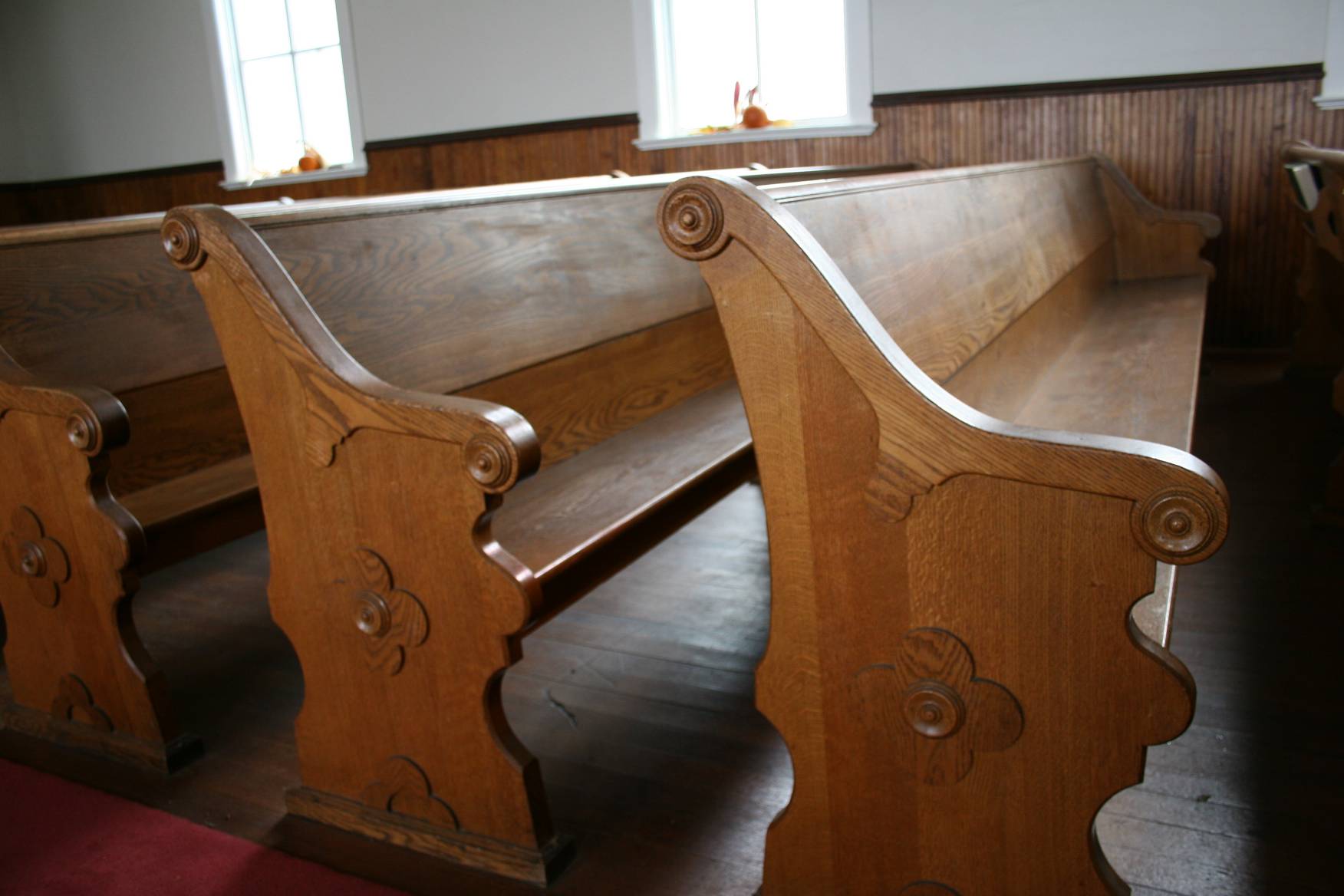
First we enter the 1894 white clapboard church which closed in 1973 and is on the National Register of Historic Places. Words cannot adequately describe the simplistic beauty of this sanctuary with its wooden pews, plain arched windows topped with points of color, the beautifully-restored organ, the alcove that shelters the white altar enhanced by a painting of the glorious, risen Lord.

As I tread almost reverently upon the burgundy aisle carpet that covers the wooden plank floor, I step upon rose petals left here from a wedding on Saturday. This church is a popular wedding site for couples seeking a place of history and of beauty. Tradition calls for the newlyweds to ring the church bell after the ceremony.

Then I climb the steep wooden stairs to the balcony. A sense of profound sadness sweeps over me. This could be the Lutheran church I attended as a child, the church now converted into apartments.

At least the folks around Valley Grove had the foresight to save this 1894 sanctuary and the next door 1862 stone church by forming a non-profit in 1974. In 2000, the Preservation Society stopped a planned housing development by acquiring 52 acres of land around the churches. Since then, 150 trees have been planted on the property and walking trails developed.

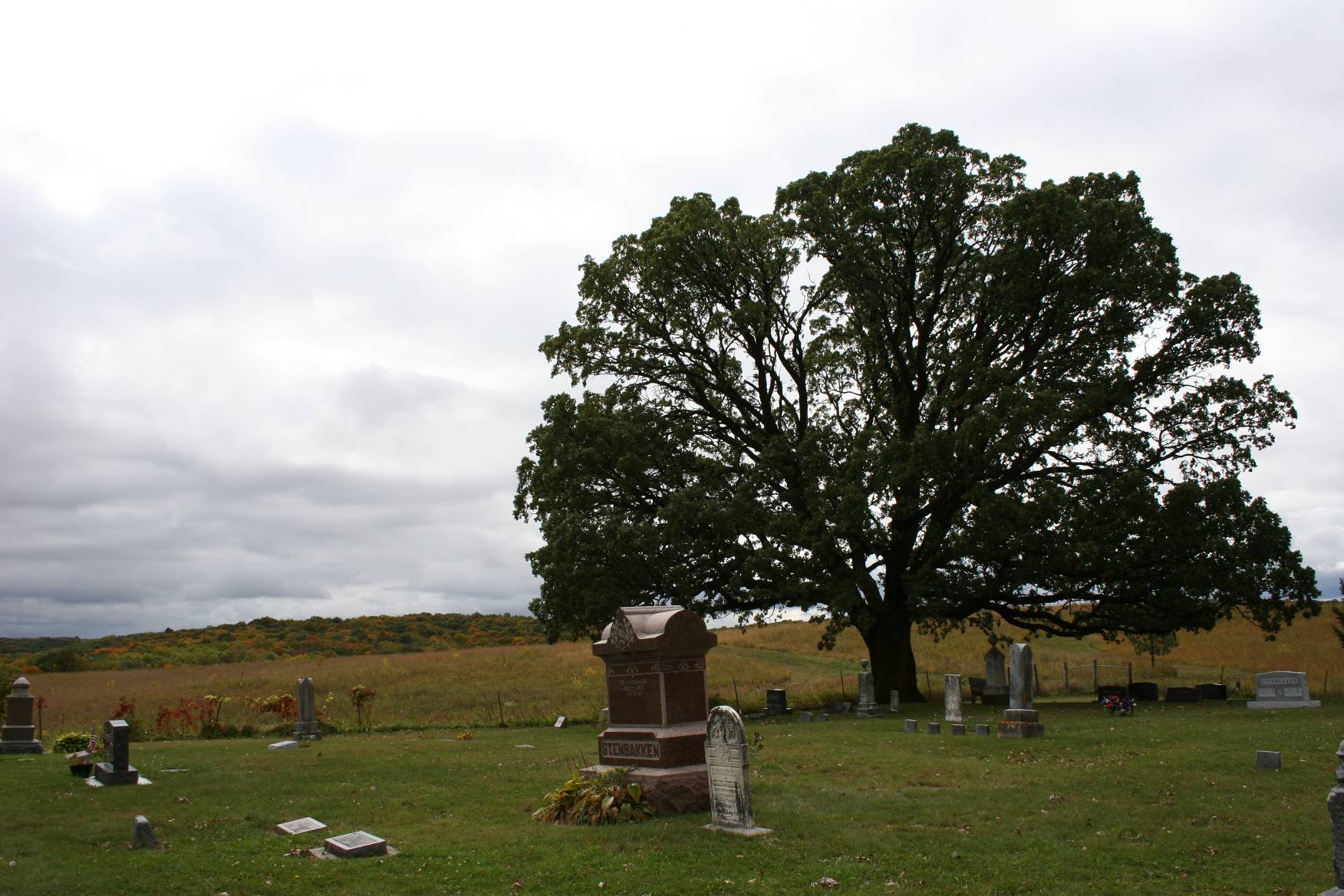
When Ken tells me about the trees and the Forest Legacy Program, I ask about the perfectly-shaped, sprawling oak tree in the southwest corner of the cemetery. It is, he says, 350 years old and hollow inside.  Chains keep limbs secure. Yet, there are no plans to remove the oak under which a Norwegian pastor baptized 52 children in 1859.

At every turn, Valley Grove sings with history. I hear it when Randy pulls on the thick, twisted rope that moves the bell. The sound resonates across this land of prairie and of oak savanna. How many times has this bell tolled in sadness at a funeral, in celebration at a wedding?

I hear more history from Ken, who talks of old pews and steeples and railings and the Society’s efforts to restore both churches. The recession has temporarily halted restoration because of a lack of funding.

And then I hear history in the voice of Winfield, who has come here to pay respects to his great grandparents. I stand beside him near Ole and Gunneld’s gravestone. How, I ask, do you pronounce Gunneld Andersdatter? He hesitates. I joke that I can’t pronounce the name because I am German, not Norwegian, like him.

Winfield bends close to touch the cold tombstone. His fingertips linger upon the letters. He tells me then that he cannot see the words because he suffers from macular degeneration.

Yet this great grandson has come all the way from Brainerd on a Sunday afternoon to see something which he truly cannot see. I nearly weep at the joy and sadness of it all, right here on this land where Ole and Gunneld lie buried.
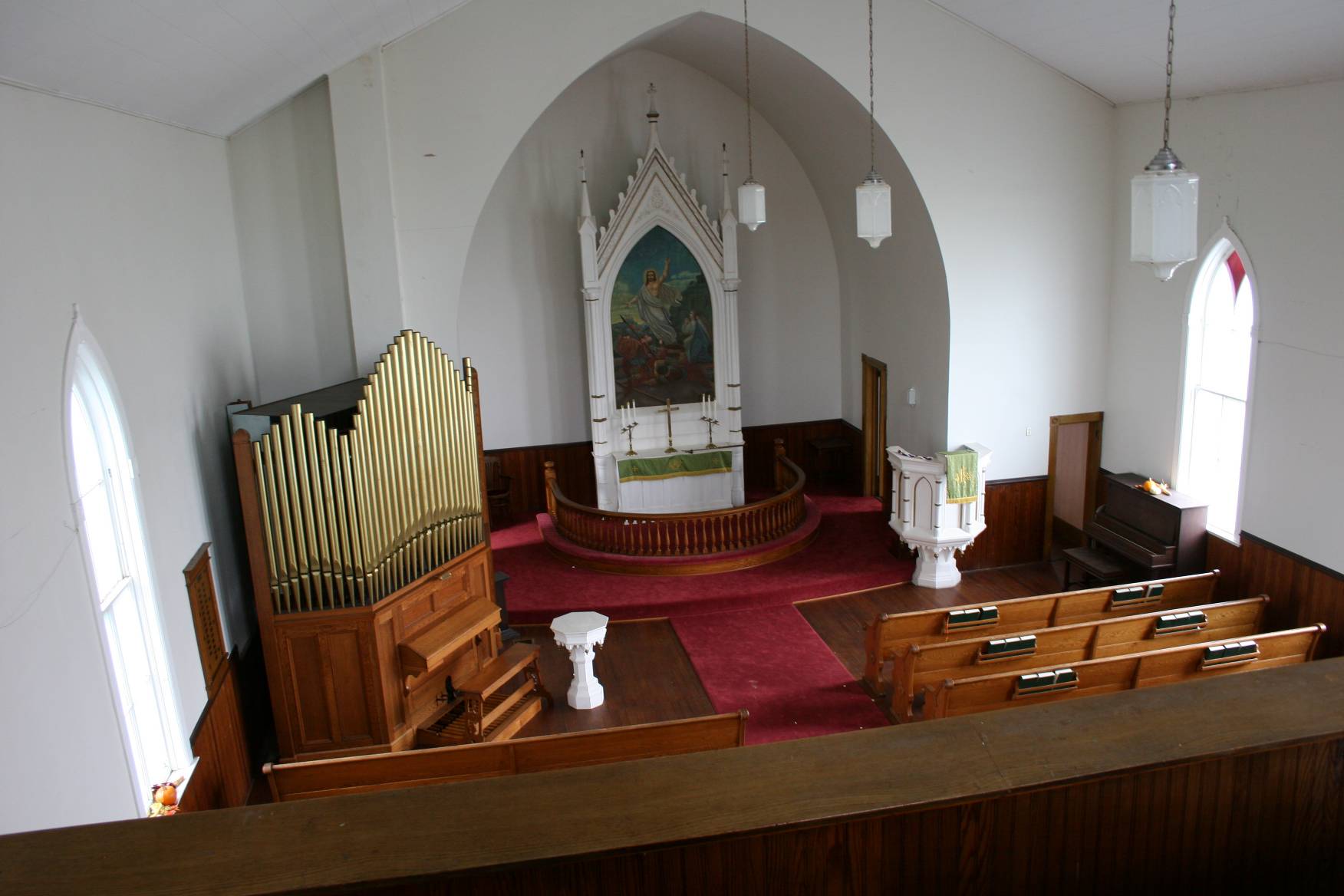
Simplistic Norwegian style inside the 1894 sanctuary, as viewed from the balcony.
Simplistic Norwegian style inside the 1894 sanctuary, as viewed from the balcony.

Original pews inside the 1894 church.
Original pews inside the 1894 church.

The majestic 350-year-old oak that anchors a corner of Valley Grove Church Cemetery.

A 350-year-old majestic oak anchors a corner of the Valley Grove Church Cemetery.

The tombstone of Ole Olsen, who died in 1897.

The tombstone of Norwegian Ole Olsen, who died in 1897.
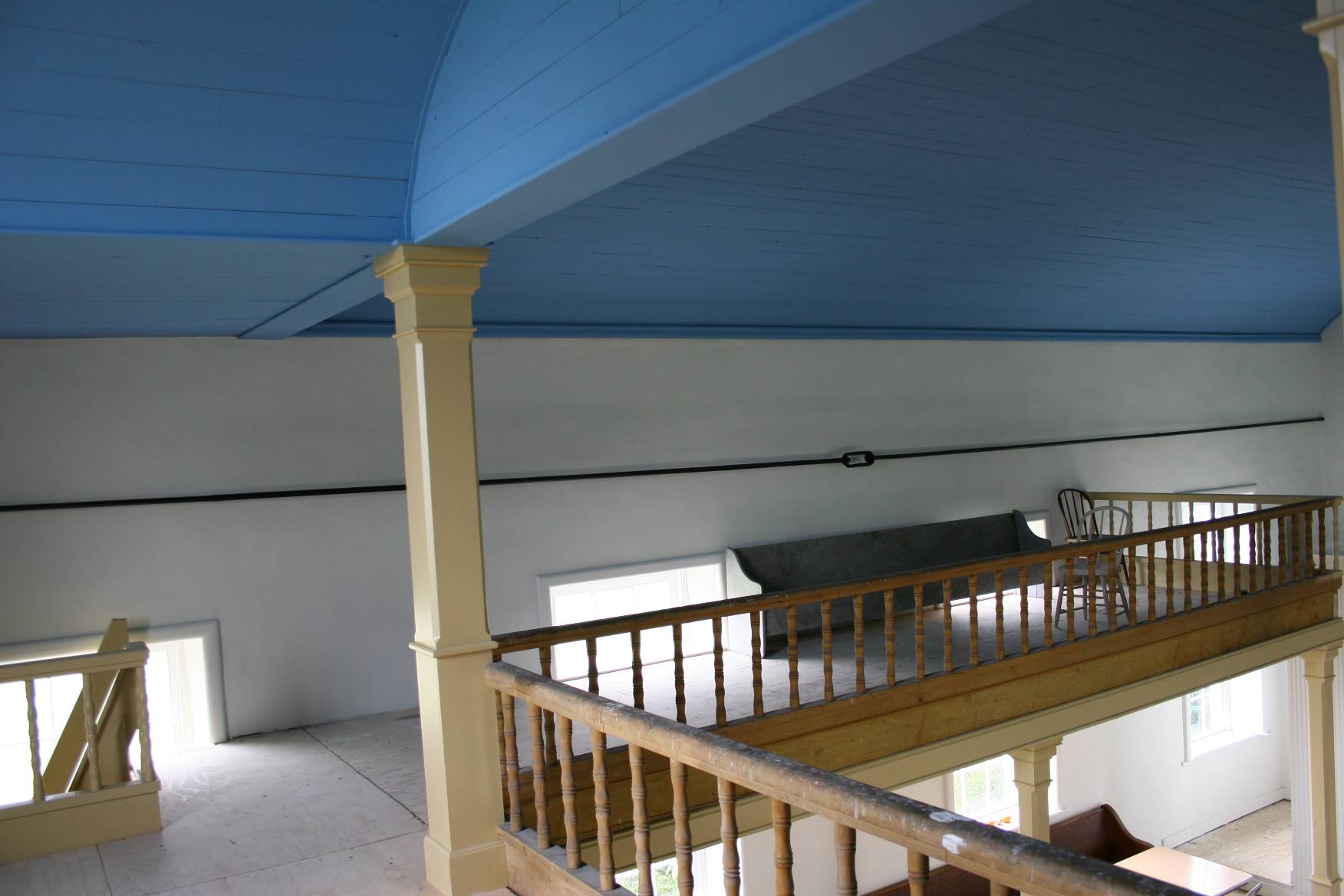
Inside the 1862 church, restoration continues, including work on the balcony area. The blue color is historically correct to the original church.

Inside the 1862 church, restoration continues, including work on the balcony area which is accessible by a steep ladder-like stairway. The blue color is historically correct to the original church.

The 1894 Valley Grove Church hosts weddings and other events, while the neighboring 1862 church serves as a social hall.

The 1894 Valley Grove Church hosts weddings and other events, including a popular Christmas Eve service. The neighboring 1862 church serves as a social hall.

For more information, go to www.valleygrovemn.com. Watch for another blog with more photos from Valley Grove.

© Copyright 2009 Audrey Kletscher Helbling


Hundreds and hundreds and hundreds of bricks, oh my October 8, 2009

Filed under: Uncategorized — Audrey Kletscher Helbling @ 8:14 AM
My son and I carried all of these bricks out of our house after my husband dismantled an old chimney.

My son and I carried all of these bricks out of our house after my husband dismantled an old chimney.

Little kids are temporarily banned from our house while this cardboard wall is in place in my dining room. Lean against this wall, and you will tumble into the basement.

Little kids are temporarily banned from our house while this cardboard wall is in place in the dining room. Lean against this wall, and you will tumble into the basement.

“DR. WILLE WOULDN’T like this,” I tell my husband as I lug the 5-gallon bucket of heavy bricks up the stairs, slowly, step by step.

“Well, you don’t have to do this,” Randy says.

“Yeah,” I mutter and continue my trudge to the top of the steps, through the kitchen, down the steps, through the garage and to the driveway. There I sort through the bricks—good ones added to the stack of teetering ones and broken ones dumped onto the pile of throwaways.

Already my hip aches and we have only just begun our work for the evening, dismantling the basement level of a useless brick chimney inside our house. We are nearly done with a project, though, that began in the attic, moved to a second story bedroom, down to the dining room and now, finally, to the lowest level.

My new right hip, the one I got 16 months ago, is getting a good work out.

With my physical stamina dwindling, so is my enthusiasm for this endeavor. Whose crazy idea was it anyway to remove this chimney so duct work for a new furnace can run through the vacant chimney chase area?

Originally, this seemed like a good idea. But I never realized that so many bricks comprise a chimney. I underestimated the weight of the bricks and just how many bucketsful my son and I would need to carry.

And then there’s the soot. I didn’t even think of it. The further we progress down the chimney, the blacker the bricks become with years of sooty build-up. With each swing of the hammer, dirt and grime sail into the air.

We don our face masks to keep from breathing in the particles. My glasses fog up and I labor to breathe. “I would hate to be a coal miner,” I tell Randy. “That would be the worst job.” He doesn’t respond, just keeps scooping dustpans full of grimy soot from the chimney.

All the while I am hounding my son to close the basement door. He complains, says it’s too hard to open and close the door constantly. But I am adamant. I have just spent all day yesterday washing every inch of my kitchen and dining room. The evening before, Randy had removed the chimney in that area, leaving a film of grime on every surface. I am bone tired and grumpy and determined to keep the soot confined to the basement.

By 10 p.m., we have finished this portion of the project. Randy cracks open a beer. I think he expects me to celebrate by chugging down half his brew. But I don’t. I take a sip, just enough to wash away the soot that has filtered through my mask. All I want is to shower, to lay my head on my pillow, to rest my sore hip and forget about the bricks piled on the driveway, the holes in the floors and walls, and the work that still lies ahead of us.

Bricks with character, soot and all.

Bricks with character, soot and all.

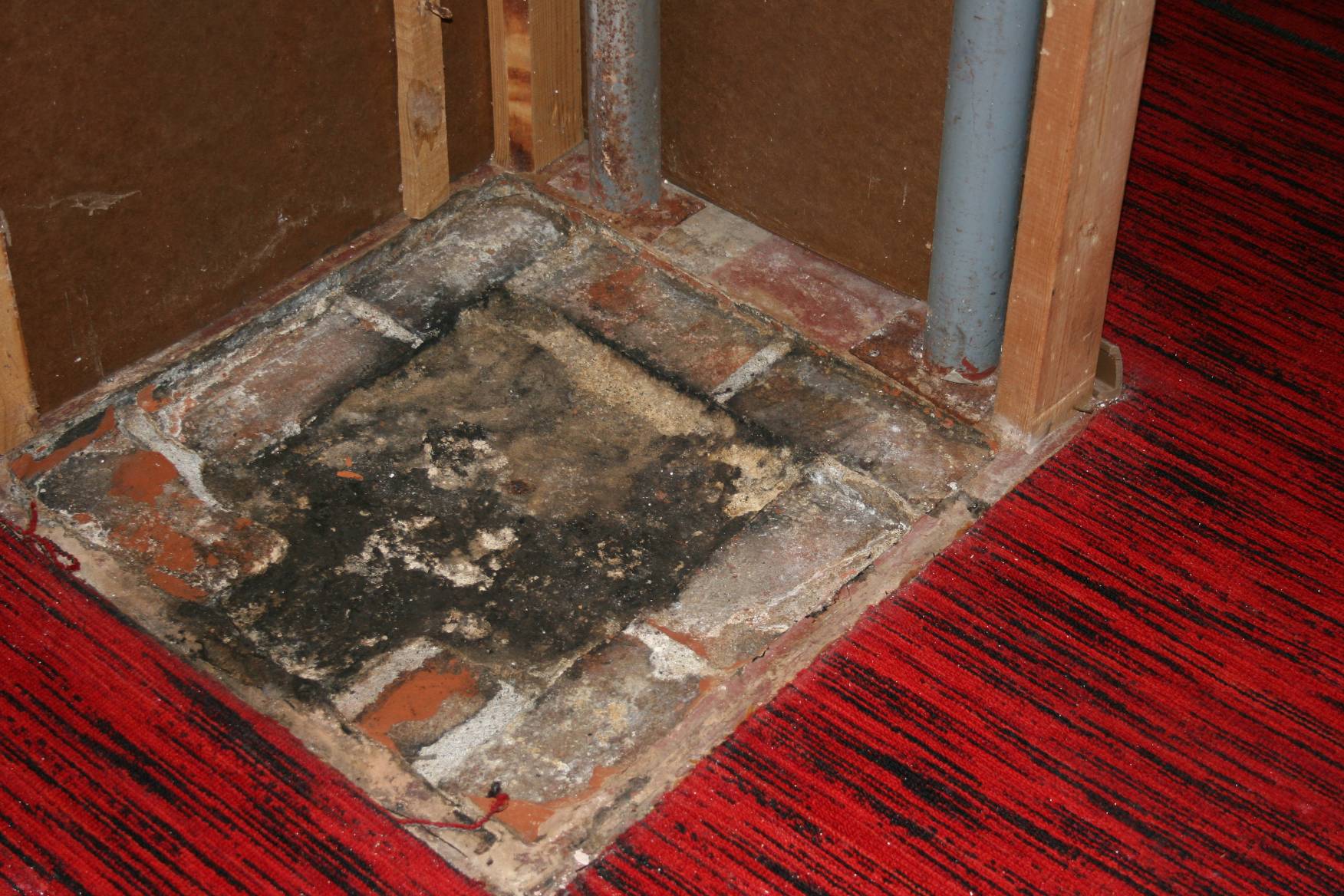
Finally, we reached the bottom of the chimney in the basement. And, yes, the red carpet has to go too.

Finally, we reached the bottom of the chimney in the basement. And, yes, the red carpet has to go too.

(If you are looking for bricks say to build a fire pit or for landscaping, or need bricks for fill, contact me. I’m into recycling, but mostly I want these bricks off my driveway.)

© Copyright 2009 Audrey Kletscher Helbling


True stories of bullying and tips on how to handle bullies October 7, 2009

Filed under: Uncategorized — Audrey Kletscher Helbling @ 8:42 AM

THOMAS IS 10 YEARS OLD and these are his words:

“It makes me feel bad and sad when someone calls me names or makes fun of me. I wanted to quit one of my favorite activities because a boy was being mean to me. I talked to my Dad and Mom about it and they talked to the teachers for me. It got a lot better. I learned a lot from a website. I will not let anyone bully someone else.”

Anna is 53 and these are her words:

“Even after all these years, the mean words, the taunts, the teasing remain with me. Nearly every afternoon I came home from school crying, not wanting to go back the next day. I’m not sure why I was picked on, but I think it was because I was a farm kid who didn’t quite fit in with the town crowd. Only when my independent school consolidated with another district did my nightmare end. At my new school, nearly everyone lived on farms. Finally, I was accepted. Yet, the pain inflicted upon me by some of my junior high classmates has never left me, even after all these decades.”

Kate is a mother and these are her words:

“Our son, is an amazing person… giving, thoughtful, unique, smart and just doesn’t fit into your standard role of boy. He has a creative side and an amazing voice. We have worried: Do we encourage him to be who he is even though we know that he will get some resistance from other kids….or do we constantly crush his spirit and make him fit into the expected norm? We decided to encourage him to be who he is, but warn him that sometimes people may judge him on how he acts or who he is…

He is now 10, in the choir and loving it. He started getting called names by another boy in the choir. It was another one of those parental decisions that are so hard to make. Do you let him handle it on his own or step in and discuss it with the staff? After he came home the second time and told us he wanted to quit choir, we knew we had to step in. We talked to the instructor, who had already addressed some behavior issues. We also discussed a plan for our son—who to talk to if the behavior happens again. The boy apologized to our son and then started in again. Our son followed the plan. It took some time, and a lot of patience, but the situation has improved so our son is happy going to choir again.

Here’s what I learned from the experience: I resisted talking to the instructor because in our society, we teach children not to tattle. Many children do not tell when they are being bullied. I learned that someone is bullying when they are intentionally making someone else sad. I also learned that if you don’t address the behavior, it may not go away. We found a website that helped us to understand that it is not OK to be a bystander and let someone else bully. I encourage you to role play with your children on how to react to someone bullying them or even just how to respond to negative comments.”

The above accounts are all true. Thomas and his mom, Kate (not their real names), live in central Minnesota. Anna is me.

These examples of bullying speak for themselves.

For more information about bullying and advice on how to help your kids, check out the websites recommended by Kate: www.PACERKidsAgainstBullying.org and www.PACERTeensAgainstBullying.org

Students from Convent of the Visitation School in Mendota Height, Delano Middle School and Delano High School were involved with producing materials for the above PACER websites.

Special thanks to Kate and Thomas for sharing their stories with Minnesota Prairie Roots readers during National Bullying Prevention Awareness Week Oct. 4 – 10. Bullying must be addressed. So do your part to prevent and end bullying.


Inside the colorful Los 3 Reyes Bakery in Faribault October 6, 2009

Filed under: Uncategorized — Audrey Kletscher Helbling @ 9:50 AM
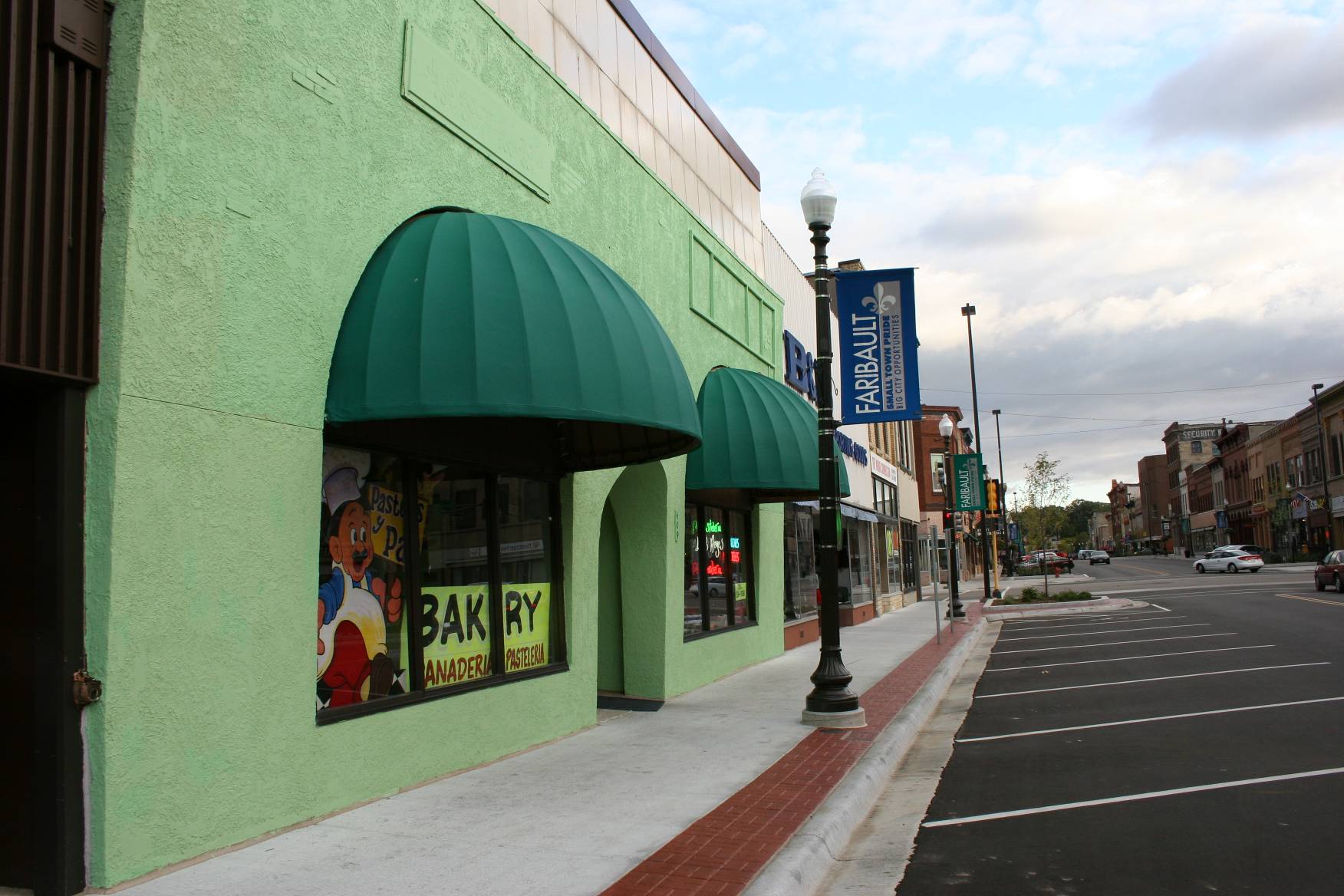
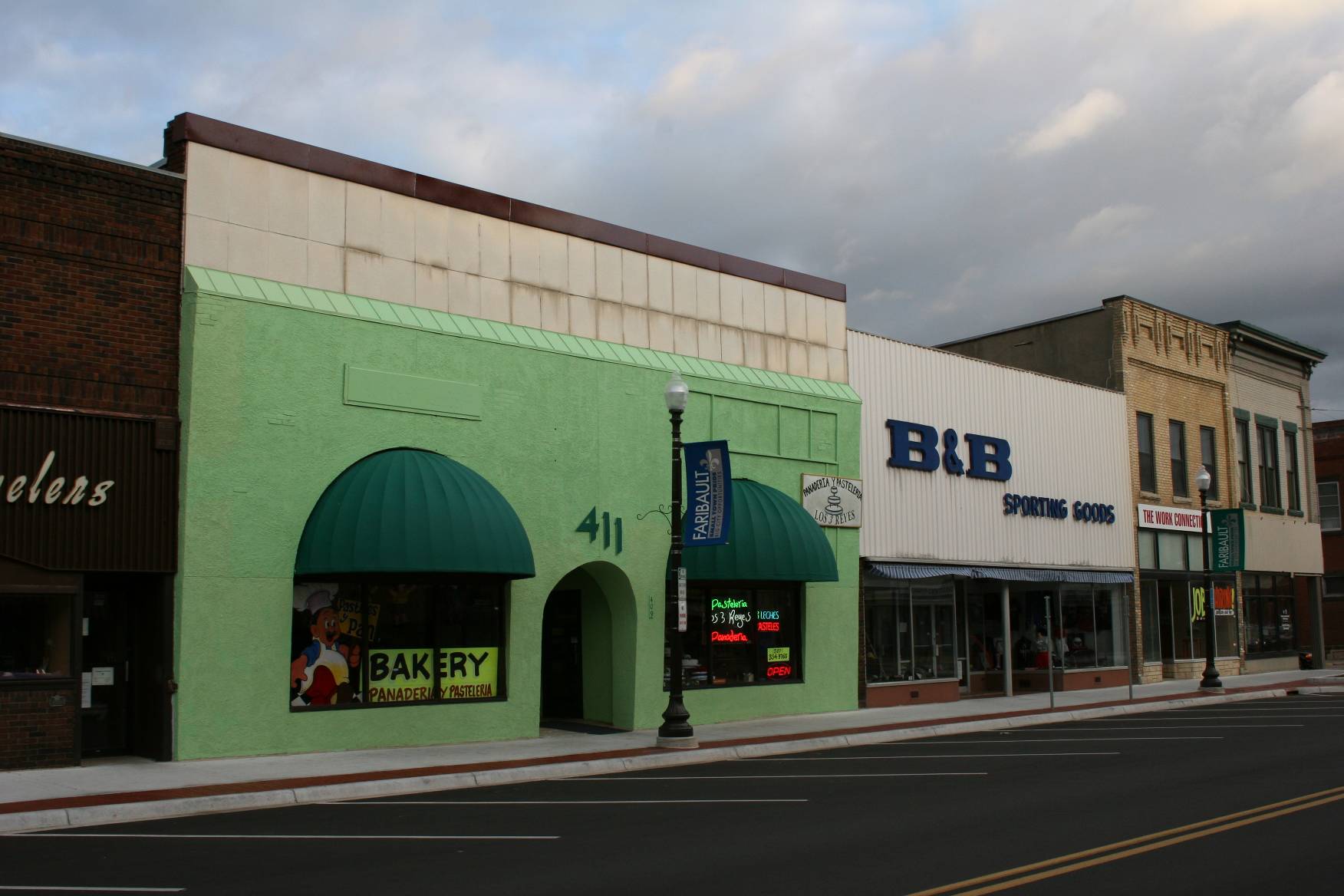
Los 3 Reyes Bakery, at the center of a controversy over paint color in historic downtown Faribault.

Los 3 Reyes Bakery, at the center of a controversy over paint color in historic downtown Faribault.

Stacks of pastries and bright colors greet customers inside the bakery.

Stacks of pastries and bright colors greet customers inside the bakery.

“DO THEY HAVE DOUGHNUTS?” Randy asks me.

I pause, think. “I didn’t see any,” I tell my husband after visiting Los 3 Reyes Bakery in Faribault. The business is at the center of a dispute over exterior paint color and I have come to photograph the vivid green building. (See my blog, “A controversy over color in downtown Faribault,” posted Sept. 30 on Minnesota Prairie Roots.)

This is not your typical Minnesota bakery, and if there are doughnuts, I missed them.

But I observe an abundance of other treats to tempt my sweet tooth inside this bright, cheery ethnic bakery with the checkered floor. Rows of huge conchas line baking sheets. I don’t know Spanish, so I ask Javier, who is manning the business, to write down the word for me. “Shell,” he says. I look again at the pastries and see that they resemble shells.

I point to another pastry. He writes down besos. Later I use Google translate to learn that the word means kisses.

Next, I photograph gallinas, which translates to hens.

Javier smiles all the while I am photographing. He offers to remove a sign from the glass that protects racks of pasteles, tempting cakes topped with strawberry glaze or carefully arranged rings of kiwi and strawberries and peaches. These are works of art, almost too pretty to eat, I think.

I tell Javier that I want him to leave everything just as it is, to change nothing. We talk some about the issue of color and he says the bakery is getting support to keep the bright green exterior despite the objections of some. I tell him I like the color too.

The longer I am inside this bakery, the more I believe the hue, a green color popular in Mexican culture, fits this place.

This bakery speaks to happiness. Above me colorful piñatas dangle from the ceiling and sit atop display cases. The pastries and cakes, so foreign to my Minnesota bakery standards of doughnuts, long johns and bismarcks, simply draw me in with their ethnic allure. The entire bakery exudes warmth and smells absolutely delicious.

And then there is the bakery name—Los 3 Reyes Bakery. I turn to my daughter, Miranda, who is majoring in Spanish in college and who lived in Argentina for six months, for help. Los Tres Reyes Bakery, she tells me, likely refers to the Three Kings bearing gifts for children on January 6. This is part of Latin American culture, similar to Santa delivering gifts on Christmas.

I have learned so much already about differences in culture simply by walking through the doors of the bright green Los 3 Reyes Bakery at 409 Central Avenue in historic downtown Faribault.

Selecting treats at Mariano Perez' bakery.

Selecting treats at Mariano Perez' bakery.

Rows of conchas.

Rows of conchas.

Colorful pinatas are also sold at Los 3 Reyes Bakery.

Colorful pinatas are also sold at Los 3 Reyes Bakery.

Gallinas, another delectable offering.

Gallinas, another delectable offering.

Colorful pasteles on display.

Tempting pasteles on display.

(The Faribault City Council’s Joint Committee meets at 7:15 tonight in the public meeting room of city hall to discuss several issues, including “Regulation of downtown building colors,” according to agenda information posted on the city website.)

© Copyright 2009 Audrey Kletscher Helbling

 

Grace under the water tower October 5, 2009

Filed under: Uncategorized — Audrey Kletscher Helbling @ 10:23 AM
This sign on the corner of a Main Street business in Nerstrand directs motorists to Grace Lutheran Church.

This sign on the corner of a Main Street business in Nerstrand directs motorists to Grace Lutheran Church.

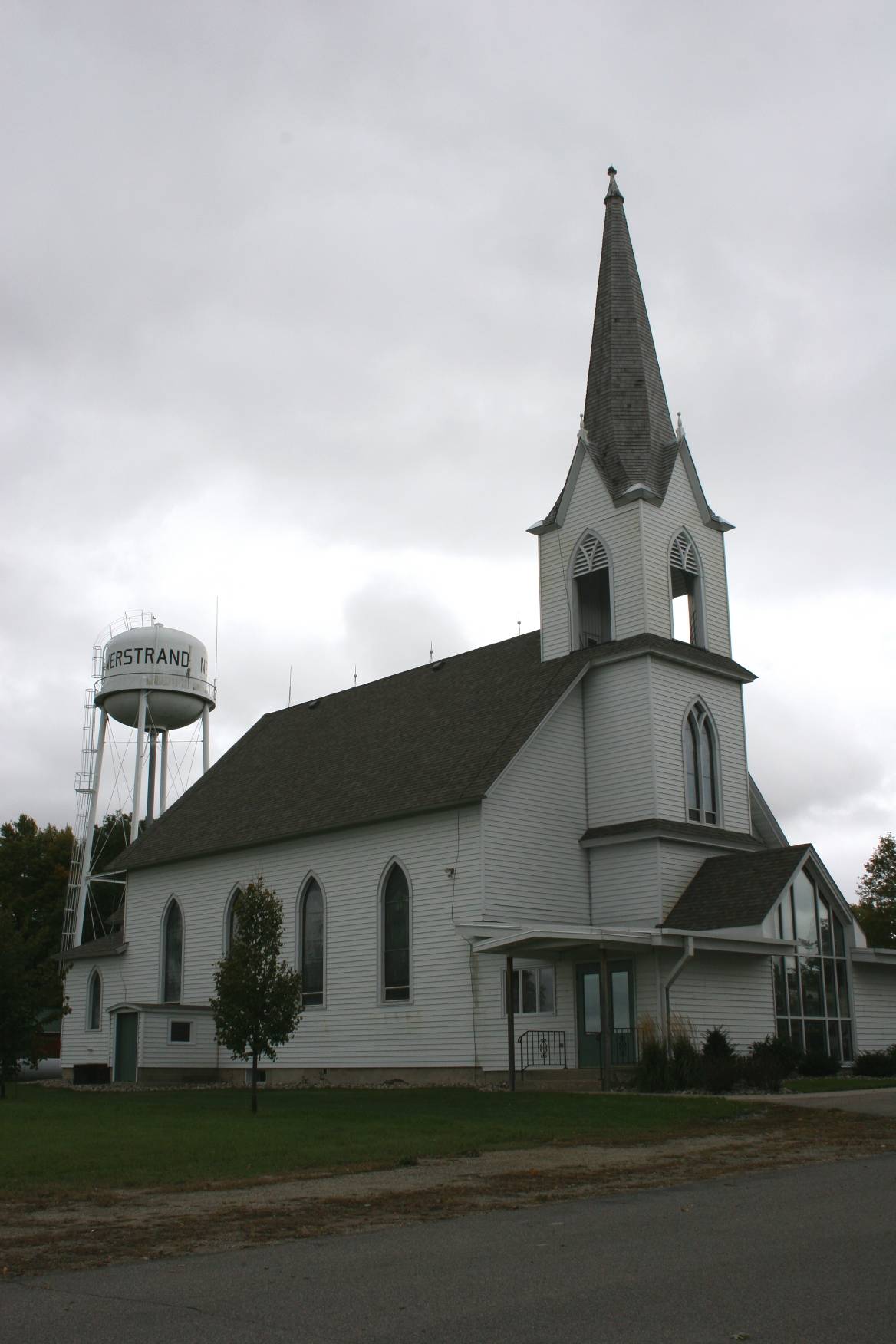
Grace Lutheran Church, the church under the water tower in Nerstrand.

Grace Lutheran Church, the church under the water tower in Nerstrand.

I HAD INTENDED today to write about the beautiful fall colors here in southeastern Minnesota. That was the plan. But plans don’t always go as planned.

Although some leaves are turning shades of gold and orange, most remain green, as my husband and I discovered Sunday while driving northeast of Faribault to see the colors.

Despite our disappointment, we still had a delightful afternoon that included churches, old buildings, a school, winding gravel roads, wooly caterpillars, a fallen tree and lots more. I figure I got enough material for about a half dozen blogs from our several-hour auto tour. I see stories and photos in places often overlooked by others.

So, to kick off this motoring series, we’ll stop briefly in Nerstrand, population about 230. Like most small Minnesota towns, Nerstrand’s skyline is marked by grain elevators, the water tower and church spires.

And just in case you can’t find Grace Lutheran Church, there are signs to direct you to the church under the water tower, like one posted on a corner brick building along Main Street. I thought the sign rather clever and Lake Wobegonish.

Speaking of signs, let’s detour to Rice County Road 20 between Cannon City and Northfield. If you’re looking for a house to buy, here’s a real fixer-upper.

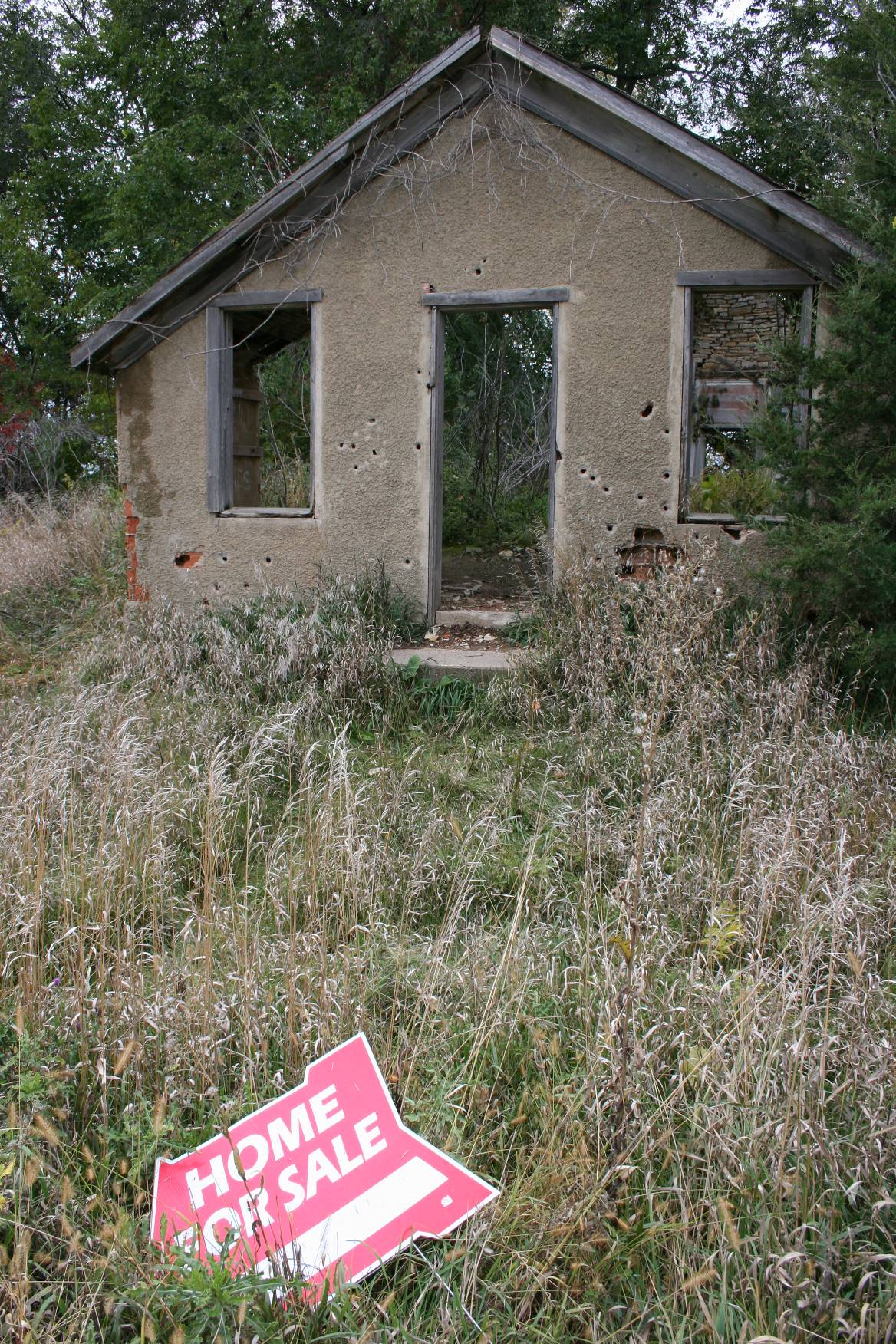
The "for sale" sign actually directs potential buyers to a house just down the road. But I thought the signs placement in front of this dilapidated school quite humorous.

The "for sale" sign actually directs potential buyers to a house just down the road. But I found the sign's placement in front of this dilapidated building quite humorous.

This bullet-ridden "home" will need new windows. But you can get a federal energy tax credit to offset the cost.

This bullet-ridden "home" needs new windows. But you can get a federal energy tax credit to offset the cost.

The place will need a new roof too, but there's potential here.

The place needs a new roof too, but there's potential.

(I’ll take you back to Nerstrand in future blogs. There’s much more to see in this charming rural community located near Nerstrand Big Woods State Park, typically one of southern Minnesota’s most colorful parks in the fall. Colors simply were not at their peak on Sunday.)

© Copyright 2009 Audrey Kletscher Helbling

 

An outstanding performance of Frankenstein by The Merlin Players October 3, 2009

Filed under: Uncategorized — Audrey Kletscher Helbling @ 12:42 PM

THE WEATHER SET the mood for the evening in dreary gray skies that sputtered occasional drizzle and in a damp cold that chilled to the bone.

Inside the Paradise Center for the Arts in downtown Faribault, theater-goers settled in for the kick off of The Merlin Players 15th season with the production of Frankenstein. The director and cast couldn’t have asked for more perfect October weather as the play opened to a night-time graveyard scene complete with rolling fog.

Using appropriately-selected dramatic, if not frightening, music, flashes of lightning and booms of thunder and other special effects, along with an impressive rotating set, the director, cast and crew created a mood that could best be described as intense.

The entire production evoked an edge-of-your-seat response.

But on stage, Jake Boyd, who played Victor Frankenstein, was getting a bit worried. He told me after the show that he was freaking out because he wasn’t hearing an audience reaction. However, he soon realized, he said, that theater-goers were really getting into the show.

Exactly.

From the opening scene to the very end, this version of Mary Shelley’s original 1818 novel proved entertaining, thought-provoking and even emotional. And that is to director Daniel Rathbun and the cast and crew’s credit.

In one especially touching scene, De Lacey, a blind vagrant, befriends The Creature. The interaction between the two, played by Tim Vizina and Craig Berg, speaks to every person who has ever been shunned or teased or avoided because he/she is different. The two actors powerfully convey the importance of understanding and compassion and acceptance.

It was like that through-out the entire show—moments that prompted reason to pause and consider issues like life and death, relationships and priorities, social status, selfishness, power and much more.

“What have we done, oh, Creator?” The Creature asks of Victor Frankenstein, the seemingly mad scientist who created the monster in his tower laboratory.

What The Merlin Players have done, oh, Creator, is create one memorable performance through outstanding use of special effects, exceptional sets, top-notch directing and give-it-their-all acting by the performers.

#

Plan now to see Frankenstein, which is showing on Oct. 3 and 4 and 8 – 10. Reserve your tickets by calling The Paradise Center for the Arts at (507) 332-7372. For more information, log on to www.paradisecenterforthearts.org or www.merlinplayers.org. While this play has plenty of scary moments, it is appropriate for those as young as upper elementary grades. As one mom who was attending with her family on Friday night told me, her young son loves this kind of stuff. He was, however, looking for the bolts in The Creature’s head. Sorry, no bolts, just an ugly scar.


The Sleeping Beauty of Brennyville October 2, 2009

Filed under: Uncategorized — Audrey Kletscher Helbling @ 9:42 AM
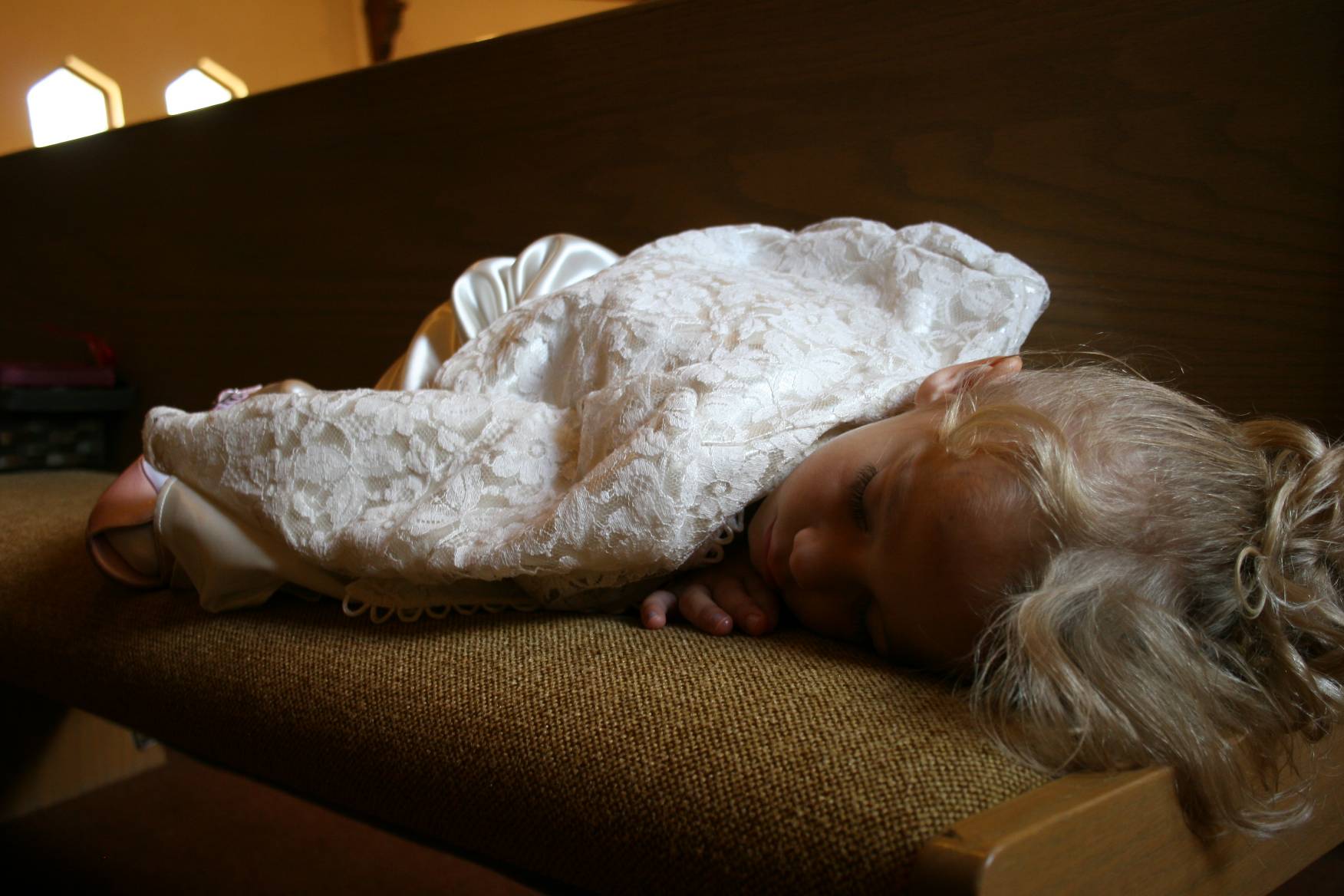
This photo is a bit dark because I shot without flash. But I didn't want to awaken Keira as she slept on a church pew at St. Elizabeth's Church in Brennyville.

This photo is a bit dark because I shot without flash. But I didn't want to awaken Keira as she slept on a pew at St. Elizabeth's Church in Brennyville.

WHENEVER I HEAR that a bride is including a flower girl in the wedding party, I worry. These typically preschool girls are usually at just the right age for throwing a fit or stealing the show rather than behaving like princesses.

So when I learned that my great niece, almost 4-year-old Keira, would serve as a flower girl in her Aunt Kristina’s wedding, I held my breath.

But I needn’t have worried. Keira was the perfect flower girl. She slept through nearly the entire wedding service.

And that was just fine, says her mom, Heidi, who was a bridesmaid. The lengthy afternoon nap kept Keira happy and content during the reception. Exactly what a mom, who says she wanted to pretend she didn’t have kids for the event (yeah, right, Heidi), wanted.

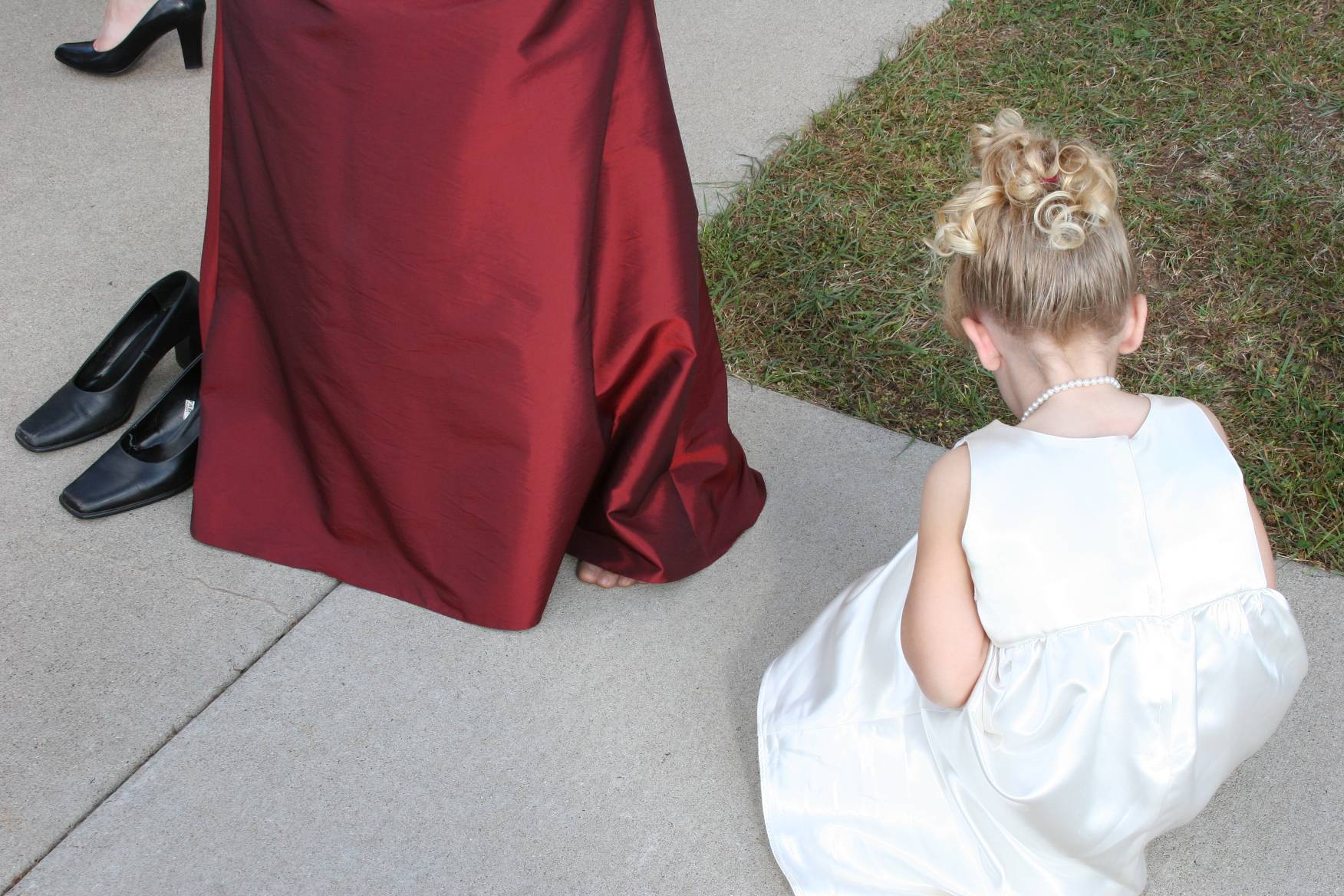
I couldn’t resist snapping photos of the sleeping beauty and then more pictures after Keira awoke. The images speak for themselves of a sweet little flower girl acting mostly like a princess on her godmother’s wedding day. That is until Keira started squishing ants on the sidewalk outside St. Elizabeth’s Church in Brennyville.

Kids look so sweet when they're asleep, and even cuter when dressed to the nines.

Kids look so sweet when they're asleep, and even cuter when dressed to the nines like Keira. Her dress was made from her Great Grandma Betty's bridal gown.

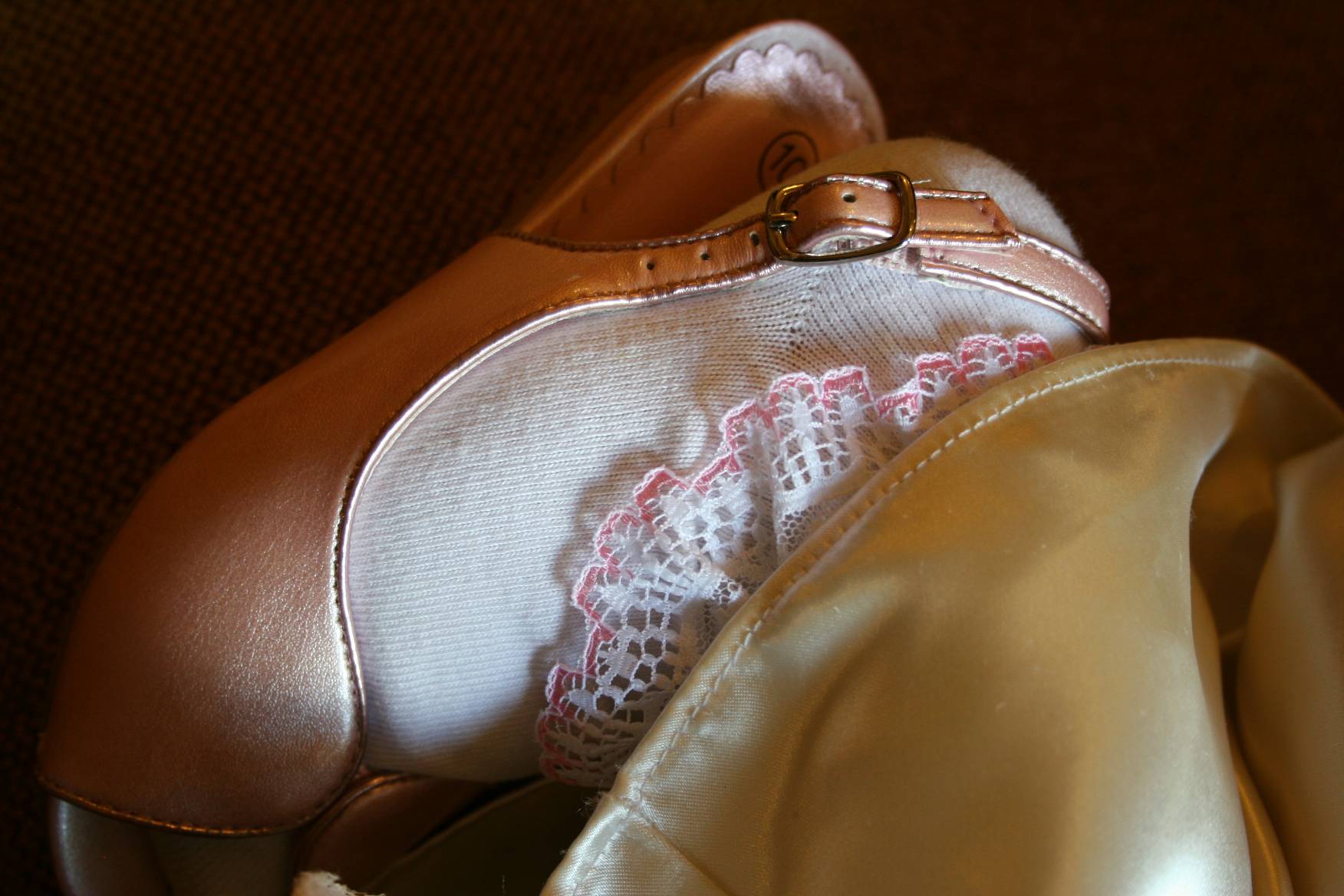
Keira's sugar-and-spice, dainty shoe.

Keira's sugar-and-spice, dainty shoe.

And then, half way through the photo shoot, the sleeping Keira turned. Her dress was made from her Great Grandma Betty's wedding gown.

And then, half way through the photo shoot, the sleeping Keira turned.

The sweet love of mother and child, Heidi and Keira.

The sweet love of mother and child, Heidi and Keira.

Keira squishes ants.

Keira squishes ants.

Keira and her brother, Tristan, who was a ring bearer, run up the steps of St. Elizabeth's Church in Brennyville.

Keira and her brother, Tristan, who was a ring bearer, run up the steps of St. Elizabeth's Church in Brennyville.

© Copyright 2009 Audrey Kletscher Helbling
 

A controversy over color in downtown Faribault September 30, 2009

Filed under: Uncategorized — Audrey Kletscher Helbling @ 8:36 AM
Panaderia y Pasteleria, a bakery at the center of a controversy over paint color choice in downtown Faribault.

Los 3 Reyes Bakery, at the center of a controversy over paint color choice in Faribault.

MARIANO PEREZ, owner of Los 3 Reyes Bakery in historic downtown Faribault likes the bright green color of his bakery.

“In my country, they use this color every house,” says Perez, a native of Morelos, Mexico. It is, he adds, a “happy color.”

But not everyone in Faribault appreciates the vivid storefront in the 400 block of Central Avenue, an area of primarily neutral brick buildings. Perez was approached about repainting the bakery a more subdued green after some business owners took issue with the color, according to a report in The Faribault Daily News. Businesses even donated monies for repainting when Perez indicated he could not afford to redo the recently-painted bakery.

The entire situation has created quite a stir in the community based on comments made on The Daily News website. And rightfully so. Why should Perez have to repaint the building? He’s breaking no laws, ordinances or historic district guidelines.

Rather, here is a man who simply wanted to improve the building he rents and did so by choosing a paint color common to his culture. So what if it doesn’t resemble every other building in the block or downtown?

You might expect Perez to be upset about the whole controversy, but surprisingly, he isn’t. “I don’t want to change (the color), but I do what city say,” he tells me. “We can paint any color. I like to see the building nice. It doesn’t matter to me. No problem to change color.”

But, Perez adds, “More people like it. I think two people don’t like it. I don’t know why they don’t like it.”

Numerous people have stopped at his business, encouraging him to keep the “very nice color,” Perez says.

I agree. He should keep the “happy color” that reflects his culture, and his demeanor. He’s done nothing wrong. Perez is living the American dream by running his business in a free country. He’s bringing business to downtown Faribault. He’s also meeting a need in the community.

That said, I admire Perez’ positive attitude and genuinely sincere and cooperative spirit. I doubt I could be as gracious. I expect that had this been anyone else, lawyers would already be engaged in the issue.

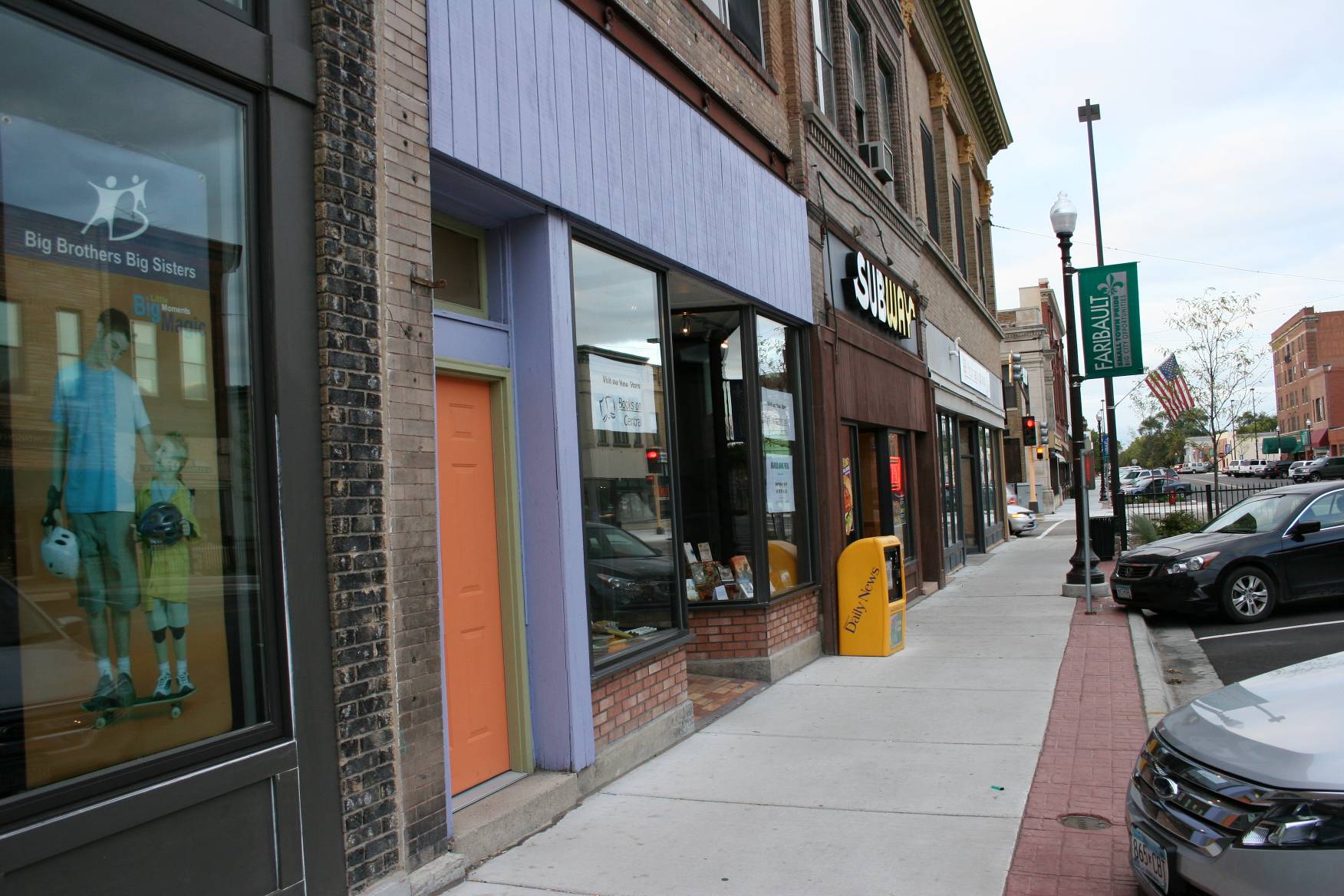
Half a block from the bakery, Books on Central sports new coats or purple and orange paint. Will this building be next on those pegged for a new paint job?

Half a block from the bakery, Books on Central sports new coats of purple and orange paint. Will this building be next on those pegged for a paint make-over?

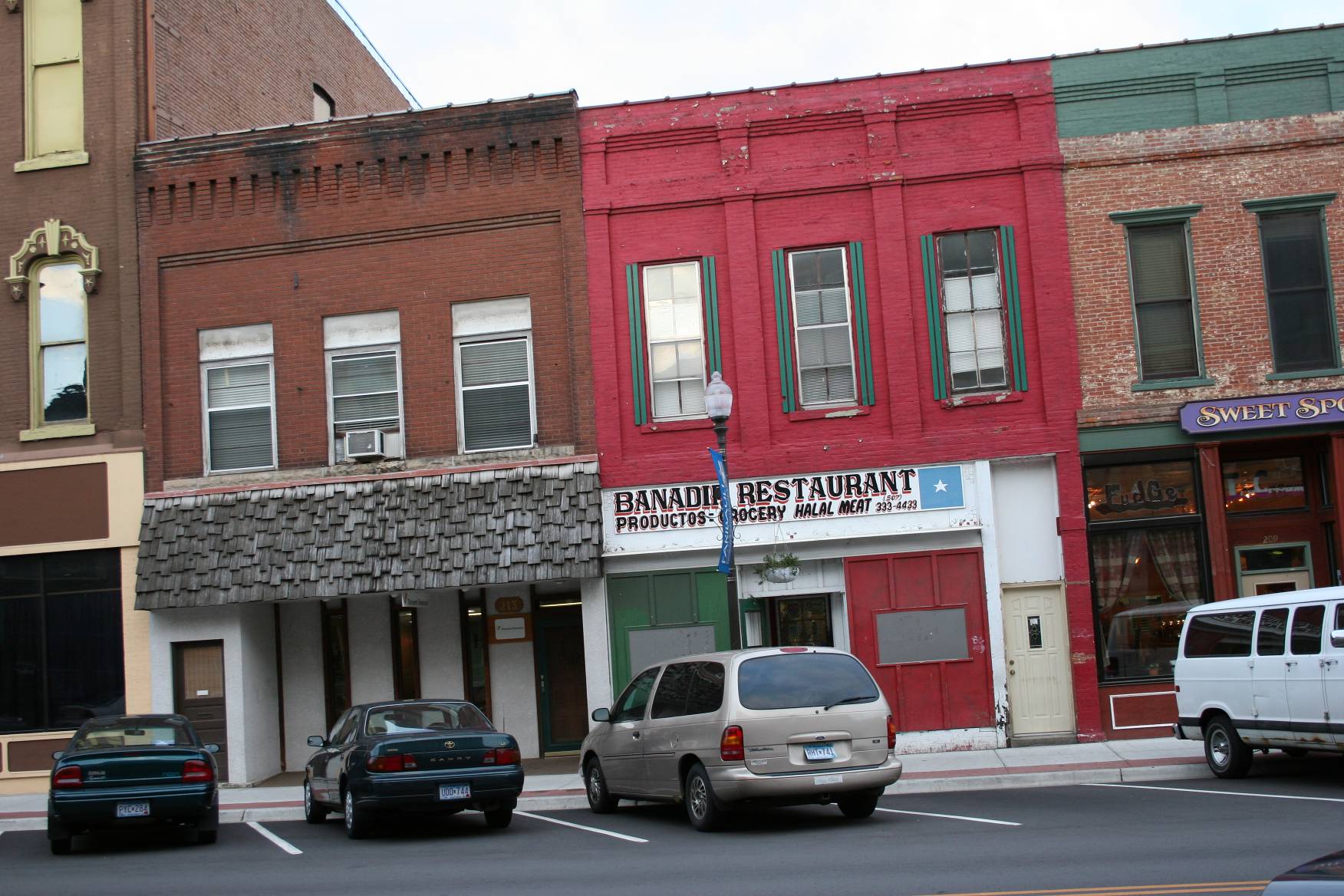
In the 200 block of Central Avenue, Banadir Restaurant offers a colorful storefront to those patronizing the Somali business.

In the 200 block of Central Avenue, Banadir Restaurant offers a colorful storefront to those patronizing the Somali business. Will this be the next target?

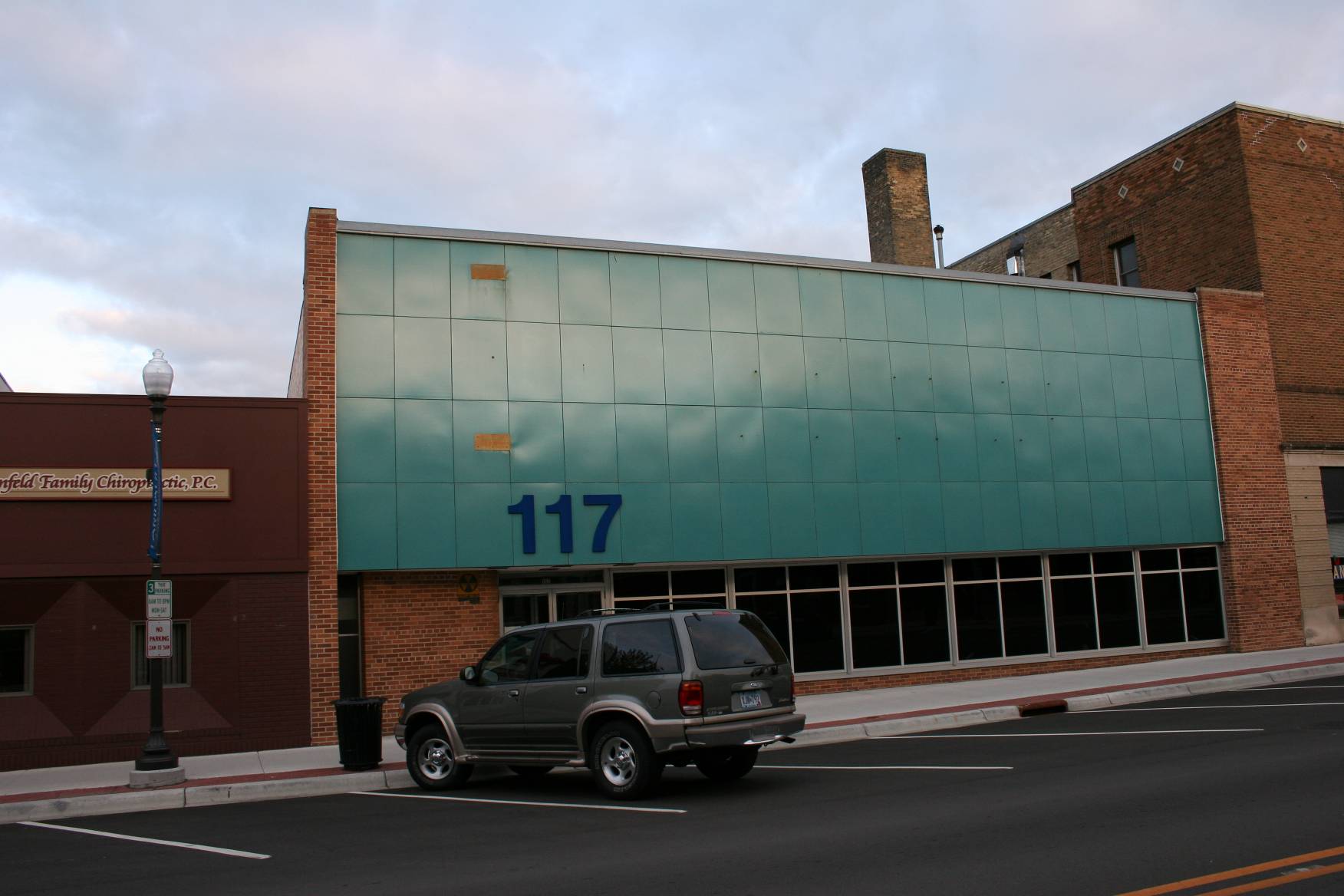
I've never known what business occupies 117 Central Avenue, but the color choice certainly makes it stand out from other buildings. Should this get a new facelift too?

I've never known what business occupies 117 Central Avenue, but the color choice certainly makes it stand out from other buildings. Should this get a face lift too?

Personalizing, I can't stand the color of these government-mandated recycling bins, which clutter the Faribault landscape. I also don't like the blue color the city paints bridge railings. And once my neighbor painted her house a hideous bright blue. I have nothing against blue, but this simply illustrates that everyone prefers different colors. Now, if only we could take up a collection to buy say green recycling bins...

Personally, I can't stand the color of these government-mandated recycling bins, which clutter the Faribault landscape. I also don't like the blue color the city paints bridge railings. And once my neighbor painted her house a hideous bright blue. I have nothing against blue, but this simply illustrates that everyone prefers different colors.

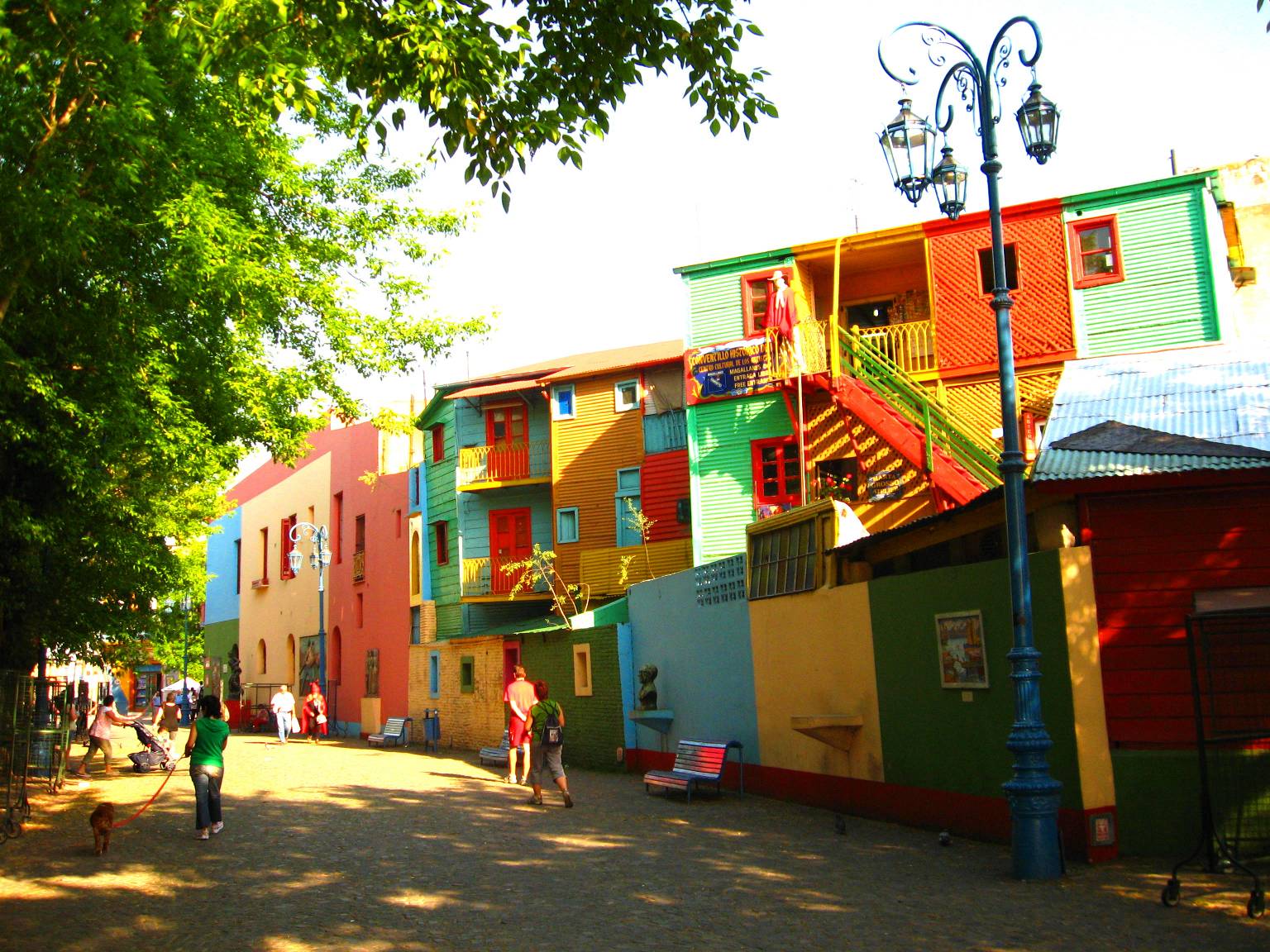
You'll find brightly-colored buildings in the La Boca neighborhood of Buenos Aires, Argentina. Although primarily a tourist destination today, the area is surrounded by houses with painted sheet walls of different colors. Photo by Miranda Helbling.

You'll find brightly-colored buildings in the La Boca neighborhood of Buenos Aires, Argentina. Although primarily a tourist destination today, the area is surrounded by houses with painted sheet walls of varying colors. Photo by Miranda Helbling.

Argentina's presidential palace, La Casa Rosada, is painted pink. This is the back of the palace in a photo taken by Miranda Helbling.

Argentina's presidential palace is painted pink. This is the back of La Casa Rosada in a photo taken by Miranda Helbling. Different cultures, different colors.

So what do you think? Should Mariano Perez repaint his bakery a subtler green?

So what do you think? Should Mariano Perez repaint his bakery a subtler green or leave the color he chose?

(Watch for a future blog featuring photos taken inside this charming ethnic bakery.)

© Copyright 2009 Audrey Kletscher Helbling and Miranda Helbling


Meander to the Meander in western Minnesota

Filed under: Uncategorized — Audrey Kletscher Helbling @ 8:26 AM
A native willow chair welcomes Meander visitors to Stony Run Woods near Granite Falls, the studio of Dale and Jo Pederson. Photo by Pam Nedrud.

A native willow chair welcomes Meander visitors to Stony Run Woods near Granite Falls, the studio of Dale and Jo Pederson. Photo by Pam Nedrud.

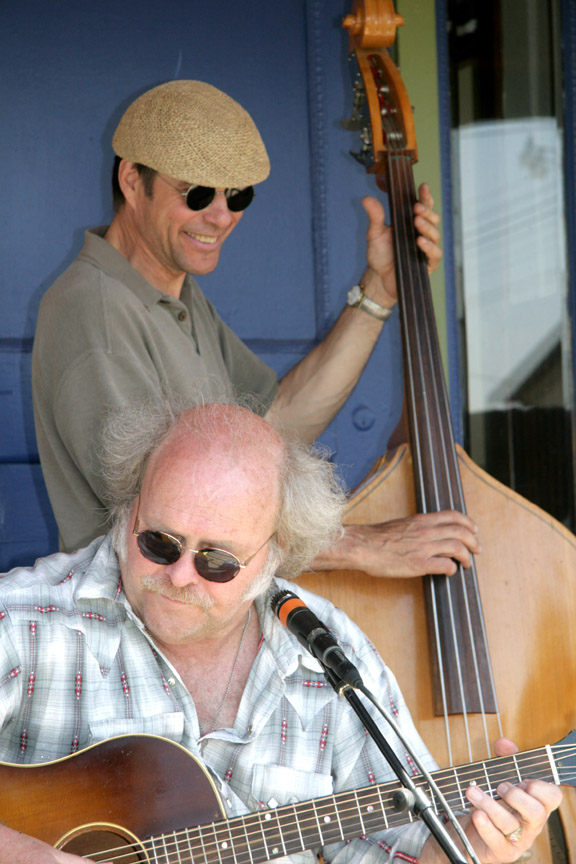
Local musicians, including Jerry Ostensoe and Richard Handeen, will perform from 6 p.m. - 10 p.m. Friday at the Old Milan School Building in Milan. Photo by Kristi Link Fernholz.

Jerry Ostensoe and Richard Handeen are among musicians performing Friday evening at the Old Milan School Building in Milan. Photo by Kristi Link Fernholz.

IF YOU’VE NEVER explored western Minnesota, this coming weekend would be the ideal time to pack up the car and head west. Or if you’re from the region, Oct. 2 – 4 offers an opportunity to explore your backyard.

The area is showcasing the works of about 50 artists during the annual Meander Upper Minnesota River Art Crawl. You’ll view a broad range of arts from photography, watercolor paintings, pottery, quilting, folk art dolls, rosemaling and more during this self-guided tour.

Visitors will experience the arts, history and culture in and around Ortonville, Appleton, Madison, Milan, Dawson, Montevideo and Granite Falls. It’s land I know, because I grew up in Redwood County, a bit to the south and east.

This is a place of big skies and open spaces and, in those areas where the Minnesota River twists through the land, an especially beautiful landscape in the fall. With trees changing colors and corn and soybean fields ripening to the shades of harvest, plenty of scenic vistas abound.

Artists will welcome visitors to locales like Moonstone Farm, the Milan Village Arts School and Java River Café. Those folksy names speak to the rural nature of this place.

Meander hours are 2 p.m. – 6 p.m. Friday, 9 a.m. – 6 p.m. Saturday and 9 a.m. – 4 p.m. Sunday. Special musical events are planned from 6 p.m. – 10 p.m. on Friday in Milan and beginning at 7:30 p.m. Saturday in Dawson.

For more information, including a downloadable brochure, go to www.artsmeander.com Or call 1-866-866-5432.

Special thanks to the Prairie Waters Convention and Visitors Bureau (www.prairiewaters.com) for sharing the above photos with the readers of Minnesota Prairie Roots.

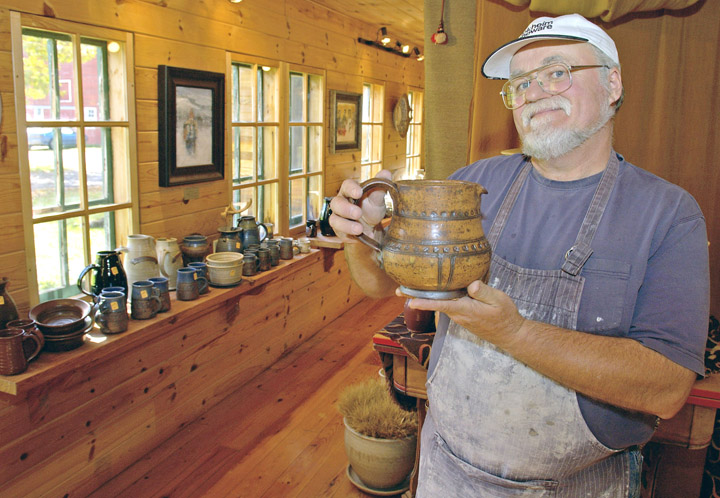
Gene Tokheim displays a piece of stoneware. Photo courtesy of Minnesota Office of Tourism.

Gene Tokheim displays a piece of stoneware. Photo courtesy of Minnesota Office of Tourism.

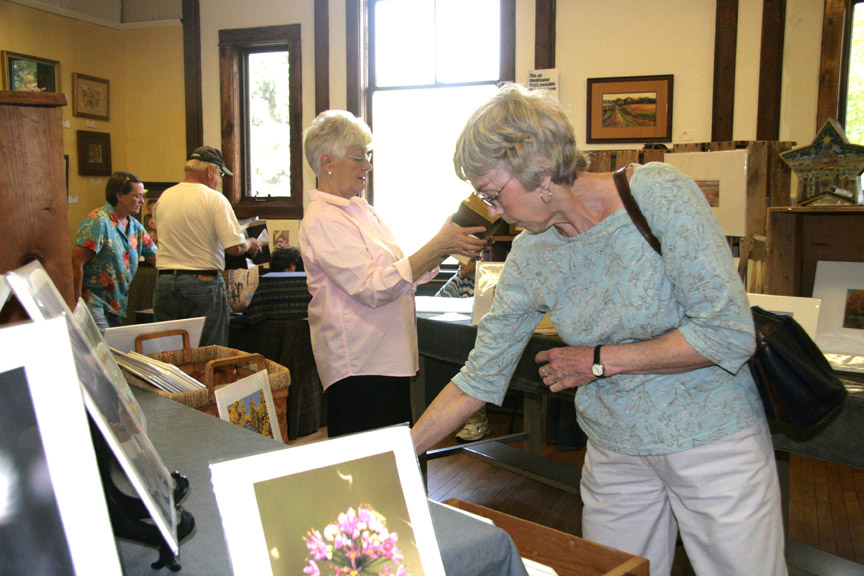
Shoppers admire artwork in Milan. Photo by Kristi Link Fernholz.

Shoppers admire artwork on display in the tiny town of Milan. Photo by Kristi Link Fernholz.


Betsy-Tacy books debut as Modern Classics September 29, 2009

Filed under: Uncategorized — Audrey Kletscher Helbling @ 8:48 AM
Heaven to BetsyBetsy was a juniorYOU WOULD THINK THAT, having grown up only 1 ½ hours west of Mankato, I would have read the Betsy-Tacy books as a child. But the fact is, I never heard of Mankato author Maud Hart Lovelace’s books until I had children of my own.

Perhaps it’s because I lived in Laura Ingalls Wilder country that I knew nothing about these delightful books of historical fiction. And without a library in town, I relied on teachers to shape my literary world. Either they never knew of the Betsy-Tacy books, or they chose to focus instead on Wilder’s Little House series, which I truly love.

But I also love the Betsy-Tacy books that follow main character Betsy Ray from age five into childhood and marriage. The stories take place in Deep Valley Betsy and the great world(Mankato), are set at the turn of the century and are based on Lovelace’s life. I first read the books to my daughters 17 years ago, when they were six and four.

I remember snuggling on the couch, my girls leaning into my shoulders, as I read the mischievous adventures of Betsy and her friends, Tacy and Tib. Oh, how we laughed at the trio mixing together Everything Pudding with ingredients like bacon grease, vinegar, onions, sugar, raisins and red pepper. The “yuck” factor endeared that story to us.



The artwork of Lois Lenski (in the first four books) helped us visualize Betsy, Tacy and Tib, who could have been my daughters’ friends—playing house, going for walks, cutting each other’s hair, mucking in the mud.

These fictional friends became so dear to us that we soon nicknamed my youngest daughter Tib. Like Tib, Miranda had curly blonde hair and maybe a bit of naughtiness in her. To this day, we still fondly call her Tib on occasion.

And then when my son, Caleb, was born years later, we started occasionally calling him Cab, after Cab Edwards, Betsy’s friend in the book series.

With all of that background, you’ll understand why I’m excited about the recent re-issuance of the six high school books (in the 13-book series) as Harper Perennial Modern Classics. The “new” books go on sale today.

And on Saturday, the Mankato-based Betsy-Tacy Society is celebrating with a book release party from 1 p.m. – 3 p.m. at the Betsy-Tacy houses, 332 and 333 Center Street in Mankato. The afternoon features reenactors, music and refreshments. And, of course, you can purchase Betsy-Tacy books.

For more information, go oline to www.betsy-tacysociety.org. You may also wish to read a feature I wrote about the Modern Classics for the September/October issue of Midwest Mix Magazine. Go to www.midwestmixmagazine.com.

Just one more bit of exciting news: Emily of Deep Valley and Carney’s House Party will also re-issue next summer as Harper Perennial Modern Classics.