
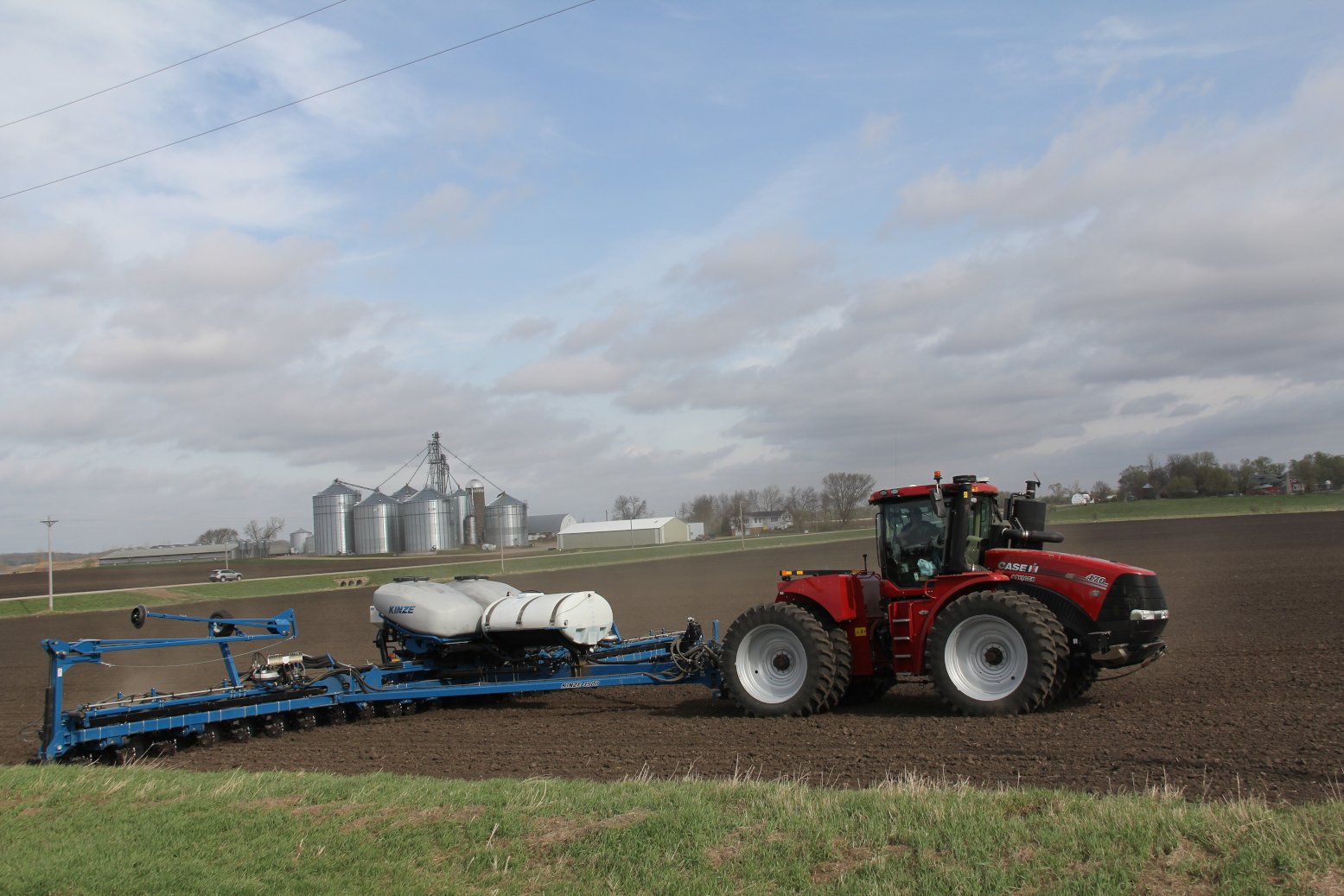
MY PHOTOGRAPHIC GOAL on a recent morning trip to and from neighboring Kenyon was simple enough: Photograph spring planting. But it wasn’t until Randy and I left this small Goodhue County town that I spotted field work underway.
On the drive over from Faribault, I saw a guy picking rock with a rock picker. He had uncovered an oversized rock, too big to move. That led to a brief conversation about our childhood rock picking experiences. Rock pickers were kids like us, not machines. They did not yet exist.
We assessed, as we headed east, that the absence of farmers in fields meant they’d either finished spring planting or had not yet begun due to no-tillage farming practices.
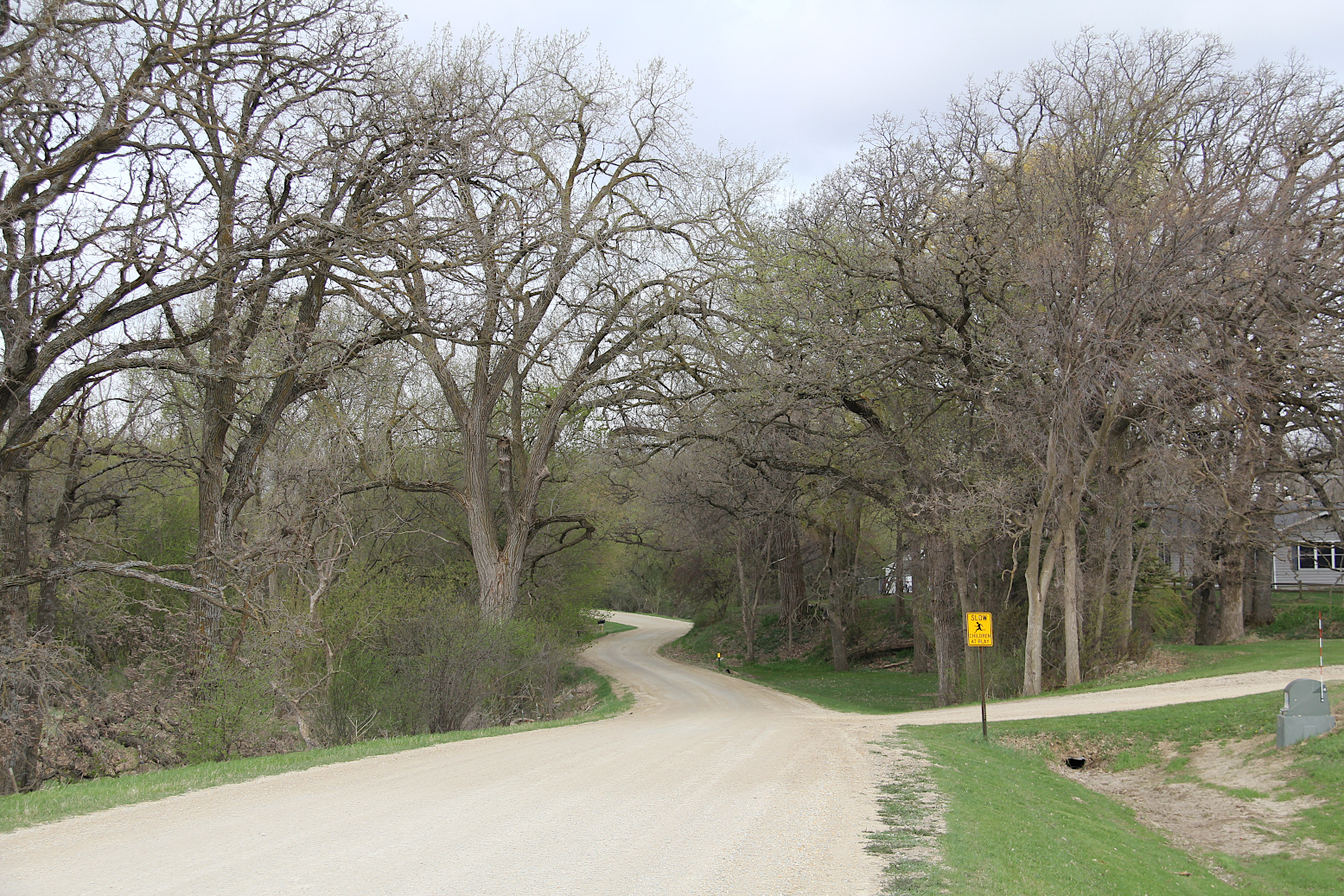
Once we left Kenyon, heading southwest into Monkey Valley, a picturesque rural area of woods, rolling hills and valley, creek, the North Fork of the Zumbro River, farm sites and fields, a tractor came into view. I must pause here to explain that Monkey Valley, as local lore claims, was named after monkeys that long ago escaped from a traveling circus into the valley. True? I don’t know. But it’s a good story.
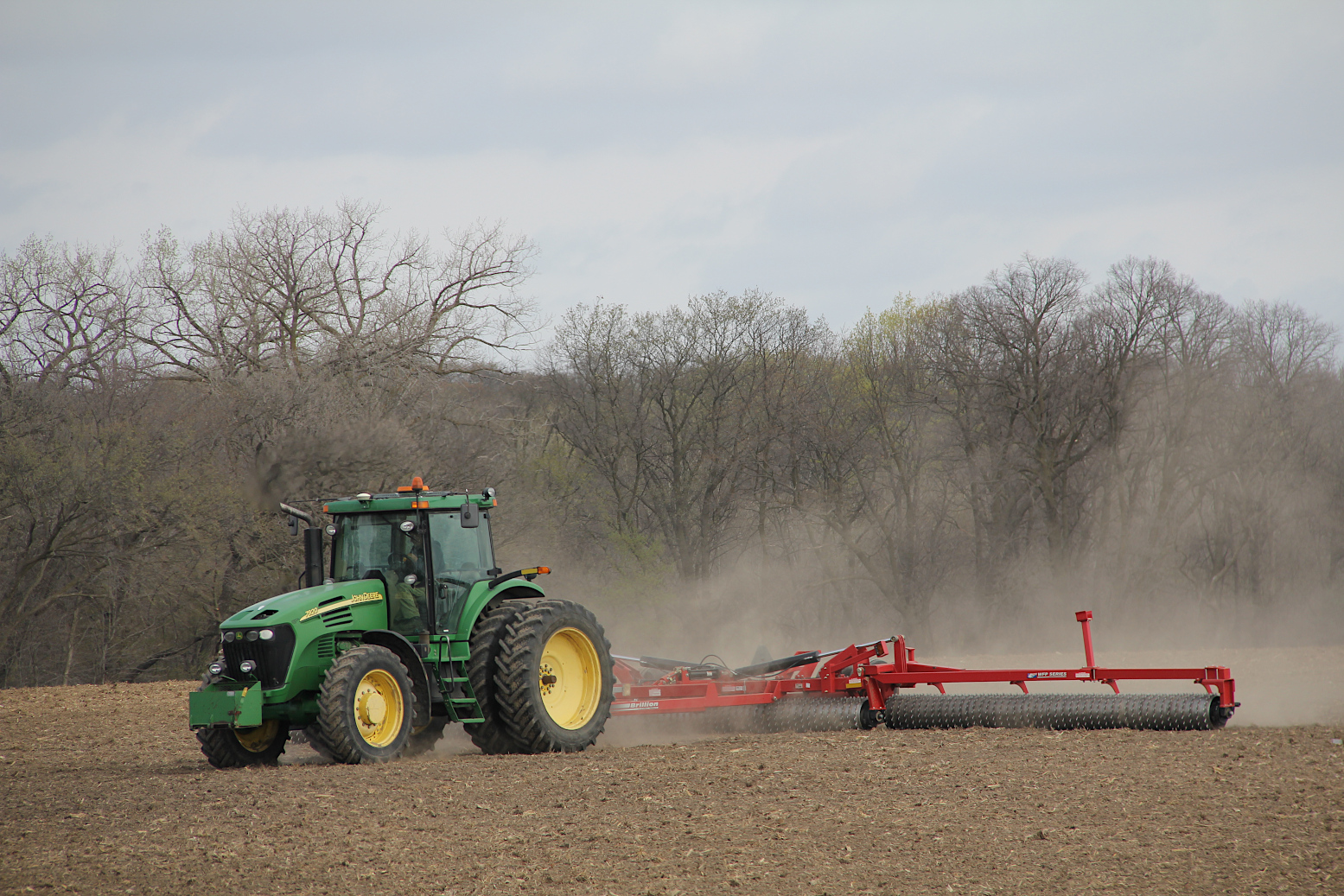
I found that first farmer, pulling a roller across the land leveling the earth, just before the gravel road wound into the woods of Monkey Valley. I realized how much farming has changed in the decades since I left rural southwestern Minnesota. There’s more specialized equipment. Bigger implements to work more acres. Different methods of farming that are more environmentally-friendly.
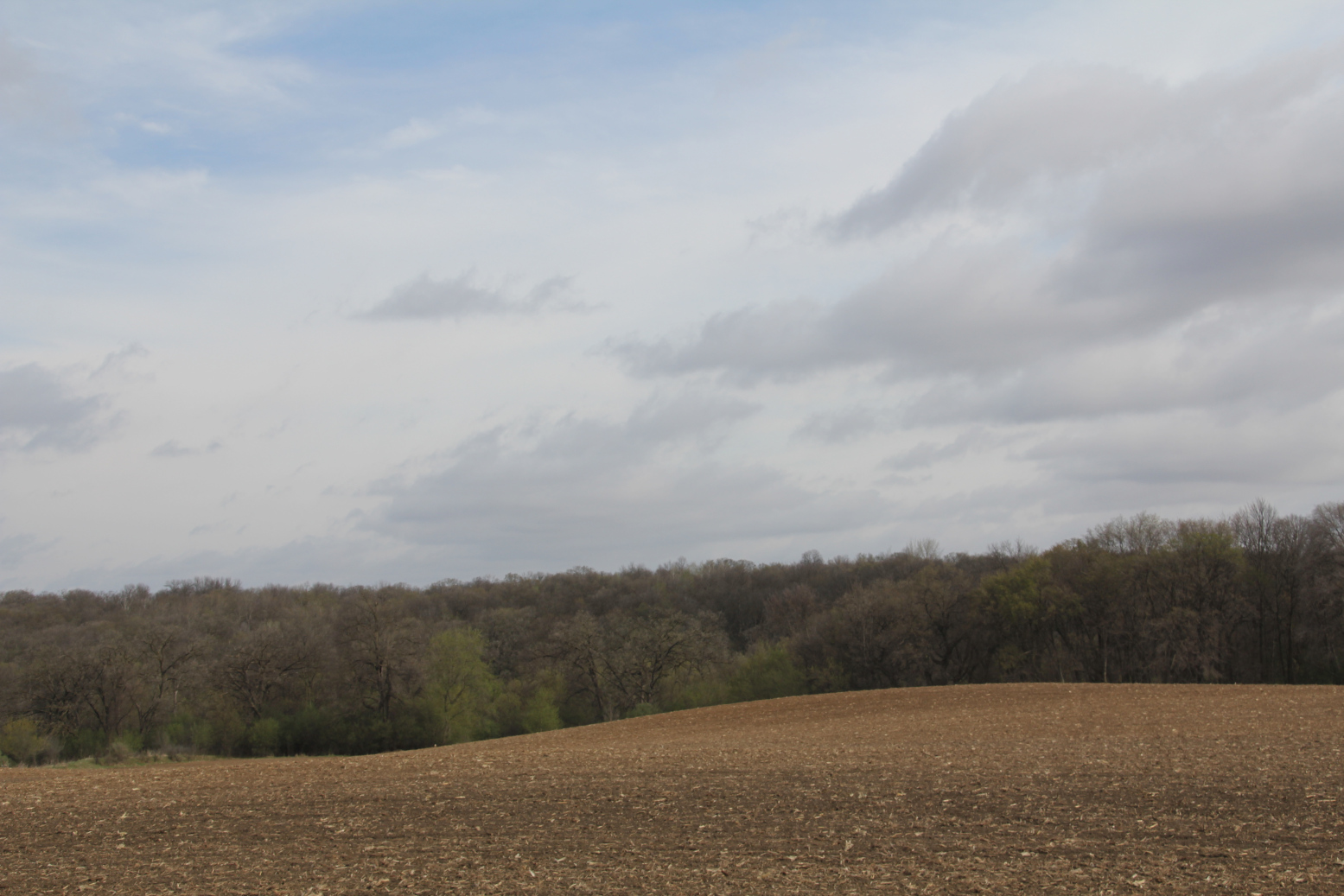
As we followed the gravel road, our van kicking up dust on an especially windy morning, I admired the distant dense woods nestling a farm field under a semi-cloudy sky. Patches of blue peeked through the gray of building rain clouds.
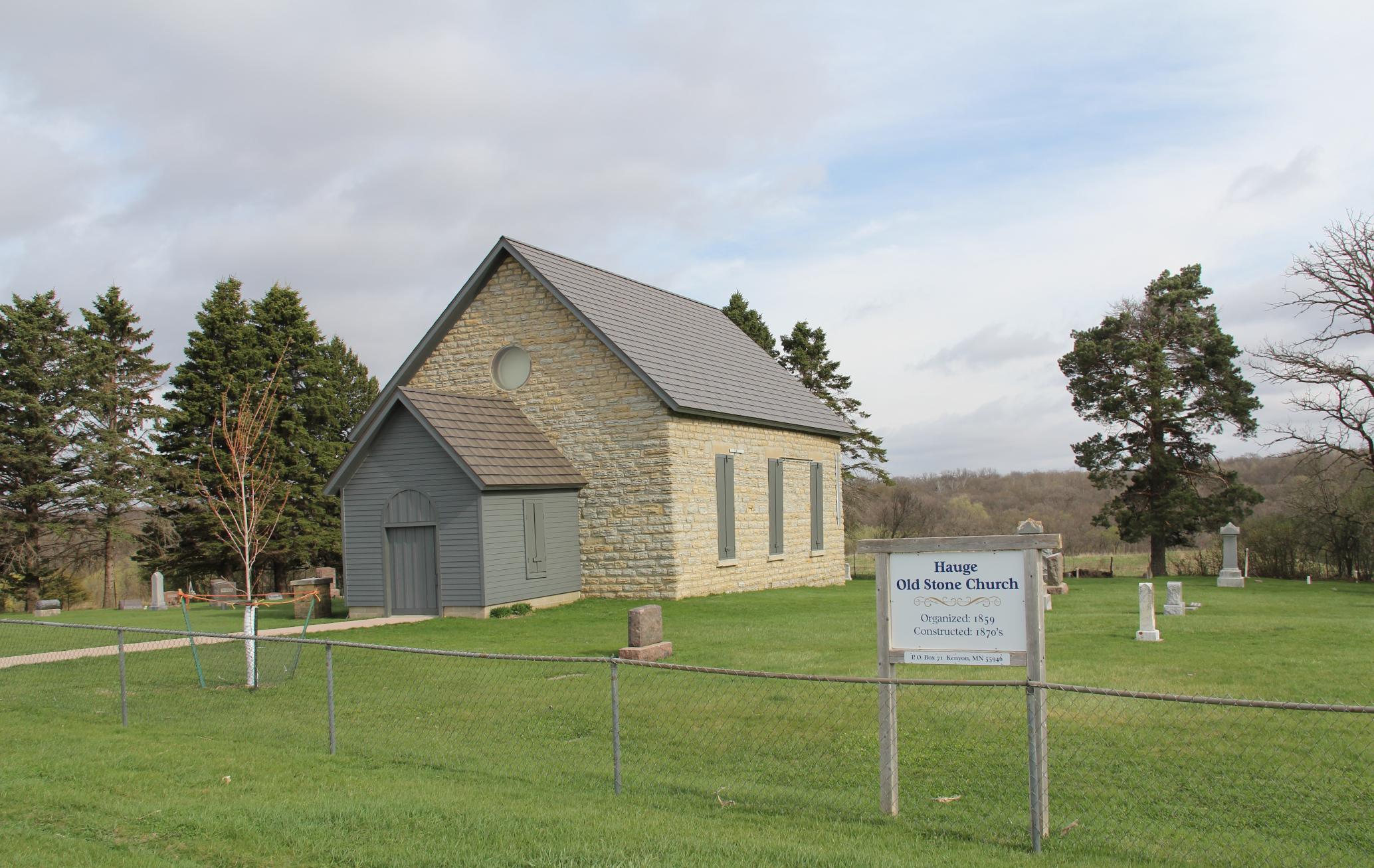
Soon we happened upon the Hauge Old Stone Church built in the 1870s, a place we’ve previously toured during an annual open house. We stopped only long enough for a photo. No meandering among the graves this time as we are wont to do when coming across a country cemetery.
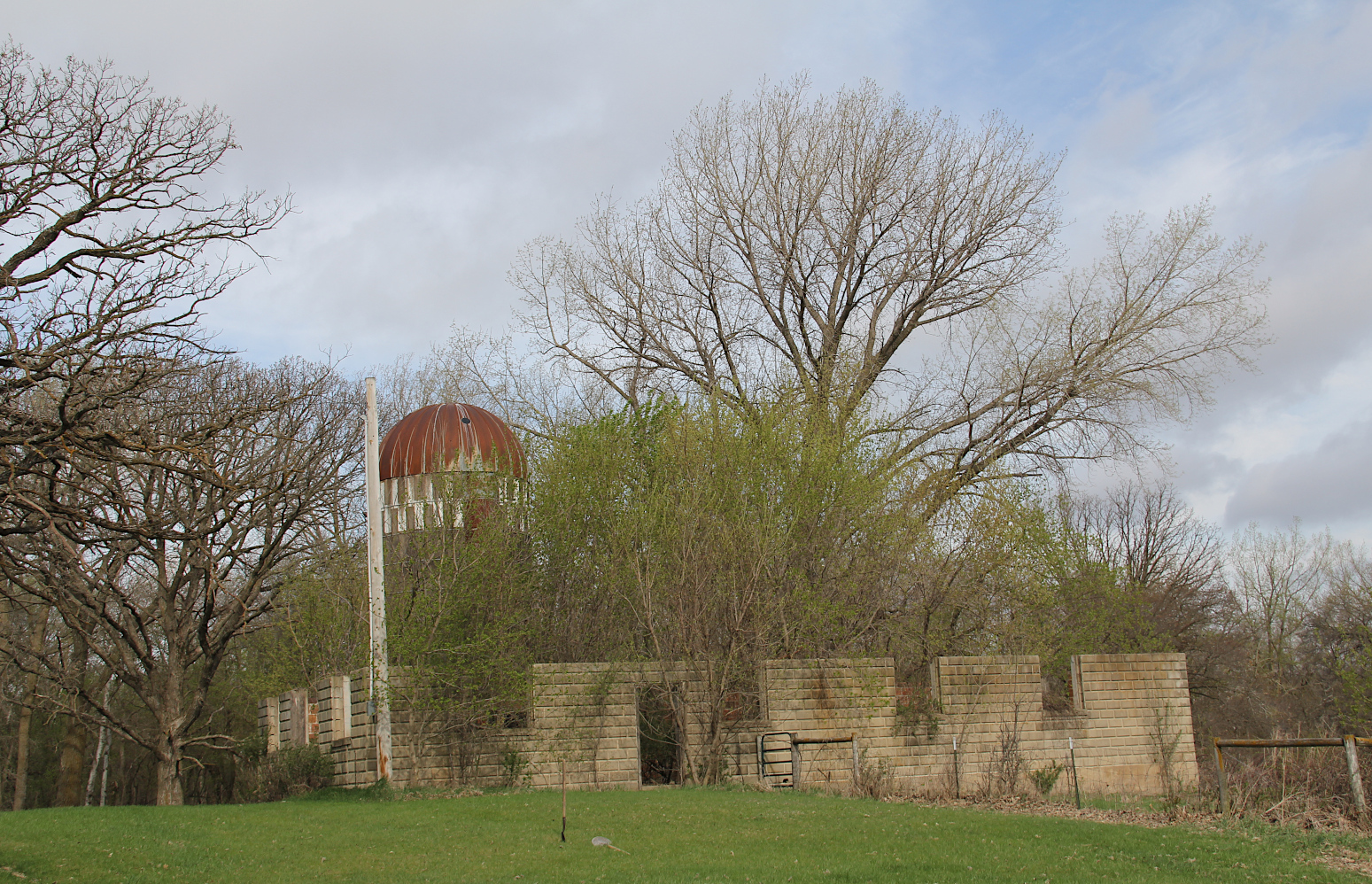
Farm sites hug the road here in Monkey Valley. While many are well-kept, some show the marks of time, like an abandoned silo standing next to the walls of a collapsed barn. I always feel melancholy in the presence of barns gone, their ruins like rural gravestones.
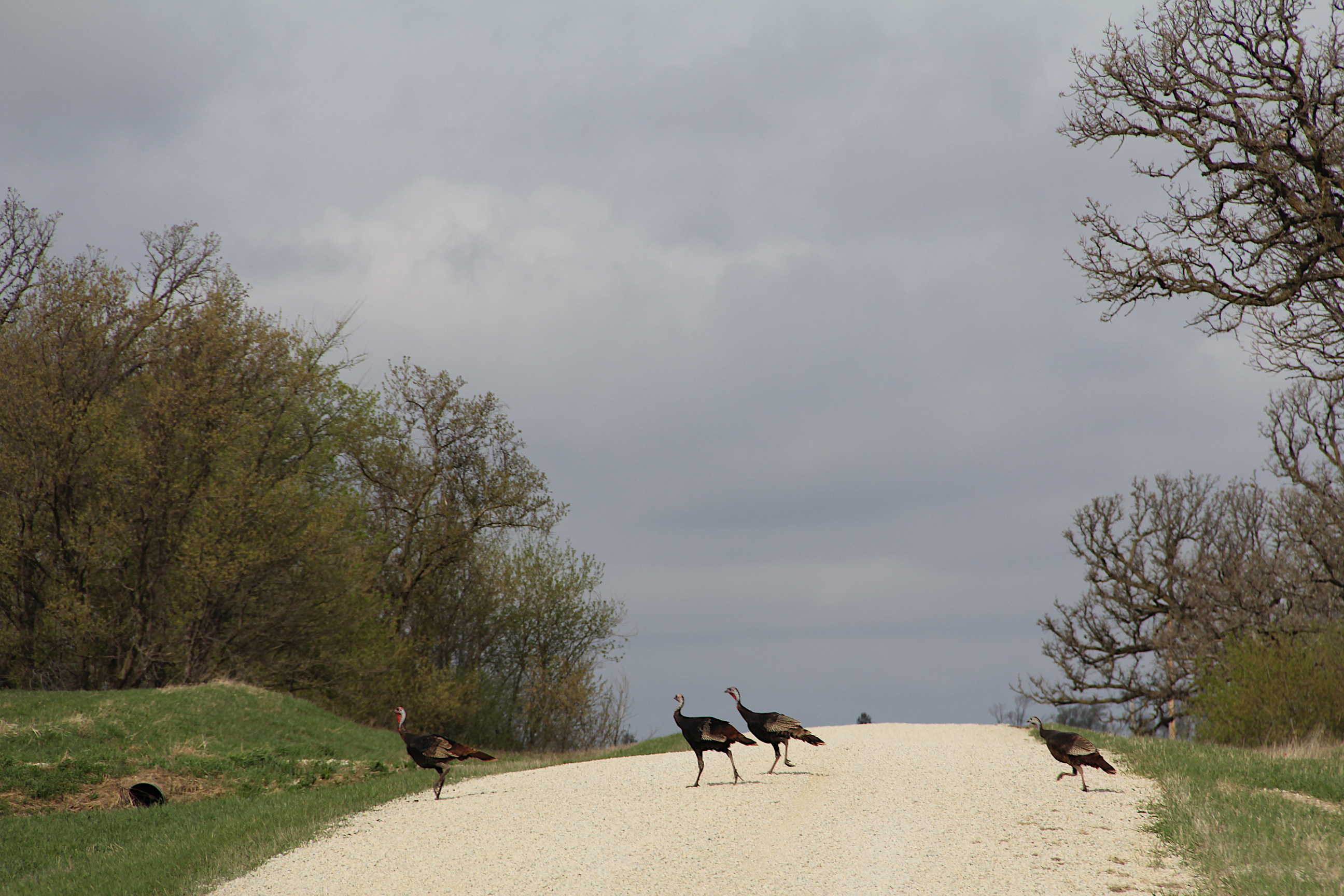
Not far ahead, life teemed in a flock of wild turkeys. I exited the van, moved slowly toward them, hoping to sneak closer for a better photo. But, like all wildlife, they are tuned in to danger and quickly dashed across the road from one ditch to the other. Never mind me and my photographic wishes.
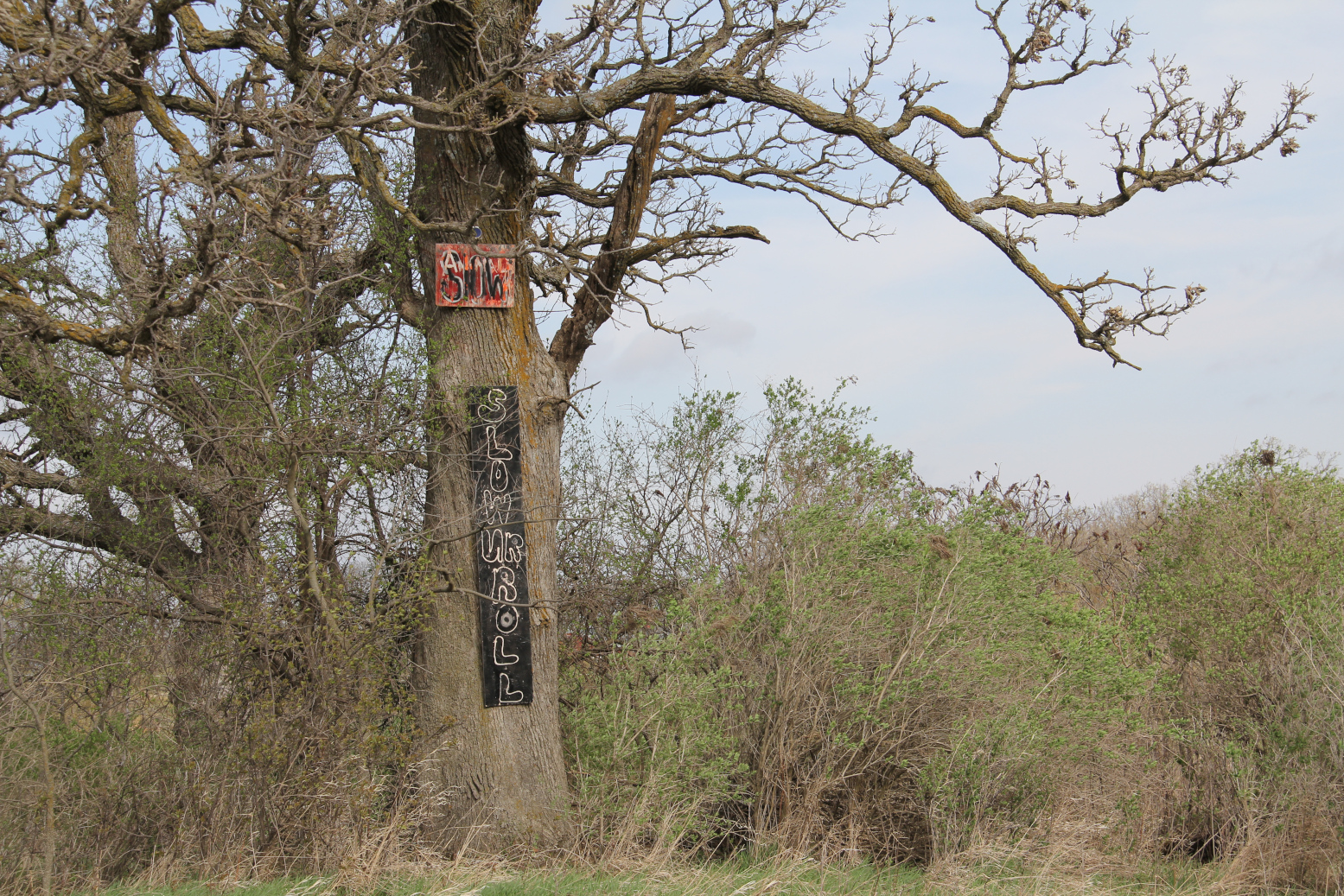
Traveling on back gravel roads requires a slower pace. A sign posted on a roadside tree instructed: SLOW UR (sic) ROLL.
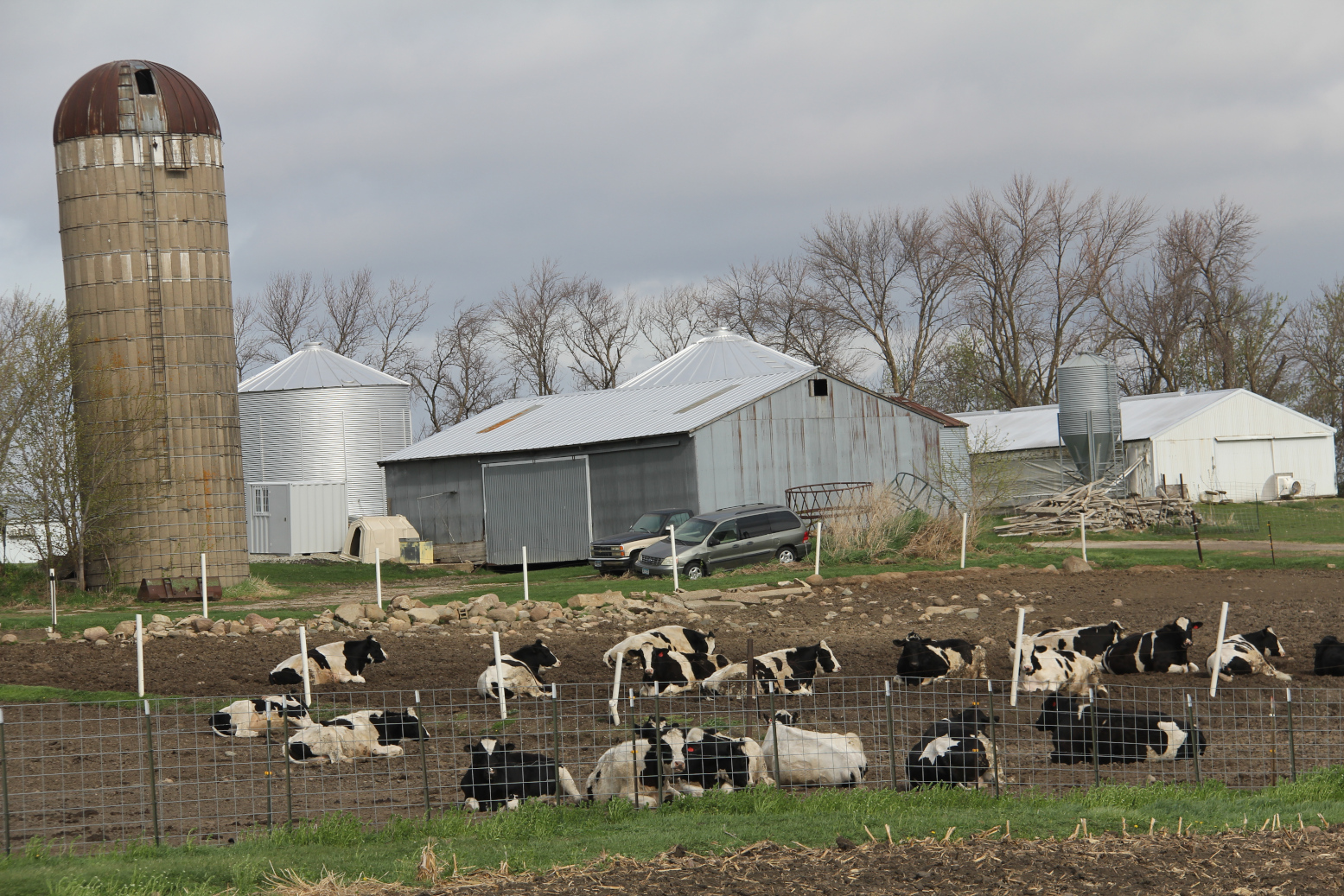
Continuing west toward Faribault, we slowed our roll for a herd of Holsteins fenced in the cow yard at Donkers Farm. I hold a special fondness for cows. I spent my formative years in the barn, scooping silage, pushing a wheelbarrow full of ground feed, feeding cows and calves, bedding straw, forking hay, shoveling manure, carrying milk pails and more. That imprinted upon me the value of hard work, of a farm family working together, of a rural way of life.
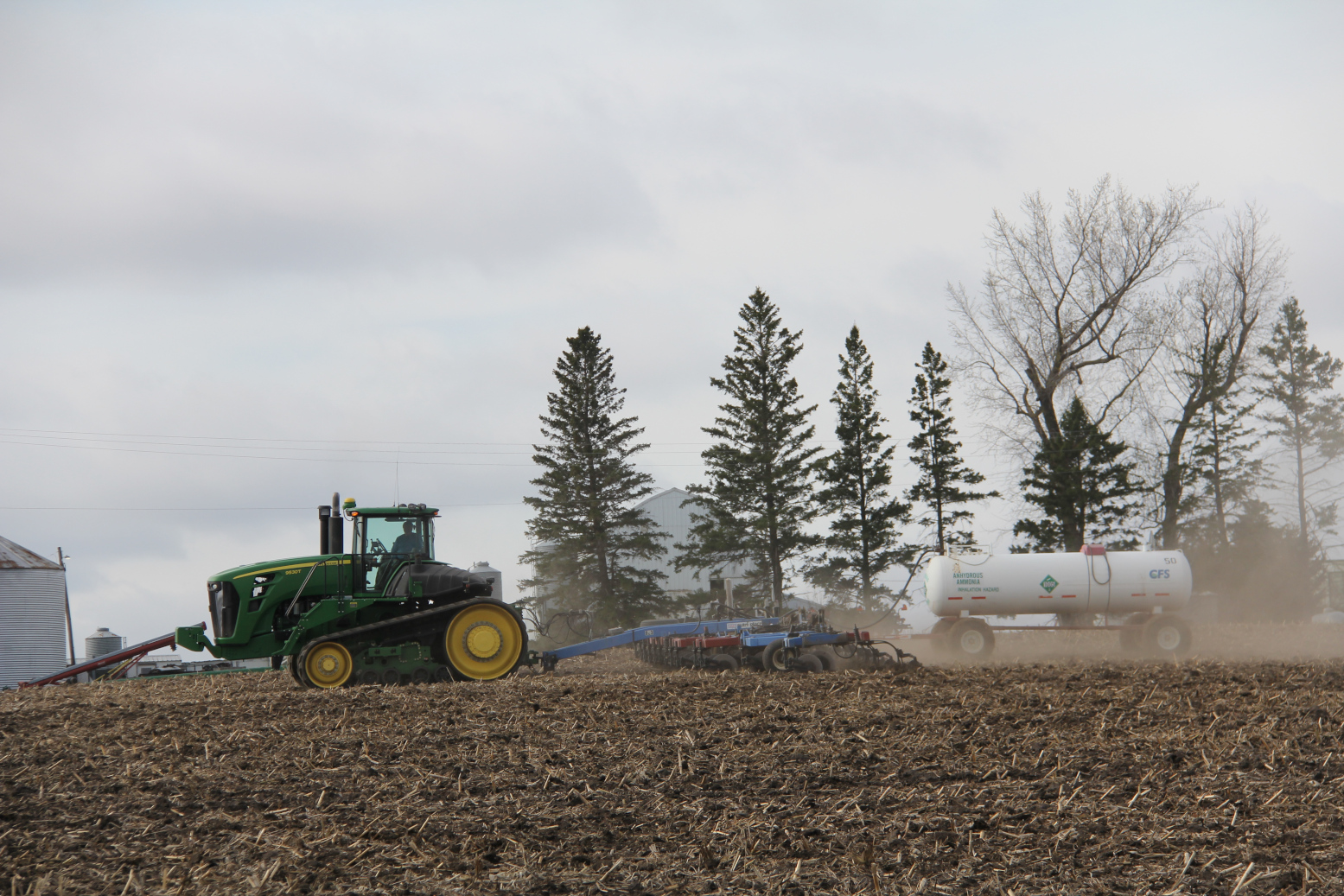
All across southern Minnesota, farmers prep the land, apply fertilizer, sow corn and soybeans. They invest not only their time, efforts and finances in the land, but also their hopes. Hope for timely rains. Hope for good growing weather. Hope for an eventual bountiful harvest. And then hope for a good market with high commodity prices.
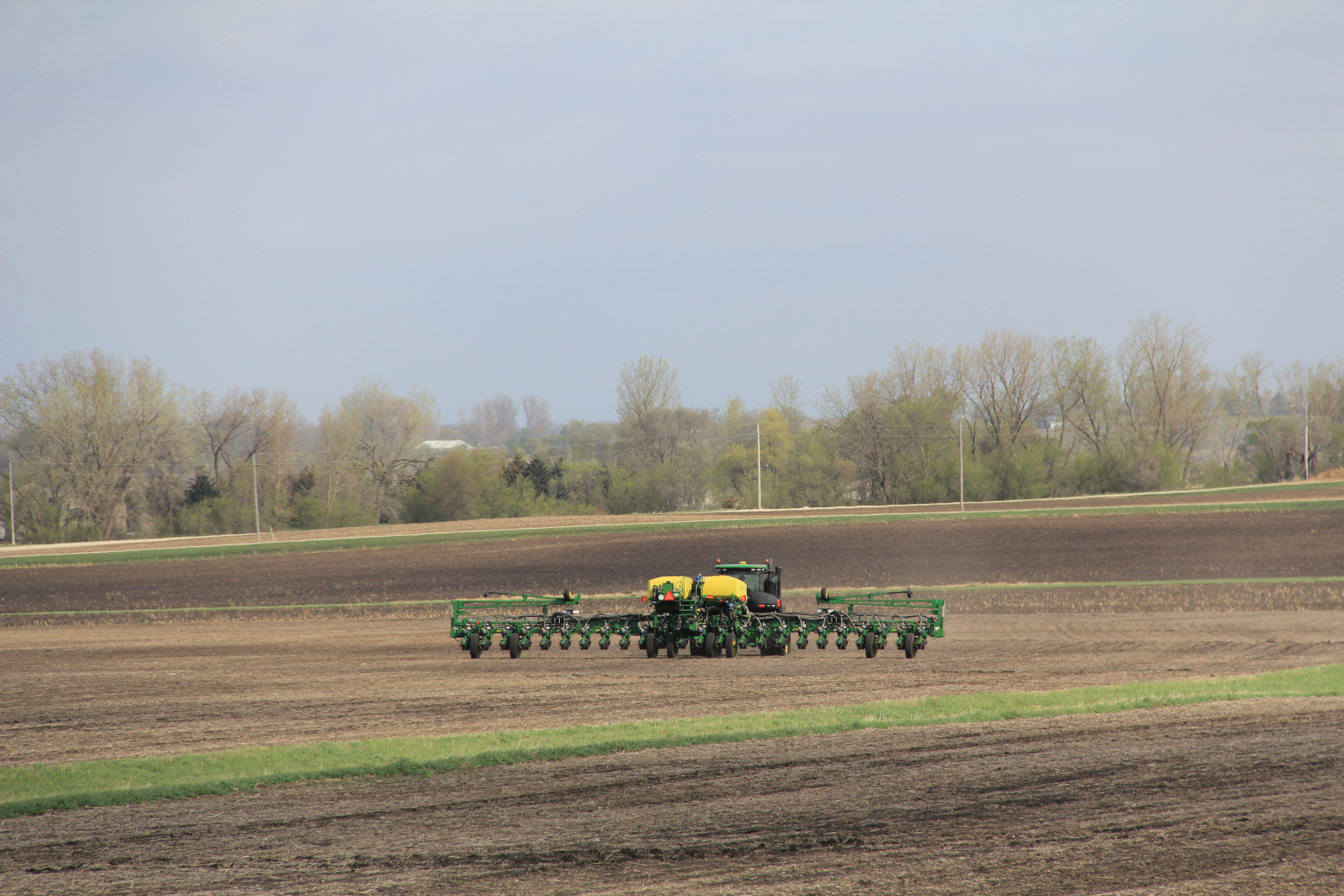
So much hinges on hope. I see that on this day, on this drive past the fields and farm sites of southern Minnesota.
© Copyright 2026 Audrey Kletscher Helbling


Yes, farming methods and machinery have changed so much since we were on the farm, but the same soil, sun and feeling of optimism remains. I enjoyed your post.
I like that “the same soil, sun and feeling of optimism remains.” I figured I’d hear from you today. I know you miss the farm as much as I do.
I’ve not heard of Monkey Valley, interesting lore. Thank goodness for farmers!! I hope they all have a good season.
Monkey Valley is not an official town or name, although two roads are named Monkey Valley here.
And, yes, very thankful for farmers.
We watched the tractors come through the field behind us last Friday…The machinery is so big these days…it didn’t take them long to plow the field…this is their second time through. No planting yet.
Ah, yes, you have a front row seat to farming. Like living on a farm without the work. 🙂
thank you for taking us on this beautiful drive with you. it sounds like farm life has changed dramatically from the time you lived on one. i really enjoyed the pictures, especially the Old Stone Church, the hand written signs on the tree, and the cows, seemingly happily lounging around. i also appreciate how you wrapped it up by reminding us of how much hope plays a role in making a farm work for a family, no matter how hard they work for the farm.
Thank you, Beth. Yes, farming has definitely changed a lot since I lived and worked on the farm as a kid. But hope remains as strong as ever.
Love seeing the fields getting ready to plant yumminess around here as well, our farmers work so hard.
You probably have more veggie farms in NC than here. Our farmers are planting corn and soybeans, some of which will find its way into the food supply. But corn and beans have many other uses besides consumption.
Interesting post, Audrey!
I always like to write about spring planting. It’s the farm girl in me emerging.