Minnesota Prairie Roots

Writing and photography by Audrey Kletscher Helbling

Rewarding academic success May 30, 2012

I’M GOING TO HAVE a proud mama moment today. So please indulge me. But my youngest, my only son, graduates in a few days and I am especially proud of his academic accomplishments.

Last Thursday my husband and I attended Senior Awards Night at Faribault High School where graduating honor students were recognized and scholarships awarded.

Although the guidance office had notified me that Caleb was receiving a scholarship, I didn’t know specifics. Reading through the list of scholarships on the printed program, I couldn’t figure out which one he was getting.
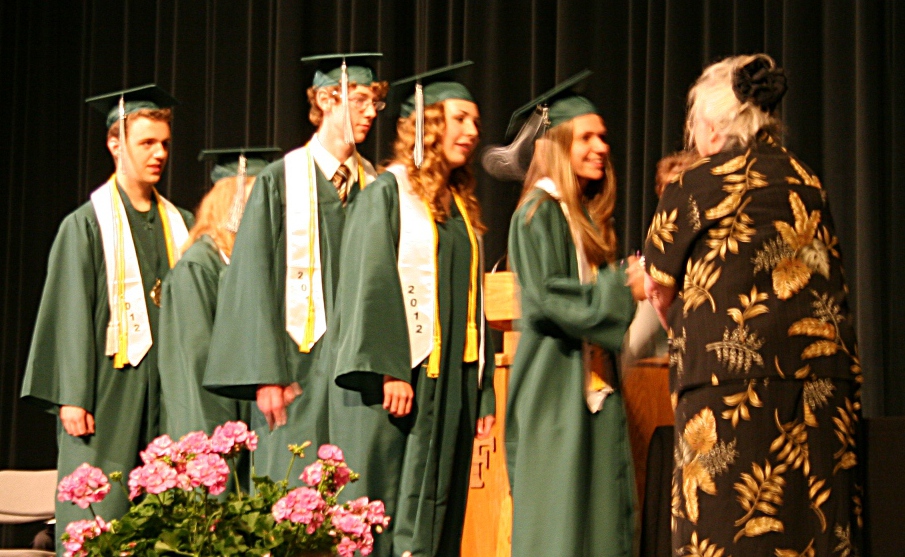
That’s my son, the tall one third from the left, receiving a $1,000 Faribault Falcon Scholarship Fund Scholarship from Marjorie Helmer. (Excuse the photo quality; I shot without flash in a dark auditorium.)

But when Cheryl J. Freund, former school district curriculum director, explained the selection process behind awarding of the $1,000 Faribault Falcon Scholarship Fund Scholarships, I knew. The scholarship recipients, she said, were chosen based on ACT test scores and grade point averages. It mattered not whether you played sports, served your community, participated in theater or anything. The scholarship was solely, unequivocally, for academic achievement.

Thank you, Faribault Falcon Scholarship Fund committee for that sole focus on ACT scores and GPAs. Thank you.

Caleb performed exceptionally well on his college entrance exam and has a near 4.0 GPA.

Freund prefaced awarding of the scholarships by stating: “This is one of the best groups of scholars I’ve seen in my career.”

Now I’d like to take some genetic credit for my son’s intelligence. But since he excels in mathematics and science (my weaknesses) and has to work a bit harder at English (my strength), I cannot claim credit for his academic success. I’ve never been the type of parent to check his homework or read his papers or such—except encourage him and bug him about completing assignments. I’m just not that kind of hands-on homework helping parent. Like he ever needed my help anyway.

I suppose, though, that the emphasis I placed on reading through-out Caleb’s formative years and even today, did factor into his success in school. My teen is a voracious reader—for the enjoyment of reading and for the purpose of learning. He has taught himself so much by reading on his own, not because I told him to read or because he was assigned reading for a class, but because he wanted to learn more.

My son’s also had some engaging and encouraging teachers in the past few years as he’s taken a rigorous course of advanced and college level classes in subjects like physics, calculus, composition, chemistry, anatomy and physiology, and more. I expect Caleb will have nearly a year of college credits when he begins classes later this summer at North Dakota State University.

Just last Friday he took a College-Level Examination Program test in chemistry for which he’ll receive four college credits. He was the only student taking the test at Minnesota State University, Mankato, and only the second student to have taken the CLEP chemistry exam there, according to the examiner.

Caleb’s academic achievements and self-initiated pursuits in computer technology also earned him a Presidential Scholarship, an Entrepreneurial Scholarship and entrance to the Honors Program at NDSU. About a third of his college costs will be covered by scholarships. As part of the Entrepreneurial Scholarship, he will work and volunteer in the university’s technology incubator. What an incredible opportunity to learn and to network.

In 2 ½ months, my 18-year-old leaves home to further his education, working toward a degree in computer or electrical engineering. I have no doubt Caleb will continue to approach education as he always has, with enthusiasm and with a strong desire to learn.

© Copyright 2012 Audrey Kletscher Helbling


Kudos to the smart science kids out there February 8, 2012

Filed under: Uncategorized — Audrey Kletscher Helbling @ 8:27 AM
Tags: , , , , , , ,

SEARCH THE RECESSES of my home and you won’t find a single sports trophy, medal or ribbon. We are not athletes.

But you will find honors for academic achievements.

During elementary school, my second daughter consistently placed in the region’s Lutheran schools spelling competition, bringing home trophies and ribbons. In 2006, she graduated from high school at the top of her class. (My mom and a niece also graduated at the tops of their classes and I graduated second.)

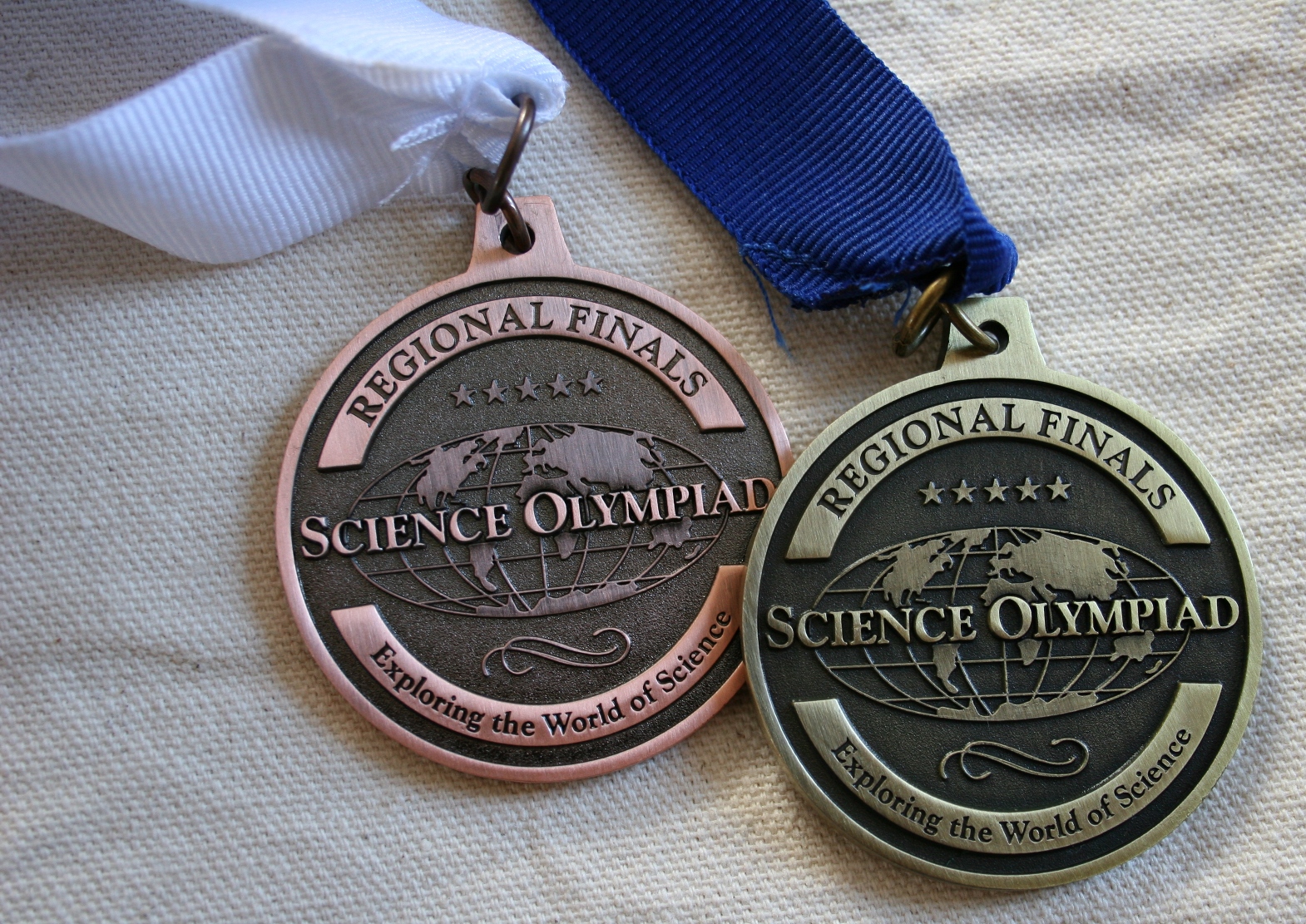
Now my 17-year-old high school senior has won two medals for his scientific and mathematical skills and knowledge. This past weekend Caleb and his Faribault High School Science Team teammate, Luke, earned first place in the Regional Finals Science Olympiad competition in Rochester with their gravity vehicle.

They built a vehicle and ramp and then, using physics skills, calculated time, distance and speed to race and stop their car at a specific point. They came within about an inch of the target. I won’t attempt to explain the details of how they accomplished this because, well, I don’t understand it. Suffice to say, they did everything right to win the contest.

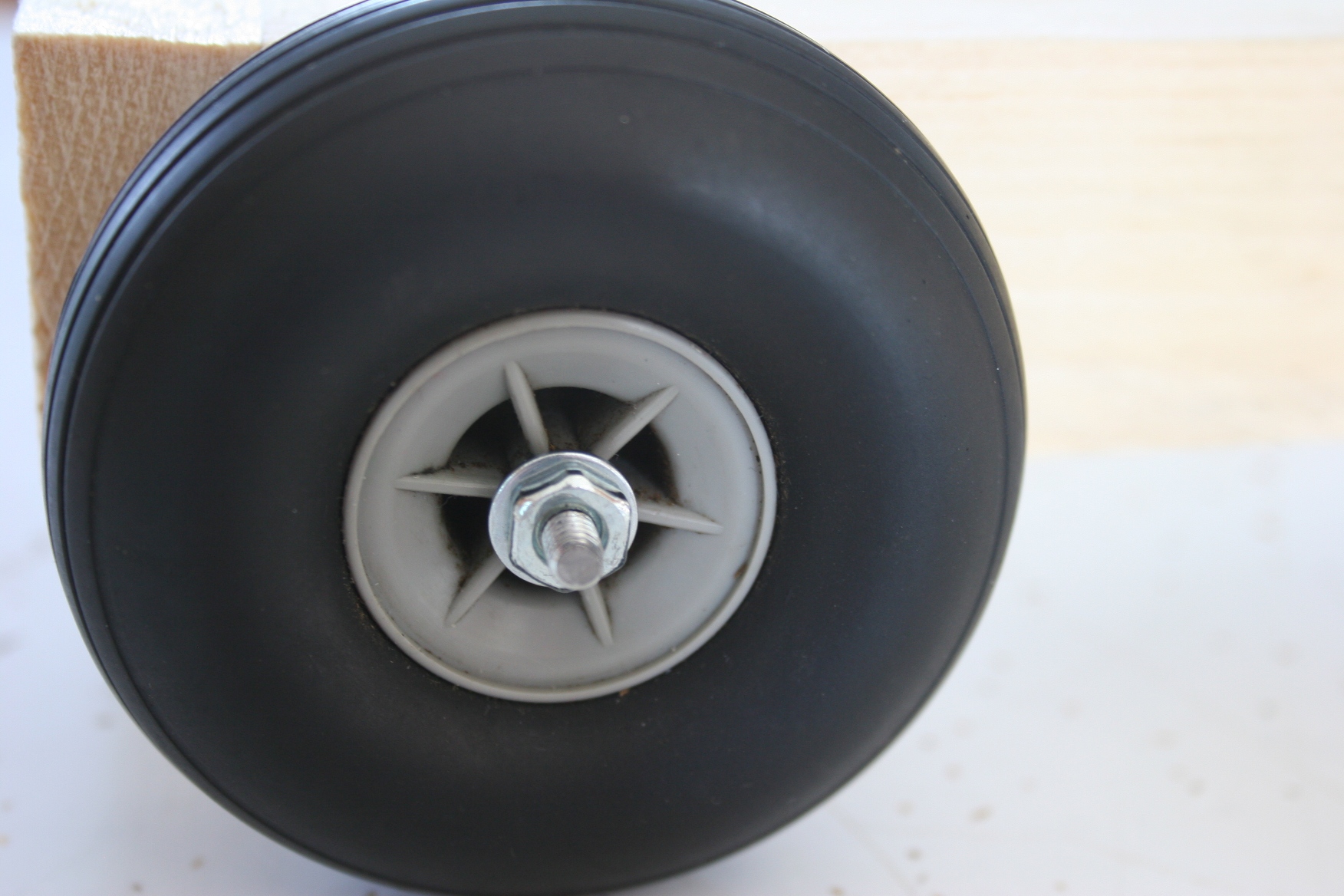
A wheel on the winning car, as it was being built. I would show you the car, except I did not get a good shot of it and now the car is at school and Caleb would not like that I want to photograph it. Suffice to say the car is basically four pieces of wood joined into a rectangular shape. Caleb and Luke wrote their names on the car. That's it. Why make it flashy? Flashy doesn't count, my son says. Gotta love that attitude.

Caleb, along with a different teammate, Travis, also placed third in an astronomy competition.

Faribault students Anna and Anwyn earned first place regional honors in “Write It Do It.” Sara and Riley placed second and Anwyn and Tanner, fourth, in “Forestry.” And a fourth place finish also went to Nathaniel and Max in the “Fermi Questions” competition. (Don’t even ask about “Fermi.” I have no clue; I never claimed I was smart in science.)

Faribault High’s two science teams finished fifth and eighth at region, qualifying both teams for state competition. However, rules allow only one team from each school to compete at state.

FHS science teacher Jason Boggs says this is the first time since he’s been co-coaching the science teams that both teams have technically qualified for state.

Caleb and 14 other FHS students will compete at state on March 3 at the University of St. Thomas.

So there you have it—my little plug today for all those smart kids out there who excel in academics but seldom receive the recognition they deserve.

Be proud.

Your academic successes will take you far in life.

© Copyright 2012 Audrey Kletscher Helbling
 

An aha moment at parent-teacher conferences March 5, 2011

EVER SINCE OUR TEEN stopped accompanying us to parent-teacher conferences, my husband and I have felt more open to asking candid questions about him. Not that we’re trying to talk about him behind his back, but his absence certainly allows us to ask questions we probably wouldn’t ask in his presence.

He’s a great student, near the top of his class. He’s taking rigorous courses, earns straight As and scores exceptionally well on tests. In other words, academics are not an issue.

So, then, you might wonder why we even bother to attend parent-teacher conferences. First, it’s important to show our son that we care about his education.

Secondly, it’s important for his teachers to know we care and to connect with them.

Third, I want to know what he’s learning, because I certainly don’t hear that information from him.

I’ll qualify that, though, by saying that this time, when our 17-year-old was helping me with dishes the night before conferences, I asked for an academics primer. I wanted a list of the classes he’s taking, the names of his teachers and what he is currently studying. Surprisingly, he obliged and I felt better prepared for conferences.

Just a note. I could have pulled his course information from a file, but engaging him in conversation about school seemed the better alternative. Also, I wasn’t completely oblivious to his class schedule or assignments.

When my husband and I headed off to conferences on Thursday evening, I wasn’t sure exactly what information I wanted to glean from or exchange with his teachers. Last time we focused on his future—his main interests, career options and college choices.

This time, though, a conversation with a friend several days earlier niggled in my mind. We were discussing our sons, who are both wired with strong science and math brains. Neither one cares all that much about engaging in social activities. My husband and I have worried for some time about our teen’s lack of interest in socializing and minimal participation in extracurricular activities.

About now, if you’re the parent of a teen, you’re probably thinking, how lucky to have that “problem.”

Well, as parents, we want a well-adjusted teen.

We were reassured by every teacher we asked that our son is well-liked by his peers, participates in class and socializes, has a great sense of humor that they enjoy, loves to learn, etc. In other words, they alleviated our worries.

While talking with his journalism teacher, I had one of those aha moments. My son, I realized, is confident enough in himself that he doesn’t feel the need to conform, to give in to peer pressure, to be surrounded by a group of friends. All the while I’ve been focusing on the negative when I should have been focusing on the positive, seeing the strengths in his personality.

Not everyone is interested in sports or theater or music, etc. And just because we as parents, as educators, as a society, think every kid should be intensely involved in extracurricular activities, we must also accept and realize that not every teen wants to be so involved. Not every teen is a social butterfly outside of the classroom.

My son doesn’t think like most teens. That’s OK. But he’s strong, smart, confident, inquisitive and more. When he focuses on a task, he wants his efforts to be invested in a real project, with real results. He doesn’t want to do something just to compete, although when he competes he’s very competitive. I finally understand that about him.

It just took asking the right questions at parent-teacher conferences to get there.

© Copyright 2011 Audrey Kletscher Helbling