Minnesota Prairie Roots

Writing and photography by Audrey Kletscher Helbling

“Testify,” an enlightening & unsettling exhibit focused on Black history April 18, 2025

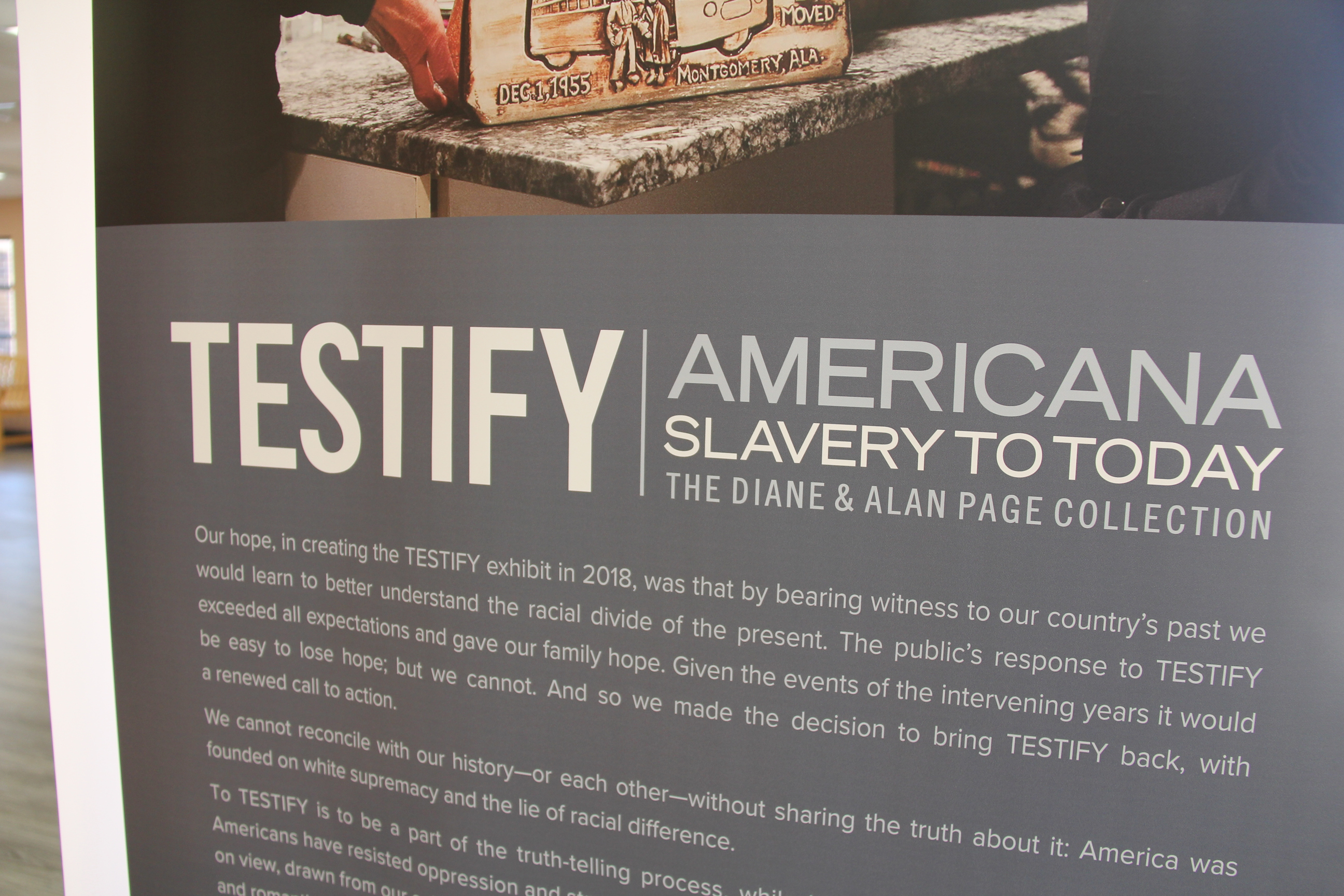
The first panel explains the “Testify” exhibit. (Minnesota Prairie Roots copyrighted photo April 2025)

THE IMAGES AND WORDS left me feeling simultaneously unsettled, uncomfortable, disturbed, enlightened, impressed, angry and incredibly sad. My emotional reaction is not surprising after viewing the traveling exhibit, “Testify—Americana Slavery to Today,” at my local public library.
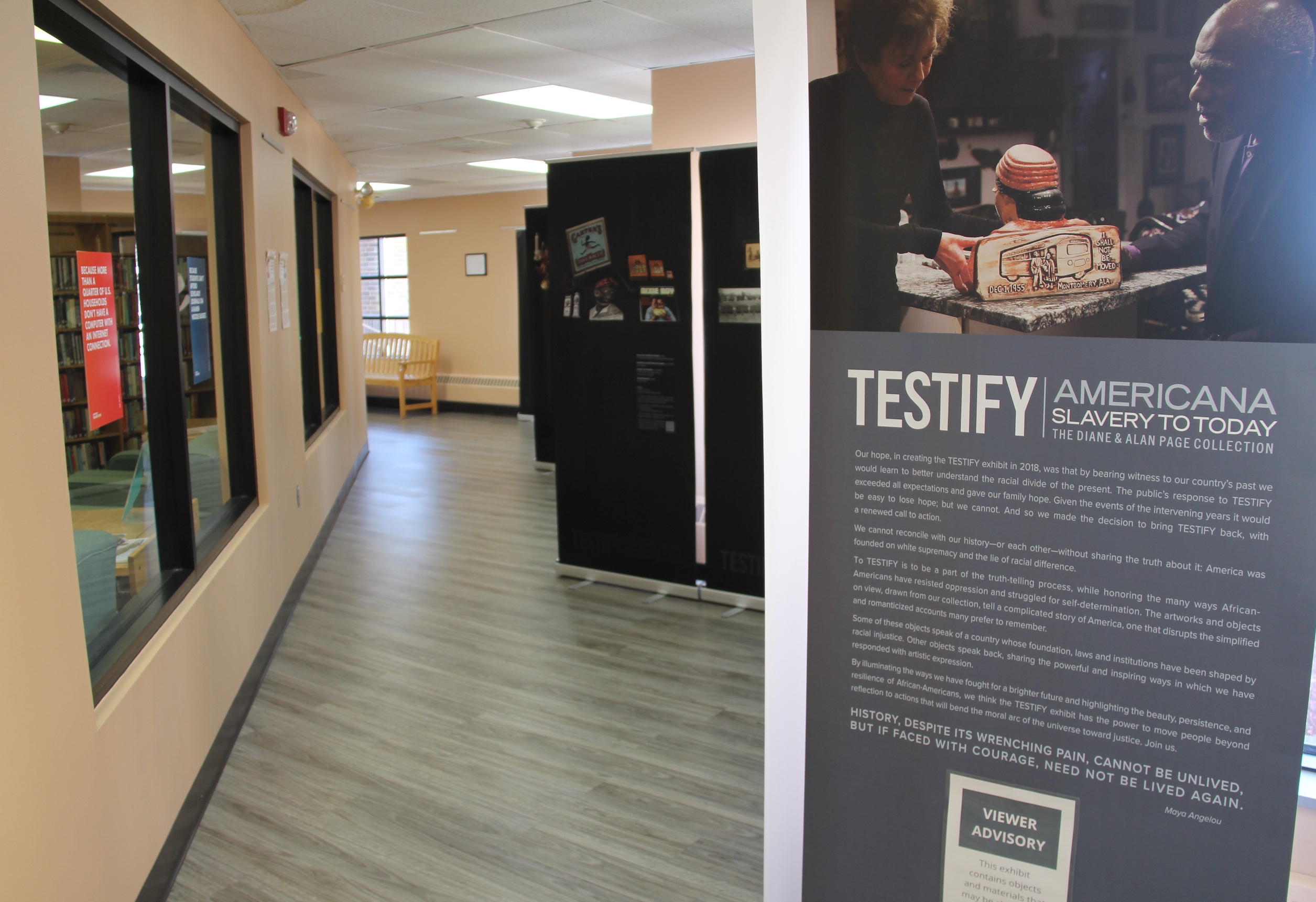
The 16 “Testify” panels stretch along the hallway connecting the library and community center in Faribault. (Minnesota Prairie Roots copyrighted photo April 2025)

The exhibit features photos of select African American art and artifacts from The Diane and Alan Page Collection. Alan Page, who is Black, was a Minnesota Supreme Court justice and, in the 1970s, a defensive lineman for the Minnesota Vikings. He’s in the NFL Hall of Fame. Diane, who was White, worked in marketing and was a businesswoman and notable philanthropist. She led the way in securing the art and artifacts in the couple’s collection.
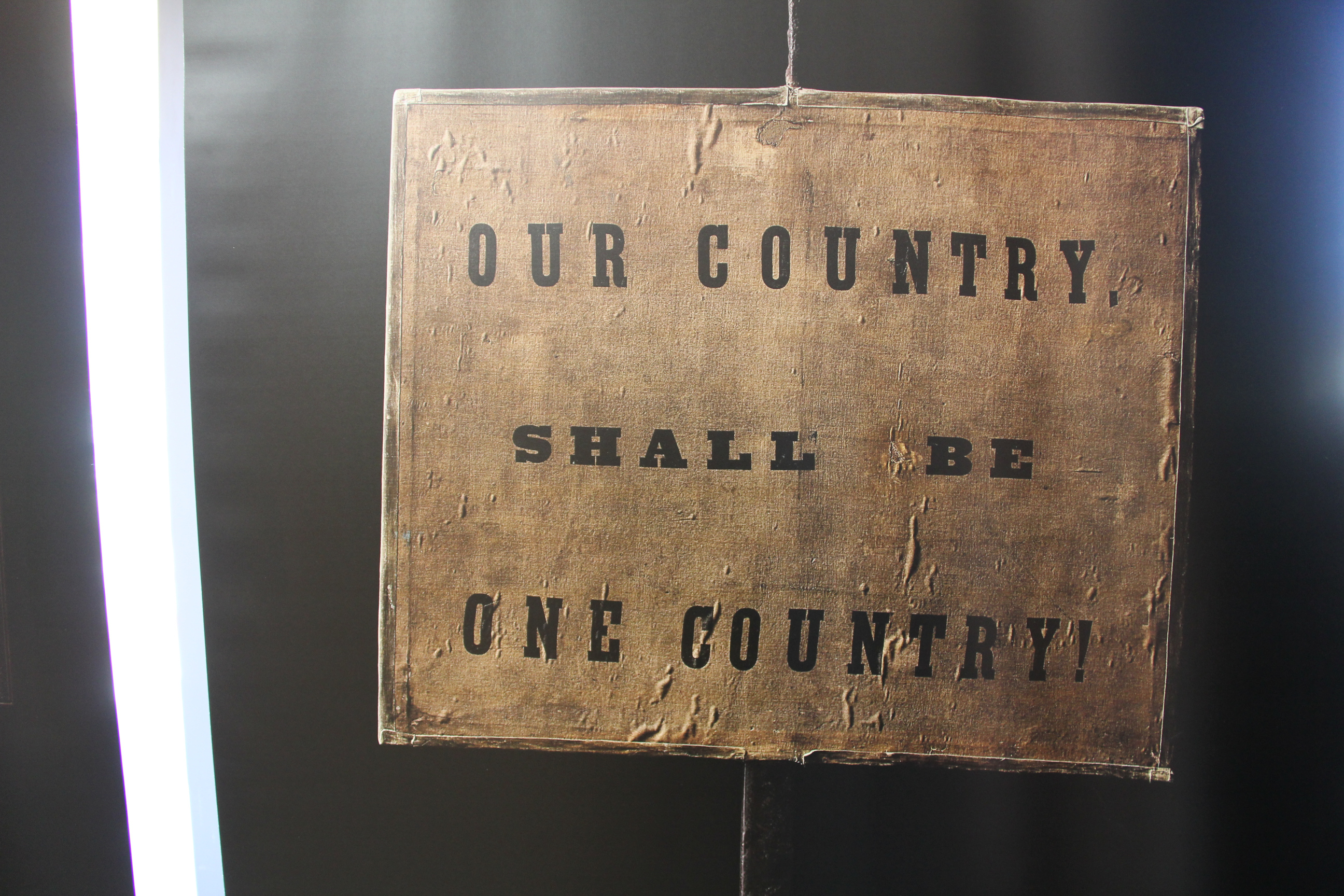
This 1864 banner may have been carried by freedmen at a rally or march. During the 1864 election of Abraham Lincoln, both political parties came together to reject slavery. (Minnesota Prairie Roots copyrighted photo April 2025)

I’m grateful Buckham Memorial Library (through SELCO, the regional library system) brought this exhibit to Faribault for the public to see. We can all learn from history, deepening our understanding. We begin to recognize perspectives and biases and can then move toward change and healing.
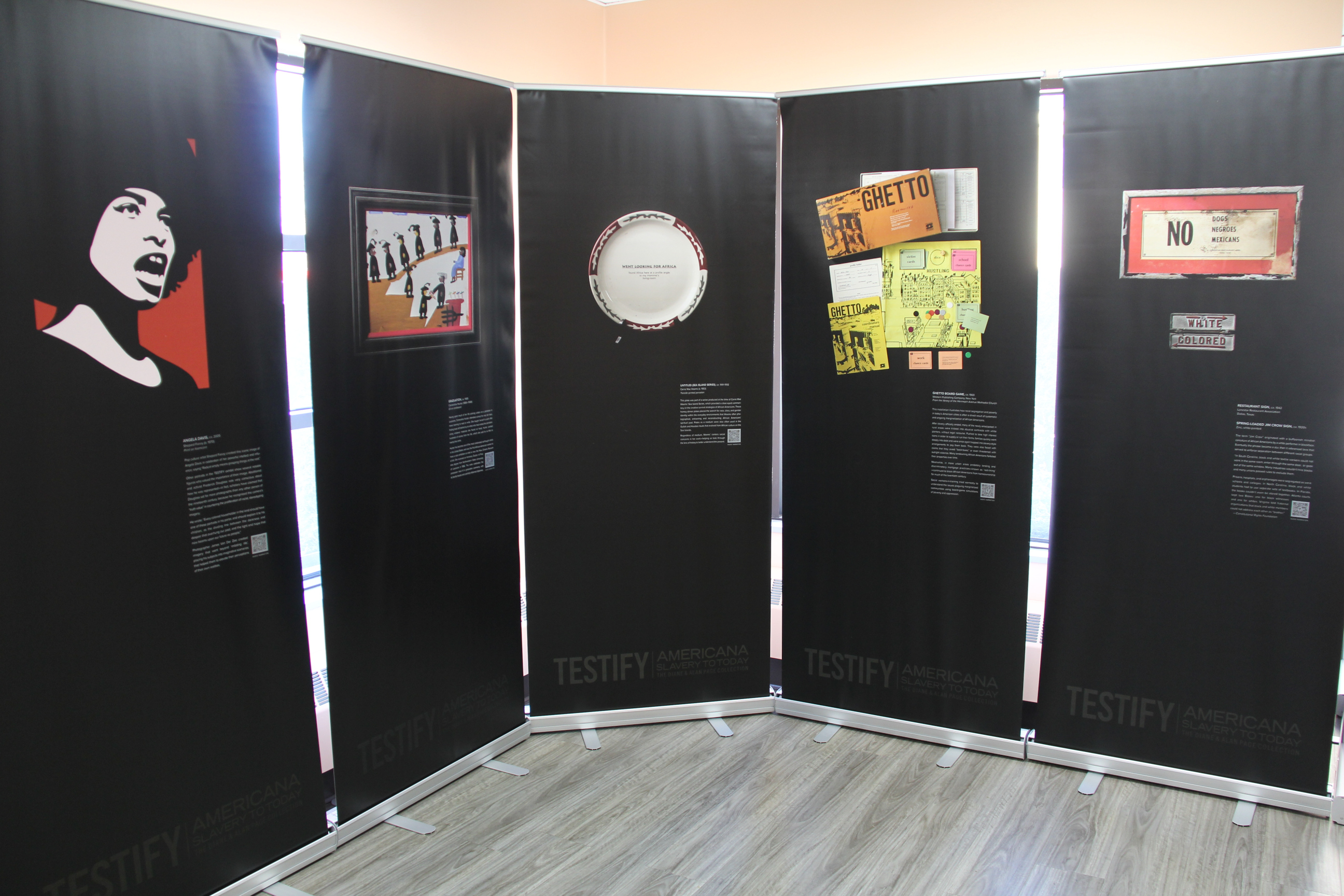
The last five panels cover a span of topics. (Minnesota Prairie Roots copyrighted photo April 2025)

As I walked my way along the 16 towering photo panels paired with text, I began to more fully appreciate the suffering, the abuse, but also the fortitude, of African Americans. Despite everything, they retained strength and resilience.
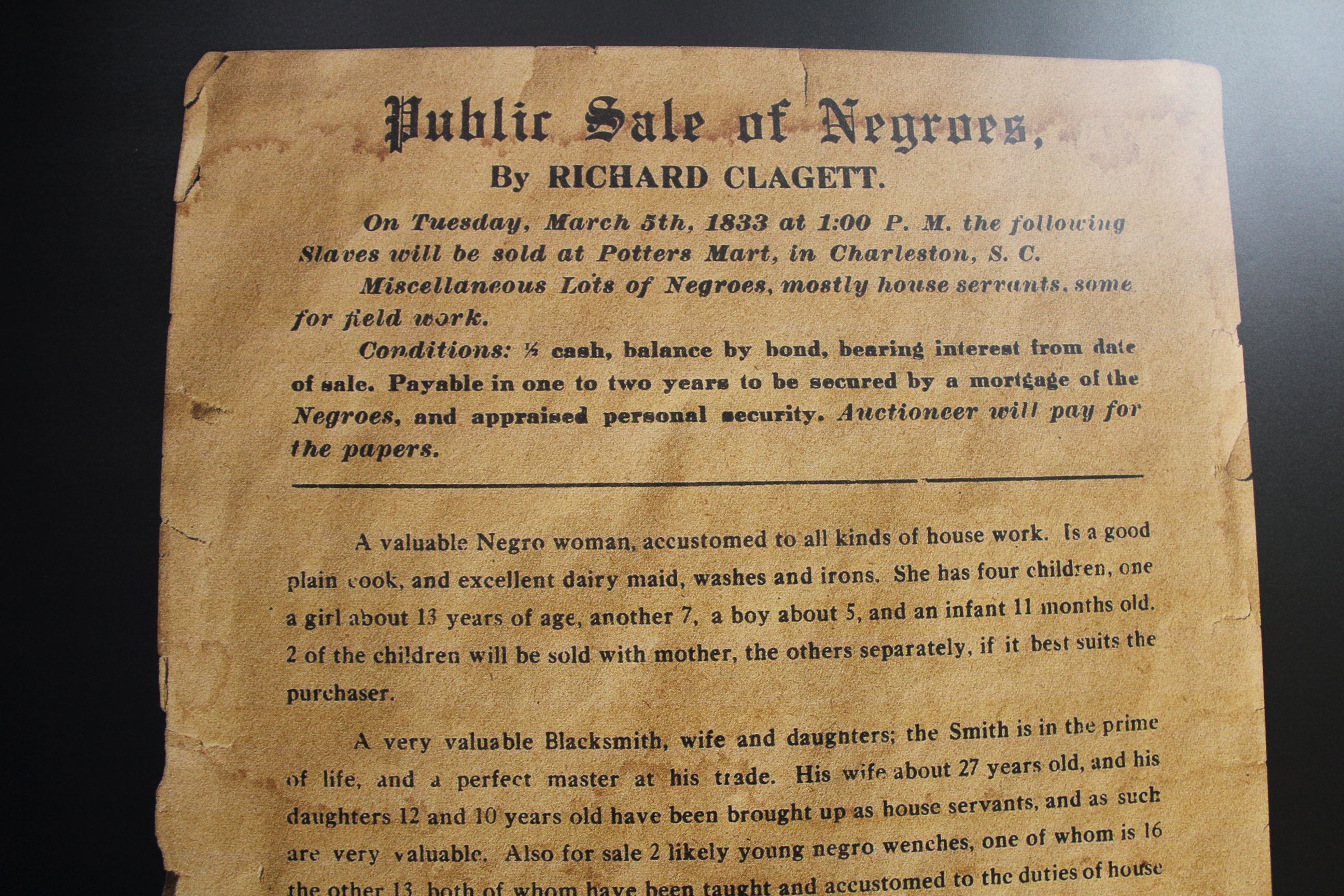
Notice of an 1833 slave auction in Charleston, South Carolina. (Minnesota Prairie Roots copyrighted photo April 2025)

Yet, how hard it must have been at times to hold hope, especially from slavery to the time of Jim Crow laws. When I read a Public Sale of Negroes notice from 1833, I read words of degradation. I cannot imagine being that “valuable Negro woman,” that “very valuable blacksmith,” the slaves in “miscellaneous lots of Negroes” who were auctioned off like so much property. What humanity does to one another seems unimaginable, unfathomable. Yet, it still happens today, just in different ways.
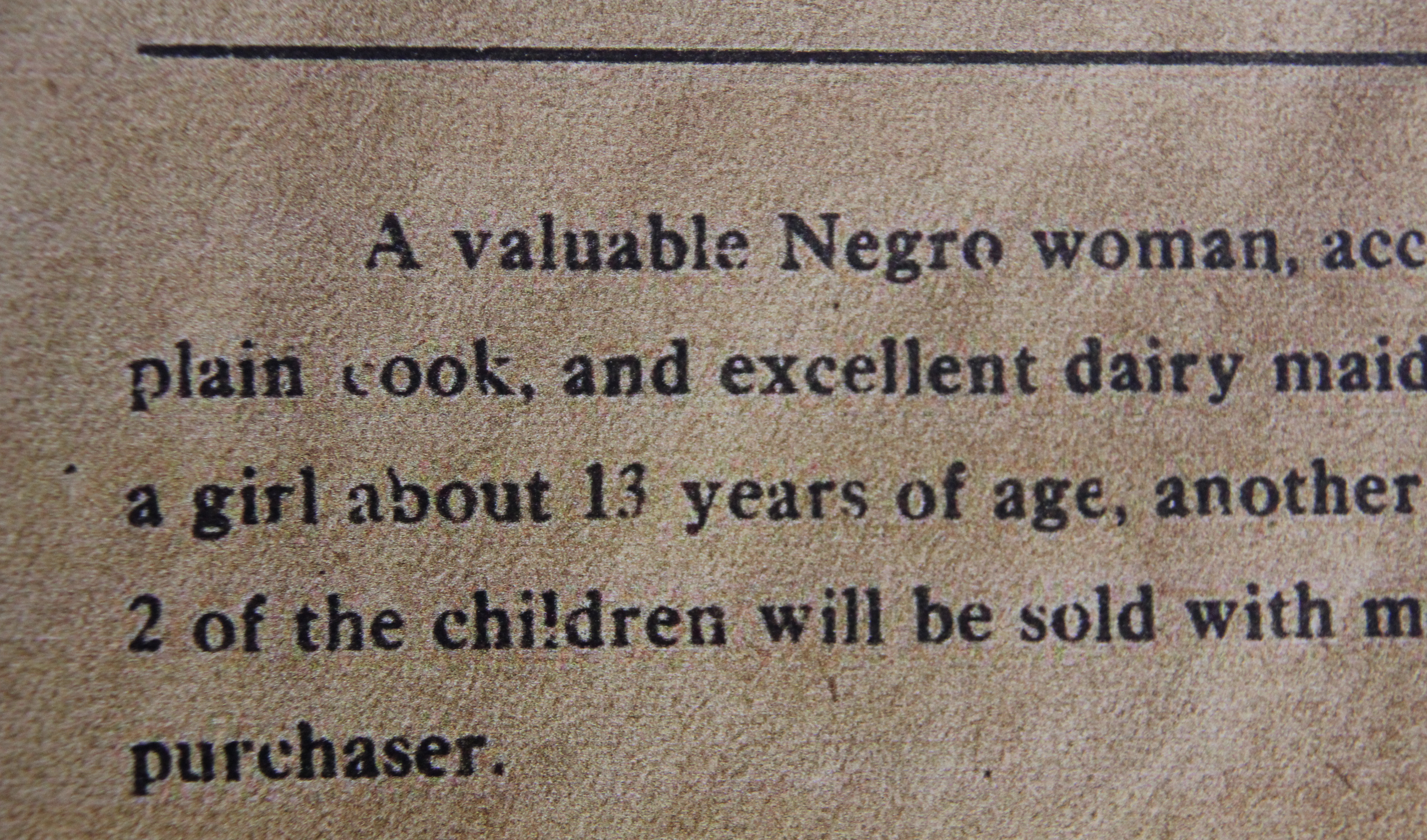
A description of a slave to be sold at the 1833 auction. (Minnesota Prairie Roots copyrighted photo April 2025)

As disturbing as that slave bill of sale was, a group photo of nine unclothed Black toddlers in a professional studio portrait titled “Alligator Bait” proved profoundly disturbing to me. So much so that I can’t bear to show this 1897 image to you. The accompanying text states that historians researched whether hunters actually used African American children as alligator bait. Results were inconclusive, which is telling.
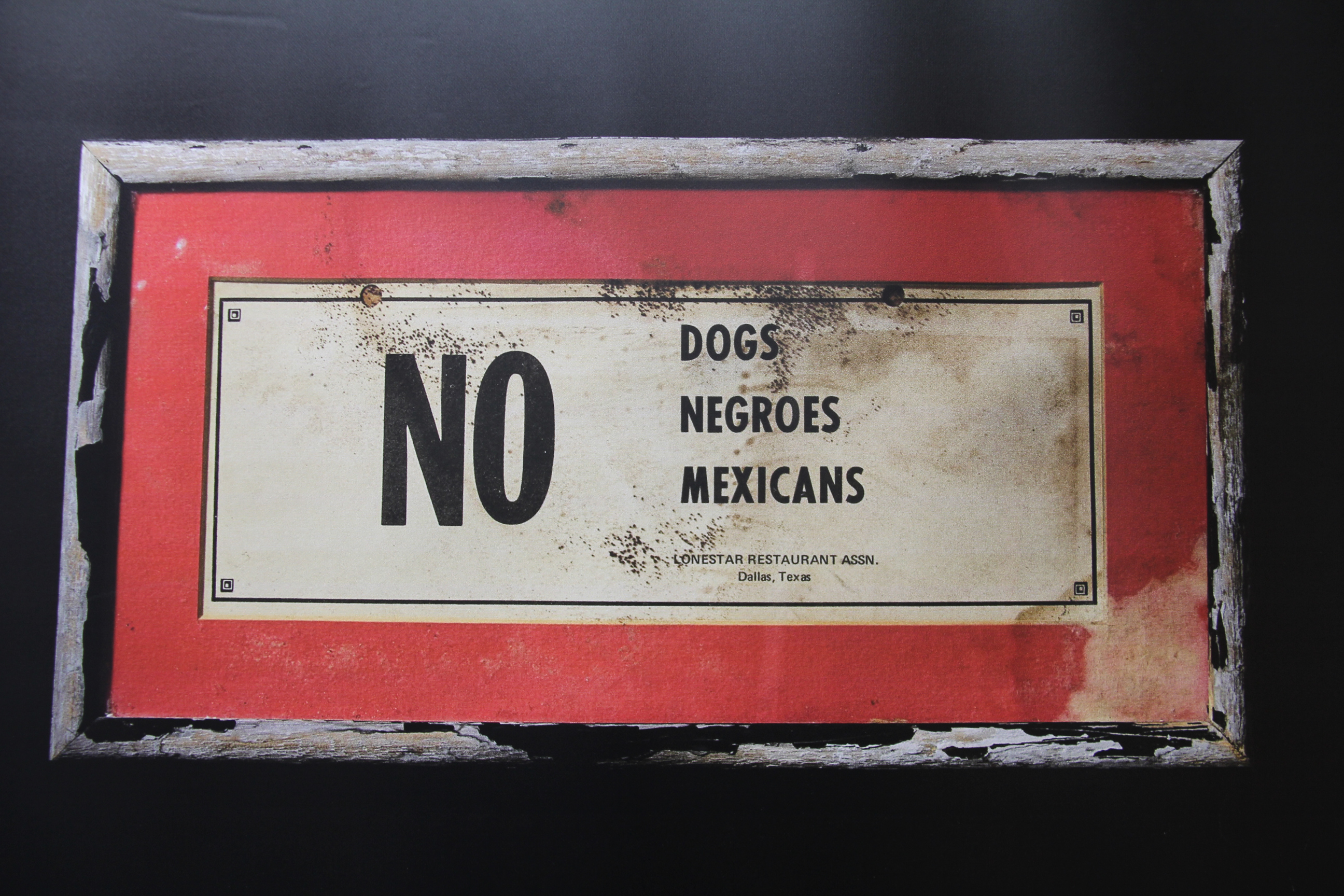
An unwelcoming 1942 sign from the Lonestar Restaurant Association in Dallas, Texas. (Minnesota Prairie Roots copyrighted photo April 2025)
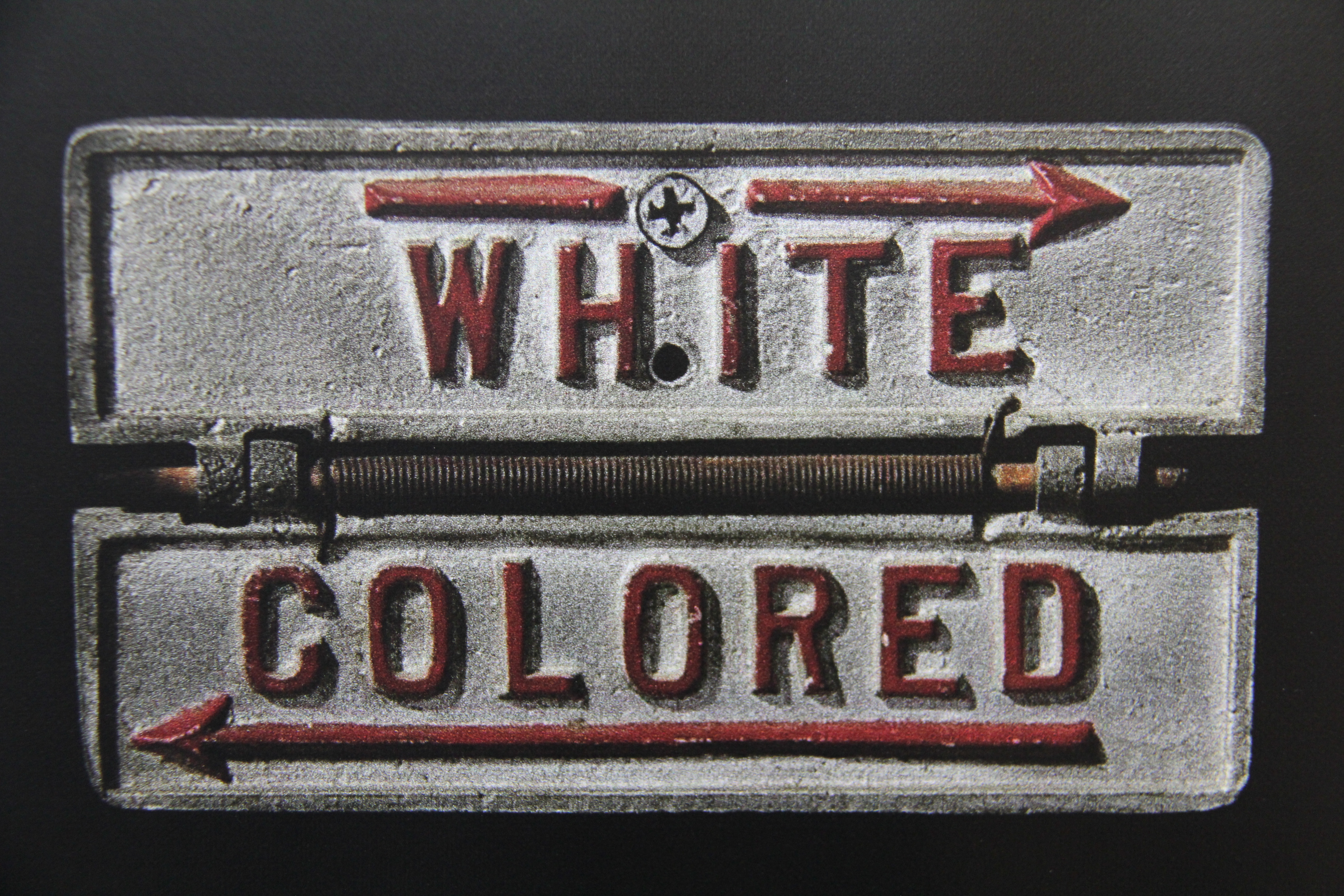
A 1920s spring-loaded Jim Crow sign. (Minnesota Prairie Roots copyrighted photo April 2025)
Protest art from the Civil Rights Movement. (Minnesota Prairie Roots copyrighted photo April 2025)

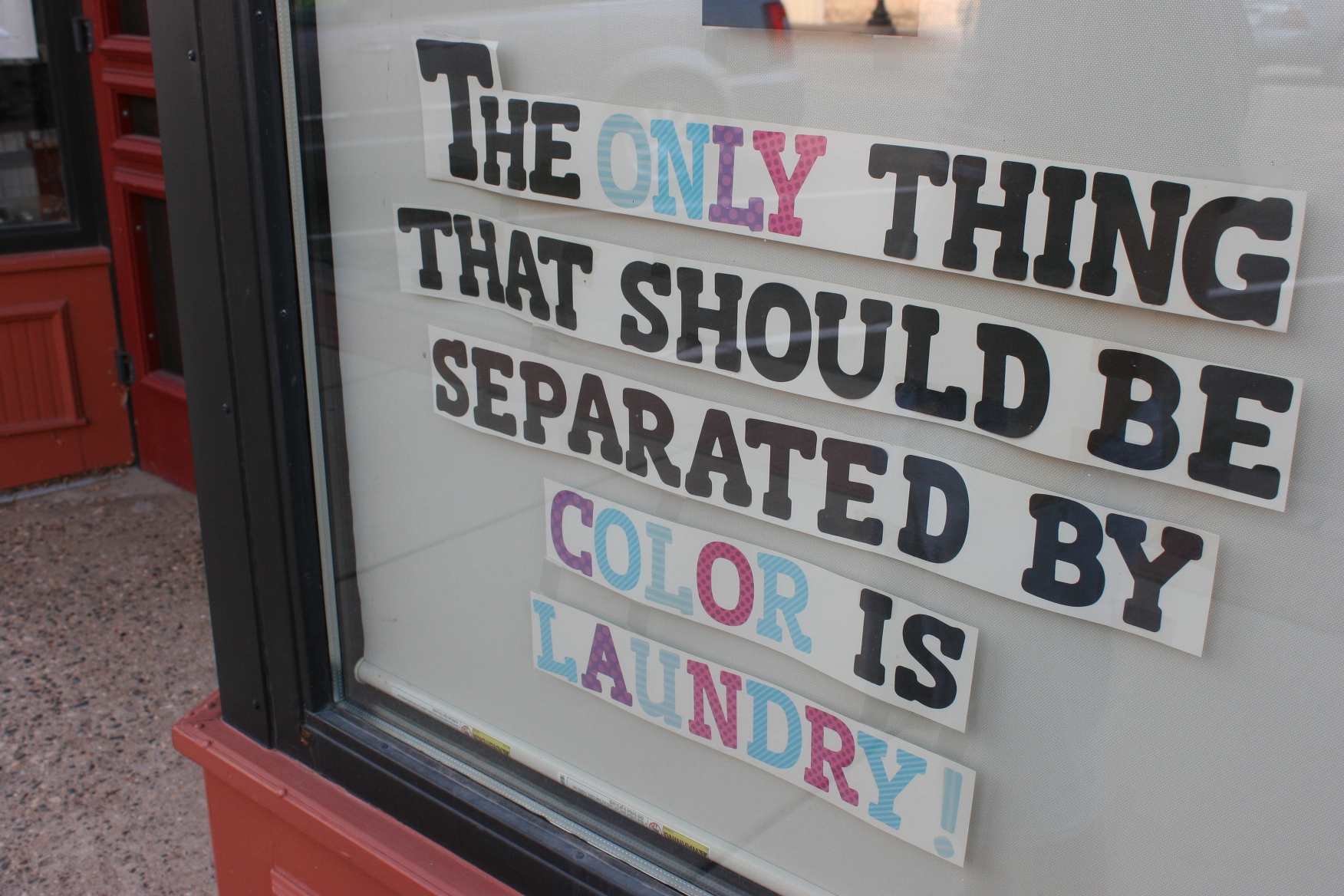
A sign banning “dogs, Negroes and Mexicans” and another pointing Whites one way and “Colored” people the other prompted thoughts of, well, things have not changed all that much. Of course, they have, but not really if you dig deep or, conversely, read today’s headlines.
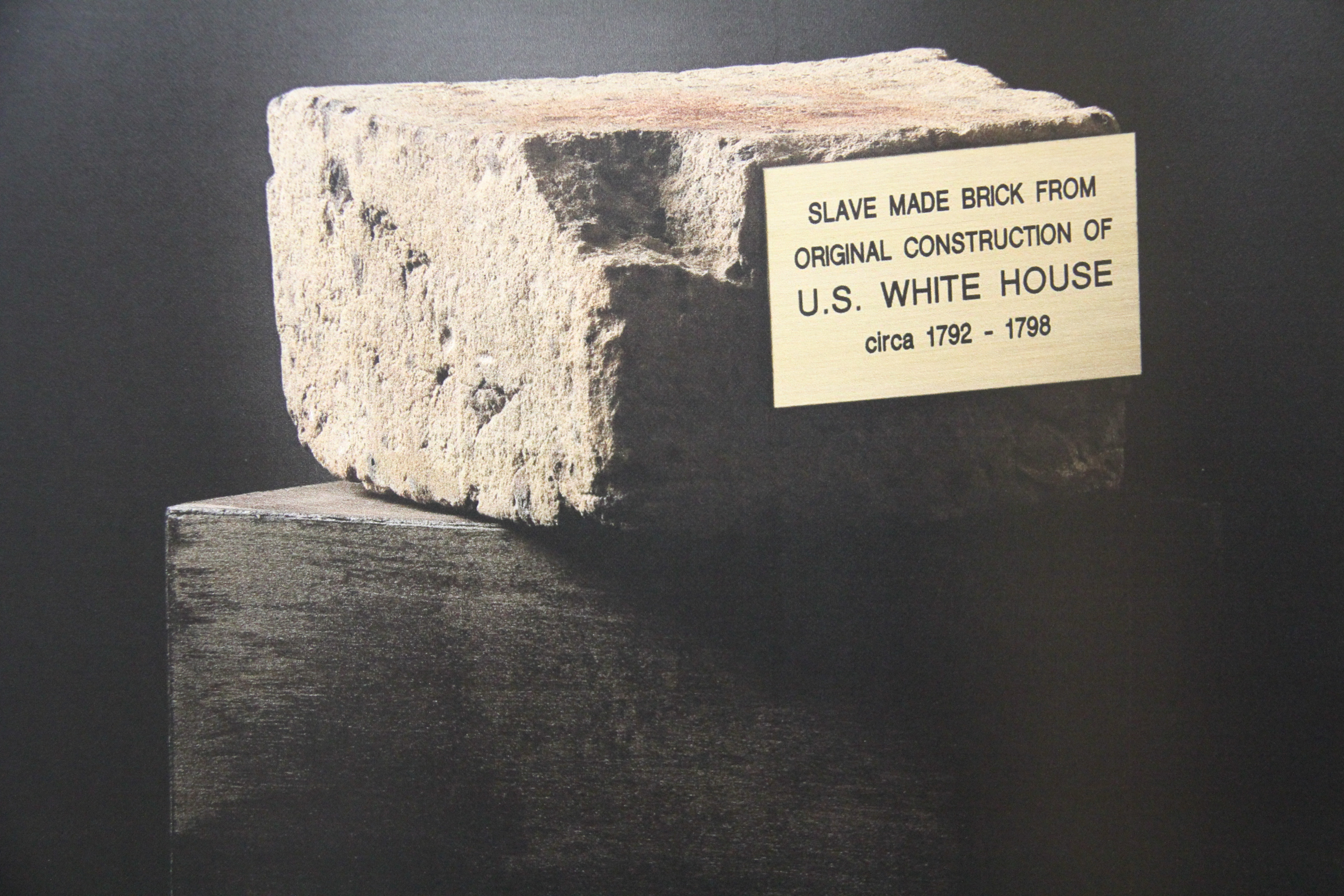
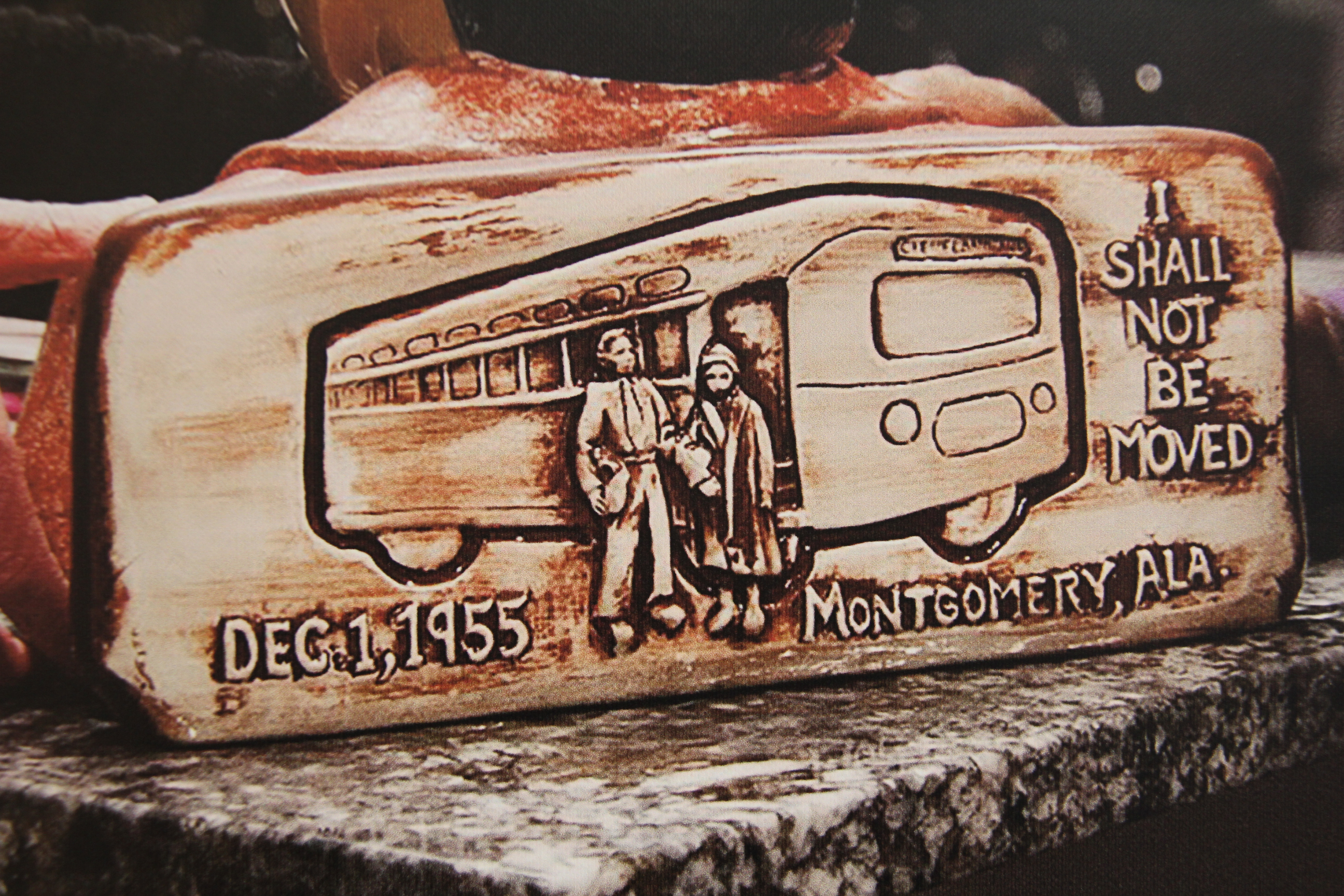
A brick crafted by slaves for the White House. (Minnesota Prairie Roots copyrighted photo April 2025)

I want to backtrack for a minute to the first photo I saw in the exhibit. It was of a single brick, circa 1792-1798. This singular object drove home the point that this country was built on the backs of slaves, like those who molded and laid the bricks for government buildings in Washington DC. That includes the White House and many U.S. Capitol buildings, according to the exhibit text. Unpaid slave labor. Think about that for a minute or ten.
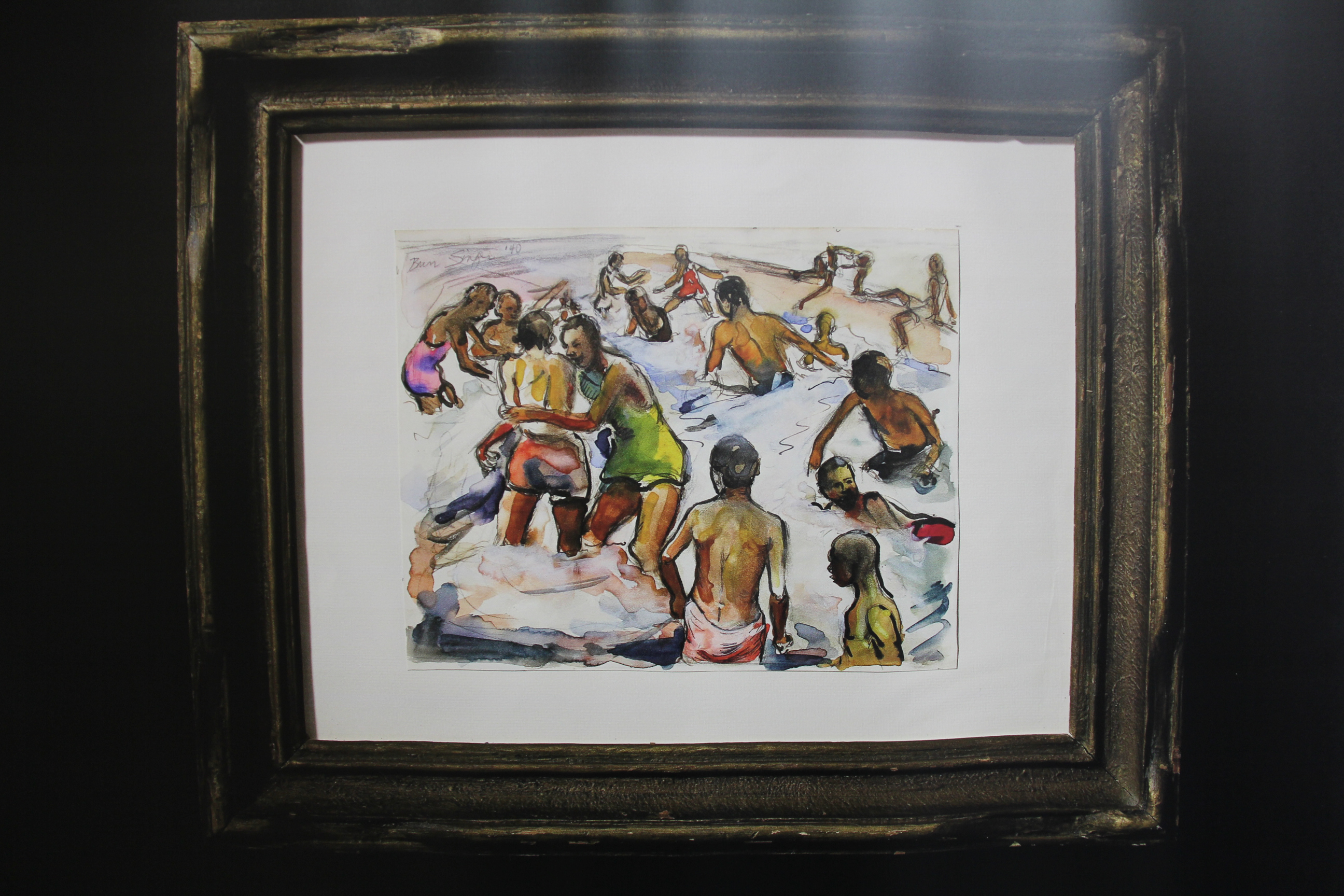
“Only on Thursdays,” a 1940 painting by Burr Singer. (Minnesota Prairie Roots copyrighted photo April 2025)

There’s lots to contemplate in the “Testify” exhibit. That includes the watercolor art of Burr Singer titled “Only on Thursdays.” If you just looked at the art without the title and context, you might think it was simply a depiction of African Americans swimming. But it’s not. Thursday was the only day Blacks could use the Pasadena public pool. This painting makes a statement.
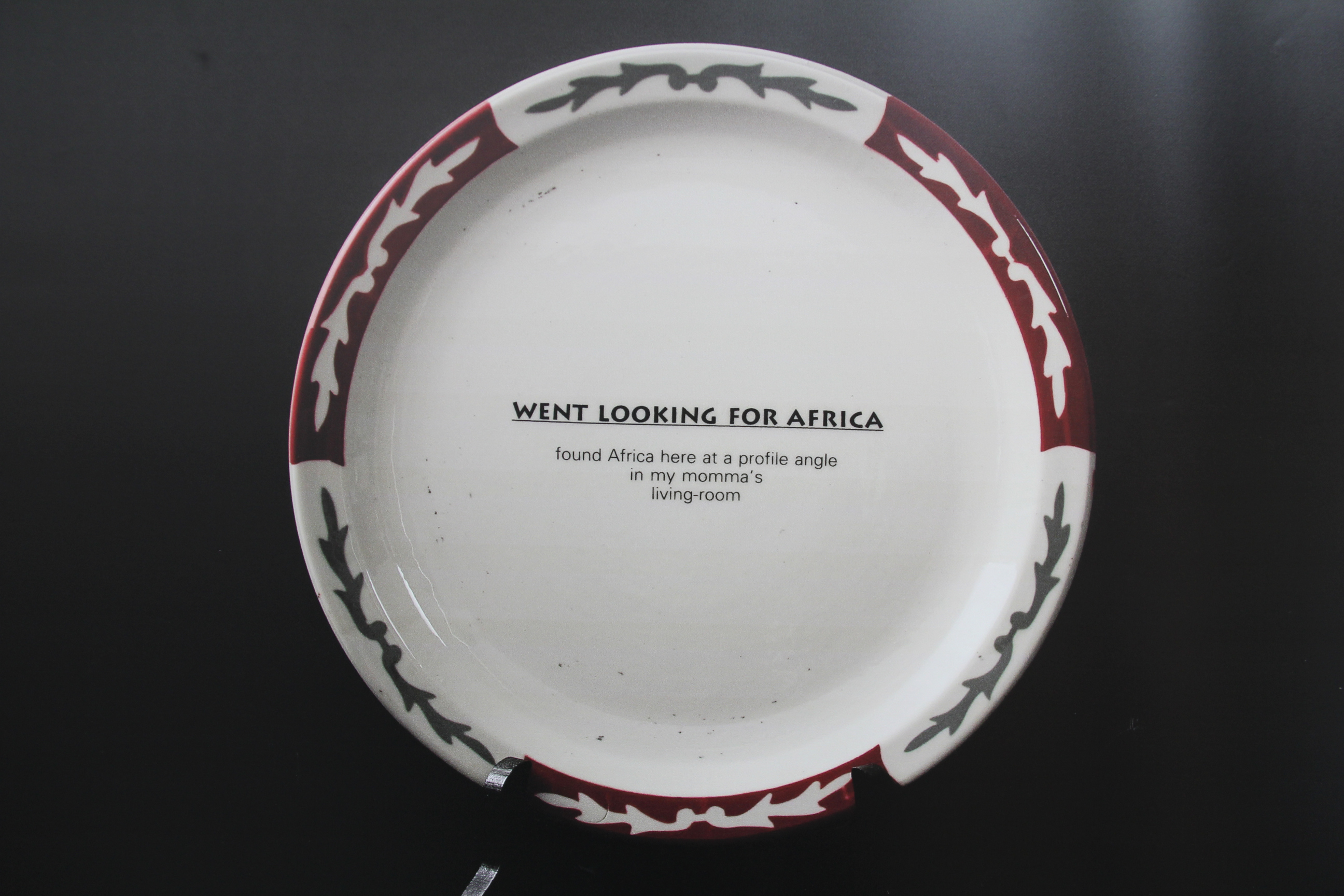
This 1991-1992 plate in Carrie Mae Weems’ Sea Island Series honors the creative survival strategies of African Americans. (Minnesota Prairie Roots copyrighted photo April 2025)

This exhibit makes a statement. Through images and words, it shines a light on the past, on Black history, on the atrocities of slavery and segregation and racism (both subtle and overt). Through “Testify,” truth-telling emerges for all to view and contemplate.
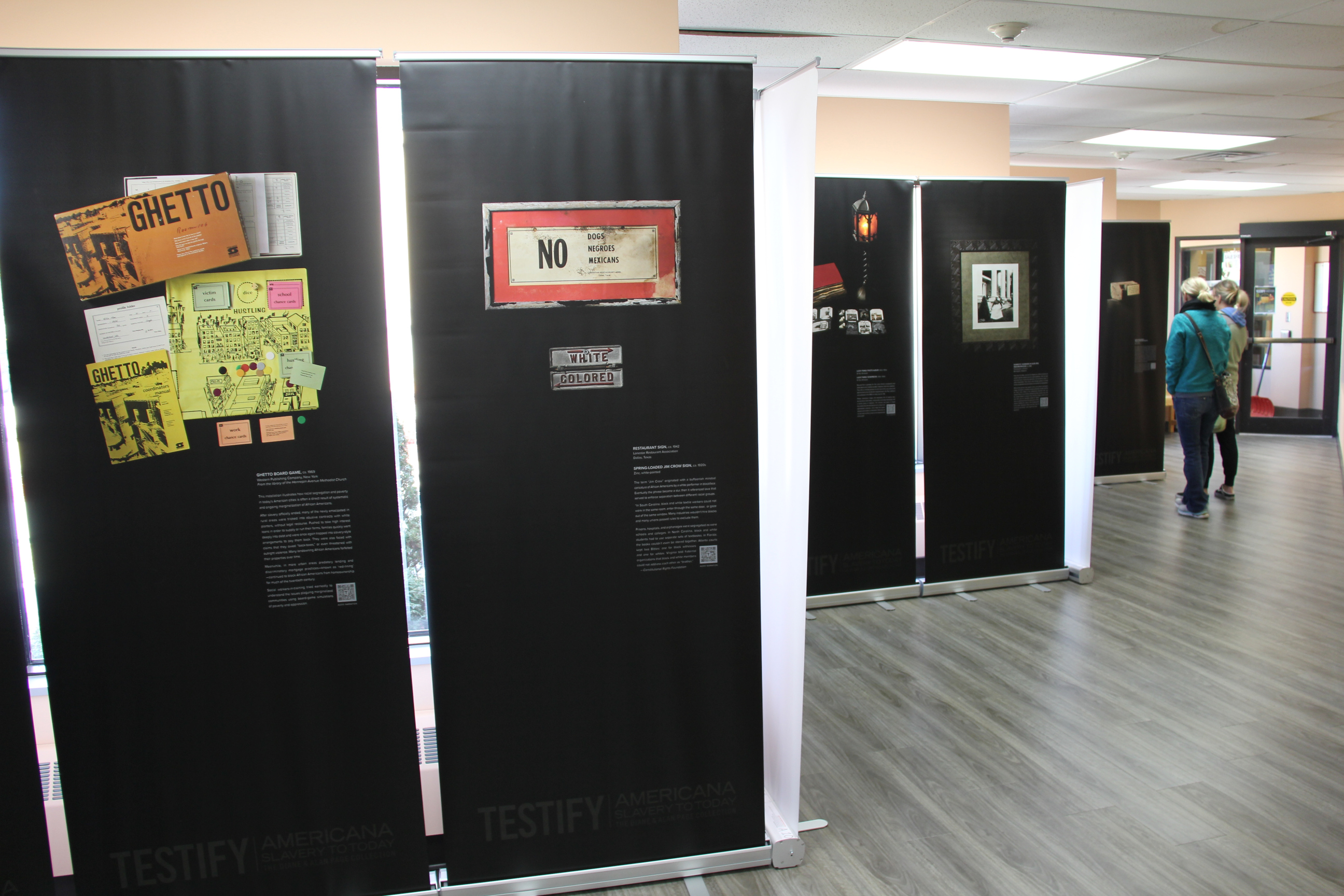
The panel to the far left shows a photo of the board game GHETTO. Social workers in training used the game to understand issues facing marginalized communities. (Minnesota Prairie Roots copyrighted photo April 2025)

FYI: “Testify—Americana Slavery to Today” is on display until April 23 in the corridor linking Buckham Memorial Library to the Faribault Community Center. The photos and information included in this story are only a sampling of what you will see in the exhibit. The Mabel Public Library hosts the exhibit from April 25-May 7.

© Copyright 2025 Audrey Kletscher Helbling


Thoughts on slavery & race on Juneteenth June 19, 2022

Photographed in August 2018 in a storefront window of a business in downtown Faribault, Minnesota. (Minnesota Prairie Roots file photo 2018)

AS A WHITE WOMAN and writer living in rural Minnesota, writing on the topic of Juneteenth isn’t easy or comfortable. Yet, it’s important for me to do so, to publicly recognize the federal holiday commemorating the emancipation of enslaved African Americans.

Why? Simply put, I care. I care that African Americans were treated with such disrespect, that they were “owned,” for no one should “own” anyone. Yet, these men, women and children were owned, used and abused by White slave owners who worked them, controlled them, imprisoned them, built our country’s early economy on their hardworking backs.

Artist Susan Griebel crafted this quilted art from fabric her mother-in-law, Margaret Griebel, acquired in Africa. Margaret’s husband served as a missionary in Nigeria. (Minnesota Prairie Roots copyrighted file photo)

I don’t pretend to be any sort of expert on slavery. But the very thought of it shakes me to the core. I can only imagine the emotions felt by those whose ancestors worked in servitude—in cotton and tobacco fields, in homes, in barns, on vast plantations…

Taking time on one June day to reflect on the freeing of slaves seems the least I can do. June 19th marks the date in 1865 when federal troops arrived in Galveston, Texas, to ensure the freedom of all enslaved people.

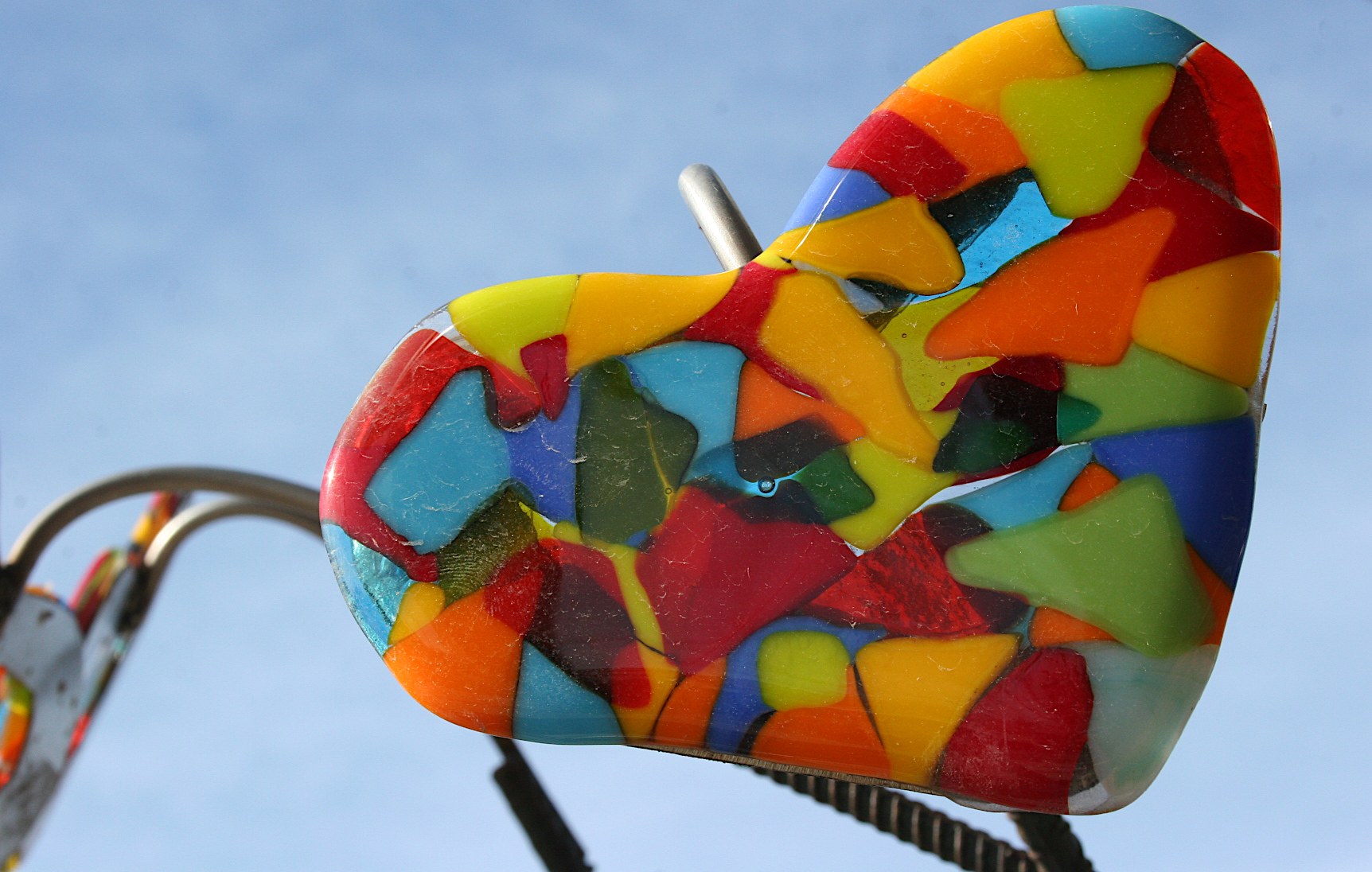
One of many hearts incorporated into a sculpture, “Spreading the Love” by Geralyn Thelen and Dale Lewis, located in downtown Northfield, Minnesota. (Minnesota Prairie Roots copyrighted file photo 2022)

Beyond reflecting on this date in history, I’ve tried to educate myself by reading, a skill most slaves were denied. Reading, whether stories written by reliable media, nonfiction or even fiction rooted in history, opens my mind to understanding. And with understanding comes compassion and an unwillingness to remain silent.

Too many times during my 60-plus years of life I’ve seen (think Confederate flags) and heard the animosities expressed toward people of color. And while this doesn’t apply specifically to Black people and slavery, I will speak up if someone starts bashing our local immigrant population with false claims and other unkind words. I fully recognize that, because my skin is colorless, my life is likely easier without preconceived ideas/prejudices/denied opportunities.

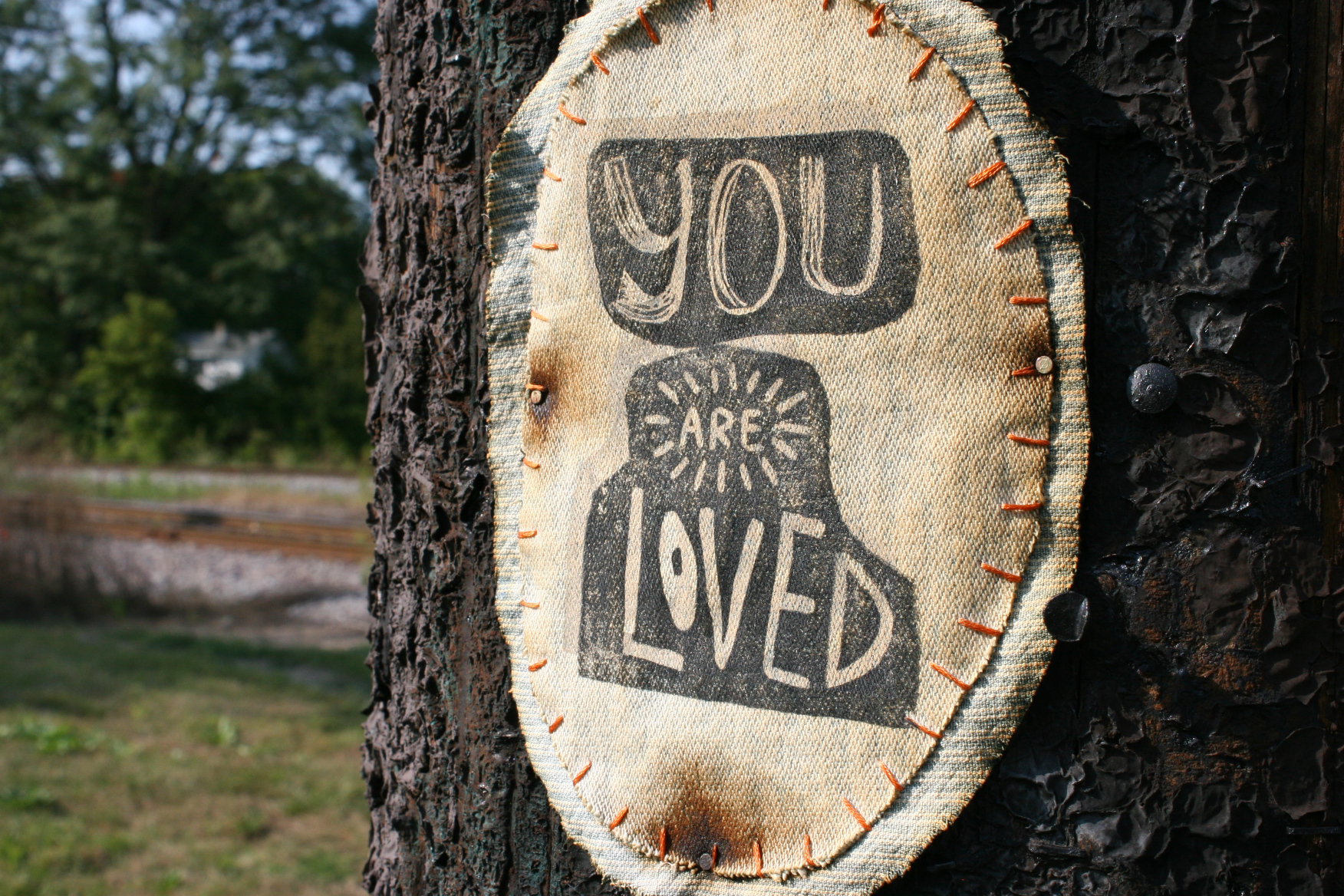
Love this uplifting message posted along a recreational trail in the Atwood Neighborhood of Madison, Wisconsin. (Minnesota Prairie Roots copyrighted file photo)

I appreciate that thoughts in this country are shifting, that we as a people are acknowledging past wrongs, that we’re trying. On the flip side, I see, too, hatred rising in ways I would never have imagined possible.

I admit that I grew up in a household where my father occasionally used the “n” word. It hurts to write that. The “n” word was part of his rural vocabulary, of the time, of growing up among others just like him. White. I grew up similarly, totally surrounded by those of Scandinavian, German, Polish, Irish and other descent, none with roots in Africa.

But I moved away, grew my knowledge and experiences, grew my exposure to new ideas and people and places. I’ve also gained insights into the challenges Blacks face from a biracial son-in-law. Today I live in a diverse neighborhood of Americans who are White, Latino, African…and I’m thankful for that. They carry, in their family histories, struggles and joys, the imprints of those who came before them. Today I honor those African Americans in Texas who 156 years ago first celebrated their freedom from slavery with “Jubilee Day” on June 19, 1866. And I honor all those slaves forced into lives not of their choosing, without freedom, but determined to be free.

© Copyright 2022 Audrey Kletscher Helbling