Minnesota Prairie Roots

Writing and photography by Audrey Kletscher Helbling

Reflecting on bee lawns, invertebrate inns, learning & the future August 29, 2024

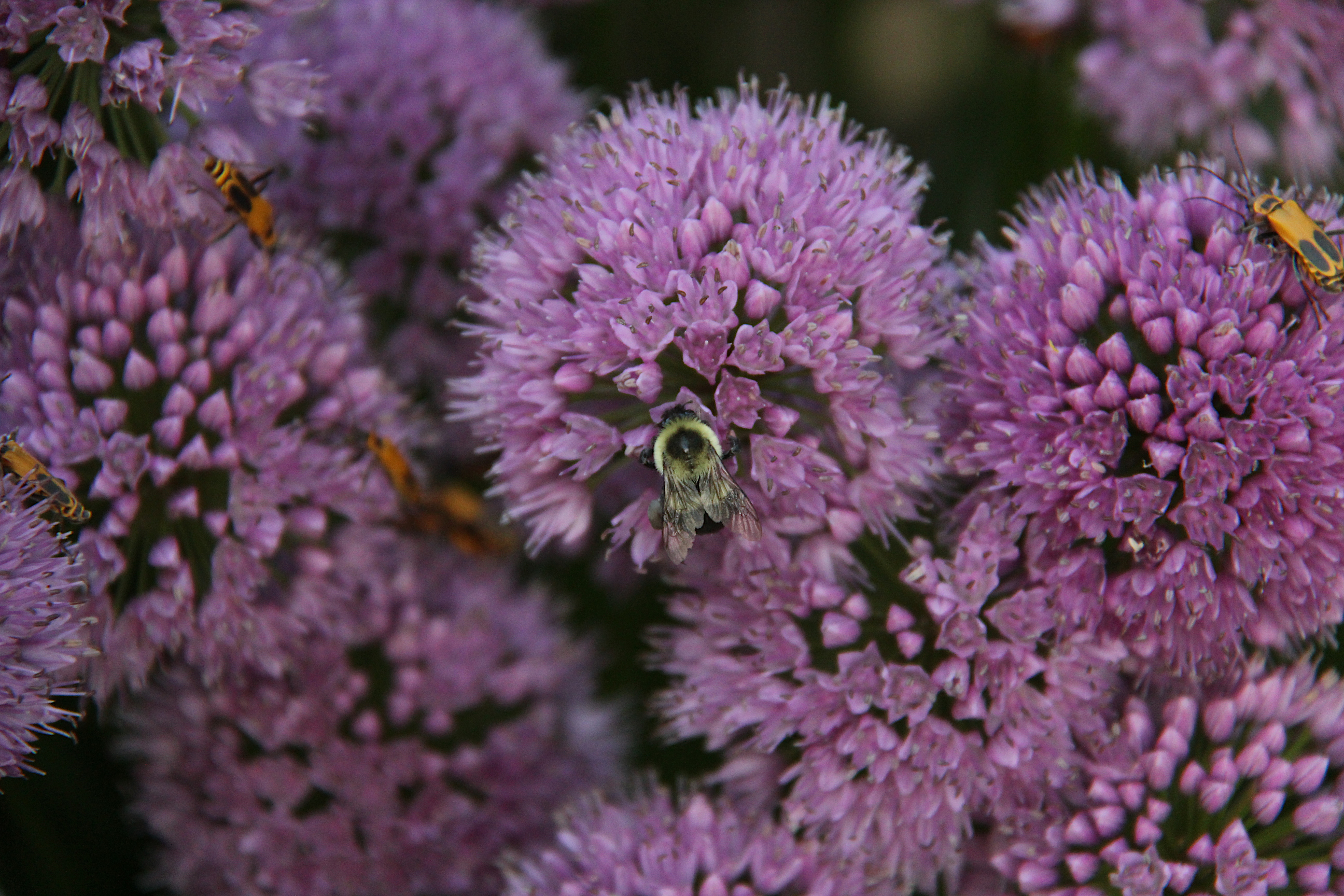
I spotted this bee and other bugs on flowers in the Rice County Master Gardeners’ Teaching Gardens. (Minnesota Prairie Roots copyrighted photo August 2024)

ADMITTEDLY, I NEVER EXCELLED in science. I sort of just got by, learning what I needed to learn to get reasonably good grades in science class. But if I was to go back to the classroom, I’d listen more intently, ask more questions, figure out how the information I was taught actually related to me and my world. In other words, I wouldn’t simply absorb, regurgitate and then move on, which seemed to be the way subjects were taught when I was a student.
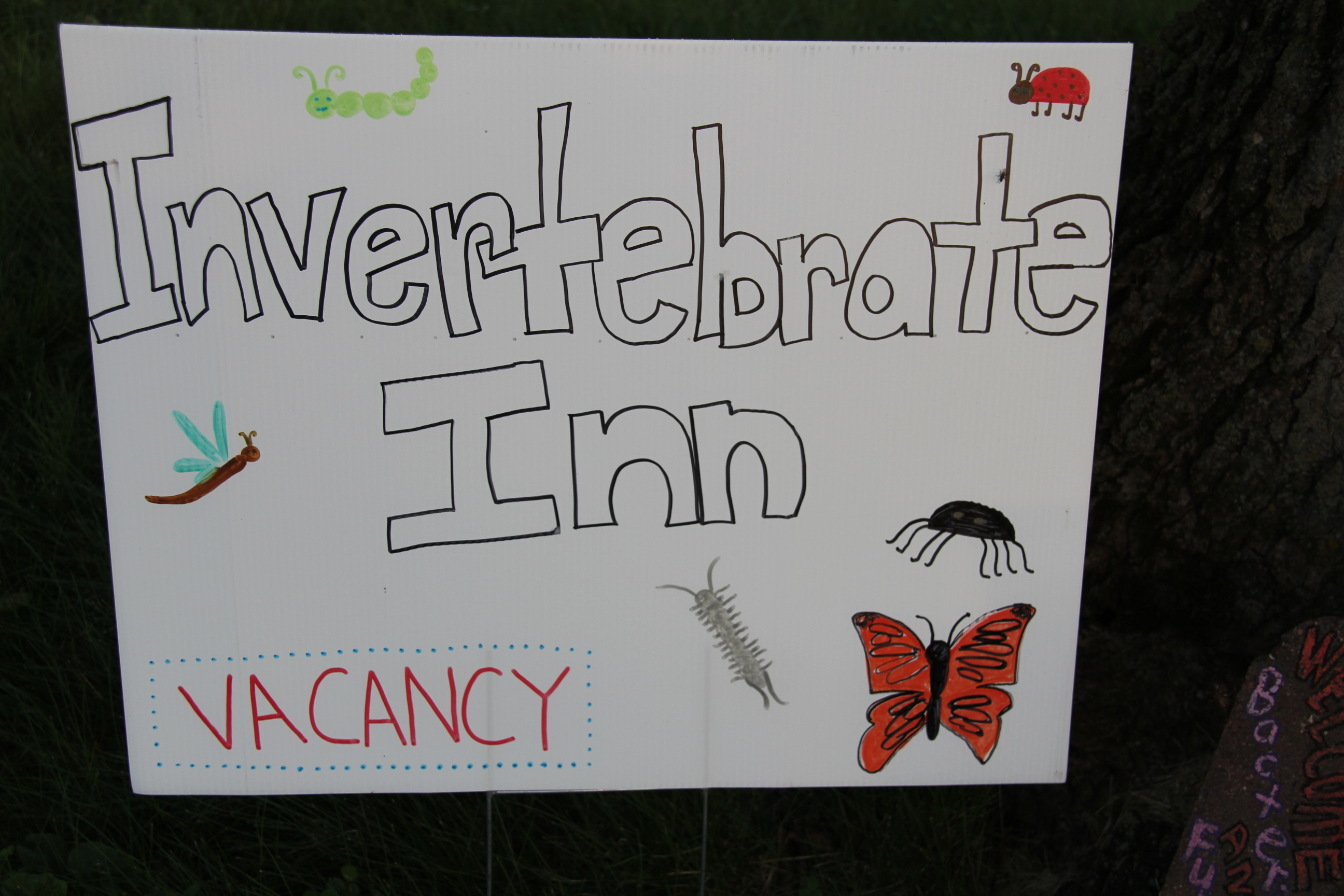
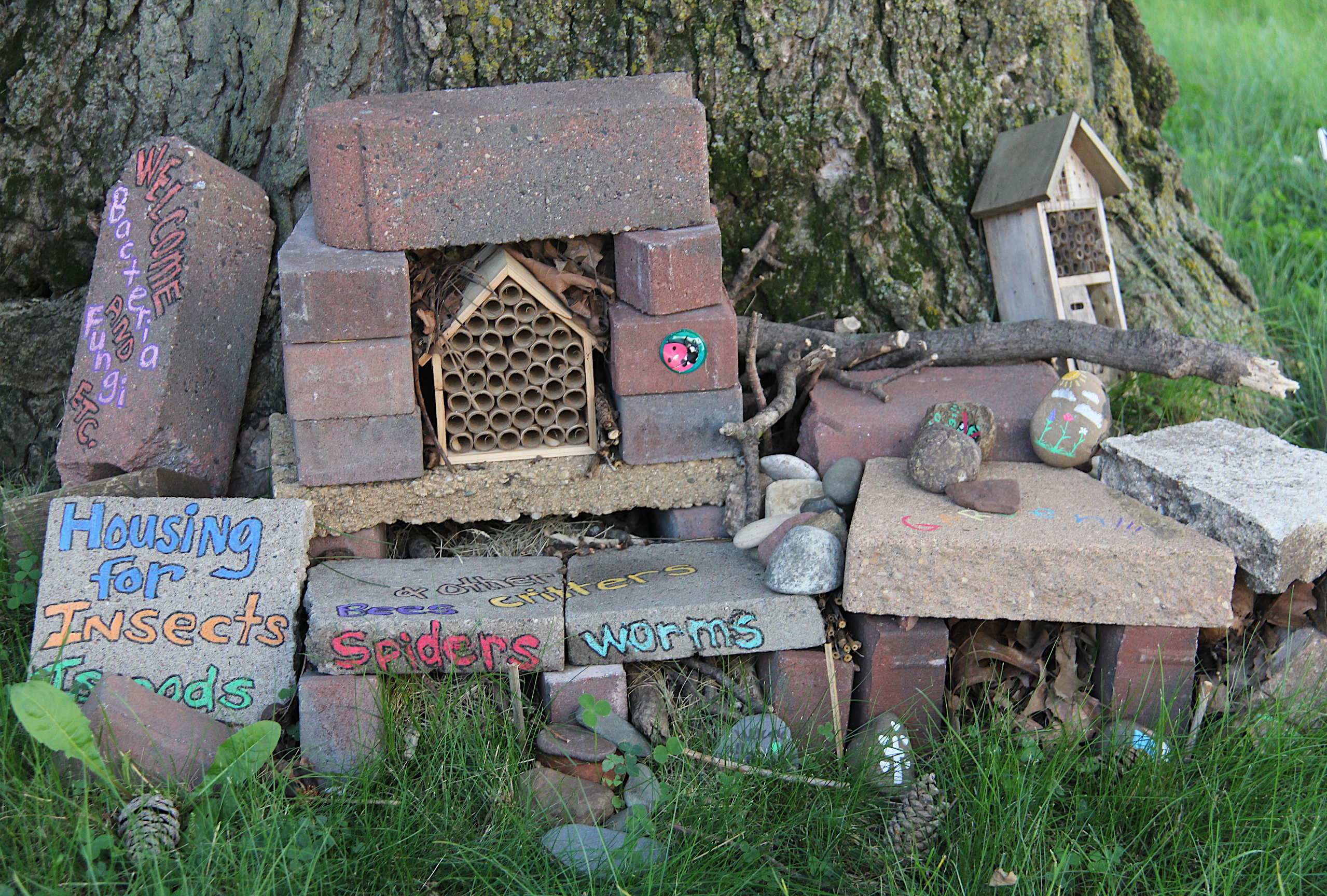
This sign drew me to the base of a tree, where I found an inn and a bee lawn. (Minnesota Prairie Roots copyrighted photo August 2024)
Bricks, stones, sticks and more comprise this haphazard housing unit. (Minnesota Prairie Roots copyrighted photo August 2024)
Identifying signage on the Invertebrate Inn. (Minnesota Prairie Roots copyrighted photo August 2024)

Now, as an adult, and an aged one at that, I realize that the core of learning is not memorization. It is rather taking in information that sparks interest, raises questions, causes independent thinking. I am still learning well into my sixties, this year marking 50 years since I graduated from high school.
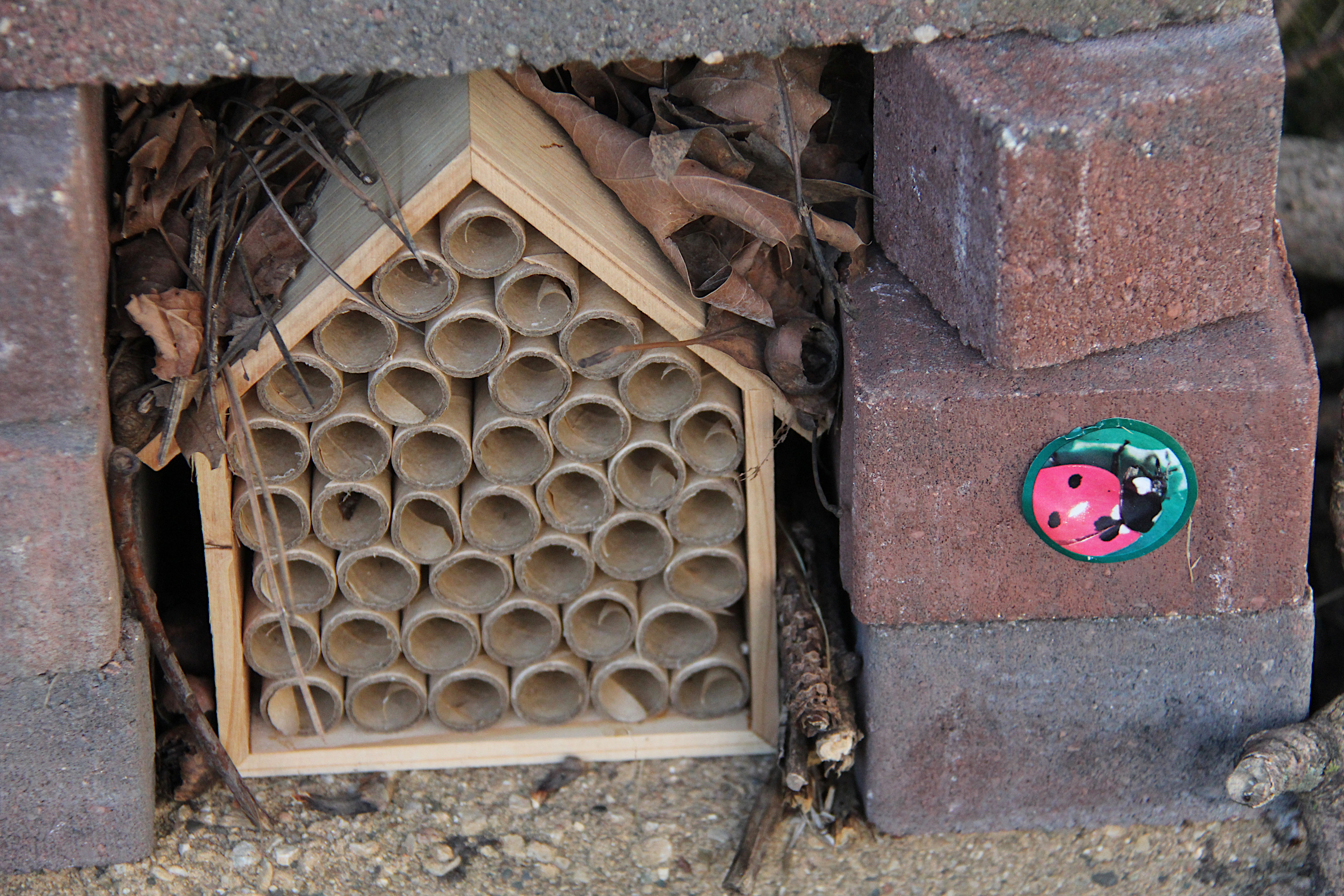
I trust this structure would be a good home for a bug. (Minnesota Prairie Roots copyrighted photo August 2024)

Today I learn because I want to, not because I need to take some class for credits or to earn a degree.
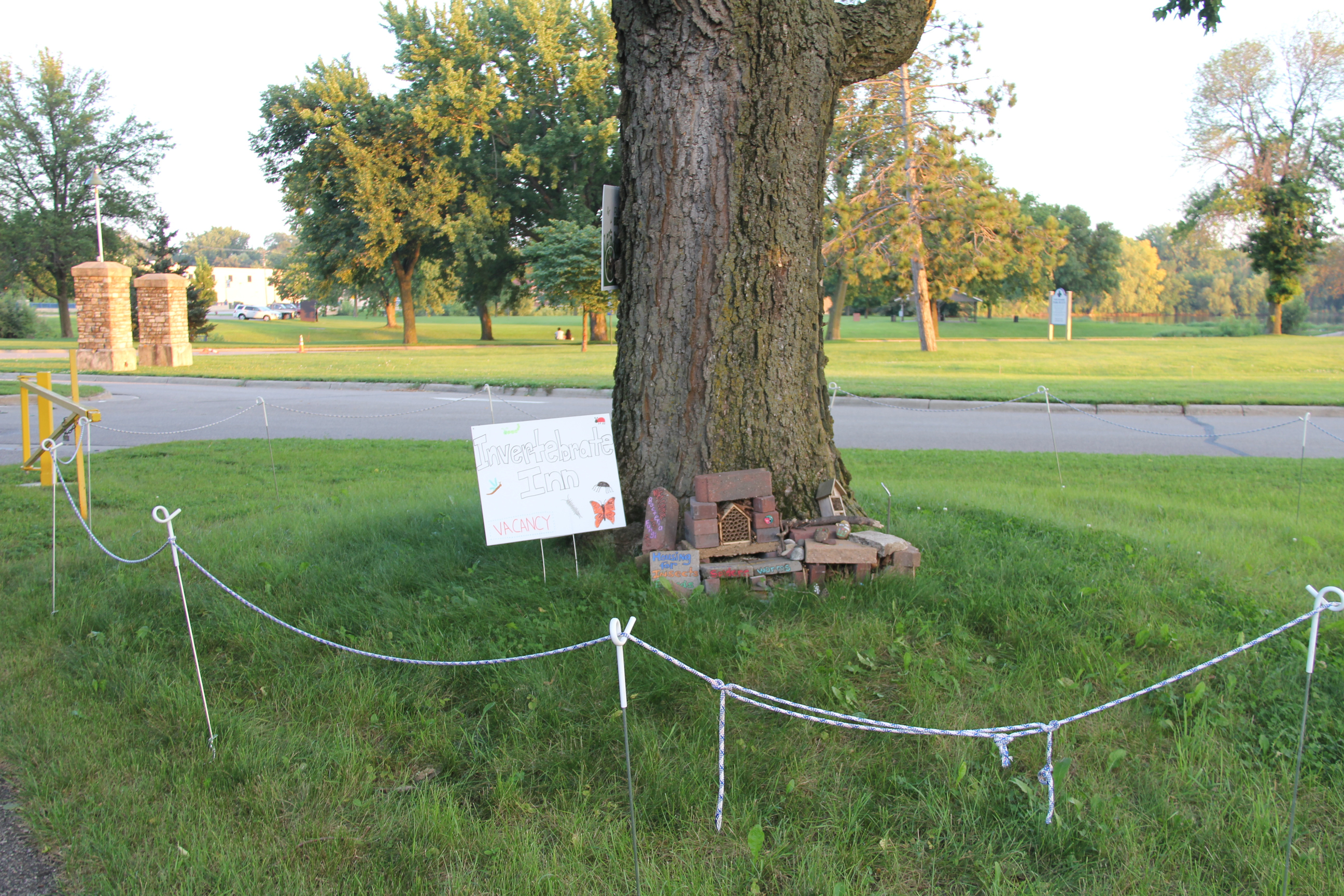
The bee lawn was roped off when I visited. (Minnesota Prairie Roots copyrighted photo August 2024)
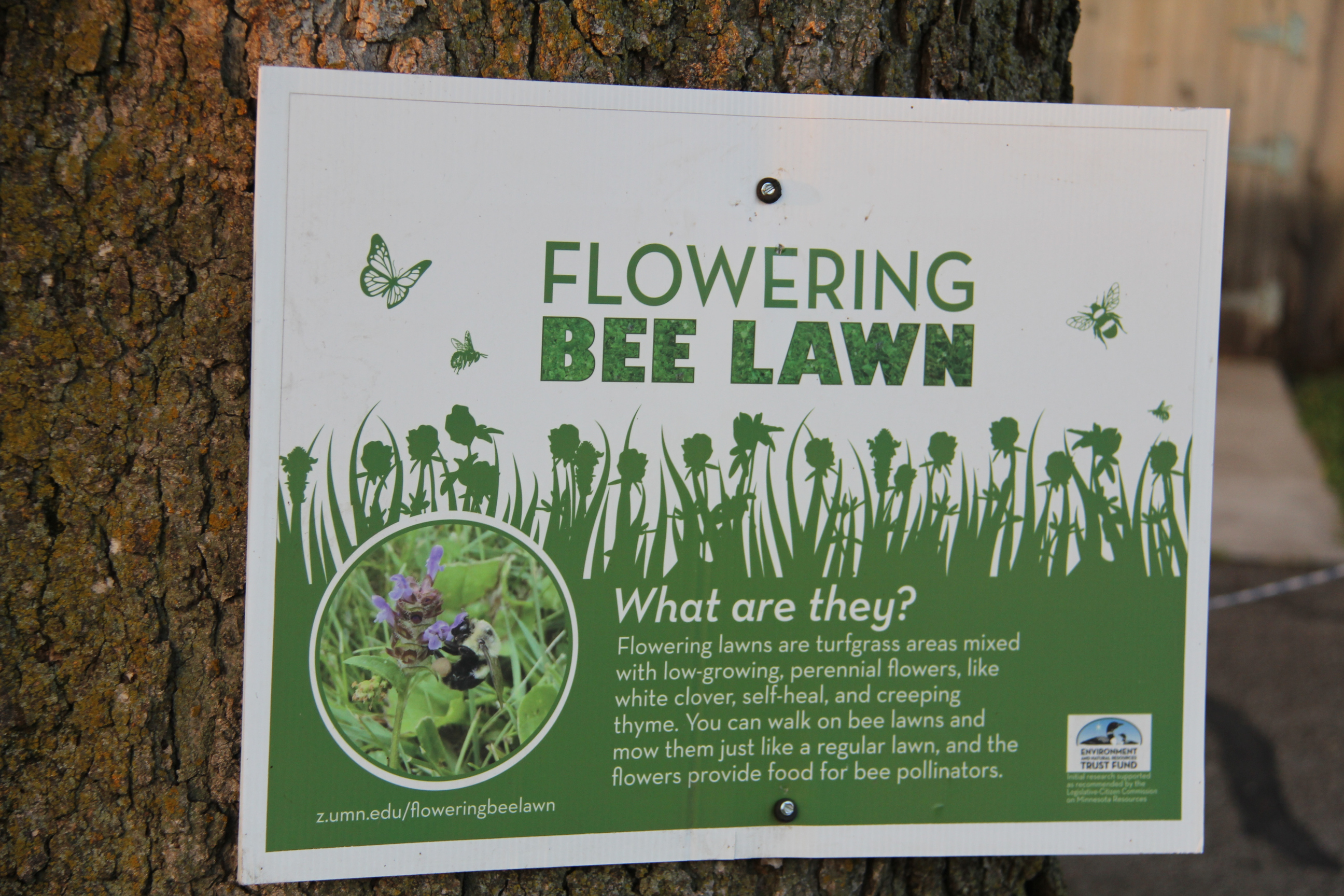
Signage on the tree explains a flowering bee lawn. (Minnesota Prairie Roots copyrighted photo August 2024)
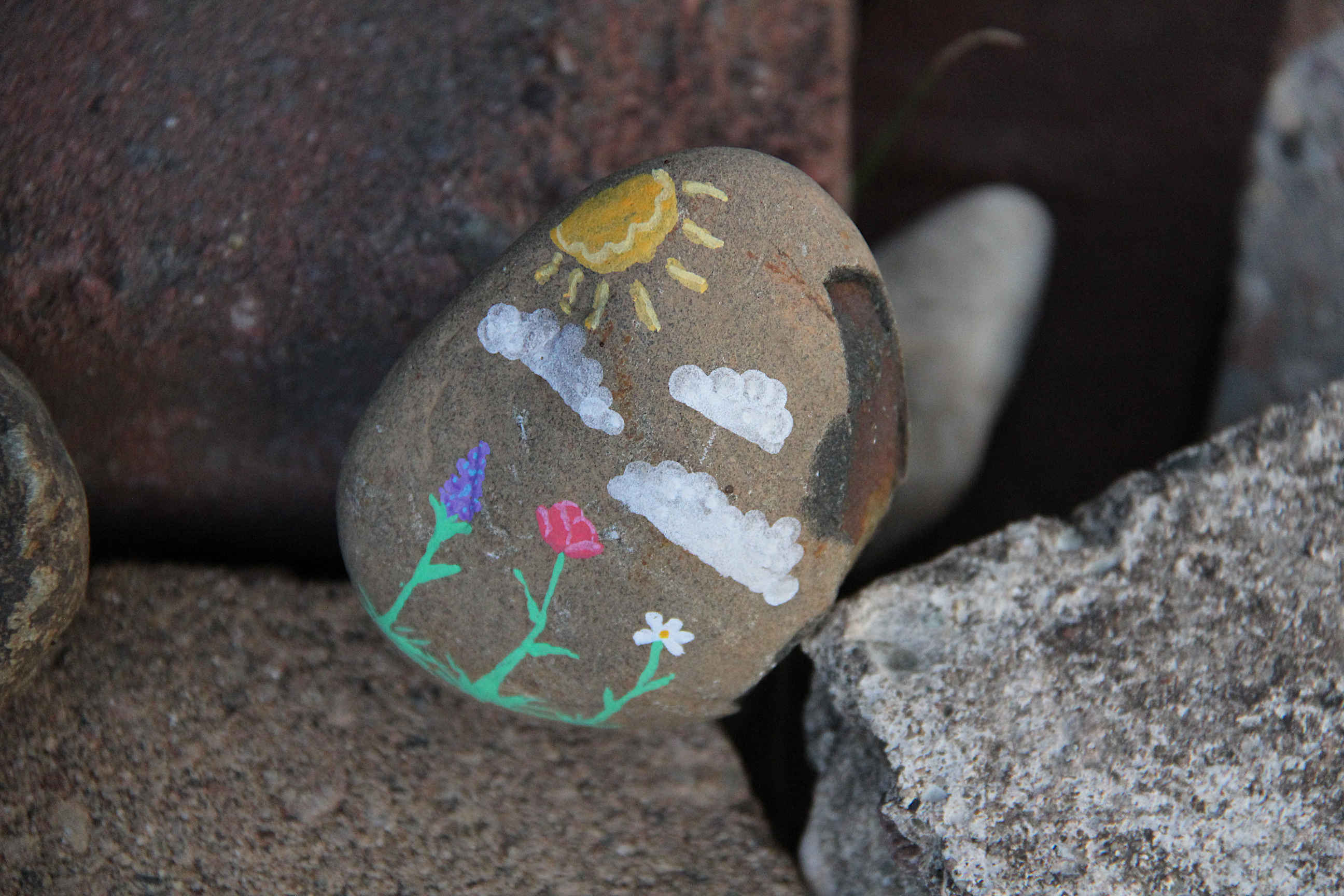
Fitting floral rock art in the inn. (Minnesota Prairie Roots copyrighted photo August 2024)

My latest delve into science was prompted by a visit to the Rice County Master Gardeners Teaching Gardens in Faribault. There I spotted an Invertebrate Inn and a bee lawn, recent additions to the beautiful gardens located at the Rice County Fairgrounds. These are not exactly novel ideas. But I’d not previously considered them much and how they benefit the natural world. Low-lying bee lawns, with their clover and other flowers like creeping thyme, provide nectar and pollen for pollinators.
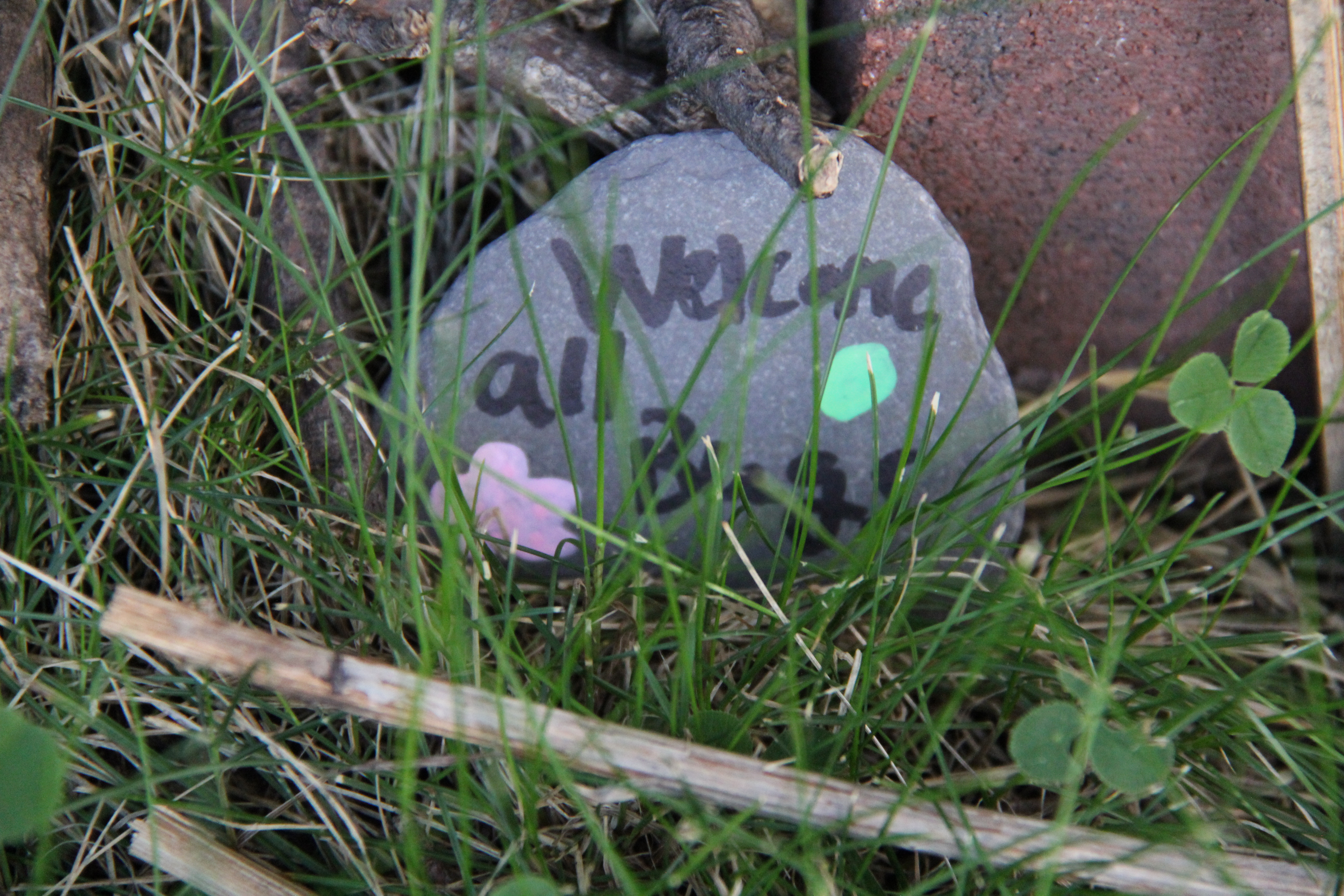
At the inn, a welcome sign for guests. (Minnesota Prairie Roots copyrighted photo August 2024)

In some ways, the inn and the bee lawn remind me of childhood days on the farm with our grass anything but weed-free and manicured. Dandelions and clover were prolific. No weedkiller or insecticides were used except on crops. No nothing applied to the grass, because who cared and who had time to nurture a lawn when there were crops to plant and cultivate and animals to tend?
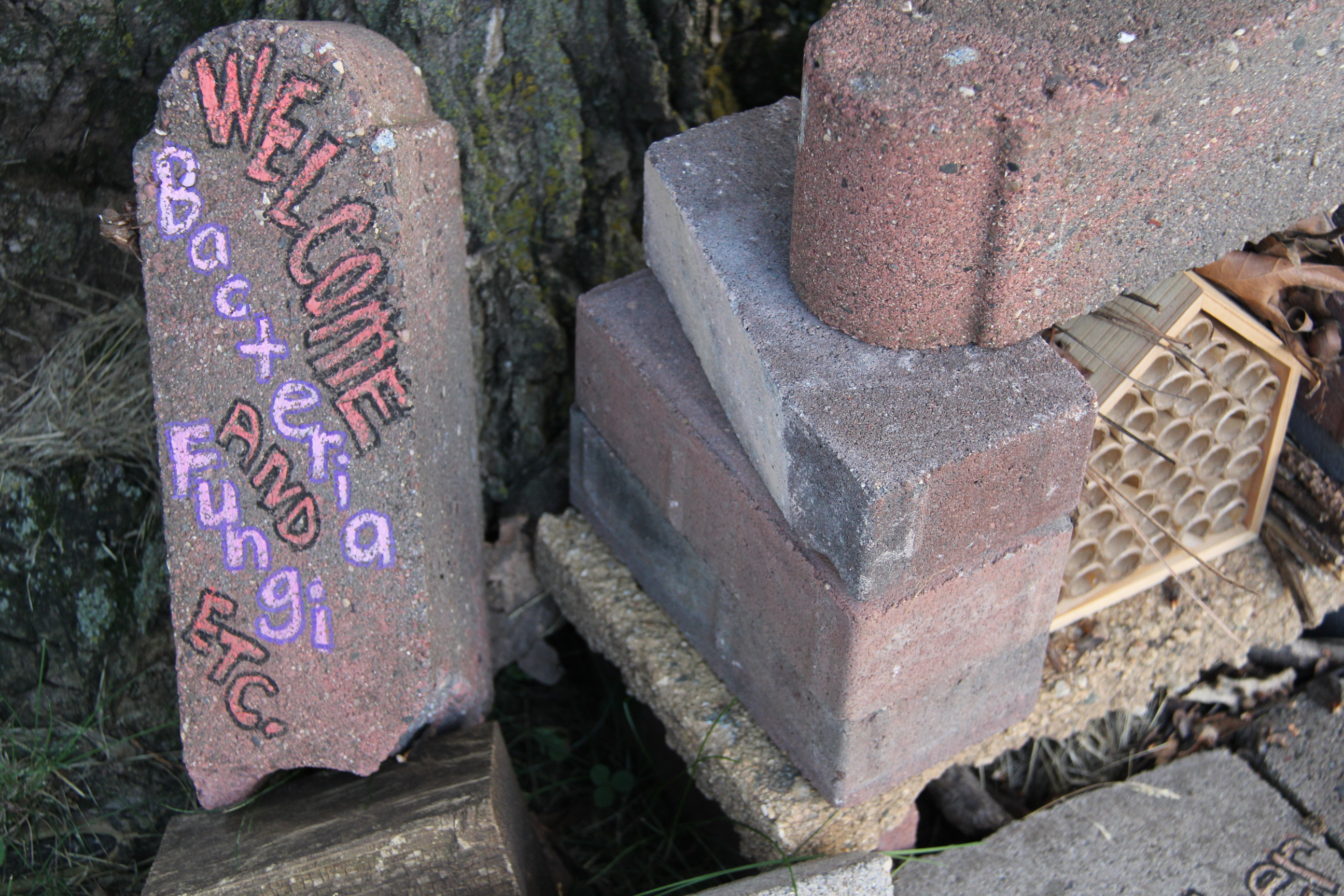
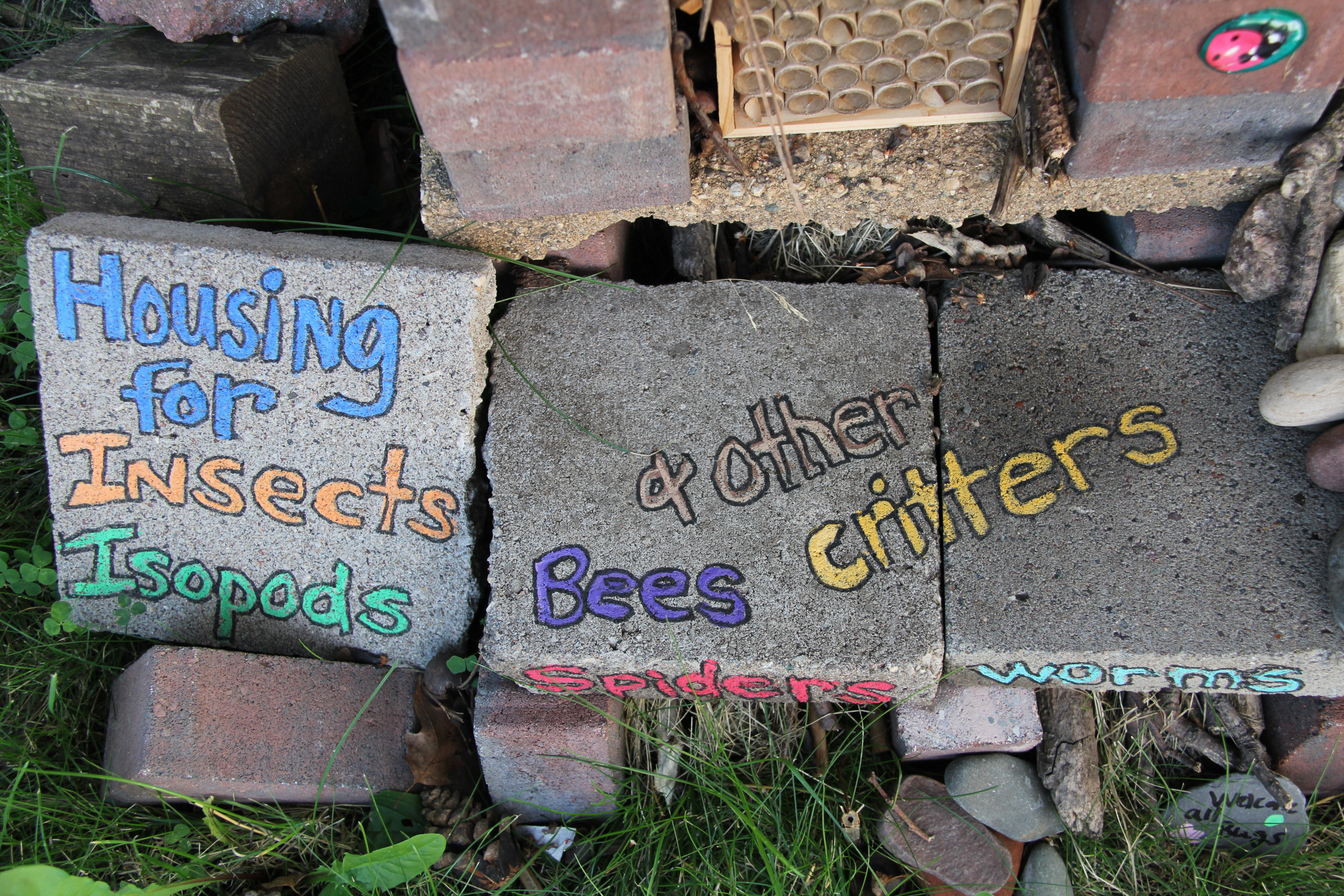
Housing for more than just insects, isopods, bees, spiders, worms and other critters. (Minnesota Prairie Roots copyrighted photo August 2024)

Times have changed as farming and yard care have evolved. Insecticide and herbicide usage is prevalent. We would be naive to think this has not affected pollinators like butterflies and bees. And so when I discover something like a bee lawn and an Invertebrate Inn, I feel a spark of joy, a sense of gratitude for those who create them.
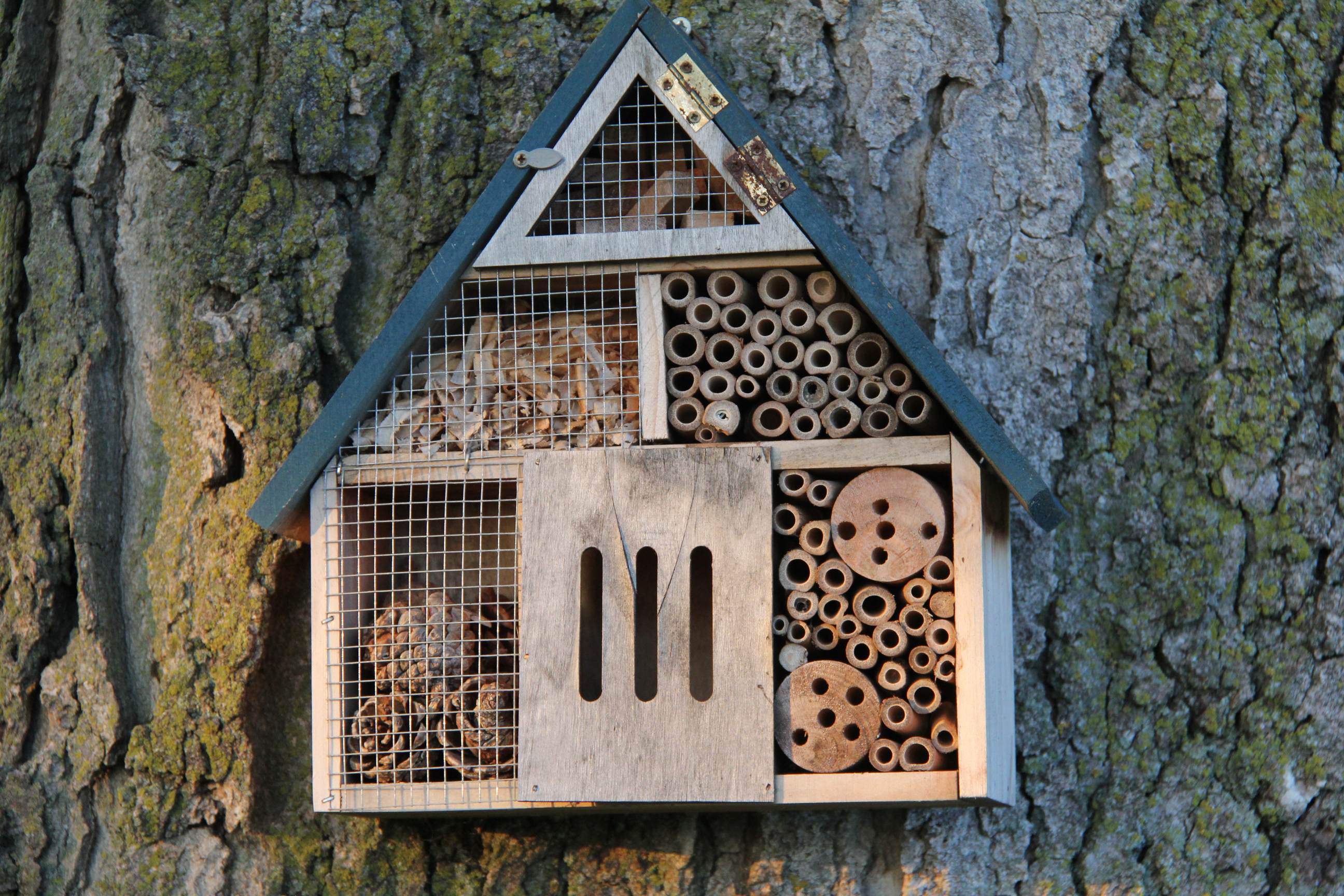
High rise housing. (Minnesota Prairie Roots copyrighted photo August 2024)

I want my grandchildren to understand that this world they’ve been given is one that needs to be nurtured and appreciated, taken care of in a way that perhaps my generation did not. Sure I celebrated Earth Day, wore Earth Shoes and spouted environmental platitudes of the 1970s. But did that really mean anything, make any long-lasting impact? It was a beginning, I suppose.
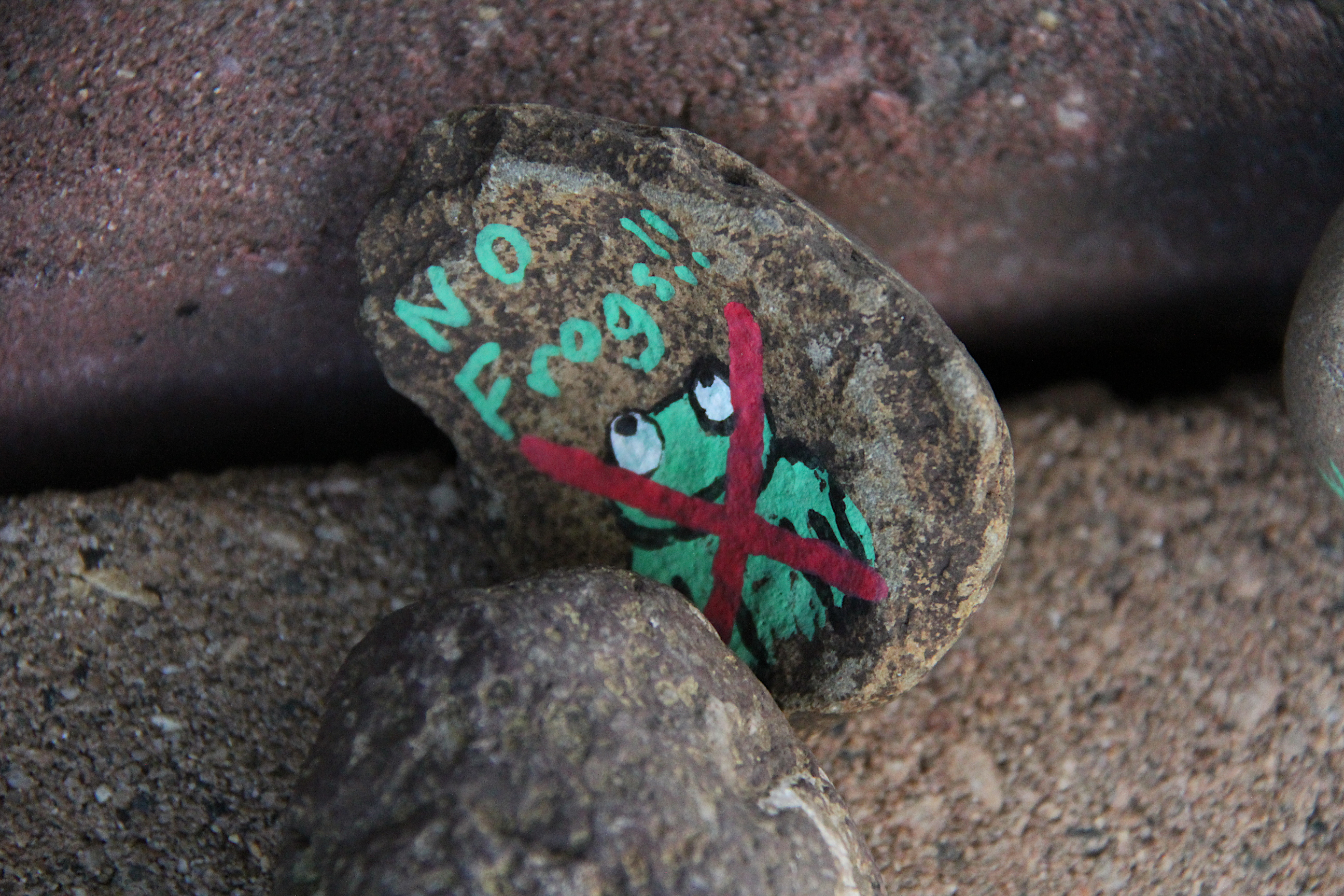
Frogs are banned from the inn. (Minnesota Prairie Roots copyrighted photo August 2024)

I want my grandchildren to ask questions in class, seek out information, learn in a way that is focused on curiosity rather than feeding back facts. I want them to care about the bees and the butterflies and the bugs.
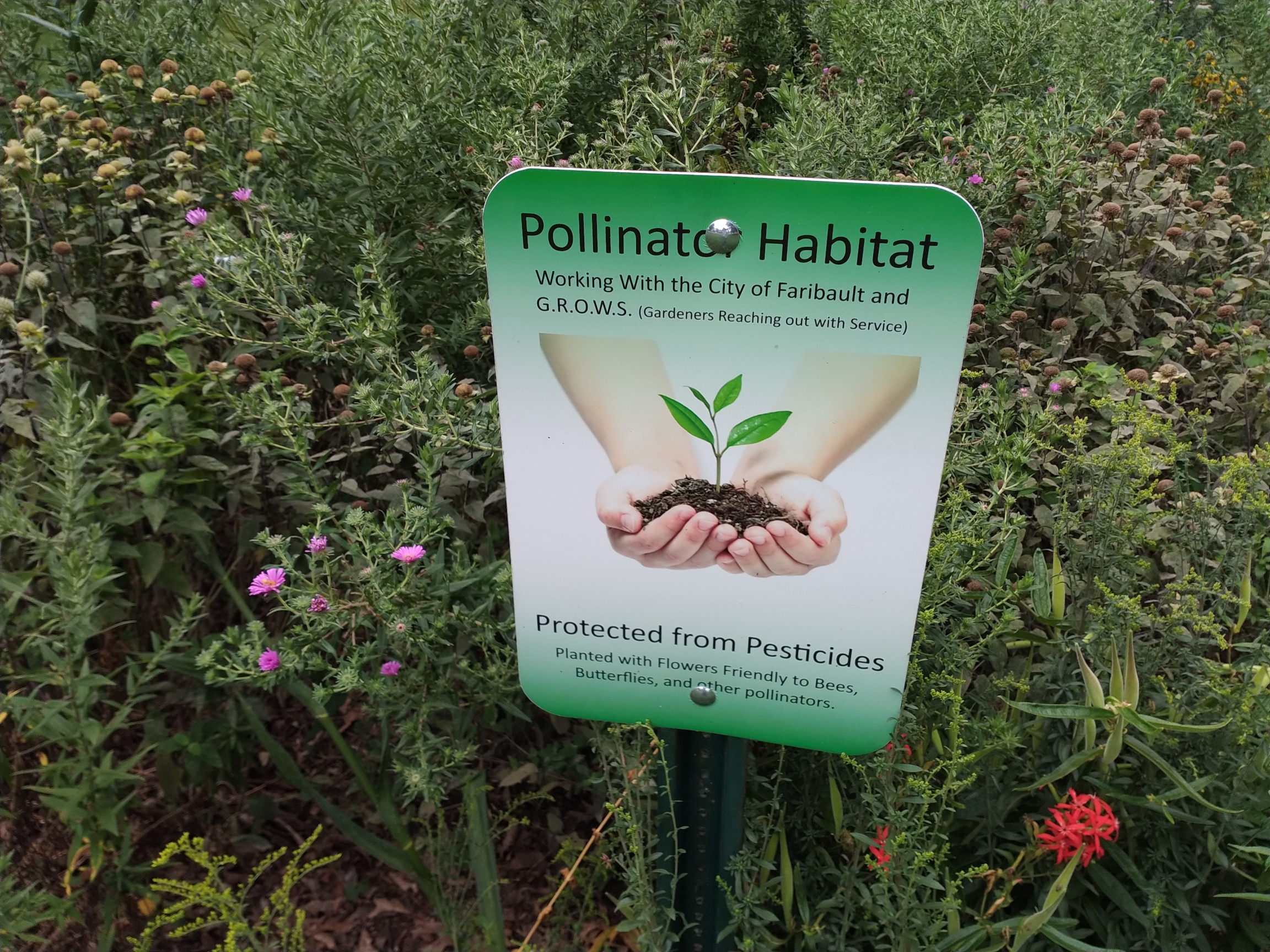
There are other bee lawns, pollinator gardens, etc., in my community, including this one in Central Park. (Minnesota Prairie Roots copyrighted photo August 2024)

I want them to connect with nature, to understand that what they do, or don’t do, to the earth matters. I want them to get their hands dirty in the soil, overturn rocks, hold bugs, pick up worms, plant flowers and, most of all, appreciate this natural world of ours. The science of it. The beauty of it. The peace it brings to the soul. The joy it brings to the spirit. And I want them to care. Always.

FYI: Click here to watch an informative video about creating a bee lawn by Faribault master gardener Jayne Spooner.

© Copyright 2024 Audrey Kletscher Helbling


Who you gonna call when the bugs invade? August 25, 2011

Filed under: Uncategorized — Audrey Kletscher Helbling @ 7:33 AM
Tags: , , , , ,

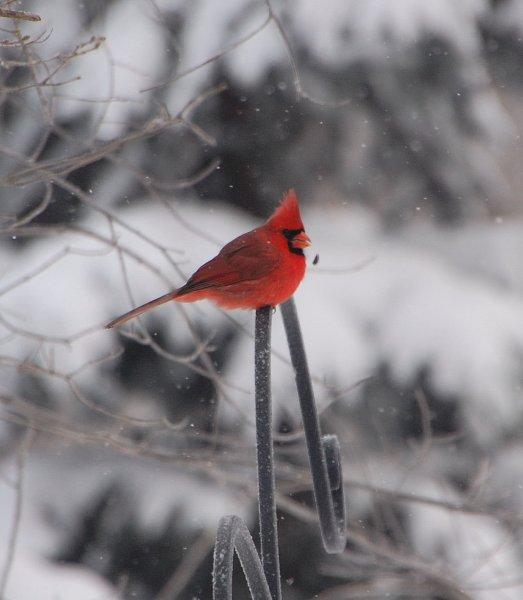
Because I did not get a photo of the female cardinal, I am showing you a photo of a male cardinal taken by my friend Harriet Traxler, an excellent photographer. Scroll to the end of this story for more info about Harriet's work.

CRAZIEST THING HAPPENED Wednesday morning as I hung laundry outside on the clothesline. I heard a scritch-scratch and looked up to see a female cardinal fluttering atop the metal chimney on our house. She would fly away, come back, land on the stack, fly away and then repeat the entire process.

I was baffled until I noticed a spider web the size of a car tire suspended between the chimney and the angled roof.

As I watched, wishing mightily that I had my camera in my hands, the cardinal flew toward the center of the cobweb where, even from the ground, I could see an oversized insect. Maybe the spider?

She flapped and hovered and poked at the web, trying to grab her breakfast.

About then I decided I had enough time to race inside to my office, grab my Canon and snap a picture. I was wrong. In the short time I went missing, the determined bird nabbed the trapped bug. Darn.

Have you ever seen anything like this?

AS LONG AS WE’RE TALKING BUGS, has your home been invaded by gnats—or whatever they are—which are attracted in the evening to flicked-on lights. Tuesday night, when I walked into the kitchen around 9, I found the floor pocked with these pesky winged creatures. I immediately summoned my husband.

“What am I supposed to do?” he asked.

I pulled a sexist comment from my brain: “You’re the man of the house. Protect me.”

He laughed, then laughed some more when I suggested sweeping them into a dustpan.

“They’ll fly away,” he said, wheeling out the vacuum cleaner, a bug’s version of an EF-5 tornado.

EARLIER IN THE EVENING my spouse saved me from two wasps wandering a window screen in the dining room, directly behind the chair where I dine.

“I don’t want to get stung,” I emphasized, reminding him of how my skin swells and itches every time a mosquito bites me. “What do you think would happen if I was stung by a wasp?”

He probably didn’t need the reminder as less than two weeks ago my right hand swelled to about twice its size (I might be exaggerating just a tiny bit, but not much) from two mosquito bites. That resulted in a trip to the doctor followed by a stop at the pharmacy. Those two bites set me back a couple hundred bucks. But at least the infection didn’t spread to my artificial hip, which would have cost me thousands.

Anyway, bottom line, my husband’s done a superb job as my personal Bug Buster. And whenever he’s not available, I have that cardinal as back-up.

FYI: Except for centipedes, I am not afraid of bugs and will deal with them whenever I must. However, I will avoid killing stinging insects if my bug-busting husband is available. Why risk getting stung?

VISIT THE BARNS OF SIBLEY COUNTY website by clicking here to learn more about Harriet Traxler, her photography and the barn books she’s published. She is also currently working on a book of historical fiction.

© Text copyright 2011 Audrey Kletscher Helbling

Photo by Harriet Traxler