Minnesota Prairie Roots

Writing and photography by Audrey Kletscher Helbling

Reflecting on bee lawns, invertebrate inns, learning & the future August 29, 2024

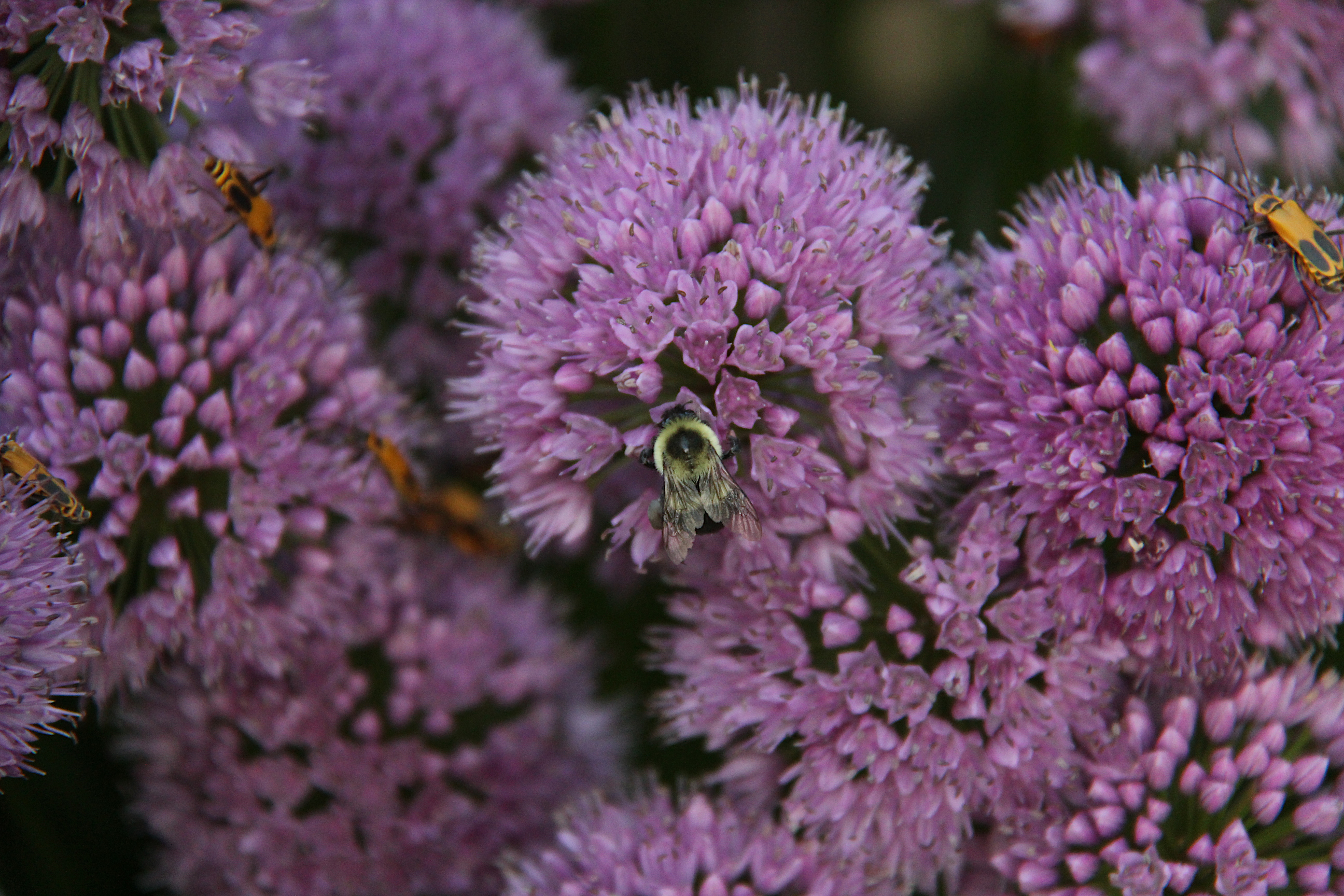
I spotted this bee and other bugs on flowers in the Rice County Master Gardeners’ Teaching Gardens. (Minnesota Prairie Roots copyrighted photo August 2024)

ADMITTEDLY, I NEVER EXCELLED in science. I sort of just got by, learning what I needed to learn to get reasonably good grades in science class. But if I was to go back to the classroom, I’d listen more intently, ask more questions, figure out how the information I was taught actually related to me and my world. In other words, I wouldn’t simply absorb, regurgitate and then move on, which seemed to be the way subjects were taught when I was a student.
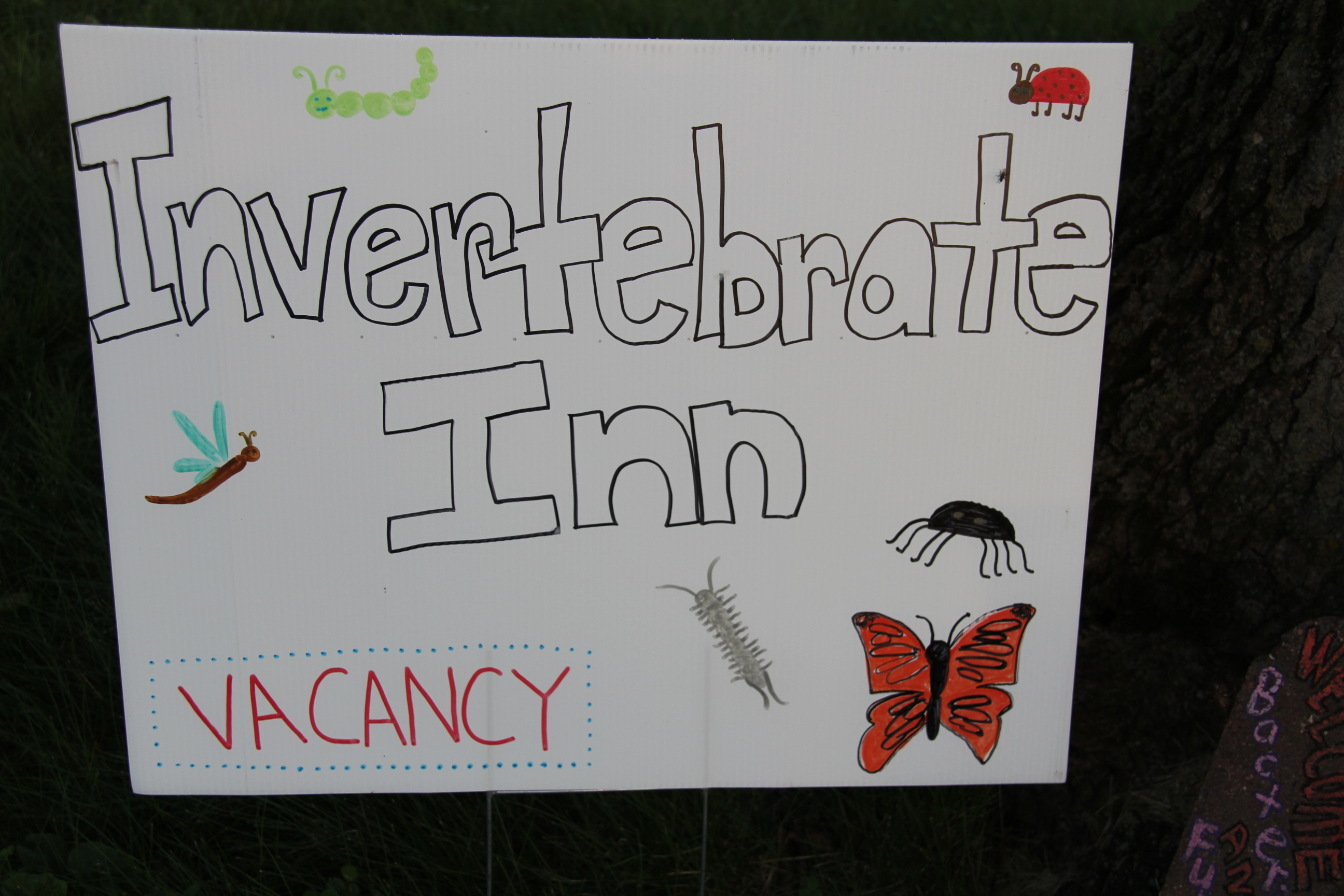
This sign drew me to the base of a tree, where I found an inn and a bee lawn. (Minnesota Prairie Roots copyrighted photo August 2024)
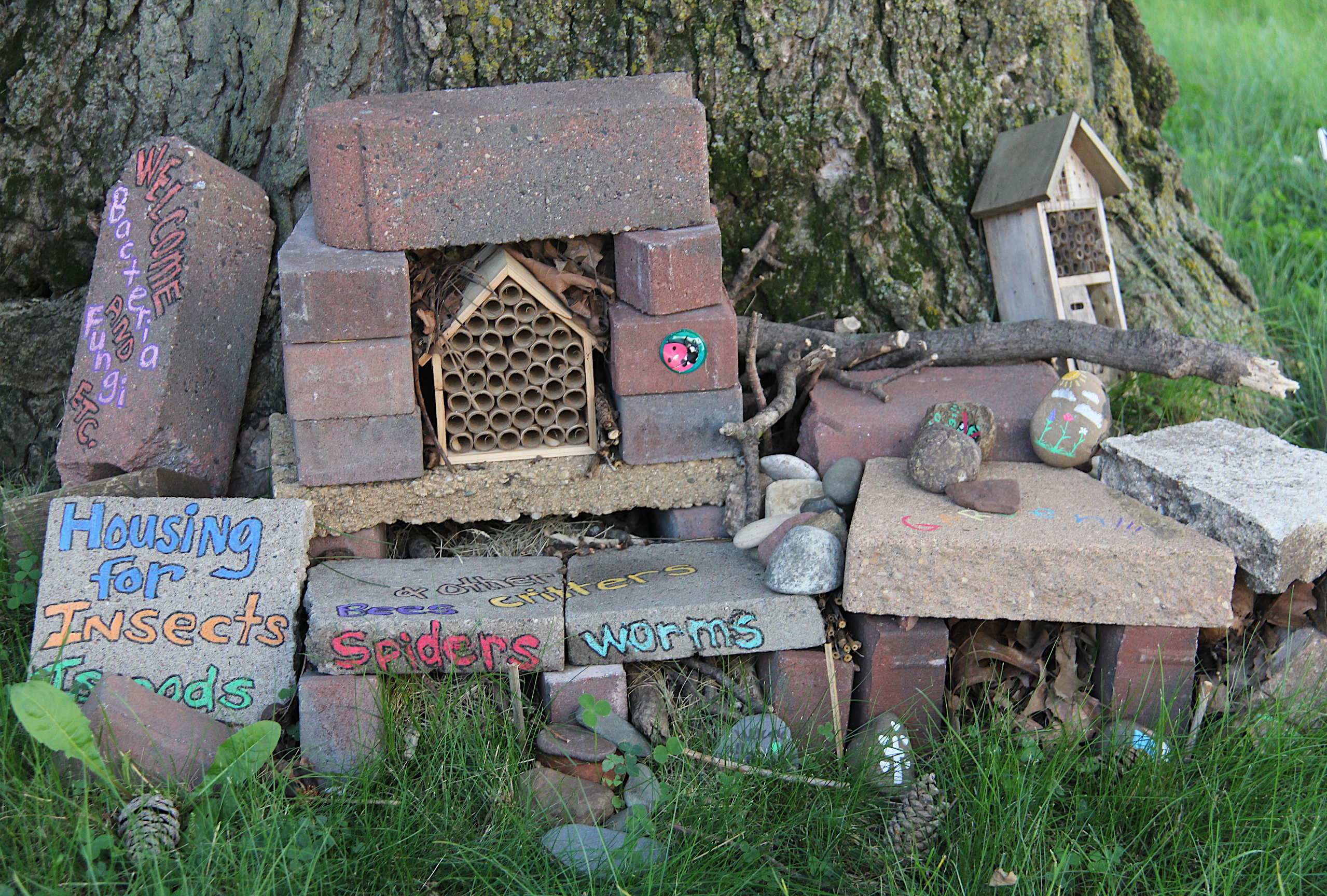
Bricks, stones, sticks and more comprise this haphazard housing unit. (Minnesota Prairie Roots copyrighted photo August 2024)
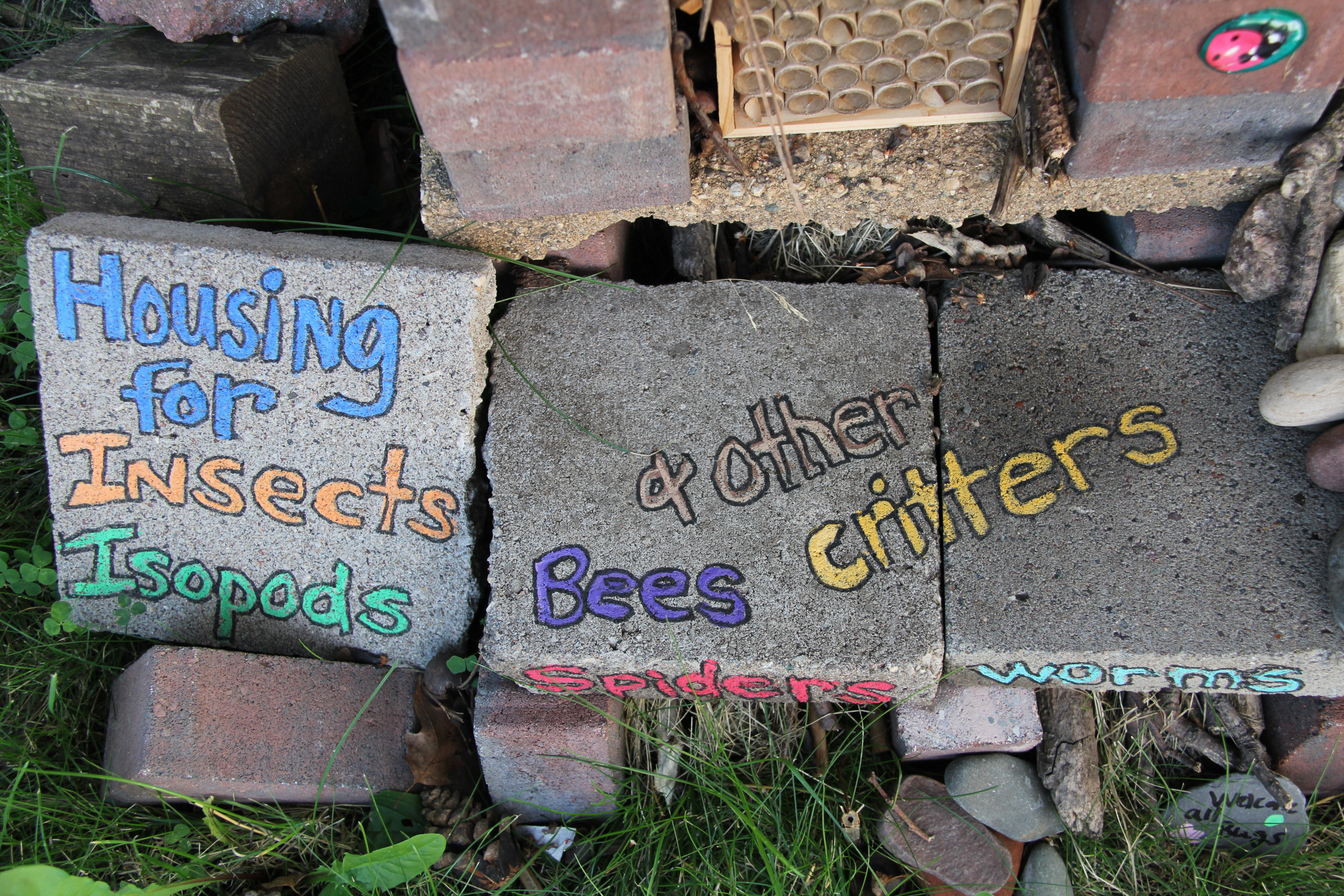
Identifying signage on the Invertebrate Inn. (Minnesota Prairie Roots copyrighted photo August 2024)

Now, as an adult, and an aged one at that, I realize that the core of learning is not memorization. It is rather taking in information that sparks interest, raises questions, causes independent thinking. I am still learning well into my sixties, this year marking 50 years since I graduated from high school.
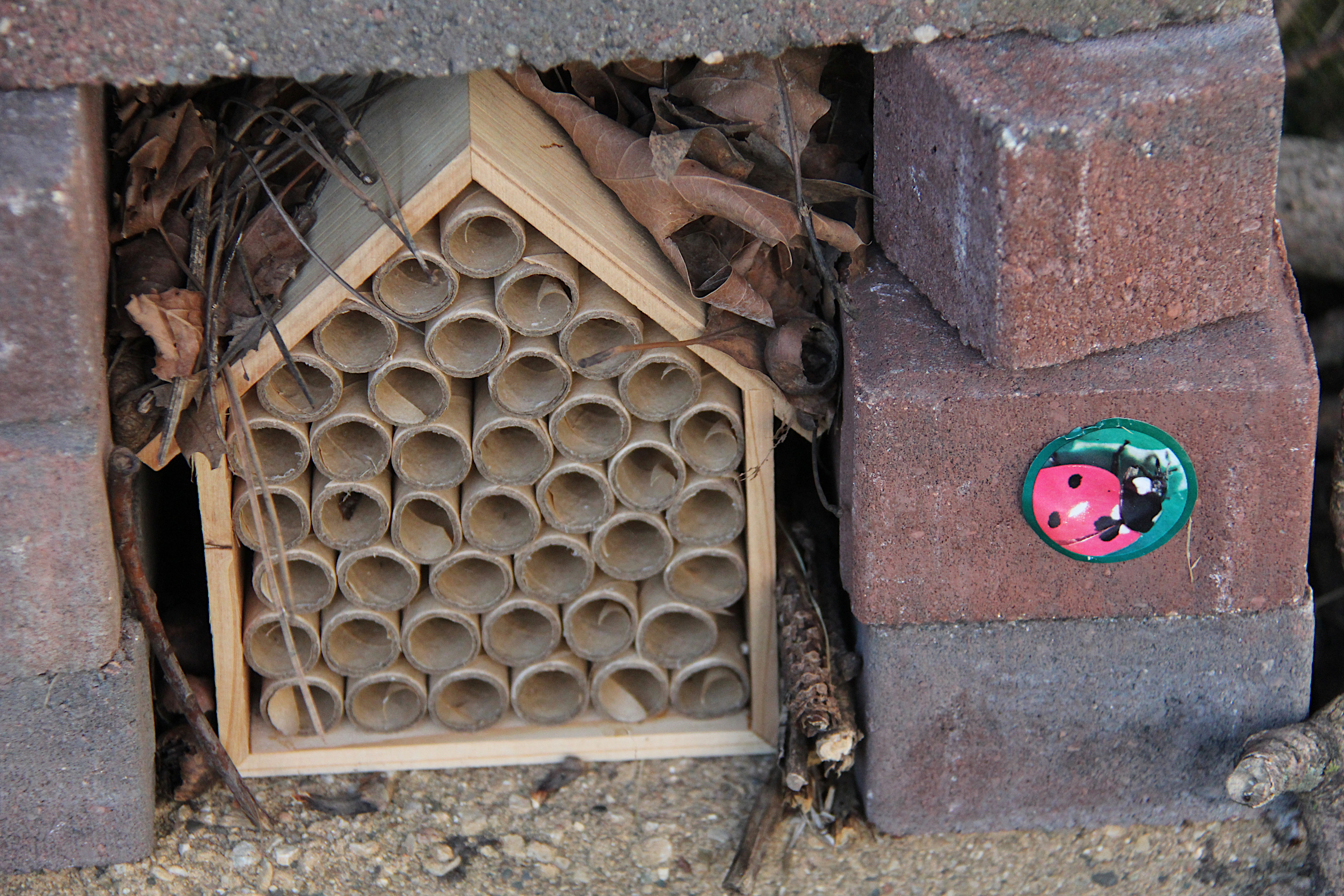
I trust this structure would be a good home for a bug. (Minnesota Prairie Roots copyrighted photo August 2024)

Today I learn because I want to, not because I need to take some class for credits or to earn a degree.
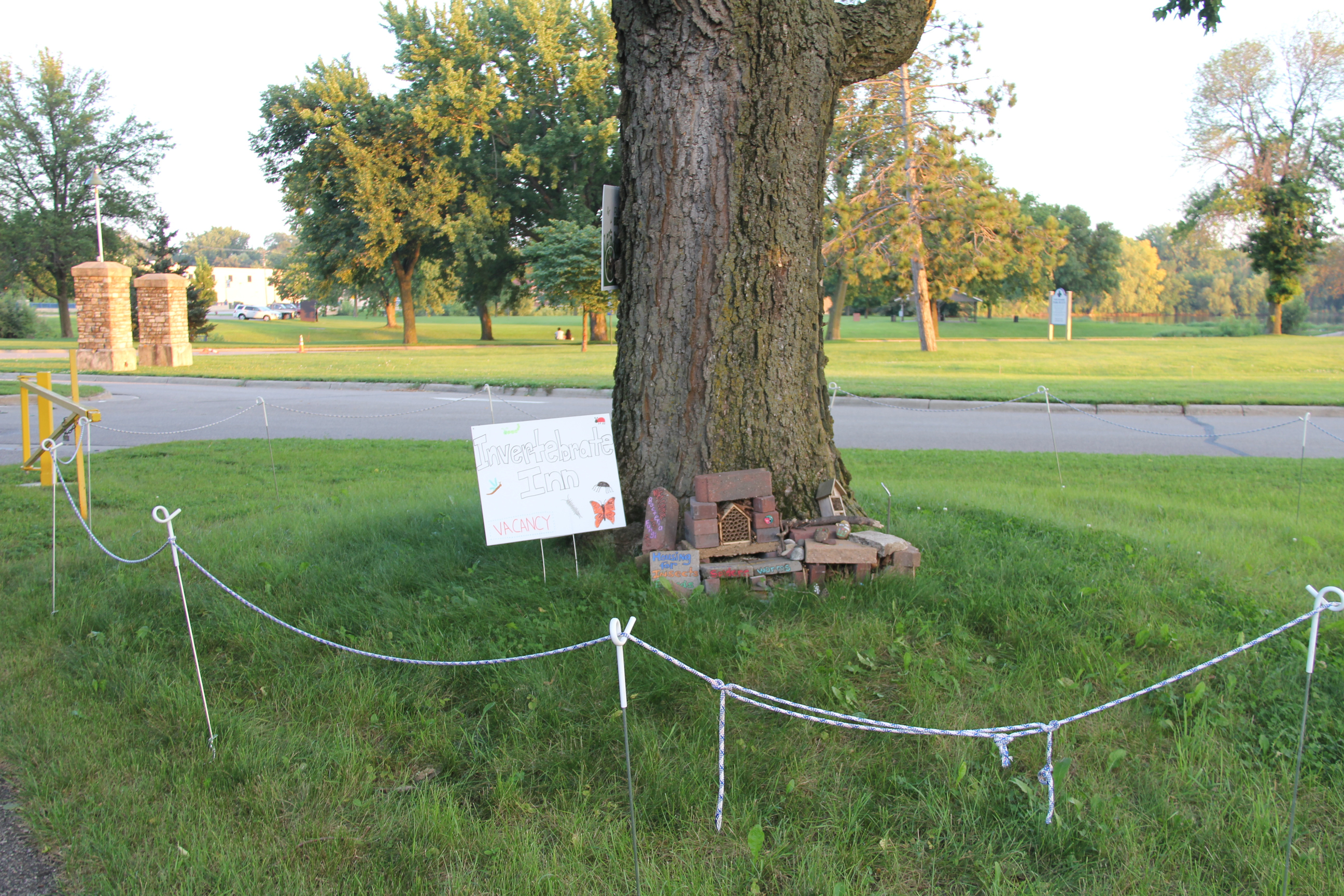
The bee lawn was roped off when I visited. (Minnesota Prairie Roots copyrighted photo August 2024)
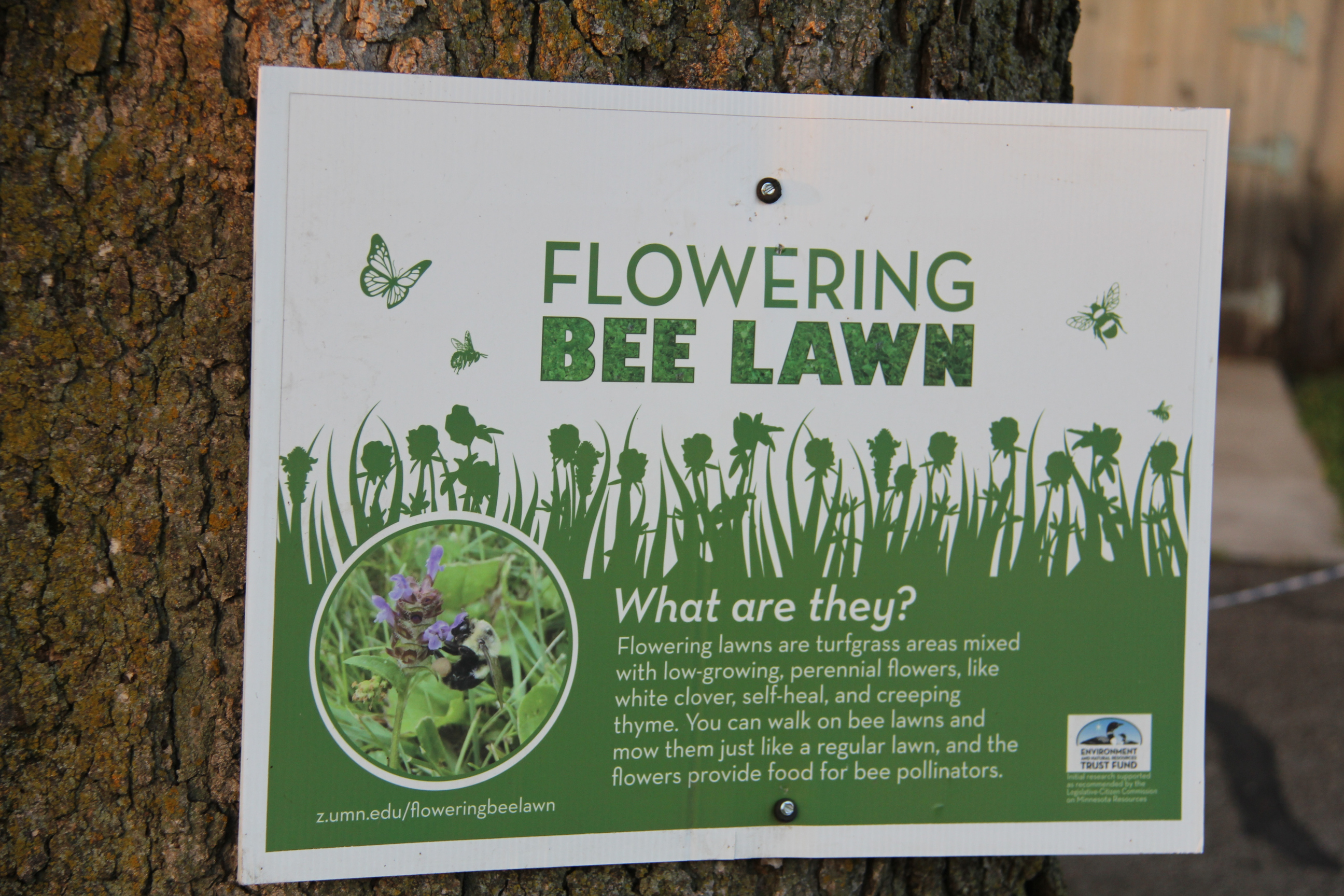
Signage on the tree explains a flowering bee lawn. (Minnesota Prairie Roots copyrighted photo August 2024)
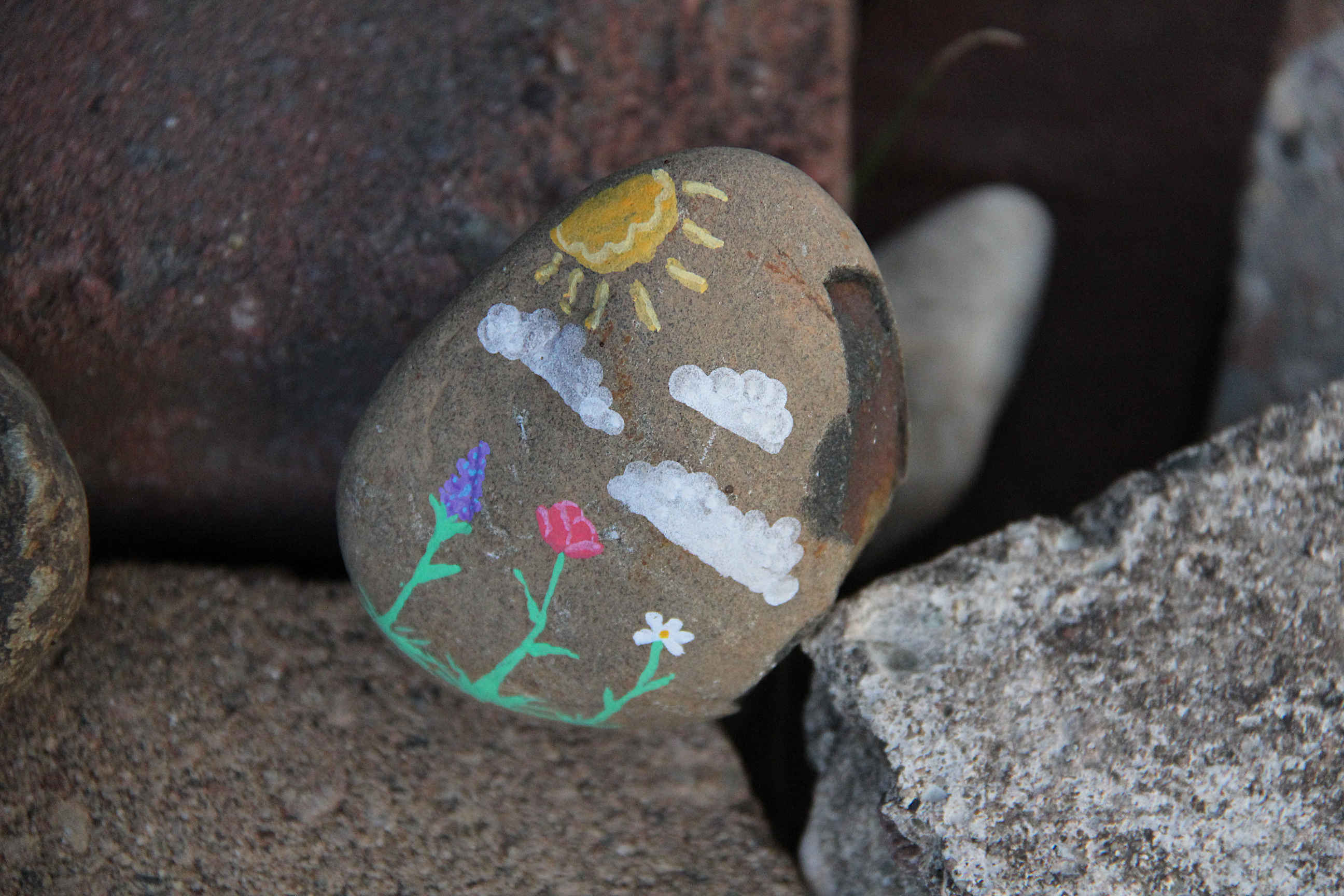
Fitting floral rock art in the inn. (Minnesota Prairie Roots copyrighted photo August 2024)

My latest delve into science was prompted by a visit to the Rice County Master Gardeners Teaching Gardens in Faribault. There I spotted an Invertebrate Inn and a bee lawn, recent additions to the beautiful gardens located at the Rice County Fairgrounds. These are not exactly novel ideas. But I’d not previously considered them much and how they benefit the natural world. Low-lying bee lawns, with their clover and other flowers like creeping thyme, provide nectar and pollen for pollinators.
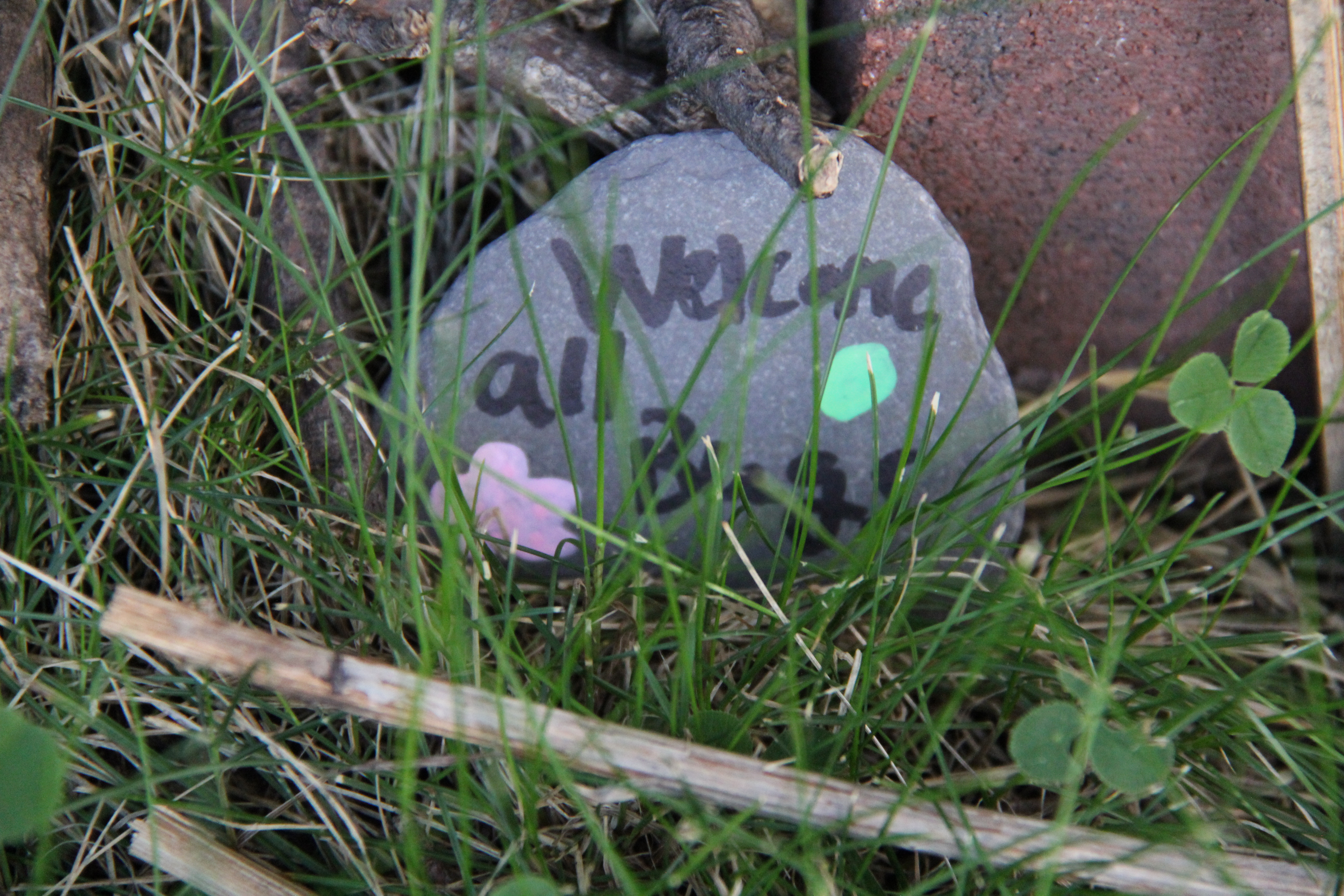
At the inn, a welcome sign for guests. (Minnesota Prairie Roots copyrighted photo August 2024)

In some ways, the inn and the bee lawn remind me of childhood days on the farm with our grass anything but weed-free and manicured. Dandelions and clover were prolific. No weedkiller or insecticides were used except on crops. No nothing applied to the grass, because who cared and who had time to nurture a lawn when there were crops to plant and cultivate and animals to tend?
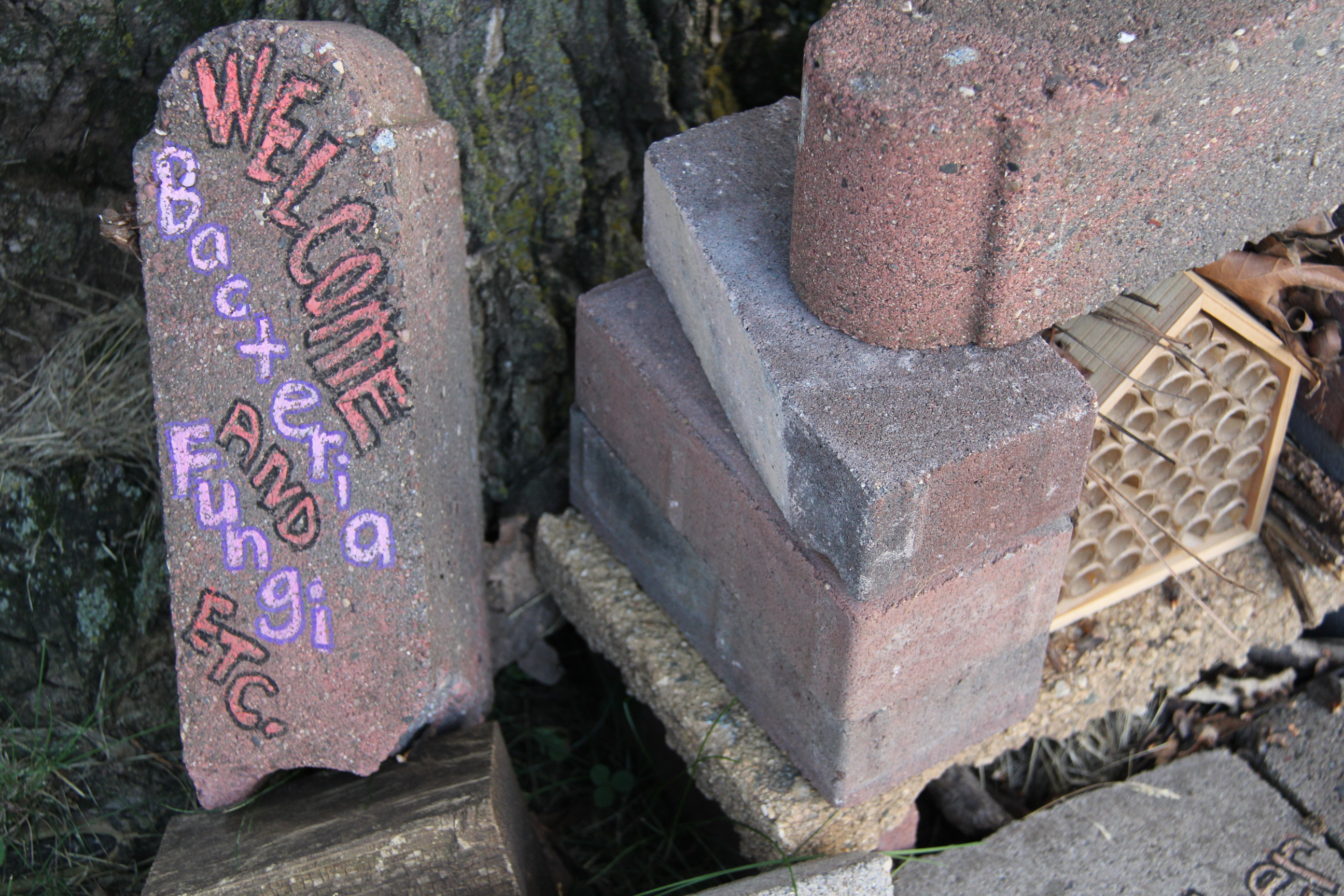
Housing for more than just insects, isopods, bees, spiders, worms and other critters. (Minnesota Prairie Roots copyrighted photo August 2024)

Times have changed as farming and yard care have evolved. Insecticide and herbicide usage is prevalent. We would be naive to think this has not affected pollinators like butterflies and bees. And so when I discover something like a bee lawn and an Invertebrate Inn, I feel a spark of joy, a sense of gratitude for those who create them.
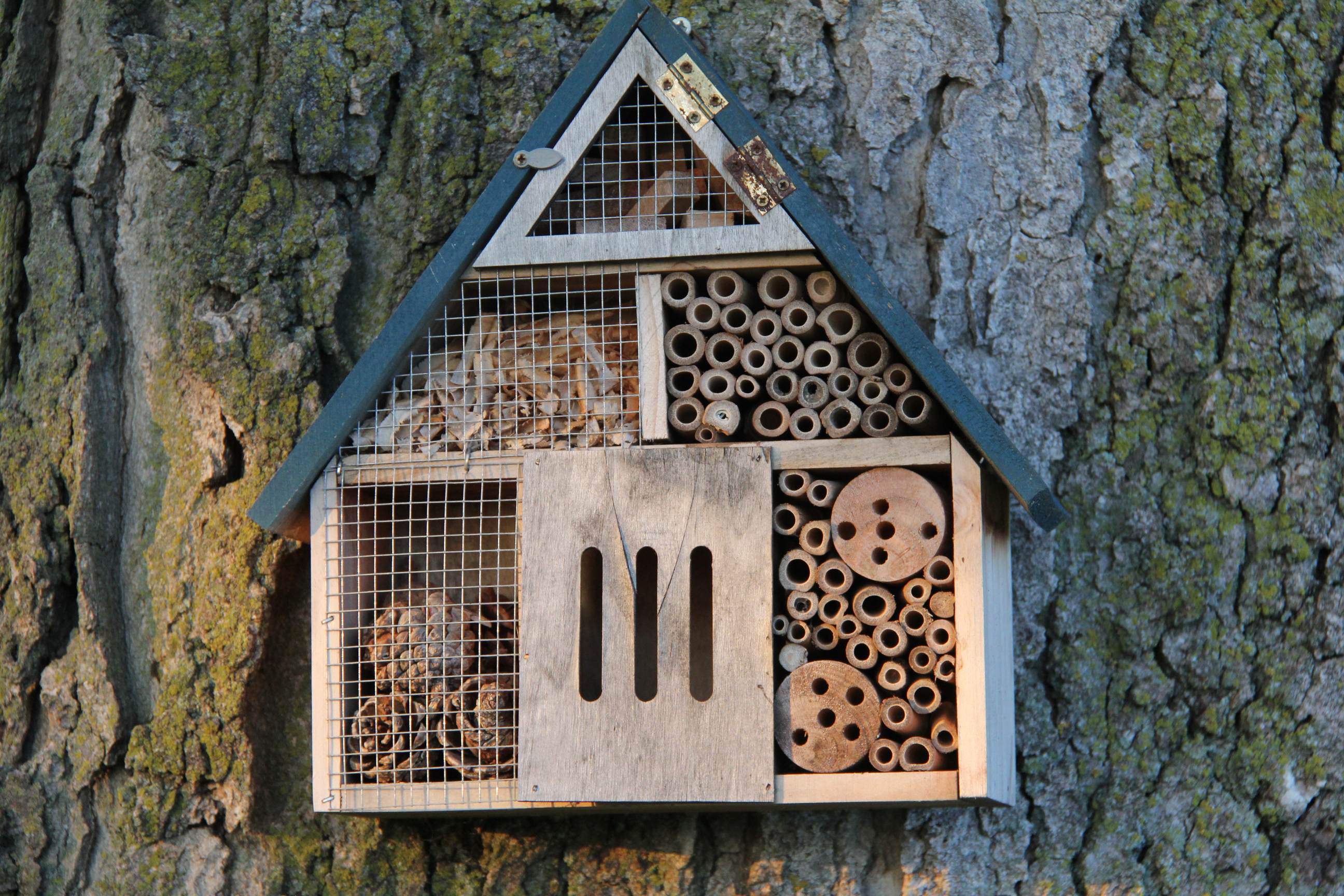
High rise housing. (Minnesota Prairie Roots copyrighted photo August 2024)

I want my grandchildren to understand that this world they’ve been given is one that needs to be nurtured and appreciated, taken care of in a way that perhaps my generation did not. Sure I celebrated Earth Day, wore Earth Shoes and spouted environmental platitudes of the 1970s. But did that really mean anything, make any long-lasting impact? It was a beginning, I suppose.
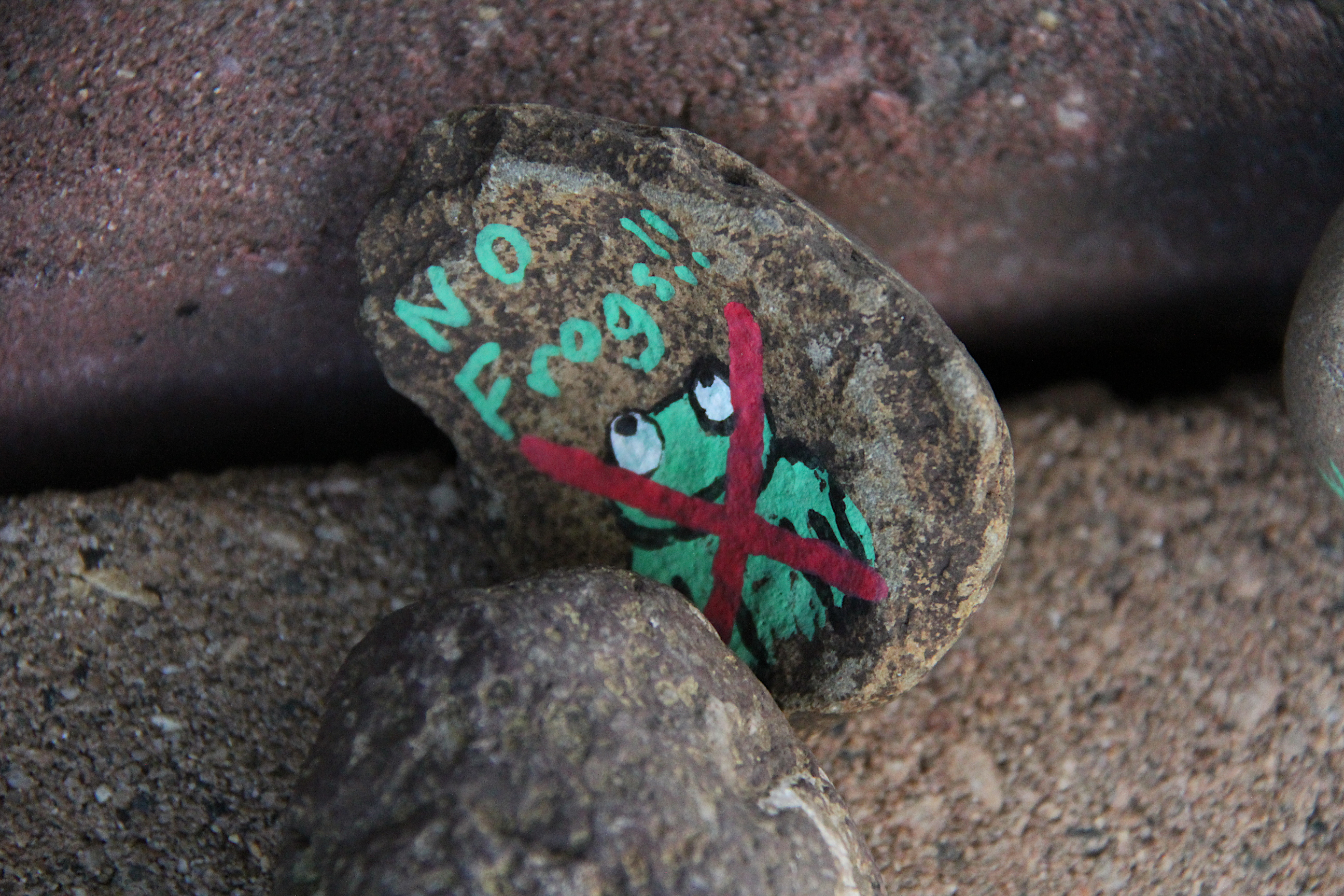
Frogs are banned from the inn. (Minnesota Prairie Roots copyrighted photo August 2024)

I want my grandchildren to ask questions in class, seek out information, learn in a way that is focused on curiosity rather than feeding back facts. I want them to care about the bees and the butterflies and the bugs.
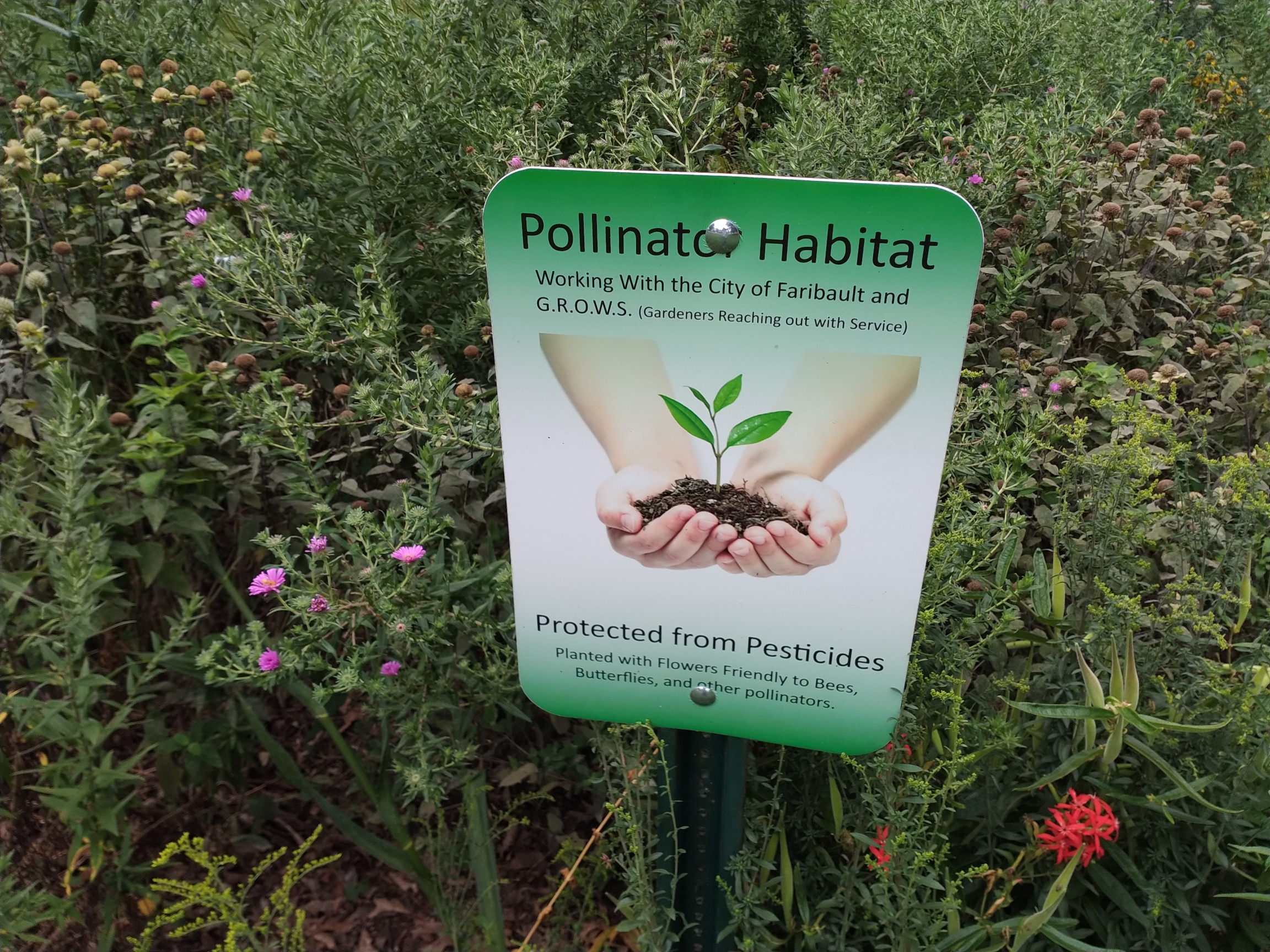
There are other bee lawns, pollinator gardens, etc., in my community, including this one in Central Park. (Minnesota Prairie Roots copyrighted photo August 2024)

I want them to connect with nature, to understand that what they do, or don’t do, to the earth matters. I want them to get their hands dirty in the soil, overturn rocks, hold bugs, pick up worms, plant flowers and, most of all, appreciate this natural world of ours. The science of it. The beauty of it. The peace it brings to the soul. The joy it brings to the spirit. And I want them to care. Always.

FYI: Click here to watch an informative video about creating a bee lawn by Faribault master gardener Jayne Spooner.

© Copyright 2024 Audrey Kletscher Helbling


Ready to seed September 16, 2021

Filed under: Uncategorized — Audrey Kletscher Helbling @ 5:00 AM
Tags: , , ,
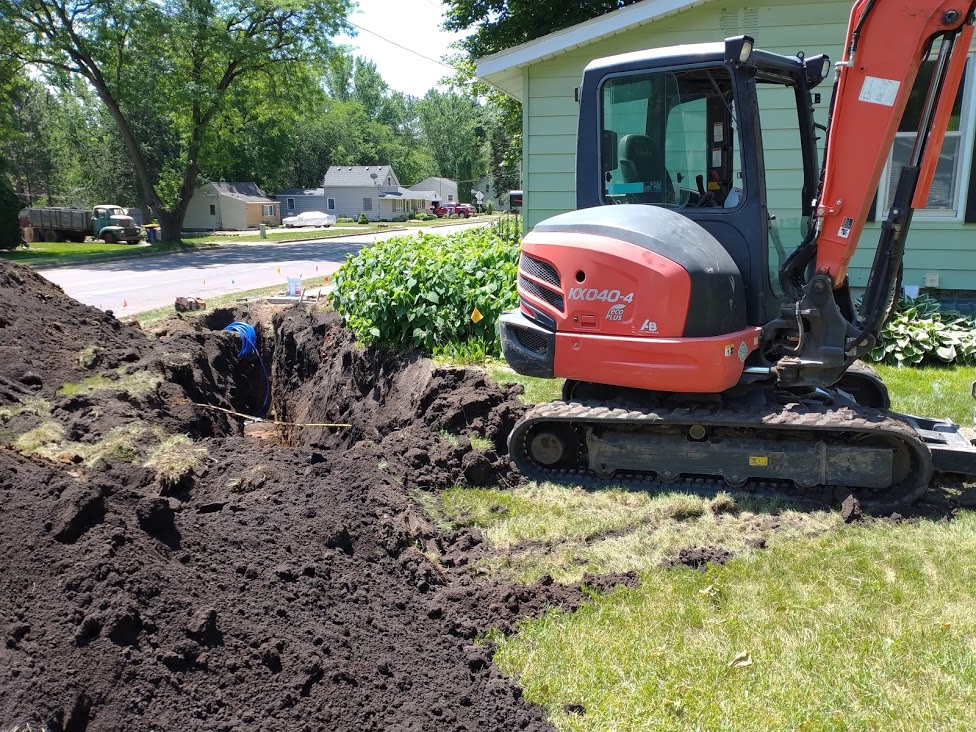
The excavator used to dig a trench for the new water line. Minnesota Prairie Roots copyrighted file photo June 2021.

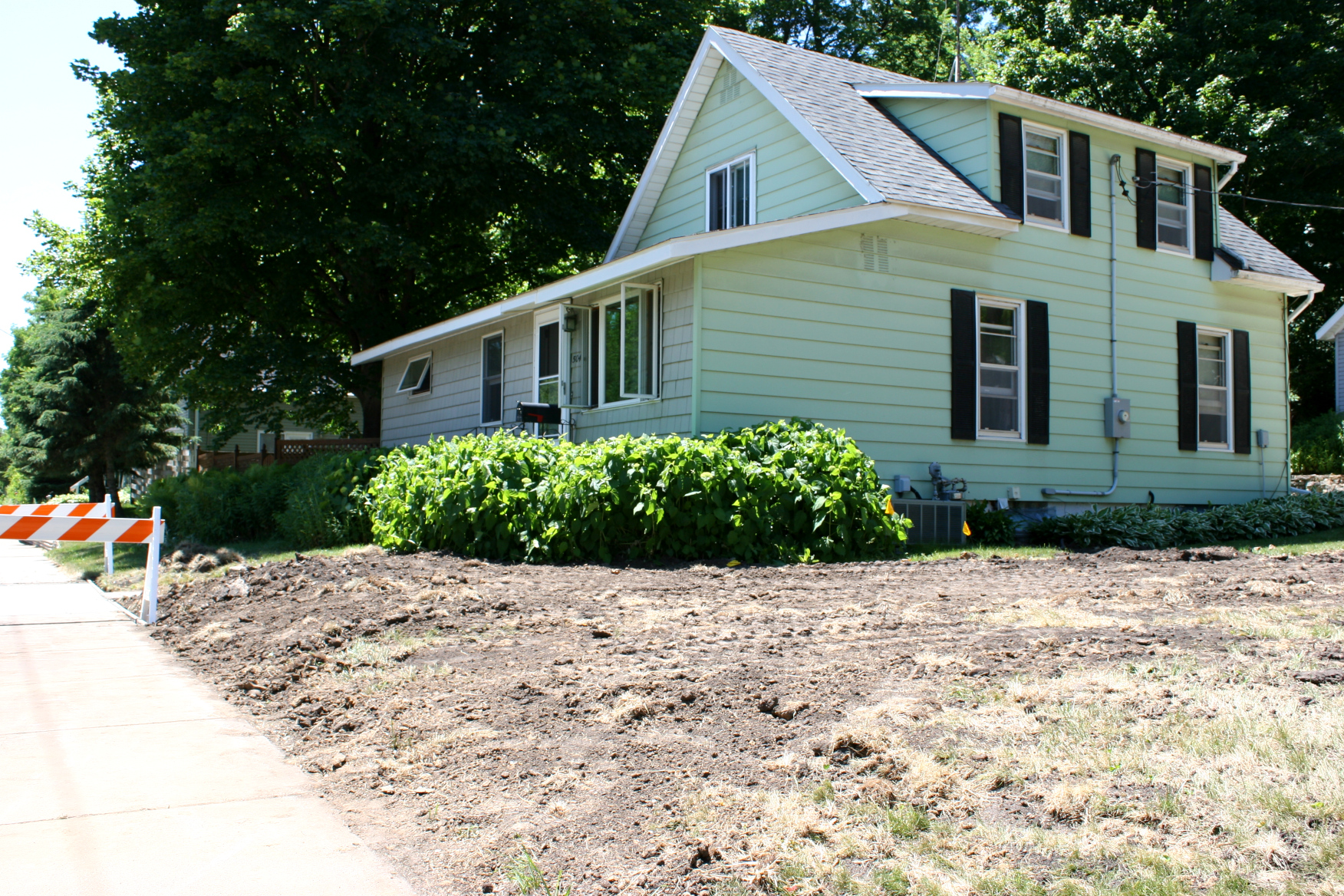
FOR THE PAST THREE MONTHS, our front side yard has looked like a disaster. Not from the drought, although that factored into the issue. Rather, excavation to replace an aged, failing water line into our house resulted in a dug up mess of a yard. I’m not blaming the excavators. Running a line into our house required a round-about and lengthy access route.

So here we are, months later, finally ready to fix our unsightly yard during the cooler days of pre-autumn. I started the process by hand pulling crabgrass, which had overtaken most of the lawn. That annual thrives in dry conditions, quickly spreading and rooting into the soil. I spent hours, days, yanking the invasive grass…until I realized I simply couldn’t do it any more.

Randy used a chemical—what I was trying to avoid by all that hands-on work—to kill the rest.

Since then, he’s tilled the soil, carefully digging for utility lines marked by flags and paint. I appreciate these markings, but wish we were informed as to the depth of these pipes and lines. The last thing we want is to slice through a line and have that added expense on top of our original water line replacement bill of $5,000. Yes, you read that right.

We need to seed this entire side yard, part of the front yard and the entire boulevard. Minnesota Prairie Roots copyrighted photo June 2021.

But back to the lawn. The plan is to seed grass. If we were younger and stronger, owned a truck, had endless cash flow, and weren’t in a drought, I’d prefer sod. But grass seed it shall be. Now what to seed…

I just read an article online about research by the University of Minnesota’s Turfgrass Research, Outreach and Education Center (who knew there was such a center?) which suggests Minnesotans rethink seeding Kentucky bluegrass, the seed grass of choice in our state. Rather, the center suggests considering fine fescues. That slower growing grass requires less water and fertilizer and is more tolerant of shade and drought conditions, according to the researchers. Hmmm. That sounds worthy of consideration to conserve water and to deal with dry conditions.

Or, I had the thought of just letting the tilled yard be…and seeding field corn in the spring…because Randy and I both grew up on crop farms and…

#

TELL ME: I welcome your input and advice on seeding of our now dirt yard.

© Copyright 2021 Audrey Kletscher Helbling