Minnesota Prairie Roots

Writing and photography by Audrey Kletscher Helbling

Through my camera lens: Rural Minnesota in March March 11, 2026

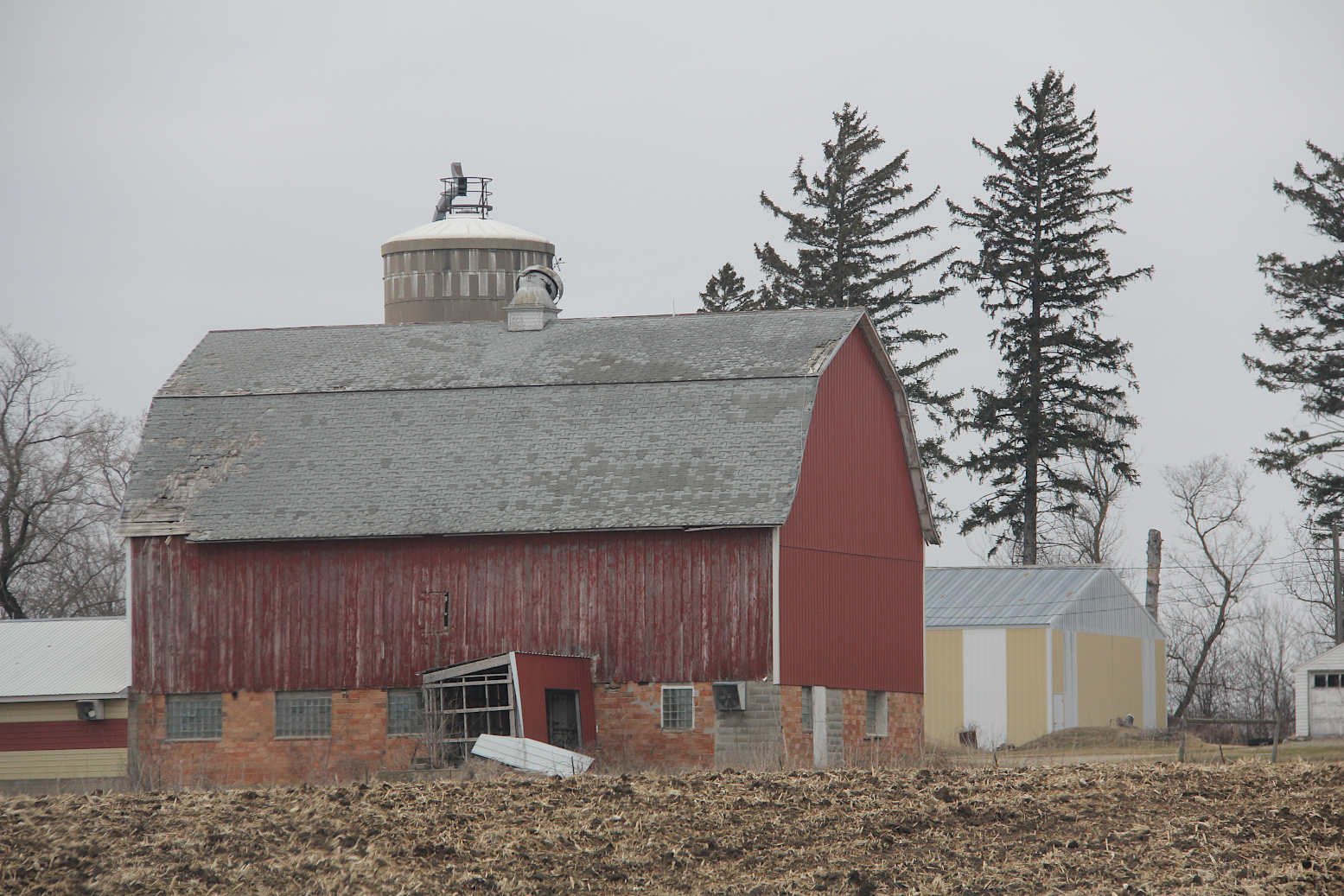
I’m drawn to photograph barns, this one along Goodhue County Road 11 west of Pine Island. (Minnesota Prairie Roots copyrighted photo March 2026)

IN THIS GO-BETWEEN TIME of almost spring here in southern Minnesota, the landscape appears mostly winter drab, plain, devoid of many photo opportunities. That is until I look beyond the bare-branched trees, the barren land, the basic gray of March skies.
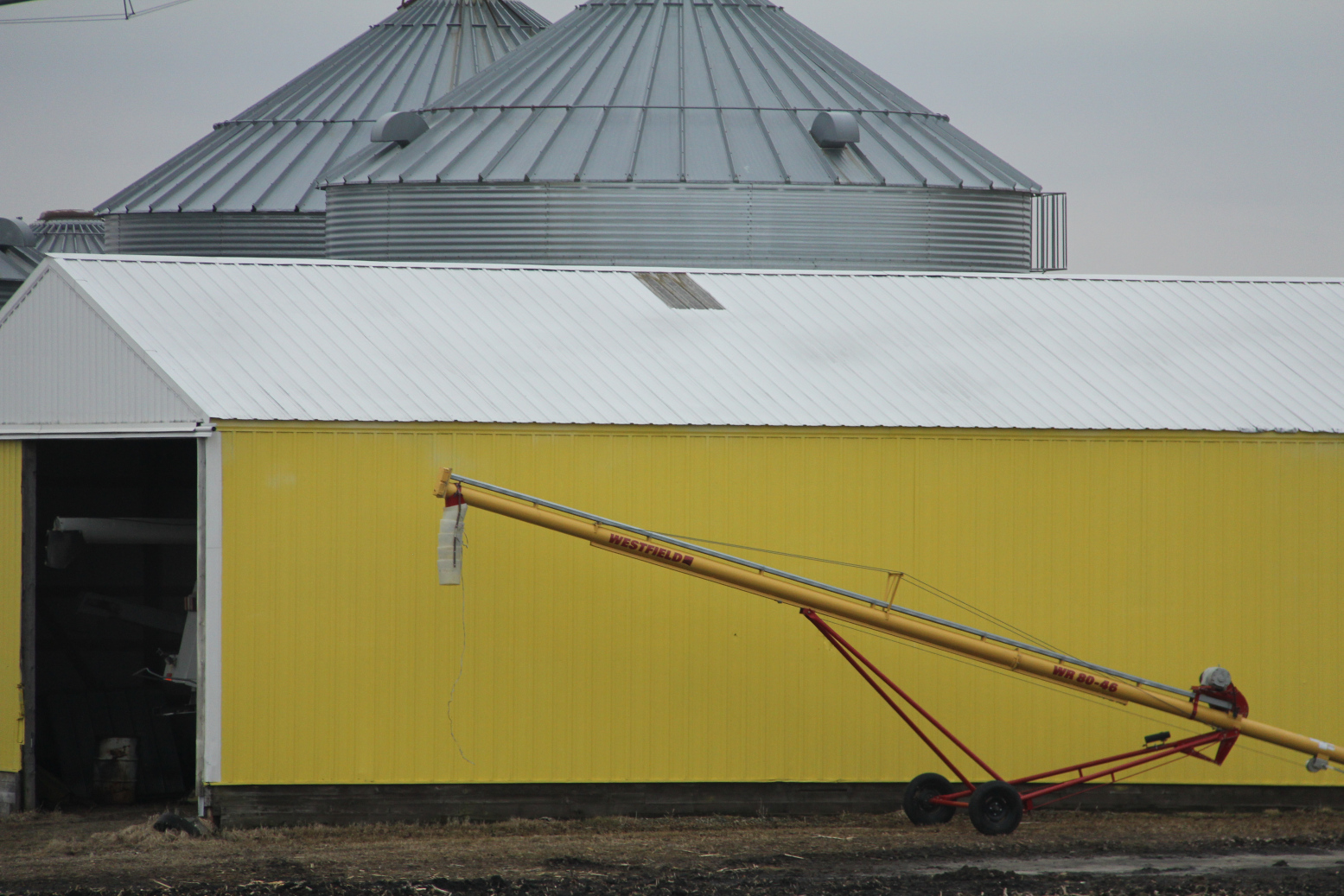
The brightest farm outbuilding I’ve ever seen is this one along Minnesota State Highway 60 between Faribault and Kenyon. (Minnesota Prairie Roots copyrighted photo March 2026)

Color, although not abundant, can still be found among the neutral hues.

Camera in hand, I watched for bright spots and more on a recent business road trip with my husband to Rochester. I kept an eye out for anything I thought would be photo-worthy. Or interesting. My definition of both may differ from yours.
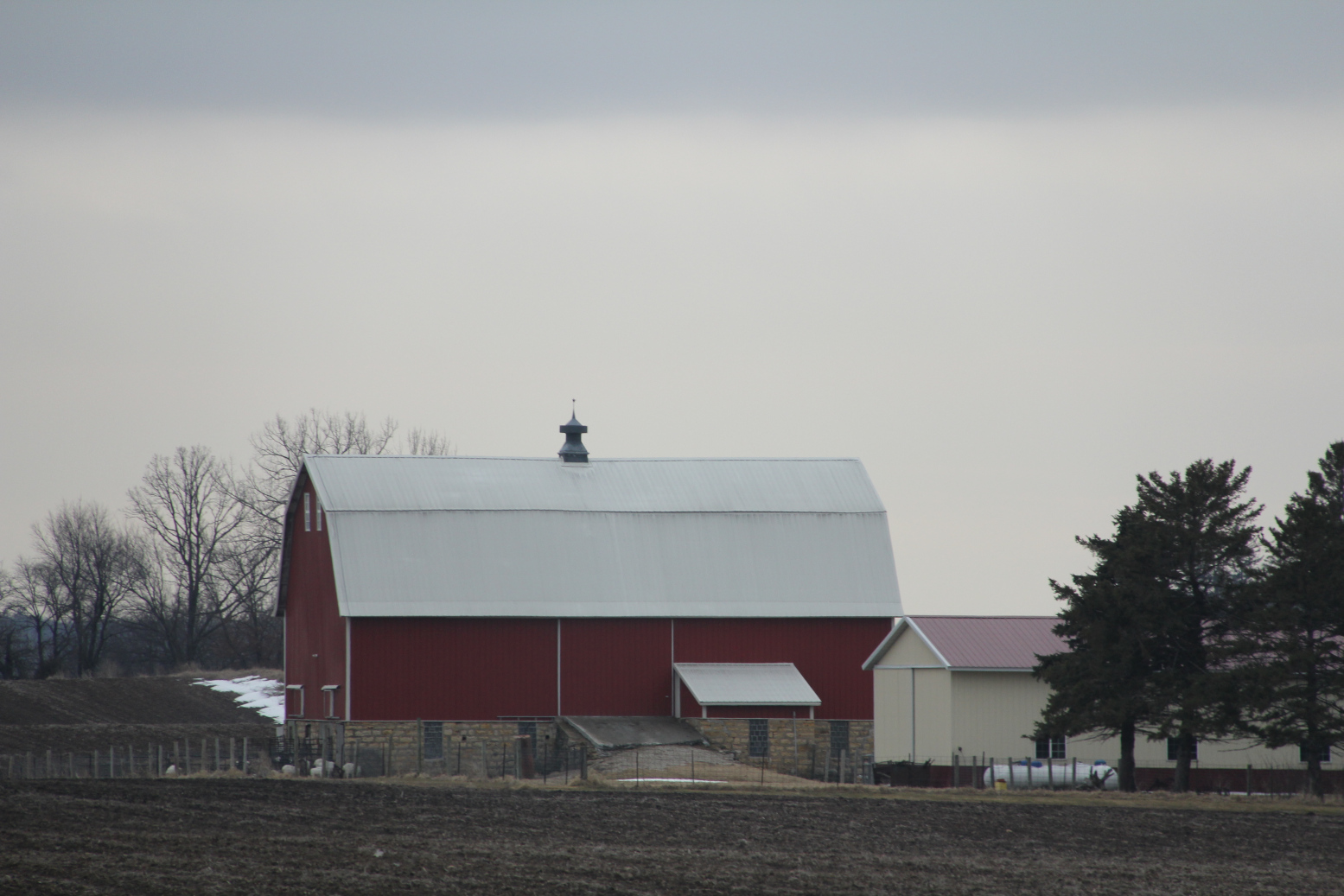
Along Goodhue County Road 11 to the west of Pine Island, I found lots of well-kept red barns to photograph. (Minnesota Prairie Roots copyrighted photo March 2026)

But I enjoy on-the-road, literally, photography—taking photos from the passenger seat inside a moving vehicle. This requires awareness, anticipation and quick framing with the camera set at a fast shutter speed. Clean, or mostly clean, windows help as does a smooth road.

Sometimes I get the image I want. And sometimes I get an unfocused photo. It’s a bit of a crapshoot.
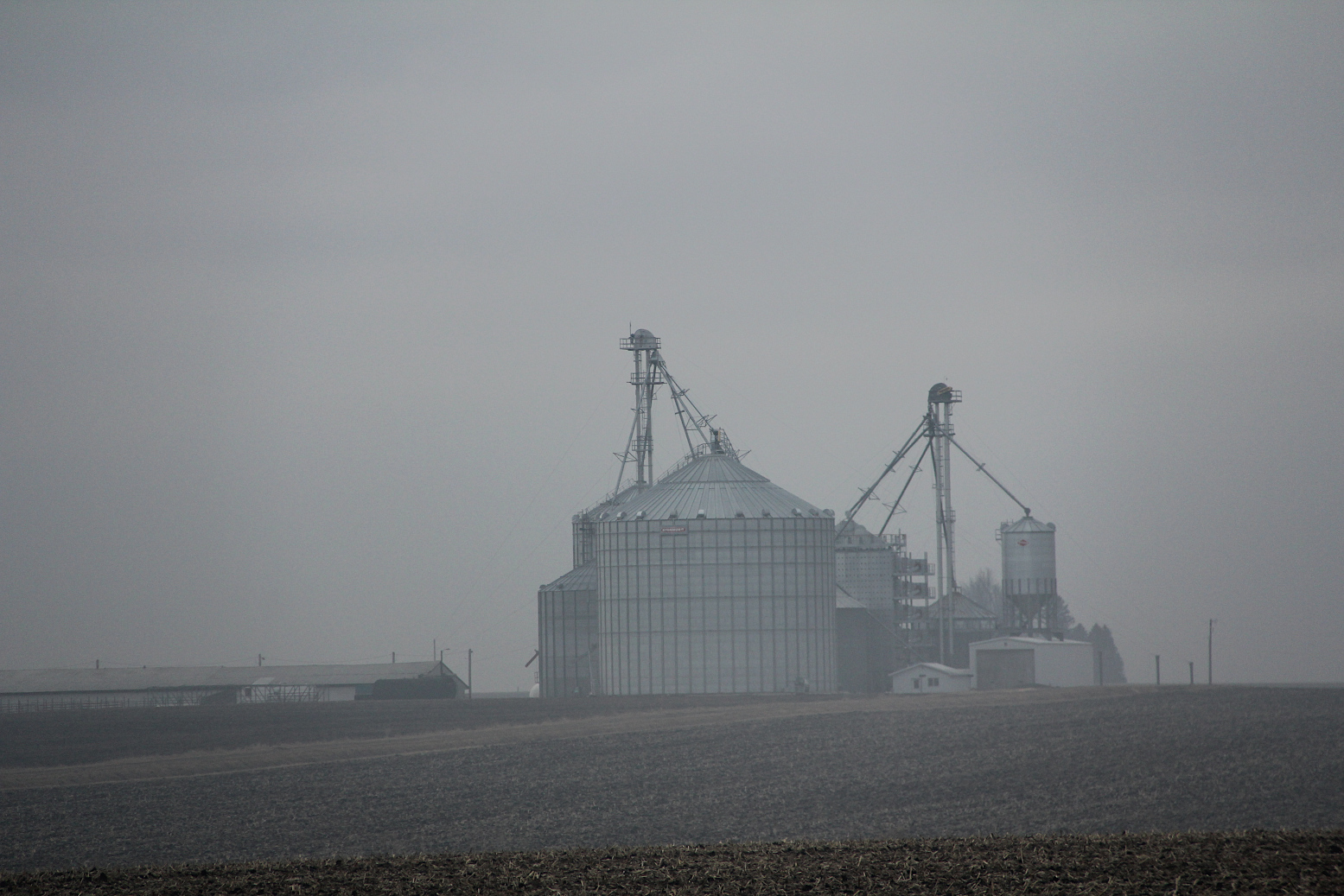
Fog shrouds bins and a grain drying complex along US Highway 14 west of Rochester. (Minnesota Prairie Roots copyrighted photo March 2026)

Regardless of photo outcomes, I’m content to scan my surroundings, appreciating the nuances of rural Minnesota. On this particular Thursday morning along US Highway 14 about 20 minutes west of Rochester, I was drawn first to fog enveloping a farm site. Gray on gray on gray on gray. Gray skies. Gray bins. Gray grain dryers. Long gray metal buildings.
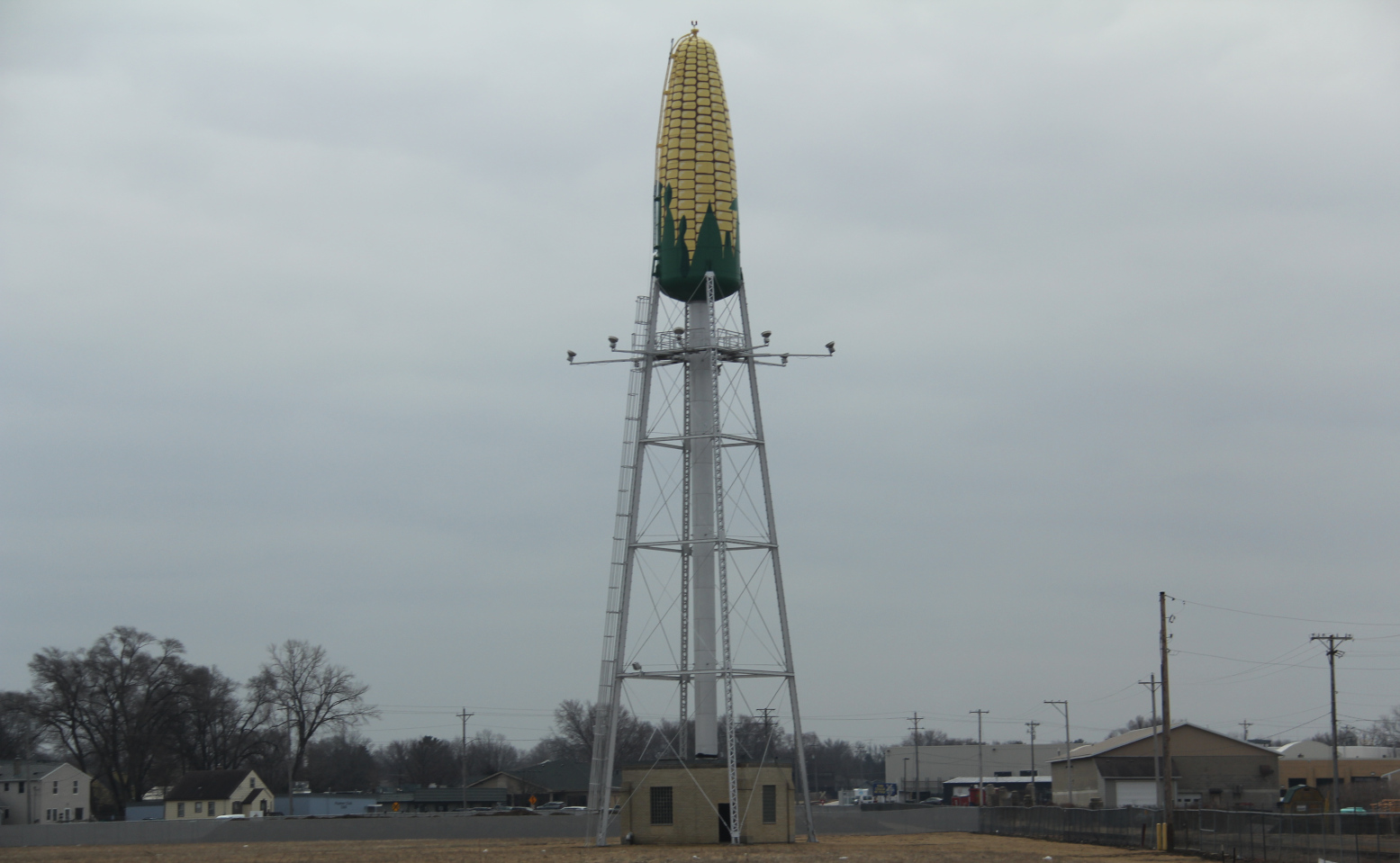
The restored historic Ear of Corn Water Tower near Graham Park in Rochester on a recent gray morning. (Minnesota Prairie Roots copyrighted photo March 2026)

Once in Rochester, color popped at me from a roadside attraction, the 151-foot tall Ear of Corn Water Tower built in 1931 for Reid, Murdoch & Co. The food cannery used the 50,000 gallon water tower in its canning operation, which included canning corn. The business changed hands twice before the plant closed in 2018. But the water tower landmark remains. I found it definitely photo-worthy as we passed by.
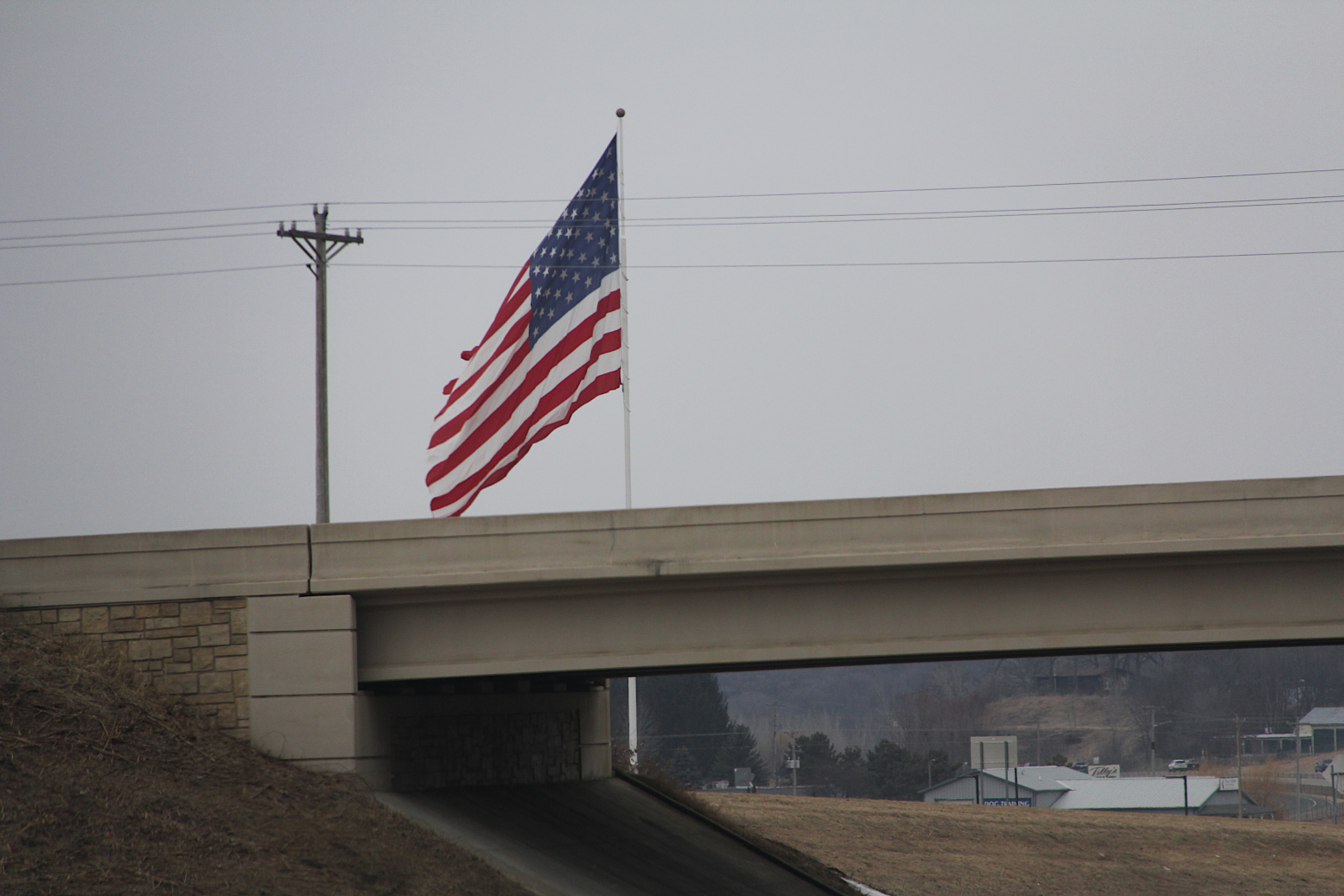
An American flag as photographed along US Highway 52 in Rochester. (Minnesota Prairie Roots copyrighted photo March 2026)

But something as simple as as an over-sized American flag flapping in the morning breeze, a red barn flashing color, a sprawling white farmhouse, a row of power lines, a distant farm site can grab my visual attention, too.
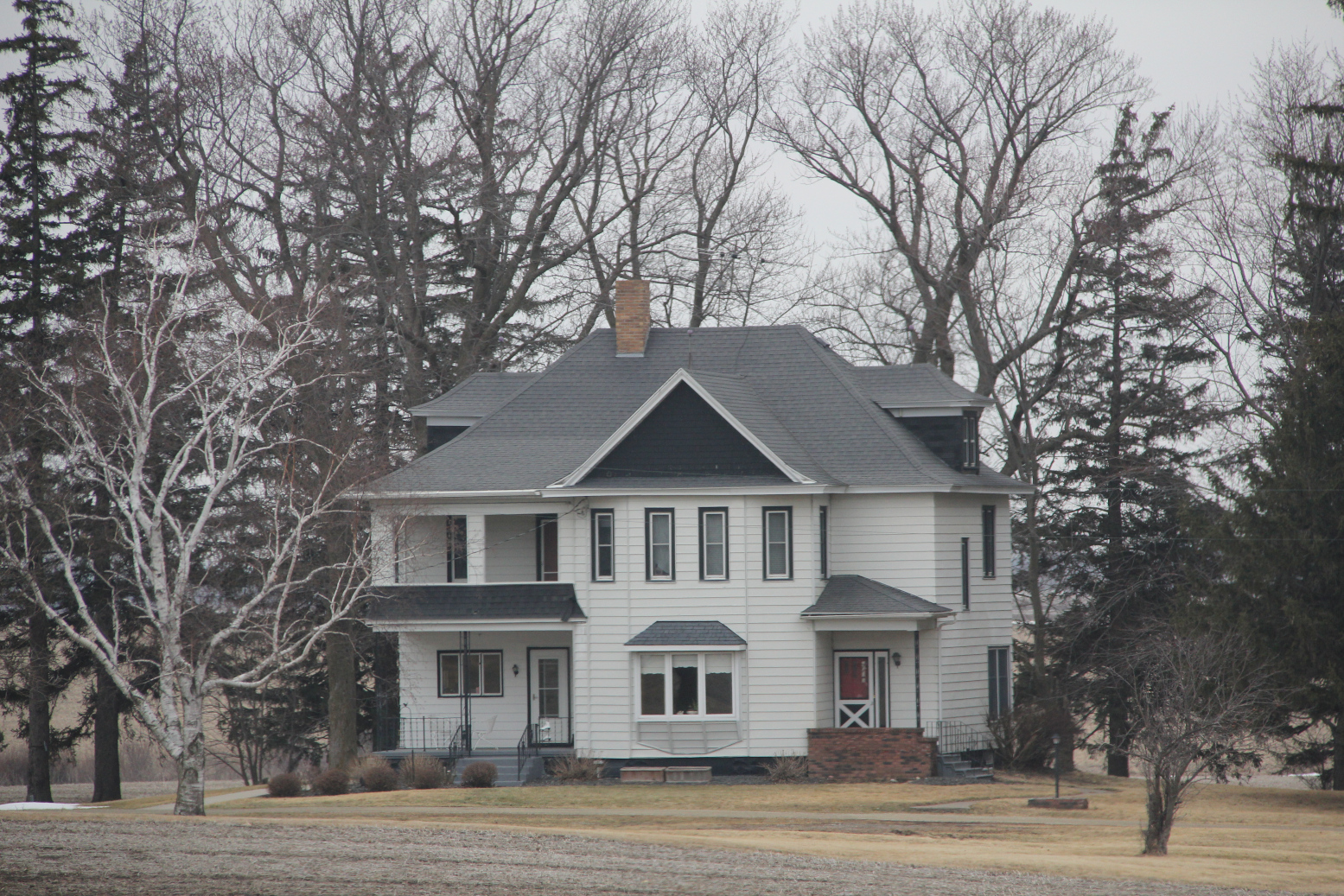
I always wanted to live in a sprawling farmhouse similar to this one along Goodhue County Road 11. (Minnesota Prairie Roots copyrighted photo March 2026)

I’m drawn to photograph rural scenes because of my farm background. Deep in my soul, I long to live again in the countryside, away from close neighbors, near nature, cocooned by quiet. But reality is that will never happen.

And so I find ways to reconnect with the land. In my writing. In my photography. In every season.
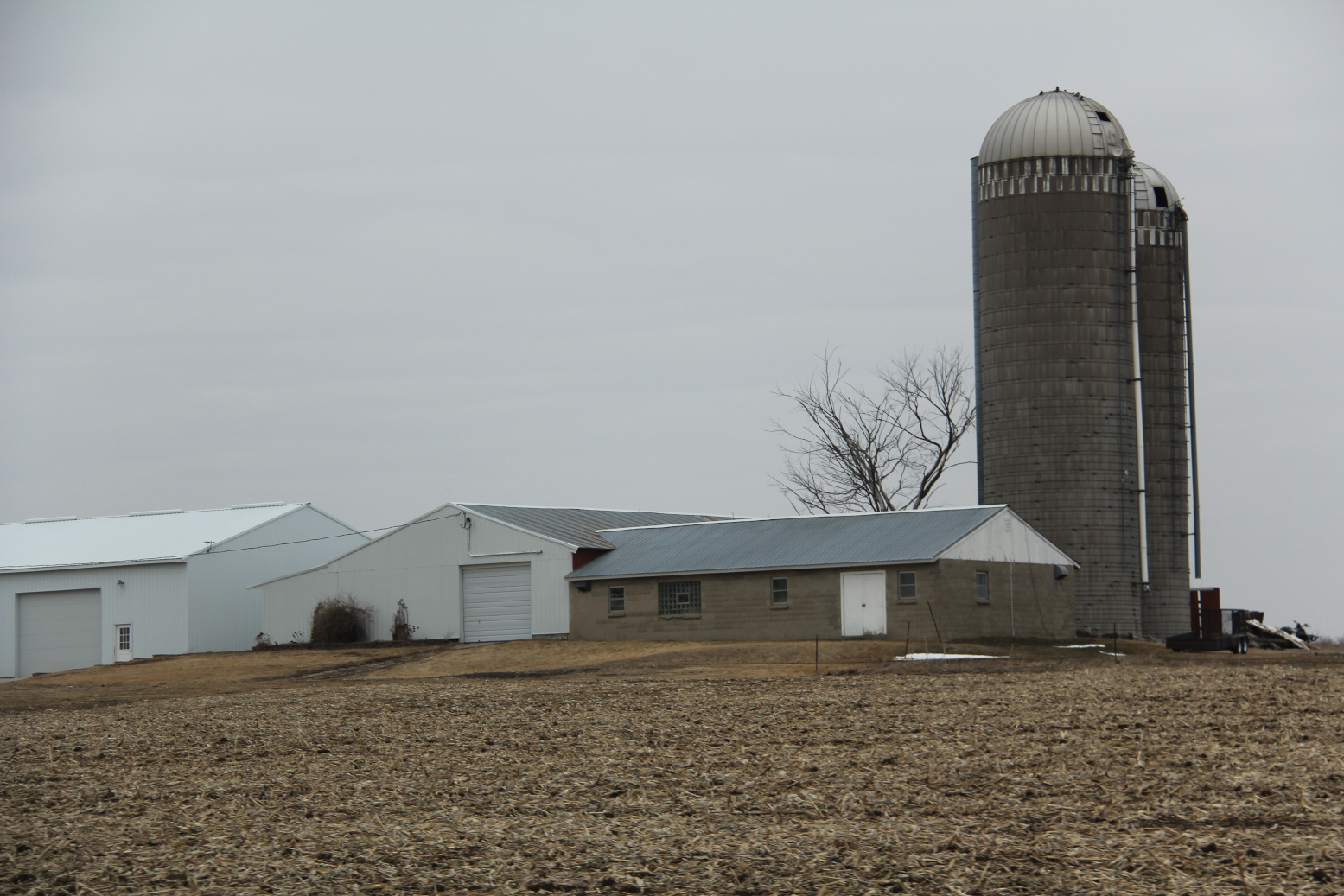
A farm site west of Pine Island along Goodhue County Road 11. (Minnesota Prairie Roots copyrighted photo March 2026)

Every farm field holds the hope of a farmer. Every farm site holds memories and hard work. And dreams. I see this on the road, through my camera lens, as my focus shifts with every mile covered.
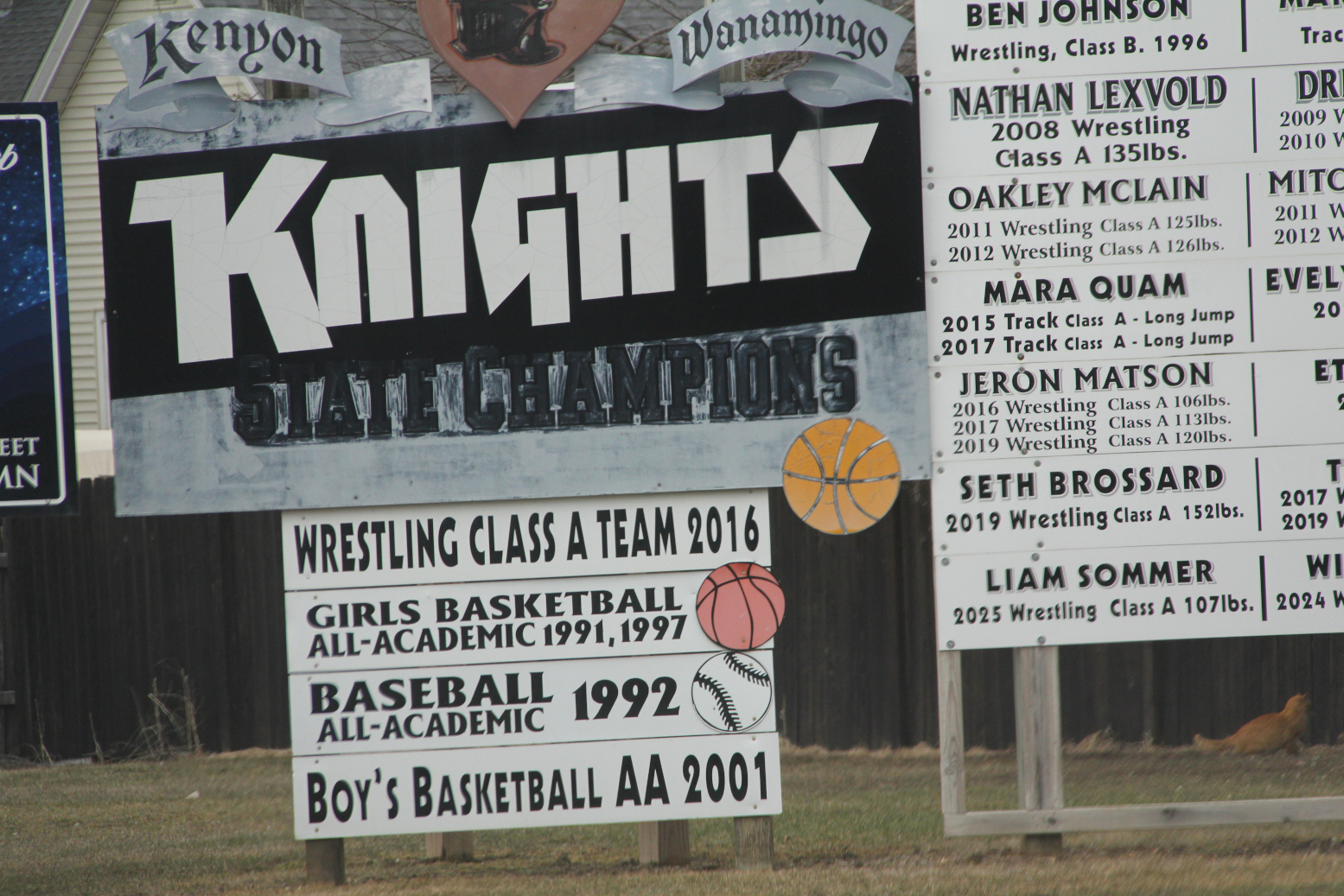
Kenyon-Wanamingo High School sporting accomplishments banner signs. (Minnesota Prairie Roots copyrighted photo March 2026)

I view an ever-changing rural winter landscape of red barns, aged farmhouses, towering silos, untilled fields and then, on the edge of Kenyon, signage boasting local high school sporting championships. Such signs are common in small Minnesota communities.
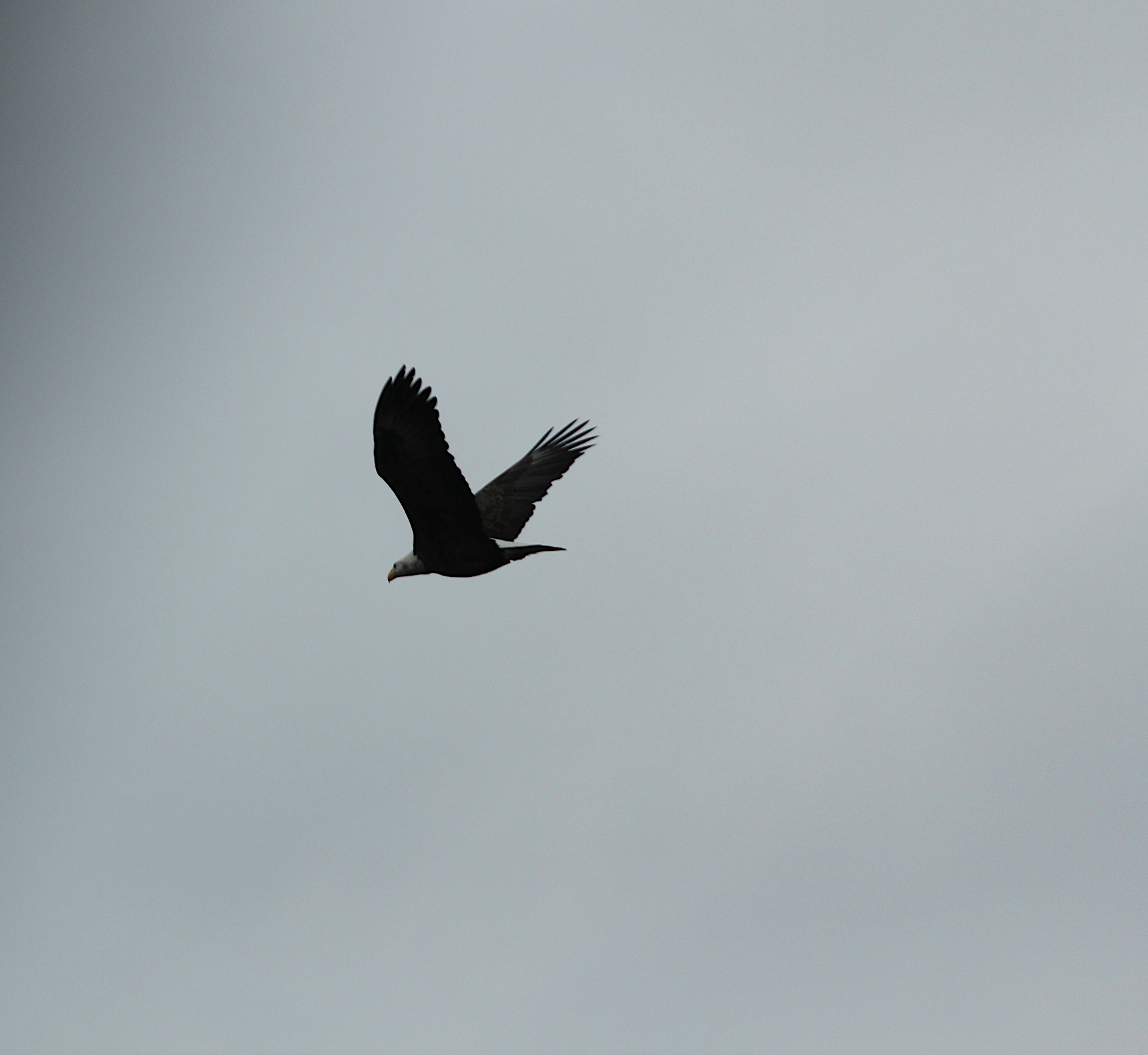
I zoomed in on this eagle flying high above the land outside Kenyon. (Minnesota Prairie Roots copyrighted photo March 2026)

Nearing the end of this quick road trip, an eagle leads us along Minnesota State Highway 60 west of Kenyon before veering to the right. When I see this majestic bird on this day, I feel as I always do about eagles—in awe of their size, their power, their speed. I snap three quick frames.
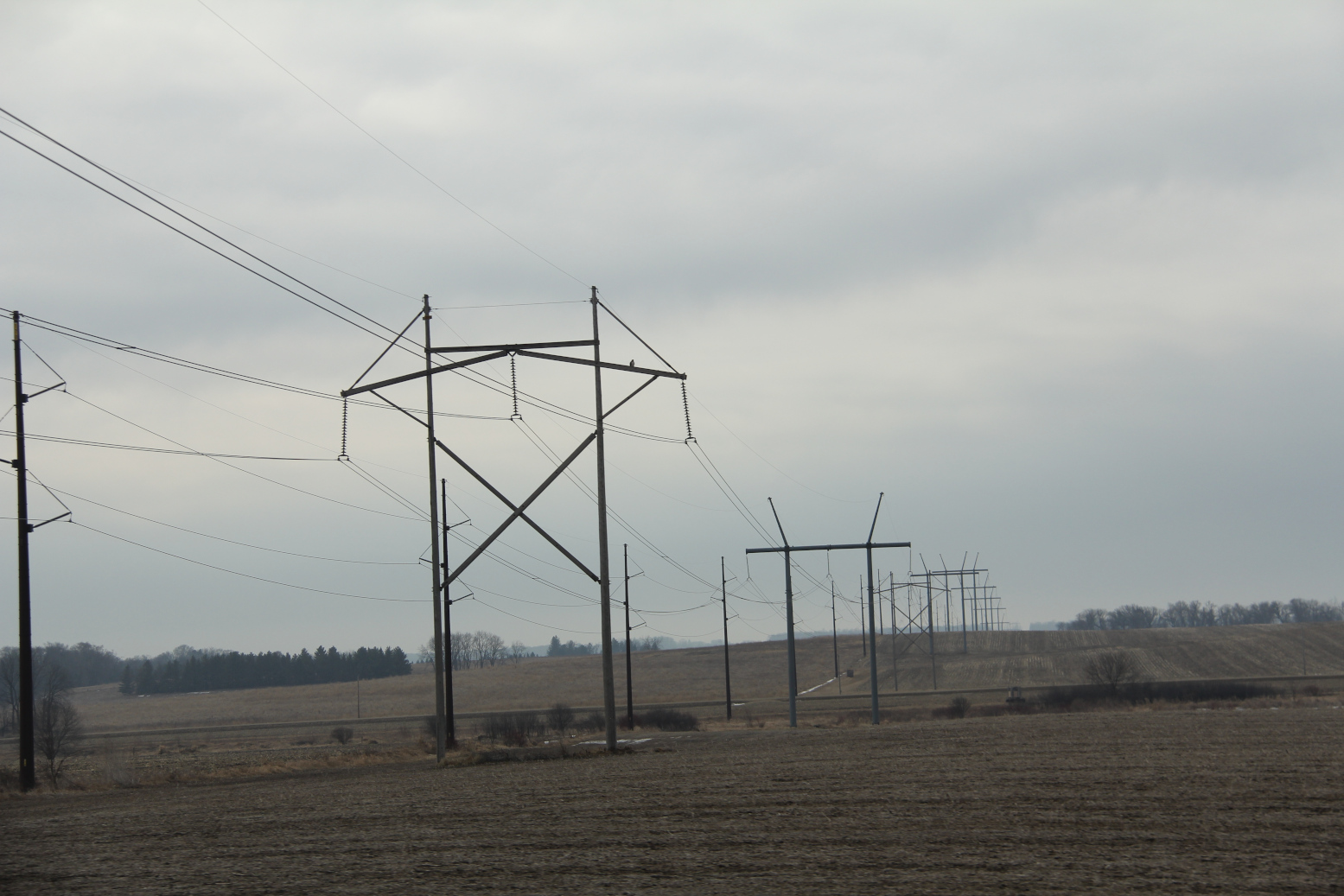
Massive power lines stretch seemingly into infinity along US Highway 14 somewhere between Owatonna and Rochester. (Minnesota Prairie Roots copyrighted photo March 2026)

Time passes. Miles pass. Rural southern Minnesota unfolds before me, captured through the lens of my camera on an almost-spring day in March.

© Copyright 2026 Audrey Kletscher Helbling


In Deerwood: Water tower on the range August 30, 2021

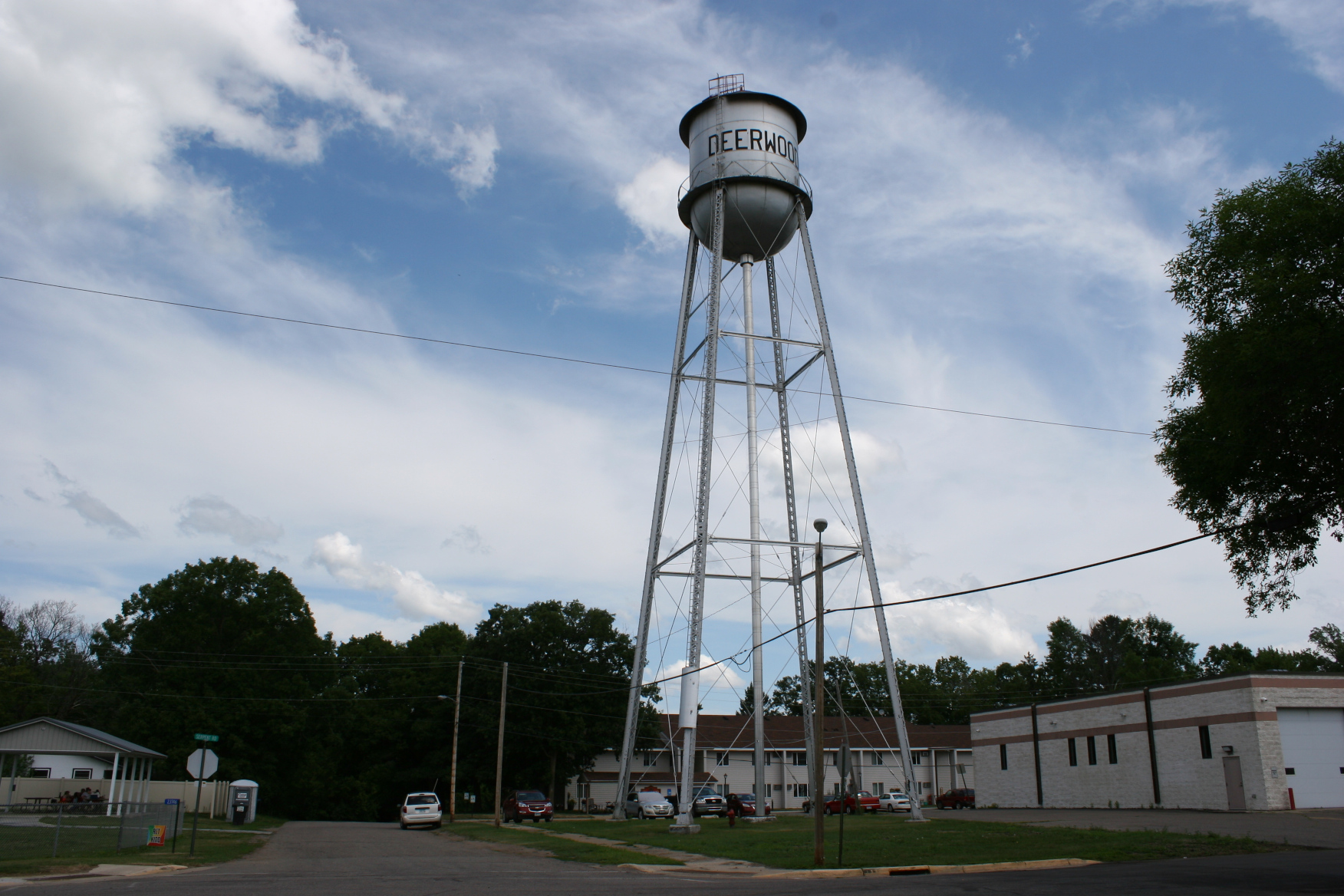
An historic 1914 water tower in Deerwood, Minnesota. Minnesota Prairie Roots copyrighted file photo July 2021.

A TIME EXISTED WHEN I PAID minimal attention to water towers. They all looked the same. Simple silver metal structures rising on leggy supports above prairie towns, dwarfed only by grain elevators.

Through the decades, those standard water towers have mostly vanished, replaced by more modern holding tanks. I understand the need to upgrade, to improve, to advance. Communities grow. Needs change. My city of Faribault is currently planning a new water tower, which will be visible from Interstate 35. If Faribault ever housed a simple metal tower, it was long before I moved here.

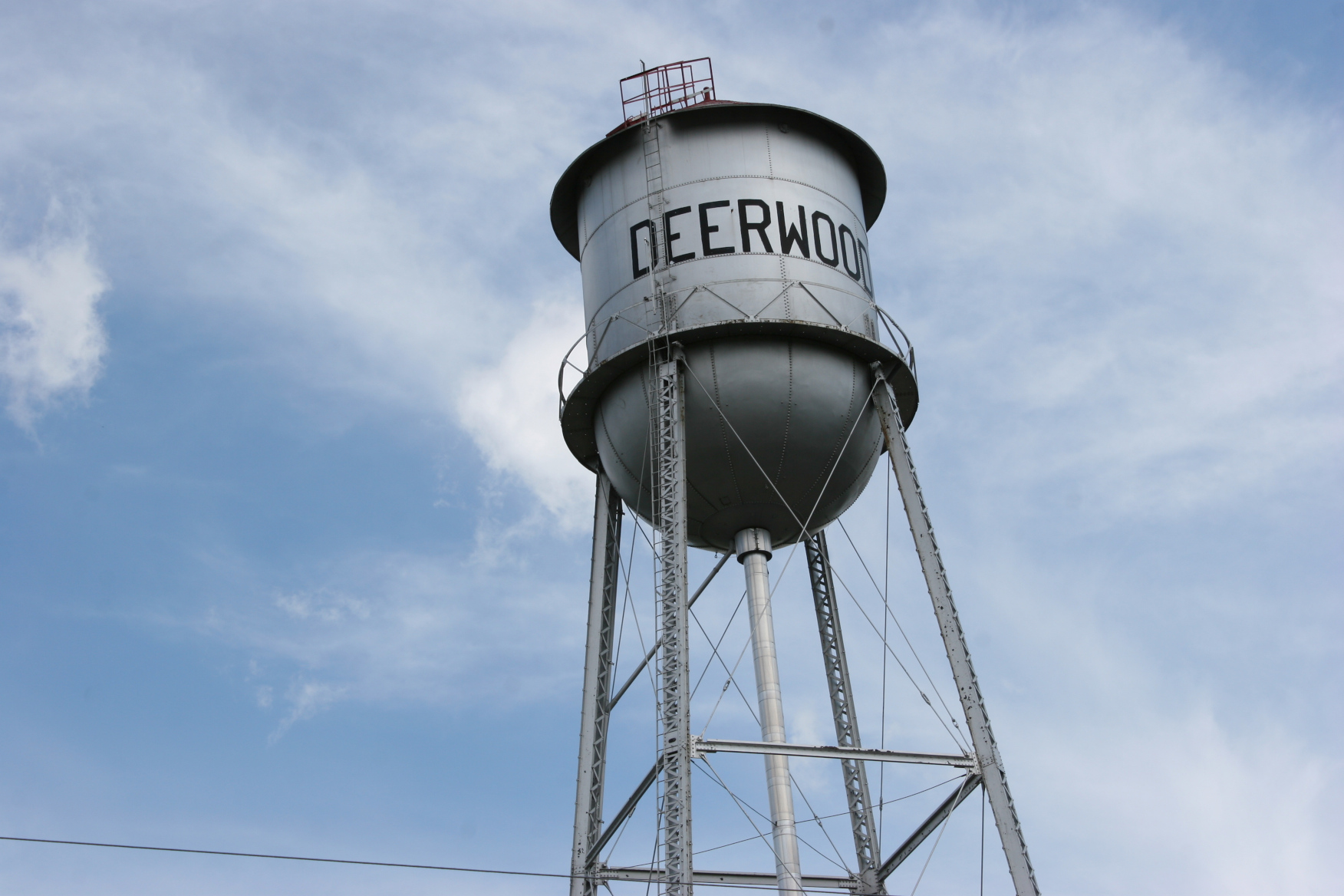
Community identifier. Minnesota Prairie Roots copyrighted file photo July 2021.

But in the small town of Deerwood in Crow Wing County, a vintage water tower still stands, by a city park with picnic shelter and splash pad, near an apartment complex, next to the fire station and across the street from the historic Deerwood Auditorium (city hall and police department).

Randy and I discovered the 1914 water tower when we stopped for a picnic lunch en route to a family lake cabin on a Saturday afternoon in July. Previous drives north, we drove right through Deerwood without pause. In a hurry to get to our destination.

That’s problematic. That word, hurry. By hurrying, we too often miss simple delights. Like the historic Deerwood water tower.

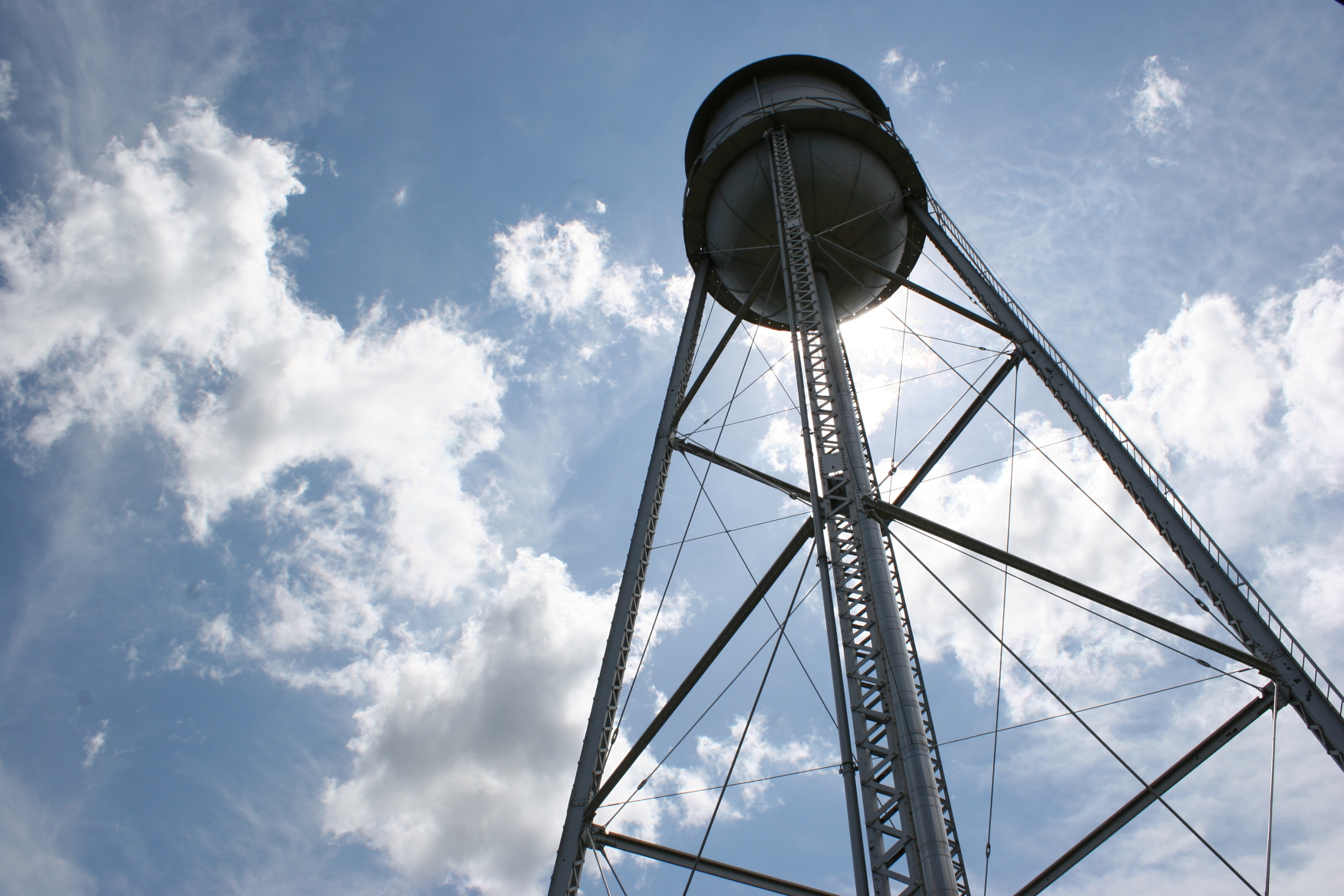
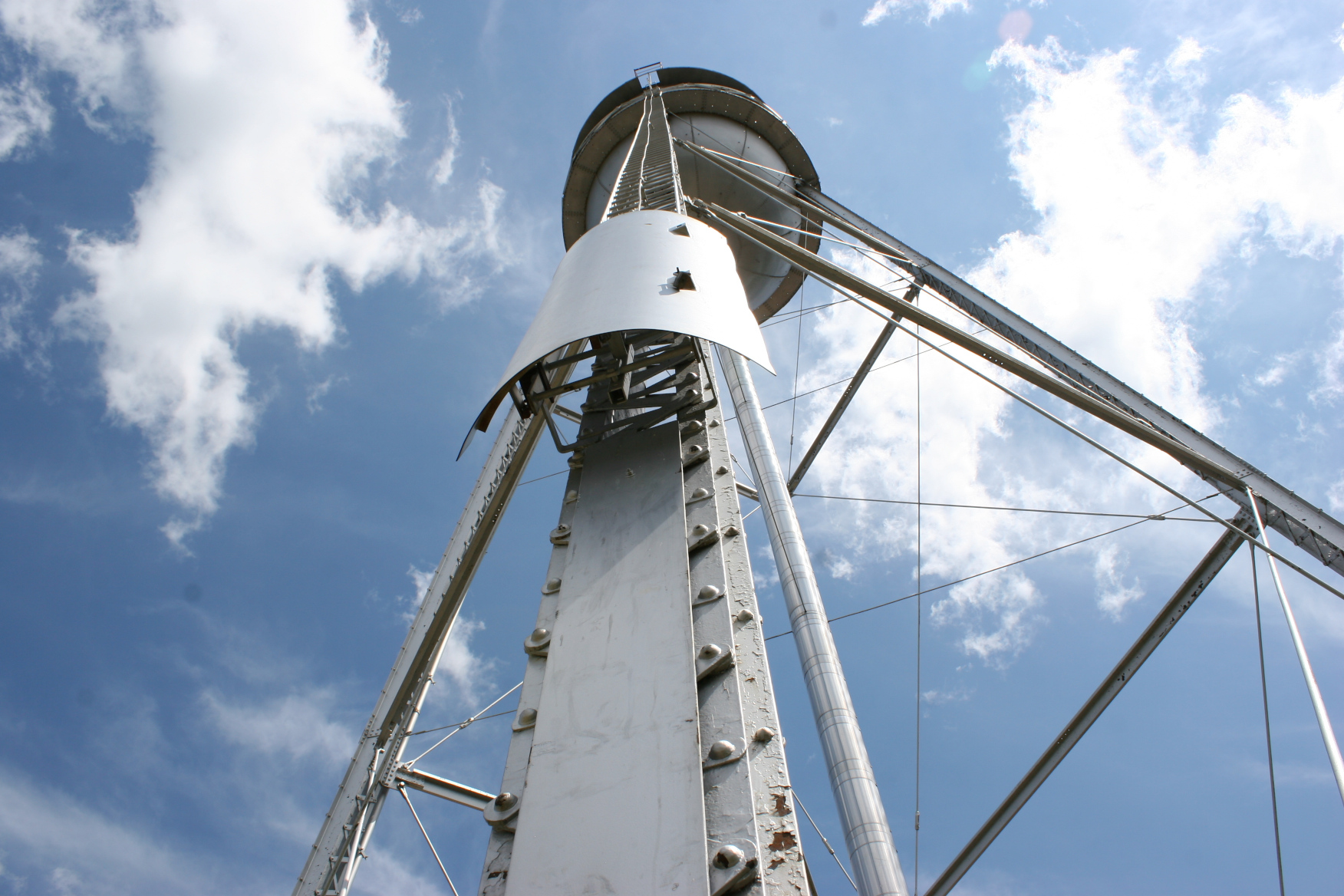
Looking up at the tower offers artistic and architectural angles. Minnesota Prairie Roots copyrighted file photo July 2021.

I grabbed my camera to photograph the tower, attempting to document it from multiple perspectives. Architecturally. Artistically. Historically.

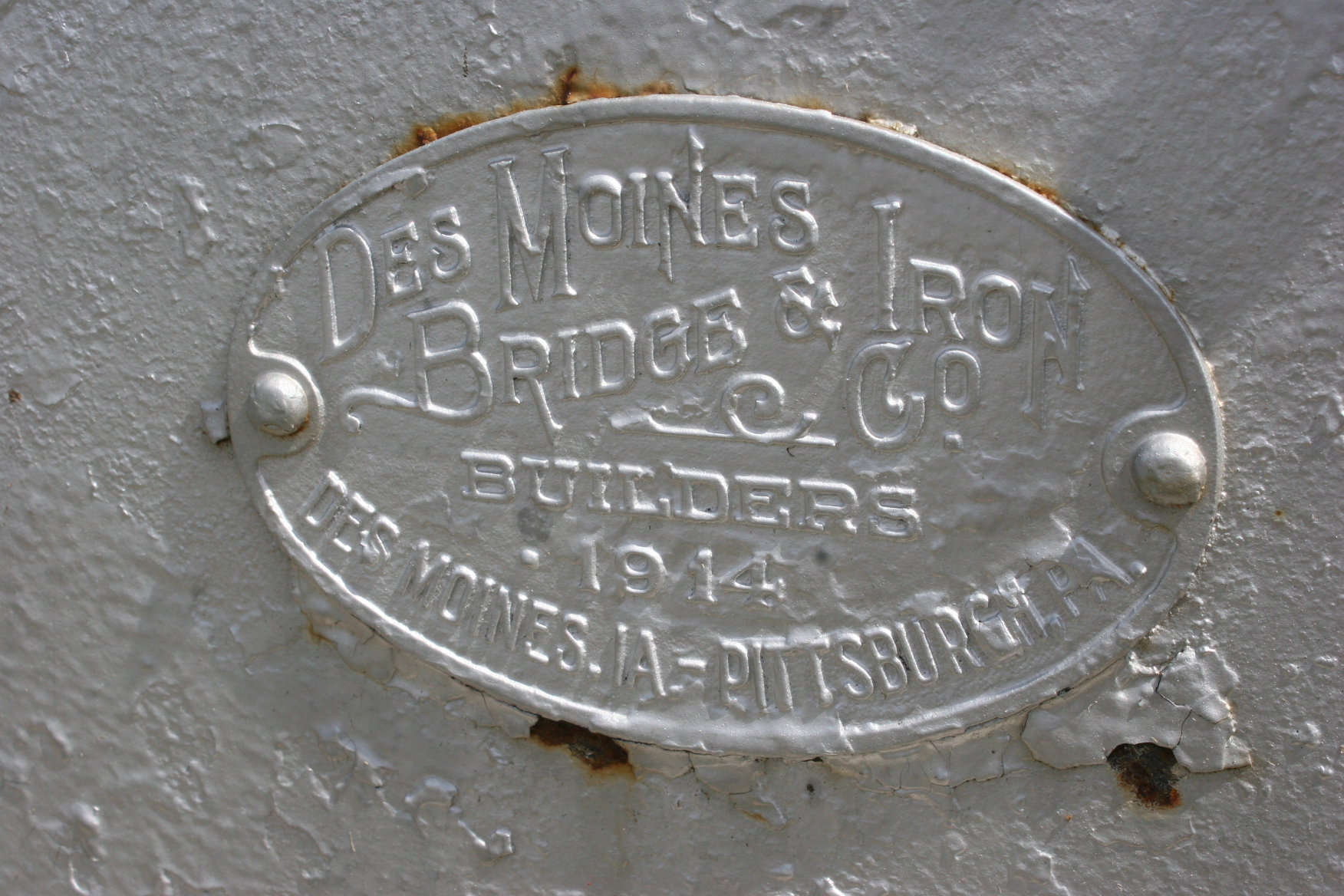
Identifying construction information at the base of the Deerwood water tower. Minnesota Prairie Roots copyrighted file photo July 2021.

Upon later researching the Deerwood water tower, built by the Des Moines Bridge & Iron Co., I learned it is one of five such Cuyuna Iron Range water towers on the National Register of Historic Places. Added in 1980, the other towers are located in Crosby, Cuyuna, Ironton and Trommaid. They are known collectively as the “Cuyuna Range Municipally-Owned Elevated Metal Water Tanks.”

Just another underneath view. Minnesota Prairie Roots copyrighted file photo July 2021.

The towers, erected between 1912-1918, were of historical importance in development of the Cuyuna Iron Range. Tax revenue generated from the iron ore mines funded their construction.

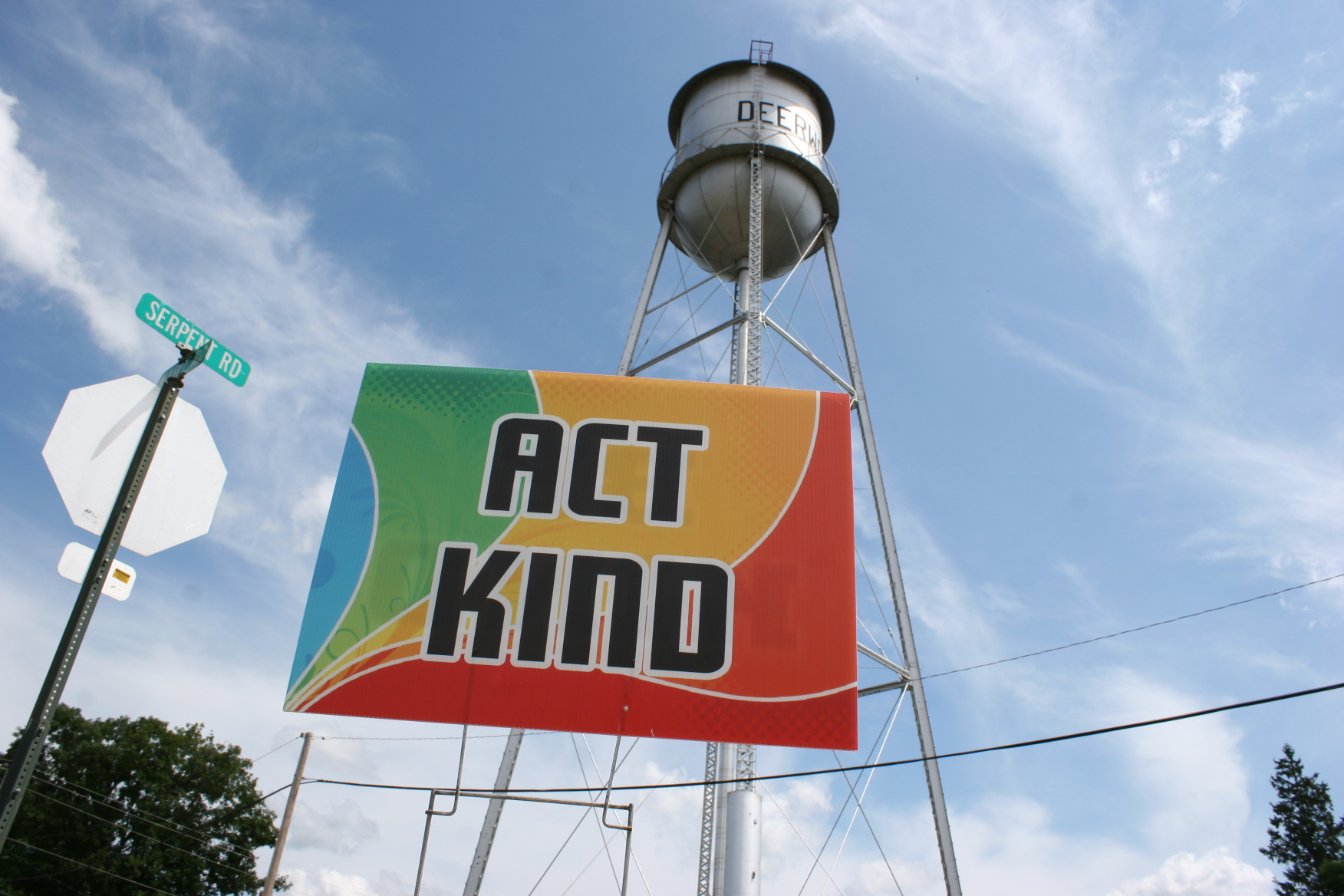
Posted on a street corner by the water tower, a positive message. Minnesota Prairie Roots copyrighted file photo July 2021.

I appreciate that these five towns on the iron range valued their aged water towers enough to pursue and acquire historical designation. The water towers represent a time in Minnesota history. They represent, too, the architecture and art of yesteryear.

TELL ME: I’d like to hear of vintage water towers you’ve noticed and appreciate. Tell me, too, why you value them.

Please click here to read my previous post about the historic Deerwood Auditorium. And click here to read my post about the town’s deer sculpture in Elmer Park.

© Copyright 2021 Audrey Kletscher Helbling