Minnesota Prairie Roots

Writing and photography by Audrey Kletscher Helbling

Celebrating the bald eagle locally, elsewhere in Minnesota & now nationally December 26, 2024

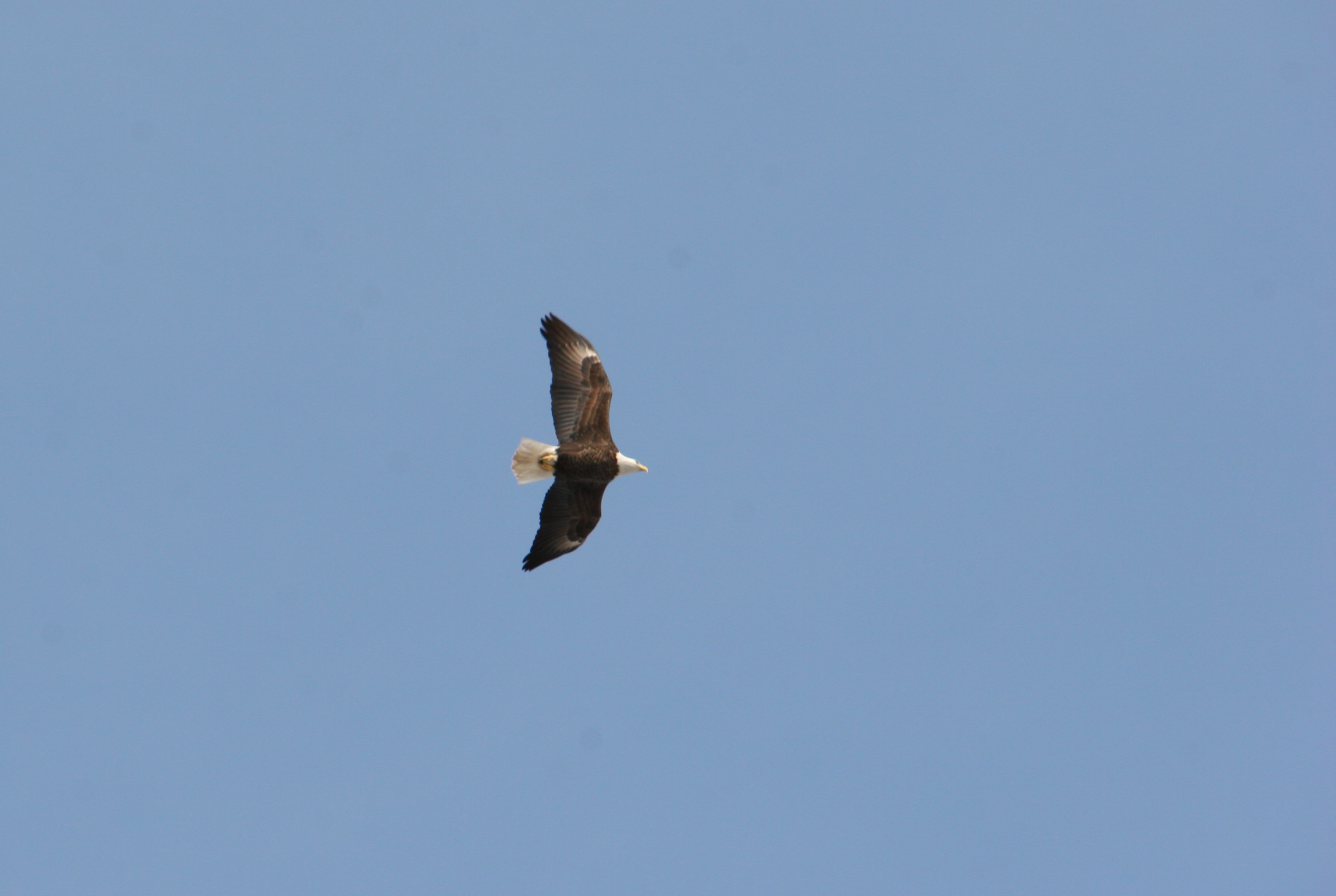
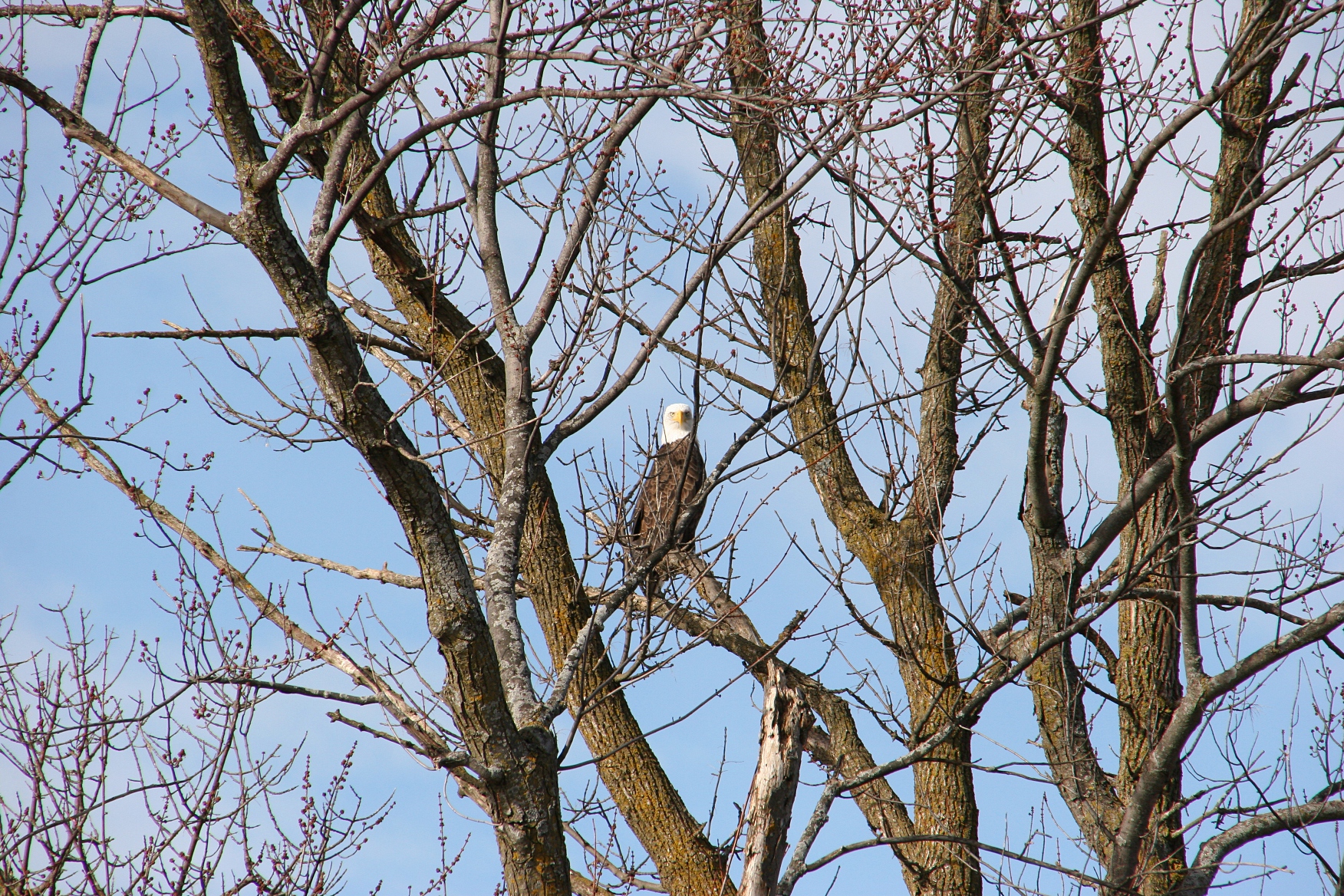
A bald eagle photographed in Faribault by the Cannon River. (Minnesota Prairie Roots copyrighted file photo March 2018)

THE BALD EAGLE IS NOW America’s official national bird as of a bill signed into law on Christmas Eve. And that’s exciting, especially for Minnesota, home to the National Eagle Center in Wabasha and home to the second largest population of eagles in the US, behind Alaska.

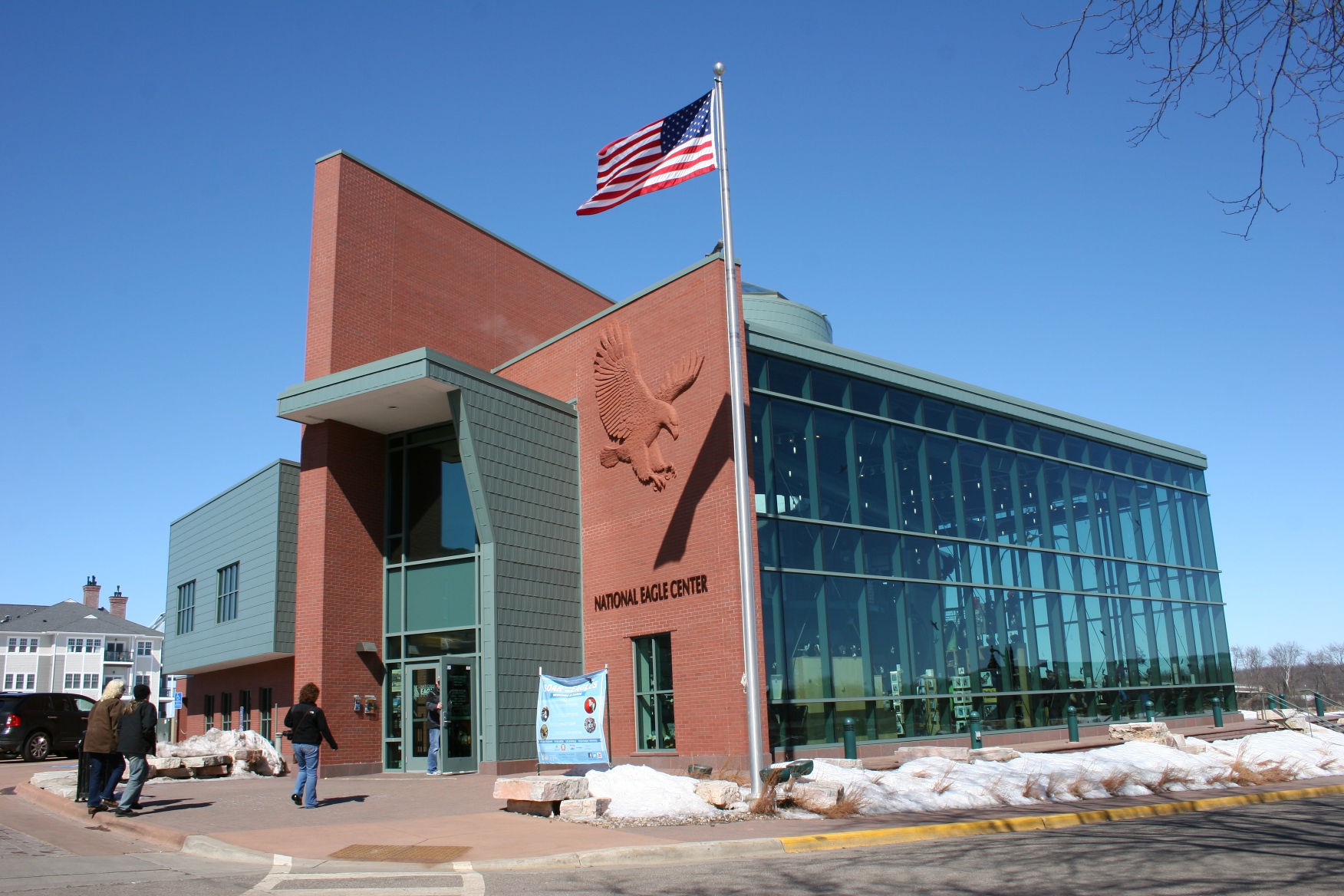
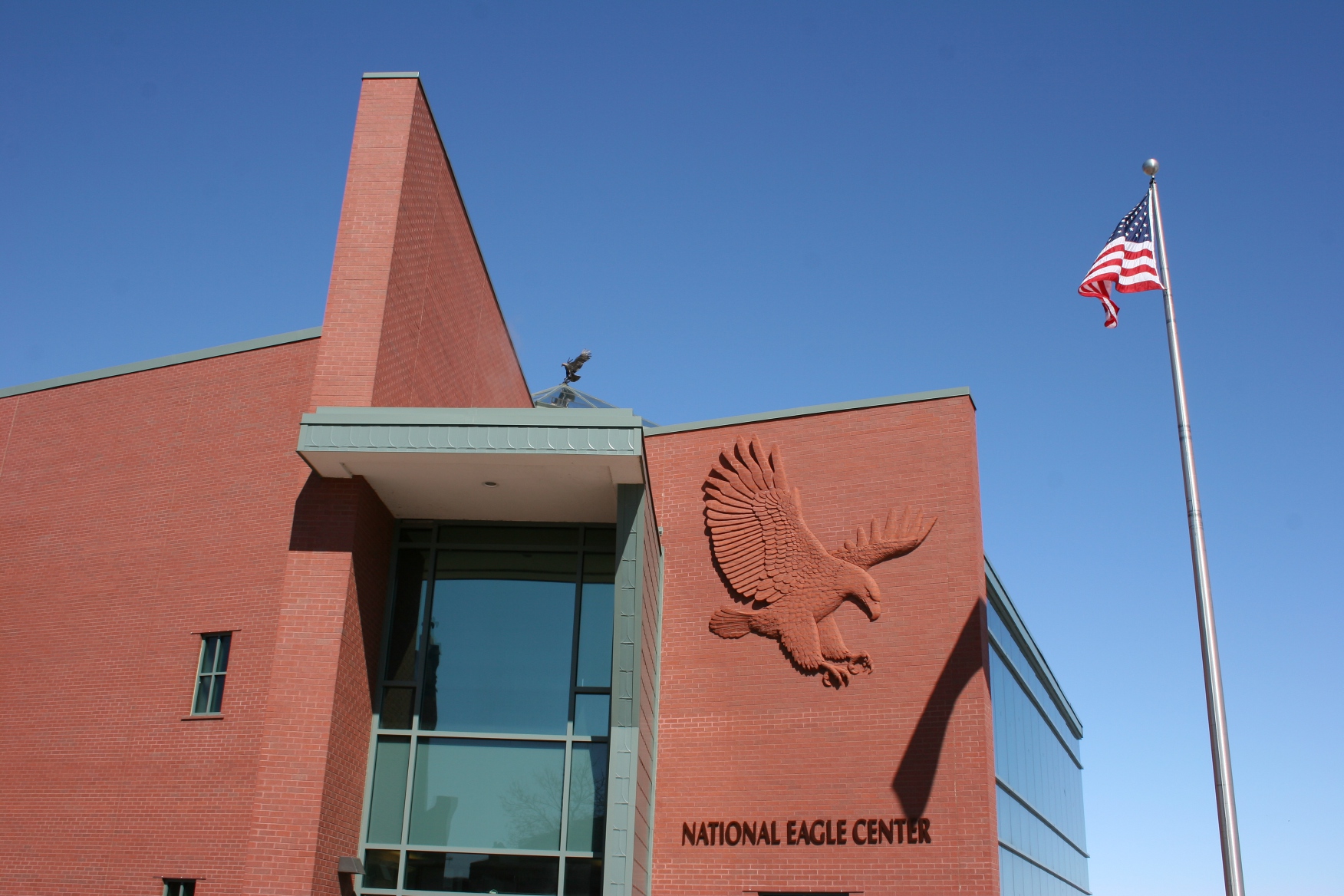
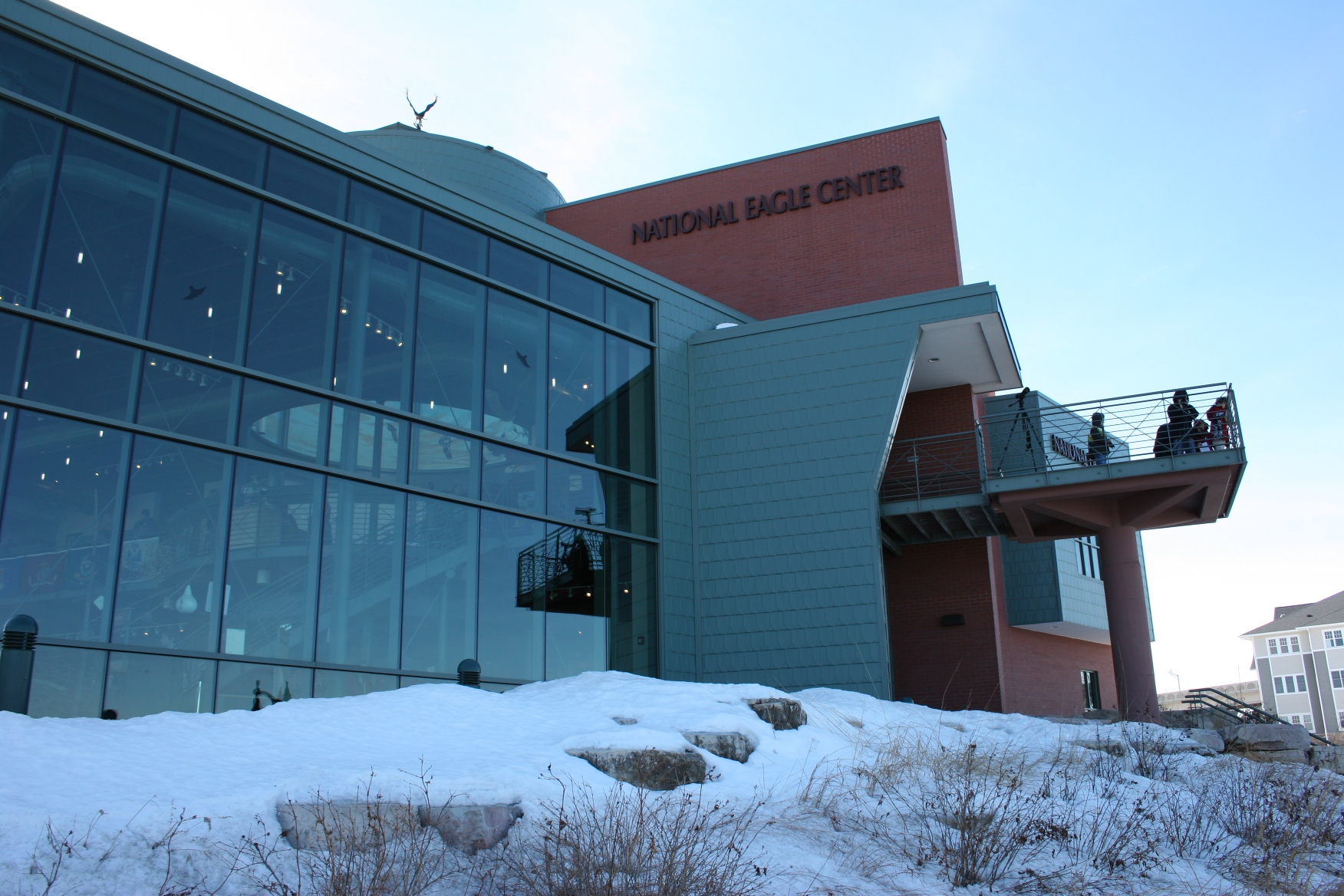
The National Eagle Center in Wabasha. (Minnesota Prairie Roots copyrighted file photo 2014)

I expect this designation will draw more visitors to Wabasha. I last visited the Eagle Center in 2014 and need to return as it was recently expanded and updated, building on an already impressive place to learn about eagles.

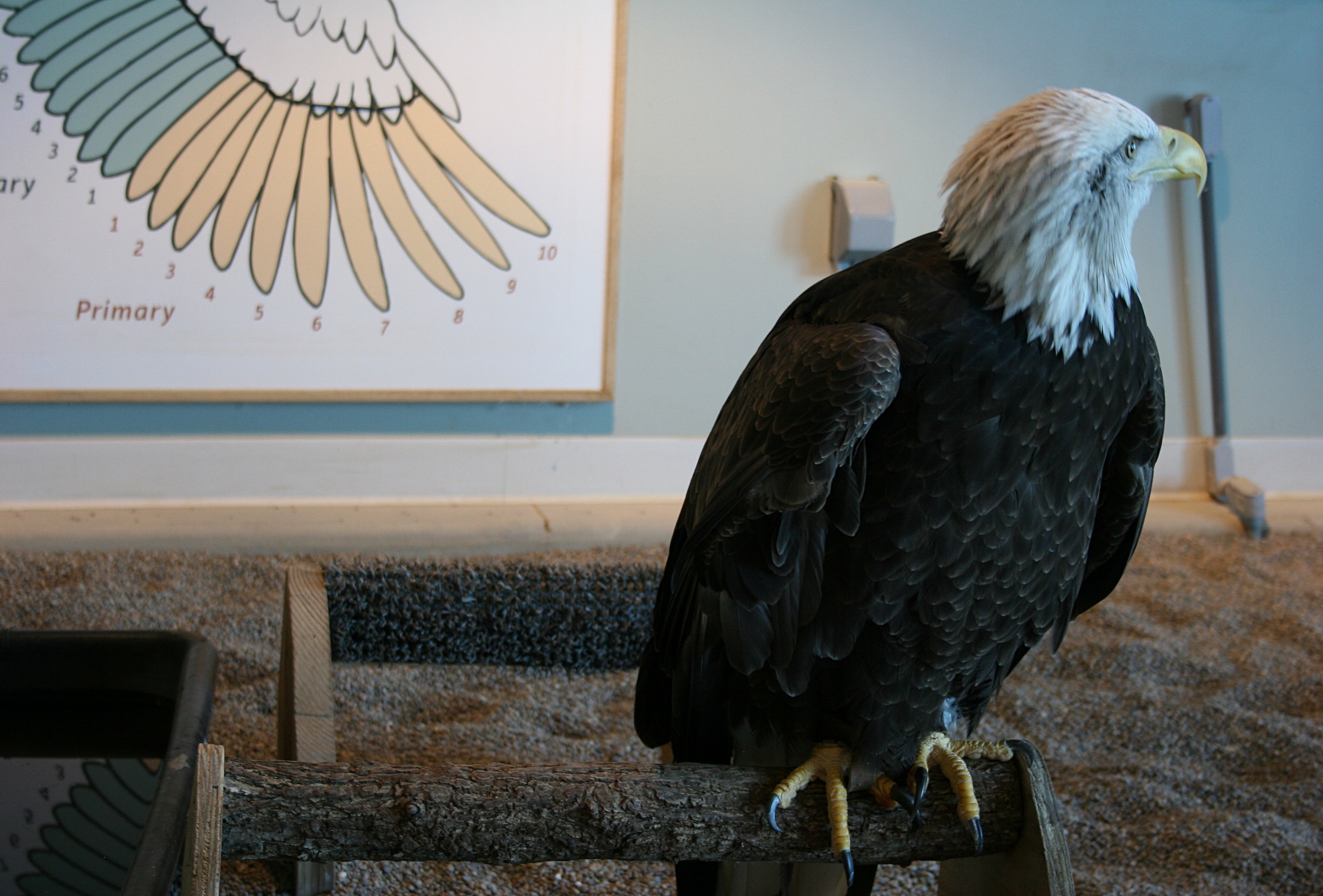
Up close with an eagle at the National Eagle Center along the Mississippi River in Wabasha. (Minnesota Prairie Roots copyrighted file photo 2014)

Wabasha’s National Eagle Center not only houses rehabilitated resident eagles (used in programming), but also features eagles in art, history and more. I’m all about learning more about a bird which I never tire of seeing. There’s something about an eagle soaring that imprints upon me a sense of awe.

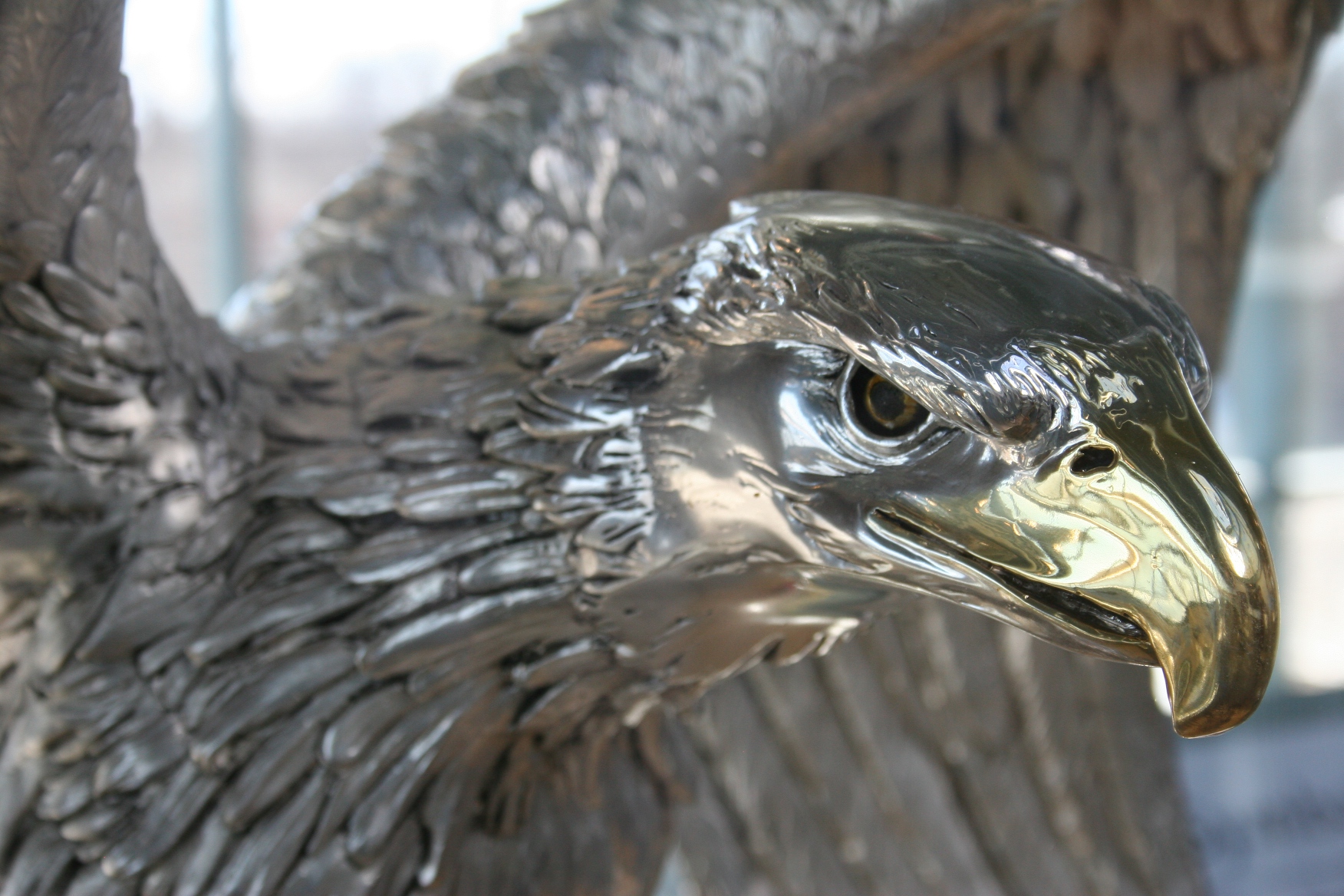
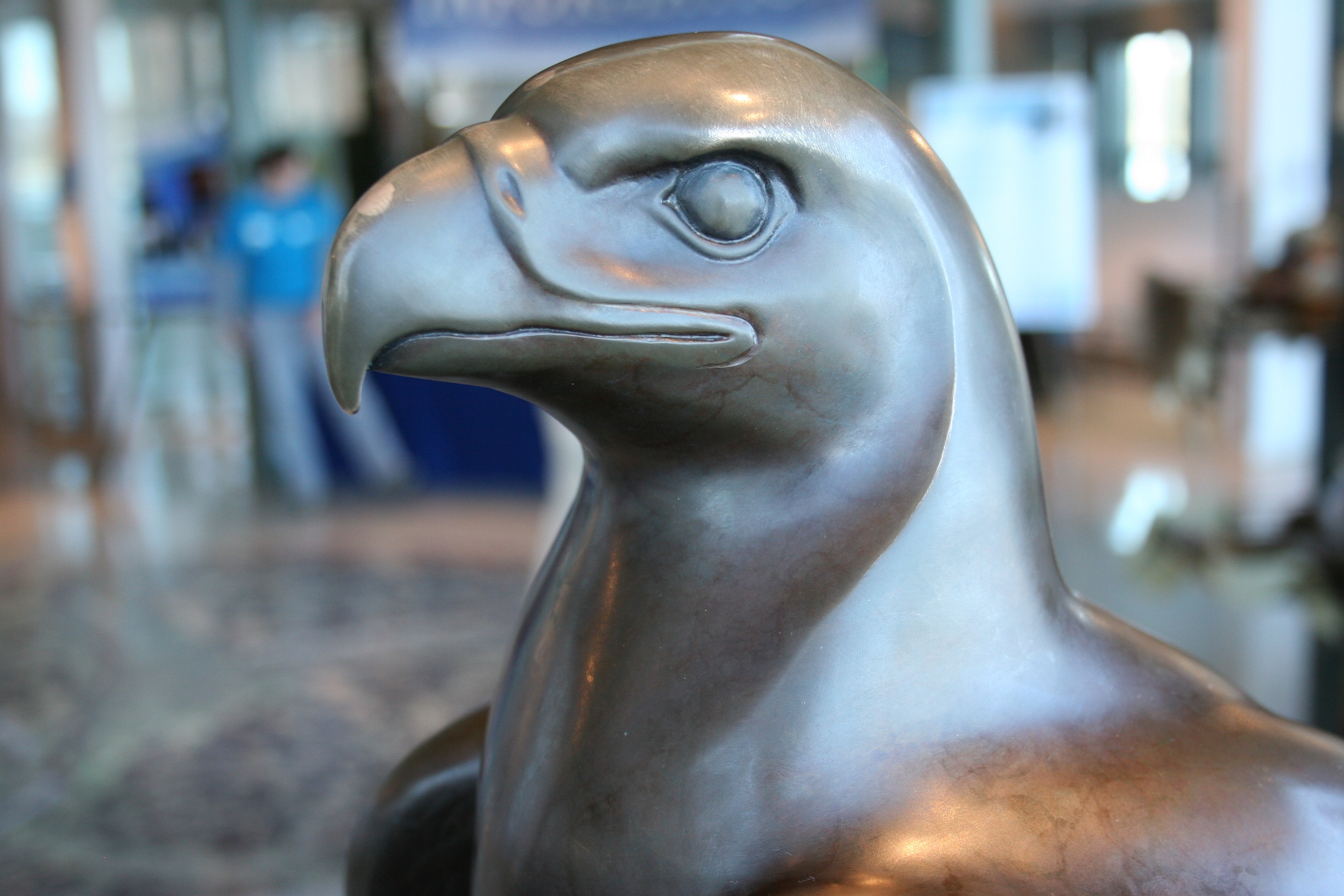
The Bicentennial Eagle by A. Giannelli inside the National Eagle Center. (Minnesota Prairie Roots copyrighted file photo 2014)

On Christmas Day, as Randy and I sat home alone eating French toast (instead of a ham dinner due to illness in the family), I looked out the dining room window to see a large bird flying directly toward our house. Even as high as the bird flew, I recognized it as an eagle. Soon I spotted a second trailing eagle.

Just south of Union Lake Trail along Rice County Road 46, a bald eagle watches me. (Minnesota Prairie Roots copyrighted file photo 2018)

This isn’t the first time I’ve seen bald eagles simply by looking out windows in my south Faribault home. I’ve watched an eagle glide low past our picture window. I’ve seen one a block away flying at treetop level. Several blocks up the hill, an eagle flew above Fourth Avenue Southwest. I’ve observed an eagle following the course of the Straight River while dining at The Depot Bar & Grill. On Faribault’s north side, I’ve spotted eagles flying near the Cannon and Straight Rivers. On the way to Dundas, eagles perch in a nest visible from Minnesota State Highway 3.

Eagles perch in a tree near Waseca. (Minnesota Prairie Roots copyrighted file photo 2012)

I’ve seen eagles in other areas of Rice County and in Waseca County. They are seemingly everywhere throughout Minnesota.

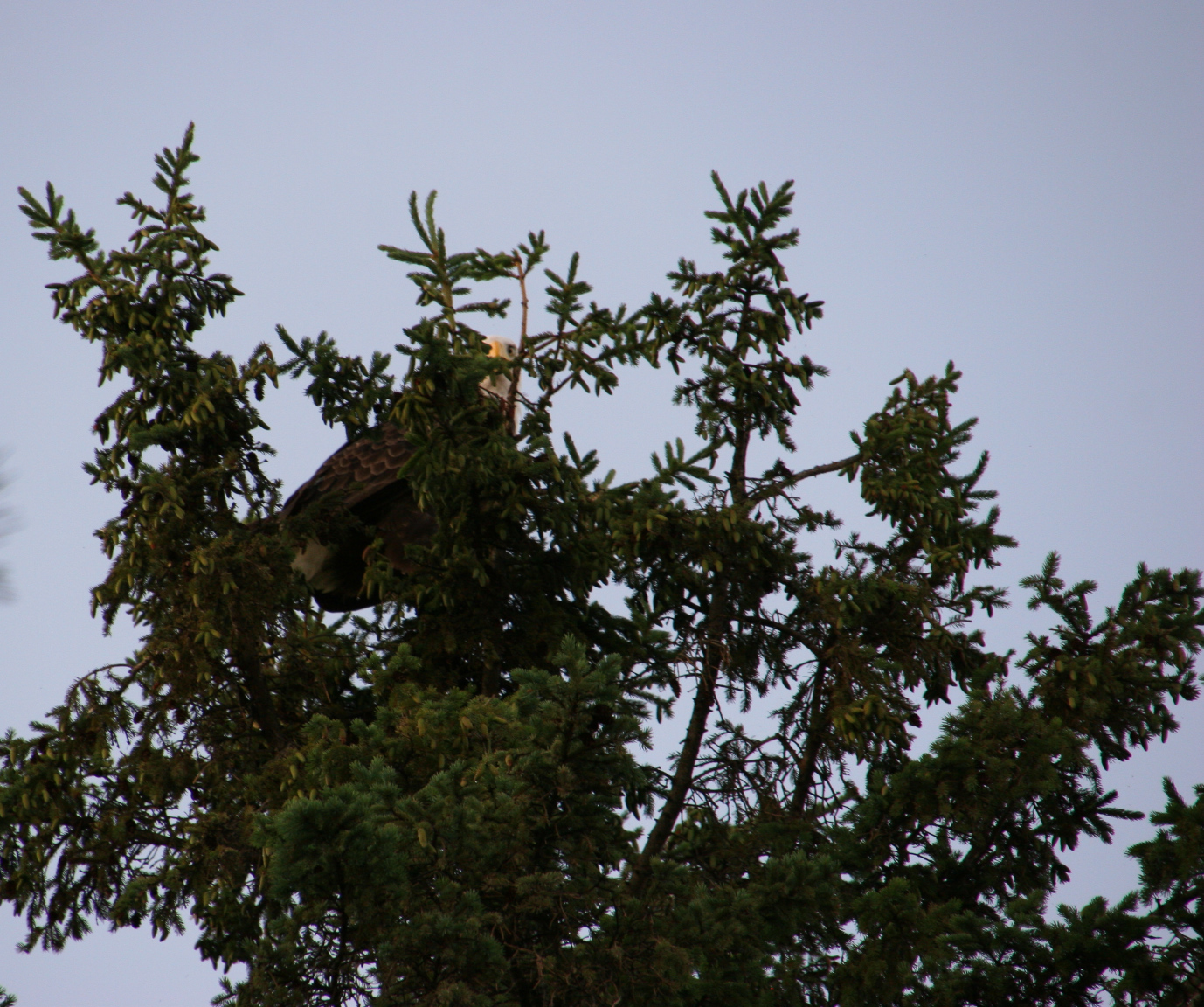
Glimpse of a bald eagle in a lakeside treetop south of Crosslake in central Minnesota. (Minnesota Prairie Roots copyrighted file photo)

To the north in the Brainerd lakes area of Central Minnesota, eagles once nested in a tree at a family member’s lake cabin. The nest fell in a storm, but the eagles relocated along Horseshoe Lake. So there’s still plenty of eagle watching at the cabin.

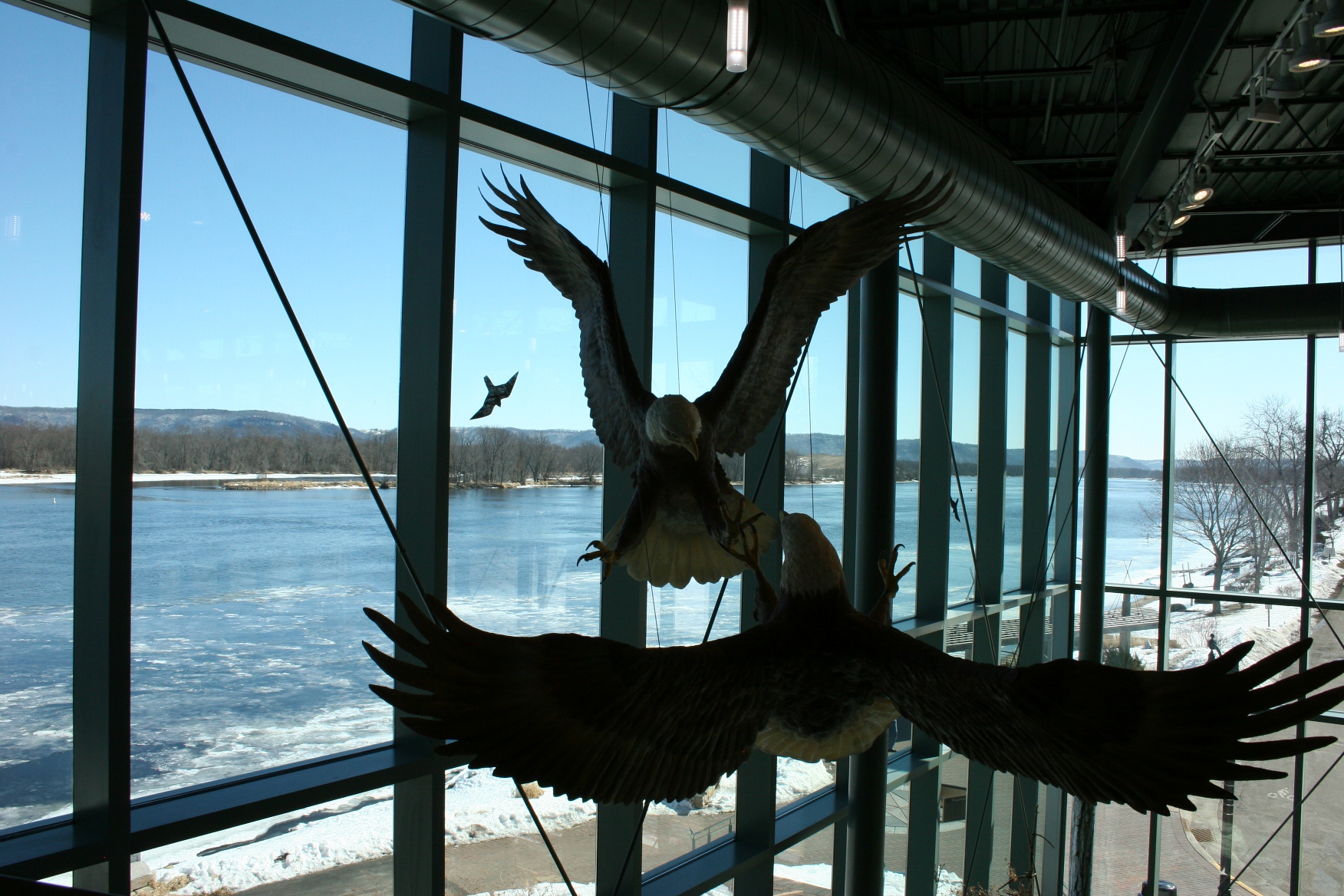
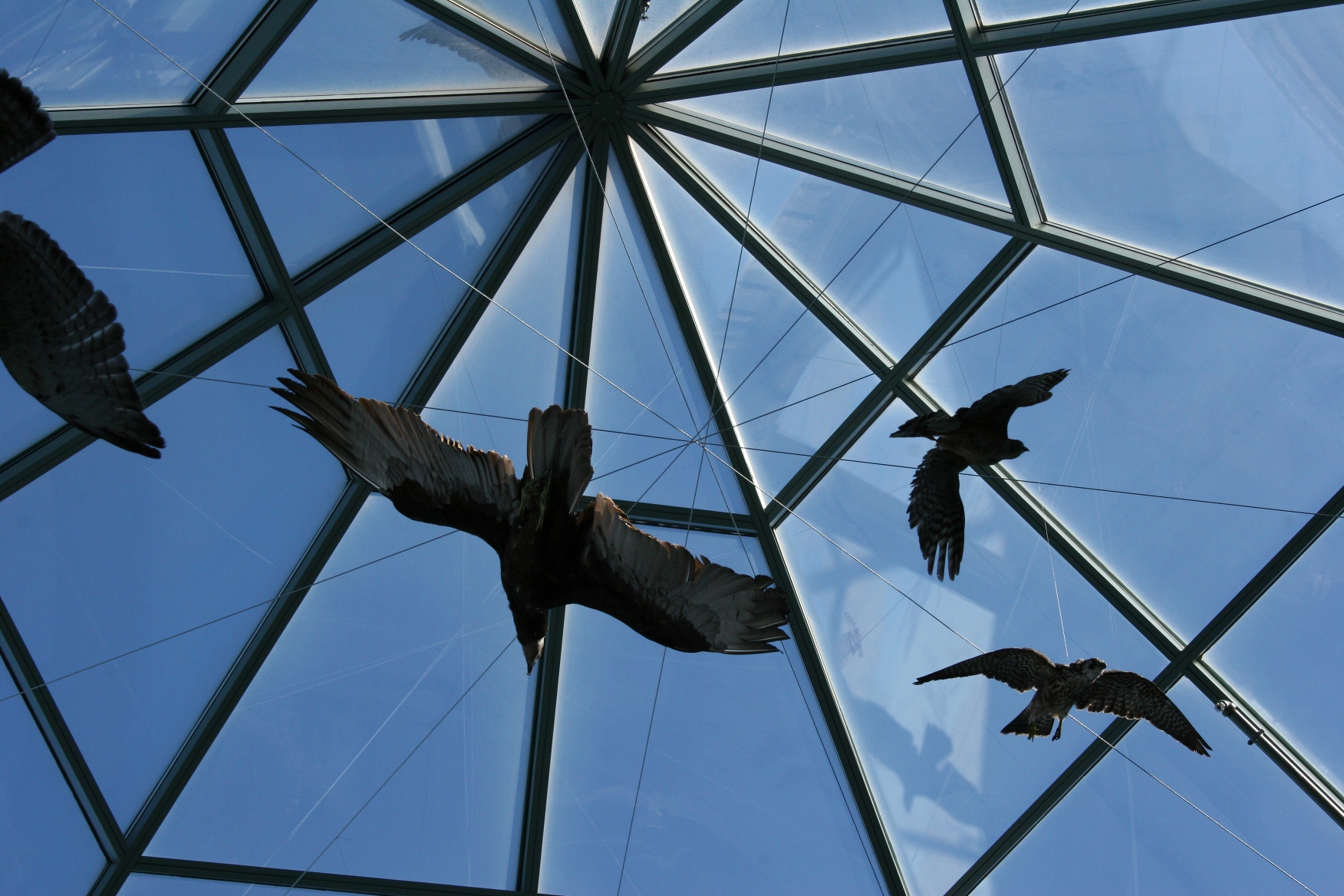
Eagles suspended from the ceiling and a view of the Mississippi River from the second floor of the National Eagle Center. (Minnesota Prairie Roots copyrighted file photo 2014)

We once nearly hit a bald eagle south of Hackensack as it lifted off the shoulder just as our van passed. Let me tell you that seeing the massive wing span (from 5 to 8 feet) of an adult eagle passing across your windshield is not only startling, but scary. Fortunately, the eagle cleared the windshield. Near Kenyon another grazing-on-roadkill eagle took flight within seconds of our van striking it. Aside from those close encounters, eagle watching has proven pleasant.

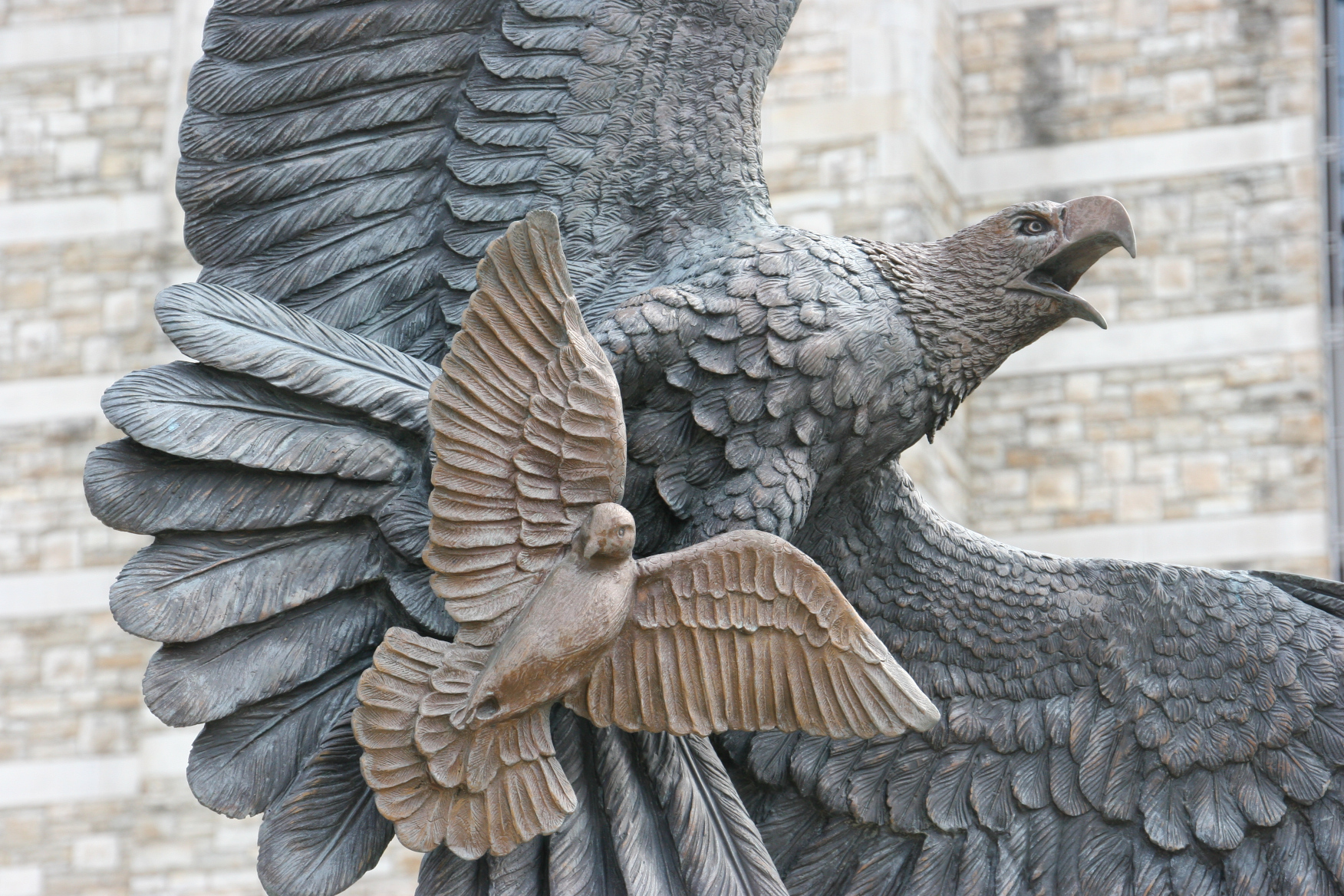
My photo of an eagle and dove at the Rice County Veterans Memorial now hangs in the Minnesota Veterans Home, Bemidji. (Minnesota Prairie Roots copyrighted file photo)

I also appreciate how bald eagles are incorporated into many veterans memorials as symbols of America and of freedom. I’ve photographed many of those memorial eagle sculptures, including one right here in Faribault. Today that photo from the Rice County Veterans Memorial graces a wall at the new Minnesota Veterans Home in Bemidji. along with five other veterans memorial photos I took. What an honor to have my work displayed there for veterans and others to appreciate.

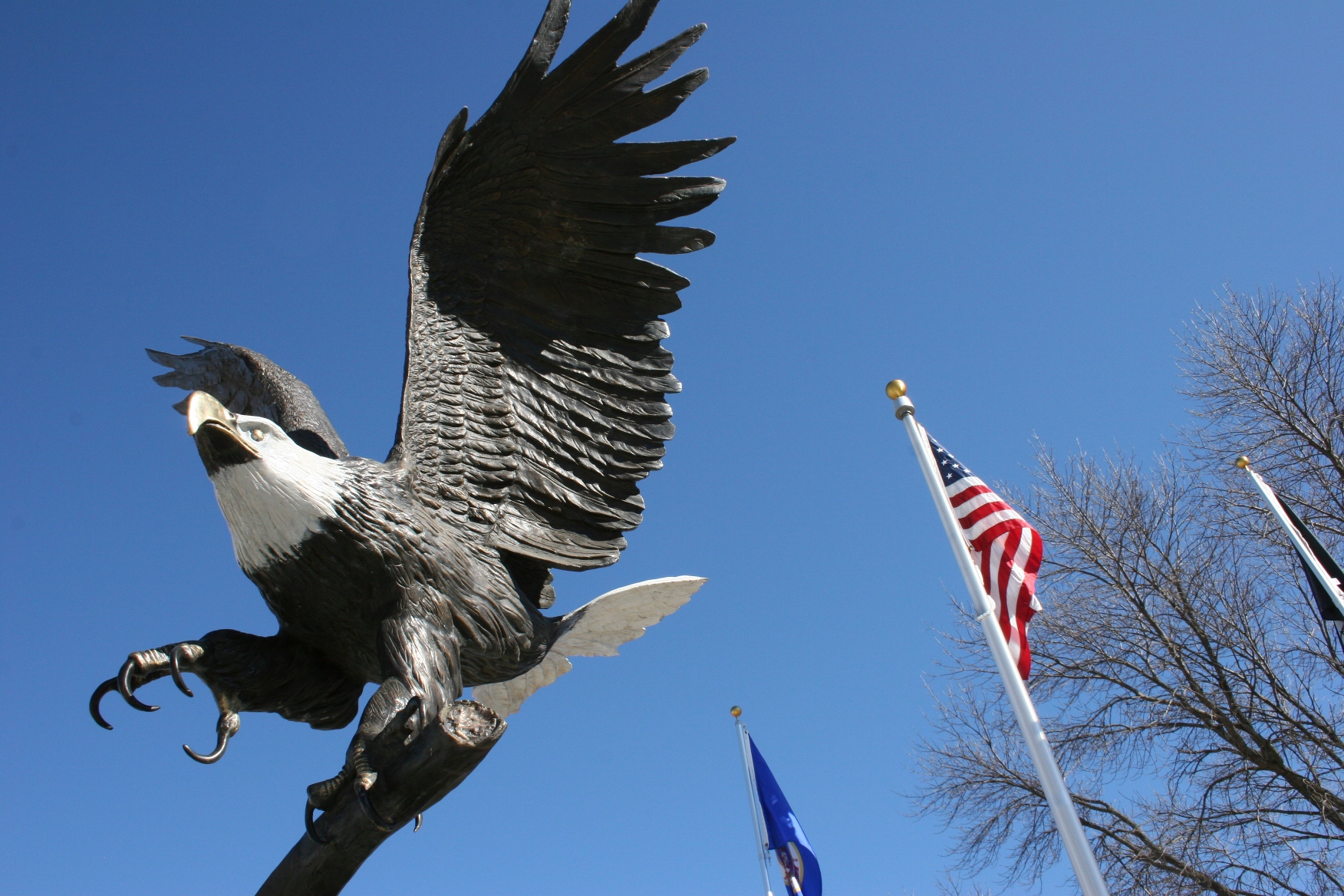
The bald eagle at the vets park in Morristown flanked by flags. (Minnesota Prairie Roots copyrighted file photo)

The bald eagle symbolizes freedom and strength. Now to have this majestic bird as our national bird seems fitting. And long overdue. The bald eagle is a powerful symbol connected to democracy. To see an eagle soar is to see freedom soaring.

© Copyright 2024 Audrey Kletscher Helbling


Discovering art in downtown Wabasha March 24, 2014

BRICK, A BENCH, A RIVER…

Each provides a canvas or backdrop for art in Wabasha, an historic Mississippi River town of 2,500 in southeastern Minnesota.

On a recent visit here to the National Eagle Center, where art abounds inside, I also noticed art integrated into the downtown.

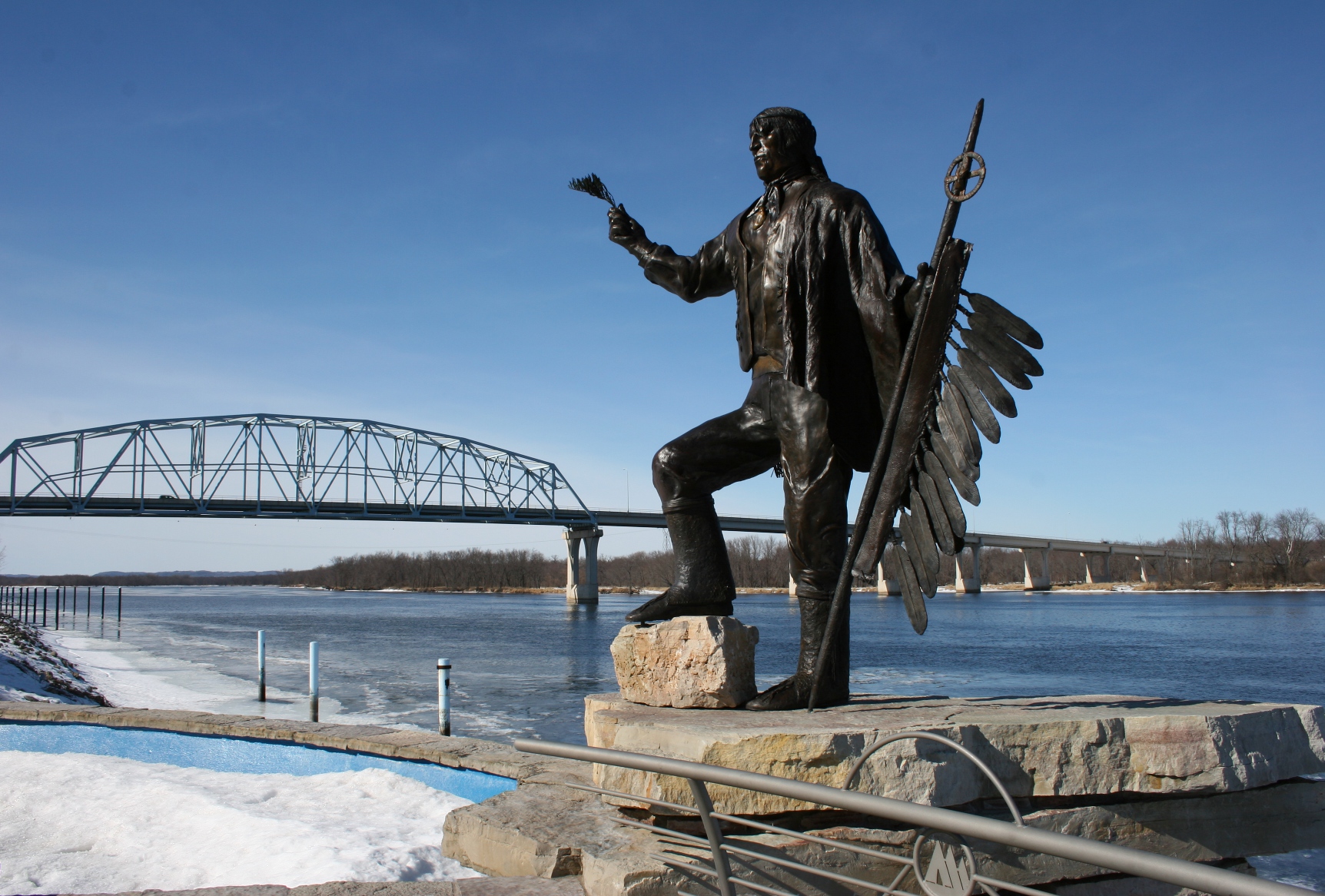
Wabasha, Wapahasha II

A 10-foot tall bronze sculpture of Wapahasha II, a Native American after whom the city of Wabasha is named, stands atop a fountain next to the riverside eagle center.

If you shift your eyes a bit, you’ll notice a bridge in the distance. I view that 26-year-old link between Minnesota and Wisconsin as art given the overhead span of trusses.

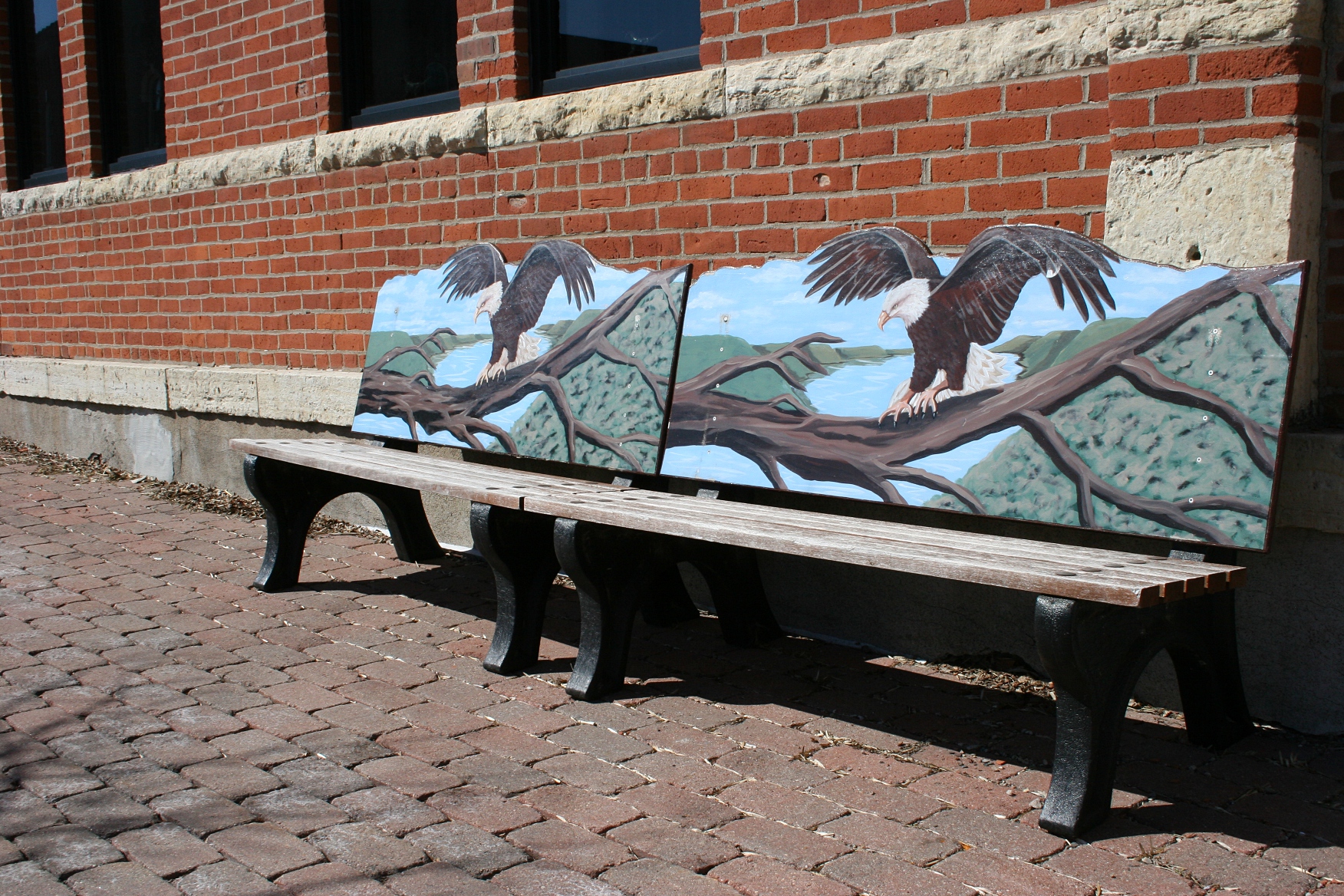
Wabasha, eagle bench

Just up the street, set atop brick pavers, co-joined park benches have become artwork, too, with eagle paintings backing the benches. It’s a nice touch, emphasizing Wabasha’s eagles and the reason many visitors come here.

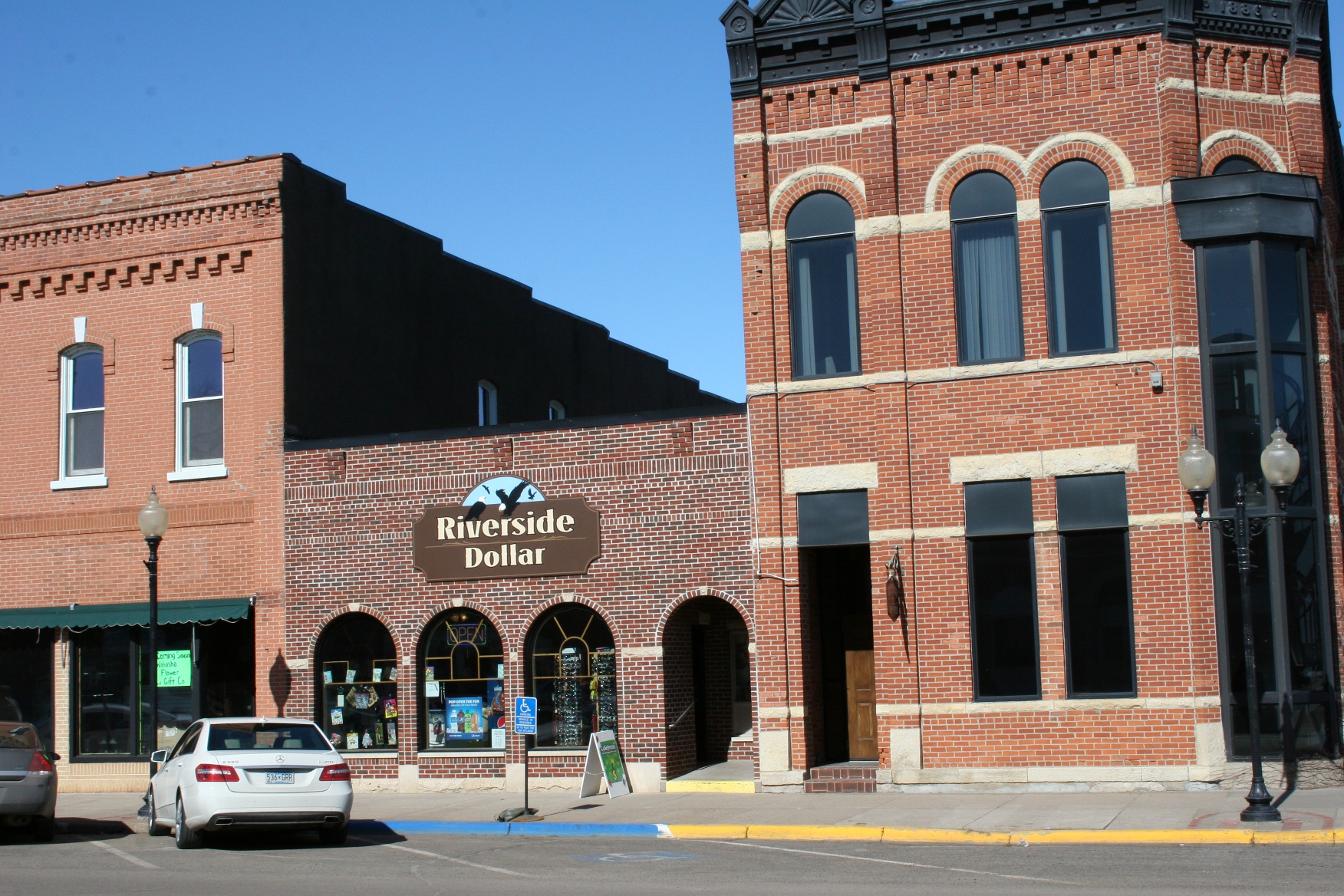
Wabasha, Riverside Dollar

Around the corner, Riverside Dollar also incorporates eagles into its signage on a cozy building tucked between taller historic buildings. Fifty properties in Wabasha are on the National Register of Historic Places, another reason I appreciate this community. The buildings, in and of themselves, are works of art with ornate details that showcase the craftsmanship of another era.

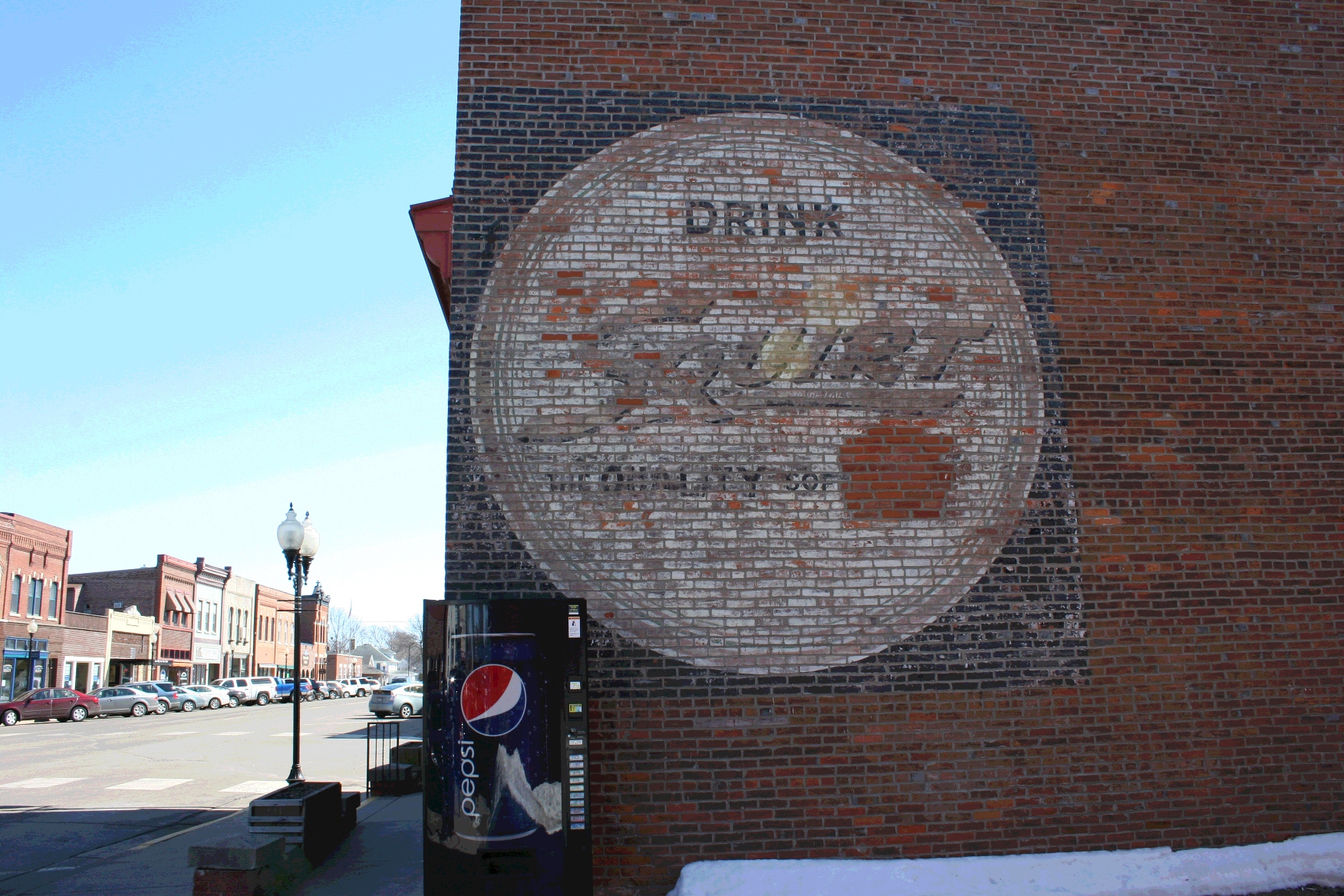
Wabasha, Squirt sign

A block away, a faded vintage Squirt sign painted onto the side of a brick building contrasts with a sleek and shiny Pepsi vending machine. That amuses me.

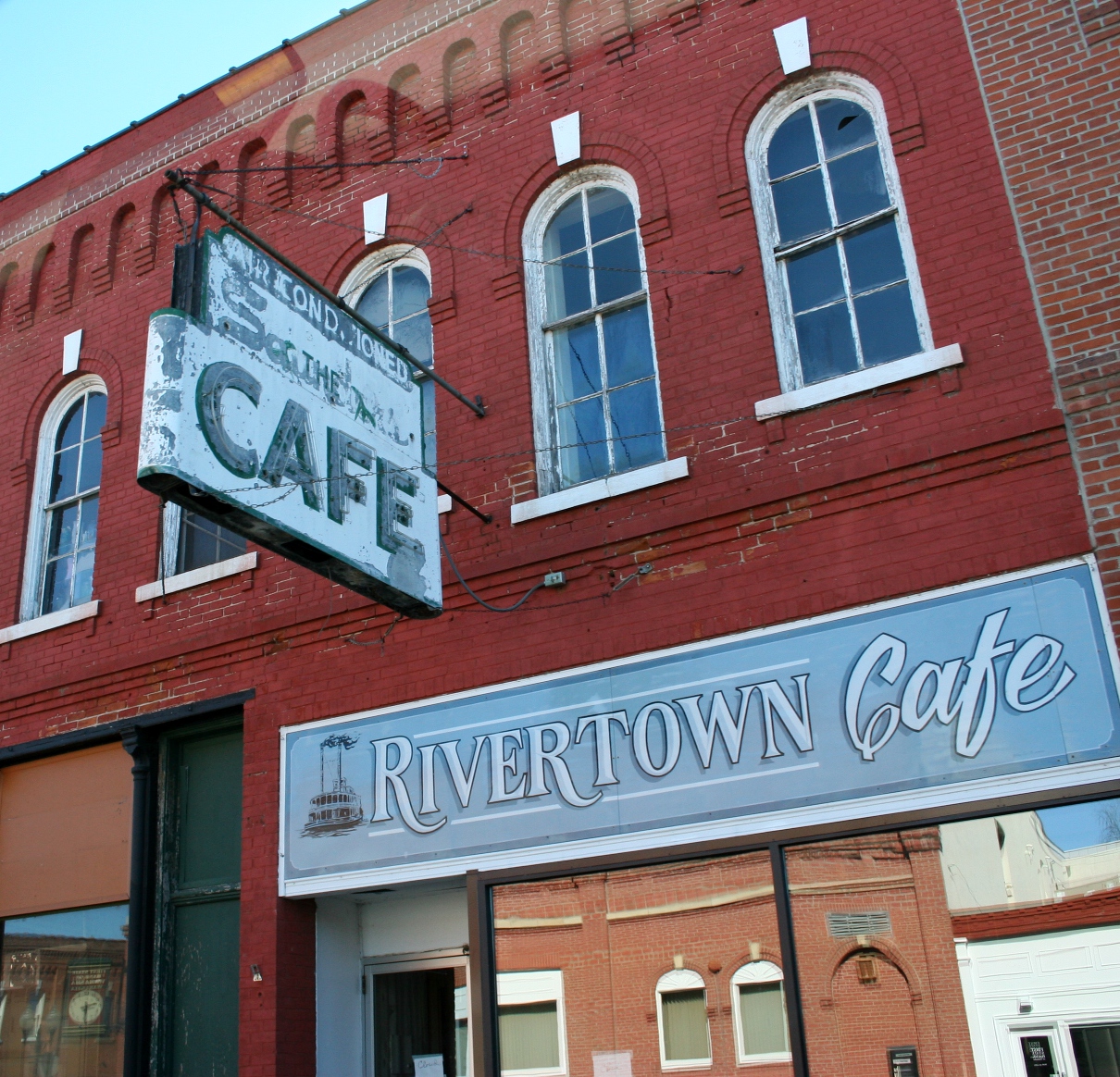
Wabasha, Rivertown Cafe front of

At the Rivertown Cafe, I appreciate the aging signage suspended from the second level. It adds a certain charm to the exterior and directs the eye toward the business.

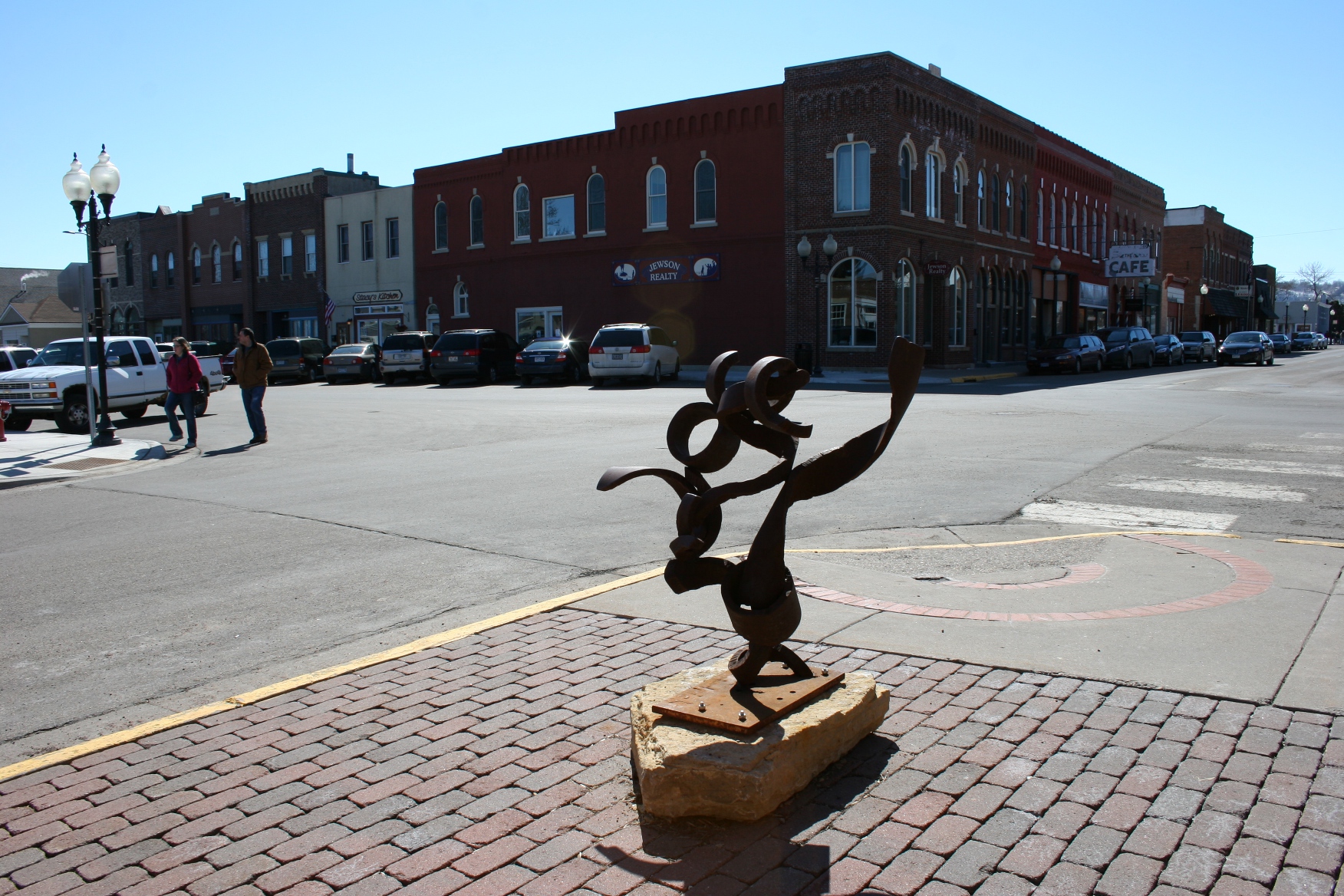
Wabasha, street corner sculpture

A stone’s throw away, a modern sculpture graces a street corner.

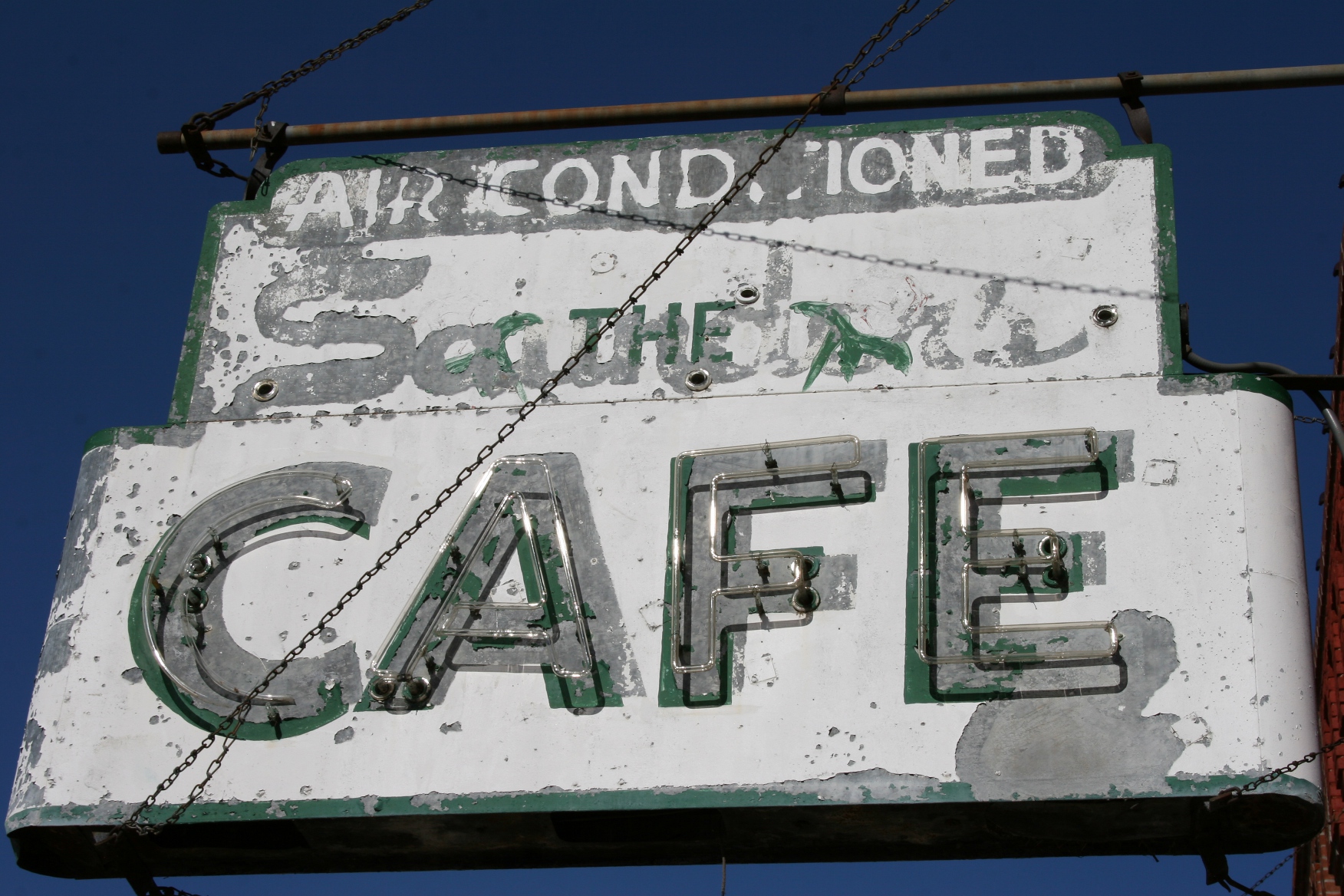
Wabasha, cafe sign up close

Certainly, Wabasha features more art; I had time to photograph only this sampling this trip.

#

CLICK HERE TO READ my previous post about art inside the National Eagle Center.

© Copyright 2014 Audrey Kletscher Helbling


Eagle art in Wabasha March 21, 2014

Filed under: Uncategorized — Audrey Kletscher Helbling @ 6:00 AM
Tags: , , , , ,

An eagle sculpture defines the exterior of the National Eagle Center in Wabasha.

Two eagle sculptures (one atop the dome) define the exterior of the National Eagle Center in Wabasha, Minnesota.

WITH ALL THAT THE NATIONAL Eagle Center in Wabasha offers, it is perhaps easy to overlook the art.

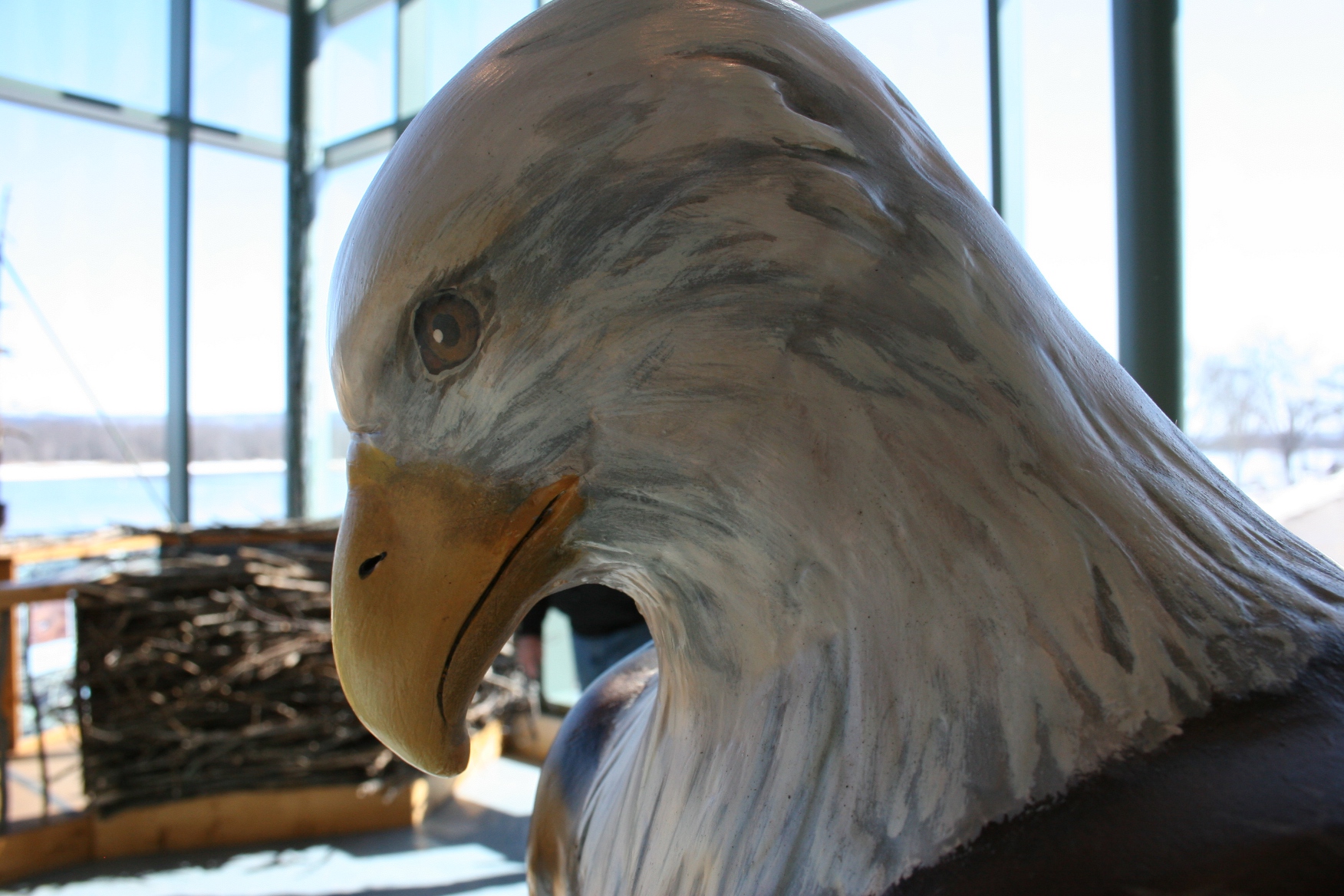
Art, eagle head 3

But the eagle sculptures and other artwork showcased in this Mississippi River side building deserve study and appreciation.

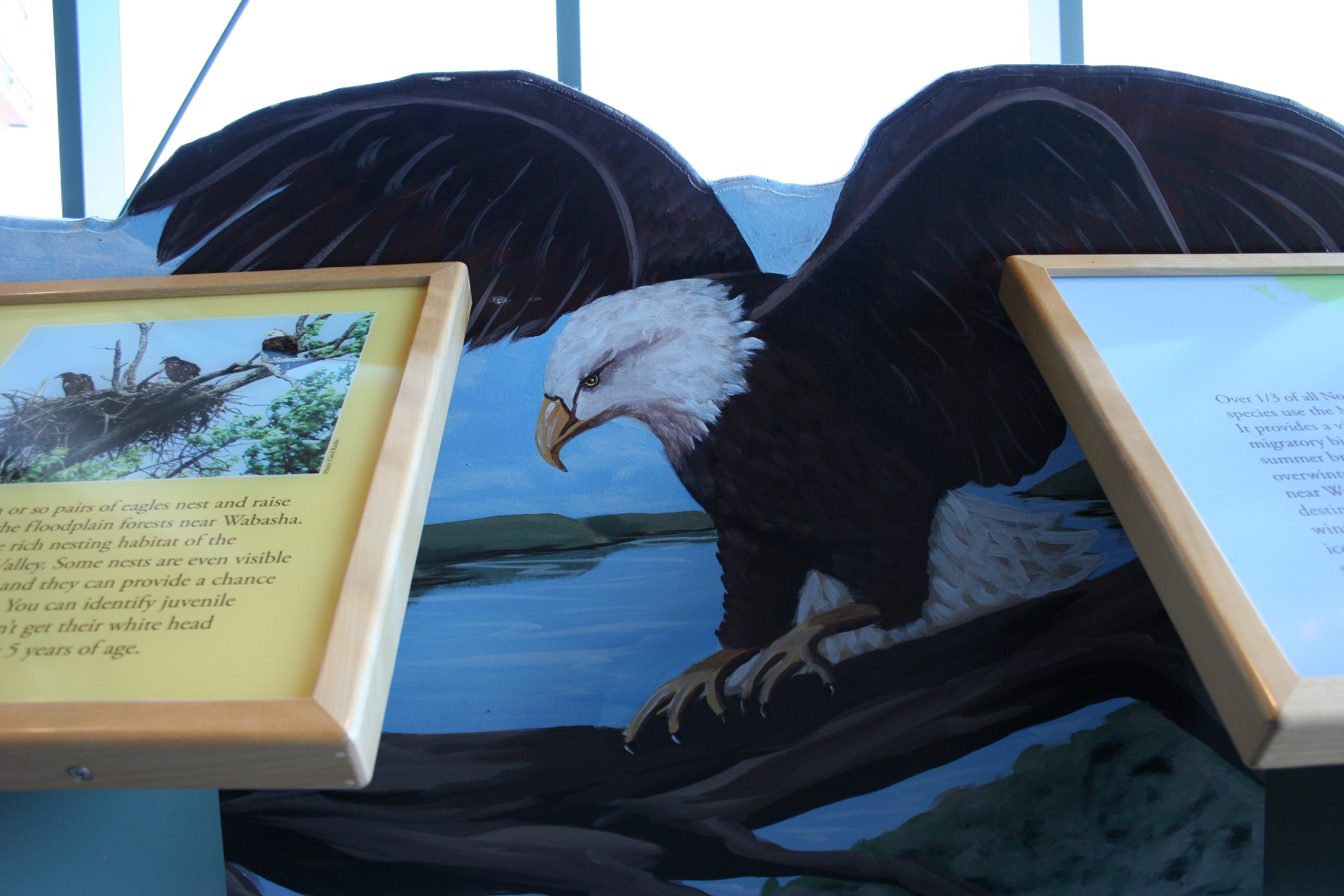
Art, eagle painting

The eagle possesses a certain strength and beauty worthy of symbolizing the United States of America. As such, many artists have recreated this symbol of freedom.

The Bicentennial Eagle by A. Giannelli.

The Bicentennial Eagle by A. Giannelli.

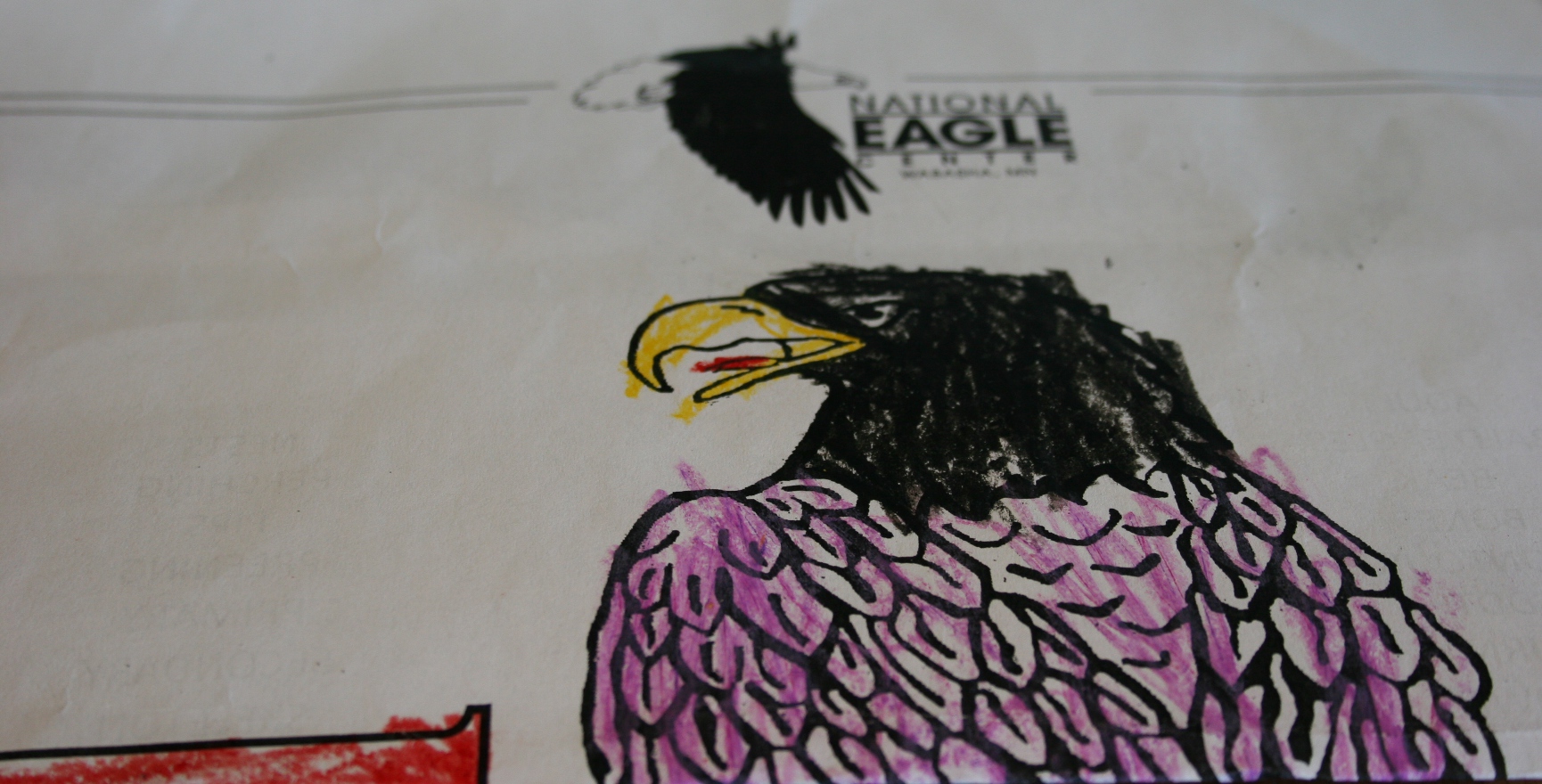
From a sterling silver and 24K gold sculpture by A. Giannelli to a child’s colored drawing of an eagle discovered on a shelf, art abounds in this Minnesota eagle center.

Art, colored eagle

Simply look and you will see.

Art, eagle head 2

Art.

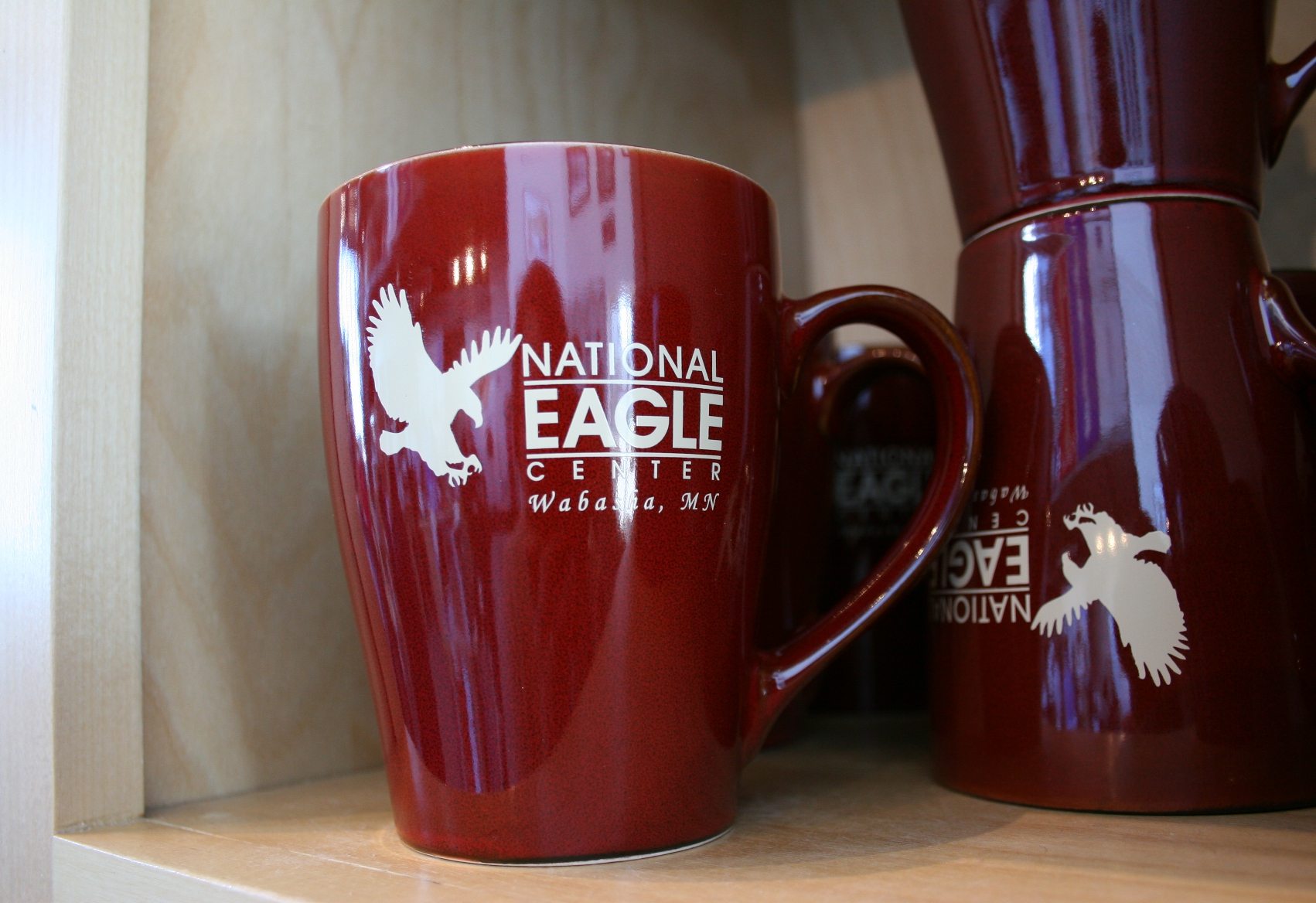
Art, eagle mugs

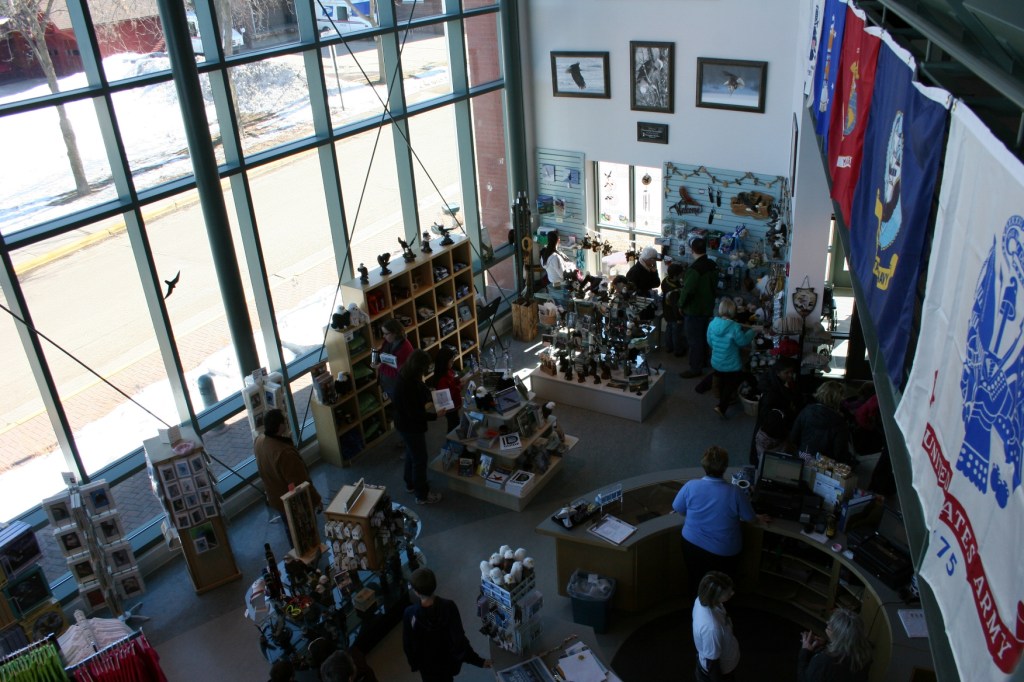
In the gift shop.

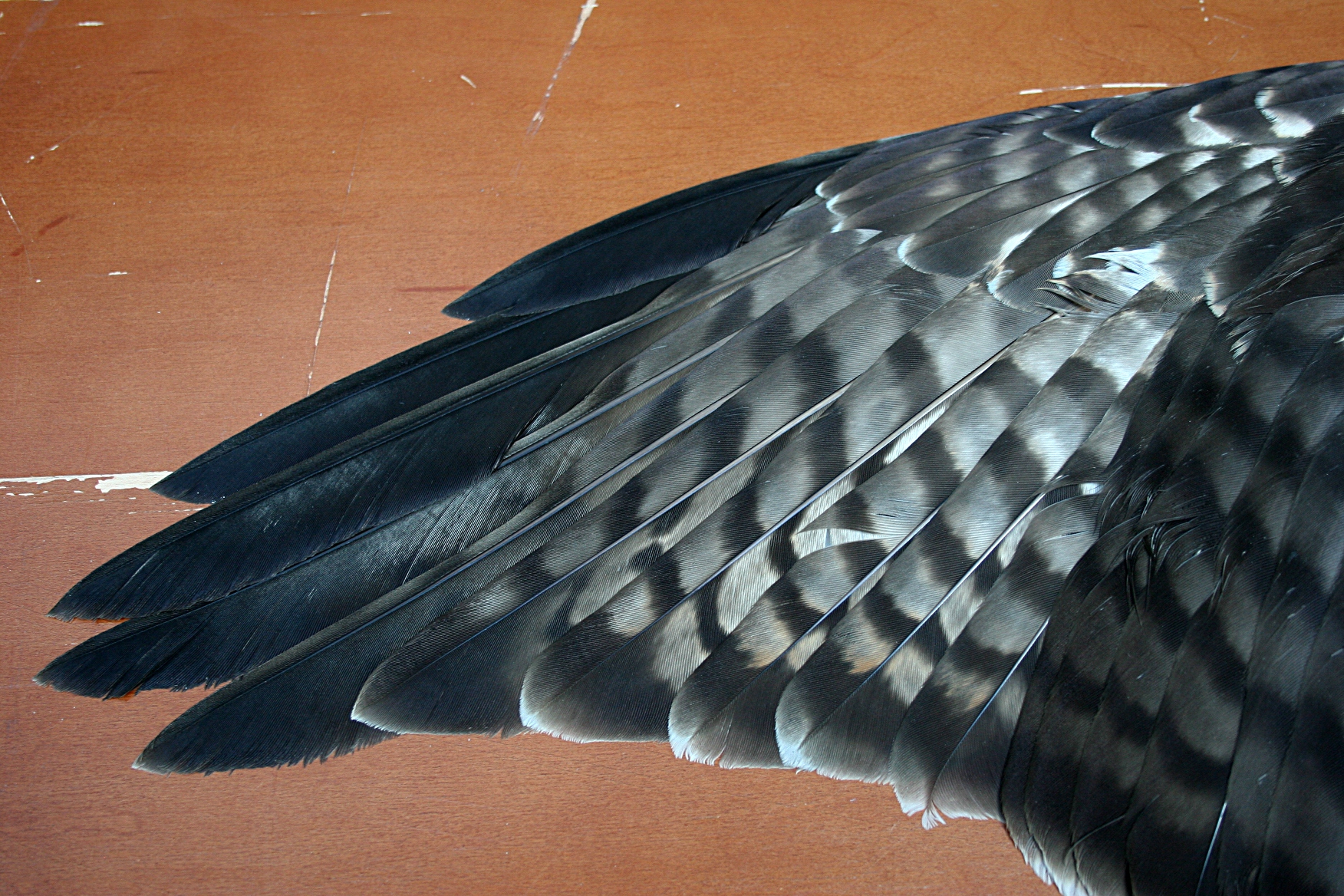
Art, feathers

In a wing on display (although not from an eagle).

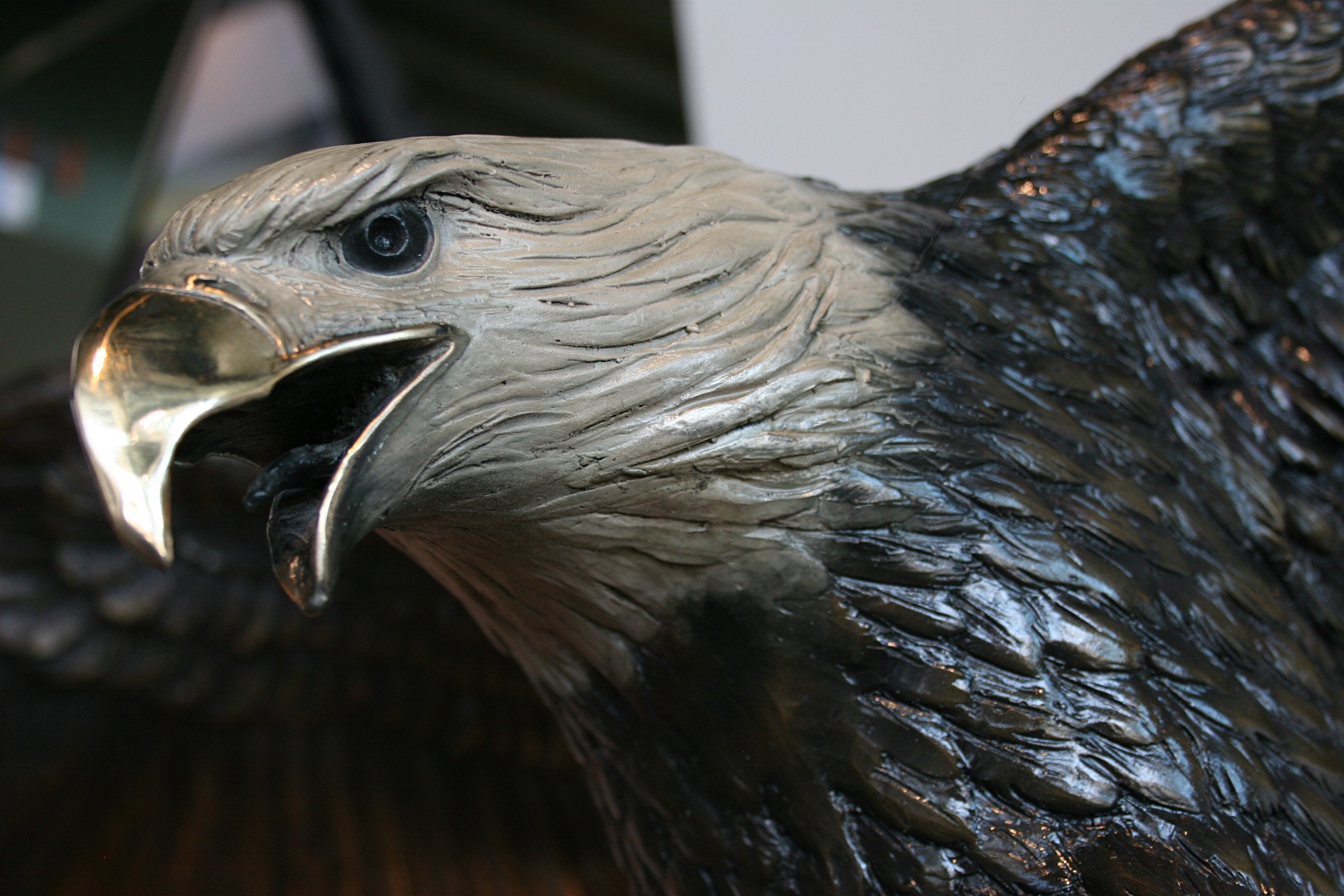
Art, eagle head

Everywhere.

#

CHECK BACK for a post on more art, this time outside of the National Eagle Center in Wabasha.

Click here to read my first post on the eagle center.

© Copyright 2014 Audrey Kletscher Helbling


All about eagles in Wabasha March 20, 2014

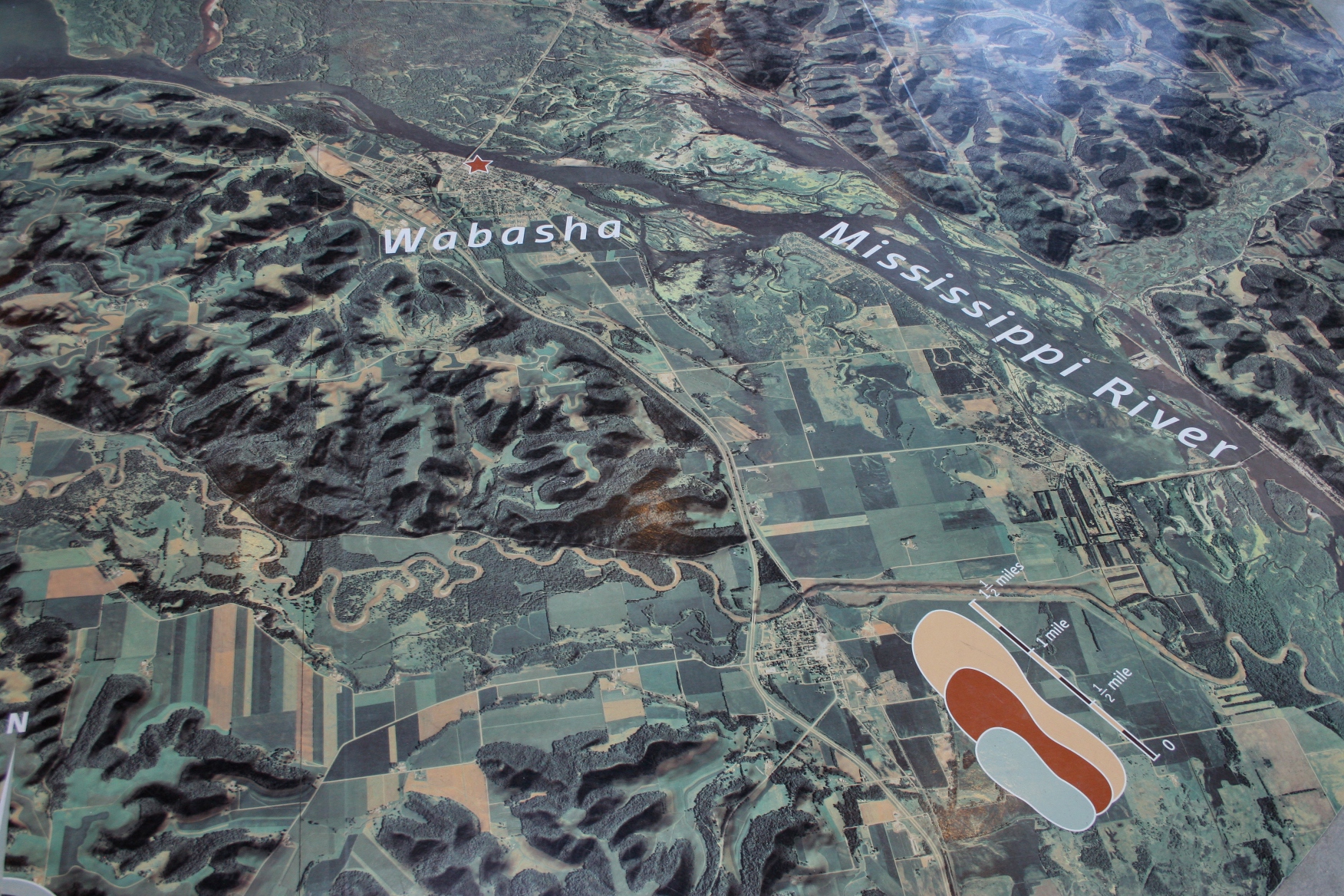
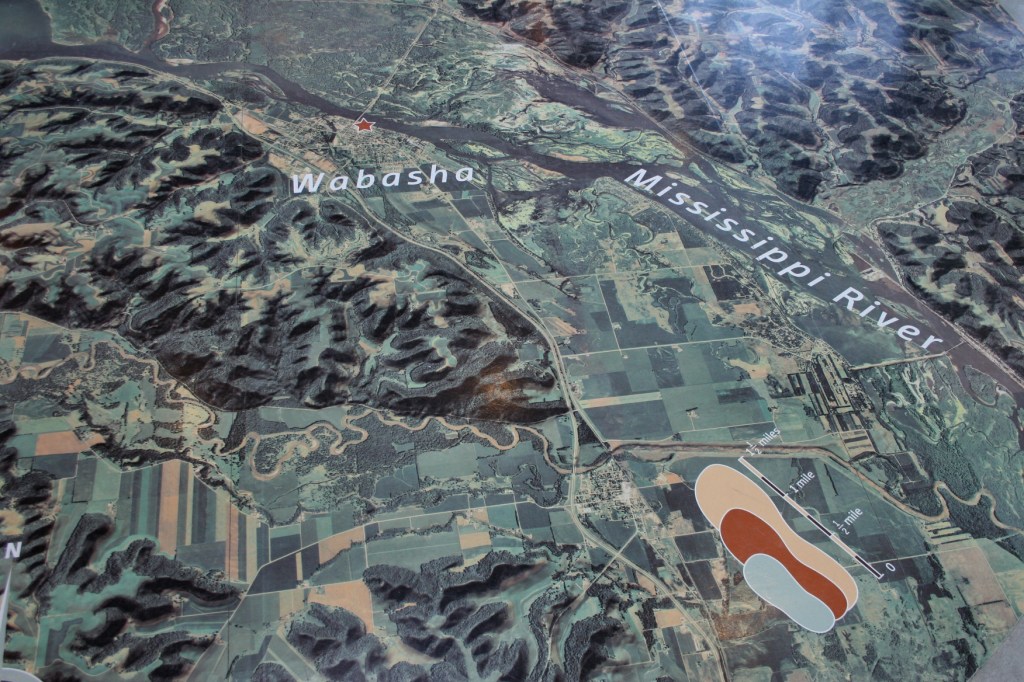
A section of a map on the floor of the National Eagle Center shows the location of Wabasha along the Mississippi River.

A section of a map on the floor of the National Eagle Center shows the location of Wabasha along the Mississippi River.

DRIVING INTO WABASHA, Minnesota, late on a Sunday morning in mid-March, we spot a bald eagle soaring high above this historic river town.
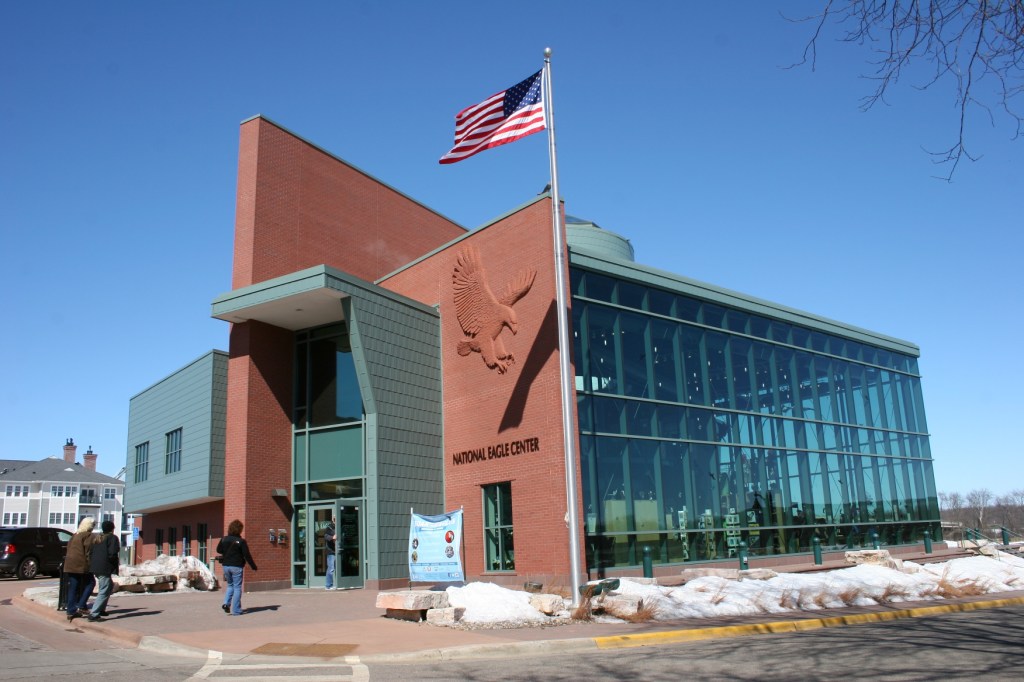
The stunning National Eagle Center, along the river and a block off the main downtown business district.

The stunning National Eagle Center, along the river in the heart of downtown Wabasha.

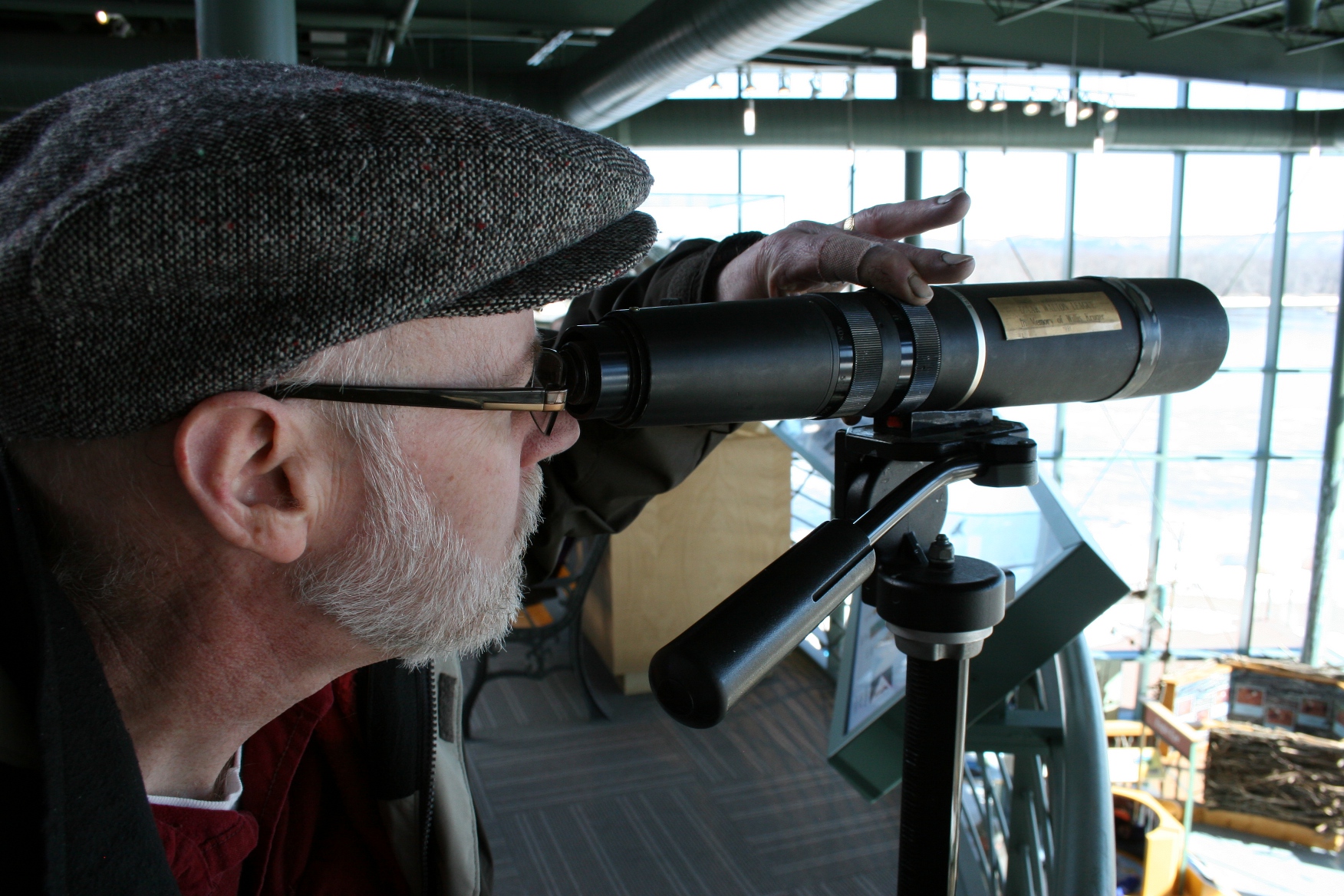
The bird’s welcoming appearance seems fitting given my husband and I have come here to tour the National Eagle Center, a modern two-story educational facility with banks of two-story windows and a second floor outdoor observation deck overlooking the Mississippi River.

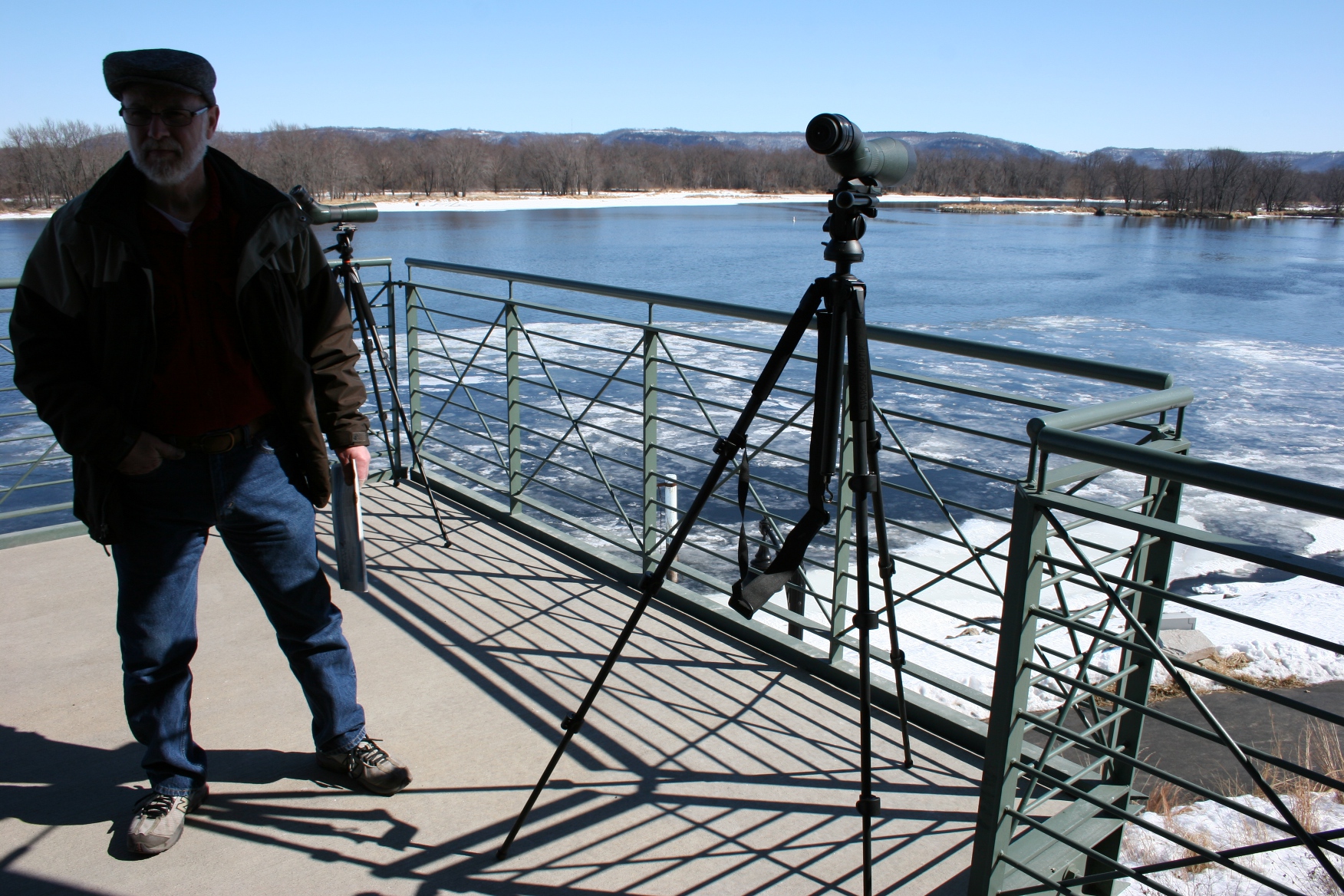
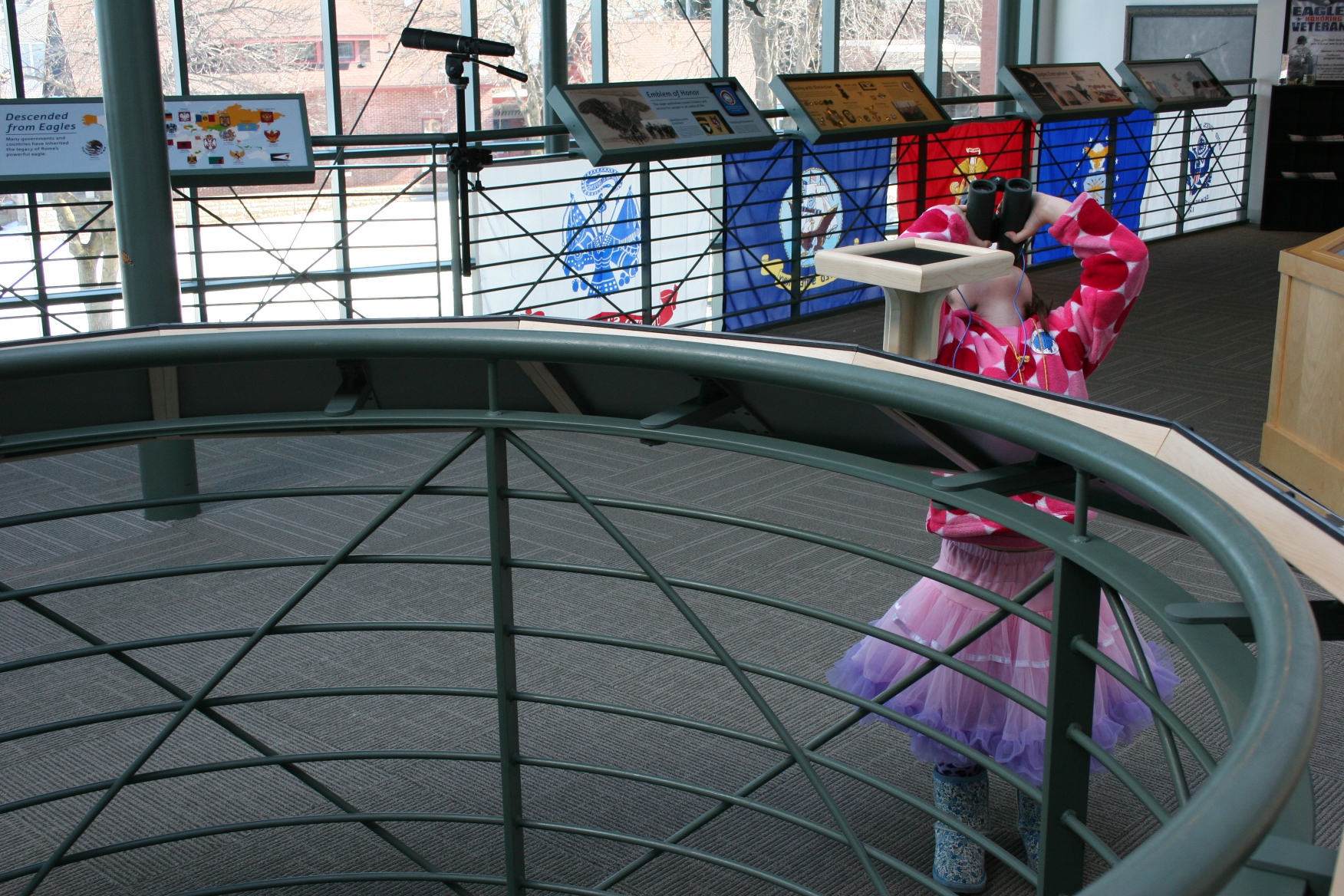
A second story observation deck outfitted with numerous binoculars, allows visitors to view the eagles along the Mississippi River.

The observation deck, outfitted with binoculars, gives visitors like my husband a view of eagles along the Mississippi River.

This ideal riverside setting allows visitors like us to observe eagles riding river bluff air currents, scooping fish from the water and perching in trees. Wabasha, with its year-round open water, proves an inviting locale for eagles.
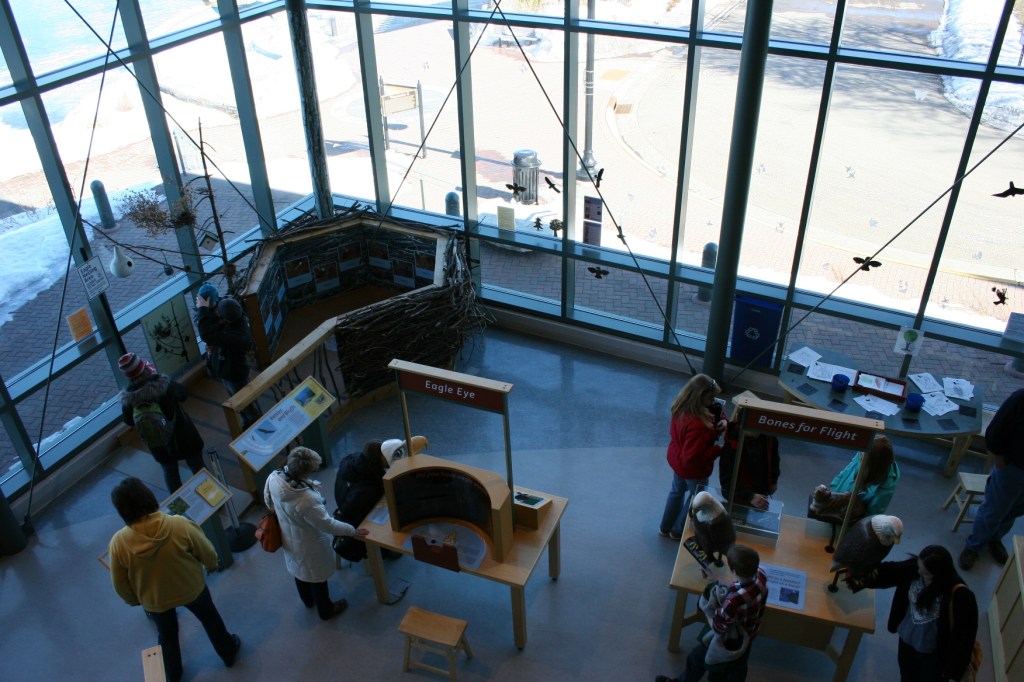
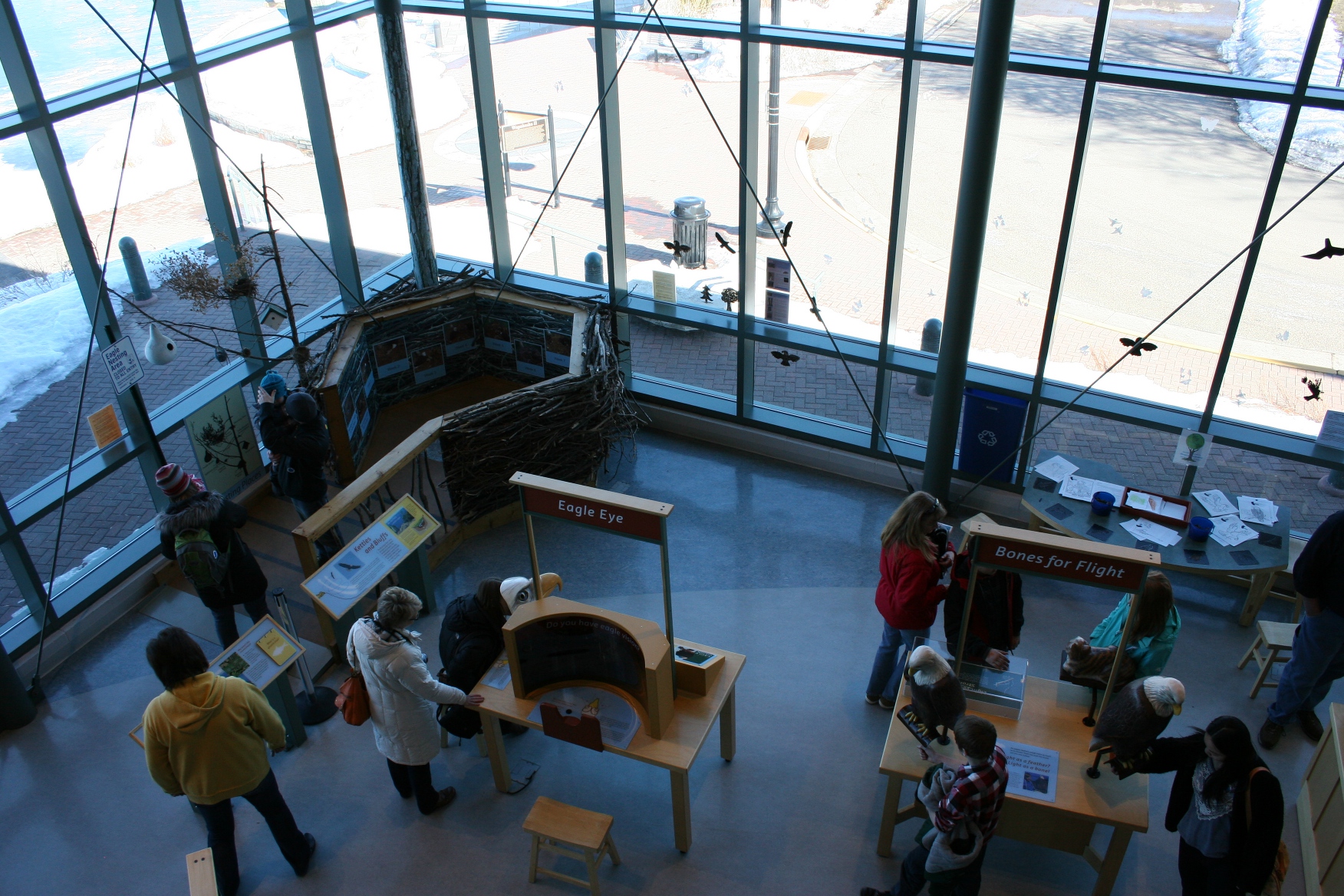
The activity area includes a replica eagle's nest, upper left.

The activity area includes a replica eagle’s nest, upper left.

Inside the center, hands-on interactive activities—from stepping inside a mock eagle’s nest to testing the weight of an eagle to experiencing the majestic bird’s vision to creating eagle art to scoping eagles through binoculars and more—occupy all ages.
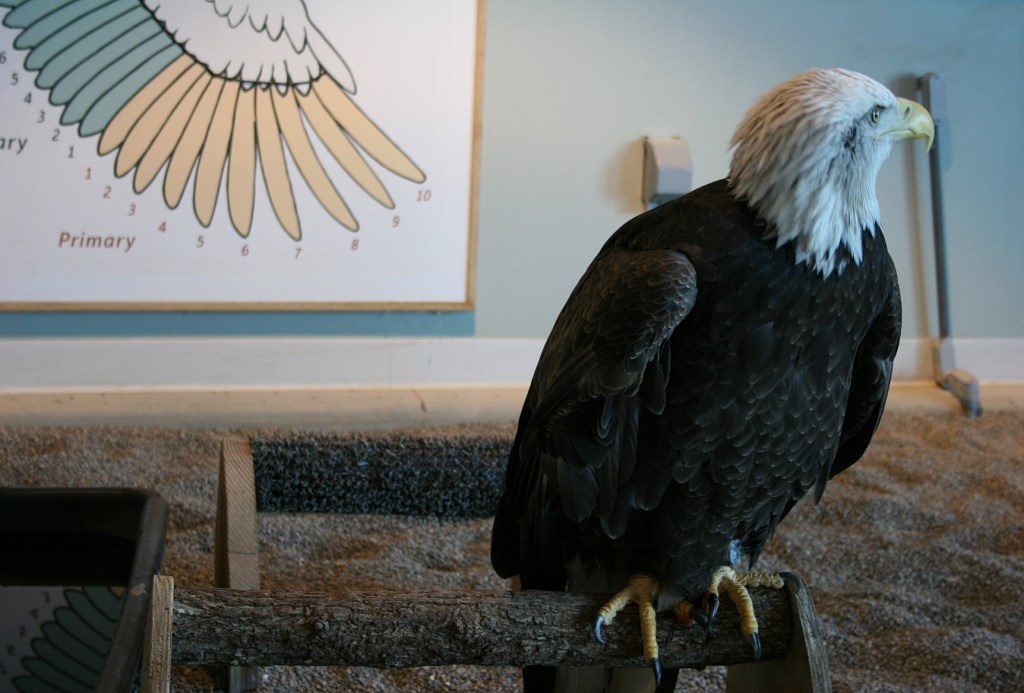
You can get up close to the resident eagles.

You can get up close to the resident eagles.

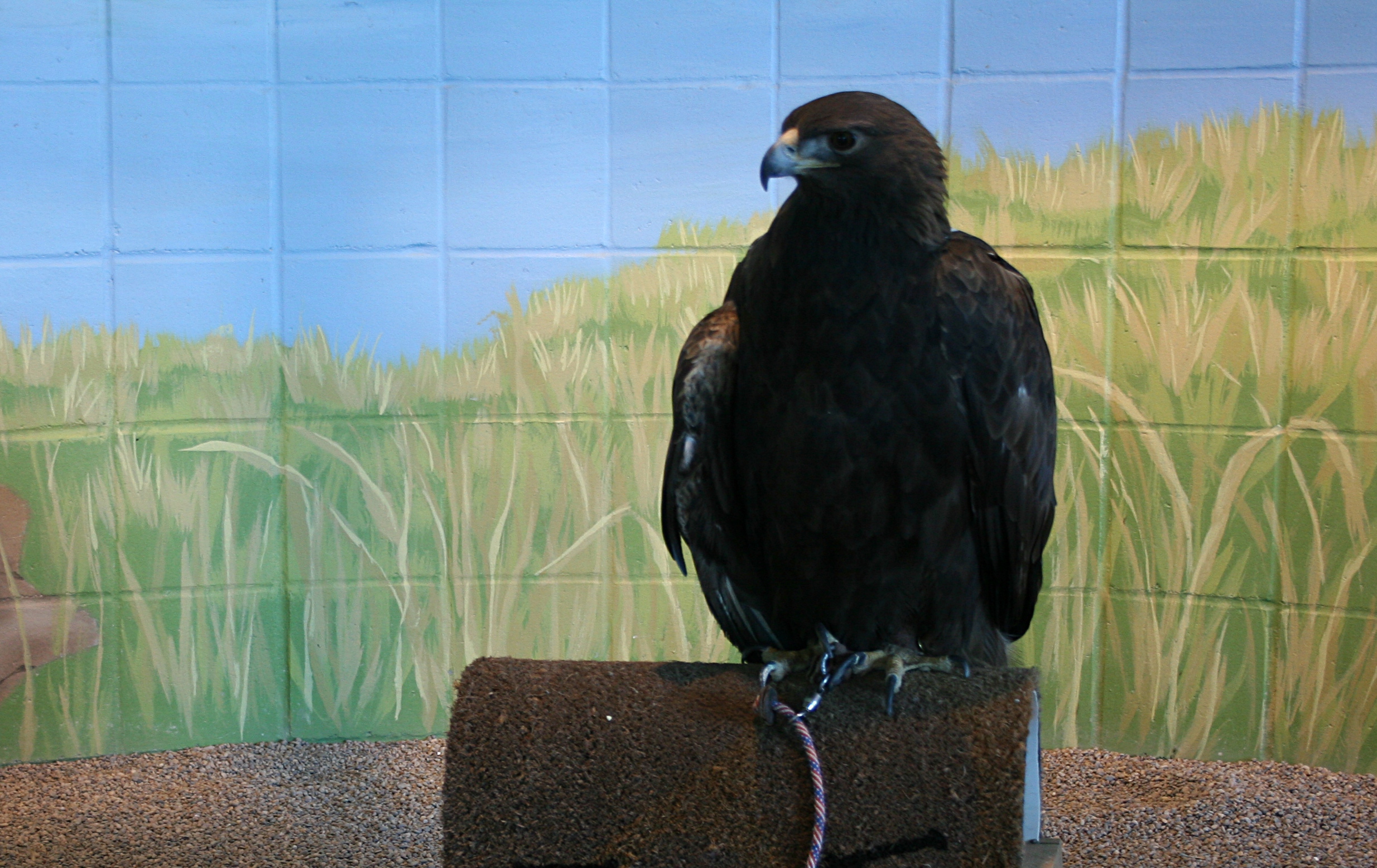
But, unequivocally, the major draws are the resident eagles, birds that were injured, treated and could not be released back into the wild. Bald eagles Angel, Columbia, Harriet and Was’aka call this place home while Donald is the sole golden eagle here. The 32-year-old Harriet is perhaps the best known, appearing numerous times on television and serving as the model for Minnesota’s Support Our Troops vehicle license plate.
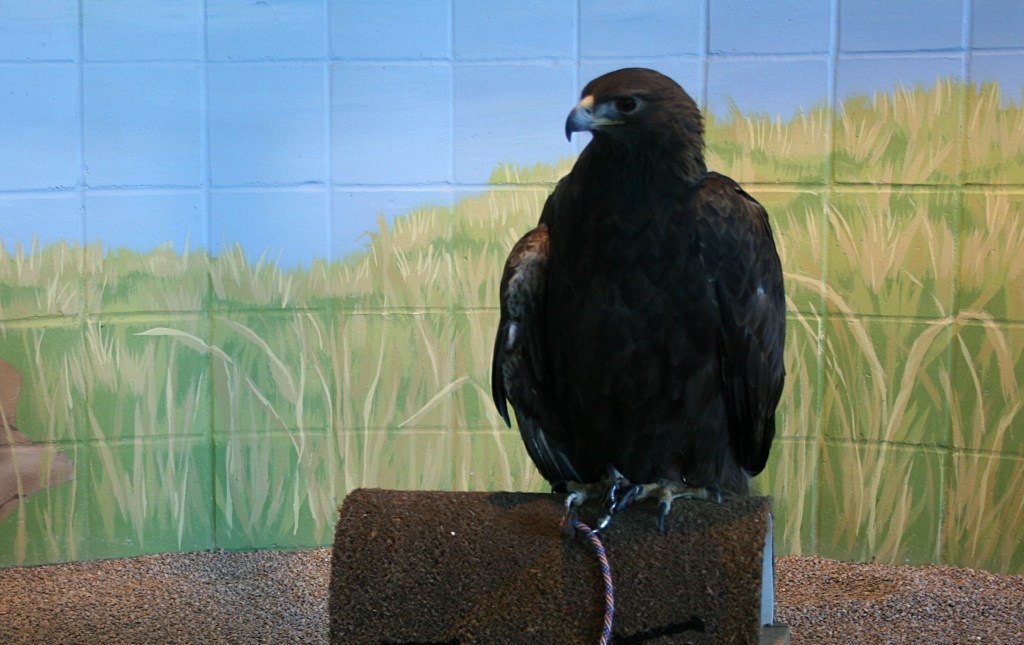
Donald, the single resident golden eagle.

Donald, the single resident golden eagle.

Handlers tend the tethered eagles in a viewing room while answering questions among a curious crowd snapping photos with cell phones and cameras.
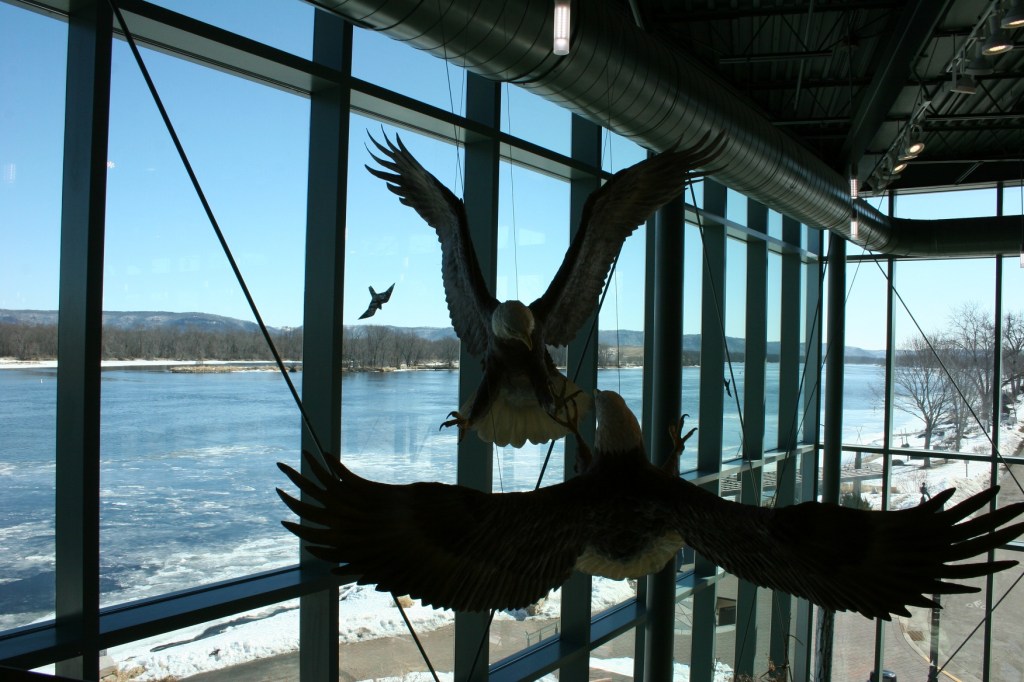
Eagles suspended from the ceiling and a view of the river from the second floor of the eagle center.

Eagles suspended from the ceiling and a view of the river from the second floor of the eagle center.

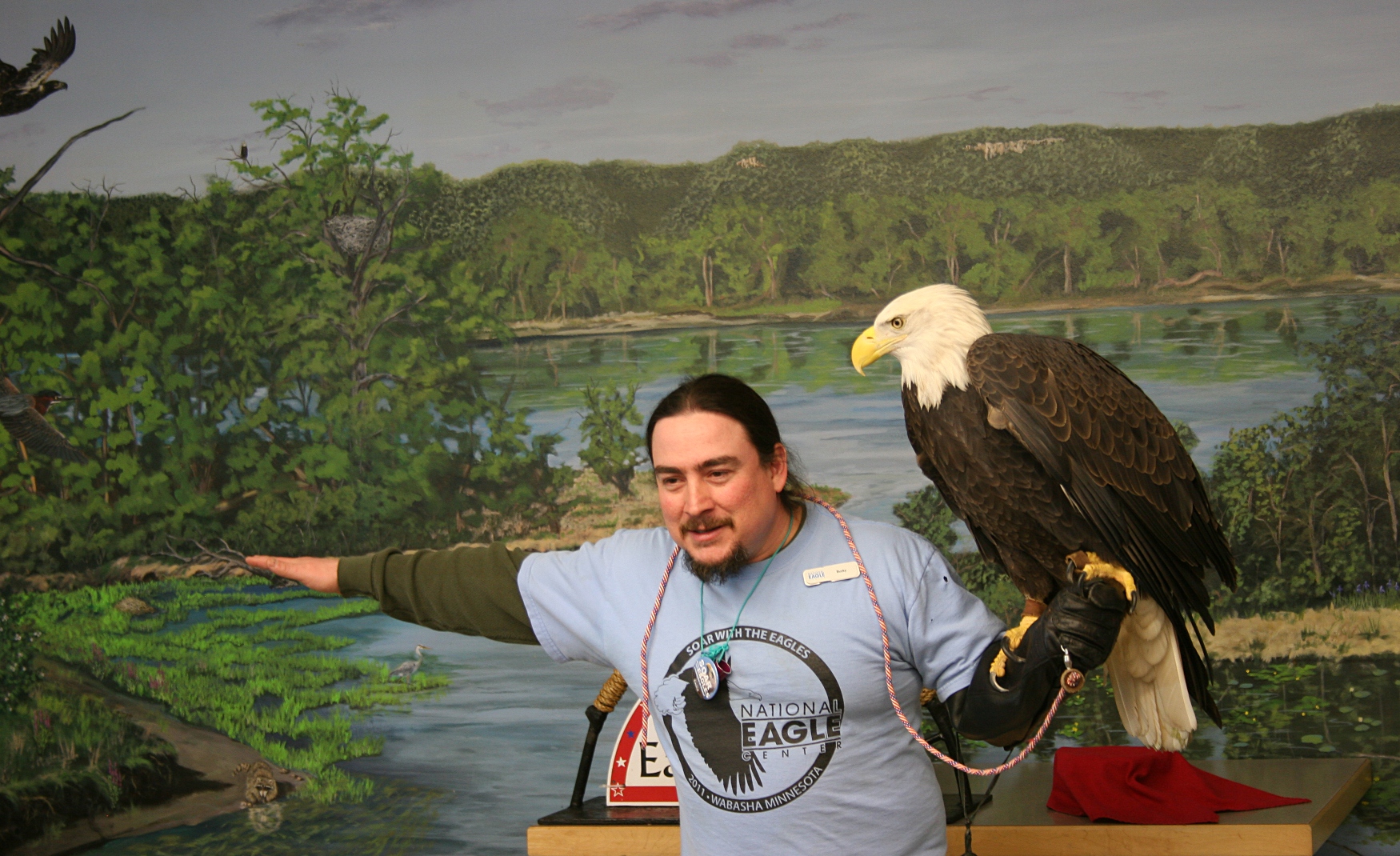
Thrice daily, the center presents an educational program on eagles. On this Sunday, staffer Bucky, with humor, skill, knowledge and audience engagement, entertains and educates young and old (that would be Randy and me).
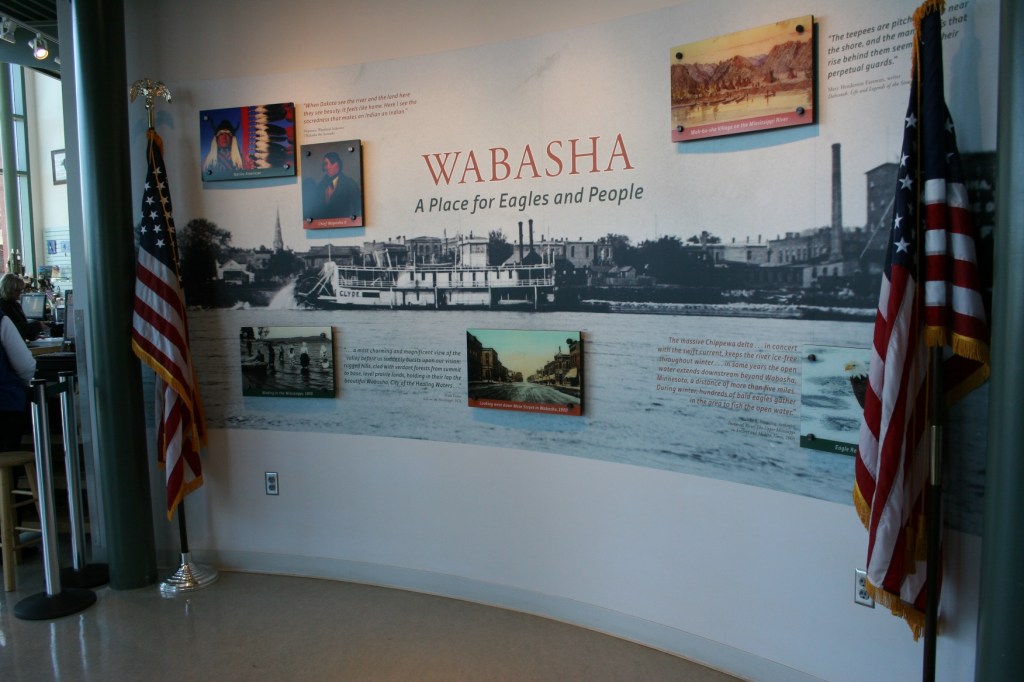
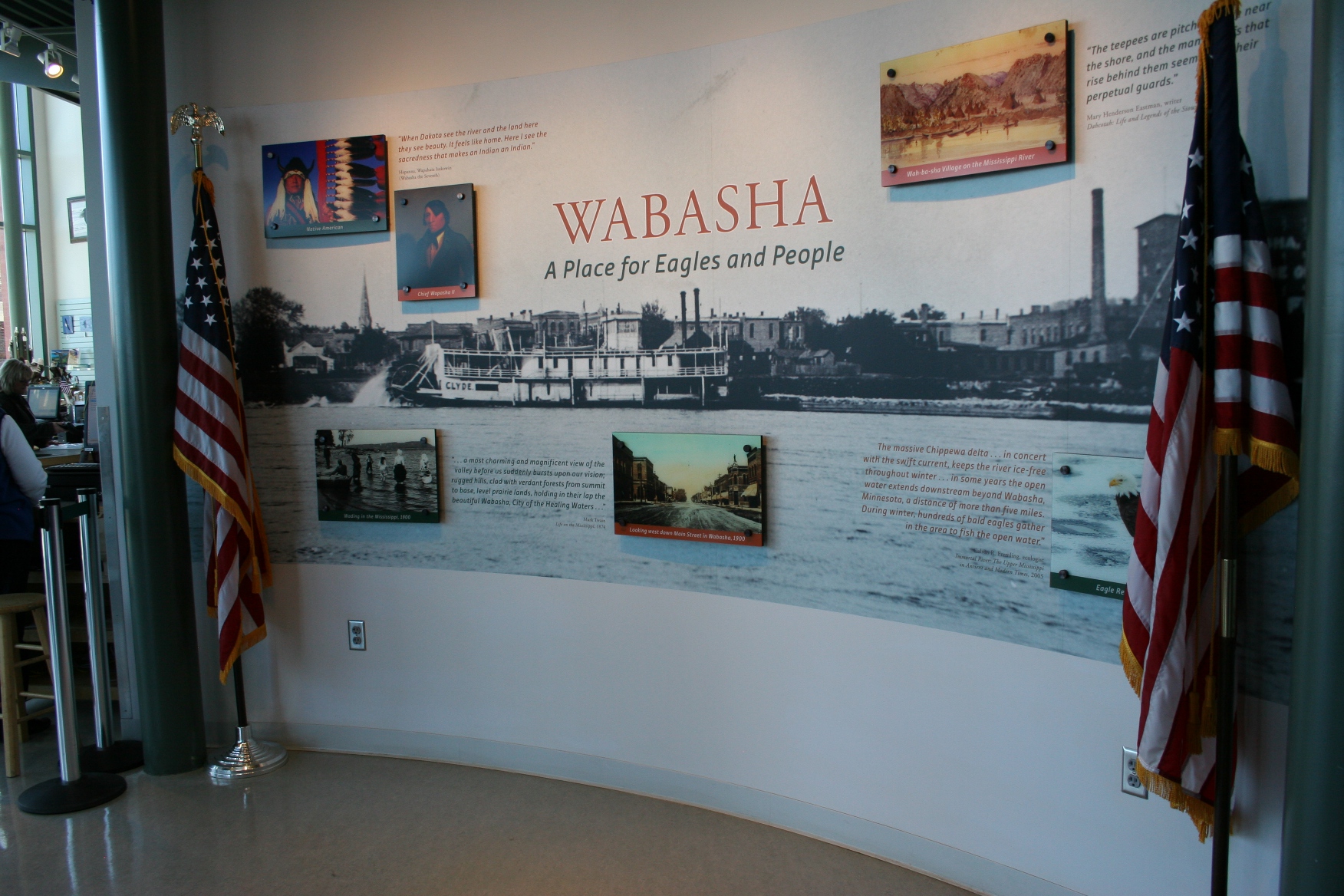
A mural provides information about Wabasha and its open water draw for eagles.

A mural provides information about Wabasha’s history and eagles.

We learn, for example, that Wabasha provides the perfect environment for bald eagles with the river, protected habitat and bluffs. Eagles nest across the river and at nearby Read’s Landing.
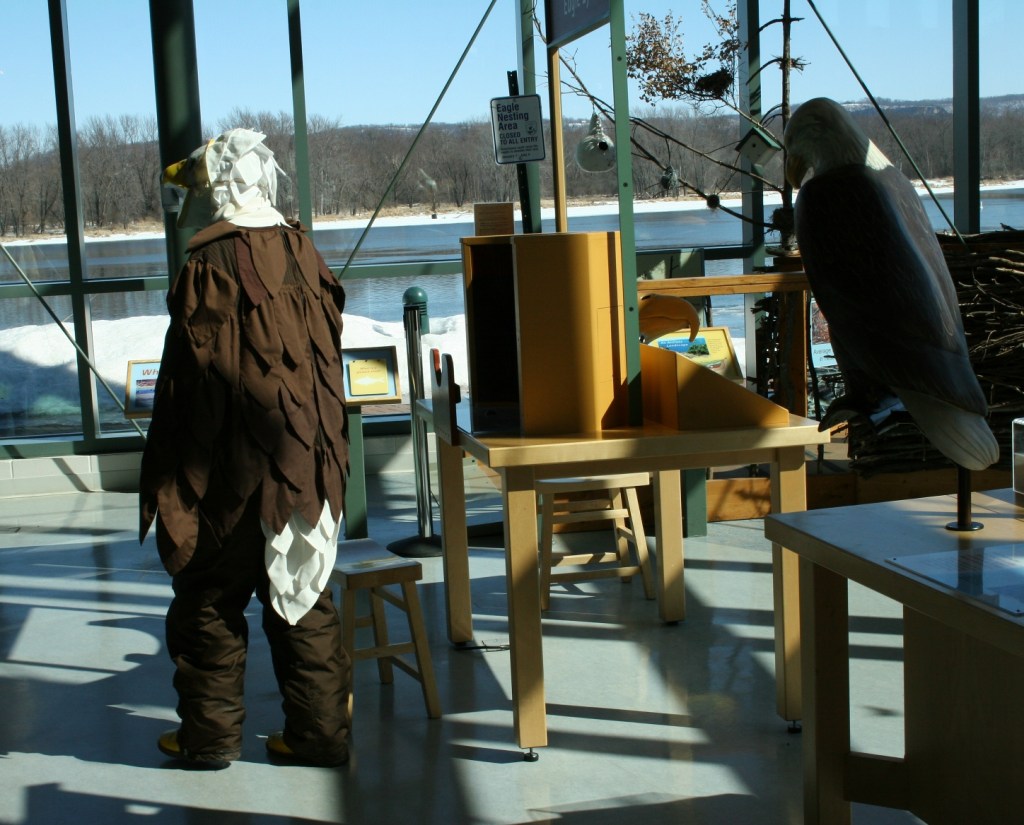
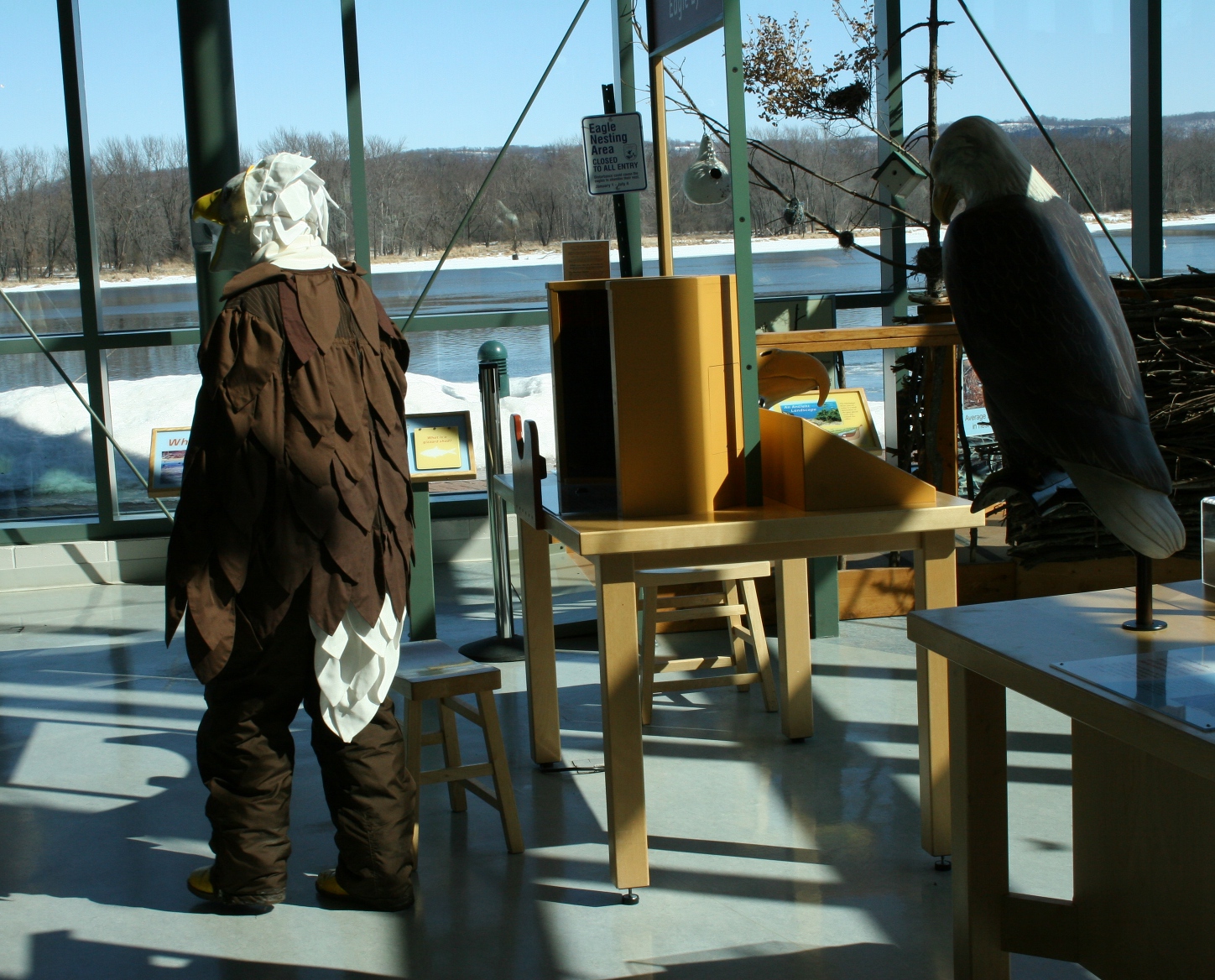
Dressed as an eagle, a staffer wanders through the eagle center.

Dressed as an eagle, a staffer wanders through the eagle center.

When Bucky shares that eagles are territorial, he mimics the bird’s high-pitched call then asks us to practice our eagle calls. Kids giggle. Adults laugh at the attempts.

During the presentation, Bucky occasionally checks on an elementary-aged boy who is keeping a replica eagle egg warm in the pouch of his sweatshirt. Eagle nests can measure up to nine feet wide and 20 feet deep and weigh as much as three tons.
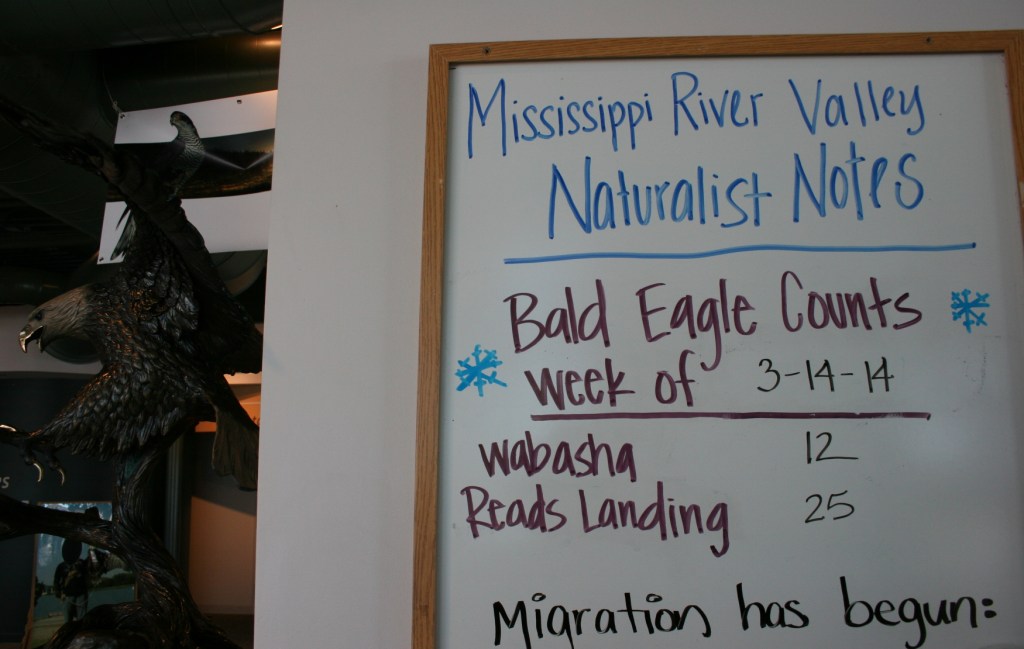
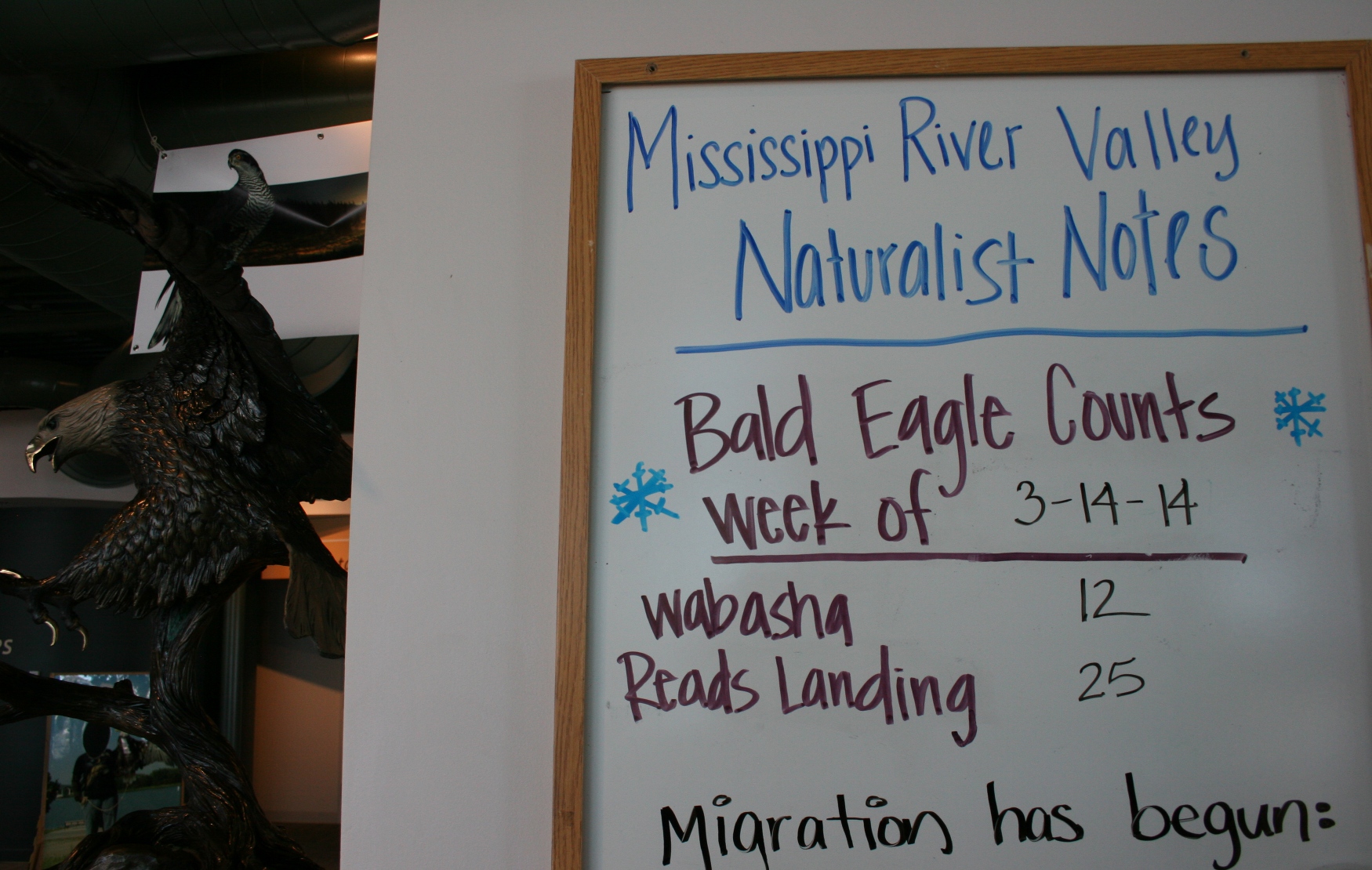
The current eagle count tallied.

The current eagle count tallied.

Today, Minnesota is home to 1,200 active eagle nests. When the eagle expert asks how many of us can see eagles in our home areas, nearly all 17 of us raise our hands.

But it wasn’t always that way. Randy and I are among the audience few who remember a time when these birds were endangered. Shortly after World War II, the pesticide DDT was introduced, washing into waterways where fish and aquatic life absorbed the toxin. When eagles ate the fish, they, too, were impacted. The DDT weakened their eggshells, resulting in eggs that broke during incubation or failed to hatch. The pesticide was banned in 1972.
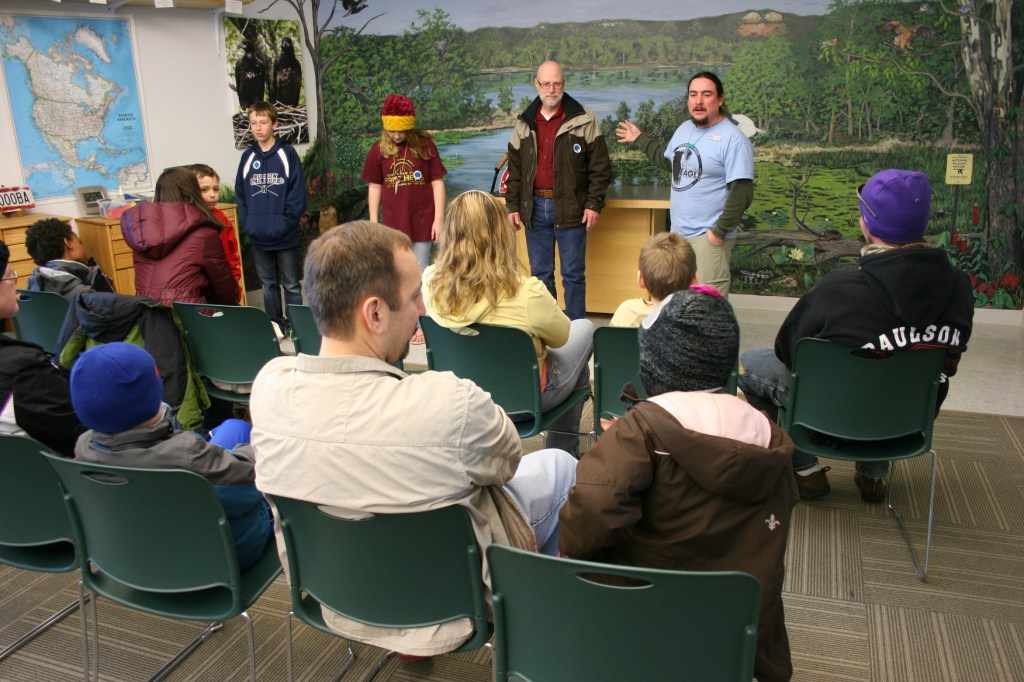
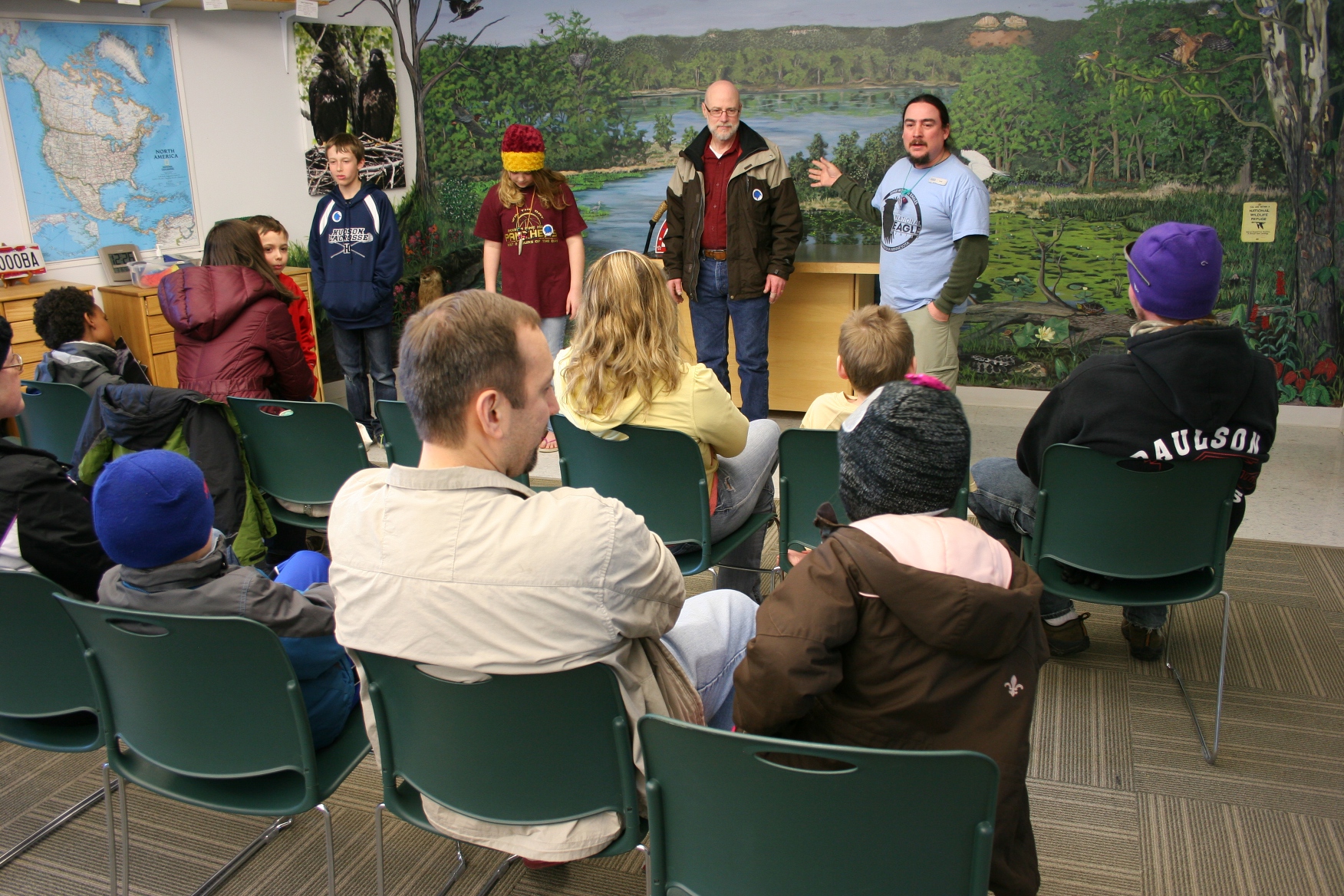
My husband, second from right, plays a bald eagle.

My husband, second from right, plays a bald eagle.

To visually explain the chain reaction, Bucky chooses three kids to role play a mosquito, a small fish and a large fish. I know precisely whom he will pick to play the bald eagle. The bald guy in the third role, my husband, makes his acting debut.

Bucky proves his point as, one by one, the performers “ingest” DDT.
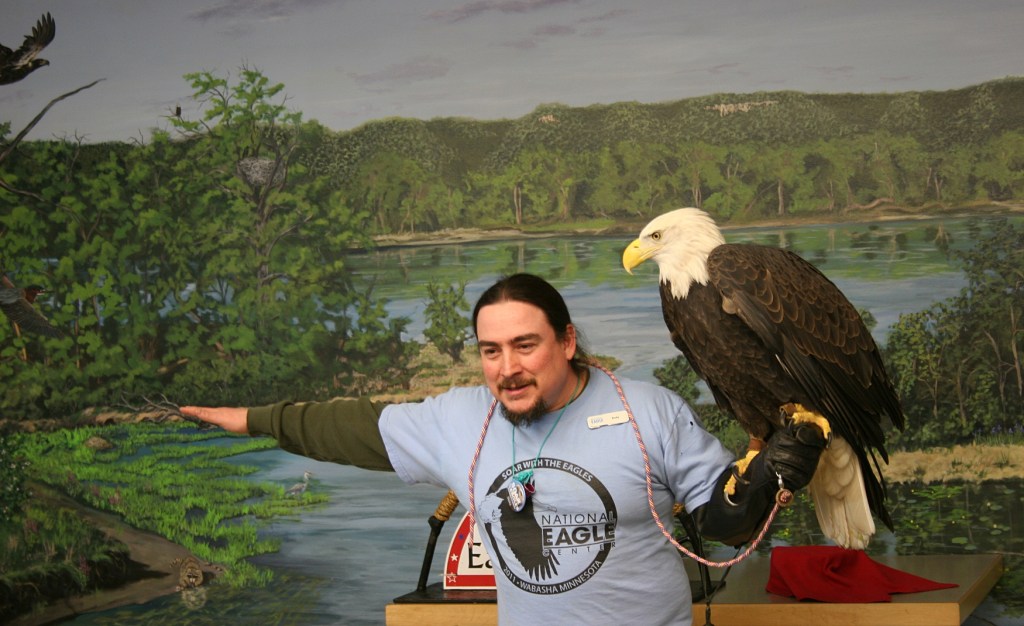
Bucky and Angel.

Bucky and Angel.

A few minutes later, after this educator pulls out a board the length of an eagle’s wing span (6 ½ to 7 feet), he exits the room and returns with resident bald eagle Angel. The 11-pound female came to the center in 2000 after suffering a broken wing.

Perched on Bucky’s gloved arm, Angel is the model of perfect human imprinted behavior. She is a guest at many Native American ceremonies and also makes educational appearances.
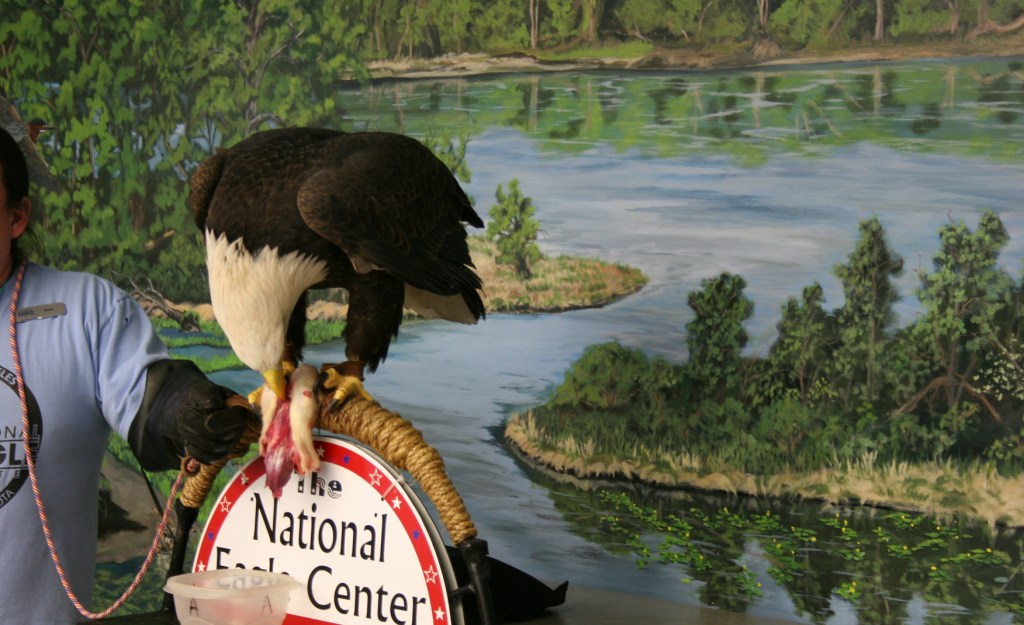
Shortly after Randy shot this photo of Angel eating a rat, I left the room.

Shortly after Randy shot this photo of Angel eating a rat, I left the room.

I enjoy Angel, until feeding time. Bucky pulls a white rat from a plastic container. For awhile, I watch as the eagle uses her beak and talons to rip apart the rodent. I stop photographing the scene and hand my camera to Randy. By then I’m looking down. He snaps a few photos, hands the camera back to me and shortly thereafter I exit the room to view the resident eagles who are not dining.

Rather they are simply perched, an activity which occupies 94 percent of their lives.
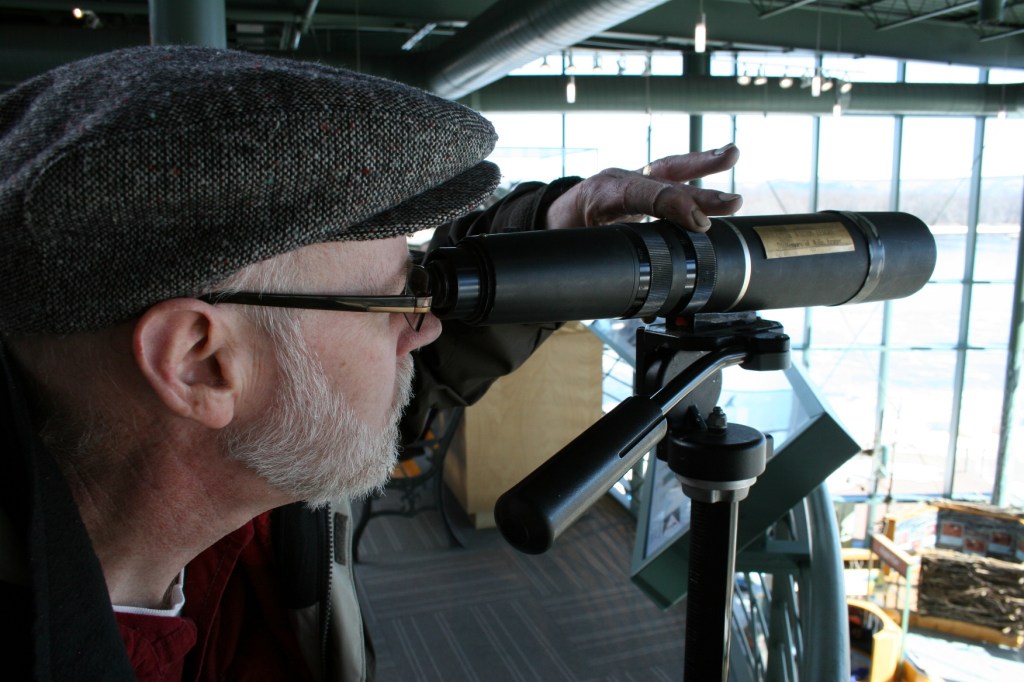
You'll find binoculars throughout the eagle center.

You’ll find binoculars throughout the center for viewing eagles.

Later, Randy will search me out, inform me that I left at just the right time—before rat pieces started flying toward the audience.

#

BONUS PHOTOS:
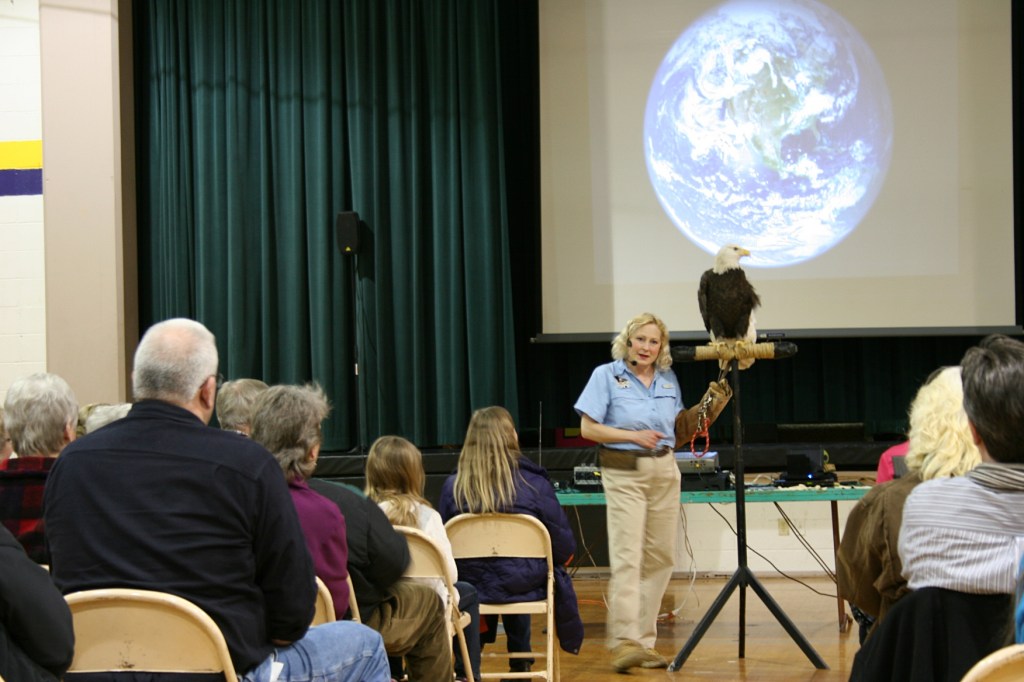
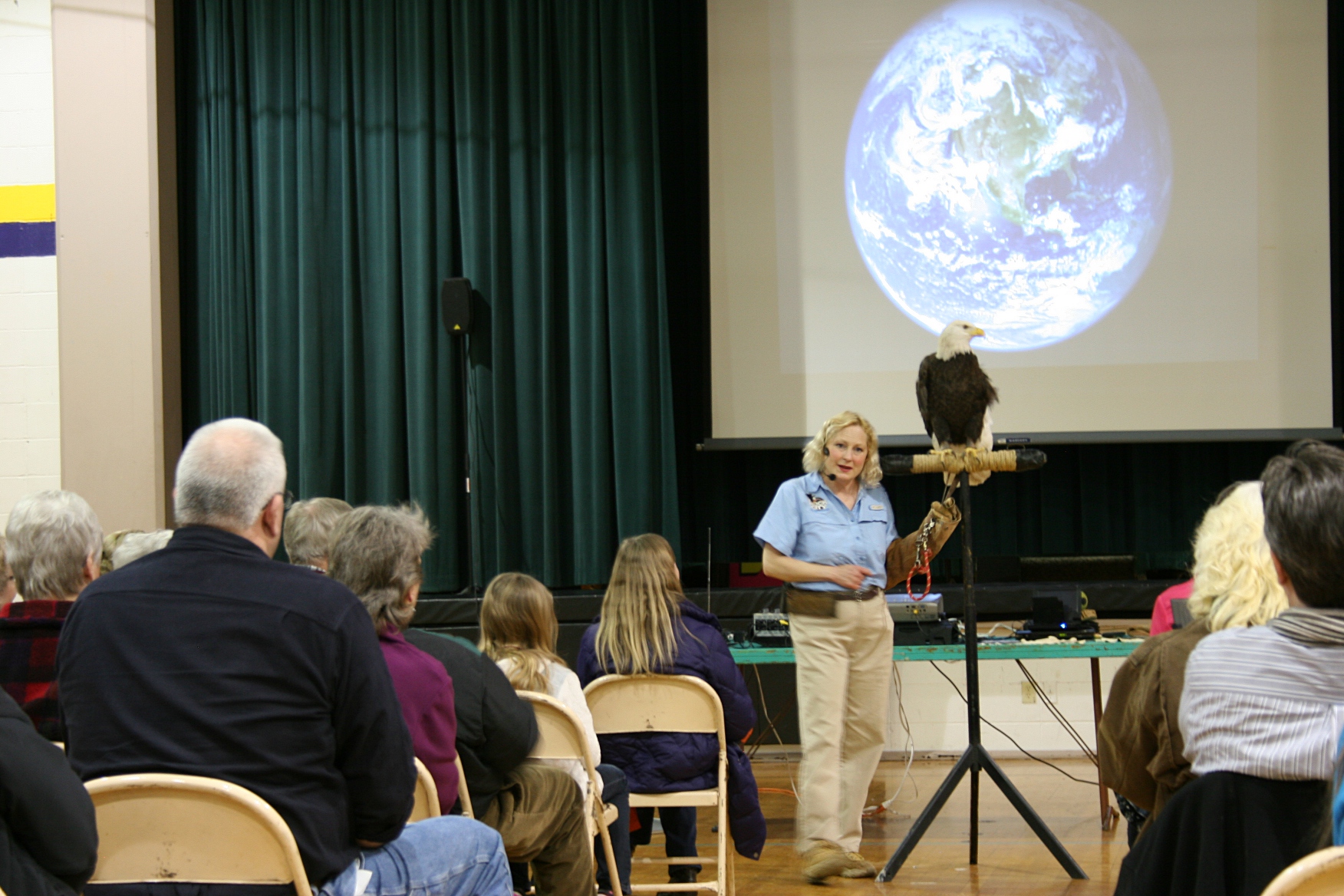
A bald eagle was part of the show in the gym. No, it did not fly.

A bald eagle was part of “Wings to Soar” in the nearby St. Felix gym. No, the eagle did not fly.

WHILE IN WABASHA, we also took in the National Eagle Center sponsored program, “Wings to Soar.”
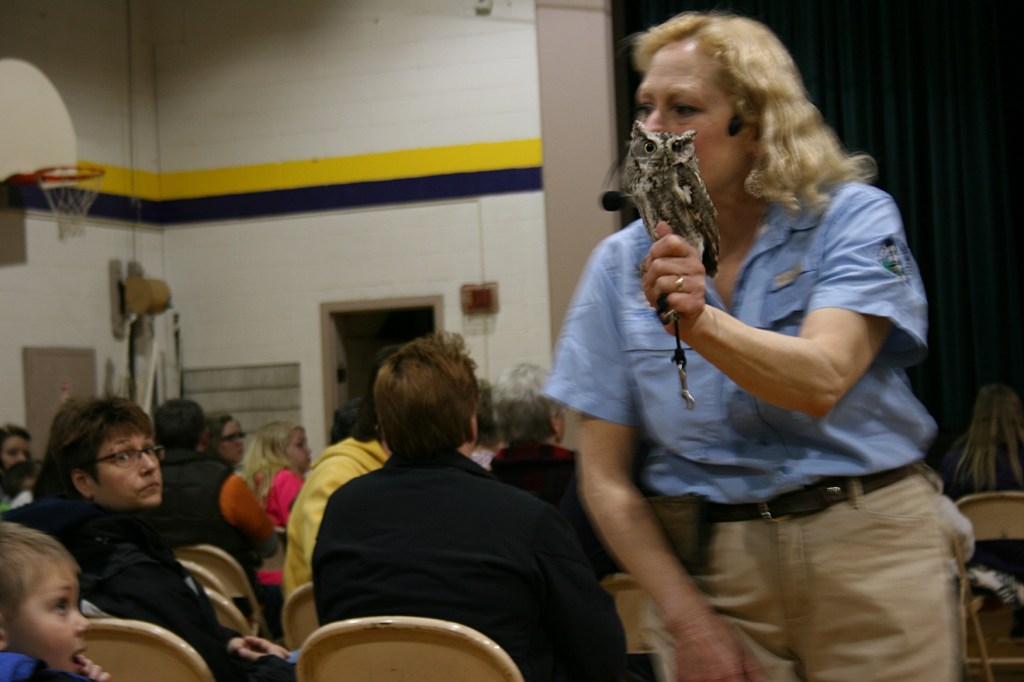
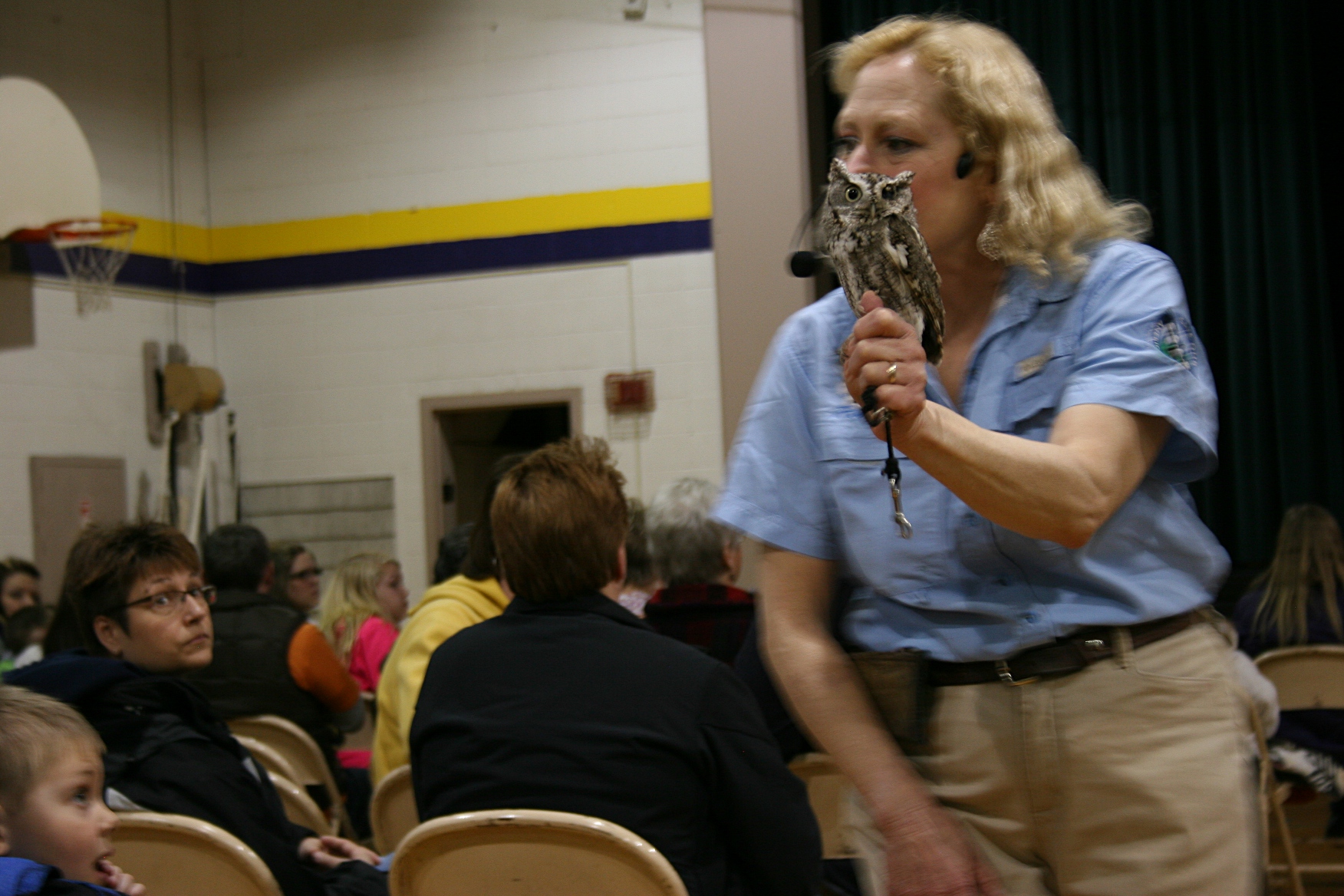
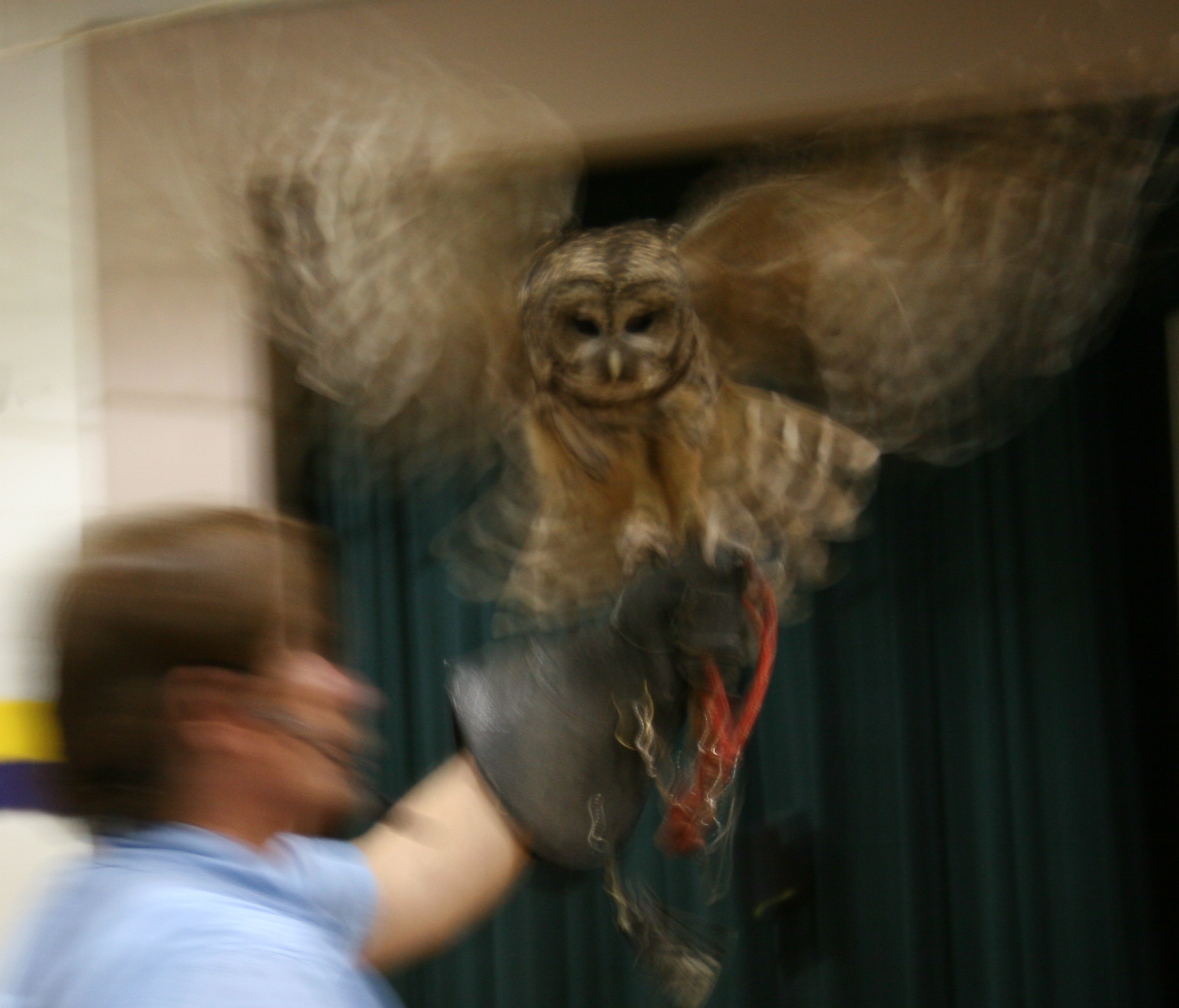
Dale wandered through the audience with the birds, like this owl.

Dale wanders through the audience with an owl.

In St. Felix auditorium several blocks from the eagle center, Southerners John Stokes and Dale Kernahan presented an educational flying raptor program that, yes, involved birds of prey flying over our heads.
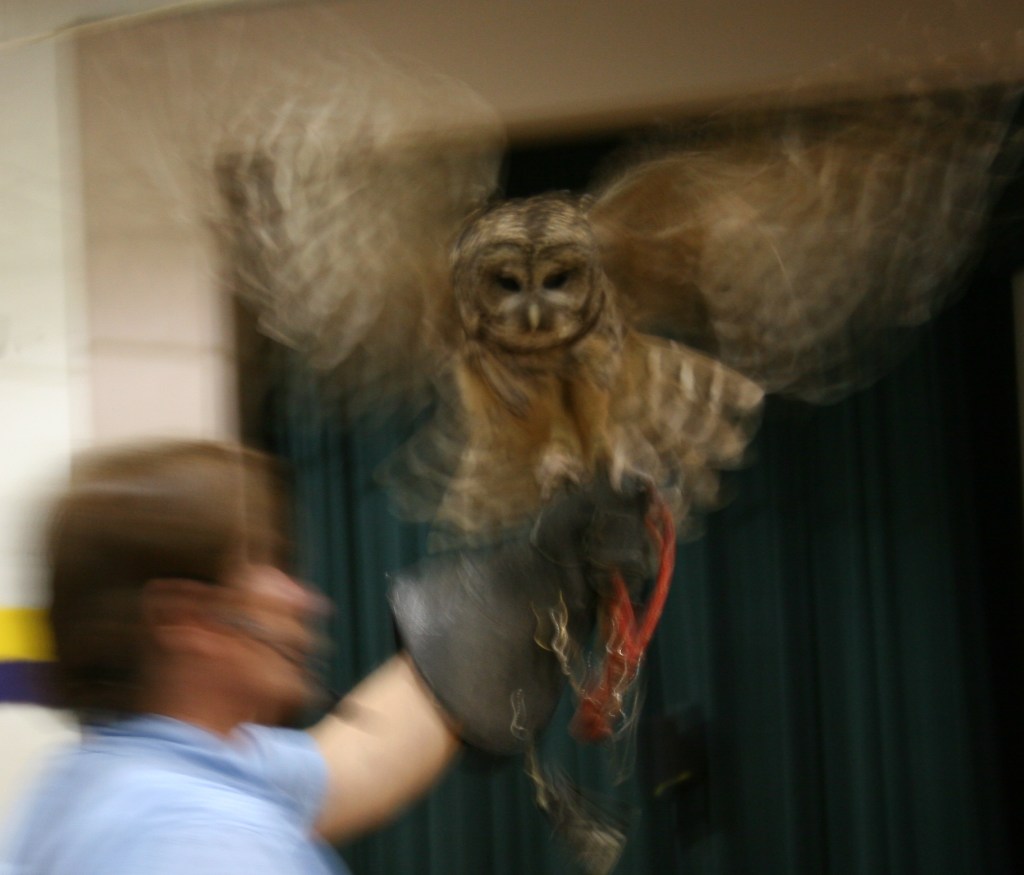
Here an owl flaps its wings. The birds skimmed over our heads during the show.

Here an owl flaps its wings. Some of the birds skimmed over our heads during the show.

Stokes advised anyone who was afraid of birds to leave. That would be me. But I stayed and did just fine with the owls and hawks. But when Kernahan walked out with a vulture and then allowed it to fly at low altitude, I slunk into my folding chair.
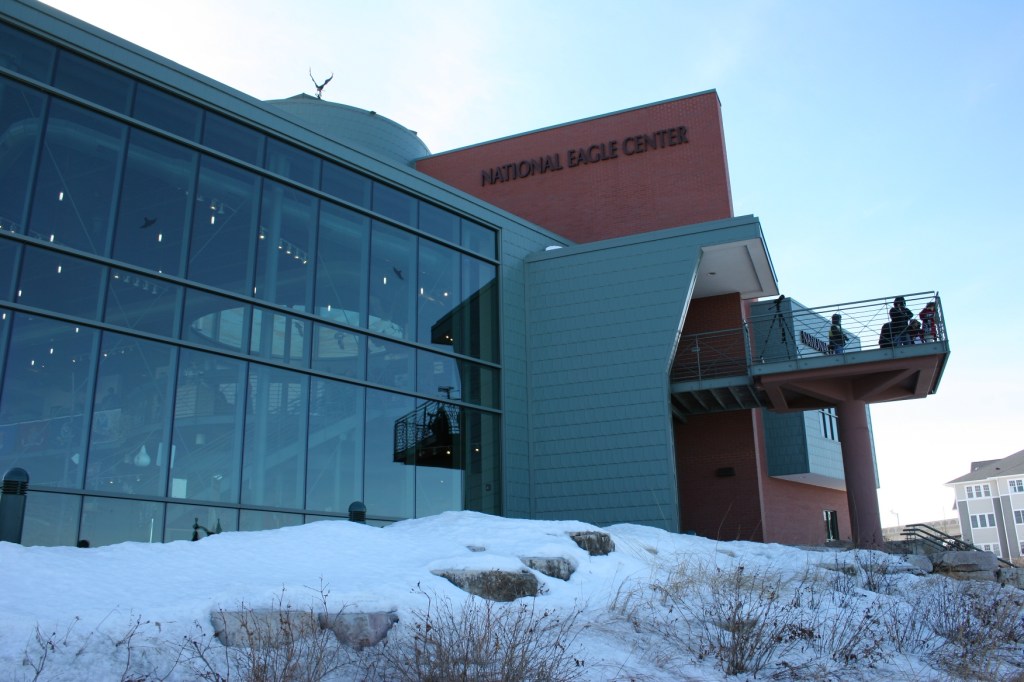
On the right, you'll see the second story riverside observation deck.

On the right is the second story riverside observation deck.

FYI: March marks special “Soar with the Eagles” weekends in Wabasha. March 22 – 23 you can attend Sky Hunters, a flying bird show.
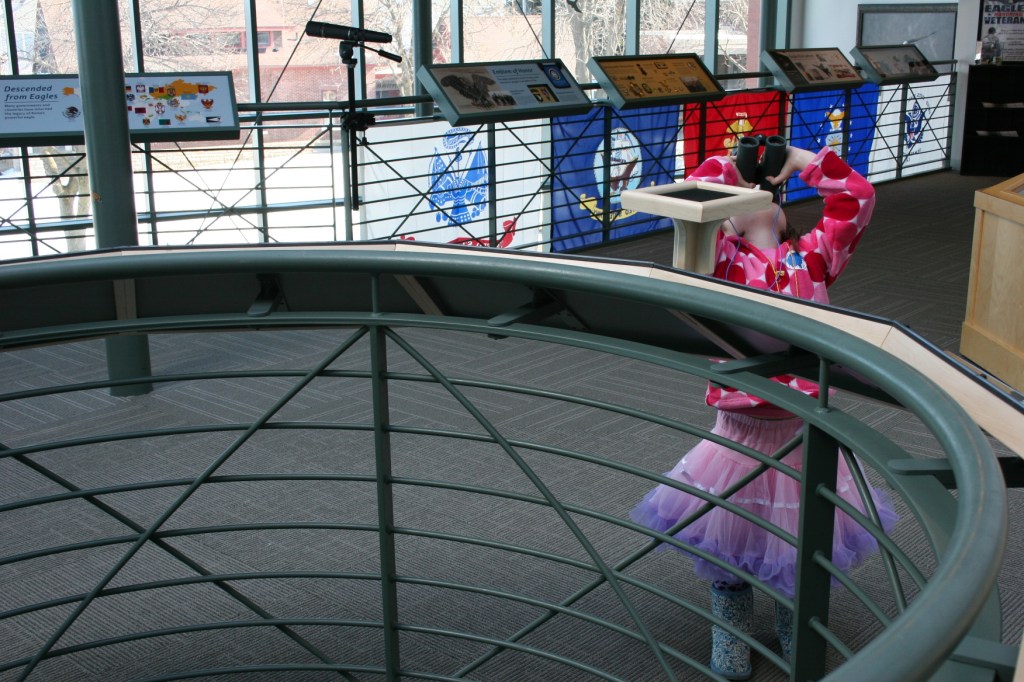
This girl is looking up at these...

Inside the National Eagle Center, this girl is looking up at these…
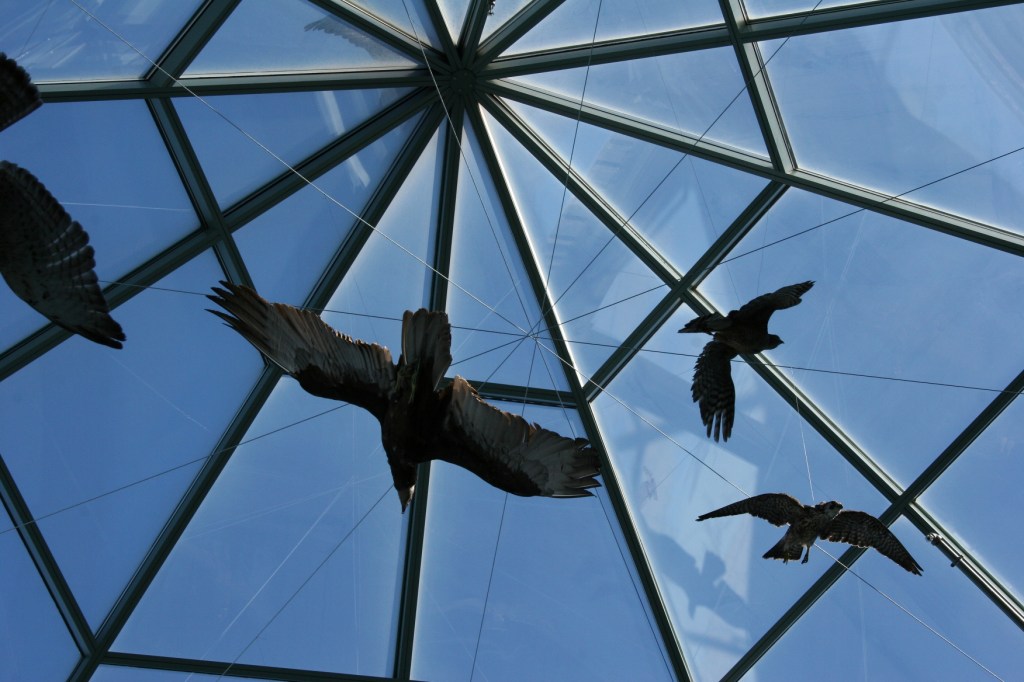
...birds suspended from the glass ceiling.
…birds suspended from the glass ceiling.

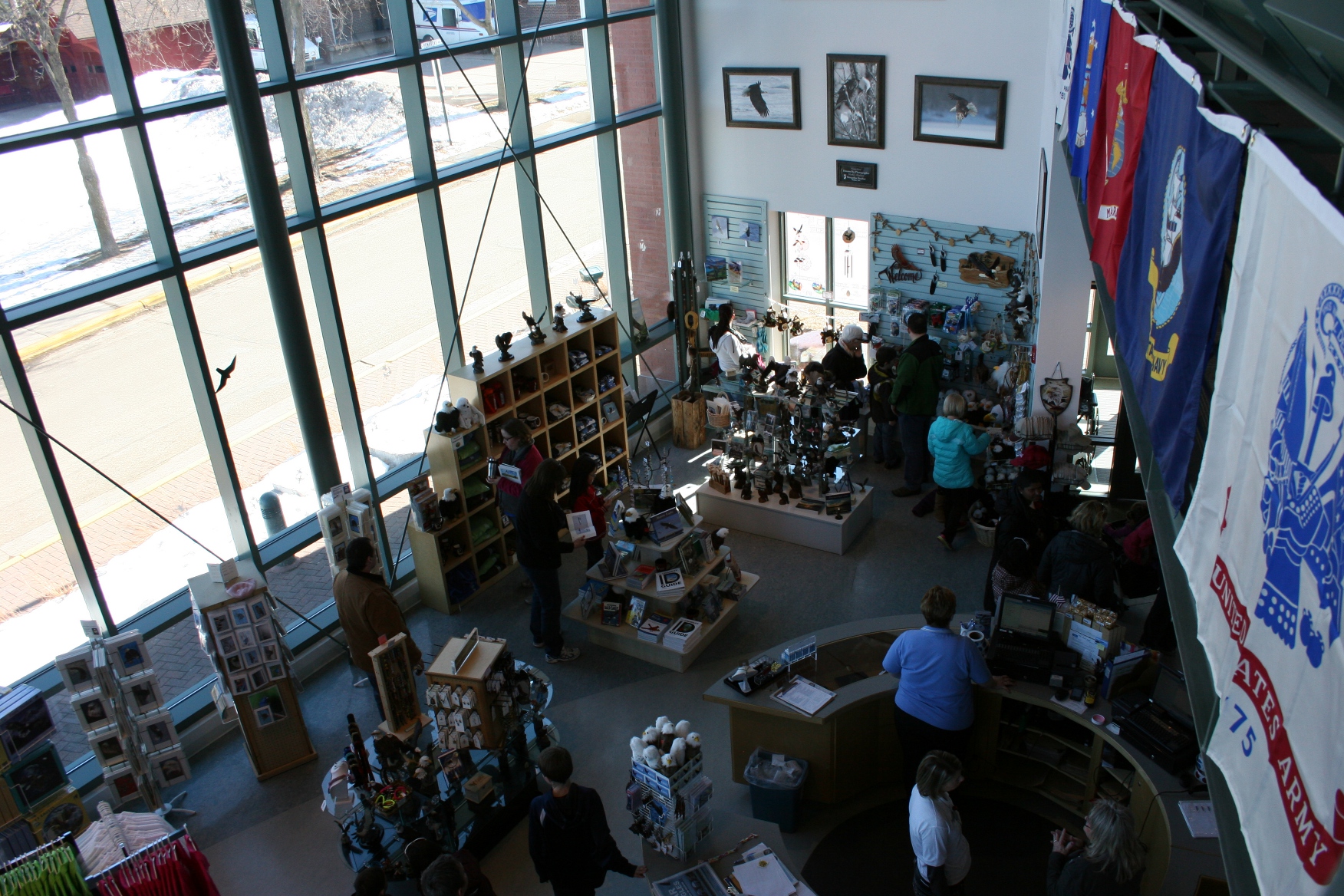
In the first floor gift shop, shown here...

In the first floor gift shop, shown here…
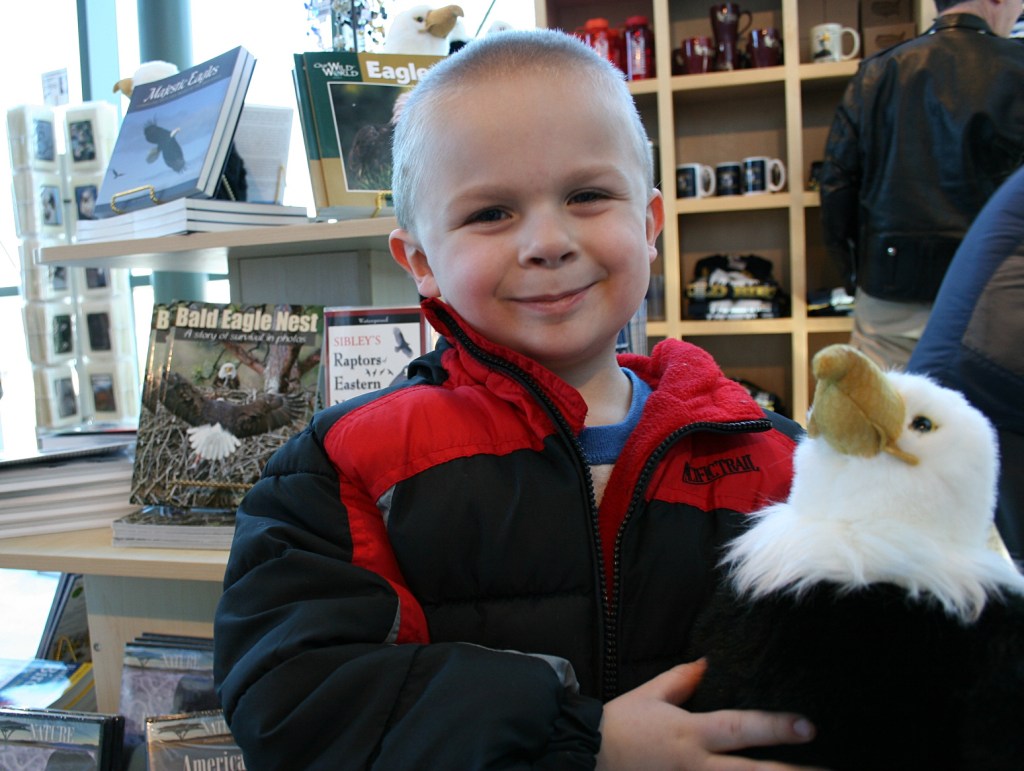
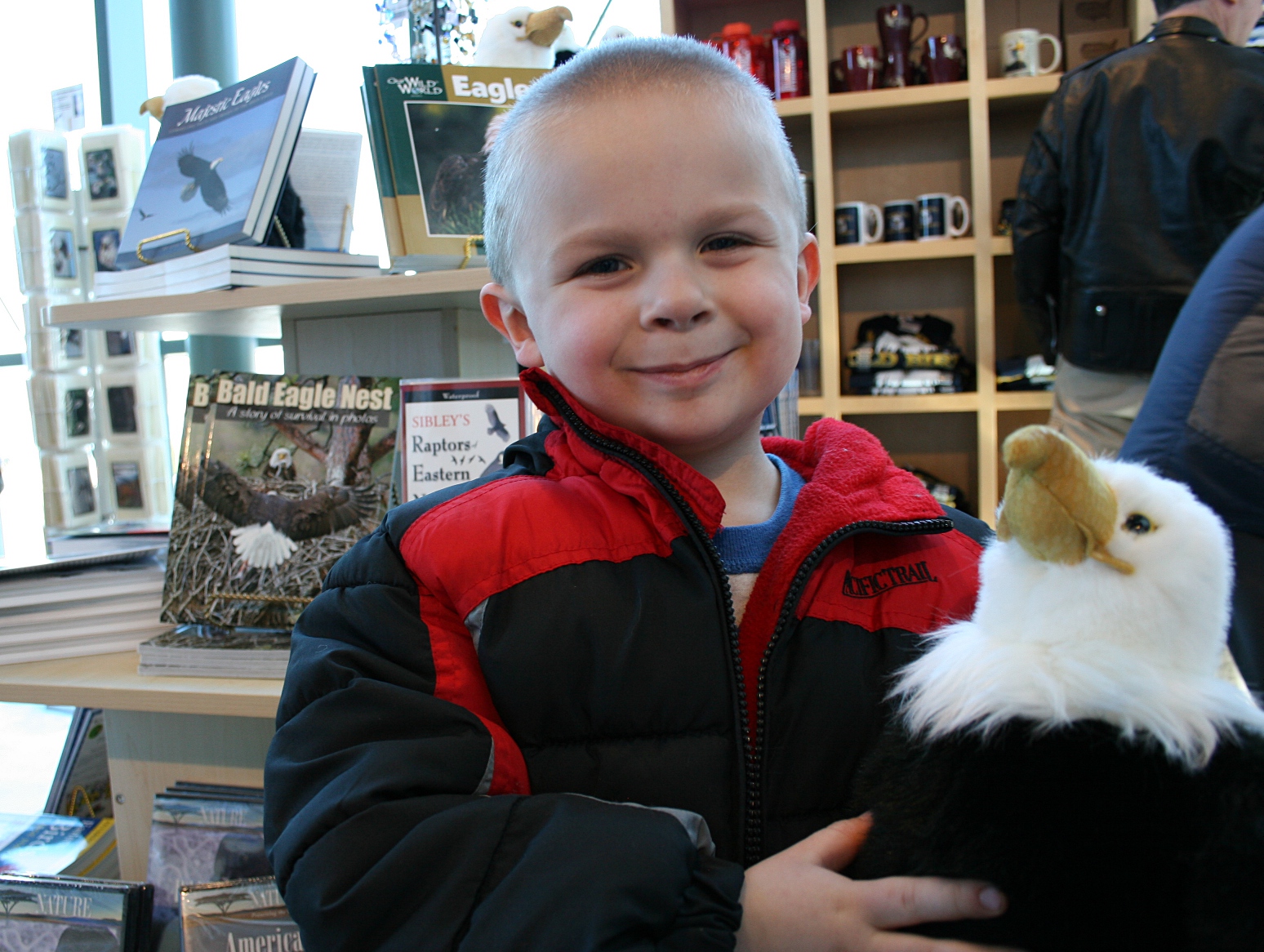
...Joseph found a plush toy eagle.

…Joseph finds a plush toy eagle.

The National Eagle Center truly appeals to all ages, to anyone who appreciates the beauty of this majestic bird.

Check back for another post from the National Eagle Center and for additional photos from Wabasha.

© Copyright 2014 Audrey Kletscher Helbling